

Our top picks for the best corded chainsaws in 2026 are the CRAFTSMAN CMECS600 16-Inch (Best Overall), Oregon CS1500 (Best Premium), Oregon 2400W 16-Inch Corded Chainsaw (Best Easy Assembly), BLACK+DECKER CS1518 18-Inch Corded Chainsaw (Best for Heavy Pruning), BLACK+DECKER CS1216 16-Inch Corded Chainsaw (Best Lightweight), and WORX WG304.2 18-Inch Corded Chainsaw (Best Ergonomic Design). Each one starts with a trigger pull, with no fuel to mix and no battery to charge.
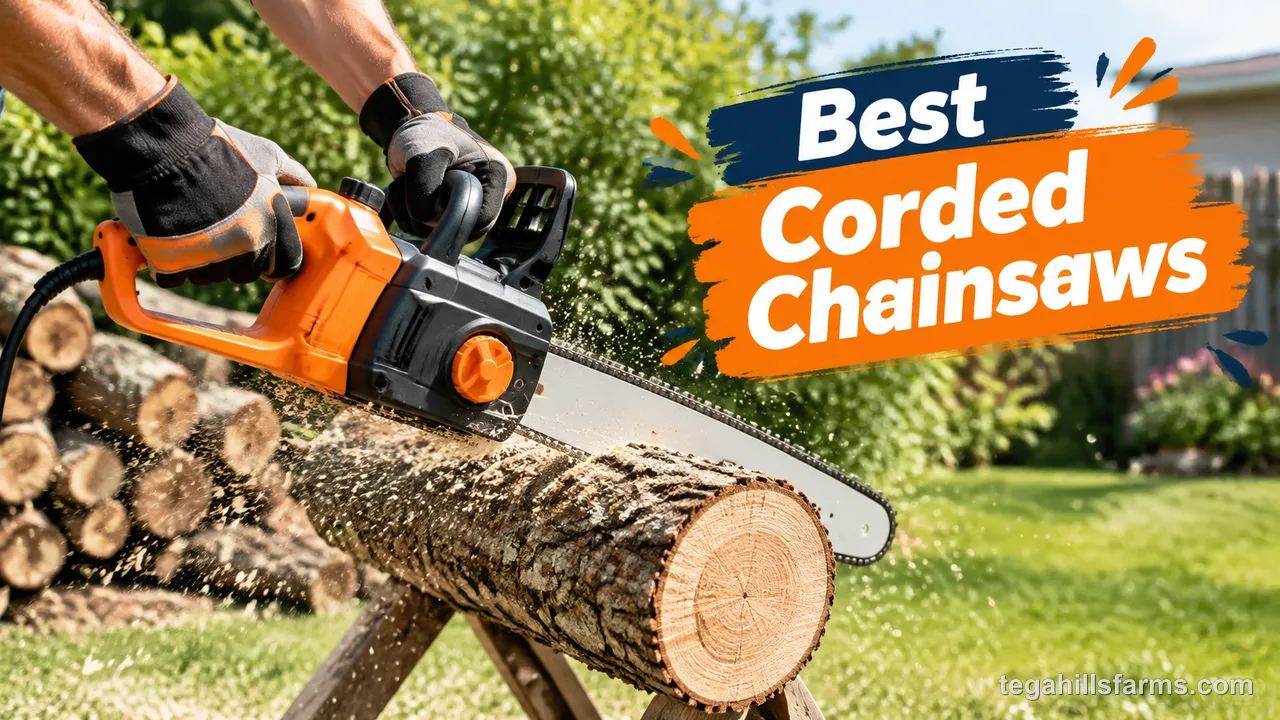
These saws differ in motor class, bar length and weight. A 12-amp saw with a 16-inch bar stays light for pruning above your head. A 15-amp saw with an 18-inch bar takes on thicker limbs but asks more of your arms. Chain features such as tool-free tensioning, automatic oiling and self-sharpening decide how much upkeep comes with the saw.
The cord sets the limits of a corded saw. It ties you to an outlet and an extension cord, and the motor is built for pruning and small logs. Push it through big hardwood all afternoon and it overheats.


Buy the extension cord along with the saw. A thin household cord starves even a strong motor, and the saw then gets blamed for a problem the cord created.
Is a Corded Chainsaw Worth Buying Over Battery or Gas?
Yes, for most yards where the work happens near the house. A corded saw gives you instant starts with no fuel or battery, less noise than gas, and very little upkeep, as long as the cutting stays within reach of an outlet.
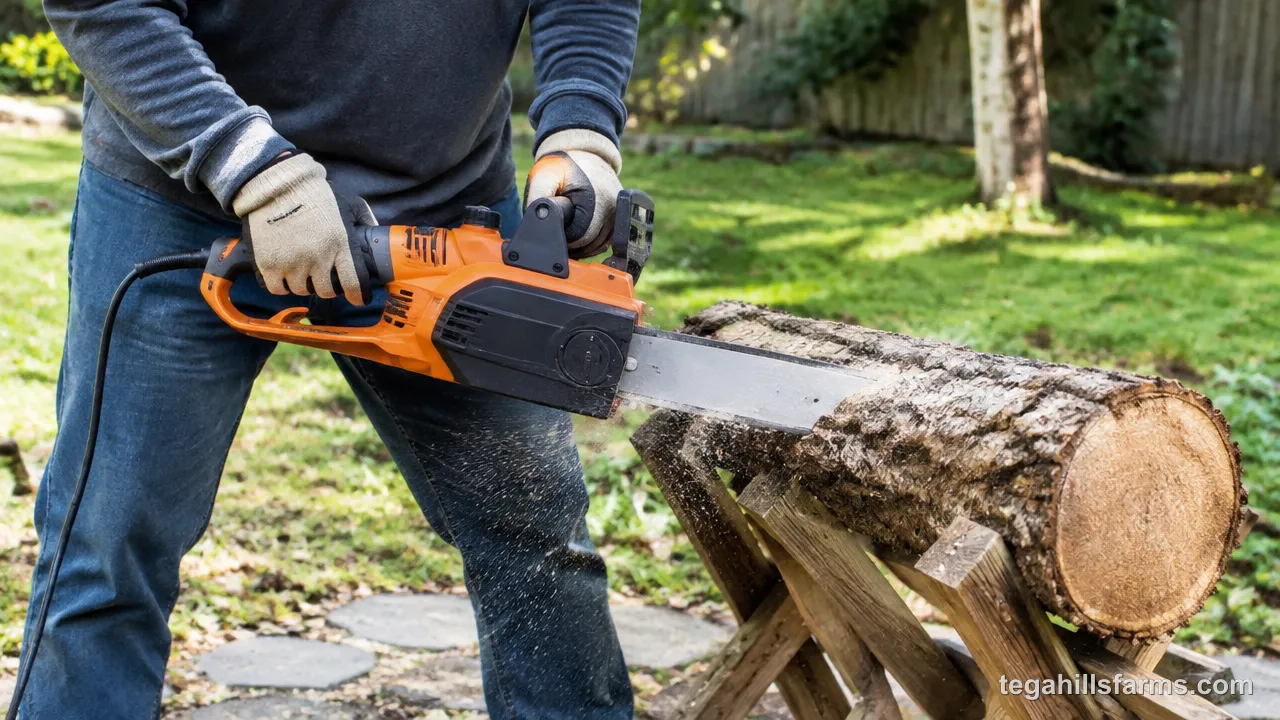
The appeal is in what you skip. There is no fuel going stale over winter, no carburetor to gum up and no spark plug to replace. There is also no battery to keep charged and warm. You plug the saw in, check the bar oil and cut. Without an engine it runs quieter than gas, which matters on a Saturday morning in a subdivision.
You give up freedom of movement. The cord sets your working radius, and you will drag it around every tree you work on. The motors are sized for pruning, storm limbs and small logs, not for felling and bucking all day.
That splits the field cleanly. A corded saw covers the jobs close to the house. If you want to cut anywhere on the property without a cord, the best battery chainsaws give you that freedom for occasional work. Firewood by the cord, large trees and land far from power belong to the best gas chainsaws. If you are still weighing every power type, start with our roundup of the best chainsaws.
The 6 Best Corded Chainsaws of 2026
The corded saws worth your money this year are the CRAFTSMAN CMECS600 16-Inch, Oregon CS1500, Oregon 2400W 16-Inch Corded Chainsaw, BLACK+DECKER CS1518 18-Inch Corded Chainsaw, BLACK+DECKER CS1216 16-Inch Corded Chainsaw, and WORX WG304.2 18-Inch Corded Chainsaw. The 16-inch saws stay light enough to hold overhead through a long pruning session. The 18-inch, 15-amp saws handle thicker limbs, but you feel their weight every time you raise them. They suit homeowners who prune and trim, people clearing storm limbs near the house, and anyone who wants a saw that starts instantly without fuel or batteries.
#1 CRAFTSMAN CMECS600 16-Inch — Best Overall
Weighing about 6.2 pounds with a 12-amp motor and a 16-inch bar, this is the saw I’d hand a homeowner who prunes a few times a season and wants it running the moment it’s plugged in. It stays easy to hold steady.
Key Specs:
- Motor: 12 amp
- Bar and chain: 16 in, low-kickback
- Weight: about 6.2 lb
- Oiling: automatic, with oil window
- Chain tensioning: tool-free
- Warranty: 3-year limited
Detailed Review:
The 12-amp motor drives a 16-inch low-kickback bar and chain, a pairing sized for limbs, hedges and storm branches around the house. A low-kickback chain reduces the chance of the bar tip jumping back at you when it catches. That matters most to an owner who picks up a saw only a few times a year.
The BLACK+DECKER CS1216 has the same 12-amp rating and 16-inch bar, but it weighs 10 pounds, and this saw comes in well under that. Less weight at the end of your arms means steadier cuts on limbs above your head and less fatigue as you work down a fence line.
The auto-oiler feeds the bar and chain without priming, and the built-in window shows the oil level before the chain runs dry. Tool-free tensioning lets you take up slack in the yard instead of hunting for a wrench. A chain kept oiled and snug cuts cleanly, so the motor doesn’t strain through every branch.
The 3-year limited warranty suits an owner who plans to keep one saw for many seasons. If you want to compare it with cordless and gas options aimed at the same kind of yard work, the best chainsaws for homeowners cover that ground.
Pros:
- About 6.2 pounds keeps overhead pruning less tiring.
- Low-kickback bar and chain suit occasional users.
- Oil window shows the level at a glance.
- Tool-free tensioning adjusts slack without a wrench.
- 3-year limited warranty covers long seasonal ownership.
Cons:
- 12-amp motor slows in thick, dense hardwood.
- Larger logs need cuts from both sides.
Who It’s For:
Homeowners who prune trees, trim shrubs and clear storm branches close to the house will get plenty out of it, especially if a heavy saw tires them quickly. If you regularly cut thick rounds of firewood, you will want a bigger bar and a stronger motor than this compact saw carries.
Editor’s Verdict:
Choose it as an easy all-round corded saw: light in the hand, low-kickback, and simple to keep oiled and tensioned for yard-scale pruning.
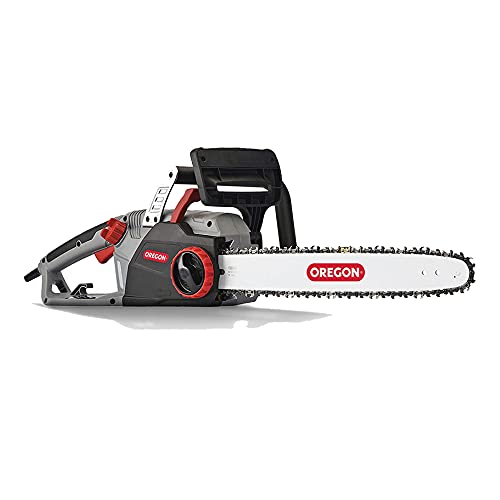
#2 Oregon CS1500 — Best Premium
Owners who hate filing chains should look here first. The built-in PowerSharp system resharpens the chain right on the saw in 3 to 5 seconds, and the 15-amp motor with an 18-inch bar takes on thicker limbs than a small pruning saw.
Key Specs:
- Motor: 15 amp
- Bar: 18 in guide bar, low-kickback
- Weight: 12.6 lb
- Sharpening: built-in PowerSharp system
- Safety: chain brake, UL Certified
- Warranty: 2-year
Detailed Review:
PowerSharp is what makes this saw worth the step up. You don’t have to pull the chain off to file it or take it to a shop. You resharpen it on the saw, so a chain dulled by grit in a storm-downed limb is cutting again before you lose your rhythm.
The 15-amp motor and 18-inch guide bar give it the capacity for thicker branches and small logs. The automatic oiler feeds the bar and chain continuously from the tank, which reduces friction and extends chain life. Tool-free tensioning keeps slack in check without a wrench.
Like any corded saw, it starts instantly and runs quieter than a gas chainsaw, so early cleanup is easier on the neighbors. It arrives pre-assembled and carries UL certification and a 2-year Oregon warranty. It also has a chain brake for the moment a cut goes wrong.
At 12.6 pounds, this is a saw you rest on the log between cuts rather than hold at shoulder height for long. If you do most of your work overhead, you will feel that weight well before the chain needs sharpening.
Pros:
- PowerSharp resharpens the chain on the saw in seconds.
- 15-amp motor pulls the 18-inch bar through thick limbs.
- Chain brake stops the chain when a cut goes wrong.
- Arrives pre-assembled, ready for bar oil.
Cons:
- 12.6 pounds tires your arms on overhead cuts.
- The longer bar feels awkward in tight shrubs.
Who It’s For:
If sharpening is the chore that leaves your saw sitting dull in the garage, buy this one, especially for storm branches and small logs near the house. People who mostly trim light growth above their heads will find it more saw than they need and harder to hold up.
Editor’s Verdict:
Buy it for the self-sharpening chain, because that one feature takes care of the upkeep task owners most often put off.
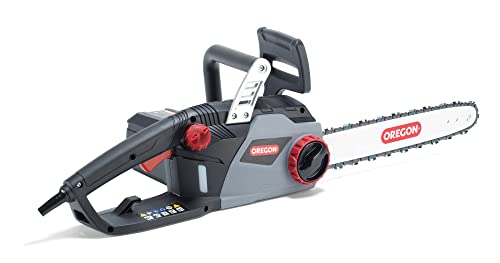
#3 Oregon 2400W 16-Inch Corded Chainsaw — Best Easy Assembly
First-time owners who don’t want a puzzle out of the box will appreciate this one: the tensioner goes on the guide bar, the bar and chain go on the saw, and you’re ready to cut. A 15-amp motor turns the 16-inch bar.
Key Specs:
- Motor: 15 amp (2400W)
- Bar and chain: 16 in guide bar, low-kickback ControlCut chain
- Oiling: Lubri-Tec automatic oiler
- Chain tensioning: tool-free, on the saw
- Warranty: 3-year
Detailed Review:
Setup is just fitting the tensioner onto the guide bar and mounting the bar and chain on the saw. That simplicity matters on a first chainsaw. A chain mounted backward or a bar left loose is how new owners end up with a saw that smokes instead of cutting.
The 15-amp motor gives this 16-inch saw more current than the 12-amp CRAFTSMAN CMECS600 has on the same bar length, which helps it hold chain speed in wetter or thicker wood. It starts instantly and goes silent between cuts, so you aren’t listening to an idling motor while you reposition a branch.
The Lubri-Tec oiling system keeps the chain oiled to reduce friction, and less friction lets the saw run longer before heat and wear catch up. The low-kickback ControlCut chain lowers the risk of the bar jumping back, which helps while you’re still learning how a chainsaw pulls through wood.
You tighten the chain directly on the saw without extra tools. The 3-year warranty covers a seasonal owner for a good stretch of use, and the routine is small enough that the saw actually gets maintained.
Pros:
- Simple bar-and-chain setup suits first-time chainsaw owners.
- 15-amp motor gives the 16-inch bar strong pull.
- Goes silent between cuts while you reposition branches.
- Lubri-Tec oiling reduces chain friction and heat.
- 3-year warranty backs seasonal owners.
Cons:
- Needs assembly before the first cut.
- Shorter bar means larger rounds need cuts from both sides.
Who It’s For:
Buyers getting their first chainsaw, who want setup to be obvious and the chain easy to keep tight, are the right fit. It also suits pruning and storm cleanup if you’d rather not hear a motor idling between cuts. Anyone who wants a saw ready straight from the box should look at a pre-assembled model instead.
Editor’s Verdict:
Pick it if you want an approachable saw that goes together quickly and still brings a strong motor to everyday yard cutting.
#4 BLACK+DECKER CS1518 18-Inch Corded Chainsaw — Best for Heavy Pruning
For thick limbs on mature backyard trees and the heavier branches a storm drops on the lawn, this saw pairs a 15-amp motor with an 18-inch bar. A push-start button gets it going at once.
Key Specs:
- Motor: 15 amp
- Bar and chain: 18 in, low-kickback
- Weight: 12.5 lb
- Oiling: automatic, with oil level indicator window
- Extras: extension cord retainer, guide bar scabbard
- Warranty: 2-year limited
Detailed Review:
The 15-amp motor and 18-inch bar are built for tree pruning and branch cutting, where a smaller saw would need cuts from both sides of a limb. The low-kickback bar and chain reduce how hard and how often the saw kicks. That counts for more on a longer bar, which has more tip to catch.
The extension cord retainer is the detail I like most here. It holds the cord to the saw, so a tug while you circle a tree doesn’t unplug it mid-cut. You avoid walking back again and again to reconnect.
Tool-free tensioning takes up slack before it damages the chain. The auto-oiler keeps the bar lubricated, and the indicator window shows how fast the oil is going down. The included scabbard covers the bar in storage and in the truck bed.
The WORX WG304.2 pairs the same bar length with the same motor rating, and this saw weighs 12.5 pounds to the WORX’s 11.2. That gap is small with the saw resting on a log but noticeable when you hold it at chest height through a run of limbs.
Pros:
- 18-inch bar handles thicker branches than a compact saw.
- Cord retainer stops accidental unplugging mid-cut.
- Push-start button gets the saw running instantly.
- Oil level window shows usage at a glance.
- Scabbard protects the bar in storage and transport.
Cons:
- 12.5 pounds wears on your arms during overhead work.
- Longer bar is clumsy in tight hedges.
Who It’s For:
Owners with mature trees that need limbs taken back, or with storm branches too thick for a compact saw, will put the extra bar to good use. If you mostly snip light growth above head height, a lighter saw will be easier on your shoulders.
Editor’s Verdict:
Get it for heavier pruning near the house, where the cord retainer and push start make long sessions smoother.
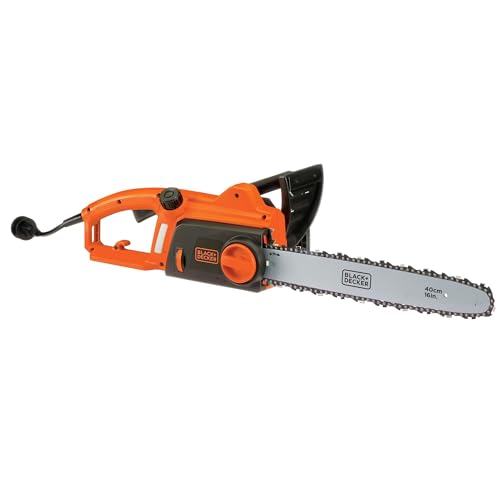
#5 BLACK+DECKER CS1216 16-Inch Corded Chainsaw — Best Lightweight
At 10 pounds with a 16-inch bar, this is a saw you can keep raised through a long afternoon of trimming limbs back from the house and fence. The 12-amp motor handles branches and logs.
Key Specs:
- Motor: 12 amp
- Bar and chain: 16 in, low-kickback
- Weight: 10 lb
- Oiling: automatic, with clear oil window
- Chain tensioning: tool-free
- Includes: scabbard
Detailed Review:
It weighs 10 pounds against the 12.5 pounds of the BLACK+DECKER CS1518. You notice that difference on overhead cuts, where every extra pound pulls on your shoulders and makes the bar harder to hold on line. In exchange you give up reach: the 16-inch bar suits limbs and small logs rather than the thicker branches the 18-inch model takes on.
The 12-amp motor has enough power for the branches and logs a 16-inch bar is meant for. The low-kickback bar and chain keep the saw running smoothly whether you’re cutting down, sideways or up into a limb.
The automatic oiler supplies the bar and chain continuously. The clear window lets you check the level before a dry chain starts to overheat. Tool-free tensioning handles slack in the yard, and the included scabbard covers the chain in storage.
Because it runs off a cord, runtime is limited by your outlet, not by a battery charge, which suits long cleanup days near the house. If easier handling matters to you, the best chainsaws for seniors focus on weight and grip.
Pros:
- 10 pounds eases fatigue on overhead pruning.
- Low-kickback chain cuts smoothly from any angle.
- Clear oil window helps prevent a dry chain.
- Cord gives unlimited runtime near an outlet.
Cons:
- Shorter bar limits it on thicker branches.
- 12-amp motor slows down in dense, wet wood.
Who It’s For:
Gardeners who spend long sessions trimming limbs above their heads, or who find a heavy saw hard to control, should look here first. Owners who regularly cut thick limbs from mature trees will want a bigger bar than this compact saw offers.
Editor’s Verdict:
Expect a saw that stays manageable through long trimming sessions, with smooth low-kickback cuts and easy oil checks.
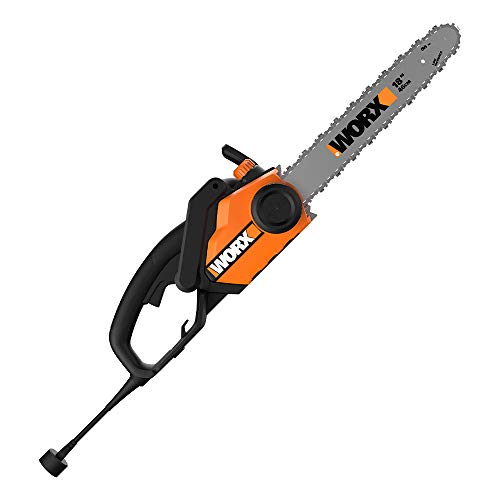
#6 WORX WG304.2 18-Inch Corded Chainsaw — Best Ergonomic Design
If you cut branches at awkward angles, the full-wrap handle lets you grab this saw from the side or the top and keep leverage on both vertical and horizontal cuts. Its auto-tension system won’t let you over-tighten the chain.
Key Specs:
- Motor: 15 amp
- Bar: 18 in
- Weight: 11.2 lb
- Chain tensioning: auto-tension system
- Safety: chain brake, metal spike bumper
- Includes: lubrication oil, blade protection cover
Detailed Review:
The full-wrap handle carries the grip around the top of the saw, so you can roll it onto its side for vertical cuts without losing leverage. The rubberized over-mold grip adds comfort and control, which you notice most when the saw is turned sideways on a leaning limb.
The auto-tension system adjusts the chain and won’t let you over-tighten it. Over-tightening is a common way to wear out a bar and chain early. Auto-lubrication keeps the chain oiled as it runs around the bar, so cuts stay clean and less of the motor’s effort goes to friction.
The chain brake stops the chain almost instantly. The metal spike bumper bites into the wood so you can pivot the saw through the cut with more leverage and less kickback. The 15-amp motor and 18-inch bar give it room for larger limbs and small trees.
At 11.2 pounds it is not a light saw, but the wrap handle gives your hands more than one good place to hold it. Lubrication oil and a blade protection cover come in the box, so it’s ready for the first job.
Pros:
- Full-wrap handle grips well for vertical and horizontal cuts.
- Auto-tension prevents over-tightening the chain.
- Chain brake stops the chain almost instantly.
- Metal spike bumper adds leverage at the cut.
- Comes with bar oil and a blade cover.
Cons:
- 11.2 pounds still tires your arms overhead.
- Long bar and wrap handle feel bulky in tight spots.
Who It’s For:
Anyone cutting at odd angles, such as a leaning trunk, a limb hung up in a fork, or a branch that needs a vertical cut, will appreciate the wrap handle and grip. If your work is mostly light trimming above your head, a smaller, lighter saw makes more sense.
Editor’s Verdict:
Consider it for awkward cutting angles, where the wrap handle, spike bumper and auto-tension keep the saw steady and the chain set correctly.
What Should You Look for in a Corded Chainsaw?
With no battery to size and no fuel to mix, choosing a corded saw comes down to motor strength, bar length and how the saw handles in your hands. These decide whether the saw keeps pace with your trees or bogs down, and whether you can hold it steady long enough to finish a cleanup. Engine size and battery platforms are covered in how to choose a chainsaw.
How Much Motor Power Does a Corded Chainsaw Need?
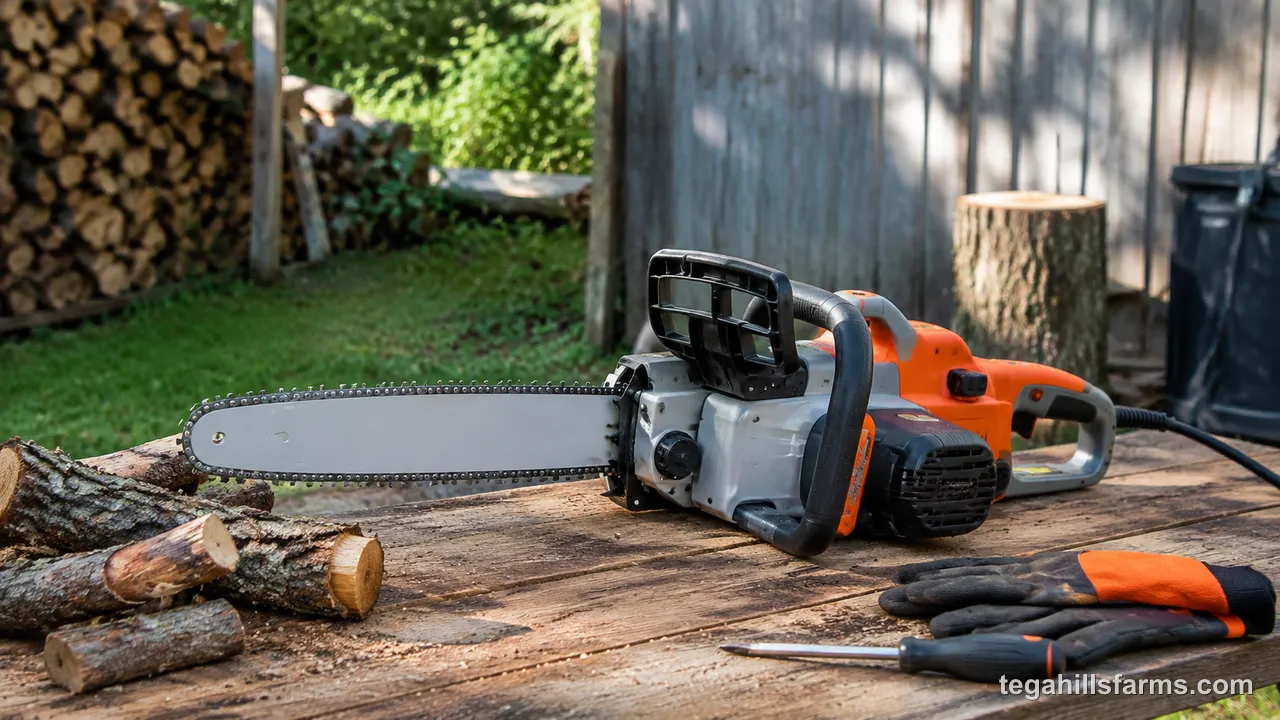
For pruning and storm branches, a 12-amp motor is enough. Thicker or wetter wood calls for a 15-amp motor, because the amp rating tells you how much current the motor can draw, and more current lets it hold chain speed when the wood fights back.
A 12-amp saw handles branch work comfortably, but it slows sooner when you bury the full bar in dense or green wood. A 15-amp motor has more torque in reserve, so the chain keeps moving at the same feed pressure.
Bogging is the warning sign. The chain slows, the motor note drops and the cut stalls. Easing off the pressure and letting a sharp chain do the work fixes most of it. If the saw bogs in the wood you cut every week, though, it’s the wrong class for your trees. Running it that way only heats the motor.
Which Bar Length Fits Your Cutting Jobs?
A 16-inch bar fits trimming, shrub work and typical storm branches. An 18-inch bar fits thicker limbs and small trunks. Bar length sets the thickest piece you can cut from one side in a single pass.
The usable cut is shorter than the bar, since part of the bar sits inside the saw body. A branch close to the bar’s rated length will often need a cut from each side. Wood thicker than the bar always does.
A longer bar puts more weight out front and is harder to steer between branches in tight spots. It also leaves more tip exposed to catch on something you didn’t mean to cut. If your trees are young and your work is mostly pruning, the shorter bar is easier to control. If mature trees drop heavy limbs on your lawn, the extra reach saves you from cutting every branch from both sides.
Why Do Weight and Handle Design Matter?
Weight decides how long you can hold the saw up with control. On overhead pruning, a lighter saw keeps the bar on line longer before your shoulders give out, and it’s easier to reposition between cuts.
A lighter saw usually gives up some bar length or motor reserve. A heavier, longer saw is steadier when you rest it on a log on the ground, so it suits owners who do most of their cutting at waist height.
Handle design changes control as much as weight does. A wrap handle that runs over the top of the saw lets you turn it sideways for vertical cuts and still keep leverage. A rubberized grip helps when your gloves are wet. A chain brake stops the chain quickly if the bar kicks.
Which Chain Features Save You Hassle?
Tool-free tensioning, automatic oiling with an oil window, and a low-kickback bar and chain each remove a chore or a risk.
Tool-free tensioning lets you take up slack in the yard. A new chain stretches during its first cuts, and a loose chain can jump the bar or wear the drive sprocket.
Automatic oiling feeds bar oil to the chain as it runs. The window shows when the tank is low. A dry chain heats up, dulls fast and makes the motor work harder, so a saw that oils itself and shows you the level keeps the cutting edge alive longer.
A low-kickback bar and chain reduce how hard the saw jumps back when the tip catches wood. For an owner who uses a saw only a few weekends a year, that matters more than any motor upgrade.
How Do You Choose and Use an Extension Cord with a Corded Chainsaw?
A good saw can be held back by its cord: an undersized or overly long extension cord drops voltage, starves the motor and makes it run hot. The result feels like a weak saw, and owners end up shopping for a bigger one they don’t need. Getting the right cord and keeping it out of the cut matter as much as the saw you choose.
What Type of Extension Cord Does a Corded Chainsaw Need?
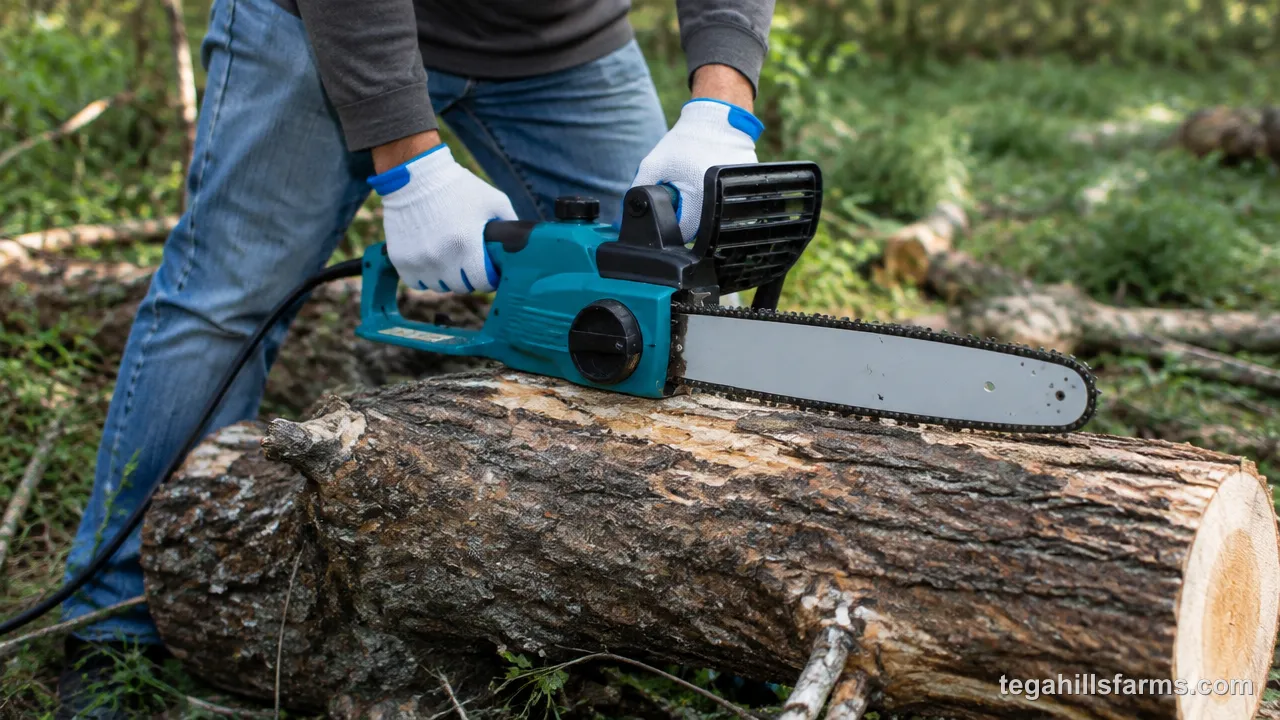
A corded chainsaw needs an outdoor-rated, heavy-duty extension cord with a cord amp rating at least equal to the saw’s. Gauge is the number to watch, and a lower gauge number means thicker wire.
Thin wire resists current. Over a long run, that resistance drops the voltage reaching the saw, so the motor draws harder to keep up, slows in the cut and heats up. A 15-amp saw is more sensitive to this than a 12-amp saw. The longer the run, the thicker the cord needs to be. Your saw’s manual lists the gauge it needs for each cord length, so check it before you buy.
Before each use, look over the cord jacket for cuts and the plug for bent or loose prongs. Plug into a GFCI-protected outdoor outlet. Keep the connection between the saw cord and the extension cord off wet grass and out of puddles.
How Do You Keep the Cord Out of the Blade’s Path?
Start cutting near the outlet and work away from it, so the cord trails behind you and away from the bar. Keep it on the side of your body opposite the cut line.
Cutting through the cord is the classic corded-saw accident, and it happens most while limbing. You step around a downed branch, the cord follows, and the next cut lands right on it. Before every cut, look at where the cord lies. Stop the saw before you move it.
The connection between the saw cord and the extension cord pulls apart easily when you tug. A cord retainer on the saw holds it in place. On saws without one, a loose knot tied with both cord ends keeps the plug from separating. Don’t let the cord drape over the log you’re cutting, since the saw comes down onto it as the cut finishes.
What Can a Corded Chainsaw Cut, and Where Does It Stop?
A corded saw is a pruning, trimming and small-log tool, not a felling saw, and cord reach and motor duty level set its limits. Within those limits it starts faster and asks less upkeep than a gas saw. Beyond them the motor heats up and the cord becomes a hazard.
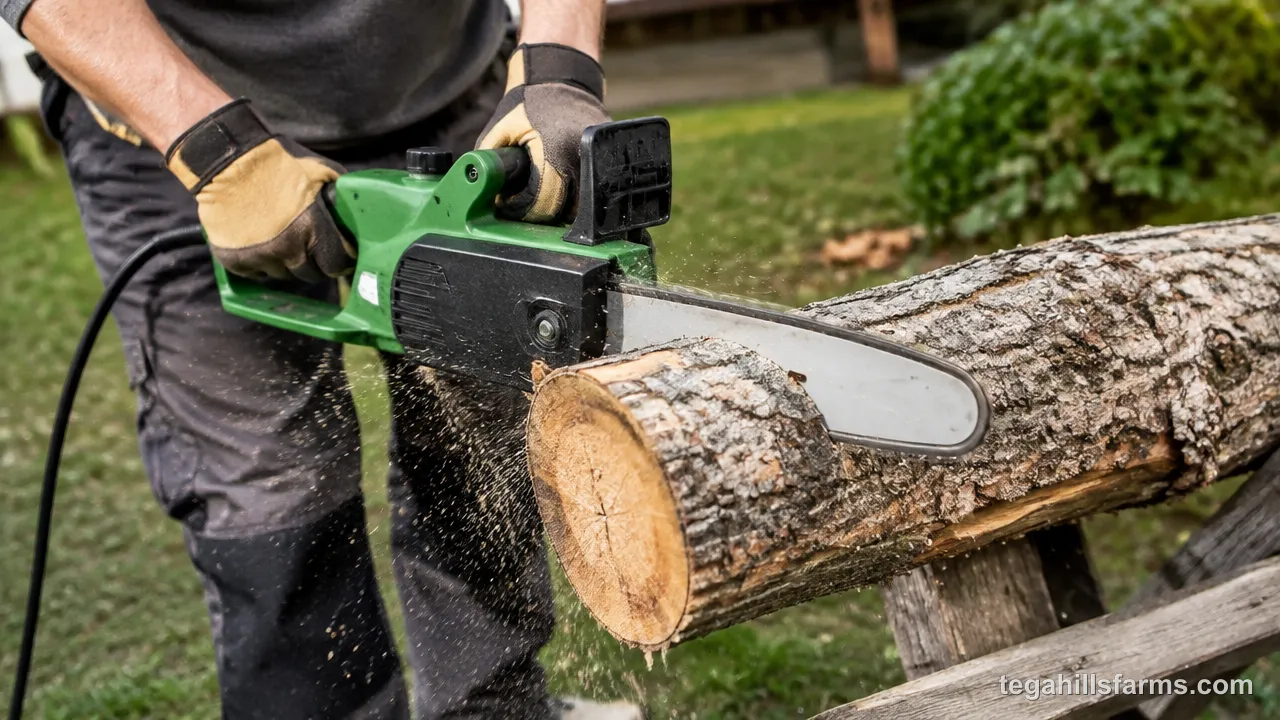
Which Jobs Suit a Corded Chainsaw?
Tree pruning, storm-fallen branches near the house, cutting small logs into short lengths and general trimming near an outlet all fit a corded saw well.
These are short, interrupted jobs. A gas saw has to be fueled, primed and warmed up before it cuts. A corded saw runs the moment you pull the trigger, and it stops when you let go. That makes it practical to grab for ten minutes of work after a windstorm without a ritual first.
Unlimited runtime helps on longer cleanups too. A pile of storm limbs doesn’t end with a dead battery halfway through, and you only stop to top off bar oil. For heavier bucking, where the logs come in thicker than a branch, the best chainsaws for cutting logs bring more bar and power to the job.
When Does a Corded Chainsaw Become the Wrong Tool?
A corded saw becomes the wrong tool when the cutting turns continuous and heavy, or when the work moves far from power. Steady cutting of large, dense hardwood keeps the motor near its limit, and heat builds faster than the motor can shed it. Run it that way long enough and it burns out.
Distance is the other limit. Every extra length of cord drops voltage, adds weight to drag and adds more cord to keep clear of the chain. Work at the back of a large lot quickly becomes impractical.
If you’re putting up firewood for the winter, the best chainsaws for cutting firewood are built for that steady load. Land clearing and large trees call for a gas saw or a higher-capacity battery saw.
How Do You Maintain a Corded Chainsaw?
Upkeep on a corded saw comes down to bar oil, chain tension and a sharp chain, plus clean motor vents and a covered bar in storage. Without spark plugs, fuel or batteries to look after, the list is short.
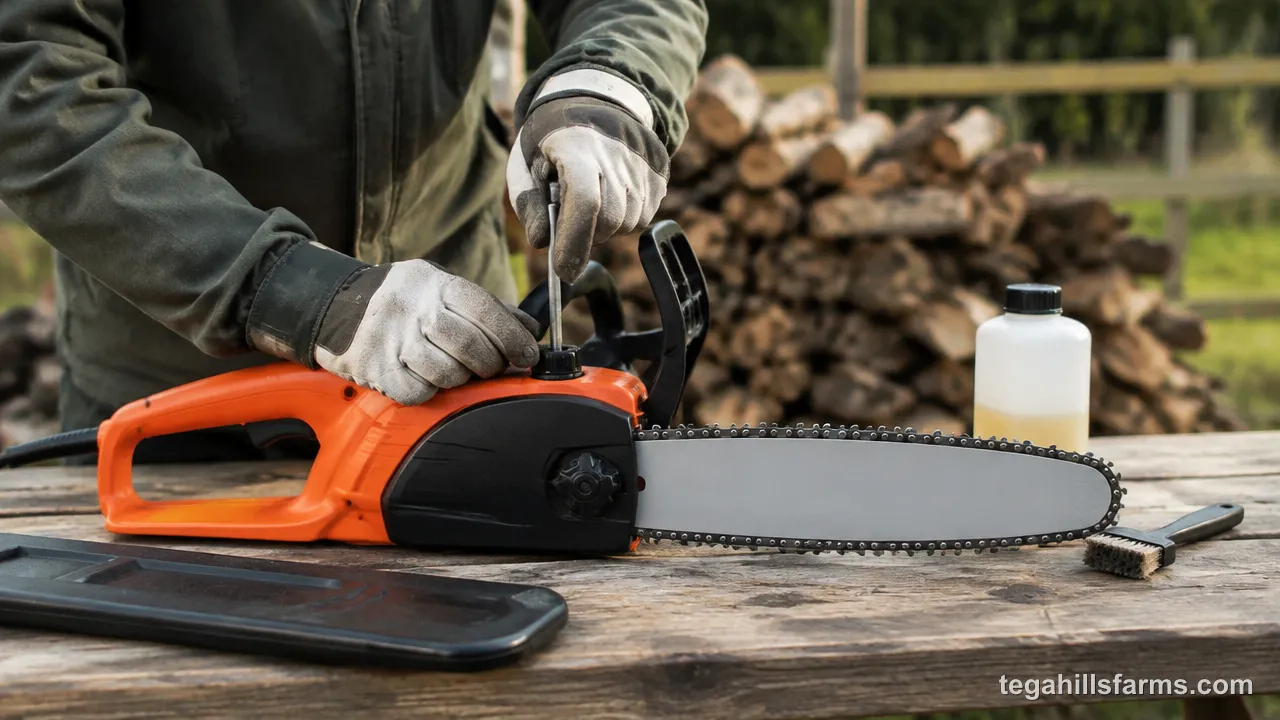
Fill the tank with bar and chain oil, not motor oil, and check the oil window before each session and during long ones. A dry chain heats up fast and dulls within minutes.
Check tension before you start and again after the first few cuts, because a chain stretches as it warms up. A properly tensioned chain sits snug against the bar but still pulls along it by hand with gloves on. Unplug the saw before you touch the chain.
Touch up the chain with a file or sharpener when it starts throwing fine dust instead of chips, or when you have to push to make it cut. A dull chain forces the motor to work harder and shortens its life.
Brush sawdust out of the motor vents after each use so the motor can cool. For storage, slide the scabbard over the bar and keep the saw dry. Draining the oil tank before a long winter keeps slow leaks off your shelf.
A saw that slows in a limb it used to cut easily, or gives off a hot electrical smell, has a motor running past what it can shed as heat. Keep pushing through that and the windings cook, turning a cheap fix like a sharper chain or a heavier cord into a dead saw in the middle of cleanup.
How Can You Tell a Corded Chainsaw Is Wearing Out or Being Overworked?
A burning smell, a motor that slows in wood it used to handle, and a chain that smokes or wanders are the main signs. Most of them point to a fixable cause before they point to a worn-out saw.
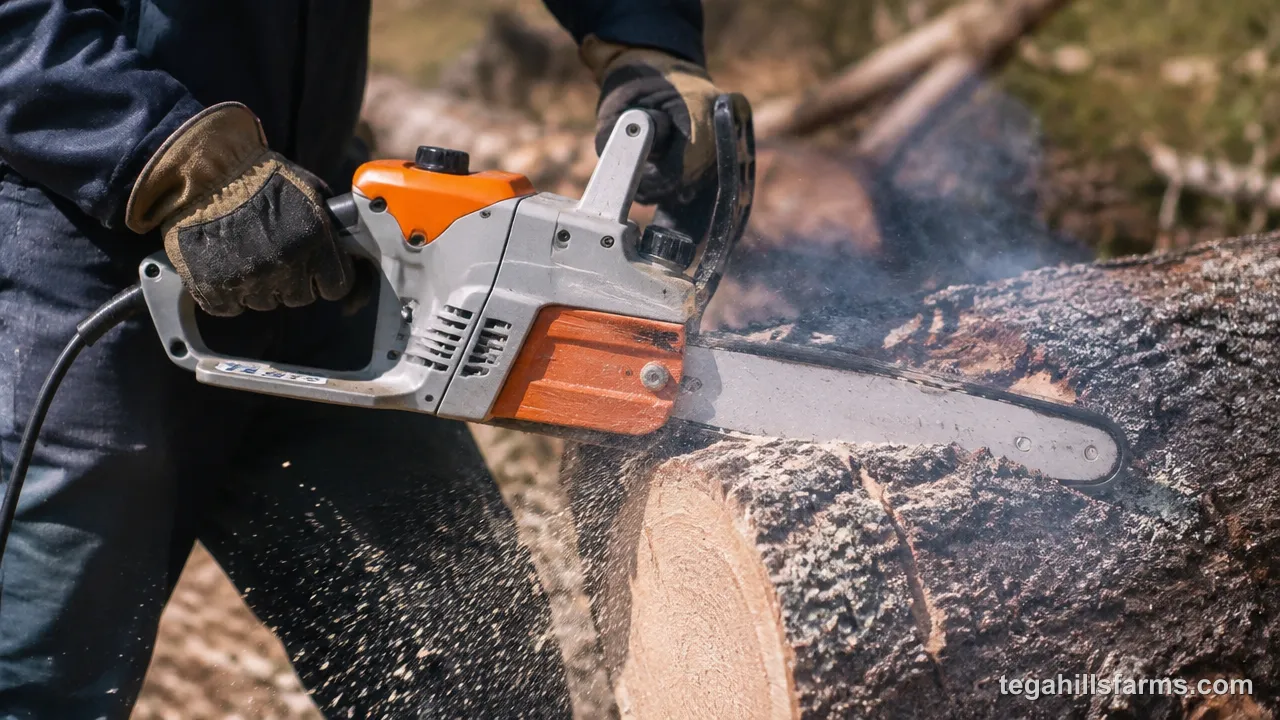
A hot smell means the motor is overloaded. Stop, unplug and let it cool. Then check the chain and cord before going back to work. A chain that smokes or cuts crooked is dull, dry or unevenly sharpened, so resharpen it and confirm oil is reaching the bar.
If the oil level never drops in the window, the oiler or its passage is clogged and the chain is running dry. Clear it before the next cut. A cord or plug that feels warm means the gauge is too light for the run or a connection is loose.
Replace the saw when it still smells hot or loses power after a sharp chain, good oil flow and a proper cord. A cracked housing or a chain brake that no longer stops the chain also means it’s time.
When Is a Corded Chainsaw a Smart Buy, and When Is It Wasted Money?
A corded saw pays off on a suburban lot with outlets close to the trees and pruning that comes a few times a year. It sits in the garage between jobs without fuel going stale or a battery losing charge, then runs the moment you need it.
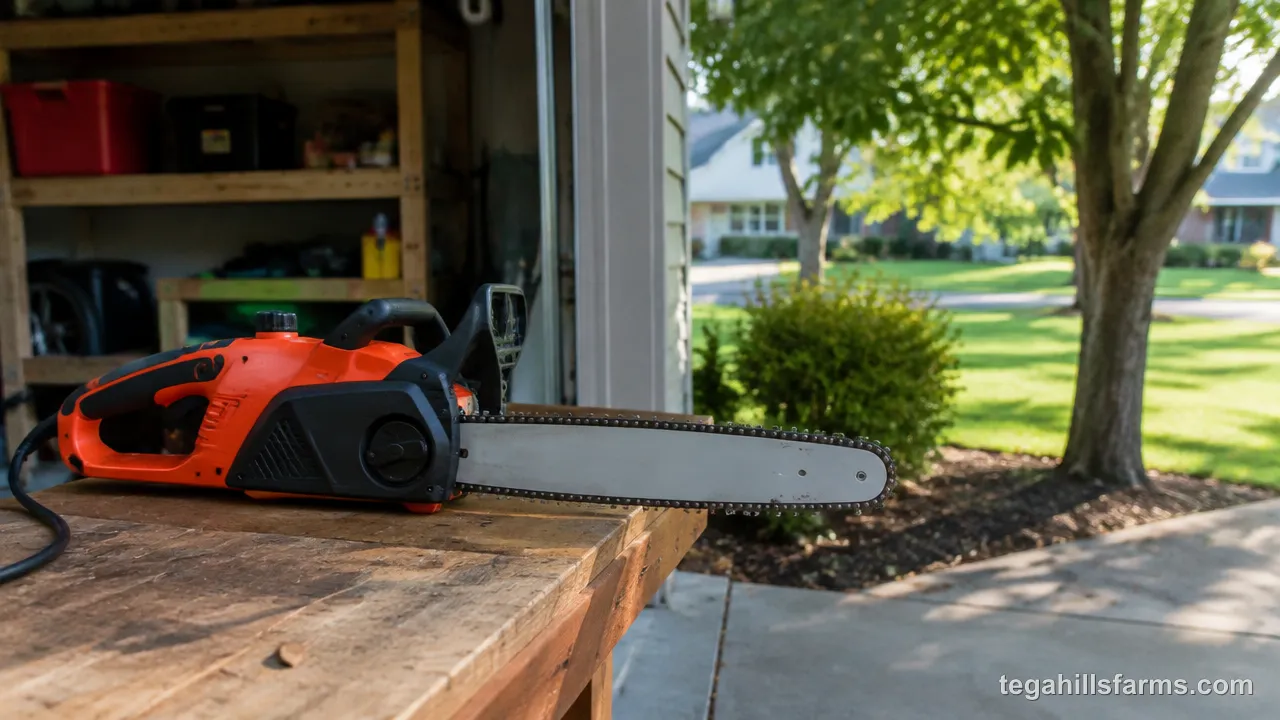
It’s wasted money when the trees are large, when the work sits at the far end of the property, or when you’re cutting heavily every week. In those yards the cord and motor become daily obstacles, and the saw either overheats or stays on the shelf while you borrow something else.
High limbs are their own case. Reaching overhead from a ladder with a chainsaw is a poor trade, and the best pole saws let you cut from the ground instead. Climbing work and big canopy trees call for different gear again, which is where the best chainsaws for arborists come in, though that work usually belongs with a professional.
Corded Chainsaw FAQs
Are corded chainsaws any good?
Yes, for pruning, storm limbs and small logs near the house. They start instantly, run quieter than gas and skip fuel, spark plugs and battery care. Their weak points are the cord’s reach and a motor built for intermittent cutting, so they suit homeowners rather than people cutting firewood every weekend.
How long does a corded chainsaw motor last?
Motor life depends mostly on how you treat it. A motor matched to the work, fed through a proper extension cord and driving a sharp, oiled chain runs cool and lasts for years of seasonal use. Pushing it through dense wood with a dull chain or a thin cord is what burns motors out early.
Can a corded chainsaw fell a tree?
It can take down small trees whose trunks fit within the bar’s cutting reach, as long as the tree stands within cord range of an outlet. Larger trees need a bigger saw and proper felling technique. Trees near houses, fences or power lines are a job for a professional.
Can you use a corded chainsaw in wet conditions?
Don’t run one in rain or while standing in water. Wet wood is fine to cut once conditions are dry. Plug into a GFCI-protected outlet, use an outdoor-rated cord, and keep the connection between cords off wet ground. Stop and unplug if the saw or cord gets soaked.
How long can the extension cord be?
The cord can be as long as its gauge supports for your saw’s amp rating, and your manual’s cord chart gives the pairing. Longer runs need thicker wire to avoid voltage drop. Keep the run as short as the job allows, since every extra length adds weight and more cord to keep clear of the chain.
Is a corded chainsaw quieter than gas?
Yes. An electric motor makes less noise than a gas engine, and it goes silent between cuts instead of idling. That makes early-morning or close-quarters work easier on neighbors. A running chainsaw is still loud at arm’s length, so wear hearing protection anyway.
Write Your Review
No reviews yet. Be the first to share your experience!