

Our top picks for the best 20 inch chainsaws in 2026 are the EGO Power+ CS2005 20 in (Best Overall), Husqvarna 450X Rancher (Best Easy-Start), Husqvarna 455 Rancher 20 in (Best Premium), Baococo 62cc 20 Inch Chainsaw (Best Durability), Greenworks 82V 20″ Cordless Chainsaw (Best Cordless), and IVOVI 63cc Gas Chainsaw (Best Gas-Powered). The EGO and Greenworks run on battery packs, while the rest burn mixed fuel in two-stroke engines.
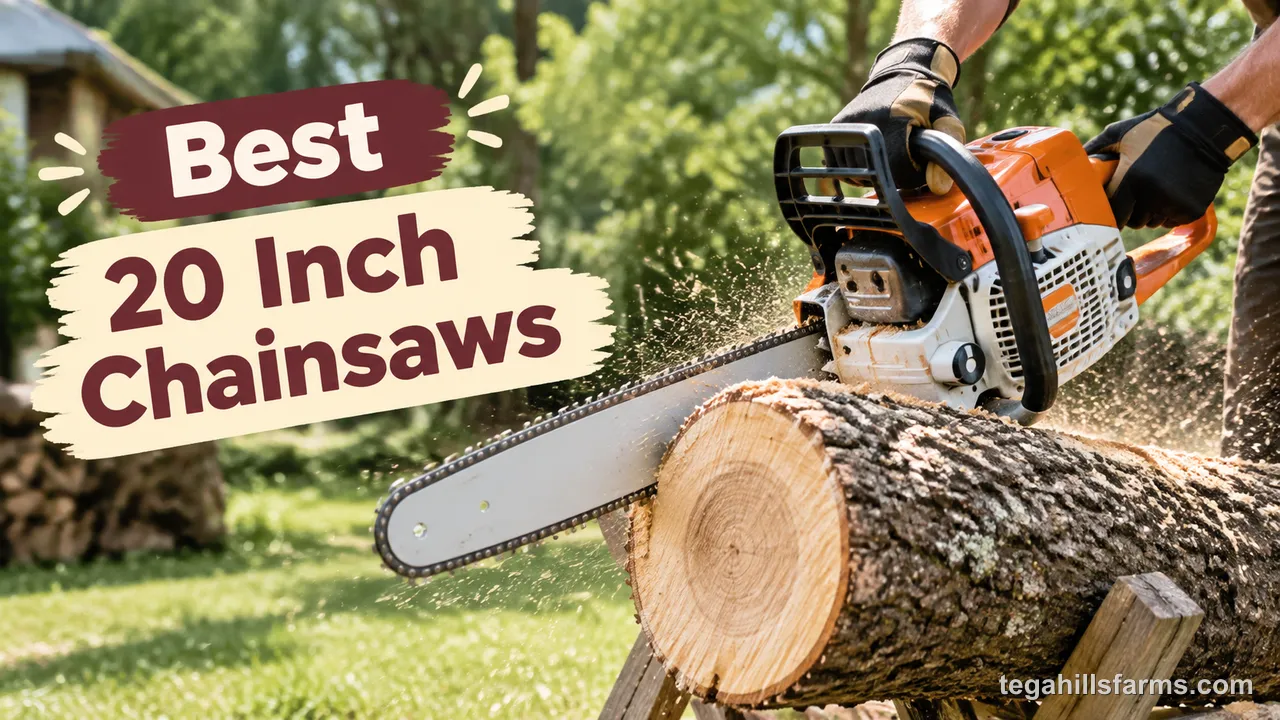
A good 20 inch saw keeps the chain at speed with the whole bar in the wood. It also starts reliably on a cold morning and doesn’t ask for constant upkeep from an owner who isn’t a mechanic. When a saw can’t keep the chain moving, it bogs in wide logs and pinches halfway through the cut.


The longer bar also puts more weight out front and moves the tip farther from your hands, where it can kick back. For anyone cutting firewood or clearing storm damage at home, handling and safety features count as much as raw power.
What Size Tree Can a 20 Inch Chainsaw Cut?
A 20-inch bar cuts trunks and logs a little under 20 inches thick in a single pass. If you work from both sides, it can handle wood up to roughly twice its usable length.
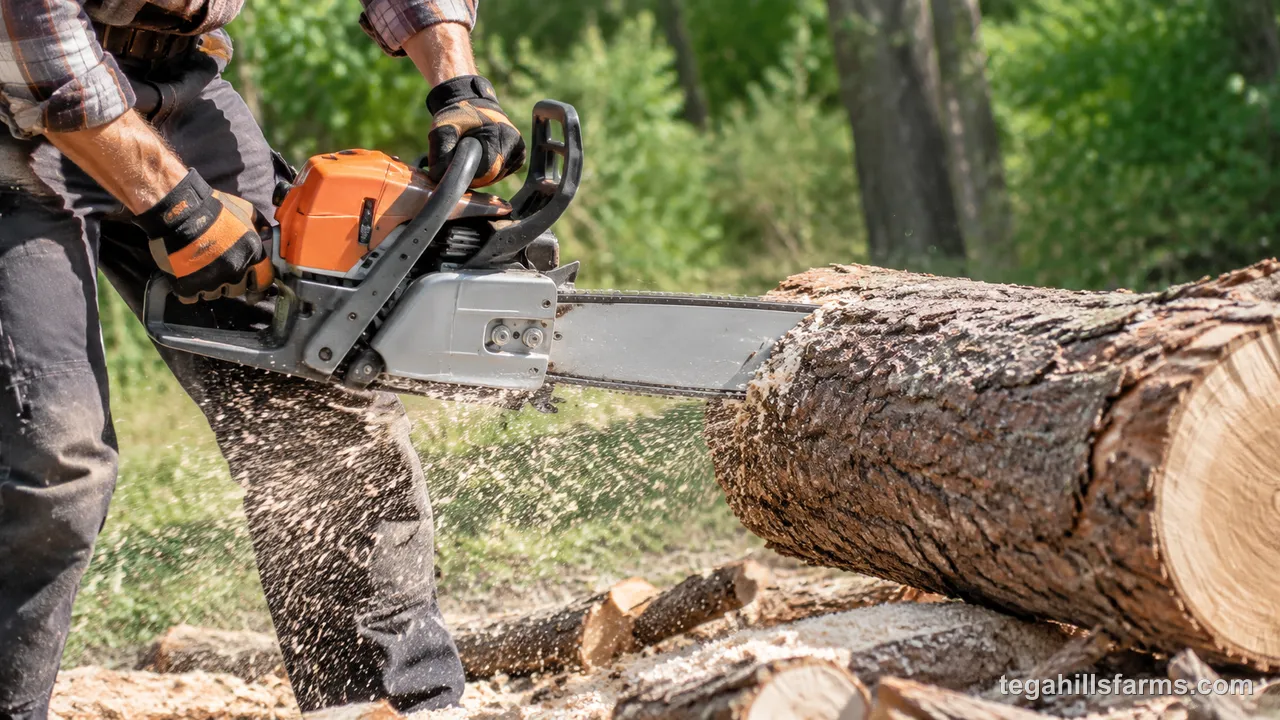
Bar length is measured from the front of the saw housing to the tip. Part of that length sits close to the body and the bucking spikes, so the depth you can actually cut is shorter than the number on the bar. For a clean single-side cut, pick logs and limbs that the bar clears with room to spare. That margin keeps the tip out of the wood and lowers the chance of kickback.
Cutting from both sides lets the same bar get through a wider trunk. You make one cut, move to the opposite side, and finish with a second cut that meets the first. This takes more skill, because the two cuts have to line up. Partway through, the wood can also shift and pinch the bar.
A trunk wider than twice the bar calls for professional felling techniques or a bigger saw. Short of that, a 20-inch bar covers most yard trees, firewood rounds, and storm-downed trunks a homeowner deals with. This bar length sits in the middle of the range, and our overview of the best chainsaws shows how it compares with shorter and longer options.
The 6 Best 20 Inch Chainsaws of 2026
Our recommended 20 inch saws are the EGO Power+ CS2005 20 in, Husqvarna 450X Rancher, Husqvarna 455 Rancher 20 in, Baococo 62cc 20 Inch Chainsaw, Greenworks 82V 20″ Cordless Chainsaw, and IVOVI 63cc Gas Chainsaw.
The gas models keep cutting as long as you keep refilling the tank, which matters on a long firewood day. The cordless models give up that open-ended runtime in exchange for quiet, fume-free cutting and almost no engine upkeep. Homeowners handling firewood and storm cleanup have options on both sides. Property owners who want a heavier-duty gas saw have several to choose from.
#1 EGO Power+ CS2005 20 in — Best Overall
Homeowners who want gas-class cutting without pull cords or fuel cans should start here. The brushless motor is rated equal to a 55cc gas saw and drives the chain at up to 82 ft/s, and the battery fits any EGO 56V tool you already own.
Key Specs:
- Motor: brushless, rated equivalent to a 55cc gas saw
- Chain speed: up to 82 ft/s (25 m/s)
- Battery: 56V 6.0Ah ARC Lithium, up to 135 cuts on a 6×6 per charge
- Chain: 3/8-inch pitch, 0.050-inch gauge, 69 drive links, full chisel
- Weather resistance: IPX4
- Weight: 30 lb
Detailed Review:
The brushless motor is the reason this saw can pull a full-length bar. It’s rated as equal to a 55cc gas engine, and the chain moves at up to 82 ft/s. At that speed, the full chisel teeth bite into large branches and stump-sized rounds instead of skating over them. Brushless motors also have no brushes to wear out, so there is less to service over the years.
The onboard display does more than it seems to. It switches speed modes, shows remaining charge, and lights an indicator when the chain brake is engaged. That tells you why the saw won’t run before you start troubleshooting. The front LED work light and IPX4 weather resistance help after a storm, when daylight is fading and everything is wet.
The trade-offs are runtime and heft. The included 6.0Ah pack is rated for up to 135 cuts on a 6×6, which handles a good pile of rounds but not an all-day firewood session without a second battery. At 30 lb, it is far heavier than the Greenworks 82V 20″ Cordless Chainsaw at 12.35 lb. Expect more arm fatigue when limbing or cutting at chest height. If you already own EGO 56V ARC Lithium packs, each one becomes a spare for this saw.
Pros:
- Brushless motor delivers gas-class power with no pull start.
- Display shows speed mode, charge level, and brake status.
- LED work light helps with cuts at dusk.
- Runs on any EGO 56V ARC Lithium battery.
Cons:
- Heavy to hold up during limbing cuts.
- One charge won’t cover a full firewood day.
Who It’s For:
Homeowners already invested in EGO 56V tools get the most from this saw, since their existing batteries double as spares for firewood and storm cleanup. It also suits anyone tired of mixing fuel. If you mostly limb at chest height and want a lighter cordless saw, the Greenworks 82V 20″ Cordless Chainsaw is easier to hold.
Editor’s Verdict:
Choose this saw if you want gas-level cutting with quiet, trigger-start operation and can live with its weight.
#2 Husqvarna 450X Rancher — Best Easy-Start
If hard pull starts have soured you on gas saws, this one fixes the worst of it. The starting procedure stays the same whether the engine is cold or warm, and AutoTune adjusts engine settings on its own, so you spend less time fussing with the choke and carburetor.
Key Specs:
- Engine: 50.2cc, 3.4 HP, 2-cycle X-Torq
- Engine tuning: AutoTune automatic adjustment
- Vibration control: LowVib dampeners
- Cooling: patented crankcase design
- Weight: 14.9 lb
Detailed Review:
Consistent starting is where this saw earns its keep. The same procedure works cold or warm, which removes the guesswork about choke position that floods so many two-stroke engines after a short break. For an owner who runs a saw only a few times a season, that predictability matters more than any spec.
AutoTune makes the carburetor adjustments a mechanic would otherwise do by hand. It sets the engine for maximum performance automatically, so you never need a screwdriver to keep it running right. The X-Torq engine holds power at low RPMs, which helps the chain keep pulling when the full bar is buried in a log.
A patented crankcase design improves cooling, and better heat control means longer engine life over long cutting stretches. At 14.9 lb with LowVib dampeners, it is lighter than the Baococo 62cc 20 Inch Chainsaw at about 16.6 lb. Its 3.4 HP output does trail the 3.7 HP of the IVOVI 63cc Gas Chainsaw.
The catch is fuel and routine care. You still mix two-stroke fuel. The engine also needs the same spark plug and air filter attention as any gas saw.
Pros:
- Starts the same way whether cold or warm.
- AutoTune removes manual carburetor adjustment.
- X-Torq engine holds power at low RPMs.
- LowVib dampeners reduce hand fatigue.
Cons:
- Needs mixed fuel and routine engine care.
- Louder and smokier than a battery saw.
Who It’s For:
Owners who dread yanking a cord on a cold morning will appreciate how predictably this saw fires up, especially if it sits idle between storms. It fits firewood cutters who want gas runtime without carburetor tinkering. Buyers who would rather avoid fuel entirely should look at a cordless saw instead.
Editor’s Verdict:
Pick it for dependable starts and self-adjusting engine tuning on a saw that stays manageable through long firewood sessions.
#3 Husqvarna 455 Rancher 20 in — Best Premium
Frequent cutters with plenty of trees should look here first. The 3.5 HP X-Torq engine accepts bars from 13 to 24 inches, and the LowVib dampeners and offset front handle keep long sessions easier on the hands.
Key Specs:
- Bar compatibility: 13 to 24 inches (20-inch bar included)
- Starting: Smart Start
- Air filtration: centrifugal Air Injection cleaning system
- Handling: LowVib dampeners, 7-degree offset front handle
- Weight: 13.2 lb
Detailed Review:
The 3.5 HP X-Torq engine is built to maximize power at low RPMs, so the chain keeps pulling when the bar is buried in dense hardwood. The saw accepts bars from 13 to 24 inches. You can drop to a shorter bar for limbing or step up for an oversized trunk without buying a second saw.
Air Injection is what justifies the premium position over the long run. A centrifugal system spins larger dust and debris out before air reaches the filter. The filter clogs more slowly, and the engine breathes cleaner air through dusty storm cleanup and dry-season cutting. I’d lean toward this saw for anyone who cuts through dry summers, since clean intake air is one of the simplest ways to extend a two-stroke engine’s life.
Handling makes up the rest of the case. The front handle is offset 7 degrees for a more natural grip, and LowVib dampeners absorb vibration before it reaches your hands. Smart Start lowers the effort needed to start the engine. The inertia-activated chain brake reacts to kickback even if your hand never moves.
At 13.2 lb, it is lighter than the Husqvarna 450X Rancher at 14.9 lb, a difference you feel when holding the saw out at arm’s length. The price of this refinement is the same as any gas saw: mixed fuel and regular two-stroke upkeep.
Pros:
- Accepts bars from 13 to 24 inches.
- Air Injection keeps debris away from the air filter.
- Offset handle and LowVib reduce hand strain.
- Inertia chain brake reacts to kickback automatically.
Cons:
- Requires mixed fuel and regular engine upkeep.
- Gas engine noise calls for hearing protection.
Who It’s For:
Property owners who cut year-round and want one gas saw for many jobs will get the most from this model. Its bar flexibility and dust-resistant air intake suit regular firewood and clearing work. Occasional users trimming a few limbs will be paying for durability they may never need.
Editor’s Verdict:
Buy it if you cut regularly and want a gas saw built to keep its engine clean and your hands comfortable for years.
#4 Baococo 62cc 20 Inch Chainsaw — Best Durability
Cold-weather cutters should give this one a close look. A forged magnesium crankcase protects the core of the 62cc engine, and a winterized carburetor with pre-heating keeps it running when temperatures drop.
Key Specs:
- Engine: 62cc, 2-cycle, EPA Phase III and CARB compliant
- Crankcase: forged magnesium
- Carburetor: winterized with pre-heating
- Chain tensioning: tool-free
- Chain brake: 3D anti-kickback system
- Weight: 16.6 lb
Detailed Review:
The forged magnesium crankcase is the core of this saw’s toughness. Forging produces a denser part than casting, so the crankcase better resists the knocks a saw takes riding in a truck bed or landing on frozen ground. Magnesium also keeps that strength from adding much weight.
The winterized carburetor with pre-heating makes the difference for northern owners. Warming the incoming air helps prevent carburetor icing, so the engine keeps running smoothly on raw winter days, which is often when storm damage happens. The 62cc engine meets EPA Phase III and CARB standards. That matters if you live where emissions rules limit which saws you can buy.
Tool-free chain tensioning makes everyday upkeep faster. You can tighten a loosening chain by hand mid-job instead of digging for a scrench, so you’re more likely to keep tension right and protect the bar. The 3D anti-kickback chain brake adds protection on a long bar, where the tip is easy to bury.
At about 16.6 lb, it is heavier than the Husqvarna 455 Rancher 20 in at 13.2 lb, so the extra durability comes with more weight to hold. That weight bothers you less when bucking logs on the ground than when cutting limbs at shoulder height.
Pros:
- Forged magnesium crankcase resists drops and rough handling.
- Winterized carburetor keeps it running in cold weather.
- Tool-free tensioning speeds chain adjustment.
- Engine is EPA Phase III and CARB compliant.
Cons:
- Extra weight tires arms during limbing.
- Mixed fuel and two-stroke upkeep still required.
Who It’s For:
Anyone in a cold-winter region who stores a saw in an unheated shed will value the carburetor pre-heating and tough crankcase. It also suits owners who hate hunting for tools to adjust chain tension. If you want something lighter for frequent limbing, the Husqvarna 455 Rancher 20 in is easier to carry.
Editor’s Verdict:
Expect a saw built to shrug off cold storage and rough handling, with tool-free upkeep that makes regular chain adjustment easy.
#5 Greenworks 82V 20″ Cordless Chainsaw — Best Cordless
For storm cleanup and limbing without fuel or pull cords, this cordless saw is easy to live with. Its 4.6 hp brushless direct drive motor is rated equal to a 55cc gas saw, yet it starts on the trigger and runs with low vibration.
Key Specs:
- Motor: 4.6 hp (3.4 kW) brushless direct drive, 55cc gas equivalent
- Battery: 82V 4.0Ah, 288 Wh
- Cuts per charge: up to 205 on 4×4 lumber
- Oiling: automatic oiler, flip-up cap, transparent oil tank
- Weight: 12.35 lb
Detailed Review:
The commercial-grade brushless direct drive motor sends its 4.6 hp straight to the chain, which keeps the chain moving through thick limbs instead of bogging. With no gas, no priming, and no pulling, it starts every time you squeeze the trigger. There’s also no carburetor to gum up during storage.
Daily handling is where this saw stands out. At 12.35 lb, it is far lighter than the EGO Power+ CS2005 20 in at 30 lb. It also runs with low vibration and much less noise than a gas saw, so you can clear a fallen limb early in the morning without bothering the neighbors.
The automatic oiler keeps the chain lubricated, and the transparent tank with a flip-up cap shows the oil level at a glance and makes refills quick. Heat-treated steel bucking spikes, a mechanical chain brake, and a wrap-around handle round out a sensible layout for felling and bucking.
Runtime is the limit. The 4.0Ah pack is rated for up to 205 cuts on 4×4 lumber, which suits cleanup work better than all-day firewood. The 82V battery also doesn’t work with Greenworks 80V products, so owners of that line can’t share packs.
Pros:
- Starts on the trigger with no fuel or priming.
- Brushless direct drive motor resists bogging in thick limbs.
- Transparent tank shows bar oil level at a glance.
- Low vibration keeps long cleanup sessions comfortable.
Cons:
- Batteries won’t swap with Greenworks 80V tools.
- One charge suits cleanup more than all-day bucking.
Who It’s For:
Suburban homeowners handling storm debris and backyard trees will like how quietly and easily this saw works. It fits Greenworks 82V owners who can share batteries across tools. If you already run Greenworks 80V gear, those packs won’t fit this saw.
Editor’s Verdict:
Count on it for quiet, fume-free cleanup work, as long as the 82V battery fits the tools you already own.
#6 IVOVI 63cc Gas Chainsaw — Best Gas-Powered
This kit covers more jobs than a single-bar saw. The 63cc engine makes 3.7 HP with chain speed up to 85 ft/s, and the included 18-inch and 20-inch bars let you match the bar to the work in front of you.
Key Specs:
- Engine: 63cc, 3.7 HP
- Chain speed: up to 85 ft/s
- Bars included: 18-inch and 20-inch
- Starting: Easy-Start recoil
- Chain brake: inertia-activated, stops in under 0.1 seconds
- Extras: automatic oiler, carrying pouch
Detailed Review:
The 63cc engine makes 3.7 HP, more than the 3.4 HP of the Husqvarna 450X Rancher. That extra output helps the chain hold speed through thick oak rounds where a smaller engine would slow down. With chain speed up to 85 ft/s, each pass clears chips quickly and keeps the cut moving.
The dual-bar kit is the practical reason to choose it. Use the 20-inch bar for bucking firewood and felling larger trees, then swap to the 18-inch bar for limbing and pruning, where a shorter front end is easier to control. You get two setups from one engine instead of buying a second saw.
The Easy-Start recoil is designed to fire on early pulls, which takes strain off your shoulder. The automatic oiler keeps the chain running cool and cuts friction to extend bar life. If the tip kicks back, the inertia-activated brake stops the chain in under 0.1 seconds. Shock-absorbing handles reduce hand fatigue on heavy cuts.
Expect the usual gas-saw chores: mixing fuel, cleaning the air filter, and checking the spark plug. The included carrying pouch keeps tools organized between jobs.
Pros:
- Includes both 18-inch and 20-inch bars.
- 3.7 HP engine keeps power in dense hardwood.
- Easy-Start recoil catches on early pulls.
- Inertia brake stops the chain in under 0.1 seconds.
Cons:
- Swapping bars adds a setup step between jobs.
- Gas engine needs mixed fuel and routine upkeep.
Who It’s For:
Landowners who split time between felling, bucking, and pruning will get the most from the dual-bar setup. It also suits anyone who wants strong gas power without a hard pull start. If quiet operation near neighbors matters more than raw output, a cordless saw will fit better.
Editor’s Verdict:
Get it if you want a strong gas engine plus a spare bar that turns one saw into a felling and pruning kit.
Gas or Battery: Which 20 Inch Chainsaw Type Fits Your Property?
Gas saws win on sustained power and runtime, while battery saws win on quiet, low-upkeep handling. Which matters more depends on how long you cut at a stretch and whether noise, fumes, or engine maintenance would put you off.
Which Type Cuts Faster and Feels More Powerful?
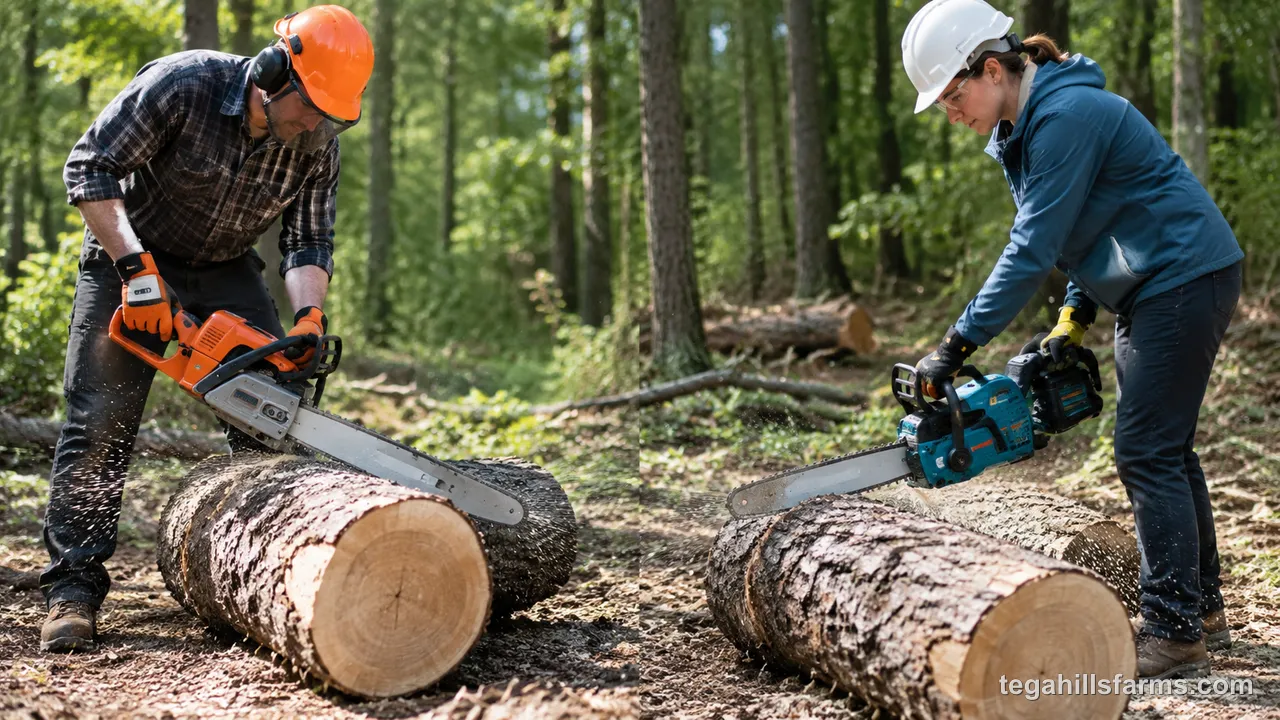
A well-tuned gas engine holds chain speed better under a long, heavy load. A strong brushless battery motor matches it on most cuts and pulls hard from the moment you squeeze the trigger.
Gas saws build power with RPM, so a two-stroke engine working through a seasoned oak round keeps the chain moving as long as it has fuel. Brushless motors deliver full torque from a standstill, which makes them feel quick on limbs and medium logs. Sustained heavy cutting drains the pack faster, though, and some saws ease off as the battery runs down.
A gas-equivalent rating, such as the 55cc label on the EGO Power+ CS2005 20 in, compares the saw to a gas engine class. It is not a measured standard. Treat it as a rough guide to the jobs a saw can handle, and compare chain speed and bar length for a clearer picture. If you cut big hardwood every weekend, you’ll find more options among the best gas chainsaws.
How Do Weight, Noise, and Runtime Compare?
A battery saw is quieter and easier on the hands, but it stops when the pack runs flat. A gas saw keeps cutting with each refill and asks for more upkeep in return.
Weight depends more on the battery pack and build than on the power type, so compare listed weights model by model. What a battery saw reliably removes is engine vibration and exhaust in your face, which makes it easier to use near the house or early on a weekend. Runtime is counted in cuts per charge, and a spare battery is the only way to stretch a long session.
Gas saws run as long as you have mixed fuel on hand, which suits a full day of firewood work far from an outlet. That freedom comes with oil-mix ratios, spark plugs, air filters, and stale fuel after long storage. If quiet, low-maintenance cutting appeals to you more than all-day runtime, compare the best battery chainsaws before deciding.
What Should You Look for in a 20 Inch Chainsaw?
On a saw this size, enough power to keep the chain at speed through the full bar decides more than any other spec, because an underpowered saw bogs and pinches in wide logs. Chain details and safety features then decide how easy that power is to live with. Our guide on how to choose a chainsaw covers the basics for every bar size.
How Much Engine Size or Battery Power Is Enough?
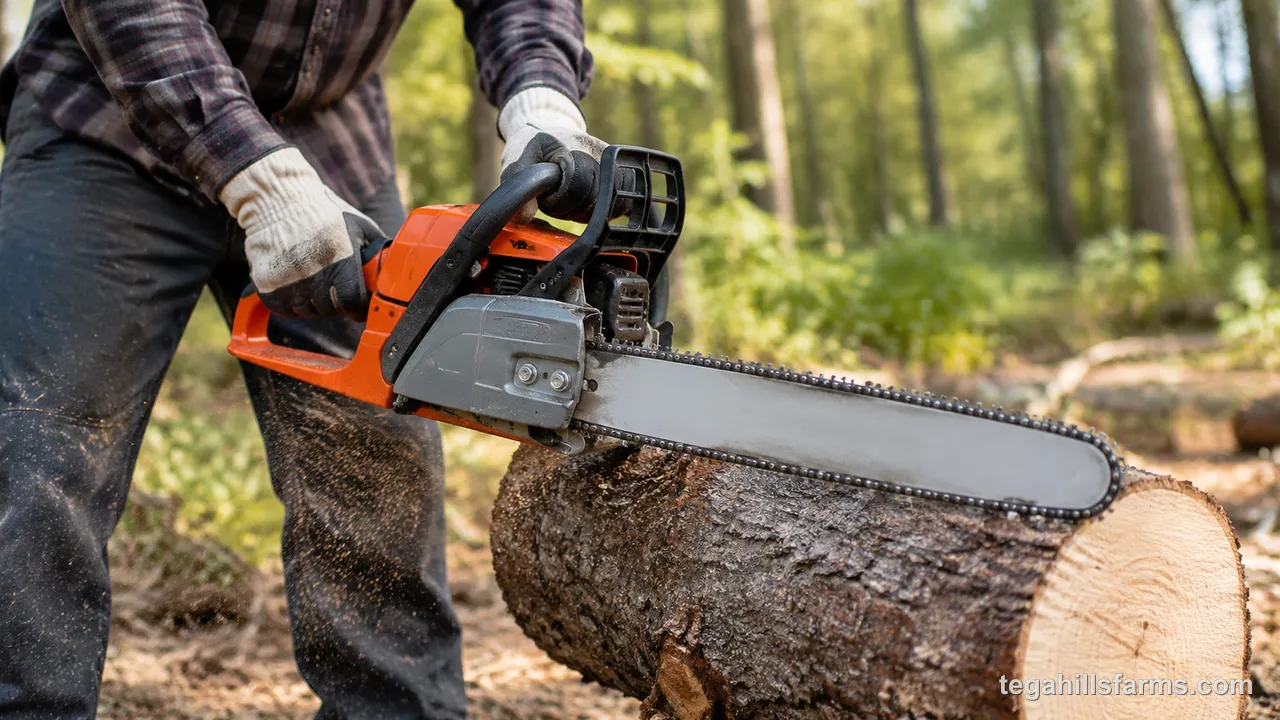
Gas saws sold with a 20-inch bar typically sit in the 50cc to 60cc class. Battery saws need a high-voltage platform with a large-capacity pack to do the same job.
Displacement sets how much fuel and air the engine burns per stroke. A larger engine holds chain speed when the whole bar is in dense wood, instead of slowing and binding. A longer bar puts more cutting teeth in the wood at once, which adds drag. Stepping down in power to save weight usually means slower, harder cuts on big logs.
On a battery saw, voltage works much like engine size: higher voltage lets the motor deliver more power to the chain. Amp-hours measure how much energy the pack stores, which decides how many cuts you get before a swap. Multiply volts by amp-hours to get watt-hours, the clearest single number for comparing packs across brands.
Which Chain and Bar Details Matter?
Pitch, gauge, and drive link count decide whether a replacement chain fits your bar. All three have to match the bar, or the chain will either fail to seat or come off the bar.
Pitch is the spacing between links, and gauge is the thickness of the drive links that ride in the bar groove. Drive link count sets the chain’s length. A 3/8-inch pitch, 0.050-inch gauge chain is common on saws this size.
Two upkeep features save the most hassle. An automatic oiler feeds bar oil while you cut, protecting the bar and chain from heat and wear. Tool-free tensioning lets you tighten a stretching chain by hand mid-job, so you’re more likely to keep tension correct.
Which Safety Features Are Worth Having?
Insist on a chain brake, a low-kickback design, vibration dampening, and a well-placed front handle. A longer bar puts more weight out front and adds tip area that can catch wood.
Kickback happens when the upper tip of the bar catches wood and throws the saw up toward you. An inertia-activated chain brake stops the chain when it senses that sudden motion, even if your hand never touches the brake lever. Anti-kickback chain and bar designs reduce how hard the tip grabs in the first place.
Vibration dampeners isolate the handles from the engine. That cuts the numbness and grip fatigue that make a heavy saw harder to control late in the day. An offset or wrap-around front handle lets you hold the saw securely for side cuts and felling.
Which 20 Inch Chainsaw Works Best for Your Job?
Firewood bucking rewards sustained power and long runtime, while storm cleanup and land clearing reward dependable starting and portability around tangled, fallen wood. Matching the saw to the job you do most keeps you from carrying more weight, or less power, than the work needs.
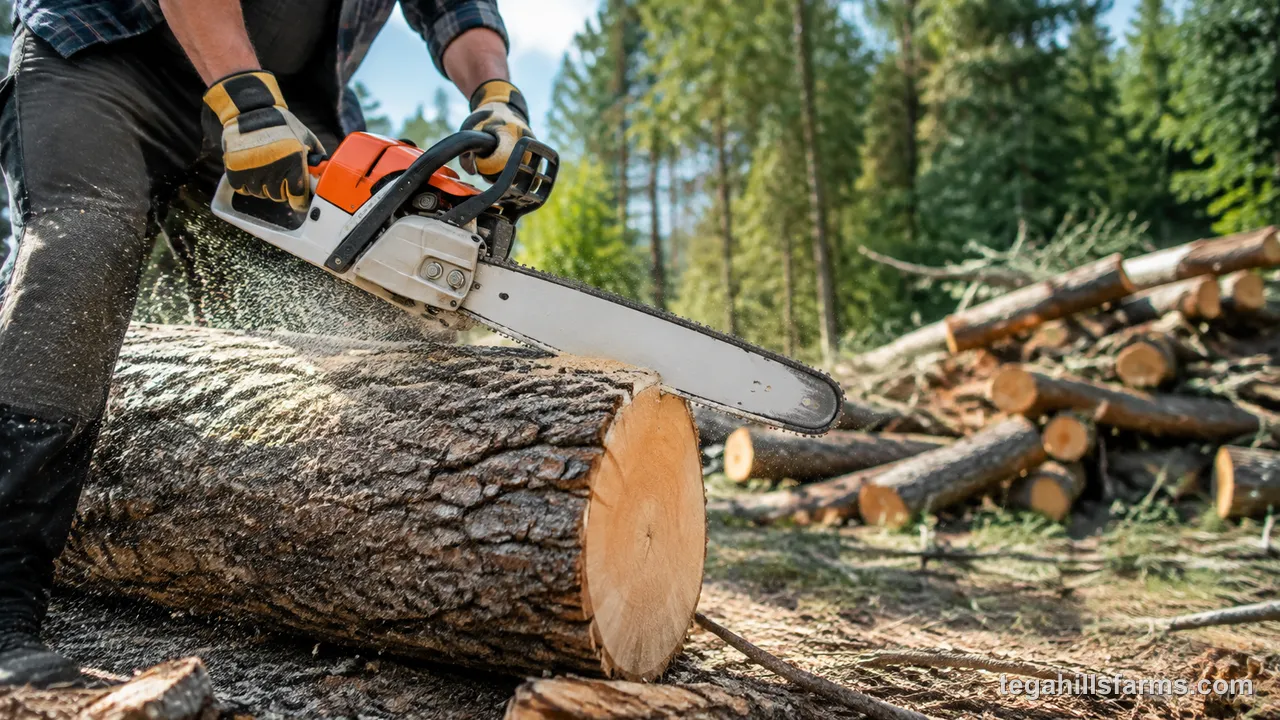
Firewood and Log Cutting
Regular firewood cutting favors a gas saw, or a cordless saw with spare batteries. Bucking seasoned logs means dozens of cuts in a row with the bar fully loaded.
Seasoned hardwood is dense and dry, so it drags on the engine or motor and dulls chains faster than softwood. A saw that bogs halfway through each round turns a morning job into a whole day. Gas models keep cutting as long as you refill the tank and bar oil, which suits putting up a winter’s supply in a weekend.
A battery saw handles occasional bucking well. For regular firewood work, though, I’d keep a second pack charging while you cut. For more choices built around this job, see the best chainsaws for cutting firewood.
Storm Cleanup and Land Clearing
Storm cleanup and land clearing favor a gas saw with a larger bar and dependable starting. Fallen trees, thick limbs, and brush are often far from the house, and the power may be out.
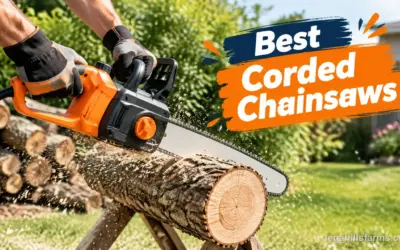
A corded saw ties you to an extension cord and a working outlet, which rules it out after an outage and limits how far you can go. A cordless saw works for limbs near the house, but a long day across several fallen trunks can drain your batteries with no way to recharge. Gas starts and refuels anywhere, so it’s the safer choice when the job is big or the grid is down.
Storm-bent wood is under tension and likely to pinch the bar, so a reliable chain brake matters here. The best chainsaws for storm cleanup cover more picks for this work.
Is a 20 Inch Chainsaw Too Big for Home Use?
No for homeowners with larger trees and regular firewood work, but it can be more saw than you need for light pruning and small limbs.
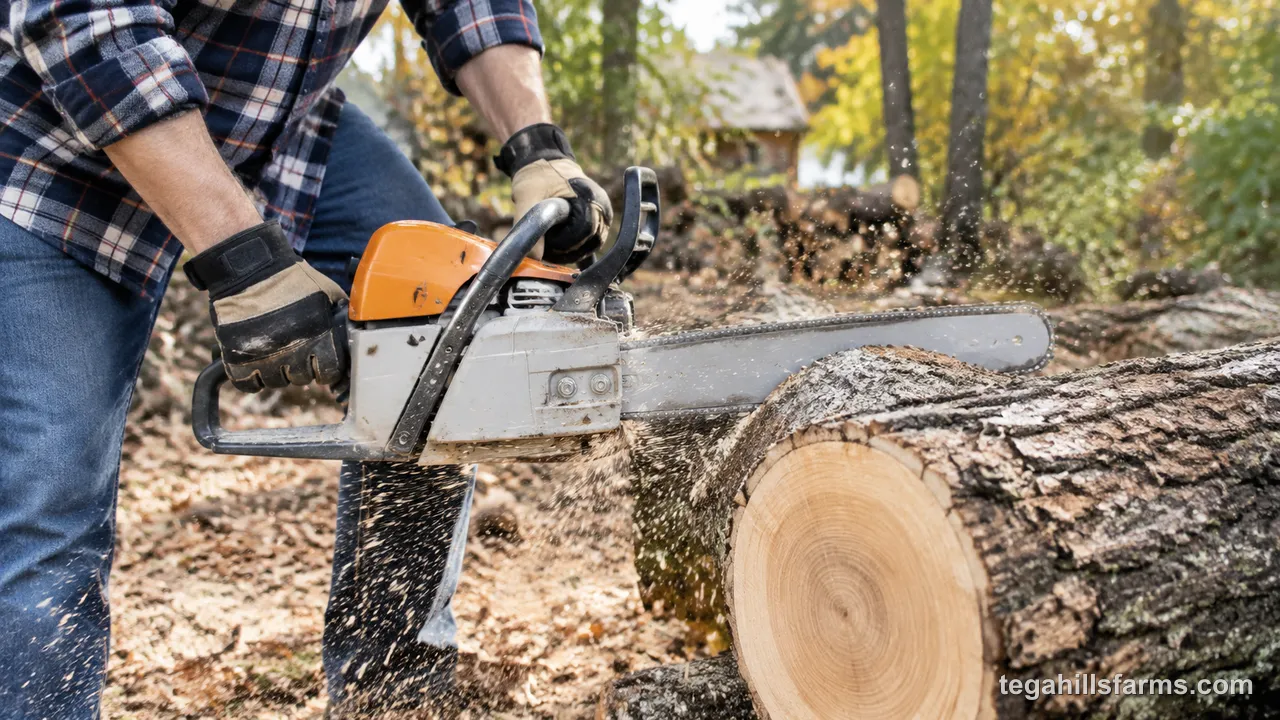
A longer bar adds weight out front and moves the tip farther from your hands. Holding the saw level for limbing or above-the-chest cuts tires your arms faster and makes precise control harder. On the ground, that extra reach pays off: you can buck thick logs or fell a large backyard tree without having to work your way around the trunk so often.
If your work is mostly trimming branches and small trees, the best 16 inch chainsaws are easier to handle. The best 18 inch chainsaws split the difference for mixed jobs.
A chain that has gone dull still cuts, but it makes even a strong engine push harder, throws fine dust instead of chips, and raises the odds of kickback as you lean on the saw. Skip sharpening and tension checks for a season and the bar rails wear unevenly, so the next new chain drifts off line and the bar needs replacing well before its time.
How Do You Keep a Chainsaw Cutting Well After the First Season?
Sharpen the chain when the saw starts throwing fine sawdust instead of curled chips. Check tension before every session, and replace the bar once its rails wear unevenly. A sharp chain pulls itself into the wood, while a dull one makes you push, cuts crooked, and smokes even with good oiling. A loose chain sags off the bottom of the bar and can jump the groove, and one that’s too tight overheats the bar.
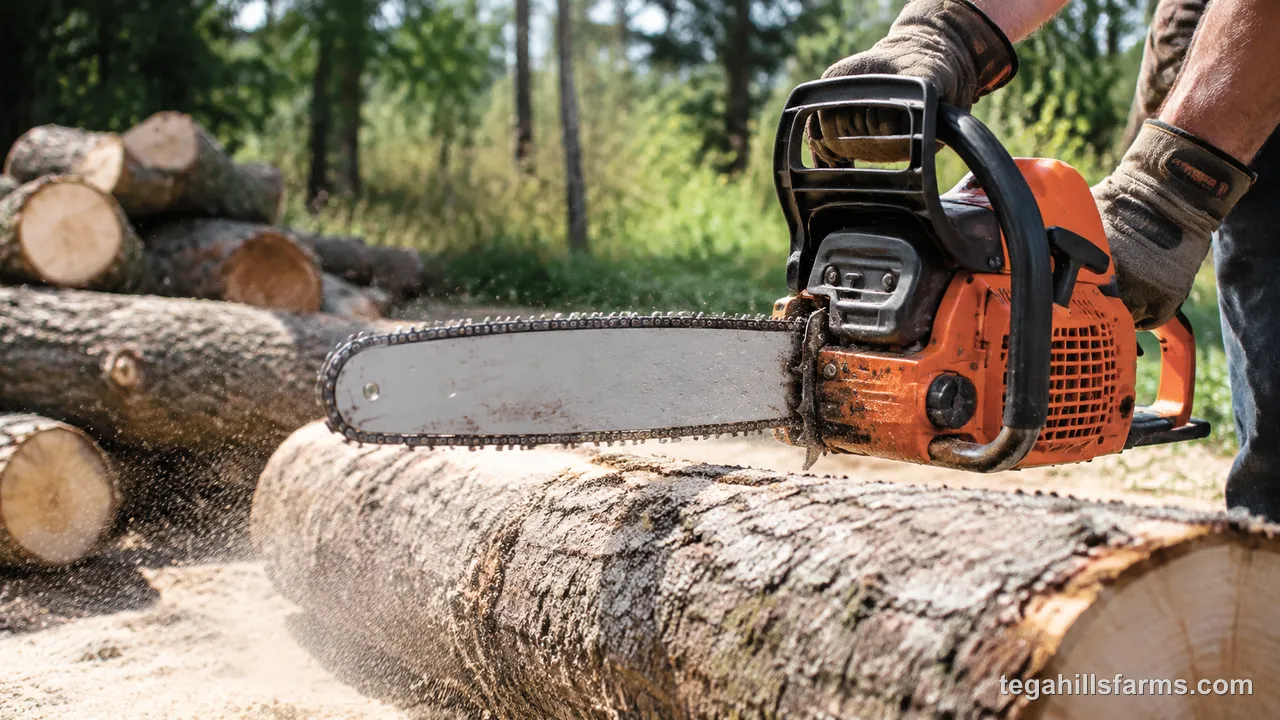
Filing restores a dull chain many times over. Replace it when the cutters are filed down to the wear marks, the teeth are chipped from hitting rock or dirt, or the chain has stretched past the tension adjustment. Matching pitch, gauge, and drive links matters at that point, and a look at the best chainsaw chains helps narrow the choice. A file guide or one of the chainsaw sharpeners keeps edges consistent between replacements.
Keep the bar oil reservoir full every time you refuel or recharge. Flip the bar now and then so the rails wear evenly. Before winter, run a gas saw’s carburetor dry or use stabilized fuel. Store battery packs indoors at a partial charge rather than in a freezing shed.
What Protective Gear Do You Need Before Using a Chainsaw?
Before you start any chainsaw, put on cut-resistant chaps or chainsaw pants, eye and face protection, hearing protection, sturdy gloves, and boots with good traction and protective toes.
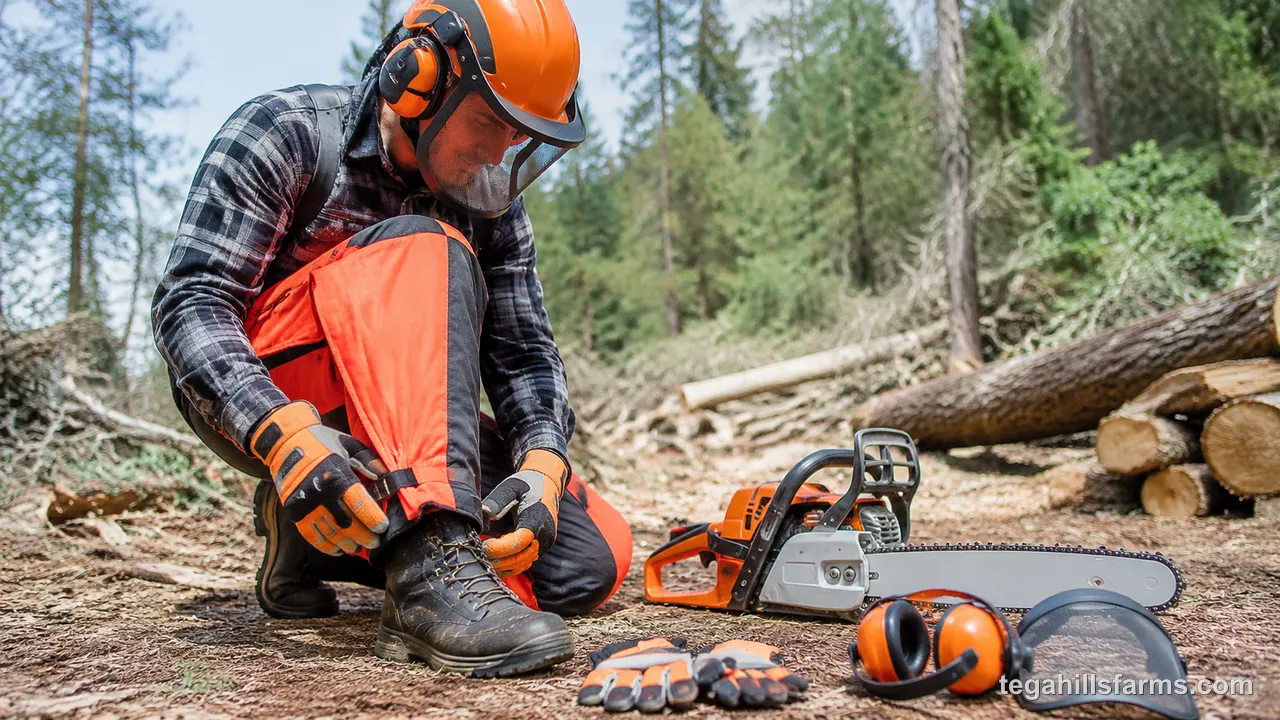
Chaps and chainsaw pants contain layers of long fibers that pull out and jam the drive sprocket when the chain touches them, stopping it before it reaches your leg. A longer bar puts more moving chain near your thighs on every cut, so leg protection matters even more with a saw this size.
Safety glasses under a mesh face screen stop chips and bark. A helmet with an attached screen and earmuffs covers your head, face, and hearing in one piece, which helps when felling. Gas saws run loud enough to damage hearing over a long session, and battery saws still call for protection. Gloves improve grip on vibrating handles, and good boots keep your footing on wet, uneven ground. Most of this kit is covered in the best chainsaw accessories.
How Should You Read Cutting-Speed and Cuts-Per-Charge Claims?
Cutting-speed and cuts-per-charge figures only mean something when you know the wood, the cut size, the battery, and the power mode behind them. Numbers from different tests can’t be compared side by side.
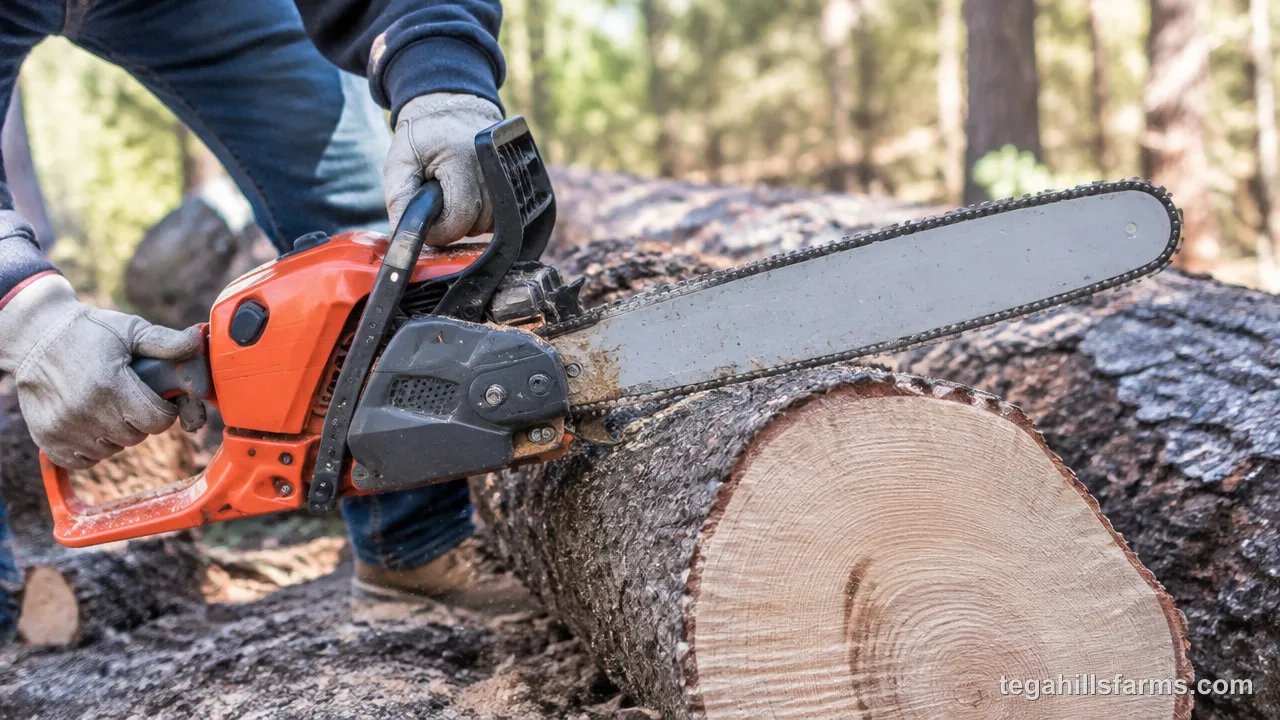
For example, the EGO Power+ CS2005 20 in is rated for up to 135 cuts on a 6×6 with its 6.0Ah pack. The Greenworks 82V 20″ Cordless Chainsaw is rated for up to 205 cuts on 4×4 lumber with a 4.0Ah pack. A 6×6 puts far more wood into each cut than a 4×4, so the higher count doesn’t show which saw goes further.
Wood species matters just as much. Pine cuts far faster than seasoned oak or hickory, and dimensional lumber is drier and more uniform than a green log from your yard. Power modes change results too, since a high-speed setting drains a pack faster than an economy setting.
To judge a claim, check what was cut, which battery was used, and which mode was selected. Then assume your own logs will cut slower and drain the pack sooner than a test run on clean softwood lumber.
What Else Do Buyers Ask About 20 Inch Chainsaws?
Which chainsaw brands are known for reliability?
Husqvarna has a long track record in gas saws and a wide dealer network for parts and service, which matters as much as the saw itself once it needs repair. EGO and Greenworks are established battery-platform names with broad tool lineups. Parts availability near you is a good tiebreaker, and our rundown of the best chainsaw brands compares the major names.
Can a beginner handle a 20 inch chainsaw?
Yes, if they start with bucking logs on the ground, wear full protective gear, and learn how kickback happens before cutting. The longer bar adds weight and reach, so a lighter model with an inertia chain brake is the gentler starting point. Avoid felling large trees or cutting above chest height until handling the saw feels routine.
Can a budget chainsaw handle 20 inch bar work?
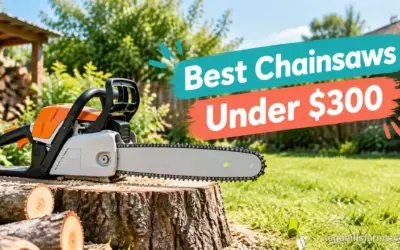
A budget saw can handle occasional firewood and storm cleanup if its engine is big enough to keep a long bar moving and its chain brake works reliably. Saws at the budget end can fall short on long-term durability and parts support, so it pays to check both before buying. If you’re watching cost, compare the best chainsaws under $300 before choosing.
Can a battery chainsaw replace a gas saw for firewood?
For a few loads a season, yes. A strong brushless saw on a high-voltage platform, plus a spare pack, cuts seasoned rounds without fuel or pull starts. If you put up a full winter’s supply every year, a gas saw still wins on runtime, because refilling the tank takes seconds while recharging takes far longer.
How tight should a 20 inch chainsaw chain be?
The chain should sit snug against the underside of the bar yet still pull freely by hand with gloves on. You should be able to lift a drive link partway out of the groove but not clear it. Check tension with the saw cold before each session, and again after the first few cuts on a new chain.
Write Your Review
No reviews yet. Be the first to share your experience!