

Our top picks for the best pruning chainsaws in 2026 are the DEWALT DCCS623B 8-Inch Pruning Chainsaw (Best Overall), EGO Power+ CS1611 16″ Chainsaw (Best Battery Life), Greenworks 24V 6″ Mini Pruning Chainsaw (Best Lightweight), WORX WG322 20V 10″ Cordless Chainsaw (Best Value), RYOBI 18V Brushless 8″ Pruning Mini Chainsaw (Best Compact), Greenworks 24V 10″ Chainsaw (Best Budget), Husqvarna Power Axe 225i (Best Premium), and Chain Saw, Gas, 12 In. Bar, 26.9CC (Best Gas-Powered).
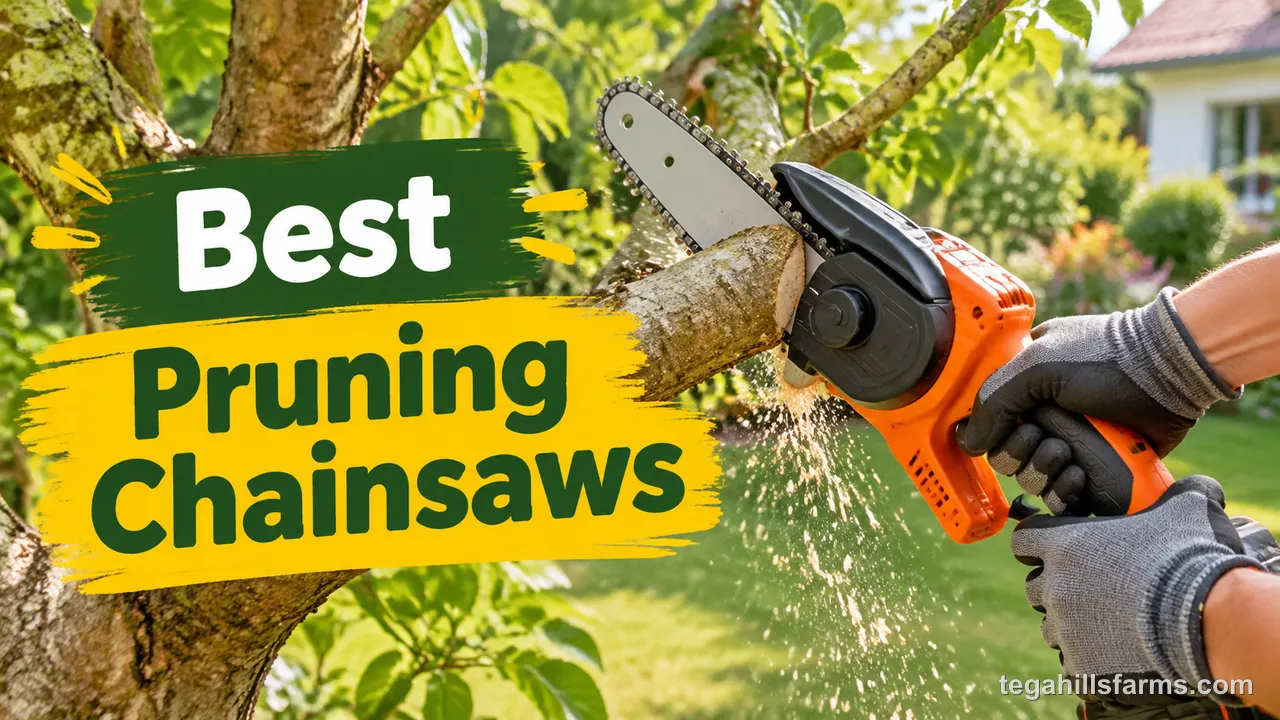
Bar length sets the limit on how thick a limb you can cut through cleanly. The battery comes next: a saw that shares packs with the trimmer or blower you already own skips a second charger and turns every spare battery into extra runtime. Weight and balance follow, because pruning means holding the saw at chest height or above, and a saw that feels light on the bench can feel heavy before the job is done.
A small saw is light enough to swing one-handed. That tempts you into cuts you would never try with a full-size saw, and a chain that catches a twig near the nose throws the bar back toward you just as fast. Tip guards, hand guards, chain brakes and low-kickback chains decide how forgiving a saw is when that happens.



If a 20V, 24V, 18V or 56V battery from one of these brands already sits on your charger, start with that brand’s saw. Matching the platform saves you a second charger and gives you spare runtime the day you buy it.
What Is a Pruning Chainsaw and How Does It Differ From a Top-Handle Saw?
The category covers short-bar saws, mostly battery-powered, made for limbs, hedges and yard cleanup rather than felling, and they set the grip behind the motor instead of on top of it.
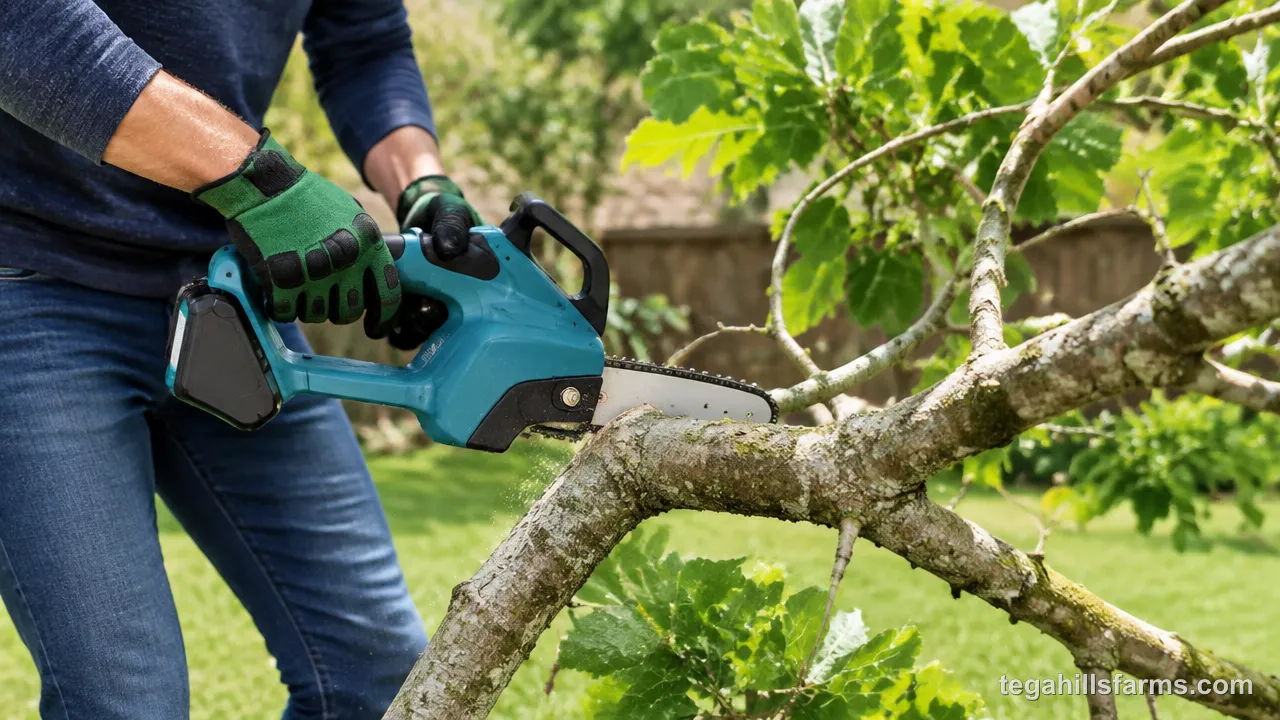
Bars on these saws are short, so they slip between crossing branches and stay light enough to hold at arm’s length. Your trigger hand sits behind the motor and the other hand steadies a front grip or the body. Some of these saws can be handled one-handed for small cuts at ground level, though two hands always give more control.
A top-handle saw puts the handle directly above the engine. That layout is compact and balanced for arborists working from a rope and harness, but it is easy to swing with one hand, and a kickback sends the bar up toward your face. It rewards training more than a homeowner’s pruning saw does. Climbers and heavy trimmers should compare the best top handle chainsaws, while the best rear handle chainsaws, with a wraparound front handle and a two-hand stance, give more leverage on larger limbs and trunks.
For the limbs a homeowner cuts from the ground, the rear-grip pruning saw is the safer fit because your stance and hand position stay familiar. When the job also includes felling and bucking, our roundup of the best chainsaws covers every size and power type.
What Should You Look for in a Pruning Chainsaw?
The right pick comes from your yard and your workload, not from the biggest motor or the longest bar on the shelf.
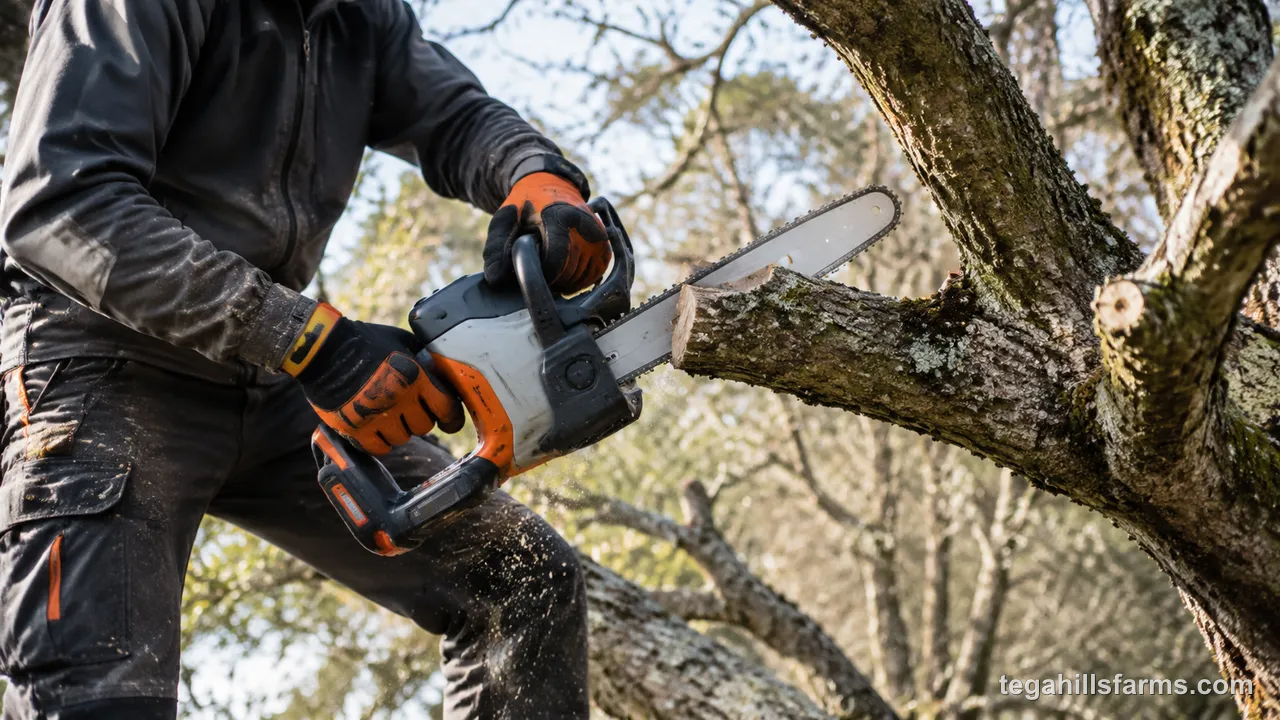
Too much saw means extra weight held over your head for every cut. Too little means stalled chains, drained batteries and limbs you end up cutting from both sides. A pruning saw earns its place by how well its size, power source and safety hardware fit the limbs you actually cut and the way you cut them. For full-size saws used in felling and firewood, the guide on how to choose a chainsaw covers engine size and bar choices that don’t apply to this class.
How Long Should the Bar Be for the Limbs You Cut?
You want the nose to clear the far side of the wood you cut most often. A saw that reaches through a limb finishes it in a single pass instead of working from two sides. Every extra inch of bar also adds weight out front and more nose to catch on neighboring branches, so longer isn’t automatically better for pruning.
That trade is why the mini saws in this class run short bars of 6 to 10 inches. They clear suckers, crossing branches, low limbs and overgrown shrubs quickly, and they fit between branches where a longer bar would bind. Once your limbs regularly approach the length of the bar, cuts slow down, the chain pinches more often and the battery drains faster. At that point, a 14- or 16-inch saw does the work in fewer passes and with less strain on the motor.
Which Battery Platform and Runtime Make Sense?
The pack already sitting on your charger should steer the choice. A saw on the same platform as your trimmer or blower skips the cost of another battery and charger, takes up less shelf space, and turns every spare pack into extra runtime.
Voltage and amp-hours describe two different things. Higher voltage gives the motor more push when the chain loads up in thicker wood. Amp-hours measure capacity, so a higher-Ah pack on the same saw gets you more cuts before a recharge. A brushless motor wastes less of that energy as heat, which stretches runtime and motor life.
For light pruning, battery beats gas. There’s no fuel to mix, nothing goes stale in a carburetor over winter, and a squeeze of the trigger starts the chain. Gas still runs as long as you have fuel and suits long days away from power, though it demands more upkeep. For more cutting power on the battery side, the best battery chainsaws cover full-size models.
How Much Does Weight and Balance Matter?
Every ounce shows up in your shoulders and wrists once the saw is held out at arm’s length or above your head. The weight acts on a long lever instead of resting against your body. A saw that feels light on the bench can turn heavy halfway through a pruning job, and tired arms are when cuts wander.
Battery weight counts toward that total, and where the battery sits matters. A pack mounted at the back pulls the rear down and lifts the nose, so you fight to keep the bar level. A pack set through the middle of the body keeps the balance between your hands. Light, compact bodies can handle small cuts with one hand at ground level, but two hands on the saw always give steadier control overhead.
Which Safety Features Are Worth Having on a Small Saw?
Five pieces of hardware change how a compact saw behaves when something goes wrong: a tip guard, a hand guard, a chain brake, a two-step start and a low-kickback chain.
- Tip guard: kickback starts when the upper part of the bar’s nose touches wood, and the guard keeps that zone covered.
- Hand guard: stops your forward hand from sliding onto the chain and deflects whipping twigs.
- Chain brake: stops the chain when the bar kicks up, either through inertia or when your hand hits the brake lever.
- Two-step start: a lock plus a trigger keeps the chain still while you carry the saw or reach for a branch.
- Low-kickback chain: shaped links reduce how hard the cutters bite, so a catch at the nose throws the bar back with less force.
Mini pruning saws commonly carry tip guards, lock-off triggers and low-kickback chains. An inertia chain brake is far more common on gas and full-size saws.
The 8 Best Pruning Chainsaws of 2026
Our top picks in 2026 are DEWALT DCCS623B 8-Inch Pruning Chainsaw, EGO Power+ CS1611 16″ Chainsaw, Greenworks 24V 6″ Mini Pruning Chainsaw, WORX WG322 20V 10″ Cordless Chainsaw, RYOBI 18V Brushless 8″ Pruning Mini Chainsaw, Greenworks 24V 10″ Chainsaw, Husqvarna Power Axe 225i, and Chain Saw, Gas, 12 In. Bar, 26.9CC.
Limb thickness and how long you hold the saw above your shoulders should decide between them, not motor claims. The short-bar battery saws handle overhead pruning with little strain. The 14- and 16-inch battery saws take storm wood and small trunks. The gas top-handle saw keeps cutting where no charger is close.
#1 DEWALT DCCS623B 8-Inch Pruning Chainsaw — Best Overall
Anyone already running DeWalt 20V MAX tools should start here. A brushless motor, automatic oiling and a tip guard that steadies upcuts come together in a 4.6 lb body you can hold at arm’s length through a long round of trimming.
Key Specs:
- Bar length: 8 in
- Weight: 4.6 lb
- Platform: 20V MAX, bare tool (battery and charger sold separately)
- Motor: Brushless
- Runtime: Up to 70 cuts per charge in 4×4 pressure-treated pine with a DCB230 battery
- Oiling: Automatic
Detailed Review:
The tip guard over the nose of the 8-inch bar is what makes this saw easy to trust overhead. Most pruning cuts start from below the limb, and the guard lets you brace the bar against the wood for an upcut without the tip catching and throwing the saw back at you.
A brushless motor stretches each charge, and on a DCB230 battery the saw gets through up to 70 cuts in 4×4 pressure-treated pine. Because it ships as a bare tool, your runtime depends on which 20V MAX pack you put on it, and a higher-capacity pack you already own adds cuts without buying anything new.
Automatic oiling keeps the chain lubricated while you work, so upkeep comes down to topping off bar oil and checking tension. The compact body slides between crossing branches and into the middle of a shrub where a longer saw would bind.
Next to the Greenworks 24V 6″ Mini Pruning Chainsaw, the 8-inch bar reaches through thicker limbs, and you give up some nimbleness at the nose to get it. I’d steer anyone already on DeWalt batteries to this saw, because it covers routine pruning and the occasional heavier limb without stepping up to a full-size saw.
Pros:
- Tip guard steadies the bar during upcuts.
- Brushless motor stretches each 20V MAX charge.
- Automatic oiling cuts down routine chain care.
- Compact body fits between tight, crossing branches.
Cons:
- Battery and charger are sold separately.
- Short bar keeps it on smaller limbs.
Who It’s For:
Homeowners with DeWalt 20V MAX batteries already on the shelf get a pruning saw that drops right onto them, with the control to work limbs from below and enough reach for the odd heavier branch. If you have no DeWalt packs, or cut thick storm wood often, a kit with a longer bar fits better.
Editor’s Verdict:
Control on upcuts, solid runtime and an easy-to-hold body make this a dependable pruning saw for anyone already on the DeWalt 20V MAX platform.
#2 EGO Power+ CS1611 16″ Chainsaw — Best Battery Life
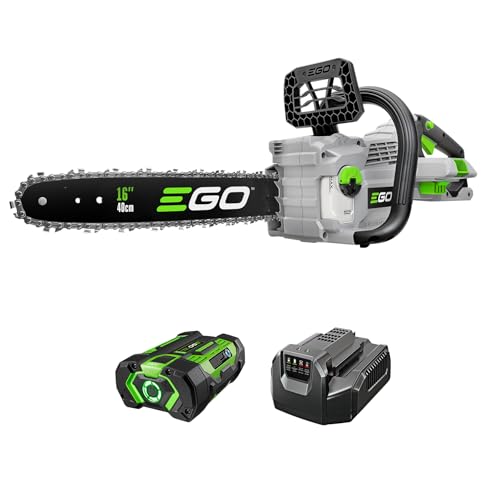
Pruning that spills into storm cleanup and firewood-sized limbs calls for more saw. This 16-inch model comes with a 56V 2.5Ah battery good for up to 130 cuts on a 4×4, plus the charger, so a long cleanup can run on the kit as delivered.
Key Specs:
- Bar length: 16 in
- Battery: 56V 2.5Ah ARC Lithium, charger included
- Runtime: Up to 130 cuts on a 4×4 per charge
- Weight: 9 lb
- Chain speed: 66 ft/s (20 m/s)
- Chain: 3/8 in pitch, .043 in gauge, 52 drive links
Detailed Review:
A 16-inch bar, a fast chain and power on par with a 40cc gas saw let the CS1611 buck limbs and small trunks that a mini saw would have to work from both sides. That makes it a cleanup saw first and a pruning saw second.
The battery and charger come in the box, so you start cutting as soon as the reservoir is full of bar oil. Automatic oiling then feeds the chain on its own, and the spill-free reservoir keeps oil from leaking onto the truck bed or the shed shelf between jobs.
Tool-free tensioning lets you take up slack by hand when a new chain stretches, and the IPX4 weather-resistant build means a damp morning doesn’t end the job. The low-kickback chain and its brake indicator add control that a longer nose needs, since a 16-inch tip has more reach to catch a stray branch.
At 9 lb, it tires your arms quickly above chest height. The WORX WG322 20V 10″ Cordless Chainsaw, at 6.2 lb with a 10-inch bar, is easier to hold up but can’t match this reach through thick wood; I’d buy the EGO for a yard with mature trees and regular blowdowns.
Pros:
- Battery and charger come in the kit.
- Included battery delivers a high cut count per charge.
- 16-inch bar handles thick limbs and small trunks.
- Tool-free tensioning adjusts the chain by hand.
- IPX4 build tolerates damp working conditions.
Cons:
- Heavy for sustained overhead pruning.
- Long bar is clumsy inside tight shrubs.
Who It’s For:
If your yard produces storm limbs and overgrown trees as often as routine trimming, this saw covers both with the same battery system, and it pays off most for anyone with other EGO 56V tools. People who mostly trim thin branches above their heads will find it tiring to hold up.
Editor’s Verdict:
Choose it when cutting capacity matters more than weight; the kit trades easy overhead handling for real reach through thick wood.
#3 Greenworks 24V 6″ Mini Pruning Chainsaw — Best Lightweight
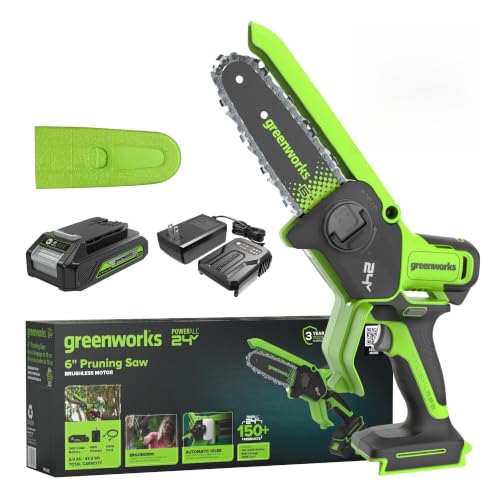
Light overhead trimming is the job this saw was made for. At 3.4 lb with the 2.0Ah battery installed, it stays manageable at arm’s length through a long round of pruning, and the push-button start means no pull cord to fight while you’re reaching into a branch.
Key Specs:
- Bar length: 6 in
- Weight: 2.65 lb tool only; 3.4 lb with battery
- Battery: 24V 2.0Ah, charger included
- Motor: Brushless
- Chain care: Automatic oiler, tool-free tensioning
- Start: Push button
Detailed Review:
With the battery in place, the whole saw stays light enough that holding it out toward a limb or above shoulder height puts little strain on your wrist and forearm. That keeps your aim steady late in a session, when a heavier saw starts to drift and cuts get sloppy.
The 6-inch bar clears small limbs, suckers and crossing branches cleanly, but wood that approaches the length of the bar means cutting from two sides, which is slow and invites a pinched chain. When your limbs run thicker, the DEWALT DCCS623B 8-Inch Pruning Chainsaw, with its longer bar, is the better tool.
Push-button starting means no gas, fumes, carburetor, spark plug or pull rope, and the brushless motor gets more work out of each charge. The automatic oiler and tool-free tensioning keep chain care down to a refill and a quick hand adjustment.
If light weight matters to you for every cutting job, not only pruning, the best lightweight chainsaws go beyond this class. I’d hand this saw to someone who prunes often and seldom faces storm wood.
Pros:
- Light enough to hold overhead without wrist strain.
- Push-button start, with no pull cord or fuel.
- Tool-free tensioning adjusts the chain in seconds.
- Battery and charger come in the kit.
Cons:
- 6-inch bar limits it to small limbs.
- Thicker limbs need slow cuts from two sides.
Who It’s For:
Pruning that happens mostly at shoulder height or above, on thin branches and suckers, is where this saw belongs, and it suits anyone who tires quickly with heavier tools. Greenworks 24V owners can share packs with it. Anyone clearing storm limbs or cutting firewood will outgrow it fast.
Editor’s Verdict:
Keep this saw on small limbs and it rewards you with light, quiet, fuss-free trimming every time it comes off the shelf.
#4 WORX WG322 20V 10″ Cordless Chainsaw — Best Value
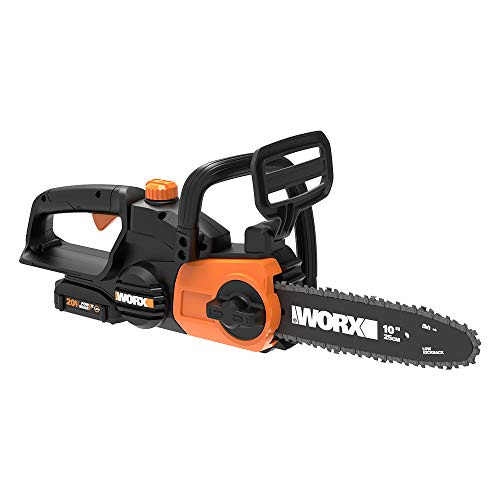
Yards with more than twigs to cut fit this saw well. Automatic chain tension and a 10-inch bar on the 20V PowerShare platform give you room for thicker limbs without manual adjustments, and the battery and charger come in the kit.
Key Specs:
- Bar length: 10 in
- Weight: 6.2 lb
- Platform: 20V PowerShare, battery and charger included
- Chain tension: Automatic, tool-free
- Oiling: Automatic, with oil level indicator
Detailed Review:
Chain tension sets itself, so you never run a chain loose enough to jump the bar or tight enough to drag and heat up. For an owner who doesn’t want to learn tensioning by feel, that removes a common cause of a ruined chain and a stalled job.
Automatic lubrication feeds the chain while you cut, and the oil level indicator shows when to refill before the bar runs dry. The tank ships empty and bar oil is sold separately, so fill it and run the chain for a few seconds before the first cut.
The battery belongs to the PowerShare family, which covers more than 75 tools across the 20V, 40V and 80V lines, including WORX mowers. If a WORX trimmer or blower already lives in your garage, this saw puts that battery to work on limbs as well.
Against the DEWALT DCCS623B 8-Inch Pruning Chainsaw, the WORX gives you a longer bar for thicker limbs and carries more weight to get it. With battery and charger included at a moderate price, it’s the saw I’d point a first-time battery buyer toward.
Pros:
- Automatic tension keeps the chain correctly adjusted.
- Oil level indicator shows when to refill.
- Battery fits the wider WORX PowerShare tool family.
- Battery and charger come in the kit.
Cons:
- Oil tank must be filled before the first cut.
- Extra weight builds up during long overhead pruning.
Who It’s For:
Anyone starting a battery tool collection, or already using WORX 20V gear, gets a saw that trims and handles moderate cleanup without manual chain adjustment. If most of your cutting happens above your head on thin branches, a smaller, lighter pruning model will be easier on your arms.
Editor’s Verdict:
Expect a well-rounded saw that takes the guesswork out of chain tension and runs on a battery family covering dozens of other tools.
#5 RYOBI 18V Brushless 8″ Pruning Mini Chainsaw — Best Compact
Tight spots are where this saw earns its keep. Its compact body slips into dense shrubs and between crossing branches, the 8-inch bar cuts limbs up to 6 inches in diameter, and it runs on the 18V ONE+ batteries you may already keep charged.
Key Specs:
- Bar length: 8 in
- Cutting capacity: Limbs up to 6 in diameter
- Weight: 4.4 lb
- Platform: 18V ONE+, battery and charger sold separately
- Motor: Brushless
- Trigger: Variable speed
Detailed Review:
The variable-speed trigger lets you feather the chain at the start of a cut, so it bites into a slick or springy branch instead of skating across the bark. Once the kerf is started, you squeeze through to full speed, which gives you a cleaner pruning cut and less bark tearing on live wood.
The compact body lets you reach a limb buried in the middle of a hedge or a fruit tree without the motor housing catching on neighboring branches. The chain guard sits in front to protect against kickback, which matters in exactly those cramped spots where the nose can touch hidden wood.
The 18V brushless motor and that limb capacity cover routine backyard trimming, but storm-size wood is past what an 8-inch saw should take on. Battery and charger are sold separately, so it makes the most sense for anyone already holding ONE+ packs; I’d choose it over buying into a new platform just for a pruning saw.
Pros:
- Variable-speed trigger allows slow, controlled cut starts.
- Compact body reaches into dense shrubs.
- Chain guard helps protect against kickback.
- Runs on the 18V ONE+ battery lineup.
Cons:
- Battery and charger are sold separately.
- Short bar rules out larger storm cleanup.
Who It’s For:
Gardeners thinning fruit trees, overgrown hedgerows or dense shrubs will appreciate how this saw slips into cramped spaces, and it fits neatly into an existing RYOBI 18V ONE+ setup. Without RYOBI packs on hand, you would need to add a battery and charger before using it.
Editor’s Verdict:
Pick this saw if you already run ONE+ tools and your pruning happens inside shrubs and between branches more than up in the canopy.
#6 Greenworks 24V 10″ Chainsaw — Best Budget
New owners get a forgiving safety layout here at an easy price. A trigger-plus-safety-lock start guards against accidental spins, while a 10-inch low-recoil chain behind a hand guard reduces kickback as you learn how the saw behaves in wood.
Key Specs:
- Bar length: 10 in, low-recoil chain
- Weight: 5.7 lb (2.6 kg)
- Platform: Greenworks 24V, battery and charger sold separately
- Runtime: 35 pieces of 4×4 per full charge
- Oiling: Automatic, 6.8 fl oz (200 ml) tank
- Start: Trigger plus safety lock
Detailed Review:
Starting it takes the trigger and the safety lock together, so the chain won’t spin if a finger brushes the trigger while you carry the saw across the yard or reach for a branch. Add the low-recoil chain and the hand guard, and a new owner has protection against both accidental starts and kickback.
The compact body and non-slip grip are light enough for one-hand use on small trimming jobs, which helps when you’re pruning higher branches or moving around a tree. Automatic lubrication draws from the built-in oil tank, so chain care comes down to a refill between sessions.
The 24V platform runs more than 200 tools, and there’s a USB port for charging a phone during an outage. Next to the Greenworks 24V 6″ Mini Pruning Chainsaw, this model runs a longer bar on the same batteries, so it takes thicker limbs while the smaller saw stays the one for thin branches overhead.
It saves the most when a Greenworks 24V pack already sits on your charger, since it comes as a bare tool. For a cautious beginner, it’s the saw I’d want them learning on.
Pros:
- Trigger plus safety lock prevents accidental starts.
- Low-recoil chain and hand guard reduce kickback risk.
- Light enough for one-hand trimming.
- Shares batteries with Greenworks 24V tools.
Cons:
- Battery and charger are sold separately.
- Longer bar is harder to steer inside dense shrubs.
Who It’s For:
New saw owners who want guardrails against mistakes, and anyone with Greenworks 24V batteries in the garage, fit this saw well. It also covers occasional trimming and light storm cleanup around the house. Without a Greenworks battery, factor in that added purchase before choosing it.
Editor’s Verdict:
For a new owner, the safety layout is the real draw, and on a Greenworks 24V battery it costs little to add to the garage.
#7 Husqvarna Power Axe 225i — Best Premium
Frequent cutters get the most from this kit. Boost mode adds 25% more power when the chain bogs, and the pass-through battery sits inside the body, so the 14-inch saw stays balanced instead of tail-heavy.
Key Specs:
- Bar length: 14 in
- Weight: 6.8 lb
- Kit: Battery and charger included
- Power: Boost mode, 25% more power on demand
- Cooling: Active cooling system
- Chain tensioning: Tool-free
Detailed Review:
Sliding the battery through the body puts its weight between your hands rather than behind the rear grip, so the nose doesn’t rise when you reach out to a limb. On a saw you hold at arm’s length, that balance does as much for fatigue as trimming weight off the spec sheet.
Boost mode gives you extra power in hardwood or a thick limb, and active cooling keeps the motor and battery from heat-soaking, so output stays consistent through a long session and the battery lasts longer. Tool-free tensioning keeps adjustments quick when the chain stretches.
Against the EGO Power+ CS1611 16″ Chainsaw, the Husqvarna gives up some bar length but carries noticeably less weight, which matters when a cleanup day mixes in overhead trimming. The 14-inch bar still handles limbs and small trunks that are beyond a mini pruning saw.
It’s an expensive saw, and the money buys balance and sustained power rather than extra reach. For occasional pruning I’d spend less; for someone cutting most weekends, the handling earns its cost.
Pros:
- Pass-through battery keeps the saw balanced.
- Boost mode adds power for tough cuts.
- Active cooling supports consistent output.
- Battery and charger come in the kit.
Cons:
- High price is hard to justify for occasional trimming.
- 14-inch bar feels bulky inside dense shrubs.
Who It’s For:
Owners who cut often, from overhead trimming to clearing blowdowns, will feel what its balance does over a long session, and anyone already invested in Husqvarna battery tools has another reason to choose it. Occasional pruners won’t use enough of what it offers to justify the cost.
Editor’s Verdict:
Husqvarna built this saw for people who run it hard and often, and its balance and boost mode reward exactly that owner.
#8 Chain Saw, Gas, 12 In. Bar, 26.9CC — Best Gas-Powered
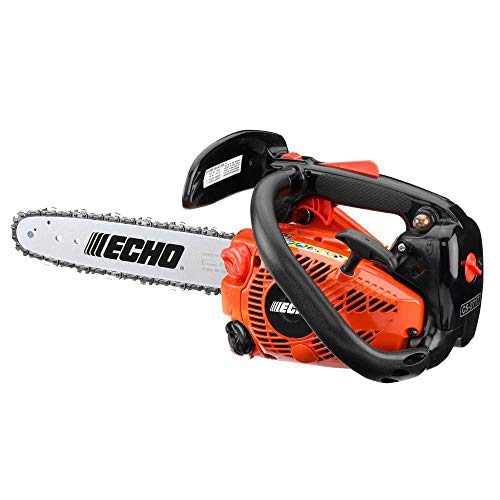
Gas earns its place when you cut far from an outlet. This ECHO top-handle saw pairs a 26.9cc engine and 12-inch bar with i-30 starting and an integrated choke, so getting it running takes less pull effort and fewer settings to manage.
Key Specs:
- Bar length: 12 in
- Engine: 26.9cc gas
- Handle: Top handle
- Starting: Digital ignition, purge bulb, i-30 starting system
- Chain brake: Inertia type
- Tensioner: Side access
Detailed Review:
Each piece of the starting system takes work off you. The purge bulb pulls fresh fuel into the carburetor, the integrated choke and fast idle release when you squeeze the trigger, and digital ignition plus the i-30 system reduce the effort each pull takes.
The top handle puts your grip right over the engine, which keeps the saw compact and easy to position between limbs. That compactness also makes it tempting to swing with one hand, so run it with both; the inertia chain brake trips when the bar kicks back, and the vibration-reduction system cuts the buzz in your hands on longer jobs.
Runtime lasts as long as the fuel can, which suits pruning a long tree line or cutting well away from the house. In return you mix fuel, drain or stabilize it before storage, and look after the spark plug and air filter, though the side-access tensioner keeps chain adjustments quick.
If gas is where you’re leaning for heavier wood as well, the best gas chainsaws include larger rear-handle models built for it. For pruning alone, I’d only choose gas if you already keep two-stroke fuel around for other equipment.
Pros:
- Purge bulb and integrated choke simplify starting.
- i-30 system reduces pull-start effort.
- Inertia chain brake stops the chain during kickback.
- Refuel and keep cutting without waiting on a charger.
- Side-access tensioner makes chain adjustments quick.
Cons:
- Needs mixed fuel, storage prep and engine upkeep.
- Top-handle layout demands careful two-hand technique.
- Engine noise and exhaust come with every cut.
Who It’s For:
Property owners working far from power, or anyone already comfortable mixing fuel and maintaining small engines, get unlimited runtime from this saw for steady pruning where a battery would run flat. Someone new to chainsaws, or who wants to start a saw after months on the shelf without fuss, is better off with battery.
Editor’s Verdict:
Run it with both hands and fresh fuel, and this ECHO starts readily and keeps cutting long after a battery would need a break.
Pruning Chainsaw vs Pole Saw vs Hand Pruner: Which Tool Fits the Job?
A mini chainsaw handles thicker limbs within arm’s reach, battery shears take thin branches faster and cleaner, and a pole saw handles high limbs from the ground; a hand saw covers cuts that don’t justify a power tool.
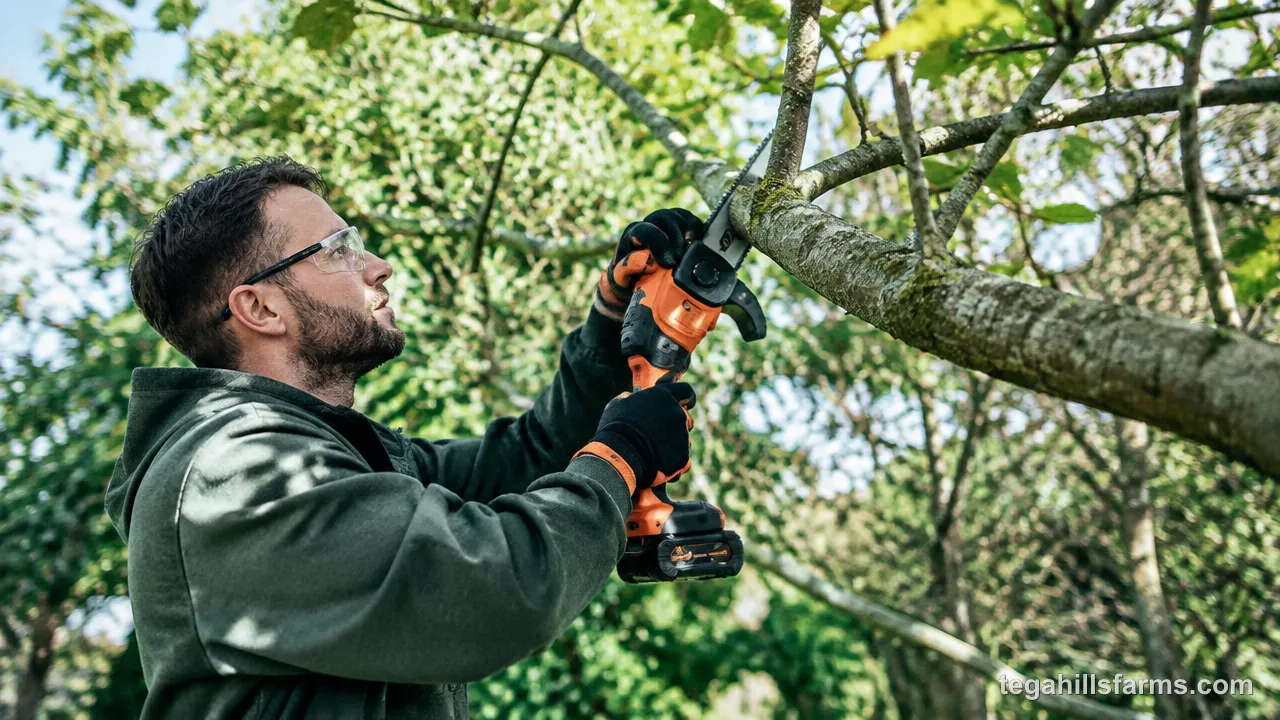
Limb size, reach, speed and noise separate these four tools:
| Tool | Limb size | Reach | Speed | Noise |
|---|---|---|---|---|
| Mini pruning chainsaw | Small to mid-size limbs | Arm’s length | Fast | Moderate on battery, loud on gas |
| Pole saw | Small to mid-size limbs | Well overhead from the ground | Moderate | Moderate |
| Battery pruning shears | Thin branches | Arm’s length | Fast on small cuts | Quiet |
| Hand saw | Small to mid-size limbs | Arm’s length | Slow | Silent |
Shears win on living-branch pruning in shrubs, roses and fruit trees. They make a clean cut on thin stems with no chain to oil or kickback to manage, so buying a chainsaw for that work adds risk without adding speed. The mini chainsaw takes over once limbs get too thick for shears and when storm debris needs cutting at ground or chest height.
A pole saw wins anything you would otherwise climb a ladder for, because it keeps both feet on the ground and the chain well away from your body. The best pole saws reach high limbs that no handheld saw should touch. A folding hand saw stays useful for the occasional cut, quiet early-morning work, or a careful finishing cut at the branch collar.
How Do You Prune a Branch Safely With a Pruning Chainsaw?
Safe cuts with a small saw come down to taking the limb’s weight off before the final cut and keeping your body out of the chain’s path.
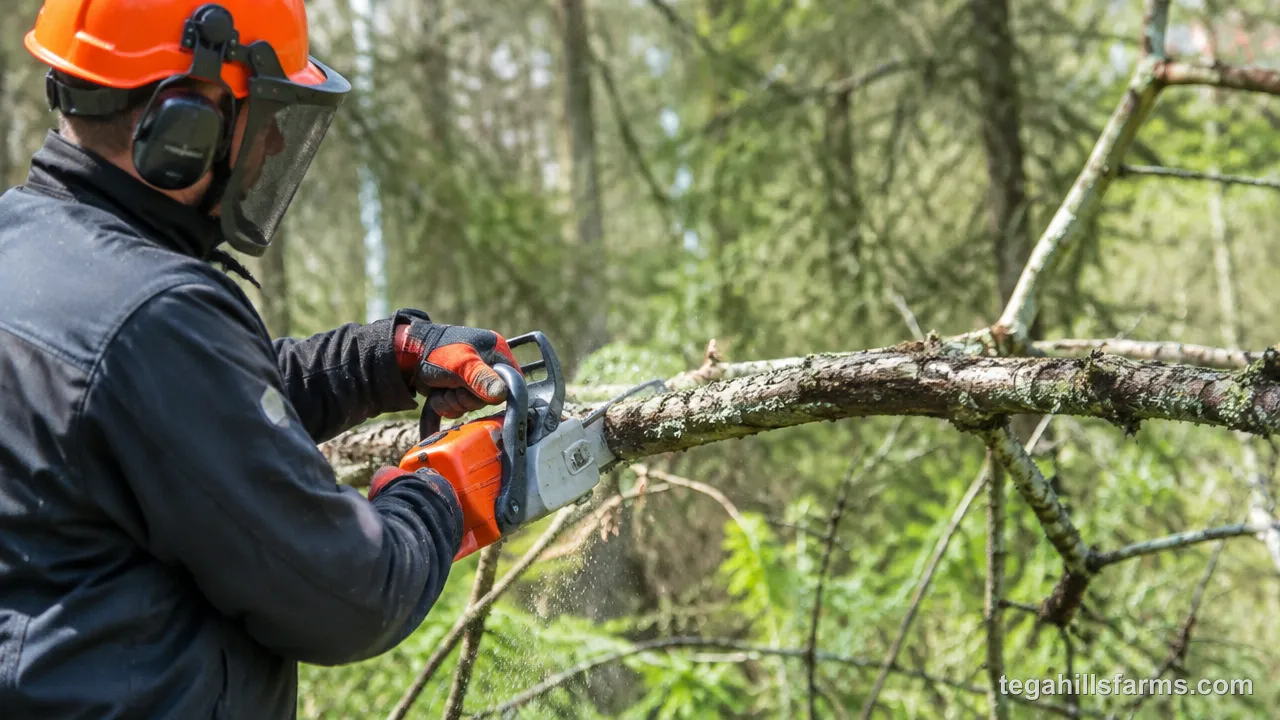
A short bar and light body make the saw feel forgiving, and that is how technique slips. You stand too close, take a heavy limb in a single pass, or reach overhead with one hand. On a pruning job, those habits tear bark, pinch the bar and put the chain near your face and arms, so the cut sequence and your stance matter as much as the saw itself.
How Does the Three-Cut Method Work?
A heavy limb comes off cleanly in three cuts, because the first two remove its weight before you make the cut that shapes the tree. Start with an undercut from below, several inches out from where the final cut will go and partway through the limb. When the limb drops, the undercut stops it from peeling a strip of bark down the trunk.
Make the second cut from the top, a little farther out than the undercut. The limb breaks off between the two cuts, and the short stub left behind is light enough to hold still. The third cut removes the stub just outside the branch collar, the swollen ring where the limb meets the trunk, which leaves a wound the tree can seal.
With a short bar you stand close to the work. Position yourself beside the limb, never under it, and avoid cutting into a kerf that is closing under the limb’s weight, since that is what pinches the bar.
What Hand Position and Gear Reduce the Risk?
Keep your free hand on the saw’s front grip or the guarded part of the body, never on the branch you’re cutting. On a pruning saw, the chain sits only a short reach from where a steadying hand naturally wants to go. A hand guard in front of the grip stops a slipping hand or a whipping twig from reaching the chain.
- Safety glasses stop chips and snapping twigs, which fly toward your face on upcuts.
- Cut-resistant gloves improve grip and protect against a brush with the chain.
- A helmet matters whenever you cut overhead, since a released limb or deadwood drops straight down.
- Chainsaw chaps protect your legs on low cuts and ground cleanup, where kickback swings the bar toward your thighs; their fibers jam the chain on contact.
- Hearing protection belongs with a gas saw.
Is It Safe to Cut Overhead or From a Ladder?
No. Running a small saw one-handed from a ladder is the riskiest way to use it, because the ladder gives you no stable stance. A kickback, a pinched bar or a limb that swings as it drops can push you off balance with a running chain in your hand, and a falling limb can strike the ladder and knock it sideways.
Overhead cuts from the ground are reasonable when the limb is within easy reach, you hold the saw with both hands, wear a helmet and stand clear of where the limb will land. Anything higher belongs to a pole saw, which keeps both feet planted and the chain away from your body. Limbs near power lines or high in a mature tree are a job for a certified arborist.
Which Pruning Chainsaw Suits Beginners, Seniors, or Smaller Hands?
Look for low weight, a push-button start and a start lock that blocks accidental spins; those traits matter more to a new or smaller-framed user than bar length or power.
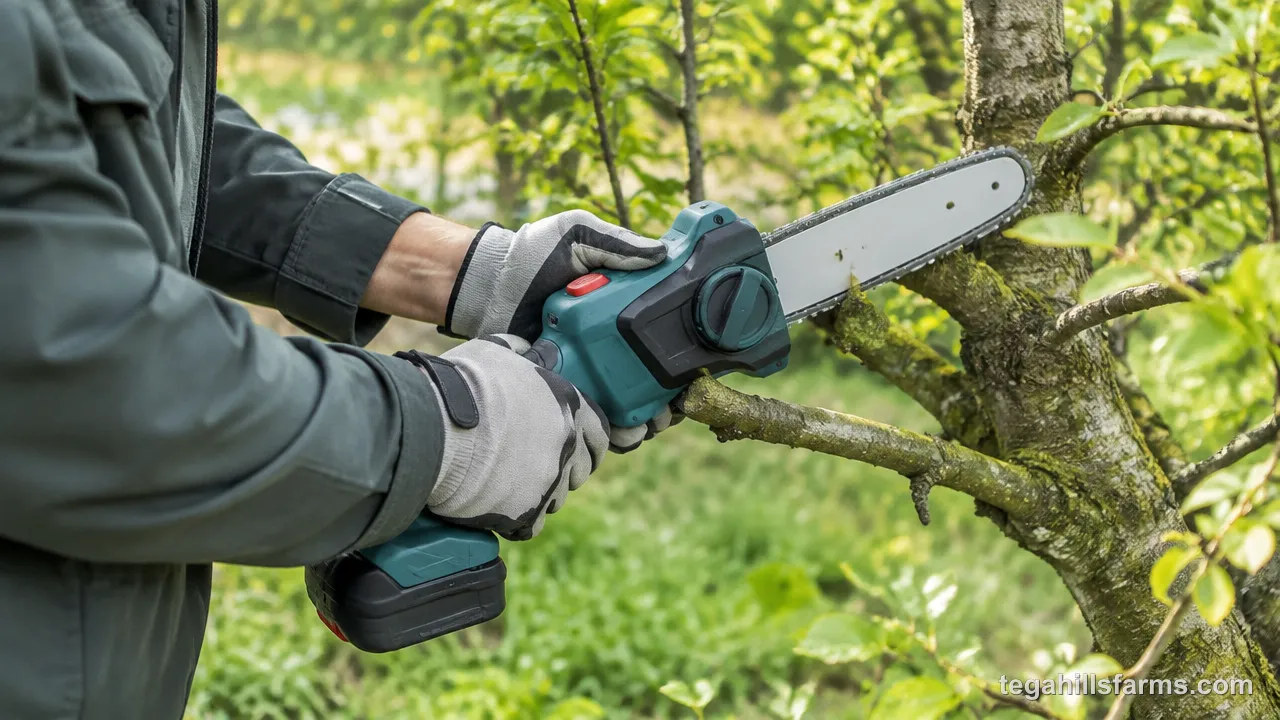
New owners do well with the Greenworks 24V 10″ Chainsaw, whose trigger-plus-safety-lock start and low-recoil chain behind a hand guard forgive learning mistakes. Seniors and anyone with smaller hands should weigh total weight with the battery attached, since that is what the arms actually hold. The Greenworks 24V 6″ Mini Pruning Chainsaw stays light even with its battery and starts with a button, and the RYOBI 18V Brushless 8″ Pruning Mini Chainsaw pairs a compact body with a variable-speed trigger for gentle cut starts. The DEWALT DCCS623B 8-Inch Pruning Chainsaw adds a tip guard that steadies upcuts for anyone less sure of their control.
I’d keep beginners away from a gas top-handle saw until they’ve built experience, because pull-starting and one-hand temptation add risk on top of the learning curve. For picks beyond pruning saws, the best chainsaws for seniors and the best chainsaws for women look at handle reach, starting effort and weight across larger models.
Online marketplaces are full of very cheap mini saws sold under brand names that may not exist next season, with generic batteries and chains and no parts listed anywhere. When that battery fades or the chain dulls after a few jobs, you find there is nothing to replace it with, and the whole saw becomes trash you bought twice.
Are Cheap No-Name Mini Chainsaws Worth the Risk?
Rarely, unless you cut a few small branches a year and accept that the saw may not last. The savings disappear once a part fails, because an unbranded saw usually has no replacement battery, chain or bar you can order.
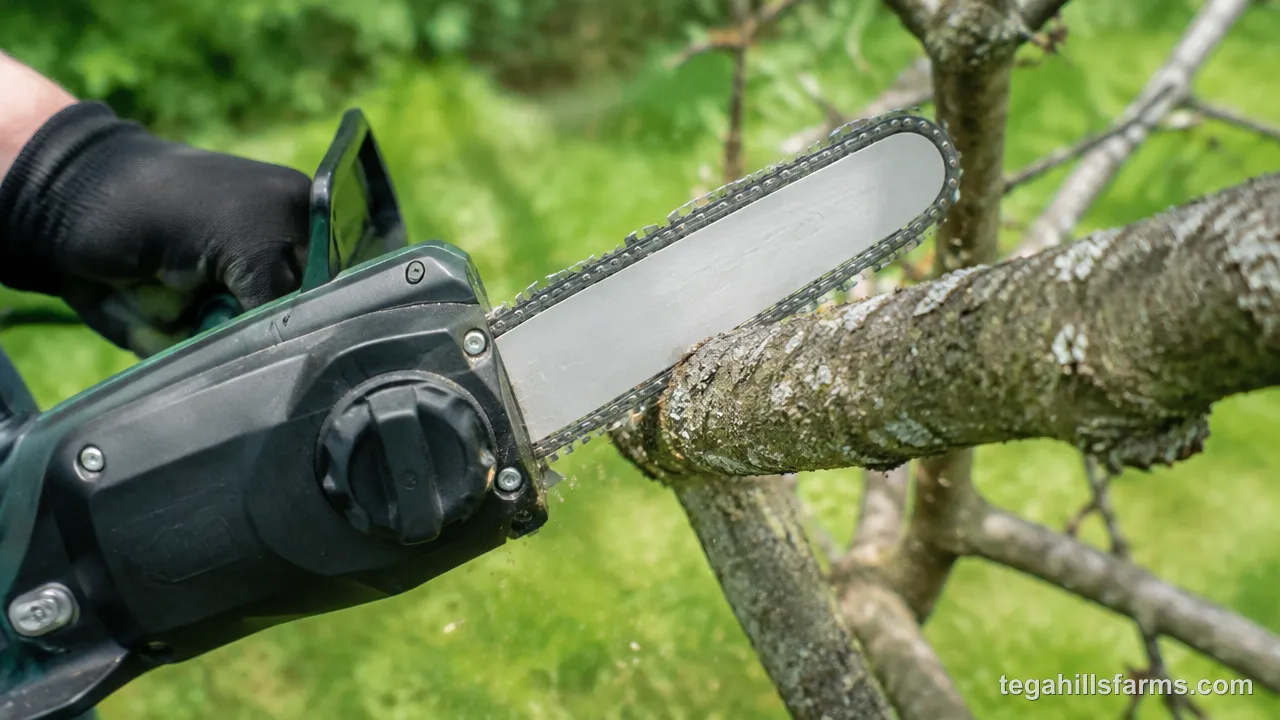
The failure points stack up. Batteries built with weak cells lose capacity quickly and can’t be swapped for a better pack. Soft chains dull fast and lose their edge in dirty wood, and thin guide bars flex and wear unevenly. Many of these saws also skip a proper tip guard or hand guard, which puts the burden of safety entirely on your technique.
A name-brand platform keeps selling batteries, chains and bars for years, and the battery runs your trimmer and blower too, so the saw keeps working long after a no-name kit would be scrapped. If the budget is tight, name-brand chainsaws under $100 are worth checking before an unbranded kit, and moving up to the best chainsaws under $200 generally buys a full battery platform with parts you can order.
When Is a Pruning Chainsaw Too Small for the Job?
Stalls mid-cut, a battery that drains after a few limbs, cuts that need several passes from different sides, and a trunk wider than the bar is long all mean the wood has outgrown the saw. Pushing on wears out chains and batteries faster and makes a pinched bar more likely.
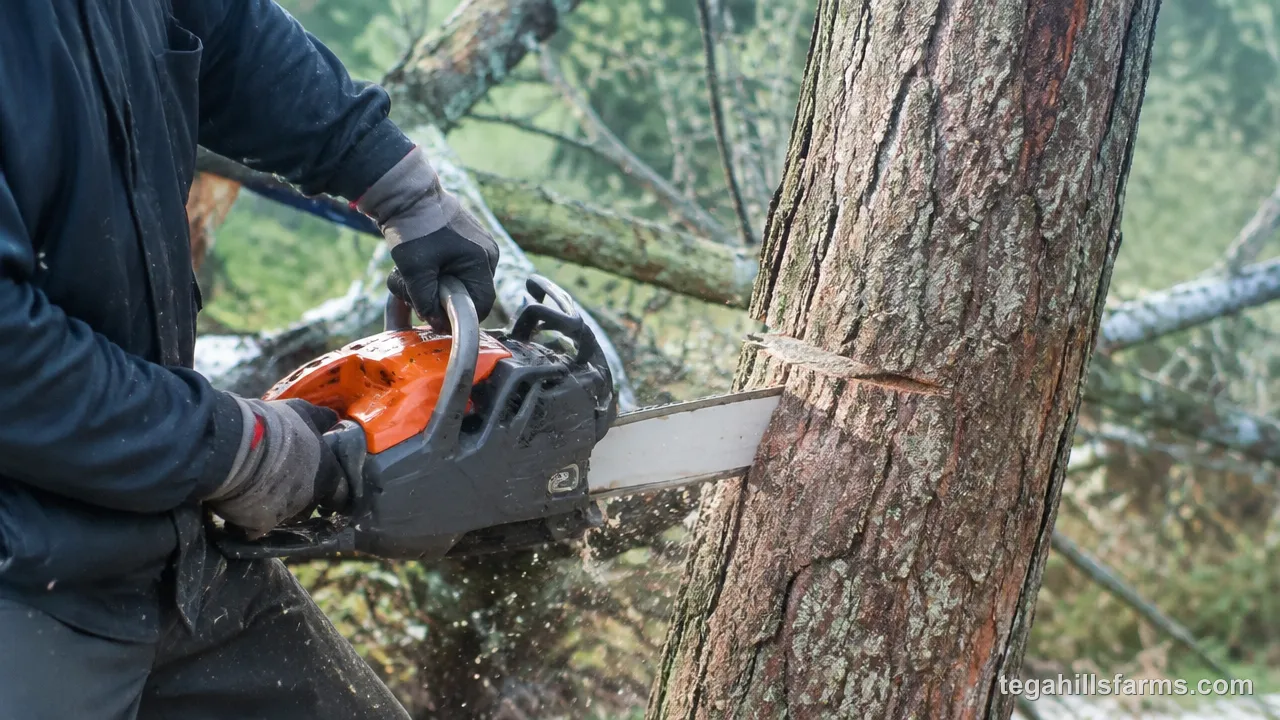
The step up depends on the work. For thick limbs and small trunks around the house, a 14- or 16-inch battery saw such as the EGO Power+ CS1611 16″ Chainsaw or the Husqvarna Power Axe 225i finishes cuts in a single pass. For mixed pruning and small-tree work away from power, a top-handle gas saw or a compact rear-handle gas saw gives more power with no recharge. A mid-size rear-handle gas saw in the class of the Stihl MS261 moves into felling and heavy cleanup territory.
If your property has young trees to drop and clear, the best chainsaws for small trees fit that job. After a windstorm, with limbs down across the yard and driveway, the best chainsaws for storm cleanup carry the bar length and runtime a mini saw can’t.
How Do You Keep a Pruning Chainsaw Cutting Cleanly Season After Season?
Bar and chain oil does most of the work of keeping a small saw alive, because it cools and lubricates the chain where it rides the bar. Run the reservoir dry and friction overheats the chain, stretches it and scores the bar in a single job, so check the oil level every time you pick the saw up.
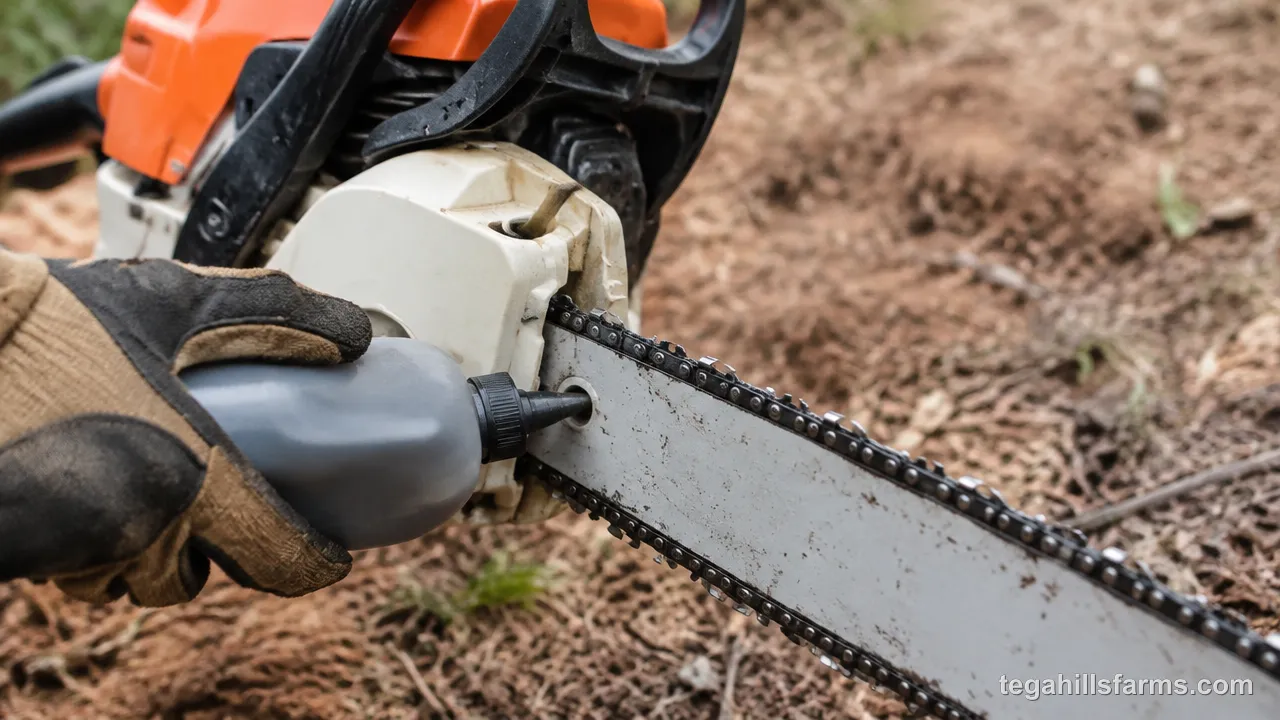
Tension comes next. The chain should sit snug against the bar yet pull around by hand with gloves on. A loose chain can jump off the bar, while a tight one drags, heats up and wears the drive sprocket.
A dull chain throws fine dust instead of chips, wanders in the cut and needs you to push. A few strokes with a file, or one of the chainsaw sharpeners built for small chains, brings it back. Once the cutters are filed far back or chipped on rocks or nails, replacement makes more sense, and low-kickback chainsaw chains sized for your bar keep the safety design intact.
Before winter, store batteries indoors in a cool, dry place, partly charged rather than full or empty, and keep them out of an unheated shed. A gas saw needs its fuel drained or stabilized so the carburetor doesn’t gum up by spring.
Pruning Chainsaw FAQ
What bar length handles typical backyard limbs?
An 8- or 10-inch bar covers routine yard pruning: suckers, crossing branches, low limbs over a walkway and overgrown shrubs. A 6-inch bar suits thin overhead branches where low weight matters most. Once storm limbs and small trunks enter the picture, a 14- or 16-inch saw finishes cuts that a mini saw has to work from both sides.
Can a mini chainsaw cut down a small tree?
Yes, if the trunk is narrower than the bar and the tree can fall clear of buildings, fences and power lines. You still need a proper notch, a back cut and a planned escape path. Once a trunk is wider than the bar, a bigger saw makes the job safer and faster.
How does battery runtime compare with gas?
A battery saw cuts until its pack runs down, then needs a recharge or a spare battery, while a gas saw keeps cutting as long as you have fuel. For pruning around the house, a spare charged pack usually closes the gap. All-day cutting far from power still favors gas, along with its extra upkeep.
Do you need chaps and eye protection for a mini chainsaw?
Eye protection, yes, every time, because chips and snapping twigs fly toward your face on almost every cut. Chaps matter whenever you cut below the waist or clean up on the ground, where a kickback swings the bar toward your legs. Gloves, plus a helmet for overhead cuts, round out the basics.
Can a mini chainsaw replace a pole saw?
No, not for limbs you can’t reach from the ground. A mini saw handles cuts within arm’s length faster and with more control, while a pole saw keeps you off the ladder for anything higher. Owning both covers the full range, and choosing them on the same battery platform keeps charging simple.
Write Your Review
No reviews yet. Be the first to share your experience!