

Our top picks for the best chainsaws under $100 in 2026 are the tietoc Mini Chainsaw 6 Inch (Best Overall), SEESII Cordless Mini Chainsaw 8-Inch (Best Cordless), VEVOR Gas Chainsaw 25.4cc 12 Inch (Best Gas-Powered), CRAFTSMAN CMECS600 16-Inch (Best Ergonomic Design), Oregon CS1500 (Best Premium), SENIX CSE10-L 14-Inch (Best Budget), WEN CP1216 16-Inch (Also Great), and Greenworks 24V 4-Inch Mini Chainsaw (Best Lightweight).
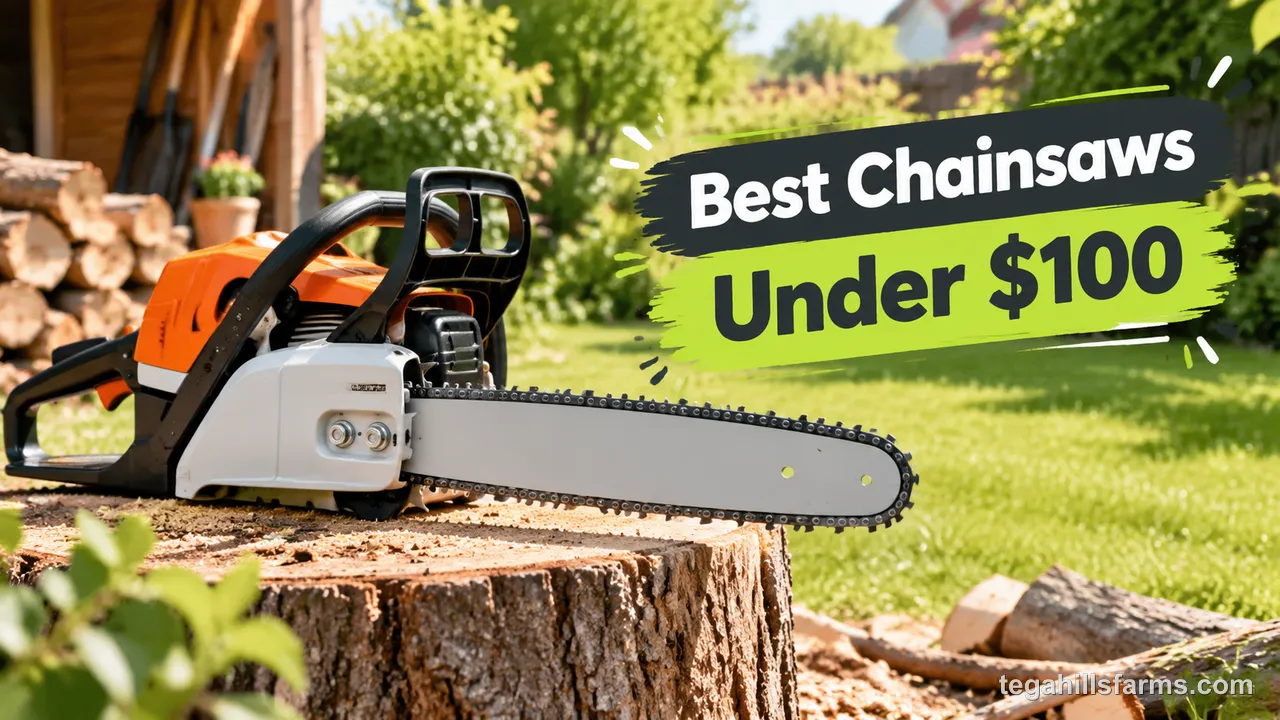
At this tier, the decision depends on four things: where your power comes from, how the bar length compares with the wood you cut, which safety features are built into the saw, and how much oiling and chain care you will keep up with. A mini battery saw, a corded saw and a small gas saw can all fall into the same tier, but each one suits a different kind of yard work.
The usual fear with a cheap saw is that it stalls, binds or quits the first time a storm brings down a real limb. When that happens, the cause is nearly always a saw too small for the job rather than a low-quality saw. That is why matching bar length and power to your wood counts for more than any one spec.




If you already own a battery-powered trimmer or blower, check its platform before you buy. A saw that runs on the same battery saves you from buying a second pack and charger that fit nothing else in your shed.
What Can a Chainsaw Under $100 Actually Do?
Saws in this tier handle light pruning, storm limb cleanup and occasional small firewood cutting. None of them are built for felling trees or bucking big logs every weekend.
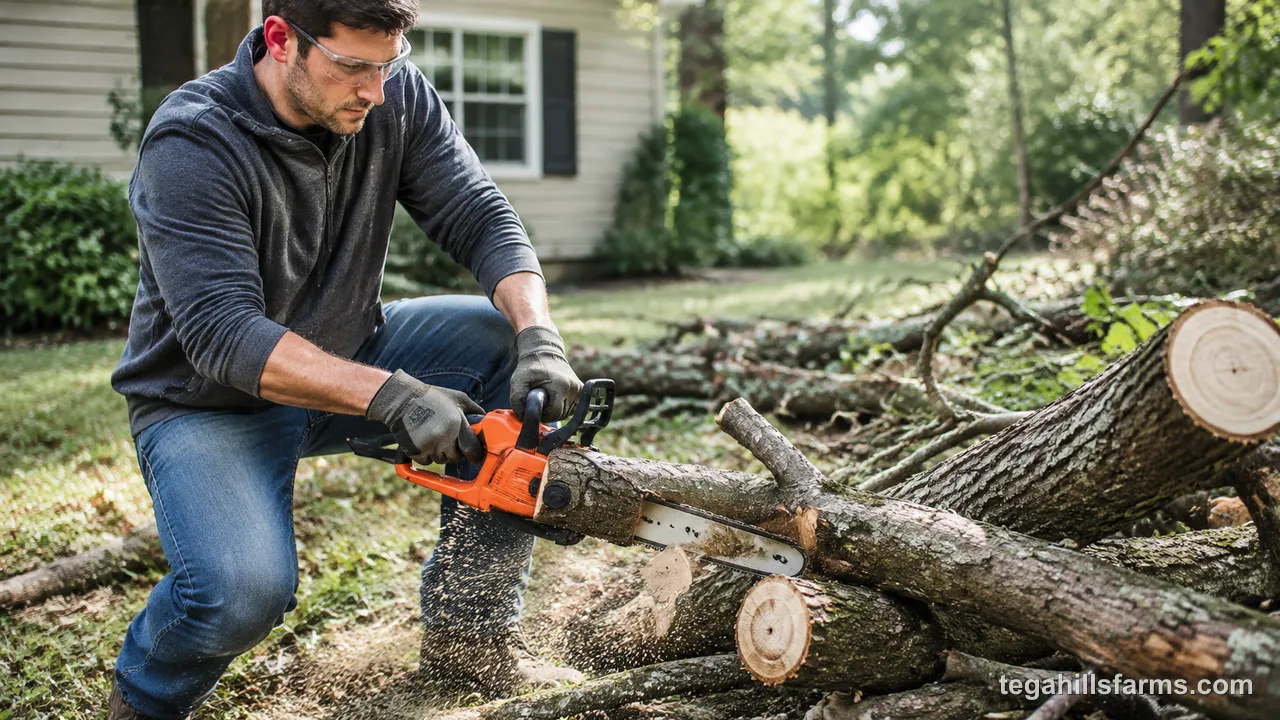
The tier contains three kinds of saw. Mini battery saws carry short bars, from 4 to 8 inches across these picks, so they are pruning tools first: they reach into shrubs and through branches, but they cannot cross a thick log. Corded electric saws carry longer bars and run for as long as the outlet supplies power, which makes them the strongest choice for limbs and small rounds near the house. Small gas saws free you from the cord, but they come with fuel mixing and pull starts.
All three are light-duty for the same reasons. The motors are small, so they heat up and slow down under sustained load. The bars are short, so thick wood takes several passes or cannot be cut at all. The housings and components are built for occasional use, not daily work. A saw from this tier is enough when the wood is no thicker than its bar and the work happens a few times a season. If your yard work goes beyond light cutting, the best chainsaws guide covers saws built for heavier, more frequent jobs.
What Should You Look for in a Chainsaw Under $100?
Matching the saw to the job decides whether a budget chainsaw turns out useful or frustrating, and it matters more than any spec-sheet peak. A cheap saw that fits your wood, your access to power and your tolerance for upkeep will start and cut when you need it. A saw bought for the biggest number on the box tends to bind in wood it was never sized for, and then it sits on a shelf.
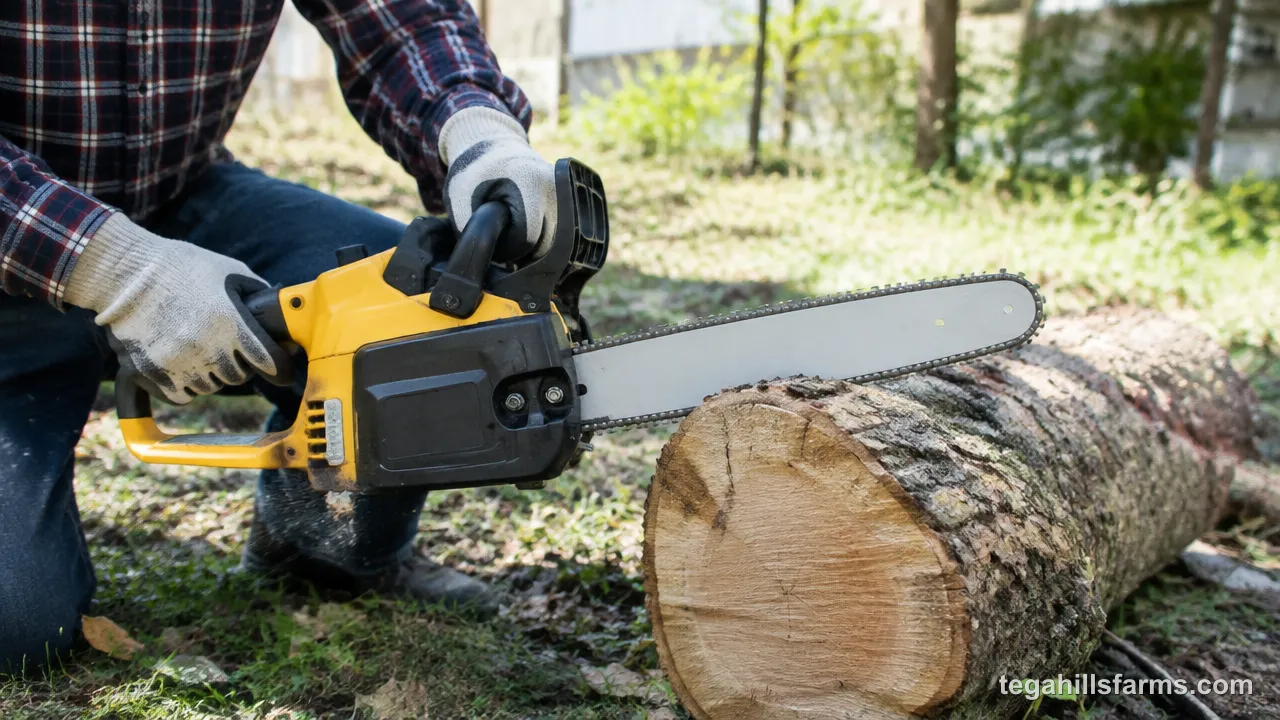
Gas, Corded or Battery: Which Power Source Suits You?
For most light work near the house, a corded saw is the lowest-hassle option. A battery saw is the most convenient for pruning. Gas makes sense only when the work sits beyond the reach of a cord.
A small 2-cycle gas engine needs fuel mixed with oil, pull starts, and carburetor care. It is also the loudest and heaviest of the three. Before winter you have to drain or stabilize the fuel, or the saw will start hard in spring. If you want more engine than this tier offers, compare the best gas chainsaws.
A corded motor starts instantly, runs quieter, and never runs out of runtime. The cost is reach. You also need an outdoor-rated extension cord heavy enough for the motor’s amp draw over the cord’s length, because a thin cord starves the motor of power.
A lithium-ion battery saw is quiet and free of a cord. In exchange, you live with runtime per charge, charging time, and the battery platform you buy into. Batteries should be stored indoors over winter. Mini battery saws give up cutting capacity in return for that convenience. For longer bars on battery power, the best battery chainsaws step up a class.
How Long Should the Bar Be for the Wood You Cut?
The guide bar sets the saw’s cutting reach. It should be longer than the limb or log you plan to cut, so the chain can reach through the wood without the tip getting buried in the cut.
That is why mini saws with short bars suit twigs, shrub branches and pruning cuts: the wood fits inside the bar, and the small motor never has to work at its limit. When you force a short bar through thicker wood, you end up cutting from both sides. The kerf can close and pinch the chain, and the motor stalls as the chain drags. A buried bar tip also brings the nose closer to wood it can catch, which is how kickback starts.
For trimming, any bar in this tier works. For storm limbs and small firewood, pick the longest bar you can comfortably hold.
Which Safety Features Matter Most on a Budget Saw?
The features worth insisting on are a chain brake or kickback brake, a trigger lockout or two-step start, a hand guard, and a low-kickback bar and chain. Each one handles a different way a cut can go wrong.
A chain brake stops the chain when the saw bucks back toward you, which is the moment injuries happen. A trigger lockout or two-step start keeps the chain from spinning when you only meant to pick up the saw or shift your grip. A hand guard stands between your front hand and the chain if your grip slips. A low-kickback bar and chain lower the chance that the nose throws the saw upward when it touches wood.
A saw without these features is a poor bargain however cheap it is, because the money saved disappears with the first trip to urgent care.
How Much Oiling and Chain Care Will the Saw Need?
Chain oil level is the first thing to check before every use, because a dry chain overheats, stretches and wears the bar quickly. Most saws here have an auto oiler that feeds bar and chain oil while you cut, plus an oil window that shows the level at a glance.
Chain tension is the second habit. Some saws use tool-free tensioning, so you can take up slack by hand in the middle of a job. Others need a scrench, the combination wrench and screwdriver that comes with the saw. A loose chain can jump off the bar, and a tight one drags on the motor.
A dull chain turns a small motor into a slow, hot one, so sharpening matters more on a budget saw than on a powerful one. Corded and battery saws need oil, tension and sharpening. Gas saws add fuel mixing, air filter cleaning and spark plug checks.
The 8 Best Chainsaws Under $100 for Light Yard Work in 2026
Our top picks are the tietoc Mini Chainsaw 6 Inch, SEESII Cordless Mini Chainsaw 8-Inch, VEVOR Gas Chainsaw 25.4cc 12 Inch, CRAFTSMAN CMECS600 16-Inch, Oregon CS1500, SENIX CSE10-L 14-Inch, WEN CP1216 16-Inch and Greenworks 24V 4-Inch Mini Chainsaw. Power source and bar length determine what each one can cut. The mini battery saws prune quietly but stop at small limbs. The corded models carry longer bars for storm cleanup and small firewood near an outlet. The VEVOR works beyond the cord at the cost of fuel upkeep. Homeowners who only prune may also want to compare the best mini chainsaws.
#1 tietoc Mini Chainsaw 6 Inch — Best Overall
Pick this one if most of your cutting is overhead branches and shrub work around the garden. At 3.3 lb with an 880-watt motor and a 6-inch bar, it handles branches up to 6 inches without wearing out your arms, and the removable battery means no cord to drag across the yard.
Key Specs:
- Bar: 6 in
- Motor: 880 W
- Battery: 2000mAh, removable and rechargeable
- Weight: 3.3 lb
- Oiling: automatic chain oiler
- Warranty: 365 days
Detailed Review:
The 880-watt motor and manganese steel chain are matched to a short bar, so the saw holds chain speed through branches that fill the bar instead of bogging down. That pairing suits pruning fruit trees, shrubs and the limbs hanging over a fence line. Thicker wood is a different story, because a bar this short cannot reach across a log wider than itself.
The light weight lets you hold the saw above shoulder height through a string of cuts, which matters more than raw power when you prune. The anti-slip texture on the handle keeps your grip firm while you reposition between branches.
The auto oiler feeds the chain from a small tank, and one fill lasts a full day of trimming, so you never stop to wet the chain by hand. A small oil bottle comes in the box, but the oil does not. The kit adds a second chain, a charger, a screwdriver and a bar sheath, so a dull chain does not end your day.
To start the saw, you press the safety lock and the start button together, and a baffle keeps chips from flying back at you. Overload and temperature protection also help the battery last longer over its life.
Pros:
- Light enough for long overhead pruning sessions.
- One oil fill lasts a full day.
- Spare chain included for a quick swap.
- Two-button start prevents accidental activation.
Cons:
- Short bar limits it to branches and small limbs.
- Bar oil must be bought separately.
- One battery means waiting on the charger.
Who It’s For:
Gardeners who prune shrubs, fruit trees and overhanging branches will get the most from this saw, especially if a heavier saw tires your arms or a cord keeps snagging on flower beds. If your jobs include bucking downed trunks or cutting rounds for the woodstove, a corded saw with a longer bar fits better.
Editor’s Verdict:
Choose it for pruning and garden cleanup, where its light weight and full-day oiler make quick work of branch-sized cuts.
#2 SEESII Cordless Mini Chainsaw 8-Inch — Best Cordless
Reach for this saw when your branches outgrow a smaller mini. Its 8-inch bar and two 21V batteries let it slice through logs up to 7.91 inches in diameter in 10 seconds, so you can keep cutting while the spare battery charges.
Key Specs:
- Bar: 8 in
- Batteries: two 21V, 2.0Ah
- Max cutting diameter: 7.91 in
- Weight: 5.07 lb
- Motor: pure copper
- Safety: dual safety lock, splash guard
Detailed Review:
The longer bar is what separates this saw from the shorter mini models, because it reaches across limbs that a smaller bar can only notch. Paired with a quenched guide chain and a pure copper motor, it gets through wood close to its full bar length quickly.
The two 2.0Ah batteries change how the saw works in practice. With one pack on the tool and the other on the charger, cleanup after a windy night does not stop when the first pack runs down. Built-in overload and temperature protection also keep power steady when the chain meets a tough section.
Compared with the tietoc Mini Chainsaw 6 Inch, this saw gives up some lightness, since it weighs noticeably more. In return you get the longer bar and the second battery, which count for more on storm limbs than on shrub pruning.
The dual safety lock only lets the saw run when you press the lock and the trigger together. The splash guard keeps chips off your hands and face, and that matters because a mini saw works close to your body.
Pros:
- Longer bar handles thicker limbs than shorter minis.
- Second battery keeps work going during charging.
- Dual safety lock blocks accidental starts.
- Splash guard keeps chips away from your hands.
Cons:
- Extra weight tires arms faster during overhead pruning.
- Bar length still caps it at small logs.
Who It’s For:
If your yard drops limbs after every storm and a corded saw cannot reach the back fence, this cordless option fills that gap. The spare battery suits longer cleanup sessions. Anyone who mostly trims shrubs overhead may prefer the lighter tietoc Mini Chainsaw 6 Inch.
Editor’s Verdict:
Buy it when branch work has outgrown a smaller mini saw and you want a spare battery ready for longer cleanup days.
#3 VEVOR Gas Chainsaw 25.4cc 12 Inch — Best Gas-Powered
This is the pick for cutting far from any outlet without waiting on a charger. Its 25.4cc 2-cycle engine drives a 12-inch bar to a 9.84-inch cutting diameter, and the top handle keeps the 9.26 lb saw comfortable in one hand.
Key Specs:
- Engine: 25.4cc 2-cycle, 1.2 HP
- Bar: 12 in, high-strength steel
- Cutting diameter: 9.84 in
- Weight: 9.26 lb (4.2 kg)
- Fuel tank: 0.24 qt (230 ml); chain oil tank: 0.17 qt (160 ml)
- Engine speed: 8,500 RPM, max 11,500 RPM
Detailed Review:
The gas engine frees this saw from both a cord and a battery, so it can work at the far edge of a property for as long as you carry fuel. Its engine speed keeps the chain moving through wood without stalling, and it can handle both trimming and small felling jobs.
The bar’s reach falls between the mini saws and the long-bar corded models, which suits storm limbs and small firewood rounds. The steel bar also reduces sawdust spray, so your footing area stays cleaner.
The tradeoff is the upkeep that comes with any 2-cycle engine. You mix fuel, fill the separate chain oil tank, and drain or stabilize the fuel before the saw sits for winter, or it will start harder next season. The tough outer shell on the fuel tank is built to resist leaks in rough conditions.
Weight is the other cost. This saw is far heavier than the battery mini saws, so the wrap-around handle earns its place when you hold the saw through a run of cuts.
Pros:
- Runs anywhere you can carry a fuel can.
- Handles limbs too thick for mini saws.
- Wrap-around handle gives a secure grip.
- Separate fuel and oil tanks reduce refill stops.
Cons:
- Needs mixed fuel and seasonal fuel care.
- Heavier to hold than the battery mini saws.
- Pull starting is more work than a trigger.
Who It’s For:
Property owners with limbs to clear well beyond the reach of an extension cord will get the most from it, especially if they already keep mixed fuel for other gas yard tools. Anyone who wants a trigger start and a saw that sits in storage without fuel prep should look at a corded model.
Editor’s Verdict:
Expect real reach beyond the cord, paid for with fuel mixing and pull starts every time it comes off the shelf.
#4 CRAFTSMAN CMECS600 16-Inch — Best Ergonomic Design
Homeowners who want a long bar without heavy arms should start here. The 16-inch low-kickback bar and 12-amp motor come in a 6.2 lb corded saw, and tool-free tensioning lets you snug the chain without hunting for a wrench.
Key Specs:
- Bar: 16 in, low-kickback bar and chain
- Motor: 12 A, corded
- Weight: 6.2 lb
- Oiling: automatic, with oil window
- Chain tension: tool-free
- Warranty: 3-year limited
Detailed Review:
For a saw carrying a bar this long, its weight stands out. The WEN CP1216 16-Inch has the same bar length and amp rating but weighs more, so the CRAFTSMAN is the easier of the two to hold level through a long cut or to lift into a limb at chest height.
The low-kickback bar and chain lower the chance of the saw throwing back toward you when the nose touches wood. That matters because a long bar gives the nose more chances to catch a branch. The 12-amp motor helps with tough cuts through storm limbs and small logs as long as the chain stays sharp.
Upkeep stays simple. The oil window shows the level at a glance, and the oiler needs no priming. Tool-free tensioning lets you take up slack mid-job as soon as the chain starts to sag.
The cord is the trade. You need an outdoor-rated extension cord sized for the motor, and the saw only goes as far as that cord reaches.
Pros:
- Light build for a long-bar saw.
- Low-kickback bar and chain add control.
- Oil window shows the level at a glance.
- Tool-free tensioning speeds chain adjustments.
Cons:
- Extension cord limits how far you can roam.
- Cord can snag on brush and stumps.
Who It’s For:
Suburban yards with an outdoor outlet and a steady supply of fallen limbs suit this saw, especially if a heavier saw would wear you out. Owners who want a long-bar corded saw that is easier to lift than the WEN CP1216 16-Inch will feel the difference. Remote corners beyond cord reach call for a gas or battery saw.
Editor’s Verdict:
Count on it for limb and log cleanup near the house, where its light build and tool-free chain care make long sessions easier.
#5 Oregon CS1500 — Best Premium
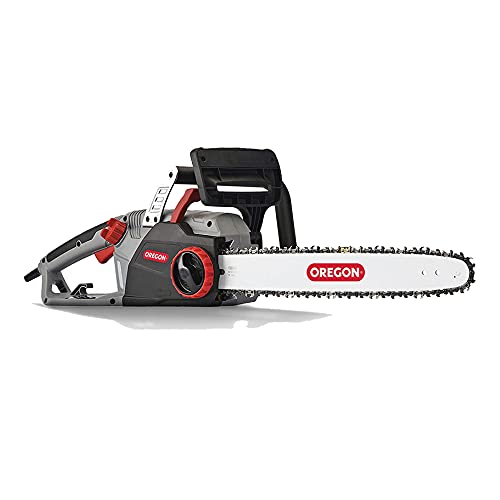
If dull chains are what usually stall your yard work, this saw fixes that at the source. Its built-in PowerSharp system sharpens the chain in 3 to 5 seconds, and the 15-amp motor pulls an 18-inch bar through thicker limbs and small logs.
Key Specs:
- Motor: 15 A, corded
- Bar: 18 in
- Sharpening: PowerSharp self-sharpening system
- Safety: chain brake, low kickback
- Oiling: automatic
- Weight: 12.6 lb
Detailed Review:
PowerSharp is the reason to pay the premium. A dull chain makes any motor run slow and hot, and with this saw you restore the edge in seconds on the tool instead of stopping to file or swap chains. That keeps the motor’s power going into the wood.
Its 18-inch bar gives it the reach to handle thicker firewood rounds and storm logs. The chain brake adds protection on a bar that long, where the nose has more chances to catch.
Corded power also means instant starts and less noise than a gas saw, with no fuel to mix or drain before winter. Tool-free tensioning and the automatic oiler reduce routine care to topping up oil and checking slack. It arrives pre-assembled and comes with a 2-year warranty.
Weight is what you trade. This is a heavier electric saw at 12.6 pounds, so overhead limb work tires you faster than it would with a lighter tool.
Pros:
- Self-sharpening chain cuts downtime from dull edges.
- Long bar crosses thicker rounds in fewer passes.
- Chain brake adds protection when the saw bucks.
- Starts instantly with no fuel to manage.
Cons:
- Heavy to hold through long overhead cuts.
- Cord limits reach across larger properties.
Who It’s For:
Owners who cut firewood rounds near the house and hate stopping to sharpen will get the most from this saw. It also suits anyone who keeps putting off chain filing. Readers who need a saw light enough for pruning will be better served by the CRAFTSMAN CMECS600 16-Inch.
Editor’s Verdict:
Pay for this one if sharp chains and a longer bar matter more to you than a light saw.
#6 SENIX CSE10-L 14-Inch — Best Budget
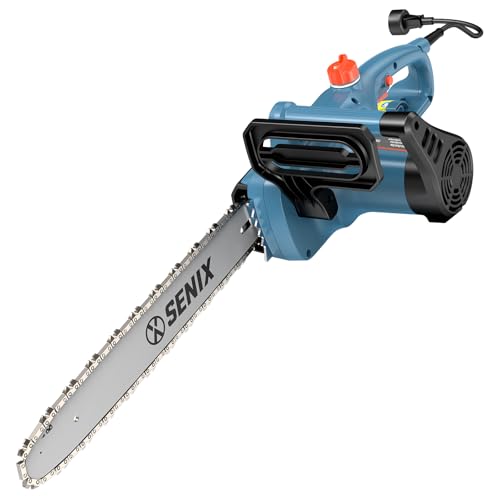
Money-conscious buyers get a corded saw that never waits on a charger. The 10-amp motor runs off household current with no batteries to replace, and a trigger lockout plus an automatic kickback brake cover the safety basics.
Key Specs:
- Bar: 14 in
- Motor: 10 A, plugs into a standard 120-volt outlet
- Weight: 7.9 lb
- Oil tank: 5.8 oz, with oil level window
- Safety: trigger lockout, automatic kickback brake
- Included: bar and chain cover, scrench
Detailed Review:
This saw keeps the cost low without stripping out safety or oiling. Plugged into a standard outlet, the 10-amp motor delivers consistent torque that does not fade the way a battery does, so a long afternoon of storm cleanup runs at the same pace from the first cut to the last.
The 14-inch bar handles storm limbs and smaller firewood rounds, and the saw stays manageable for a homeowner working at waist height. The automatic oiler draws from the built-in tank, and the level window lets you check the oil before each session.
Safety is better covered than the price suggests. The trigger lockout has to be released before the motor runs, and the automatic kickback brake stops the chain if the bar jumps back toward you.
The included scrench handles bar and chain adjustments, so keep it with the saw. A 3-year limited warranty backs the saw, and the bar and chain cover protects the chain in storage and transport.
Pros:
- Unlimited runtime from a standard household outlet.
- Kickback brake and trigger lockout come standard.
- Oil level window makes refills easy to time.
- Bar and chain cover included for storage.
Cons:
- Cord ties you to an outlet.
- Chain adjustments mean keeping the scrench close by.
Who It’s For:
Budget-minded homeowners with an outlet near the work area fit this saw well, whether the job is a pile of storm limbs or a season of small firewood. Anyone with remote trees to reach or no outdoor outlet should look at a battery or gas option instead.
Editor’s Verdict:
Start here if you want dependable corded cutting and solid safety features while keeping spending low.
#7 WEN CP1216 16-Inch — Also Great
Steady limb cutting near the house is where this saw fits. Its 12-amp motor drives the chain at up to 41 feet per second, and a kickback brake, tool-free tensioning and an auto oiler come built in, so routine care never needs a wrench.
Key Specs:
- Bar: 16 in
- Motor: 12 A, corded
- Chain speed: up to 41 ft/s
- Weight: 10 lb
- Safety: kickback brake
Detailed Review:
A chain moving that fast clears chips quickly, which keeps cuts through limbs and small logs moving at a steady pace. With the long bar, you can cross most storm limbs in a single pass.
Next to the CRAFTSMAN CMECS600 16-Inch, it has the same bar length and amp rating but weighs more. You feel that extra weight in your arms on every cut, so the WEN makes more sense when most of your cutting happens on the ground rather than up at limb height.
The cable strain relief notch holds the extension cord so a tug does not pull the plug loose mid-cut, which saves frustration in brushy ground. Tool-free tensioning and the auto oiler handle routine chain care, and the kickback brake adds protection if the bar jumps toward you.
Running on electricity means no gasoline and no emissions. The included sheath covers the chain in storage.
Pros:
- Fast chain speed keeps cuts moving.
- Strain relief notch keeps the cord connected.
- Kickback brake and tool-free tensioning built in.
- Sheath included for safe storage.
Cons:
- Heavier than the CRAFTSMAN despite the same bar length.
- Reach ends where the extension cord ends.
Who It’s For:
Yard owners who do most of their cutting on downed limbs and logs at ground level will like how quickly this saw works. People who prune at chest height or above may find the lighter CRAFTSMAN CMECS600 16-Inch easier to hold through a session.
Editor’s Verdict:
Keep it in mind as a strong corded workhorse for ground-level limb and log cutting close to an outlet.
#8 Greenworks 24V 4-Inch Mini Chainsaw — Best Lightweight
Light pruning overhead and in tight spots is where this saw shines. At just under 3 lb, it runs a brushless motor that drives the chain at 26 ft/s and makes up to 45 cuts on 4×4 lumber per charge.
Key Specs:
- Bar: 4 in
- Weight: just under 3 lb
- Motor: brushless, 26 ft/s chain speed
- Battery: 24V, 2.0Ah, full recharge in 60 minutes
- Runtime: up to 45 cuts on 4×4 lumber per charge
- Warranty: 3 years, tool and battery
Detailed Review:
At just under 3 lbs, this saw is light enough for comfortable overhead pruning. The wrap-around handle lets you steady it from several angles when you reach into a shrub or prune above your head. The small bar keeps the saw compact enough for tight spaces between branches, but it also limits the saw to small limbs.
Its 24V battery powers more than 200 Greenworks 24V tools, so a trimmer or blower you already own on that platform can share the same pack. The kit includes a 2.0Ah battery and a 30W Type-C charger with a 3-foot cord, so the saw works out of the box even if it is your first Greenworks tool.
Tool-free chain tensioning and an automatic oiler with a transparent fill window keep upkeep minimal. The 2-step starting system keeps the chain from running when you only meant to pick up the saw.
A 3-year warranty covers both the tool and the battery, backed by North American customer support.
Pros:
- Featherweight build makes overhead pruning easy.
- Battery shares the Greenworks 24V tool platform.
- Clear oil window and tool-free tensioning simplify care.
- Two-step start prevents accidental chain starts.
Cons:
- Small bar limits it to light limbs.
- One included battery means pauses for recharging.
Who It’s For:
Homeowners already running Greenworks 24V tools can add this saw without buying another battery or charger. It also suits beginners and anyone who wants a saw for pruning in tight spots. If you need to cut storm limbs or firewood rounds, step up to a longer-bar saw.
Editor’s Verdict:
Grab it for light pruning, especially if your shed already holds Greenworks 24V batteries.
Which Chainsaw Under $100 Fits Your Yard Job?
Where the work happens and how thick the wood is decide the type of saw. Those two factors matter more than motor ratings. A saw that fits the job’s location starts and runs without fuss, and a saw whose bar fits the wood cuts without binding. How often you cut then decides how much upkeep you can live with. That changes the right pick for someone who saws twice a year compared with someone who clears limbs every month.
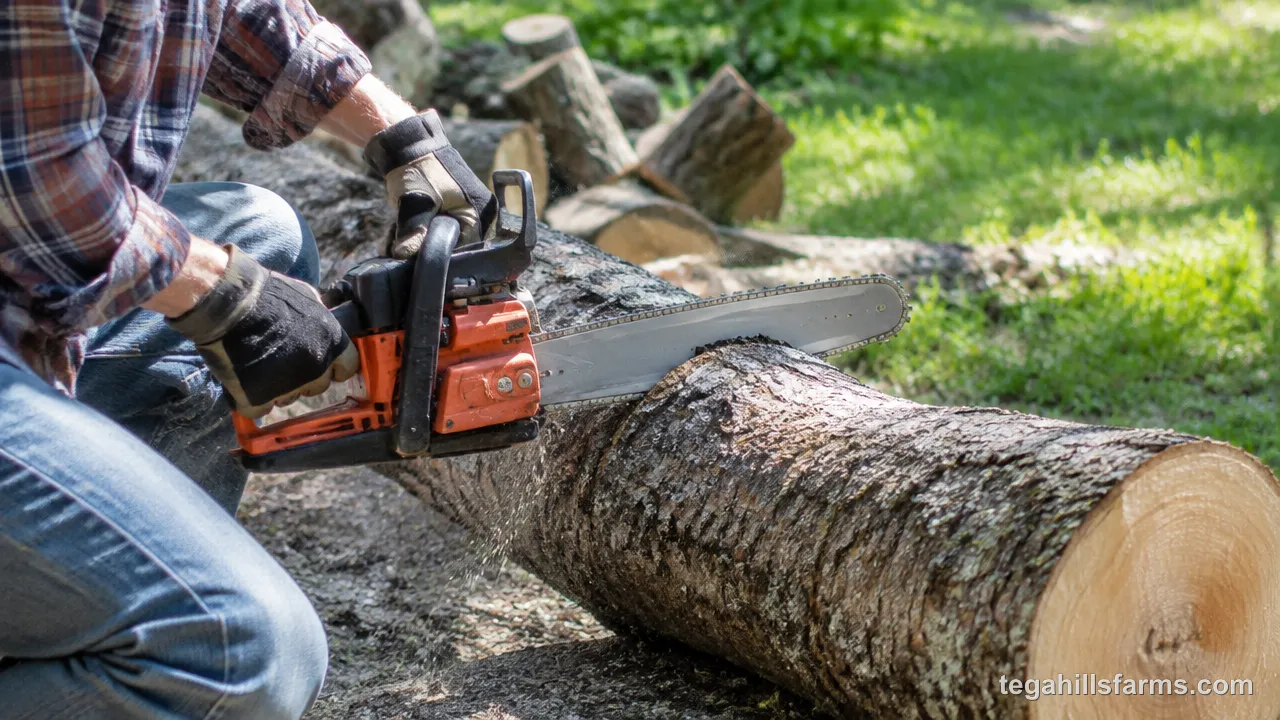
Which Saw Is Best for Trimming and Pruning?
The mini battery saws are the right tools for trimming. The Greenworks 24V 4-Inch Mini Chainsaw and the tietoc Mini Chainsaw 6 Inch are light enough to hold above your head through a string of cuts, and neither one drags a cord through your flower beds.
Weight matters more than power here, because pruning means holding the saw at awkward angles, often reaching into a shrub or up to a branch. A light saw keeps your arms steady, and steady arms make cleaner cuts and fewer slips. The Greenworks’ wrap-around handle helps you control the saw from different positions, and a short bar fits between branches where a long bar would catch.
The limit is cut diameter. Once a branch is thicker than the bar, a mini saw has to cut from both sides, and that is when it binds. The SEESII Cordless Mini Chainsaw 8-Inch extends that limit a little but adds weight.
Which Saw Handles Storm Limbs and Small Firewood?
For storm limbs and small firewood, the longer-bar corded saws and the VEVOR gas saw do the job much better than any mini. The Oregon CS1500, CRAFTSMAN CMECS600 16-Inch, WEN CP1216 16-Inch and SENIX CSE10-L 14-Inch carry bars long enough to reach through a downed limb, and their motors run steadily for as long as the outlet supplies power.
Each type gives something up. The corded saws stop where the extension cord stops, which works in a suburban yard but not at the back of a property. The VEVOR goes anywhere, but you pay for that with mixed fuel, pull starts and seasonal fuel care.
This tier stops being the right tool when firewood becomes a heating source instead of an occasional fire pit supply. Bucking hardwood rounds every weekend through fall wears out small motors and light housings. At that point, compare the best chainsaws for cutting firewood, which are built for sustained work.
Is the Saw for Occasional Use or Regular Work?
A saw used a few times a year should be easy to store and quick to start, and that favors corded and battery models. A corded saw can hang on a garage hook all winter and start the moment you plug it in. A battery saw only needs its pack stored indoors.
A gas saw that sits for months needs its fuel drained or stabilized beforehand, or it will start hard and may need carburetor work in spring. For an owner who cuts a handful of times a season, that upkeep often takes more effort than the cutting itself.
Regular use exposes different weaknesses: light builds, chains that dull quickly, and oilers that cannot keep up with long sessions. If your saw comes out every week, budget models wear faster than you would like. The best chainsaws for homeowners cover saws sized for that steadier workload.
Is a Cheap New Chainsaw Worth It, or Should You Buy Used?
Yes for light, occasional jobs, where a warranty and an easy trigger start matter most. No for frequent or heavy cutting, where a used saw from an established brand usually holds up better.
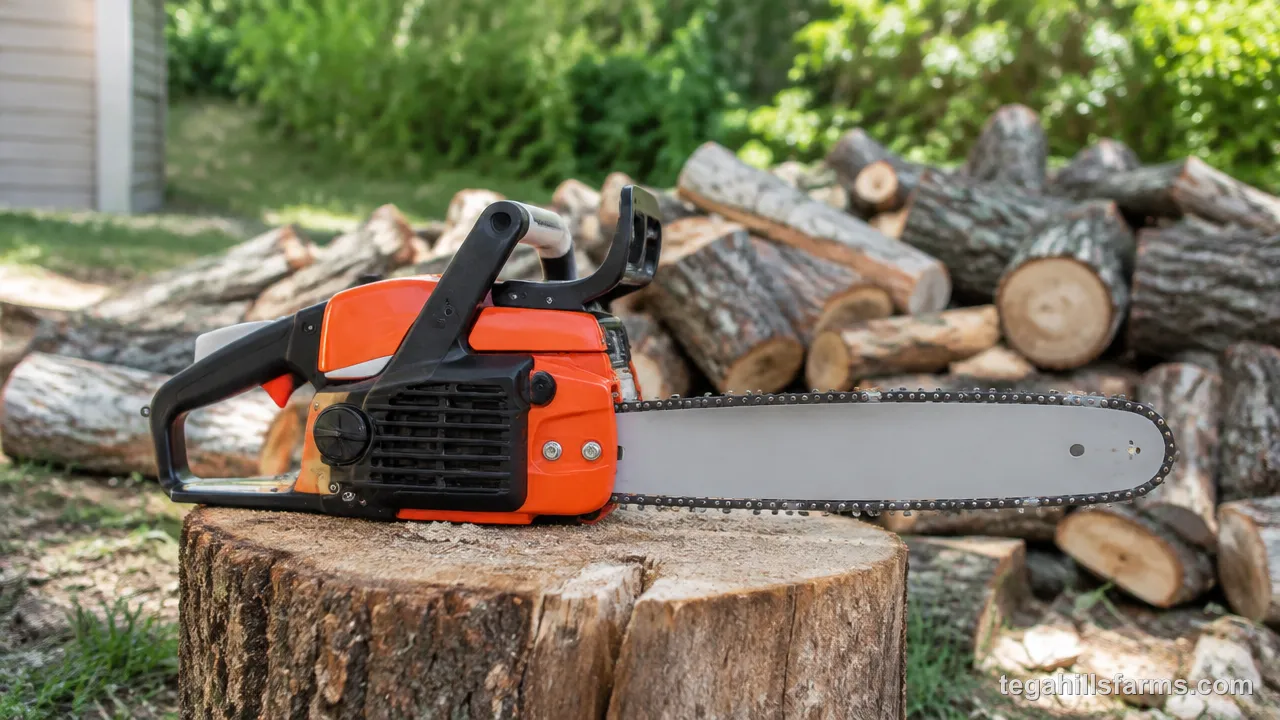
A new budget saw comes with a known history, a warranty, and parts that fit right out of the box. For pruning, storm cleanup a few times a year, and the odd fire pit log, that peace of mind is worth more than extra power you would rarely use.
If you cut every weekend in season, I would steer you toward a used or refurbished saw from Echo, Stihl or Husqvarna. Those brands build saws that are meant to be repaired, and their parts and dealer service stay available for years. A budget saw often ends up in the trash once one part fails.
The risk lies in the unknown history of a used gas saw. Fuel left in the tank can gum up the carburetor, and the wrong fuel mix can score the piston. A worn bar, sprocket or chain brake adds repair costs right away. Have a dealer look the saw over before you hand over cash. If you are still weighing types, sizes and power sources, a guide on how to choose a chainsaw walks through those decisions.
A mini saw pushed into wood thicker than its bar pinches the chain, bogs the motor, and can buck back toward your hands in a single cut. Each time that happens, the motor runs hotter and the battery shuts down sooner, while your hands spend more time near a chain that has stopped behaving the way you expect.
What Happens When You Use a Mini Saw for a Full-Size Job?
Overloading a mini saw shows up as a chain that binds in the cut, a motor that heats up and slows down, a battery that cuts out under load, and a saw that jumps or twists in your hands. Each sign means the wood is too much for the bar or motor, and pushing harder makes each one worse.
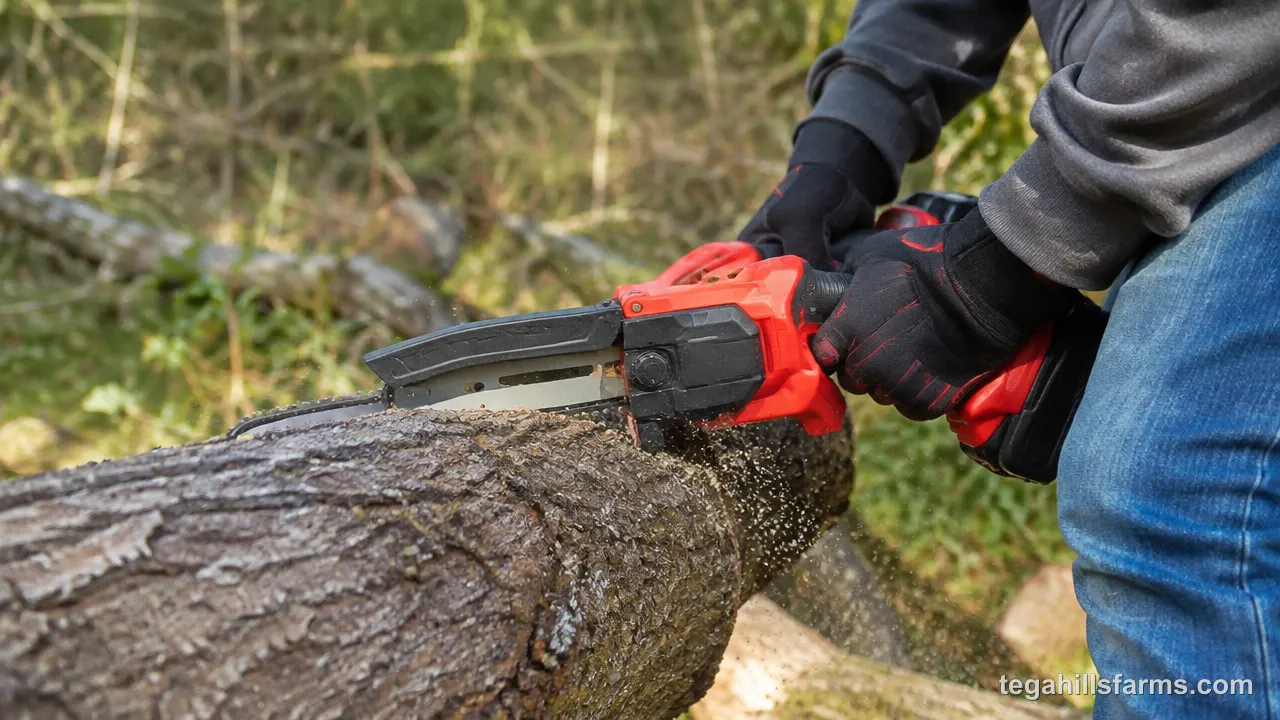
Binding happens when the kerf closes on a short bar buried in thick wood. The motor then strains against a stopped chain, and the battery’s overload protection shuts it off. The jumping is the dangerous part, because a pinched chain can throw the saw back toward you without warning.
Safe work with a mini saw means wood no thicker than the bar, a sharp chain, and a steady grip with both hands where the saw allows it. You let the chain do the cutting instead of leaning on the saw.
When you find yourself cutting from both sides of most limbs, or the battery keeps shutting off mid-cut, the job has outgrown the saw. Step up to a full-size saw with a longer bar instead of forcing the mini through it.
How Do You Check a Budget Chainsaw Listing Before Buying?
A worthwhile budget saw on Amazon or Walmart has clear warranty terms, replacement chains and bars you can actually buy, and a box contents list that matches the photos. Saws sold without those details often look identical to good ones but leave you stranded when the first chain wears out.
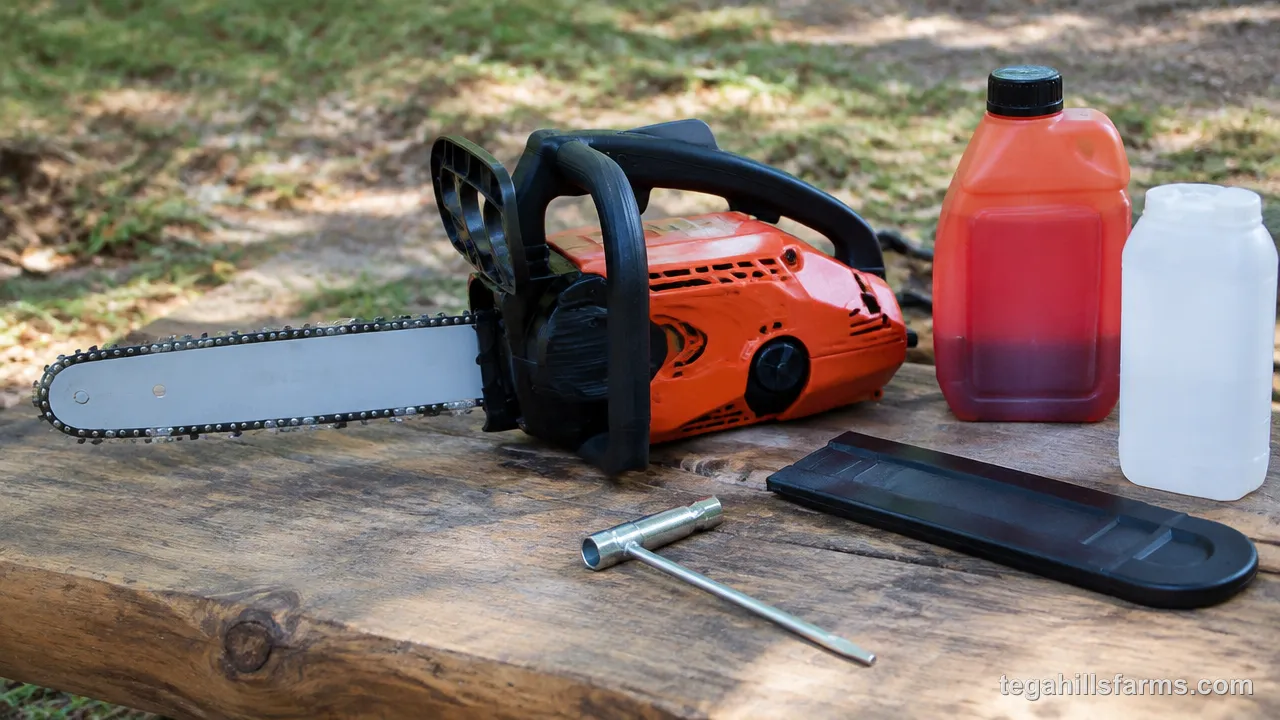
Start with the warranty. Check how long it runs, whether it covers the battery as well as the tool, and whether you have to ship the saw back for service.
Next, confirm that replacement chains and bars exist for that exact model. A saw whose chain you cannot replace becomes useless after one dull edge, and some mini saws use proprietary chains sold only by the original seller.
Read the box contents carefully. Many kits include an oil bottle but no oil, and gas saws ship without fuel. You will need bar and chain oil, and for gas, 2-cycle oil and fresh fuel, before the first cut.
Finally, read recent customer reviews for durability rather than first impressions. A saw that works out of the box tells you little; one that still starts after a season tells you much more.
How Do You Mix Fuel, Start and Maintain a Cheap Gas Chainsaw?
A cheap gas saw stays reliable if you mix fresh fuel at the ratio in its manual, start it with the same routine every time, and empty or stabilize the tank before winter. Fuel neglect is the main hidden cost of owning gas.
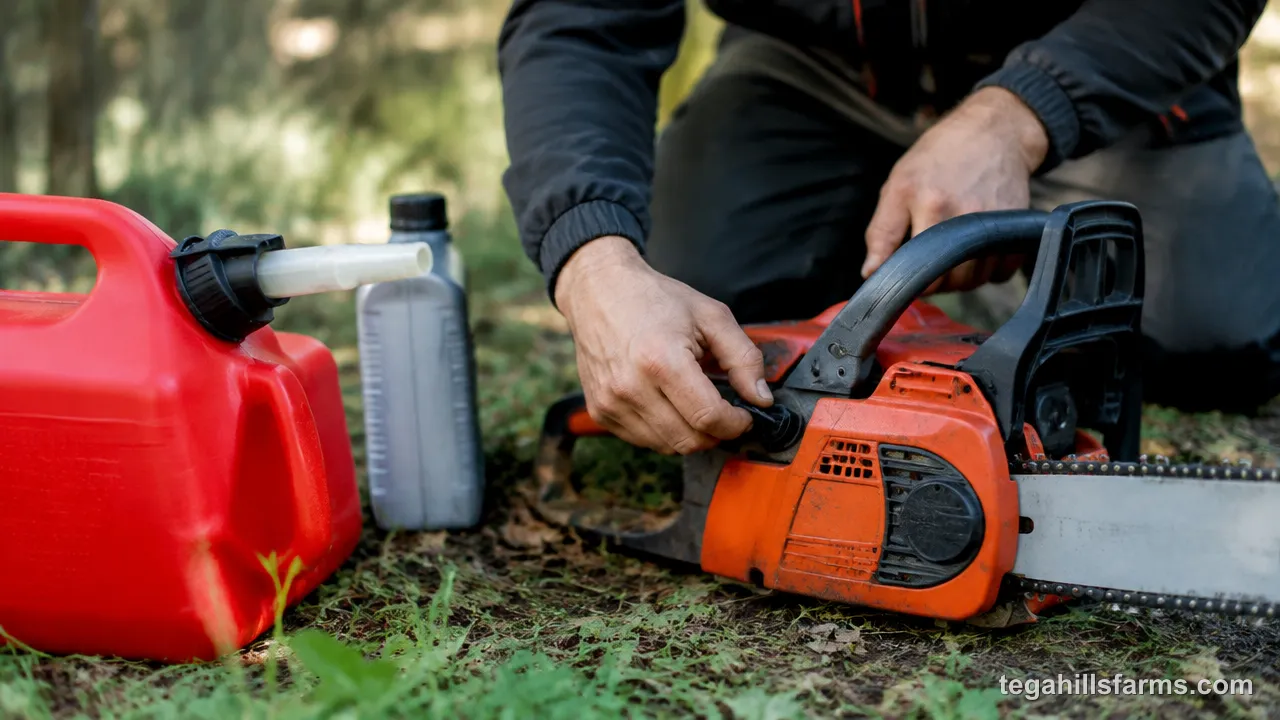
Mix regular gasoline with 2-cycle engine oil at the ratio the manufacturer lists, in a clean can, and only mix what you will use within a few weeks. Old fuel loses its volatility and leaves varnish in the carburetor, which is the usual cause of hard starting.
For a cold start, engage the chain brake, press the primer bulb until fuel shows, close the choke, and pull until the engine pops. Then open the choke and pull again until the saw runs. A warm engine usually starts without choke.
Routine care covers a clean air filter, a spark plug checked each season, a sharp chain, and chain oil topped up before every use. Before winter storage, either run the tank dry or add fuel stabilizer and run the saw for a minute so treated fuel reaches the carburetor. Then store it somewhere dry. That step decides whether the saw starts next season.
Can You Share Batteries with Tools You Already Own?
Yes, if the saw runs on the same brand and voltage platform as your trimmer, blower or mower. You skip buying a second battery and charger, and the packs you already own get more use.
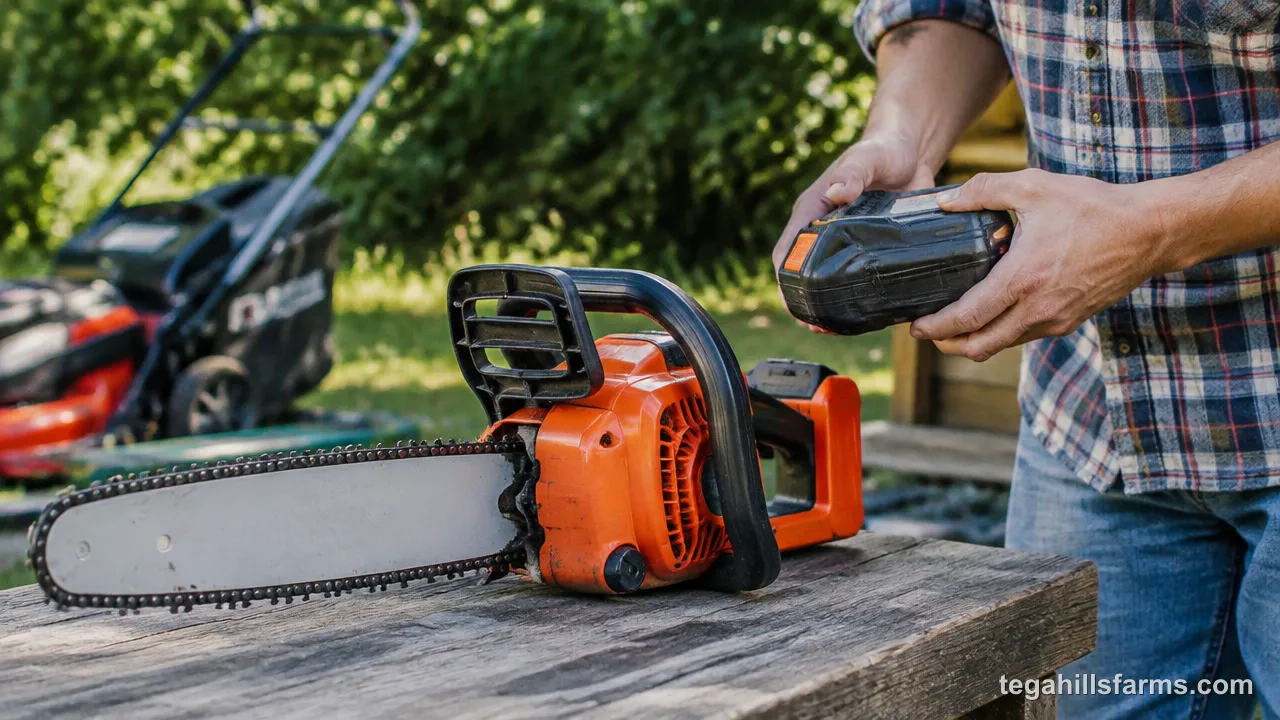
The Greenworks 24V 4-Inch Mini Chainsaw is the clearest example here, since its battery fits the same 24V line as the brand’s other yard tools. A saw that comes with its own separate battery, like most mini saws sold on their own, works fine but leaves you with one more charger that fits nothing else in the garage.
Before counting on a shared platform, check that the voltage and battery type match exactly, not just the brand name. Many brands sell more than one line, such as a 20V and a 40V series, and their packs do not interchange. A 20V pack from one brand will not fit another brand’s 20V tool either, even at the same voltage. Matching the platform also means one set of batteries to store indoors over winter.
Chainsaws Under $100: Quick Answers
Can a mini chainsaw cut firewood?
Only small pieces. A mini saw handles branches and thin limbs that fit within its bar, which covers kindling and fire pit wood. Rounds thicker than the bar force cuts from both sides, which binds the chain and drains the battery. For real firewood, a longer-bar corded or gas saw is the better tool.
Does a corded chainsaw need a heavy extension cord?
Yes. A corded saw needs an outdoor-rated extension cord heavy enough for its amp rating over the cord’s full length. A thin or overly long cord drops voltage, which starves the motor, makes it run hot and slows the chain. The saw’s manual lists the cord gauge it needs for each length.
How long does a battery chainsaw run, and how long does it take to charge?
It depends on the pack size and the wood. Small 2.0Ah packs cover a pruning session but run down faster on thick limbs. Some saws list runtime as a number of cuts rather than minutes. A second battery, like the pair that comes with the SEESII, removes the wait for the charger.
Is a gas chainsaw worth it at this tier?
Only when you need to cut beyond the reach of a cord and do not want to depend on battery runtime. A small gas saw adds fuel mixing, pull starts and winter fuel care. For work near the house, a corded saw does the same job with far less upkeep and starts instantly.
How much noise do these saws make?
Gas saws are the loudest, and their noise carries across neighboring yards. Corded saws are noticeably quieter, and mini battery saws are the quietest of the three. Wear hearing protection with a gas saw, and consider it for long sessions with electric models too, since chain noise adds up over time.
How often should you refill chain oil?
Check the oil window before every use and top up whenever the level drops. A dry chain overheats, stretches and wears the bar quickly. Small tanks can run low within a single long session, so on longer storm cleanups, check the window each time you pause to move or refuel.
Write Your Review
No reviews yet. Be the first to share your experience!