

My picks for the best garden shovels under $100 are the AshmanOnline Heavy-Duty Digging Shovel 41in (Best Overall), VNIMTI Gardening Shovel 56in (Best for Large Yards), HANTOP Mini Digging Shovel 28in (Best for Small Spaces), GSBLUNIE Garden Shovel 33in (Best Budget), KOLEIYA 41in Round Point Shovel D-Handle (Best Easy Assembly), Fiskars Pro Garden Shovel 44in (Also Great), Amazon Basics Gardening Shovel 47in (Best Rust-Resistant) and CKG Garden Shovel 43in (Best Performance). They run from a compact shovel you can stow in a car trunk to a long-shafted digger for tall gardeners working big yards.
Under that cap, the differences that matter come from the build. What the blade is made of and how the head joins the shaft set durability. Whether the handle is wood, fiberglass, steel or carbon fiber, and how its length and grip fit your height, set how your hands and back feel after a long session.
The worry with a lower-priced shovel is a failure in the middle of a job: a blade that folds on a root, or a head that starts to wobble on the shaft. Both trace back to thin metal and weak joints, and you can check for both before you buy.





Match the shovel to your height and your ground before anything else. A shaft that is too short bends your back on every scoop, and a light blade that scoops compost easily can stall in packed clay.
What Should You Look for in a Garden Shovel?
How the blade and handle are built, not the brand on the label, decides whether a shovel still feels comfortable late in a long digging session and whether it lasts more than a few seasons. Every push puts your full weight through the step, the joint and the shaft, so a weak point in any one of them shows up as a bent blade, a loose head or sore wrists. The same build choices set how much the tool weighs, and weight is what your back and shoulders feel by the end of the day. A budget cap rules out some heavier-duty designs, and my broader guide to the best garden shovels covers every other kind of digging tool worth considering.
How Do Blade and Head Construction Affect Durability?
A forged head with a solid joint to the shaft holds its shape when you pry against a root. A thin stamped blade on a loose socket is usually the first part to bend or wobble. Forging presses hot steel into shape, which packs the metal and keeps the blade stiff. Stamping cuts the blade from sheet steel, so it is lighter but flexes sooner under load. A welded head joins blade and socket in one piece, and the quality of that weld decides whether the joint lasts. Carbon and manganese steels are hard and hold an edge, but they rust if stored wet, which is why a powder coating on the head helps.
The joint between head and shaft matters just as much. Rivets hold well while the shaft stays snug, but a wood shaft that shrinks in dry weather can let them loosen until the head turns. A welded steel socket has no fastener to work loose, though a rough weld can crack under repeated prying.
The back of the blade changes cleanup. An open-back blade has a hollow where the steel wraps around the socket, and wet clay packs into it. A closed-back blade is solid behind the socket, so it sheds soil and resists flexing. A rolled or wide step along the top edge gives your boot a flat platform, so you can drive the blade into hard ground with body weight instead of arm strength.
Which Handle Material Lasts Longest: Wood, Fiberglass, Steel or Carbon Fiber?
For most home gardeners, fiberglass outlasts the others because it does not rot, swell or splinter when the shovel is left out in damp weather. Wood feels good in the hand and absorbs shock, but it needs oil and dry storage. Without that care, the grain opens up and the shaft can crack near the head.
Steel handles add weight but give a stiff, direct push for prying, and they pass more vibration into your hands when the blade hits a stone. Carbon fiber cuts weight while staying stiff, so it suits long sessions where every lift counts.
Here is how the four materials compare on what you feel during a long dig and how much care each one needs:
| Handle material | Weight | Flex and vibration | Weather resistance | Upkeep |
|---|---|---|---|---|
| Wood | Moderate | Absorbs shock, some flex | Swells and rots if left wet | Oiling and dry storage |
| Fiberglass | Light to moderate | Little flex, damps vibration | Resists moisture and rot | Wipe down, store out of sun |
| Steel | Heavy | Stiff, passes vibration | Rusts where coating chips | Touch up the coating |
| Carbon fiber | Light | Stiff, damps vibration | Resists moisture | Wipe down |
If you dig for long stretches, a fiberglass or carbon fiber handle spares your shoulders. A steel handle makes sense when you pry often and don’t mind carrying the extra weight.
How Do You Choose the Right Handle Length and Grip Style?
The right length lets you stand nearly upright while the blade does the work. A long shaft suits taller gardeners and big holes because it adds leverage. A shorter shovel gives smaller gardeners and tight beds more control. When a shaft is too short for your height, you bend at the waist on every scoop, and that repeated bend strains the lower back. A shaft that is too long pushes your hands up and away from your body, so you lose control near plants.
A D-handle puts a crossbar at the top of the shaft for your back hand. That lets you steer the blade with both hands and twist it out of the soil without the grip rolling. A straight shaft lets you slide your hands along it and change position, which helps on long shovels used for big jobs. A Y-grip splits the top of the shaft into two arms and gives you a wider hold on a short shovel.
Grip shape matters for your wrists too. A wide, smooth or padded grip spreads pressure across the palm. A narrow, hard grip presses on a few points and tires the hand sooner, which matters most for older gardeners and smaller or weaker hands.
The 8 Best Garden Shovels Under $100 of 2026
From a trunk-sized mini to a long-shafted digger, the lineup covers the AshmanOnline Heavy-Duty Digging Shovel 41in, VNIMTI Gardening Shovel 56in, HANTOP Mini Digging Shovel 28in, GSBLUNIE Garden Shovel 33in, KOLEIYA 41in Round Point Shovel D-Handle, Fiskars Pro Garden Shovel 44in, Amazon Basics Gardening Shovel 47in and CKG Garden Shovel 43in. Weight and handle material separate them most clearly. The Fiskars and the all-steel Amazon Basics carry the most weight and suit tough soil, while the HANTOP, AshmanOnline and GSBLUNIE stay light enough for smaller hands and quick bed work. Length and finish decide the rest. The long VNIMTI serves tall gardeners on large yards, and the shorter wood-handled KOLEIYA fits smaller gardeners. The powder-coated Amazon Basics stands up to damp storage, and the carbon fiber CKG keeps everyday digging and transplanting comfortable.
#1 AshmanOnline Heavy-Duty Digging Shovel 41in — Best Overall
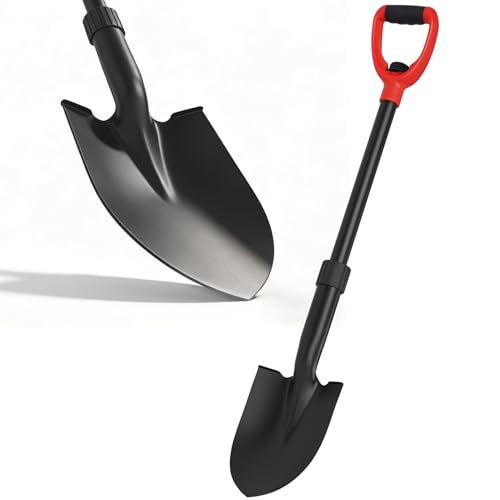
This shovel is light enough for long sessions and suits gardeners who dig, scoop and transplant in the same afternoon. Its hardened round blade is finely sharpened to slice into hard soil, and the D-handle gives you two-handed control when you lean in to pry a clump loose or lift a full load of compost.
Key Specs:
- Overall length: 41 in
- Weight: 2.2 lb
- Blade: hardened, finely sharpened round blade
- Handle: D-handle with low conductivity
- Suggested uses: trenching, transplanting, moving compost
Detailed Review:
The hardened round blade is finely sharpened, so it slices into hard soil instead of skating across the surface when you step on it. Its rounded, cupped face then holds soil or compost as you carry it from the hole to the pile. One tool covers trenching, transplanting and moving compost without a swap.
At 2.2 lb, it is far lighter than the Fiskars Pro Garden Shovel 44in. You give up the mass that helps a blade keep moving through compacted clay. In return, you can lift this shovel all morning before your shoulders start to complain.
The D-handle lets your back hand steer and twist the blade while your front hand lifts, and it stays put in your grip when you push hard. The handle has low conductivity, so it won’t carry heat or cold into your hands on a frosty morning or a hot afternoon.
For a single shovel that handles mixed bed work, I’d put light weight ahead of extra heft, because most home digging is repeated lifting rather than prying. Dense clay full of roots is where a heavier blade earns its keep.
Pros:
- Light build keeps long digging sessions easier on your arms.
- Sharpened round blade bites into hard soil instead of skating off.
- D-handle gives two-handed control when twisting out a clump.
- Low-conductivity handle stays comfortable in hot or cold weather.
Cons:
- Light build has less mass to drive through compacted clay.
- Round blade cuts less crisp bed edges than a flat one.
Who It’s For:
Gardeners who switch between digging planting holes, moving compost and transplanting perennials will find this shovel covers all three without strain, thanks to its light frame and sharpened round blade. If your ground is dense clay full of roots, a heavier digging shovel with more mass behind the blade will push through with less effort.
Editor’s Verdict:
A light, sharp round blade and a secure D-handle make this shovel an easy everyday choice for digging, scooping and transplanting.
#2 VNIMTI Gardening Shovel 56in — Best for Large Yards
Taller gardeners with big digging jobs can work nearly upright with this long fiberglass-handled shovel instead of bending over every scoop. The larger head moves more soil per lift.
Key Specs:
- Overall length: 56 in
- Weight: 4.2 lb
- Blade: high-strength steel, round
- Head: larger head with wide tread
- Handle: fiberglass with two non-slip grip zones
Detailed Review:
At 56 in, this shovel gives a tall adult a long shaft, so the back can stay straighter and the shaft supplies leverage when lifting soil out of a deep hole. Less bending on every scoop is what eases pressure on the waist over a long day. In a narrow bed, though, a shaft this long swings into plants and is harder to aim.
The high-strength steel blade and larger head move more soil with each push. The wide tread across the top of the head gives your foot a broad platform. You press down with steady leg force instead of jabbing with your arms, which keeps hard ground, sticky soil and gravel manageable.
The fiberglass handle has two non-slip zones that turn tacky when wet, so your grip holds with damp gloves or after rain. It weighs 4.2 lb, noticeably more than the AshmanOnline Heavy-Duty Digging Shovel 41in, and that weight sits in a bigger head on a longer shaft. On a large yard project I accept that, because the mass helps drive the blade, but it is a lot of tool for quick jobs.
Pros:
- Long shaft keeps tall users from bending on every scoop.
- Larger head moves more soil with each lift.
- Wide tread lets your leg drive the blade down.
- Fiberglass grip zones turn tacky when wet for a firm hold.
Cons:
- Long shaft is awkward to aim in narrow beds.
- Heavier build tires you faster on light, quick jobs.
Who It’s For:
Tall gardeners facing big projects, such as breaking ground for a new bed, moving gravel or digging in sticky soil across a large yard, get reach and leverage from this shovel without stooping. Shorter gardeners and anyone working tight vegetable rows will find the long shaft harder to control than a compact or mid-length shovel.
Editor’s Verdict:
Built for reach and volume, this long fiberglass-handled shovel makes heavy digging on a large property easier on a tall gardener’s back.
#3 HANTOP Mini Digging Shovel 28in — Best for Small Spaces
This shovel fits where long tools can’t. Its sawtooth manganese steel blade cuts through soil and small roots, and the Y-shaped grip gives you a firm hold in vegetable beds, raised beds and tight corners.
Key Specs:
- Dimensions: 6 × 2 × 28 in (L × W × H)
- Weight: 2 lb
- Blade: manganese steel with sawtooth edge
- Shaft: fiberglass
- Grip: Y-shaped PP, non-slip
Detailed Review:
Teeth along the blade edge saw into roots as you rock the shovel, so you can open a planting hole in a bed full of old roots without stopping for pruners. A plain edge tends to push a root aside or bounce off it.
At 28 in and 2 lb, this shovel is short and light enough to handle with one hand. That makes it easy to work between plants from your knees or a low stool. The same short length means you have to bend to use it standing, so it is not the tool for digging a large hole upright.
The manganese steel blade is hard and keeps its shape, and the fiberglass shaft won’t rot if the shovel lives in a car trunk or a damp shed. The Y-shaped PP grip gives your top hand a wide, non-slip hold, which helps when you twist the blade free in clay. I see it as a second shovel for beds and containers, or as the one you keep packed for camping and roadside use.
Pros:
- Sawtooth edge cuts through small roots without extra tools.
- Light weight makes it easy to carry and handle.
- Short length gives precise control between plants.
- Y-shaped grip gives a wide, non-slip hold.
Cons:
- Short shaft forces you to bend when digging standing up.
- Short length gives little leverage for prying out rocks.
Who It’s For:
Raised-bed growers, container gardeners and anyone working narrow vegetable rows will appreciate a shovel that slips between plants without disturbing them, and it packs easily into a car or camping kit. Gardeners who need to dig large holes standing upright should pair it with a full-length shovel.
Editor’s Verdict:
Compact and sharp-toothed, this mini shovel makes quick work of root-filled planting holes in tight beds.
#4 GSBLUNIE Garden Shovel 33in — Best Budget
An affordable pick for casual gardeners, this shovel pairs a forged steel pointed blade with a light fiberglass shaft and a D-handle that reduces hand fatigue. It goes together without tools.
Key Specs:
- Overall length: 33 in
- Weight: 2.8 lb
- Blade: forged steel, pointed
- Shaft: fiberglass with D-handle
- Assembly: tool-free
- Warranty: 120 days
Detailed Review:
The forged steel head gives this shovel a stiffer blade than its budget price suggests. The pointed tip concentrates your push on a small area, so it starts a hole in compacted soil, between tough roots or in rocky ground where a blunter blade stalls.
At 33 in and 2.8 lb, it sits between the HANTOP Mini Digging Shovel 28in and the full-length picks. The D-handle gives two-handed control even on the short shaft, and its non-slip grip reduces hand fatigue when you lever out a plant or turn a bed. The light weight also suits seniors and gardeners with less grip strength.
Assembly takes no tools: the fiberglass shaft connects to the blade in about ten seconds, and the compact size lets the shovel ride in a car trunk or backpack. That connection adds a joint a one-piece shovel doesn’t have, so check that it stays snug after heavy use. The 120-day warranty covers the early months, when a manufacturing flaw would show up.
Pros:
- Forged steel pointed blade starts holes in compacted soil.
- Light weight suits seniors and gardeners with less grip strength.
- Tool-free assembly takes about ten seconds.
- Compact size stores easily in a trunk or backpack.
Cons:
- Shorter shaft makes taller users bend while digging.
- Two-piece build adds a joint to check for play.
Who It’s For:
Casual gardeners on a tight budget, seniors, and anyone who wants a light shovel for planting, transplanting and quick bed work will find this a comfortable fit, and it earns a spot in a car trunk for roadside use. Tall gardeners digging large holes will want a longer shaft.
Editor’s Verdict:
Forged steel and a fiberglass shaft give this compact, affordable shovel a sturdier build than its price suggests.
#5 KOLEIYA 41in Round Point Shovel D-Handle — Best Easy Assembly
Shorter gardeners get a comfortable reach from this round point shovel, and the wide, smooth D-handle spreads pressure across your palm through a long session of planting or weeding. Double rivets hold the steel head on.
Key Specs:
- Overall length: 41 in
- Weight: 3.25 lb
- Head: steel round point, fixed with double rivets
- Handle: solid wood with wide, smooth D-grip
Detailed Review:
A wide, smooth D-handle spreads your grip over more of the palm than a narrow crossbar, so pressure points don’t build up during a long planting session. It also gives you leverage to rock the blade back and pop out a rooted weed or a perennial clump.
Double rivets fix the steel head to the solid wood handle, which keeps the head from turning or pulling off when you pry in rocky soil. Wood brings a warm, shock-absorbing feel to your hands. Like any wood handle, it needs oil and dry storage so it doesn’t shrink away from those rivets.
At 41 in and 3.25 lb, it matches the AshmanOnline Heavy-Duty Digging Shovel 41in in length but weighs more, so you give up some lightness in exchange for a traditional wood handle and a riveted head. The shorter overall length keeps the grip at a comfortable height for older gardeners and smaller adults. The round point also handles compost and gravel, and it can clear a little driveway ice in winter.
Pros:
- Wide, smooth D-handle eases pressure on palms and fingers.
- Double rivets keep the steel head from loosening.
- Solid wood handle absorbs shock and feels warm in hand.
- Shorter length suits older gardeners and smaller adults.
Cons:
- Wood handle needs oiling and dry storage to last.
- Shorter shaft limits reach and leverage for tall gardeners.
Who It’s For:
If you’re on the shorter side, or an older gardener who finds long shovels unwieldy, this one keeps the handle where your hands land naturally. It suits planting, transplanting and pulling rooted weeds in established beds. Gardeners who leave tools outside year-round are better off with a fiberglass handle.
Editor’s Verdict:
Comfortable in smaller hands, this riveted wood-handled shovel brings traditional build and steady leverage to everyday bed work.
#6 Fiskars Pro Garden Shovel 44in — Also Great
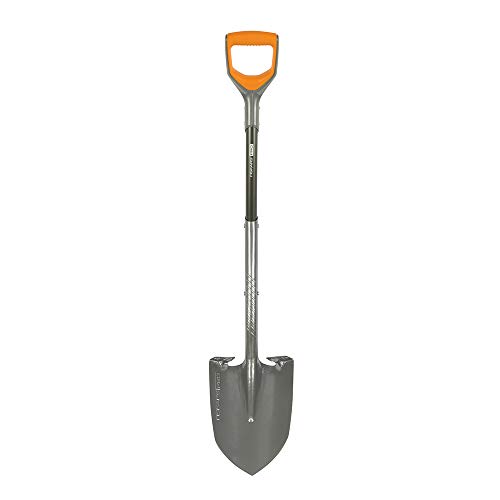
Tough clay and repeated prying call for the heavy-gauge steel spade on this shovel, which keeps a sharpened edge through heavy use. Expect real weight in your arms.
Key Specs:
- Overall length: 44 in
- Weight: 5.6 lb
- Blade: heavy-gauge steel with sharpened edge
- Handle: aluminum D-handle
- Shaft: teardrop-shaped
- Warranty: lifetime
Detailed Review:
The heavy-gauge steel spade is designed to dig and pry without the head separating from the shaft, which is where many lighter shovels give out in rocky ground. Its sharpened edge cuts into tough soil and stays sharp through heavy use, so it keeps cutting cleanly season after season.
The teardrop-shaped shaft fits your hands better and gives more control while digging, so the blade stays aimed where you point it as you lean on the handle. The aluminum D-handle at the top adds strength when you pry against a root.
At 5.6 lb, this is a heavy shovel with real heft behind each thrust. That mass helps drive the blade into packed ground, but it tires your arms during long sessions of lifting. It is close in length to the CKG Garden Shovel 43in, which is lighter, so I’d pick the Fiskars when prying power matters more than easy lifting.
The lifetime warranty backs that long-term build. The extra steel pays off when you turn soil and dig planting holes in tough ground.
Pros:
- Heavy-gauge spade pries without the head separating from the shaft.
- Sharpened edge stays sharp through heavy use.
- Teardrop shaft gives a secure, controlled grip.
- Lifetime warranty backs the build.
Cons:
- Heavy build tires your arms during long lifting sessions.
- Extra weight is wasted effort when moving compost or mulch.
Who It’s For:
Homeowners breaking new beds in compacted clay or rocky ground, and anyone who pries out roots often, get a blade that keeps its edge and a head that stays put. If your garden work leans toward light planting or moving mulch, a lighter shovel will be easier on your shoulders.
Editor’s Verdict:
Heavy, sharp and backed by a lifetime warranty, this shovel is made for hard ground and years of use.
#7 Amazon Basics Gardening Shovel 47in — Best Rust-Resistant
Powder coating on the steel head lets you wipe this shovel clean after a wet dig, so damp soil isn’t left sitting on bare metal. The flat blade cuts crisp bed edges.
Key Specs:
- Dimensions: 47 × 7.48 × 5.12 in (L × W × H)
- Weight: 5.18 lb
- Construction: welded all-steel
- Head: powder-coated steel, flat blade
- Handle: TPR overmolded poly D-handle
- Step: oversized foot platform
Detailed Review:
The welded all-steel build has no wood to swell and no rivets to loosen, so the head and shaft move as one piece when you push into tough soil. Powder coating seals the steel head, which lets damp soil wipe off and helps keep rust from starting on a blade you put away a little wet.
The flat blade and oversized step work together for edging. You set the straight edge on the line, put your boot on the wide step and press down with body weight. That cuts a cleaner border along a flowerbed than a round point.
The TPR overmolded D-handle gives a steady, soft-touch grip that reduces hand fatigue. At 5.18 lb, it is heavier than the fiberglass-handled VNIMTI Gardening Shovel 56in, and the all-steel shaft sends more of the jolt from a buried stone into your wrists.
I’d choose it for damp climates and for anyone who stores tools in an unheated shed, since the coating protects the head as long as it isn’t chipped. A quick touch-up of any bare spot keeps that protection in place.
Pros:
- Powder-coated head wipes clean and resists rust.
- Welded all-steel build has no rivets to loosen.
- Oversized step lets you drive the blade with body weight.
- Flat blade cuts clean edges along beds and borders.
Cons:
- All-steel build passes more vibration into your hands.
- Flat blade lets loose material slide off when scooping.
Who It’s For:
In damp climates, or in yards where tools get stored a little wet, this shovel holds up to the conditions that rust bare steel. It also suits anyone who edges flowerbeds or lays clean borders. Gardeners who mostly move compost or mulch will find a round blade carries more per lift.
Editor’s Verdict:
Welded steel, a powder-coated head and a wide step make this a durable edging and digging shovel for wet yards.
#8 CKG Garden Shovel 43in — Best Performance
The carbon fiber handle on this shovel pays off in long planting and digging sessions, because it stays stiff without the weight of an all-steel shaft. A cold steel round blade does the cutting.
Key Specs:
- Overall length: 43 in
- Weight: 4.25 lb
- Handle: carbon fiber
- Blade: cold steel, round point
- Grip: D-grip
Detailed Review:
Carbon fiber keeps the handle rigid when you lever soil out of a hole, and it won’t rot or rust if the shovel sits outside between jobs. That stiffness puts more of your push into the blade instead of into flex in the shaft.
The cold steel round blade is built for heavy-duty digging and planting, and the round point slides into soil and lifts a rounded load. A comfortable D-grip on top lets you set the angle with your back hand and reduces finger fatigue over a long session.
At 4.25 lb, it is lighter than the all-steel Amazon Basics Gardening Shovel 47in while still carrying a heavy-duty steel head. That middle weight is what I’d want for a full day of planting: enough mass to push through soil, but not so much that your shoulders give out by afternoon. It also works as a planting tool for shrubs and perennials, so one shovel covers both the digging and the setting-in.
Pros:
- Carbon fiber handle stays stiff and won’t rot or rust.
- Cold steel round blade handles heavy-duty digging.
- D-grip gives steady control and eases finger fatigue.
- Round point slides into soil and lifts a full load.
Cons:
- Mid-length shaft is awkward for kneeling work in containers.
- Stiff carbon fiber has less shock-absorbing give than wood.
Who It’s For:
Weekend projects like planting shrubs or reworking beds suit this shovel when you want a stiff handle without the bulk of all-steel. It covers digging and planting in one tool. For quick container work or tight rows, the HANTOP Mini Digging Shovel 28in is easier to maneuver.
Editor’s Verdict:
Stiff, rot-proof and reasonably light, this carbon fiber shovel keeps long digging days comfortable without giving up a heavy-duty steel blade.
Which Garden Shovel Fits Your Soil and Yard Jobs?
The ground you dig and the task you repeat decide the right pick more than the price cap does, because blade shape, weight and handle length help in some conditions and get in the way in others. A heavy pointed blade that breaks packed clay is tiring to swing when all you need is to move mulch. A long shaft that saves your back on a big hole gets in the way between established plants. Matching the build to the work keeps you from fighting the tool.
Which Shovel Works Best in Hard, Rocky or Root-Filled Soil?
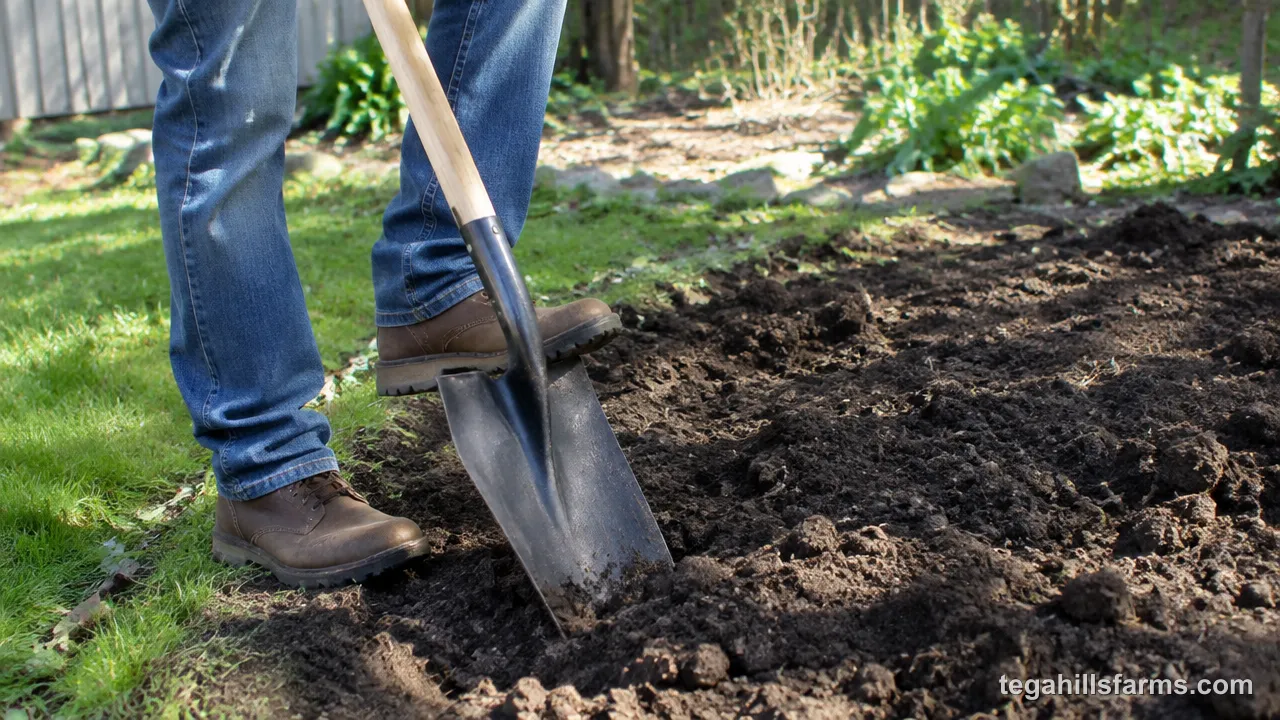
Compacted clay, stones and roots call for a pointed blade of forged or heavy-gauge steel, a head that won’t separate from the shaft when you pry, and a step or tread for your foot. The Fiskars Pro Garden Shovel 44in handles the prying with a heavy-gauge spade built to dig and pry without separating. The GSBLUNIE Garden Shovel 33in brings a forged pointed blade in a much lighter build.
A pointed tip concentrates your weight on a small area, which is why it starts a hole where a flat blade skids. Extra mass keeps the blade moving once it bites, and the wide tread on the VNIMTI Gardening Shovel 56in lets your leg do that work. In an old bed full of roots, the serrated edge on the HANTOP Mini Digging Shovel 28in saws through them rather than tearing.
Heavy builds tire your arms over a long session. In mixed ground, I’d keep a mid-weight round point for daily work and save the heavy spade for breaking new beds. If clay is your everyday ground, the best garden shovels for hard soil go further into tools built for it.
Which Shovel Suits Transplanting and Tight Garden Beds?
A shorter, lighter shovel gives you better control near existing plants, because you can set the blade between roots without the shaft swinging into the neighbors. The HANTOP Mini Digging Shovel 28in and the GSBLUNIE Garden Shovel 33in are the compact picks for kneeling or close work. The KOLEIYA 41in Round Point Shovel D-Handle and the AshmanOnline Heavy-Duty Digging Shovel 41in suit beds you tend standing up.
A D-handle lets your back hand tilt and twist the blade to cut a clean root ball, and the HANTOP’s Y-grip gives a wide hold for short, precise strokes. Compact tools reach their limit with a large shrub. The short shaft gives less leverage to lift a heavy root ball, and you end up bending or kneeling for the whole job.
Which Shovel Is Better for Moving Compost and Loose Material?
A rounder, larger, lighter blade moves loose material with less effort, because the cupped face holds a load and less of each lift goes into raising the tool itself. The AshmanOnline Heavy-Duty Digging Shovel 41in fits this work with its light build and cupped round blade. The larger head on the VNIMTI Gardening Shovel 56in moves more per scoop for a tall gardener clearing a big pile.
Shaft length and handle weight matter because you repeat the same lift over and over. A shaft that reaches your hands without bending saves your lower back, and a lighter handle means less weight to raise on every scoop. Heavy-duty diggers such as the Fiskars Pro Garden Shovel 44in add weight you don’t need here, and the flat blade on the Amazon Basics Gardening Shovel 47in lets loose material slide off. For a tool shaped around this job, I’d also look at the best garden shovels for compost.
On the rack, a stamped blade cut from thin sheet steel can look just like a forged one, and a loosely fixed head feels solid until the first root pushes back. These two weak points cause most early failures on low-cost shovels, and the first sign tends to be a blade folding sideways or a head spinning on the shaft halfway through a planting hole.
How Can You Spot a Poorly Built Budget Shovel?
A shovel that will fail early usually gives itself away before you dig. The blade flexes when you lean on the tip, and the head wobbles when you twist the shaft. The welds look lumpy or have gaps, the plastic grip feels thin and hollow, and the coating already flakes at the edges.
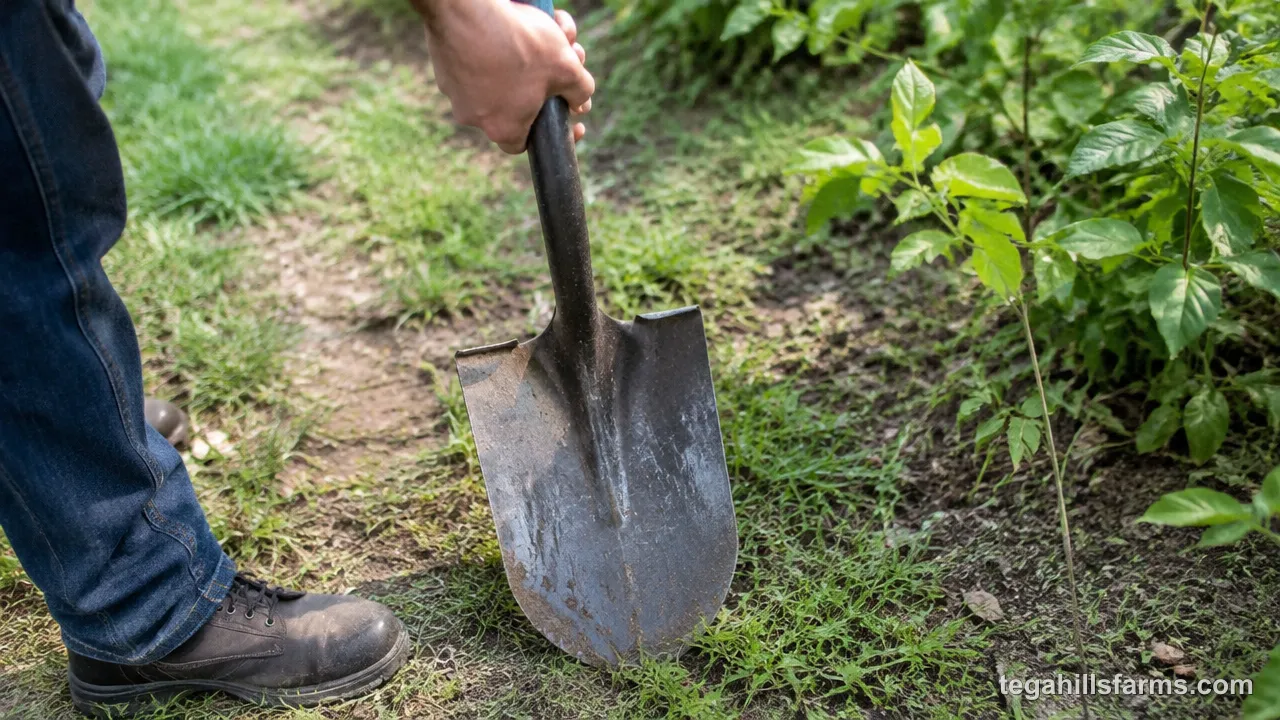
Each flaw shows up in a predictable way in the yard. A flexing blade bends sideways on the first root, and a loose head spins or slips off mid-dig. A poor weld cracks under prying, a brittle grip can snap in cold weather, and chipped coating lets rust start on bare steel. When the shovel arrives, press the tip down, twist the head and run a finger along the welds before the return window closes.
At the lowest price tiers, such as garden shovels under $30, you usually accept a stamped blade and a basic grip. That is fine for planting and light bed work but not for prying. Stepping up to the best garden shovels under $50 more often brings a forged or heavier-gauge head and a fiberglass handle that survives rougher use.
What Is the Difference Between a Shovel, a Spade, a Trowel and a Scoop?
A shovel has a curved, usually pointed blade for digging and lifting soil. A spade has a flat, straight-edged blade for cutting edges and slicing turf. A trowel is a small handheld blade for planting bulbs and seedlings. A scoop has a deep pan with raised sides for moving loose material such as mulch or compost.
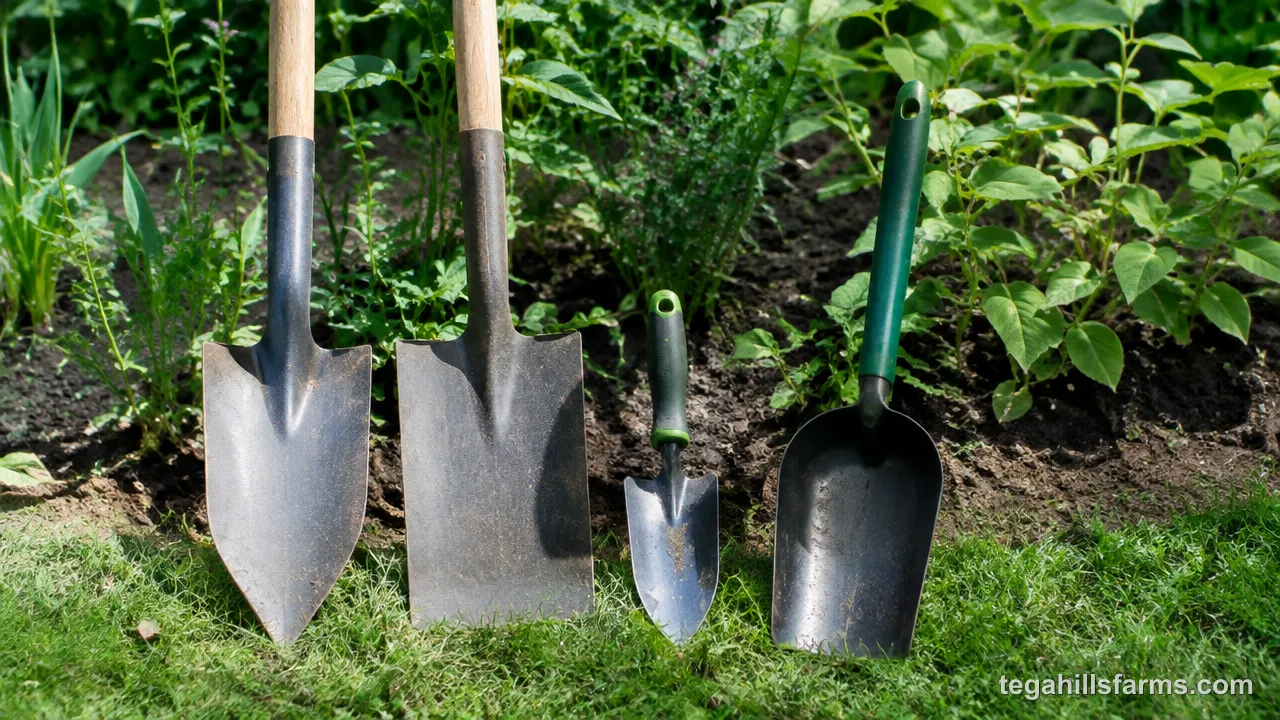
The shape of the blade sets the job. A shovel’s cupped face and point let it break into soil and carry a load, so it is the tool for planting holes and moving dirt. A spade’s flat edge goes straight down, which gives clean bed borders and square-sided trenches but holds less loose soil on the lift.
A trowel works at ground level from your knees, for small holes in beds and containers where a long tool is too much. A scoop carries piles of light material without spilling, but it has no cutting edge for digging.
The shovel and spade often work as a pair. The spade cuts the outline of a new bed or the edge of a root ball, and the shovel lifts out the loosened soil. A beginner with one tool should start with a round point shovel and add a spade once edging becomes a regular job.
How Do You Keep a Garden Shovel Working for Years?
A shovel lasts for years when you clean it after each use, keep the blade dry and sharp, look after the handle and store it out of the weather. Each step protects a material that wears in its own way.
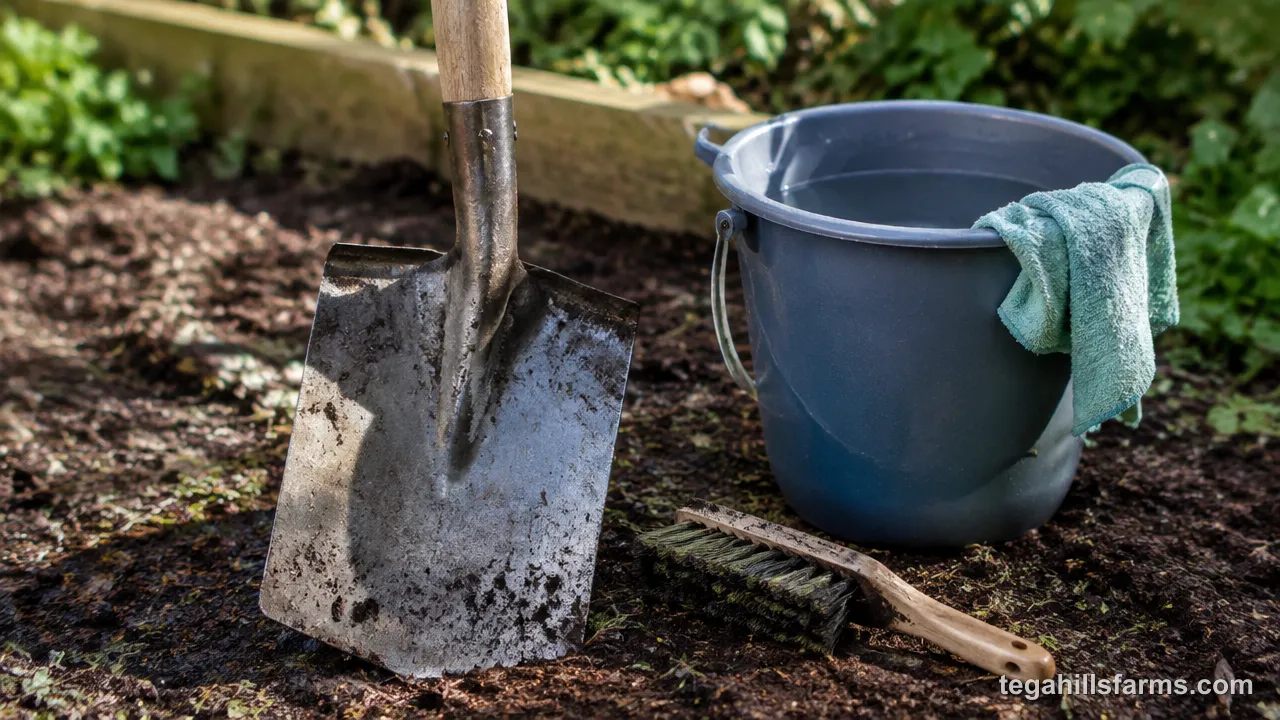
Scrape and rinse soil off the blade after each job, then dry it before putting it away. Damp soil left against bare carbon or manganese steel starts rust quickly. On a powder-coated head, a wipe-down is enough, but touch up any chips so moisture can’t creep under the coating.
Sharpen the edge with a mill file a few times a season, following the original bevel. A sharp edge cuts roots instead of crushing them, so each push takes less force.
Rub wood handles with boiled linseed oil and sand rough spots before they splinter, which also keeps the wood from shrinking away from the rivets. Fiberglass needs only a wipe and a check for cracks or fraying fibers. Over winter, hang shovels in a dry shed or garage instead of leaving them on damp ground, where water soaks into wood and pools against steel.
Write Your Review
No reviews yet. Be the first to share your experience!