

My picks for the best machetes under $100 are REAT Machete 15in 420 Stainless Steel (Best Overall), Ontario Traditional Machete ONCT5 (Best Durability), MOTEECRAG Heavy Duty Machete (Editor’s Choice), CAT Latin Machete 21in (Also Great), Armory Replicas Sickle Machete 20.5in (Also Great), Fiskars Garden Machete 15in (Also Great) and Hooyman Machete with Belt Sheath (Also Great). They range from a light stainless blade for trimming around beds to a long, coated carbon steel blade made for heavy, repeated chopping.
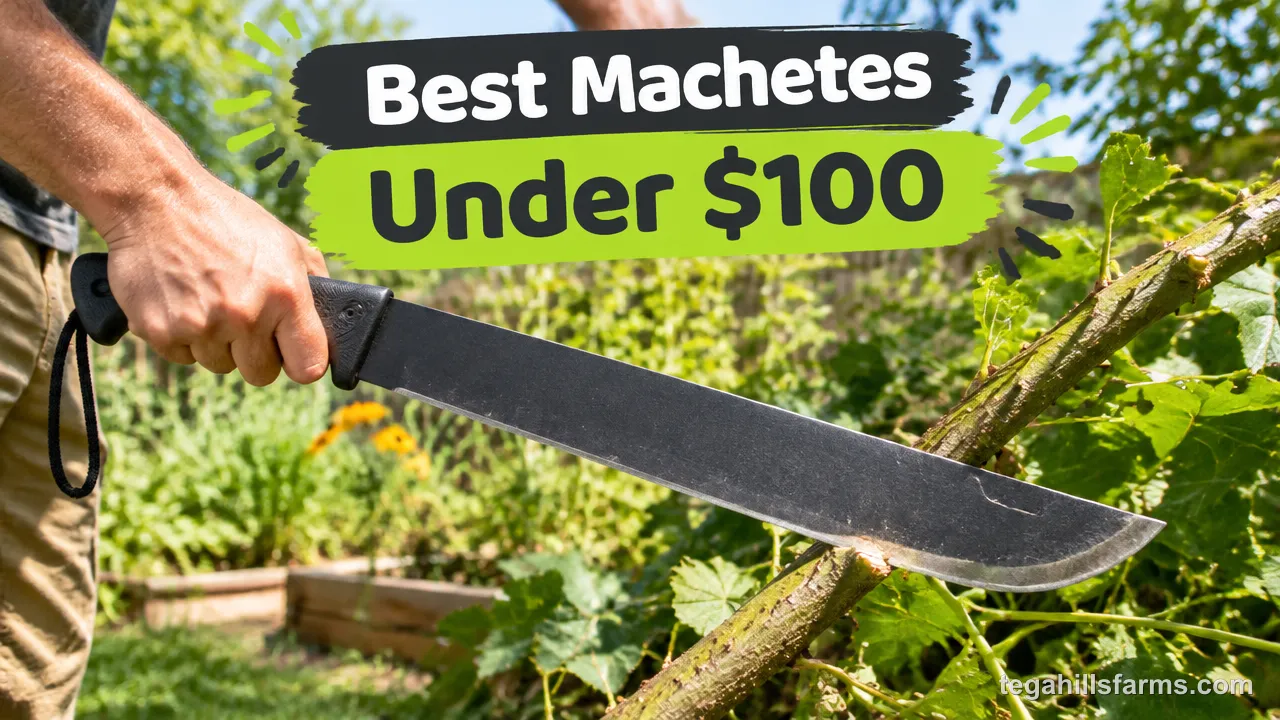
The build decides whether a blade stays in use or ends up at the back of the shed. That means the steel, how far the tang runs into the handle, the shape and length of the blade, and how weight, grip and sheath work together once you’ve been cutting for a while.


Cheap blades tend to wear out in the same few ways: an edge that rolls after an afternoon in woody brush, a handle that works loose, or rust that creeps in during a damp winter in the shed. Each one comes from a build choice you can check before buying, and each one changes how hard your hand and wrist work on every swing.
The 7 Best Machetes Under $100 of 2026
REAT Machete 15in 420 Stainless Steel, Ontario Traditional Machete ONCT5, MOTEECRAG Heavy Duty Machete, CAT Latin Machete 21in, Armory Replicas Sickle Machete 20.5in, Fiskars Garden Machete 15in and Hooyman Machete with Belt Sheath each handle a different kind of cutting at this budget. Blade shape and steel sort them first. The curved Armory Replicas and Fiskars blades draw through vines and grass, while the long, straight Ontario and CAT blades bring reach and momentum to woody chopping. Handle build and weight follow from that split: a light stainless blade suits an afternoon around shrubs, and a heavier one suits clearing that ends in a pile of stems. For a wider look at blades built for yard and garden work at any budget, start with the best garden machetes, then narrow down to this ceiling.
#1 REAT Machete 15in 420 Stainless Steel — Best Overall
If you trim shrubs and cut back vines more than you chop, this compact blade is the easy one to live with, since its green rubber handle keeps a firm hold even when your hands are wet. At 0.75 lb, it asks little of your wrist.
Key Specs:
- Blade steel: 420 stainless steel
- Length: 15 in
- Weight: 0.75 lb
- Handle: ergonomic green rubber, non-slip
- Sheath: protective sheath included
Detailed Review:
The blade is 420 stainless steel, so it resists corrosion when it goes back into a damp shed or garage after a morning of trimming. That tolerance for moisture is the main reason I’d hand this blade to someone who doesn’t want an oiling routine.
The green rubber handle is ergonomically shaped and keeps a firm hold even when your hands are wet from dew or a running hose. A handle that won’t slip lets you keep a relaxed grip instead of clenching, and that is what spares your forearm through a long morning of trimming.
It weighs 0.75 lb, against 2 lb for the Fiskars Garden Machete 15in, though both carry a 15-inch length. The REAT is easier to hold at shoulder height and steer around shrubs, while the Fiskars puts more mass behind each swing when stems thicken.
A protective sheath comes with it, so the edge stays covered when the machete rides in a garden cart or hangs in the shed between jobs. Its light, compact build also makes it easy to pack for a camping trip.
Pros:
- 420 stainless steel resists rust in damp storage.
- Rubber handle holds firm with wet hands.
- Light weight keeps wrist strain low.
- Sheath included for covered storage and transport.
Cons:
- Compact length won’t reach far into deep thickets.
- Light blade carries little momentum into woody stems.
Who It’s For:
Gardeners who spend more time trimming shrubs, vines and ornamental growth than clearing land will feel at home with it, especially if grip strength or wrist comfort is a concern. Anyone who regularly cuts saplings or thick woody stems would do better with a heavier blade that carries more momentum.
Editor’s Verdict:
Expect a light, rust-resistant blade with a grip that stays put when wet. It suits regular trimming around beds and fence lines rather than heavy chopping.
#2 Ontario Traditional Machete ONCT5 — Best Durability
Choose this one when your clearing involves repeated, heavy chopping, because its 22-inch high carbon steel blade sits on a full skeleton tang and is the blade issued to the U.S. military for jungle warfare. Plan on a little edge care to keep it that way.
Key Specs:
- Blade: 22 in high carbon steel, black phosphate coating
- Tang: full skeleton tang
- Handle: grip-enhancing rubber
- Weight: 1 lb
Detailed Review:
The 22-inch blade is high carbon steel, which takes an edge readily and comes back quickly under a file after a session in woody brush. Bare carbon steel rusts fast, and the black phosphate coating holds that off by resisting both wear and corrosion across the flats. The freshly filed edge is the one place the coating is gone, so that is where a wipe and a drop of oil matter.
A full skeleton tang runs through the handle with material cut away, so the force of each chop travels into your hand through continuous steel without the weight of a solid bar. The rubber handle adds grip and takes some of the sting out of repeated strikes, which keeps your hand steady through long, heavy clearing.
For all that length, it weighs 1 lb against 1.8 lb for the Hooyman Machete with Belt Sheath, so it is easier on the wrist over a long session, though the Hooyman brings more mass to each strike. The long blade gives you reach into a bramble patch, but it is harder to steer in tight spaces between shrubs.
Pros:
- High carbon edge comes back quickly under a file.
- Phosphate coating resists wear and corrosion.
- Full skeleton tang stands up to hard chopping.
- Long blade reaches deep into brambles and overgrowth.
Cons:
- Long blade is awkward between closely planted shrubs.
- Filed edge loses its coating and needs oiling.
Who It’s For:
Homeowners dealing with overgrown fence lines, bramble patches and stands of saplings will appreciate a blade built for hard, repeated chopping that resharpens easily at home. If most of your cutting happens beside flower beds and shrubs you want to keep, a shorter blade will be easier to steer.
Editor’s Verdict:
Buy it for heavy, repeated clearing where toughness matters more than finesse, and give the filed edge a wipe and a little oil after each use.
#3 MOTEECRAG Heavy Duty Machete — Editor’s Choice
For anyone who carries a blade around the property or into camp, this one rides securely at the hip on a stainless steel belt clip with a leather retention strap. Its full-tang 8CR steel blade has a black oxide coating against rust.
Key Specs:
- Blade: heat-treated high-carbon 8CR steel, black oxide coating
- Tang: full tang
- Handle: walnut
- Weight: 0.78 lb
- Sheath: leather cross band, retention strap, stainless steel belt clip
- Model: MC1020
Detailed Review:
Only two materials go into it, heat-treated high-carbon 8CR steel and walnut, and the steel runs the full length of the handle. The steel is tough and holds its edge, and the black oxide coating keeps rust and moisture off the blade, so a session in wet grass is less likely to leave it spotted.
Compared with the green rubber handle on the REAT Machete 15in 420 Stainless Steel, the walnut gives a warm, natural grip in dry conditions but less hold when your palms are wet. Wood also needs an occasional coat of oil to keep it from drying out and checking.
The sheath is built for carrying. A leather cross band and retention strap stop the blade from slipping, and the stainless steel belt clip holds it firmly at your hip or on a pocket. At 0.78 lb, it adds little drag to a belt on a long walk along a property line.
Keep it off stony ground. This blade can break if it strikes hard stone, so brush growing over gravel or rocky soil calls for slower, deliberate cuts that stay above the surface.
Pros:
- Black oxide coating protects the blade from rust.
- Belt clip and retention strap keep it secure.
- Walnut handle gives a warm, natural grip.
- Full tang adds strength through the handle.
Cons:
- Striking hard stone can break the blade.
- Walnut grip loses hold when hands are wet.
Who It’s For:
Anyone who walks a property line, works a large vegetable plot or heads out camping will find the carry setup useful, because the blade rides on a belt instead of in a cart or bucket. Rocky or gravelly ground is a poor match, since a strike on stone can break the blade.
Editor’s Verdict:
Choose it when carrying the blade matters as much as cutting with it, and keep the edge clear of stones and gravel.
#4 CAT Latin Machete 21in — Also Great
Dense backyard brush is where this 21-inch stainless steel machete makes sense, since its full tang and long Latin-style blade let you clear more growth from one spot. The shoulder-strap sheath eases the walk out to the brush pile.
Key Specs:
- Length: 21 in
- Blade: stainless steel, black finish, full tang
- Handle: 6 3/8 in injection comfort grip
- Lanyard: safety paracord
- Sheath: tough polyester with belt loop and shoulder strap
- Model: 980409ECT
Detailed Review:
The 21-inch Latin-style blade keeps the brush at a distance, and that length builds momentum toward the tip, so thick growth parts without a forced swing. The same length works against you in tight beds, where every swing needs room to stop.
The 6 3/8-inch injection comfort grip has room for a full hand and gives firm control during demanding cuts. A safety paracord lanyard loops around your wrist, so a sweaty hand can’t send the machete flying when a swing glances off a stem.
The rugged stainless steel blade has a black finish and resharpens easily, so a few passes with a file restore the edge after a session in woody brush. The full tang runs through the handle, which keeps the blade solid when you lean into a heavy cut.
The tough polyester sheath has both a belt loop and a shoulder strap. On a long walk to the back of the lot, the strap takes the weight off your hip and leaves your hands free for hauling brush. The belt loop keeps it at your side for short trips around the yard.
Pros:
- Long blade reaches dense brush from one spot.
- Paracord lanyard keeps the machete tethered to your wrist.
- Sheath carries on a belt or shoulder strap.
- Stainless blade resharpens easily with a file.
Cons:
- Long blade is hard to steer near plants you keep.
- Extra length tires the arm sooner on long jobs.
Who It’s For:
Backyards choked with dense brush, overgrown corners and blackberry thickets suit this blade, especially when the cleanup site is a walk from the house and a shoulder strap helps. For trimming close to flower beds or shrubs, a shorter blade gives better control.
Editor’s Verdict:
Pick it up for dense backyard brush where reach saves steps, and keep the lanyard looped around your wrist while you work.
#5 Armory Replicas Sickle Machete 20.5in — Also Great
This deeply curved carbon steel blade handles vines, weeds and tall grass well, because its crescent profile hooks the growth and slices it as you draw the blade through. It arrives sharpened.
Key Specs:
- Length: 20.5 in
- Blade: deeply curved carbon steel, blackened finish
- Tang: full tang, visible along the handle
- Handle: ribbed hardwood with lanyard hole
- Edge: arrives sharpened
Detailed Review:
Because the blade curves deeply, the edge catches a stem and pulls it along as you draw the stroke through, so vines, weeds and tall grass part in a sweeping cut rather than a chop. That hooking action gathers a clump into the edge, so you don’t need your free hand to hold it.
The shape is less suited to woody work. Against a sapling or a thick stem, the inside curve meets the wood at an angle and the cut tends to skid, so a straighter blade does that job with less effort.
The carbon steel has a rugged blackened finish, and the full tang shows along the ribbed hardwood handle, adding strength and balance. The ribs give your fingers purchase during extended work, and the wood stays sound with an occasional wipe of oil.
A lanyard hole at the end of the handle takes a wrist strap, or a cord for hanging the machete on a garage wall. I’d hang it rather than lay it on a shelf, since a curved edge is easy to brush against when you reach past it.
Pros:
- Crescent profile slices vines, weeds and tall grass cleanly.
- Full tang adds strength and balance.
- Ribbed hardwood handle gives fingers secure purchase.
- Lanyard hole allows a wrist strap or hanging storage.
- Arrives sharpened and ready to use.
Cons:
- Deep curve skids on saplings and woody stems.
- Carbon steel needs drying and oiling to stay rust-free.
Who It’s For:
If your cleanup is mostly vines on a fence, weeds along a ditch or tall grass the mower can’t reach, the hooked profile suits that work and spares you from holding stems by hand. People who often chop saplings or woody stems should look for a straight, heavier blade instead.
Editor’s Verdict:
Reach for it when soft, tangled growth is the job, and dry the carbon steel before it goes back on the wall.
#6 Fiskars Garden Machete 15in — Also Great
Around beds where palms, fronds and ornamental grasses need cutting back, this blade keeps moving because its curved profile helps prevent it from sticking in dense growth. At 2 lb, each swing carries noticeable mass.
Key Specs:
- Length: 15 in
- Weight: 2 lb
- Blade profile: curved, helps prevent sticking in dense growth
- Assembly: none required
- Model: 385091-1002
Detailed Review:
The curved profile helps keep the blade from sticking in dense growth, which matters in clumps of ornamental grass and thick palm fronds. When a blade wedges halfway through a clump, you have to wrench it free, and that jerk strains your wrist and slows the work.
At 2 lb, it is heavier than the REAT Machete 15in 420 Stainless Steel at 0.75 lb, though both share a 15-inch length. That extra mass does more of the cutting for you in thick, fast-growing vegetation, but it also tires your forearm sooner over a long session. On fibrous palm fronds, the weight is the difference between a clean cut and repeated hacking.
A shorter blade stops where you aim it, which helps when you trim beside plants you want to keep. It handles thick brush and fast-growing vines in the yard as well, and it comes ready to use with no assembly required. I’d keep it for the leafy side of yard cleanup, and leave deep thickets to a longer blade that reaches farther in.
Pros:
- Curved profile helps prevent sticking in dense growth.
- Its weight puts real mass behind each cut.
- Compact length gives control beside beds.
- Ready to use with no assembly.
Cons:
- Heavier build tires the forearm on long jobs.
- Short blade means stepping closer to deep brush.
Who It’s For:
Yards with palms, ornamental grasses and fast-growing vines along the beds are where it fits, especially for gardeners who would rather let the weight of the blade do the work than their arm. If wrist fatigue limits how long you can cut, a lighter blade will be kinder over a long session.
Editor’s Verdict:
Count on it for cutting back palms, fronds and ornamental grasses around beds, where the curved profile keeps the blade moving through dense growth.
#7 Hooyman Machete with Belt Sheath — Also Great
For yard work in wet conditions, this 3CR13 stainless steel machete stays put in your hand, because its H-Grip handle turns tacky when wet instead of slick. Its belt sheath has a plastic liner.
Key Specs:
- Dimensions: 20.25 x 4.25 x 1.25 in (L x W x D)
- Weight: 1.8 lb
- Blade: 3CR13 stainless steel, refined edge
- Handle: ergonomic no-slip H-Grip
- Sheath: 1680D polyester belt sheath with plastic liner
- Warranty: Limited Lifetime Warranty from Hooyman
Detailed Review:
Water and sap make smooth handles slick, while the H-Grip on this one turns tacky when wet. That added friction keeps the machete steady when a cut glances off a stem, which is the moment a slick handle tends to twist in your palm.
The blade is 3CR13 stainless steel finished with a refined edge, and the stainless tolerates damp storage. At 1.8 lb, it carries more mass than the MOTEECRAG Heavy Duty Machete at 0.78 lb. That helps in thicker growth but asks more of your wrist over a long afternoon of cutting.
A hole in the blade lets you hang it during a break in the work, and a peg hole in the handle hangs it on a pegboard in the garage. Hanging keeps the edge off concrete and lets the blade air-dry after a wet morning.
The 1680D polyester belt sheath has a plastic liner that protects the blade in rugged or wet conditions and keeps the edge from working through the fabric. Hooyman backs it with a Limited Lifetime Warranty.
Pros:
- H-Grip handle turns tacky when wet.
- Plastic-lined belt sheath protects the edge.
- Blade and handle holes make hanging storage simple.
- Backed by a Limited Lifetime Warranty from Hooyman.
Cons:
- Added weight wears on the wrist during long sessions.
- Overall length feels unwieldy in tight beds.
Who It’s For:
Wet mornings, dew-soaked lawns and sap-heavy growth make a tacky grip worth having, and gardeners who keep tools on a pegboard will put the hanging holes to good use. If a light blade for long trimming sessions matters more to you, the MOTEECRAG Heavy Duty Machete weighs less.
Editor’s Verdict:
Rely on it for wet-weather yard work and tidy pegboard storage, with a lined belt sheath protecting the edge and a Limited Lifetime Warranty behind the build.
What Should You Look for in a Machete Under $100?
Spend on construction rather than extras, because the blade steel and the way the blade joins the handle decide whether the tool feels right after an hour of cutting and lasts more than one season. At this budget, machetes often look alike, with similar black blades and rubber or wood grips. The differences show up later: in how often you reach for a file, whether rust appears after a damp week in the shed, and how your wrist feels when the job is done. Shape, length and weight matter just as much, because they set how hard each swing works your hand and arm.
Carbon Steel or Stainless Steel: Which Holds Up Better?
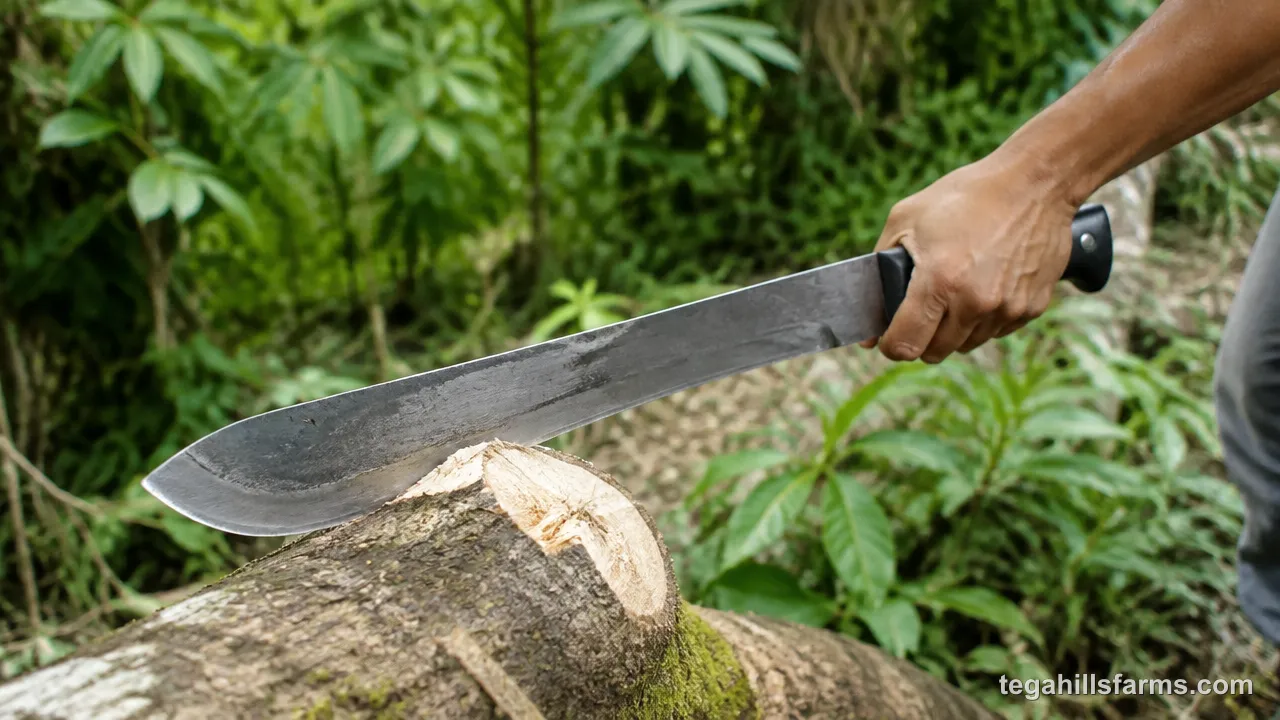
Carbon steel holds an edge longer and comes back quickly under a file, while stainless steel resists rust and suits a blade that may go back in the shed damp. If you’ll wipe and oil a blade after each use, carbon steel repays the effort. If your tools sometimes go away wet, stainless forgives that.
Carbon steel can be hardened to hold a keen edge, but it reacts with moisture and sap and rusts quickly. Coatings like the phosphate on the Ontario Traditional Machete ONCT5 or the black oxide on the MOTEECRAG Heavy Duty Machete slow rust on the flats, though the sharpened edge stays exposed. Budget stainless grades such as 420 and 3CR13 trade some edge holding for corrosion resistance, so they dull sooner in woody growth and tend to roll rather than chip.
The two steels differ on the points that show up in everyday yard work.
| Point | Carbon steel | Stainless steel |
|---|---|---|
| Edge holding | Holds an edge longer | Dulls sooner in woody growth |
| Resharpening | Easy with a file | Easy, but needed more often |
| Rust resistance | Rusts quickly unless coated, dried and oiled | Tolerates damp storage |
| Under hard impact | Can chip on stone or knots | Tends to roll or bend |
Gardeners who clean their tools after every job will get more from carbon steel, and anyone who stores tools in a damp shed will be happier with stainless.
Do You Need a Full Tang Machete?
Only if you chop hard. When the steel runs through the whole handle, the blade can’t snap off at the joint, and light trimming of soft growth works fine without it.
The tang is the part of the blade that extends into the handle. On a full tang, that steel runs the handle’s full length, so the force of a chop travels through one continuous piece of steel and the handle only provides grip. A partial tang stops partway, which leaves the joint between steel and handle to absorb each impact. Repeated hard strikes on woody stems can crack the handle or loosen the blade there. A skeleton tang, like the one on the Ontario Traditional Machete ONCT5, keeps the full length but has material cut away to save weight. For cutting back grasses, vines and soft perennials, the forces stay low enough that a well-fitted partial tang holds up.
Which Blade Shape and Length Suit Your Yard?
A straight Latin blade handles mixed brush, and a curved sickle-style blade suits vines and grass. Forward-weighted shapes such as the kukri and parang suit woody growth, and longer blades pay off on bigger, more open properties.
- Latin or bush: a long, straight, fairly thin blade that widens slightly toward the tip, built for slashing through mixed growth, as on the CAT Latin Machete 21in.
- Sickle-style: a deep inward curve that hooks stems and draws them across the edge, the profile of the Armory Replicas Sickle Machete 20.5in.
- Kukri: a forward bend that puts weight near the belly of the blade, so each strike bites deep into wood but tires the arm in long slashing work.
- Parang: a thick blade with its weight carried forward and a stout edge that resists chipping, made for chopping woody growth rather than sweeping grass.
Length trades reach and momentum against control. A long blade covers more growth per swing and builds speed at the tip, which helps in open overgrowth. It also takes more effort to stop and steer, so your shoulder tires sooner and your aim near plants you want to keep gets worse. A short blade stays where you aim it. Bigger properties with open stretches of brush reward the extra reach, and that is the thinking behind the best machetes for large yards.
How Do Weight, Handle and Sheath Affect Comfort?
A heavier blade does more of the cutting per swing but tires your wrist sooner. A handle that grips well when wet lets you hold on loosely, and a sheath with a secure retention strap keeps the edge covered until you draw it.
Blade weight sits out past your hand, so it adds momentum to every cut, and your wrist has to lift, stop and redirect that mass on each swing. Over a long session, a lighter blade lets you keep going with steadier aim, while a heavier one rewards short bursts in thick growth.
- Rubber: holds on when wet and absorbs vibration, but it can tear or turn sticky with age and sun.
- Wood: feels warm and absorbs some shock, but it gets slick when wet and needs an occasional coat of oil to keep from cracking.
- Molded plastic: handles moisture well and needs no care, though hard plastic passes more vibration into your palm.
A sheath protects the edge from nicks and keeps it from cutting you or whatever it rides against. A retention strap or snap stops the blade from sliding out when you bend over or climb into a truck.
Which Machete Fits the Job You Need Done?
Let the material you’re cutting decide, since soft green growth calls for a light, curved blade and woody stems call for a heavier, straight one. Matching the blade to the growth spares your arm as much as it improves the cut, because a mismatched blade either bounces off wood or wastes effort on grass that a lighter edge would slice. Carrying a machete away from the house adds its own demands on the sheath and on rust protection.
Which Machete Is Best for Clearing Brush and Vines?
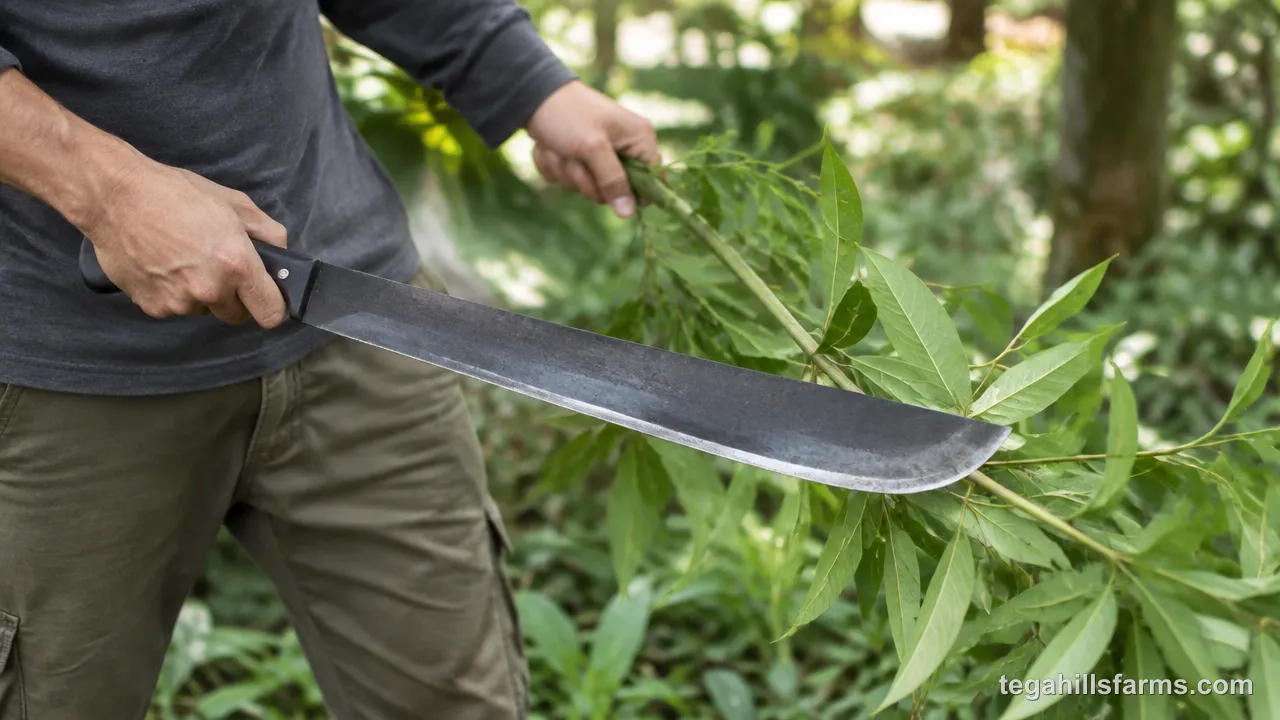
A lighter, curved blade does this work better. Soft, fast-growing stems flex away from a straight edge, and a light blade stays under control near plants you want to keep.
Green stems bend on impact rather than resisting, so a blade that only strikes tends to push them over, while one that slices as it moves cuts through them. The Fiskars Garden Machete 15in is shaped to resist sticking in dense growth, and the Armory Replicas Sickle Machete 20.5in hooks vines and tall grass into its edge. The motion is a flat, sweeping draw at a comfortable height, angled away from your legs, with the wrist guiding the blade rather than driving it. That is a different motion from the downward strike used for chopping. You’re often cutting right beside a shrub or perennial, so control matters more than force, and a lighter blade stops where you want it to. For blades suited to this work, compare the best machetes for brush removal.
Which Machete Is Best for Chopping Woody Stems?
Saplings and thick, hardened growth need a heavier, thicker blade on a handle that can take repeated impact, because mass drives the edge into dense wood where speed alone glances off.
A light blade asked to chop tends to bounce off bark. Each glancing blow rolls the edge, dulls it faster and sends the shock back into your wrist. A full tang, as on the Ontario Traditional Machete ONCT5, keeps those repeated impacts from loosening the handle. Any budget machete still has limits. Once each strike takes only a small chip out of the wood, an axe or a bow saw will finish the job faster and with less risk, and loppers make a cleaner cut on branches you want to remove from a shrub. If most of your clearing is woody, compare the best machetes for chopping before settling on a light garden blade.
Which Machete Works for Camping and Bushcraft?
Away from the yard, the blade needs a sheath that carries securely on a belt, a lanyard or hanging hole on the handle, and enough toughness for light batoning and cutting shelter poles.
On a trail you carry the blade far longer than you use it, so carry comfort matters more than in a backyard, where the machete waits in the shed between jobs. A belt clip with a retention strap, like the one on the MOTEECRAG Heavy Duty Machete, or a sheath with a shoulder strap, as on the CAT Latin Machete 21in, keeps the blade from bouncing or sliding loose. A full tang takes light batoning without stressing the handle. Corrosion protection matters more too, because at camp you can’t always dry and oil a blade after rain or heavy dew, which favors stainless steel or a coated carbon blade.
A machete put away with sap on the blade and dew in the sheath can bloom with surface rust quickly, and the edge loses its bite long before it looks dull. Once that happens, the blade crushes stems instead of slicing them, so every swing takes more force and is more likely to glance off toward your legs.
How Do You Keep a Machete Sharp and Rust-Free?
After each use, wipe off sap and moisture, dry the blade completely, and rub on a thin coat of oil. When the edge starts tearing stems instead of slicing them, restore it with light strokes of a mill file.
Sap hardens into a film that holds moisture against the steel, so rust can start under it on a blade that looks clean. Mineral spirits on a rag will lift dried sap.
Clamp the blade or brace it on a bench, wear a glove on the hand that steadies it, and push the file into the edge along the existing bevel, away from your body. Keep the pressure light. Heavy strokes grind the stout machete bevel thin and raise a burr that folds over on the first woody stem.
Carbon blades need oil after every session. On coated blades, oil the filed edge where the coating is gone and leave the coating on the flats alone. Stainless forgives a missed wipe but needs the file more often.
Orange freckles on bare steel are the first sign of rust, so rub them off with fine steel wool before oiling. A dull edge shows a thin line of reflected light when you look straight down at it.
How Do You Swing a Machete Safely and Efficiently?
Hold the handle firmly but without clenching, stand with your feet apart and your legs out of the blade’s path, and let the blade’s weight carry it through the cut instead of driving it with your wrist.
A clenched grip sends every impact into your forearm and makes the blade harder to steer, while a relaxed hand lets the machete follow through on its own. Swing on a downward diagonal angled away from your body and finish to the side, so a missed cut or a glance off a stem ends in the ground or empty air rather than your shin. A smooth swing at moderate speed keeps the edge on line and cuts cleanly. A forced, jerky one twists the blade, tears stems and tires your wrist.
Hold vines or stems aside with a hooked or forked stick in your free hand rather than grabbing them, since a gloved hand is still within the blade’s reach. Before you start, make sure people and pets are well outside your swing, and check the growth for wire, fencing and stones. Wear sturdy gloves, eye protection, long pants and closed-toe boots.
How Can You Spot a Machete That Will Fail Early?
Cheap blades usually give out in four places: steel too soft to hold an edge, handles that crack or work loose, thin blades that flex, and sheaths that tear at the seams. Most of these show before you buy.
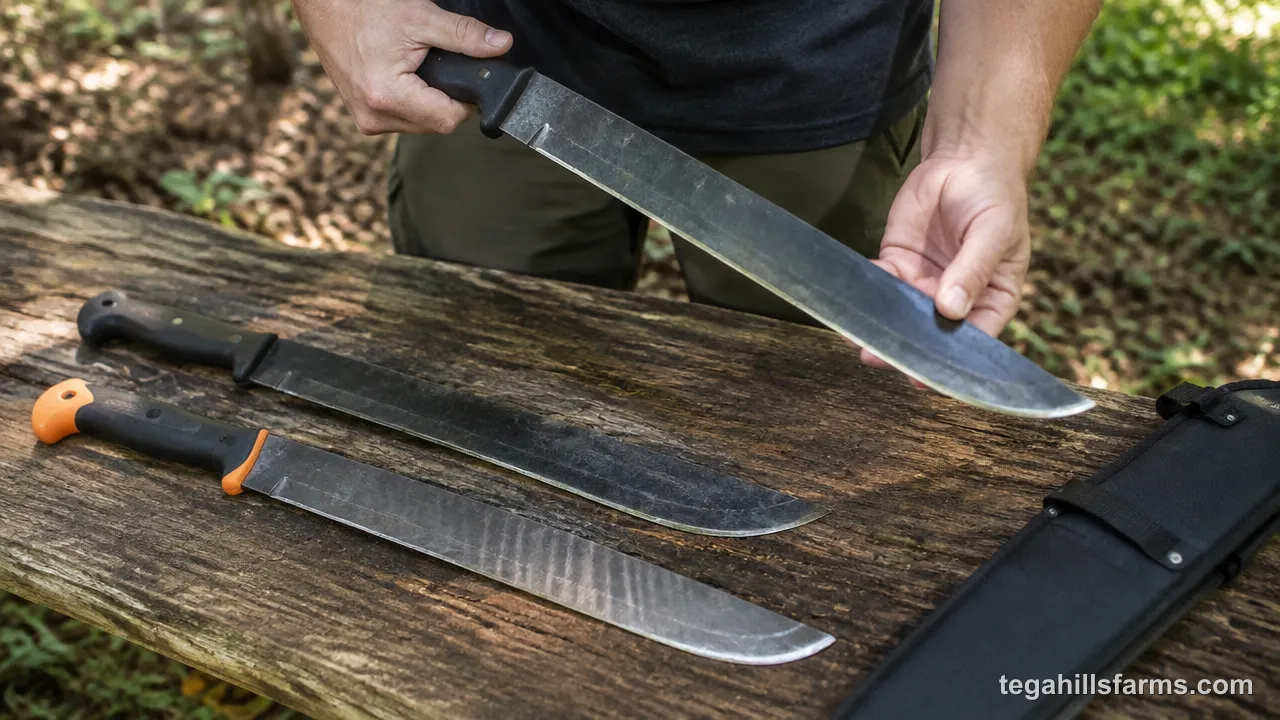
- Soft steel: a named steel grade tells you more than “razor sharp” on the packaging, and an unnamed stainless blade often dulls quickly in woody growth.
- Weak handles: look for a full tang or pins and rivets through the handle. A gap or glue line at the joint, or any wiggle when you twist the blade, will only get worse with use.
- Flexing blades: sight down the spine and press the tip gently against a board. A blade that bends easily and stays bent will fold on its first sapling.
- Flimsy sheaths: check the stitching and rivets, and look for a liner or retention strap, because an unlined fabric sheath can be cut from the inside.
A second, simpler machete still has a place as a backup. One of the machetes under $30 makes a sensible spare for the truck or for a helper on a cleanup day, and the best machetes under $50 handle soft growth well enough to keep a second blade on hand.
Machete FAQs
Is owning a machete illegal?
Owning a machete for yard work is generally legal across the US, since it is sold as a garden tool. Carrying one in public is a different matter. State and city rules on blade length and open or concealed carry vary, so check your local regulations before taking it off your property or keeping it in a vehicle.
Where can you buy a good machete?
Hardware stores, farm supply stores and garden centers usually stock a few, and handling one in person lets you check the balance, the handle fit and how the sheath closes. Online, read the full specs for the steel grade, tang construction and weight, and check that the sheath has a liner or retention strap before you order.
Write Your Review
No reviews yet. Be the first to share your experience!