

For the best machetes for chopping in 2026, the choices are Grand Way Machete with Saw 19in (Best Overall), Mossy Oak 16in Machete (Runner Up), REAT Machete with Saw 17in (Best Budget), Fiskars 24in Machete Saw (Also Great), DEWALT MA61 D-Guard Machete 21in (Best for Heavy Pruning), Mossy Oak Kukri Machete 11.5in (Best Compact), SOG Sogfari Kukri Machete 13in (Also Great), REAT Machete 15in 420 Stainless Steel (Also Great), and Ontario Traditional Machete ONCT5 (Best Rust-Resistant).
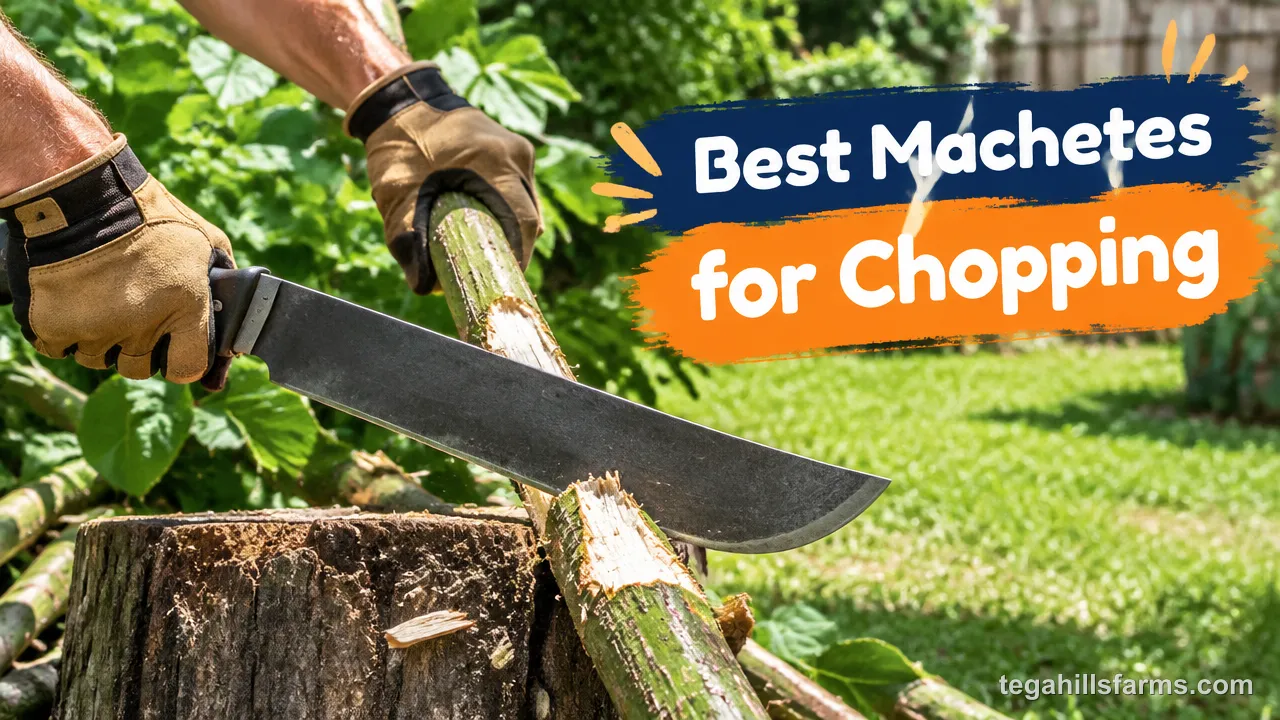
Chopping power comes from where a blade carries its weight, so a long blade that is heavy toward the tip drives deeper than a light, straight one. Steel decides how the edge ages. Stainless tolerates wet grass and sap with little care, while coated carbon steel takes a keen edge and needs drying after use. The handle matters just as much, because a grip that stays secure when your palm is damp keeps every swing on line.
The wrong machete shows up first in your wrist and forearm. A blade too light for the wood bounces off and makes you swing harder. A blade too long for your strength drifts off target late in a session, and that is how glancing cuts toward the legs happen.




If most of your chopping happens close to the house, such as overgrown shrubs, suckers and storm limbs, a mid-length blade with a saw on the spine handles both the quick chops and the stubborn cuts without a trip back to the shed.
The 9 Best Machetes for Chopping of 2026
Branches, saplings and campsite wood all give way to Grand Way Machete with Saw 19in, Mossy Oak 16in Machete, REAT Machete with Saw 17in, Fiskars 24in Machete Saw, DEWALT MA61 D-Guard Machete 21in, Mossy Oak Kukri Machete 11.5in, SOG Sogfari Kukri Machete 13in, REAT Machete 15in 420 Stainless Steel and Ontario Traditional Machete ONCT5. A long blade that carries its weight forward of a solid handle drives harder into wood. The compact kukris and the sawback combos give up some of that force for easier carry and a second way to cut. Homeowners clearing shrubs, small trees and storm branches will lean toward the longer blades. Campers who want a single tool on the belt will find the shorter ones easier to live with. When your yard work stretches past chopping into general clearing and trimming, the best garden machetes cover that wider range.
#1 Grand Way Machete with Saw 19in — Best Overall
Choose the Grand Way when you want a machete that chops, saws and rides on your belt from the back fence to the campsite. Its 12-inch 440C stainless blade keeps a keen edge through damp work.
Key Specs:
- Blade: 12-inch, black-coated 440C stainless steel
- Overall length: 19 inches
- Edge: machete edge with built-in saw
- Handle: rubber-covered grip
- Sheath: heavy-duty nylon Cordura with belt carry
- Model: 111084
Detailed Review:
The blade is 440C stainless steel, a hard stainless grade that holds an edge well, so the Grand Way stays sharp through a long session of hacking at suckers and small limbs. The black coating over that steel adds a barrier against sap and moisture. That helps when the machete goes back into its sheath still damp.
A 12-inch blade on a 19-inch frame gives the handle a generous share of the length. That proportion favors control over raw momentum. You can choke up for careful cuts around shrubs, and the shorter blade is less likely to overshoot its target. The cost is chopping depth, since less steel sits out beyond your hand.
The built-in saw handles branches that are awkward to chop, such as a limb pressed against a fence or a root just below the soil. The rubber covering on the handle cushions your grip through long stretches of chopping and sawing, and the Cordura sheath keeps the blade on your belt instead of in your hand. For mixed yard and camp work, I’d take this pairing of hard steel, saw and belt sheath over a heavier blade that only chops.
Pros:
- 440C stainless blade keeps a keen edge through damp work.
- Built-in saw makes cuts a chopping swing can’t reach.
- Rubber-covered handle cushions the grip on long sessions.
- Nylon Cordura sheath carries securely on a belt.
Cons:
- 12-inch blade gives up depth on each chop.
- Saw teeth can snag on vines mid-swing.
Who It’s For:
Homeowners who split weekends between the backyard and a campsite fit this machete well, because it chops, saws and rides on a belt without extra gear. If your work is mostly thick limbs from mature trees, a longer blade with more weight out front will go deeper on each swing.
Editor’s Verdict:
A well-rounded chopper and saw with a hard stainless edge, built to go wherever your yard or trail work takes you.
#2 Mossy Oak 16in Machete — Runner Up
If heavy swings at brush and branches are your main job, the Mossy Oak’s full-tang stainless blade stays steady from tip to pommel. The sawback takes over when a branch needs cutting instead.
Key Specs:
- Overall length: 16 inches
- Blade: stainless steel, full tang
- Spine: saw teeth for hardwood and branches
- Handle: black TPR non-slip grip with hammerhead and lanyard hole
- Sheath: Oxford cloth, plastic-reinforced, nickel-plated rivets, hook-and-loop closure
- Weight: 0.8 lb
Detailed Review:
Its full tang carries the stainless blade through the entire handle, so the force of a hard swing travels through one continuous piece of steel. For chopping, that keeps the blade tight and on line under repeated impacts, with no play building up at the handle.
At 0.8 lb, the Mossy Oak is easy on the wrist through a long session. The REAT Machete with Saw 17in weighs 1.24 lb, so the Mossy Oak gives up some chopping mass for the lighter carry, and green limbs may take an extra swing. The black TPR handle stays secure in wet conditions, which lets you swing with a relaxed hold rather than a clench.
Saw teeth along the back of the blade cut through hardwood and branches that a chop would only dent. The hammerhead at the base of the handle gives you a striking surface for tapping in stakes, and the lanyard hole lets you tether it to your wrist. The Oxford cloth sheath is reinforced with plastic and nickel-plated rivets and closes with hook-and-loop, so the blade stays covered on the walk out.
Pros:
- Full tang keeps the blade steady under hard swings.
- TPR handle stays secure in wet conditions.
- Sawback cuts hardwood a chop would only dent.
- Hammerhead pommel adds a handy striking surface.
Cons:
- 0.8 lb build puts less mass behind each chop.
- 16-inch overall length limits reach on high branches.
Who It’s For:
Gardeners who swing hard and often, and want a blade that stays tight in its handle, are the right match. The non-slip grip suits dewy mornings and sweaty afternoons alike. Anyone who mainly fells saplings and wants more weight in the head should look at a heavier chopper.
Editor’s Verdict:
Solid full-tang construction and a grippy handle make this a dependable chopper for steady yard work.
#3 REAT Machete with Saw 17in — Best Budget
When you need weight behind each swing for trimming bushes and cutting small trees, the REAT’s 1.24 lb full-tang build gives every chop real follow-through. It saws as well.
Key Specs:
- Overall length: 17 inches
- Blade: 420 stainless steel, full tang, fixed blade
- Design: chopping edge with saw
- Handle: ergonomic, non-slip with wet hands
- Sheath: protective sheath included
- Weight: 1.24 lb
Detailed Review:
The blade’s 420 stainless is a lower-carbon steel that resists corrosion well and comes back to sharp quickly with a file. The Grand Way Machete with Saw 19in uses 440C, so the REAT needs touch-ups more often, but each one takes less time. For an affordable yard machete, that is a sensible trade: more sharpening, less worry about rust from wet grass and sap.
At 1.24 lb, the REAT carries enough mass to push through green limbs instead of stopping short in them. The full tang ties that weight solidly to the handle, so the joint stays sound when you lean into a chop. For a homeowner taking down small trees, that heft does part of the work your arm would otherwise do.
The ergonomic handle holds firm with wet hands. That matters more on a heavier blade, because a slipping grip at the end of a swing is where you lose control. The chop-and-saw design lets you chop most of the way through a branch, then saw the last fibers instead of hacking at a springy stub. A protective sheath comes with it for storage in the shed or truck.
Pros:
- 420 stainless resists rust from wet grass and sap.
- 1.24 lb weight carries swings through green limbs.
- Non-slip handle holds firm with wet hands.
- Chops and saws without switching tools.
Cons:
- 420 steel needs more frequent edge touch-ups.
- Heavier build tires the wrist sooner on long sessions.
Who It’s For:
If you want a hard-working yard chopper without paying for premium steel, this fits well. Weekend gardeners who trim bushes and take down small trees will appreciate its heft. Anyone who carries a machete all day on a trail may find that same weight tiring.
Editor’s Verdict:
Expect a rust-tolerant chopper with enough weight to cut green wood well and a saw for the stubborn bits.
#4 Fiskars 24in Machete Saw — Also Great
Thicker branches and small trunks suit the Fiskars, because its aggressive saw cuts on both the push and the pull stroke. Its 18-inch tempered blade is precision-ground for easier chopping.
Key Specs:
- Overall length: 24 inches
- Blade: 18-inch tempered steel, precision-ground
- Saw: aggressive teeth, cuts on push and pull
- Use: one-handed, with wrist lanyard
- Weight: 0.9 lb
- Warranty: lifetime
Detailed Review:
Aggressive teeth on the spine cut on both the push and the pull stroke, so every pass through a thick branch removes wood in both directions. On limbs too thick to chop cleanly, steady sawing replaces a string of jarring chops that would rattle your elbow.
The 18-inch tempered steel blade reaches further than the 12-inch blade on the Grand Way Machete with Saw 19in. That helps when you clear brush along a trail or reach into the middle of a shrub, though the shorter Grand Way is easier to steer in tight beds. Precision grinding leaves a clean edge that cuts with less force, and at 0.9 lb the whole tool stays light in the hand.
One-handed use leaves your other hand free to grab cuttings and pile them as you go, which speeds up clearing a fence line. The lanyard secures the machete to your wrist, so it won’t fly loose from a sweaty grip on a hard swing. Fiskars covers it with a lifetime warranty.
Pros:
- Saw cuts on both push and pull strokes.
- 18-inch blade reaches into brush and along trails.
- Wrist lanyard adds control on hard swings.
- Lifetime warranty backs the tool.
Cons:
- Long blade is harder to steer in tight shrubs.
- 0.9 lb build gives less chopping momentum.
Who It’s For:
This suits clearing fence lines, trails and overgrown corners, especially if you like to pile cuttings as you work. The saw edge keeps you moving when branches outgrow a chop. Gardeners working in tight beds may prefer a shorter blade that is easier to steer.
Editor’s Verdict:
Pick this when your chopping keeps running into branches that need a saw and you want a free hand to clear as you cut.
#5 DEWALT MA61 D-Guard Machete 21in — Best for Heavy Pruning
Hard pruning on overgrown shrubs and tough limbs goes better with your knuckles covered, and the DEWALT’s D-guard handle wraps your hand while the blade works. A pulling hole helps free the blade when it sticks.
Key Specs:
- Overall length: 21 inches
- Blade: 15.16-inch 3Cr13 stainless steel, black finish
- Extras: saw back, blade pulling hole
- Handle: non-slip TPR with built-in D-guard
- Sheath: reinforced nylon with belt carry
- Model: DXKNMA60
Detailed Review:
The D-guard closes a loop from the base of the blade around the front of your hand. When you prune into dense, thorny growth, that loop keeps branches and thorns off your knuckles. It also gives your fingers something to push against if your grip starts to slide on the TPR handle.
The blade pulling hole helps with what happens on a deep cut into green wood: the blade wedges and won’t pull back. The hole gives you a second point of leverage, so you can work the blade free without wrenching the handle sideways and straining your wrist.
The 15.16-inch blade is 3Cr13 stainless steel with a black finish, a combination that resists corrosion and tolerates sap and damp storage. The saw back clears light branches, vines and dense brush that would tangle around a chopping stroke, while thick limbs still need the main edge.
A reinforced nylon sheath with belt carry keeps the blade covered between cuts as you move around the yard. I like that the guard and sheath together make this a machete you can keep on you through a long pruning day.
Pros:
- D-guard shields knuckles in dense, thorny growth.
- Pulling hole helps free a blade stuck in wood.
- Black-finished 3Cr13 stainless resists corrosion.
- Saw back clears vines and light branches.
- Reinforced nylon sheath carries on a belt.
Cons:
- D-guard limits how far you can shift your grip.
- Saw back suits light branches rather than thick limbs.
Who It’s For:
Anyone facing overgrown hedges, thorny shrubs and tangled vines will value the hand protection here. The guard makes repeated pruning cuts feel more secure. If you like to choke up and change your grip often, an open handle will feel freer.
Editor’s Verdict:
Choose it for hard pruning in thorny growth, where the D-guard protects your hand and the pulling hole frees a stuck blade.
#6 Mossy Oak Kukri Machete 11.5in — Best Compact
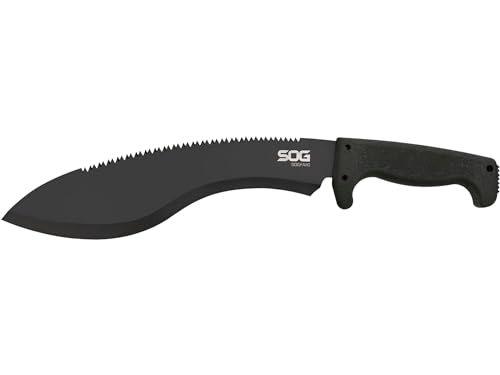
Short jobs close to the body, like cutting rope, trimming roots and clearing small brush around camp, fit this kukri’s 6.73-inch blade. At about 0.75 lb, it rides on a belt all day.
Key Specs:
- Overall length: 11.5 inches
- Blade: 6.73-inch 3Cr13 stainless steel, blackened finish
- Thickness and hardness: 0.1 in (2.75 mm), 50–55 HRC
- Handle: textured TPR with lanyard hole
- Sheath: plastic-lined Oxford cloth, PE padding, safety buckle, belt loop
- Weight: about 0.75 lb
Detailed Review:
The kukri profile carries its weight toward the belly, so even this short blade bites into wood rather than glancing off. With 6.73 inches of blade, though, little steel sits beyond your hand, so its chopping is limited to small branches and roots.
The 3Cr13 stainless blade is 0.1 in (2.75 mm) thick and hardened to 50–55 HRC. That moderate hardness lets a file or stone restore the edge quickly, and the blackened finish adds rust resistance for a tool that spends its life in a damp pack or on a belt. The SOG Sogfari Kukri Machete 13in weighs 0.94 lb, so this one is lighter to carry but has less mass to drive a chop.
The textured TPR handle has thumb and palm areas that help you guide small, precise cuts, even in wet conditions. The Oxford cloth sheath is plastic-lined and double-stitched, with PE padding at the top and bottom so the point can’t push through, and a safety buckle holds the blade in. A belt loop and a lanyard hole keep it within reach.
Pros:
- About 0.75 lb carries comfortably on a belt.
- Textured TPR handle guides precise cuts in wet conditions.
- Padded, plastic-lined sheath resists blade punch-through.
- 50–55 HRC hardness makes resharpening quick.
Cons:
- 6.73-inch blade limits chopping to small branches and roots.
- Short reach keeps your hand close to the work.
Who It’s For:
Campers, hikers and gardeners who want a blade on the hip rather than in the shed will like this kukri for quick chores close at hand. For dropping saplings or clearing a thick hedge, a longer machete will save your wrist a great deal of effort.
Editor’s Verdict:
Compact, easy to carry and simple to sharpen, this kukri handles small cutting jobs without weighing you down.
#7 SOG Sogfari Kukri Machete 13in — Also Great
For chopping campfire wood and clearing brush with a blade shorter than a full machete, the Sogfari’s kukri profile puts weight where it helps. A saw on the back handles tougher material.
Key Specs:
- Overall length: 13 inches
- Blade: stainless steel, kukri shape
- Spine: integrated saw on the back
- Handle: textured, with multiple lanyard holes
- Sheath: nylon
- Weight: 0.94 lb
Detailed Review:
The kukri shape curves the edge inward and widens the blade toward the front, so the Sogfari carries more mass ahead of your hand than a straight blade of similar length. That forward weight lets a 13-inch tool chop wood with fewer swings than its size suggests.
The integrated saw on the back gets you through tougher material once chopping stalls, such as a knot or a dense branch. The stainless blade resists corrosion and holds its sharpness through wet, muddy work. That suits a tool that often goes into a pack still damp.
The textured handle keeps a secure grip in mud and rain, and multiple holes let you attach a lanyard where it feels right in your hand. That choice of tether points helps on uneven ground, where a hard swing can pull the handle sideways. At 0.94 lb, it stays easy to carry while still putting real steel behind a chop, and the nylon sheath covers the blade between jobs.
Pros:
- Kukri profile puts chopping weight ahead of the hand.
- Integrated saw handles knots and dense branches.
- Textured handle holds in mud and rain.
- Multiple lanyard holes let you choose the tether point.
Cons:
- Curved edge takes practice to sharpen evenly.
- Shorter reach than a full-length machete for brush clearing.
Who It’s For:
Backpackers and car campers who process firewood at the site will get steady use from the kukri shape, since it chops harder than its length suggests. If your main job is slashing grass and vines across open ground, a long, straight blade covers more area per swing.
Editor’s Verdict:
Built for camp chores, this kukri chops wood and saws through knots with a grip that stays put when conditions turn wet.
#8 REAT Machete 15in 420 Stainless Steel — Also Great
Gardeners who want a simple chopper that shrugs off wet grass and sap can count on the REAT’s 420 stainless steel. At 0.75 lb, it swings easily through a long session.
Key Specs:
- Overall length: 15 inches
- Blade: 420 stainless steel
- Handle: green rubber, non-slip with wet hands
- Sheath: protective sheath included
- Weight: 0.75 lb
Detailed Review:
The 420 stainless blade lets you leave this machete in damp grass or put it away with sap on it without the rust bare carbon steel would pick up. It also takes a fresh edge quickly from a file. That suits a gardener who would rather touch up the blade often than fuss over it.
At 0.75 lb, it stays light enough for a long session of cutting back perennials and shrubs without wearing out your wrist. The Ontario Traditional Machete ONCT5 weighs 1 lb, so this one gives up chopping mass for an easier swing. Green stems and smaller branches suit it better than seasoned limbs.
The green rubber handle keeps a firm hold with wet hands. Rubber also softens the jolt that travels up your arm each time the blade meets wood. Over an afternoon of cleanup, that cushioning decides whether your hand feels tired or aches. A protective sheath comes with it for storage and transport.
Pros:
- 420 stainless tolerates damp grass and sap.
- 0.75 lb build keeps long sessions easy on the wrist.
- Rubber handle grips firmly and softens impact.
- Protective sheath included for storage.
Cons:
- Light build puts less force behind each chop.
- 15-inch length limits reach into wide shrubs.
Who It’s For:
Cutting back perennials, shrubs and soft green growth is where this machete fits, and its rust-tolerant blade forgives a damp shed. Gardeners with less grip strength will appreciate the light, cushioned handle. For felling saplings or chopping seasoned wood, a heavier blade will finish with fewer swings.
Editor’s Verdict:
Simple, light and rust-tolerant, this machete suits steady garden cleanup more than heavy chopping.
#9 Ontario Traditional Machete ONCT5 — Best Rust-Resistant
Long-reach chopping through brush and green limbs suits the Ontario, whose 22-inch high carbon steel blade puts plenty of steel beyond your hand. A phosphate coating guards that carbon steel against rust.
Key Specs:
- Blade: 22-inch high carbon steel, black phosphate coating
- Tang: full skeleton tang
- Handle: grip-enhancing rubber
- Weight: 1 lb
- Model: JBT-8291
Detailed Review:
High carbon steel takes a keen edge and sharpens quickly, but bare carbon steel rusts when it stays wet. The Ontario’s phosphate coating forms a protective layer that resists wear and keeps moisture and sap off the steel. Sharpening exposes bare metal along the edge, so that strip still needs drying and a light coat of oil after work.
A 22-inch blade builds momentum through a long arc, so each chop lands with more force than a short blade can deliver. The Fiskars 24in Machete Saw has an 18-inch blade, so the Ontario reaches further on every swing, while the Fiskars is easier to steer in tight spaces.
The full skeleton tang runs the steel through the handle, which keeps a long blade steady when it strikes. The rubber grip improves your hold and comfort through extended use. At 1 lb, the weight stays manageable, though the length needs clear space around you and a controlled swing. For a homeowner chopping back a wide, overgrown border, that reach saves steps as well as swings.
Pros:
- 22-inch blade builds momentum for deep chops.
- Phosphate coating protects carbon steel from rust and wear.
- Full skeleton tang keeps the long blade steady.
- Rubber grip improves hold through extended use.
Cons:
- Long blade needs clear space and careful control.
- Sharpened edge loses coating and needs oiling.
Who It’s For:
Property owners clearing overgrown brush, saplings and long hedgerows will put its reach to good use, and the coated blade suits damp working conditions. If you garden in tight beds or around patio containers, a shorter blade will be easier to control.
Editor’s Verdict:
Reach, chopping force and a protected carbon steel blade make this a traditional machete built for big clearing jobs.
Which Machete Blade Shape Chops Best?
Weight carried forward of the grip settles it: golok, bolo, parang and kukri profiles drive deeper into wood than thin Latin, panga and cane patterns, which are built to slice. Where a blade carries its mass decides whether it sinks into a branch or skims off it. You feel that difference in your arm as much as you see it in the cut. When the shape matches your work, the steel does more of the chopping, so you swing less and keep better control late in a session.
Why Does a Forward-Weighted Blade Chop Harder Than a Slicer?
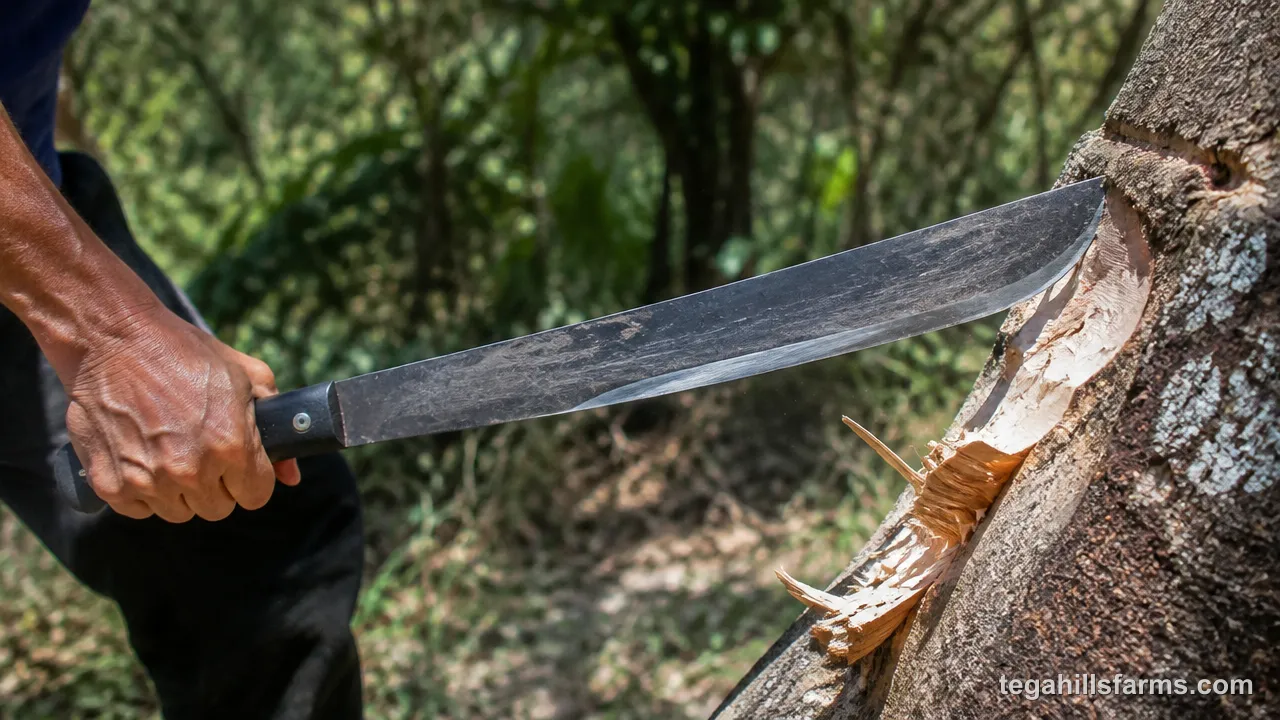
A blade with a belly or extra width toward the tip carries more momentum at the moment of impact, so the edge keeps driving into wood instead of stopping when it meets resistance. Golok, bolo and parang blades are built this way. They are thick, heavy toward the front and short enough to control, which makes them true choppers.
Thin, straight Latin and panga blades keep their weight close to the handle. They move fast and glide through grass, vines and soft stems with little effort. On a branch, though, they tend to bounce or stall, because too little mass sits behind the edge to finish the cut. That bounce also sends a jolt back through your wrist with every swing.
Choppers belong on limbs, saplings and roots, while slicers belong on open ground thick with weeds and soft growth. If most of your clearing is undergrowth rather than wood, the best machetes for brush removal lean toward the lighter, slicing end of that range.
Where Do Kukri and Latin-Style Blades Fit?
A kukri packs a chopper’s weight into a short blade. The edge curves inward and the blade widens into a heavy belly ahead of the handle, so force concentrates on a small section of edge when it strikes. That makes it a compact chopper for campers, hikers and gardeners who want to carry a blade on a belt and still cut firewood or roots. The cost is reach: a short blade covers little ground per swing and keeps your hand close to the work.
Latin-style blades sit at the other end as a lighter general-purpose option. Their long, straight profile covers more area in each swing through grass and vines, and the low weight keeps your arm fresher on big patches of growth. On wood, you put in more effort per cut, because the blade does less of the work for you.
What Should You Look for in a Machete for Chopping?
Comfort late in a long session matters as much as a sharp edge, because a machete that tires your wrist or slips in a damp hand stops cutting cleanly long before the steel dulls. A dull edge comes back with a file. A badly balanced blade or a slick handle stays that way, and it turns the end of a job sloppy and unsafe. Judge a chopper by what it is made of and how it is put together, not only by how sharp it arrives.
Which Blade Steel Holds Up Best?
Carbon steel holds up better if you will dry and oil it after work, and stainless holds up better if you won’t. Carbon steel takes a sharper edge, resists chipping when it hits a knot, and responds quickly to a file in the field. It rusts once moisture and sap sit on it.
Stainless steel resists corrosion and needs far less upkeep, which suits a tool that lives in a damp shed. Lower-carbon grades such as 420 and 3Cr13 sharpen easily but lose their edge sooner. Harder grades such as 440C hold an edge longer and take more effort to resharpen.
A protective coating, such as phosphate or a black finish, seals the surface so water and sap have a harder time reaching the steel. It makes carbon steel a far more forgiving garden tool. Sharpening removes the coating along the edge, though, so that thin strip still needs oil.
How Do Blade Thickness, Length and Weight Affect Chopping?
A thicker, heavier blade delivers more force per swing and resists bending when it strikes at an angle, while a longer blade adds reach and builds more momentum through the arc. Both gains load your wrist and forearm, and as those muscles tire, each swing loses accuracy.
Balance describes where the weight sits relative to your hand. A blade-heavy machete feels eager to chop, while one balanced close to the handle feels quick and easy to steer around stems you want to keep. Your grip shifts that balance. Holding the handle near its end lengthens the lever and adds power, and choking up toward the blade trades power for control.
If you clear wide areas, weigh fatigue as heavily as power, because glancing blows tend to happen late in the day when tired arms start to drift. The best machetes for large yards pair useful reach with a weight you can keep swinging, not a heavy blade you can only manage in short bursts.
What Handle and Sheath Features Matter?
The handle material decides whether the machete stays put in a wet hand. The tang, guard and sheath decide whether the tool stays safe in use and in storage. Rubber and TPR grip well when your hands are damp and absorb some of the jolt on impact, which your wrist notices after a long session. Hard polymer is tough and easy to clean but turns slick when wet. Wood feels warm and natural but can loosen or swell with moisture. Micarta, a resin-hardened layered fabric, stays grippy and stable in wet weather.
A full tang runs the blade’s steel through the length of the handle, so the joint between blade and handle doesn’t work loose under repeated impacts. A guard keeps your knuckles away from branches and the edge, and a lanyard hole lets you tether the handle to your wrist. A reinforced sheath with a lined or padded tip stops the point from cutting through while you carry or store it.
Is a Sawback Spine Worth Having?
Yes, if you often meet branches too thick to chop cleanly or too awkward to swing at, such as a limb tangled in a hedge or a root at ground level. The saw works through them with steady strokes instead of repeated chops.
The teeth come with costs. They add weight along the spine and can snag on vines and clothing. They also remove steel from the back of the blade, which trims some of the chopping bias a solid spine provides. Homeowners and campers who want to carry a single tool for both chopping and cutting benefit most from a sawback. Gardeners who mostly slash soft growth or chop green wood can skip it and keep a cleaner, simpler spine.
How Thick a Branch Can You Chop With a Machete?
Green softwood limbs and saplings come down in a few swings, while dense, seasoned hardwood of the same size calls for a heavier chopper, a saw or an axe. Moisture is the reason. Green wood is softer and its fibers part cleanly, while dry hardwood resists the edge and can throw the blade sideways.
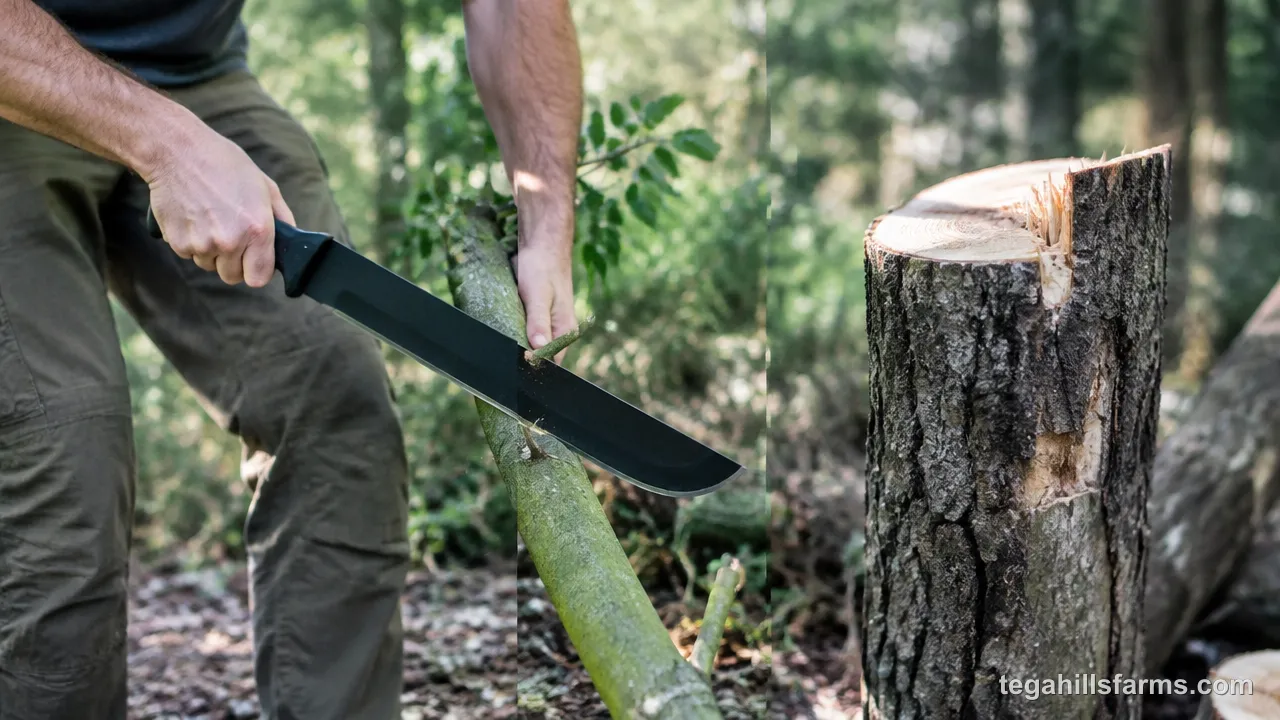
Swing angle changes the result as much as blade weight does. A cut struck at a downward diagonal severs fibers at a slant and takes out a chip with each pass. Alternating from two sides opens a notch that deepens quickly, while a cut straight across the grain mostly bounces. A heavier, forward-weighted blade takes larger chips per swing, so it handles thicker wood before the job turns into hacking.
Forcing an undersized blade through thick wood damages the tool and puts you at risk. The thin edge can chip or roll on a knot, and the blade can bend or wedge. Every stalled swing loosens the handle a little and raises the odds of a glancing blow.
A hatchet’s wedge-shaped head splits a dense log that a machete only scars, and the difference comes from how each tool turns a swing into force. Pick the wrong one for a pile of storm wood and you spend the afternoon re-swinging at the same notch, with every glancing blow skating toward your shins.
Machete or Axe: Which Is Better for Chopping Wood?
An axe is the better tool for thick or dense wood, and a machete is better for small stems, saplings and branches. A hatchet or brush axe puts a heavy, wedge-shaped head at the end of its handle, so the force lands on a short edge that drives in and pries the fibers apart. A machete spreads lighter weight along a long, thin blade that cuts wood but doesn’t split it.
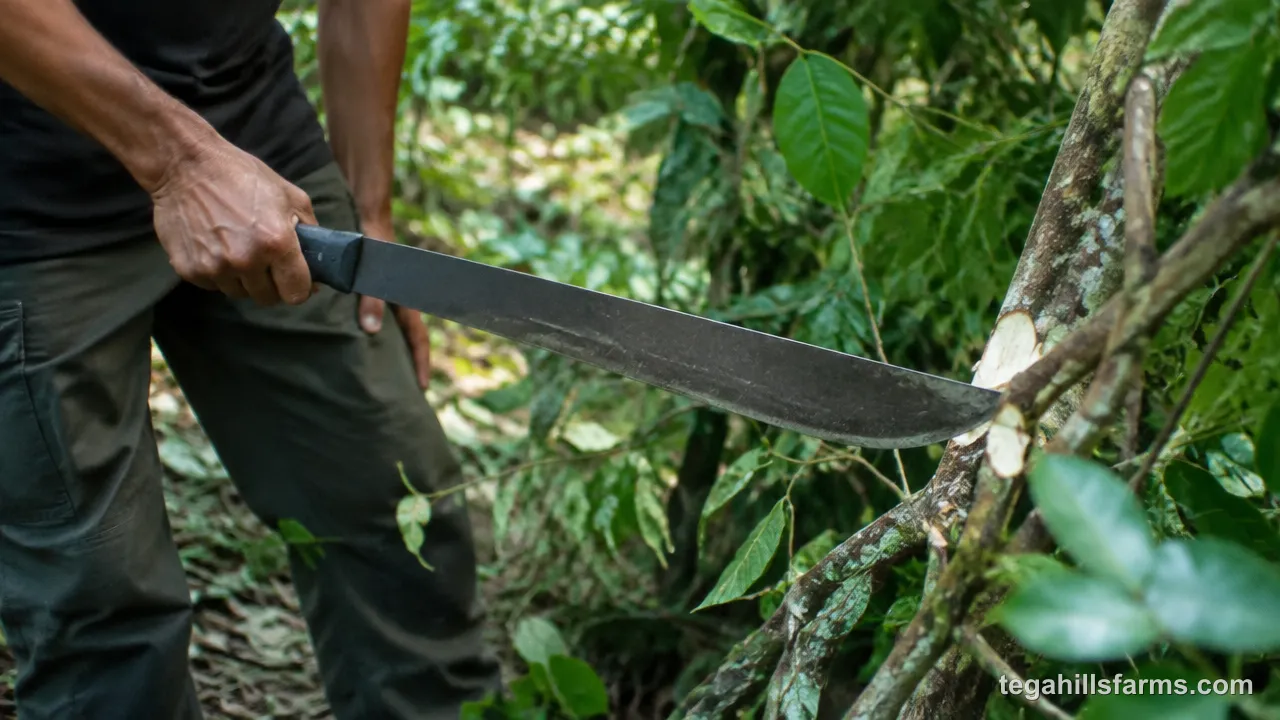
Each tool wastes effort outside its job. On a log, a machete sticks, bounces and chips its edge, and every rebound is a chance for a glancing blow. In a thicket of thin stems, an axe’s narrow edge clears only what it hits. A machete takes several stems in a single sweep and moves through the growth much faster. A machete also rides on a belt in its sheath, which makes it easier to carry around the yard or on a trail.
For storm cleanup, I’d keep both: the machete for brush and small limbs, and the axe for anything you’d otherwise hack at.
How Do You Swing a Machete Safely?
Stand with your feet apart, keep the target off to your side, and swing so the blade’s path ends away from your legs and your free hand. Before the first swing, clear the area. Nobody should be within reach of the blade, and overhead branches shouldn’t be able to catch your backswing.
Hold the handle firmly without a white-knuckle grip, and loop the lanyard around your wrist so the machete can’t slip out of a damp palm. Gloves improve that hold and protect against thorns and blisters. Safety glasses stop the chips and splinters a good chop throws.
A glancing blow happens when the edge meets wood at too shallow an angle, or hits a knot and skids along the surface instead of biting. The blade keeps its momentum and follows the swing toward whatever is in its path, often a shin or knee. A dull blade makes this more likely, because it needs more force and bites less. That is why a sharp edge is the safer edge.
How Do You Sharpen and Care for a Machete?
Sharpen a machete with a mill file pushed along the existing bevel, working from the back of the bevel toward the edge and lifting the file on the return stroke. Clamp the blade or brace it on a bench, and wear gloves. Give each side the same number of strokes until you feel a slight burr along the edge, then clean it up with a few light passes of a stone.
Carbon steel needs drying and a thin coat of oil after every use, because bare steel starts to rust as soon as moisture sits on it. Sap holds moisture against the blade, so wipe it off with warm soapy water before oiling. Never sheath a wet blade, since a damp sheath traps moisture against the steel where you can’t see the corrosion start.
Some signs mean the blade needs more than a touch-up. A rolled edge shows as a bright line when you sight down the blade, and it needs filing back to clean metal. Deep pitting weakens the steel, and once it reaches the edge, the blade won’t hold a keen line. Treat a loose handle as a stop sign. Tighten or replace it before the next swing, because a handle that shifts mid-chop sends the blade where you didn’t aim.
Is It Legal to Own a Machete?
Machetes are generally sold and owned as ordinary yard and garden tools, so keeping one in the shed or garage is routine. Carrying one is a different matter. Rules on carrying a large blade in public or keeping it in a vehicle can vary by state and locality, so check your local rules before you take a machete off your property. During transport, keep the blade sheathed and pack it with your other tools in the trunk or truck bed, out of reach from the seats. At a campsite or a job away from home, sheathe it whenever you set it down.
Write Your Review
No reviews yet. Be the first to share your experience!