

For the best machetes under $30 in 2026, the choices are LLARGUEST Billhook Sickle Knife (Best Overall), zarfand Survival Machete (Runner Up), Kunnife Full Tang Machete 15in (Editor’s Choice), MOTEECRAG Heavy Duty Machete (Best Rust-Resistant), Hooyman Bush Machete (Best Ergonomic Design), Snake Eye Tactical Machete (Also Great), Z & G Carbon Steel Sickle (Also Great), and Armory Replicas Sickle Machete 20.5in (Also Great).
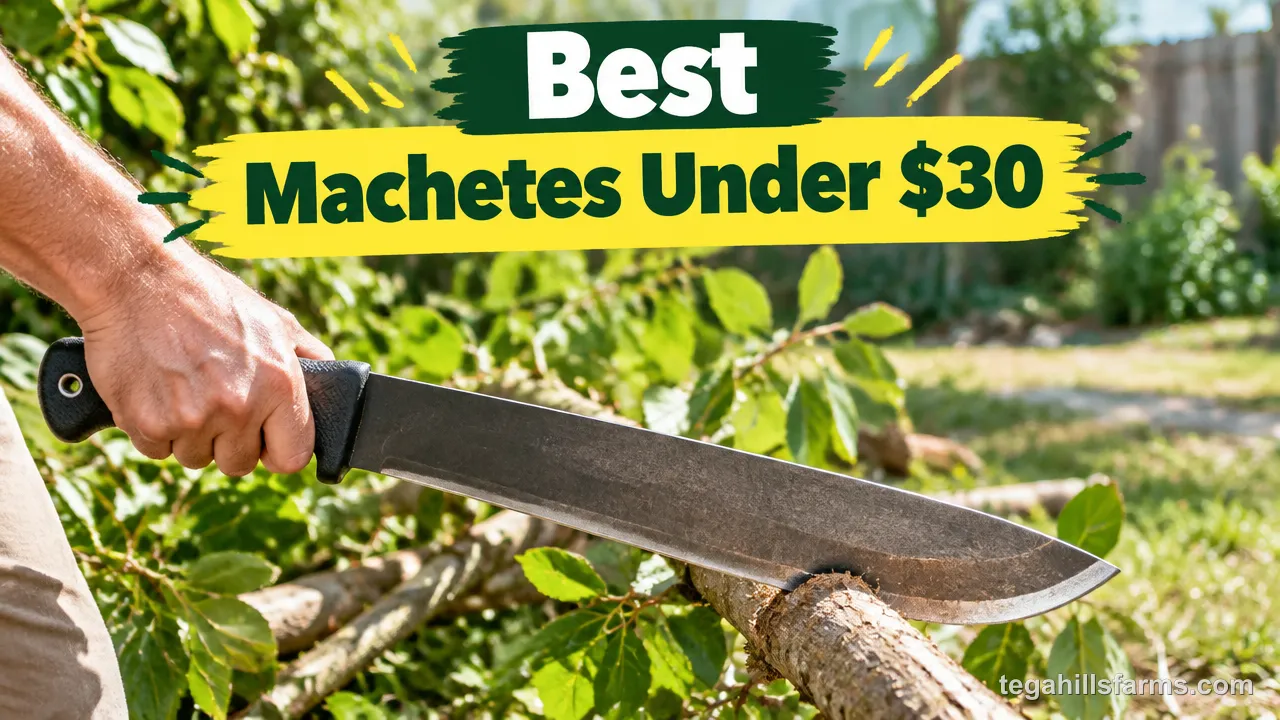
A hooked or crescent blade gathers grass and vines into the cut, while a kukri-style or thick-spined blade drives through woody stems, so the growth on your property decides the shape first. Stainless steel suits a damp shed, and carbon steel suits someone willing to dry and oil the blade. Weight and grip decide how your wrist and palm feel after an hour of clearing.





The real worry with an inexpensive machete is that it dulls in an afternoon, loosens at the handle or rusts over winter. Those failures usually trace back to a short or loosely fixed tang, a rough factory edge or bare carbon steel put away wet, which is why I’d check the handle joint, the finish and the steel type before anything else.
What Can a Machete Under $30 Realistically Do in a Yard?
At this price, a blade handles tall grass, vines, weedy borders and light woody stems well, but its simpler steel and build call for more frequent sharpening and gentler use on hardwood.
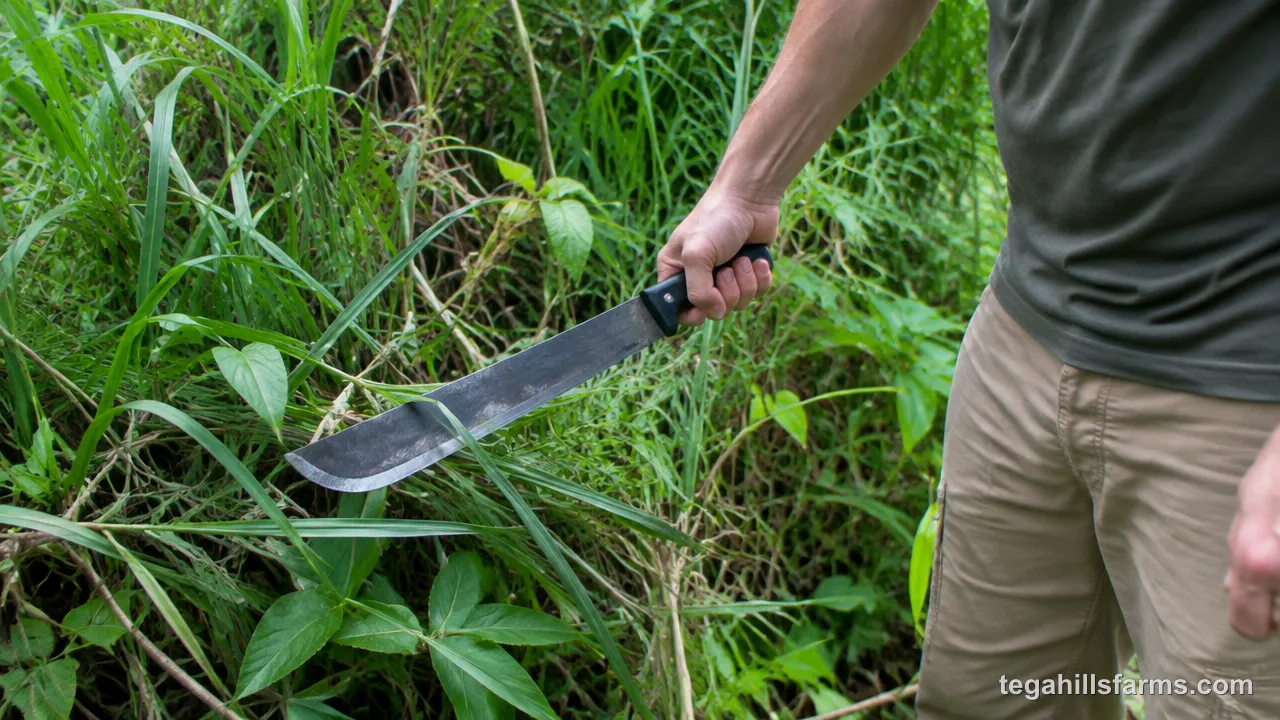
Blades at this level usually use softer stainless or plain carbon steel. It sharpens quickly with a file but dulls sooner when it meets dry wood, knots or a hidden wire in an old fence line, so expect to touch up the edge during long jobs. The grind matters as much as the steel: a thin, even grind slices green growth cleanly, while a thick, blunt factory edge bounces off stems and makes you swing harder.
Over an hour of cutting, a tang that runs through the handle stays tight under repeated blows, and a contoured grip spreads pressure across your palm instead of loading the base of your thumb. A loose or slick handle turns every swing into a small jolt through your wrist, which is why I’d judge the handle as carefully as the blade.
To see where this price tier sits among other yard blades, the guide to the best garden machetes covers every blade style and budget.
The 8 Best Machetes Under $30 of 2026
For grass, vines, brush and the odd camp or trail chore, I’d trust these blades in a home garden shed: LLARGUEST Billhook Sickle Knife, zarfand Survival Machete, Kunnife Full Tang Machete 15in, MOTEECRAG Heavy Duty Machete, Hooyman Bush Machete, Snake Eye Tactical Machete, Z & G Carbon Steel Sickle and Armory Replicas Sickle Machete 20.5in. The billhook and sickle curves of the LLARGUEST, Z & G and Armory Replicas pull grass and vines into the edge. The kukri-style Snake Eye Tactical and the thick-spined Kunnife put more weight behind a blow into woody stems. Stainless blades such as the zarfand and Hooyman shrug off a damp shed. The carbon steel of the LLARGUEST, Z & G and Armory Replicas takes a file well but needs drying after wet work, and the MOTEECRAG covers its high-carbon blade in black oxide for that reason. The difference shows when your weekend runs from a weedy bed one day to a fallen limb the next.
#1 LLARGUEST Billhook Sickle Knife — Best Overall
If your beds and fence lines mix tall grass, vines and woody shoots, this hooked carbon steel blade handles all three, and it arrives sharp enough for branches up to 2 inches thick. At 1.5 lb, it stays light in the hand through a long session.
Key Specs:
- Blade style: billhook sickle
- Blade steel: hardened carbon steel with black powder coat finish
- Handle: contoured wood
- Weight: 1.5 lb
- Cutting capacity: branches up to 2 in thick
Detailed Review:
The hooked tip lets you pull a clump of grass or vines into the edge and slice it with a drawing stroke, so your forearm does less pushing. The same edge also takes short chopping strokes into woody shoots, which means you can move from weeds to small branches without switching tools.
Under the black powder coat sits hardened carbon steel that holds its edge through heavy brush clearing. The coating keeps moisture off the blade faces. The sharpened edge is bare metal, though, so it still needs wiping dry after wet work.
The light, balanced build and contoured wooden handle keep hand fatigue down over a long session. Next to the far lighter zarfand Survival Machete, this blade carries more mass into each woody stem, while the zarfand asks less of your wrist during delicate trimming.
I’d point anyone with mixed overgrowth to this blade first, because it covers grass and light woody growth without the weight of a dedicated chopper. Where clearing thick undergrowth is the whole job, the best machetes for brush removal are worth comparing.
Pros:
- Hooked tip gathers grass and vines into the edge.
- Arrives fully sharpened and ready for brush work.
- Powder coat keeps moisture off the blade faces.
- Contoured wooden handle reduces hand fatigue.
Cons:
- Hooked profile is clumsy for long, straight chopping strokes.
- Bare carbon edge rusts if put away wet.
Who It’s For:
Homeowners whose borders and fence lines fill up with a mix of grass, vines and woody shoots will appreciate a hooked blade that slices soft growth and still chops small branches. Gardeners who mostly cut thick limbs with overhead swings would do better with a straight-backed or kukri-style blade.
Editor’s Verdict:
Choose it when your yard work swings between weeds and small branches. The hooked carbon edge and light wooden handle cover that mixed load comfortably.
#2 zarfand Survival Machete — Runner Up
Gardeners who keep tools in a damp shed get a stainless steel blade that resists rust between jobs and needs little more than a wipe after wet work. At 0.51 lb (8.2 oz), it is easy on the wrist during light trimming.
Key Specs:
- Blade steel: stainless steel
- Weight: 0.51 lb (8.2 oz)
- Sheath: included
- Edge: arrives very sharp
- Uses: brush clearing, dense foliage and gardening
Detailed Review:
Because the blade is stainless steel, its rust resistance runs through the metal itself, including the sharpened edge. That makes it a forgiving blade for gardeners who cut in the morning dew and don’t always clean up straight away.
The very low weight lets you steer the edge precisely around shrubs and perennials when you cut back dense foliage, and your wrist does little work stopping each swing. Against the much heavier Snake Eye Tactical Machete, it puts far less force into a woody stem, so thicker growth takes a keen edge and more strokes.
The edge arrives very sharp, and the included sheath covers it for storage and carrying. That matters in a household with children or older relatives nearby, because a blade this sharp should never sit uncovered on a bench or in a tool bucket.
I see it as a trimming and foliage blade rather than a sapling cutter. Keeping the edge keen matters more here than on a heavier tool, since the blade has little weight to fall back on.
Pros:
- Stainless blade resists rust right up to the edge.
- Very light weight keeps wrist strain low.
- Steers precisely around shrubs and perennials.
- Included sheath covers the edge for storage.
Cons:
- Low mass puts little force behind cuts into wood.
- Very sharp edge needs careful storage around children.
Who It’s For:
Gardeners with weaker wrists, or anyone who keeps tools in a humid garage or shed, will find this blade easy to swing and easy to keep clean. Cutting saplings or dead limbs on a regular basis calls for a heavier blade such as the Snake Eye Tactical Machete.
Editor’s Verdict:
Pick it for foliage and light brush work when rust resistance and low weight matter more to you than chopping force.
#3 Kunnife Full Tang Machete 15in — Editor’s Choice
For woody stems and small trees close to the house, this compact blade puts real weight behind each blow through its 0.22 in thick spine and full-tang build. A high flat grind keeps it easy to resharpen.
Key Specs:
- Blade: 7.8 in, 5Cr15MoV stainless steel, high flat grind
- Spine thickness: 0.22 in
- Overall length: 13.2 in
- Weight: 1.4 lb
- Construction: full tang with wood handle
- Sheath: PU belt sheath with two rope holes
Detailed Review:
The thick spine and wide blade concentrate mass in a short length, so a compact swing still drives the edge deep into a woody stem. It handles saplings, suckers around the base of a tree and dead branches you can reach from the ground.
Its high flat grind thins the steel gradually toward the edge, which keeps cuts clean and lets a few passes on a stone restore sharpness. The 5Cr15MoV stainless steel combines edge retention with corrosion resistance, so damp brush is less of a concern than with carbon steel.
Against the far longer Hooyman Bush Machete, the Kunnife gives up reach into tall brush but stays easy to control between shrubs and fences. The full tang keeps the blade from separating under repeated chopping. The wood handle is shaped to keep the lever short, which saves effort on each blow.
I’d choose it over a long blade on a lot where trees and shrubs sit close together. If chopping makes up most of your yard work, compare the best machetes for chopping before settling on a blade length.
Pros:
- Thick spine drives a compact swing deep into wood.
- Full tang keeps the blade fixed to the handle.
- High flat grind resharpens quickly on a stone.
- PU sheath hangs on a belt with two rope holes.
Cons:
- Short blade limits reach into tall, dense brush.
- Compact length means bending lower for ground-level growth.
Who It’s For:
If your yard has saplings, suckers and dead branches tucked between fences and shrubs, this compact chopper gives you real chopping force without a long, unwieldy blade. Clearing wide stretches of tall grass suits a longer blade like the Hooyman Bush Machete.
Editor’s Verdict:
Reach for the Kunnife when woody growth in tight spaces is the main job. Its thick spine and full tang make short, controlled chops feel solid.
#4 MOTEECRAG Heavy Duty Machete — Best Rust-Resistant
A black oxide coating over heat-treated high-carbon 8Cr steel shields this blade from rust and moisture, so it suits gardeners who cut dew-wet grass or work through rainy weeks. At 0.78 lb, it rides easily on a belt clip.
Key Specs:
- Model: MC1020
- Blade steel: heat-treated high-carbon 8Cr steel with black oxide coating
- Construction: full tang
- Handle: walnut
- Weight: 0.78 lb
- Sheath: leather cross band, retention strap, stainless steel belt clip
Detailed Review:
The black oxide finish covers the high-carbon steel, so moisture from dew, rain or wet grass meets a barrier before it reaches the metal. Heat-treated 8Cr steel is tough and holds its edge, which means fewer stops to touch it up while you clear.
The whole tool is made from just two materials: full-tang steel and walnut. Because the steel runs the full length of the handle, there is no blade-to-handle joint to work loose, and the grip stays tight through repeated cuts. Walnut is a dense hardwood, so it holds up well to outdoor handling.
Against the much heavier Hooyman Bush Machete, this blade gives up force behind each cut but stays easy to carry and steer through flower beds and borders. The leather sheath’s retention strap keeps the blade from sliding out, and the stainless steel belt clip holds it at your hip between tasks. Dry the blade before it goes back into the leather, which holds moisture against the steel.
Keep it away from rocky ground, because striking a hidden stone with this full-tang blade can chip or break it. I’d use it on vegetation and nothing harder.
Pros:
- Black oxide coating shields the steel from moisture.
- Heat-treated high-carbon steel holds its edge.
- Full-tang steel and walnut leave no joint to loosen.
- Retention strap and belt clip keep it secure at your hip.
Cons:
- Light build gives less chopping force for woody stems.
- Edge can chip or break on hidden stones.
- Leather sheath traps moisture if the blade goes in wet.
Who It’s For:
Anyone who cuts through dew-soaked grass or keeps tools somewhere humid will value a coated blade that keeps working season after season, and the belt clip suits gardeners who move from bed to bed. Rocky ground is a poor match, since hidden stones can damage the edge.
Editor’s Verdict:
Count on it for damp-weather trimming and bed work, where the coated high-carbon blade and simple full-tang build hold up with basic drying.
#5 Hooyman Bush Machete — Best Ergonomic Design
Long sessions in wet grass or summer heat call for a secure hold, and the H-Grip handle on this machete turns tacky when wet instead of slick. Its 3Cr13 stainless blade resists rust.
Key Specs:
- Dimensions: 20.25 x 2.75 x 1.25 in
- Weight: 1.6 lb
- Blade steel: 3Cr13 stainless steel with refined edge
- Handle: no-slip H-Grip with peg hole for hanging
- Sheath: 1680D polyester belt sheath with plastic liner
- Warranty: Hooyman Limited Lifetime Warranty
Detailed Review:
Because the H-Grip turns tacky when wet, your hand stays planted when dew, rain or sweat would make a smooth handle slide. A grip that holds on its own lets you relax your fingers rather than clench through every swing, and clenching is where hand and forearm fatigue builds.
The blade’s balanced design suits fresh vegetation, and its length lets you reach into brush and tall grass without bending low. Its 3Cr13 stainless steel resists rust and takes a refined edge easily. It is a softer grade, though, so it may need touching up more often during heavy clearing.
The belt sheath pairs 1680D polyester with a plastic liner, so the edge stays covered without cutting through the fabric in wet or rough conditions. A peg hole in the handle lets you hang the machete on a wall hook, off the floor and away from a damp corner. Hooyman backs it with a Limited Lifetime Warranty.
For anyone whose grip weakens late in a session, I’d suggest this handle, since it does part of the holding for you. The extra length also keeps your knuckles farther from thorny brush.
Pros:
- H-Grip handle turns tacky when wet.
- Long blade reaches into brush without bending low.
- Lined polyester sheath protects the edge in wet conditions.
- Peg hole allows hanging storage.
- Backed by a Limited Lifetime Warranty.
Cons:
- Softer 3Cr13 steel may need frequent touch-ups.
- Long blade is harder to maneuver between tight plantings.
Who It’s For:
People whose hands get tired, sore or slippery during long cutting sessions will appreciate a handle that grips back when wet. Gardeners working tight beds between closely spaced shrubs may prefer a shorter blade such as the Kunnife Full Tang Machete 15in.
Editor’s Verdict:
Buy it for long, wet sessions where a secure hold matters. The tacky H-Grip and lined sheath make it easy to control and safe to carry.
#6 Snake Eye Tactical Machete — Also Great
Saplings, overgrown hedges and dead limbs suit this kukri-style blade, whose forward curve and 12 in of 440 stainless steel put weight into every chop. Its spine doubles as a saw.
Key Specs:
- Model: 66102-18
- Overall length: 17.5 in, full tang
- Blade: 12 in 440 stainless steel, kukri style with saw back
- Handle: 5.5 in ergonomic non-slip grip with lanyard hole
- Weight: 2 lb
- Sheath: heavy-duty nylon
Detailed Review:
The kukri shape bends forward and carries its belly toward the tip, so the blade’s weight lands at the point of impact. On woody stems that means deeper bites from shorter swings, and the 2 lb weight adds momentum without you having to swing hard.
The saw back gives you another way through a branch that is awkward to chop, such as a limb at an odd angle or one tight against a fence. The 440 stainless steel resists rust, and the full tang carries the shock of repeated chopping through solid metal.
The non-slip handle keeps your grip steady as the forward weight pulls on each swing, and the lanyard hole takes a wrist strap. The heavy-duty nylon sheath covers the edge when you carry it around the property.
Stopping that forward weight at the end of each swing loads your wrist, so a long session of grass cutting tires you sooner than a sickle would. I’d reserve it for woody growth and pick up a lighter blade for weeds.
Pros:
- Forward-weighted kukri blade bites deep into woody stems.
- Saw back cuts branches at awkward angles.
- Full tang stands up to repeated chopping.
- Non-slip handle with lanyard hole steadies the grip.
- Nylon sheath covers the edge for carrying.
Cons:
- Forward weight tires the wrist during long sessions.
- Kukri curve is less suited to sweeping grass cuts.
Who It’s For:
Yard owners facing saplings, overgrown hedges and fallen limbs will get hard-hitting cuts from the forward-weighted kukri curve. Gardeners whose wrists tire easily, or whose work is mostly grass and weeds, should look at the far lighter zarfand Survival Machete instead.
Editor’s Verdict:
Save it for saplings and dead limbs, where the kukri belly and saw back turn heavy cutting into fewer, controlled strokes.
#7 Z & G Carbon Steel Sickle — Also Great
Weeding along beds, borders and fence posts calls for a short tool, and this 14 in billhook sickle keeps its curved carbon steel blade close to the work. The hook gathers grass and weeds into the edge.
Key Specs:
- Blade style: billhook sickle
- Size: 14 in
- Blade steel: carbon steel
- Uses: grass, weeding, harvest and brush clearing
Detailed Review:
With the billhook curve, you can hook a tuft of weeds, draw it toward you and sever it at the base in one motion. That pulling stroke draws on your arm and shoulder rather than a snap of the wrist, which is easier on the joints than chopping.
The short size keeps the blade under control while you kneel or crouch beside a bed, where a long machete would swing too wide. It also suits harvest work and trimming around fence posts, mailbox posts and raised beds.
Next to the Armory Replicas Sickle Machete 20.5in, this short sickle can’t reach into tall grass along a trail without bending, but it works tight spaces where the longer crescent has no room to swing. Around closely planted perennials, that compact reach keeps the edge away from stems you want to keep.
Carbon steel takes a fresh edge quickly with a file, which suits a tool that works near soil and grit. Wipe and dry it after each use, since carbon steel rusts when left damp.
Pros:
- Billhook curve gathers and severs weeds in one pull.
- Short size stays controllable when kneeling by beds.
- Carbon steel resharpens quickly with a file.
- Handles weeding, harvest and light brush work.
Cons:
- Short reach means bending for tall grass.
- Hook shape is slow for chopping woody stems.
Who It’s For:
Flower-bed gardeners who spend their time kneeling along borders, edging around posts or weeding raised beds will find a short hooked blade easy to control. Clearing tall grass across open ground calls for the extra reach of the Armory Replicas Sickle Machete 20.5in.
Editor’s Verdict:
Use it for close weeding and harvest work around beds, where the short hooked blade cuts at ground level with little wrist strain.
#8 Armory Replicas Sickle Machete 20.5in — Also Great
Tall grass and vines along a trail or fence line suit this 20.5 in sickle machete, whose deep crescent curve hooks growth and slices it at standing height. It arrives sharpened and ready.
Key Specs:
- Overall length: 20.5 in
- Blade: deeply curved crescent, carbon steel with blackened finish
- Construction: full tang with visible tang
- Handle: ribbed hardwood with lanyard hole
- Edge: arrives sharpened
Detailed Review:
The deep crescent curve catches vines, weeds and tall grass and draws them along the edge as you pull, so each stroke slices instead of pushing the growth aside. Its length lets you reach into brush and clear a trail or fence line while standing, which spares your back on long stretches.
The carbon steel arrives sharpened under a blackened finish that adds durability. Once the factory edge wears, a file brings it back readily, though the edge needs wiping dry after damp work.
The full tang runs visibly through the ribbed hardwood handle, giving the tool strength and balance under repeated swings. The ribs give your fingers a secure hold during extended work, and the lanyard hole at the end takes a wrist strap or a cord for hanging.
I’d keep this blade for slicing light vegetation and brush rather than chopping limbs, because the deep crescent sets the edge at an angle that favors pulling cuts. The long, curved blade also needs a wide, clear space around you before you swing.
Pros:
- Deep crescent curve slices vines and tall grass cleanly.
- Long reach clears trails without bending.
- Full tang adds strength and balance.
- Ribbed hardwood handle gives a secure hold.
- Lanyard hole takes a wrist strap or hanging cord.
Cons:
- Crescent curve suits slicing more than chopping thick limbs.
- Long curved blade needs a wide, clear swing area.
Who It’s For:
Homeowners with a long fence line, a woodland path or a field edge to keep clear of vines and tall grass will appreciate cutting from a standing position. Tight flower beds and borders suit a shorter tool, such as the Z & G Carbon Steel Sickle.
Editor’s Verdict:
A long crescent blade like this one turns trail and fence-line clearing into standing work. Keep it for vines, weeds and grass rather than limbs.
What Should You Look for in a Budget Machete?
An inexpensive tool still cuts cleanly and sits comfortably after an hour of brush work only when the blade’s shape and steel suit your growth and the handle is firmly attached. The same features decide how many seasons it lasts before the edge stops holding or the grip works loose. Weight decides how much of that hour you spend fighting the tool rather than the growth. If you clear a lot of ground, comparing the best machetes for large yards helps, because reach and stamina count for more across a big property.
Which Blade Style Suits Your Yard Work?
Sickle and billhook shapes suit grass, vines and soft weeds, while Latin and kukri-style blades suit woody stems and saplings, because each curve puts the weight behind a different part of the cut.
A Latin blade runs long and nearly straight with a gentle belly, so it spreads the cut along its length and reaches into brush from a comfortable stance. Your wrist has to stop that length at the end of every sweep. A kukri bends forward and carries a heavy belly near the tip, which lands its weight at the point of impact and bites deep into wood with short swings. Billhook and sickle blades curve back toward you, so the hook gathers stems into the edge and a pulling stroke slices them with little effort from your forearm. You give up reach in return.
Here is how the four shapes compare on the growth in a typical home yard:
| Blade shape | Suited to | Stroke | Wrist effort | Reach |
|---|---|---|---|---|
| Latin | Tall grass, brush, thin stems | Long, sweeping swing | Moderate, from stopping the follow-through | Long |
| Kukri-style | Woody stems, saplings, limbs | Short chopping blow | Higher per swing, fewer swings needed | Medium |
| Billhook | Vines, brambles, mixed brush | Hook and pull, or short chop | Low on pulling cuts | Short |
| Sickle | Grass, weeds, soft vines | Pulling slice near the ground | Low | Short |
When grass and vines make up most of the job, a curved blade saves your forearm. Once saplings and dead limbs take over, the forward weight of a kukri does more of the work per swing.
Is Carbon Steel or Stainless Steel Better at This Price?
For a damp shed or a habit of putting tools away dirty, stainless steel is the easier choice. Carbon steel suits you if you want a tough edge that a file brings back quickly and you don’t mind drying the blade after every job.
At this price, carbon steel is usually the more forgiving metal, because it flexes slightly instead of chipping when it meets a knot. Bare carbon steel can spot with rust after a single session put away wet. Budget stainless grades resist that rust, but many are softer, so the edge rolls sooner in woody brush and needs more frequent touch-ups. Harder stainless such as 5Cr15MoV or 440 holds an edge longer but takes more work to sharpen.
On carbon blades, black oxide is a thin chemical finish that slows rust more effectively with a light film of oil over it. Powder coat is a thicker layer that blocks moisture until it chips. Neither finish covers the sharpened edge, so after wet work every blade needs wiping and drying. Carbon steel also needs a light coat of oil on the edge and on any scratches.
Do Full Tang and Handle Material Matter?
Yes, both matter: a full tang keeps the blade from working loose under repeated chopping, and the handle material decides whether you keep control once your hands are sweaty or wet.
On a partial tang, a short spike of steel is glued or pinned into the handle, and every blow flexes that joint a little. Over a season it can loosen, first as a faint rattle and then as a blade that shifts or twists mid-swing. A full tang runs the length and width of the handle as one piece of steel, so the shock travels into solid metal with handle scales pinned on either side.
Wood feels warm and firm in a dry hand and can be refinished. A smooth wooden handle gets slippery with sweat or rain unless it is contoured or ribbed. Rubberized and textured synthetic grips hold better when wet and soak up some vibration, which your wrist notices after an hour.
A sheath with a liner or retention strap keeps the edge covered on your belt and in storage. A thin one can let the edge cut through and leave a bare blade within reach of children or pets.
How Heavy Should a Yard Machete Be?
Pick a weight you can still stop and aim at the end of a session, and add mass only as far as your woody growth demands, because every extra ounce adds cutting power and fatigue together.
A heavier, longer blade carries more momentum, so it does more of the work per swing on saplings and dead limbs. Your arm and wrist still have to speed up and stop that mass on every stroke. As fatigue builds your aim drifts, and that is when glancing blows happen. A lighter blade asks less of your shoulder and suits long sessions, smaller hands and anyone with a weaker grip, though it relies on a keen edge rather than mass.
Balance changes how heavy the tool feels at the end of an hour. A blade-heavy machete, such as a kukri, pulls forward and adds chopping force but feels heavier late in a session than its weight suggests. A balance point close to the handle keeps the tip easy to steer. Hold the machete by the handle with your arm extended. If the tip drags your wrist down quickly, expect it to tire you on long jobs.
Which Machete Under $30 Should You Choose?
Match the pick to the growth you cut week to week: a sickle or billhook curve for grass and vines, a thick or kukri-style blade for woody brush, and stainless or coated steel for damp storage.
- Light grass and weeds in beds and borders: the Z & G Carbon Steel Sickle, whose short hooked blade works at ground level while you kneel.
- Tall grass and vines along fences or trails: the Armory Replicas Sickle Machete 20.5in, since its long crescent blade cuts from a standing position.
- Mixed grass, vines and small branches: the LLARGUEST Billhook Sickle Knife, with a hooked carbon steel edge that handles soft and woody growth.
- Thicker woody brush and saplings: the Snake Eye Tactical Machete for its forward-weighted kukri blade and saw back. Choose the Kunnife Full Tang Machete 15in instead when trees and shrubs sit close together and a thick spine in a compact length fits better.
- Wet or humid storage: the MOTEECRAG Heavy Duty Machete, whose black oxide finish keeps moisture off the high-carbon steel.
- Long sessions where grip comfort matters: the Hooyman Bush Machete, because its H-Grip turns tacky when wet.
- A compact, easy-to-steer tool for beds and borders: the zarfand Survival Machete. It is light enough to work between perennials without straining your wrist, and its stainless steel resists rust.
If you can keep only a single blade, I’d lean toward the LLARGUEST, because a billhook covers more of a typical yard’s growth than a pure chopper or a grass sickle. When regular work moves into dead hardwood and thick limbs, comparing machetes under $50 widens the range of steels and handle builds to weigh.
Low-cost machetes often leave the factory with a rough, uneven bevel that tears stems instead of slicing them. That ragged edge makes you push harder on every stroke, and the extra force is what sends a blade skidding off a tough stem toward your leg.
How Do You Sharpen and Maintain a Cheap Machete?
Put a working edge on a new budget machete with a mill file and refine it on a sharpening stone. Touch it up whenever cuts start to tear, and clean, dry and lightly oil the blade after each session so it goes into storage free of sap and moisture.
- First edge: clamp the blade or brace it on a bench, wear gloves and push the file along the bevel into the edge at a steady angle until a slight burr forms along the full length. Repeat on the other side, then remove the burr with a few light passes on the stone.
- Touch-ups: when the blade bounces off stems or tears grass, a handful of strokes with a pocket stone restores it without a full resharpening.
- Cleaning: scrub sap off with warm soapy water or mineral spirits, then dry the blade completely, including where it meets the handle.
- Winter storage: wipe on a thin coat of light oil and keep the blade out of a leather sheath, which holds moisture against the steel.
Coated carbon steel needs oil on the sharpened edge and on any scratches where the finish has worn, since those are the only exposed spots. Stainless blades need the same cleaning and drying, but oiling them is a precaution rather than a necessity.
How Can You Tell a Well-Made Cheap Machete From a Poor One?
A sound low-cost machete has a handle that stays silent and tight when you shake it, an edge ground evenly from heel to tip, a clean finish and a sheath that grips the blade. A poor one fails at least one of those checks the day it arrives.
- A loose or rattling handle means the tang joint is already moving, and chopping widens the gap until the blade shifts in your hand.
- An uneven grind makes the blade wander through cuts and needs long work with a file before it slices cleanly.
- Thin steel that flexes easily or feels brittle can bend or chip on a woody stem.
- A rough or bubbled coating lets moisture creep underneath, so rust starts where you can’t see it.
- A flimsy sheath with thin stitching can let the edge cut through while you carry it.
- Claims that a blade cuts anything, never dulls or can’t break describe marketing rather than steel.
When the machete arrives, sight down the edge for waves, press the handle in different directions and look for gaps around the pins or rivets. A handle that moves, a bent blade or flaking coating is a reason to send it back within the return window rather than use it.
How Do You Use a Machete Safely in a Yard?
Grip the handle firmly with your whole hand and stand with your feet apart, with your legs and free hand out of the swing path. Cut so the blade travels away from your body and finishes in empty space.
Hold branches with a hook stick or a gloved hand placed behind the cut, never in the blade’s path. That way, a stem that gives way suddenly doesn’t let the edge follow through into your fingers. Before you start, clear a circle around you wider than your arm plus the blade, and keep children, pets and helpers outside it. Wear sturdy gloves, eye protection against flying chips, long pants and closed shoes. Stop when your grip tires, because a slipping handle is how glancing cuts happen.
Keep the edge off rocky ground. Striking a hidden stone chips or rolls the edge, can crack a hardened blade and can bounce the machete back toward you. Carry it sheathed with the edge facing away from your body, and sheath it before you set it down or walk between work areas.
Frequently Asked Questions
What is the best machete for the money?
For mixed yard work, I’d put the LLARGUEST Billhook Sickle Knife first, because its hooked carbon steel edge cuts grass, vines and small branches, so a single blade covers jobs that would need a sickle and a chopper. Spending more buys better steel and heat treatment, which is where machetes under $100 earn a place for frequent, heavy clearing.
Is it illegal to own a machete?
No, owning a machete for yard and garden work is generally legal, since it is a common farm and landscaping tool. Carrying one is a separate matter: rules on blade length, concealed carry and carrying in public places vary by state and city, so check local regulations before taking it off your property.
Write Your Review
No reviews yet. Be the first to share your experience!