

For the best loppers for softwood branches in 2026, the choices are YIAD DRAGON HORSE Pruning Loppers 2-Pack (Best Overall), TABOR TOOLS GL16A Bypass Lopper 28in (Editor’s Choice), YRTSH Loppers Hedge Clippers Combo Set (Also Great), YRTSH Compound Action Loppers (Best Ergonomic Design), Garden Guru Bypass Loppers 15in (Also Great), Corona Tools (Best Budget), and Fiskars 30in Forged Bypass Loppers (Also Great).
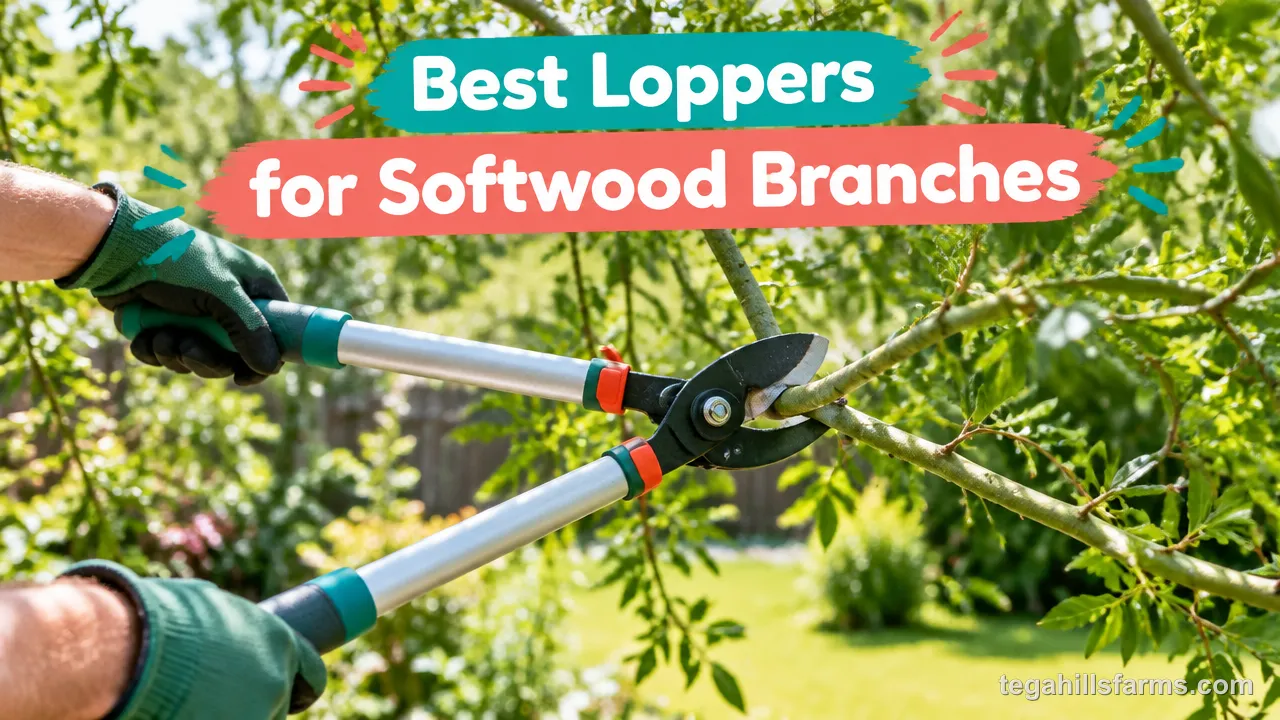
On sappy wood, the blade action decides whether a cut seals cleanly or crushes. Cutting capacity, handle leverage and blade coating decide how much effort each cut costs you.
After an hour of pruning, the strain lands in your hands, wrists and shoulders. Sap makes a blade drag, and a dragging blade needs a harder squeeze on every cut, so grip material, shock bumpers and compound action matter as much as sharpness on softwood.




Before buying, look at the live branches you cut each season, especially the thick ones, and the space you prune in. A crowded shrub border favors short handles, while a fruit tree or an evergreen hedge with limbs above your head favors long or extendable ones.
What Makes a Lopper Right for Softwood Branches?
Pine, spruce, cedar, willow and other fast-growing trees have light, easily compressed fibers, so the tool to buy is one with a clean slicing cut and a sap-resistant blade rather than one built on raw crushing force. In a home garden, softwood also includes the soft new growth on shrubs and fruit trees, which stays green, wet and full of sap through the growing season.
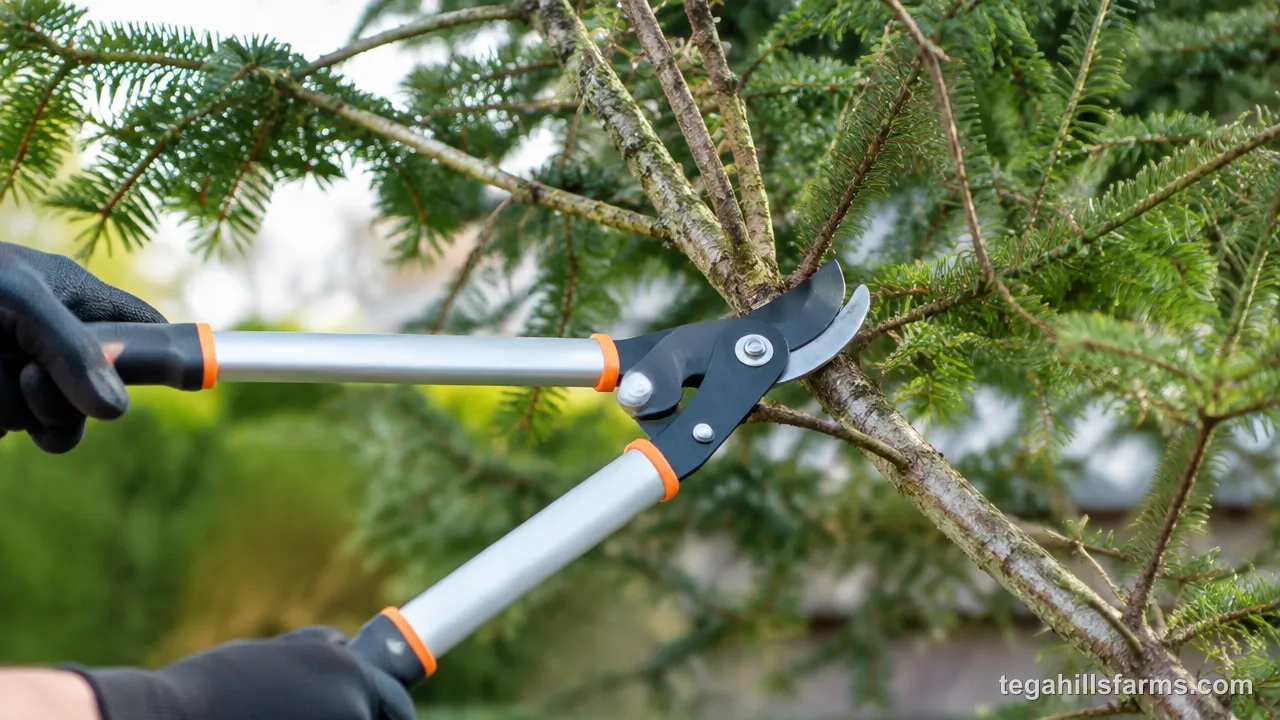
Those fibers give way under pressure, so a blade that pinches instead of slicing flattens the wood before it severs it. The crushed edge leaves a ragged wound and squeezes sap onto the steel, where it dries into a tacky film that makes every following cut drag. Dense hardwood such as oak or maple resists compression, so the limit there is the force you can put behind the blade. On softwood, the limit is how cleanly the blade parts the fibers and how long it stays free of gum.
That changes what to compare when you shop: blade action, cutting capacity, the leverage the handles give you and the coating on the blade. If you also cut hardwood or dead limbs, you can compare these softwood needs with the best loppers in our main guide, which covers every branch type.
What Should You Look for in Loppers for Softwood?
The choice turns on how the blade meets the wood and how much force your hands must supply on each cut, because soft, sappy fibers punish a pinching blade and long sessions punish weak leverage. A tool that gets either one wrong still cuts, but it leaves torn stubs that heal slowly or sends the strain into your wrists and shoulders before a hedge is half done. The details that separate a comfortable lopper from a tiring one are small, and they show up only after many cuts, not in the first squeeze in a store.
Why Do Bypass Blades Suit Green Softwood Better Than Anvil?
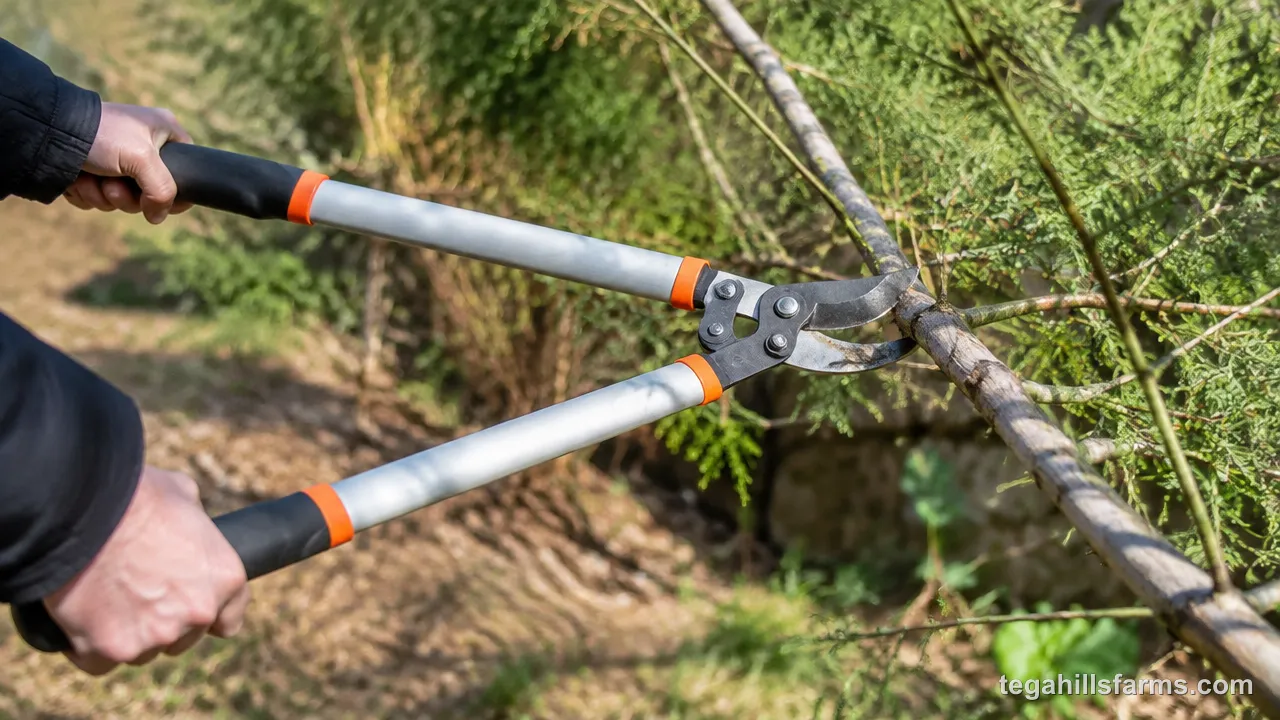
Live, sappy wood heals best from a clean slice. A bypass head makes that slice because its sharpened blade slides past a curved hook the way scissor blades pass each other. An anvil head drives its blade down onto a flat plate instead, and soft, wet fibers flatten under that pressure before they separate. For green softwood, bypass is the better choice.
A crushed cut leaves bruised bark and split tissue around the wound, so the branch takes longer to seal over and the damaged edge gives rot and disease an easy way in. Crushing also squeezes sap out of the fibers onto both the blade and the anvil plate, where it hardens into gum that makes the next cut stick. An anvil still has a job on dead, dry wood that no longer compresses.
For a wider look at this blade style beyond softwood work, see the best bypass loppers.
How Thick a Branch Can a Lopper Cut?
Capacity, stated as a diameter in inches, is the widest branch the jaws can close around and sever in one smooth stroke without straining the tool. That figure assumes clean, live wood. A knot, a dry limb or a fork packs denser fibers into the same width, so the practical limit on those is lower than the rating.
Pushing past it shows up quickly. The blades stall partway, you start rocking the handles, the jaws spring apart, and the pivot bolt loosens until the blade no longer passes the hook tightly. Your wrists absorb the same overload, which is how one stubborn branch can tire you more than an afternoon of easy cuts.
To match a tool to your yard, check the thickest live branch you cut in a typical season and choose a capacity with some margin above it rather than one that only just matches. For limbs well beyond that, look at the best loppers for thick branches.
How Do Handle Length and Compound Action Reduce Effort?
Distance from the pivot is what multiplies force. The farther your hands sit from it on long handles, the less squeeze each cut takes and the farther the blade reaches into a shrub or tree. Compound action gets more force another way: a gear or linkage between the handles and the blade multiplies your push, so the jaws close with more power for the same grip.
Length adds weight, and that weight sits at the end of your arms, so a long tool tires your shoulders faster when you hold it up and is harder to steer inside a dense shrub. Compound heads add extra pivots and moving parts, which give sap and grit more places to collect and need more cleaning and oil to stay smooth.
Older gardeners and anyone with smaller hands or a weaker grip gain the most from either feature, because both trade a longer handle stroke for a lighter squeeze.
Which Blade Coatings, Bumpers and Grips Are Worth Having?
All three earn a place on sappy wood, because each one solves a problem that builds over an hour of cutting rather than in the first few branches.
A low-friction or non-stick coating keeps resin from bonding to the steel, so the blade keeps gliding and wipes clean with a rag instead of needing a scrub. The coating also shields the steel from moisture, which slows rust on carbon blades after a damp day in the garden.
Shock-absorbing bumpers sit where the handles meet at the end of a stroke. When a branch gives way suddenly, they soften the jolt that would otherwise snap through your elbows and shoulders, and over many cuts that adds up to less ache.
Grip material matters once your hands sweat or the foliage is wet. Soft rubber, gel or textured grips keep their friction when damp, so you squeeze less to keep control, and that lighter hold keeps fatigue down through a long session.
The 7 Best Loppers for Softwood Branches of 2026
You can cut live, sappy wood cleanly with the YIAD DRAGON HORSE Pruning Loppers 2-Pack, TABOR TOOLS GL16A Bypass Lopper 28in, YRTSH Loppers Hedge Clippers Combo Set, YRTSH Compound Action Loppers, Garden Guru Bypass Loppers 15in, Corona Tools and Fiskars 30in Forged Bypass Loppers. The YIAD and Garden Guru are short and light enough to work close to your body inside a crowded shrub. The TABOR, Corona and Fiskars use long handles for leverage on thicker limbs, and the YRTSH models add compound action for more force with less squeeze. The short tools give up reach and leverage, and the longer ones give up maneuverability in tight spaces, so the choice depends on whether your softwood grows as dense shrubs or as limbs in a tree.
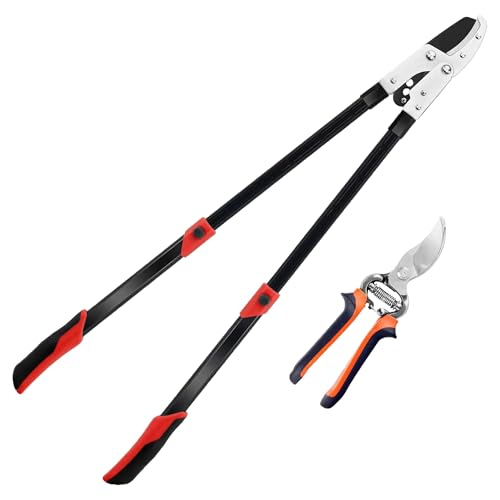
#1 YIAD DRAGON HORSE Pruning Loppers 2-Pack — Best Overall
If your pruning moves between softwood branches and soft stems on roses or herbs, this set pairs a 15-inch bypass lopper with an 8-inch bypass hand pruner, so neither tool works past its job. Its sap-resistant coating keeps cleanup quick.
Key Specs:
- Set: 15 in bypass lopper and 8 in bypass hand pruner
- Lopper cutting capacity: up to 1.5 in
- Blades: high carbon steel with anti-rust, sap-resistant coating
- Handles: PP+TPR cushioned, anti-slip grip
- Set weight: 1.7 lb
- Model: 27610
Detailed Review:
The high carbon steel blades have an anti-corrosion, sap-resistant coating, which pays off on pine, cedar and fruit-tree limbs that bleed resin. Gum has less to grip, so the blades glide through green wood without tearing bark, and cleaning them after a rainy-day session takes a quick wipe.
The lopper’s 1.5-inch capacity on a 15-inch frame suits the thin and mid-size growth inside a shrub border. The short length slips between crowded branches without the handles catching on neighboring stems, though it gives up the leverage that longer handles bring to thicker limbs.
A reinforced central pivot lock and a deeply seated coil spring retainer keep the screw from working loose and the spring from popping out during heavy trimming. The PP+TPR handles add a cushioned, anti-slip layer under your palms, and the thumb-activated safety lock slides open with one hand.
I’d hand this set to a gardener with a weaker grip who wants matching tools in one bag. The hand pruner takes deadheading, herb trimming and flower cutting, which saves the lopper’s edge for wood.
Pros:
- Sap-resistant coating keeps resin from gumming the blades.
- Matching hand pruner takes stems the lopper should not.
- Reinforced pivot lock and seated spring resist loosening.
- Thumb-activated safety lock opens with one hand.
Cons:
- Short handles give less leverage on thicker limbs.
- Two tools mean two pivots to clean and oil.
Who It’s For:
Gardeners with a weaker grip who prune roses, ornamental shrubs and young fruit trees will appreciate this pair. The cushioned handles reduce hand fatigue, the safety lock opens with one thumb, and the hand pruner takes the fine work. If you mostly cut limbs high in a tree, a longer lopper serves you better.
Editor’s Verdict:
A well-built pair for close shrub and stem work, with a coating that keeps sap from slowing the blades and a pivot designed not to work loose.
#2 TABOR TOOLS GL16A Bypass Lopper 28in — Editor’s Choice
Live green limbs on shrubs, hedges and trees suit this bypass lopper, because its 22-inch handles add leverage while a shock-absorbing bumper takes the jolt out of each cut. It stays light and balanced enough to carry around the yard.
Key Specs:
- Overall length: 28 in, with 22 in handles
- Cutting capacity: 1-1/4 in
- Blade: fully hardened carbon steel, low-friction coated, re-sharpenable
- Grips: rubberized, with shock-absorbing bumper
- Weight: 2.6 lb
- Model: GL-16
Detailed Review:
The scissor-style bypass head leaves a clean cut on live green wood, and the fully hardened carbon steel blade holds a sharp edge through heavy use. Its low-friction coating helps the blade glide through sappy cuts. Once the edge dulls you can re-sharpen it rather than replace the tool, which stretches its working life across many seasons.
The long handles turn an ordinary squeeze into a quick chop through live branches, and they let you angle the head around awkward limbs. The shock-absorbing bumper stops the handles at the end of the cut, so less vibration travels into your arms and shoulders.
Next to the Fiskars 30in Forged Bypass Loppers, this TABOR has the smaller capacity, 1.25″ against 2″, but it weighs less, 2.6 pounds against 3.5. That trade favors a gardener whose softwood stays at shrub and hedge size and who would rather carry less weight than gain capacity.
Rubberized grips keep your hold secure, and a hole in the handles lets you hang the lopper on a wall hook. I’d pair it with an anvil lopper for dry, dead wood, since this blade is meant for living branches.
Pros:
- Bypass blade leaves a clean cut on live green wood.
- Shock-absorbing bumper reduces arm and shoulder fatigue.
- Hardened carbon steel blade can be re-sharpened.
- Hanging hole in the handles makes storage simple.
Cons:
- Smaller capacity limits it on thicker softwood limbs.
- Bypass blade is not meant for dry, dead wood.
Who It’s For:
If you prune live shrubs, hedges and lower tree limbs and want leverage without a heavy tool, this lopper fits the work. Its bumper helps older gardeners finish with less arm strain. When your limbs regularly outgrow its jaws, the Fiskars offers a wider cutting capacity.
Editor’s Verdict:
Choose this lopper for clean, low-effort cuts on live green wood, where its bumper, coated blade and re-sharpenable edge keep it working comfortably season after season.
#3 YRTSH Loppers Hedge Clippers Combo Set — Also Great
A yard that needs branch cutting, hedge shaping and fine pruning in the same afternoon is where this three-piece set makes sense, with 19-inch compound action loppers, 19-inch hedge clippers and 8-inch pruning shears in one kit. The compound loppers ease thicker twigs.
Key Specs:
- Set: 19 in compound action loppers, 19 in hedge clippers, 8 in pruning shears
- Lopper action: compound, up to 4x more cutting power
- Hedge clipper blades: steel with low-friction, non-stick coating
- Grips: ergonomic, soft rubber
- Total weight: 4.9 lb
Detailed Review:
The loppers use compound action that multiplies your cutting power, so thick twigs, rose canes and fruit-tree shoots close with a lighter squeeze. That extra force keeps hand effort down across a long day of trimming, which matters if your grip tires before the work is done.
The hedge clippers have a low-friction, non-stick coating on their steel blades, which helps them glide through sappy hedge growth without gumming up partway down a row. The 8-inch pruning shears take small stems on shrubs and potted plants.
Soft rubber grips on the ergonomic handles add comfort and control. Bundling three tools does mean 4.9 pounds of steel and handles to store, plus more wall space than a single lopper takes.
I’d point a homeowner setting up a first tool wall toward this kit, since it covers branch, hedge and stem work in one purchase. With a matching tool for each size of stem, you are less likely to force the loppers or shears past what they are made to cut.
Pros:
- Compound action multiplies your cutting power for lighter squeezes.
- Covers branch, hedge and stem pruning in one kit.
- Non-stick coated hedge clipper blades resist sap buildup.
- Soft rubber grips reduce hand fatigue.
Cons:
- Three tools need more storage space than one lopper.
- Compound linkage adds moving parts to clean and oil.
Who It’s For:
Homeowners building a first set of yard tools will find what they need for shrubs, hedges, roses and fruit-tree shoots here, with compound loppers that spare older hands. Gardeners who only need a lopper for branches high in a tree are better served by a single extendable model.
Editor’s Verdict:
Expect low-effort cuts on thicker twigs and a matching tool for every shrub job, all kept together in one practical kit.
#4 YRTSH Compound Action Loppers — Best Ergonomic Design
Reaching high branches is easier with this lopper, because its aluminum handle extends in 6 steps from 28 to 41 inches. Compound action adds force at the blade.
Key Specs:
- Handle: aluminum, extends in 6 steps from 28 to 41 in
- Cutting capacity: 2 in
- Blade: alloy steel with Teflon and low-friction coating
- Action: compound
- Grip: soft rubber, non-slip
Detailed Review:
Six handle settings let you match the tool to the job. The shortest works like a standard long-handled lopper on shoulder-height growth, and full extension reaches high branches and the back of a wide shrub without stepping into the bed.
Compound action adds power at the blade, so the lopper keeps cutting with a light squeeze even at full length overhead, where your arms are weakest. The 2-inch capacity takes thick softwood limbs, whether they are green and sappy or dry. For an older gardener, that combination means fewer trips for a ladder and less strain in the wrists.
The alloy steel blade has a Teflon and low-friction coating, so sap slides off rather than building up, and the edge stays sharp after tough jobs. Soft rubber, non-slip grips keep the hold secure when your hands are damp or tired.
An adjustable handle brings joints to keep clean and tight, and at full extension the lopper is harder to steer through dense growth. If reach is the problem you are solving, weigh this model against the best extendable loppers before you buy.
Pros:
- Handle extends in 6 steps for low and high branches.
- Compound action cuts with less hand effort.
- Teflon and low-friction coating keeps sap off the blade.
- Soft, non-slip grip holds well with damp hands.
Cons:
- Full extension makes the lopper harder to control in tight spots.
- Adjustable handle joints add parts to check and clean.
Who It’s For:
Older gardeners and anyone with limited grip or shoulder strength who prunes tall shrubs and tree limbs will like how the adjustable reach and compound action share the work. If your pruning stays inside dense, low shrubs, a compact bypass lopper is easier to steer.
Editor’s Verdict:
Reach and reduced effort make this lopper easy to recommend for tall, sappy growth, as long as you keep its handle joints clean.
#5 Garden Guru Bypass Loppers 15in — Also Great
Working deep inside a dense shrub calls for short handles, and these bypass loppers keep each cut close to your body at a precise angle. Their forged manganese and high carbon steel blades stay sharp.
Key Specs:
- Length: 15 in
- Cutting capacity: 1-1/2 in
- Blades: forged manganese and high carbon steel
- Grips: soft, non-slip
- Weight: 1.2 lb
- Warranty: lifetime, plus 90-day satisfaction guarantee
Detailed Review:
Holding the tool close to your body puts the blade at a steady cutting angle, so each cut lands precisely between crowded stems where longer handles would catch on the shrub. That control matters most when you are thinning a rose or shaping a small evergreen and every cut changes the plant’s outline.
The blades are forged from manganese and high carbon steel and hold an edge that gives smooth, clean cuts on living wood. A 1-1/2 inch capacity covers the thin and mid-size branches inside hedges and shrubs, though short handles give less leverage at the thick end of that range.
At 1.2 pounds, the loppers are easy to maneuver for long stretches, and the soft, non-slip grips work for both small and large hands. The light weight spares your shoulders when you work with your arms raised into a shrub.
Garden Guru backs the tool with a lifetime warranty and a 90-day satisfaction guarantee, and the product is certified carbon neutral. I’d choose it over a long lopper whenever most of your cutting happens inside shrubs rather than up in a tree.
Pros:
- Short handles allow precise cuts close to the body.
- Light weight eases shoulder strain during long sessions.
- Forged manganese and high carbon steel blades hold an edge.
- Lifetime warranty backs the tool.
Cons:
- Short handles offer little reach into tall growth.
- Leverage drops on branches near its capacity limit.
Who It’s For:
Small-handed gardeners and anyone shaping dense shrubs, roses or hedges at close range will find this lopper easy to control. People who need to reach high limbs should look at a long or extendable model instead, since short handles keep the blade near your body.
Editor’s Verdict:
Light, precise and backed by a lifetime warranty, this lopper is built for close work inside shrubs.
#6 Corona Tools — Best Budget
For long pruning sessions on live branches, this lopper pairs ComfortGEL grips with integrated Shock-Guard bumpers that reduce strain and fatigue. Non-stick blades hold their edge.
Key Specs:
- Model: SL 3264
- Handles: 25 in extra-strength trapezoidal steel
- Cutting capacity: 1-1/2 in
- Blades: Dual Arc design, non-stick coated
- Comfort features: ComfortGEL grips, integrated Shock-Guard bumpers
- Weight: 3.3 lb
Detailed Review:
The Dual Arc blade design is built for better cutting performance, and its non-stick coating helps the blades hold their sharpness. On pine, cedar or juniper, that coating means less gum to scrub off after a session.
The 25-inch trapezoidal steel handles are made for extra strength, so they resist flexing when you lean on a stubborn green limb, and their length adds leverage on every cut. Soft ComfortGEL grips are shaped for fit and control. The integrated Shock-Guard bumpers absorb the snap when a branch gives way, so strain builds more slowly over a long session.
Against the TABOR TOOLS GL16A Bypass Lopper 28in, the Corona has the larger capacity, 1-1/2 inches to 1-1/4, but it is heavier, 3.3 pounds to 2.6. I’d pick it when your softwood limbs run a little thicker and the extra weight does not bother you. It also brings gel grips and shock bumpers to an affordable long-handled lopper, a practical match for someone who prunes often.
Pros:
- ComfortGEL grips stay soft and secure in the hand.
- Shock-Guard bumpers absorb the snap at the end of cuts.
- Non-stick coated blades resist sap and hold sharpness.
- Trapezoidal steel handles resist flexing under pressure.
Cons:
- Long handles are harder to steer inside crowded shrubs.
- Steel handles make overhead cuts more tiring.
Who It’s For:
Budget-conscious gardeners who prune live shrubs and medium softwood limbs, and who want gel grips and bumpers to ease their hands, will be well served here. If you work mostly in tight, dense growth, the Garden Guru is lighter and easier to maneuver.
Editor’s Verdict:
Gel grips, shock bumpers and coated blades make this Corona a comfortable lopper for regular pruning of live softwood.
#7 Fiskars 30in Forged Bypass Loppers — Also Great
Thick, sappy limbs are where these loppers belong, since the 30-inch handles supply leverage and a low-friction coating keeps resin from sticking. All-steel construction holds up to heavy use.
Key Specs:
- Handles: 30 in
- Cutting capacity: 2 in
- Blade: precision-ground stainless steel with low-friction coating
- Construction: all-steel, fully hardened steel blade
- Grips: textured Softgrip touchpoints
- Weight: 3.5 lb
Detailed Review:
Long handles give the leverage for controlled cuts, so thick pine, spruce and fruit-tree branches close with less strain on your hands. The fully hardened steel blade stays sharp longer through heavy use, so that leverage isn’t wasted on a dull edge.
The precision-ground stainless steel blade has a low-friction coating that glides through branches, prevents sticking and sap buildup, and adds rust protection. On resinous wood, that combination keeps cleanup quick and the edge clean between sessions.
Compared with the Corona Tools lopper, the Fiskars gives you longer handles, 30 inches against 25, and a wider 2-inch capacity against 1-1/2. The extra length also makes it harder to work inside a dense shrub, so it suits open trees and hedges better than crowded beds.
Textured Softgrip touchpoints keep a secure hold and reduce hand stress over long sessions, and Fiskars covers the loppers with a lifetime warranty. You feel the all-steel build at 3.5 pounds, so I’d keep this one for the heavier limbs where its capacity pays off rather than for light trimming.
Pros:
- Long handles give strong leverage on thick limbs.
- Low-friction coating prevents sap buildup and adds rust protection.
- All-steel construction and hardened blade stand up to heavy use.
- Lifetime warranty covers the loppers.
Cons:
- Extra length makes close work in crowded beds awkward.
- All-steel build adds noticeable weight.
Who It’s For:
Pruning fruit trees, evergreen screens or overgrown softwood limbs calls for leverage, and this lopper suits gardeners who face that work every season. Anyone whose pruning is mostly light shaping inside dense shrubs will find a short bypass lopper easier to handle.
Editor’s Verdict:
Built for thick, resinous limbs, these loppers pair long-handled leverage with a coated stainless blade that stays clean and resists rust.
Which Pick Suits Your Softwood Pruning Jobs?
Match the tool to where your branches grow: short bypass models for dense, low shrubs, long-handled bypass models for thicker green limbs, and compound or extendable models when reach and hand strength are the limits. The Garden Guru Bypass Loppers 15in and the lopper in the YIAD DRAGON HORSE Pruning Loppers 2-Pack keep the blade close to your body for precise cuts in crowded growth, which suits smaller hands.
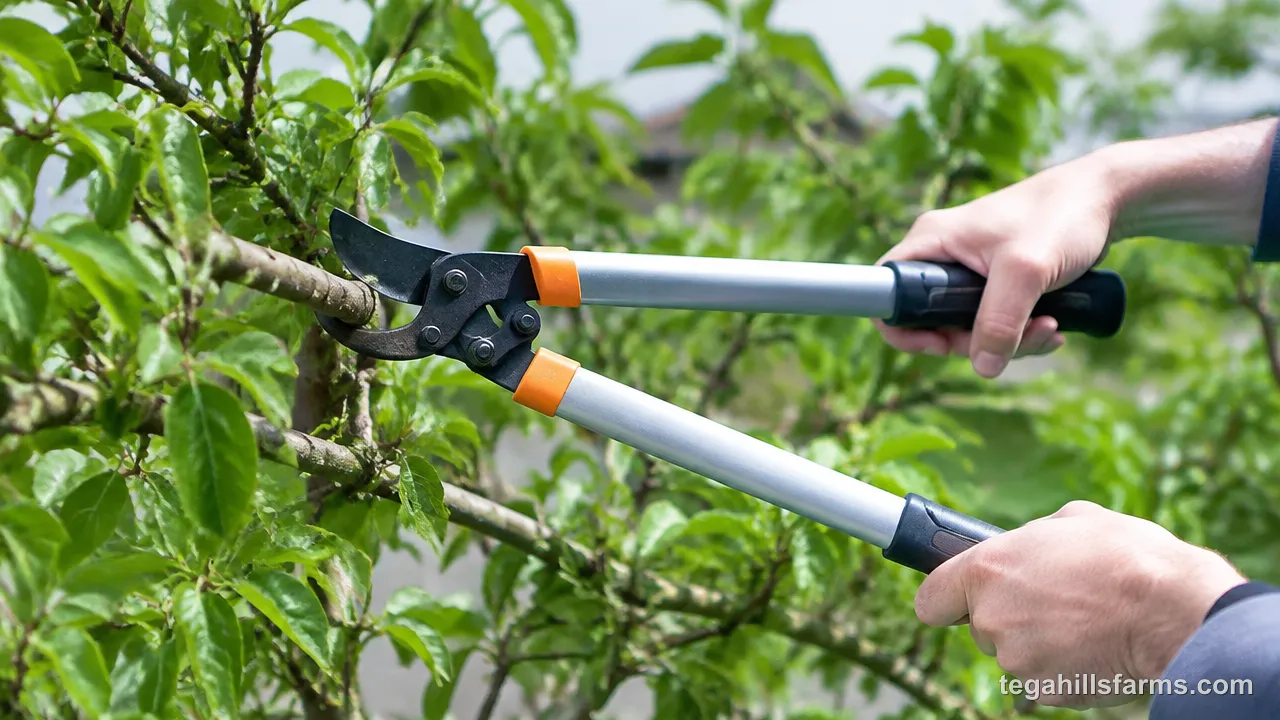
The TABOR TOOLS GL16A Bypass Lopper 28in, Corona Tools and Fiskars 30in Forged Bypass Loppers add handle length for leverage on thicker live wood. Their weight climbs as the handles get longer, so the extra force comes with more load on your arms and less room to move inside a shrub. The YRTSH Compound Action Loppers reach high branches with an extendable handle and compound force, while the YRTSH Loppers Hedge Clippers Combo Set covers branches, hedges and stems for general yard work.
The main differences are cutting action and handle style:
| Lopper | Cutting action | Handle | Fits |
|---|---|---|---|
| YIAD DRAGON HORSE Pruning Loppers 2-Pack | Bypass | Short, paired with a hand pruner | Shrubs, roses and soft stems |
| TABOR TOOLS GL16A Bypass Lopper 28in | Bypass | Long, with shock-absorbing bumper | Live shrubs, hedges and lower limbs |
| YRTSH Loppers Hedge Clippers Combo Set | Compound | Bundled with hedge clippers and shears | General yard work |
| YRTSH Compound Action Loppers | Compound | Extendable aluminum | High branches with less hand effort |
| Garden Guru Bypass Loppers 15in | Bypass | Short and light | Close work inside dense shrubs |
| Corona Tools | Bypass | Long trapezoidal steel, Shock-Guard bumpers | Medium live limbs |
| Fiskars 30in Forged Bypass Loppers | Bypass | Long, all-steel | Thick, resinous limbs |
If you are still weighing the basics, the guide on how to choose loppers goes through each factor in more depth, and anyone pruning all day for a living may want the best loppers for professional use.
A softwood limb that has grown past the jaws will not close in one stroke, and rocking the handles to finish it crushes the bark around the cut. Each forced cut also works the pivot bolt loose and loads your wrists, so a lopper that cut cleanly in spring starts to wobble and leave ragged stubs by the end of the season.
When Should You Use a Saw Instead of Loppers?
Once the jaws stop closing in one smooth stroke, the limb is wider than the jaw opening, or you cannot reach it without stretching, a saw is the safer tool for the cut. Any of those signs means the lopper would have to be forced, and forcing is what bends blades and loosens pivots.
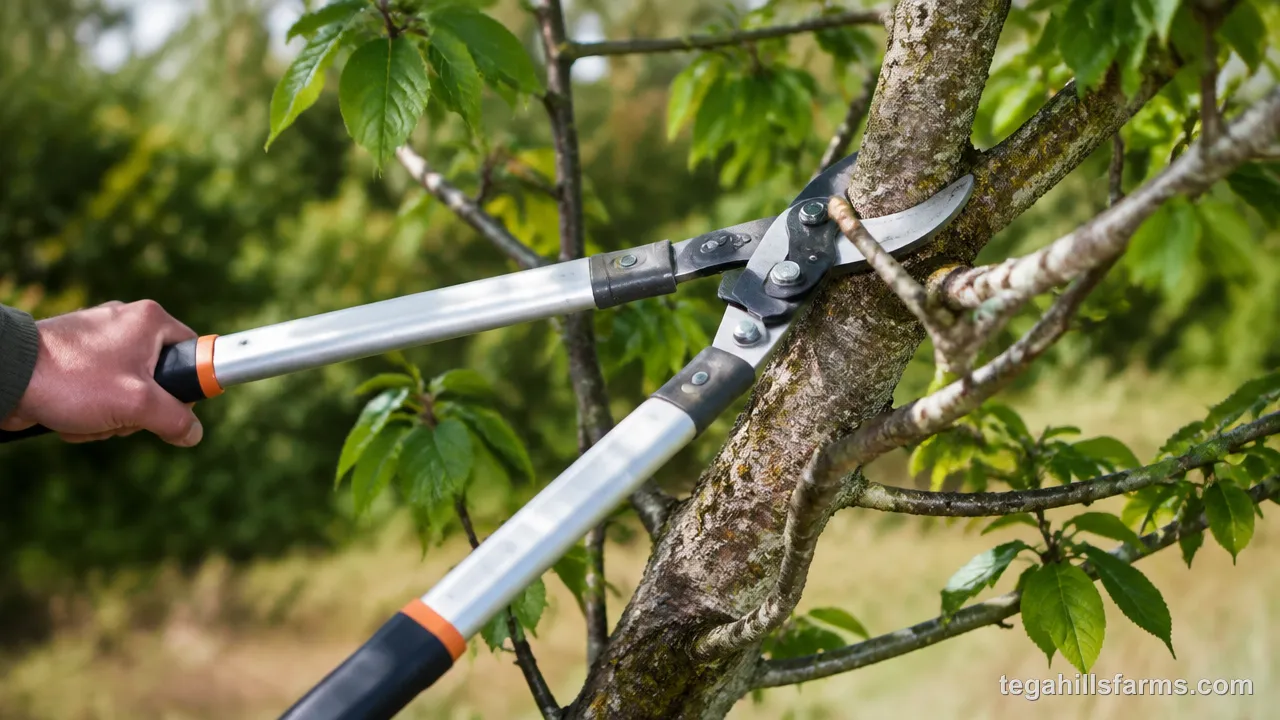
A pruning saw cuts with its teeth instead of squeezing, so it removes wood stroke by stroke and puts no strain on a pivot. Pine and spruce cut quickly under a saw, though fresh resin can clog the teeth, so wipe the blade as you go. For limbs overhead, a pole saw gives the same action from the ground and keeps you off a ladder.
Hand pruners are made for thin stems, and twisting them through anything thicker springs the blades. Whichever tool you use, make the final cut just outside the branch collar, the slightly swollen ring where a branch joins the trunk, because that tissue seals the wound on its own.
When Does an Anvil Lopper Still Make Sense?
Dead, dry softwood no longer squashes under pressure, so an anvil head, which drives a sharp blade onto a flat plate, cuts it straight and with real force. The firm plate supports brittle wood from below while the blade pushes through hard, seasoned fibers that can spread a bypass blade away from its hook. On green branches, the same flat plate crushes the soft tissue that should seal the wound, so bypass stays the tool for anything still growing.
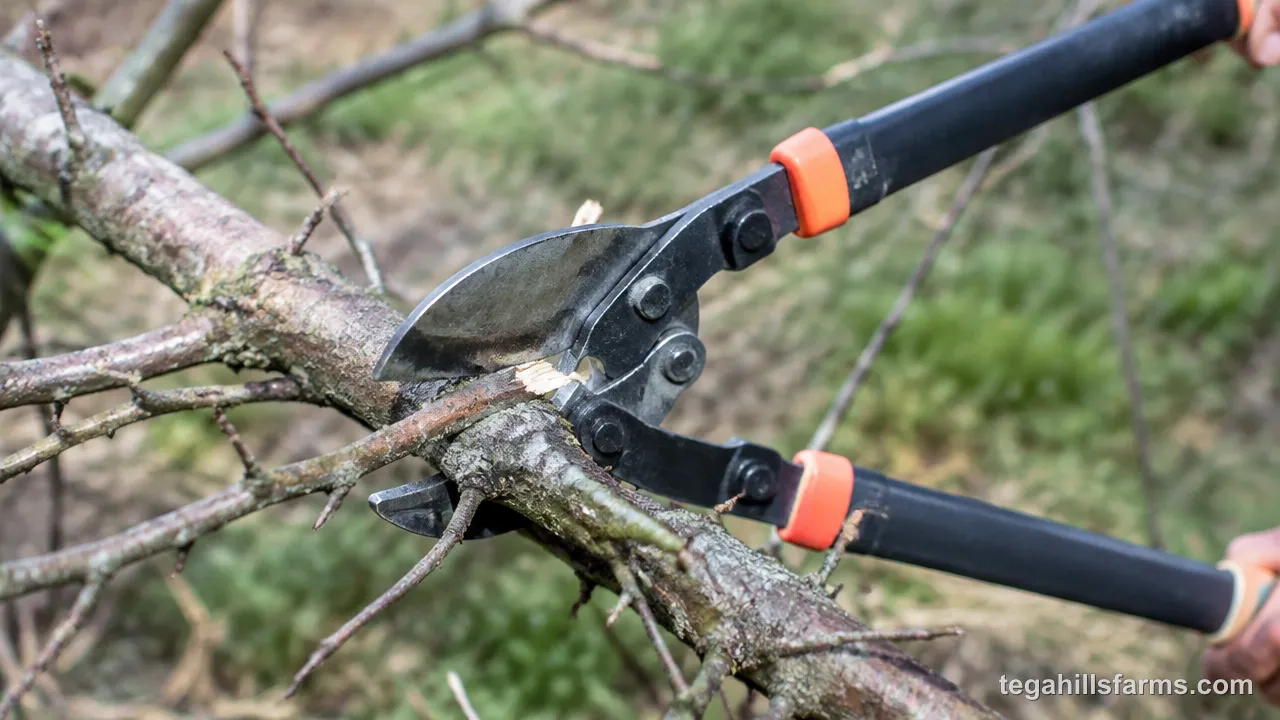
Keeping both types lets you match the tool to the wood: bypass for shaping and thinning live growth, anvil for clearing dead stubs, storm-broken limbs and old canes. When a dead limb meets live wood, keep the anvil on the dead section and make the final cut at the branch collar with a bypass lopper or saw, so no healthy bark gets crushed. For dedicated options, the best anvil loppers are worth a look.
How Do You Cut Softwood Branches Cleanly and Safely?
Place the limb deep in the jaws, close to the pivot, then cut just outside the branch collar with both hands on the handles. Deep placement puts the wood where the blade has the most leverage. Cutting at the collar leaves the tissue that closes over the wound instead of a stub that dies back.
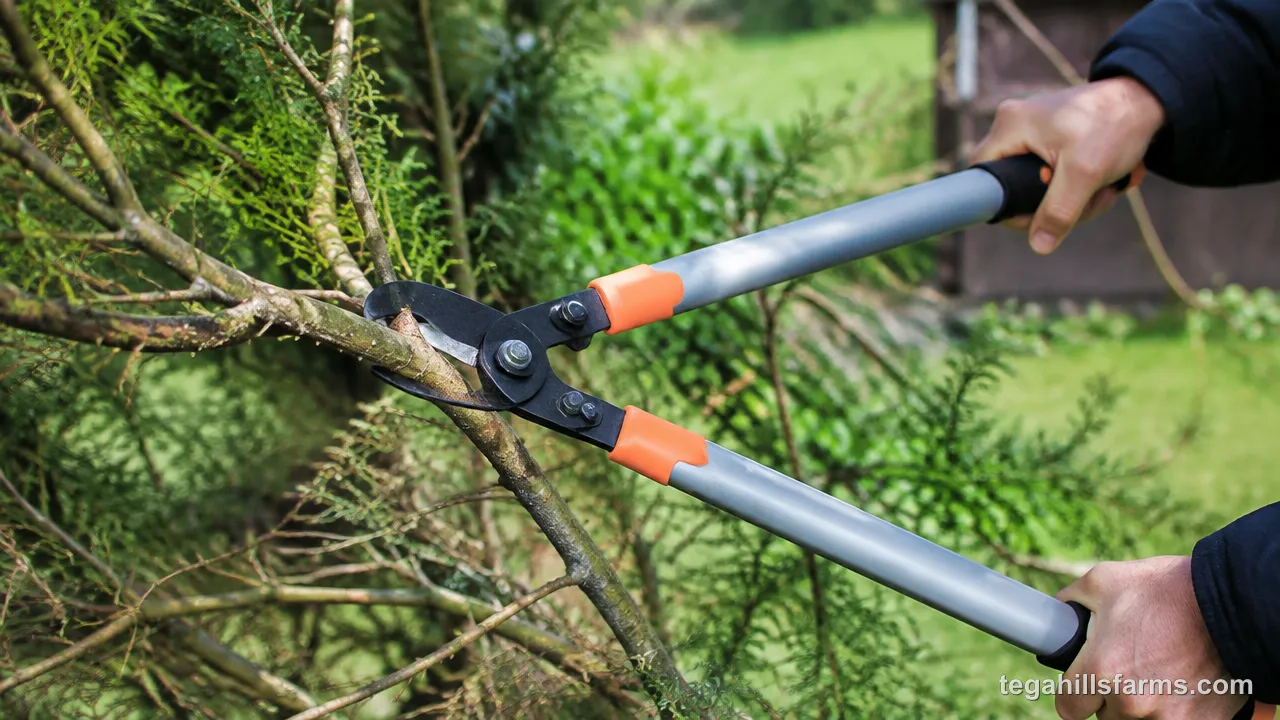
Keep the blades square to the limb and never twist them to finish a stubborn cut. Twisting pries the blade away from the hook, which tears the bark and works the pivot bolt loose over time. On heavy limbs, take several smaller cuts and remove the outer weight first, so the branch cannot rip a strip of bark down the trunk as it falls.
Overhead cuts call for protection for you as well as the plant. Wear eye protection, since sap, bark chips and twigs drop straight toward your face, and gloves that keep their grip when the handles get sticky with resin. Look up before each cut and stay well clear of power lines; a limb near a line is a job for your utility company. Work from level, stable footing, because a branch that releases suddenly can throw you off balance.
How Do You Keep Lopper Blades Sharp and Rust-Free?
Wipe sap off after every session, dry the blades, and oil the pivot and blade lightly before storing the tool somewhere dry. Softwood resin hardens into a gummy film that makes the blade drag and holds moisture against the steel, which dulls the edge and starts rust, fastest on uncoated carbon steel.
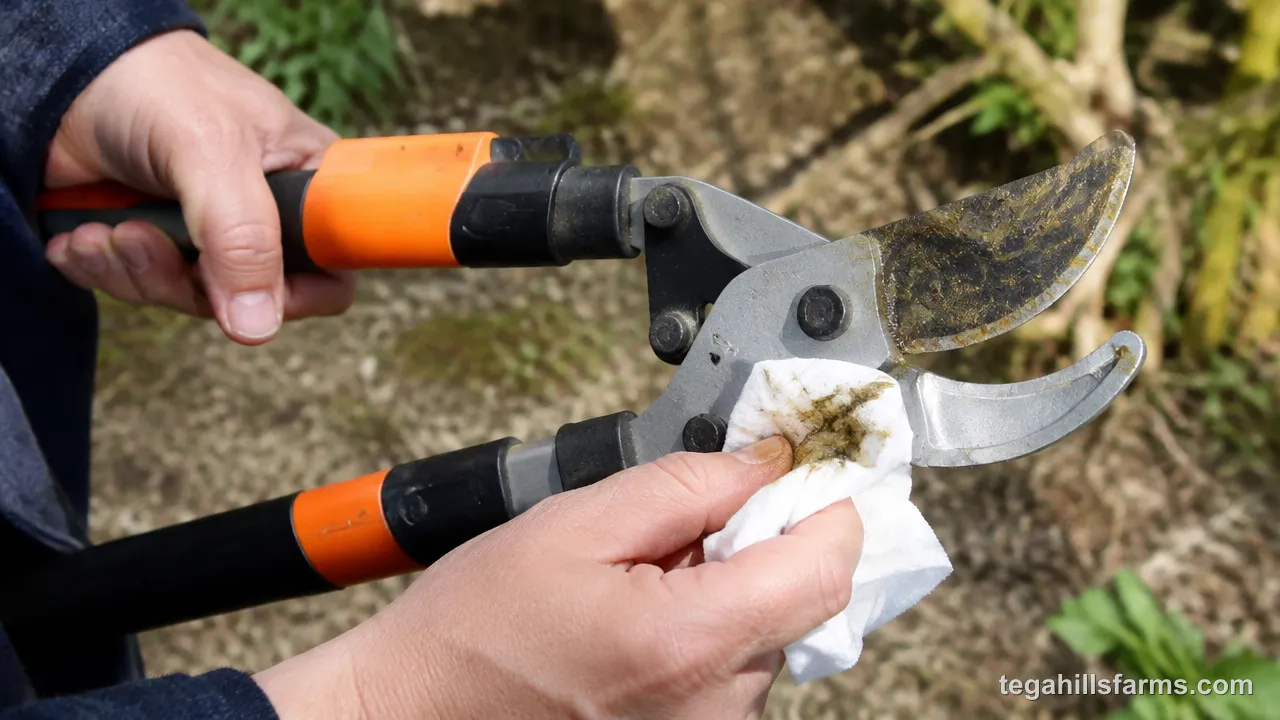
A rag dampened with rubbing alcohol lifts fresh sap easily, while hardened resin takes scrubbing. A few drops of light oil on the pivot keep the action smooth, and a thin film on the blade keeps humidity off the steel through winter. Hang the loppers for storage rather than leaving them on a damp floor.
Ragged, torn cuts, a blade that folds bark instead of slicing it, or stiff action that oil does not fix all mean the edge needs sharpening or the blade needs replacing. On a bypass blade, sharpen only the beveled edge and keep the flat face flat, because that face has to pass tight against the hook. Grinding it opens a gap where branches slip and crush. For the full method, follow the steps on how to sharpen loppers.
Write Your Review
No reviews yet. Be the first to share your experience!