

My 2026 picks among the best loppers for thick branches are Fiskars 28in Bypass Loppers (Best Overall), Hickok Heavy Duty Loppers 36in (Best Premium), AIRAJ Tree Loppers 16-24in (Best Budget), Corona Clipper X Series Lopper 2-1/4in (Also Great), Corona Tools (Also Great), Kings County Tools Extendable Loppers 26-40in (Best Durability), YRTSH Extendable Loppers 21-26in (Best Performance), Spear & Jackson 8290RS Ratchet Loppers (Best Rust-Resistant) and Corona Tools DualLINK Bypass Loppers 33in (Also Great). Each one takes limbs well past what a hand pruner can manage, but they get there with different blades, mechanisms and handles.
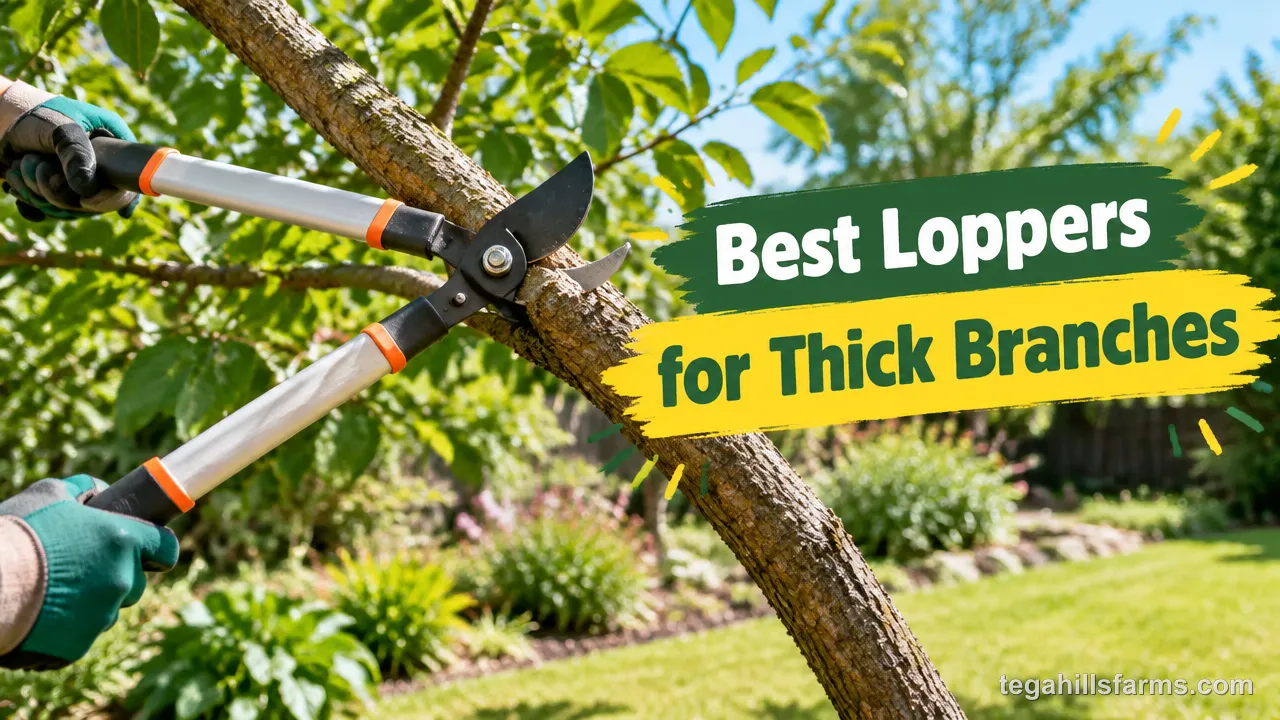
On heavy wood, the blade, the mechanism behind it and the handles you hold decide how a cut feels. A bypass blade slices live wood cleanly. A ratchet paired with an anvil jaw handles dry deadwood with less squeezing, and long or telescoping handles give you leverage and reach in exchange for extra weight.





Forcing a limb that is too thick bends blades, loosens the pivot and leaves your wrists and shoulders sore by evening, so the goal is a lopper whose mechanism and weight match the wood you cut most. Sap and damp storage also dull an edge, which is why blade coatings and forged steel matter on a tool you expect to keep for years.
How Thick a Branch Can a Lopper Cut?
Rated capacity on the models here runs from 1.5 to 2.5 inches in diameter, and that rating is the largest live limb the jaws sever cleanly, well beyond what a hand pruner is built for.
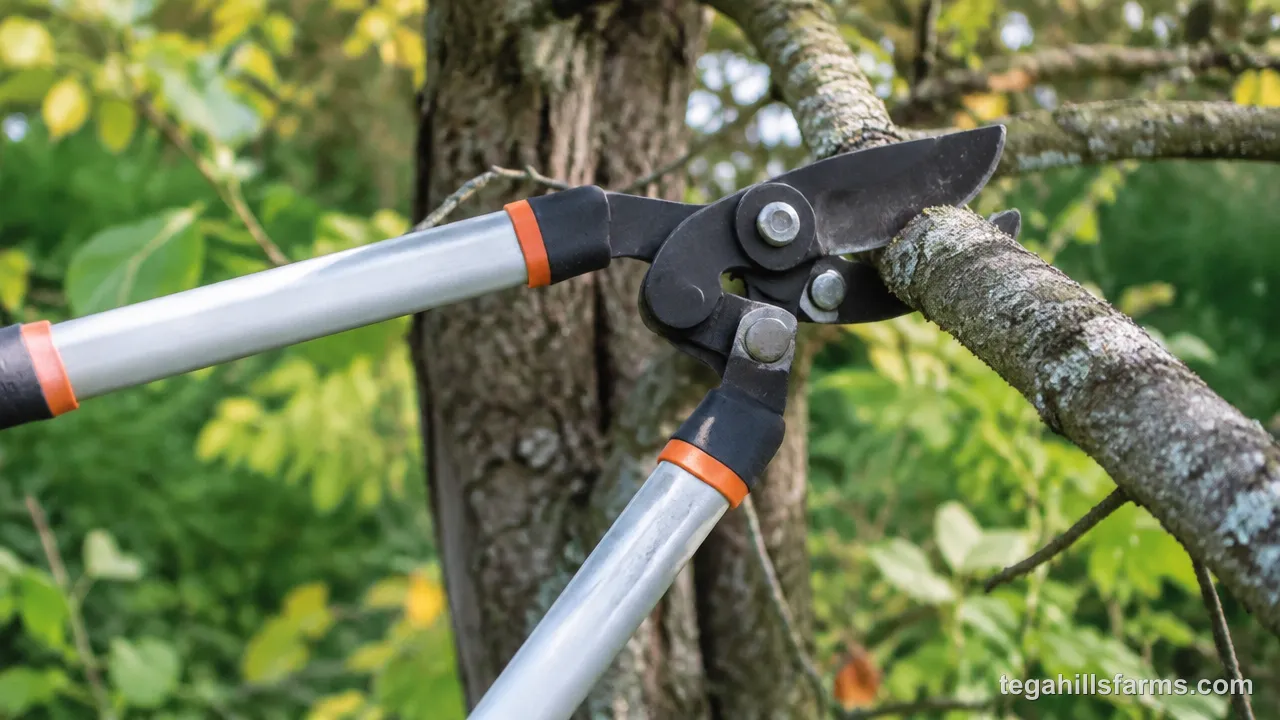
The jaw opening decides whether a limb fits between the blades at all. Blade strength decides whether the steel stays straight as it pushes through the wood. The leverage built into the handles, or into a compound mechanism, decides how much of your squeeze actually reaches the edge. When any one of these runs out, the cut stalls.
Damage starts when you force a limb past the rating. The blade flexes sideways and can stay bent, the pivot bolt works loose under the twisting load, and your wrists take the strain of every extra push. Dry or hard wood resists more than green wood of the same diameter, so leave more room below the rating when you cut deadwood.
For heavy wood, that leaves three practical designs: compound-lever bypass models for live limbs, ratcheting anvil models for dry limbs, and extendable versions of both for limbs overhead. If you want the wider picture first, our full guide to the best loppers also covers lighter pruning work.
The 9 Best Loppers for Thick Branches of 2026
Heavy limbs are the shared job of Fiskars 28in Bypass Loppers, Hickok Heavy Duty Loppers 36in, AIRAJ Tree Loppers 16-24in, Corona Clipper X Series Lopper 2-1/4in, Corona Tools, Kings County Tools Extendable Loppers 26-40in, YRTSH Extendable Loppers 21-26in, Spear & Jackson 8290RS Ratchet Loppers and Corona Tools DualLINK Bypass Loppers 33in.
The compound-lever and linkage models close on live green wood in one smooth stroke with less effort. The ratcheting models give up speed for stepped power on dry limbs, and the extendable ones add reach at the cost of some rigidity. Handle material matters as much as the mechanism: aluminum keeps a long tool light enough to hold overhead, while steel adds strength and weight your shoulders will feel. Between them, they suit homeowners who do heavy pruning now and then, gardeners who prune every week, people who need reach, and people with weaker hands.
#1 Fiskars 28in Bypass Loppers — Best Overall
If most of your heavy cuts are on live shrubs and young trees, this lopper gives you extra force through a compound lever instead of through longer, heavier handles. Its jaws take limbs up to 1.75 inches across.
Key Specs:
- Cutting capacity: 1.75 in
- Length: 28 in
- Blade: steel bypass blade with low-friction coating
- Mechanism: Power-Lever compound lever
- Weight: 3.2 lb
- Model: 391381-1014
Detailed Review:
The Power-Lever mechanism is a compound lever, so it multiplies the force of each squeeze before it reaches the blade. On live limbs near the top of its range, that extra force finishes the cut in one steady stroke instead of the hard push a single-pivot design asks for. Paired with moderate-length handles, it gives you leverage without the bulk of a longer tool.
The steel bypass blade has a low-friction coating that lets the edge slide through sappy wood with less drag. The same coating limits gumming between cleanings and resists rust, so a blade put away damp is less likely to pit before you get back to it.
Rounded handles with SoftGrip touchpoints spread pressure across your palm instead of pressing a hard edge into it. The non-slip surface keeps your hands from creeping as they tire. Next to the Corona Clipper X Series Lopper 2-1/4in, it takes smaller limbs but is noticeably lighter, and you feel that most on repeated cuts above shoulder height.
Pros:
- Compound lever adds cutting force without longer, heavier handles.
- Low-friction coating limits sap gumming and resists rust.
- Rounded SoftGrip handles spread pressure across the palm.
- Moderate weight keeps overhead cuts manageable.
Cons:
- Jaws take smaller limbs than several heavier models here.
- Bypass blade suits live wood better than dry deadwood.
Who It’s For:
Homeowners who prune live shrubs, fruit trees and ornamental trees through the season will get steady, comfortable cuts from it, especially when much of the work sits above shoulder height. If your yard holds mostly dead, dry limbs, a ratcheting anvil design will suit you better.
Editor’s Verdict:
A balanced tool for live wood: the compound lever does the heavy work, and the coated blade stays cleaner between sessions.
#2 Hickok Heavy Duty Loppers 36in — Best Premium
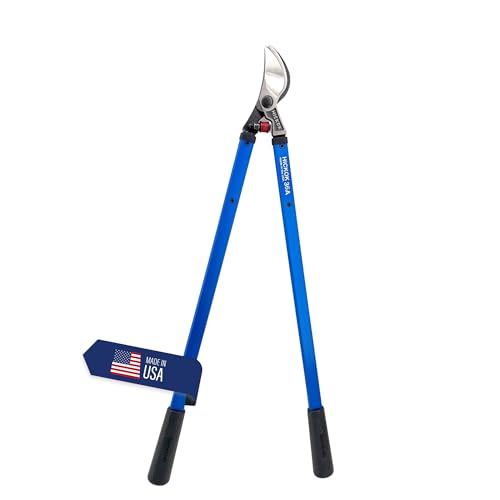
Frequent pruners who want a tool built for daily commercial work should look at this one, because its forged, heat-treated steel blade is made to hold an edge season after season. The 36-inch length adds reach and leverage.
Key Specs:
- Cutting capacity: 2.25 in
- Length: 36 in
- Handles: aircraft-grade aluminum
- Blade: forged, hardened, heat-treated steel
- Weight: 3.0 lb
- Origin: made in the USA (model 32A)
Detailed Review:
Long handles put your hands farther from the pivot, so each squeeze delivers more force at the blade on deep cuts into hard limbs. The same length lets you reach into the center of an overgrown shrub, or up to a limb overhead, from where you stand.
Aircraft-grade aluminum keeps those handles light. Weight carried far from your hands pulls on your wrists every time you lift and close the tool, so light handles are what make the long reach usable through an extended session.
The forged, hardened and heat-treated steel blade is the part that serves frequent pruners. Forging and heat treatment give a denser, harder edge than stamped steel, so it resists rolling and chipping when it meets a knot and stays sharp from one season to the next. Made in the USA and engineered for daily commercial use, it belongs with the best loppers for professional use, yet it stays simple enough for a homeowner.
Inside a tight hedge or between closely planted shrubs, the full length can leave too little room to open the handles wide. I would keep a shorter lopper for that close work and save this one for limbs that need its reach.
Pros:
- Forged, heat-treated blade holds its edge through heavy use.
- Aluminum handles keep a long tool light to lift.
- Long reach gets into dense shrubs and overhead limbs.
- Made in the USA for daily commercial work.
Cons:
- Long handles feel awkward in tight, crowded beds.
- Premium build is more tool than casual pruners need.
Who It’s For:
Gardeners who prune every week, and landscapers who work on other people’s yards, will appreciate a blade that keeps its edge and handles that don’t wear them out. If you only trim the odd shrub each fall, a lighter-duty bypass lopper will serve you just as well.
Editor’s Verdict:
Built for frequent, demanding pruning, it pairs a forged blade with light aluminum handles that keep long sessions manageable.
#3 AIRAJ Tree Loppers 16-24in — Best Budget
For occasional pruning on a tight budget, this lopper keeps things simple and affordable, with handles that extend from 16 to 24 inches when a branch sits out of easy reach. Its SK5 steel blade is Teflon-coated to stay sharp.
Key Specs:
- Cutting capacity: 1.5 in
- Handle length: adjustable, 16 to 24 in
- Blade: SK5 steel with Teflon coating, bypass
- Handles: iron arms with non-slip grips
- Weight: 1.98 lb
- Model: 2858
Detailed Review:
Extending the handles moves your hands farther from the pivot, so the long setting gives you reach for tall branches and extra leverage on limbs near its capacity. The short setting is easier to control in tight spots. The iron arms are built so they won’t bend under large, thick branches.
SK5 is a high-carbon steel that takes a keen edge and keeps it through heavy use. The Teflon coating lowers friction, so the blade passes through sappy wood with less drag and sheds residue more easily.
The grip material adds friction against your skin, so your hands stay put even when your palms sweat on a warm afternoon. Handle and blade angles are set around the lever principle, which reduces fatigue over a longer job.
It is light enough to carry around the yard and hold up for short sessions without much strain. Next to the Hickok Heavy Duty Loppers 36in, it weighs less but its jaws take smaller limbs, so leave large hardwood limbs to a heavier-duty tool. For an affordable lopper you use now and then, that balance makes sense.
Pros:
- Extendable handles add reach and leverage on demand.
- Teflon-coated SK5 blade slides through sappy wood.
- Non-slip grip holds steady even with sweaty palms.
- Light weight is easy to carry and lift.
Cons:
- Smaller jaw capacity limits it on large hardwood limbs.
- Telescoping handles trade some rigidity for adjustable reach.
Who It’s For:
Occasional pruners who want an affordable tool for shrubs, hedges and smaller tree limbs will find it easy to live with, and its light frame helps anyone who tires quickly holding a tool up. If you regularly take down large, dead hardwood limbs, a ratcheting design will spare your wrists.
Editor’s Verdict:
Good value for light, occasional jobs, with adjustable handles and a coated blade that handle routine yard trimming at very little weight.
#4 Corona Clipper X Series Lopper 2-1/4in — Also Great
Gardeners who take on large limbs on live trees and overgrown shrubs will appreciate its 2-1/4-inch bypass jaws, which slice rather than crush. It is a heavy tool, built for repeated work.
Key Specs:
- Cutting capacity: 2-1/4 in
- Blade: precision bypass, scissor-style action
- Construction: heavy-duty, pro-grade
- Handles: ergonomic, shaped for grip and leverage
- Weight: 4.6 lb
- Model: AL16249
Detailed Review:
That capacity covers large limbs on live trees, and the bypass blade slices the wood instead of crushing it. Cleaner wounds close faster, which matters when you remove big limbs that leave big wounds.
The heavy-duty, pro-grade build is made for repeated use by homeowners, landscapers and professional gardeners alike. It is designed around dense woody growth, overgrown hedges and orchard work rather than light trimming.
Ergonomic handles give a secure grip and better leverage, which reduces hand and arm fatigue during extended sessions. A firm hold also helps you keep the blade square to the limb, so the cut stays clean instead of twisting.
It is also a hefty lopper, and that weight adds up when you hold it above your shoulders cut after cut. Next to the Fiskars 28in Bypass Loppers, it takes larger limbs but asks noticeably more of your shoulders on overhead work. I would use it from the ground on low, heavy limbs and let a lighter tool handle the high ones.
Pros:
- Large bypass jaws handle big limbs on live trees.
- Scissor-style cut reduces crushing on living stems.
- Pro-grade build is designed for repeated heavy use.
- Ergonomic handles add leverage and ease arm fatigue.
Cons:
- Heavy weight tires shoulders during overhead cutting.
- Size and heft feel excessive for light shrub trimming.
Who It’s For:
If your yard has mature fruit or shade trees with large live limbs, this tool keeps pace with serious pruning days. Landscapers and orchard keepers will value its pro-grade build. Gardeners with weaker shoulders, or anyone who prunes mostly overhead, will be more comfortable with a lighter model.
Editor’s Verdict:
Choose it for heavy pruning of live trees, where large bypass jaws and a sturdy build matter more than the extra weight.
#5 Corona Tools — Also Great
Mid-sized limbs on shrubs and small trees are this lopper’s territory, and its Shock-Guard bumpers soften the jolt at the end of every cut so your elbows and wrists take less of it. ComfortGEL grips add a cushioned hold.
Key Specs:
- Cutting capacity: 1-1/2 in
- Overall length: 30 in
- Handles: 25-inch trapezoidal steel with ComfortGEL grips
- Blade: Dual Arc bypass, non-stick coating
- Weight: 3.3 lb
- Model: SL 3264
Detailed Review:
ComfortGEL grips are soft and shaped to the hand, so pressure spreads across your palm and you keep control as the blade bites into the wood. That fit matters on a tool you squeeze hard, because a grip that shifts makes your fingers clamp tighter.
When a limb gives way, the handles snap together, and the built-in Shock-Guard bumpers absorb that impact before it travels into your wrists and elbows. Over a long session of repeated cuts, cushioning that jolt noticeably reduces strain and fatigue.
The Dual Arc blade design improves cutting performance, and the non-stick coating keeps sap from building up, so the edge stays sharp longer between sharpenings. The trapezoidal steel handles are made for extra strength, so they stay rigid when you lean on them near the limit of the jaws.
Its 1-1/2-inch capacity places it on mid-sized branches: shrubs, small trees and the lower limbs of larger ones. Steel handles weigh more than aluminum ones, and you notice that more on overhead cuts than at waist height.
Pros:
- Shock-Guard bumpers absorb impact when the handles close.
- ComfortGEL grips cushion the palm and improve control.
- Non-stick coated blade resists sap buildup.
- Trapezoidal steel handles stay rigid under pressure.
Cons:
- Capacity suits mid-sized limbs rather than heavy wood.
- Steel handles weigh more than aluminum designs.
Who It’s For:
Gardeners who feel a lopper in their elbows after a long session will notice the cushioned grips and bumpers right away. It fits regular shrub shaping and the trimming of small trees well. For large hardwood limbs, choose a model with bigger jaws or a ratchet.
Editor’s Verdict:
Its bumpers and gel grips take the sting out of repeated cuts on mid-sized limbs, which makes long shrub-shaping sessions easier on your joints.
#6 Kings County Tools Extendable Loppers 26-40in — Best Durability
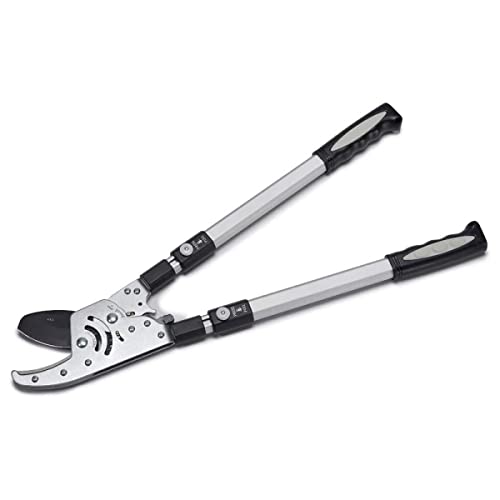
Dead limbs and dry hardwood are what this ratcheting anvil lopper is designed for, and its double ratchet builds force in stages so you never have to finish a hard cut in one squeeze. The jaws open to take limbs up to 2.5 inches thick.
Key Specs:
- Jaw capacity: 2 to 2.5 in
- Handles: telescoping, 26 to 40 in, 6 pin-locked stops
- Mechanism: double ratcheting, anvil blade
- Materials: steel and rubber
- Weight: 4.35 lb
- Model: KC8807-08
Detailed Review:
Each squeeze moves the anvil blade forward a step, and the double ratchet holds it there while you open the handles and squeeze again. Force builds in short stages until the limb parts, so dry, hard wood gives way without one all-out effort from your wrists.
Pin-locked telescoping handles, a design it shares with the best extendable loppers, lock firmly at each stop, and rubber grips keep your hold secure at full length. That reach lets you cut a dead limb overhead while your elbows stay low, which keeps the strain off your shoulders.
The anvil blade presses the wood against a flat jaw, which supports brittle deadwood and makes quick work of kindling prep. On fresh green wood the same action crushes the stem, so I would keep this tool for dead branches and leave live pruning to a bypass model.
Steel and rubber construction suits a tool that spends its time on hard, dead wood. That build is also why it is one of the heavier tools here, so long overhead sessions will tire your arms sooner than an aluminum-handled model would.
Pros:
- Double ratchet builds force in short, manageable stages.
- Pin-locked telescoping handles reach high deadwood.
- Wide jaw capacity takes large dry limbs.
- Steel construction stands up to hard, dead wood.
Cons:
- Anvil blade crushes live green stems instead of slicing.
- Repeated ratchet strokes make each cut slower.
- Added weight tires arms during overhead work.
Who It’s For:
Clearing dead limbs from older trees, cutting back storm debris and preparing kindling are the jobs this tool suits. Its ratchet helps people with weaker wrists get through hard, dry wood. If you mostly shape live shrubs, a bypass model will leave cleaner cuts that heal faster.
Editor’s Verdict:
For dry, dead hardwood, the double ratchet and steel build make heavy cuts manageable, at the cost of slower, repeated strokes.
#7 YRTSH Extendable Loppers 21-26in — Best Performance
Older gardeners and anyone with a weaker grip will find that its compound action, which adds extra cutting power, gets through thick or dry limbs with far less effort. The aluminum handles keep it light.
Key Specs:
- Cutting capacity: 1.6 in
- Mechanism: compound action, up to 4x cutting power
- Handles: alloy aluminum, extend in 6 steps
- Grip: soft rubber, non-slip
- Blade: steel, low-friction and non-stick
- Weight: 2.76 lb
Detailed Review:
Compound action routes your squeeze through an extra lever stage, so the blade receives far more force than your hands put in. Thick or dry branches close without a hard strain, which matters when grip strength, not arm strength, is what runs out first.
The alloy aluminum handles extend in steps, so you can set a short length for close work and a long one for limbs overhead without stretching to reach them. Aluminum also keeps the weight down: among these picks, only the AIRAJ Tree Loppers 16-24in weighs less.
The low-friction, non-stick steel blade glides through sap instead of dragging, so cuts stay smooth and the blade face stays cleaner. The soft rubber grip is non-slip and cushioned, which keeps your hands steady and comfortable as they tire.
Its jaws suit the middle of the heavy-limb range: green or dry wood on fruit trees, hedges and shrubs. Compared with the Corona Tools DualLINK Bypass Loppers 33in, it takes smaller limbs but weighs far less, a trade that favors gardeners who would rather have an easy lift than raw capacity.
Pros:
- Compound action multiplies hand force on thick or dry limbs.
- Aluminum handles adjust in steps and stay light.
- Non-stick blade glides through sappy wood.
- Soft rubber grip cushions tired hands.
Cons:
- Jaw capacity is modest for large hardwood limbs.
- Adjustable joints add some flex compared with fixed handles.
Who It’s For:
Anyone whose hands tire before their arms do, including older gardeners, will appreciate how little squeeze each cut needs. It handles both green and dry wood on fruit trees, hedges and shrubs. If you regularly remove very large limbs, you will want bigger jaws than this one offers.
Editor’s Verdict:
Strong force multiplication in a light frame makes it a smart choice for gardeners whose grip, not their arm strength, sets the limit.
#8 Spear & Jackson 8290RS Ratchet Loppers — Best Rust-Resistant
When hard, dry branches are the main job, its ratchet action breaks each cut into short steps so your hands don’t have to deliver full force at once. The PTFE-coated SK5 carbon steel blade holds up to damp conditions.
Key Specs:
- Mechanism: ratchet action, anvil blade
- Blade: SK5 carbon steel upper blade, PTFE coated
- Handles: tubular aluminum, extend from 28 to 41 in (710–1030 mm)
- Weight: 4.17 lb
- Storage: locking catch
- Guarantee: 10 years
Detailed Review:
Ratchet action splits a thick, hard branch into short steps, so each squeeze asks only part of the total force from your hands. Progress holds between strokes, which lets you rest your grip without losing ground on the cut.
The upper blade is SK5 carbon steel, which takes a sharp edge and keeps it. Bare carbon steel rusts quickly when it stays damp, so the PTFE coating is what lets this blade hold that edge through wet seasons with ordinary care.
Tubular aluminum handles extend for high limbs while staying light but strong, and soft, non-slip grips keep your hands steady at full extension. The anvil jaw supports hard, dry wood as the blade steps through it.
A locking catch holds the jaws closed for storage, which protects the edge and keeps the handles from swinging open when you carry the tool. The long guarantee backs the build over many seasons. It is one of the heavier models here, so the extra reach comes with more weight to hold up.
Pros:
- Ratchet action cuts hard branches in short, easy steps.
- PTFE coating protects the carbon steel blade from rust.
- Tubular aluminum handles extend for high limbs.
- Locking catch keeps the jaws closed in storage.
- Ten-year guarantee covers years of seasonal use.
Cons:
- Anvil jaw suits deadwood better than live shrubs.
- Stepped cuts take longer than a single stroke.
Who It’s For:
Pruning dead or seasoned limbs in a wet yard, where tools often stay damp, is the job this lopper suits. Its ratchet helps anyone with limited hand strength, and the locking catch makes it safer to store. If most of your cuts are on live wood, a bypass lopper will leave cleaner wounds.
Editor’s Verdict:
Pairing a PTFE-coated carbon steel blade with a stepwise ratchet, it handles hard, dry wood with modest hand force and holds up through wet seasons.
#9 Corona Tools DualLINK Bypass Loppers 33in — Also Great
Demanding pruning on large live limbs calls for force and a blade that won’t flex, and this lopper pairs a DualLINK linkage with fully forged steel blades to deliver both. It takes branches up to 2 inches thick.
Key Specs:
- Cutting capacity: 2 in
- Length: 33 in
- Mechanism: DualLINK MAXFORGED linkage
- Blades: precision-ground, fully forged steel, bypass
- Grips: cushioned, non-slip, with impact bumpers
- Weight: 4.3 lb
Detailed Review:
The DualLINK MAXFORGED mechanism adds linkage between the handles and the blades, which increases leverage and multiplies the force of each squeeze. Thick live limbs close in one stroke with less effort than a simple pivot would need.
Fully forged, precision-ground steel blades resist bending and wear, so the edge stays true when a cut meets a knot and stays sharp longer. The clean bypass cut they make helps living wood recover after pruning.
The long handles add reach toward higher limbs and leverage for the hardest cuts. Cushioned, non-slip grips keep your hold secure in wet or dry conditions, and built-in bumpers absorb the jolt when a limb gives way, which cuts the hand and arm fatigue that builds over extended use.
The force and reach come with weight, so long overhead work will tire your shoulders sooner than a lighter tool would. Next to the Fiskars 28in Bypass Loppers, it takes thicker limbs and reaches farther, but it is noticeably heavier to hold up.
Pros:
- DualLINK linkage multiplies force for thick live limbs.
- Fully forged blades resist bending and edge wear.
- Bumpers and cushioned grips absorb impact at the cut’s end.
- Long handles add reach and leverage.
Cons:
- Heavy frame tires shoulders on overhead work.
- Better suited to live limbs than brittle deadwood.
Who It’s For:
Serious pruning of mature shrubs and trees, with large live limbs to remove each season, is where its force and forged blades pay off. Strong-armed homeowners and landscapers will appreciate it. If your shoulders tire easily, a lighter compound-action model will be kinder over a long session.
Editor’s Verdict:
Expect strong cutting force on live wood from the DualLINK linkage and forged blades, at the cost of a heavier tool.
What Should You Look for in Loppers for Thick Branches?
How the build turns your squeeze into force at the blade decides how hard each heavy cut feels, and how well that build handles strain decides how long the tool keeps cutting cleanly.
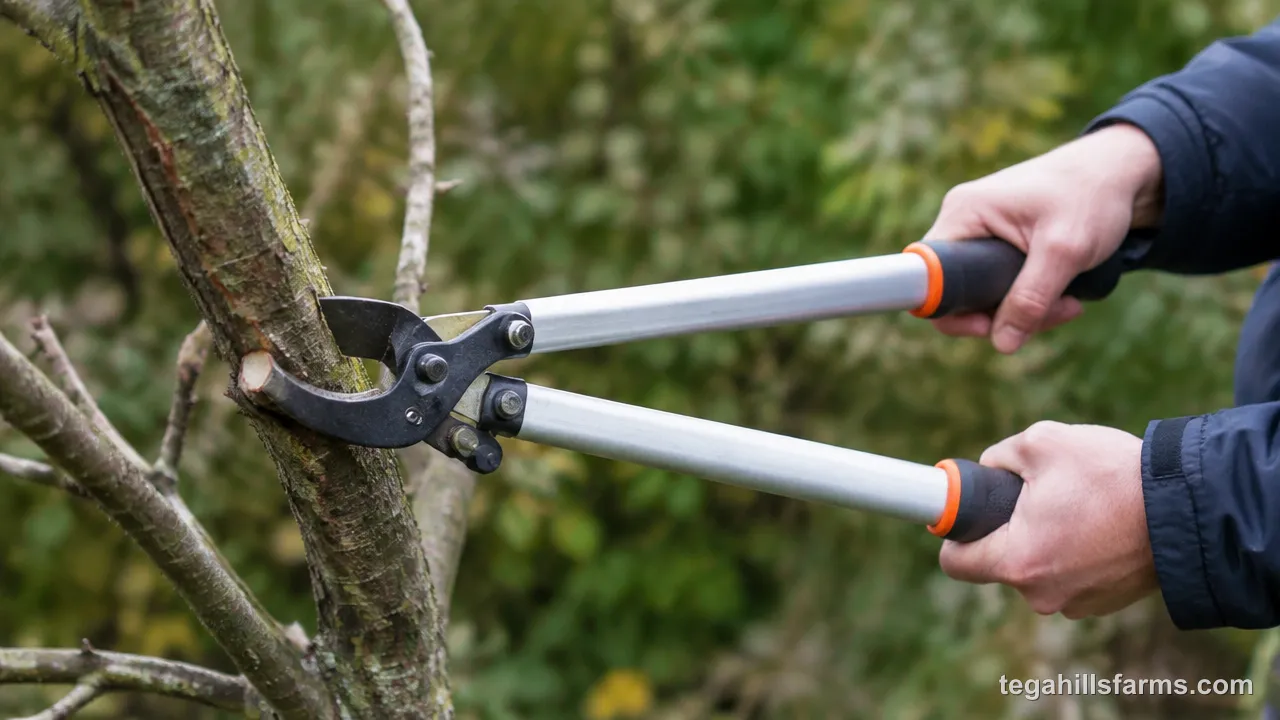
Rated capacity sets the ceiling, but two tools with the same rating can feel very different on the same limb. The difference shows up in your wrists by the end of a session, and in the pivot and the edge after a few seasons of heavy wood.
Bypass or Anvil: Which Blade Suits Thick Branches?
Living trees and shrubs call for a bypass blade because it slices cleanly, while an anvil blade belongs on dead, dry wood.
A bypass blade slides past a hooked lower jaw like a pair of scissors, so the sharpened edge parts the wood fibers and leaves a smooth face. An anvil blade closes onto a flat surface and crushes the stem against it as it cuts. On a live limb, that crushing bruises bark and tissue at the wound, which slows sealing and gives decay a way in. Dead wood has no living tissue to protect, and the flat jaw supports brittle fibers so the blade doesn’t twist or bind as it pushes through.
Most heavy pruning removes live limbs to shape a tree or open its canopy, so the best bypass loppers cover the bulk of the work. An anvil model is worth keeping for deadwood and storm cleanup.
How Do Compound and Ratchet Mechanisms Reduce Cutting Effort?
Both multiply the force your hands supply, but a compound lever does it in one smooth stroke, while a ratchet splits the cut into several short squeezes that hold their progress.
A compound lever, or a geared linkage, places an extra lever stage between the handles and the blade. Your hands travel farther than the blade does, and that difference becomes extra force at the edge, so thick live wood closes without the hard squeeze a single-pivot design demands.
A ratchet works in steps. You close the handles partway, the mechanism locks the blade in place, then you open the handles and squeeze again until the limb parts. Each stroke needs only part of the total force, which is easier on weak or sore wrists, especially on dry wood that resists hardest near the end of the cut. The cost is time, since every cut takes several strokes.
A compound mechanism is worth having when you prune live wood often and want speed. A ratchet earns its place when your grip strength is limited or most of your heavy cutting is deadwood, and the best ratchet loppers pair it with an anvil jaw for that job.
How Do Handle Length and Material Affect Leverage and Fatigue?
Longer handles give you more leverage and reach but are harder to steer in tight spots, and the handle material decides whether that length feels light or heavy by the end of the job.
Leverage grows with the distance between your hands and the pivot, so a long lopper closes on a thick limb with less squeeze and reaches limbs overhead. The same length becomes a problem inside a dense hedge or between closely spaced stems, where you can’t open the handles fully. Aluminum handles keep a long tool light, which matters during extended work. Steel handles add strength and stiffness, along with weight. Telescoping handles let you choose the length for each cut, at the cost of a little rigidity at the joint.
Weight and grip make themselves felt after an hour of overhead cutting. A heavier tool pulls on your shoulders every time you lift it, and a hard or slick grip makes your wrists and fingers work harder to keep control. Cushioned, non-slip grips spread that load across your hand.
Which Lopper Fits Your Pruning Style?
Match the mechanism to your wood and the weight to your hands: a compound-lever bypass model for live growth, a ratcheting anvil model for deadwood, and a light frame with force multiplication when grip strength is limited.
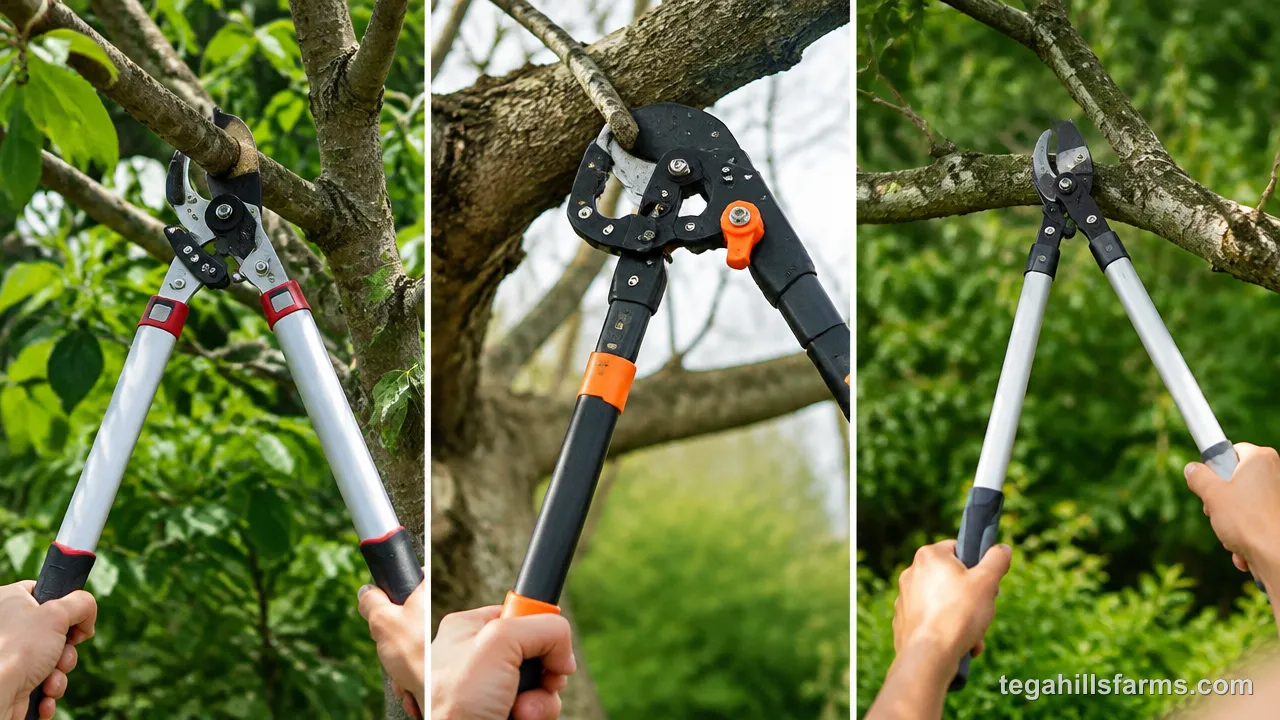
- For occasional homeowner work on live shrubs, I would start with the Fiskars 28in Bypass Loppers for compound-lever force at a moderate weight, or the AIRAJ Tree Loppers 16-24in for lighter jobs on an affordable tool.
- Weekly or professional pruning rewards build quality, because a blade that rolls or a pivot that loosens slows every cut that follows. The Hickok Heavy Duty Loppers 36in, Corona Clipper X Series Lopper 2-1/4in and Corona Tools DualLINK Bypass Loppers 33in all use pro-grade or forged construction.
- High branches call for length: the long handles of the Hickok Heavy Duty Loppers 36in, or the extending handles on the Kings County Tools Extendable Loppers 26-40in, Spear & Jackson 8290RS Ratchet Loppers and YRTSH Extendable Loppers 21-26in.
- Dry or dead wood is ratchet territory, which points to the Kings County Tools Extendable Loppers 26-40in or the Spear & Jackson 8290RS Ratchet Loppers.
- Smaller or weaker hands need low weight and a mechanism that multiplies force. The YRTSH Extendable Loppers 21-26in combines both, the AIRAJ Tree Loppers 16-24in is the lightest here, and the Corona Tools cushions each cut with bumpers. If weight is your main limit, compare the best lightweight loppers as well.
If your yard mixes several of these jobs, the broader advice on how to choose loppers helps you decide which tool to buy first.
A limb that fills the jaws completely leaves the blades nowhere to go, and each extra push loads the pivot sideways instead of driving the edge through the wood. Keep forcing it and you end up with a bent blade, a pivot that never closes tight again and wrists that ache for days, all over a branch a saw would have taken cleanly.
When Should You Use a Pruning Saw Instead of Loppers?
Once a limb is too big for the rated jaw, switch to a saw. A saw is the right tool for the thickest branches, and a pole saw handles the ones overhead. Hand pruners cover thin stems, and loppers handle the mid-sized limbs in between.
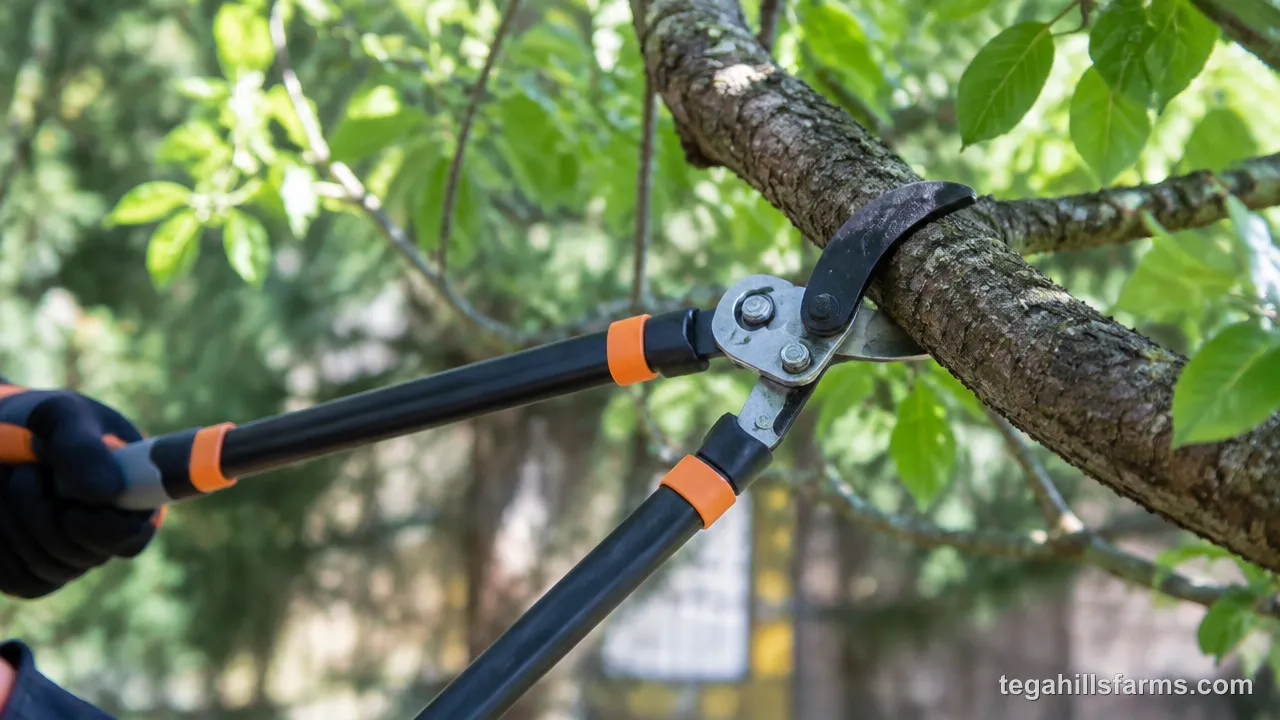
The signs that a limb is too big show up before the damage does. The blades barely wrap around it, or they close partway and stall, and you find yourself straining on the handles or rocking them to make progress. At that point the pivot is carrying a twisting load it was not built for.
A saw cuts more slowly, removing wood one stroke at a time instead of forcing through in one squeeze. Switching protects the lopper’s pivot because the lopper is out of the job entirely. It protects your wrists too, because each stroke asks for steady arm movement rather than a hard grip. For limbs above your head, a pole saw lets you make the cut from the ground instead of a ladder, which keeps your footing stable and lets you stand to the side of the falling limb.
How Do You Cut a Thick Branch Without Harming the Tree or the Lopper?
Leave the collar, the slightly swollen ring where a limb meets the trunk, intact, and take very heavy limbs off in stages so neither the bark nor the tool is strained.
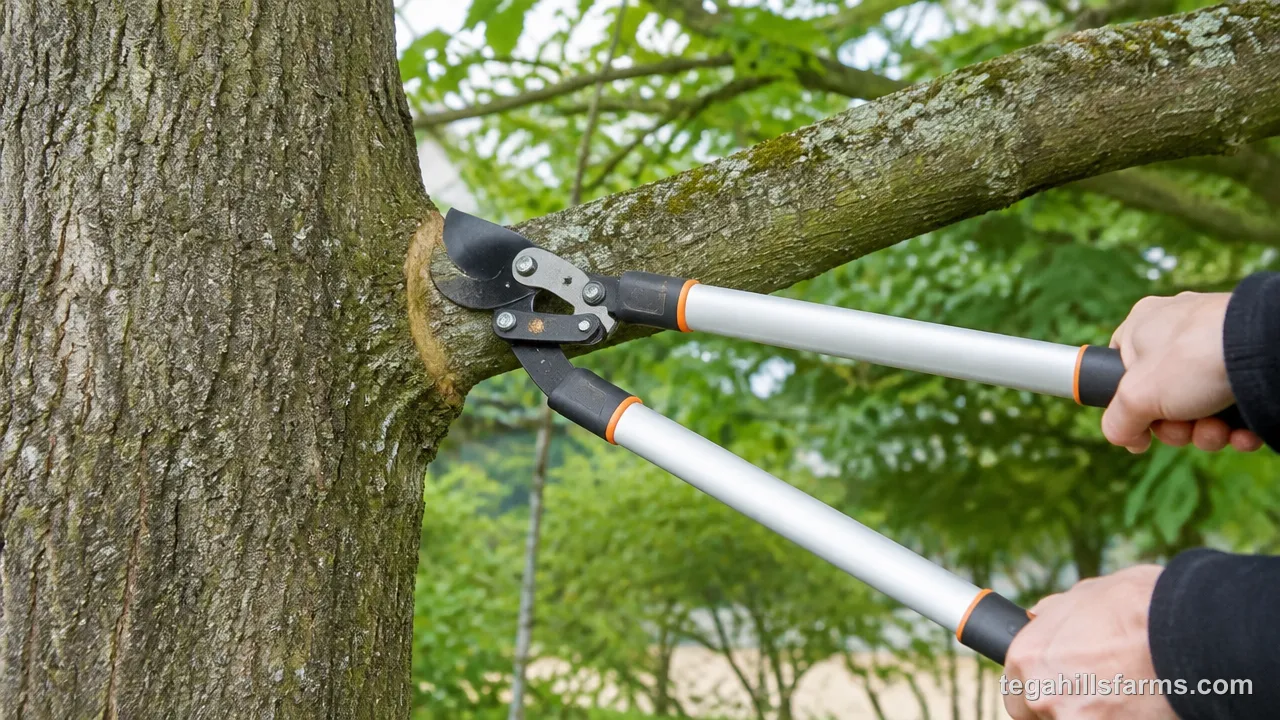
The collar matters because its tissue grows over the wound and seals it. A cut flush with the trunk removes that tissue and leaves a larger wound that closes slowly, while a long stub dies back and invites decay. On a heavy limb, take off most of its weight first with a light cut farther out, then make the final cut just outside the collar, so the limb can’t tear a strip of bark as it falls. With a ratchet lopper, let the mechanism step through the wood instead of forcing a single stroke.
Keep the blades square to the limb. Twisting or prying the handles to finish a cut bends the blade sideways, opens a gap at the pivot and rolls the edge, and that is how a sharp lopper turns into one that crushes.
Wear eye protection, since twigs and bark fly at face height, and gloves to guard against splinters and blisters. Keep well clear of overhead power lines, and leave any limb near them to your utility company or a professional arborist.
How Can You Tell Your Loppers Need Sharpening or Replacement?
Crushed or torn cuts, a blade that slides off the wood instead of biting, and a pivot that feels loose or gritty all mean the tool needs attention. Most of these signs point to sharpening and cleaning rather than replacement.
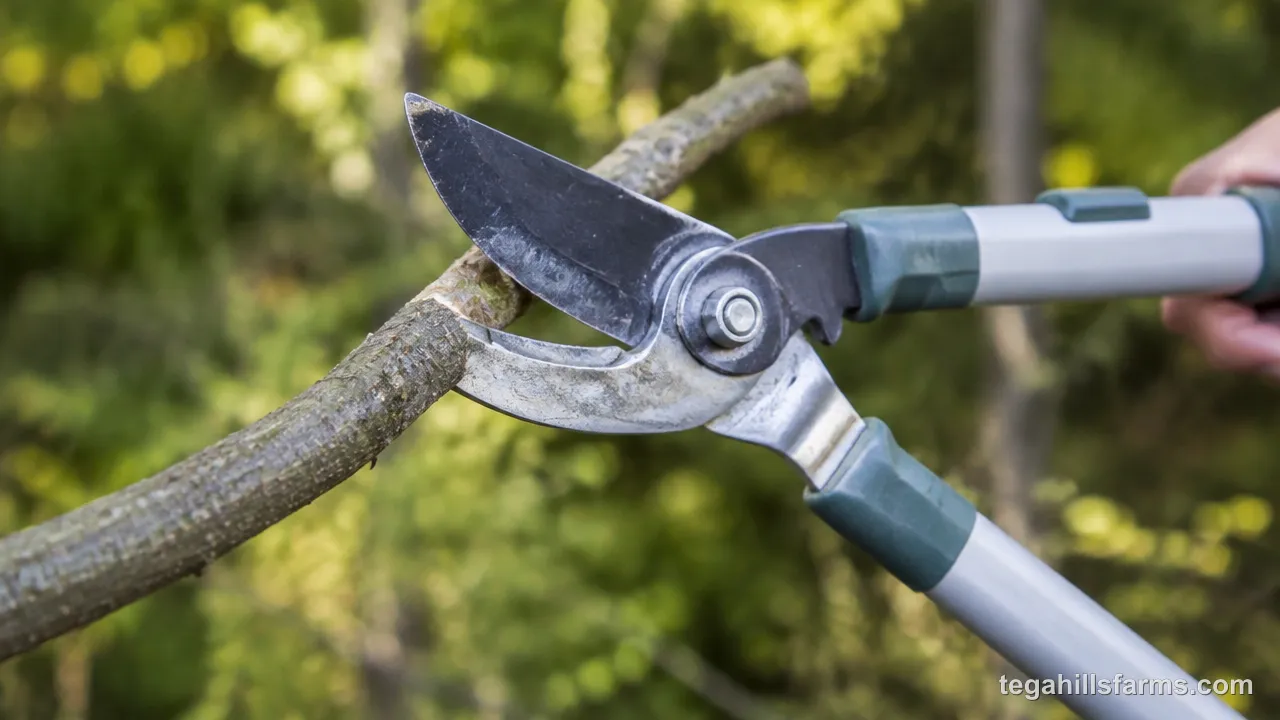
Sap causes many of these problems. It hardens on the blade face, adds drag to every cut and traps moisture against the steel, which starts rust that dulls the edge and roughens the pivot. Wiping off sap after each session, putting a drop of oil on the pivot and drying the tool before you store it stops that cycle early. Hardened or cracked bumpers are a separate sign: once they lose their cushion, the jolt at the end of each cut goes straight into your wrists.
A dull but straight blade comes back with a file or sharpening stone, and learning how to sharpen loppers keeps your cuts clean for years. Replace the blade when it is bent, deeply chipped or worn past its bevel, and replace the bumpers when they crack. The whole tool is due for replacement when the handles bend or the pivot stays loose after tightening. A well-built lopper with a protected blade and replaceable parts ages slowly, while one made from stamped, uncoated steel tends to wear out early.
Are Battery-Powered Loppers a Better Choice for Weak Hands?
For gardeners with very limited grip strength, a battery-powered lopper can be the better choice, because a motor closes the blade and your hands only hold and aim the tool.
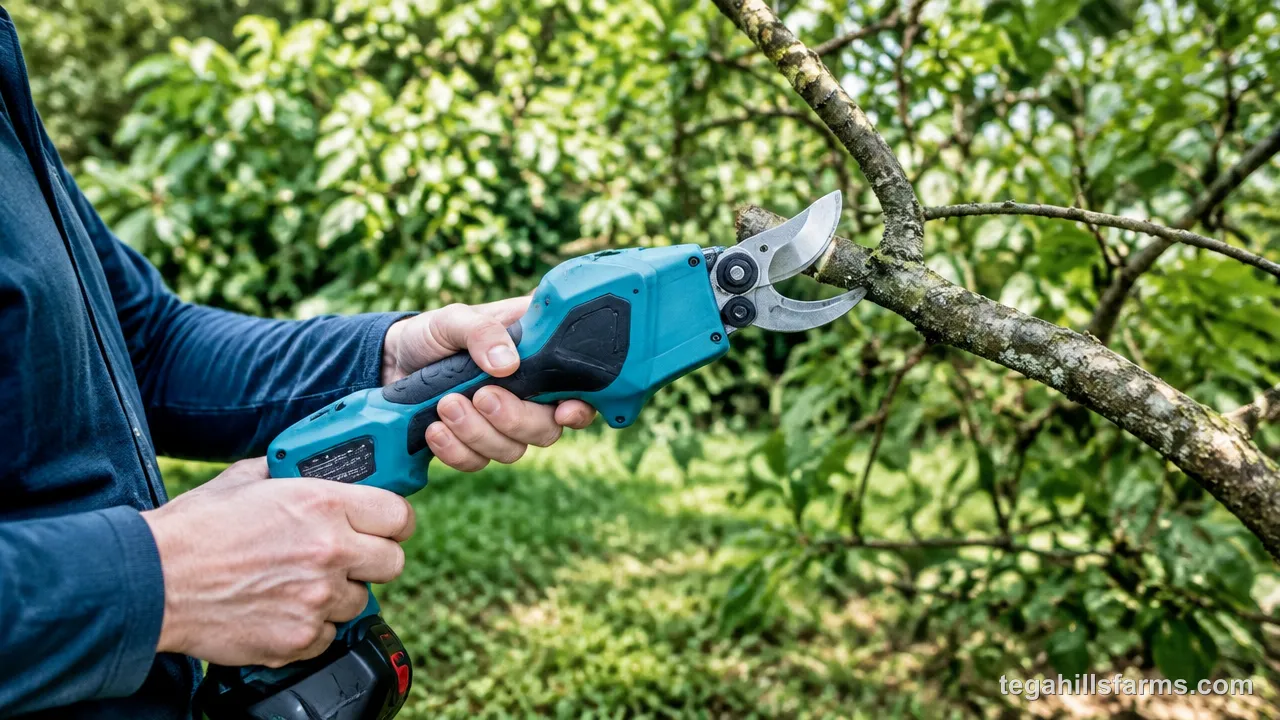
Most other gardeners are better off with a manual lopper. Manual tools are lighter, need no charging and have fewer parts to maintain, so they are ready whenever you are and last for years with cleaning and oil. A powered model adds bulk from the motor and battery, which makes it harder to fit between crowded stems, and its runtime ends when the battery does, which can cut a long cleanup short.
Powered loppers help most when arthritis, a hand injury or weakness makes any squeeze painful. If your grip is tired rather than limited, a ratcheting or compound-lever manual lopper cuts the force you need enough to keep pruning comfortably.
Write Your Review
No reviews yet. Be the first to share your experience!