

For the best anvil loppers in 2026, the choices are Fiskars PowerGear Anvil Loppers 15in (Best Overall), TABOR TOOLS GG22A Anvil Lopper 27-40in (Editor’s Choice), AIRAJ Anvil Lopper 26-39in (Best Budget), WOLF-Garten RS900T Anvil Lopper 35.5in (Best Premium), Spear & Jackson 8100RS Anvil Lopper (Also Great), Fiskars PowerGear L77 Anvil Lopper 27in (Also Great), and Spear & Jackson Kew Gardens 8081KEW Loppers (Also Great).
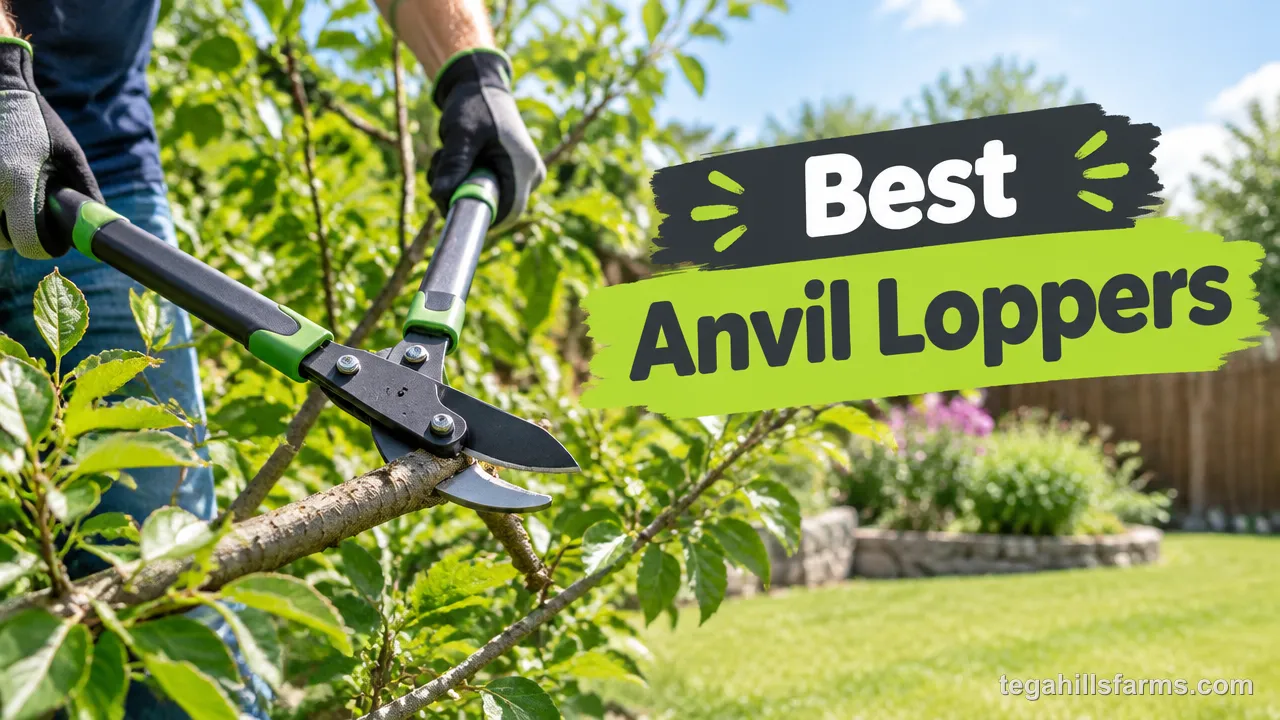
Choosing among them comes down to how thick your deadwood runs, how each tool multiplies the force of your squeeze, how far the handles need to reach, and what the blade and handles are made of. Those details decide whether a lopper still feels manageable after an hour of cleanup, and whether it starts to rattle or rust after a few seasons.


Hand and wrist strain builds quickly when every dry branch needs a hard squeeze, so leverage matters as much as a sharp edge. The other risk is using an anvil jaw on live growth, where it crushes the stem instead of slicing it and leaves a wound that heals slowly.
Are Anvil Loppers Good?
Yes, they cut dry, dead and woody growth with less hand strength than scissor-style blades, because a straight blade presses each branch onto a flat metal plate.
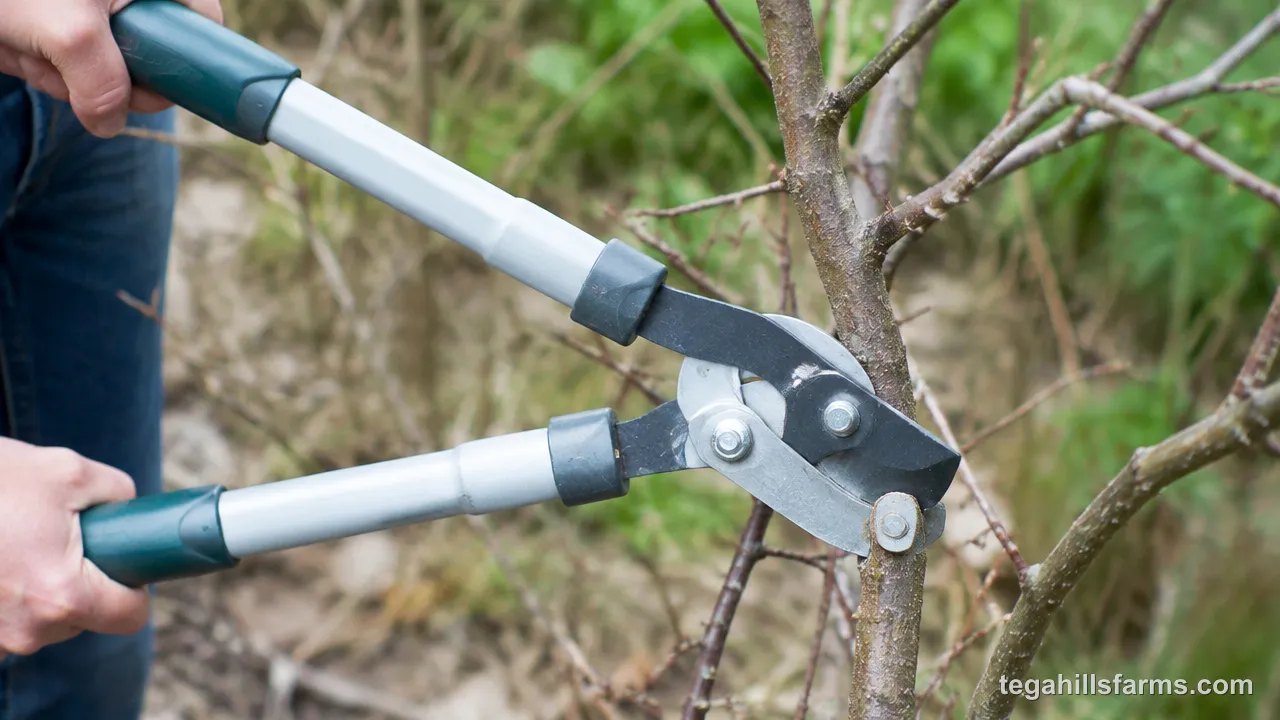
That plate, the anvil, supports the branch from below for the whole stroke, so the wood cannot roll or twist away from the edge. Brittle deadwood cracks through under that steady pressure. All the force from your arms goes in one direction instead of being spent keeping two blades aligned, which makes these tools a good match for dead limbs, old shrub canes and storm debris.
On living stems, the jaw squeezes soft, fibrous green wood against the anvil before the edge gets through. That crushes the tissue and can leave a ragged stub that seals slowly. The bulk of the anvil also keeps the blade from sitting tight against a trunk or parent stem, so flush cuts are harder to make.
If you are still weighing which blade style belongs in your shed, our guide to the best loppers sets out every main type side by side.
The 7 Best Anvil Loppers of 2026
Deadwood, high limbs and tired hands are covered by Fiskars PowerGear Anvil Loppers 15in, TABOR TOOLS GG22A Anvil Lopper 27-40in, AIRAJ Anvil Lopper 26-39in, WOLF-Garten RS900T Anvil Lopper 35.5in, Spear & Jackson 8100RS Anvil Lopper, Fiskars PowerGear L77 Anvil Lopper 27in and Spear & Jackson Kew Gardens 8081KEW Loppers. The real split is between the fixed-length Fiskars models and the rest. The Fiskars pair stays light and stiff for frequent deadwood trimming close at hand, while the telescopic, compound and ratchet designs add weight and moving parts in return for reach and leverage. Between them, the 7 loppers suit homeowners clearing dead limbs, owners of tall shrubs and trees, gardeners with weaker hands, and shoppers at budget, mid-range and premium levels. That range helps if you are still working out how much loppers cost before you buy.
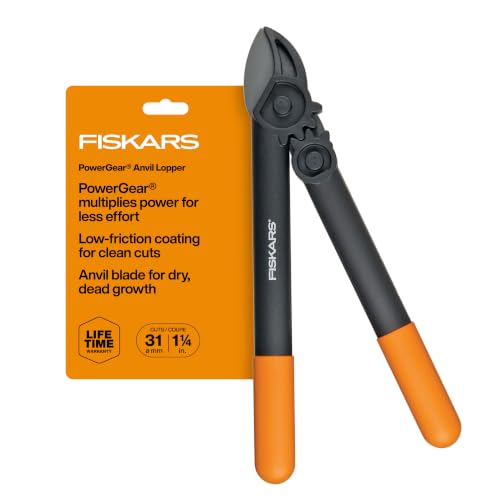
#1 Fiskars PowerGear Anvil Loppers 15in — Best Overall
For dead twigs and dry shrub wood in crowded beds, this compact lopper is the one I’d reach for, because the PowerGear mechanism multiplies the force of every squeeze. Its short DuraFrame body swings freely where long handles jam.
Key Specs:
- Length: 15 in
- Weight: 0.9 lb
- Cutting capacity: up to 1.25 in
- Mechanism: PowerGear leverage multiplication
- Blade: steel with low-friction coating
- Warranty: lifetime
Detailed Review:
PowerGear replaces a plain fixed pivot with a geared one that multiplies leverage over traditional designs. On brittle deadwood, that extra leverage lets the blade push through to the anvil in one steady squeeze instead of a series of hard pumps on the handles.
The steel blade has a low-friction coating that reduces gumming and improves rust resistance. Dead branches still shed bark dust and old sap onto the jaws, so a coated blade keeps sliding cleanly from cut to cut and wipes off quickly at the end of the day. Fiskars builds the blade to stay sharp through heavy use and backs the tool with a lifetime warranty.
DuraFrame construction keeps the weight under a pound while giving the head the stiffness it needs for dry cuts. The WOLF-Garten RS900T weighs far more because of its telescopic handles. Next to it, this lopper can rest in one hand while the other pulls stems aside in a crowded bed.
The short handles are also the trade-off. They limit you to branches within arm’s reach and to the small diameters its rating allows, so I would keep a longer lopper or a pruning saw for anything heavier.
Pros:
- PowerGear mechanism multiplies leverage for easier dry cuts.
- Light DuraFrame body reduces strain on wrists and forearms.
- Low-friction coating resists gumming and rust.
- Short handles move easily between crowded stems.
- Lifetime warranty covers the tool.
Cons:
- Short handles limit reach to branches at arm’s length.
- Capacity suits small branches and twigs, not limbs.
Who It’s For:
Gardeners who regularly tidy dead growth from perennial beds, foundation shrubs and patio containers will appreciate how little this lopper asks of the wrist. It also suits smaller hands that tire under long, heavy handles. Anyone clearing overhead limbs or thick deadwood needs a longer tool with more capacity.
Editor’s Verdict:
Light, geared and easy to aim, this lopper handles everyday deadwood trimming with very little effort, as long as you respect its short reach and modest capacity.
#2 TABOR TOOLS GG22A Anvil Lopper 27-40in — Editor’s Choice
Older gardeners and anyone with tired hands get real mechanical help here, since the multi-pivot compound action multiplies the force that reaches the hardened carbon steel blade. Locking telescopic handles add overhead reach.
Key Specs:
- Length: 27–40 in, telescopic, locks at lengths in between
- Cutting capacity: up to 1 3/4 in
- Mechanism: compound action with multiple pivots, multiplies blade force 3 times
- Blade: hardened carbon steel with low-friction non-stick coating
- Grips: ergonomic handles with anti-shock rubberized grips
Detailed Review:
The compound action system puts a lever train with several pivot points between the handles and the blade, and each stage multiplies the force you apply. On a hard, dead branch close to the rated cut, the blade keeps moving through the wood without you jerking the handles.
The blade is hardened carbon steel, which stays sharp after heavy use. Its low-friction non-stick coating helps it glide out of dry wood instead of binding. Carbon steel still needs a wipe and a drop of oil after damp work, and the coating makes that cleanup quicker.
The handles extend and lock at lengths in between, and at full length they add leverage as well as reach. The extension range runs well past that of the Spear & Jackson 8100RS, which puts more of a tree’s canopy within reach from the ground. Anti-shock rubberized grips soften the jolt when a dry branch finally snaps through, and older or weaker hands feel that difference. If reach is your priority, compare the best extendable loppers.
TABOR positions this tool as a partner to a bypass lopper for live green wood, and I agree with that division of work. Each pivot is also one more joint to keep clean and snug.
Pros:
- Compound action multiplies the force reaching the blade.
- Telescopic handles lock at several lengths for overhead limbs.
- Anti-shock rubberized grips soften the jolt as cuts finish.
- Non-stick coated carbon steel blade glides through dry wood.
Cons:
- Multiple pivots add moving parts to clean and oil.
- Extended handles feel unwieldy in tight beds.
Who It’s For:
If you prune overhead deadwood in fruit trees or tall shrubs and your grip is not as strong as it was, the compound action and cushioned grips take much of the strain out of each cut. Gardeners who work mostly at waist height among perennials may find the long handles more than they need.
Editor’s Verdict:
Pair this compound lopper with a bypass tool and you have deadwood, high limbs and weaker hands covered by one locking, cushioned design.
#3 AIRAJ Anvil Lopper 26-39in — Best Budget
If you want reach and geared leverage without spending much, this extendable lopper pairs a lever-and-gear system with a 65Mn manganese steel blade and ships with a spare SK5 blade. The spare turns a worn edge into a quick swap.
Key Specs:
- Length: 26–39 in, extendable
- Cutting capacity: up to 2.75 in
- Blade: 65Mn manganese steel, spare SK5 blade included
- Mechanism: lever system with gear structure
- Grips: anti-slip, shock-absorbing rubber
Detailed Review:
The blade is 65Mn manganese steel, a hard spring-steel grade chosen for wear resistance, so its edge holds up through repeated cuts in gritty, dry branches. A spare SK5 blade comes in the box, which means a chipped or worn edge calls for a blade swap rather than a new tool.
A lever system with a gear structure multiplies the squeeze at the handles, and the rated cutting capacity is well above that of the TABOR GG22A. That headroom is useful on thick dead branches, though a dense hardwood limb near the limit still asks for a firm, steady pull.
The handles extend for high branches. The grips are wrapped in anti-slip, shock-absorbing rubber shaped to the hand, and that rubber buffers the impact as the blade meets the anvil, which your wrists notice by the end of a long cleanup.
At this price, the spare blade carries most of the long-term value: when the edge finally wears, you replace the blade and keep the tool. When it arrives, I would check the extension lock and the pivot nut and snug both before the first job, a habit worth keeping with any telescopic lopper.
Pros:
- Spare SK5 blade comes in the box.
- Geared lever system eases cuts on thick dry branches.
- Extendable handles reach high branches from the ground.
- Shock-absorbing rubber grips cushion each cut.
Cons:
- Telescopic joint is one more part to check and tighten.
- Long handles feel awkward among close-set perennials.
Who It’s For:
Homeowners setting up a first tool shed, or anyone who wants one lopper for both fruit trees and dead branches along a fence line, get a lot of capability for little money. Gardeners who only shape small shrubs close at hand will carry more handle than they need.
Editor’s Verdict:
Generous capacity, telescopic reach and a spare blade make this an affordable lopper for a lot of deadwood work, provided you keep its joints snug.
#4 WOLF-Garten RS900T Anvil Lopper 35.5in — Best Premium
Made in Germany with a German steel blade, this telescopic lopper is the one to buy when blade quality matters more to you than the price. Its anvil design limits damage to the branch.
Key Specs:
- Length: telescopic, extends to 35.5 in
- Weight: 3.8 lb (1.73 kg)
- Cutting capacity: up to 1.97 in
- Blade: premium German steel, anvil style
- Origin: Made in Germany
Detailed Review:
The higher price pays for the blade and the build: a premium German steel blade in a lopper made in Germany. WOLF-Garten rates it for superior cutting performance within its capacity, which on dry branches means a bite that goes through in one motion instead of stalling partway.
The anvil-style blade is designed to do minimal damage to the branch. Because the anvil supports the wood from below as the blade closes, the branch does not twist in the jaws, so the bark around the cut stays attached instead of peeling back.
The telescopic handles are built to be light yet sturdy, and they extend for limbs that would otherwise call for a step stool. A telescopic build still carries more weight than a short fixed lopper, and you feel that weight when the handles are fully extended over your head.
Its rated cut is smaller than that of the AIRAJ Anvil Lopper 26-39in, so heavy storm deadwood belongs to that tool or to a pruning saw. Within its range, I would choose it for clean, controlled cuts on established shrubs and small trees.
Pros:
- German steel blade delivers strong, clean cuts on dry wood.
- Anvil design limits damage to the branch being cut.
- Telescopic handles extend for limbs above head height.
Cons:
- Telescopic build adds weight you feel when reaching overhead.
- Rated capacity limits it to moderate dead branches.
Who It’s For:
Buyers who care more about blade steel and build quality than price will find the German-made construction worth the outlay, especially for dry branches in established shrubs and small trees. Anyone whose storm cleanup regularly involves heavy deadwood should look at the AIRAJ lopper instead, since it handles larger branches.
Editor’s Verdict:
Buy it for the German steel and German build, and keep a pruning saw nearby for branches beyond its rated cut.
#5 Spear & Jackson 8100RS Anvil Lopper — Also Great
When stubborn deadwood stalls a normal cut, the ratchet action on this lopper lets you finish it in several shorter squeezes instead of one hard push. Its C50 carbon steel blade is hardened and tempered.
Key Specs:
- Length: 18–28 in, twist-and-lock telescopic
- Weight: 3.5 lb
- Mechanism: ratchet action
- Blade: C50 carbon steel, hardened and tempered, PTFE coated
- Handles: lightweight aluminum with non-slip comfort grips
Detailed Review:
The ratchet action lets you finish a stubborn dead branch in several shorter squeezes instead of one hard push, which keeps the load on your hands and wrists modest. The anvil action keeps woody stems from twisting in the jaws, so the branch stays seated while the blade advances across those strokes.
The blades are C50 carbon steel, hardened and tempered for durability. A PTFE coating adds rust resistance and a smoother pass through dry wood. That coating matters on a ratchet lopper, because the blade sits in the cut longer and sap has more time to grab it.
A twist-and-lock mechanism sets the handle length anywhere in its range, and the aluminum handles keep the build lighter than its moving parts would suggest. Non-slip comfort grips help you keep a steady hold through repeated strokes.
Each cut takes several strokes, which slows quick tidying of thin twigs. The ratchet and the extension also add weight compared with a plain fixed lopper, so this is a tool for deliberate deadwood work rather than a quick pass through the beds.
Pros:
- Ratchet action splits hard cuts into smaller squeezes.
- PTFE-coated C50 carbon steel blade resists rust.
- Twist-and-lock extension adjusts to each branch’s height.
- Non-slip grips steady your hold through repeated strokes.
Cons:
- Several strokes per cut slow down light twig work.
- Ratchet and extension parts add weight and upkeep.
Who It’s For:
People whose grip gives out before a dry branch does will get real help from the ratchet, especially on old shrubs with hard, dead stems. If your work is mostly quick snips of thin twigs, the extra strokes will feel slow.
Editor’s Verdict:
Expect slower, step-by-step cuts in exchange for far less hand force, a good trade on hard deadwood and a poor one for quick tidying.
#6 Fiskars PowerGear L77 Anvil Lopper 27in — Also Great
Dense, dry hardwood is what this fixed-length lopper handles well, and its PowerGear II mechanism makes those cuts far easier on your hands than a standard pivot. The blade can be replaced when worn.
Key Specs:
- Length: 27 in, fixed
- Cutting capacity: up to 2 in
- Mechanism: PowerGear II, makes cutting 3 times easier than standard mechanisms
- Blade: stainless steel with non-stick coating and curved counter-blade
- Handles: fiberglass-reinforced plastic
- Maintenance: easy sharpening, replaceable blade
Detailed Review:
The PowerGear II mechanism makes dense, dry wood manageable, because it multiplies the force of each squeeze well beyond what a standard pivot gives. Compared with the Fiskars PowerGear Anvil Loppers 15in, it gives up a compact frame for longer handles and a larger rated cut, which moves it from twig cleanup into real branch work.
The curved counter-blade cradles the branch so it stays put as the blade closes, and the non-stick coating keeps the cut smooth and clean. A branch that cannot roll away from the edge gives a squarer cut and wastes less of your effort.
The handles are lightweight fiberglass-reinforced plastic at a fixed length. With no telescopic joint, nothing can loosen or flex, so the force from your arms goes straight to the jaws.
Fiskars builds this lopper for a long service life. The stainless steel blade sharpens easily and can be replaced outright, and a diamond file is sold separately in the Fiskars maintenance kit, so a worn edge is a routine fix rather than a reason to buy again.
Pros:
- PowerGear II mechanism eases cuts through hard, dry wood.
- Curved counter-blade keeps the branch from slipping.
- Fixed fiberglass-reinforced handles stay stiff and light.
- Replaceable stainless steel blade extends working life.
Cons:
- Fixed length cannot stretch toward high limbs.
- Built for dry wood, so live stems need a bypass tool.
Who It’s For:
Yards with old, woody shrubs, dense hedges or storm debris at ground level suit this lopper well, because the fixed handles stay stiff through hard cuts and the blade can be renewed. If most of your deadwood grows overhead, a telescopic model makes more sense.
Editor’s Verdict:
Choose this lopper when your deadwood is dense and within reach; the replaceable blade keeps it in service long after its first edge wears.
#7 Spear & Jackson Kew Gardens 8081KEW Loppers — Also Great
Gardeners who want compound leverage and telescopic reach in one tool get both here, through a dual compound linkage that gives more cut for less effort. Its upper blade has a PTFE coating.
Key Specs:
- Mechanism: dual compound action
- Blade: S50C carbon steel, PTFE-coated upper blade
- Handles: cast aluminum, telescopic
- Weight: 3.5 lb
- Model: 8081KEW
Detailed Review:
The dual compound linkage stacks two stages of leverage between the handles and the blade, which Spear & Jackson sums up as more cut for less effort. On dry branches, a steady squeeze carries the blade through instead of ending in a strain at the bottom of the stroke.
The blades are S50C carbon steel, chosen for lasting sharpness, and the upper blade has a PTFE coating for smoother cutting. Bare carbon steel spots with rust if it is stored damp, so the uncoated parts still need oil before the tool goes back on the wall.
The handles are cast aluminum, light but strong, and they telescope for greater reach into shrubs and fruit trees. Extended handles add leverage on top of the linkage, so a cut at full reach takes no more effort than one up close.
For casual pruning, the linkage is more machinery than the work demands. Every extra joint is another place for grit to collect and another pivot to oil, and the build is heavier than a simple fixed lopper, which you notice over a long session.
Pros:
- Dual compound linkage gives more cut for less effort.
- S50C carbon steel blades hold a sharp edge.
- PTFE-coated upper blade slides smoothly through dry wood.
- Cast aluminum handles telescope for extra reach.
Cons:
- Linkage joints need regular cleaning and oil.
- Extra moving parts are more than casual pruning needs.
Who It’s For:
Keen gardeners who prune fruit trees and mature shrubs often enough to want both leverage and reach will get steady use from it. Someone who trims a few dead twigs now and then is better served by a simpler fixed-length lopper.
Editor’s Verdict:
Consider this one when you want compound power and reach together and do not mind looking after a few extra joints.
Key Features to Compare in Anvil Loppers
Two tools with the same crushing jaw can feel very different after an hour of cutting, because the parts around the blade decide how hard each squeeze is and how long the tool lasts. A branch that closes easily on one lopper can stall on another. A joint or coating that seems minor in the store can be the reason a lopper rattles or rusts long before its edge wears out. Checking those details against your own yard and your own hands narrows the choice faster than brand or color.
What Cutting Capacity Do You Need?
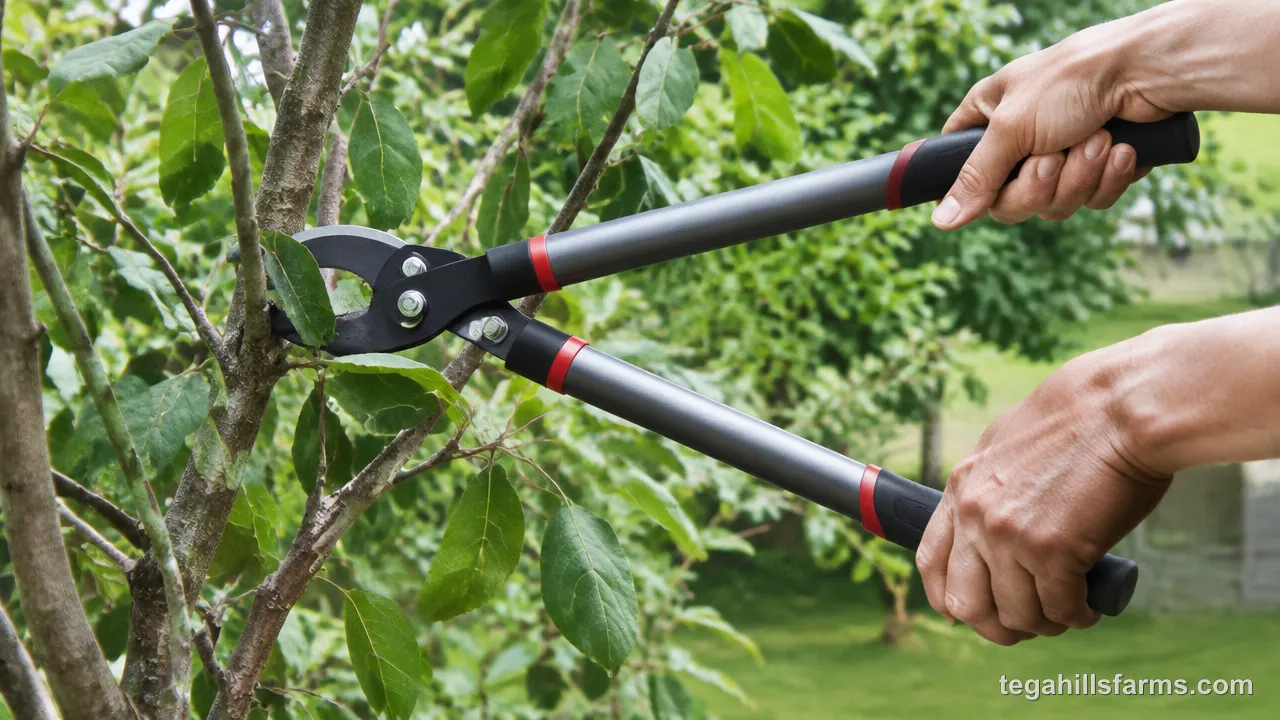
The rating printed on a lopper is the thickest branch its jaws can sever cleanly without strain. Treat it as a ceiling to stay under, not a target. Working below it lets the blade travel straight onto the anvil. Pushing past it makes you lever or rock the handles, which twists the pivot, rolls the blade edge and can bend the jaws out of line so they never close square again.
Branch hardness changes how much margin you need below the cutting capacity. Dry, dense hardwood resists the blade far more than a softer branch of the same thickness, so a hard dead limb near the rating already loads the pivot heavily, while softer wood at that size may close easily. When the thickness of a branch makes you hesitate, a pruning saw protects the lopper. For yards where large limbs are routine, the best loppers for thick branches offer more capacity.
Which Leverage Mechanism Reduces Effort Most?
A ratchet asks the least of your hand on each squeeze. Compound linkage comes next and still cuts in a single stroke. Plain long handles are the quickest and simplest, but they rely most on your own strength.
Long handles add leverage through length alone, with no extra parts, so the tool stays light and fast while every hard cut comes from your arms. Compound action puts extra pivots between the handle and the blade and multiplies force within one stroke, at the cost of weight and joints to keep oiled. A ratchet closes the blade in stages and holds its position while you reopen the handles, which turns one hard cut into several easy ones but slows the work.
The three designs trade off like this:
| Mechanism | Hand force per squeeze | Strokes per cut | Weight and moving parts |
|---|---|---|---|
| Long handles only | Highest | Single stroke | Light, no extra parts |
| Compound action | Lower | Single stroke | Heavier, extra pivots to oil |
| Ratchet action | Lowest | Several strokes | Heavier, ratchet parts to keep clean |
Smaller or weaker hands and older gardeners gain the most from ratchet or compound designs, and anyone cutting near capacity benefits from either. If you would rather take several easy strokes than force one hard one, compare the best ratchet loppers.
Is a Telescopic Handle Worth It?
Yes, when your deadwood grows overhead. Extending handles let you reach limbs from the ground instead of a ladder, and at full extension the longer lever adds cutting force. For pruning at waist or chest height, a fixed handle is the better tool.
The reach has costs. Each extension adds weight that you hold out at arm’s length, and every sliding joint is a place that can loosen, flex or collect grit. A lock that slips mid-cut suddenly changes the handle length and throws the blade off line, so a firm twist or lever lock matters more than extra reach.
Fixed-length handles have no joint to give. That is why they feel stiffer and lighter for ground-level work, and why the force from your arms reaches the jaws without any flex in between.
Which Blade and Handle Materials Last Longest?
Carbon and manganese steel keep a sharp edge through more cuts but rust if they are put away wet, while stainless steel tolerates moisture with less care. A replaceable cutting edge is what lets the whole tool outlive its first sharpening.
- Carbon steel: hardened carbon steel takes a keen edge and holds it in dry wood, but bare spots rust quickly, so wipe and oil it after use.
- Manganese steel: grades such as 65Mn are tough, wear-resistant spring steels that need the same rust care as carbon steel.
- Stainless steel: it resists rust with little upkeep, though the edge usually needs touching up more often than hardened carbon steel.
- Non-stick and PTFE coatings: they lower friction and keep sap and bark dust from sticking, so the blade glides through cuts and cleans up quickly.
Aluminum handles are light and stiff, so force goes straight to the jaws, but they feel cold on a chilly morning and can bend if overloaded. Fiberglass-reinforced plastic is also light, absorbs some shock and stays warmer in the hand, though it flexes slightly more under hard cuts. A replaceable blade extends service life because the edge is the part that wears. When it is chipped or ground down, a new blade restores the cut without changing the handles and pivot you already know.
Should You Choose Anvil or Bypass Loppers?
Most yards with shrubs and trees need both blade styles: a crushing jaw for dry, dead wood and a hooked slicing blade for living stems.
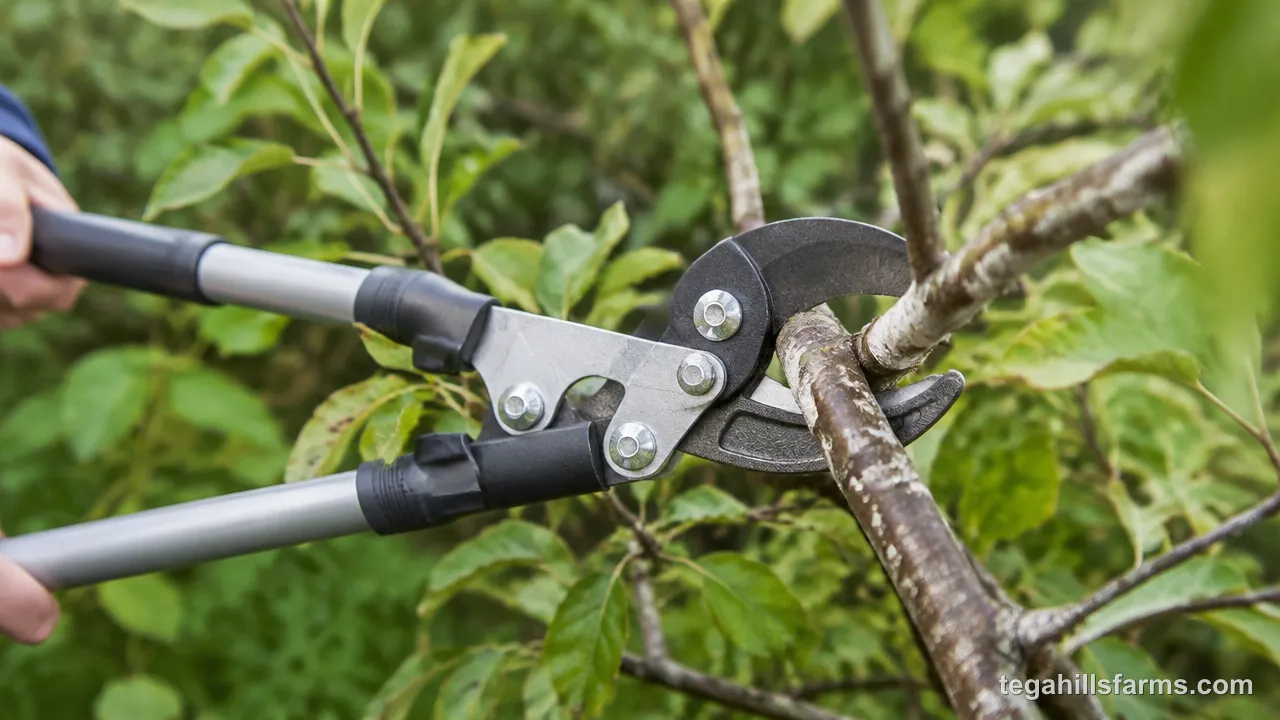
An anvil lopper drives a straight blade down onto a flat anvil, so the branch is pinched from both sides until it parts. Brittle deadwood fractures cleanly under that pressure. Because the anvil backs the cut all the way, the job takes less hand force than slicing the same dry branch. On green stems, the same pinch bruises the living tissue first and leaves a ragged, crushed stub.
A bypass lopper works like scissors: a sharp blade slides past a curved hook and leaves living wood with a smooth face. That clean wound seals faster and gives decay less to work on, which is why bypass blades are the standard for shaping and thinning live growth. On hard, dead wood, though, the blades can be pushed apart or bind, and the effort climbs.
The two designs differ on the points that shape everyday pruning:
| Factor | Anvil | Bypass |
|---|---|---|
| How it cuts | Blade crushes the branch onto a flat anvil | Blade slices past a curved hook |
| Suited wood | Dry, dead and woody growth | Living, green stems |
| Hand force on dry wood | Lower | Higher |
| Clogging | Soft green fibers can squash and stay attached | Twigs and dry chips can wedge between blades |
| Effect on living plants | Bruised, ragged cut that seals slowly | Clean cut that seals faster |
Owning both is the practical answer when a yard has live shrubs and dead limbs at the same time: use bypass for living growth, and anvil for deadwood and storm cleanup. For the slicing half of that pair, start with the best bypass loppers.
Which Anvil Lopper Fits Your Yard Work?
Reach, mechanism and weight decide the match more than blade style does, because all of these loppers make the same crushing cut on dry, dead wood.
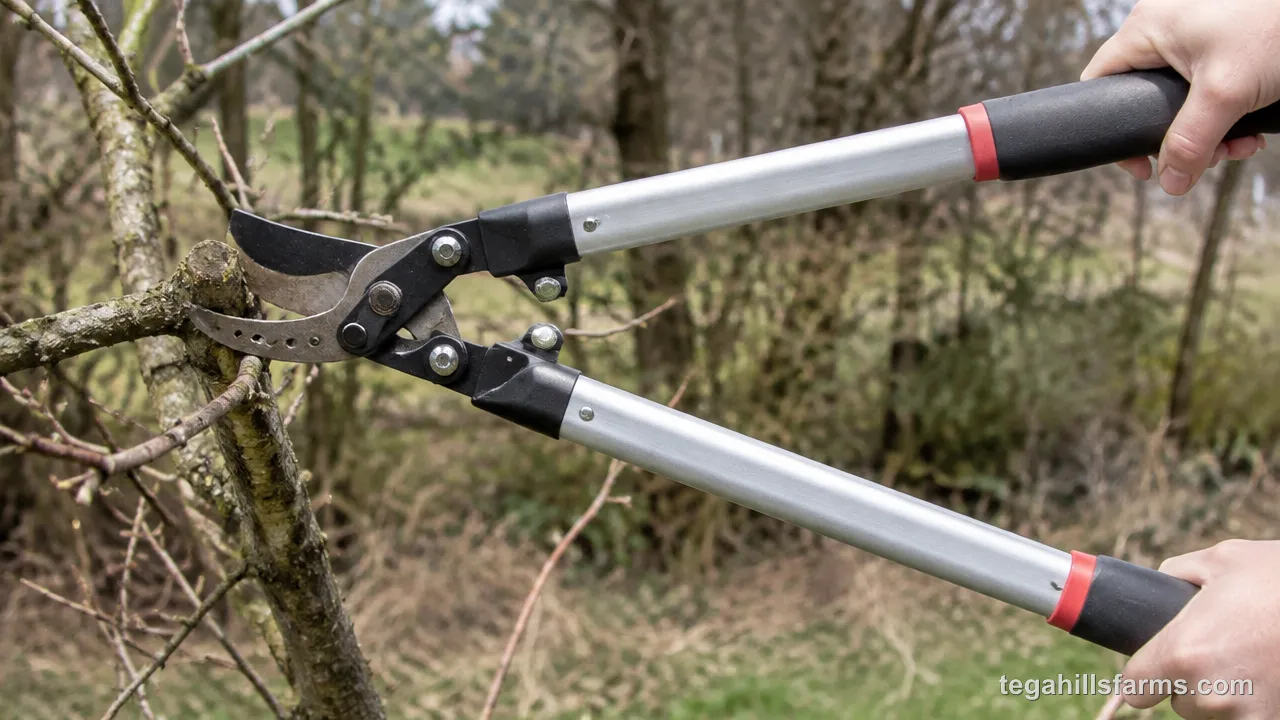
- Occasional deadwood in tight beds calls for the Fiskars PowerGear Anvil Loppers 15in. Its short, light frame moves between stems where long handles jam.
- High branches without a ladder point to the TABOR TOOLS GG22A Anvil Lopper 27-40in or the AIRAJ Anvil Lopper 26-39in, since their telescopic handles bring overhead limbs within reach from the ground.
- Weaker hands benefit from mechanical help. The ratchet on the Spear & Jackson 8100RS Anvil Lopper splits a hard cut into small squeezes, while the TABOR GG22A and the Spear & Jackson Kew Gardens 8081KEW Loppers multiply force within a single stroke.
- Regular heavy use favors the Fiskars PowerGear L77 Anvil Lopper 27in, whose fixed handles stay stiff and whose blade can be replaced. The WOLF-Garten RS900T Anvil Lopper 35.5in suits the same work if German steel and build matter to you.
- A tighter budget leads to the AIRAJ, where the spare blade stretches the value of an inexpensive tool.
If your job falls between these cases, the guide on how to choose loppers walks through blade style, handle length and steel in more depth. Daily pruners and landscape crews should compare the best loppers for professional use, where heavy duty and replaceable parts count for more.
An anvil blade wears on both bevels while the flat jaw under it collects a film of sap and bark dust from every branch it closes on. Once that edge rounds over, it crushes fibers instead of parting them, and you end up squeezing harder on branches that used to close with an easy push.
How Do You Sharpen and Maintain Anvil Lopper Blades?
Work a flat or diamond file along both bevels of the cutting edge, the way you would hone a knife, and leave the anvil alone except for cleaning. Most anvil blades are beveled on both sides. The anvil is a flat striking surface that only needs to stay clean and true.
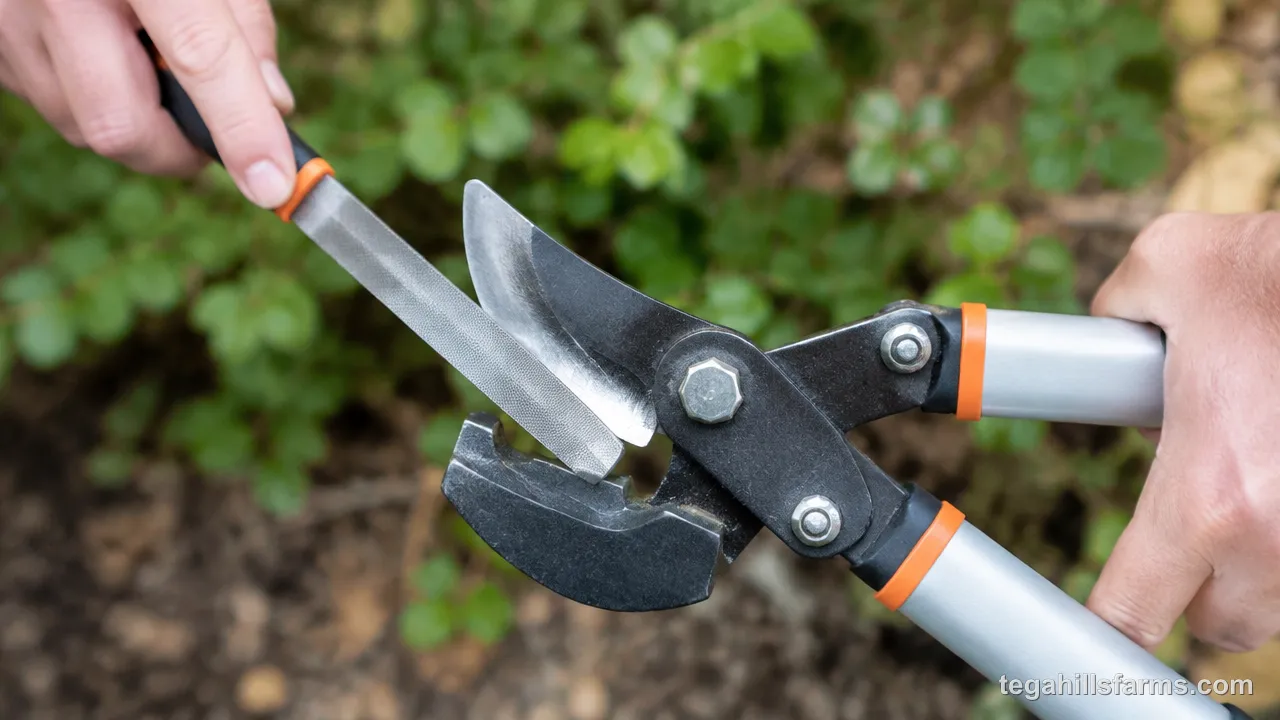
Open the jaws, hold the file at the existing angle, and push it from the heel of the blade toward the tip. Give each side the same number of strokes so the edge stays centered over the anvil. A centered edge meets the anvil evenly, while a lopsided one strikes one side first and leaves a strip of bark uncut.
Sap and bark dust build a sticky film on both jaws. After each session, wipe them with rubbing alcohol or a sap remover, put a drop of oil on the pivot, and snug the pivot nut until the blade closes without side play.
Before winter, clean and dry the tool fully, oil the blade, and store it hanging in a dry shed rather than on a damp floor. For file angles and stroke technique on other blade types, see how to sharpen loppers.
How Can You Tell an Anvil Lopper Needs Replacing?
When cuts still crush instead of biting after a fresh sharpening, the wear is in parts a file cannot reach: the pivot, the anvil or the handles. Look for these signs:
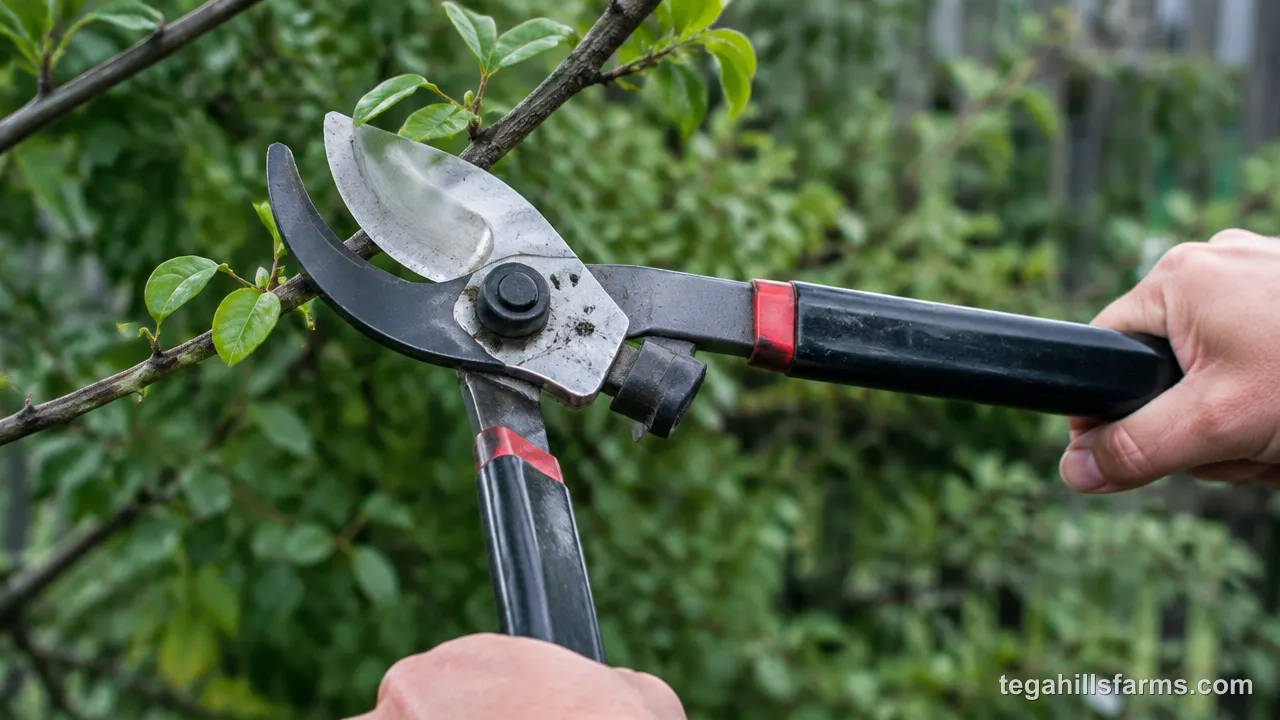
- A pivot that stays loose after you tighten the nut, which means the bolt hole has worn.
- Nicks or chips in the edge too deep to file out without changing the blade’s profile.
- A deep groove worn into the anvil, so the blade no longer meets it along its full length.
- Bent or cracked handles, or telescopic joints that will not lock.
- Cuts that leave a strip of bark attached even with a sharp edge.
A replacement blade is enough when the damage is limited to the edge and the handles and pivot are sound. Tools sold with spare or replaceable blades, like the AIRAJ Anvil Lopper 26-39in and the Fiskars PowerGear L77 Anvil Lopper 27in, are built for that kind of repair. A worn pivot, a grooved anvil with no replacement part, or a bent handle calls for a new tool, because those faults pull the blade off line no matter how sharp it is.
How Do You Use Anvil Loppers Safely on Storm Damage and High Limbs?
Plant your feet on firm, level ground, keep the branch in front of you whenever possible, and cut only what the jaws can close on without forcing. Levering or rocking the handles to finish a cut past capacity bends the jaws and loosens the pivot, so switch to a saw when a branch resists.
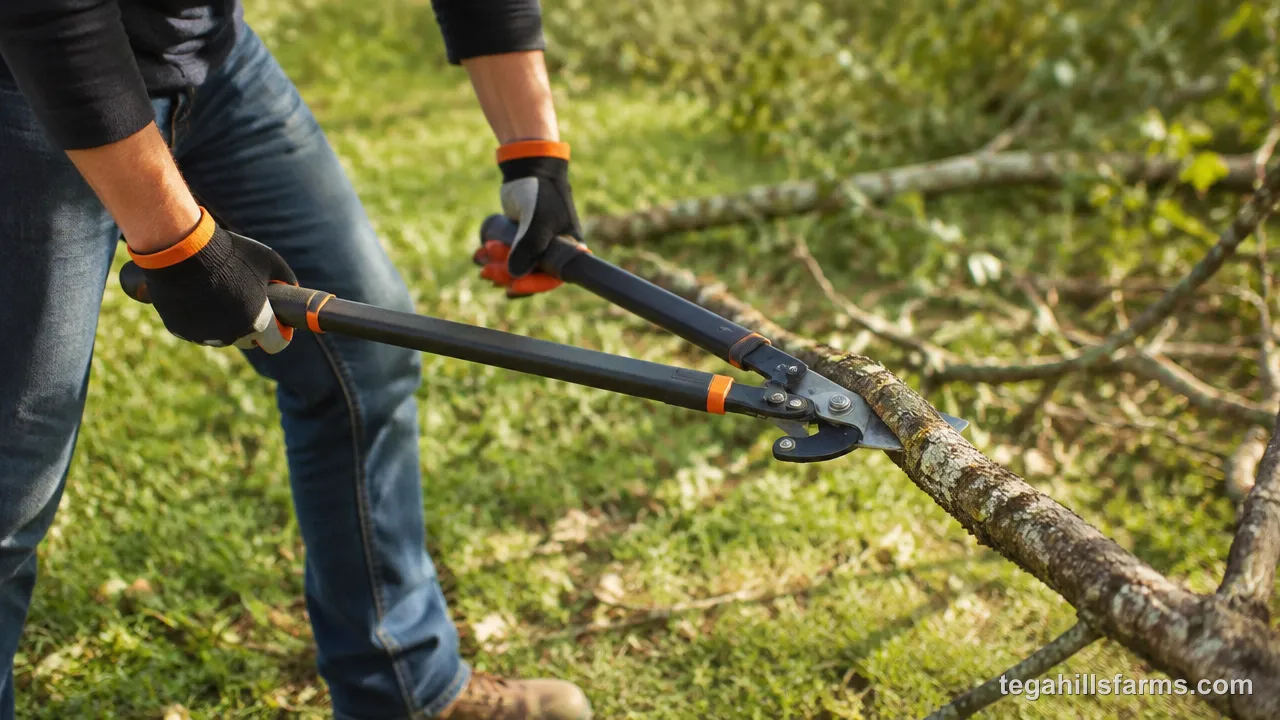
Before cutting overhead, clear people, pets and anything breakable from the drop zone. Wear safety glasses, because bark, grit and dead twigs fall straight toward your face. Stand to the side of the branch, not under it.
Storm-damaged limbs are often bent under tension and can spring when cut. Start with small cuts at the outer end, work back toward the trunk in short sections, and keep your body out of the path the limb would swing through. Leave any limb touching or near power lines to your utility company or a professional arborist.
In brambles and overgrown shrubs, wear thick gloves and long sleeves and cut stems in short pieces. Keep both hands on the handles, so a sudden snap cannot swing them into your shins.
Write Your Review
No reviews yet. Be the first to share your experience!