

Our picks for the best extendable loppers are the Fiskars Extendable Bypass Loppers 25-37in (Best Overall), TABOR TOOLS GG22A Anvil Lopper 27-40in (Editor’s Choice), GARTOL Bypass Loppers 26-33in (Best Ergonomic Design), Corona SL 3364 ComfortGEL Bypass Lopper (Also Great), Kings County Tools Extendable Loppers 26-40in (Also Great), YRTSH Extendable Loppers 21-26in (Also Great), Spear & Jackson 8290RS Ratchet Loppers (Best Durability), HAUTMEC Anvil Loppers 27-37in (Also Great), WORKPRO Extendable Anvil Lopper 25-37in (Also Great) and Mesoga Extendable Anvil Lopper 26-41in (Also Great). Each one pairs a sliding handle with a blade built for a particular kind of wood, from live shrub growth to brittle deadwood.
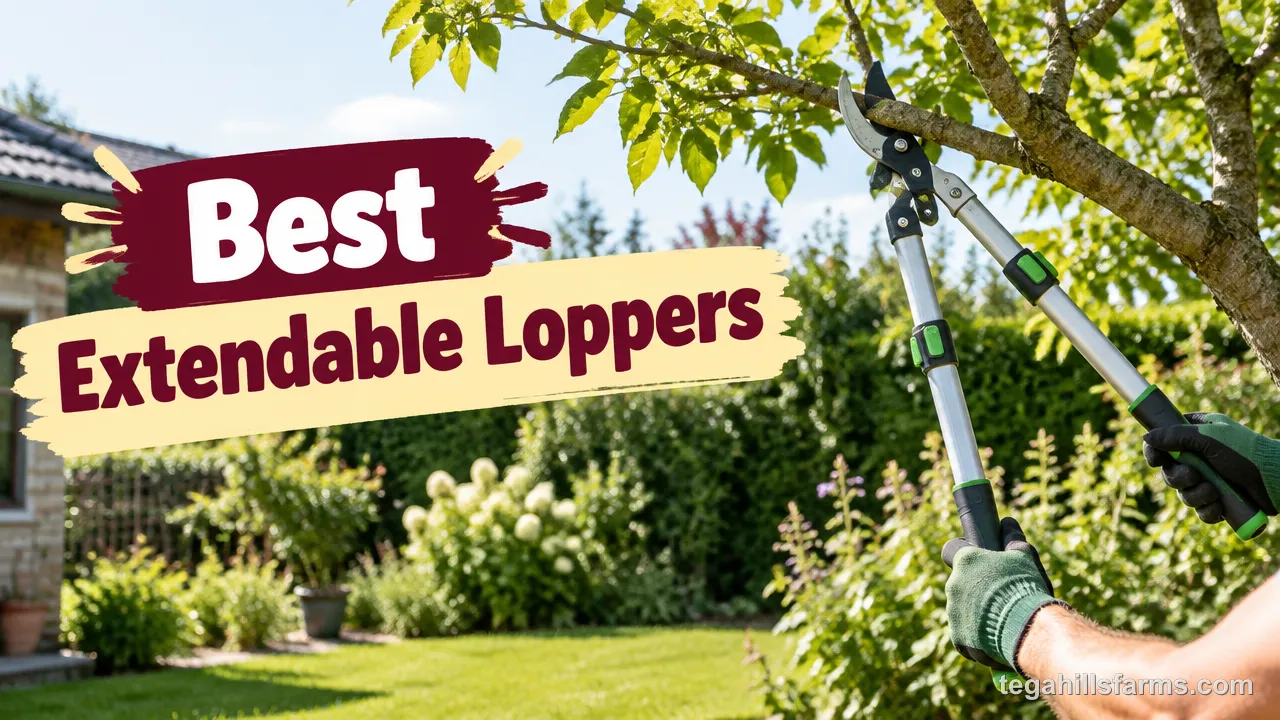
Start with the branches you cut most often. Live growth on shrubs and fruit trees needs a blade that slices cleanly. Dead, dry limbs need a cutting action that puts more force behind the blade, and thick stock may need help from a ratchet or a compound linkage. After that, three things decide how the tool feels an hour into the job: the reach, the way the handle locks, and the size of branch the jaws can really take.


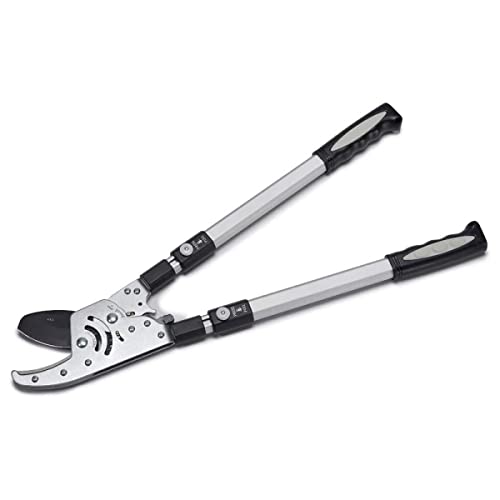


The telescopic joint is where these tools succeed or fail. A handle that slips or wobbles at full length wastes the force you put into each cut, and it makes the blade harder to place on a branch over your head. The extra length also moves weight away from your hands, and your shoulders feel that on every raised cut.
How Do Extendable Loppers Differ from Fixed-Handle Loppers?
A telescopic design slides out to add reach and leverage for high or deep branches without a ladder, while a one-piece lopper stays at a single length with no joint to manage.
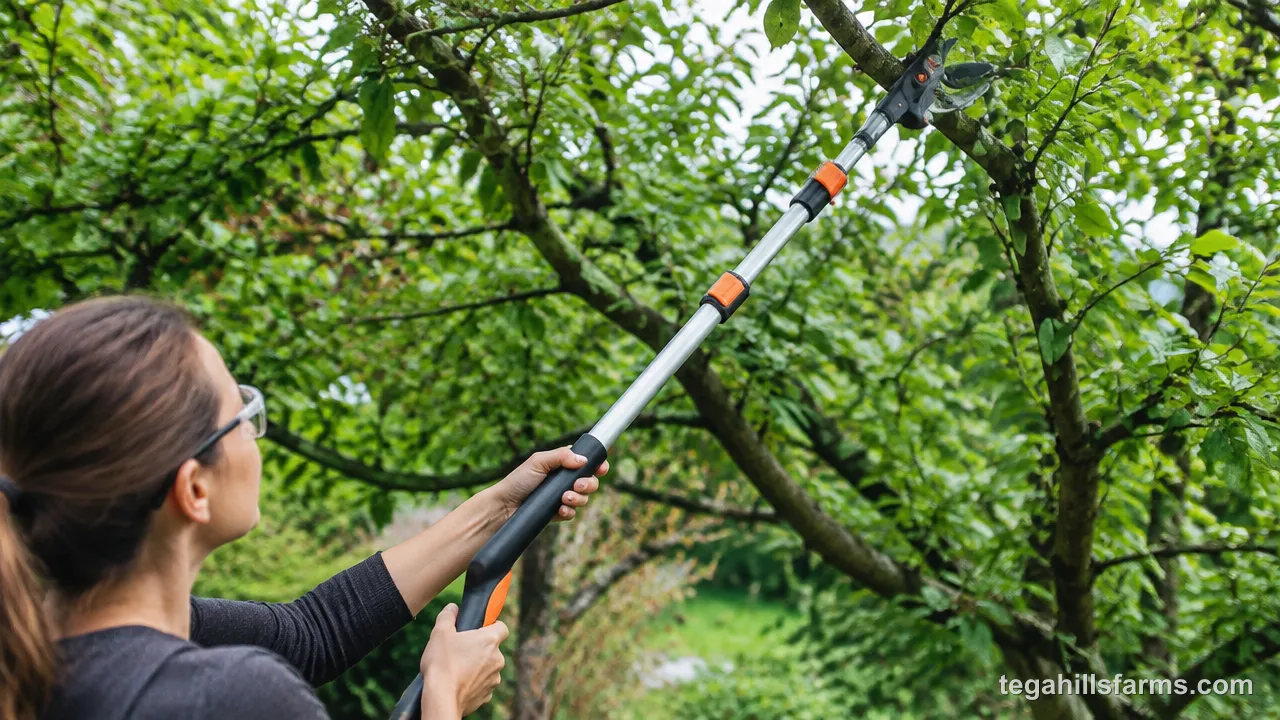
That reach has a cost built into the sliding joint. More parts mean more places for the lock to loosen and for sap and grit to collect inside the tubes. The inner tube also adds weight, which you feel as soon as your arms are raised. Two nested tubes are harder to keep perfectly aligned too, so a little play at the joint shows up as a blade that wanders as you close it.
The extra length pays off only when you regularly cut above shoulder height or reach into the middle of dense shrubs, where a shorter tool would put you on a ladder or into the branches. If most of your cuts happen at waist or chest height, the best lightweight loppers with fixed handles will ask less of your arms over an hour of work. If you are still weighing whether a telescopic handle earns its place in your yard, the guide to the best loppers covers fixed-handle options as well.
The 10 Best Extendable Loppers of 2026
In rank order, the lineup runs from the Fiskars Extendable Bypass Loppers 25-37in through the TABOR TOOLS GG22A Anvil Lopper 27-40in, GARTOL Bypass Loppers 26-33in, Corona SL 3364 ComfortGEL Bypass Lopper, Kings County Tools Extendable Loppers 26-40in, YRTSH Extendable Loppers 21-26in, Spear & Jackson 8290RS Ratchet Loppers, HAUTMEC Anvil Loppers 27-37in and WORKPRO Extendable Anvil Lopper 25-37in to the Mesoga Extendable Anvil Lopper 26-41in. Cutting action and the handle lock separate them more than reach does. Homeowners shaping shrubs and fruit trees need a bypass blade, and anyone clearing dead limbs from the ground is better served by an anvil. Gardeners with weaker hands get real help from a compound or ratcheting head that builds force for them, and with any of these actions the handle has to lock solidly at the length the job needs. The Kings County Tools and Spear & Jackson models both ratchet, so anyone drawn to the best ratchet loppers can start with that pair. When limbs regularly sit at the limit of a lopper’s jaw, the best loppers for thick branches are built around that single job.
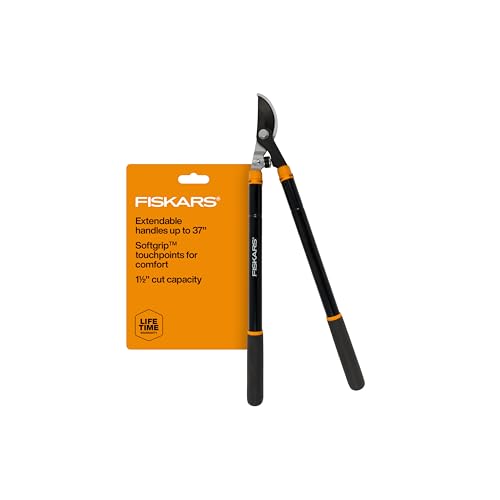
#1 Fiskars Extendable Bypass Loppers 25-37in — Best Overall
Start here if most of your pruning is live growth on shrubs and fruit trees. The fully hardened steel bypass blade has a low-friction coating that resists sap gumming and rust, so green cuts stay smooth through a long session.
Key Specs:
- Cutting action: Bypass
- Cut capacity: 1.5 in
- Handle extension: 24.5 to 37 in
- Weight: 2.84 lb
- Handles: Steel with SoftGrip
- Warranty: Full lifetime
Detailed Review:
The blade is fully hardened steel in a bypass layout, and its non-stick coating earns its keep on sappy growth. Without the coating, residue builds on the blade face and drags on every cut, and you feel that as extra squeeze by the end of an afternoon. The same coating slows rust, which helps if the lopper hangs in a damp shed between sessions.
The steel handles slide out over a wide range. You can keep them short for shrub beds and lengthen them only for limbs you cannot reach from the lawn. The weight stays modest for a tool with steel handles, and that matters when your arms are raised for a run of overhead cuts.
Rounded SoftGrip handles and bumpers soften the jolt as the blades close, and your wrists notice that after an hour of pruning. The cut capacity suits shrub stems and smaller fruit-tree limbs, while thick deadwood calls for more force behind the blade. For a yard that is mostly live growth, this is the extendable lopper I’d reach for first, because the coating, the reach range and the lifetime warranty all point toward years of steady use.
Pros:
- Non-stick coated blade resists sap buildup and rust.
- Steel handles adjust across a wide reach range.
- SoftGrip handles and bumpers ease the jolt of each cut.
- Full lifetime warranty backs the tool.
Cons:
- Bypass blade is not built for dry, dead wood.
- Moderate cut capacity leaves thick limbs to heavier tools.
Who It’s For:
Homeowners who spend their pruning time on live shrubs, hedges and young fruit trees will make full use of this lopper’s coated bypass blade and adjustable steel handles. If your work leans toward dead, brittle limbs, the TABOR TOOLS GG22A Anvil Lopper is set up for that wood instead.
Editor’s Verdict:
A light, well-coated bypass lopper with steel handles and a lifetime warranty, made for steady work on live growth.
#2 TABOR TOOLS GG22A Anvil Lopper 27-40in — Editor’s Choice
Reach for this anvil lopper when the job is dead limbs and dry, woody growth. Its compound lever system multiplies the force on the blade three times, so thick, dry cuts ask far less squeeze from tired or weaker hands.
Key Specs:
- Cutting action: Anvil with compound action
- Cut capacity: 1 3/4 in
- Handle extension: 27 to 40 in, locks at lengths in between
- Blade: Hardened carbon steel, non-stick coated
- Grips: Anti-shock rubberized
Detailed Review:
The compound linkage spreads the work across several pivot points and moving parts, so the force you put into the handles reaches the blade multiplied. Dead wood resists the blade instead of parting, and that extra force lets you finish a cut in one steady close rather than working the handles back and forth.
The blade is hardened carbon steel, which holds a sharp edge through heavy use, and a low-friction, non-stick coating helps it glide through dry fiber. Carbon steel rewards a dry wipe after each session and a drop of oil before winter storage.
The handle locks at various lengths along its range, so you can set it to the branch instead of the nearest stop. Anti-shock rubberized grips take some of the jolt when the blade meets the anvil. That matters on dry wood because it tends to give way all at once.
I see this tool as a partner to a bypass lopper rather than a replacement. Its anvil is designed for dry, dead wood, and live green branches are still better left to a bypass blade.
Pros:
- Compound action multiplies the force at the blade.
- Handle locks at multiple lengths along its range.
- Hardened carbon steel blade holds its edge under heavy use.
- Anti-shock rubber grips cushion each cut.
Cons:
- Anvil jaw is meant for dead wood, not live stems.
- Extra pivot points add parts to clean and check.
Who It’s For:
Gardeners clearing deadwood from mature trees will get steady use from this lopper, and so will anyone whose grip has weakened and who wants the linkage to do more of the work. For shaping live, green branches, a bypass blade such as the Fiskars Extendable Bypass Loppers leaves a cleaner cut.
Editor’s Verdict:
Strong leverage, a hardened carbon steel blade and a handle that locks along its length make this a dependable deadwood cutter.
#3 GARTOL Bypass Loppers 26-33in — Best Ergonomic Design
Gardeners with arthritis or tired wrists should look at this gear-driven bypass lopper, which takes on thick, living green wood without a hard squeeze. Its quick-click handles lock at set lengths.
Key Specs:
- Cutting action: Bypass with gear-driven compound action
- Cut capacity: 2 in
- Handle extension: 26 to 33 in, 5 locking positions
- Weight: 3.59 lb
- Handles: Aluminum alloy
- Blade: Carbon steel, black Teflon coating
Detailed Review:
The compound gear drive multiplies your leverage, so the blade bites with far more force than your hands apply. For sore wrists or arthritic hands, a thick living branch parts after a moderate, even pull instead of a hard squeeze at the end of the stroke.
The precision-ground carbon steel blade makes a clean bypass cut. A clean cut on live wood closes over faster than a torn one, which matters on fruit trees. A black Teflon coating keeps sap from building up and protects against rust, so cutting resinous pine does not leave the blade sticky.
The aluminum alloy handles extend through quick-click stops and hold steady at each one. They stop shorter than the Fiskars Extendable Bypass Loppers and the tool is heavier. You give up some overhead reach and carry more weight in exchange for the gear drive and a larger cut capacity.
Shock-absorbing rubber grips stay secure with gloves or sweaty hands and cut down on vibration. My pick for long pruning days on living wood would be this one, because the gear drive spares your hands more than extra reach would help them.
Pros:
- Gear drive multiplies leverage for weaker hands.
- Large bypass cut capacity suits thick living branches.
- Click-lock positions hold the set length.
- Teflon coating keeps sap and rust off the blade.
- Rubber grips stay secure with gloves on.
Cons:
- Handles stop at a shorter reach for high limbs.
- Gear drive adds parts that need regular cleaning.
Who It’s For:
If arthritis, a weak grip or long landscaping days make thick cuts painful, this lopper’s geared bypass action lets the tool carry more of the load on living wood. Gardeners who mostly trim high limbs will want a handle that extends further, such as the Fiskars Extendable Bypass Loppers.
Editor’s Verdict:
Gear-driven leverage, a coated carbon steel blade and grips that hold with gloves on make it easy on sore hands through a full day of live-wood pruning.
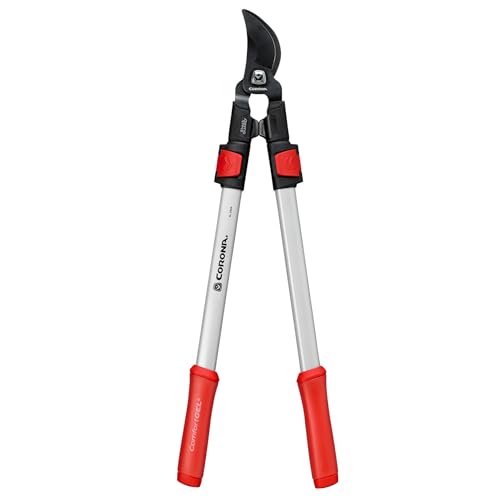
#4 Corona SL 3364 ComfortGEL Bypass Lopper — Also Great
If repeated jolts at the end of each cut bother your shoulders, this bypass lopper’s ShockGUARD bumper system is built to soften them. ComfortGEL grips add padding where your palms press.
Key Specs:
- Cutting action: Bypass
- Cut capacity: 1 1/2 in
- Handle extension: 28 to 35 in
- Weight: 3.62 lb
- Handles: Lightweight steel core
- Grips: ComfortGEL
Detailed Review:
The ShockGUARD bumper system takes the impact when the handles come together at the end of a cut. That jolt travels up your forearms into your shoulders on every close, so softening it reduces the fatigue that builds over a long session of shrub work.
The bypass blade has a special non-stick coating that lowers friction as it passes the hook. Less friction means less force for each cut and less sap clinging to the blade, which keeps the action smooth on live growth.
The lightweight steel core handles extend over a moderate range, enough to reach into the middle of a hedge or the lower limbs of a fruit tree. ComfortGEL grips spread pressure across the palm, which you notice when your hands are already tired. The cut capacity keeps the tool to shrubs and small limbs, so heavy deadwood needs a different design.
This is a tool for a gardener who prunes live shrubs for long stretches and feels it in the shoulders afterward. The padding and bumpers are aimed at that kind of wear rather than at raw cutting power.
Pros:
- ShockGUARD bumpers reduce jolts to hands and shoulders.
- ComfortGEL grips pad the palms through long sessions.
- Non-stick coating lowers friction through each cut.
- Steel core handles extend for added reach.
Cons:
- Narrow extension range limits reach into tall trees.
- Weighs more than the Fiskars despite the same cut capacity.
Who It’s For:
Gardeners whose shoulders ache after an afternoon of pruning will appreciate the padded grips and bumper system on this bypass tool, especially for live shrubs and hedges at moderate height. If tall limbs are your main target, a handle with more extension will serve you better.
Editor’s Verdict:
Padding and shock absorption make this bypass lopper a comfortable choice for gardeners who feel every cut in their shoulders.
#5 Kings County Tools Extendable Loppers 26-40in — Also Great
Dead limbs and kindling prep suit this double-ratcheting anvil lopper, whose oversized jaw builds force on heavy branches step by step. Its steel-and-rubber build adds noticeable weight.
Key Specs:
- Cutting action: Double ratcheting anvil
- Jaw capacity: 2 to 2.5 in
- Handle extension: 26 to 40 in, 6 pin-locked stops
- Weight: 4.35 lb
- Materials: Steel and rubber
Detailed Review:
The double ratcheting mechanism drives this lopper’s cutting force, and its oversized jaw opens wide enough for heavy limbs. Both features point at dry wood, such as dead branches, trimmed-back tree limbs and kindling, where a brittle branch resists a single squeeze.
Pin-locked position stops set the handle length. A pin seated in its hole cannot creep shorter under cutting force the way a friction clamp can. You choose from fixed lengths rather than any point along the range, which costs a little flexibility but gives you a handle that stays put.
The telescoping handles reach tall branches from the ground, so you can trim dead limbs without raising your shoulders as high. The steel build makes this tool clearly heavier than the Fiskars Extendable Bypass Loppers, and you feel that weight at full extension, so plan on resting your arms between overhead cuts.
Rubber grips give a firm hold through the repeated strokes a ratchet asks for. On light shrub shaping, those extra strokes only slow you down, so save this tool for heavier work.
Pros:
- Double ratchet builds force for thick, dry limbs.
- Pin-locked stops keep the handle from creeping.
- Oversized jaw opens wide for heavy branches.
- Telescoping handles reach tall dead limbs from the ground.
Cons:
- Steel build tires raised arms sooner.
- Ratchet steps slow down light shrub trimming.
Who It’s For:
For yards with dead tree limbs to clear, or a woodstove that needs kindling, this lopper puts ratcheting force where brittle wood resists a straight squeeze. Gardeners who want a light tool for mixed live and dry pruning will be happier with the YRTSH Extendable Loppers.
Editor’s Verdict:
Built for force on dry wood, it trades lightness for a wide jaw, ratcheting power and handles that stay locked.
#6 YRTSH Extendable Loppers 21-26in — Also Great
Light aluminum handles and compound action make this lopper a gentle choice for gardeners who prune both green and dry branches. Its non-stick blade keeps cuts smooth.
Key Specs:
- Cutting action: Compound action
- Cut capacity: 1.6 in
- Handles: Aluminum alloy, 6-step extension
- Weight: 2.76 lb
- Grip: Soft rubber, non-slip
Detailed Review:
The compound action gives the blade a strong boost in power, so thick or dry branches part without a hard squeeze. That help suits older gardeners and anyone whose hand strength has dropped.
The sharp steel blade has a low-friction, non-stick finish, so it slides through green wood without sap building up on the faces. Because it is meant for both living and dry branches, one tool covers fruit trees, hedges, shrubs and vegetable-bed cleanup.
The aluminum alloy handle extends in fixed steps, so you lock it at a set length rather than sliding it freely. The light handles keep the overall weight down, which makes the extended tool easier to hold overhead for a run of cuts.
The soft rubber grip is non-slip and shaped to reduce fatigue during a long session. I’d steer a gardener with mixed pruning and limited strength toward this one, because it spreads the effort without asking you to lift much weight.
Pros:
- Light build eases strain on raised arms.
- Compound action multiplies cutting power.
- Low-friction blade resists sap buildup.
- Soft rubber grip stays comfortable and non-slip.
Cons:
- Takes smaller branches than the GARTOL Bypass Loppers.
- Stepped handle locks only at preset lengths.
Who It’s For:
Older gardeners who trim a mix of live and dead branches around fruit trees, hedges and vegetable beds can lean on the compound action without lifting a heavy tool. Thick limbs at the edge of a lopper’s range call for a larger jaw, such as the Kings County Tools Extendable Loppers.
Editor’s Verdict:
Well leveraged and easy to lift, it handles mixed green and dry pruning without a heavy handle overhead.
#7 Spear & Jackson 8290RS Ratchet Loppers — Best Durability
When the branches are thick and hard, this ratchet anvil lopper closes in short steps, so your hands do not have to deliver the whole cut in one squeeze. An SK5 carbon steel upper blade holds its edge.
Key Specs:
- Cutting action: Ratchet anvil
- Blade: SK5 carbon steel upper blade, PTFE coated
- Handle extension: 28 to 40 1/2 in
- Handles: Tubular aluminum
- Weight: 4.17 lb
- Guarantee: 10 years
Detailed Review:
The ratchet action suits thicker, harder branches, and the rest of the build is aimed at keeping that action working over time. The upper blade is SK5 carbon steel, a hard steel chosen for lasting sharpness, so the edge keeps biting cleanly after many dry cuts.
A PTFE coating on the blade adds rust resistance. That protects carbon steel that would otherwise spot if it goes back on the hook damp. A locking catch holds the blades closed in storage, which protects the edge and your fingers when you reach into the shed.
The tubular aluminum handles are light but strong, and they extend over a long range that puts high deadwood within reach from the ground. The ratchet hardware and long handles still add up to real weight, so overhead work goes better in short runs with breaks between them. Soft, non-slip grips keep your hands from shifting through the repeated strokes.
The guarantee covers the tool for years, not a single season. It is the lopper I’d suggest to anyone who wants one heavy-duty tool for hard branches and plans to keep it for many seasons.
Pros:
- Ratchet action breaks hard cuts into short steps.
- SK5 carbon steel upper blade keeps a lasting edge.
- PTFE coating protects the blade from rust.
- Locking catch keeps the blades closed in storage.
- Long guarantee backs the build.
Cons:
- Ratcheting takes several strokes per thick cut.
- Heavier build tires raised arms on long sessions.
Who It’s For:
Homeowners with hardwood trees, overgrown limbs or old deadwood too tough for one hard squeeze will make steady progress with this ratchet. Gardeners trimming soft, live shrubs would find the stepped action slow and should look at a bypass tool such as the Corona SL 3364 ComfortGEL Bypass Lopper.
Editor’s Verdict:
Expect this lopper to keep its edge and resist rust for years, with a ratchet that makes hard branches manageable.
#8 HAUTMEC Anvil Loppers 27-37in — Also Great
Gardeners who cut a mix of fresh and dried branches get an anvil lopper rated for both, with a wide serrated anvil that keeps the stem from sliding off the blade. Its drop-forged Cr-V blade has a Teflon treatment.
Key Specs:
- Cutting action: Anvil with compound lever system
- Cut capacity: 2 in fresh, 1.4 in dried
- Handle extension: 27 to 37 in, safety release lock button
- Blade: Drop-forged Cr-V, Teflon coated
- Weight: 3.37 lb
Detailed Review:
The compound lever system uses multiple pivot points and moving parts to multiply the force on the blade three times. That extra force lets this anvil design take fresh branches as well as dry ones, so one tool can handle more kinds of jobs.
The wide serrated anvil grips the branch so it stays still as the blade comes down. That matters on smooth, round limbs, which tend to roll toward the tip of the jaw. Strong bolts hold the linkage steady through each cut.
The drop-forged Cr-V blade is fully hardened and precision-ground, and a Teflon treatment adds rust prevention and low-friction cutting. The rating for dried wood is lower than the fresh-wood figure, so keep dry cuts well inside that lower limit to protect the edge and the pivots.
The telescopic handle locks with a safety release button, which makes it quick to change length between a shrub and a higher limb. The ergonomic non-slip handle gives a stable grip and reduces shock, so your hands stay comfortable through a mixed session.
Pros:
- Serrated anvil keeps branches from slipping mid-cut.
- Compound levers multiply force on the blade.
- Drop-forged Cr-V blade with Teflon resists rust.
- Release button makes length changes quick.
Cons:
- Dried-wood rating trails its fresh-wood rating.
- Compound linkage adds bolts that need periodic tightening.
Who It’s For:
Yards that mix fruit-tree pruning with dead-branch cleanup suit this lopper, because its rating covers fresh wood as well as dry and the toothed anvil steadies awkward stems. Anyone tackling mostly thick deadwood may prefer the Mesoga Extendable Anvil Lopper, which has a higher rating for dry branches.
Editor’s Verdict:
A steady grip on the branch and a forged, coated blade make it a capable choice for mixed fresh and dry pruning.
#9 WORKPRO Extendable Anvil Lopper 25-37in — Also Great
A replaceable SK-5 steel blade means you can swap a worn edge instead of retiring the whole tool, which suits gardeners who keep their tools for many seasons. The sawtooth anvil holds branches in place.
Key Specs:
- Cutting action: Anvil with gear system
- Cut capacity: 1.6 in
- Handle extension: 25 to 37 in
- Blade: Replaceable SK-5 steel, low-friction coating
- Grips: PP+TPR soft grip
Detailed Review:
The gear system adds cutting power, and the sawtooth design on the anvil holds the branch in place while the blade closes. Together they let you cut without the blade bending, breaking or warping under load, which protects the edge on knotty wood.
The SK-5 steel blade gives a clean cut and can be replaced when it finally wears, so the handles and gear system keep working long after the first edge is spent. A low-friction coating reduces gumming and adds rust resistance, which keeps the blade sliding cleanly between sharpenings.
The handles extend far enough to reach high branches, so one tool covers both bed edges and overhead limbs. Soft PP+TPR grips give a firm, comfortable hold and wipe clean easily, which matters after sappy cuts.
I like this one for the gardener who would rather maintain a tool than replace it. The anvil design points it toward dead and dry branches and leaves live shaping cuts to a bypass blade.
Pros:
- Replaceable SK-5 blade extends the tool’s working life.
- Sawtooth anvil holds branches steady during the cut.
- Gear system adds cutting power.
- Soft PP+TPR grips wipe clean easily.
Cons:
- Sawtooth anvil needs brushing out after sappy cuts.
- Anvil action crushes live stems instead of slicing.
Who It’s For:
Long-term owners who would rather replace a blade than buy a new lopper fit this tool well, especially for general yard trimming of dead and dry branches. Clean shaping cuts on live fruit-tree wood are better left to a bypass blade like the GARTOL Bypass Loppers.
Editor’s Verdict:
With a replaceable blade and a gripping anvil, this lopper can stay in service well past its first edge.
#10 Mesoga Extendable Anvil Lopper 26-41in — Also Great
For dry, woody branches, this anvil lopper pairs a four-bar compound action with telescoping aluminum handles that reach high limbs without a ladder. A safety lock button holds the length you choose.
Key Specs:
- Cutting action: Anvil with 4-bar compound action
- Cut capacity: 2 in
- Handle extension: 26 to 41 in
- Handles: 5-section aluminum, safety lock button
- Blade: SK-5 steel, Teflon coated
- Weight: 3.2 lb
Detailed Review:
The four-bar compound action triples cutting power, which lets the anvil blade work through dry, woody branches in clean, controlled closes. On brittle deadwood, steady force is easier on your hands than a sudden, hard squeeze.
The telescoping aluminum handle uses several nested sections, which gives it a long working range, and the lock engages firmly at each setting. Each section adds a joint to keep clean, so wipe the handle down after every session to keep the lock seating fully.
The SK-5 blade is fully hardened and precision-ground, and its Teflon coating resists rust and wipes clean after use. Rubberized grips on the light aluminum handles give a secure, balanced hold that reduces hand strain on long trimming sessions.
Next to the Kings County Tools Extendable Loppers, this tool gives up some jaw capacity but weighs clearly less, and you feel that at full extension over a run of cuts. In my view, the Mesoga makes more sense when dead limbs are high and frequent, and the Kings County makes more sense when limbs are thicker than this jaw comfortably takes.
Pros:
- Compound action adds force on dry, woody branches.
- Long telescoping handle reaches high limbs from the ground.
- Safety lock button holds the chosen length firmly.
- Teflon-coated SK-5 blade wipes clean after cutting.
Cons:
- Extra handle sections mean more joints to keep clean.
- Less jaw capacity than the Kings County Tools Extendable Loppers.
Who It’s For:
Anyone with tall, dead limbs to clear from the ground who still wants a tool that stays manageable at full length will find a good partner in this lopper. Gardeners whose work is mostly live shrubs should pair it with a bypass tool for those cuts.
Editor’s Verdict:
Generous reach and dry-wood capacity at a manageable weight make this a well-rounded deadwood lopper.
What Should You Look for in an Extendable Lopper?
The right tool stays rigid and cuts cleanly at the length you actually use, because any play in the handle or mismatch with the wood turns into extra squeeze in your hands and strain in your shoulders. A lopper can feel solid in the store at its shortest setting and still wobble once it is extended over your head. Judge it by how it will behave an hour into real work, with your arms raised and sap on the blade.
How Much Reach Do You Need from the Handle Extension?
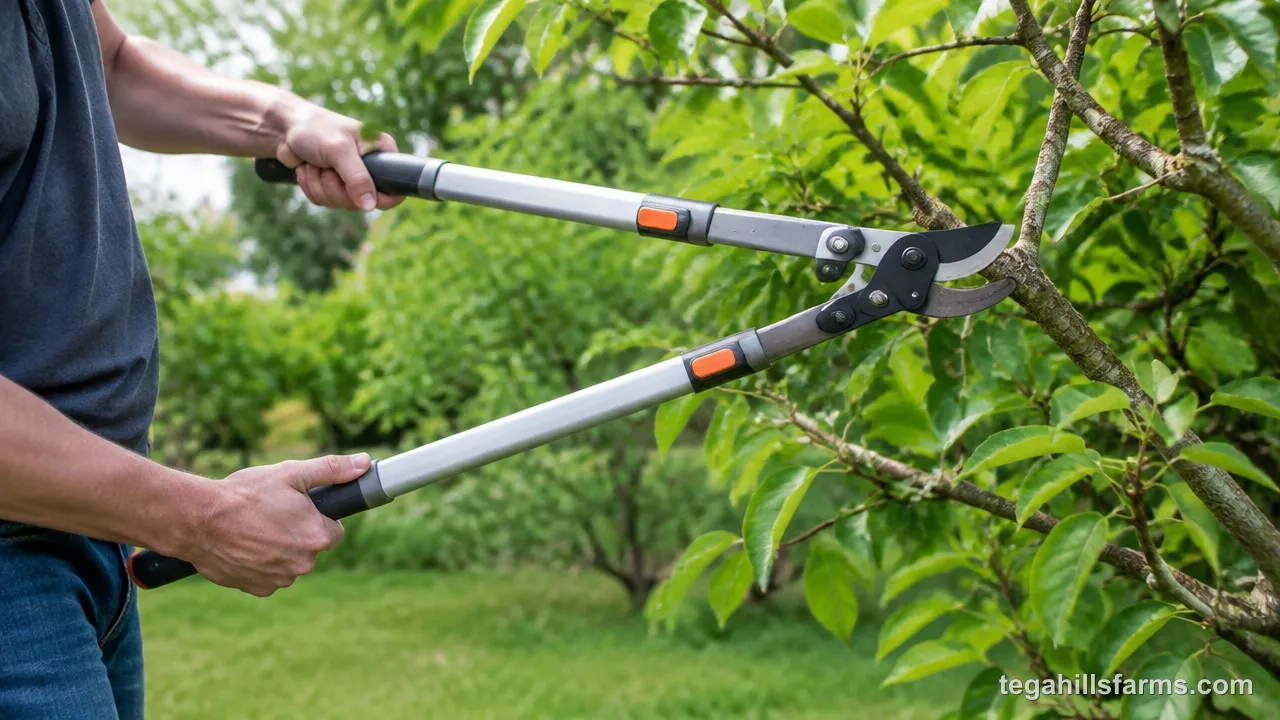
The right length lets you close the jaws on your usual branches with your elbows slightly bent, and the far end of the range is rarely where you want to work. Longer handles add reach and leverage, because the same pull at the grips produces more force at the blade. They also move weight farther from your hands and add flex at the joint, so the blade head feels heavier and drifts more as you line up a cut.
Match the length to the height of the limbs you trim from the ground. Stand where you would work and extend the handle until the open jaws sit around the branch while your arms are still under control. Treat that as your working length. Stretching to the maximum for every cut costs you precision, because small movements at your hands become large movements at the blade. Working close to the limb keeps the cut where you aim it and lets your shoulders rest between cuts.
Which Handle Locking Mechanism Holds Up Best?
A pin or spring button that drops into a drilled hole holds the handle at length under cutting force better than any design that relies on friction alone. Each common design trades holding power against ease of adjustment:
- Push-button locks pop a spring button into a hole in the inner tube. They change length quickly with one hand and hold firmly once fully seated, but a small button can be hard to press in thick gloves.
- Pin-and-hole positions pass a pin through matching holes, so the handle cannot creep shorter mid-cut. You choose from fixed lengths, and the pin is easy to work with gloves on.
- Flip latches clamp the tube with a cam lever. They are easy to operate in gloves, but their hold depends on clamp tension, which loosens with use and needs resetting.
- Twist locks squeeze a collar around the tube and allow any length along the range. Wet gloves slip on the collar, and sap or grit inside can let the tube slide under a hard cut.
A loose lock is the weak point to watch on any telescopic handle, because the cutting force pushes straight along the tubes. When the lock gives, the handle shortens mid-cut and the force you applied goes into the slip instead of the branch. The blade also shifts on the limb over your head.
Bypass, Anvil or Ratchet: Which Cutting Action Fits Your Branches?
Live green wood calls for a bypass blade and dry dead wood calls for an anvil. Thick limbs that need more squeeze than your hands can give in one stroke call for ratchet action. The choice follows the pruning job and how much force you can comfortably supply.
A bypass blade slices past a curved hook the way scissors do, leaving a clean cut that living stems on shrubs and fruit trees seal over well. Shaping and thinning that kind of growth is the work the best bypass loppers are made for. On hard, dry wood, the thin blade can be pushed sideways off the hook, which strains the pivot.
An anvil blade presses the branch against a flat jaw, so it crushes as it cuts. Crushing bruises live tissue, but on brittle deadwood the solid backstop takes the force well and the blade alignment matters less. That is why dead-limb cleanup is the job the best anvil loppers are built for.
Ratchet action is usually built on an anvil head and closes in short steps. You squeeze, open the handles and squeeze again while the mechanism holds the blade in the cut. Each stroke takes modest effort, which helps weaker hands through thick, hard limbs at the cost of several strokes per cut.
What Does a Lopper’s Cut Capacity Really Tell You?
The rating is the largest branch diameter the blades can sever, and it marks the tool’s limit rather than its comfortable working range. Cuts near that limit demand far more force from your hands, and they load the blade, pivot bolt and handle joint much harder than mid-range cuts. Repeated cuts at the edge of the rating loosen the pivot, open a gap between the blades and leave crushed or torn ends instead of clean ones.
Choose a rating comfortably above the branches you cut most often, so typical cuts sit well inside the jaw. Wood condition also changes what the figure means, because dry wood resists the blade more than fresh wood. If a lopper is rated separately for each, it will list a lower figure for dried branches.
Sap from a season of pruning dries into a tacky film inside the sliding tubes, and fine grit sticks to it every time you extend the handle in the yard. Over a few months, the handle either binds when you try to lengthen it or slips when you lean into a cut. When it slips with the blade around a branch over your head, you lose control of where that blade goes just as the limb starts to give.
How Do You Keep Telescopic Joints from Loosening or Wearing Out?
Wipe sap and grit off the sliding tubes after every session, put a drop of light oil on the pivot, and keep the handle sections clean and dry rather than greased. That routine keeps the lock seating fully and stops grit from grinding the tubes from the inside.
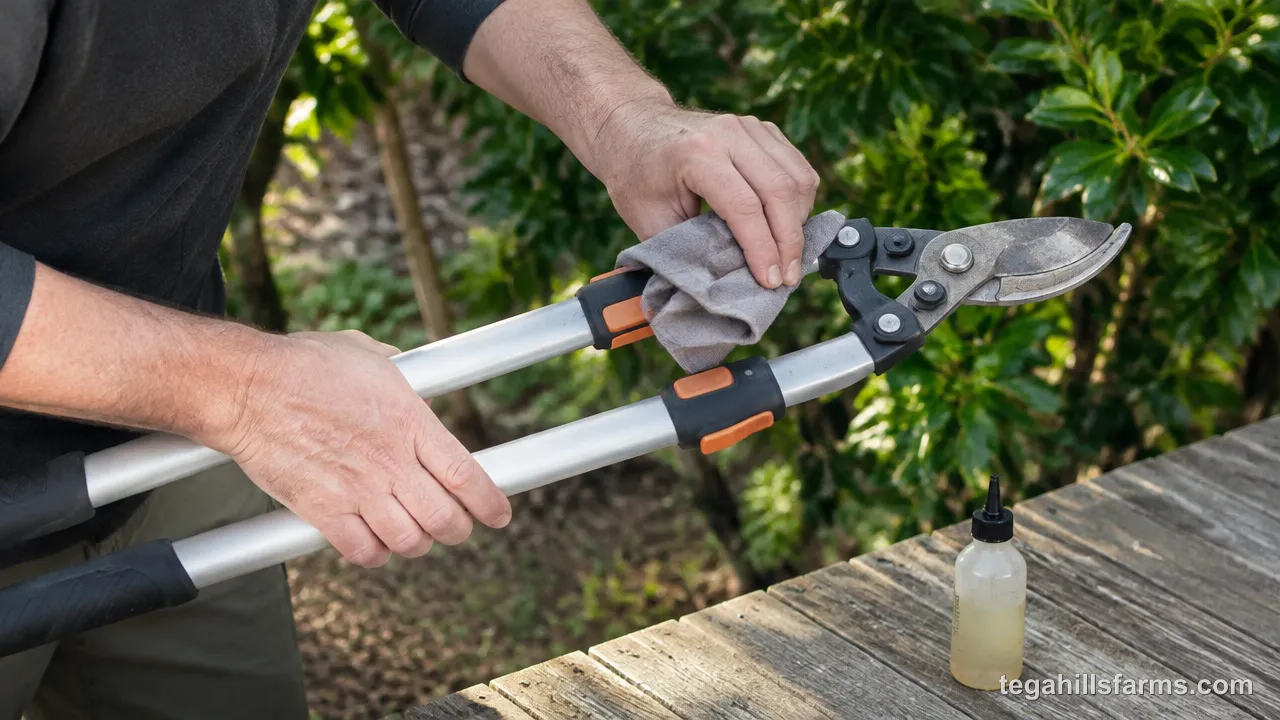
Sap comes off with a rag dampened in rubbing alcohol or warm, soapy water. Dry the tubes before you collapse the handle. Light oil works into the pivot and blade joint without building up a layer. Heavy grease on the tubes holds every speck of dirt and turns it into a grinding paste that makes the handle stick.
Every so often during pruning season, extend the handle fully and push and twist it to confirm the lock holds. Then snug the pivot bolt until the blades close without side play but still open freely. Wobble or sticking that comes back right after a cleaning means worn parts rather than dirt, and so does a visible gap between the blades when they are closed.
Sharpening belongs in the same routine. A few strokes with a file along the existing bevel keep the cut clean, and the steps for how to sharpen loppers cover the angle and the burr in detail.
How Can You Cut High Branches Safely from the Ground?
Stand on firm, level ground to one side of the limb’s fall path, keep the whole tool well clear of power lines, and wear eye protection and gloves. Those habits cover the main risks of working from the ground.
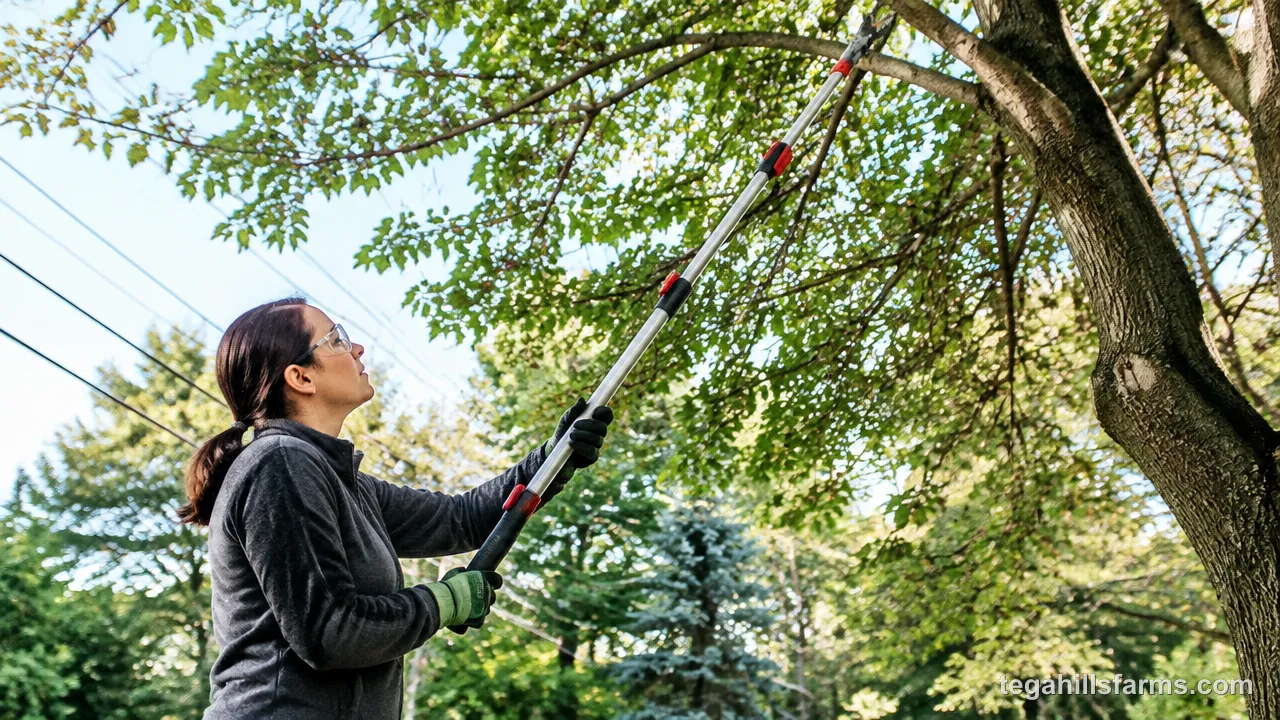
A cut limb rarely drops straight down. It can swing, roll off a lower branch or bounce when it lands, so you need room to step back on ground that is not wet or sloped. Never let any part of the lopper come near an overhead line, and leave limbs that touch or hang over a line to your utility company. Bark, sawdust and twigs fall into an upturned face, so eye protection matters more for overhead work than for bed trimming. Gloves keep your grip steady on sappy handles.
Take heavy limbs down in stages, removing the outer growth first and cutting back toward the trunk. A long, heavy limb that tips as the blade finishes can drag the handle sideways and wrench your wrists.
Working from the ground removes the danger of falling from a ladder, but it brings a control risk instead. At full extension, the blade is far from your hands and harder to steer while the weight of the limb acts on a long lever.
When Is a Pole Pruner a Better Choice Than an Extendable Lopper?
Switch to a pole pruner once a branch sits beyond the point where you can close the jaws with your arms bent and your hands near the cut. Past that point, the telescoping handles stop giving you control and start giving you strain.
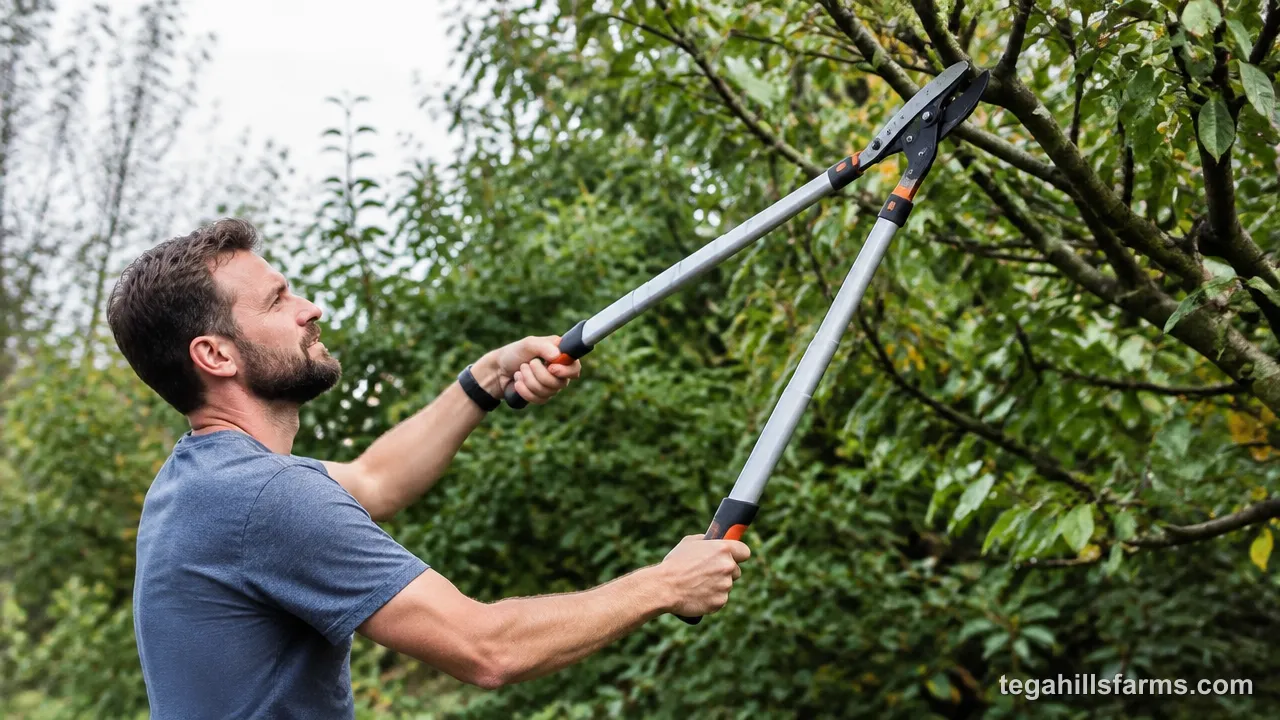
A lopper’s reach comes from two short telescoping handles. Even at full length, your arms work as a pair near the branch and you can see the blade meet the wood. That closeness makes lopper cuts precise and lets you put real leverage into each close.
A pole pruner or pole saw gives much longer reach by putting the cutting head at the end of a long shaft, which you work with a pull cord or sawing strokes. The extra height costs precision, because small movements at your hands swing the head widely. Holding a long pole overhead also strains your arms and neck faster than a lopper does.
Choose the pole tool when a limb is too high for a steady stance with the lopper. Choose it too when making the leverage work would mean leaning back or lifting the lopper above your head at full extension.
Is Corona or Fiskars the Better Extendable Lopper?
For a lighter tool with a wider reach range and a full lifetime warranty, the Fiskars Extendable Bypass Loppers are the better fit. For extra cushioning against the jolt of each cut, the Corona SL 3364 ComfortGEL Bypass Lopper earns its place. Both use a bypass blade for live wood and share the same cut capacity, so the decision rests on build and comfort rather than cutting power.
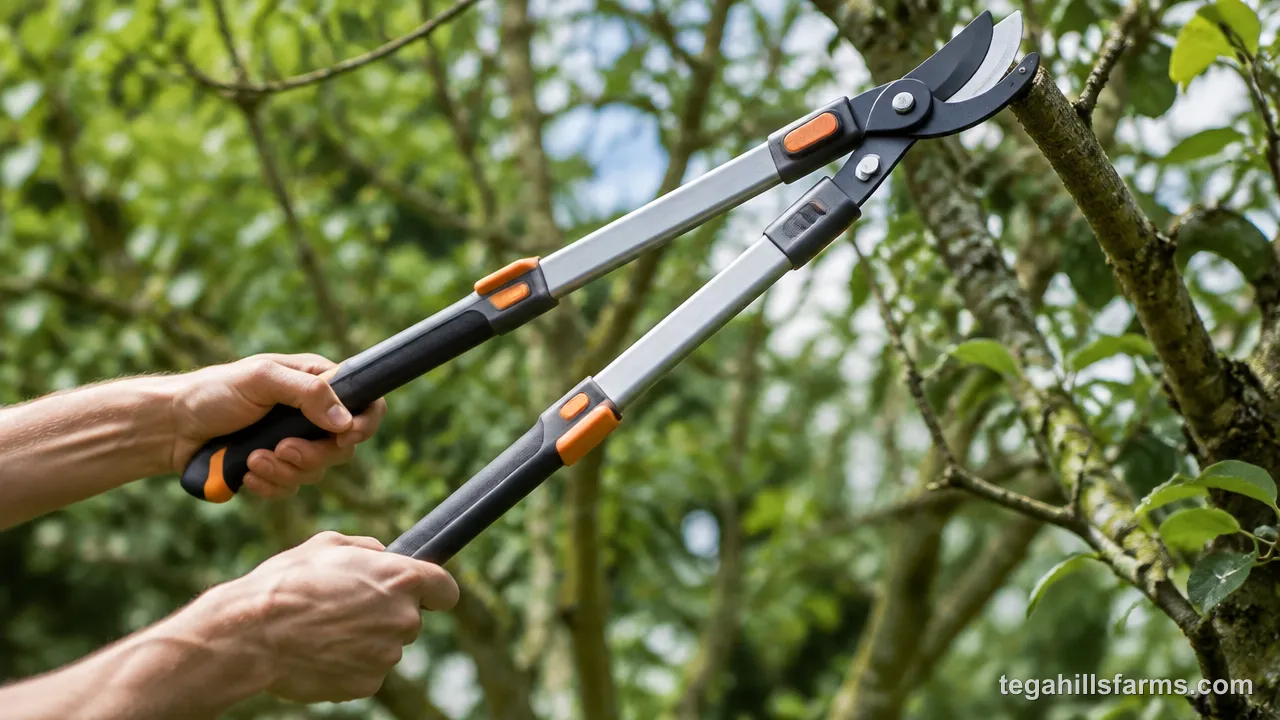
The Fiskars pairs a fully hardened steel bypass blade with a low-friction coating that reduces gumming and resists rust. The Corona uses a special non-stick coating that lowers friction through each cut, which keeps the action smooth on sappy growth.
The Corona’s ComfortGEL grips pad the palms, and its ShockGUARD bumper system is designed to reduce hand and shoulder fatigue. The Fiskars uses rounded SoftGrip handles with bumpers for comfort and control. Its steel handles adjust over a wider range at both the short and long ends, and the whole tool weighs less than the Corona.
I would hand the Fiskars to a gardener who works across shrub beds and higher limbs and wants one tool for the long haul. The Corona goes to someone whose shoulders or hands already ache after a session of pruning.
Write Your Review
No reviews yet. Be the first to share your experience!