

If you are shaping shrubs and small trees with loppers under $30, start with the Fiskars Bypass Loppers 28in (Best Overall), the Fiskars 28in Bypass Loppers (Best Performance), the YIAD DRAGON HORSE Pruning Loppers 2-Pack (Also Great), the GARTOL Bypass Loppers 26-33in (Also Great), the wiselifetech Bypass Loppers & Pruning Shears (Best Lightweight), the AIRAJ Bypass Loppers 16in (Best Budget) and the GARDENWORK Heavy Duty Bypass Loppers SK5 (Also Great). They differ in reach, leverage and weight, and those differences matter more than the brand once you are an hour into pruning.
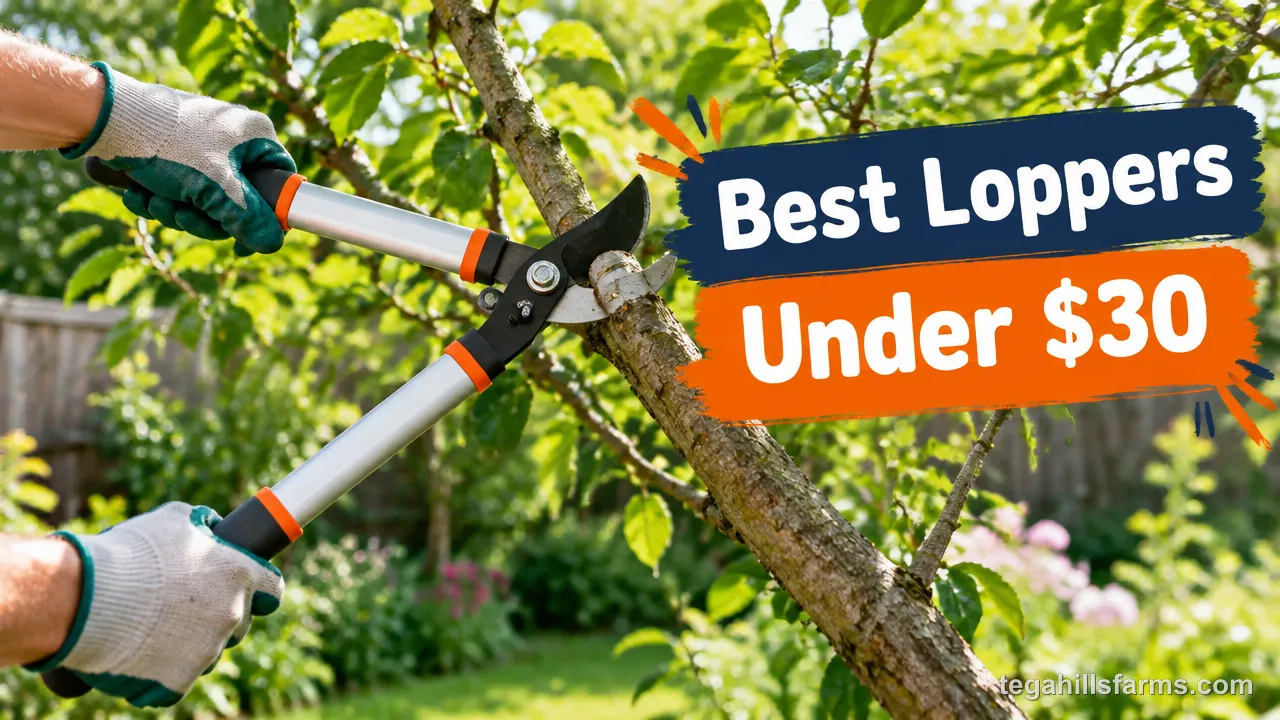
At this price, a few build details decide how long a lopper stays useful: how the blades meet, how wide a branch the jaws accept, whether the handles multiply your force and whether the steel is coated against sap and rust. Handle length and grip count just as much, because they set how far you can reach and how your wrists feel at the end of a session.
The usual worry with an inexpensive lopper is a pivot that loosens or blades that stop meeting cleanly within a season. That damage usually comes from forcing cuts beyond the jaw capacity or leaving sap to harden on the blades, so how you use and care for the tool counts as much as which one you buy.


If you prune mostly at waist height among shrubs, a short, light lopper will tire you less than a long one; if your problem branches sit above your head, put handle reach first.
What Should You Look for in a Lopper at This Budget?
At this price, the tools that keep cutting cleanly for several seasons share a well-matched blade action, enough leverage for the wood you cut and steel and handles that stand up to sap, rust and repeated strain. Inexpensive tools rarely fail all at once; the pivot, the edge or the grip gives way first, and each weakness shows up as extra squeeze in your hands well before the tool breaks. Before you compare individual models, it helps to know which features set the best loppers apart from the ones that loosen or dull within a season.
Should You Choose Bypass or Anvil Blades?
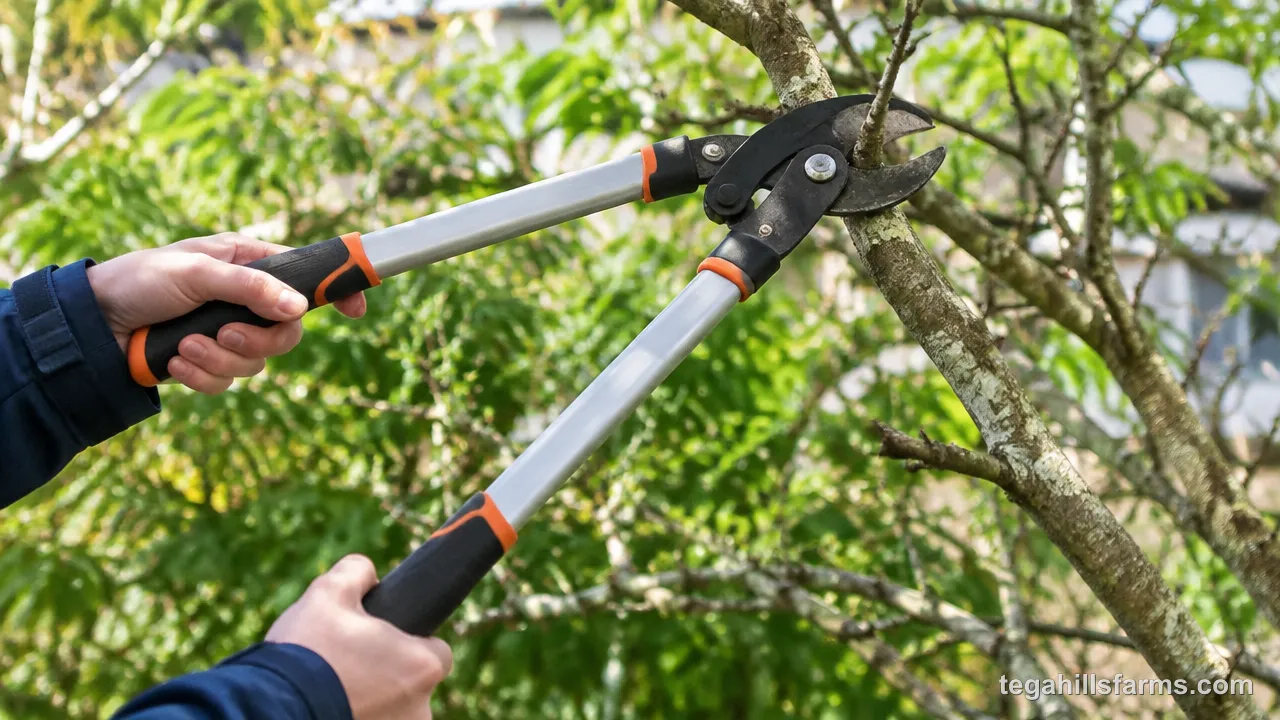
Most yard pruning at this price calls for a bypass action, because it slices live wood cleanly and leaves a wound the plant can seal. A bypass lopper works like scissors: a sharpened blade slides past a thicker, hooked jaw, so the stem is cut along a clean plane rather than squeezed.
An anvil lopper works more like a knife on a cutting board. Its straight blade presses down onto a flat anvil, which needs little blade alignment and cuts dry, brittle deadwood with less effort. On living green stems, that same pressure crushes the tissue on the anvil side and leaves a bruised stub that heals slowly and can die back.
Shrubs, roses and young trees are mostly live wood, so a bypass blade suits the bulk of home pruning. If your yard is mainly live growth, the best bypass loppers are worth a closer look, while the best anvil loppers earn their place where there is a lot of dead wood to clear.
How Thick a Branch Can a Lopper Cut?
Cutting capacity is the widest branch the open jaws can take and still cut cleanly, and it marks the upper limit of the blade rather than a size to aim for. A lopper cuts with the least strain on branches comfortably inside that figure.
Wood type changes where that limit sits. Green wood is moist and compresses as the blade enters, so a live branch near the listed capacity can still close cleanly. Dense, dry wood resists compression, and deadwood of the same diameter can stall the blades well before they meet.
When a branch is too thick, the force you add no longer goes into cutting. It pushes the blades apart and loads the pivot bolt sideways, which can bend the blade or leave a gap, so the tool tears rather than slices from then on. Read the listed capacity as the edge of comfortable use, and switch tools before you reach it on hard wood.
Does a Compound Mechanism Matter on a Cheap Lopper?
Yes, for weaker hands and long sessions, extra pivot points or gears earn their place on an inexpensive lopper, because they multiply the force you put into the handles and spread a hard cut over a longer handle stroke. On thicker stems, that means a steady squeeze instead of a sudden, strained push.
The trade-offs come from the same parts. Each added pivot or gear is another joint that can wear and develop slop, and a loose joint lets the blades drift apart on the cut. Compound designs also close more slowly, since the handles travel farther for each bit of blade movement, which you notice when snipping many thin stems in a row.
Gardeners with smaller or weaker hands, or anyone pruning for an hour at a time, gain the most from this design. If your grip is strong and most cuts are thin green growth, a simple single-pivot lopper closes faster and has fewer joints to keep tight.
Which Handle Length, Weight and Grip Suit Your Pruning Spots?
Short handles suit close work among crowded stems, and long or extendable handles suit high or deep cuts, so the right length depends on where most of your pruning happens. Longer handles add reach and leverage, but they also move the weight away from your hands and make the tool harder to steer inside a dense shrub.
Weight shows up later than you expect. A lopper that feels fine in the store can leave your wrists and shoulders tired after an hour of trimming, especially when you hold it above shoulder height. Rubberized grips give a secure hold without a hard clench, and shock-absorbing bumpers stop the handles from striking each other at the end of a cut, which takes the jolt out of your wrists. Both matter more for smaller or weaker hands.
Blade steel decides how long the edge lasts. High-carbon steel takes and holds a sharper edge than softer steel, but it rusts if left wet. A non-stick coating sheds sap and slows rust, so the blade glides through green wood and the edge stays keen longer than on bare metal.
The 7 Best Loppers Under $30 of 2026
The Fiskars Bypass Loppers 28in, Fiskars 28in Bypass Loppers, YIAD DRAGON HORSE Pruning Loppers 2-Pack, GARTOL Bypass Loppers 26-33in, wiselifetech Bypass Loppers & Pruning Shears, AIRAJ Bypass Loppers 16in and GARDENWORK Heavy Duty Bypass Loppers SK5 range from full-size and extendable models to compact sets built for close work. The full-length Fiskars models give firm leverage for homeowners trimming shrubs and small trees, the extendable GARTOL and GARDENWORK add reach for higher wood, and the compact YIAD and wiselifetech sets pair a short lopper with a hand pruner for work among stems. If light weight or easy-grip handles matter more than reach, the wiselifetech asks the least of your wrists, while the AIRAJ keeps the cost down for occasional trimming.
#1 Fiskars Bypass Loppers 28in — Best Overall
Homeowners who trim shrubs and small trees every season will find this an easy full-size lopper to live with. The 28-inch length gives steady leverage on branches up to 1.5 inches thick, and the low-friction coating on the steel blades keeps sap from dragging on the cut and slowing you down.
Key Specs:
- Length: 28 in
- Cutting capacity: 1.5 in
- Weight: 2.9 lb
- Blades: steel with low-friction coating
- Handles: non-slip SoftGrip with shock-absorbing bumpers
- Warranty: lifetime
Detailed Review:
Sap from green wood builds up on bare steel and makes each cut stickier than the last, so the low-friction coating on these steel blades matters through a long session. It reduces gumming, keeps the cut smooth and helps the blades resist rust between jobs.
The non-slip grips keep the handles from turning in your palms when you bear down, and the shock-absorbing bumpers soften the stop at the end of each cut. That stop is where most of the jolt into your wrists comes from, so cushioning it makes an hour of trimming noticeably easier.
Next to the Fiskars 28in Bypass Loppers, this model takes a narrower branch but weighs a little less at the same length. That trade favors a yard of shrubs and young trees, where a lighter tool is easier to hold at shoulder height and the smaller capacity rarely limits you. Fiskars backs it with a lifetime warranty, and I would choose it as a first lopper for exactly that kind of mixed garden.
Pros:
- Low-friction coating keeps sap from gumming the steel blades.
- Shock-absorbing bumpers soften the jolt at the end of cuts.
- Non-slip grips keep the handles steady in your palms.
- Lifetime warranty covers a tool meant for yearly use.
Cons:
- Long 28-inch handles feel unwieldy inside dense, tight shrubs.
- Takes narrower branches than the Fiskars 28in Bypass Loppers.
- Full-length build is awkward for close deadheading work.
Who It’s For:
Gardeners keeping a mixed yard of shrubs and young trees in shape will find this lopper a steady everyday tool, especially if they prune often enough to value blades that stay free of sap. If most of your cuts fall among tightly packed stems, a shorter lopper will be easier to maneuver.
Editor’s Verdict:
A well-balanced full-size lopper, with a coating that keeps cuts clean, comfortable grips and a warranty suited to years of routine pruning.
#2 Fiskars 28in Bypass Loppers — Best Performance
If thicker stems leave your hands aching, this lopper is worth the extra weight. Its compound Power-Lever design adds force on branches up to 1.75 inches, and the SoftGrip touchpoints on the rounded handles keep that force from pressing into one spot on your palms.
Key Specs:
- Length: 28 in
- Cutting capacity: 1.75 in
- Weight: 3.2 lb
- Mechanism: Power-Lever compound lever
- Blades: steel with low-friction coating
- Handles: rounded, non-slip, with SoftGrip touchpoints
Detailed Review:
The Power-Lever compound lever gives more cutting power than a traditional design, so a branch near the top of its range closes with a steady squeeze instead of a strained push from the shoulders. I would steer anyone with a weaker grip toward this model, because the lever takes over part of the work your hands would otherwise do.
Against the Fiskars Bypass Loppers 28in, this model accepts a wider branch and carries a little more weight at the same length. That trade pays off when you regularly meet woody stems near the limit of a standard lopper, though you will feel a bit more arm effort when you hold the tool overhead.
The low-friction coating on the steel blades reduces gumming and resists rust, so the edge keeps gliding through sappy wood. Rounded handles with SoftGrip touchpoints spread pressure across your palms, and the non-slip surface keeps the tool from shifting when you lean into a hard cut.
Pros:
- Compound lever reduces the squeeze needed on thicker stems.
- Accepts wider branches than the Fiskars Bypass Loppers 28in.
- Coated steel blades resist gumming and rust.
- Rounded SoftGrip handles spread pressure across your palms.
Cons:
- Heavier than the Fiskars Bypass Loppers 28in at equal length.
- Long handles limit maneuvering inside dense shrubs.
- Compound linkage adds joints that need occasional tightening.
Who It’s For:
Pruning established shrubs and fruit trees with tougher, woody stems is the work this lopper suits, and gardeners with reduced grip strength will notice the lever’s help on every hard cut. If you mostly snip soft green growth, a lighter lopper will feel quicker between cuts.
Editor’s Verdict:
Choose this lopper when leverage matters more than a light tool; its compound lever makes hard cuts easier on the hands.
#3 YIAD DRAGON HORSE Pruning Loppers 2-Pack — Also Great
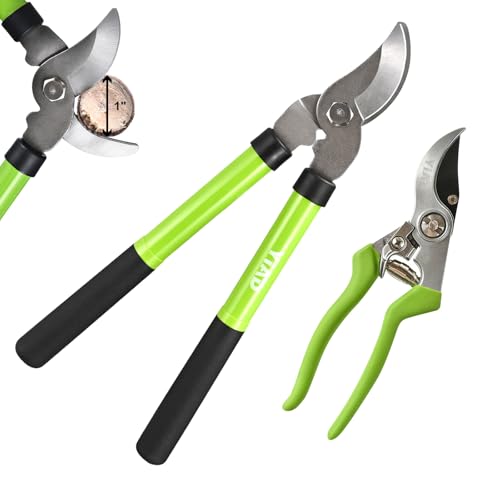
This set suits gardeners who switch between cutting woody shrub stems and deadheading flowers, because it pairs a 15-inch bypass lopper with an 8-inch hand pruner. Both blades carry an anti-rust coating that sheds sap.
Key Specs:
- Lopper length: 15 in
- Hand pruner length: 8 in
- Lopper cutting capacity: 1.5 in
- Weight: 1.7 lb
- Blades: high-carbon steel with anti-rust, sap-resistant coating
- Handles: PP+TPR cushioned grip with thumb-activated safety lock
Detailed Review:
The compact lopper fits between crowded branches where a full-size lopper would bump into neighboring stems, and it still takes woody stems up to 1.5 inches. The hand pruner then handles the finer work, such as deadheading blooms, trimming herbs and shaping ornamental shrubs.
The high-carbon steel blades carry an anti-corrosion coating that resists sap buildup, so cleaning after a rainy day is a quick wipe rather than a scrub. The central pivot uses a reinforced lock and a deeply seated coil spring retainer, which guards against the loose screws and popping springs that often end the life of inexpensive pruners.
The PP+TPR cushioned handles give a soft, slip-resistant hold that reduces hand fatigue over a long session. A thumb-activated safety lock slides open with one hand, which matters for smaller hands or anyone with reduced grip. I like this set for flower beds and ornamental shrubs, where most cuts are modest and accurate placement counts more than raw leverage.
Pros:
- Hand pruner and lopper cover deadheading and woody stems together.
- Coated high-carbon steel blades resist sap and rust.
- Reinforced pivot lock and seated spring resist loosening.
- Thumb safety lock opens easily with one hand.
Cons:
- Short lopper handles give little reach for high branches.
- Compact length offers less leverage than full-size loppers.
- Two separate tools mean twice the blades to clean.
Who It’s For:
Anyone tending flower beds, rose bushes and ornamental shrubs who wants a matched lopper and pruner in the same apron will find this set practical. Its cushioned grips and easy safety lock also make sense for older gardeners. If you clear overhead limbs, look for a lopper with longer handles instead.
Editor’s Verdict:
Pick this set for close, accurate work in beds and shrubs, where the compact lopper and hand pruner share the job well.
#4 GARTOL Bypass Loppers 26-33in — Also Great
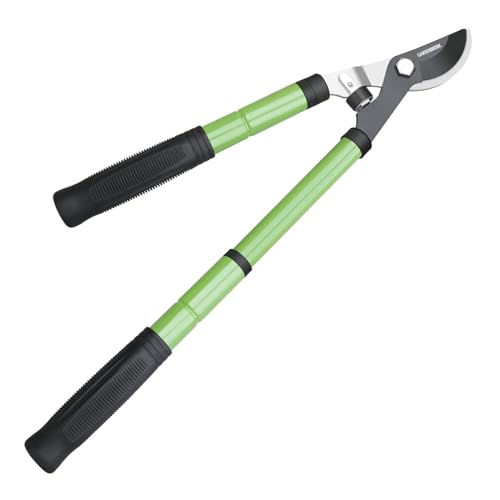
For overhead limbs you would rather not reach from a ladder, this lopper’s telescopic handles extend from 26 to 33 inches across five locking positions. Its gear-driven compound action adds force on thick green wood.
Key Specs:
- Handle length: 26–33 in, 5 locking positions
- Cutting capacity: 2 in
- Weight: 3.6 lb
- Mechanism: gear-driven compound action
- Blades: precision-ground carbon steel with black Teflon coating
- Handles: aluminum alloy with shock-absorbing rubber grips
Detailed Review:
The quick-click telescopic handles let you match the length to the cut: short for a hedge at chest height, extended for overhead branches up to 10 feet high while you stay on the ground. If reach is the main problem in your yard, the best extendable loppers offer more handle designs worth comparing.
The compound gear-driven system multiplies your leverage, and the precision-ground carbon steel blade opens to a 2-inch branch of living green wood. Compared with the GARDENWORK Heavy Duty Bypass Loppers SK5, this model extends farther and takes a wider branch, but it also weighs more, and you notice that weight once the handles are fully extended above your head.
A black Teflon coating keeps sap and rust from building up on the blade, even after cutting resinous pine. The aluminum alloy handles keep the tool manageable for an extendable design, and the shock-absorbing rubber grips hold securely with gloves or sweaty hands while softening vibration.
Pros:
- Telescopic handles lock at five lengths for low or high cuts.
- Gear-driven action adds force on thick green wood.
- Teflon-coated blade resists sap buildup and rust.
- Shock-absorbing rubber grips hold well with gloves.
Cons:
- Gears and telescoping joints add parts that can develop play.
- Heavier than the GARDENWORK model, noticeable when fully extended.
- Extended handles feel clumsy inside dense, low shrubs.
Who It’s For:
If your trouble spots are fruit trees and overhanging limbs, and you would rather stay off a ladder, this lopper fits the job. Gardeners with tired wrists also benefit from its gear-driven leverage. Those pruning mostly low, dense shrubs may find the extended handles and extra mass more than they need.
Editor’s Verdict:
Reach is the reason to buy this lopper, and its gear-driven action makes high, thick cuts manageable from the ground.
#5 wiselifetech Bypass Loppers & Pruning Shears — Best Lightweight
At 0.91 pounds for the 15-inch lopper and 0.6 pounds for the 8-inch shears, this set suits gardeners with limited hand strength who prune for long stretches. The soft PP+TPR grips keep both tools comfortable.
Key Specs:
- Lopper length: 15 in
- Pruning shears length: 8 in
- Weight: 0.91 lb (lopper), 0.6 lb (shears)
- Blades: SK-5 high-carbon steel, multi-stage heat treatment, Teflon coating
- Handles: slip-resistant PP+TPR soft grips
- Safety: thumb-activated lock and built-in finger guard
Detailed Review:
A light lopper puts less load on your wrists and shoulders each time you lift it into a shrub, so a long session along a border ends with less ache in your forearms. Both tools are compact enough to carry in a backpack, apron or car for work away from the house. If low weight is your first requirement, the best lightweight loppers give you more designs to compare.
The blades are SK-5 high-carbon steel with multi-stage heat treatment, which helps them hold a sharp edge through repeated cuts. A Teflon coating keeps sap from building up and slows rust in rain or humid weather, so the cut stays clean on roses, shrubs and hedges without tearing bark.
The slip-resistant PP+TPR handles have soft, ergonomic grips that reduce the effort of closing the blades. A thumb-activated lock keeps the blades shut during storage and transport, and the built-in finger guard keeps your knuckles away from thorny stems. I would hand this set to anyone whose grip tires before the pruning is done.
Pros:
- Light lopper and shears reduce wrist and shoulder strain.
- SK-5 steel blades hold an edge through repeated cuts.
- Teflon coating keeps sap and rust off the blades.
- Thumb lock and finger guard protect hands during use and storage.
- Compact set fits in a backpack, apron or car.
Cons:
- Compact handles give limited reach for high branches.
- Short handles offer less leverage on thick, woody limbs.
Who It’s For:
Older gardeners, people with smaller hands and anyone whose grip fades quickly will find this set comfortable for shaping roses, shrubs and hedges. It also travels easily to a relative’s yard or a community plot. If you regularly cut thick limbs or overhead branches, a full-size lopper with longer handles will serve you better.
Editor’s Verdict:
Keep this set close to the beds you prune every week; its light weight and soft grips make long sessions far less tiring.
#6 AIRAJ Bypass Loppers 16in — Best Budget
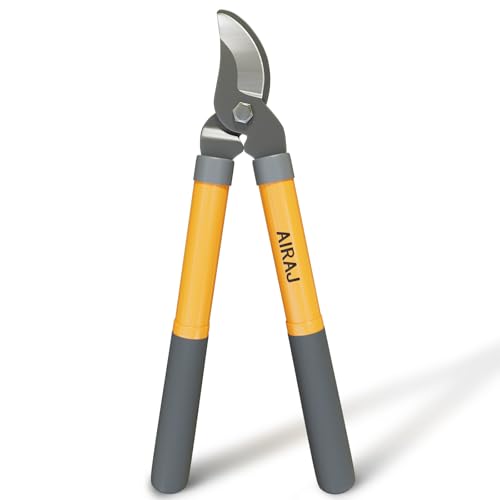
Occasional pruners who want an affordable lopper for flower stems and small shrubs will find this a sensible choice. Its SK5 blades, forged from manganese and high-carbon steel and finished with a Teflon coating, cut branches up to 1.5 inches and stay sharp through repeated use.
Key Specs:
- Length: 16 in
- Cutting capacity: 1.5 in
- Blades: SK5 manganese and high-carbon steel with Teflon coating
- Handles: rubber-coated frosted grips
- Mechanism: multiple pivot points for added leverage
Detailed Review:
The arm length and blade opening are set to make full use of leverage, and multiple pivot points add force so a thicker stem closes without a hard shove. That design lets a compact lopper handle more than its size suggests, which helps when your hands are not strong.
Set beside the Fiskars Bypass Loppers 28in, which shares the same cutting capacity, this lopper is far shorter. It trades reach and long-handle leverage for easier control inside a tight shrub or around a container planting, so it is better at close work near the base of plants than at thinning the top of a small tree.
The rubber-coated frosted handles hold their grip when your palms sweat, and they suit a wide range of hand sizes. The SK5 blades keep their edge after repeated use, and the Teflon finish helps them pass through sappy stems without sticking. I see it as an affordable way to cover seasonal trimming without giving up coated blades.
Pros:
- Multiple pivot points add leverage to a compact lopper.
- Teflon-coated SK5 blades stay sharp through repeated cuts.
- Rubber-coated frosted grips stay secure with sweaty palms.
- Short length is easy to steer inside tight shrubs.
Cons:
- Short handles cannot reach into the upper canopy of trees.
- Extra pivot points add joints to keep tight and oiled.
Who It’s For:
For gardeners on a tight budget who trim flower stems, hedges and small shrubs now and then, this lopper covers the job without fuss. People with smaller hands will find it easy to control. Anyone thinning taller trees will want a lopper with longer handles and more reach.
Editor’s Verdict:
Expect dependable light-duty trimming from this compact lopper, with coated SK5 blades and multi-pivot leverage at a modest price.
#7 GARDENWORK Heavy Duty Bypass Loppers SK5 — Also Great
This lopper suits gardeners who switch between low shrubs and higher branches in the same afternoon. Its handle adjusts from 16 to 24 inches, and an integrated shock absorption buffer takes the jolt out of each cut so your hands hold up through a long session of pruning.
Key Specs:
- Handle length: adjustable 16–24 in
- Cutting capacity: 1.6 in
- Weight: 2.5 lb
- Blades: SK5 carbon steel with Teflon coating
- Handles: anti-slip rubber grip
- Shock absorption: integrated buffer
Detailed Review:
The adjustable handle lets one lopper do the work of a short and a long tool. Collapsed, it moves easily among the stems of a potted plant or a low shrub, and extended, it adds reach and leverage for limbs above shoulder height.
The GARTOL Bypass Loppers 26-33in reaches farther and takes a wider branch, while this lopper is lighter to carry and lift. For pruning that stays mostly within arm’s reach, the lighter tool is the better trade, because you raise it again and again in a session; for high limbs, the extra reach wins.
The SK5 carbon steel blades carry a Teflon coating that resists rust and keeps the edge sharp over long-term use. The integrated shock absorption buffer soaks up vibration at the end of each cut, and the soft rubber grip adds friction so the handles do not slip. It fits a mixed yard of fruit trees, potted plants and shrubs, where the adjustable length earns its keep every week.
Pros:
- Adjustable handle works for both low and high branches.
- Teflon-coated SK5 blades resist rust and hold their edge.
- Shock absorption buffer reduces strain on the hands.
- Rubber grip adds friction and prevents slipping.
Cons:
- Adjustment joint adds a part that can loosen with use.
- Takes narrower branches than the GARTOL Bypass Loppers 26-33in.
Who It’s For:
Homeowners with a mix of potted plants, fruit trees and landscape shrubs can cover all of them with this adjustable lopper. Its buffer and rubber grip help anyone whose hands feel the strain of repeated cuts. If your pruning centers on tall limbs well above your head, a lopper with longer reach will suit you better.
Editor’s Verdict:
Adaptable and gentle on the hands, this lopper covers both low and high pruning with one adjustable handle.
Which Budget Lopper Should You Choose?
The right pick comes down to where you cut, how thick the wood is and how much strain your hands can take, because these models differ mainly in handle reach, leverage mechanism and weight.
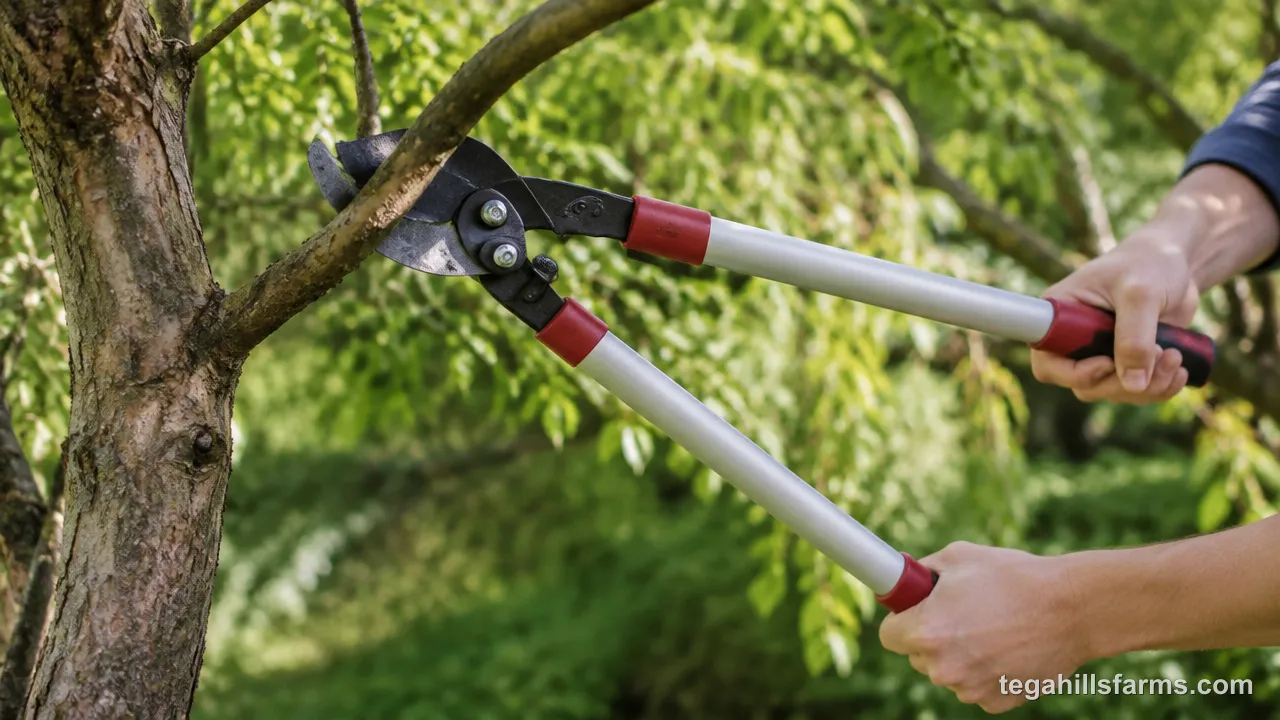
- Choose the Fiskars Bypass Loppers 28in if you want one full-size tool for all-round shrub and young-tree trimming; it gives up some branch capacity to the Fiskars 28in Bypass Loppers in exchange for a lighter feel.
- Go with the Fiskars 28in Bypass Loppers if tougher, woody stems are the problem, since the compound lever adds force at the cost of a little more weight.
- Pick the YIAD DRAGON HORSE Pruning Loppers 2-Pack if you want a compact lopper and a hand pruner for beds and ornamental shrubs, and you can live with short reach.
- Choose the GARTOL Bypass Loppers 26-33in if high branches are your main job; the telescopic, gear-driven design reaches farther but is heavier to hold up.
- Reach for the GARDENWORK Heavy Duty Bypass Loppers SK5 if you want an adjustable handle in a lighter build than the GARTOL, with a buffer that cushions each cut.
- Choose the wiselifetech Bypass Loppers & Pruning Shears if your hands tire quickly; the light weight and soft grips come with less leverage on thick limbs.
- Go with the AIRAJ Bypass Loppers 16in if you trim only now and then and want to keep the cost low; its short multi-pivot design favors close work over reach.
Every gain in reach or leverage costs something in weight or moving parts, so match the tool to the cuts you make every week rather than the hardest cut you make once a year. If you are weighing options outside this price range, knowing how to choose loppers by blade action and handle design makes that comparison easier.
A branch only slightly wider than the open jaws looks close enough to try, but the blades stall halfway and the extra pressure goes into the pivot bolt instead of the wood. On an inexpensive lopper, one forced cut like that can spring the blades apart, and every cut after it tears bark instead of slicing it.
What Is the Best Tool for Cutting Thick Branches?
A pruning saw takes over once a branch is wider than the lopper’s jaws open, when the wood is hard and dry, or when the cut sits overhead where you cannot squeeze the handles with full force. In those cases, a lopper strains while a saw keeps working at an even pace.
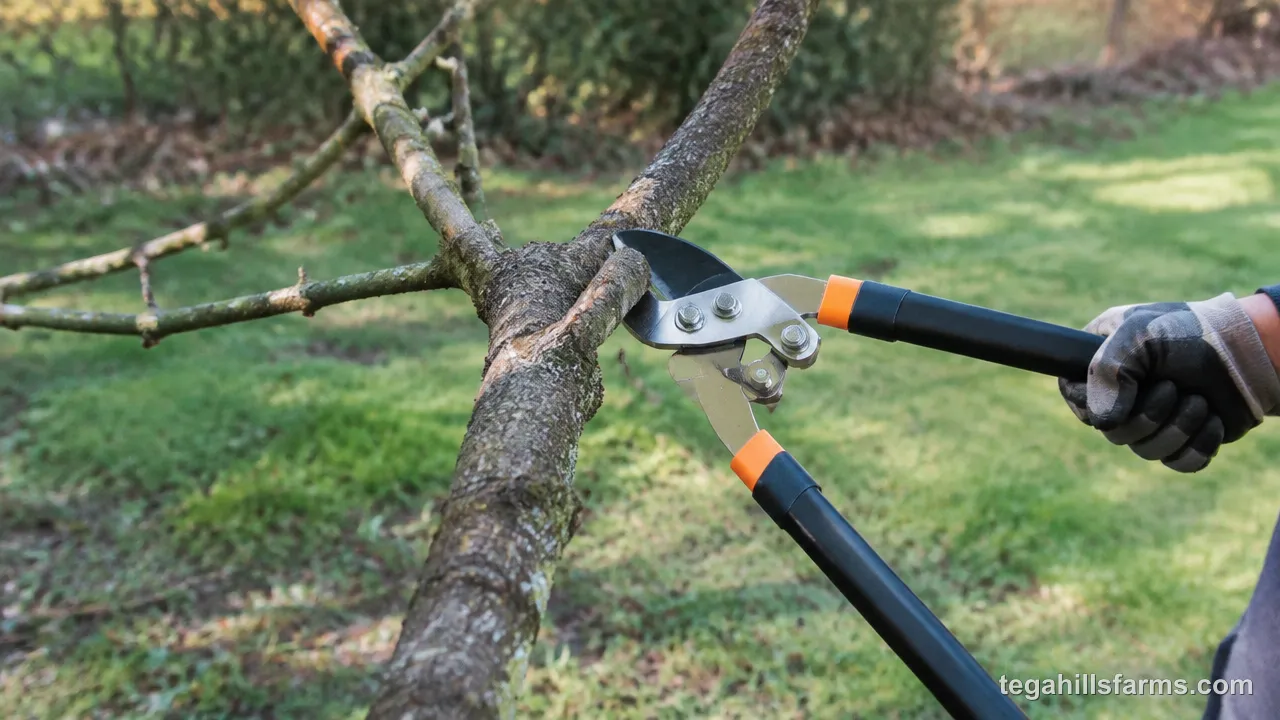
The difference comes from how each tool cuts. A lopper pinches: the blades wedge into the wood from both sides, and the force needed rises quickly as the branch gets thicker. A saw slices, removing a thin strip of wood with each stroke, so a large limb takes more strokes but rarely needs more strength than your arm can give. Forcing a lopper past its limit bends the blades or loosens the pivot, and that damage stays with the tool.
In a typical yard, the lopper handles the bulk of shrub and small-tree trimming, while the saw takes the few large limbs and old deadwood. For branches near the limit of what a lopper can take, the best loppers for thick branches pair wider jaws with stronger leverage.
How Can You Make a Budget Lopper Last Longer?
An inexpensive lopper can stay serviceable for several seasons when you cut within its limits and clean it after use. Most failures build slowly: a pivot loosens a little with each twisted cut, and an edge pits under sap left on the blade overnight. Those small habits decide whether the tool keeps slicing cleanly or starts tearing stems long before the blades wear out.
What Mistakes Wear Out a Budget Lopper Fastest?
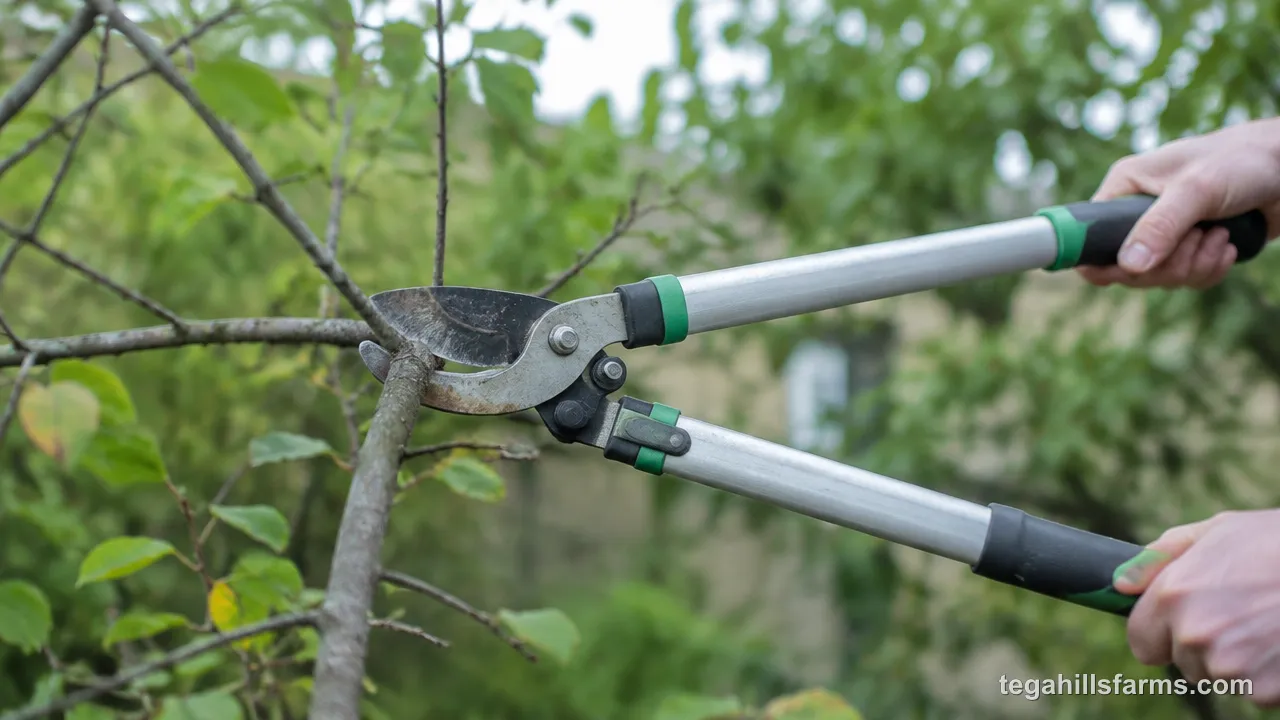
Twisting the blades through a cut, forcing branches past capacity, cutting wire or wood that has touched soil, and leaving sap to dry on the blades do the most damage. Each one attacks a different part of the tool.
- Twisting the handles to finish a cut pries the bypass blade sideways, bending it away from the hook and opening a gap between them.
- Cutting past capacity loads the pivot bolt sideways and slowly enlarges its hole, which lets the blades wobble.
- Wire and soil-contact wood carry grit and metal that nick the edge or roll it over in a single cut.
- Dried sap stiffens the action, so you squeeze harder on every cut and strain the handles, and it traps moisture that starts rust at the joint.
The early warning signs are a pivot that wobbles when you shake the open tool, blades that leave a strip of bark uncut instead of meeting cleanly, and rust forming around the joint.
How Do You Clean, Sharpen and Store a Lopper?
Wipe sap off the blades after each session, put a light oil on the pivot and both blade faces, hone only the beveled outer edge of the bypass blade, and keep the lopper dry and closed through winter. These steps keep the edge keen and stop rust where it usually starts, at the joint.
A non-stick coating protects the blade, but it wears thin at the cutting edge and scratches with use, which exposes bare steel. That steel needs the same wipe and oil as an uncoated blade.
Learning how to sharpen loppers takes a little practice: follow the existing bevel with a file or sharpener, stroke in one direction, and only lightly remove the burr from the flat inner face, which must stay flat to pass close to the hook. A tuned pivot keeps the blades snug without binding, so stems are sliced instead of being pulled into a gap.
Is a Budget Lopper Enough for Occasional or Weekly Gardening?
An inexpensive lopper is enough for seasonal shrub trimming and light yard work, as long as you keep cuts within its capacity and clean it after use. At that pace, the pivot and blades see little wear between sessions, and a coated edge stays sharp for a long time.
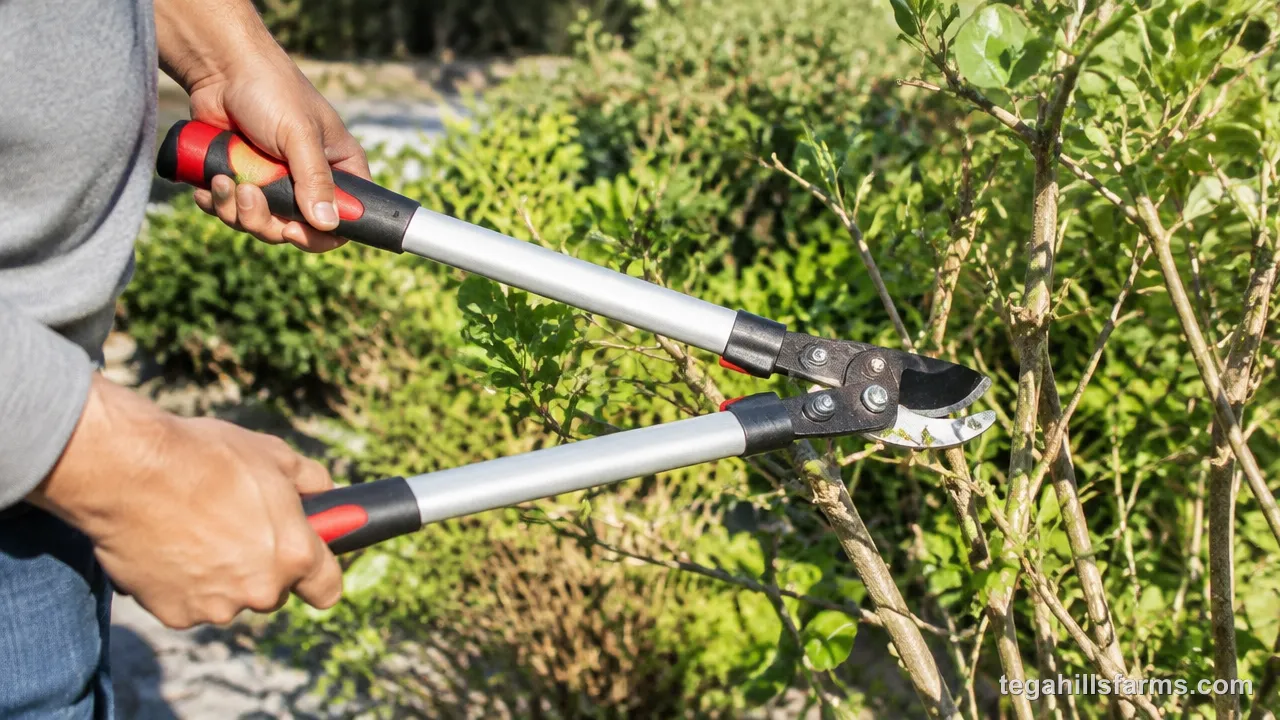
Weekly pruning, hard wood and long sessions tell a different story. Frequent use wears a lighter pivot faster, thinner handles flex on tough cuts and waste some of your force, and limited shock absorption sends more of each jolt into your wrists over an hour of work.
The signs it is time to move up are a pivot that needs tightening after every session, blades that drift out of line soon after adjustment, handles that flex when you squeeze, and hands that ache before the job is done. At that point, loppers under $50 are a reasonable next step; look for a sturdier pivot bolt, replaceable blades and bumpers that cushion each cut, and expect a tool that holds its alignment through regular use.
Write Your Review
No reviews yet. Be the first to share your experience!