

Our picks for the best garden shovels for compost are AgroPro Square Shovel 58in (Best Overall), KOLEIYA Flat Transfer Shovel 41in (Runner Up), Truper Tru Pro Square-Point Shovel 48in 31199 (Best for Professionals), Truper Green Built Square-Point Shovel 47in (Also Great), VNIMTI Square Shovel D-Handle 41in (Also Great), AMES Eagle Square Point Shovel 44in (Best Budget), Seymour SV-LS91 Square Point Shovel 42in (Best Easy Assembly), Truper Tru Pro Square-Point Shovel 48in 34279 (Best Premium) and Plexon Square Point Shovel 27in (Also Great).
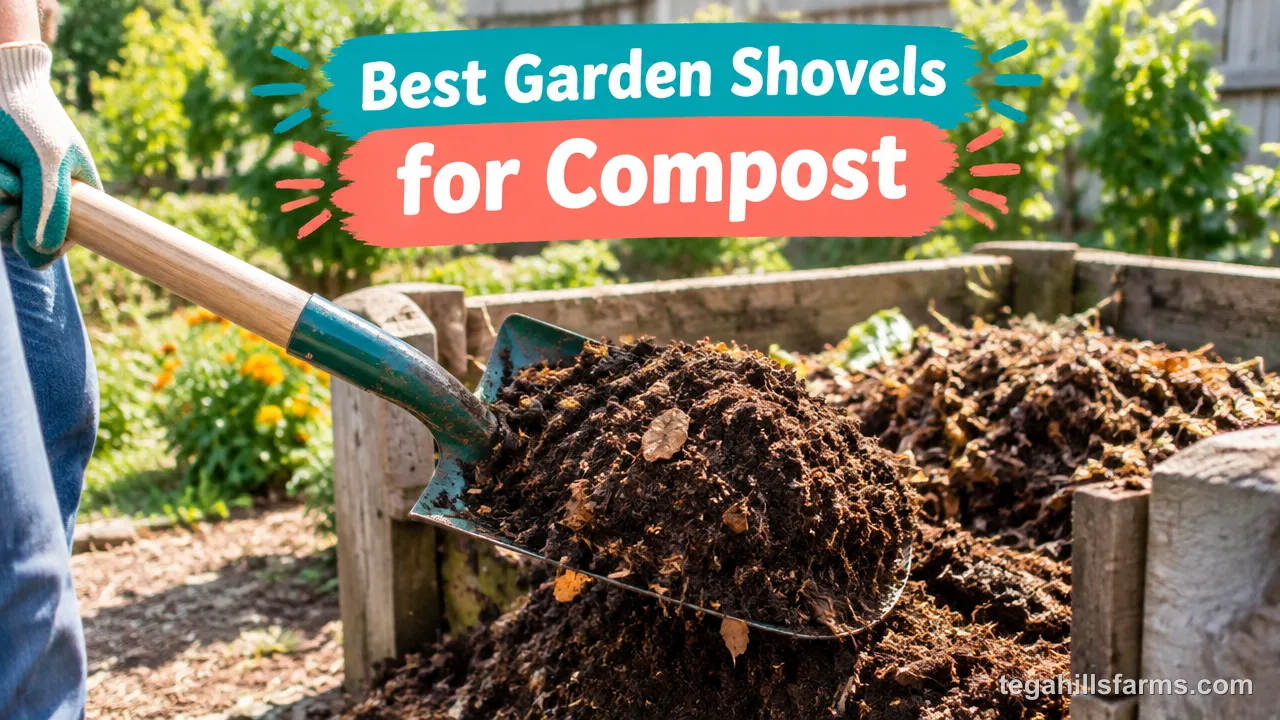
Three parts of the build decide whether a compost shovel works for you. The first is the handle’s length and grip. The second is the handle material and the weight it adds. The third is the blade steel and how firmly the head is fixed to the handle. Handle length sets your posture at the pile, and the grip decides how much control you keep as the blade tips. The blade and its joint decide whether the tool stays tight after seasons of foot pressure.
Compost is harder on a shovel and on your body than its loose look suggests. A full blade of damp, finished compost is dense and heavy. It clings to the steel, and the moisture and mild acids it leaves behind keep working on coatings and bare metal between uses. You repeat every bit of extra tool weight and every slip of the grip with each load you lift, so a poor match shows up in your wrists, forearms and lower back long before the job is done.




Before choosing, picture where your compost actually sits. A ground-level pile or a tall bin rewards a long handle that lets you work upright. Raised beds, tumblers and tight corners are easier with a compact shovel and a D-grip that keeps the blade close to your body.
What Is the Best Type of Shovel for Moving Compost?
Square-point transfer shovels handle compost better than other blade shapes, because a flat, straight front edge slides under loose material and lifts a full load cleanly off a bin floor, a tarp or a patio.
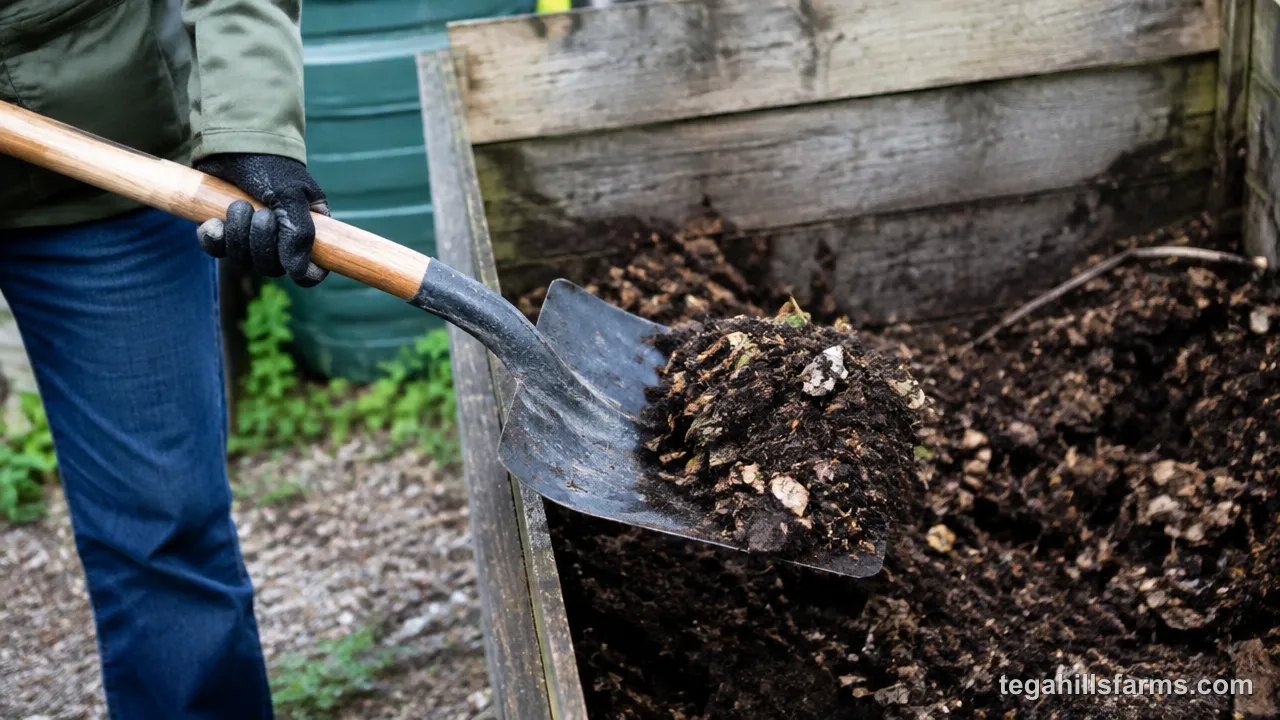
A garden shovel is any long-handled tool with a dished blade for lifting and throwing material, and the shape of its tip decides the job. A square-point shovel, often sold as a transfer shovel, has a flat end and slightly raised sides. It carries crumbly compost the way a dustpan carries dirt and leaves little behind on a hard surface. A round-point shovel has a curved, pointed blade built to pierce and cut into soil. That point concentrates your force for digging, but the curved edge rides over material on a flat floor and spills part of every load.
A garden spade is a different tool. It has a flatter, straighter blade with little or no dish, made for slicing turf, edging beds and digging straight-sided holes. It moves compost poorly because nothing holds the material on the blade. A garden scoop, sometimes sold as a compost scoop, has a deep, wide pan with high sides. It suits light, fluffy material such as dry leaf mold, but it turns awkward and heavy once it fills with damp compost.
Each blade shape meets loose material in its own way:
| Tool | Blade shape | Built for | With compost |
|---|---|---|---|
| Square-point transfer shovel | Flat end, raised sides | Lifting and moving loose material | Scoops cleanly down to the last layer |
| Round-point shovel | Curved, pointed tip | Cutting into ground | Spills part of each load |
| Garden spade | Flat, straight, little dish | Edging and slicing soil | Holds little material |
| Garden scoop | Deep, wide pan | Light, fluffy material | Gets heavy once damp compost fills it |
For compost, the square point is the shape to shop for. For jobs beyond compost, such as planting holes or trenching, compare the best garden shovels across every blade style.
The 9 Best Garden Shovels for Compost of 2026
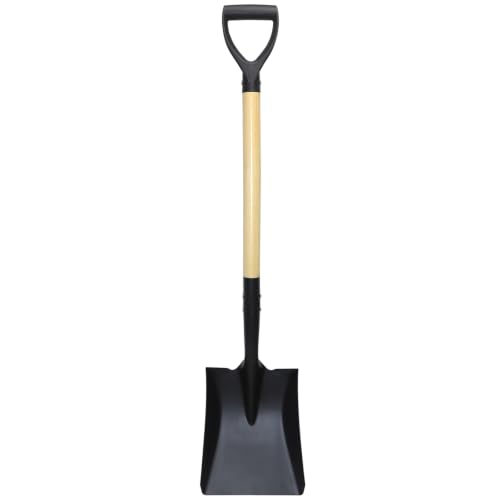
Each of these shovels has a square or flat blade: AgroPro Square Shovel 58in, KOLEIYA Flat Transfer Shovel 41in, Truper Tru Pro Square-Point Shovel 48in 31199, Truper Green Built Square-Point Shovel 47in, VNIMTI Square Shovel D-Handle 41in, AMES Eagle Square Point Shovel 44in, Seymour SV-LS91 Square Point Shovel 42in, Truper Tru Pro Square-Point Shovel 48in 34279 and Plexon Square Point Shovel 27in. The full-length models with long fiberglass or wood handles give you leverage and let you stay upright at a ground-level pile or over the rim of a tall bin. The compact and D-handle shovels give up that reach for close control in raised beds, tumblers and tight corners. That split gives a clear match to homeowners turning a pile on the ground, gardeners emptying a deep bin, small-space and raised-bed growers, and occasional users who want a simple tool.
#1 AgroPro Square Shovel 58in — Best Overall
If you work a compost pile at ground level or reach down into a tall bin, the 58-inch length lets you lift and tip loads while standing nearly upright, so your lower back does less of the work. A forged high-carbon steel head and double-rivet joint keep it tight under heavy foot pressure.
Key Specs:
- Overall length: 58 in
- Weight: 5.5 lb
- Head: forged high-carbon steel with rust-resistant coating
- Handle: thickened fiberglass with dual-section anti-slip rubber grip
- Head connection: double-rivet reinforced
- Footplate: oversized
Detailed Review:
The head is forged from high-carbon steel, which stays hard enough to hold its square edge through seasons of scraping a bin floor or a concrete pad. Carbon steel rusts readily, so the rust-resistant coating puts a barrier between damp compost residue and the bare metal.
Two rivets fix the head to the handle, so the joint resists the twisting load that builds when you lever a full blade out of a dense pile. The oversized footplate spreads your boot pressure across a wider strip of steel, which helps you drive the blade into the packed bottom layer of a heap.
The thickened fiberglass handle resists bending and breakage under that leverage. Its dual-section rubber grip gives each hand its own anti-slip zone and absorbs some of the shock when the blade strikes a hard base.
At 5.5 lb, it weighs more than the 3.3 lb KOLEIYA Flat Transfer Shovel 41in, and you feel that difference over a long run of lifts. In exchange, the 58-inch length lets you empty a tall bin or work a ground-level pile without folding over the rim.
Pros:
- Long handle lets you lift from a pile without deep bending.
- Double-rivet joint keeps the head from loosening under foot pressure.
- Rust-resistant coating protects the high-carbon steel head.
- Dual-section rubber grip keeps both hands from slipping.
Cons:
- Its weight adds up over many repeated lifts.
- Long handle feels unwieldy in raised beds and tight corners.
Who It’s For:
Gardeners who keep a large ground-level pile or a deep bin will make full use of this shovel’s long reach, and its stiff fiberglass handle suits heavy, repeated loads. If lifting tires you quickly, the lighter KOLEIYA Flat Transfer Shovel 41in will feel easier in your hands.
Editor’s Verdict:
Reach, a riveted high-carbon head and a bend-resistant fiberglass handle make this a dependable compost shovel for heavy, frequent work at the pile.
#2 KOLEIYA Flat Transfer Shovel 41in — Runner Up
At 3.3 pounds and 41 inches overall, this transfer shovel suits smaller gardeners and anyone who wants to lift leaves, soil and yard trimmings without fighting the tool’s weight. It also fits in a car trunk.
Key Specs:
- Overall length: 41 in
- Weight: 3.3 lb
- Head: square transfer head, metal
- Handle: solid wood with D-handle
Detailed Review:
A wide square head with a flat front edge gathers more leaves, dead grass or finished compost in each pass, and it lifts material off a patio or bin floor with little left behind. The scoop holds a generous load of dirt or yard trimmings, and the tool stays balanced when it is full.
The solid wood handle resists twisting under load and ends in a D-handle that gives your top hand a closed grip. That closed grip keeps the blade steady as you turn your wrist to dump compost into a wheelbarrow, so less of the load slides off early.
At 3.3 lb and 41 inches overall, this is a short, light tool, which suits you if you are shorter and a long shaft pushes your hands too high. Compared with the 58-inch AgroPro Square Shovel 58in, you bend further to reach the bottom of a deep bin or the base of a ground-level pile.
The compact length lets it ride in a car trunk, which helps if you haul compost or mulch from another site. It also clears ice from a driveway in winter, so it earns its storage space year-round.
Pros:
- Light build eases repeated lifting of leaves and compost.
- Wide square head gathers more material per pass.
- Solid wood handle resists twisting under a full load.
- Compact length fits in a car trunk.
Cons:
- Short length means more bending at deep bins.
- Wood handle should not be left out beside a wet pile.
Who It’s For:
Shorter gardeners, or anyone who finds a long, heavy shovel tiring, will appreciate how easily this one lifts and tips. It also suits people who move compost or mulch between sites by car. If your compost sits in a deep bin, a longer handle will spare your back more.
Editor’s Verdict:
Light, compact and balanced, it makes compost and leaf cleanup easy on small frames and tired arms.
#3 Truper Tru Pro Square-Point Shovel 48in 31199 — Best for Professionals
For heavy, repeated compost moving, the 9-inch cushion grip gives your hands room to shift along the shaft while the 48-inch fiberglass handle provides steady leverage. It is built for daily jobsite work.
Key Specs:
- Handle: 48 in fiberglass
- Grip: 9 in non-slip cushion grip
- Weight: 4.76 lb
- Blade: square point
- Head connection: reinforced head-to-handle
- Series: Tru Pro (model 31199)
Detailed Review:
The square-point blade is shaped for scooping, leveling and transferring loose material such as soil and mulch, and finished compost handles the same way. Its flat edge lets you skim a layer off the top of a pile or scrape the last of a load from a wheelbarrow.
The 48-inch fiberglass handle is professional grade, built for durability and weather resistance on contractor jobsites. That matters when the shovel lives beside an outdoor bin rather than in a shed.
The 9-inch cushion grip is long enough that you can slide your hand along it as the load shifts, and its non-slip surface holds when your gloves are damp from wet compost. The reinforced head-to-handle connection is built to take full leverage, so prying a blade out of a dense, matted pile does not compromise the joint.
The Truper Tru Pro Square-Point Shovel 48in 34279 has the same handle length but uses American ash where this one uses fiberglass. You give up the feel of wood for a shaft that tolerates rain and sun. I would choose this version if your shovel stays outdoors most of the season.
Pros:
- Long cushion grip lets your hand shift with the load.
- Fiberglass handle tolerates weather and outdoor storage.
- Reinforced head joint stands up to heavy prying.
- Square-point blade skims compost cleanly off flat surfaces.
Cons:
- Full-length handle feels long in tight corners.
- Fiberglass shaft lacks the warm, natural feel of wood.
Who It’s For:
Anyone who moves compost often, keeps a large garden or does landscaping work will appreciate the weather-resistant fiberglass handle and the long cushion grip. If you only turn a small pile now and then, a simpler shovel will do the job without the contractor-grade build.
Editor’s Verdict:
Built for jobsite use, this shovel brings contractor durability and generous grip room to heavy compost work.
#4 Truper Green Built Square-Point Shovel 47in — Also Great
If you want a plain square-point shovel for compost, mulch and sand, the 47-inch fiberglass handle gives you reach into a bin and leverage under a heavy load. An integrated 5-inch grip steadies your hand.
Key Specs:
- Handle: 47 in fiberglass
- Grip: 5 in integrated grip
- Blade: square point
- Model: 31657 (key PCL-FP)
Detailed Review:
Soil, sand, gravel and mulch are the materials this square-point blade is built to scoop, transfer and level, and finished compost moves the same way. The flat edge cleans the floor of an open bin down to its base.
The 47-inch fiberglass handle gives you the reach to stand taller at a ground-level pile. Long-handle leverage helps most when you lift a heavy, wet load, because your lower hand acts as a pivot and the length does more of the lifting.
Its integrated grip runs 5 inches, against the 9-inch cushion grip on the Truper Tru Pro Square-Point Shovel 48in 31199, so you have less room to slide your hand as the load shifts. The shorter grip suits a steady, single hand position rather than constant repositioning, and it still supports control through a long session.
I see it as a practical yard shovel for gardeners who value reach and a simple build over extra grip length. It moves compost as readily as it moves gravel or sand on a jobsite.
Pros:
- Fiberglass handle gives reach at ground-level piles.
- Long handle improves leverage on heavy, wet loads.
- Square point leaves little compost behind on a bin floor.
- Integrated grip supports control through long sessions.
Cons:
- Shorter grip gives less room to reposition your hand.
- Long shaft is clumsy when filling a cart up close.
Who It’s For:
If you want a long-handled square-point shovel for compost, mulch and sand with no extras, this one fits well. It suits yard work at a ground-level pile or an open bin. Gardeners who constantly shift their hands along the shaft may prefer the longer cushion grip on the Truper Tru Pro Square-Point Shovel 48in 31199.
Editor’s Verdict:
Simple and long-reaching, this fiberglass square-point shovel handles everyday compost and mulch jobs with steady control.
#5 VNIMTI Square Shovel D-Handle 41in — Also Great
The D-shaped handle and 41-inch overall length keep the blade close to your body, which gives fine control when you fill a wheelbarrow or work beside a bin. At 3.3 pounds, it does not feel heavy in use.
Key Specs:
- Overall length: 41 in
- Weight: 3.3 lb
- Head: high-carbon steel, hardened by high-temperature quenching
- Handle: wood with D-shaped grip
- Blade top: pedals and wings for stepping
Detailed Review:
The large square head carries more material per scoop than a round-point blade, which means fewer scoops for the same pile and fewer times you bend to reload. Pedals and wings across the top of the blade give your boot a flat place to push when you drive the edge into the dense base of a heap.
The head is high-carbon steel hardened by high-temperature quenching, and it does not bend or deform when it meets stones buried in compost or garden soil. The edge is sharp enough to lift rocks out of the ground.
The D-shaped handle closes around your top hand, so you can rotate the blade to tip a load into a wheelbarrow without the shaft turning in your grip. With a 41-inch overall length, that control costs you reach, and a deep bin or ground-level pile will have you bending more.
The handle is pure wood, and the whole tool fits in a car trunk. I would pick it for close work around a bin, a raised bed or a garden cart, where a long shaft gets in the way.
Pros:
- Large square head moves more compost per scoop.
- D-shaped handle keeps the blade steady when tipping.
- Quenched high-carbon steel head resists bending against stones.
- Blade wings give your boot a flat place to push.
- Light build stays comfortable during repeated lifts.
Cons:
- Compact length adds bending at deep bins and ground piles.
- D-handle limits how far you can slide your top hand.
Who It’s For:
Raised-bed gardeners and anyone filling a wheelbarrow or cart from a compost bin will like the control the D-handle gives. It also suits people who want one shovel for compost in summer and packed ice on the driveway in winter. If your pile sits on the ground, a longer shaft will save your back.
Editor’s Verdict:
Expect firm control and a tough quenched steel head in a light tool made for close work around bins and carts.
#6 AMES Eagle Square Point Shovel 44in — Best Budget
A D-grip on a 44-inch handle gives you a secure hold for tipping loads and enough reach for a ground-level pile, all in an affordable build. Its 4-pound weight keeps repeated lifts manageable.
Key Specs:
- Handle: 44 in long handle with D-grip
- Weight: 4 lb
- Blade: large square point
- Model: 027-1554500
Detailed Review:
The large square-point blade is built for digging as well as scooping, so it can bite into the settled base of a pile and then carry a full load across the yard. That width also makes each lift heavier when the compost is wet, so you may want to fill it partway on damp days.
The 44-inch handle ends in a D-grip, which gives you enough length to work a ground-level pile without crouching and a closed hold at the top for rotating the blade. At 4 lb, the shovel adds a moderate amount of its own weight to each scoop.
This shovel is designed for heavy-duty digging in construction and landscaping, so a compost pile sits well within the work it is meant for. For a homeowner, that means the head and handle are built to take the leverage of prying a dense load free. I see it as a sensible pick when you want one working shovel for compost, mulch and general digging without spending more than you need.
Pros:
- D-grip makes tipping loads easier on the wrist.
- Large square blade carries a full load per scoop.
- Long handle lets you work a pile without crouching.
- Heavy-duty design handles digging as well as scooping.
- Affordable build covers compost and general yard work.
Cons:
- Large blade grows heavy when compost is wet.
- Wide blade is harder to maneuver through narrow bin openings.
Who It’s For:
Homeowners who want one dependable shovel for compost, mulch and occasional digging, without spending much, will find good value here. The D-grip also helps gardeners whose wrists tire from twisting a straight handle. If you mostly work in raised beds, a more compact tool will be easier to handle.
Editor’s Verdict:
Count on useful reach, a secure D-grip and a heavy-duty blade at a modest cost, which makes it an easy choice for everyday compost work.
#7 Seymour SV-LS91 Square Point Shovel 42in — Best Easy Assembly
Weighing 2 pounds, this shovel suits occasional compost jobs and gardeners who want a tool that is easy to lift and hang up afterward. Rear rolled steps give your boot a firm push point.
Key Specs:
- Weight: 2 lb
- Handle: 42 in contoured hardwood with clear lacquer finish
- Socket: square-shoulder, 9 in
- Head: rear rolled steps
- Model: SV-LS91
Detailed Review:
This shovel is designed for occasional use, so it fits a homeowner who tops up beds or turns a small pile now and then rather than someone moving compost every day. At 2 lb, it asks very little of your arms and wrists, which makes light loads of finished compost, leaves or mulch easy to lift.
Rear rolled steps fold the top edge of the blade over, so your boot pushes on a rounded surface instead of a thin edge. The square-shoulder, 9-inch socket wraps a long section of the handle, which steadies the head against side-to-side play during light lifting.
The contoured hardwood handle is shaped to sit in the hand, and its clear lacquer finish seals the wood against moisture from damp compost. Lacquer wears through with use, so touching up bare patches keeps the wood from swelling or drying out.
The Truper Tru Pro Square-Point Shovel 48in 34279 weighs 4.78 lb and is built for toughness, so this shovel is far lighter but made for lighter duty. I would keep it for quick chores and reach for a sturdier tool for daily turning.
Pros:
- Light weight is easy on arms and wrists.
- Rolled steps give your boot a rounded push surface.
- Long square-shoulder socket steadies the head.
- Lacquered hardwood handle feels smooth in the hand.
Cons:
- Occasional-use design is not meant for heavy daily loads.
- Lacquer finish wears and needs touch-ups over time.
Who It’s For:
A gardener who tops up beds occasionally or tidies a small pile will find this light shovel easy to handle and hang on a hook. It also suits older gardeners who want less weight to lift. Heavy, frequent compost turning calls for a tougher tool.
Editor’s Verdict:
Pick this one for light, occasional compost chores where low weight and a smooth hardwood handle matter more than heavy-duty toughness.
#8 Truper Tru Pro Square-Point Shovel 48in 34279 — Best Premium
Gardeners who want a compost shovel built for durability get a 14-gauge blade and an American ash handle in a tough, traditional build. It is made in the USA.
Key Specs:
- Handle: 48 in American ash
- Blade: 14-gauge, square point
- Socket: extended by 2 in
- Weight: 4.78 lb
- Origin: Made in the USA
- Model: 34279
Detailed Review:
The 14-gauge blade is thick steel built for toughness, so it holds its shape when you drive it into a compacted heap or scrape it across a concrete pad. That thickness keeps the edge from rolling or denting under heavy foot pressure season after season.
The socket is extended by 2 inches, which wraps more steel around the base of the handle. A longer socket spreads leverage across more of the wood, so the blade stays steady and the joint stays tight when you pry a full scoop out of dense compost.
The American ash handle brings the shock-softening feel of wood to each strike against a hard base, and its 48-inch length gives you full reach at a pile or bin. The whole tool has a traditional build that rewards a wipe of oil and dry storage.
The Truper Tru Pro Square-Point Shovel 48in 31199 has a fiberglass handle of the same length. Next to it, the ash asks for more care and gives back the feel of wood. This is the version I would hand to someone who looks after their tools and wants one that ages well.
Pros:
- 14-gauge blade resists bending under heavy foot pressure.
- Extended socket steadies the head during hard prying.
- American ash handle softens shock on hard strikes.
- Made in the USA with a traditional build.
Cons:
- Ash handle needs periodic oiling to stay sound.
- Its heft tires smaller gardeners on long sessions.
Who It’s For:
Experienced gardeners who look after their tools and want a wood-handled shovel built for long service will value this one. It also suits buyers who prefer American-made tools. If your shovel lives outdoors, the fiberglass handle on the Truper Tru Pro Square-Point Shovel 48in 31199 asks for less upkeep.
Editor’s Verdict:
A 14-gauge blade, an extended socket and an American ash handle make this a shovel that rewards regular care with long service.
#9 Plexon Square Point Shovel 27in — Also Great
In raised beds, small bins and tight corners, the 27-inch length gives you close control over every scoop. Its hardened manganese steel blade resists bending.
Key Specs:
- Length: 27 in
- Weight: 2 lb
- Blade: hardened 50Mn manganese steel, powder-coated
- Handle: fiberglass shaft with polypropylene D-grip
- Model: TS27SQMNFD
Detailed Review:
The blade is heat-treated 50Mn manganese steel, which resists bending, chipping and wear, so it scoops wet soil, dense mulch or heavy compost without deforming over time. Its powder-coated finish adds rust protection for a tool that may live in a car trunk or shed through damp seasons.
At 27 inches, the shovel keeps your hands close to the blade, which gives precise placement when you top up a raised bed or work a small bin or tumbler. Compared with the 58-inch AgroPro Square Shovel 58in, you give up the reach to stay upright at a ground-level pile and will bend for every load there.
The fiberglass shaft resists moisture, stays safe to hold in cold weather and absorbs vibration, so a strike against a buried stone reaches your hands softened. The polypropylene D-grip fits securely with or without work gloves, and its width improves leverage for repeated scooping and lifting. I like it most as a second shovel kept near raised beds, where a full-length tool feels clumsy.
Pros:
- Hardened manganese steel blade resists bending and chipping.
- Powder-coated blade adds rust protection.
- D-grip fits securely with or without gloves.
- Compact length gives precise control in raised beds.
- Light weight makes it easy to carry and store.
Cons:
- Short length forces bending at ground-level piles.
- Not suited to emptying a tall bin from outside.
Who It’s For:
For small-space gardens, raised beds and compost tumblers, this short shovel gives you control where a long handle would bump into frames and fences. It also fits in a vehicle for winter snow duty. Anyone working a large pile on the ground will be happier with a full-length shovel.
Editor’s Verdict:
Tough manganese steel and a glove-friendly D-grip make this compact shovel a smart partner for raised beds and small bins.
What Should You Look for in a Compost Shovel?
How the tool is built matters more than any single feature, because compost is dense, damp and heavy and shows up weak points only after repeated lifting and tipping. A shovel that feels light and balanced in the store can strain your wrists by the end of a long session if its proportions and grip don’t suit the load. Each load also leaves moisture on the steel and pressure on the joint, so the build decides how the tool ages over seasons as well as how it feels on the first day.
How Long Should the Handle Be for a Compost Bin or Pile?
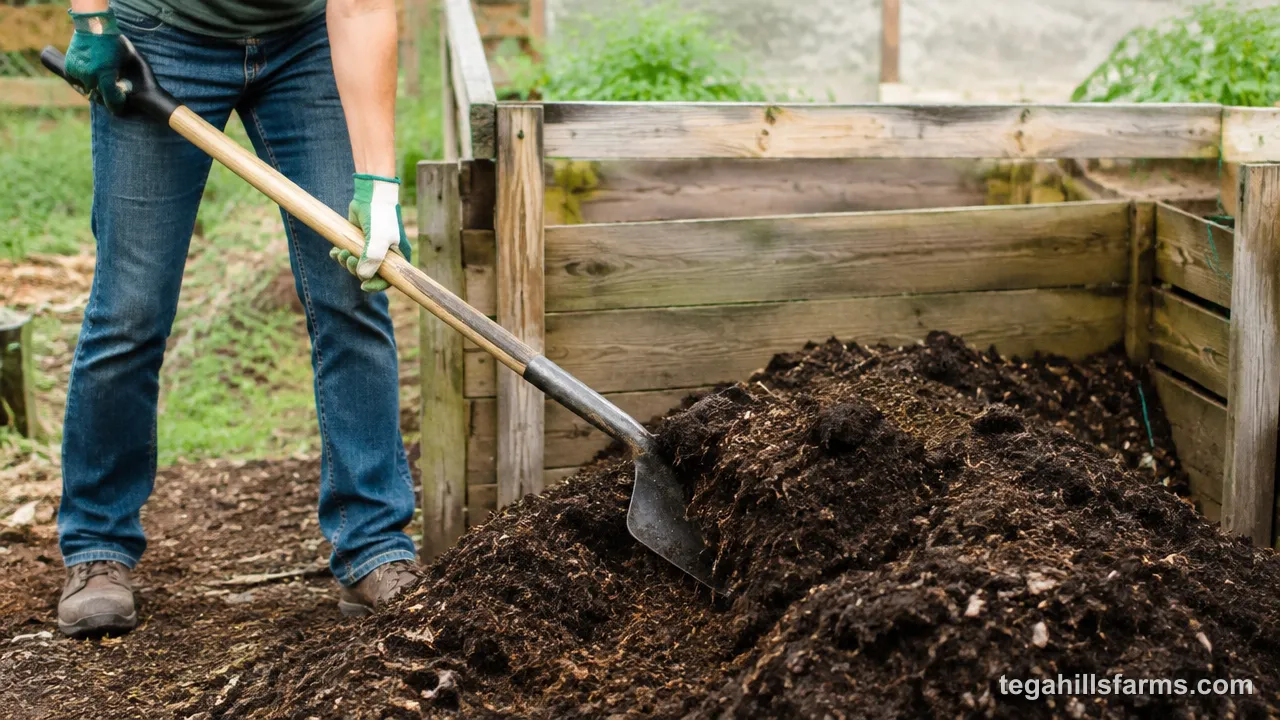
Standing upright at a ground-level pile, or reaching over the rim of a tall bin, takes a long handle. A short handle keeps the blade close in raised beds and tight spaces, but it makes you bend wherever the compost sits low or deep. Handle length sets the angle of your back for every load, so the wrong length turns each lift into a small crouch that adds up over a session.
The grip at the top changes how that length behaves. A D-grip closes around your top hand and holds it in one spot. That gives you firm control when you turn the blade to tip a load into a cart, and it suits a close working position. A long straight shaft lets you spread your hands apart for leverage and reach, which helps when you lift heavy compost from a distance or pry out a dense bottom layer. If you are shorter, a full-length shaft can push your hands too high, so a compact D-grip model may fit you better even at a pile.
Fiberglass, Wood or Steel: Which Handle Material Suits Compost Work?
For damp, heavy compost work, fiberglass is the practical choice for most gardeners. It resists moisture, dampens vibration and stays light. Wood gives you a warmer feel and natural shock absorption but needs more care. Steel resists bending but adds the most weight.
Weight matters more with compost than with most garden materials. A damp load is already heavy, and you lift the tool’s own weight along with every scoop. A heavier handle adds to that effort across a session, and you feel it first in your wrists and lower back.
The three materials behave differently once the work starts:
| Handle material | Shock and vibration | Damp conditions | Failure risk | Weight |
|---|---|---|---|---|
| Fiberglass | Absorbs vibration well | Resists moisture and rot | Resists bending; can crack if struck hard on an edge | Light |
| Wood (ash, hardwood) | Natural flex softens shock | Can swell or rot if left wet; needs oil | Can split along the grain | Moderate |
| Steel | Passes shock to your hands | Can rust where the finish chips | Resists bending and breaking | Heaviest |
What Blade Steel and Head Connection Hold Up to Compost?
Heat-treated high-carbon or manganese steel keeps a blade stiff and its edge true under repeated foot pressure. A rust-resistant or powder coating protects that steel from damp compost, and a long socket or a riveted joint keeps the head from working loose on the handle.
Carbon content and heat treatment make steel harder, so the blade resists bending when you stand on it and dents less when it hits a stone. Harder steel also rusts readily without protection, which is why a coating matters more on a compost shovel than on one used for dry sand.
The head connection takes the strain every time you lever a load. A socket wraps steel around the end of the handle, and a longer socket spreads that leverage over more of the shaft. Rivets pin the head in place, and a pair of them resists the twisting that can loosen a single fastener over time.
A flat square edge scoops cleanly, but it spreads your force across its whole width, so it bites less into compacted ground than a pointed blade does. If your yard also needs digging in clay or packed soil, look at the best garden shovels for hard soil, which favor a pointed tip.
Finished compost straight from a damp bin packs onto a flat blade in a sticky layer, so each scoop carries less material than the last while the shovel grows heavier in your hands. Within a few loads you end up banging the blade on the bin edge, twisting your wrist to shake it clean and moving half a load each time.
Why Does Wet Compost Stick to a Shovel Blade?
Moisture turns the fine particles in finished compost into a paste that grips any rough, scratched or pitted steel. That paste also packs into the hollow behind the socket on an open-back blade.
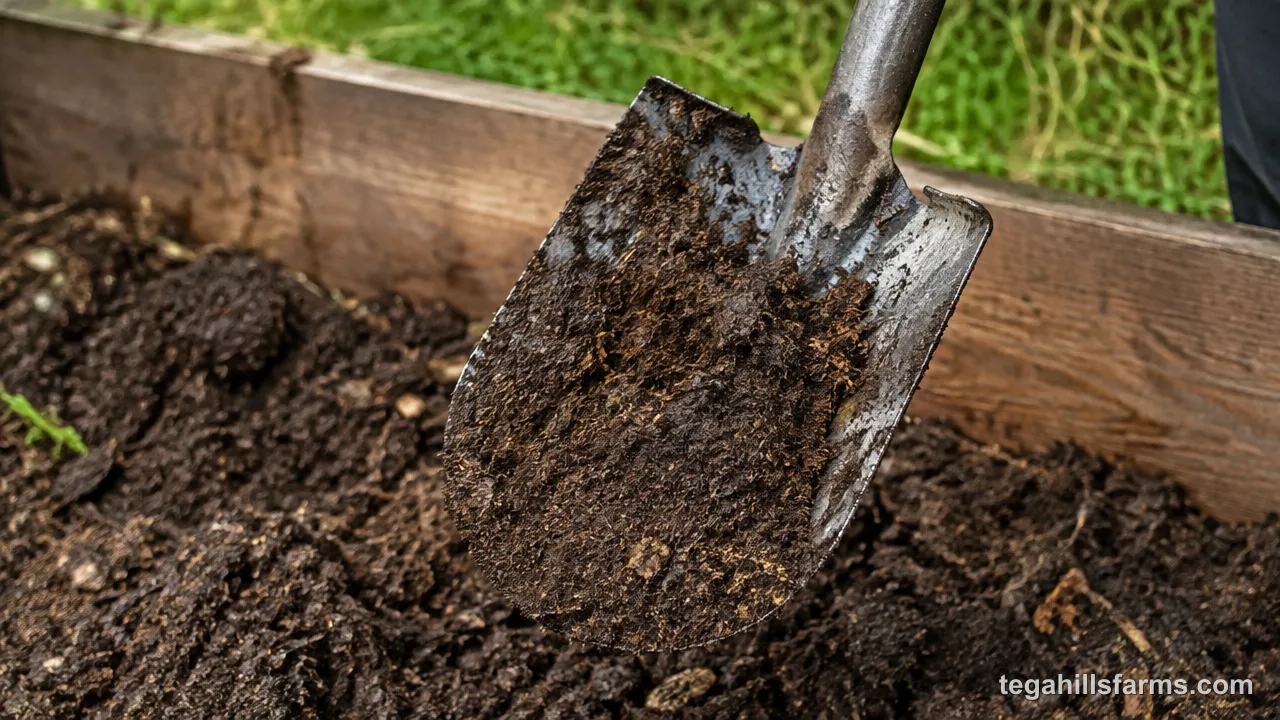
A smooth face releases the paste far more readily. A powder-coated or well-polished blade gives compost less texture to hold, while rust pits and worn paint act like small anchors. A closed-back blade is solid behind the socket, so material slides off the back as cleanly as off the front. An open-back blade leaves a pocket that fills and dries into a lump.
Technique helps as much as the blade does. Scoop with the flat edge low and level, so the compost rides onto the blade instead of being pressed into it. To clear a stuck layer, tap the blade flat on the ground. A clogged blade shifts the balance forward, so you grip harder and bend your wrist to keep the load on, and that is where the strain builds.
How Do You Keep a Compost Shovel from Corroding?
Residue left on the blade holds moisture and mild acids against the steel. That softens coatings and starts rust in any scratch, so a short cleaning routine after each session protects the shovel far longer than any factory finish on its own.
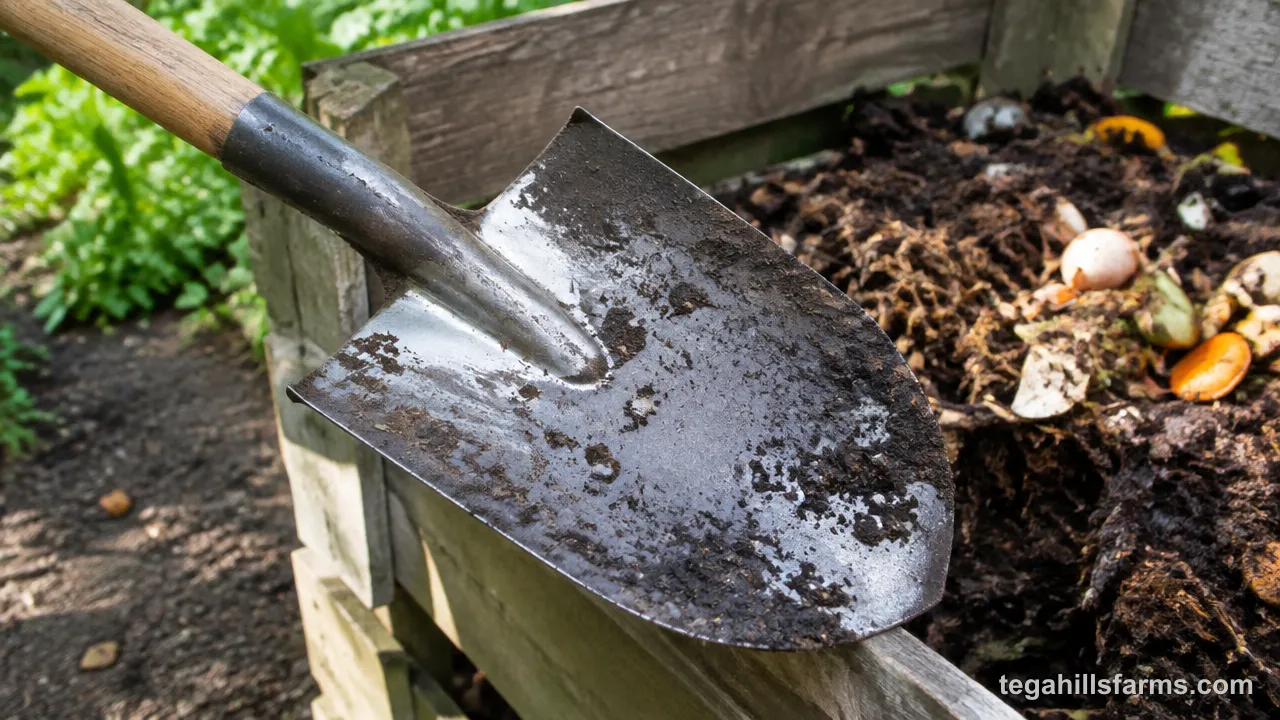
- Scrape off clumps with a stick or putty knife, then rinse the blade with a garden hose so no residue stays wet against the metal.
- Dry the blade fully with a rag or in the sun, because water trapped in the socket and along the edge is where rust starts.
- Wipe on a thin film of light oil, which seals bare metal and scratches in the coating until the next use.
- Run a hand along a wood handle for splinters and sand and oil any rough patches. Check fiberglass for fraying fibers, and replace a worn grip before it starts to slip.
- Hang the shovel or stand it blade-up in a dry shed so neither the steel nor the end of the handle sits on damp ground.
What Signs Show a Compost Shovel Needs Replacing?
A head that wobbles in its socket, a cracked handle or a blade thinned by deep rust pits means the tool needs repair or retirement. Dirt and light surface rust only need cleaning. Structural faults make every lift less secure, and they get worse each time you put weight on the tool.
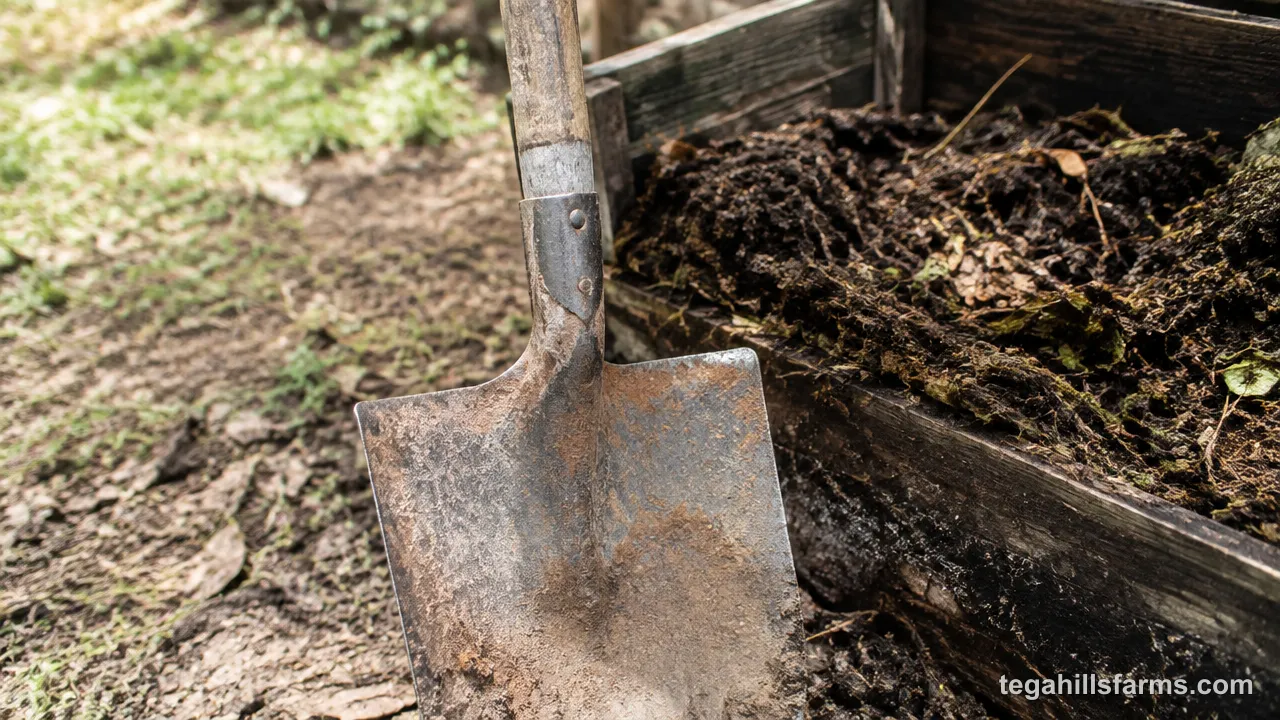
- A wobbling head: a loose rivet or bolt can often be tightened or replaced, but a split or stretched socket lets the head twist under load and isn’t worth fixing.
- A bent or chipped edge: a small chip or a dull edge can be filed back. A blade bent out of line spills material and keeps bending at the same weak spot.
- Deep rust pitting: surface rust scrubs off, but pits that eat into the steel thin the blade and leave it prone to cracking under foot pressure.
- A cracked or splintering handle: light splinters sand out, but a crack along the grain of wood or a split in fiberglass can snap mid-lift. Replace the handle or the whole tool.
- A worn grip that slips: a new grip or a wrap of handle tape restores control. A slipping grip on a heavy load strains your wrist and can let the blade turn.
Compost Shovel FAQ
Is a square-point shovel also good for moving mulch?
Yes. The flat edge slides under shredded bark and wood chips on a driveway or tarp and lifts a full load without leaving scraps behind, and it spreads mulch evenly when you tip it. For large volumes of very light, fluffy mulch, a wide scoop or a fork can move more in each pass.
Can one shovel work as both a compost shovel and an all-purpose garden shovel?
Partly. A square-point shovel handles compost, mulch, gravel and leveling, but its flat edge struggles to break into firm ground or dig a clean planting hole. A heavy-duty square point such as the AMES Eagle Square Point Shovel 44in handles light digging too. Pairing it with a round-point shovel for digging covers almost every yard job.


Write Your Review
No reviews yet. Be the first to share your experience!