

When clay, stones or roots stop an ordinary blade, these are the best garden shovels for hard soil: AshmanOnline Heavy-Duty Digging Shovel 41in (Best Overall), KOLEIYA 41in Round Point Shovel D-Handle (Runner Up), HANTOP Flat Spade (Best for Heavy Soil), VNIMTI Round Shovel D-Handle 41in (Best Budget), VNIMTI Spade Shovel D-Handle 45in (Best Rust-Resistant) and Nohovu Digging Shovel 49in (Best Ergonomic Design).
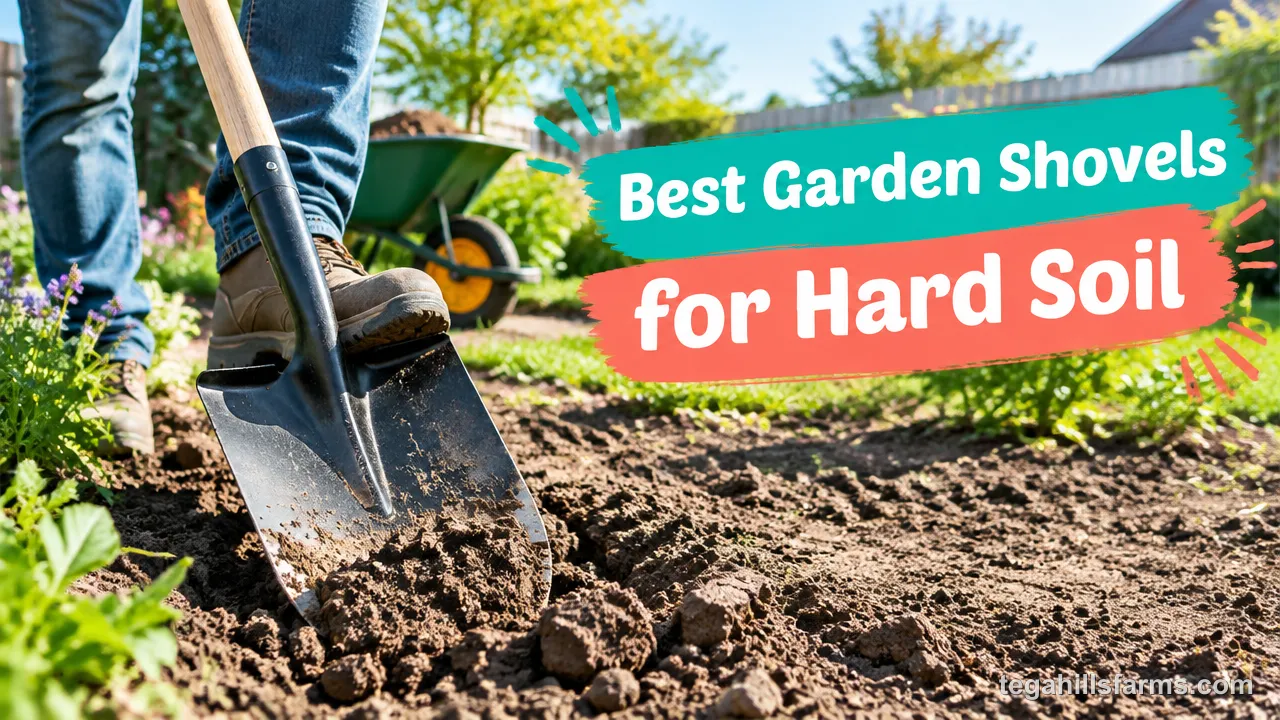
From one shovel to the next, the blade’s steel and edge change, the handle’s material and stiffness change, and so do the length and grip that set your posture. Blade shape also counts, because a round point and a flat spade start and finish a hole in different ways.


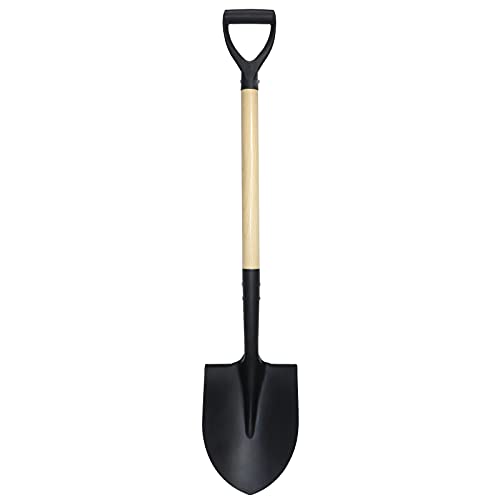


The real risk in hard ground is a tool that bends at the tip, cracks at the handle or works loose at the joint within a season, along with a dig that leaves your wrists and lower back aching after an afternoon. A shovel that fits your height and the kind of hard ground you have takes most of that strain away, because your weight goes into the edge instead of into your joints.
What Makes a Shovel Good for Hard Soil?
Compacted ground gives way to a hardened, sharp blade joined to a stiff handle by a solid joint, with a wide foot step that carries your body weight down into the edge.
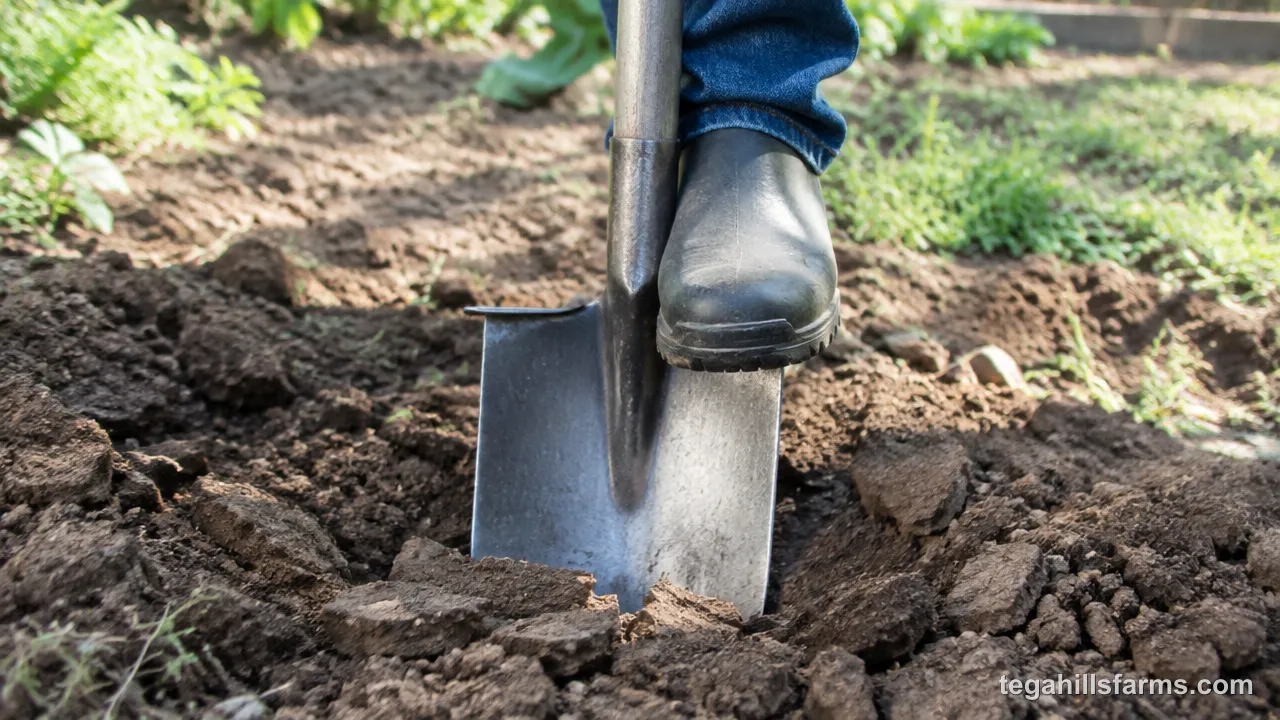
A thin, soft blade struggles because it cannot hold its shape under the force it takes to get in. Clay grips the steel, roots resist the edge and buried stones push back on the tip, so soft steel rounds over or folds at the point, and every push after that takes more out of your arms. A hardened blade keeps a defined edge through the same contact, so it keeps cutting instead of bouncing.
The rest of the build decides whether your effort reaches that edge. A head forged from solid steel stands up to prying better than one stamped from sheet. A stiff handle and joint keep your force from being lost to flex, and a broad foot step lets your legs do the pushing instead of your shoulders.
For yard work beyond hard ground, such as edging, scooping mulch or moving gravel, our guide to the best garden shovels covers each type.
The 6 Best Garden Shovels for Hard Soil of 2026
Homeowners digging clay, stony or root-filled beds and planting holes can choose from AshmanOnline Heavy-Duty Digging Shovel 41in, KOLEIYA 41in Round Point Shovel D-Handle, HANTOP Flat Spade, VNIMTI Round Shovel D-Handle 41in, VNIMTI Spade Shovel D-Handle 45in and Nohovu Digging Shovel 49in. The serrated edges on the HANTOP and the Nohovu saw through roots and hardened clods, so they suit root-filled beds. The solid wood handles on the KOLEIYA and both VNIMTI shovels feel warmer in the hands, while the fiberglass HANTOP and the steel-cored Nohovu stay stiffer when you pry. The round points start holes and lift soil, and the flat HANTOP and VNIMTI spade cut clean edges. The lighter, shorter round points suit smaller frames, while the heavier spade and the long, steel-cored shovel suit ground that fights back. If a tighter budget comes first, compare the best garden shovels under $30, or garden shovels under $50 if you can spend a little more.
#1 AshmanOnline Heavy-Duty Digging Shovel 41in — Best Overall
If you want one shovel that both breaks into firm beds and lifts the loosened soil out, this one’s hardened, finely sharpened round blade handles each step, and the whole tool weighs just 2.2 lb. That low weight matters once you are several holes in.
Key Specs:
- Length: 41 in
- Weight: 2.2 lb
- Blade: hardened round blade, finely sharpened
- Grip: D-handle
- Handle: low conductivity, built to outlast a wooden handle
- Uses: trenching, transplanting, moving compost
Detailed Review:
The blade is hardened and finely sharpened, so the round point bites into compacted soil instead of skating across it, and the hardening helps that edge stand up to grit and small stones. Its cupped, round shape then keeps the loosened soil on the blade as you carry it from the hole to the pile.
At 2.2 lb, very little of your effort goes into lifting the shovel itself, and that adds up across a long run of planting holes. The HANTOP Flat Spade weighs 4.5 lb, and that extra mass helps a blade drop into tough ground. With this shovel you give up that help in exchange for far less load on your shoulders and wrists.
The D-handle keeps both hands on the tool for two-handed control, and its grip is shaped so it does not slip when you lean hard into a stubborn patch. The handle has low conductivity, so the heat of a summer afternoon or the cold of an early spring morning does not pass into your palms. It is also built to outlast a wooden handle.
For hard ground, I value a tool that can break the surface, cut a trench line and then move compost. That means fewer stops to swap tools in the middle of a job.
Pros:
- Hardened, finely sharpened round blade bites into compacted ground.
- At 2.2 lb, it stays light through long digging sessions.
- D-handle gives steady two-handed downward pressure.
- Low-conductivity handle stays comfortable in heat or cold.
Cons:
- Light build adds little weight to help drive the blade.
- Round blade cuts less crisp bed edges than a flat spade.
Who It’s For:
Gardeners who want one tool for breaking ground, transplanting and moving compost will get the most from this shovel, especially those whose shoulders tire with heavier shovels. If most of your work is cutting straight bed edges or turf, the flat blade of the HANTOP Flat Spade suits that work better.
Editor’s Verdict:
Light, sharp and easy on the hands, this shovel takes compacted beds from the first cut to a finished planting hole without wearing you out.
#2 KOLEIYA 41in Round Point Shovel D-Handle — Runner Up
Shorter and older gardeners who dig in rocky beds get a steel head fixed with double rivets and a wide, smooth D-handle that stays easy on the palms. The 41-inch length keeps it easy to steer.
Key Specs:
- Length: 41 in
- Weight: 3.25 lb
- Head: steel, round point
- Joint: head fixed with double rivets
- Handle: solid wood with a wide, smooth D-grip
Detailed Review:
The steel head is built not to break when you dig in rocky soil, and double rivets fix it to the shaft so it does not work loose as you pry. On stony ground, a steady joint matters as much as the steel itself.
The wide, smooth D-handle spreads pressure across your palm, so it stays kind to your hands through a long session of digging. It also gives good leverage when you rock the blade back to lift a clod.
At 41 inches and 3.25 lb, this shovel is sized for smaller frames. You can keep the point exactly where you want it and lift full scoops without the tool pulling you forward. The Nohovu Digging Shovel 49in has a longer shaft for standing straighter. With this one you give up that reach, and in return you get a tool that turns easily between shrubs and perennials.
The solid wood handle feels warm in the hand and gives a little when the blade meets stone. I’d choose it for anyone who finds long shovels unwieldy but still has rocky beds to dig.
Pros:
- Steel head holds up when digging in rocky soil.
- Double rivets keep the head fixed to the shaft.
- Wide, smooth D-handle stays comfortable on the palms.
- Compact 41-inch length steers easily in tight beds.
Cons:
- Shorter shaft means more stooping for tall gardeners.
- Solid wood handle needs periodic oiling to stay sound.
Who It’s For:
Older gardeners and anyone on the shorter side who digs among shrubs and perennials will find this shovel easy to steer and gentle on the hands. Taller gardeners who want to dig standing straighter will be better served by the Nohovu Digging Shovel 49in and its longer shaft.
Editor’s Verdict:
Choose this shovel when control and a comfortable grip matter more to you than reach, because its riveted steel head stands up to rocky beds.
#3 HANTOP Flat Spade — Best for Heavy Soil
Heavy clay and thick turf give way to the sawtooth edge on this 1050MN steel flat blade, while the widened foot platforms let you drive it down with your full weight. Expect a solid tool, not a light one.
Key Specs:
- Size: 7.5 x 2 x 43 in (L x W x H)
- Weight: 4.5 lb
- Head: 1050MN steel, flat sawtooth blade
- Handle: fiberglass with a PP hand grip
- Footing: widened foot platforms
Detailed Review:
The flat head carries a sawtooth edge, so it starts cuts in hardened clods, compacted ground and thick turf that would deflect a straight edge. The head is made of 1050MN carbon steel, which suits a blade that will be driven into packed soil again and again.
The widened foot platforms give your boot a secure place on the blade, so you can stand on it with your full weight without your sole sliding off. In heavy soil, most of the force should come from your legs rather than your arms.
At 4.5 lb, the spade has real heft. That helps it drop into tough ground with each push, but it makes lifting full loads more tiring over time. Where the VNIMTI Spade Shovel D-Handle 45in uses solid wood, this handle is fiberglass with a PP grip, so it will not rot or swell if the spade lives by a damp bed, though it passes more shock to your wrists.
The square point also cuts straight trench walls and crisp bed edges, so it handles edging and furrowing as well as digging. I’d reach for it for the first cuts in the worst corner of the yard.
Pros:
- Sawtooth edge breaks hardened clods and cuts thick turf.
- Flat square point cuts clean trench walls and bed edges.
- Widened foot platforms let you push with full body weight.
- Fiberglass handle won’t rot or swell in damp conditions.
Cons:
- At 4.5 lb, it tires the arms sooner on long jobs.
- Fiberglass shaft passes more jolt to the wrists than wood.
Who It’s For:
If your beds are heavy clay or matted turf and you would rather push with your legs than chop with your arms, this spade fits the way you dig. Gardeners who tire quickly from lifting will find the lighter AshmanOnline Heavy-Duty Digging Shovel 41in easier to manage through a long session.
Editor’s Verdict:
For clay and sod that stop an ordinary blade, this sawtooth spade gives you the bite and the footing to keep cutting.
#4 VNIMTI Round Shovel D-Handle 41in — Best Budget
A quenched high-carbon steel head and a drop-shaped blade that narrows to a small contact point make this an affordable way through packed soil and buried stones. The step fins help, too.
Key Specs:
- Length: 41 in
- Weight: 3.3 lb
- Head: high-carbon steel, hardened by high-temperature quenching
- Blade: drop-shaped, with pedals and fins on top for your foot
- Handle: pure wood with a D-grip
Detailed Review:
The head is high-carbon steel hardened by high-temperature quenching, so the tip does not bend or deform when it strikes a buried stone. At an affordable price, a hardened head is the detail that decides whether a shovel survives stony beds.
The drop-shaped head starts with a small contact point and widens toward the shoulders. Your push lands on a narrow area as the blade enters packed soil, and the blade then opens into a full scoop once the ground gives. The pedals and fins along the top of the blade give your foot a place to press, so you can drive the head down with body weight instead of arm strength alone.
At 3.3 lb and 41 inches, it is light to carry around the yard and short enough to fit in a car trunk. The D-grip on the pure wood handle gives you a firm hold for rocking a clod loose.
On a tight budget, I would rather the money go into hardened steel than into extras, because the blade is what hard ground punishes first. This shovel spends it in the right place.
Pros:
- Quenched high-carbon steel head resists bending against stones.
- Drop-shaped point enters packed soil with less force.
- Step pedals and fins give your boot firm footing.
- Affordable for a hardened high-carbon steel head.
Cons:
- D-grip gives up the reach of a long straight handle.
- Wood handle can split if left out in wet weather.
Who It’s For:
When the budget is tight but the ground is stony, this shovel puts your money into a hardened head that keeps its shape. It also suits gardeners who want a shovel that can ride along in the car. If you need a clean, square edge for trenches, a flat blade will serve you better.
Editor’s Verdict:
Pick this shovel if you want a hardened high-carbon head for packed, stony ground without paying premium-tool money.
#5 VNIMTI Spade Shovel D-Handle 45in — Best Rust-Resistant
Wet beds and clay that stays damp after rain call for the rust-resistant coating on this high-strength steel flat blade, which keeps the face from corroding between jobs. Its 45-inch shaft also spares your back.
Key Specs:
- Length: 45 in
- Weight: 3.74 lb
- Blade: high-strength steel, flat and sharp, rust-resistant coating
- Handle: solid wood with an ergonomic D-grip
- Footing: non-slip treads on the head
- Model: HT_004
Detailed Review:
The flat blade is high-strength steel with a rust-resistant coating on the head, so digging in wet soil does not leave the face pitted. A smooth face matters in damp clay, since rust gives sticky soil more to cling to. The blade also keeps its sharp edge after heavy use.
At 45 inches, the shaft is long enough for an adult to dig without folding over the blade, which takes strain off the lower back during a long edging job. The D-handle at the top gives a comfortable, stronger grip for pushing straight down along a bed line.
Non-slip treads on the head steady your boot on the blade. That matters most on the soggy ground this spade is built for, where soles get muddy and slick. At 3.74 lb, it has enough heft to help the edge sink into turf without becoming a chore to lift.
The solid wood handle is made not to break when you lift heavy loads, and it will not corrode. I’d keep this spade for edging and cutting turf along beds that stay damp for much of the season.
Pros:
- Rust-resistant coating protects the blade in wet soil.
- High-strength steel edge stays sharp after heavy use.
- At 45 inches, it reduces stooping during long jobs.
- Non-slip treads keep muddy boots planted on the blade.
Cons:
- Flat blade carries less loose soil than a round point.
- Filing the edge removes the coating at the cutting line.
Who It’s For:
Anyone with low, wet beds or heavy clay that rarely dries out will value a blade that resists rust and a shaft long enough to keep them upright while edging. If most of your digging happens in tight spaces between shrubs, a shorter shovel will be easier to handle.
Editor’s Verdict:
Keep this spade by a damp bed, and its coated blade will keep cutting edges and turf without turning rough with rust.
#6 Nohovu Digging Shovel 49in — Best Ergonomic Design
Tall gardeners and anyone whose back aches after a long dig can stand straighter behind this 49-inch shovel while its serrated high-carbon steel edge saws through roots and compacted clay. The steel-cored handle resists bending.
Key Specs:
- Length: 49 in
- Blade: high-carbon steel, large round shape with serrated edges
- Handle: high-strength steel tube core with a fiberglass-reinforced outer layer
- Grip: ergonomic non-slip D-handle
- Model: NH_15
Detailed Review:
At 49 inches, this shovel lets you keep a more natural standing posture, so less strain builds in your back, waist and shoulders during a long dig. The ergonomic non-slip D-handle at the top gives you a secure place to press down, so the extra length does not cost you control of the blade.
The serrated edges on the high-carbon steel blade cut through tree roots, weed roots and compacted soil, which saves you from reaching for loppers each time a small root crosses the hole. Once the ground is broken, the large round blade carries a generous load with each scoop.
Inside the handle, a high-strength steel tube sits within a fiberglass-reinforced outer layer, and that build resists bending when you lever against clay or gravel. The KOLEIYA 41in Round Point Shovel D-Handle uses solid wood, which is warmer in the hand. This dual-layer shaft gives up that warmth for stiffness under heavy prying.
If roots are what stop your shovel most often, I’d lean toward this one. The edge and the stiff handle both work on that problem.
Pros:
- Serrated high-carbon steel edge cuts roots and compacted soil.
- Long 49-inch shaft lets you dig standing straighter.
- Steel-core fiberglass handle resists bending under prying.
- Non-slip D-handle keeps a secure grip.
Cons:
- Long shaft is awkward to maneuver in tight beds.
- Serrated edges take more patience to resharpen.
Who It’s For:
Taller gardeners, and anyone who ends a dig with a sore back or shoulders, will appreciate standing straighter while the serrated edge deals with roots. In cramped beds between shrubs, the KOLEIYA 41in Round Point Shovel D-Handle is easier to steer.
Editor’s Verdict:
Built for roots and compacted clay, this long, stiff-handled shovel lets you work hard ground while standing straighter.
What Should You Look for in a Hard-Soil Shovel?
The build should carry force from your body into the ground without losing it to a flexing part, and it should still feel right in your hands after an hour of digging.
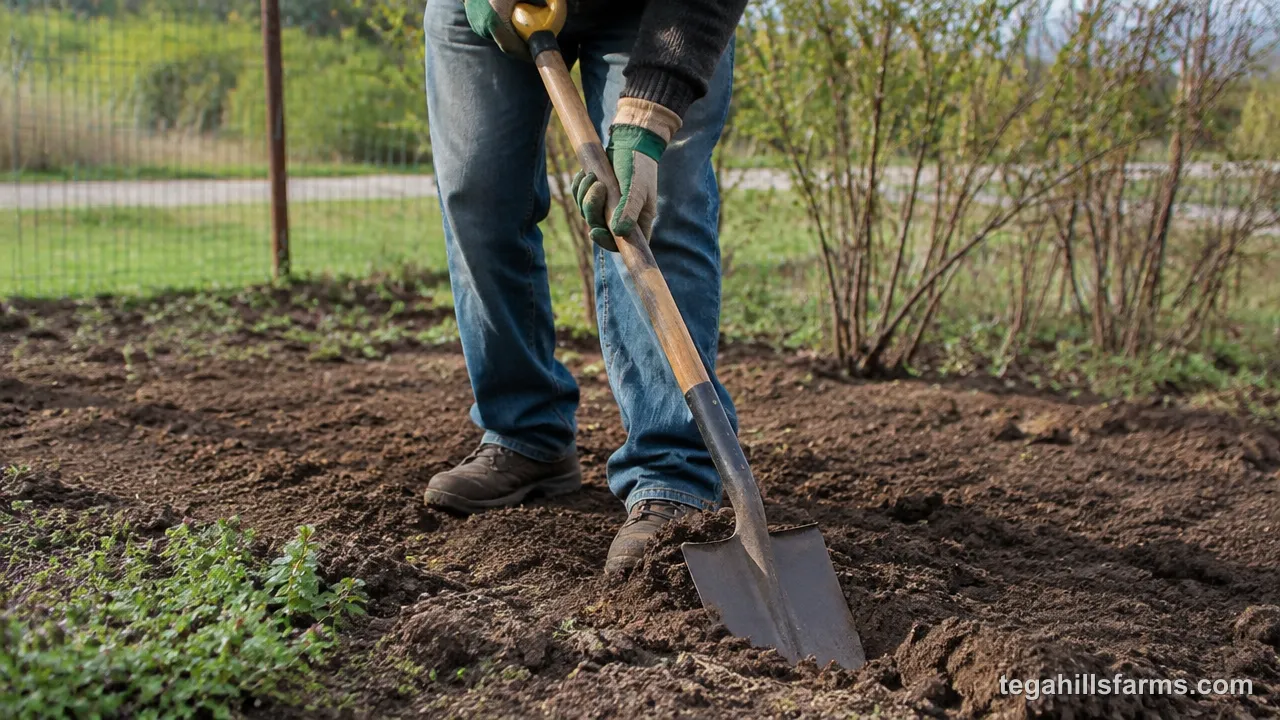
In loose loam, almost any shovel works, so its weak points stay hidden. Clay, stones and roots expose them. A part that gives a little turns each push into extra work for your wrists and back, and over a season that same part is where the tool bends, cracks or loosens. Looking closely at how a shovel is put together before you buy spares both your body and the cost of an early replacement.
How Do Blade Steel and Edge Affect Digging in Hard Soil?
A heat-treated high-carbon head keeps a sharp edge and springs back from stones, while a soft stamped head dulls quickly and bends at the tip under the same load. Carbon lets steel harden when it is heated and quenched, and that hardness is what allows a thin edge to survive grit, gravel and the odd buried rock. A head stamped from mild sheet steel has no such reserve, so one hard pry can leave a permanent curl.
A sharpened edge puts your full weight onto a thin line, which is why it parts clay and nicks through roots. A serrated edge adds a row of points that grip and tear as the blade goes in. A slightly curved, dished blade then cradles the loosened soil on the lift and releases it when you tip it.
Your weight reaches that edge through the foot step and the joint. A wide foot step lets you stand on the blade, and a head riveted or socketed securely to the shaft passes that force down instead of wobbling. In wet ground, a rust-resistant coating slows corrosion on the face. If your ground is especially stony, look closely at the garden shovels under $100 and favor a better-treated steel head over a lighter-duty one.
Which Handle Material Lasts Longest: Wood, Fiberglass or Steel?
Against heavy prying, a steel-reinforced shaft outlasts the others, and fiberglass copes better with weather. Solid wood gives the warmest, most forgiving grip but ages faster when neglected.
Solid wood flexes slightly and soaks up some of the jolt when the blade hits rock. It also stays close to air temperature, so it feels warm in your palms on a cool morning. Left unprotected, though, wood dries and checks, and a cracked shaft gives way with little warning under a hard pry.
Fiberglass is light and does not rot or swell in damp weather, which makes it a sensible choice if your tools live outdoors. It is stiffer than wood, so more shock travels into your wrists, and a fiberglass handle left out wet through a freeze can crack.
A steel core, alone or inside a fiberglass sleeve, resists bending better than either when you lean on the handle as a lever. That stiffness adds weight, and bare steel feels cold in early spring. I’d choose wood when comfort matters most and a steel-reinforced shaft when your ground keeps making you pry.
How Long Should the Handle Be, and Is a D-Grip Better?
Taller gardeners dig with less back strain on a longer shaft, while smaller and older gardeners get more control from a shorter one. On a handle that is too short, you bend at the waist on every push, and that repeated stoop is what leaves the lower back sore at the end of a dig. On a handle that is too long, the grip sits high and you can no longer push straight down, so your shoulders take over the work.
A D-grip lets one hand hold the top while the other guides the shaft. That keeps your wrists in line as you press down into tight soil and steadies the blade when you rock it to lift. A long straight handle gives more reach and more leverage when you pry, though you get a less secure top hand and more twist at the wrist. For compacted beds where most of the effort goes into pushing down, I prefer a D-grip on a shaft long enough to let you stand upright.
Round Point or Flat Spade: Which Digs Hard Soil Better?
The tapered tip wins at breaking into firm ground and lifting loosened soil, while a squared, sharp edge wins at slicing straight walls, cutting turf and trimming roots cleanly.
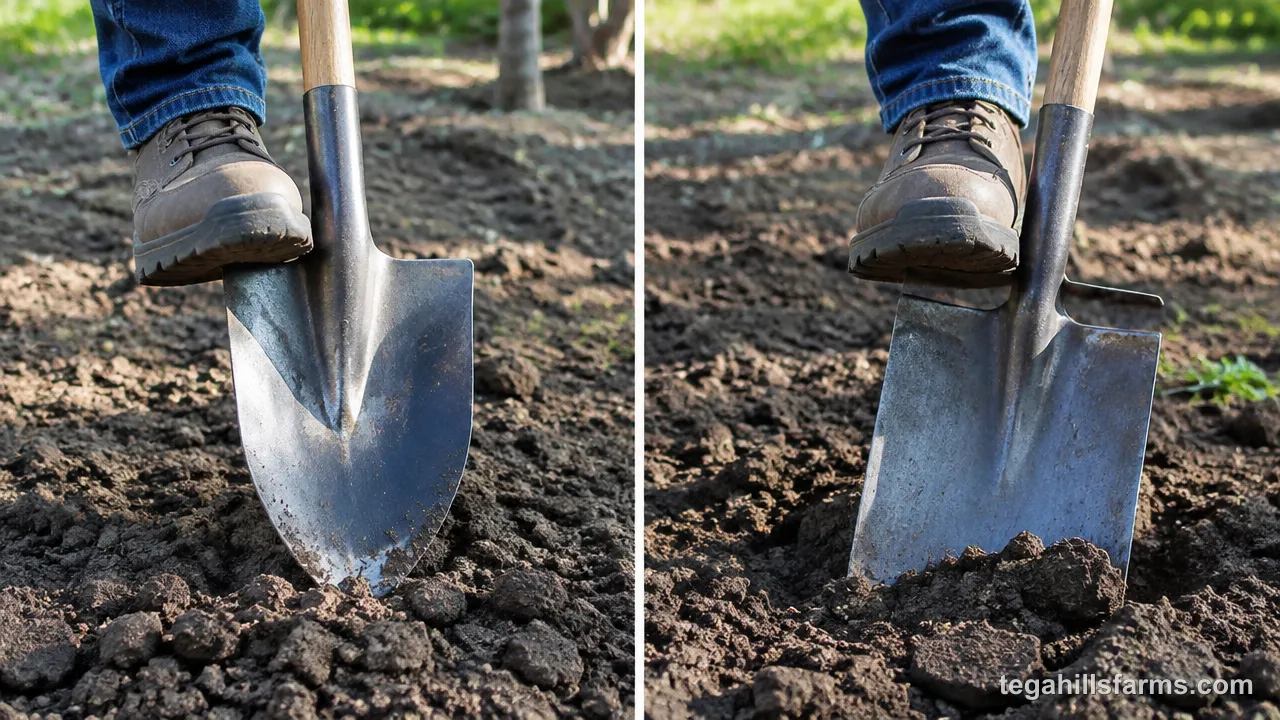
A tapered point meets compacted soil on a small area, so your weight goes into a narrow wedge that opens the ground before the wider shoulders follow, and its dished shape holds a load on the lift. A flat blade meets the ground along its full width, which spreads the same push across more edge. In firm soil, that makes a flat blade harder to start unless it is sharp or serrated, but once it is in, it leaves a clean vertical wall and a square corner.
Matched to common hard-ground jobs, the two shapes split the work this way:
| Task | Round point | Flat spade |
|---|---|---|
| Starting a hole in firm ground | Enters easily | Harder to start |
| Lifting loose soil | Holds a full scoop | Holds less |
| Cutting bed edges | Leaves a wavy line | Leaves a clean line |
| Cutting turf and small roots | Tears unevenly | Slices through |
| Finishing a trench floor | Leaves it rounded | Leaves it flat |
The names overlap in stores, where many flat tools are sold as spade shovels. A trenching or drain spade is a separate tool, with a long, narrow blade made for deep, narrow cuts such as irrigation lines and drain pipe.
In hard ground, I’d use the two as a pair: break and cut the ground with the sharper flat or serrated blade, then clear the loosened soil with the round point. A round point is also the shape for moving compost, the job the best garden shovels for compost are built around.
How Do You Match a Shovel to Your Hard Soil?
What makes the ground resist decides the right blade edge and digging technique more than how tough it feels underfoot.
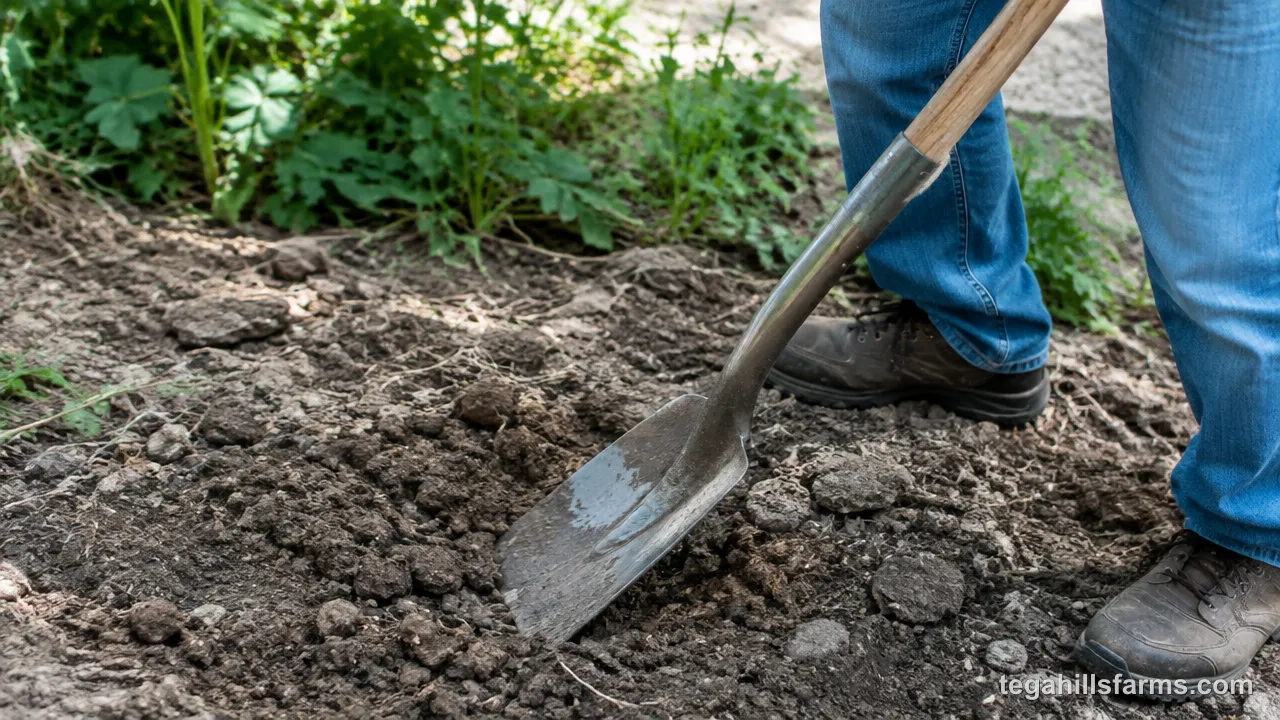
A blade that slices cleanly through one yard can bounce, stick or chip in the next, and forcing the wrong one costs you a damaged edge and sore wrists. Before you dig in earnest, turn over a small test patch and pay attention to what actually stops the blade. That tells you which tool and which approach will get the bed done.
What Is the Best Way to Dig Hard Clay Soil?
Moderately moist ground cuts most easily. Bone-dry clay sets like brick, while saturated clay clings to the blade and smears instead of breaking. To check, squeeze a handful: clay that holds together and then crumbles under your thumb is ready, and clay that ribbons out smooth and shiny needs more time to dry. If the bed is baked hard, a slow, deep soak the evening before softens the top layer enough to cut the next morning.
A sharp edge slices clay where a dull one only compresses it. A smooth, rust-free face gives the sticky soil less to grip, so each slice falls away when you tip the shovel. A dull or rusty blade does the opposite and comes up wearing the clod.
Cut thin slices instead of prying out large chunks. A big wedge of wet clay is heavy and held in place by suction, and levering it free loads the handle and your wrists at the same moment. Thin slices lift out with far less force, which protects both the handle and your wrists.
What Type of Shovel Works in Rocky or Compacted Ground?
A hardened, thicker blade on a reinforced handle joint is the safer choice among stones and hardpan, because a soft blade chips at the edge and bends at the tip the first time it meets a buried rock. On stony ground you will end up prying, and a weak joint is where the head starts to wobble and eventually tears free.
A wide foot step lets you drive the blade straight down with your weight, so the shaft stays in line instead of flexing like a lever. When the edge stops on a stone, move over slightly and cut again rather than stamping harder.
Loosen compacted layers in stages. Cut only as deep as the blade enters without forcing, lift that layer away, and then work the next one, so each push stays within what the tool and your back can take. One forced deep cut through hardpan bends blades and jars wrists without getting you any deeper.
Which Shovel Handles Root-Filled Soil?
A serrated or freshly sharpened edge saws through small roots, while a dull, smooth blade only presses against them and bounces back. Each push drags a serrated edge’s teeth across the root fibers, and a keen straight edge slices them cleanly. Thick, woody roots are a job for a pruning saw or loppers instead, because driving a shovel at them dulls the edge and rarely gets through.
When the blade catches under a root and you pull back on the handle, a stiff shaft sends that pull into the cut instead of flexing. A joint that resists twisting keeps the head from turning sideways and snapping off. If you feel the shaft bow or the head twist, stop levering and cut the root free first.
Ground packed by years of foot traffic or old construction fill can be so dense that a sharpened blade barely scratches the surface, and stones locked inside it stop the edge cold. Stamping harder on a shovel there puts a permanent bend in the blade and sends the shock into your wrists and lower back long after the bed is finished.
When Should You Use a Pick Mattock or Digging Bar Instead of a Shovel?
Ground packed into hardpan or locked around buried stone has to be fractured or pried apart before it can be dug, and that is work for a pick mattock or a digging bar. The pick end drives your swing into a single point, which concentrates enough force to crack hardpan and break the soil around embedded stone. The broad adze end on the other side chops roots and loosens the broken layer. A digging bar is a long, heavy steel rod that you drop to split packed soil and use as a lever to lift rocks out.
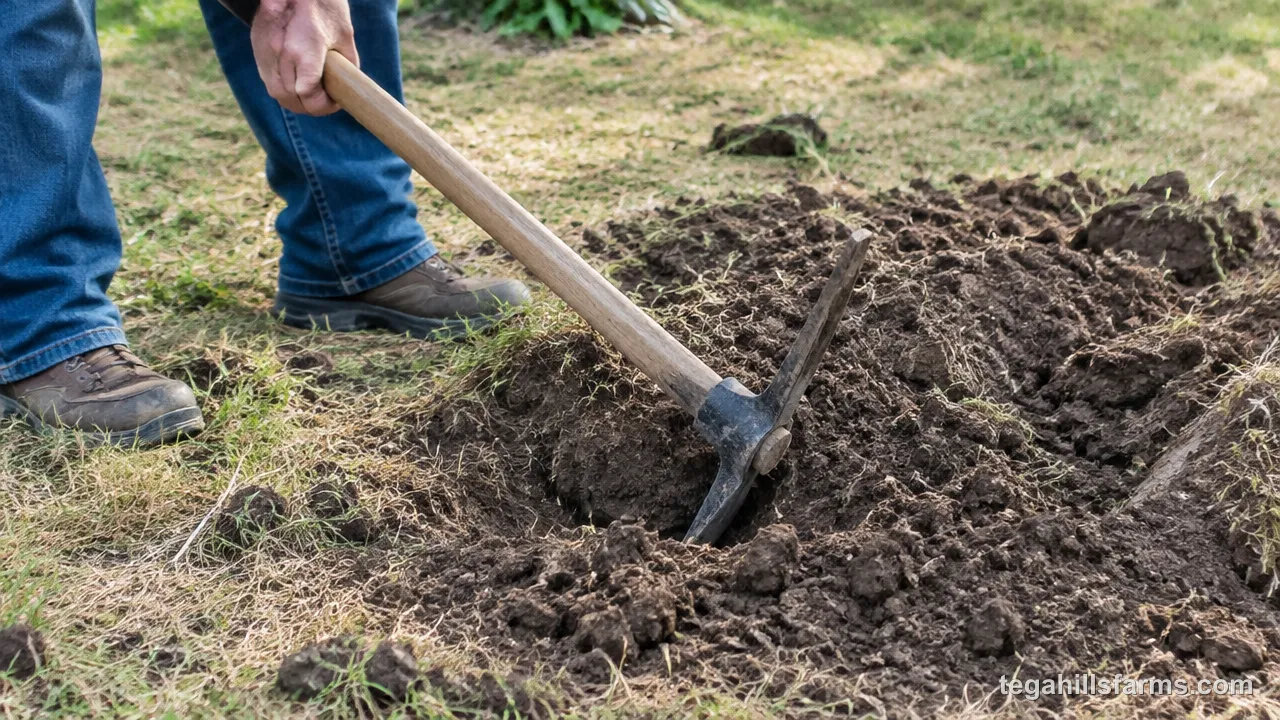
You can feel when a shovel is the wrong tool: the blade bounces back instead of entering, the shaft starts to bend, or a jarring shock runs up the handle into your wrists. At that point, change the order of work. Fracture the ground with the mattock or bar first, then lift the loosened soil out with the shovel.
Both tools weigh more than a shovel. Let the mattock’s weight do the work with a short, controlled swing rather than a full overhead one, keep your feet apart and clear of the arc, and make sure nobody is standing nearby.
How Do You Keep a Hard-Soil Shovel From Rusting, Cracking or Going Dull?
Scraping the blade clean, drying it, oiling bare steel and filing the edge now and then decide whether a shovel lasts many seasons. Soil left on the blade, especially clay, holds moisture against the steel and starts it rusting. Scrape it off after each use, dry the blade, and wipe a thin film of oil over any bare metal before storage. An occasional pass with a mill file along the existing bevel, on the beveled side only, brings back the edge that lets the blade enter hard ground with less force.
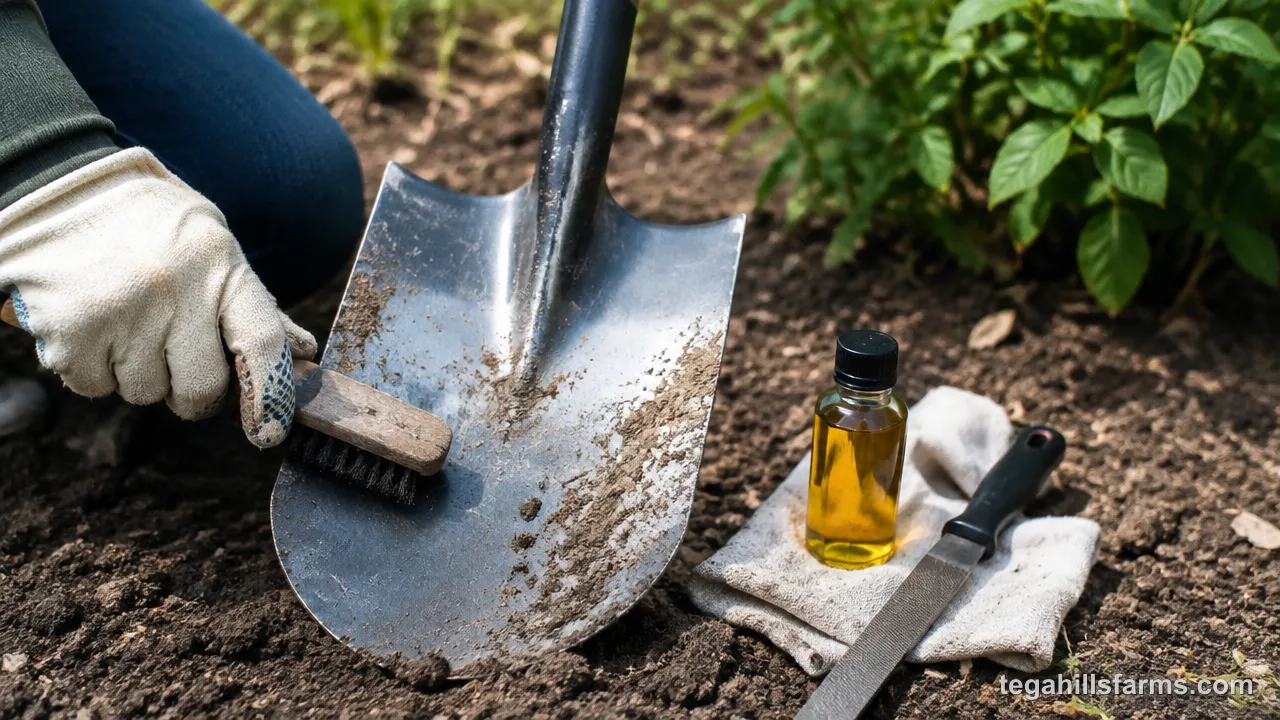
A fiberglass handle cracks when water gets into a chip or split and then freezes, because ice expands and pries the fibers apart. Store fiberglass-handled tools under cover through winter. Wood dries out, roughens and splits when it is left in sun and rain, and sanding the rough spots and rubbing in boiled linseed oil keeps the grain sealed.
Replace the shovel when the blade has a bend you cannot straighten, the joint stays loose after tightening, or the shaft starts to splinter, because each of those can give way in the middle of a pry.
Why Should You Call 811 Before Digging Deep Holes?
Buried gas, water, electric and communication lines can sit shallower than you expect, and hard soil tempts you to drive a tool down with force. Grading, erosion and earlier landscaping all change how much soil covers a line, so a spade that finally breaks through hardpan can reach a cable or gas pipe without warning.
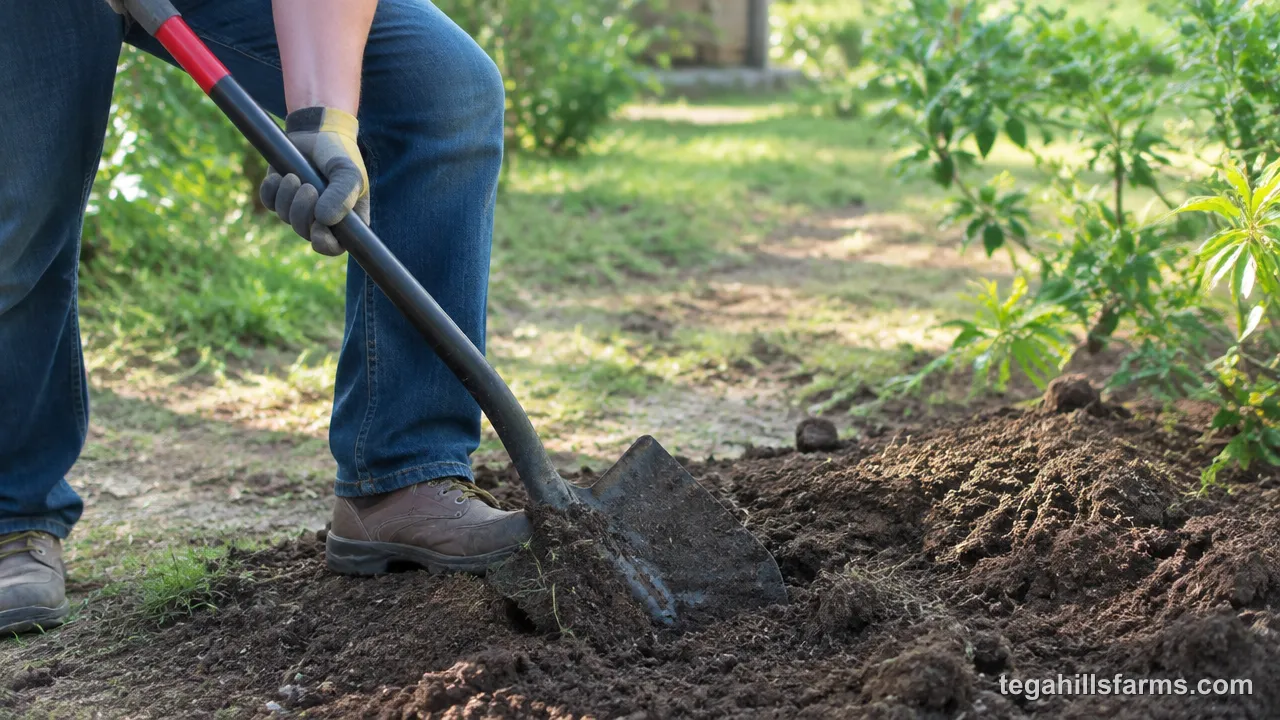
Calling 811, or filing a request online, is free and asks the local utilities to mark their lines with paint or flags before you dig. Waiting periods vary by state, so check with your state’s one-call center. Utilities mark only the lines they own, which leaves private runs, such as a line to a shed, for you to locate. Calling matters most before you plant trees, set posts or dig large beds.
Write Your Review
No reviews yet. Be the first to share your experience!