

Our top picks for the best chainsaw accessories in 2026 are the KAKEI 18″ S62 Chainsaw Chain 3-Pack (Best Overall), Prime Guard Premium Bar & Chain Oil (Best Large Capacity), Oregon Universal Field Sharpening Kit (Best Compact), Sharp Pebble Electric Chainsaw Sharpener Kit (Best Ergonomic Design), Oregon Chainsaw Safety Helmet with Visor (Best for Professionals), Oregon Pre-Loaded Grease Gun (Best Lightweight), Oregon 20″ Bar & Chain Combo (Best Premium), Oregon 7/32″ Chainsaw File 12-Pack (Best Durability), Oregon Chainsaw Depth Gauge Tool (Best Budget), and WZQH Leather Work Gloves XL (Best Value). The chain, bar, oil and grease gun keep the saw running smoothly. The sharpening tools keep it cutting, and the helmet and gloves protect the person holding it.
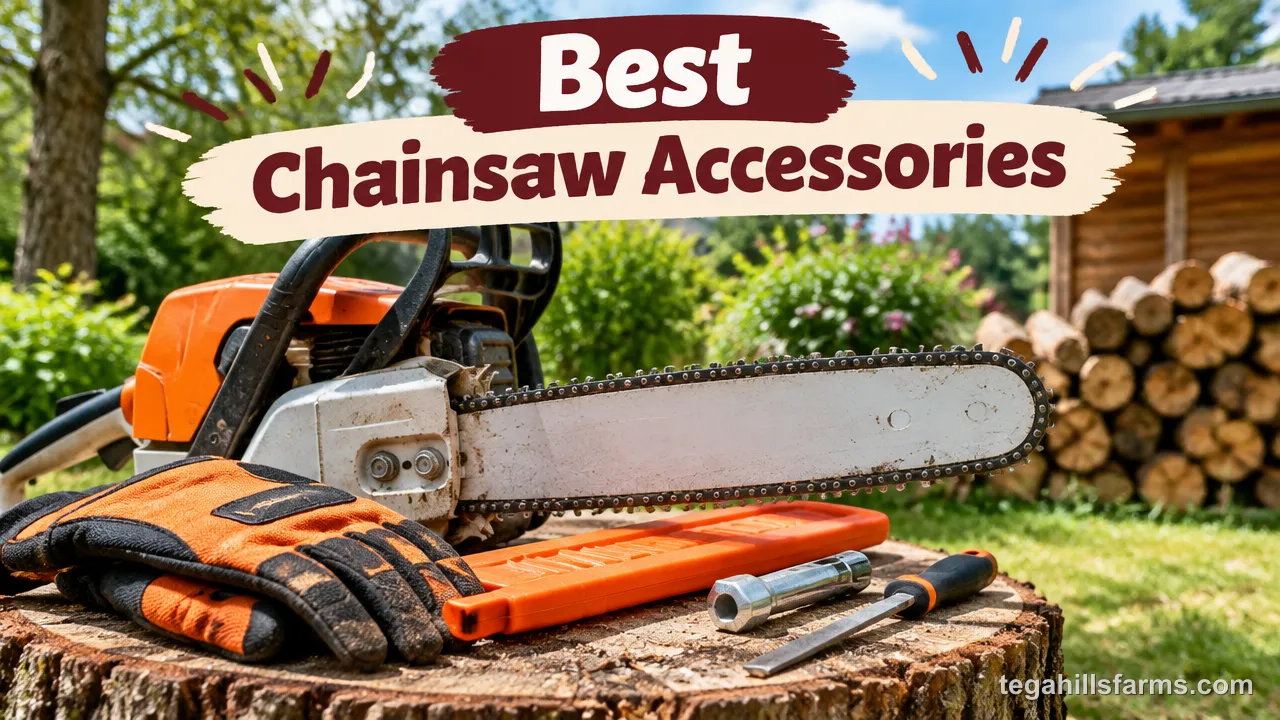
Fit comes first for anything that touches the saw. A chain or bar has to match the pitch, gauge and drive link count stamped on your guide bar, or it won’t go on. For protective gear, a standards rating printed on the item tells you it was tested. For upkeep tools, the deciding question is whether you will sharpen at the bench or out in the field.






The worry most owners share is a saw that starts fighting them. A dull chain or a dry bar makes you push harder, which wears out the saw and raises the chance of kickback. Nearly every accessory worth buying exists to stop that slide before it starts.
What Are Chainsaw Accessories and Which Ones Matter Most?
Chainsaw accessories are the safety gear, upkeep tools and replacement parts that surround the saw, and protective gear plus chain care matter most because they decide whether the saw cuts cleanly and whether you walk away unhurt.
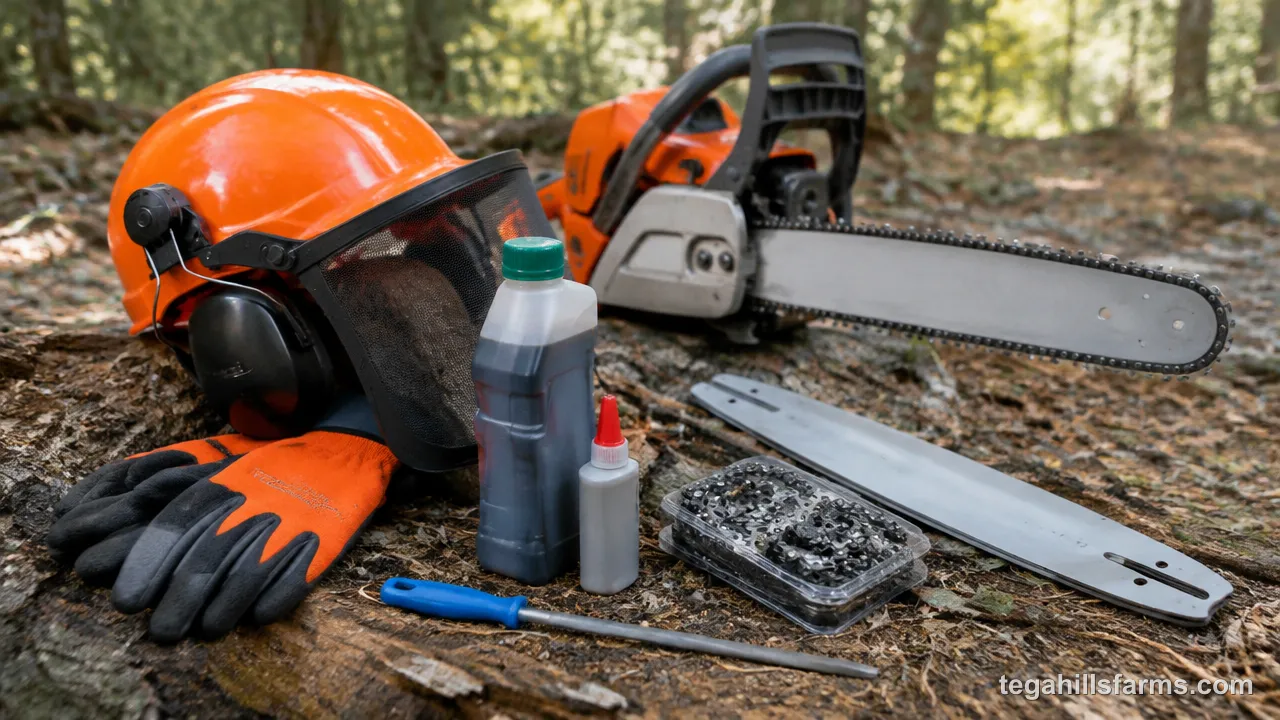
A sharp, well-oiled chain pulls itself into the wood with little pressure from you. Once the chain dulls or the bar runs dry, you start leaning on the saw, which tires your arms and makes a kickback harder to control. Replacement chains and bars keep downtime short when a chain hits dirt or a bar wears out. Performance parts and felling gear come later, after the basics are covered. If you still need a saw to pair with these accessories, our guide to the best chainsaws covers the models worth considering.
What Should You Look for in Chainsaw Accessories?
Judge every accessory on fit with your saw, how much protection or upkeep it adds, and how often you will reach for it, since a part that doesn’t fit is useless and gear left on the shelf protects no one.
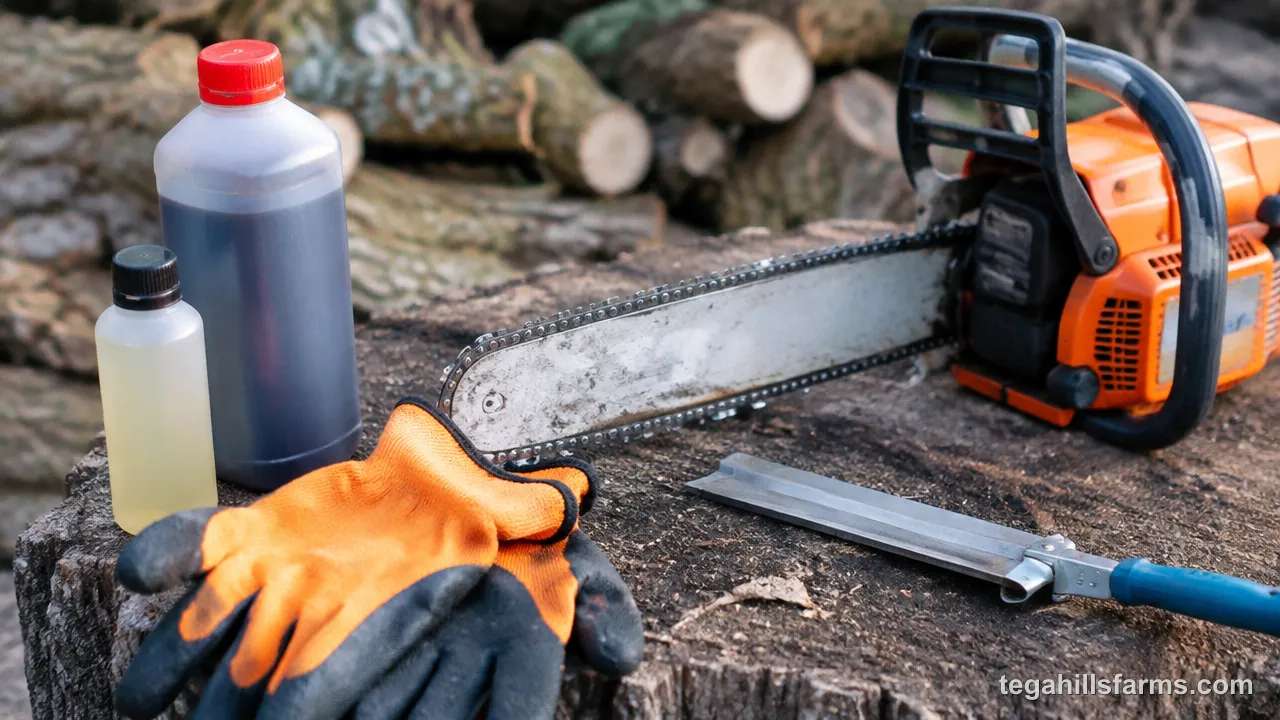
That last point decides more purchases than most owners expect. Someone who cuts firewood on a few cold weekends and someone clearing storm damage every week need the same core gear. They differ in how much wear their tools take and how much convenience is worth paying attention to. Thinking about your own workload first keeps you from buying specialist gear that never leaves the garage.
How Do You Match a Replacement Chain and Bar to Your Saw?
Four specs must match before a chain or bar will fit: pitch, gauge, drive link count and bar length. You’ll find them stamped on the side of the guide bar near the mounting end, or listed in the owner’s manual. Write those numbers down before you compare the best chainsaw chains, because a brand name on a listing tells you nothing about fit.
Pitch is the spacing between the chain’s rivets, and it has to match the drive sprocket and the bar nose, or the chain will jump and wear both. Gauge is the thickness of the drive links that ride in the bar groove. A link that’s too thin wobbles and cuts crooked, while one that’s too thick won’t seat at all. Drive link count sets the length of the loop, and even one link off means the chain can’t be tensioned. Bars add one more check: the mount pattern has to match the saw’s bar studs and oil port.
Which Safety Gear Should Every Chainsaw Owner Have?
Every owner should cover five areas: head, face, ears, hands and legs. That means a helmet with a face screen and ear muffs, a pair of work gloves, and chaps.
The helmet takes the hit from falling limbs and branches that spring back during a cut. A mesh face screen stops chips and bark from striking your face, though safety glasses underneath still matter for fine dust. Ear muffs protect against the steady engine noise that wears down hearing over years of use. Gloves give you a firm grip on the handles and protect against splinters, abrasion and hot parts. Chaps contain fibers designed to snag a moving chain and jam the sprocket, which can turn a deep leg cut into a minor one.
Check for a standards label before buying any of this gear. A rating such as ANSI printed on a helmet shows the piece was tested against set impact requirements, while unlabeled gear gives you no way to know how it will perform.
Should You Sharpen With a Hand File or an Electric Sharpener?
A hand file wins on portability and lets you touch up a chain at the woodpile, while an electric sharpener wins on consistency and speed at the bench. The right choice depends on where you cut and how steady your filing hand is.
Hand filing takes practice. You have to hold the same angle and depth on every tooth, and a file guide makes that much easier. An electric unit removes most of that learning curve, since you set the angle once and every cutter comes out matched, but it needs an outlet and a place to work. If you are weighing the best chainsaw sharpeners, decide first whether you’d rather sharpen often in the field or less often at home.
Depth gauge upkeep belongs to both methods. Every sharpening lowers the cutters, so the depth gauges in front of them need filing down with a flat file and a gauge tool, whichever way you sharpen.
The 10 Best Chainsaw Accessories of 2026
These picks cover the KAKEI 18″ S62 Chainsaw Chain 3-Pack, Prime Guard Premium Bar & Chain Oil, Oregon Universal Field Sharpening Kit, Sharp Pebble Electric Chainsaw Sharpener Kit, Oregon Chainsaw Safety Helmet with Visor, Oregon Pre-Loaded Grease Gun, Oregon 20″ Bar & Chain Combo, Oregon 7/32″ Chainsaw File 12-Pack, Oregon Chainsaw Depth Gauge Tool and WZQH Leather Work Gloves XL.
The real split among the sharpening tools is manual versus electric. A file kit travels with you and rewards practice, while a corded grinder gives repeatable angles but keeps the job at the bench. A homeowner cutting firewood can build a complete setup from the hand tools, oil, gloves and helmet. Someone who maintains a saw every week, or runs one for a living, gets more from the electric sharpener, the file multi-pack and the matched bar and chain set.
#1 KAKEI 18″ S62 Chainsaw Chain 3-Pack — Best Overall
Owners of saws that run an 18-inch bar with 3/8″ low-profile chain get spares in one box. Each loop is a semi-chisel chain built from heat-treated German steel with chrome-plated cutters, so you can swap in a fresh chain at the woodpile and sharpen the dull ones later at the bench.
Key Specs:
- Length: 18 in, 3 chains per pack
- Pitch and gauge: 3/8″ LP pitch, .050″ gauge
- Drive links: 62
- Cutters: semi-chisel, chrome-plated
- Kickback: meets ANSI B175.1-2012 and CSA Z62.3 low-kickback requirements
Detailed Review:
Three chains in one pack means a chain that hits a buried rock or a fence staple stops being a reason to quit for the day; you swap it on the spot and file the damaged one later. Semi-chisel cutters have a rounded working corner, so they hold an edge longer in dirty, barky or frozen wood than full-chisel teeth, at the cost of a slightly slower cut in clean softwood.
KAKEI builds the chain from German steel with controlled heat treatment, and every rivet is hardened and quenched. Harder rivets resist wear at the joints, which slows the stretch that has you re-tensioning a new chain. The cutters are chrome-plated and ground on rotary machines, and that chrome layer keeps the edge holding between filings.
Each chain meets the low-kickback requirements of ANSI B175.1-2012 and CSA Z62.3, a sensible margin for anyone who runs a saw only on weekends. The chains also ship coated in protective oil, so spares stored in a damp shed won’t rust before you need them.
Fit is the one thing to check. This pack suits bars calling for 3/8″ LP pitch, .050″ gauge and 62 drive links, while the Oregon 20″ Bar & Chain Combo runs .325″ pitch and .063″ gauge. KAKEI gives you spares for the bar you already own, and the Oregon set replaces bar and chain together.
Pros:
- Multiple chains let you swap instead of stopping to file.
- Hardened rivets reduce stretch and re-tensioning.
- Meets ANSI and CSA low-kickback requirements.
- Protective oil coating keeps stored spares from rusting.
Cons:
- Fits only 3/8″ LP, .050″ gauge, 62-link setups.
- Semi-chisel teeth cut slower than full-chisel in clean wood.
Who It’s For:
Anyone whose bar stamp matches this chain’s pitch, gauge and drive link count, and who cuts often enough to dull a chain mid-job, will get real use from having spares on hand. Firewood cutters working close to dirt and bark also benefit from the semi-chisel teeth. If your saw takes a different chain pattern, this pack won’t fit.
Editor’s Verdict:
A well-built set of spare chains that keeps a matching saw cutting with less downtime and fewer filing stops.
#2 Prime Guard Premium Bar & Chain Oil — Best Large Capacity
If you refill the oil tank every time you cut firewood, the gallon jug saves trips to the store. Its high-tack formula clings to the chain and guide bar during high-speed cutting, so less oil flies off onto your boots and more of it stays in the groove where friction wears the bar.
Key Specs:
- Size: 1 gallon (also sold in quarts)
- Formula: high-tack, with a tackiness agent
- Temperature range: rated for low- and high-temperature operation
- Compatibility: gas and electric chainsaws
- Weight: 7.48 lb
- Model: PGBCGAL
Detailed Review:
The tackiness agent is the reason to choose this oil. A fast-moving chain throws thin oil off the bar nose, and once the groove runs dry, the bar rails and drive links grind against each other and heat up. A tacky oil holds onto the links long enough to carry lubrication all the way around the bar.
Prime Guard rates the formula for both low and high temperatures, so the same jug works for winter firewood and summer storm cleanup without switching oils. That matters because oil that thickens in the cold feeds slowly through the saw’s oiler, while oil that thins out in the heat flings off faster.
The oil works in both gas and electric saws. A household running one of each can feed both saws from the same jug, which keeps one less product on the garage shelf.
The gallon size means far fewer refills of the jug itself, though at 7.48 lb full it’s awkward to pour into a small oil tank opening. A small funnel or a refillable quart bottle solves that. Expect the tacky film to collect some sawdust on the bar and housing, which is the trade for oil that stays put.
Pros:
- High-tack formula reduces oil fling-off at chain speed.
- Rated for both cold and hot operating conditions.
- Works in gas and electric chainsaws.
- Gallon jug means fewer store runs.
Cons:
- A full gallon jug is awkward to pour into small tanks.
- Tacky film collects sawdust on the bar and housing.
Who It’s For:
Firewood cutters and anyone who tops off the bar oil every time they refuel will appreciate having a jug on the shelf. Households running both a gas and a battery saw can supply both from it. If you only cut the occasional limb, the quart size makes more sense than storing a full jug.
Editor’s Verdict:
Keep a jug of this on the shelf if your saw runs often; the tacky formula stays on the chain where it protects the bar.
#3 Oregon Universal Field Sharpening Kit — Best Compact
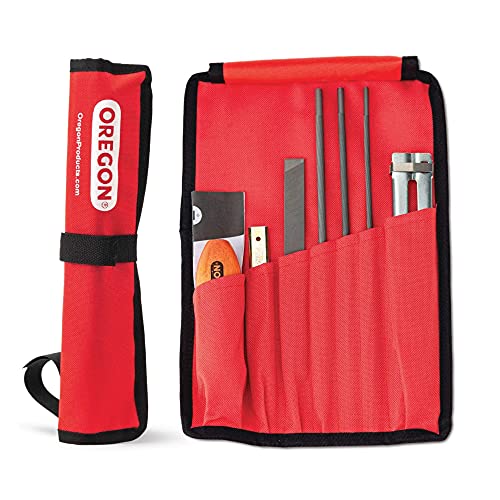
For anyone who sharpens at the woodpile instead of the workbench, this kit rolls everything into one canvas pouch. It carries 5/32″, 3/16″ and 7/32″ round files, a 6-inch flat file, a file guide and a universal handle, so one pouch can serve a chainsaw and a pole saw alike.
Key Specs:
- Pieces: 7
- Round files: 5/32″, 3/16″, 7/32″
- Also includes: 6 in flat file, file guide, universal handle
- Storage: rolled canvas pouch with inner pockets and loop closure
- Weight: 0.82 lb
- Model: 617067
Detailed Review:
The value here is that the right file is with you when the chain dulls, not in a drawer back home. A few strokes per tooth on a lightly dulled chain takes off far less metal than waiting until the saw throws dust instead of chips. The rolled pouch gives each tool its own pocket, so files don’t knock together and chip their teeth.
The file guide does two jobs. It holds the round file at a consistent height in the cutter, and it lets you check depth gauge height so the rakers stay accurately set. That consistency keeps the saw cutting straight instead of pulling to one side.
The instruction sheet includes a filing chart that pairs each file size with its chain, which helps when you run more than one saw. The universal handle fits each file, so you only carry one.
The Sharp Pebble Electric Chainsaw Sharpener Kit carries grinding bits in the same three diameters but needs a 120V outlet. This kit trades that speed and those repeatable angles for the freedom to sharpen anywhere without power. Hand filing takes practice to hold a steady angle, and that’s the real cost of going manual.
Pros:
- Three round file sizes plus a flat file in one pouch.
- File guide helps hold consistent filing height.
- Filing chart matches each file to its chain.
- Pocketed canvas pouch keeps files from rattling together.
Cons:
- Hand filing takes practice to hold a steady angle.
- Slower than a powered grinder on a badly dulled chain.
Who It’s For:
Saw owners who cut away from the garage, whether on a back lot or at a hunting camp, can touch up a chain without driving home. It also suits a household running both a chainsaw and a pole saw. Someone who never wants to learn hand filing will be happier with a powered sharpener.
Editor’s Verdict:
Easy to stash in a truck and complete enough to maintain a chain from routine touch-ups to raker work.
#4 Sharp Pebble Electric Chainsaw Sharpener Kit — Best Ergonomic Design
Owners who can’t hold a file angle steady will get even teeth from this corded grinder. You set the grinding angle once with the angle guide attachment, then cycle through the chain on a 120V motor with adjustable speed, and the setup works the same for right- and left-handed users.
Key Specs:
- Power: corded, 120V
- Grinding bits: 5/32″, 3/16″, 7/32″ (two in 7/32″)
- Included: angle guide attachment, wrench
- Speed: adjustable
- Weight: 1 lb
- Model: S1J-AJ6-10
Detailed Review:
Uneven teeth make a chain pull to one side and cut a curved kerf, and they’re hard to avoid with a hand file unless you file often. The angle guide fixes the grinding angle, so every cutter gets the same angle and depth as you rotate the chain through. That repeatability is the main reason to choose a powered unit.
Adjustable speed lets you slow the wheel for a light touch-up and run it faster on a chain that’s been through dirt. The motor runs on quality bearings, which keeps the grinding disc steady so it doesn’t wobble and leave an uneven edge.
The design works for right- or left-handed users, which matters more than it sounds when one hand is steadying the chain. Bits cover the three common round-file sizes, with a spare in the 7/32″ size since it sees heavy use. A wrench comes in the box for changing bits.
The trade-off is the cord. You need an outlet and a bench, so this tool stays in the garage while a hand file rides in the truck. Holding the wheel on one tooth too long can overheat the cutting edge, so light, quick passes are the habit to build.
Pros:
- Angle guide gives every tooth the same angle.
- Adjustable speed suits light touch-ups and heavier regrinds.
- Works for right- and left-handed users.
- Bits cover three common file sizes.
Cons:
- Needs an outlet, so sharpening stays at the bench.
- Lingering on one tooth can overheat the cutting edge.
Who It’s For:
If you sharpen at home and have never gotten even results from a file, this is the tool to try. It also helps people with less hand strength, since the motor does the cutting. Anyone who sharpens mostly in the field will get more use from a hand-file kit.
Editor’s Verdict:
Set the angle once and every tooth comes out matched, which is what fixes a chain that keeps pulling to one side.
#5 Oregon Chainsaw Safety Helmet with Visor — Best for Professionals
If you run a saw most weeks, this puts head, face and ear protection in one piece. A flip-up stainless steel mesh visor, cap-mounted ear cups and a shell meeting ANSI Z89.1-2009 Type I, Class C requirements mean one piece goes on instead of separate items that often stay in the truck.
Key Specs:
- Rating: ANSI Z89.1-2009 Type I, Class C
- Visor: stainless steel mesh, flip up/flip down
- Hearing: articulated cap-mounted ear cups
- Fit: 6-point adjustable harness
- Ventilation: 6 holes, detachable sun peak
- Weight: 2 lb
Detailed Review:
The Type I rating covers impacts to the top of the head, which is where falling limbs and branches land during felling and limbing. Class C means the shell offers no electrical protection, so keep well clear of power lines when clearing storm damage.
The visor is wide, made from stainless steel mesh, and flips up when you stop to plan a cut or talk with a helper. Mesh stops chips and bark from hitting your face, but fine dust gets through, so wear safety glasses underneath. The ear cups hinge from the cap, so they swing out of the way instead of coming off the helmet.
Comfort decides whether a helmet stays on all day. The 6-point harness adjusts for a snug fit that doesn’t shift when you bend over a log, and six vents let heat escape on summer jobs. The sun peak detaches when it gets in the way of looking up into a canopy.
Having all three protections attached to one shell is the practical win. Separate muffs and glasses get set down and forgotten, while this stays together from the truck to the cut.
Pros:
- Combines helmet, mesh visor and ear cups in one piece.
- Meets ANSI Z89.1-2009 Type I, Class C requirements.
- 6-point harness adjusts for a snug fit.
- Six vents help on hot summer jobs.
Cons:
- Class C rating offers no electrical protection.
- Mesh visor lets fine dust through, so add safety glasses.
Who It’s For:
Crews clearing lots, ground workers on tree jobs, and homeowners facing heavy storm cleanup will keep this on longer than a separate hard hat and muffs. The bright yellow shell also helps others spot you on a busy site. Anyone working near energized lines needs an electrically rated helmet instead.
Editor’s Verdict:
Worth wearing every time the saw starts, because it bundles impact, face and hearing protection into gear that adjusts to stay on.
#6 Oregon Pre-Loaded Grease Gun — Best Lightweight
Bars with a greaseable nose sprocket need regular feeding, and this tool handles it without a mess. It works one-handed, with a pointed steel nozzle for cup-shaped grease fittings and a transparent body that shows how much lubricant is left before you head out to cut.
Key Specs:
- Lubricant: pre-loaded all-purpose
- Nozzle: pointed steel, spring-loaded pump action
- Body: transparent plastic with visible fill level
- Operation: one hand, self-dispensing, refillable
- Model: 26365
Detailed Review:
A sprocket-nose bar has a small bearing at the tip that spins with the chain, and if it runs dry it wears out early and can seize. Greasing through the nose hole at each refuel pushes out sawdust and keeps that bearing turning freely. The pointed nozzle seats into the cup-shaped fitting, so grease goes into the hole instead of onto the bar.
One-hand operation matters because your other hand is usually steadying the saw or the bar. The spring-loaded steel pump dispenses with a press, and the transparent body shows the fill level at a glance, so you aren’t caught empty halfway through a job.
The gun arrives loaded with all-purpose lubricant and refills easily when it runs low. Its plastic body is built to handle temperature swings, which suits a tool that lives in a truck box or an unheated shed through the seasons.
Not every bar needs this. Many bars use a sealed nose with no grease hole, so check the tip of yours before buying.
Pros:
- One-hand operation leaves the other hand on the saw.
- Pointed nozzle fits cup-shaped grease fittings.
- Transparent body shows remaining lubricant at a glance.
- Arrives pre-loaded and refills easily.
Cons:
- Only useful on bars with a greaseable nose sprocket.
- The nozzle is shaped for cup-type fittings specifically.
Who It’s For:
Owners whose bar has a grease hole at the nose, and anyone who runs the saw for long sessions, will keep that sprocket alive with this. Firewood cutters who want a simple maintenance habit at refueling time also benefit. Owners of sealed-nose bars can skip it entirely.
Editor’s Verdict:
Simple to use and easy to read at a glance, it turns nose-sprocket greasing into a habit instead of a chore.
#7 Oregon 20″ Bar & Chain Combo — Best Premium
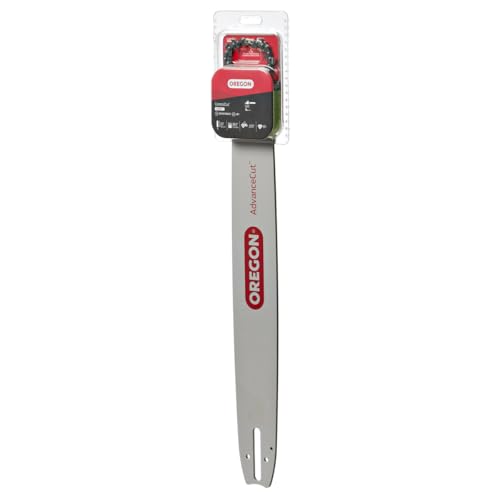
Compatible Stihl owners get a matched bar and chain in one box. The L81 AdvanceCut chain uses Oregon’s LubriTec oiling system to keep both the chain and guide bar oiled automatically, and its low-kickback, low-vibration design meets the recoil requirements of ANSI B175.1-2012.
Key Specs:
- Bar length: 20 in
- Chain: .325″ pitch, .063″ gauge, 81 drive links (AdvanceCut L81)
- Mount: D025 motor mount
- Fits: Stihl models up to 62 cc, including 026, MS 280 and MS 290
- Safety: low kickback, meets ANSI B175.1-2012 recoil requirements
- Weight: 3.89 lb
Detailed Review:
Buying the bar and chain together removes a frequent fitting error: a chain that matches the saw on paper but not the bar’s groove or nose. Oregon pairs a 20″ bar with .325″ pitch, .063″ gauge chain and 81 drive links on a D025 mount, covering Stihl saws up to 62 cc such as the 024, 036 and MS 290. Only older MS 270 and MS 271 versions with .063″ gauge fit, so confirm with your owner’s manual.
LubriTec helps keep oil moving across the chain and bar rails, which reduces friction and extends the life of both parts. The low-vibration design means less buzz through the handles over a long bucking session, and that lowers fatigue in your hands and forearms.
The KAKEI 18″ S62 Chainsaw Chain 3-Pack runs 3/8″ LP pitch and .050″ gauge, while this set uses a thicker .063″ gauge chain and adds a new bar, but you get one chain instead of several spares. If you only need the bar itself, compare the best chainsaw bars before settling on a set.
The chain isn’t Guard Mate compatible. AdvanceCut is aimed at landscapers who cut wood occasionally and homeowners who hold their yard work to a high standard, which matches the higher-end positioning of this set.
Pros:
- Bar and chain arrive matched, so fit questions disappear.
- LubriTec oiling helps reduce friction on chain and bar.
- Low-vibration chain eases fatigue on long sessions.
- Meets ANSI B175.1-2012 recoil requirements.
Cons:
- Fits only saws with a D025 mount and matching specs.
- Includes one chain, so buy a spare separately.
- Not Guard Mate compatible.
Who It’s For:
Stihl owners whose saw appears on the compatibility list, and whose old bar has worn rails or a tired nose, will get the most from replacing both parts at once. Landscapers who cut wood now and then also fit the chain’s design. Owners of other brands should match their own bar stamp instead.
Editor’s Verdict:
For a compatible Stihl with a worn bar, replacing both parts together restores straight, smooth cutting in one step.
#8 Oregon 7/32″ Chainsaw File 12-Pack — Best Durability
Anyone who files often needs a steady supply. This pack holds a dozen 7/32 in (5.5 mm) round files with a double-cut pattern that resists clogging, and they fit both Oregon’s standard file guide and the Sure Sharp bar-mounted filing guide.
Key Specs:
- Quantity: 12 files
- Diameter: 7/32 in (5.5 mm)
- Cut: double-cut
- Chain fit: 3/8″ and .404″ pitch chains
- Guide compatibility: standard file guide and Sure Sharp bar-mounted guide
- Model: 70502
Detailed Review:
A file dulls the same way a chain does. A worn file slides across the cutter instead of removing metal, which tempts you to press harder and round off the tooth. Having a dozen means you can retire a file the moment it stops biting.
The double-cut pattern resists clogging with filings and stays sharp longer, so each file lasts through more sharpenings. Consistent tooth height on the file removes metal faster and more smoothly, which gives a cleaner edge in fewer strokes. Fewer strokes per tooth also means less steel taken off the chain over its working life.
The 7/32″ diameter is sized for a specific range of chain pitches, so check your chain’s pitch against the file size before stocking up. The files fit both the standard file guide and the Sure Sharp bar-mounted guide, so they work with the guide you already own.
The Oregon Universal Field Sharpening Kit includes three round file sizes, while this pack covers only 7/32″. The trade-off is depth in one size versus range across chains, and this pack makes sense once you know your chain size.
Pros:
- A dozen files keep a sharp one always on hand.
- Double-cut pattern resists clogging between strokes.
- Fits standard and Sure Sharp bar-mounted guides.
Cons:
- One diameter only, so it suits fewer chain types.
- A dozen is more than an occasional sharpener will use.
Who It’s For:
Heavy firewood cutters, small crews, and anyone who touches up a chain at every refuel will go through files fast enough to justify a stocked drawer. Check that your chain runs a matching pitch first. If you run a low-profile chain or sharpen only now and then, a single file or a mixed kit fits better.
Editor’s Verdict:
Stock this once and a fresh, clean-cutting file is always within reach whenever the chain starts throwing dust.
#9 Oregon Chainsaw Depth Gauge Tool — Best Budget
Anyone who sharpens their own chain needs a way to bring the rakers down as the cutters get shorter, and this tool makes that step simple. It comes with its own flat file.
Key Specs:
- Includes: depth gauge tool and flat file
- Flat file: usable with or without a handle
- Recommended use: at least every third sharpening
- Instructions: printed on the back of the package
- Weight: 0.15 lb
- Model: 27742
Detailed Review:
Each sharpening makes the cutter shorter and lower, while the depth gauge in front of it stays the same height. Eventually the gauge rides on the wood and the cutter can’t bite, so the saw makes fine dust even with freshly sharpened teeth. This tool sits over the chain and exposes only the part of the depth gauge that needs filing.
The recommended routine is to file the depth gauges at least every third time you sharpen. Sticking to it keeps the gap consistent, which keeps chip size and feed steady. Filing the gauges too low makes the saw grabby and raises kickback risk, which is why a gauge tool beats eyeballing it.
The included flat file works with or without a handle, and the filing instructions are printed on the back of the package, so the directions stay with the tool. It’s an inexpensive way to round out a hand-file setup or an electric sharpener.
The Oregon Universal Field Sharpening Kit also includes a flat file and a file guide that sets depth gauges. Owners of that kit already have this step covered, while this tool fills the gap for anyone sharpening with round files alone.
Pros:
- Sets depth gauge height accurately and consistently.
- Includes a flat file usable with or without handle.
- Instructions printed right on the package back.
- Inexpensive way to keep a sharpened chain biting.
Cons:
- Handles depth gauges only; cutters still need a round file.
- Redundant if your file kit already sets depth gauges.
Who It’s For:
Hand filers who own round files but no gauge, and owners of an electric sharpener who still need to lower the rakers, will use this regularly. It also helps anyone whose freshly sharpened chain still makes dust. If your sharpening kit already includes a depth gauge guide, you can skip it.
Editor’s Verdict:
Inexpensive and simple, it restores a sharpened chain’s bite by keeping the rakers at the right height.
#10 WZQH Leather Work Gloves XL — Best Value
For everyday saw work, splitting and stacking, these gloves give your hands a tough barrier without much stiffness. They are made from 100% split cowhide with a soft cotton-fiber lining and a reinforced palm, and the adjustable wrist closes off the cuff so bark and sawdust stay out.
Key Specs:
- Material: 100% split cowhide leather
- Lining: soft cotton fiber
- Palm: reinforced
- Wrist: adjustable
- Sizes: XSmall to 2XLarge (6 sizes); reviewed in XL
- Color: coffee gray
Detailed Review:
Split cowhide resists abrasion, punctures and heat, which covers the hazards you meet handling bark, splintered rounds and a wood stove door. The reinforced palm adds protection where you grip the saw handles and drag brush, so that area holds up to the most wear.
The cotton-fiber lining keeps the inside soft against your skin, and the leather is processed so sweat won’t dye your hands. The adjustable wrist cinches the cuff, keeping sawdust, chips and small debris from working inside while you buck logs.
These are general work gloves, so they guard against splinters, thorns and abrasion but won’t stop a moving chain. Pair them with chaps and keep your hands on the handles. Six sizes make a snug fit easier to find, and a snug glove is less likely to catch on brush or slip on a handle.
The same pair covers yard work, ranch chores, barbed wire and fireplace duty, which is where the value shows. One pair handles most outdoor jobs, so you aren’t buying separate gloves for each task.
Pros:
- Split cowhide resists abrasion, punctures and heat.
- Reinforced palm adds protection where you grip.
- Adjustable wrist keeps sawdust and debris out.
- Six sizes help you find a snug fit.
Cons:
- Leather won’t stop a moving chain; still wear chaps.
- Leather gloves reduce fingertip feel for fine tasks.
Who It’s For:
Homeowners who cut, split and stack their own firewood and want one pair for the saw, the wood stove and the garden will get steady use from these. Anyone who needs gloves certified for chainsaw cut protection should look for that rating on the label instead.
Editor’s Verdict:
One pair handles saw work, splitting, stove duty and garden chores, which makes these an easy everyday glove to keep by the door.
Which Chainsaw Accessories Do You Actually Need?
Start with the core kit every owner needs, then add extras matched to how often and how hard you cut; a weekend firewood cutter and a full-time crew share the basics but not the specialist gear.
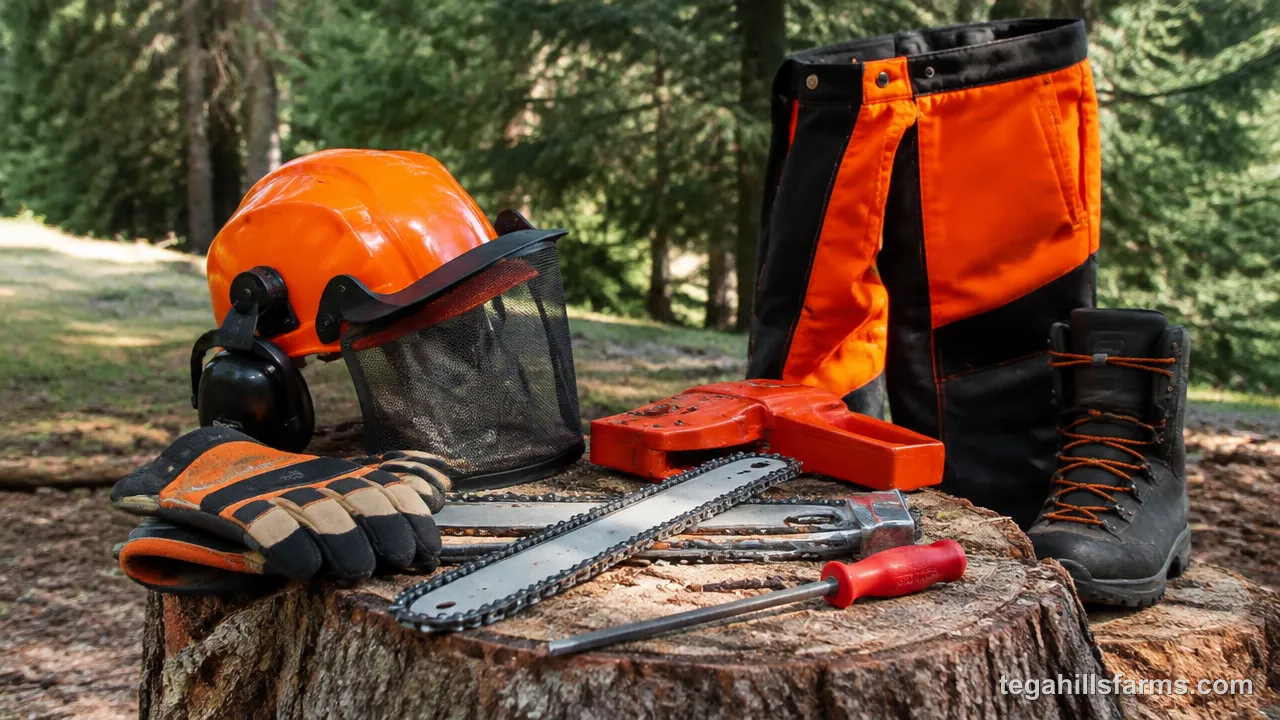
How much you cut, and what you cut, decides where to stop buying. Matching gear to your real workload keeps money and garage space for the items you’ll actually use.
What Should Every Chainsaw Owner Buy First?
Every owner needs head and hand protection, bar and chain oil, a way to keep the chain sharp and a spare chain that fits. These come before any upgrade because each one prevents a common failure.
Protection goes on before the first cut, since a single kicked-back branch or slipped grip can end the day. Bar oil keeps the chain and bar from grinding against each other; a dry bar heats up and wears quickly. A sharpening method, whether a file kit or an electric sharpener, keeps the saw pulling itself through wood instead of making you force it. A spare chain that matches your bar lets you keep working when the first one hits dirt or a nail. Chaps belong on this list for anyone who cuts more than a few limbs, and upgrades only make sense once these basics are covered.
What Do Homeowners Cutting Firewood Add?
Occasional firewood cutters should add chaps, a simple sharpening routine and sensible storage for the saw. Chaps matter here because bucking logs at knee height puts the chain close to your legs.
A light sharpening routine keeps the work easy: touch up the cutters when the saw starts producing dust instead of chips, and lower the depth gauges every few sharpenings. For storage, a bar cover and a dry spot on a shelf or wall hook keep the chain sharp and rust-free between seasons.
Light users can skip felling wedges, lanyards and performance parts entirely. If you are still choosing a saw for this kind of work, the best chainsaws for homeowners are sized for exactly these jobs.
What Do Arborists and Heavy Users Add?
Frequent and professional users add felling wedges, felling dogs, a scrench, lanyards and bar scabbards, because bigger jobs demand more control over the tree and the saw.
Wedges hold the back cut open so the bar doesn’t pinch, and they help steer the tree toward the planned drop zone. Felling dogs, the spiked teeth beside the bar, give the saw a pivot point so you can lever through large rounds with less effort. A scrench combines a bar-nut wrench and a screwdriver for tensioning the chain on the job. Lanyards secure a top-handle saw to a climber’s harness, so a dropped saw doesn’t fall to the ground crew below. A bar scabbard covers the chain whenever the saw moves between cuts or rides in a truck. Crews outfitting for climbing work can compare the best chainsaws for arborists alongside this gear.
A chain filed back to short cutters can still look sharp while it makes dust and drifts sideways, and a helmet shell with a hairline crack looks fine hanging on its hook. Both failures show up in the middle of a cut, when a pinched bar or a falling limb leaves no time to swap gear.
When Should You Replace a Chain, File or Helmet?
Replace a chain when its cutters are filed back to the wear marks, a tooth cracks or breaks, or the chain has stretched so far that the tensioner can’t take up the slack. Worn gear does its job poorly long before it fails outright, so these signs are worth checking at every sharpening.
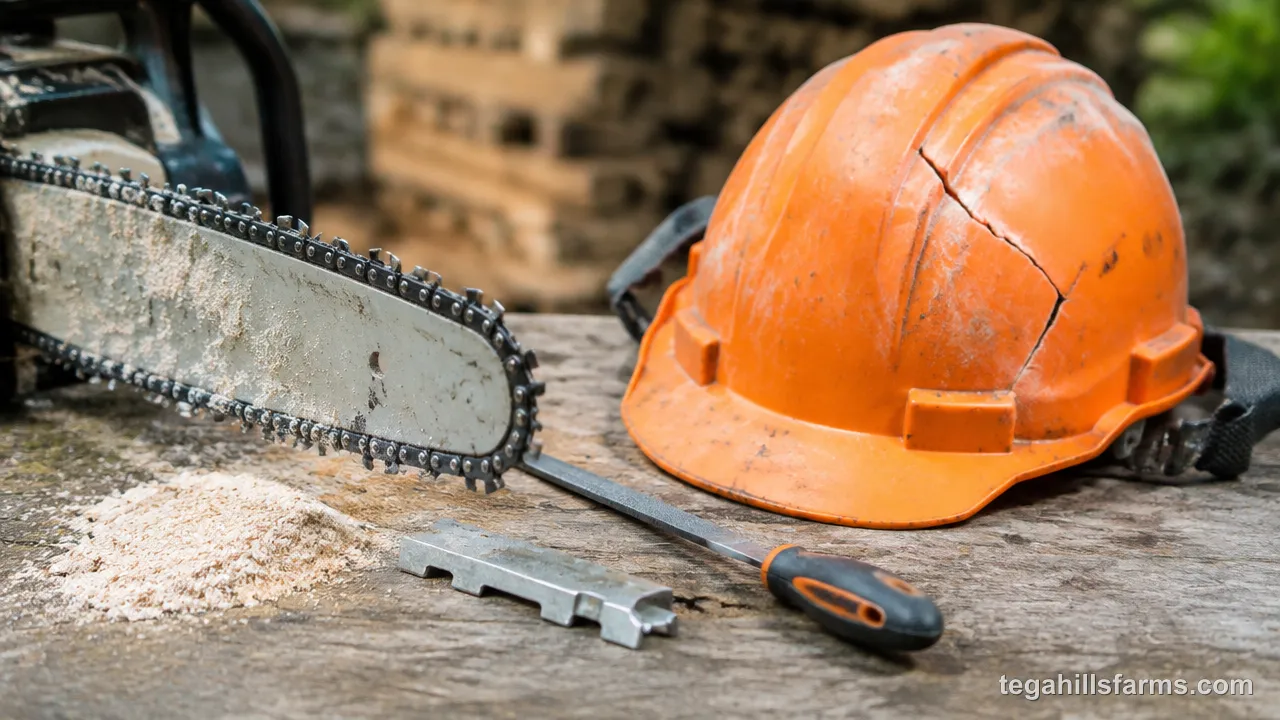
- Chain: short or uneven cutters, cracked tie straps, or tight spots that bind as you pull the chain around the bar. A worn chain makes dust, cuts crooked and needs more force, which raises kickback risk.
- Round file: it slides across the tooth instead of biting, or the cutting surface looks shiny and smooth. Pressing harder with a dull file rounds the cutter edge.
- Depth gauge tool: bent edges or a warped body that no longer sits flat on the chain, which throws off every raker setting.
- Helmet: any hard impact, a cracked shell, or a shell that has turned chalky and faded from sun exposure. Follow the service life printed inside your helmet, since a damaged shell may not absorb the next blow.
Are OEM Accessories Worth Choosing Over Aftermarket Ones?
Aftermarket chains and bars from established makers fit and perform as well as OEM parts when the pitch, gauge, drive link count and mount pattern match. OEM parts from makers such as Stihl and Husqvarna remove the guesswork, since they’re built for specific saws and matched to them by design.
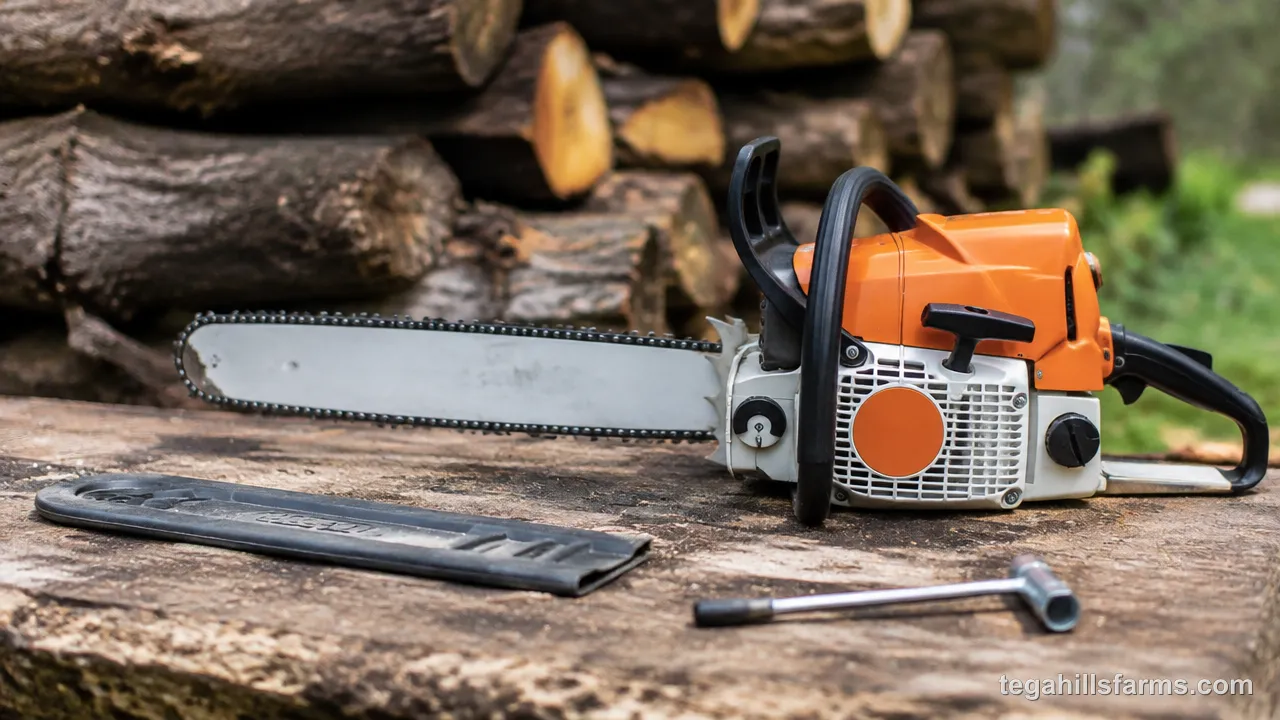
Durability comes down to steel quality and heat treatment, not the name on the box. Reputable aftermarket brands publish their specs and safety ratings, while no-name parts vary from batch to batch and often skip that information.
Confirm fit before ordering either kind:
- Read the stamp on your current bar for pitch, gauge, length and drive link count.
- Count the drive links on your old chain if the stamp is worn.
- Match the bar mount code, such as Oregon’s D025, against the saw model.
- Check the part number in your owner’s manual against the listing’s compatibility chart.
A chain that matches all four specs runs the same on the saw whichever company made it.
Are Muffler, Clutch Cover and Air Filter Upgrades Worth the Trade-Offs?
For most owners, no. A modified muffler or a high-flow air filter changes how much air the engine moves, and the carburetor usually needs retuning to match. An engine left running lean after such a change can overheat and score the piston, damage that outweighs any gain in cutting speed.
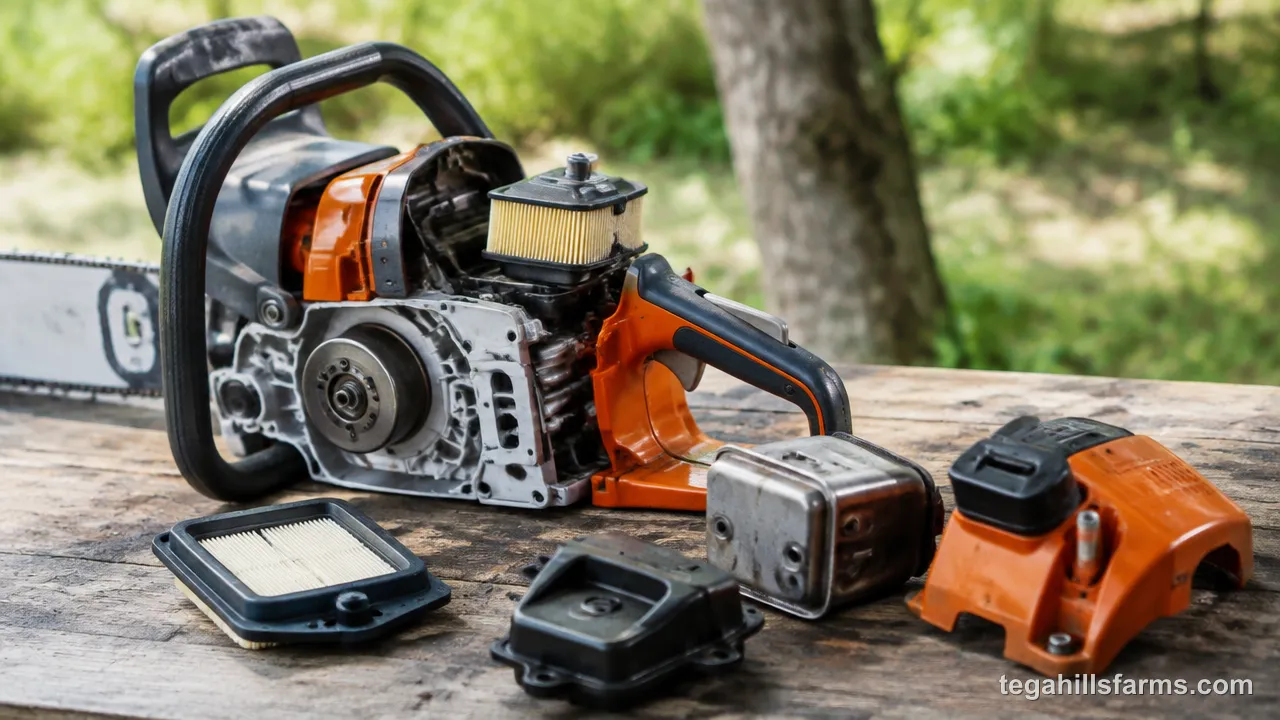
Warranty and emissions are the other trade-offs. Modifying the exhaust or intake can affect warranty coverage and emissions compliance, so check with the saw’s maker and your local rules before changing anything.
Clutch cover swaps are mostly about convenience, such as captive bar nuts that don’t get lost in the sawdust. Any replacement still has to keep the chain catcher and chain brake working as designed.
These upgrades make sense only for heavy users who understand carburetor tuning and accept the warranty risk. A homeowner gets more from a sharp chain and clean air filter than from any performance part.
How Should You Store Chainsaw Oil, Fuel and Accessories?
Store fuel in an approved container with stabilizer added, keep bar oil capped in a cool, dry spot, cover the bar with a scabbard, and hang the saw on a wall hook or keep it in a case. Well-stored gear starts and cuts the same next season; poorly stored gear doesn’t.
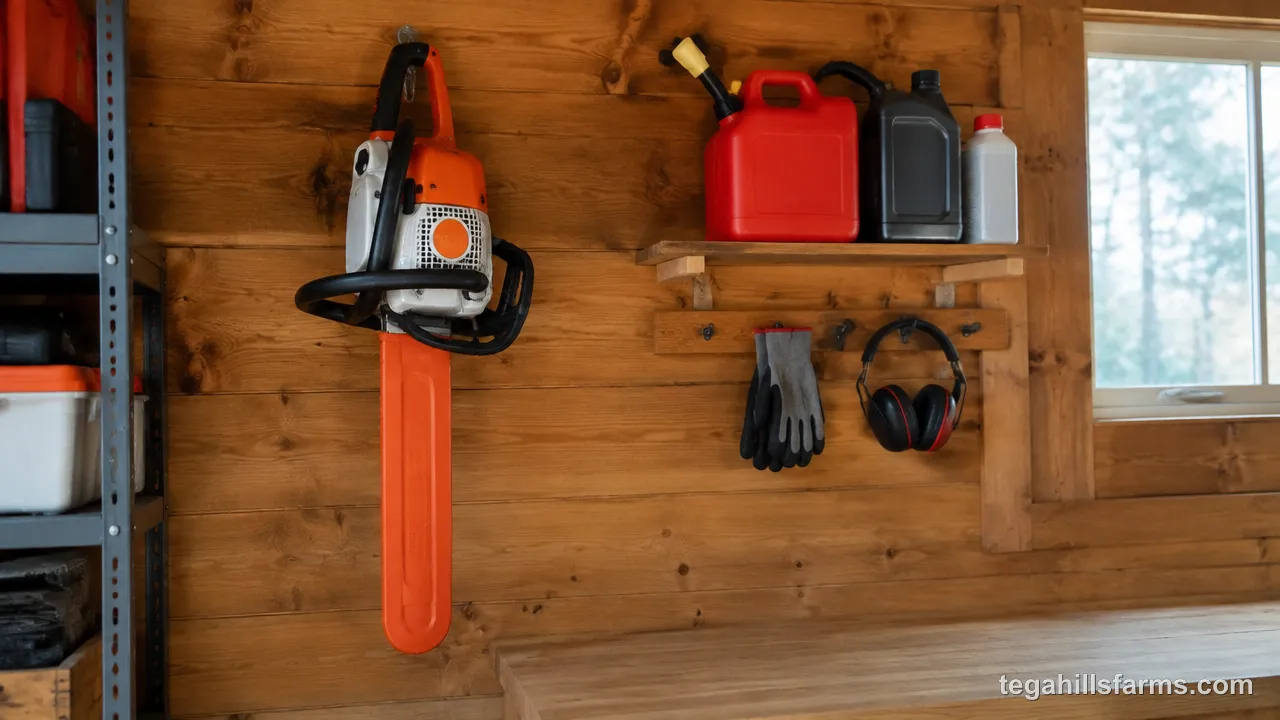
Fuel causes most storage trouble. Gasoline with ethanol absorbs moisture and goes stale over time, leaving gum in the carburetor that makes the saw hard to start. For long breaks, either stabilize the fuel or run the tank dry.
Bar oil holds up longer, but an uncapped jug collects dust and water. A scabbard protects the chain’s edge from knocks and keeps a sharp chain from cutting anything around it. Hanging the saw or casing it keeps it off a damp floor, where the bar and chain rust. Files and sharpening tools stay sharp longer in a pouch or drawer than loose in a toolbox, where they rub against other steel.
Chainsaw Accessories FAQs
How do I pick the right file size for my chain?
Match the file diameter to your chain’s pitch, which is stamped on the bar or printed on the chain box. A filing chart, like the one in Oregon’s field kit, pairs each chain with its file. The wrong size leaves a hook or a blunt edge on the cutter, and the chain cuts poorly even after careful filing.
Can I use motor oil instead of bar and chain oil?
Not as a habit. Bar oil carries a tackifier that keeps it on the chain at speed, while motor oil flings off quickly and leaves the bar groove dry sooner. Used motor oil adds metal particles and contaminants that wear the bar, chain and oil pump. Use proper bar oil and save motor oil for the engine.
How often do depth gauges need attention?
Check them every few sharpenings and file them whenever the gauge tool shows they stand above the setting. Each sharpening lowers the cutters, so the depth gauges gradually stop the chain from biting. A saw that makes fine dust right after sharpening is the usual sign the depth gauges need work.
Do I need a sharpening tool if I only cut occasionally?
A basic file kit is still worth having. A chain dulls the moment it touches dirt or a buried nail, regardless of how rarely you cut. If you’d rather not sharpen at all, keep a spare chain on hand and have a local shop sharpen the dull one between jobs.
What should I check on an online listing before ordering?
Match the pitch, gauge, drive link count and bar length to the stamp on your bar, and check the mount code for bars. Compatibility lists group many saws together, so confirm against your owner’s manual. For safety gear, look for the standards rating on the item itself, and read reviews written for the exact model.
Write Your Review
No reviews yet. Be the first to share your experience!