

Our top picks for the best 16 inch chainsaws in 2026 are the DEJUNPIOOL 16″ Brushless Chainsaw (Best Overall), EGO Power+ CS1611 16″ Chainsaw (Best Lightweight), CRAFTSMAN CMECS600 16-Inch (Best Budget), Husqvarna 120 Mark III 16″ (Best Gas-Powered), Greenworks 40V 16″ Brushless Chainsaw (Best Battery Life), and Makita XCU04Z 18V X2 16″ (Best Premium). They cover battery, corded and gas power, so there is a fit for a suburban lot with a few maples and for a back acreage with a woodpile.
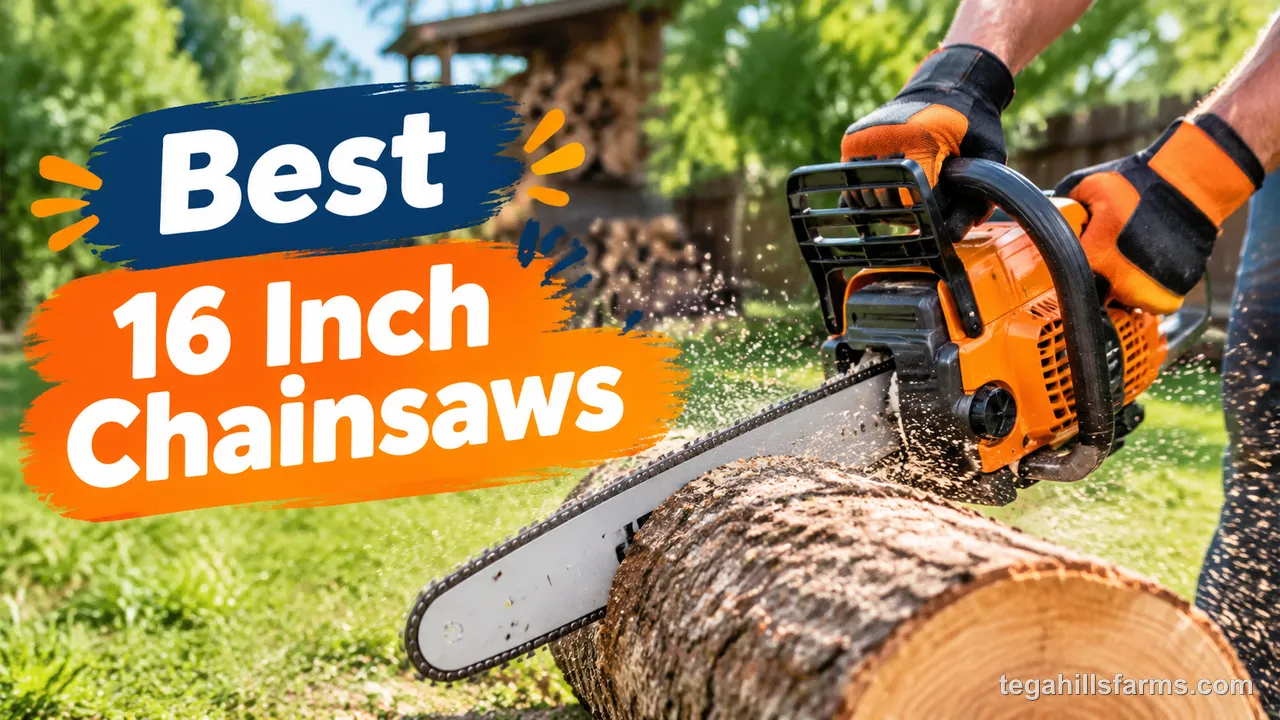
All of these saws carry the same bar length, so they separate on other things: the power source, the battery platform each one runs on, how much the saw weighs in your hands, and how much routine care the chain, oiler and engine ask of you. Those factors decide whether a saw feels easy on a Saturday of storm cleanup or wears you out by the third log.
Most homeowners worry about three practical failures: a battery that dies halfway through a job, kickback when the bar tip catches wood, and a saw that refuses to start after sitting in the garage for months. Each pick handles those problems differently.



Before anything else, check which batteries are already on your shelf. A saw that shares packs with your mower or drill saves you from buying extra batteries and is easier to keep charged.
Is a 16-Inch Chainsaw the Right Bar Length for Your Yard?
For limbs, small trees and firewood rounds, it is the size most homeowners need, and trunks wider than the bar can still be cut by working from both sides of the log.
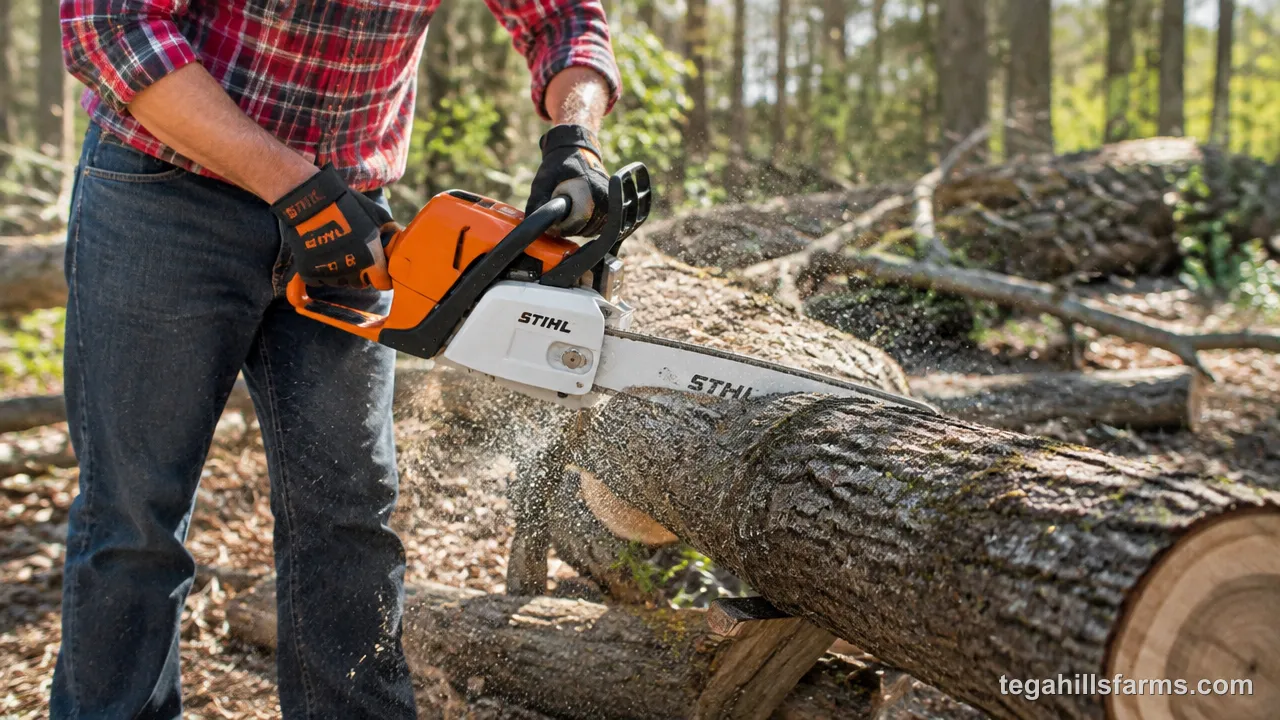
The usable cutting depth is a bit shorter than the bar length, because part of the bar mounts inside the saw body and the rounded nose does not make a full-depth cut. A trunk close to the bar’s length or bigger takes a two-sided cut: you cut partway in from one side, then finish from the other so the kerfs meet. That works fine on a downed tree, but it takes more time and more care than a single pass.
A shorter bar is lighter at the front and easier to steer, which helps when pruning or cutting over your head; that is where the best 14 inch chainsaws earn their place. A longer bar saves time when you regularly buck thick trunks, which is the case for the best 18 inch chainsaws. The 16-inch size sits between those jobs, with enough reach for firewood and storm wood and enough balance for limbing.
If your trees run bigger or smaller than this bar length handles comfortably, compare it against the best chainsaws across every size and power type.
6 Best 16 Inch Chainsaws of 2026
The six saws are the DEJUNPIOOL 16″ Brushless Chainsaw, EGO Power+ CS1611 16″ Chainsaw, CRAFTSMAN CMECS600 16-Inch, Husqvarna 120 Mark III 16″, Greenworks 40V 16″ Brushless Chainsaw, and Makita XCU04Z 18V X2 16″. All 6 share a bar length, so the power source does more to separate them: it sets your runtime, how much weight you carry, how much upkeep you take on, and whether you need batteries you already own.
The lineup covers homeowners clearing limbs, cleaning up after storms and cutting firewood, plus owners already on a battery platform and buyers who want gas or a cord. Readers who want a wider look at sizes and power types can compare the best chainsaws for homeowners.
#1 DEJUNPIOOL 16″ Brushless Chainsaw — Best Overall
Dewalt battery owners get a capable saw without buying into a new platform. A 1200W brushless motor spins the chain at up to 32,000 RPM, and at 7.7 pounds without a battery it stays easy to hold through an afternoon of limbing and firewood cuts.
Key Specs:
- Motor: 1200W brushless, up to 32,000 RPM
- Weight: 7.7 lb (tool only)
- Max cutting diameter: 13 in
- Battery: compatible with Dewalt 20V/60V MAX (battery and charger not included)
- Chains: 3 included, 75-link, 1/4-in pitch
- Model: JY-CH1201
Detailed Review:
The pure copper brushless motor drives the chain at up to 42 ft/s with no load, so it pulls through limbs and firewood rounds without bogging down. A brushless motor has no brushes to wear out, which leaves the chain and bar oil as your main upkeep. The rated cutting diameter covers storm limbs and most backyard trees in a single pass.
Handling is where this saw feels friendly. The ergonomic handle has a non-slip rubber grip that cuts down on hand fatigue, and the chain installs without tools. A rotary knob sets the tension, which matters because the chain loosens slightly as it heats up; a quick turn snugs it back down mid-job.
The auto oiler feeds bar oil to the chain on its own, though the oil outlet needs regular cleaning so it does not clog or leak. The battery level screen shows remaining charge, so you can swap packs before one dies in the middle of a cut. For bigger jobs, use a genuine Dewalt battery with a high capacity rather than a small one.
The kit includes three chains, a bar cover, goggles and gloves, so a dull chain becomes a quick swap. The chain brake, safety lock, and overload and overheating protection round out the package. If the saw won’t start, release the brake first.
Pros:
- Runs on Dewalt 20V/60V MAX batteries you may already own.
- Brushless motor skips brush wear and upkeep.
- Rotary knob tensions the chain without tools.
- Three chains in the box allow quick swaps.
- Battery level screen shows remaining charge.
Cons:
- Battery and charger are sold separately.
- Chain loosens as it heats and needs retightening.
- Oil outlet needs regular cleaning to prevent clogs.
Who It’s For:
Homeowners already running Dewalt tools on the matching battery platforms get the most from this saw, since the batteries they own power it. It fits limb pruning, storm cleanup and firewood prep around the yard. Someone starting with no batteries at all is better off with a kit that ships ready to cut.
Editor’s Verdict:
Pair it with a high-capacity Dewalt battery and it handles routine yard cutting with little upkeep beyond chain oil and tension checks.
#2 EGO Power+ CS1611 16″ Chainsaw — Best Lightweight
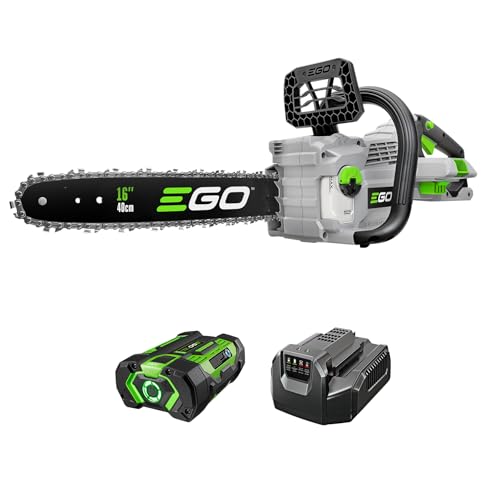
If you want a cordless saw that arrives ready to work, this one ships with a 56V 2.5Ah ARC Lithium battery and a charger in the box. It is rated at 40cc gas-equivalent power.
Key Specs:
- Power: 40cc gas equivalent
- Battery: 56V 2.5Ah ARC Lithium, charger included
- Chain speed: 66 ft/s (20 m/s)
- Weight: 9 lb
- Weather resistance: IPX4
- Chain: 3/8-in pitch, .043-in gauge, 52 drive links
Detailed Review:
On the included battery, the CS1611 is rated for up to 130 cuts through a 4×4, which gives you a realistic sense of a session: plenty for a downed limb pile, less than a full day of bucking. The gas-equivalent rating sits above the Makita XCU04Z’s 32cc equivalence, and the EGO gets there on one battery while the Makita needs two.
The weight is manageable for one person to carry across a yard and hold steady through a cut. Tool-free tensioning lets you adjust the bar and chain without hunting for a wrench. The automatic oiler feeds the chain from a spill-free reservoir, so refilling bar oil in the yard does not leave a slick on the housing or your gloves.
The IPX4 rating means the saw tolerates splashing and light rain, which matters when storm cleanup starts before the weather clears. It is not a reason to leave the saw out in the rain. The low-kickback chain comes with a brake indicator, so you can see at a glance whether the brake is engaged before you squeeze the trigger.
When the chain wears out, the pitch, gauge and drive-link count in Key Specs are the three numbers a replacement has to match.
Pros:
- Battery and charger included, so it cuts out of the box.
- Rated at 40cc gas-equivalent power.
- Spill-free oil reservoir keeps refills clean.
- IPX4 rating handles damp cleanup work.
- Brake indicator shows when the chain brake is on.
Cons:
- Long cutting days need a second EGO battery.
- Runs only on EGO 56V packs.
Who It’s For:
If you are buying your first cordless saw and want one box that covers the saw, battery and charger, this EGO keeps things simple. Owners of other EGO 56V yard tools can share batteries across the lineup. Anyone who cuts for hours at a stretch should plan on spare packs.
Editor’s Verdict:
Expect gas-like cutting power straight from the box, with runtime set by how many EGO 56V batteries you keep charged.
#3 CRAFTSMAN CMECS600 16-Inch — Best Budget
For occasional cutting within reach of an outlet, this corded saw is an affordable, low-fuss way into a 16-inch bar. Its 12-amp motor runs as long as it stays plugged in.
Key Specs:
- Motor: 12-amp corded electric
- Weight: 6.2 lb
- Bar and chain: 16-in low-kickback
- Oiling: automatic, with oil window
- Warranty: 3-year limited
- Model: CMECS600
Detailed Review:
A corded motor gives steady power from the first cut to the last, with no battery fading and no fuel to mix. The trade-off is reach: the saw goes only as far as your extension cord, and you have to keep that cord behind you and away from the chain on every cut. It works well on the patio, along the driveway and at the near edge of the yard.
The 6.2-pound body is far lighter than the 10.7-pound Husqvarna 120 Mark III, which makes overhead limbing and one-off jobs less tiring. The Husqvarna offers unlimited range and runtime in return, so the choice comes down to whether your trees are near the house or out back.
Auto-oiling needs no priming, and the oil window lets you check the bar oil level before you start, which keeps the chain from running dry. Tool-free tensioning lets you bring a stretched chain back to the right tension in a few seconds.
The low-kickback bar and chain lower the risk when the tip touches wood, and the 3-year limited warranty covers the saw for several seasons. If you want to compare other plug-in options, the best corded chainsaws cover the same territory.
Pros:
- 12-amp motor delivers steady power with no charging.
- Light 6.2-pound body is easy to carry and hold.
- Oil window shows bar oil level at a glance.
- Tool-free chain tensioning.
- 3-year limited warranty.
Cons:
- Reach ends where the extension cord does.
- Cord has to be kept clear of the chain.
- Not practical where there is no power.
Who It’s For:
Occasional cutters who trim limbs near the house, clear storm debris off a patio or cut up a fallen branch by the driveway get steady power at a budget price. It does not suit back-property or wooded-lot work far from an outlet.
Editor’s Verdict:
Choose it for light, occasional jobs within cord reach; the warranty and near-zero upkeep make it easy to own.
#4 Husqvarna 120 Mark III 16″ — Best Gas-Powered
Gas makes sense when the cutting runs long or the trees stand far from any outlet, and this saw’s 38cc X-Torq engine is built for that kind of work. Refueling, not recharging, keeps it running.
Key Specs:
- Engine: 38cc, 1.8 HP, 2-cycle X-Torq
- Weight: 10.7 lb
- Recommended bar lengths: 14 to 18 in
- Starting: air purge plus combined choke/stop control
- Chain brake: inertia-activated
- Model: 970739616
Detailed Review:
The X-Torq engine is designed for efficient fuel use, which gives you steady cutting power with no runtime limit beyond what is in the tank. When it runs dry, a refill has you back to work in a minute, which is why gas still makes sense for firewood days and clearing on back acreage.
Starting is where many homeowner gas saws frustrate their owners, and this one is built to address that. The air purge pulls fuel into the carburetor before the first pull, and the combined choke/stop control puts starting on one lever, which reduces the chance of flooding the engine.
The centrifugal air cleaning system throws larger dust and debris out before it reaches the air filter, so the filter stays cleaner and the engine lasts longer. LowVib dampeners reduce the vibration reaching your hands, which matters on long bucking sessions. The inertia-activated chain brake trips on its own when kickback snaps the saw back toward you.
The engine is rated for 14- to 18-inch bars, so you can step up to a longer bar later. In return, you take on two-stroke upkeep: mixed fuel, a clean air filter, a healthy spark plug and fuel management before storage.
Pros:
- Gas engine runs as long as you have fuel.
- Air purge and single choke/stop lever make starting easier.
- LowVib dampeners cut vibration and hand fatigue.
- Accepts 14- to 18-inch bars.
- Centrifugal air cleaning protects the air filter.
Cons:
- Two-stroke engine needs mixed fuel every fill-up.
- Air filter and spark plug need seasonal attention.
- Fuel left in storage can gum up the carburetor.
Who It’s For:
Property owners who cut firewood for winter or clear fallen trees out back, and who don’t mind mixing fuel and doing basic engine care, get the most from it. It also suits work far from an outlet or charger. Anyone wanting push-button starts and almost no upkeep is better served by a battery saw.
Editor’s Verdict:
Accept the fuel mixing and engine care, and you get a saw whose runtime is limited only by the gas can.
#5 Greenworks 40V 16″ Brushless Chainsaw — Best Battery Life
Greenworks 40V owners and anyone who lets a saw sit for months between jobs should look here: the included 4.0Ah battery holds its charge for more than a year in storage. A charger comes in the box.
Key Specs:
- Battery: 40V 4.0Ah lithium-ion, charger included
- Cutting capacity: trees and limbs up to 28 in diameter
- Weight: 10.36 lb
- Warranty: 3-year tool and battery
- Model: 20312
Detailed Review:
The brushless motor and 16-inch bar handle firewood, storm cleanup and limbing. The rated cutting capacity is well beyond the bar length, which assumes two-sided cuts on big trunks. For most homeowners, that means a storm-felled tree is within reach if you take the time to work it from both sides.
The 4.0Ah battery is the reason to pick this saw if you only use it a few times a year. Because it holds its charge for so long in storage, a saw that sat in the garage since spring is still ready when a storm drops limbs on the driveway. Starting takes two steps, with no priming and no pull cord.
The automatic oiler has a flip-up cap and a transparent window, so you can see the oil level and refill without a funnel. Tool-free tensioning, a chain brake, a low-kickback design and an overmolded grip cover the daily handling basics.
At 10.36 pounds, it carries more weight than the EGO CS1611, which you notice in overhead limbing and long bucking sessions. The battery fits other Greenworks 40V tools, and the 3-year warranty covers both the tool and the battery.
Pros:
- 4.0Ah battery holds its charge for over a year in storage.
- Battery fits other Greenworks 40V tools.
- Two-step start with no priming or pulling.
- Transparent window shows bar oil level.
- Warranty covers both tool and battery.
Cons:
- Heavier than the EGO CS1611 for overhead work.
- Tied to the Greenworks 40V battery platform.
Who It’s For:
Yards with a Greenworks 40V mower, trimmer or blower already in the shed are a natural fit for this saw, since one set of batteries runs everything. It also suits the owner who reaches for a saw mostly after storms. Readers who prune overhead for long stretches may prefer a lighter saw.
Editor’s Verdict:
Keep it in the garage and it is ready the day a storm drops limbs, with a warranty that covers the battery too.
#6 Makita XCU04Z 18V X2 16″ — Best Premium
Owners already invested in Makita’s 18V LXT batteries get a premium brushless saw that runs on two of them for 36V of power. Its direct-drive motor rivals a 32cc gas saw.
Key Specs:
- Motor: Makita outer-rotor brushless, direct drive
- Power: equivalent to a 32cc gas chainsaw
- Batteries: two 18V LXT (36V), not included
- Weight: 11.2 lb (tool only)
- Controls: variable speed trigger, lock-off lever, LED on/off switch with auto power-off
- Model: XCU04Z
Detailed Review:
The outer-rotor brushless motor drives the chain directly, so less power is lost between the motor and the sprocket and more of each charge goes into cutting. That is how two 18V packs deliver gas-saw-class performance for limbing, cleanup and firewood.
The variable speed trigger lets you start a cut slowly so the chain bites cleanly instead of skipping across the bark, then bring it up to full speed once the kerf is started. The built-in lock-off lever keeps the chain from engaging if you bump the trigger. The LED on/off switch shuts the saw off on its own when it sits idle, which saves battery between cuts.
It is a bare tool, and that is the deciding factor. You need two 18V LXT batteries before the first cut, which makes sense if your garage already holds Makita drills and saws and much less if you are starting from nothing.
The weight before the batteries go in is 11.2 pounds, which makes it a hefty saw to carry around. The weight is steady and planted on the ground, but you will feel it during overhead work and long bucking sessions.
Pros:
- Runs on 18V LXT packs Makita owners already have.
- Outer-rotor brushless motor drives the chain directly.
- Variable speed trigger allows controlled cut starts.
- Auto power-off saves battery when the saw sits idle.
Cons:
- Bare tool: batteries are sold separately.
- Needs two charged packs to run at all.
- Weight climbs further once both batteries are installed.
Who It’s For:
Workshops and garages stocked with Makita 18V LXT tools can add this saw without starting over on batteries. It handles firewood and cleanup work with steady power and careful trigger control. Buyers without Makita batteries face the cost of two packs before the first cut.
Editor’s Verdict:
Within the 18V LXT system, it adds gas-class cutting and thoughtful controls; outside that system, buying two batteries first is hard to justify.
Gas, Battery or Corded: Which Power Source Fits a 16-Inch Saw?
How long you cut at a stretch, how far you work from the house and how much upkeep you accept decide this more than raw power does.
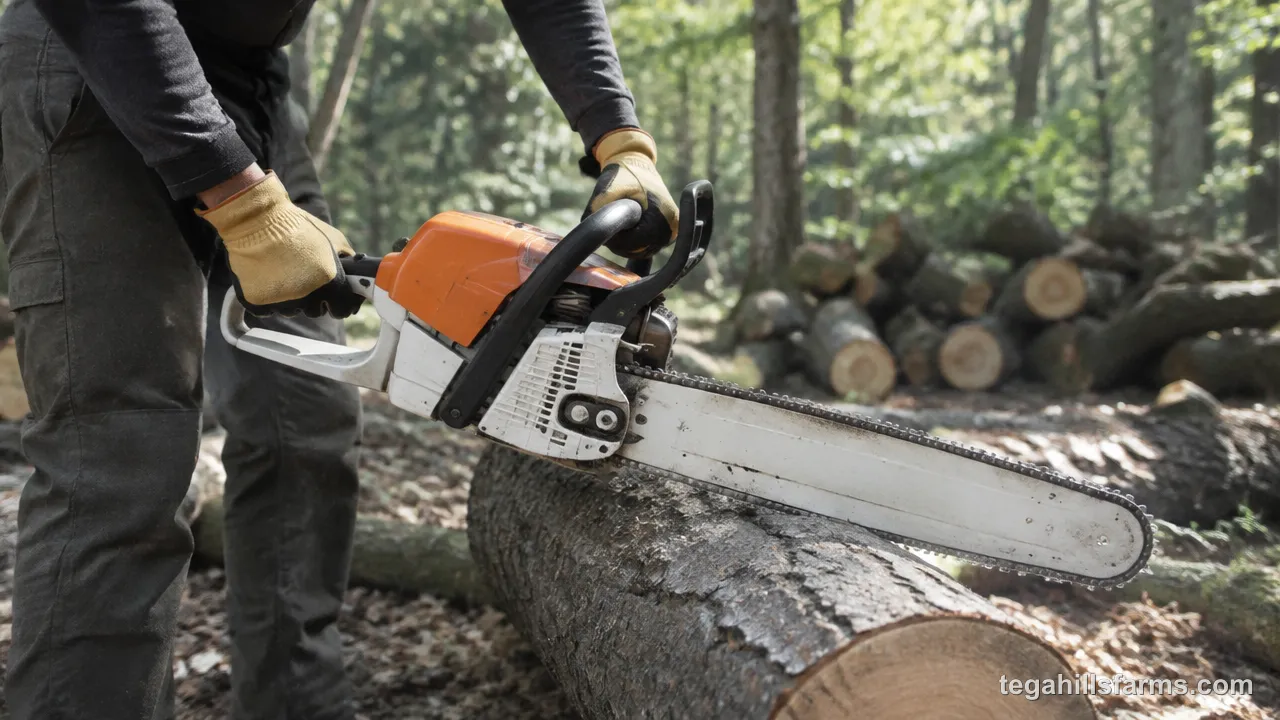
A 16-inch bar works with all three power types, so the bar itself won’t make the choice for you. What changes is the routine around the saw: how it starts, what keeps it running, how loud and heavy it is in your hands, and what it needs from you between jobs. Match those to your yard and your patience for maintenance, and the power source mostly picks itself.
When Does a Gas Saw Make Sense?
A gas saw makes sense for long cutting sessions and work far from the house, because refueling replaces recharging. A full day of firewood or clearing a fence line on back acreage won’t stall while a battery charges.
A mid-size engine like the one on the Husqvarna above pairs well with this bar length. The trade-offs are noise loud enough to require ear protection, more vibration through the handles, and a starting routine of choke, purge bulb and pull cord.
Two-stroke engines run on gas mixed with two-stroke oil at the ratio in your manual, and mixed fuel goes stale, so buy it in small batches or add stabilizer. Over a season, plan on cleaning the air filter, checking the spark plug and keeping the carburetor clear of old fuel. If that upkeep sounds reasonable, the best gas chainsaws cover more engine sizes.
How Far Does a Battery Saw Get You?
A battery saw gets most homeowners through limbing, storm cleanup and moderate firewood work, with a spare pack covering longer jobs. Runtime depends on battery capacity and the wood itself: hardwood and thick rounds drain a pack faster than pine limbs.
It starts at the trigger, runs quieter than gas and needs no fuel. Voltage platform matters more than most buyers expect, because a saw that shares packs with your mower or drill can be bought as a bare tool, while a kit adds a battery and charger. For long jobs, a second battery charging while you cut keeps the work moving.
Lithium-ion packs deliver less power in cold weather, so keep them indoors until you need them in winter. For more platform options, compare the best battery chainsaws.
Is a Corded Electric Saw Enough for Light Work?
A corded saw is enough for jobs near the house: limbs over the patio, a downed branch by the driveway, small rounds for the fire pit. It gives steady power with no fuel to mix and no batteries to charge, and it tends to be light and nearly maintenance-free.
The cord is the limit. It sets how far you can work and gives you something to trip over and to keep away from the chain. Use an outdoor-rated extension cord of the gauge your manual calls for, since a thin cord over a long run drops voltage and starves the motor. Plug into a GFCI outlet, and keep the cord behind you on every cut.
What Should You Look for in a 16-Inch Chainsaw?
Control, chain compatibility and safety matter more in daily use than the headline power figure on the box.
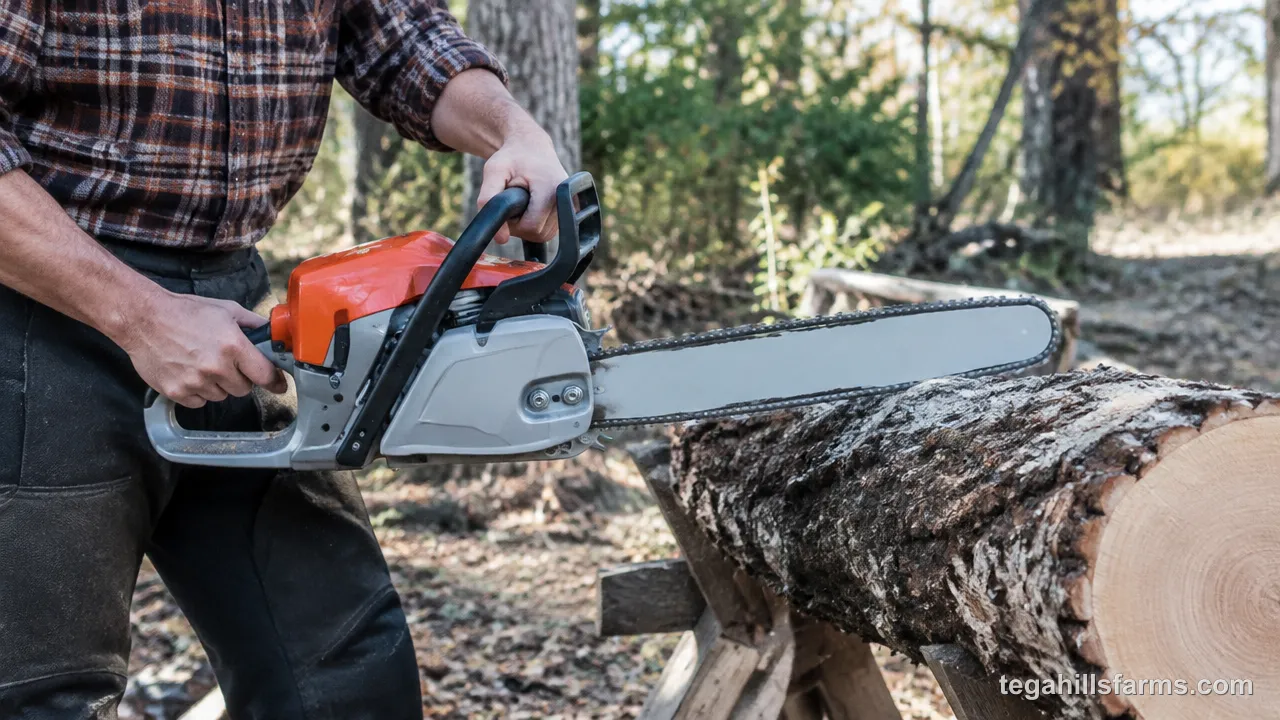
A strong motor won’t help if the saw is tiring to hold, if you can’t find a chain that fits when the original goes dull, or if the safety features are hard to use. These are the details that separate a saw you reach for from one that stays on the shelf.
How Do You Match the Chain to the Bar?
A replacement chain has to match the bar in three measurements: pitch, gauge and drive-link count. Pitch is the spacing between links and has to mesh with the sprocket and bar nose. Gauge is the thickness of the drive links and has to fit the bar groove. The drive-link count sets the chain’s length.
A chain that matches the bar length but not the pitch won’t seat on the sprocket. Two saws with the same bar length can need different chains, and the DEJUNPIOOL runs a smaller pitch than the EGO, so their chains aren’t interchangeable.
You’ll usually find these specs stamped on the bar near the mount and listed in the manual. You can also count the drive links on the old chain. Write all three down before buying spare chainsaw chains, and keep one on hand so a dull chain doesn’t end the job.
Which Safety Features and Gear Matter Most?
The chain brake and a low-kickback chain matter most, because kickback is the most common way a saw turns on its operator. Kickback happens when the upper part of the bar tip touches wood or the chain gets pinched in the cut, which throws the bar up and back toward you.
A chain brake stops the chain within a fraction of a second, either when your hand pushes the front guard or, on inertia-activated designs, when the saw jerks back on its own. Low-kickback chains use guard links that limit how deep the cutters can bite at the tip. A trigger lock or lock-off lever prevents accidental starts.
Protective gear is still required with a battery saw, because the chain is just as sharp. Wear chaps, a helmet with a face shield, ear protection and gloves. The best chainsaw accessories cover the gear and add-ons worth having.
How Much Does Weight and Handling Change Daily Use?
Weight and balance decide how long you can cut before your arms and back give out. A saw that feels fine for a few ground-level cuts gets heavy fast when you hold it at chest height to limb a tree or bend over a row of logs for an hour.
Balance matters as much as weight: a saw whose weight sits close to the rear handle steers more easily than a nose-heavy one. Vibration dampening reduces the buzz that numbs your hands, and a rubber grip keeps your hold steady when your gloves are wet.
Tool-free tensioning, an auto oiler and an oil window remove small chores. Fewer stops to grab a wrench or check the oil means less time fiddling and fewer chances to run the chain dry.
A chain that has gone dull keeps cutting, just slowly, and throws fine dust where it used to throw thick chips. You lean harder on the saw to make up the difference, the bar heats and wears, and by the end of the woodpile your arms and the bar are worn down by a problem a few minutes with a file would have fixed.
How Can You Tell a Dull Chain From a Sharp One?
A sharp chain pulls itself into the wood with almost no pressure and throws thick, chunky chips. A dull chain makes fine powder, may smoke even with the oiler working, drifts to one side of the cut and only moves forward when you push.
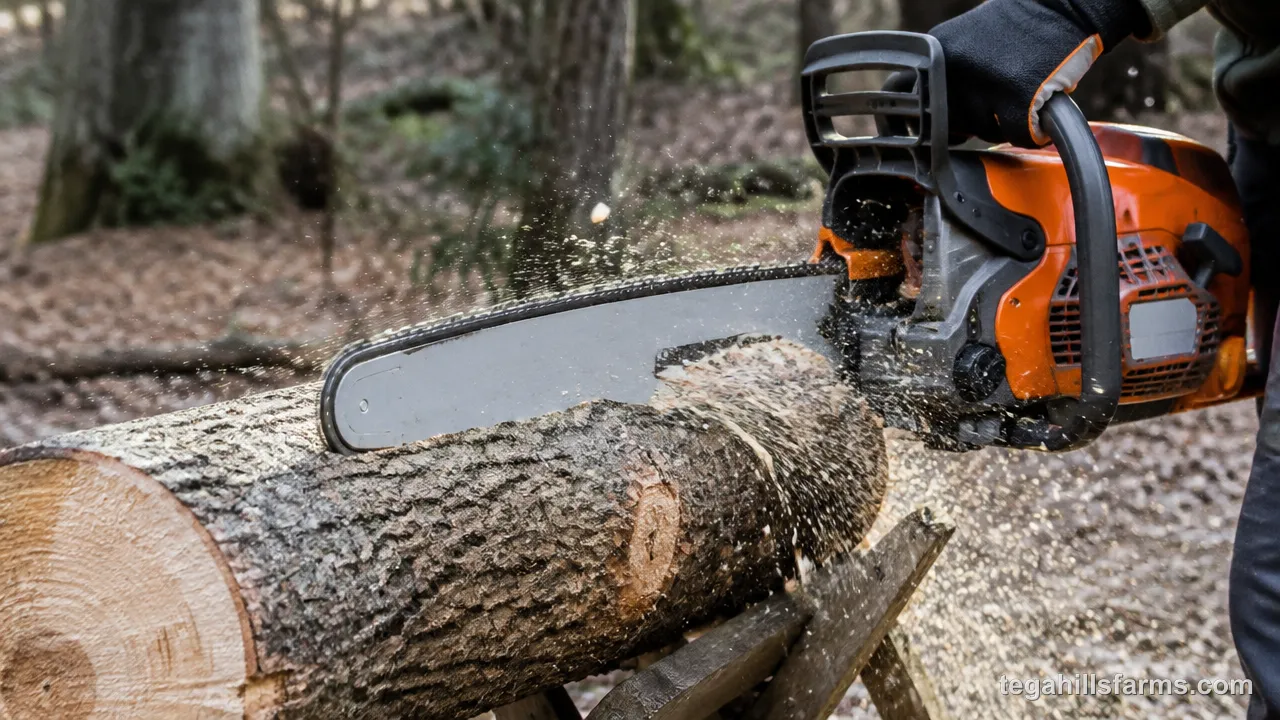
The quickest check is what comes out of the cut. Chips mean the cutters are biting, and dust means they are scraping. Look at the cutter tops too: a sharp edge looks crisp, while a dull one is rounded or shiny. Any contact with dirt, a rock or a nail in a log can dull a chain in a single second, so check it after every hit.
A round file and guide restore the edge in a few minutes, and the best chainsaw sharpeners make the job more consistent if you cut often. Sharpening stops being worth it when the cutters are filed back to the wear marks, when a cutter is cracked or broken, or when the chain cuts unevenly even after a careful touch-up. At that point, a fresh chain is the better choice over the wear a bad one puts on your bar and sprocket.
Does Top-Handle or Rear-Handle Layout Matter at This Size?
Handle layout matters, and for homeowners working from the ground the answer is a rear-handle saw. The rear handle puts one hand on the back grip and the other on the front bar, which gives you two-handed control for felling, bucking and limbing at waist height.
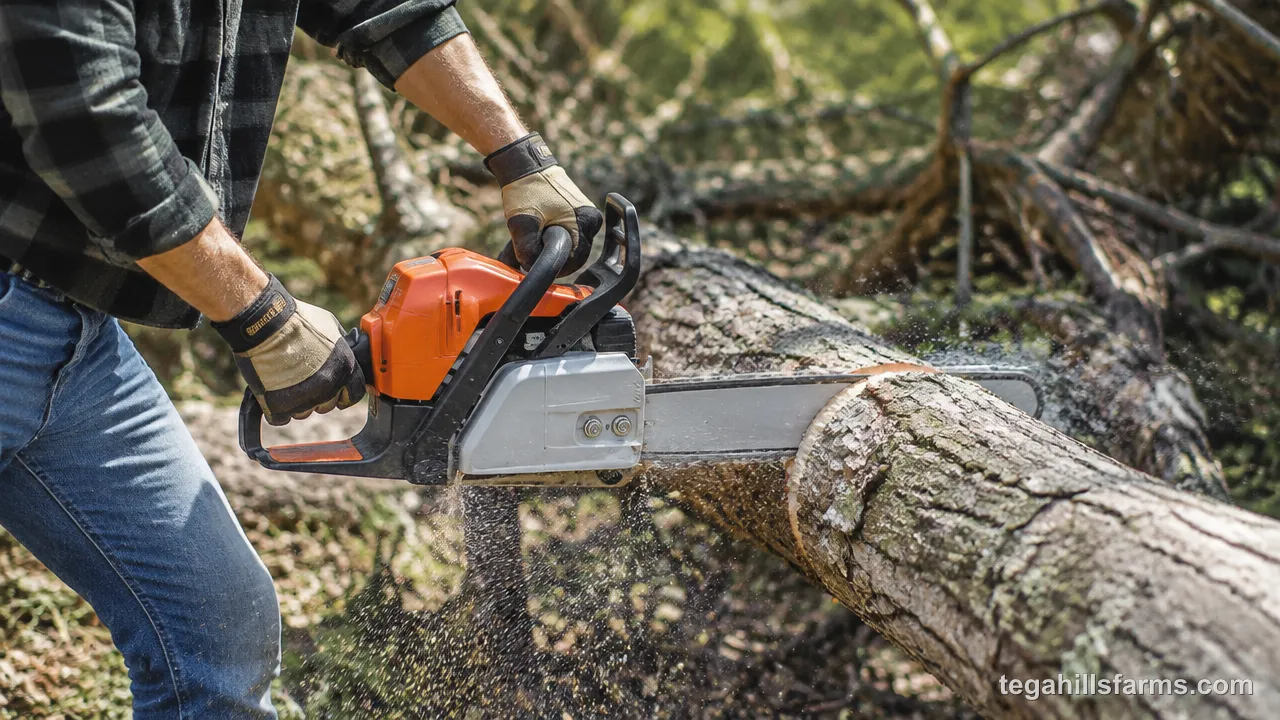
Top-handle saws place the grip on top of the motor housing, which keeps the saw compact and short. That layout is built for trained arborists working from a harness in the tree, where space is tight and some cuts call for one hand on the saw. On the ground, the same compact body is harder to control, and a kickback is more dangerous because the saw has less mass behind your hands to absorb it.
The best top handle chainsaws are tools for climbers who know that work. For yard work, storm cleanup and firewood, the best rear handle chainsaws give you the stance and grip that keep the bar under control.
What Happens to a Chainsaw Stored Over Winter?
A gas saw stored with fuel in it often won’t start in spring, because the gas goes stale and leaves varnish that clogs the carburetor’s small passages. Either run the tank dry before storage or fill it with fresh, stabilized fuel and run the engine a few minutes so the treated fuel reaches the carburetor.
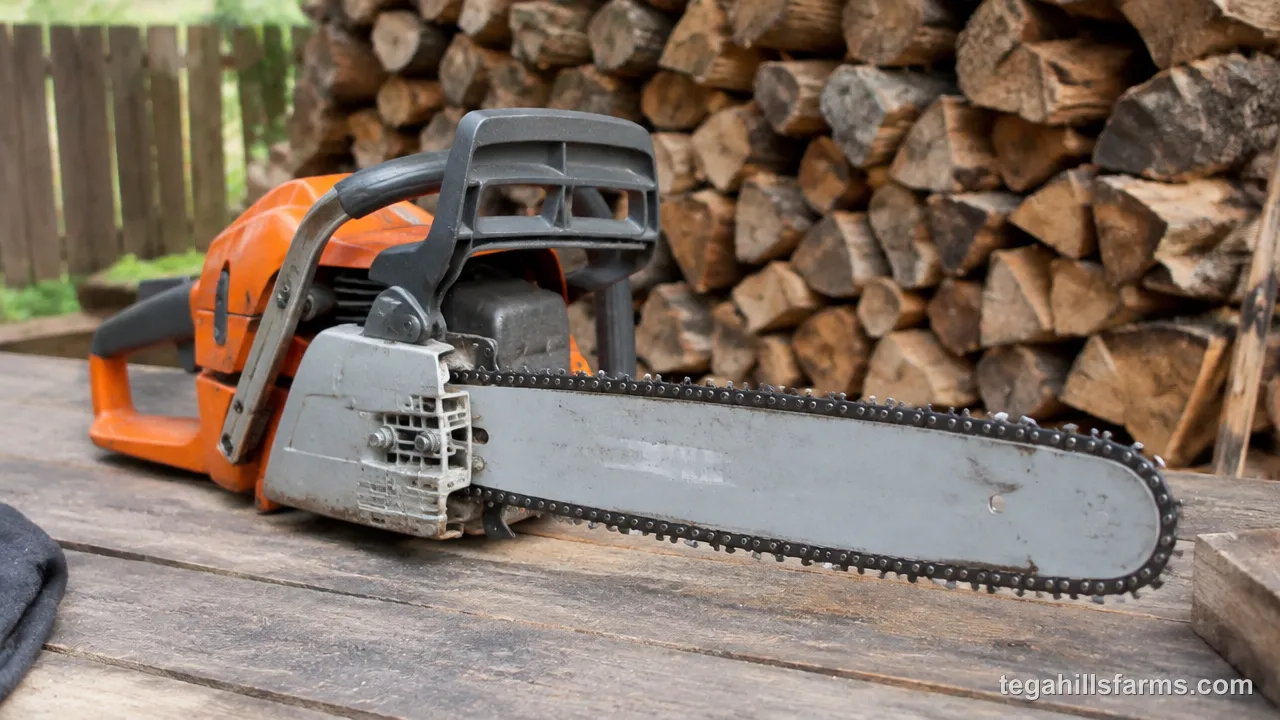
A battery saw needs different care. Take the battery out and store it partly charged, indoors, away from freezing temperatures and heat sources such as a furnace or a sunny window. A fully drained pack left in a cold shed all winter can lose capacity for good.
Both types need the same cleanup. Brush sawdust out of the bar groove and oil holes, wipe the chain and give it a light coat of oil so it doesn’t rust. For the bar oil reservoir, follow the manual. Emptying it keeps oil from seeping onto the shelf, while topping it off keeps the oiler primed. Then cover the bar and store the saw flat.
16-Inch Chainsaw FAQs
How thick a trunk can a 16-inch chainsaw cut?
In a single pass, a little less than the bar length, because part of the bar mounts inside the saw and the nose doesn’t cut to full depth. Bigger trunks can be cut from both sides. Check the rated cutting capacity for your model, since it varies by saw.
Can a battery chainsaw handle a full firewood session?
It can with enough battery capacity. A single pack covers limbing and moderate bucking, but a full day of firewood usually needs a second battery charging while you cut. Hardwood and thick rounds drain batteries faster than pine limbs, so plan your spares around the wood you burn.
Does any 16-inch chain fit any 16-inch bar?
No. A chain has to match the bar’s pitch, gauge and drive-link count, not just its length. Two bars of the same length can take different chains. Check the numbers stamped on the bar or listed in the manual before buying a replacement.
Is a corded chainsaw enough for storm limbs?
For limbs within cord reach of an outlet, yes. A corded saw gives steady power for cutting up branches in the yard or on the driveway. Storms often knock out power, though, and debris farther out on your property needs a battery or gas saw.
Do you need chaps with a battery chainsaw?
Yes. A battery saw’s chain is just as sharp and moves just as fast as a gas saw’s, so a slip against your leg does the same damage. Wear chaps, a helmet with a face shield, ear protection and gloves every time you cut.
Write Your Review
No reviews yet. Be the first to share your experience!