

A snow blower takes the misery out of clearing a driveway after a heavy snowfall, but only if you know how to run one safely. The machine clears snow fast, but the spinning auger, powerful discharge, and cold conditions create real hazards for anyone who hasn’t learned the basics first.
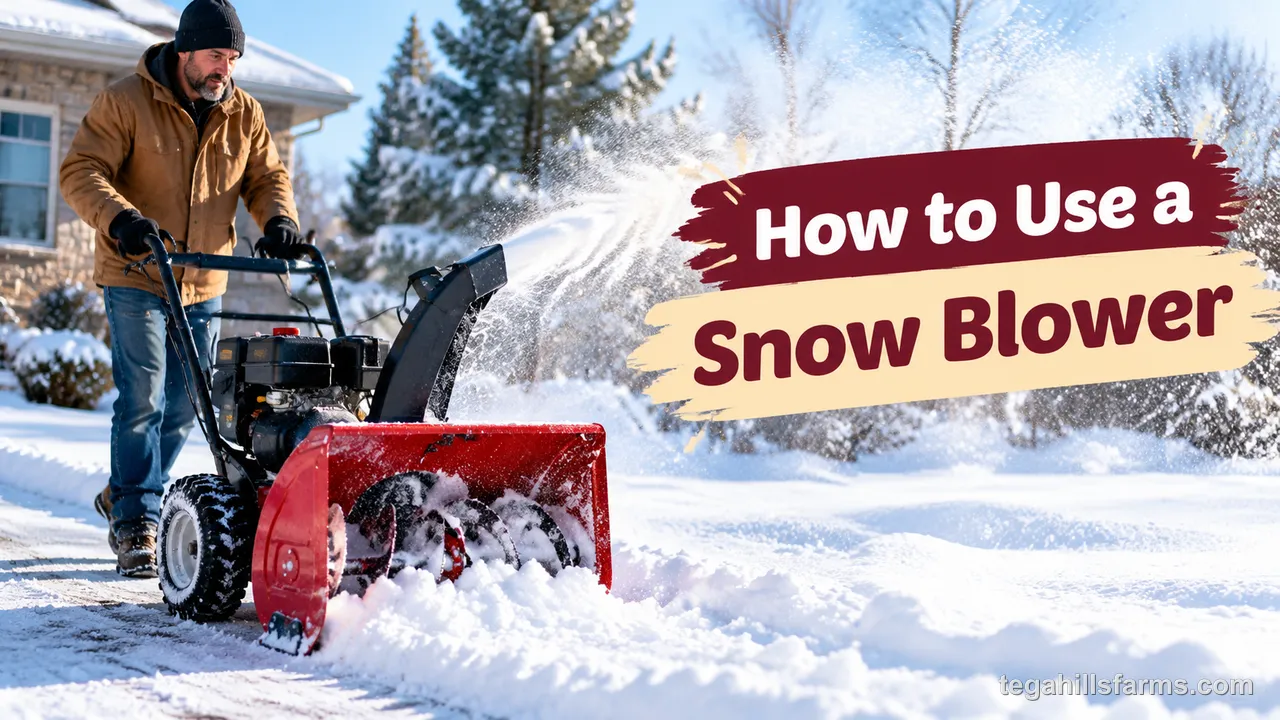
The best snow blowers on the market handle everything from a light dusting to a Blizzard, but a first-time operator needs to understand safety habits, proper technique, and maintenance before pulling the starter cord. This guide walks through everything you need to know — from gearing up correctly to shutting down and storing the machine after the job is done.
Why Snow Blower Safety Matters for First-Time Users
Snow blower safety is not optional knowledge — it is the difference between finishing the driveway and ending up in the emergency room. The spinning auger under the housing can draw in clothing, gloves, or footwear in a fraction of a second if the operator gets too close. The discharge chute throws snow and small debris at high speed, posing an eye hazard even at moderate distance. Cold, icy conditions compound these risks by reducing grip and reaction time.
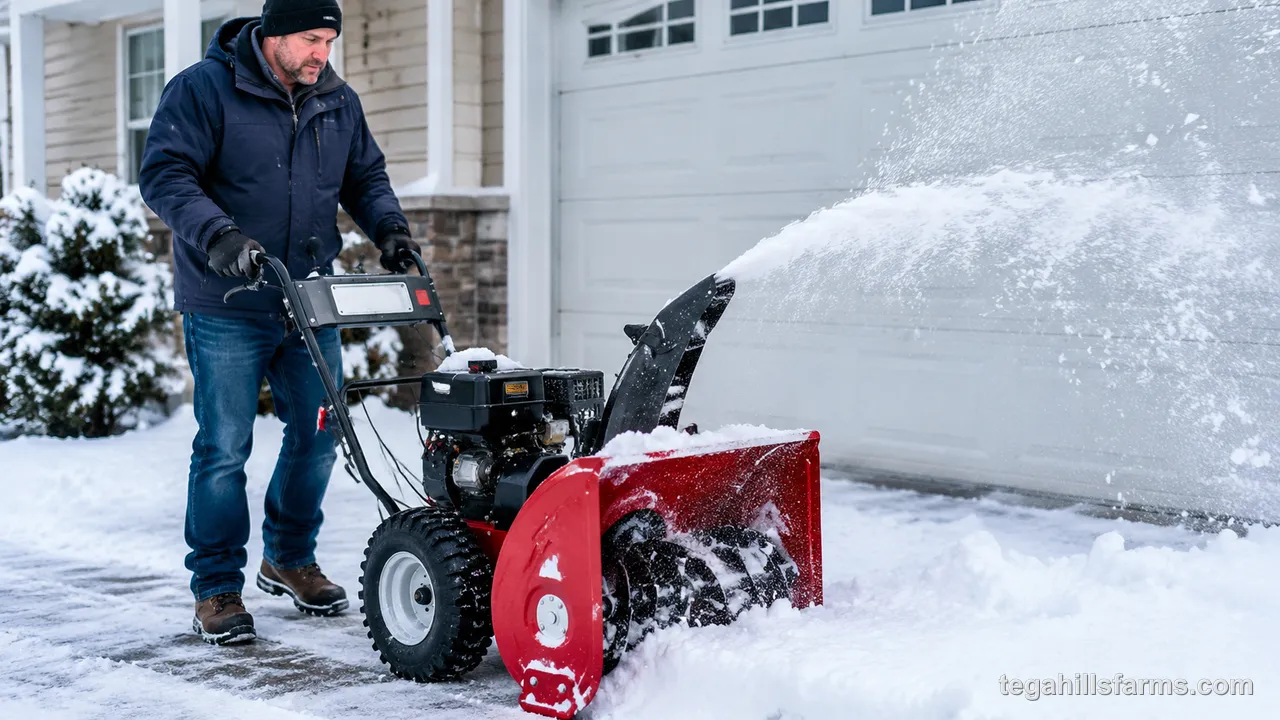
The most common snow blower injuries involve the hands and fingers — cuts, broken bones, and partial amputations from trying to clear a clogged chute while the machine is still running. These injuries are entirely preventable with the right habits. If you are looking for a concise checklist of what to do before each use, our snow blower safety tips guide walks through the most important habits to build right away.
What Safety Gear Do You Need Before Starting
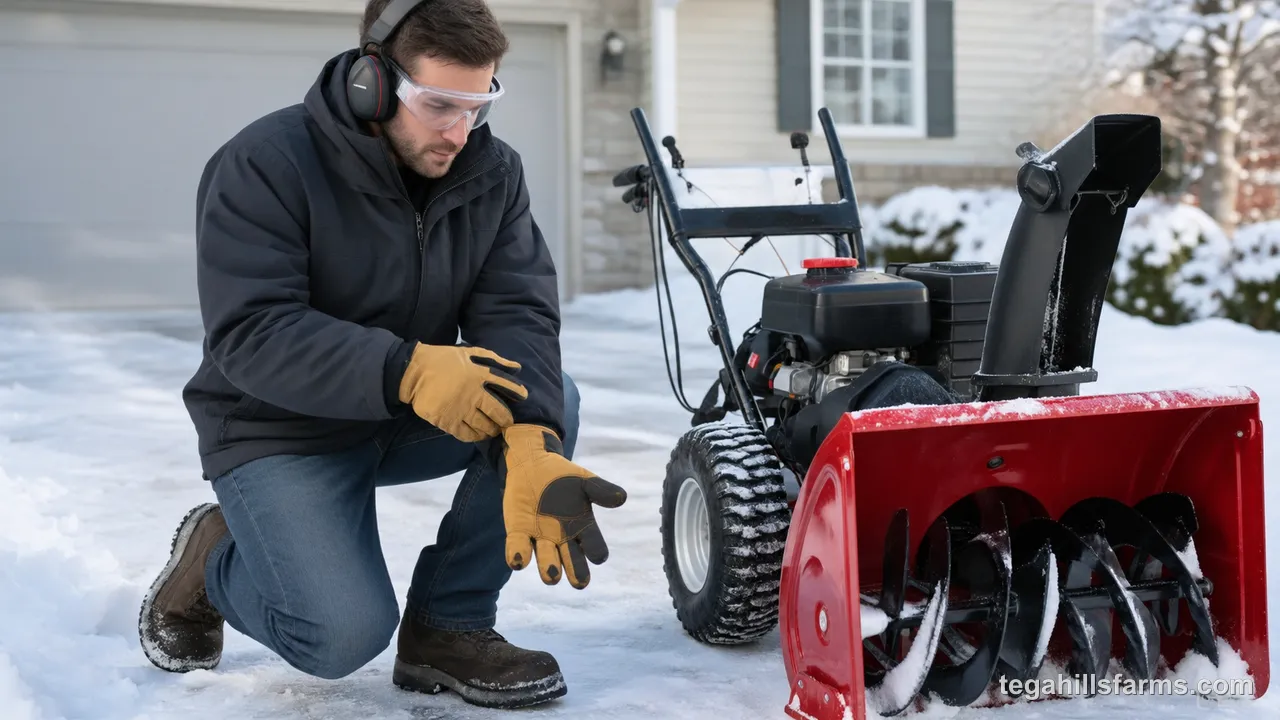
Protective equipment for snow blower operation includes safety glasses, hearing protection, slip-resistant winter boots, and warm gloves with enough dexterity to grip controls. Each item addresses a specific hazard the machine creates; skipping any one of them leaves you exposed to a real risk.
Eye and Hearing Protection
Safety glasses are non-negotiable because the discharge chute throws a mix of snow, ice chips, and debris at considerable force. Even a small piece of ice striking the eye at close range causes damage. Over time, repeated exposure to the engine noise typical of gas-powered models can also contribute to hearing loss — hearing protection matters for the same reason it matters on a job site.
Footwear With Proper Grip
Winter boots with aggressive tread and non-slip soles keep you planted on surfaces that become slick as snow melts and refreezes. The act of pushing and steering a snow blower shifts your weight constantly; a missed step on ice can pull you off balance toward the auger housing. Footwear rated for cold conditions also keeps feet warm during long clears, which matters because cold hands and feet slow reaction time.
Warm, Dexterous Gloves
Gloves must solve two competing needs: thermal protection and the ability to operate the discharge chute lever, ignition switch, and traction drive controls with precision. Thick mittens keep hands warm but make fine control impossible. A good compromise is a lined work glove with a grippy palm — warm enough for repeated starts and clears in sub-freezing temperatures, but thin enough to feel the controls clearly.
Essential Pre-Start Safety Checks
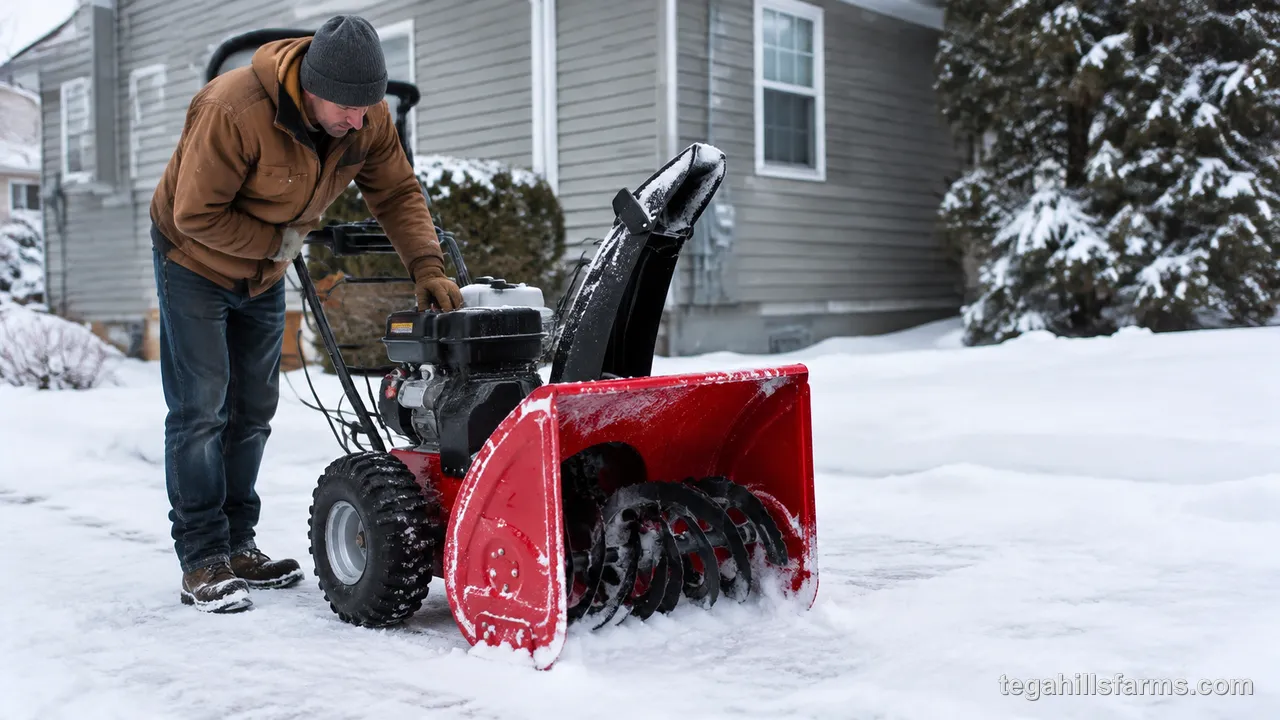
Pre-operation inspection before starting a snow blower covers two areas: making sure the work zone is clear of objects and hazards, and confirming that the machine itself is safe to run. Skipping these checks is the most common way minor problems become serious incidents.
Clearing the Area Before You Start
The work area around the snow blower must be free of debris, toys, landscaping fixtures, and anything the auger could pick up and throw before you pull the starter. Even small objects — a garden gnome, a child’s mitten, a forgotten rake — become dangerous projectiles when the auger spins up. Walk the intended path before you start; it takes thirty seconds and can prevent a serious injury or a damaged machine. For a complete walkthrough of startup steps, see our guide on how to start a snow blower.
Safe Fuel Handling for Gas Models
Gas-powered snow blowers run on fresh unleaded gasoline, but fuel stored for months can separate and attract moisture, causing hard starting or engine damage. Use fuel stabilizer if you store gasoline longer than thirty days, and never fill the tank while the engine is hot or indoors — gasoline vapors are flammable. Keep the fuel container sealed and store it away from the house. For cleanup after refueling spills, our guide on how to clean a snow blower covers the steps.
How to Start a Snow Blower Safely
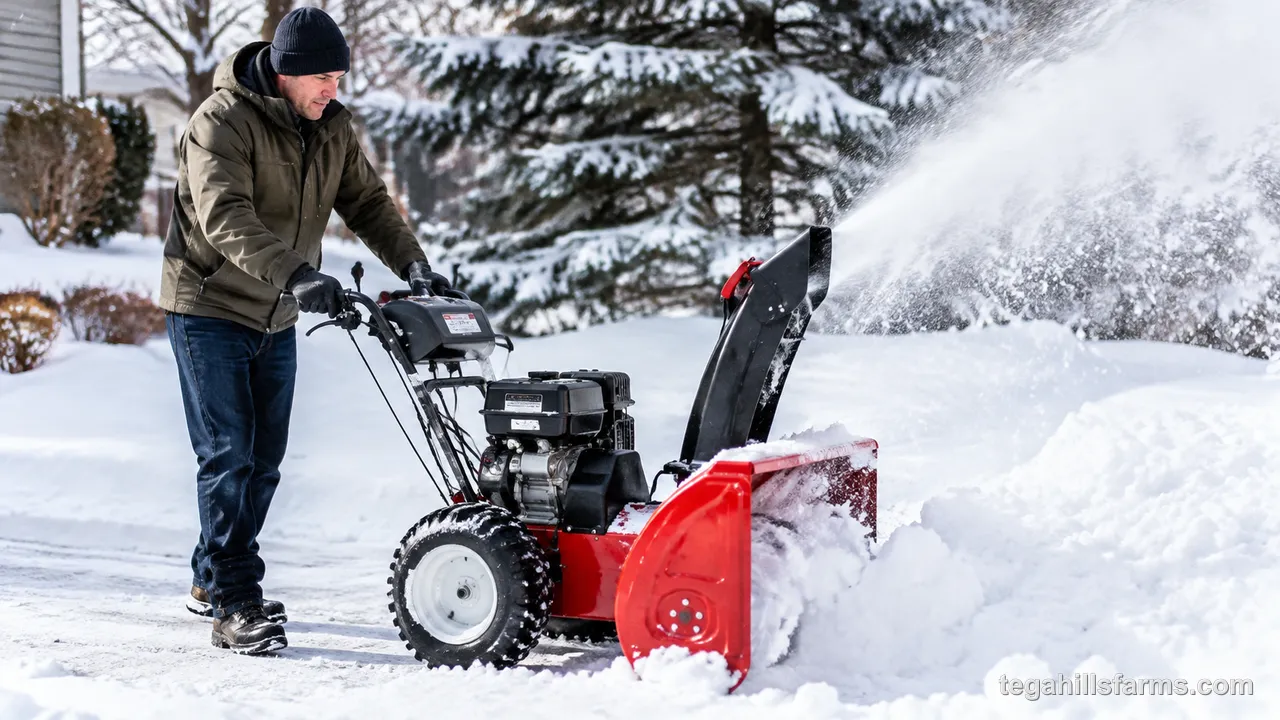
Starting a snow blower safely follows a specific sequence, whether it is starting an electric snow blower or starting a gas-powered snow blower. Rushing this process — skipping the safety lever check or starting indoors — causes most of the starting problems new owners encounter. If your machine does not start despite following the proper steps, our guide on snow blower won’t start walks through the most common causes and fixes. For machines that start then stall, see our snow blower starts then dies troubleshooting guide.
Starting an Electric Snow Blower
Electric snow blowers start by pressing a safety button or lever and then the start switch — no choke, no prime bulb, no pull cord. The simplicity makes them easier to operate, but corded models introduce a trip hazard from the extension cord trailing behind the machine. Keep the cord routed behind you at all times, and check it for cuts or damage before each use. Battery-powered models require a fully charged battery; a partially charged pack loses voltage rapidly in cold weather, cutting runtime when you need it most.
Starting a Gas-Powered Snow Blower
Gas-powered models require a choke, throttle, and prime bulb sequence that varies slightly by manufacturer. The typical sequence is: set the choke to the full position, move the throttle to the run setting, press the prime bulb three to five times, then pull the starter rope or push the electric start button. In cold weather below freezing, an extra pump or two on the primer bulb helps compensate for sluggish fuel vaporization. Once the engine catches, gradually ease the choke back to the run position as the engine warms.
Proper Operating Technique for Effective Clearing
Proper operating technique for effective clearing requires maintaining balance and control, optimal clearing patterns, and managing the discharge chute. The right stance, speed, and discharge management prevent strain injuries and leave a cleaner result than just charging through the snowfall as fast as possible.
Maintaining Balance and Control
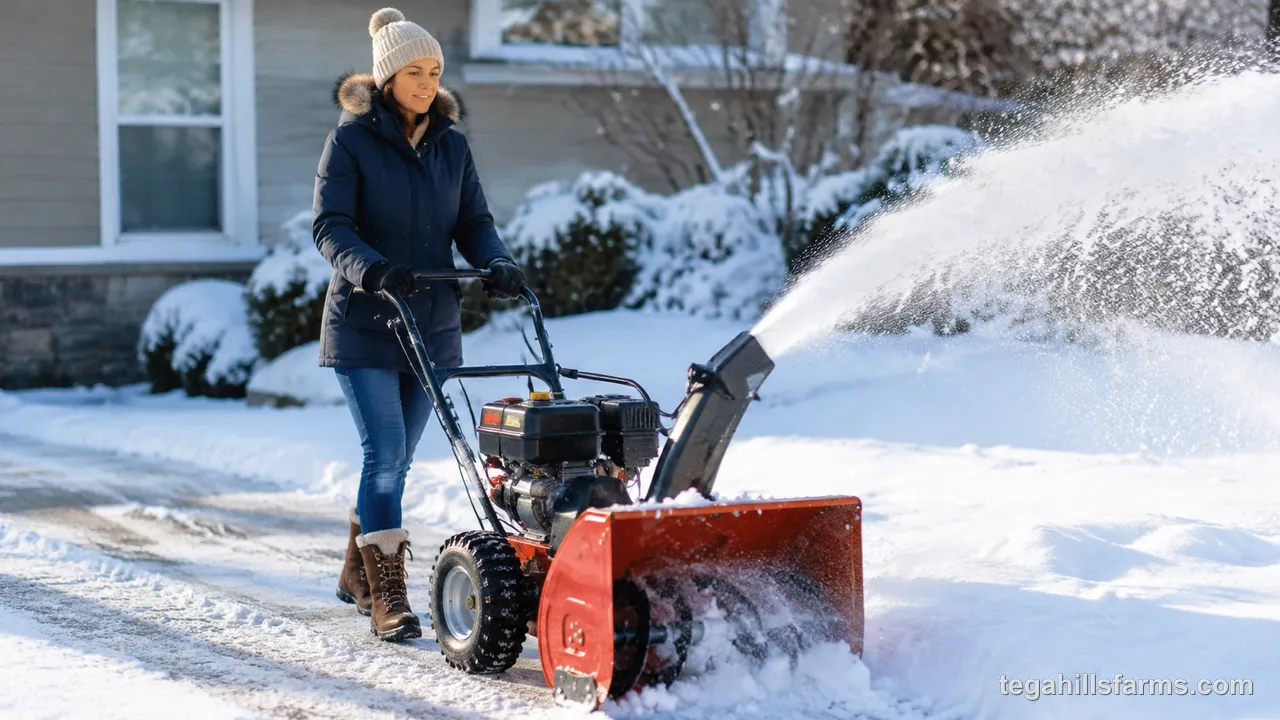
Operator stance on a snow blower keeps your weight forward and your feet shoulder-width apart, with your hands resting lightly on the handlebars. On slopes, stand on the uphill side and travel across the grade rather than straight up or down. Never operate the machine with one hand while reaching behind you — the loss of balance control on uneven ground is exactly when auger contact injuries happen.
Optimal Clearing Patterns
The most efficient clearing pattern overlaps each pass by a few inches to prevent leaving uncleared strips. For a straight driveway, work from one side to the other in parallel lines. For a curved or L-shaped area, start at the farthest point and work back toward the garage to avoid re-clearing the path you already opened. This reduces unnecessary backtracking and the associated strain on your lower back.
Managing the Discharge Chute
The discharge chute directs snow to the side as the auger feeds it through the housing. Adjust the chute direction before you reach the area you want to clear, and keep it aimed away from pedestrians, pets, parked cars, and windows. In crosswinds, aim the chute slightly into the wind to keep discharge from blowing back across the cleared path.
Handling Different Snow Conditions
Snow density and depth change how a snow blower performs and what technique works best. Dry powder behaves differently than wet, heavy accumulation, and adjusting your speed and auger approach prevents clogging and strain on the machine. If your snow blower is not throwing snow at all, the issue is usually related to the discharge chute or auger — see our guide on snow blower not throwing snow for troubleshooting steps.
Light Powder Snow
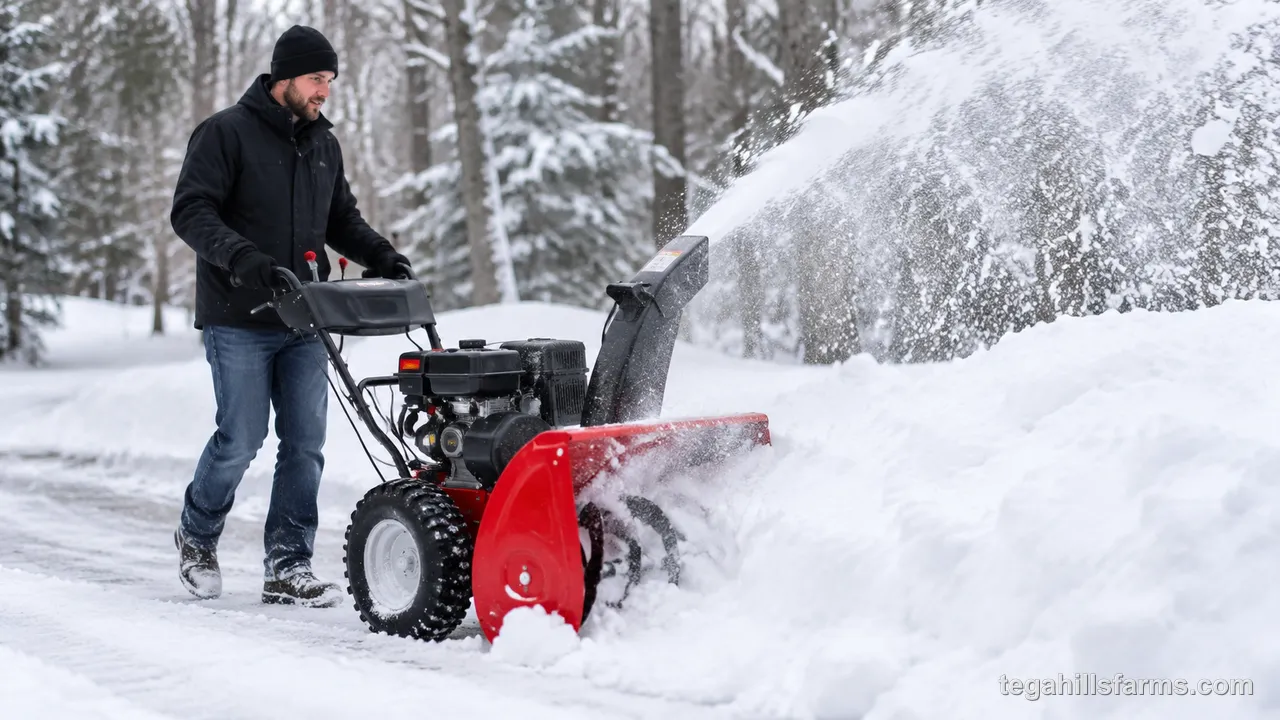
Dry, fluffy snow is the easiest to clear and moves quickly through the auger housing with little resistance. The risk with powder is that it sprays unpredictably at the discharge chute, sometimes deflecting back toward the operator in a gust. Reduce auger speed slightly on open areas and keep the discharge chute aimed well away from walkways or vehicles.
Heavy Wet Snow
Wet, dense snow builds up in the auger housing and discharge chute, creating clogs that require stopping to clear. Slow your forward pace to let the auger process the snow rather than overwhelm it. If the chute clogs, stop the engine completely and use a cleanout tool or a sturdy stick — never your hands — to break up the blockage.
Operating on Special Surfaces
Special surfaces require modified technique for gravel and unpaved surfaces and slopes and hills. Picking a snow blower for a gravel drive versus a paved surface affects which machine is right for you — see our guide on how to choose a snow blower for details on single-stage versus multi-stage designs.
Gravel and Unpaved Surfaces
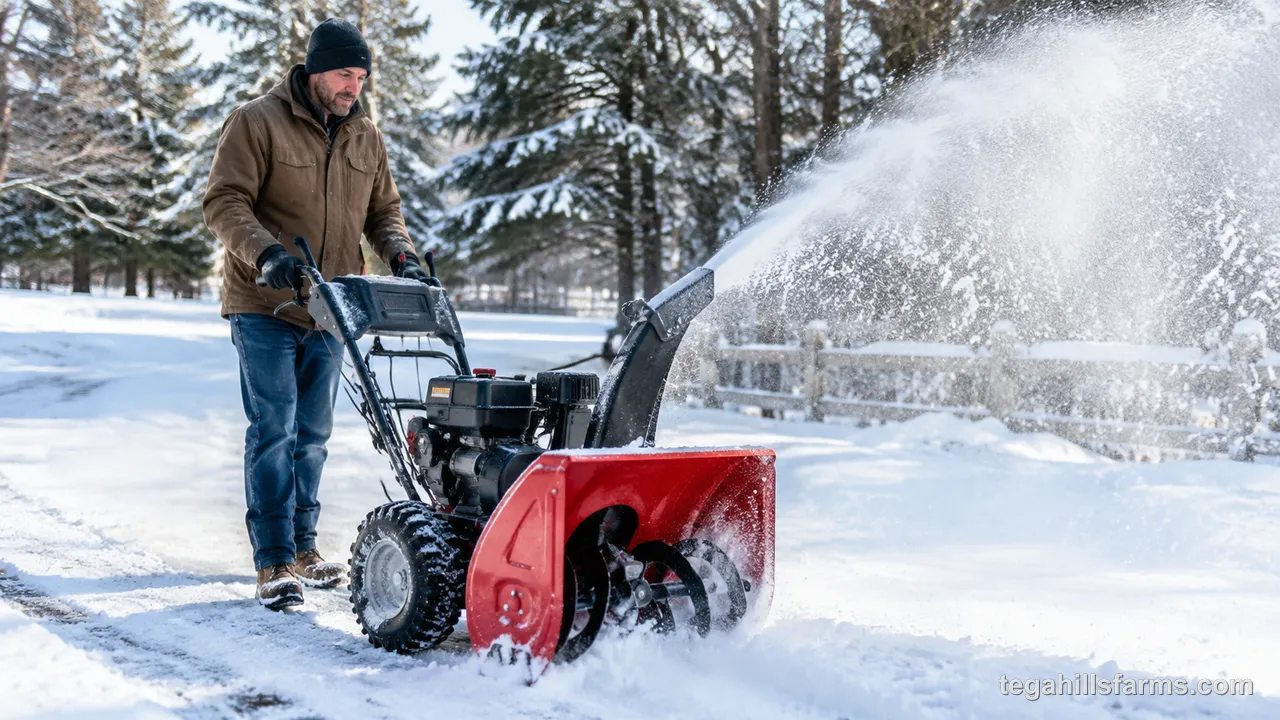
Single-stage snow blowers run the auger nearly to the ground, which means they pick up and throw gravel on unpaved surfaces — a hazard to people and property. Use a two-stage or three-stage model on gravel, and lift the front slightly as you cross loose material to keep the auger from digging in. Multi-stage machines throw snow higher and farther, which also reduces the risk of discharge landing back on the cleared path.
Slopes and Hills
Travel across slopes rather than up or down them whenever possible. Going up a slope strains the traction drive; going down risks losing control of the machine’s forward speed. On steep grades, make multiple shallow passes across the slope rather than one aggressive pass straight across — the reduced depth of each pass keeps the auger from bogging down and the machine more manageable to control.
Proper Shutdown and Post-Use Procedure
Post-use procedure includes allowing the engine to cool and quick post-use inspection. Shortcuts at shutdown — skipping the cool-down, leaving fuel in the tank over summer, or clearing a jam by hand — cause most of the problems that show up at the worst possible moment. For long-term storage between seasons, see our guides on how to store a snow blower and how to winterize a snow blower for the full procedure.
Allowing the Engine to Cool
Running the engine at idle for thirty to sixty seconds before shutdown lets the combustion chamber cool gradually and burns off excess fuel in the carburetor. This prevents carbon buildup on the spark plug and reduces varnish deposits in the carburetor that cause starting problems. On gas-powered models especially, this thirty-second habit extends engine life noticeably over multiple seasons.
Quick Post-Use Inspection
After each use, check the auger for damage or wear, clear any snow or ice from the discharge chute and auger housing, and inspect belts and fasteners. Look for loose shear pins, worn paddles on the auger, and any cracks in the housing. Tighten what you can by hand; mark anything that needs tools so you address it before the next snowfall.
The safety practices and operating techniques covered above give first-time users a solid foundation for handling most residential snow clearing tasks with confidence. Where the guidance above focuses on getting started and staying safe, the supplementary section below addresses the long-term ownership questions that affect reliability, cost, and maintenance commitment.
Understanding the Long-Term Ownership Costs
Snow blower ownership costs extend well beyond the purchase price. A quality gas-powered unit costs between a few hundred and over a thousand dollars upfront, with routine maintenance running fifty to one hundred and fifty dollars annually for oil changes, spark plugs, and belt replacement. Electric models have lower ongoing maintenance but carry battery replacement costs every three to five years. For a full breakdown of what to budget, see our guide on how much does a snow blower cost. The expected lifespan of a well-maintained gas snow blower is ten to fifteen years, while electric models typically last eight to twelve years depending on battery longevity — see our guide on how long do snow blowers last for more detail on factors that affect durability.
Mistakes First-Time Users Make
First-time users make predictable mistakes like clearing a clogged auger with hands, pushing too fast through heavy snow, and skipping routine oil changes. New operators tend to skip safety steps when they are in a hurry, push the machine faster than conditions allow, or defer maintenance until something fails.
Clearing a Clogged Auger With Hands
Reaching into the auger housing to clear a jam while the engine runs is the most dangerous mistake a snow blower operator can make. The auger rotates continuously whenever the engine is on, even at idle speed, and the housing clearance is designed to grip rather than release. Always stop the engine completely, wait for all moving parts to stop, and use a proper cleanout tool or a wooden stick. If the auger is not turning at all, see our guide on snow blower auger not turning for diagnosis steps.
Pushing Too Fast Through Heavy Snow
Rushing through deep or heavy snow strains the engine, clogs the discharge chute, and leaves an uneven result that requires a second pass anyway. The correct pace lets the auger process the snow fully before the machine moves forward — it takes longer but the result is cleaner and the machine lasts longer.
Skipping Routine Oil Changes
Oil degradation is the single most common cause of premature engine failure in small equipment. Snow blower engines run in freezing or near-freezing temperatures that stress oil more than warm-weather operation, and old oil loses its ability to lubricate and protect metal surfaces. Change the oil at the start of each season and mid-season if you clear snow frequently. For the complete procedure, see our guide on snow blower oil change.
How Often Should You Service a Snow Blower
Maintenance schedule for a snow blower breaks into three intervals: before the season starts, during the season as needed, and at the end of the season before storage.
Before the season: change the oil, inspect and replace the spark plug if needed, check belt tension and condition, lubricate the control cable pivots, and verify that all fasteners are tight. Start the engine and let it run for a few minutes to confirm it idles smoothly.
During the season: check oil level before each use, watch for belt squealing or slipping, and clear snow and ice buildup from the auger housing and discharge chute after every session.
End of season: run the engine until the fuel tank is empty, change the oil one final time, add fuel stabilizer to a partial tank if you prefer not to run it dry, and store the machine in a dry location. For detailed winterization steps, see our guide on how to winterize a snow blower.
Frequently Asked Questions
Can I use a snow blower on gravel?
Yes, but use a two-stage or three-stage model. Single-stage blowers run the auger close to the ground and throw gravel, which damages the machine and creates a safety hazard. Two-stage models have an impeller that throws snow higher and keep the auger elevated enough to avoid picking up loose material.
How do I clear a clogged discharge chute safely?
Stop the engine and wait for all moving parts to stop completely. Use a cleanout tool or a sturdy wooden stick — never your hands or feet. Some models include a designated cleanout tool that clips to the handle for easy access.
What is the safest way to handle a slope with a snow blower?
Travel across slopes rather than up or down them. Stand on the uphill side, move across the grade in parallel passes, and use multiple shallow passes instead of one deep cut to keep the machine stable and the auger from bogging down.
Is it safe to let a snow blower idle while I take a break?
It is generally safe to let the engine idle briefly, but never leave a running snow blower unattended. Shut it down completely during longer breaks. Never refuel a hot engine, and never run the machine in an enclosed space like a garage.
How do I prevent the auger from freezing up between uses?
Clear all snow and ice from the auger housing, discharge chute, and impeller after each use. Some owners spray the auger and chute with a silicone lubricant or parking lot spray to resist ice adhesion, but mechanical clearing after each session is the most reliable method.









Write Your Review
No reviews yet. Be the first to share your experience!