

Drip irrigation waters more evenly and its parts generally last longer. A soaker hose costs less and is quicker to lay down. Which one fits depends on bed size, slope and how much setup you want to take on.
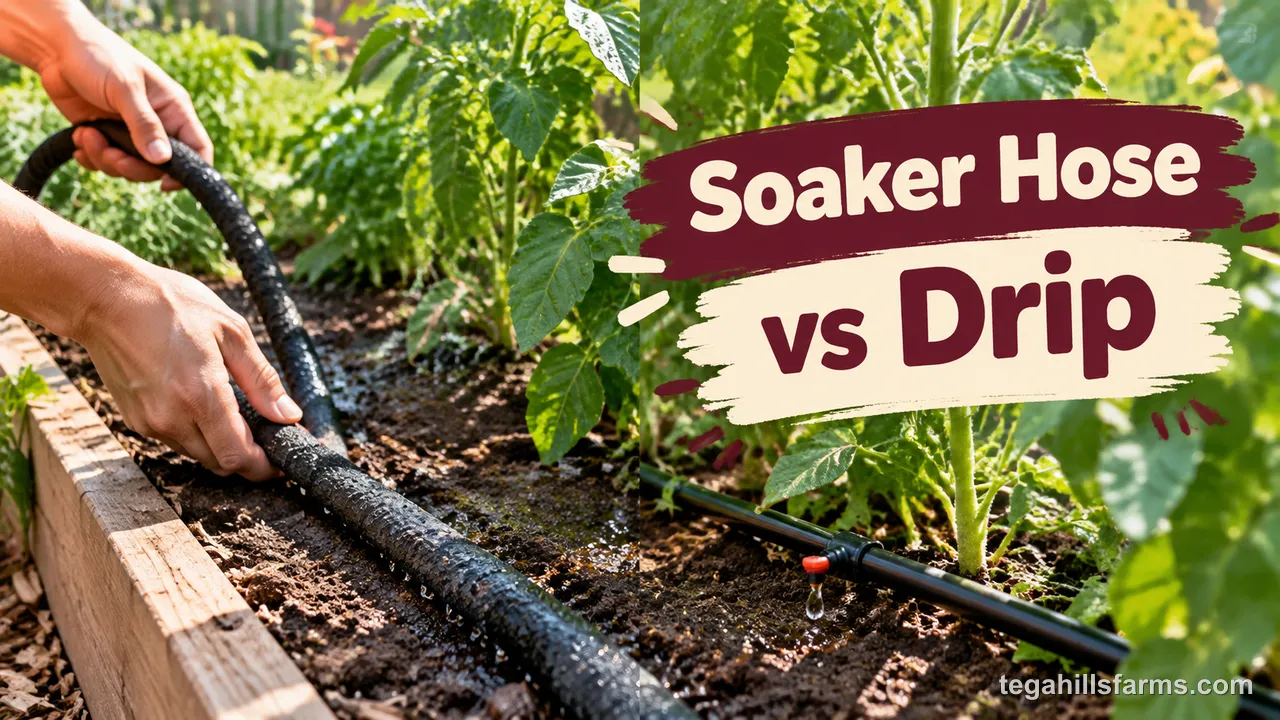
Evenness and lifespan are the two things that separate these systems in daily use. Output along the line, slope tolerance, clogging risk and repairability all feed into them.
The worry most gardeners share is a line that soaks the plants near the tap and leaves the far end dry. The other is a hose that stiffens and cracks after a couple of seasons. Both come down to how each system is built.
Before you buy either one, walk the bed and note its length, its slope and how far the tap sits from the far end. Those three facts settle most of the decision.
What Is the Difference Between a Soaker Hose and Drip Irrigation?
A soaker hose is a porous hose that weeps water along its whole length, while drip irrigation delivers water at set points through emitters. That one difference drives almost everything else, from how evenly each system waters to how long it lasts.
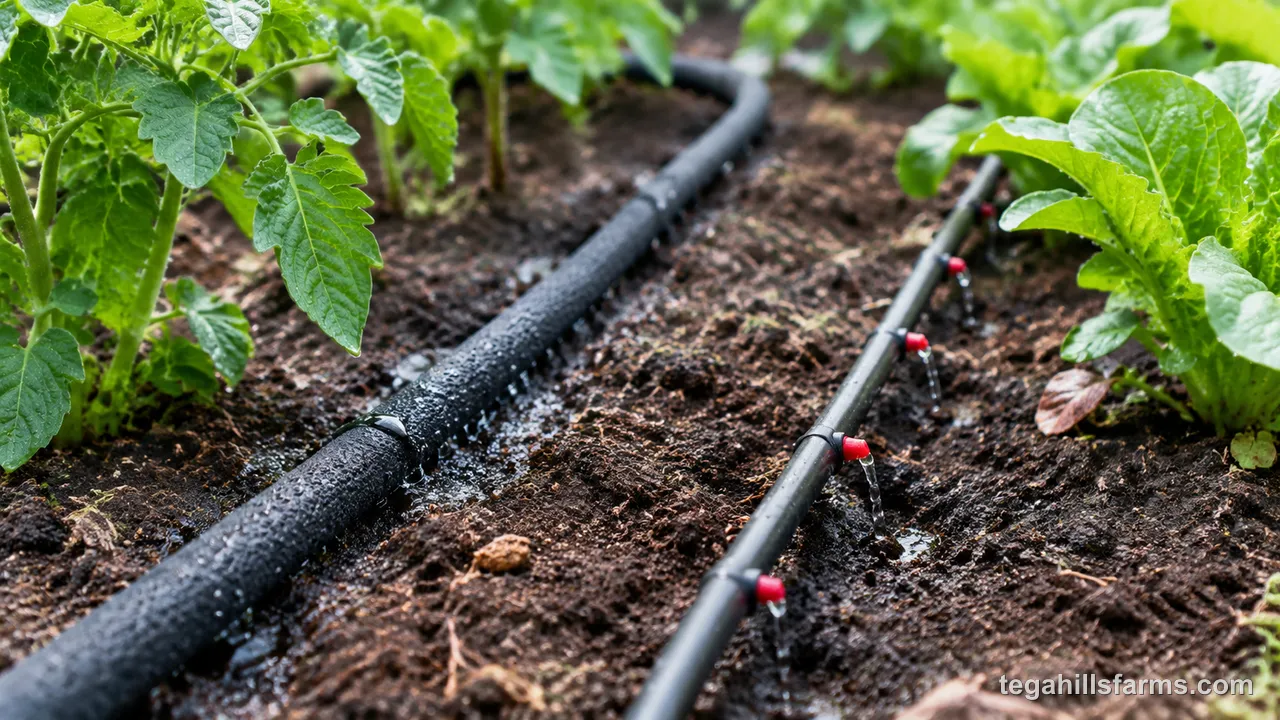
A soaker hose is the simpler tool. You lay it beside the plants, connect it to a spigot and let water seep out of the wall. There are no parts to place, which suits a short bed with a tap nearby.
Drip works more like a plumbing layout. Water travels through tubing and leaves only where an emitter sits, so you decide which plants get water. It takes more planning but gives you more control.
If you are still weighing your options across all watering gear, our guide on how to choose a garden hose covers the wider decision before you commit to either system.
What Are the Different Drip Products, and Where Does a Soaker Hose Fit?
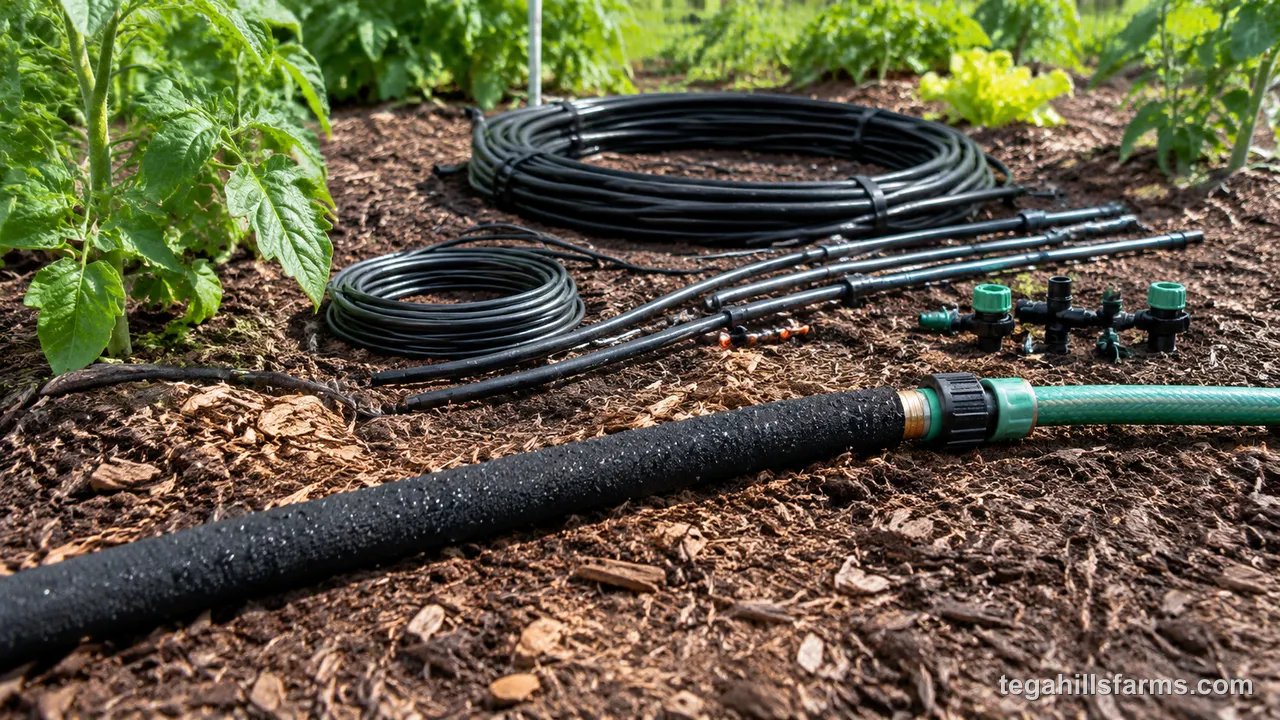
The drip family splits into thin-wall and thicker-wall lines, emitter and poly tubing, and the tap-side parts that keep it running. A soaker hose sits apart from all three. Its wall is the emitter, and it usually connects straight to a hose.
Drip Tape and Drip Line
Drip tape is a thin-wall, flat tube with emitters molded in, while drip line is a thicker-wall tube with emitters set inside. That build difference decides where each one belongs.
Tape suits straight vegetable rows that you lay out fresh each season. The thin wall is easy to nick with a hoe, so many gardeners treat it as a seasonal item. Drip line takes more abuse. It works in permanent beds and around shrubs, where it can sit under mulch for years without being moved.
Both lay out along a row much like a soaker hose does. The difference is the outlet. A soaker hose seeps along every inch, while tape and drip line release water only at each emitter, so you can match output to where plants actually sit.
Drip Hose, Emitter Tubing and Poly Tubing
Poly tubing carries water as a plain main line, while emitter tubing (sometimes sold as drip hose) releases it through emitters spaced along the pipe. Knowing which tubing does which job keeps a layout simple.
The usual setup runs poly tubing from the tap to each bed. Branches of emitter tubing then fan out across the planting area. Emitter spacing comes in 6, 12, 18 and 24 inches. Tight spacing suits dense plantings like greens, and wide spacing suits shrubs and tomatoes.
Pressure-compensating emitters add one more benefit. They hold output steady when line pressure or elevation changes, which helps on long runs and sloped ground.
Pressure Regulator, Filter and Hose End Timer: The Parts That Make Drip Work
A pressure regulator, a filter and a hose end timer protect drip tubing at the tap and control when it runs. Each one guards against a different problem.
The regulator drops household pressure to a level thin tubing can take. The filter catches grit that would otherwise plug small emitter openings. The timer opens the tap on a schedule, so watering does not depend on memory.
A soaker hose can usually skip the regulator and filter. Its porous wall has no tiny openings to block and tolerates a wider pressure range. A timer still helps, because run time controls how deep the water goes.
Which Waters More Evenly: Soaker Hose or Drip?
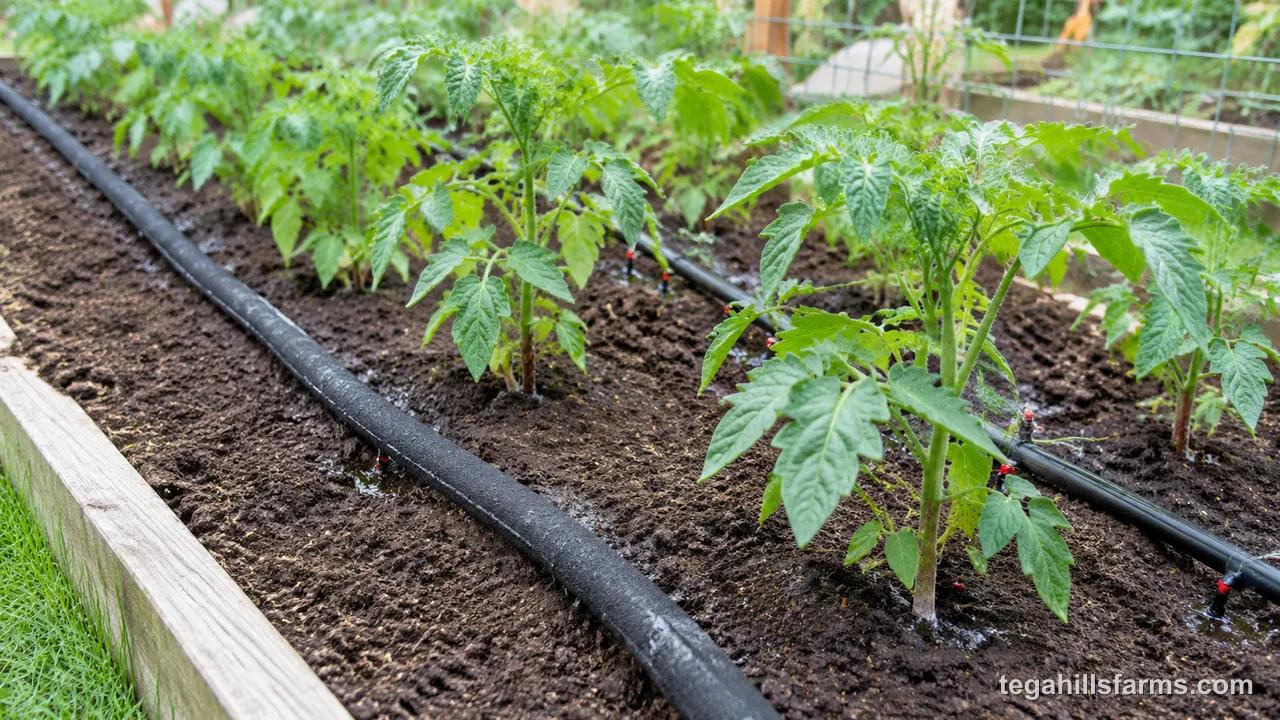
Drip waters more evenly than a soaker hose, and the gap depends on output along the line, slope and run length, and pressure and filtering. Drip holds steadier on each count. A soaker hose drifts as the run gets longer or the ground tilts.
How Does Water Output Change From the Start to the End of the Line?
A soaker hose puts out more water near the tap and less at the far end, while emitters keep output steadier along the line. The cause is pressure. Water seeps out all along the wall, so less pressure remains with every foot.
On a 50-foot soaker hose, the first 10 feet can release 2 to 3 times more water than the last 10 feet. On a longer hose, the first quarter can release 3 to 4 times more than the last quarter. Plants near the tap end up wet, and plants at the far end go thirsty.
Emitters change that. Each one meters flow at its own point, and pressure-compensating types hold that rate even as line pressure falls.
With a soaker hose, put thirsty plants near the tap. Keep the far end for drought-tolerant ones.
How Do Slope and Run Length Limit Even Watering?
Slope and run length limit even watering because each one cuts the pressure that reaches the far end of the line. That is also why published maximum lengths for soaker hoses disagree. Each figure assumes its own pressure, tubing diameter and ground slope.
Feed hose size shifts those assumptions too. It is why the question of what size garden hose do I need comes up before any long soaker run.
Drip lines publish clearer limits. A ¼-inch drip line tops out at about 30 feet per run, while a ½-inch line can reach 200 feet. Pressure-compensating emitters then keep output level when the ground rises or falls.
A soaker hose has no such fix. On a slope, water drains toward the low end and over-waters it. Run the hose along the contour of the hill, not up and down it.
Why Do Pressure Regulation and Filtering Matter for Even Output?
Even output depends on a steady line pressure and clean water, which a regulator and filter supply for drip. Without them, emitters work unevenly or stop working.
Drip tape runs best at low pressure, in the 8 to 15 PSI range. Higher pressure can blow fittings apart or make output uneven. Dirty water plugs emitters one by one, so some plants get water and others do not.
The feed hose matters too. Ten 100-foot tape runs with 1 GPH emitters spaced 24 inches apart add up to 500 GPH of demand. A wider feed hose passes more flow, so garden hose diameter decides how much of that demand reaches the regulator.
A soaker hose is more forgiving of rough pressure and dirt. It also has fewer ways to tune output.
Which Lasts Longer: Soaker Hose or Drip?
Drip parts generally outlast a soaker hose, which tends to need earlier replacement. The gap comes from how the materials age and how each system clogs or leaks. A soaker hose fails as one piece, while drip fails one part at a time.
How Do the Materials Hold Up Over Seasons?
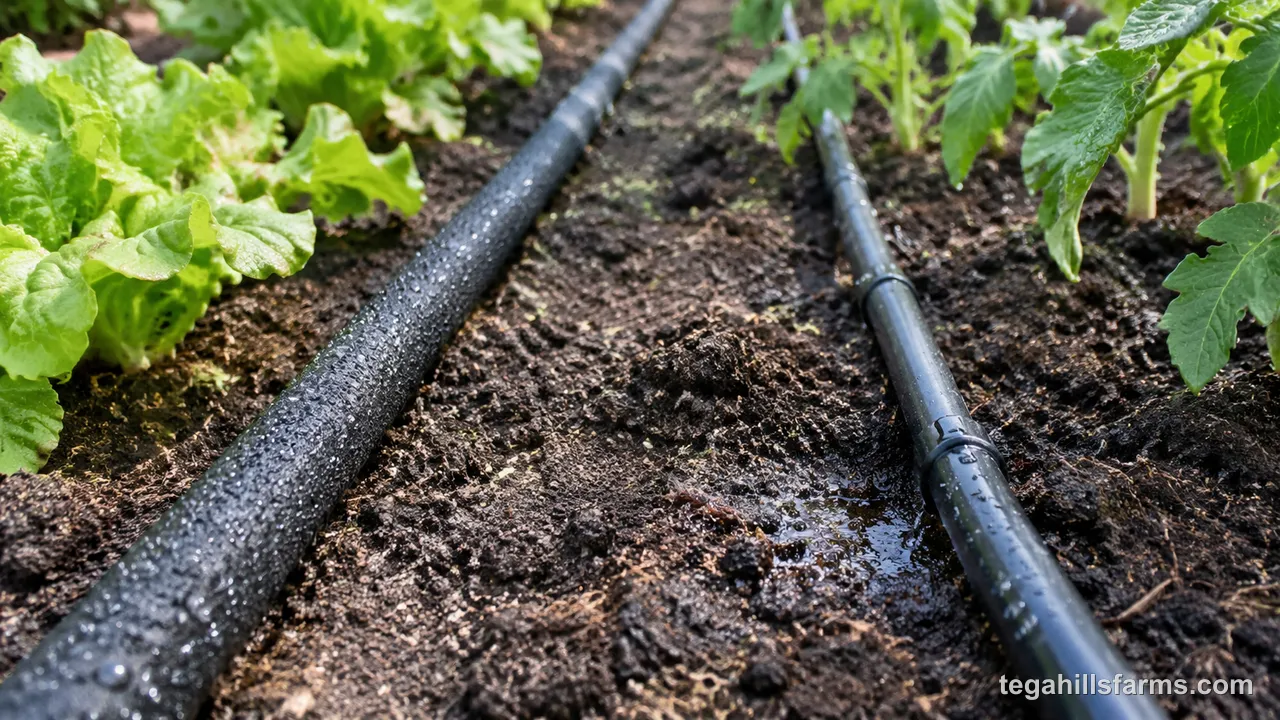
A soaker hose wall wears out as a single piece, while drip systems let you replace worn parts one at a time. That repairability is the main reason drip lasts longer.
The porous wall has to stay both permeable and strong, and sun and heat work against both. Cold makes it stiff and prone to cracking. Once the wall hardens or splits, the whole length is affected, and a patch rarely restores even seepage.
Drip tubing is solid, and its fittings are separate. A damaged section can be cut out and spliced with a coupler, and a worn emitter can be swapped without touching the rest. Mulch over sun-exposed tubing slows UV damage in either system.
The question of how long do garden hoses last has a similar answer for ordinary hoses. Sun, heat and freezing do most of the damage.
Which Is More Prone to Clogging and Leaks?
Mineral buildup and sediment close porous walls slowly and block small emitters quickly. That is why drip needs a filter and a soaker hose simply fades.
In hard water, scale builds up in the soaker hose pores. Seepage turns patchy, and there is no practical way to clear it. Emitters have tiny openings, so one grain of grit or a flake of scale can block one. A filter catches most of that, and a clogged emitter can be cleaned or replaced.
Leaks differ as well. A soaker hose weeps by design, so a true split shows up as a spray in one spot. Drip leaks usually appear at fittings or punctures, and a coupler or plug fixes them in minutes.
In hard water areas, flush drip lines more often. A soaker hose has no equivalent step.
How Do Water Savings, Setup and Upkeep Compare?
Drip wastes less water but asks for more setup and upkeep, while a soaker hose is quick to lay down and gives you less control.
Which System Wastes Less Water?
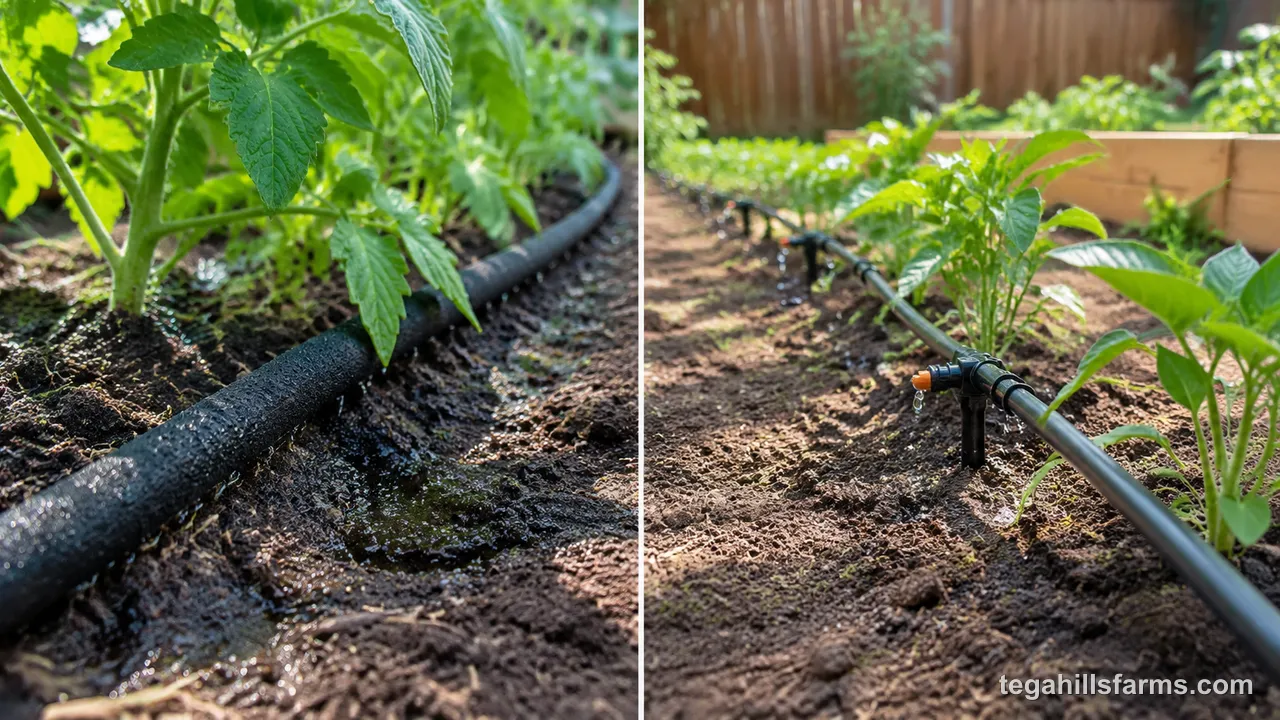
Drip wastes less water because emitters place it at the root zone with little runoff. Water lands exactly where roots can use it.
A soaker hose also delivers at soil level, so it avoids the evaporation losses of overhead watering. Its weak spot is uneven output. The plants near the tap get more than they need, and that excess is wasted.
Rain Bird states that drip irrigation can cut water use by up to 80% compared with conventional watering methods. Treat that as a manufacturer claim. The result depends on what you are comparing against and how well you run the system.
How Hard Are Installation and Day-to-Day Upkeep?
A soaker hose is lay down and connect, while drip needs a planned layout and extra parts, which usually means a higher upfront investment. Your patience for building a system should guide the choice.
With a soaker hose you connect the feed hose at the spigot, cap the far end and turn it on. A 50-foot length commonly runs about $10 to $20. Connecting the feed hose is the same job whether you follow how to set up a garden hose or build a drip manifold.
Drip asks for a sketch of your beds. Then you add a main line, branches, fittings, a regulator and a filter. It pays back in control, but it takes an afternoon.
Upkeep follows the same split. A soaker hose needs almost nothing until it fails. Drip needs occasional flushing and filter cleaning. Readers asking how much does a garden hose cost will find the feed hose is a small part of the budget in either case.
Which Option Fits Raised Beds, Trees and Foundations?
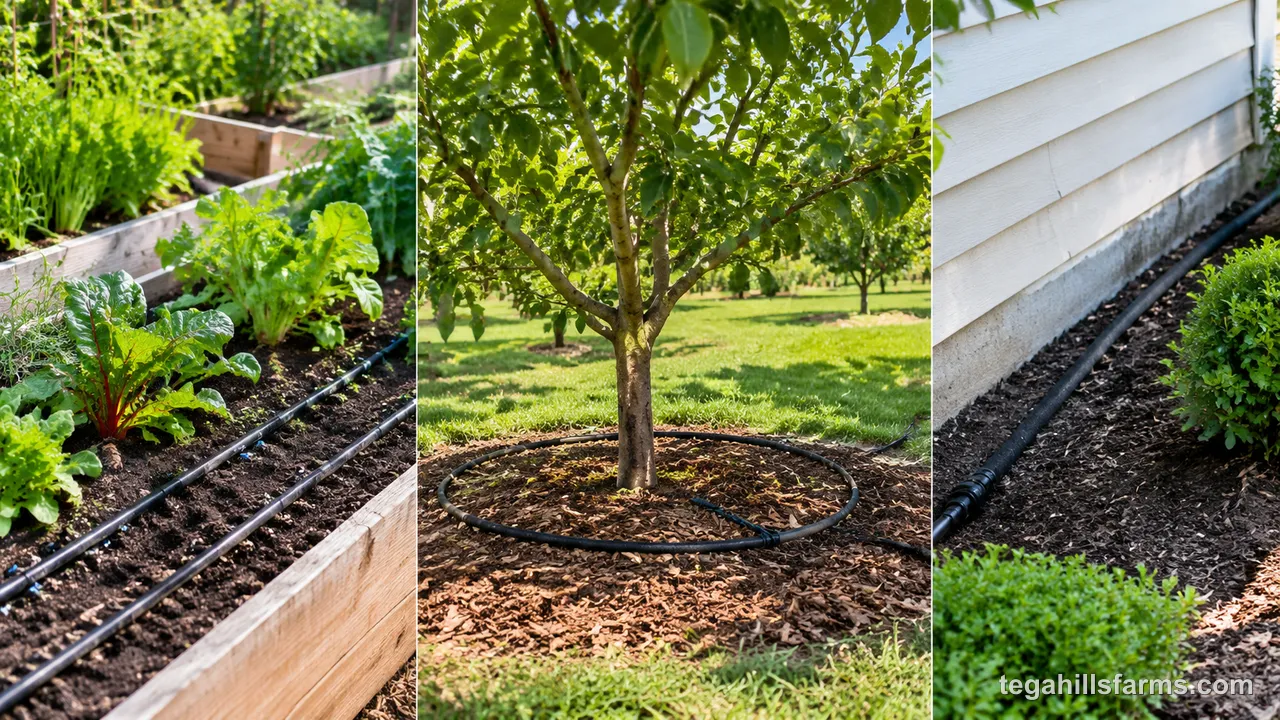
Drip fits raised beds and vegetable rows best, either system can water fruit trees and large shrubs, and a soaker hose is the usual pick for house foundations.
Raised Beds and Vegetable Rows
Drip suits compact raised beds best, because emitters can be spaced to match your plants instead of wetting every inch. That control matters in a small bed, where each plant needs its share.
Run tape or drip line down each row, and choose an emitter spacing that matches your plant spacing. When emitters and plants do not line up, you get dry spots between them. Check that gap before you plant.
A soaker hose can still work in a small bed where plants grow close together. The even seep matches a dense planting. In sparse rows it waters bare soil between plants, which feeds weeds and wastes water.
Fruit Trees and Large Shrubs
Large plants need deep soaking across a wide root zone, and a drip ring around the trunk area delivers it. Both systems can do the job, but they behave differently as the plant grows.
A drip ring is a loop of emitter line set out from the trunk. As the canopy spreads, you move the ring outward or add emitters. The tree gets water across more of its roots without a redesign.
A soaker hose can be coiled around the tree in a spiral. It works, but keeping the coil spread evenly takes more fiddling as the tree grows. Slow, deep watering encourages deeper roots, which makes a tree more resilient in dry spells.
House Foundation Watering
A soaker hose is the common choice along a foundation because it gives slow, steady moisture along a straight edge. The long, uniform run fits that narrow strip well.
Lay it a short distance from the wall and cover it with mulch. Keep the soil damp, not saturated. Overwatering next to a structure is a bigger risk than underwatering, so a timer helps.
Drip is the cleaner option when the strip holds spaced-out plantings. You can water each shrub without soaking the soil in between. It also gives finer control on short runs near the wall.
Is a Soaker Hose or Drip the Better Choice for Your Yard?
Drip irrigation is the better choice for larger gardens over 200 square feet, while a soaker hose works well for small, simple beds. Drip pulls ahead for three reasons: more even output, better tolerance of slopes and parts you can repair one at a time.
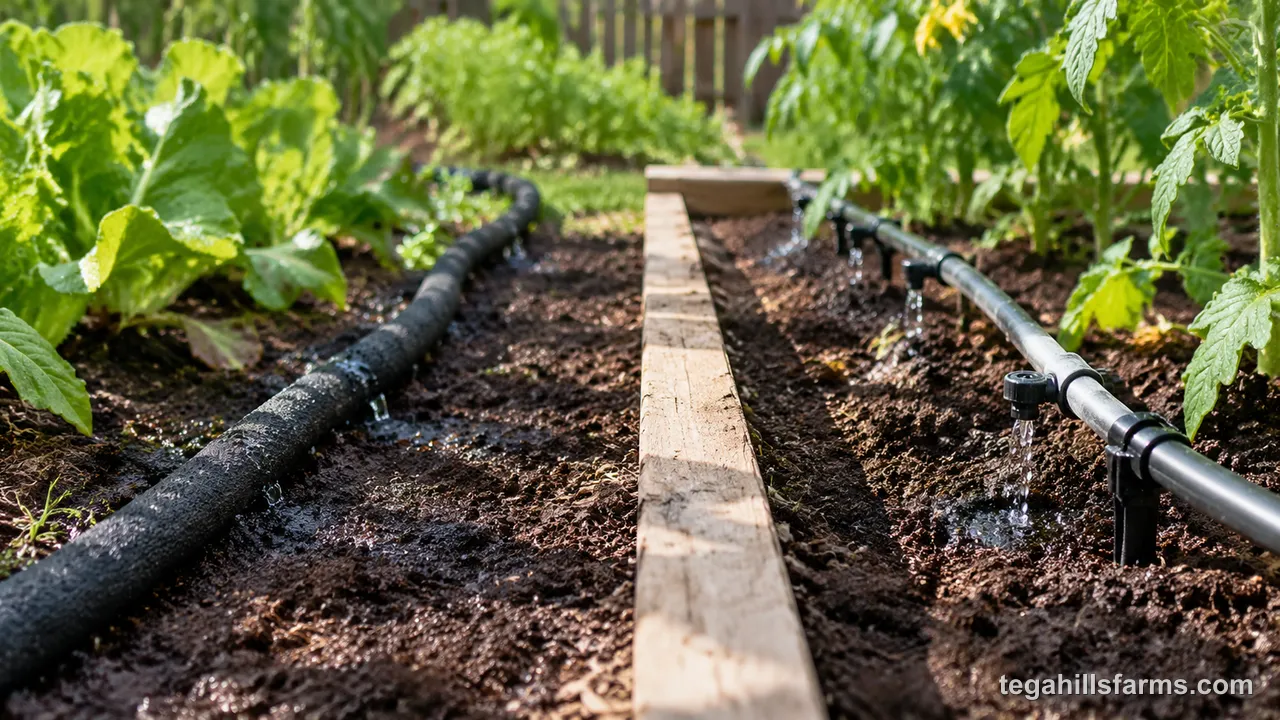
A soaker hose wins on ease. It costs less to start, goes down fast and needs little upkeep. For one short bed or a foundation strip, that simplicity is hard to beat.
Larger gardens with several planting zones or different water needs lean toward drip. The table below sums up how the two compare in qualitative terms.
| Factor | Soaker hose | Drip irrigation |
|—|—|—|
| Evenness | Less uniform on long runs | More uniform |
| Slope tolerance | Low | Higher with pressure-compensating emitters |
| Durability | Wears out as one piece | Repairable part by part |
| Installation difficulty | Easy | More planning |
| Upfront investment | Lower | Higher |
A soaker hose seeps so slowly that a short run often leaves only the top layer of soil damp while the roots just below stay dry, and the plants respond by rooting near the surface. Run it too long and the water either runs off or sinks past the roots, where it does no good. How do you know when the soil has had enough?
How Long Should You Leave a Soaker Hose On?
Run time depends on soil type and how deep the water needs to reach, so check with a probe or trowel instead of trusting a fixed timer setting.
Sandy soil absorbs water fast and drains just as fast, so it needs shorter, more frequent runs. Clay absorbs slowly and holds water longer. It does better with slow runs, sometimes split into two sessions so water does not pool. Loam sits in between.
To check, push a probe or trowel into the soil after a run and see how deep the dampness goes. It should reach the root zone of your plants. If only the surface is wet, run longer next time.
Overwatering leaves clear signs. Look for standing water, soil that stays soggy long after a run, and yellowing leaves. Once you find a run time that works, set the timer and leave it until the weather changes.
Are Recycled Rubber Soaker Hoses Safe Around Edible Plants?
Whether recycled rubber soaker hoses are safe around edible plants is not settled, so use caution in vegetable beds.
These hoses are made from reclaimed rubber, and makers differ in what goes into the blend. Whether anything leaches into soil near food crops is a question without a firm answer. That uncertainty is a reason for caution, not a proven hazard.
You can reduce the risk without much effort. For vegetable beds, choose a hose whose maker states what it is made from, or one labeled as safe for drinking water. Drip with polyethylene tubing is another option, and it keeps the water path simple.
If you already own a recycled rubber hose, use it around ornamentals, shrubs or the foundation. Keep it away from beds where you grow food you eat raw.
How Can You Tell a Line Is Failing, and How Do You Make It Last?
A line is failing when it shows dry patches, cracking or weak output, and regular seasonal care is what slows that wear. A healthy line waters evenly, holds pressure and stays flexible.
Signs a Soaker Hose or Drip Line Is Wearing Out
A line is wearing out when you see dry patches, cracking or weak output that cleaning does not fix. The signs differ slightly between the two systems.
On a soaker hose, watch for a stiff or cracked wall, spurting leaks and stretches that no longer weep. Because the wall fails as one piece, replacement is usually the answer once these spread.
On drip, dry plants near a clogged emitter are the first clue. A few bad spots call for repair: clean or swap the emitter, or splice in new tubing. Widespread splitting or brittle tubing means the section has reached the end of its life.
Uneven wetting tells you something is wrong with either system. Dig down, find where the water stops, and decide from there.
Seasonal Care That Extends Service Life
Drain lines before freezes, flush them and clean the filter to carry both systems through the off-season. A short routine in fall protects the parts that crack or clog first.
For a soaker hose, drain it fully, coil it loosely to avoid kinks and store it out of direct sun. For drip, drain the lines and remove the timer, regulator and filter and bring them indoors. Tubing left in the ground should be drained so water cannot freeze inside.
Flush drip lines by opening the end caps and letting water run until it clears. Rinse the filter screen too. In hard water areas, do both more often, since scale builds up faster there and can block emitters.
Soaker Hose vs Drip: Quick Answers
Can you bury a soaker hose?
You can cover it with mulch or a thin layer of soil, but deep burial is a poor idea. Roots and soil can clog the pores, and you will not see leaks or weak spots. Mulch also keeps sun off the wall, which helps it last.
Can you use both in one garden?
Yes. Use a soaker hose for a straight foundation strip or one small bed, and drip for raised beds, trees and containers. Run each from its own branch, ideally with its own timer. Put a regulator ahead of the drip branch, since the two need different run times.
Which is easier for beginners?
A soaker hose is easier to start with, because you lay it down, connect it and turn on the tap. Drip takes a layout and a few parts, but a starter kit makes it manageable. Try a soaker hose on one small bed, then move to drip as you add more.
Which is better for slopes?
Drip handles slopes better, especially with pressure-compensating emitters that keep output steady as elevation changes. A soaker hose on a slope tends to over-water the low end as water drains downhill. If you use one, run it along the contour of the hill.
Do you need a timer?
A hose end timer helps with either system, because it prevents the forgotten tap and the overwatering that follows. It matters most for a soaker hose, where run time sets how deep the water reaches. For drip, pair the timer with a pressure regulator and a filter.
Write Your Review
No reviews yet. Be the first to share your experience!