

Home gardeners choose between three inside diameters: 1/2 inch, 5/8 inch and 3/4 inch. The 5/8 inch hose is the usual all-rounder for yards. Smaller and larger sizes exist, but they serve narrower jobs.
Two things decide the right size: how long a run you need and what you water at the end of it. A wider inside diameter moves more water. A longer hose loses pressure unless it is wide enough to compensate.
The worry most buyers share is paying for flow they never feel. A wide hose also weighs more once it is full, and a weak spigot can cap output no matter the diameter.
Before you buy, read the size printed on your current hose and note the farthest spot you water. That one check narrows the choice faster than any spec sheet.
What Is the Standard Garden Hose Diameter?
The standard home hose has a 5/8 inch inside diameter, with 1/2 inch and 3/4 inch versions sold right beside it.
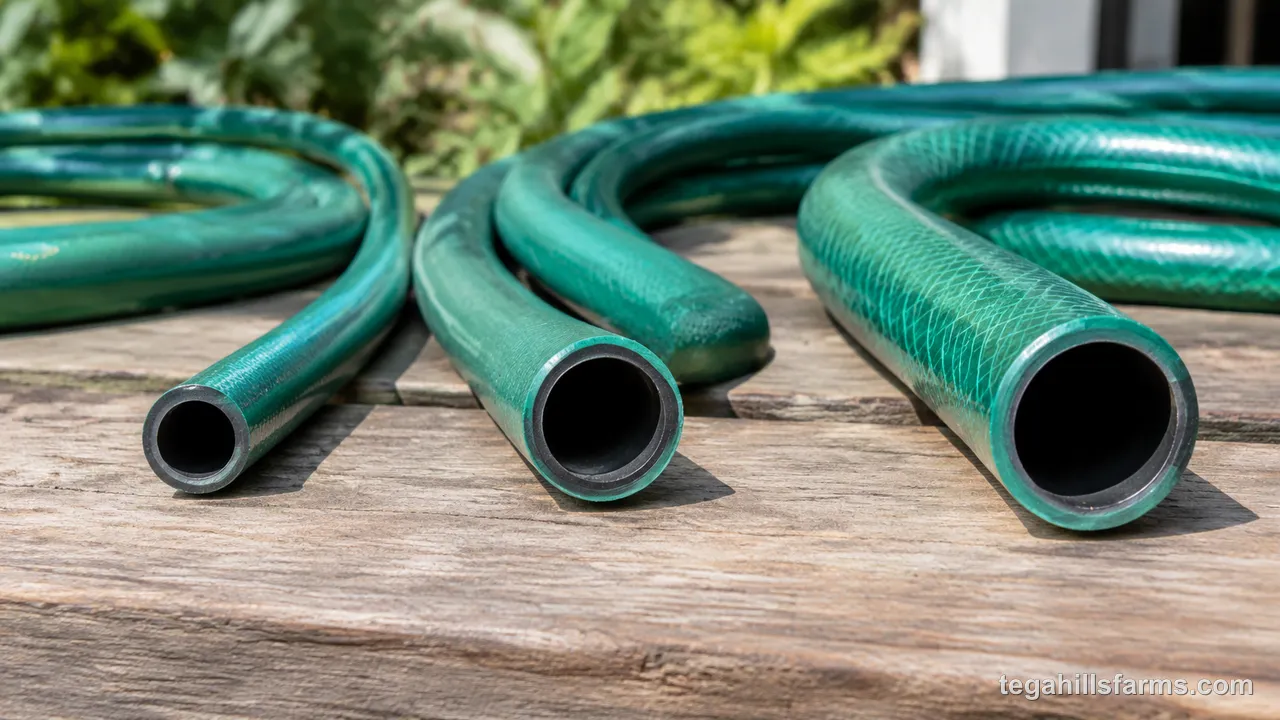
Sources disagree on what counts as standard because the answer shifts with duty rating and region. Light-duty hoses lean toward the smaller sizes, while heavier-duty lines lean toward wider ones. Some markets list sizes in millimeters, which makes the same hose look different on paper.
If you are still weighing hose type, length and material alongside diameter, our guide on how to choose a garden hose covers the full decision.
How Do You Measure Garden Hose Diameter?
A hose size is its inside diameter, which you can confirm from the jacket markings or by measuring the open end, and nominal sizes convert to millimeters as rounded labels.
What Is the Difference Between Inside and Outside Diameter?
Hose size refers to the inside diameter (ID), the open channel the water travels through, not the outside diameter (OD), which includes the walls.
Two hoses with the same outside width can carry very different amounts of water. A thick-walled rubber hose may look large in your hand while its channel is narrower than a thin-walled vinyl one. That is why OD misleads anyone comparing hoses by eye.
Wall thickness still matters, just for other reasons. Thicker walls usually resist kinks and abrasion better, but they add weight. Compare hoses by ID for flow, then look at the walls for durability and handling.
How Can You Tell Which Size Your Hose Is?
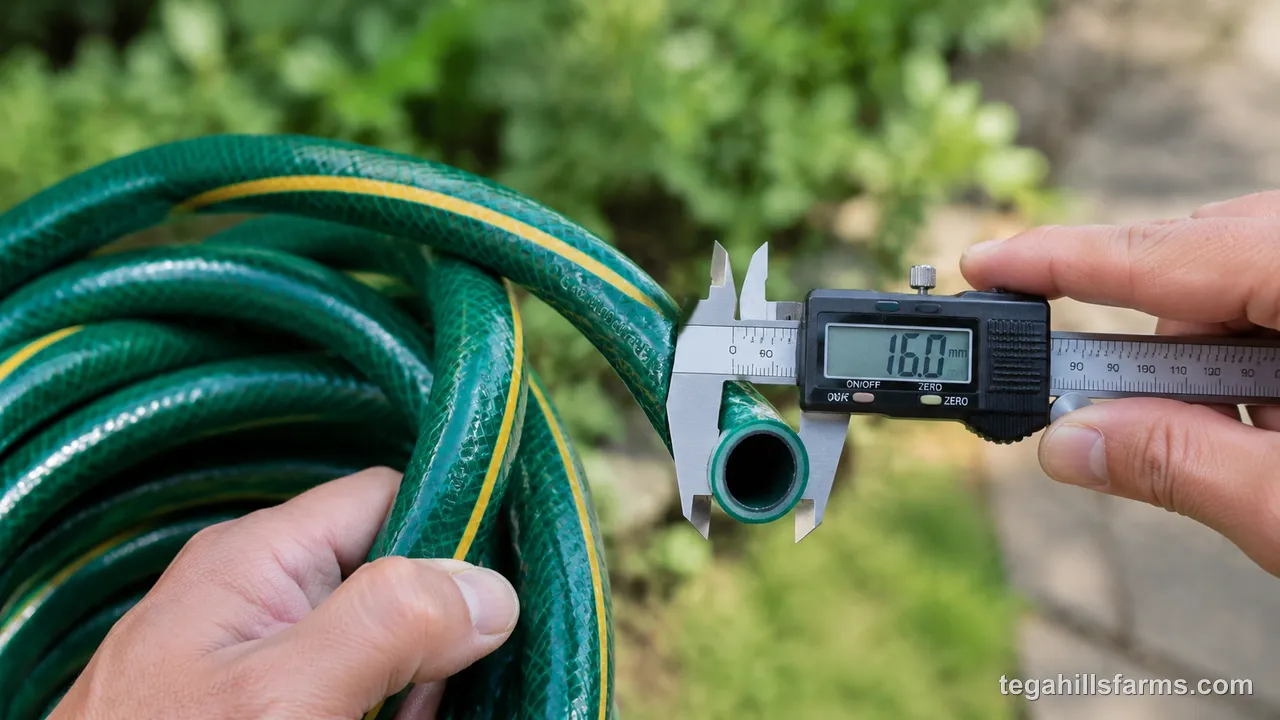
Check the printed markings on the jacket, or measure the inside width of the open end with a ruler or caliper.
Most hoses print the size near a coupling or along the jacket, often as a fraction such as 5/8 in. Sun and scuffing wear that print away over a few seasons. When it has faded, hold a ruler across the opening at the coupling end and read the width of the hole itself, not the metal collar around it.
A caliper gives a cleaner reading than a ruler. Round your result to the nearest standard size: 1/2, 5/8 or 3/4 inch. Measuring the outside of the jacket will give you a number that is too large.
What Are Common Hose Sizes in Millimeters?
Three common sizes convert to about 13 mm for 1/2 inch, 16 mm for 5/8 inch and 19 mm for 3/4 inch.
Nominal sizes are rounded labels, so the true figures sit slightly off those round numbers. A 5/8 inch hose, for example, is a little under 16 mm. Metric sizes may round up or down, so the label alone won’t always match your conversion exactly.
When you compare sizes across both unit systems, match to the closest nominal size and treat that as the inside diameter. The conversion changes the unit, not the hose.
How Does Garden Hose Diameter Affect Water Flow?
A wider inside diameter moves more water, and the gain shows up as flow by size, pressure loss over long runs and other limits beyond diameter.
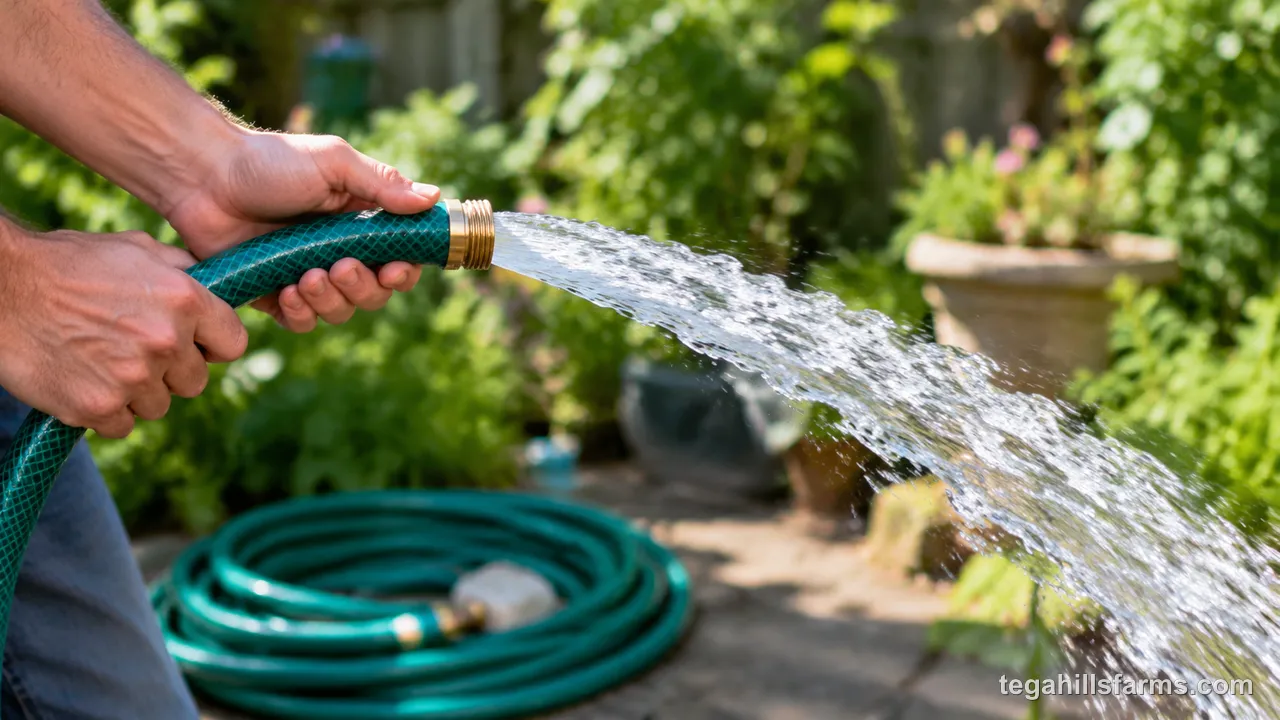
At the nozzle, you mostly notice a steadier spray rather than a dramatic jump.
How Do 1/2, 5/8 and 3/4 Inch Hoses Compare on Flow?
A 1/2 inch hose moves about 9 GPM, a 5/8 inch hose about 17 GPM and a 3/4 inch hose about 23 GPM.
The step from 1/2 to 5/8 inch is large. The step up to 3/4 inch adds less, so each extra bit of width buys a smaller gain than the one before it.
Treat these as ballpark figures. Real flow depends on your supply pressure and how long the hose is.
In the garden, a sprinkler head or spray nozzle often restricts flow well below what the hose could carry. For watering pots and beds, the mid-size hose already delivers more than most attachments can use. The wider hose earns its place when you run long distances or feed several outlets.
Why Do Longer Hoses Lose Pressure?
Pressure drop is the loss of water pressure as it travels, and it grows with hose length and a narrow inside diameter.
Water rubs against the inner wall the whole way. More length means more rubbing. A narrow channel makes it worse because the same volume squeezes through less space.
A wider hose cuts that friction, which is why recommended sizes climb with length. For about 25 feet, 1/2 or 5/8 inch works. At 50 feet, 5/8 inch is the pick. At 75 feet, choose 5/8 or 3/4 inch and avoid 1/2 inch. At 100 feet, 3/4 inch is the recommendation.
Skip those steps and the symptom is easy to spot: a sprinkler that sputters at the far end of the yard while the spigot end runs fine.
What Else Limits Flow Besides Diameter?
Five other factors cap flow: household supply pressure, nozzle and sprinkler restrictions, kinks, fittings and hose material.
Supply pressure comes first. A hose can’t deliver more than the spigot gives it. Nozzles and sprinkler heads then narrow the path on purpose, so they set the ceiling for what leaves the hose.
Kinks pinch the channel almost shut. Small or poorly shaped fittings can restrict it at the ends. Material matters too, since a soft or collapsing wall shrinks the usable channel under pressure. If flow feels weak, check these before you buy a wider hose.
Which Garden Hose Diameter Is Right for Your Yard?
Pick the size by task: a light hose for containers and small beds, a mid-size or larger hose for lawns, a steady supply for car washing and pressure washers, and a wide, heavy-duty hose for professional use.
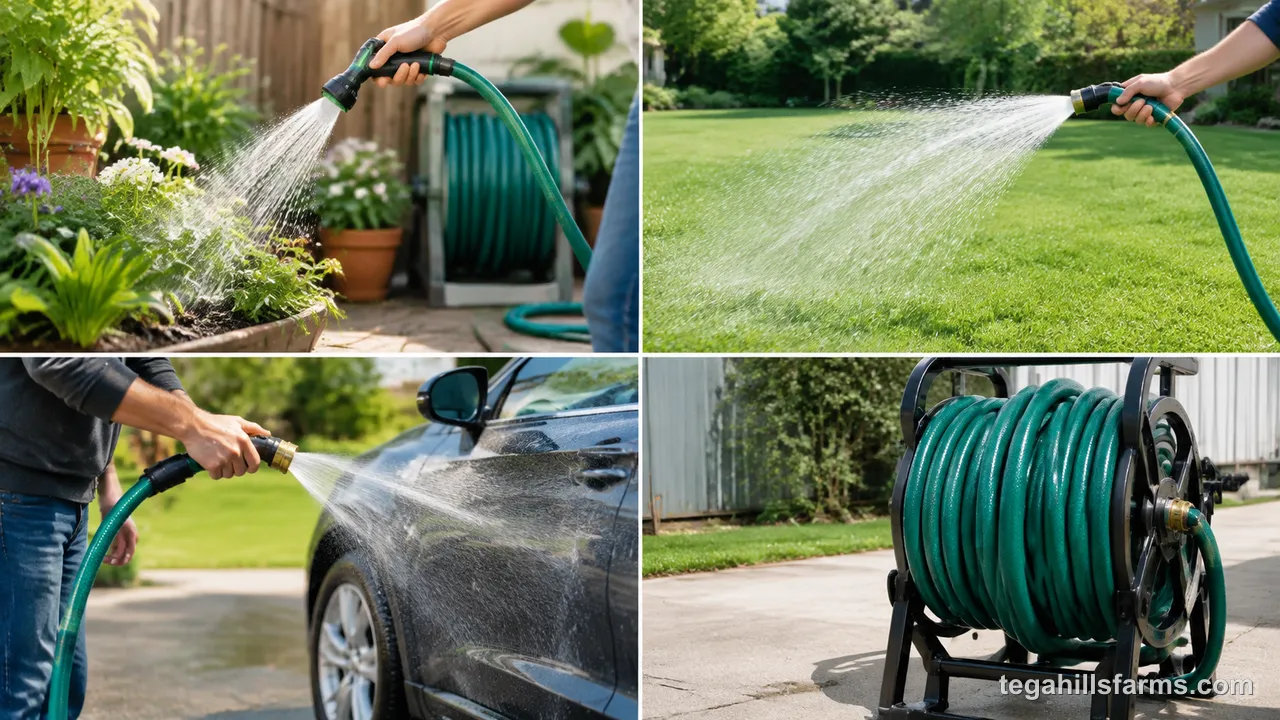
If you keep asking what size garden hose do I need, start with the farthest spot you water.
Container Plants and Small Beds
A 1/2 inch hose is a comfortable fit for patio pots and compact beds.
It stays light when full and coils easily. That matters when you water every day and your wrists feel it by the end of the week. Older gardeners or anyone with limited hand strength will notice the difference most.
What you give up is volume. Filling a large watering can takes longer than it would with a wider hose. On short runs near the spigot, though, the pressure loss is small, so the trade is usually worth it for light work.
Lawns and Larger Garden Beds
Lawn watering and sprinklers call for a 5/8 inch or 3/4 inch hose, which holds pressure at the far end of a long run.
Sprinklers are fussy about supply. Starve one and the spray pattern shrinks and the water lands unevenly. A wider hose keeps the pressure up across the lawn, which is where narrow hoses struggle.
Use the length guidance above as your guide. Mid-length runs suit 5/8 inch, and the longest runs lean toward 3/4 inch.
The trade-off is handling. A wide hose is heavier to drag around beds and harder to coil on a reel.
Car Washing and Pressure Washers
Rinsing a vehicle works well with a hose in the 1/2 or 5/8 inch range, and a pressure washer needs a steady water supply at its inlet.
For a car, you want a comfortable spray and a hose you can move around the vehicle without a fight. Either size handles that at normal driveway distances.
For a pressure washer, the manual sets the supply it needs. Many models accept a standard garden hose connection, but check yours. A very long, narrow or kinked hose can starve the pump, so keep the run short and straight.
Heavy-Duty and Professional Use
The largest diameters in a heavy-duty or super-duty build suit frequent, high-volume watering.
Think long runs, several sprinklers at once or daily use over a large property. Thicker walls resist kinking, abrasion and crushing better than light-duty hoses do.
The cost is weight and stiffness. A big hose full of water is hard to coil and tiring to move, even for experienced gardeners. If you only water occasionally, the extra build is more than you need.
Does Garden Hose Diameter Affect Spigot Fit?
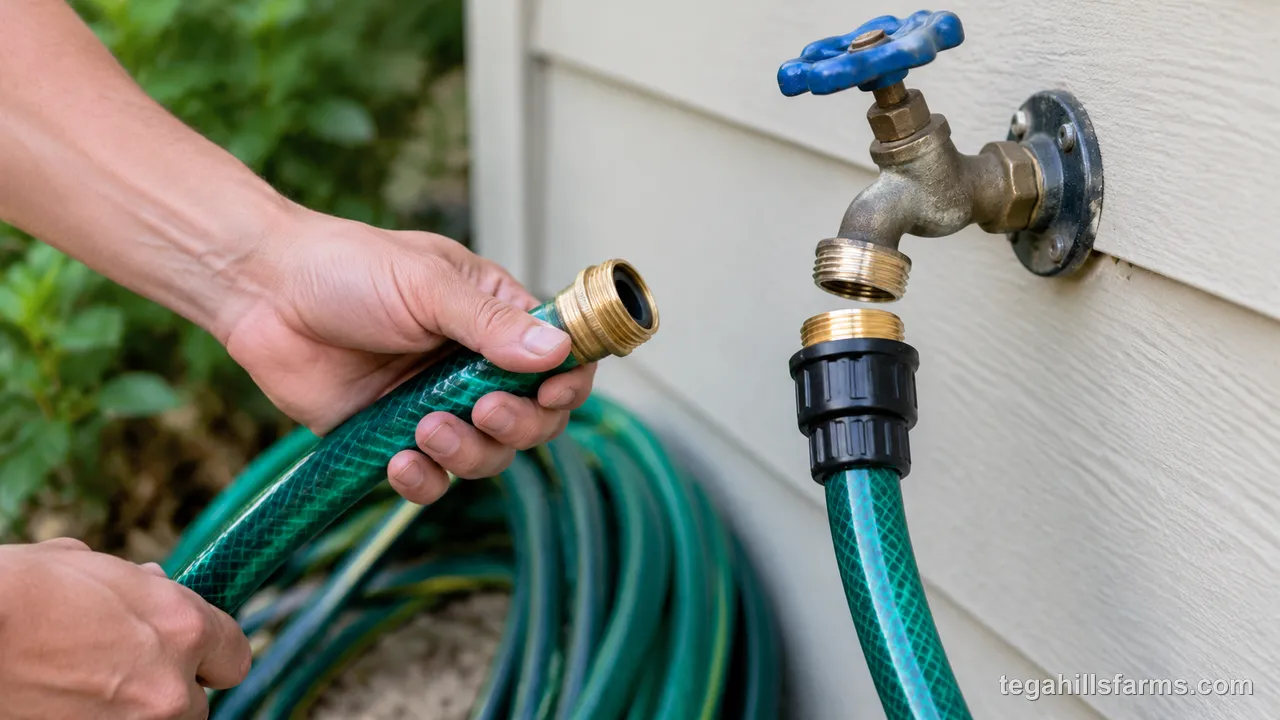
No, hose diameter doesn’t change spigot fit, because the standard thread size stays the same across sizes and only a different connection type needs an adapter.
Why Does Thread Size Stay the Same Across Hose Diameters?
Garden Hose Thread (GHT) is a 3/4-inch thread on every hose diameter, so a standard GHT coupling fits a standard spigot whatever the hose’s inside diameter.
The thread belongs to the coupling. The inside diameter belongs to the hose channel. They are separate specs, which is why a 1/2 inch hose and a 3/4 inch hose both screw onto the same spigot.
The matching “3/4” is a coincidence of naming. A 3/4 inch hose and a 3/4-inch thread are not the same measurement.
Once a coupling is on, how to set up a garden hose properly mostly means a snug washer and a hand-tight fit. A worn washer is the usual cause of drips at the spigot, not the hose size.
When Do You Need an Adapter?
You need an adapter for non-GHT threads, pump connections and some pressure washer inlets that don’t use the standard garden thread.
Some pumps and plumbing fittings use NPT threads, a tapered pipe thread that differs from GHT. The two won’t seal directly, so a converter fitting bridges them.
Quick-connect systems are another case. They need the matching adapter at each end.
Check the inlet type on the product before you buy a hose or fitting. If it says GHT, your standard hose connects directly. If it names something else, pick the adapter that converts to it.
A 3/4 inch hose full of water is a different animal from the same hose lying empty on the lawn, and you feel it when you drag it around a corner bed. The spigot at the other end may also be handing over less water than the hose can carry. Is that extra width helping, or just making watering a chore?
Is a Bigger Garden Hose Always Better?
No, a bigger hose pays off only when supply pressure and run length can use the extra width, because filled weight and stiffness otherwise add fatigue.
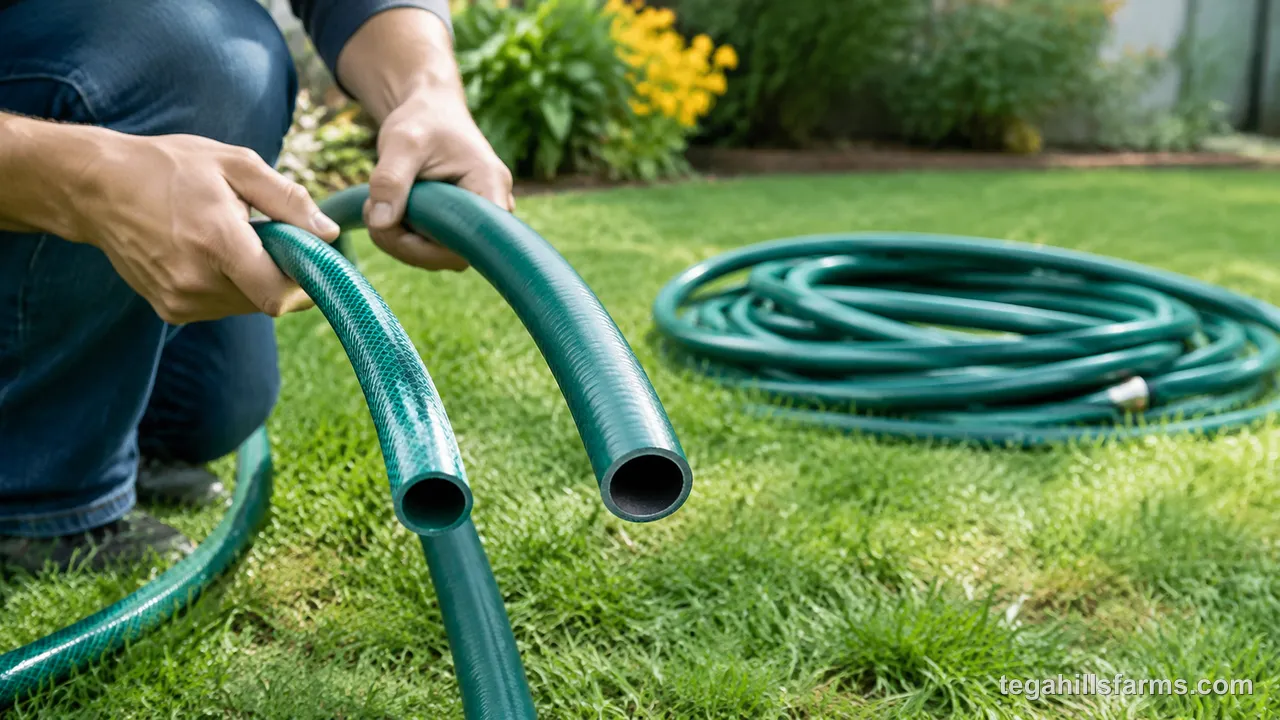
If your spigot delivers modest pressure, a wide hose just carries the same limited flow in a heavier package. On a short run, the pressure loss in a smaller hose is so small that you gain almost nothing.
Weight is the hidden cost. A full wide hose is harder to coil, and it strains hands and wrists over an hour of work. It also tends to be stiffer, so it resists bending around tight beds.
Budget plays in too. Wider hoses often cost more, and how much does a garden hose cost depends on length, material and duty rating.
A larger size is still justified for long runs, several sprinklers at once or steady heavy use. Outside those cases, the right size is usually the smallest one that holds pressure at the far end.
How Does Hose Material Change the Usable Inside Diameter?
Hose material changes usable diameter because wall thickness and behavior under pressure differ among vinyl, rubber, polyurethane and expandable hoses.
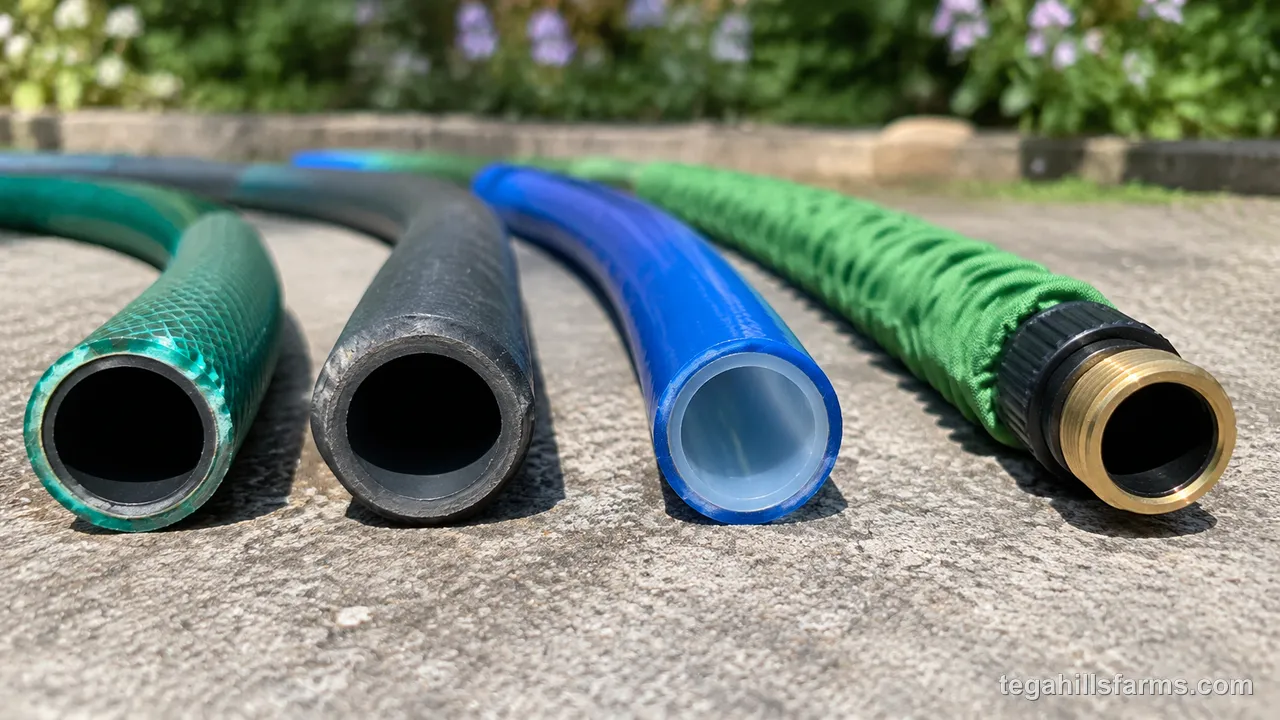
Vinyl is light and affordable, but it can stiffen in cold weather and kink more readily. Rubber is heavier and usually has thicker walls, so it resists kinks and abrasion at the cost of weight. Polyurethane sits between the two, with a lighter feel and decent flexibility.
Expandable hoses behave differently. The inner tube swells when water fills it and relaxes when the water stops, so the stated size describes the hose less precisely than it does for a fixed-wall hose.
This is why two hoses with the same nominal size can deliver different results. The label gives you the starting point, and the material and wall construction decide how much of that channel stays open under pressure.
How Do You Spot a Hose That Is Losing Flow?
A hose losing flow shows kinks, internal collapse, cracking and coupling leaks, and each one cuts output at any diameter.
Kinks leave a visible crease and pinch the channel. Internal collapse is harder to see. The hose feels soft or flattens when you squeeze it, and water trickles out even with the spigot fully open.
Cracks often appear near the couplings, where the hose flexes most. Leaks at the couplings waste water before it reaches the nozzle, and you will usually see wet ground or a spray at the joint.
If you are wondering how long do garden hoses last, these signs are the answer in practice. Sun, freezing and repeated kinking wear a hose down well before it fails completely.
When damage is widespread, replacing the hose beats buying a bigger one. A wider hose with the same problems will still deliver weak flow.
Garden Hose Diameter FAQs
What is the most common garden hose diameter?
The 5/8 inch inside diameter is the most common size for home yards. It balances flow and weight well enough for mid-length runs. Shorter hoses often come in 1/2 inch, while 3/4 inch shows up mostly on longer or heavier-duty hoses.
Are 3/8 inch hoses worth considering?
Only for very light jobs, such as a few patio pots or a short reach from a nearby spigot. A 3/8 inch hose is light and compact but delivers noticeably less water, so filling cans and running sprinklers feels slow. Most yards are better served by 1/2 inch or larger.
Will a wider hose fit the same spigot?
Yes. Standard hose couplings use the same thread on every common diameter, so a 3/4 inch hose screws onto the same spigot as a 1/2 inch one. The spigot’s output, not the thread, limits how much of the extra width you can actually use.
How do you read the size printed on a hose?
Look near the coupling or along the jacket for a fraction such as 5/8 in., which gives the inside diameter. Some labels also list length or duty rating. If the print has worn off, measure the open end across the hole and round to the nearest standard size.
Does a longer hose need a bigger diameter?
Usually yes. Longer runs lose more pressure to friction, so a wider inside diameter helps water arrive with more force at the far end. A short hose near the spigot gives up little, which is why a smaller size works fine for small beds.
Write Your Review
No reviews yet. Be the first to share your experience!