How to Choose a Garden Hose – Material & Durability Guide
Choose a garden hose by matching four things to your yard: the material, the length, the inner diameter and the fittings. When those four fit, the hose reaches every bed, delivers a steady stream at the nozzle, and stays comfortable to drag and coil week after week.
Material does the most to separate one hose from another. It sets how much pressure the wall can hold, whether the hose kinks at a bed corner, how it copes with summer sun and cold mornings, and how heavy it feels once it fills with water. Length and diameter decide reach and flow. The couplings decide whether the connection at the spigot stays dry.
The disappointments that send people back to the store are predictable. A hose kinks every few steps, drips at the faucet, cracks after one season in the sun, or weighs so much when full that watering becomes a chore for your wrists and back. Each of those problems traces back to a build detail you can check before buying.
What Matters Most When Choosing a Garden Hose?
Material, length, inner diameter and fittings decide how a hose performs and how long it lasts, and the right combination is the one that still handles comfortably after an hour of weekly watering.
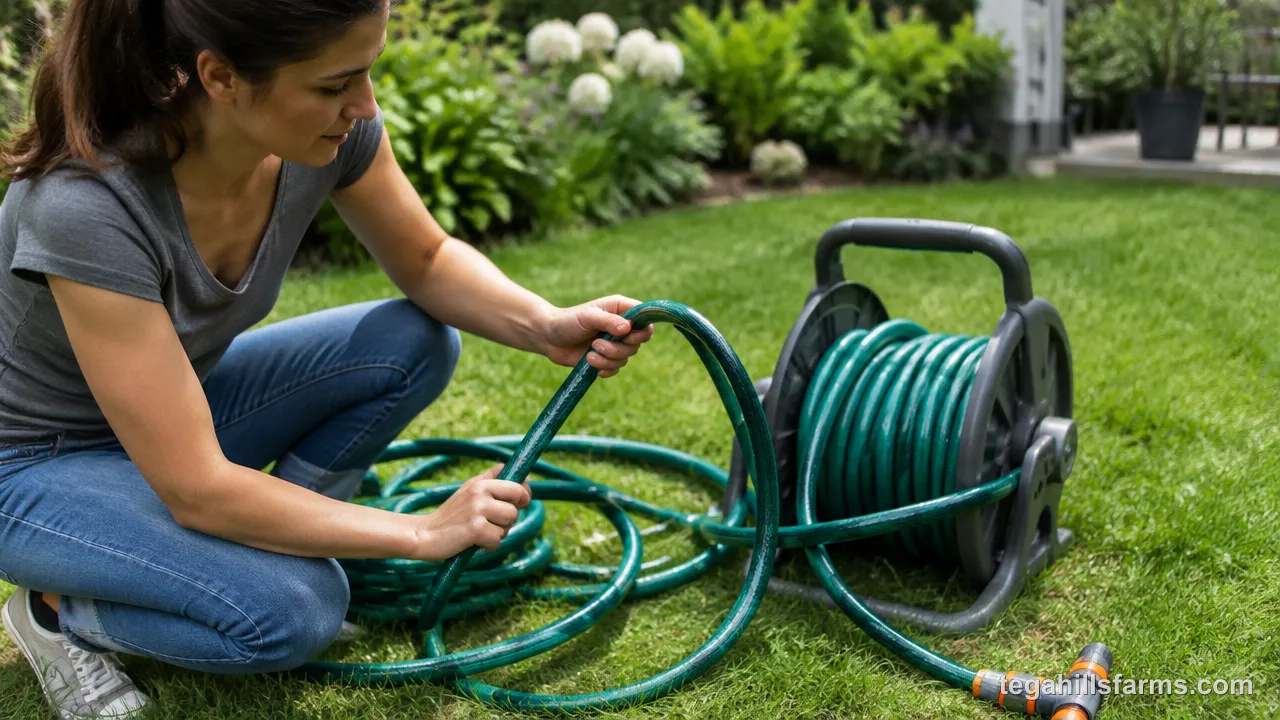
Material sets the hose’s weight, its flexibility and how well it tolerates pressure, sun and cold. Length and inner diameter work as a pair. Together they determine how far you can reach, how much water comes out at the nozzle and how heavy the hose becomes once it is full. Fittings are the joints at each end. They take the twisting and pulling every time you connect or move the hose, so a weak coupling causes more leaks than a weak wall.
Specs on a package only tell part of the story. What you live with is how the hose behaves in use: whether it lies flat when you unroll it or springs back into loops, whether it folds shut when you pull it around a raised bed, and how much effort coiling it takes at the end of the day. A hose that kinks at every corner sends you walking back to straighten it, and a stiff one loads your wrists each time you pull it forward.
Once these details point you toward a type, comparing the best garden hoses side by side narrows the choice to a specific model.
Which Garden Hose Material Is Best for Your Yard?
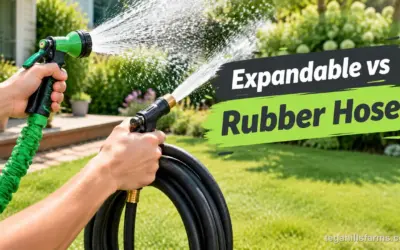
No construction wins on every count, because lighter hoses give up toughness and tougher hoses add weight you feel each time you drag one across the lawn. Every common build sits somewhere on that scale. The right material depends on how hard your yard is on a hose, with its sun-baked concrete, rough edging and freezing nights, and on how much load your wrists and back can comfortably take. Weighing expandable vs rubber hoses comes down to the same trade, with compact storage on one side and years of service on the other.
Are Vinyl (PVC) Hoses Good Enough for Everyday Watering?
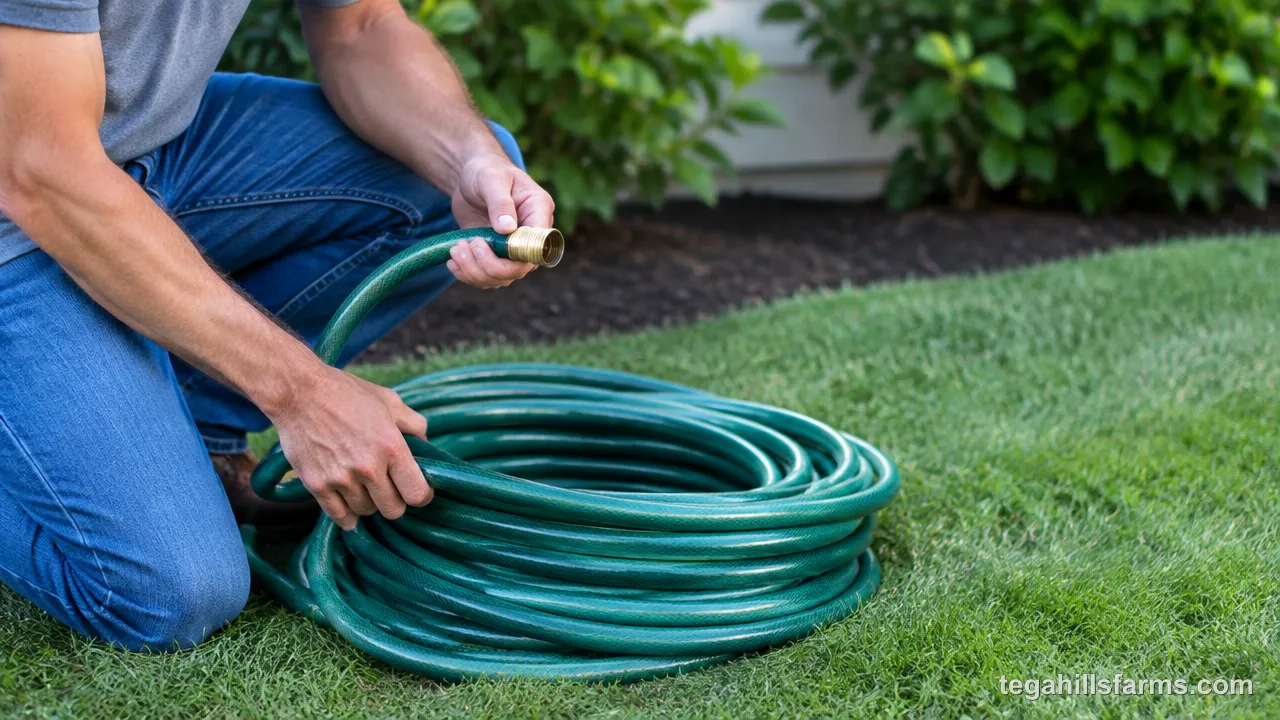
Vinyl is good enough for light, occasional watering in a small yard. It falls short when a hose gets dragged daily or stays out in the sun. It is the lightest of the common builds and sits in the lowest cost tier, so it is easy to carry to a few patio containers and easy on the budget for seasonal use.
The limits come from the material itself. A PVC hose handles pressure up to around 200 psi. That is a modest ceiling, so the hose has less margin when a nozzle snaps shut and pressure spikes inside the line. Vinyl also depends on plasticizers to stay pliable, and heat and UV light slowly drive them out of the wall. As the wall stiffens, it cracks along the lines where it has been folded or kinked.
Cold makes the problem immediate. On a chilly spring morning a vinyl hose turns rigid, resists uncoiling and folds shut at tight bends instead of curving around them.
Vinyl suits a small yard, a balcony or a patio garden watered a few times a week, especially when the hose is stored in the shade between uses. For daily watering across a larger lot, the savings tend to disappear once the hose needs replacing.
Why Choose a Rubber or Hybrid Hose?
Rubber and hybrid hoses fit when you want a hose that resists kinks, tolerates higher pressure and survives weather that ruins vinyl, and you can accept some extra weight. Rubber stays pliable in cold, shrugs off sun and lies flat when unrolled, so it curves around bed corners instead of folding shut. Its thick wall tolerates being dragged over concrete and gravel, and a rubber hose can take pressure up to 300 psi in bursts.
The cost is weight. Dense rubber makes the hose heavy before any water goes in. A full one takes real effort to pull across a lawn and lift into coils, which matters for anyone with limited grip strength or a sore back. For daily watering where the hose lives outdoors, rubber garden hoses repay that weight with several seasons of reliable service.
Hybrid hoses blend rubber with PVC to keep most of rubber’s flexibility at a weight closer to vinyl. A hybrid hose is rated to around 200 psi overall and handles up to 600 psi in bursts, so the lighter build does not mean giving up pressure tolerance. I’d lean toward a hybrid for gardeners who want a hose that behaves like rubber in cold weather but is easier on the wrists when coiling.
Is a Stainless Steel Braided Hose Worth Considering?
A braided stainless steel hose is worth it when your hose drags over rough ground, sits near hot surfaces or gets chewed by a dog. It can be tiring for gardeners who coil and carry a hose every day. The metal braid wraps an inner tube and takes the abrasion, punctures and teeth that would cut through a vinyl or rubber cover.
That braid also gives this construction far more pressure margin than vinyl, rubber or hybrid builds. Pressure ratings for braided stainless steel hoses run from 500 psi at the low end to 10,000 psi at the top, and the construction tolerates temperatures up to 700°F.
Handling is the trade-off. A braided hose is stiffer than rubber or hybrid, holds the shape it was stored in and resists lying flat. Coiling it neatly takes more effort and more wrist rotation. The braid can also scuff siding, deck boards and bare hands if you pull it along carelessly.
This build makes sense for a hose that stays stretched along the same route, such as down a gravel path, past a hot driveway or along a fence where a dog plays. If you move your hose between beds daily or have limited hand strength, the stiffness wears on you faster than the durability pays back.
When Does an Expandable, Soaker or Coil Hose Make Sense?
These special-purpose hoses make sense when one job matters more than all-round toughness: compact storage, slow watering at soil level, or quick reach on a small patio. Each gives up something an ordinary hose provides, so they work best as a second hose rather than the only one.
An expandable hose has a stretchy inner tube inside a fabric sleeve. Water pressure lengthens it, and once drained it shrinks to about a third of its full length, so it weighs little and fits in a bucket or small bin. The thin inner tube is also its weak point. It can burst under pressure spikes and wear through where the fabric rubs, so it suits light hand-watering more than a hose left pressurized all day.
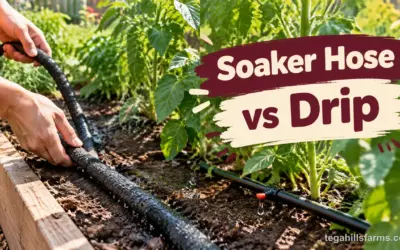
A soaker hose has porous walls that let water seep out along its whole length. It waters a bed slowly at the roots while leaves stay dry, and less water is lost to evaporation. A sprinkler hose is perforated to spray a fine strip instead. Both are laid in place and left there, not carried around for hand-watering.
A coil hose springs back into a tight spiral after each use, which keeps a balcony or small patio tidy. Its reach is short and it pulls back as you stretch it, so it fits container watering better than yard work.
What Hose Length and Diameter Should You Choose?
Length sets how far you can reach, and inner diameter sets how much water arrives at the nozzle, with every added foot of hose adding friction that a wider bore partly offsets. Match both to the walking route from your spigot to the farthest plant and to the jobs you do most, such as filling watering cans, running a sprinkler or rinsing a patio. A well-matched hose neither drags like dead weight nor sputters at the far end.
How Long Should a Garden Hose Be?
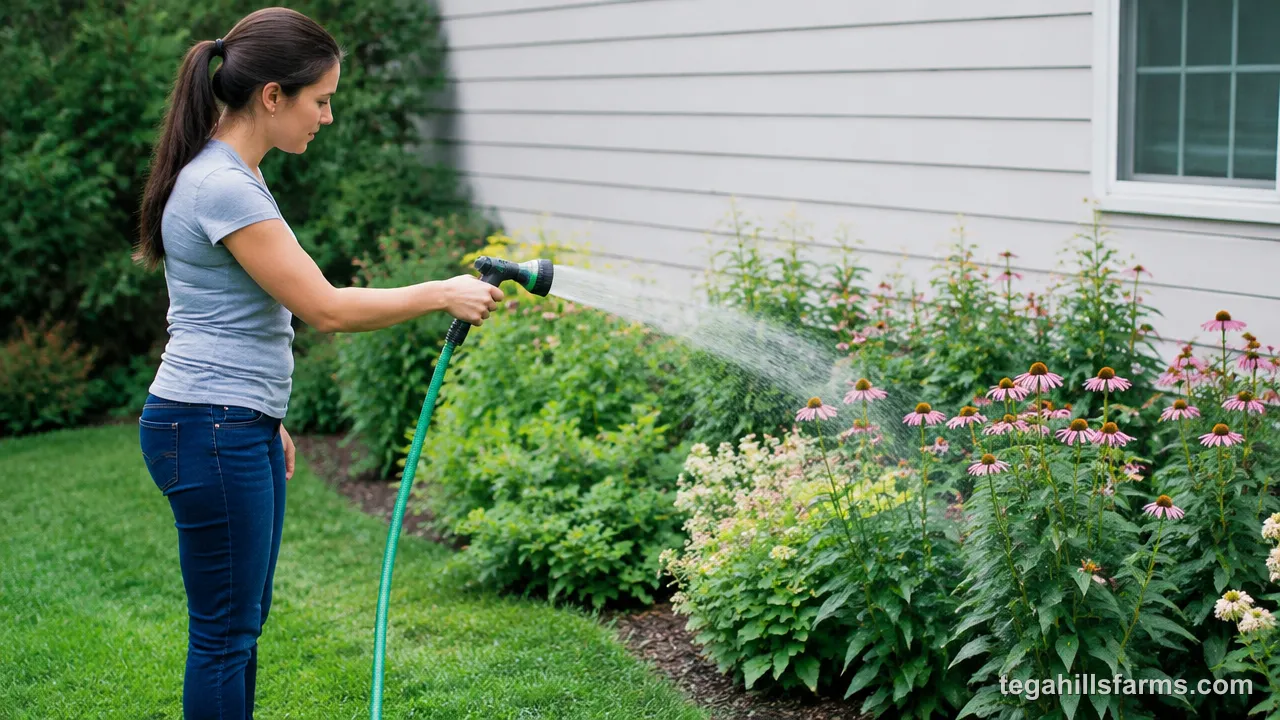
The right length covers the walking route from your spigot to the farthest bed, plus a little slack for turns, and no more. Measure that route the way the hose will travel, around the corner of the house, along the edge of the lawn and past the patio, rather than in a straight line. Laying a rope along the path gives a more honest figure than guessing.
Extra length has costs you feel every time you water. A longer hose holds more water, so it is heavier to pull, bulkier to coil and slower to drain. Friction along the extra run also lowers the pressure at the nozzle. A hose that is too short creates a different problem. Stretching it taut pulls on the spigot and the couplings, strains the threads and can tip containers when it drags across them.
When beds sit close to the house, 50 ft garden hoses cover them without a pile of surplus hose to wind up. At the long end, 100 ft garden hoses are the common option for reaching a back fence or a detached vegetable plot, and they earn their weight only when you walk that far. Two shorter hoses joined with a coupling also work, as long as you accept one more joint that can leak.
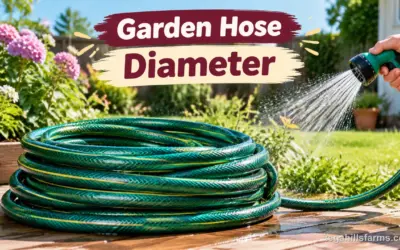
Is a 1/2, 5/8 or 3/4 Inch Hose Better?
A 5/8 inch hose is the better all-purpose choice for most yards. It carries enough water for sprinklers and longer runs without the weight of a wider hose. The other two sizes suit narrower jobs.
Inner diameter controls flow because a wider bore lets more water pass at the same pressure. That difference grows over a long run, where friction drains pressure from a narrow hose. The trade-off is weight: a wider hose holds more water, so a full 3/4 inch line is noticeably heavier to drag and coil. That size earns its place on long runs or when you feed a high-volume sprinkler. A 1/2 inch hose is the lightest and easiest to handle, which makes it pleasant for patio containers and short trips to nearby beds, but its flow drops off quickly with distance.
Hose sizes can mislead because more than one measurement is often quoted. The size that matters is the inner diameter, the width of the channel water flows through. The outer diameter includes the wall, so a thick-walled hose looks larger in hand without delivering more water. The coupling thread follows its own standard and stays the same across all three sizes, so the size stamped on a fitting says nothing about the hose’s bore.
How Can You Judge a Garden Hose’s Durability?
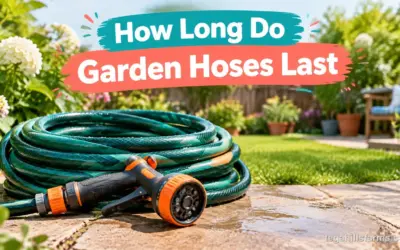
Reinforcement layers, wall and cover quality, and the couplings predict whether a hose lasts past its first season, and you can judge most of them with a minute of handling. A good garden hose can last around 10 years, though how long garden hoses last in practice depends on these build details as much as on care.
What Do Ply Layers and Pressure Ratings Tell You?
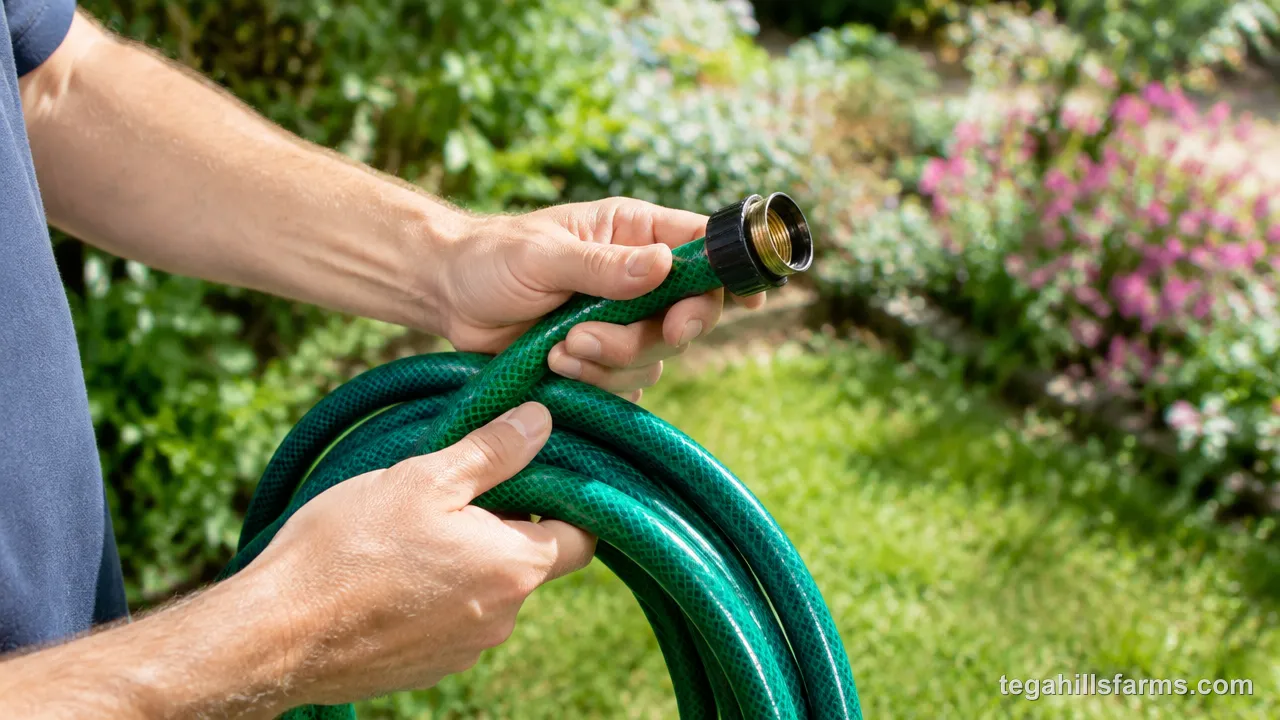
Ply layers and pressure ratings tell you how well a hose holds its shape and contains pressure. Ply refers to the layers of reinforcing mesh or yarn between the inner tube and the outer cover, and hoses range from 1-ply to 6-ply. More layers keep the wall round when it bends, which improves kink resistance. They also hold back the outward push of water, which raises burst resistance. Each layer adds weight and stiffness, so a high-ply hose is tougher but harder to coil.
Burst pressure is the point at which the hose fails, not the pressure it is meant to run at. Treat it as a safety margin. Household water pressure sits well below it, and the headroom protects the hose when a nozzle snaps shut and pressure surges through the line. A higher rating means more margin, not better everyday flow.
Across constructions, vinyl offers modest headroom, rubber and hybrid builds noticeably more, and braided stainless steel far more than either. When your water supply runs strong or you use hose-end tools that need steady pressure, high pressure garden hoses give extra margin at the cost of some weight.
How Do You Spot a Hose That Resists Kinks and Weather?
A hose that resists kinks lies flat when unrolled and holds a round shape in a tight loop. A weather-resistant hose has a thick, UV-resistant cover that stays pliable in cold. You can check most of that in a store aisle or during the first unroll at home.
Start with how it coils and straightens. Unroll a few feet and watch whether it lies flat or springs back into loops. Strong coil memory means it will twist and fold every time you pull it across the yard. Then bend a section into a small loop. A wall with enough thickness and reinforcement stays open, while a thin wall flattens and cuts off the water, and that is the kink you end up walking back to fix all summer.
The cover decides how the hose ages outdoors. A description that lists a UV-resistant outer layer signals a hose built to sit in the sun without drying out and cracking along its folds. Cold tolerance matters if you water in early spring or late fall. A hose that stays flexible on a chilly morning uncoils without fighting you, while one that stiffens will crease and eventually split where it bends. A spring guard at the spigot end helps too, since many kinks start there.
Why Do Fittings and Couplings Matter?
Fittings matter because most leaks start at the coupling rather than in the hose wall. The connection takes twisting, pulling and the occasional step or tire every time you water, so its material and shape decide whether the joint keeps sealing.
Brass couplings resist crushing and corrosion and hold their threads through years of connecting and disconnecting. Plastic couplings save weight and cost, but they can crack when stepped on or overtightened, and their threads strip more easily. For a hose that lives outdoors, brass is the safer choice.
Collar shape matters for tired hands. A large collar with grooves or wings gives your fingers something to grip, and a swivel collar turns freely, so you can tighten the connection without twisting the whole hose. A small, smooth collar forces you to clamp hard, which gets more difficult late in a long watering session.
Standard garden hoses use the 3/4 inch garden hose thread, so they fit spigots, nozzles, sprinklers and reels interchangeably. Quick-connect adapters on top of that thread make swapping attachments easier on the wrists. Inside every female coupling sits a rubber washer that makes the actual seal. When it hardens, cracks or falls out, the joint drips even with tight threads, so keep a few spares on hand.
How Much Should Weight and Handling Influence Your Choice?
They should weigh heavily: weight and flexibility decide how comfortable a hose feels over a long watering session, especially for older gardeners and anyone with limited hand strength.
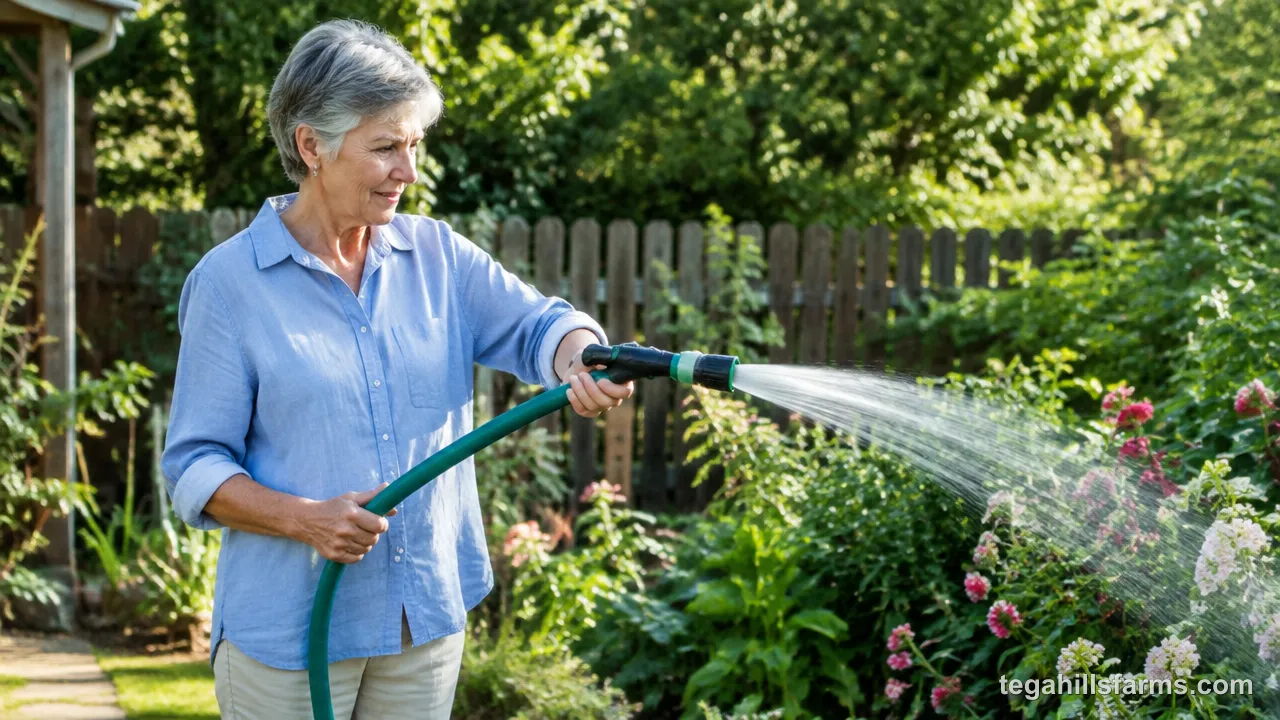
The weight printed on a hose is for the empty hose, but you drag and lift a hose full of water. A longer or wider hose holds more water, so the gap between the label and what you actually pull grows with every foot and every step up in diameter. That load lands on your grip as you pull, on your shoulders as you lift coils and on your lower back when you bend to straighten a kink.
Stiffness adds to the strain in a less obvious way. A hose that resists bending makes you fight it at every pull, and coiling a stiff hose means rotating your wrists against the material loop after loop. A pliable hose follows you around beds with less force and settles into loose loops without a struggle.
Hybrid hoses ease the strain by staying flexible at a moderate weight, and expandable hoses keep short, light jobs easy. Choosing the shortest length that reaches and a narrower bore for nearby beds cuts the load further. Lightweight garden hoses make sense whenever comfort counts more than maximum toughness. A wall-mounted reel or a cart lets you wind the hose instead of lifting coils.
Which Hose Fits Your Yard and Watering Style?
Yard size, watering frequency and how much weight you can comfortably handle point to the right build. Find the situation that matches yours:
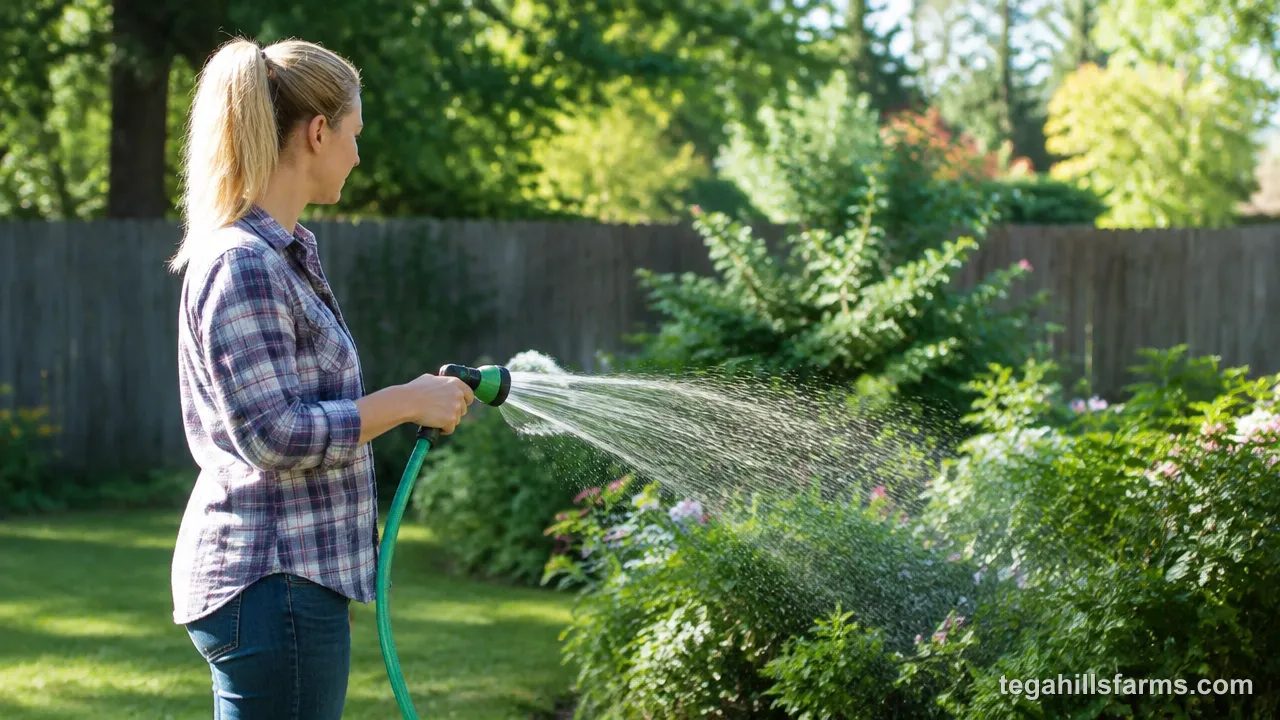
- Balcony or small patio with containers: a coil hose or a short expandable hose stays tidy and light, with enough reach for pots near the spigot.
- Beds close to the house, watered a few times a week: a hybrid hose in the common all-purpose diameter, sized to the route, balances flexibility, durability and weight.
- Large lot, back fence or detached vegetable plot, watered daily: a rubber hose with a wider bore keeps flow strong over distance and survives being left out.
- Gravel paths, hot driveways or a dog that chews: braided stainless steel resists abrasion and punctures, provided you can live with the stiffness.
- Vegetable rows, borders or raised beds that need deep, slow watering: a soaker hose laid in place delivers water at the roots while you do other work.
- Limited grip strength or sore wrists: a hybrid or short vinyl hose with large-collar brass couplings, stored on a reel, keeps lifting and twisting to a minimum.
- Light seasonal watering on a tight budget: vinyl stored in the shade does the job until heavier use calls for an upgrade.
Where two options fit equally well, I’d pick the one with brass couplings and better kink resistance, because those details decide whether a hose feels pleasant or irritating every week. Budget mostly moves you along the material scale, and checking how much a garden hose costs in each construction sets realistic expectations before you compare models.
Water left inside a hose expands as it freezes, and one hard night can split the inner tube or crack a coupling that looked fine the evening before. Summer damage works more slowly, as hours of direct sun dry out the cover until it cracks along every fold. A well-built hose that spends winters full and summers baking on the patio can start leaking long before its materials should give out.
How Should You Store and Maintain a Garden Hose So It Lasts?
Drain the hose after each use, coil it in loose loops, keep it out of direct sun and bring it indoors before hard freezes. Those habits protect both the wall and the couplings. Storing it on a reel or a wide hanger keeps it off the ground and free of kinks.
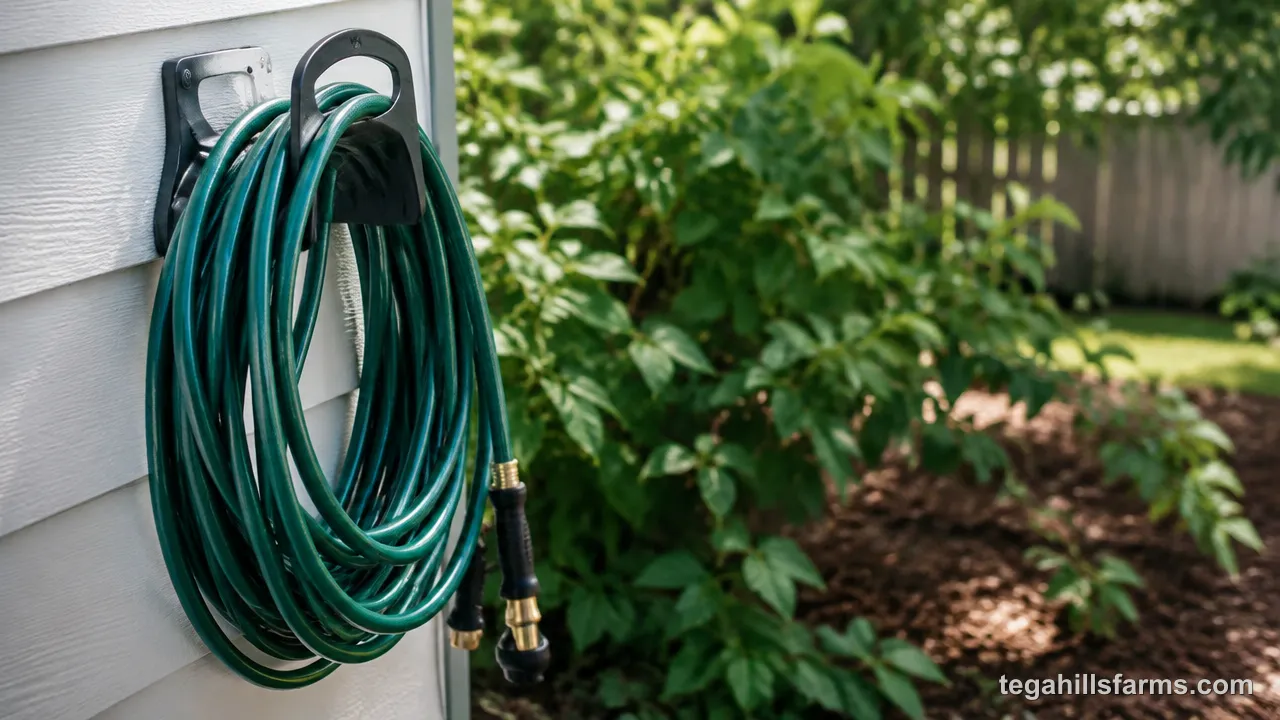
Draining matters because a hose left pressurized keeps stress on its walls and fittings all day. Shut off the spigot and open the nozzle to release pressure. Then walk the hose from the spigot end toward the nozzle, holding it raised so water runs out. Large loops avoid the tight bends that set permanent kinks.
Before the first hard freeze, disconnect the hose, drain it fully and store it in a garage, shed or basement. Timing depends on your USDA Hardiness Zone and local frost dates. In summer, a shaded spot or a covered reel slows the UV damage that dries and cracks the cover.
Garden hose reels keep the hose wound evenly, out of the mower’s path and away from foot traffic, and winding takes less effort than lifting coils onto a hook. A wall hanger with a wide, curved arm also works, as long as it does not force tight bends. Rinse grit from the couplings now and then, and swap out hardened washers.
What Are the Signs of a Poor-Quality or Worn-Out Hose?
Persistent kinks, bulges near the fittings, cracks in the cover, leaks at the couplings, stiffness in mild weather and a strong plastic smell all mark a hose that is cheaply built or wearing out. Some of those problems are quick fixes. Others mean the hose body itself is failing.
A bulge near a fitting is the most urgent sign. It means the reinforcement layer has given way and the wall is close to bursting, so replace that hose. Cracks along the folds come from sun and cold damage to the cover, and more will follow. A hose that kinks no matter how carefully you handle it has a wall too thin to hold its shape, and that will not improve with age. A strong plastic smell in a new hose usually points to a vinyl build heavy on plasticizers, a mark of a lower-grade hose.
Leaks at the coupling are usually the easiest repair. A fresh washer fixes most drips. If the rest of the hose is sound, you can cut off a damaged end and fit a repair coupling. Reconnecting a repaired end follows the same steps as how to set up a garden hose: fresh washer, threads started straight, hand-tight.
Replace the hose when problems show up along its length rather than at one end, since every patch adds another weak point.
Do You Need a Specialty Hose for Drinking Water, Hot Water or a Pressure Washer?
You do need a specialty hose for drinking water and hot water, because a standard garden hose is not made for either. A pressure washer needs a suitable inlet hose and its own high-pressure line beyond the pump. The label tells you which job a hose was built for.
Standard hoses use materials and fittings chosen for watering plants, not for water you or your pets will drink. If you fill a pet bowl or an RV tank, or drink straight from the hose, look for drinking water safe hoses, which are labeled for potable water and use lead-free fittings.
Hot water softens many standard hoses and weakens the wall and couplings over time. For washing equipment or filling a tub with warm water, choose among hot water hoses that list a maximum water temperature on the label, and stay within it.
A pressure washer draws its supply through an ordinary garden hose connection. The inlet hose needs enough diameter and length to feed the machine without starving it of water, so check the washer’s manual for its requirement. The line between the pump and the spray wand is a separate hose rated for that pressure, and a garden hose should never take its place.
Garden Hose Buying FAQ
Does a longer hose lower water pressure?
Yes. Friction along the inner wall reduces pressure at the nozzle as the hose gets longer, and a narrow bore makes the drop larger. If the spray weakens at the far end of the yard, a wider hose or a shorter run usually helps more than a stronger nozzle, since the spigot can only supply so much.
Is a heavier hose always tougher?
No. Weight often comes from rubber and extra reinforcement layers, which do add durability, but a thick vinyl wall can be heavy and still crack after a summer in the sun. Judge the material, ply construction, cover and couplings rather than weight alone, and remember that every extra pound gets dragged on every watering.
Are brass fittings worth paying more for?
For a hose that stays outdoors and gets dragged around, yes. Brass resists crushing, corrosion and stripped threads, so the joint keeps sealing season after season. Plastic fittings are reasonable on a light hose used for container watering, where saving weight matters more than surviving a car tire or a dropped shovel.
How do you pick between two hoses that look almost the same?
Compare the couplings first, then the cover and the warranty terms, because those separate a hose that lasts from one that leaks early. If you can handle both, unroll a section of each. The one that lies flat, bends without folding and has a collar you can turn easily will be more pleasant to use.