How to Choose a Snow Blower: Gas vs Battery vs Corded Guide
Picking a snow blower means matching three things to your property: the area and kind of snow you clear, the power source that drives the machine (gas, battery or corded electric), and the number of stages that move snow through it. Get those right and features like heated grips become easy tie-breakers. They stop being the reason you ended up with the wrong size.
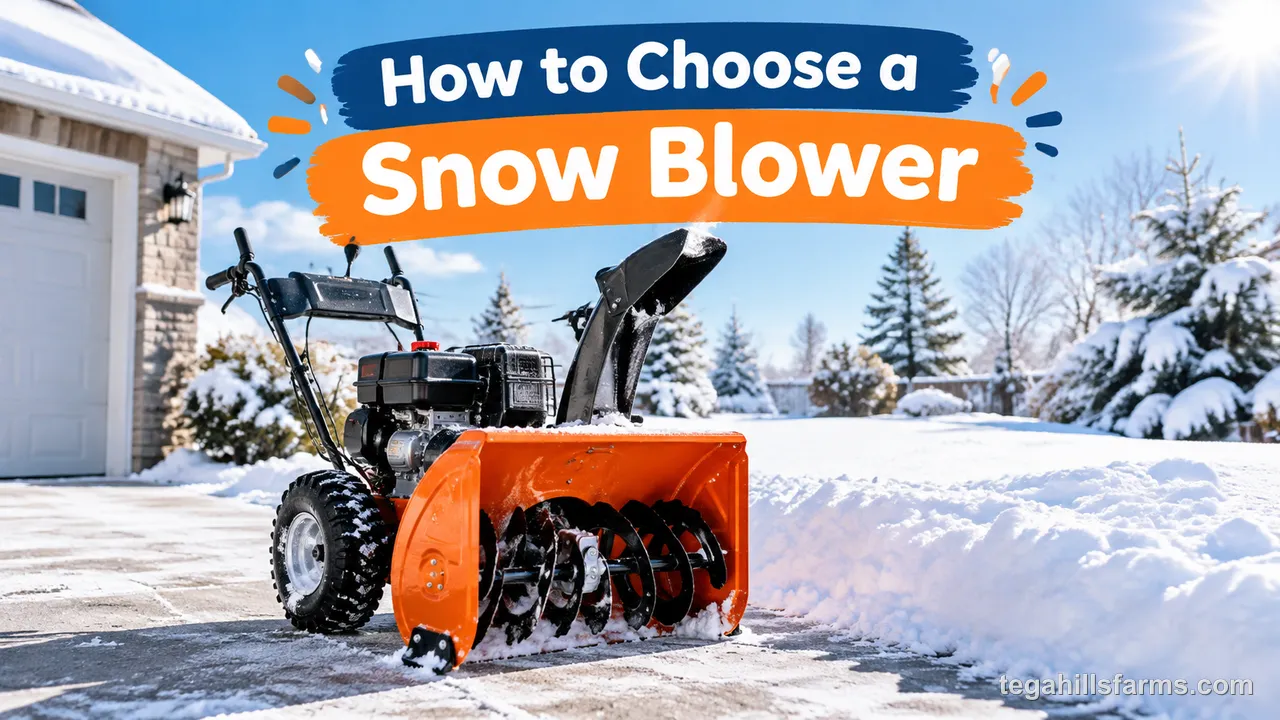
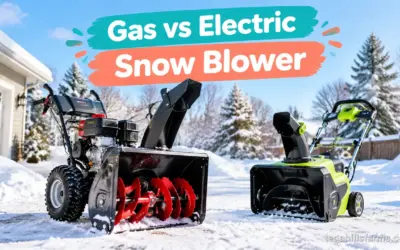
Each choice comes with tradeoffs. Gas gives you the runtime and power for deep snow and long driveways, but it brings fuel, oil and seasonal engine care. Battery machines give up some of that power in exchange for quiet, push-button starts and almost no upkeep. Corded electric models are the lightest and simplest of the three, but they only go as far as the cord reaches. Stage count then decides how much snow, and what kind of snow, the machine can actually move.
Most buyers get one of two things wrong. Some buy too small and end up with a machine that handles a fresh dusting but stalls on the packed ridge the plow leaves at the curb. Others buy too big and end up with a heavy two-stage that eats garage space and is more machine than a short walk needs.
Size the machine to the worst storm you see most winters, not to the average snowfall. A blower that only copes with easy mornings leaves you shoveling on exactly the days you bought it for.
What Does Choosing the Right Snow Blower Actually Involve?
It comes down to matching your clearing area and usual snow to a power source, stage count and clearing width that can handle both, while budget and storage space set the outer limits.
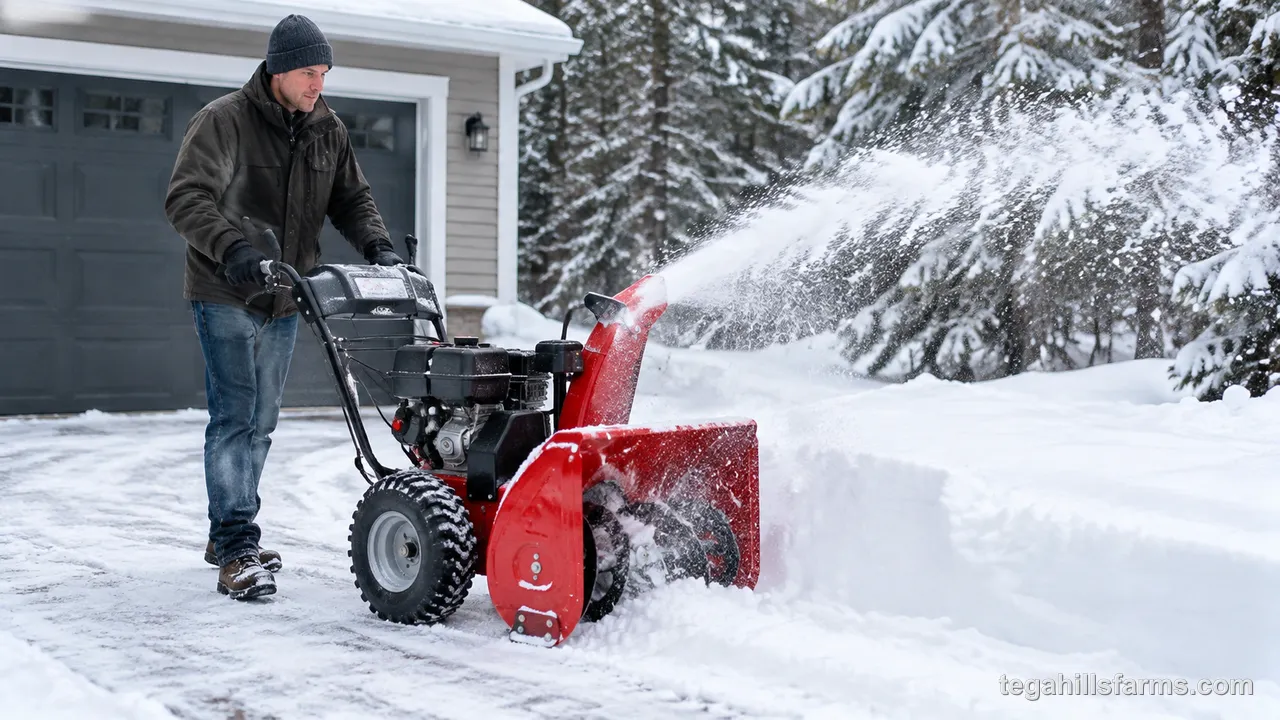
The order matters because each factor narrows the next. Snow type and area decide how many stages you need. The stage count limits which power sources make sense, and width follows from how many passes you’re willing to walk. Features come last, because a heated grip can’t rescue a machine that’s undersized for your driveway.
Two ownership questions sit under every choice. Prices vary widely by type, so it helps to know how much a snow blower costs in each category before a spec sheet wins you over. Upkeep is the other half. Gas engines need seasonal care, while battery and corded models mostly need sensible storage, and that care largely decides how long snow blowers last. If you’d rather see how these power sources and stages turn into actual machines, our roundup of the best snow blowers puts them side by side.
How Much Area and What Kind of Snow Are You Clearing?
The total ground you clear and how wet and deep your storms run set the minimum capacity a machine needs, and every later choice builds on those two facts.
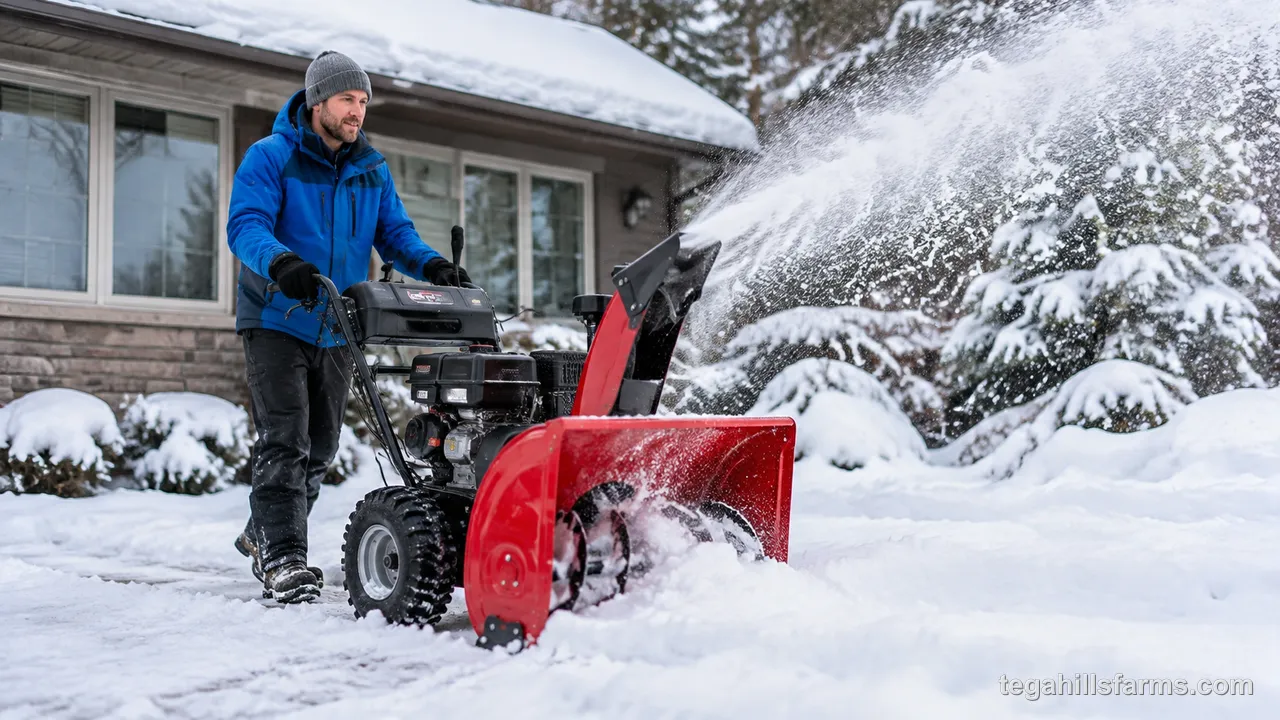
Both factors push in the same direction. A larger area means more passes, so width and self-propelled drive start to pay off. Heavier snow means more resistance at the intake, so the machine needs the stages and power to keep moving instead of clogging. Surface is the third filter. It doesn’t change capacity, but it can rule out a whole category of machine before you compare anything else.
How Do You Size Your Driveway, Sidewalk, and Parking Area?
Add up every surface you clear after a storm: the driveway, the front walk, any public sidewalk you’re expected to keep open, and any parking pad or turnaround. The machine has to handle that total, not just the driveway. A tape measure works, and so does pacing it off or counting car lengths.
The total matters because clearing time grows with every pass. A short, single-car driveway and a walk go quickly even with a narrow machine. A long, double-wide driveway with a turnaround multiplies the number of passes, and that is where a wider two-stage machine with drive wheels saves real effort. If yours runs long and wide, start with the best snow blowers for large driveways.
Also include the ridge at the end of the driveway in your plan. It’s often the heaviest snow you’ll move all winter, even though it covers the least area.
How Deep and Heavy Is Your Typical Snowfall?
Light, dry snow moves easily through a single-stage machine, while wet, heavy snow and deep accumulations call for a two-stage. A single-stage handles about 9 inches of snow. A two-stage takes snow up to 16 inches deep.
The reason is mechanical. In a single-stage machine, one auger both scoops the snow and throws it out the chute. Wet snow slows that auger and packs into the chute, so the machine bogs down well before it reaches its depth rating. In a two-stage, the auger only feeds the snow to a separate impeller, and the impeller does the throwing, so dense snow keeps moving.
Snow that falls near the freezing mark tends to be heavy and sticky. Snow that falls in deep cold stays dry and light. Think about which kind dominates your winters, not only how many inches you get. If most storms leave the heavy, wet kind, the best snow blowers for heavy snow are the right starting point.
Is Your Surface Paved, Gravel, or Sloped?
A paved driveway works with any type of machine. Gravel rules out single-stage models, and steep slopes call for self-propelled drive or tracks.
On a single-stage machine, the auger runs in contact with the pavement. That contact lets it scrape the surface clean and pull the machine forward slightly, but on gravel the same auger picks up stones and throws them out the chute. A two-stage machine rides on adjustable skid shoes that hold the auger housing above the ground, so you can set it high enough to skim over gravel.
Slopes are a traction problem. A heavy machine on an icy incline can slide, which is why drive wheels with good tread, or tracks, matter more than raw power on a hilly lot.
Gas vs Battery vs Corded Electric: Which Power Source Fits Your Yard?
Gas suits deep snow and big areas, battery suits small to mid-size paved areas where quiet starts and low upkeep matter, and corded electric suits short, light jobs near an outlet.
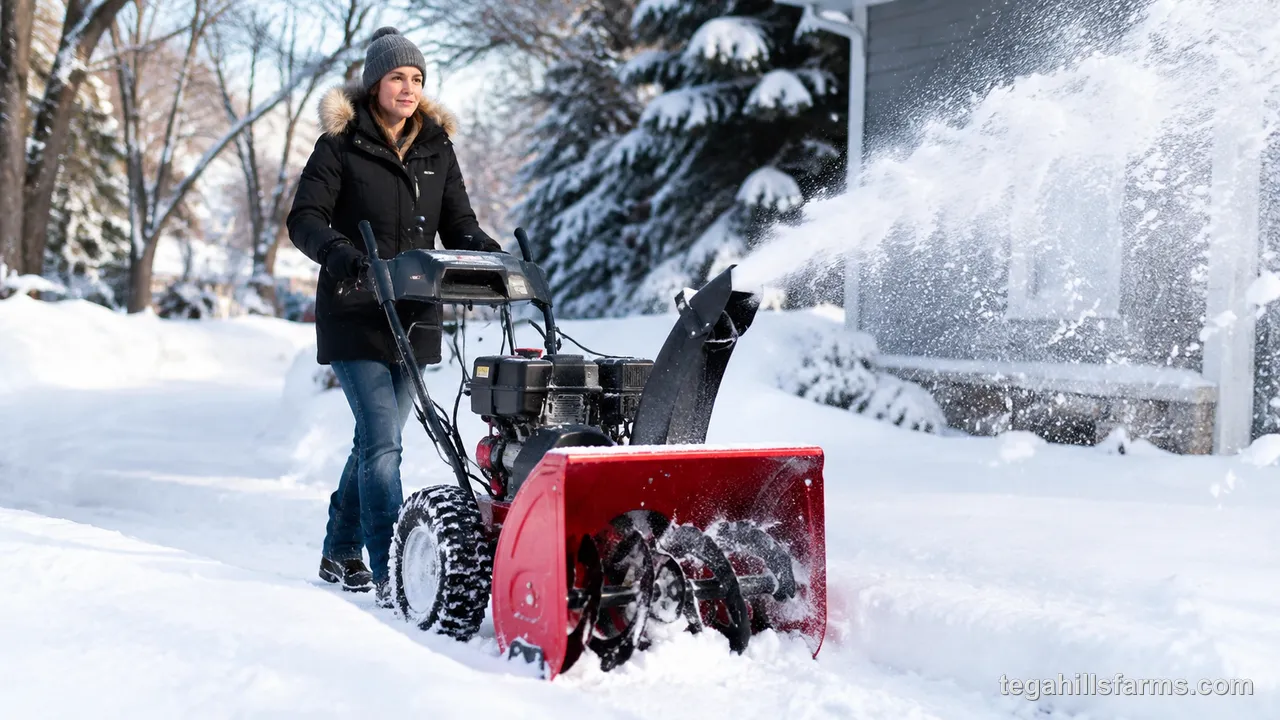
The deciding factor is how much snow you move in one session and how long that session lasts. Runtime and power separate gas from the other two. Noise, starting and maintenance separate battery and corded models from gas. Side by side, the three power types compare like this:
| Criterion | Gas | Battery | Corded electric |
|---|---|---|---|
| Runtime | As long as the fuel lasts; refuel and keep going | Limited by battery capacity; spare batteries extend it | Unlimited while plugged in |
| Power for deep, wet snow | Strongest; drives two- and three-stage designs | Moderate; best in light to moderate snow | Lowest; best in light snow |
| Noise | Loud | Quiet | Quiet |
| Starting | Pull cord or electric start; can be stubborn when cold | Push button | Push button |
| Maintenance | Fuel, oil, spark plug, seasonal storage | Battery storage and charging care | Cord inspection |
| Range | Anywhere | Anywhere within runtime | Limited by extension cord |
When Is a Gas Snow Blower the Better Choice?
Gas is the better choice when you clear a long or wide driveway, regularly get deep or wet snow, or need to keep working through a long storm without stopping to recharge. Refueling takes a minute, and the engine keeps working for as long as the fuel lasts. That makes gas the default for big jobs where a battery would run down partway through.
Engine power is also what drives most two-stage machines and nearly all three-stage machines. If your snow calls for those designs, gas is usually where you’ll end up. I’d lean toward gas for anyone whose driveway gets a fresh plow ridge with every storm, because that packed snow is where weaker machines stall.
The tradeoffs are noise, exhaust and upkeep. You’ll store fuel, change oil, and prepare the engine for summer storage. Cold mornings can also make pull-starting a chore, which is why electric start is worth having on a gas machine. When those tradeoffs are acceptable, the best gas snow blowers give you the most capacity for the effort.
When Does a Battery Snow Blower Make More Sense?
A battery machine makes more sense for small to mid-size paved driveways and walks, especially if you want quiet operation, instant starts and no engine to maintain. You press a button and it runs, with no fuel to go stale over summer and no oil to change.
Runtime is the limit. Battery capacity decides how much area you clear per charge, and cold reduces how much a lithium-ion pack can deliver. A battery that sat in a freezing garage starts the job with less to give. A second battery effectively doubles your session, and if you already own a mower or trimmer on the same battery platform, those packs can often go into the snow blower too.
Most battery models are single-stage. They do best in light to moderate snow on pavement, and their quiet motors make early-morning clearing easier on the neighbors. If that matches your winters, the best battery snow blowers are worth a close look.
What Are the Tradeoffs of a Corded Electric Snow Blower?
Corded models are the lightest and simplest option, but the cord dictates where you can go and how you work. That makes them a fit for short driveways, decks and walks close to an outdoor outlet. They run as long as they’re plugged in, with nothing to refuel or recharge.
Reach is set by the extension cord, and manufacturers typically allow cords up to 100 feet. Anything beyond that point needs another machine or a shovel. You also have to manage the cord as you go. Start near the outlet and work outward, and throw snow away from the cord so you never run over it.
Use an outdoor-rated, cold-weather extension cord of the gauge the manufacturer specifies, and plug into a GFCI-protected outlet. Corded machines are light-snow tools, so a heavy, wet storm will push one past what it can handle.
Single-Stage vs Two-Stage vs Three-Stage: How Do You Pick the Right Stage?
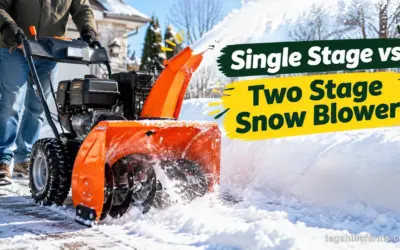
Stage count describes how snow moves through the machine. A single-stage uses one auger to scoop and throw. A two-stage adds an impeller that does the throwing. A three-stage adds an accelerator that chops and feeds snow faster.
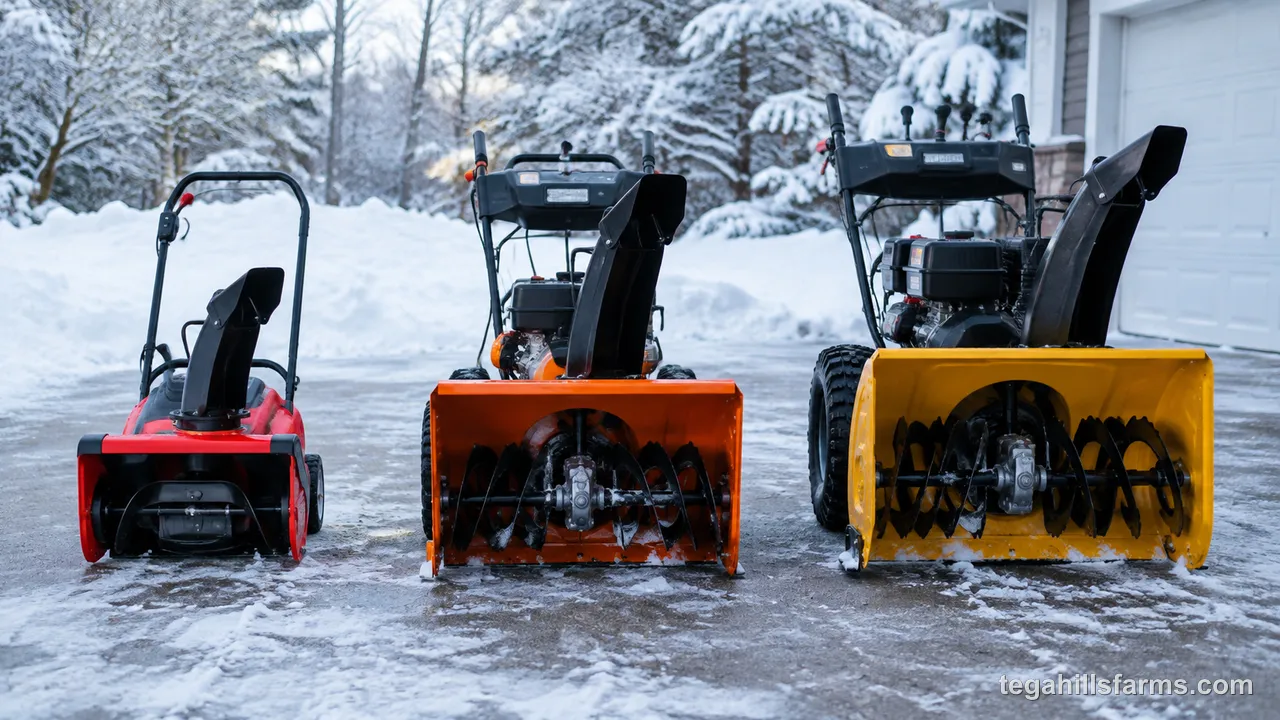
Each added stage lets the machine take in deeper, heavier snow and throw it farther. Each one also adds weight, cost and storage space. The right pick is the smallest design that handles your worst regular storm on your surface. Anything bigger means more machine to push, start and store than you need.
Who Is a Single-Stage Snow Blower Best For?
A single-stage machine suits homeowners with paved driveways and walks who mostly get light to moderate snow, and who want a machine that’s easy to handle and easy to store. Single-stage models clear a path 21 inches wide or less, which keeps them nimble on walks, steps and narrow spaces.
The rubber-edged auger touches the pavement, so it scrapes down close to bare surface and helps pull the machine forward. That same contact makes it a poor fit for gravel. Wet, heavy snow also works against it, because one auger has to do both the gathering and the throwing.
Single-stage machines come in gas, battery and corded versions, so you can pair this design with whichever power source fits your yard. If this describes your property, the best single stage snow blowers are the natural shortlist.
When Should You Step Up to a Two-Stage Snow Blower?
Step up when storms regularly bury your driveway deeper than a single-stage can take in, when the snow is usually wet and heavy, or when your area is large enough that drive wheels and a wider path save real time. A two-stage is also the move for gravel driveways, since its auger rides above the surface on skid shoes.
The difference is the impeller. The auger breaks up the snow and feeds it back to a fast-spinning impeller, which throws it out the chute. Splitting those jobs keeps dense snow moving and gives the machine a longer throw. Most two-stage models are also self-propelled, so the drive system does the pushing.
The cost is weight and size. A two-stage takes more storage space and more effort to turn by hand. For deep or wet snow on a typical suburban driveway, the best two stage snow blowers hit the balance most homeowners need.
Do You Actually Need a Three-Stage Snow Blower?
Most homeowners don’t. A three-stage pays off only when you regularly face deep drifts, packed wet snow, and plow ridges that freeze into chunks. Three-stage machines take in snow up to about 18 inches deep, and the extra accelerator is what lets them chew through icy material that would slow a two-stage.
That accelerator sits in front of the impeller. It breaks the snow into smaller pieces and feeds it faster, so the machine keeps a steady pace in conditions where a two-stage would need slower passes. In ordinary storms, that advantage is small.
The tradeoff is a heavier, larger and more expensive machine that needs more storage space. If your winters are mostly moderate storms, a good two-stage will cover them, and the money is better spent on drive and comfort features.
What Clearing Width, Intake Height, and Throwing Distance Do You Need?
Pick the widest machine you can store and maneuver, an opening taller than your typical snowfall, and a throw long enough to clear the driveway’s edges in one go.
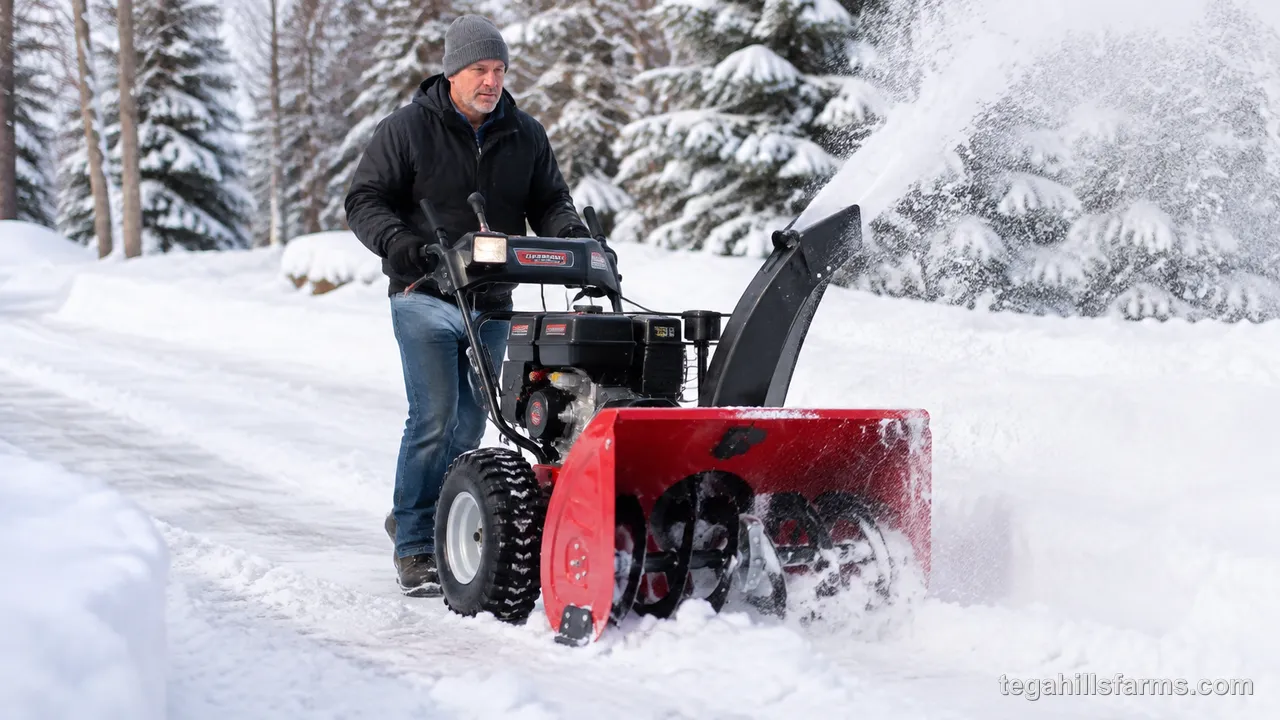
Each of these specs changes your clearing time in a different way. Width sets how many passes you walk. Intake height decides whether you take snow in one bite or in shaved layers. Throw distance decides whether snow lands where you want it or piles up where you’ll have to move it again later.
How Do Width and Intake Height Affect Clearing Time?
A wider, taller intake clears the same driveway in fewer passes. That’s why a typical two-stage machine, 24 inches wide with a 20-inch intake height, finishes a long driveway noticeably faster than a narrower single-stage. Husqvarna’s snow blowers span roughly 24 to 30 inches (61 to 76 cm) of working width, which shows how much range there is even within one brand.
Width works by simple coverage. Every extra inch is snow you don’t have to come back for, and on a long driveway the saved passes add up to minutes per storm. Intake height matters when snow is deeper than the opening. Then you have to take partial-width bites or go back over the same strip, which slows you down regardless of how wide the machine is.
Wider isn’t automatically better. A wide machine is heavier, harder to turn at the end of each pass, and too broad for narrow walks and gates, so match width to the widest surface you clear regularly.
How Important Is Throwing Distance and Chute Control?
Throwing distance matters most once snowbanks build up along the driveway late in the season. Single-stage machines throw up to 25 feet, two-stage machines up to 35 feet, and three-stage machines 40 feet or more. When the throw falls short, snow lands back on the edge you just cleared and you blow it twice.
Wet snow doesn’t fly as far as dry snow, so the rated distance shrinks on heavy days. That’s one reason to look at the best snow blowers for wet snow if heavy storms are your norm. For properties lined with tall banks, the reach of the best three stage snow blowers can matter as much as their capacity.
Chute control decides how well you use that distance. A chute you can rotate and a deflector you can angle from the handle let you aim downwind and away from cars, windows and walkways without stopping to adjust anything by hand.
Which Features Actually Save Time and Effort?
Drive and traction aids save the most effort, electric start saves the most frustration, and gravel protection matters only on unpaved surfaces. Heated handles and lights add comfort but don’t add capacity.
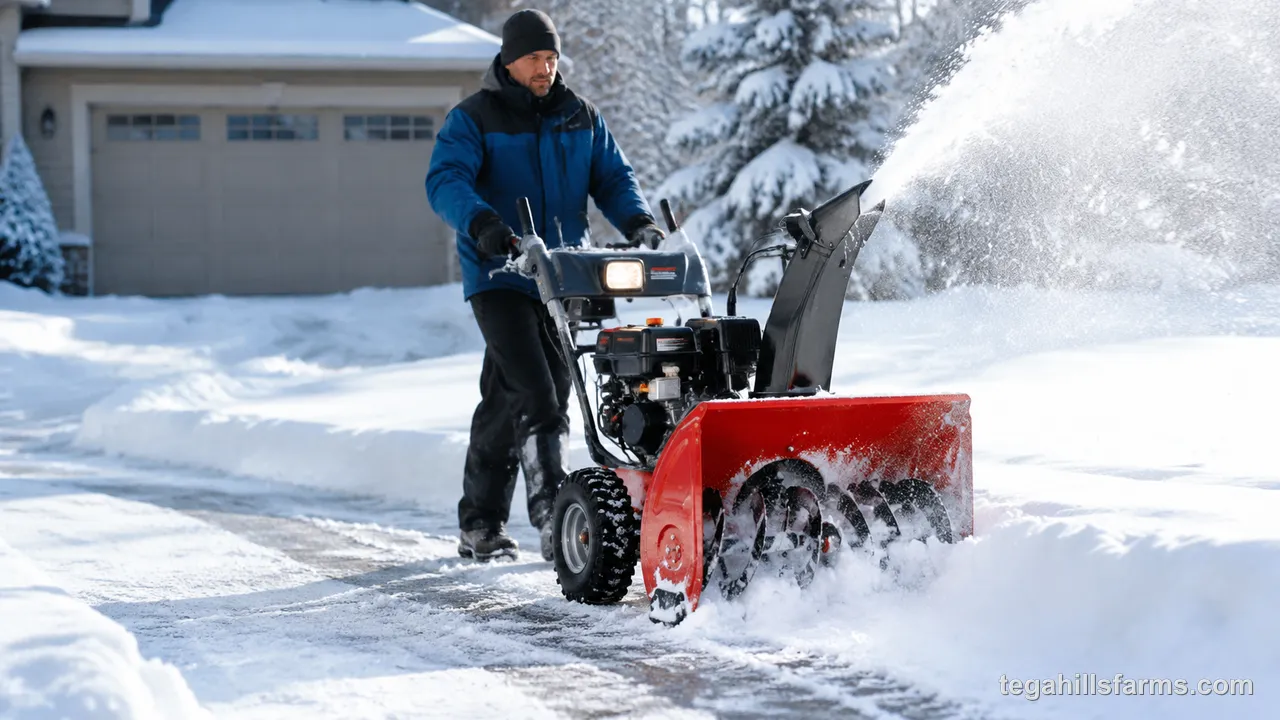
Rank features by the problem they solve on your property. A heavy machine on a sloped driveway needs steering help and traction long before it needs heated grips. A gas machine that sits in a cold garage benefits more from an easier start than from extra lights.
Do You Need Power Steering, Tracks, or Tire Chains?
You need them only if your machine is a heavy self-propelled model, or if your driveway is sloped or prone to ice. Trigger steering makes turns easier, tracks grip slopes, and tire chains improve traction on wheeled machines.
On many two-stage machines, both wheels are driven together, which makes the machine hard to turn by hand at the end of each pass. Steering triggers disengage one wheel so the machine pivots instead of fighting you. On a flat, paved driveway, this is a convenience. On a long driveway with a turnaround, it saves real effort.
Tracks give the most grip on hills and gravel, but they turn more slowly than wheels. Tire chains are a cheaper middle ground for a wheeled machine that only slips occasionally on icy patches or slight grades.
What About Electric Start, Heated Handles, and Lights?
Electric start is the feature that matters on a gas machine, because cold engines are the hardest to pull-start. Plug-in electric start uses a household outlet to crank the engine, and some machines use a battery-powered push-button start instead. Either option removes the most common cold-morning struggle.
Heated handles help on long sessions in hard cold. Lights help if you clear before sunrise or after work in midwinter, when daylight is short. Both are comfort features that make the job more pleasant, so they’re worth paying for once capacity is settled, not before.
Battery and corded machines start with a button anyway, so starting is a gas-only concern. If push-button starts are the main draw, the best electric snow blowers skip the engine entirely.
How Do You Protect Gravel and Avoid Throwing Rocks?
Use a two-stage machine and set the adjustable skid shoes high enough that the auger housing and scraper bar ride above the stones. That keeps gravel out of the auger and out of the chute, where it could be thrown at windows, cars or people.
Many skid shoes are reversible or adjustable. Raise them for gravel and lower them for pavement. Leaving a thin layer of packed snow on the driveway early in the season builds a base the machine can glide over for the rest of winter.
Single-stage machines can’t be raised this way, which is why they don’t belong on gravel at all. If your driveway is unpaved, the best snow blowers for gravel driveways focus on exactly this adjustability.
How Do You Match Your Budget to the Right Snow Blower?
Prices across the category run from $200 to over $3,000, and where you land mostly decides stage and power source, not brand or features.
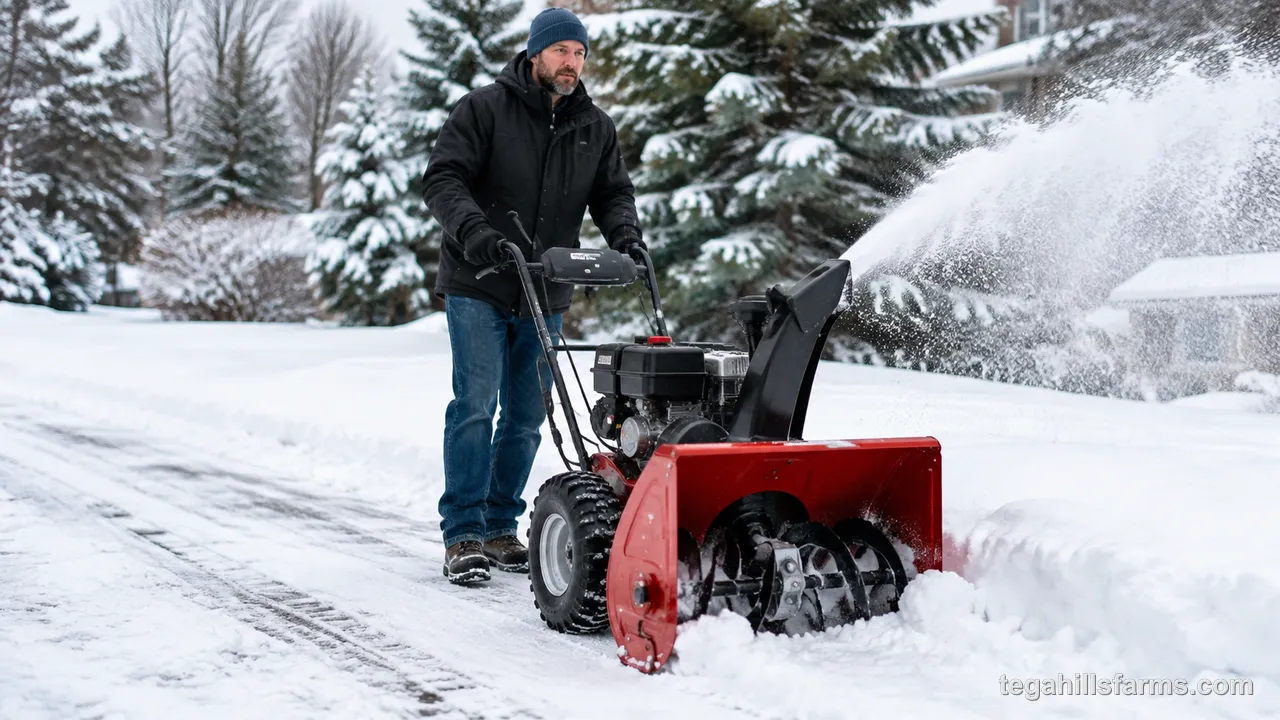
Price follows capacity. Each step up in stage count, width and drive system adds cost, so a budget that looks generous for a corded single-stage machine is the entry point for a gas two-stage. Set the capacity you need first, then see which budget tier delivers it.
What Can You Expect Under $500 vs Under $1000?
Shopping for snow blowers under $500 mostly means corded models and many single-stage machines. These handle paved driveways and walks in light to moderate snow, and the corded and smaller battery options are easy to store and simple to own.
Moving up to snow blowers under $1000 opens up gas two-stage machines with self-propelled drive, along with wider intakes and longer throws. This is the tier where deep or wet snow, longer driveways and gravel surfaces become realistic to handle.
The jump between tiers is a jump in capability, not just features. If your snow regularly calls for a two-stage, saving money on a single-stage leaves you shoveling the heavy storms anyway.
How Do You Weigh Upfront Cost vs Upkeep?
Gas costs more to keep running each season. Fuel, oil, spark plugs, shear pins and occasional belt replacements add up over the years. Battery models move most of their long-term cost into eventual battery replacement. Corded models cost little to own beyond a good cord.
These ongoing costs scale with use. A gas machine that clears a long driveway through many storms burns more fuel and wears parts faster than one used a handful of times per winter. Battery packs lose capacity with age and charge cycles, so heavy users will replace them sooner.
If you’d rather spend more up front and less each season, battery or corded fits that preference. If capacity matters more than upkeep, gas earns its running costs.
Fuel left in a carburetor over the summer turns to gummy varnish, and a battery stored in a freezing garage starts the morning with less runtime than it should. Skip the off-season habits that prevent both, and the first big storm of the year becomes the morning the engine won’t catch or the pack gives out halfway down the driveway.
How to Keep Your Snow Blower Reliable Season After Season
Long-term reliability comes down to what you do at the end of each season and before the first storm, more than how hard you use the machine. Gas and battery machines fail in different ways, so their care routines differ even though the goal is the same: a machine that starts and runs the first time you need it.
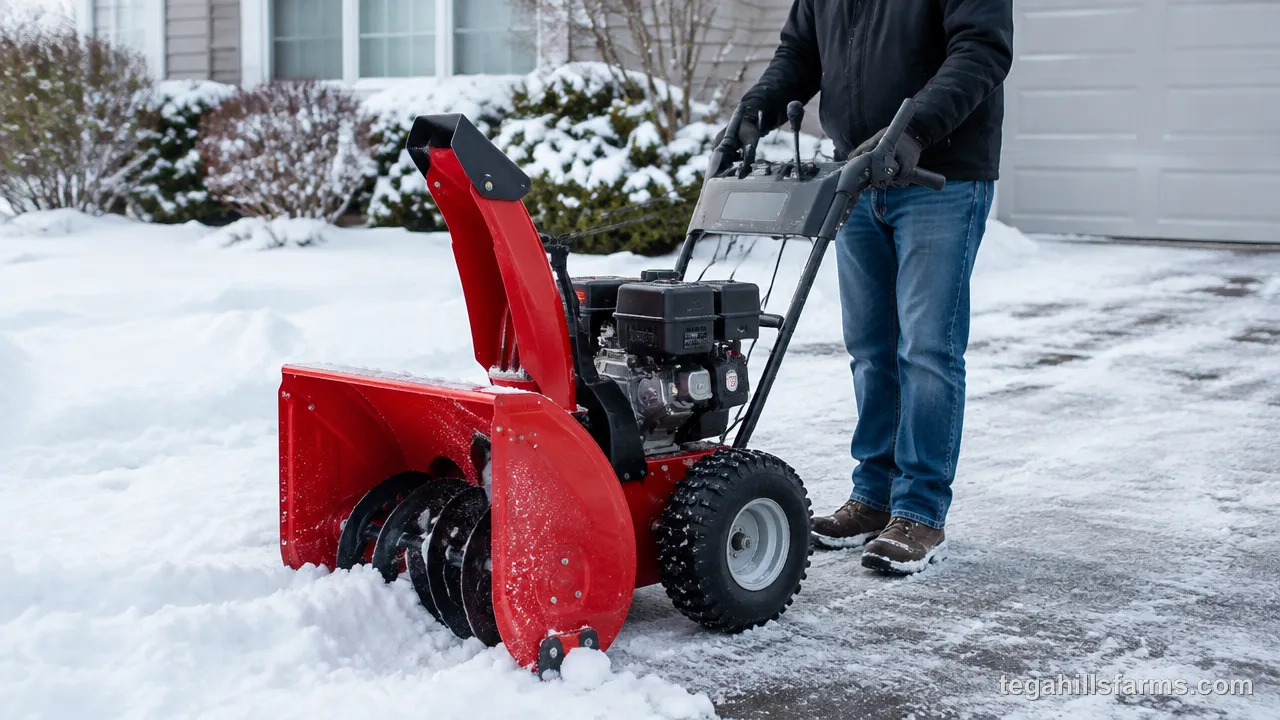
What Maintenance Does a Gas Snow Blower Need?
Stale fuel causes most hard starts, so fuel handling is the most important seasonal job. Add stabilizer to fresh fuel, and before summer storage either run the carburetor dry or drain the tank so nothing is left to gum up the jets. When a snow blower won’t start after storage, old fuel and a varnished carburetor are the first places to look.
Change the oil at the start of the season, and check the spark plug for wear or fouling. On a two-stage, keep spare shear pins on hand. They’re designed to break when the auger hits something solid, so the gearbox doesn’t break instead.
Inspect the belts, the scraper bar and the skid shoes for wear before winter. Then start the machine once before the first forecast storm, so any problem shows up on a calm day and not at dawn with a buried driveway.
How Do You Care for Battery and Corded Models?
Store batteries indoors, where they stay well above freezing. Follow the manufacturer’s recommendation for storage charge level over the off-season, and let a cold battery warm to room temperature before charging it. Lithium-ion packs deliver less runtime when cold, and charging them while frozen can shorten their life.
For corded models, inspect the extension cord for nicks, cracks and damaged plugs before each season. Keep the connection between the cord and the machine out of the snow, and plug into a GFCI outlet every time. Coil the cord loosely for storage rather than wrapping it tightly, which keeps the jacket from cracking in the cold.
With both types, knock the snow off after each use and let the machine dry before storing it, so moisture doesn’t freeze the auger in place.
Common Questions About Choosing a Snow Blower
Can a single-stage snow blower handle the plow ridge at the end of the driveway?
Usually not well. The ridge a plow leaves is packed, heavy and often icy, and a single-stage auger has to scoop and throw it in one motion. Light machines tend to stall or ride up on it. If you get a plow ridge every storm, a two-stage handles it far more reliably.
Is a battery snow blower powerful enough for a long driveway?
It can be, as long as the snow is light to moderate and you have enough battery capacity to finish the job. A second battery extends your session, but deep or wet snow drains packs faster. For long driveways that regularly get heavy storms, gas still covers the most ground per session.
Does the brand matter as much as the type of machine?
Type matters first, because no brand makes a single-stage handle deep, wet snow. Once you know the stage and power source you need, brand reputation, dealer support and parts availability become worth comparing. The best snow blower brands differ most in build quality and service access, not in basic capability.
Should I clear snow during the storm or wait until it stops?
In a long or heavy storm, clearing in stages keeps the depth within what your machine can take in and stops the bottom layer from packing down. Waiting until the end works for light snowfalls. Learning how to use a snow blower on deep storms also includes overlapping passes and working downwind.
Can I use a snow blower on a wooden deck?
A light corded or battery single-stage can work on a deck, because its rubber-edged auger is gentle on the surface. Go slowly, watch for raised boards and nails, and aim the chute away from railings and windows. A heavy two-stage is too much machine for most decks and can damage the boards.