

A gas snow blower is the better fit for long driveways, deep or wet snow and hard winters. An electric snow blower is the better fit for short to medium driveways that get light to moderate snowfall, especially if you want a machine that starts at the push of a button and needs almost no upkeep.
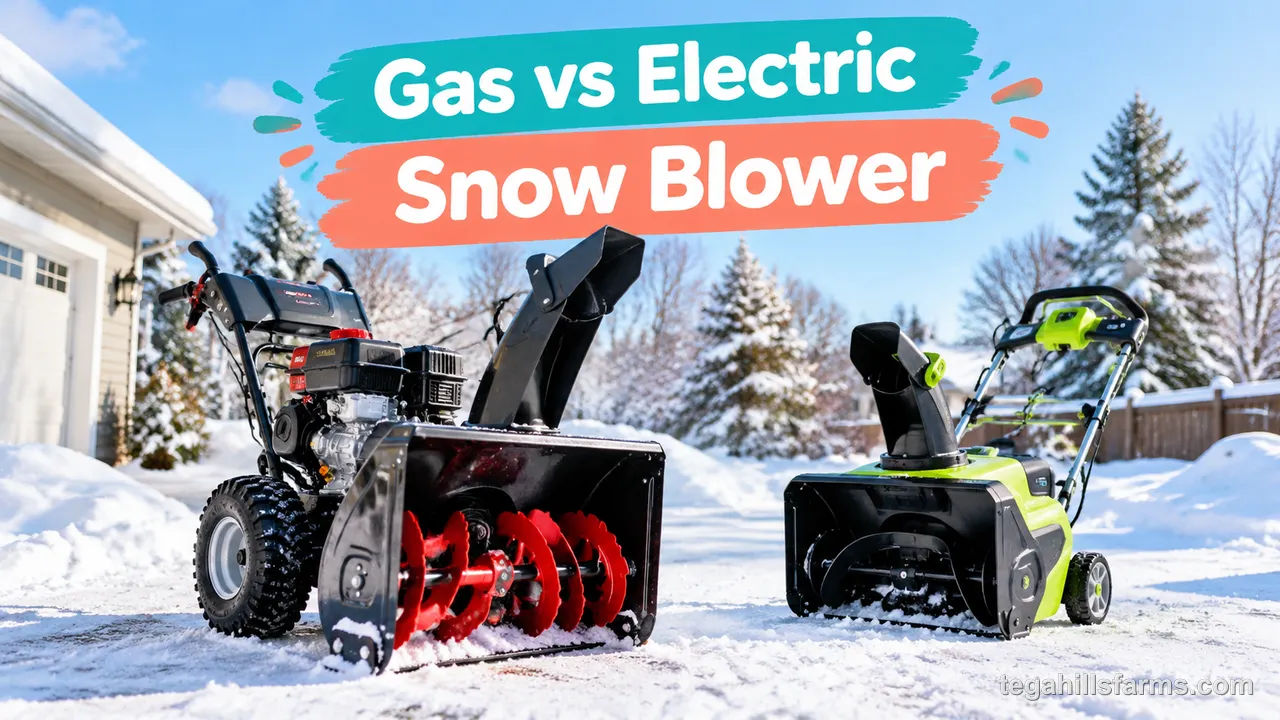
The right choice depends on a few things that separate the two types: how wide a path each pass clears, how far the snow gets thrown, how long the machine runs in a storm, how it handles deep cold, and how much ownership work comes with it.
The bigger risk is not buying the “wrong” fuel type. It is ending up with a machine that runs out of battery halfway through a heavy storm, or a gas engine that won’t turn over on the first January morning. Both problems trace back to how well the machine matches your yard and your winters.
Before comparing models, measure your driveway and think about your typical storm: a few inches of dry powder, or a foot of heavy snow with a plow ridge at the end. That one picture settles most of the decision.
Which Is Better: a Gas or Electric Snow Blower?
Neither type wins outright. Gas snow blowers handle large areas, deep or heavy snow and severe cold better, while electric snow blowers suit small to medium driveways with light to moderate snowfall.
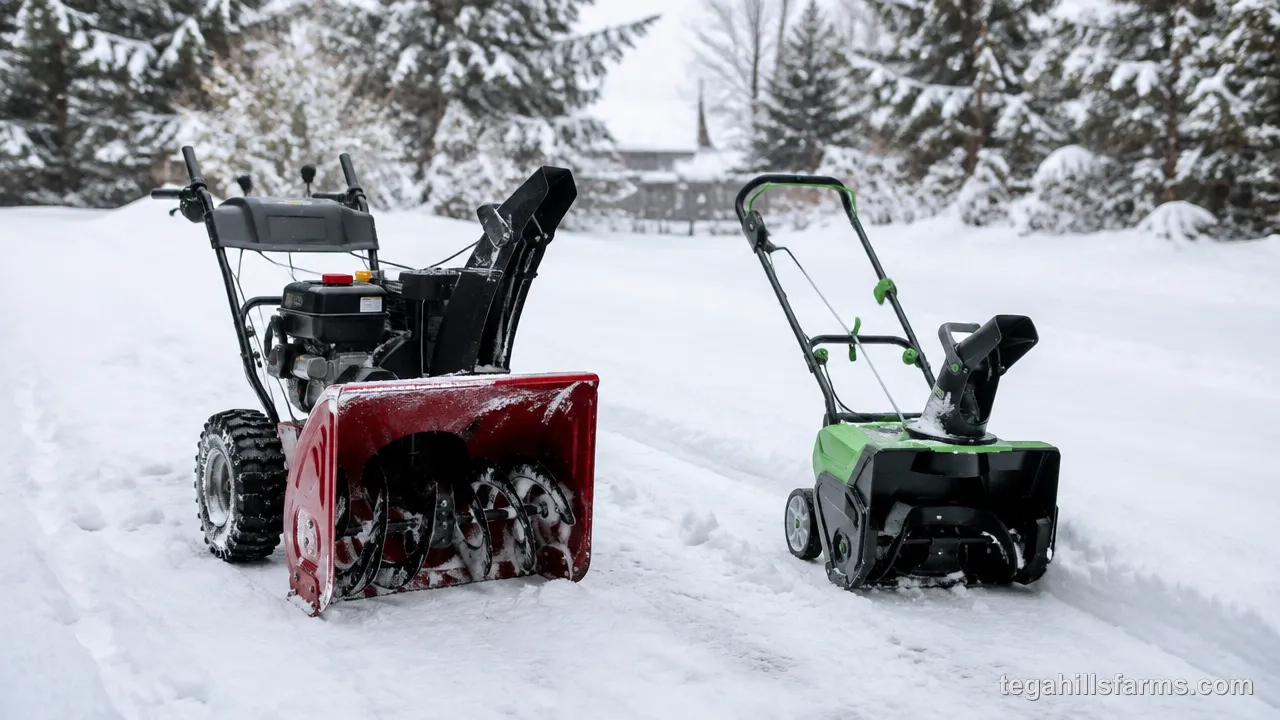
The two types differ across the criteria that decide most purchases, and where no exact figure applies, the comparison is described in words.
| Criterion | Gas | Electric |
|---|---|---|
| Clearing width | Wider passes on two-stage models | Up to 26 inches on cordless models |
| Throw distance | Two-stage models throw about 10 feet farther than single-stage | Mostly single-stage, so a shorter throw |
| Cold-weather performance | Steady output in deep cold | Weaker output in extreme cold |
| Runtime and refueling | Runs as long as you refill the tank | Limited by the battery, with a recharge of around 2 hours |
| Upfront price | About $359–$1,699 | About $1,179–$1,649, higher than comparable gas models |
| Propulsion | Two-stage models are usually self-propelled | Single-stage models are typically not self-propelled |
Gas holds its advantage wherever the job gets bigger, colder or longer, because an engine keeps making the same power as long as fuel is in the tank. Electric matches gas on the light work most suburban driveways need, and it skips the fuel, oil and pull cord.
Price is where the two types overlap the most. Gas covers the widest range, from basic single-stage machines to large self-propelled two-stage units. Cordless electric models with similar capability sit at the higher end, because the battery and charger are part of the purchase. Your total spend also depends on accessories and replacement parts, and a full breakdown of how much a snow blower costs helps you compare beyond the sticker.
If you are still working out your driveway size and typical snowfall, our guide on how to choose a snow blower walks through every factor beyond power type.
How Do Gas and Electric Snow Blowers Compare on Clearing Width and Throw Distance?
Gas two-stage machines take the wider bite and throw snow farther. Electric models usually use a single-stage design, which means a narrower pass and a shorter throw.
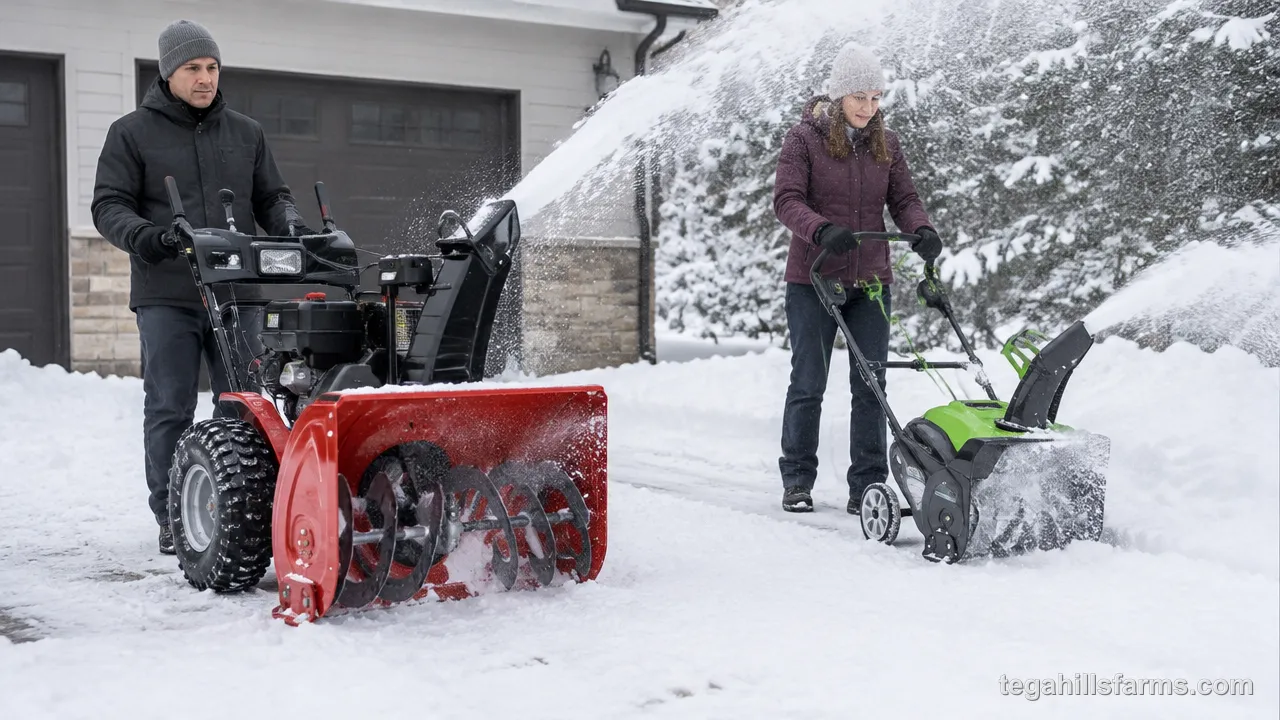
The gap comes from how each design moves snow. A single-stage machine uses one spinning auger that gathers snow and throws it out the chute in the same motion. Its intake usually stands only 8 to 13 inches high, so a drift taller than the housing gets pushed along instead of being fed through. A two-stage machine splits the job: the auger feeds snow into a separate impeller, which flings it out the chute with much more force. That setup allows an intake height of about 20 inches and housings up to 30 inches wide.
Width decides how many passes a driveway takes. On a single-car driveway, a narrower electric model adds only a few extra trips. On a long or double-wide driveway, those trips add up, and the wider gas housing saves real time on every storm. Cordless electric models top out a few inches narrower than the widest gas machines, so the difference only shows on bigger surfaces.
Throw distance decides where the snow lands. By late winter, the banks along a driveway grow tall. A short throw drops new snow on top of those banks or back onto the edge you just cleared. The stronger impeller throw of a two-stage gas machine clears the banks and puts snow well into the yard.
For short to medium driveways where storms rarely rise above the intake, electric is enough. For long driveways and deep snow, gas two-stage is the better tool.
Which Performs Better in Cold Weather and Long Storms?
Gas has the edge in long storms and deep cold, because it runs as long as you refill the tank. Cordless electric stops when the battery runs empty, and its output drops below 0°F.
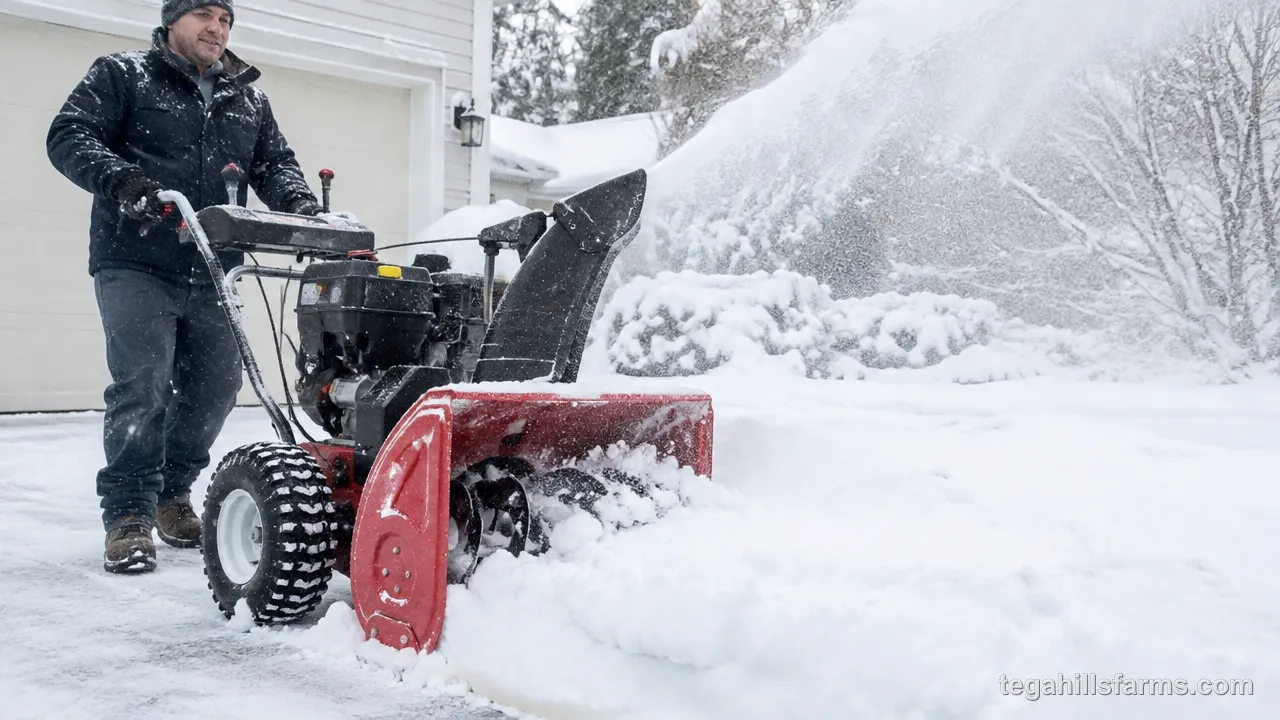
Battery chemistry explains the cold-weather gap. Low temperatures slow the reactions inside a lithium-ion cell, so it delivers less power and drains faster. That means a weaker throw and shorter runtime on exactly the mornings when you need the machine most. A gas engine can be harder to start in that cold, but once it’s running, it produces the same power whether it’s 20°F or well below zero.
Runtime matters most on big jobs and back-to-back storms. If a battery runs out partway down a long driveway, you wait through a full recharge before finishing. If the snow keeps falling during that wait, you’re back to clearing a fresh layer. A gas machine just needs a top-off from the can, and you keep going.
A spare battery changes the electric picture. Swapping in a second pack keeps you working while the first one charges, and keeping both batteries indoors until you head out helps them start the job warm. A corded electric model gets rid of the runtime limit entirely. In exchange, you’re tied to an outdoor-rated extension cord plugged into a GFCI outlet, and you have to keep the cord out of the auger’s path. That works on a small, simple layout but gets awkward on a long or curved driveway.
Gas wins in severe cold and long storms. Electric holds up well in moderate winters when one battery, or a spare, covers the whole driveway.
Which Is Easier to Own: Starting, Maintenance and Storage?
Electric is easier to own. It needs a charged battery and sensible storage between seasons, while gas adds fuel handling, oil changes and off-season prep.
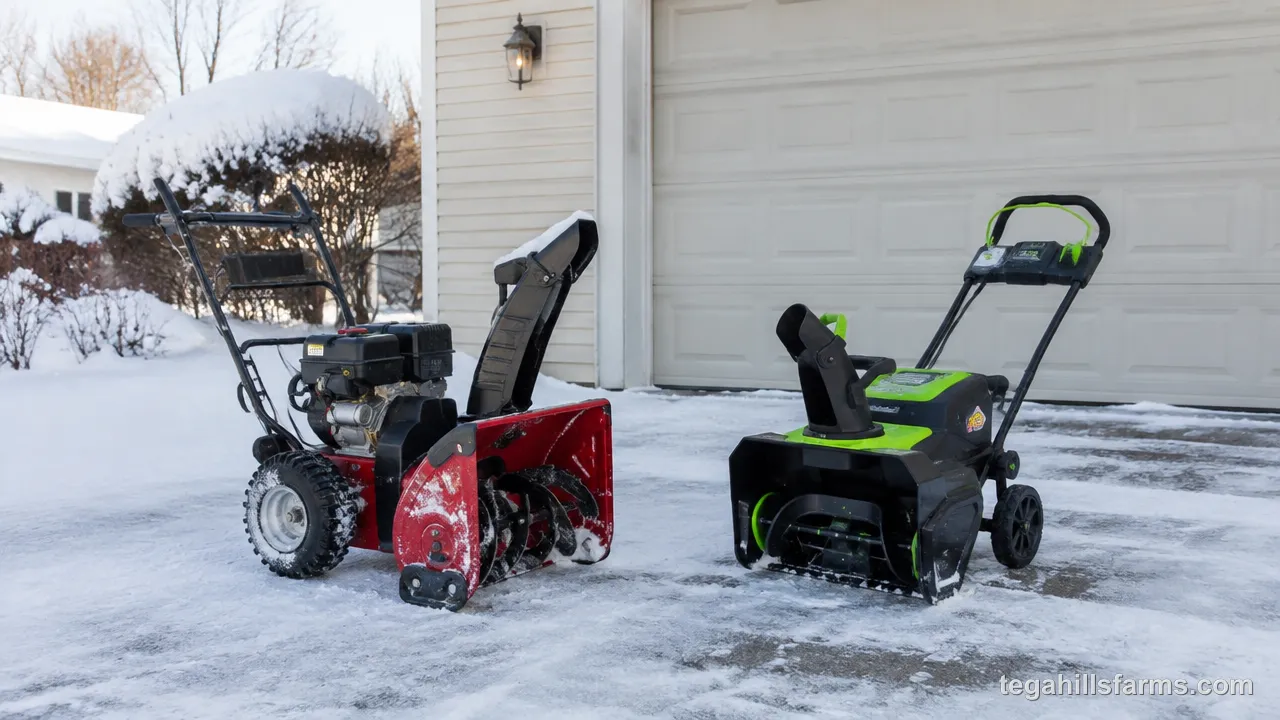
A gas engine asks for routine care because it sits idle for most of the year. Fuel left in the tank breaks down over the summer and gums up the carburetor. You have to either add stabilizer or run the tank dry before storage. Then come oil changes, a spark plug check and a fresh tank before the first snow. When a gas snow blower won’t start on the first cold morning, old fuel left in the carburetor since spring is usually the cause. None of this is hard for someone who does basic small-engine upkeep. For a homeowner who never opens a hood, though, it’s the part of owning gas that goes wrong.
Electric skips almost all of that. There’s no fuel to go stale and no oil to change. Starting means pressing a button, even in deep cold. The main job is the battery: store it indoors through the summer, and charge it the way the manufacturer recommends rather than leaving it empty or on the charger for months. A well-kept battery delivers more seasons before its runtime starts to drop.
Self-propelled drive adds some upkeep to gas two-stage machines, with a transmission and drive parts to look after. On a sloped driveway, though, that drive saves you from pushing a heavy machine uphill through wet snow.
For owners who aren’t mechanics, I’d lean electric unless the driveway or the winters clearly call for gas. Gas is the right fit for owners who don’t mind a short maintenance routine in exchange for unlimited runtime.
Should You Choose a Gas or an Electric Snow Blower?
Choose gas for big lots, deep or wet snow and hard winters. Choose electric for short to medium driveways, lighter snowfall and low upkeep.
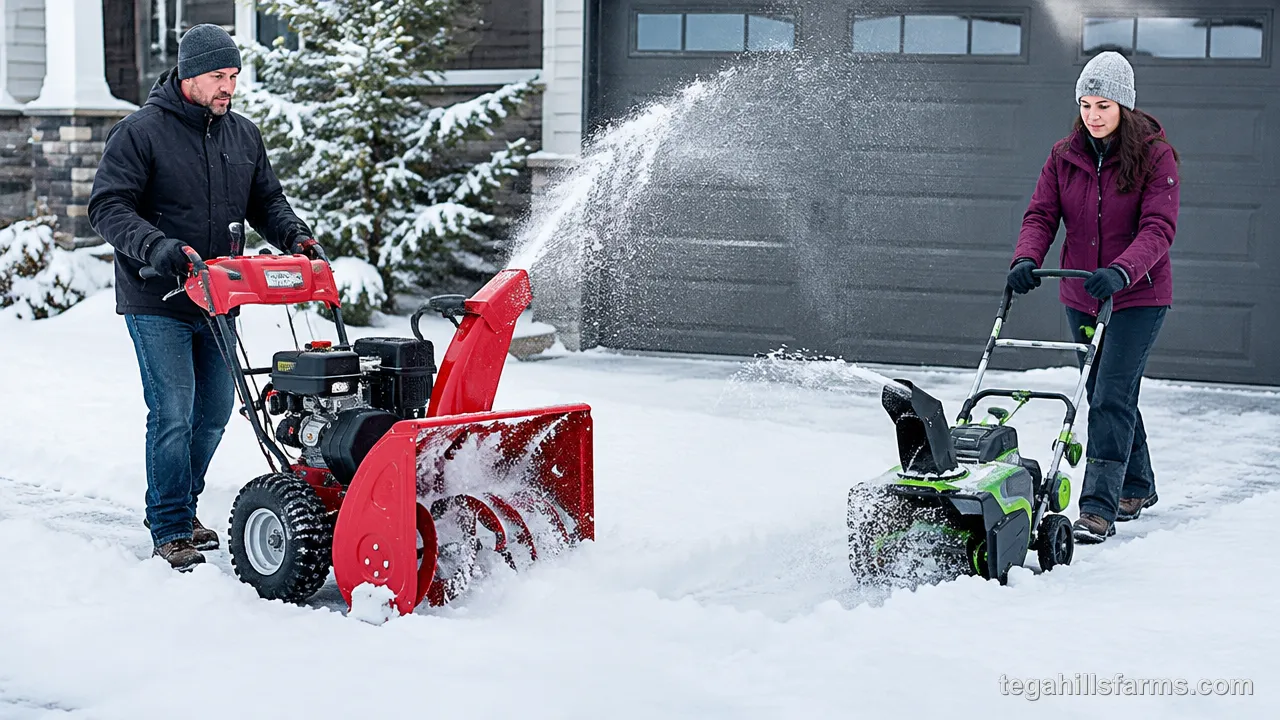
Choose gas if:
- Your driveway is long, double-wide, or includes a parking pad or private lane.
- Storms regularly bring deep, heavy or wet snow, along with the dense ridge the plow leaves at the end of the driveway.
- Your winters bring stretches of extreme cold, or several storms back to back.
- You’re comfortable with fuel, oil and a short off-season routine.
- You want self-propelled drive for a sloped driveway.
Choose electric if:
- Your driveway is short to medium and your sidewalks are simple to clear.
- Snowfall usually comes as light to moderate storms, not foot-deep dumps.
- You want push-button starts and no fuel or oil to manage.
- Quiet operation matters, such as for early-morning clearing near close neighbors.
- You already own batteries from the same tool platform, or you’ll keep a spare charged.
If your situation falls between the two, think about the worst storm you get each winter rather than the average one. That storm is the one the machine has to handle.
Whichever type you buy, take a test run before the first real snowfall. Check the chute direction, the drive and controls, and on gas models, fresh fuel and oil. Learning how to use a snow blower well, such as throwing with the wind and overlapping each pass, also makes a bigger difference in clearing time than many buyers expect.
A snow blower sits in the garage for most of the year, then runs hardest on the coldest, wettest days, which is exactly when a worn part gives out. A shear pin that snaps or a battery that fades halfway down the driveway leaves you shoveling the rest by hand in the middle of the storm.
What Are the Signs a Gas or Electric Snow Blower Is Wearing Out?
A machine near the end of its life usually shows it in two ways: it throws snow weaker than it used to, and it gets harder to run.
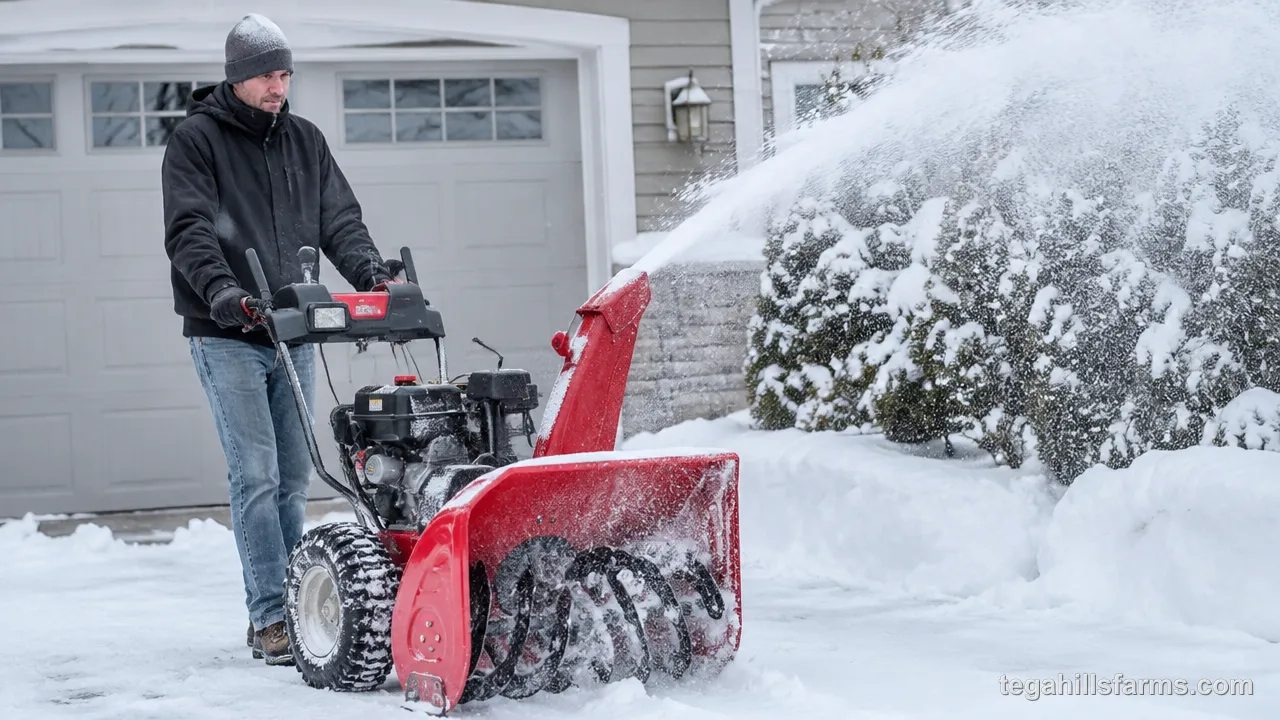
On the clearing side, look at the auger and housing. On single-stage machines, worn rubber paddles stop reaching the pavement and leave a layer of packed snow behind. On two-stage machines, a worn scraper bar or bent auger flights do the same thing. A throw that falls short of where it used to land often points to wear in these parts.
On gas models, warning signs include hard starting even with fresh fuel, rough idling, surging and smoke. On battery models, the signs are a noticeably shorter runtime per charge, or a pack that charges slowly or won’t hold its charge.
The repair-or-replace decision depends on which parts are failing. Paddles, scraper bars, shear pins and spark plugs are routine wear parts, and replacing them keeps a sound machine working. These parts largely determine how long snow blowers last. A worn battery is a bigger purchase but still a repair. A failing engine or gearbox on an older machine is usually the point where replacement makes more sense.
Gas vs Electric Snow Blower FAQs
Can an electric snow blower handle heavy, wet snow?
It can handle moderate amounts, but wet snow is where electric struggles. Heavy snow drains the battery faster, and a single-stage auger can clog in dense slush. If wet storms are common where you live, a gas two-stage machine handles them with less effort and fewer stops to clear the chute.
Is a cordless snow blower worth it for a small driveway?
Yes, for most small driveways a cordless snow blower is a good fit. It starts instantly, needs no fuel or oil, and one battery typically covers a short driveway and sidewalk. It costs more upfront than a basic gas machine, so the payoff is mainly convenience and less maintenance over the years.
Can a single-stage snow blower be used on gravel?
No, a single-stage snow blower isn’t a good choice for gravel. Its auger touches the ground to scrape the surface clean, so it picks up stones and throws them out the chute. A two-stage machine with adjustable skid shoes rides above the surface and is the better choice for gravel driveways.
Are gas snow blowers self-propelled?
Most two-stage gas models are self-propelled, with drive wheels that pull the machine forward. Single-stage machines, whether gas or electric, are typically not self-propelled. The spinning auger gives them a light forward pull, but you still push them through the snow.
Write Your Review
No reviews yet. Be the first to share your experience!