

A gas snow blower that refuses to start almost always has one of five problems: stale fuel, a carburetor clogged by that fuel, no spark, a flooded engine, or a control left in the wrong position. Less often, the cause is a weak electric starter, a cold battery, low compression, or a jammed auger. Work through them in that order and most machines run again without a trip to the shop.
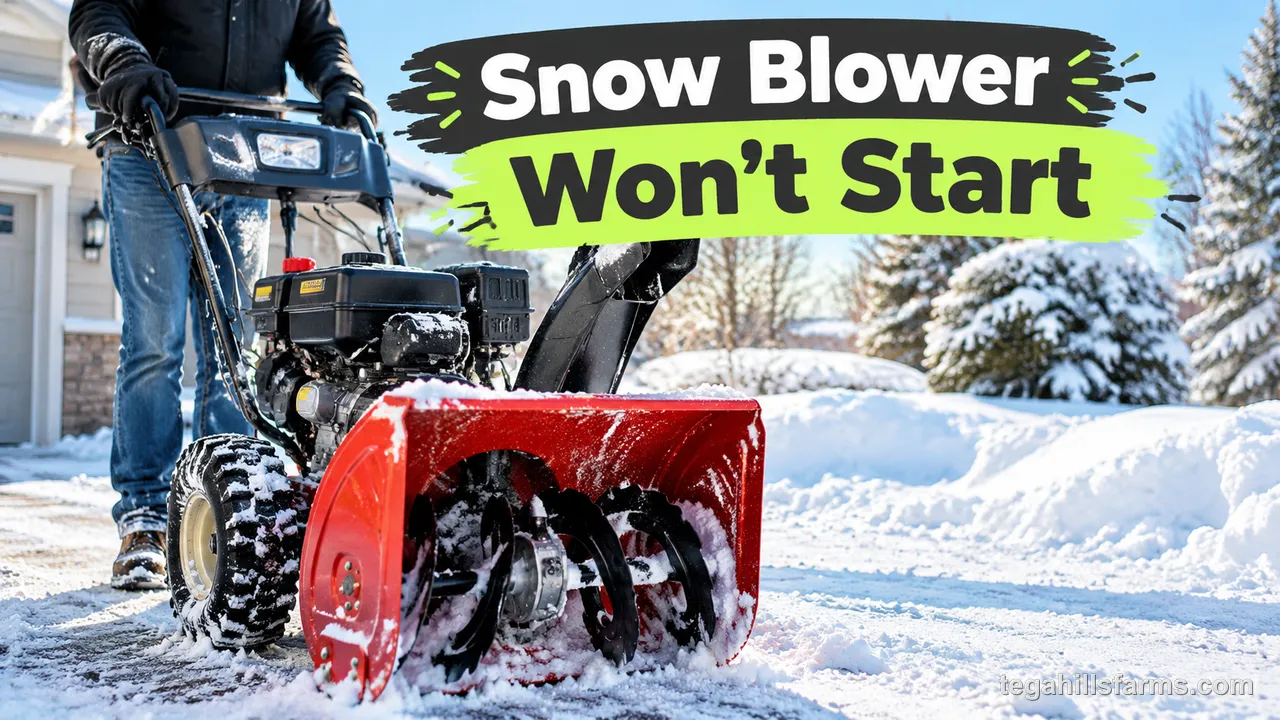
The order matters because the cheap, quick checks are also the most likely ones. Confirming the safety key, fuel valve and choke takes seconds. Pulling the carburetor takes an afternoon. Starting with fuel and controls keeps you from taking apart a machine that only needed fresh gas.
The real worry for most owners is timing. A no-start usually shows up the morning after the first heavy storm, with the driveway buried and the machine sitting untouched since spring. Old fuel and varnish in the carburetor are the usual reasons. The engine itself is rarely worn out.
Each step here needs basic hand tools, a clean container for old gas, and patience with the starter rope. Have the owner’s manual nearby, because spark plug type, gap and oil grade differ by engine.
What Usually Causes a Snow Blower Not to Start?
Stale gas and a carburetor gummed up by that gas cause most no-starts. The rest usually trace to a fouled spark plug, a blocked air filter, low compression, or a control set wrong.
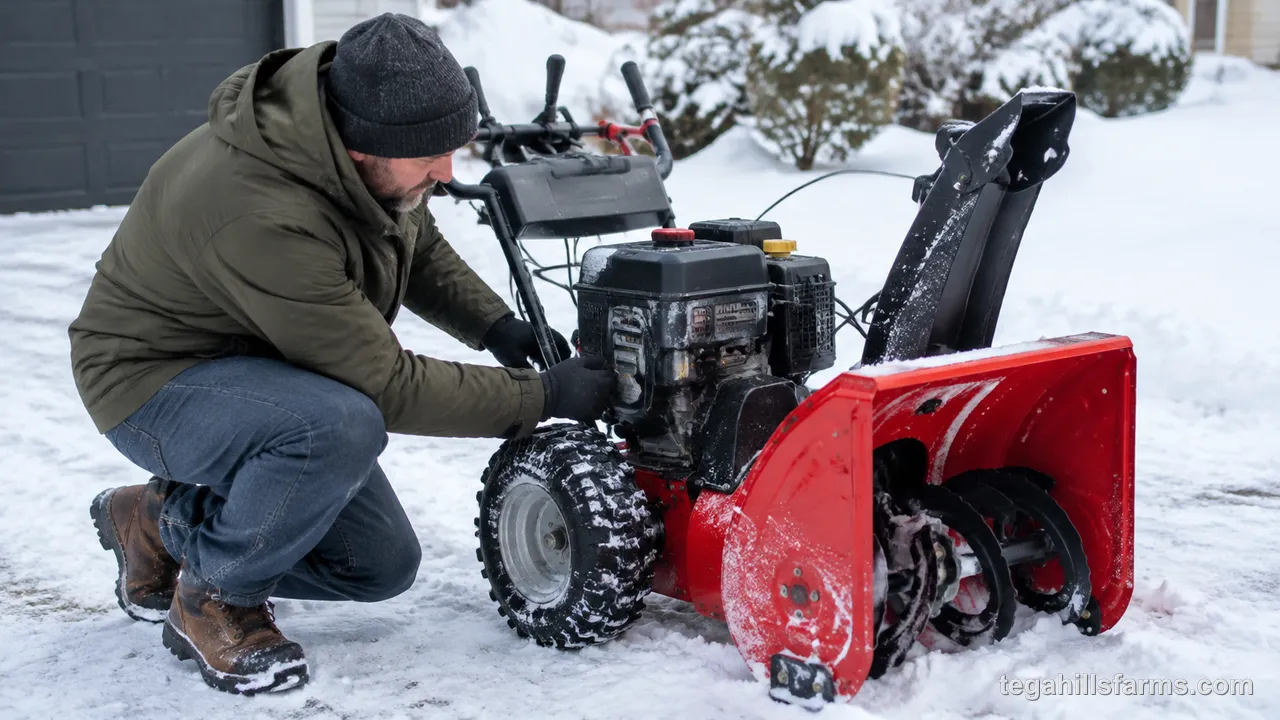
Every small engine needs four things to fire: fuel mixed with air, a spark at the right moment, enough compression to squeeze that mixture, and controls that let the ignition circuit work. Fuel is the weak link in a snow blower because the machine sits for months between winters. Gas left in the tank and carburetor breaks down over that time and leaves deposits in passages narrower than a pin. Spark problems come next, usually a plug fouled by carbon or wet with fuel. Air restrictions and compression loss are much less common, and compression loss mostly shows up on older, hard-worked engines.
That is why I’d rule out fuel before touching the ignition or engine internals. If the same machine keeps failing every winter, it may help to revisit how to choose a snow blower that fits your driveway, your snowfall and the upkeep you are willing to do.
Are You Starting the Snow Blower the Right Way?
Often the engine is fine and a single control is in the wrong position, so checking the start sequence comes before any repair. Each model arranges its controls a little differently, and reviewing how to use a snow blower against your owner’s manual quickly shows whether a step was skipped. A correct start attempt follows a set order, and an engine set up properly should respond quickly, which tells you whether to keep going or move on to diagnosis.
Which Controls Need to Be Set Before You Pull the Cord?
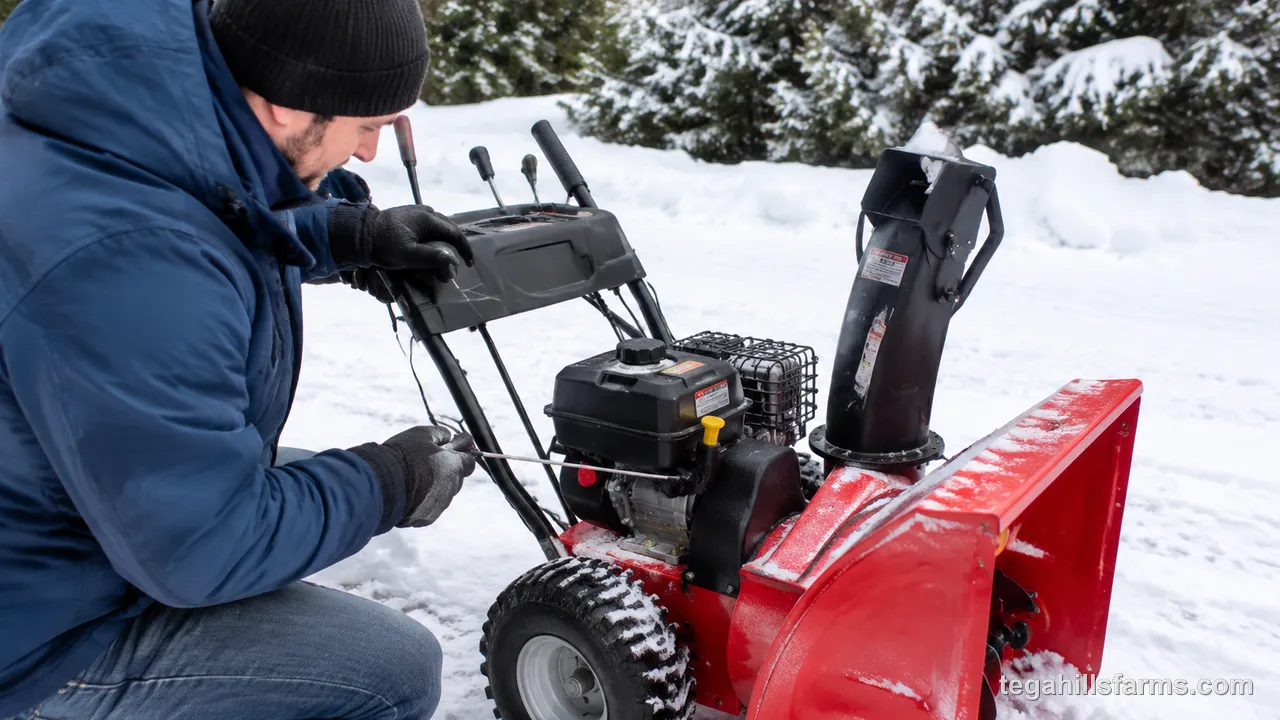
For a cold start, five controls must be set: the safety key fully inserted, the fuel valve open, the choke on, the primer pushed the number of times the manual specifies, and the ignition switch or run lever on run.
The safety key completes the ignition circuit. If it is partly out, the plug never sparks, and the engine behaves as if the ignition has failed. A closed fuel valve lets the engine run only on the small amount of gas left in the carburetor bowl, so it may fire once and then nothing more. The choke richens the mixture for a cold engine. Without it, a cold engine rarely catches. The priming bulb pushes a small charge of fuel into the carburetor. Skipping it on a cold morning has the same effect as skipping the choke. Too many pushes floods the engine. If any of these is set wrong, the engine acts just like one with a real fault, which is why checking them first saves time.
How Many Pulls Are Normal Before You Should Stop?
A healthy engine with the controls set correctly usually starts within about three pulls on the starter rope. If it hasn’t fired or even sputtered after that, keep the rope still and start diagnosing.
Repeated pulling with the choke on keeps drawing raw fuel into the cylinder. The plug gets wet, the cylinder floods, and the engine becomes harder to start than before. The same thing happens when the electric start button is held again and again. Pulling hard on the recoil starter in frigid air also strains your shoulder and the rope assembly. Once the normal window has passed, stop, smell for gas at the muffler and air filter, and pull the spark plug. A wet plug points toward flooding, and a dry one points toward a fuel delivery problem.
Which Symptom Points to Which Cause?
The plug’s condition, whether there is spark, and how the engine behaves narrow the cause faster than guessing. A dry plug, a wet plug, silence and a stall each point somewhere different.
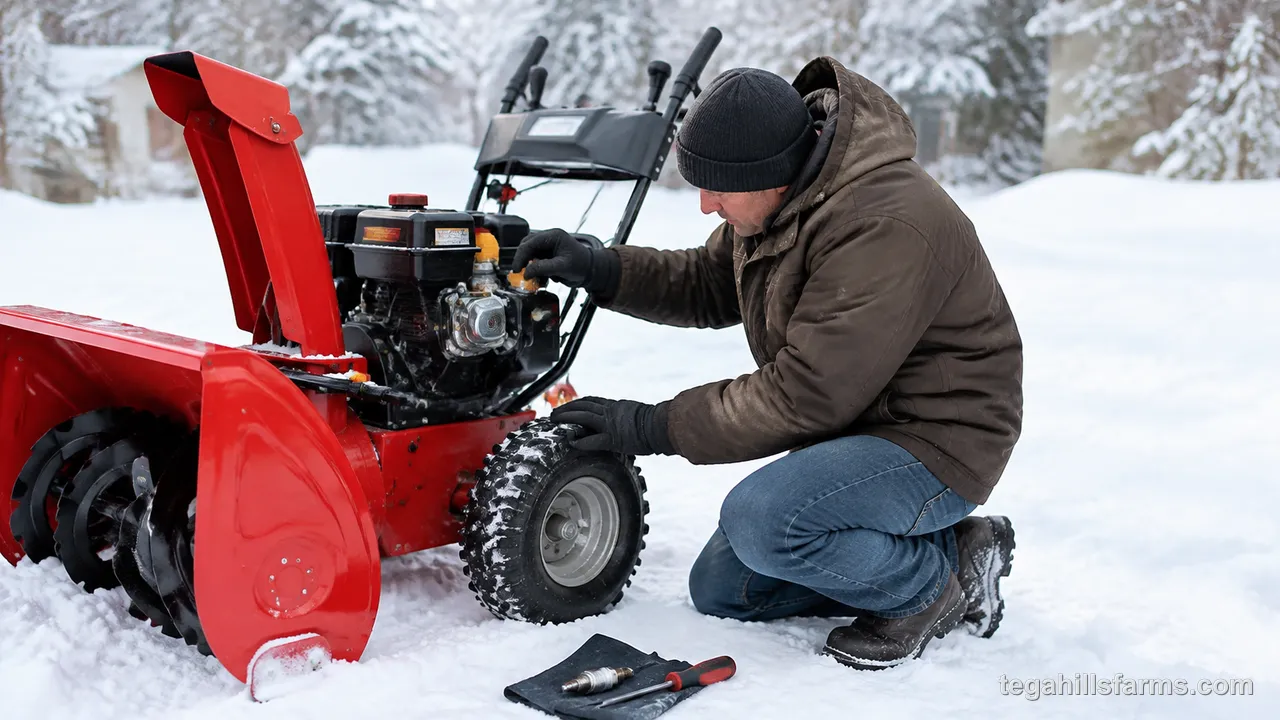
Each common symptom has a likely cause and a next check to make. Start with the one that fits what the machine is doing.
| Symptom | Likely cause | Next check |
|---|---|---|
| Dry spark plug after several pulls | Fuel not reaching the cylinder: stale gas, clogged carburetor, closed fuel valve | Inspect the fuel, then the carburetor bowl and jet |
| Wet plug and a strong gas smell | Flooded engine | Choke off, wait, dry or replace the plug |
| No spark on a spark tester | Fouled plug, damaged plug wire, safety key or ignition switch | Swap in a new plug, check the key and switch |
| Fires briefly, then dies | Fuel flow restricted, vent blocked, choke set wrong | Check the gas cap vent, fuel line and choke |
| Sputters or surges | Partly clogged carburetor jet | Clean the carburetor |
| Rope pulls with almost no resistance | Low compression | Run a compression test |
| Rope will not pull at all | Jammed auger or impeller, seized engine | Clear the auger housing, check the shear pins |
| Electric starter clicks or stays silent | Power supply, cord or starter motor | Test the outlet and cord, then use the recoil starter |
Is Old Gas the Reason Your Snow Blower Won’t Start?
Yes, in most cases, especially after a summer of storage with fuel in the tank. Ethanol-blended gas breaks down faster than many owners expect. It loses the light parts that help it ignite and leaves gum behind in the fuel system. Confirming bad fuel takes a minute. The fix depends on how far the breakdown has gone. Fresh gas solves the simple cases, while varnish that has already reached the carburetor needs more work.
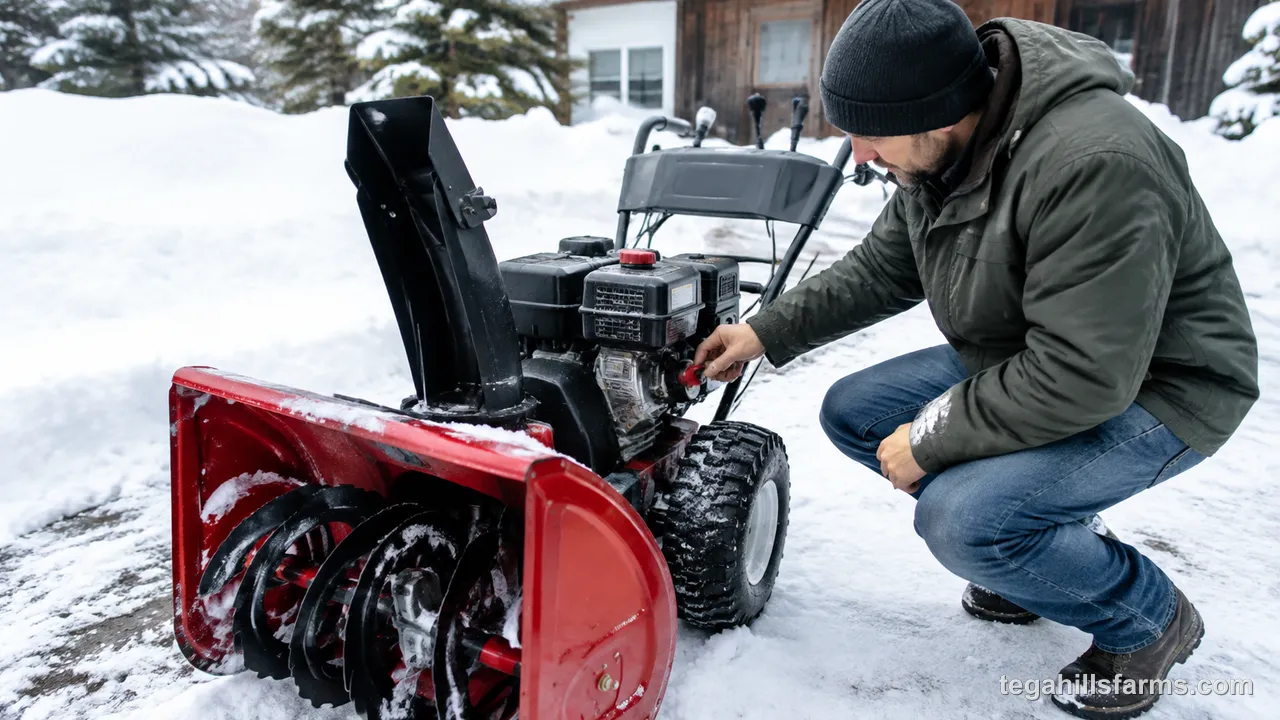
How Can You Tell the Gas Has Gone Bad?
Stale gas looks darker and smells sour or like varnish instead of the sharp, clean smell of fresh fuel. Pour a little from the tank into a clear glass jar and compare it to gas from a new can.
Fresh gasoline is close to clear or pale. Old fuel turns amber or brown, and it may show cloudiness, a layer of water at the bottom, or flecks of debris. Ethanol pulls moisture from the air in a vented tank. Once it absorbs enough water, the ethanol and water can separate from the gasoline and settle in the tank, where the fuel pickup draws them in first.
At the same time, the volatile compounds that let gas vaporize in cold air evaporate. What remains is harder to ignite, so the engine either doesn’t catch or only coughs. The gum this fuel leaves behind is what blocks the carburetor next.
How Do You Drain the Tank and Refill with Fresh Fuel?
Drain old gas outdoors with the engine cold, away from flames, pilot lights and sparks. Then refill with fresh fuel before you try starting again.
- Close the fuel valve and set an approved gas container under the machine.
- Siphon the tank with a hand siphon pump, or disconnect the fuel line at the carburetor, open the valve, and let the tank empty into the container.
- Drain the carburetor bowl with its drain screw or by removing the bowl, because stale fuel sitting there will still cause problems.
- Reconnect the fuel line and secure the clamp so it won’t leak.
- Check that the gas cap vent is clear. A blocked vent can stop fuel flow even when the gas is fresh.
- Refill with fresh gas at the octane the owner’s manual calls for.
Don’t pour old fuel on the ground or down a drain. Most communities accept it at a household hazardous waste site, so check your local rules for drop-off.
Does Fuel Stabilizer Prevent This Problem?
Fuel stabilizer slows the oxidation and breakdown of gasoline in storage, but it only protects fuel that is still fresh when you add it.
The stabilizer works by limiting the chemical reactions that turn gasoline into gum and varnish. Mix it into a fresh can at the dose on its label, then run the engine for a few minutes so treated fuel reaches the carburetor, not just the tank. Adding it to gas that has already darkened or separated does nothing, because the damage is done and stabilizer cannot rebuild the evaporated parts or remove water. Treat stabilizer as part of storage. If the machine already won’t start on old fuel, drain the tank first.
How Do You Clean a Clogged Carburetor?
The carburetor’s main jet and fuel bowl take the most damage from old fuel, because evaporating gas leaves varnish in openings too small to pass anything thicker than liquid fuel. Cleaning is worthwhile when the symptoms clearly point there and the parts are still in good shape. Whether cleaning will be enough depends on how badly the passages are coated and whether any parts are cracked or warped. That’s worth deciding before buying a rebuild kit.
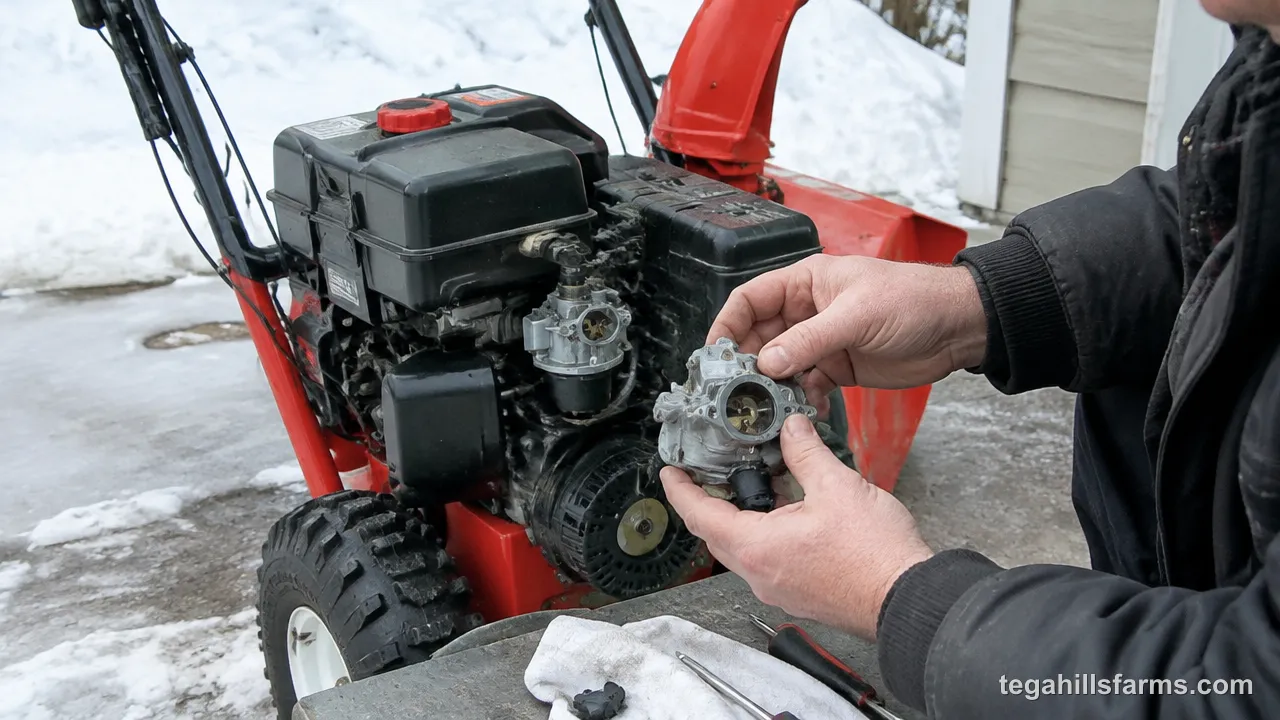
What Are the Signs of a Dirty Carburetor?
A clogged carburetor usually shows up as an engine that sputters, surges, or runs only with the choke on, along with a dry spark plug even though the tank holds fresh gas.
Surging, where the engine revs up and down without input from you, happens when a partly blocked jet lets fuel through in bursts. If the engine fires on a short spray of starting fluid and then dies, fuel is not getting through the carburetor even though spark and compression are fine. A priming bulb that pushes fuel but brings no reaction suggests the passages beyond it are blocked. Before blaming the carburetor, confirm the fuel line is not kinked and the inline fuel filter, if your machine has one, is not clogged. Fuel has to reach the carburetor before the carburetor can be the problem.
How Do You Clean the Fuel Bowl and Jet Step by Step?
Work outdoors or in a well-ventilated space with the engine cold, eye protection on, and no ignition sources nearby. Then follow this order:
- Close the fuel valve and disconnect the spark plug wire so the engine can’t fire.
- Place a container under the carburetor and remove the fuel bowl, usually held by one bolt at the bottom. Some fuel will spill.
- Check the bowl for varnish, white crust or water, and clean it with carb cleaner and a rag.
- Find the main jet, often in the center post or bowl bolt, and spray carb cleaner through its small hole.
- Clear the jet with a thin strand of wire or a jet-cleaning tool. A drill bit can enlarge the hole and ruin the fuel metering.
- Spray cleaner through the passages visible in the carburetor body until it flows freely.
- Inspect the bowl gasket. Replace it if it’s torn, flattened or swollen, because a bad seal leaks fuel and pulls in air.
- Reassemble, open the fuel valve, check for leaks, and reconnect the plug wire.
Let any spilled fuel evaporate fully before you try to start the engine.
When Is Replacing the Carburetor Better Than Cleaning It?
Replace the carburetor when its body is cracked, the float or needle is damaged, threads are stripped, or heavy varnish keeps coming back after a careful cleaning.
Some carburetors have internal passages that carb cleaner and wire can’t reach. When varnish has hardened deep in those channels, a replacement carburetor often costs less time than a second or third teardown. Warped mating surfaces that leak fuel even with a new gasket point the same way. If the engine still won’t run after a thorough cleaning and fresh fuel, look at the fuel line, vent and filter before buying a new carburetor. A starved carburetor and a dirty one produce the same symptoms.
How Do You Check the Spark Plug and Ignition?
The spark plug shows whether fuel is reaching the cylinder and whether the ignition is firing. Few other parts tell you as much for as little effort. Reading the plug comes first because it costs nothing. Testing for spark comes next, and a replacement plug is cheap enough to install as a test. These checks also separate an ignition fault from a fuel fault, which keeps you from cleaning a carburetor that was fine.
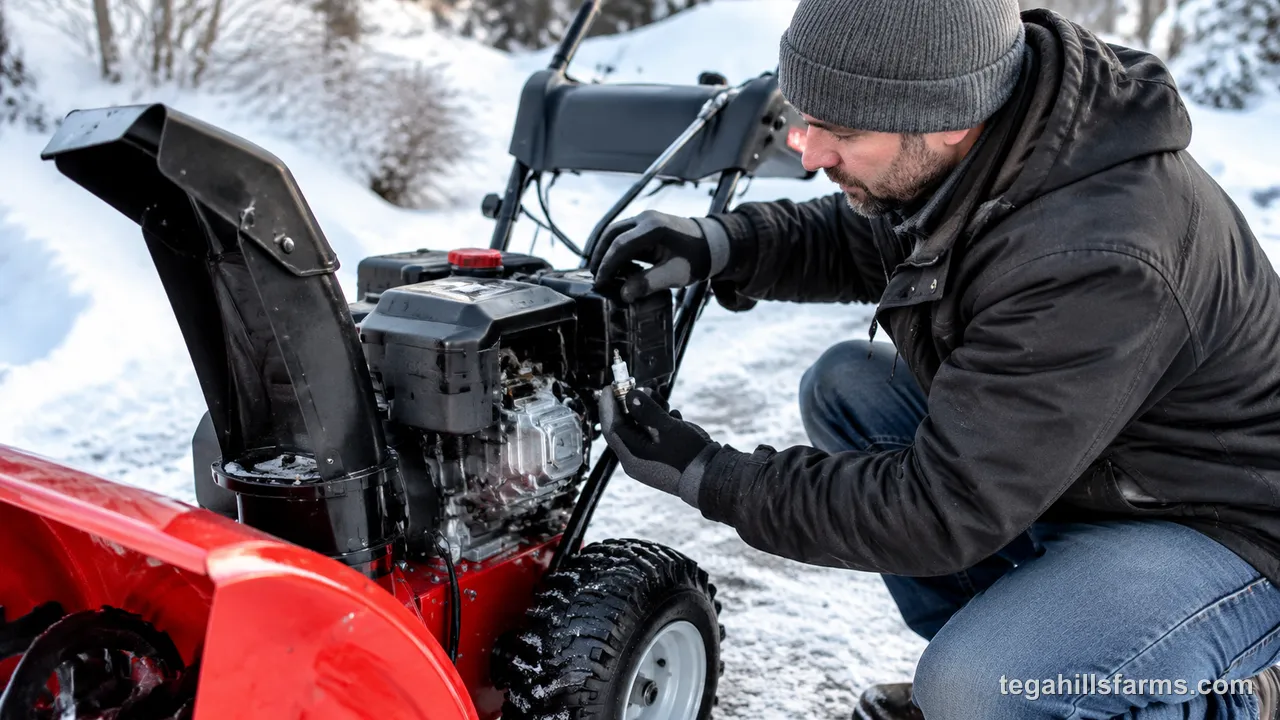
What Does a Wet or Dry Spark Plug Tell You?
A wet plug after several pulls means fuel is reaching the cylinder but not burning, which usually means flooding. A dry plug means fuel isn’t getting there, which points to the fuel supply or carburetor.
A plug soaked in gas and smelling of fuel calls for the flooded-engine routine: choke off, let it air out, and dry or replace the plug. A dry plug sends you back to the fuel valve, the gas itself and the carburetor. Black, sooty carbon means the mixture has been running too rich, often from a choke left on or a clogged air filter. An oily plug can mean oil is getting into the combustion chamber, sometimes from wear or from tipping the machine the wrong way during service. A light tan or gray electrode means combustion is healthy, so look for the fault elsewhere.
How Do You Test for Spark Safely?
An inline spark tester shows spark without holding a bare plug against the engine, which is the safer way to check because fuel vapor and high voltage both carry risk.
Connect the tester between the plug wire and the spark plug, or attach the plug wire to a grounded tester as its instructions describe. Then pull the starter rope while watching the tester’s window. A bright flash on each pull means the ignition is working. Do this away from spilled fuel, with the gas cap closed, and don’t hold the plug wire’s metal parts, since the coil can produce a strong shock.
No spark at all points first to a fouled plug, so test again with a new one. If there’s still nothing, check the plug wire for cracks and loose connections, then confirm the safety key and ignition switch are set to run. A failed ignition coil is less common and usually needs a repair shop.
How Do You Replace the Spark Plug and Set the Gap?
Replace the plug with the exact type the owner’s manual lists for your engine and set the gap to the manual’s spec before installing it.
Engines from makers such as Briggs & Stratton specify a particular plug model, and brands like Champion print cross-reference charts that match their plugs to those engines. The manual or the engine maker’s model lookup is the most reliable source. The gap is the space between the center and side electrodes. A gap that’s too wide or too narrow weakens the spark and makes cold starts harder, so check it with a gap gauge even on a new plug and bend only the side electrode to adjust it.
Remove the old plug with a plug socket after brushing away debris so nothing falls into the cylinder. Thread the new plug in by hand to avoid cross-threading the soft aluminum head. Then snug it with the wrench to the tightness the manual specifies and reconnect the wire firmly.
What Should You Do If the Engine Is Flooded?
Stop priming, turn the choke off, and wait 10–15 minutes so the extra fuel can evaporate, then try again without the choke.
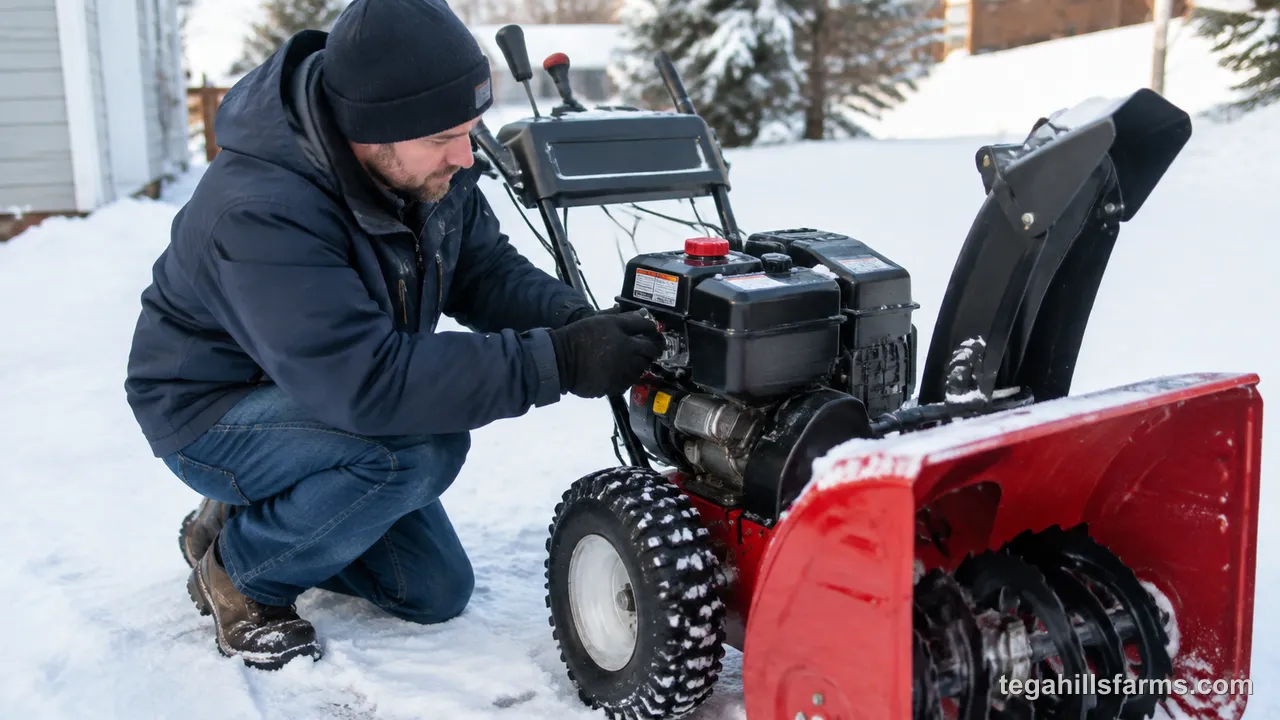
A flooded engine has more liquid fuel in the cylinder than the spark can ignite. You can usually smell gas at the muffler, and the spark plug comes out wet. It typically happens after too many primer pushes, pulling with the choke on long after the engine should have caught, or repeated cranking with the electric starter. Every extra attempt makes it worse.
During the wait, leave the fuel valve as it is and keep away from the priming bulb. Then set the choke off and the throttle to run, and pull the starter rope steadily. With the choke open, extra air can clear the leftover fuel. The engine may run rough for a few seconds before settling.
If waiting doesn’t work, remove the spark plug and let the cylinder air out. Dry the plug or swap in a new one, then pull the rope a few times with the plug out to push out remaining fuel vapor. Reinstall the plug and start with the choke off.
Why Does a Snow Blower Start and Then Die?
An engine that fires and then stalls is usually getting enough fuel and air for a moment but can’t keep that supply going. That narrows the search a lot, because spark and compression have already shown they work. The usual causes are a fuel supply that can’t keep up, an air-fuel mix thrown off by the choke or the air intake, or a safety feature cutting the engine on purpose. Each one stalls the engine in its own way.
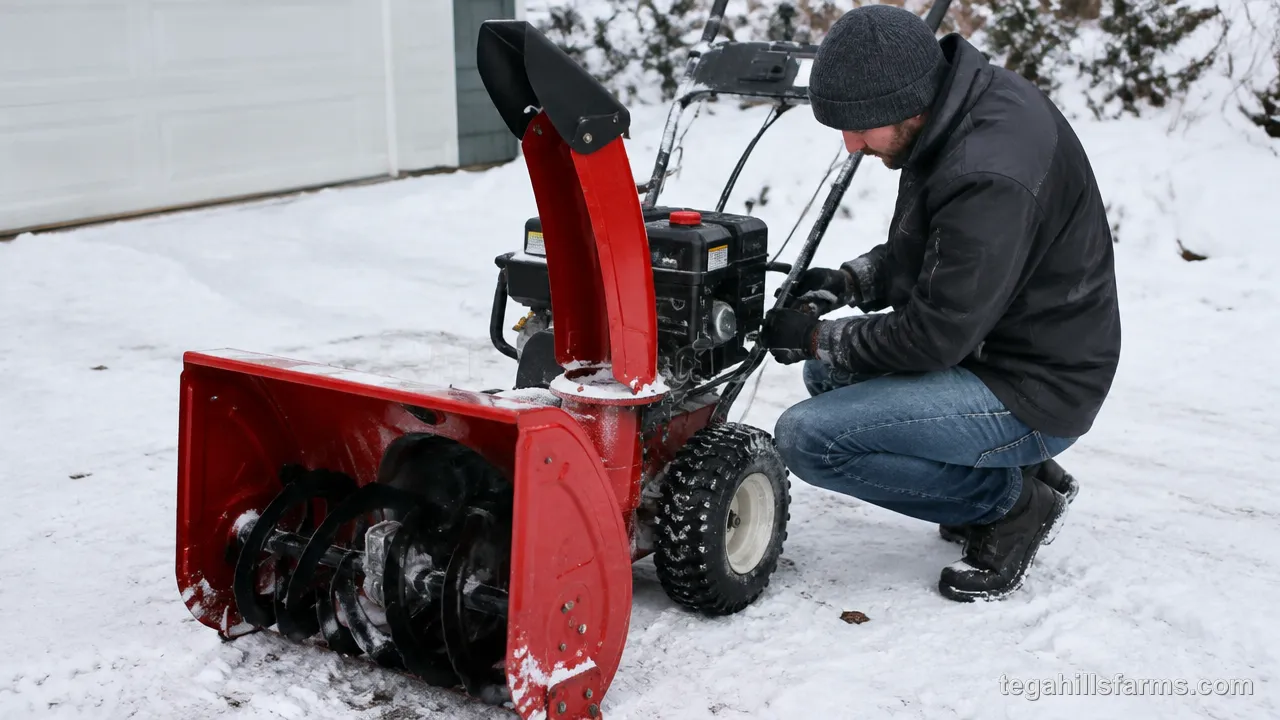
Is a Blocked Gas Cap Vent or Fuel Line Starving the Engine?
A plugged gas cap vent, pinched fuel line or clogged fuel filter lets the engine run on fuel already in the carburetor bowl, and then it quits once the bowl is empty.
The vent lets air into the tank as fuel drains out. When ice or debris blocks it, a vacuum builds in the tank and holds the fuel back. A quick test: loosen the gas cap slightly and try again. If the engine keeps running with the cap loose, the vent needs cleaning or the cap needs replacing.
A fuel line that is kinked, cracked, or softened and collapsed from age restricts flow the same way. So does an inline filter clogged with sediment from old fuel. Follow the line from the tank to the carburetor and look for sharp bends, collapsed sections and leaks. Replace any line that feels brittle.
Could the Choke Position or Air Filter Be the Culprit?
Yes. Taking the choke off too soon starves a cold engine of the rich mixture it needs, and leaving it on too long floods the engine with fuel. Either can kill it right after it starts.
The choke reduces airflow while the engine warms up. Move it toward off gradually as the engine smooths out. Snapping it off in frigid air often stalls a machine that would have kept running. If the engine bogs down and puffs dark smoke, the choke has probably stayed on too long.
Many snow blowers have little or no air filter compared to a mower, but models that use one can choke on a clogged element. A blocked filter acts like a choke stuck on, so the mix runs too rich and the engine stalls. Inspect it and clean or replace it as the manual directs.
Can a Low-Oil Sensor Shut the Engine Off?
Yes. Some engines have a low-oil sensor that shuts the engine down or keeps it from running when the oil level drops too low, which can look like a fuel problem.
The sensor protects the engine from running without enough lubrication. If oil is low, or the machine is parked on a slope so the oil moves away from the sensor, the engine may start and then die within seconds.
Check the oil with the machine on level ground and the engine off. Pull the dipstick, wipe it, reinsert it fully or thread it in as the manual specifies, then pull it again and read the level. Top up with the oil type the manual calls for and avoid overfilling. A level that keeps dropping between checks points to a leak or internal wear.
How Do You Start a Snow Blower in Cold Weather?
Thick oil, slow fuel vaporization and a stiff recoil starter all make cold engines harder to start. Each one can be improved. Gasoline needs to vaporize before it can burn, and frigid air slows that down. Cold oil also adds drag every time you pull the rope. The fixes are oil chosen for the temperature, a machine that isn’t stone-cold, and choke and primer used for the conditions.
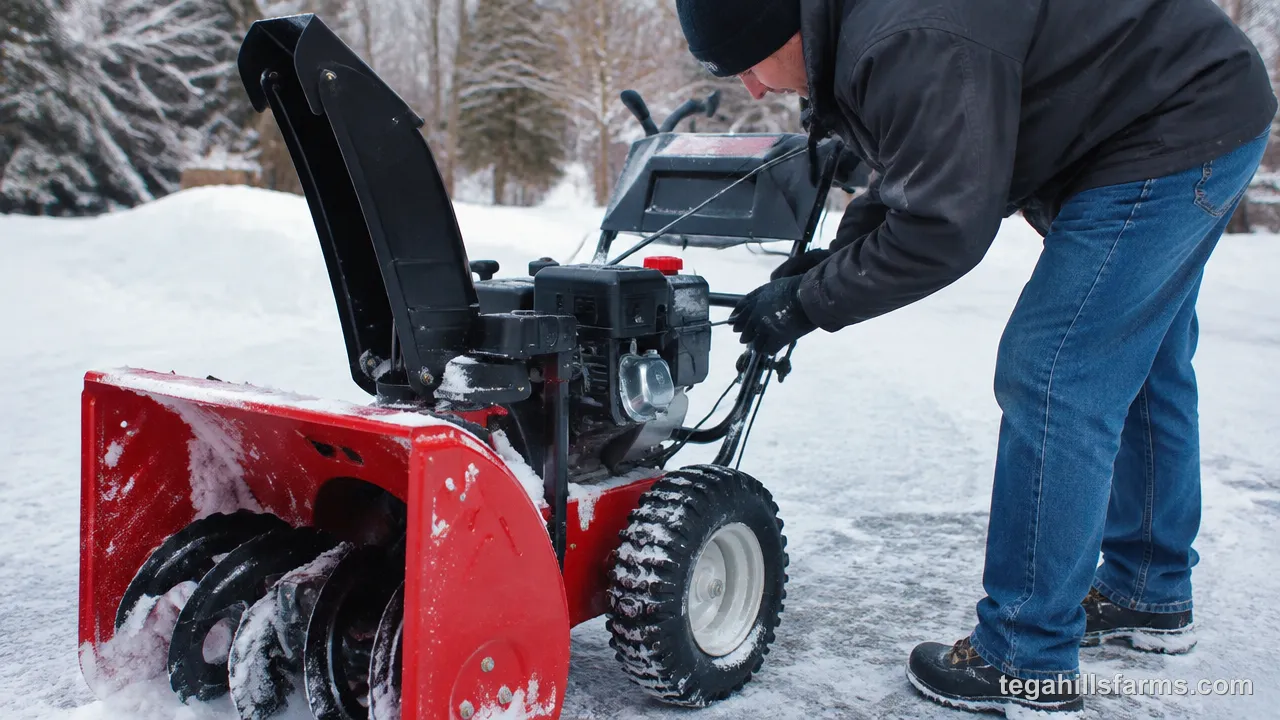
Does Oil Type Matter When It’s Freezing Outside?
Yes. Oil that’s too thick for the temperature makes the engine hard to turn over, so the rope pulls stiffly and the engine may not spin fast enough to fire.
Oil thickens as it gets colder. A heavy single-grade oil suited to summer mowing can become like syrup in a frozen garage, and the recoil starter has to fight that drag on every pull. Multi-grade oils stay thinner in the cold while still protecting the engine once it warms up.
The owner’s manual lists the oil grade for the temperature range where you’ll run the machine, and it’s worth following closely for a winter engine. Using the wrong grade can also affect the warranty. If the oil in the crankcase came from a spring change with summer oil, switching to the manual’s cold-weather grade before the first storm is a simple fix for hard pulls.
How Do You Warm the Machine Up Before Starting?
Store the snow blower in a garage or shed out of the wind so the engine and fuel start out warmer than the outside air. Then use the full choke and the primer count the manual specifies.
A machine stored inside, even unheated, starts more easily than one left out in a snowbank, because the oil and fuel stay closer to their working temperature. Move it outside or open the door fully before starting so exhaust fumes don’t build up indoors, since carbon monoxide gathers quickly in enclosed spaces.
In very cold air, the engine may need the full primer count and full choke, so don’t cut those steps short. Never warm the machine with an open flame, a torch, or a heater pointed near the fuel tank, because gas vapor ignites easily. Models with an electric starter make cold starts much easier when an outlet is within reach.
What If the Electric Starter or Battery Is the Problem?
The power source, the cord connection, and the safety controls decide whether an electric start or a cordless motor runs. These checks are separate from the fuel and spark work on a gas engine. On a gas model, the electric starter only spins the engine, so a failure there doesn’t mean the engine is bad. On a cordless model, there’s no fuel system at all. If you are still weighing gas vs electric snow blowers for a future purchase, these failure points show how differently the two types behave in the cold.
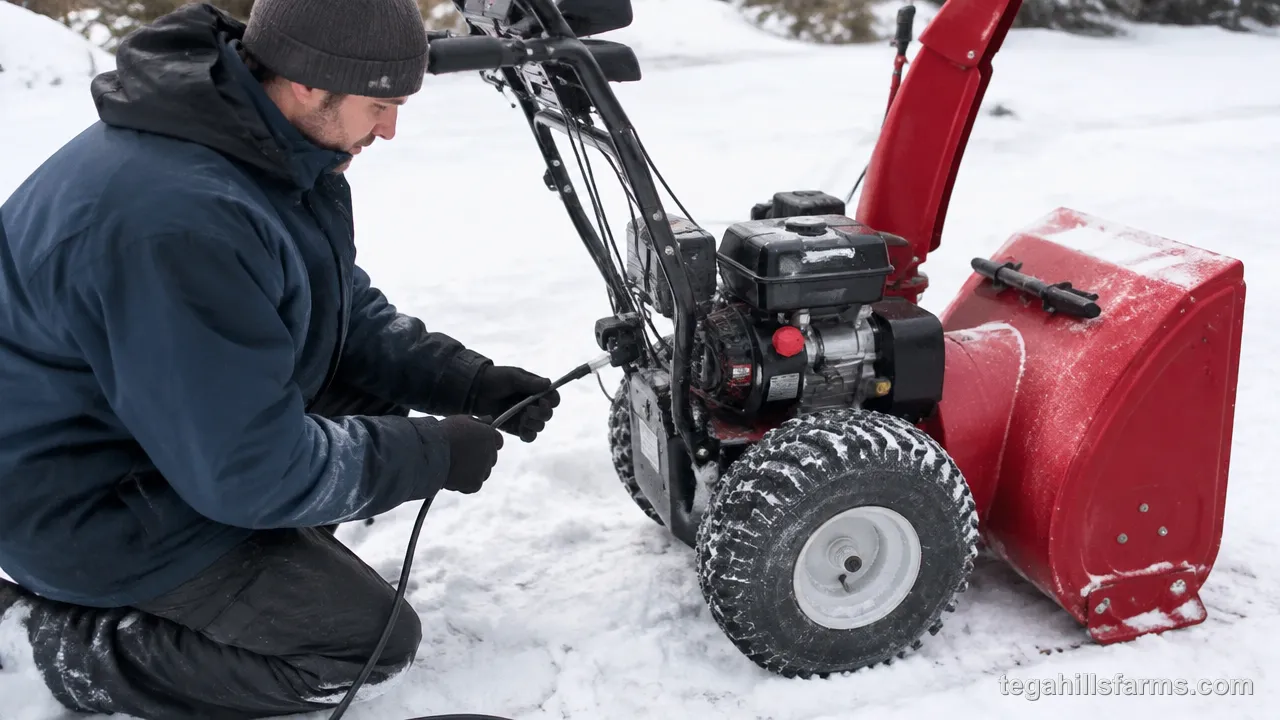
Why Does the Electric Starter Click or Do Nothing?
An electric starter that clicks or stays silent usually has a power supply problem: a dead outlet, a loose or damaged extension cord, a tripped GFCI or breaker, or a switch left off.
Plug a lamp or other device into the same outlet to confirm it has power. Outdoor and garage outlets are often GFCI protected and trip when moisture gets in, so press the reset button. Use an outdoor-rated extension cord in good condition, and push both connections in fully. A partly seated plug can deliver too little current to turn the motor.
Make sure the safety key is in and the ignition switch is on run, because the starter can spin without the engine firing if they aren’t. If power is good and the starter still only clicks, the starter motor may be worn. The recoil starter will still start the engine while you arrange a repair.
How Does Cold Weather Affect a Snow Blower Battery?
Cold slows the chemical reactions inside a battery, so it delivers less power and shorter runtime in freezing weather than it does at room temperature.
A battery that seems weak outside may work normally after it warms up indoors. In use, a cold battery can make the motor run sluggishly, cut out under a heavy load of wet snow, or show a lower charge than you expected.
Store the battery inside, in a heated part of the house or a heated garage, and carry it out only when you’re ready to clear snow. Charging works best at the temperatures the charger’s manual specifies, and many chargers won’t charge a frozen battery at all. Letting a cold battery warm up before charging protects it and helps it reach a full charge.
What Should You Check on a Battery-Powered Model?
A cordless snow blower runs only when the battery is fully seated and charged, the safety key or button is engaged, and the run lever or bail is held in the operating position.
- Pull the battery out and reinsert it until it clicks. A partly seated pack makes no contact.
- Check the charge indicator. A drained pack may have been put away without charging after the last storm.
- Confirm the charger shows a completed charge. A blinking fault light can mean the pack was too cold or too hot to charge.
- Insert the safety key or press the start button in the order the manual lists.
- Squeeze the run lever fully, since interlocks often require both the button and the lever.
- Look for snow packed into the battery compartment, where moisture can interfere with the contacts.
Can Starting Fluid Help Diagnose a No-Start?
Starting fluid works as a quick test, not a fix, because it shows whether the engine runs when fuel delivery is taken out of the equation. A brief spray tells you whether to keep working on the fuel system or move on to spark and compression. Overusing it adds risks that can outweigh the convenience. Its value depends on a light, careful application and on reading the engine’s response correctly.
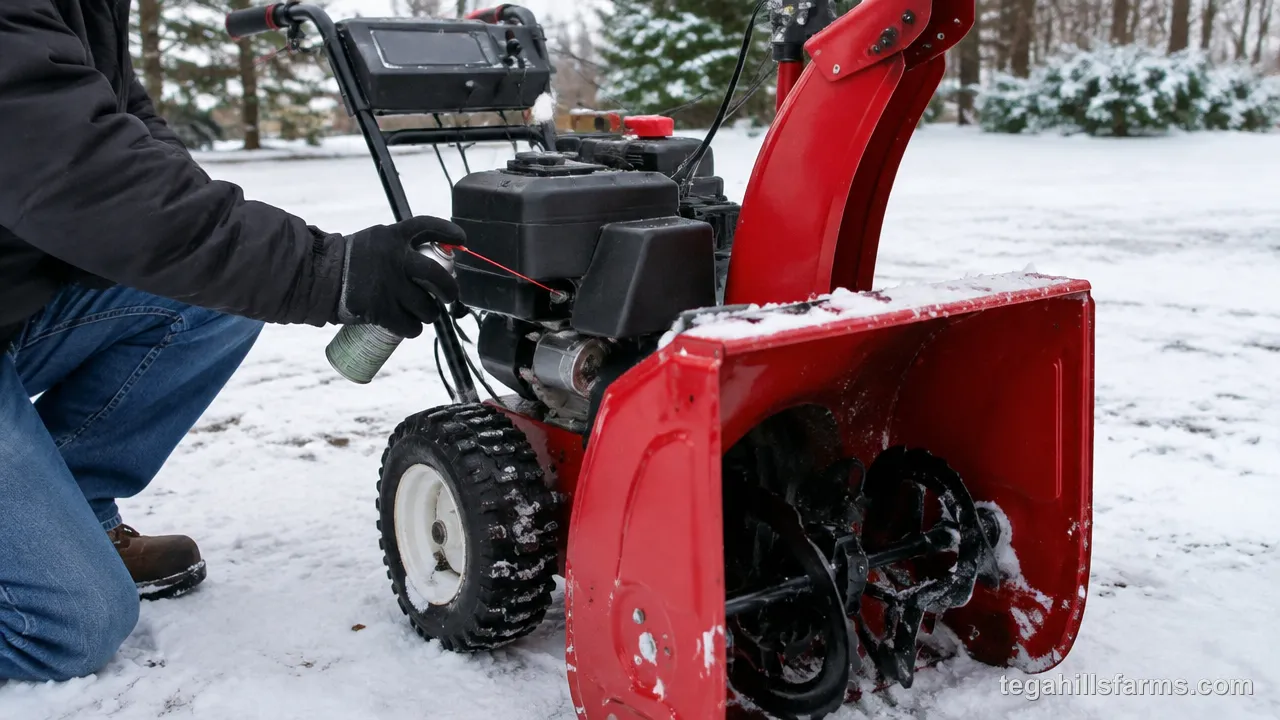
How Do You Use Starting Fluid Safely?
Spray a short burst into the air intake, with the air filter removed or behind it as your engine’s layout allows, then pull the starter rope right away.
Keep the spray short. Starting fluid is far more volatile than gasoline and burns hotter and faster. A large dose can cause a hard backfire and add stress to pistons and rings that small engines aren’t built for, and repeated use strips lubrication from the cylinder walls. Never spray it into the spark plug hole.
Work outdoors, away from heat, sparks and flames, and keep the can and spray away from your face. Don’t spray while someone else is pulling the cord, and don’t spray into a running engine. If the engine needs starting fluid every time, there’s a fuel delivery fault to fix, and the spray should only be used to test for it.
What Does the Engine’s Reaction Tell You?
If the engine fires briefly on starting fluid and then quits, the problem is fuel delivery. Spark and compression are working, and the carburetor or fuel line isn’t supplying fuel.
That result sends you back to the carburetor jet, the fuel line, the filter and the gas cap vent. Fresh gas and a clean carburetor usually fix it.
If the engine doesn’t fire at all with starting fluid, fuel isn’t the issue. Recheck spark with a tester and a new plug, and confirm the safety key and switch are on. If spark is strong and the engine still won’t catch, compression or a mechanical fault is likely. That’s when a compression test is worth the effort.
Is It Compression or a Mechanical Problem?
Weak compression or a mechanical jam is likely once fuel and spark have been ruled out and the engine still won’t run. Fresh gas and a new plug can’t fix these. The way the starter rope feels when you pull it is the best clue. Too little resistance, no movement at all, or a rope that won’t rewind each points to a different fault. Some of these are simple fixes, while others are a reason to call a shop.
How Do You Check Engine Compression?
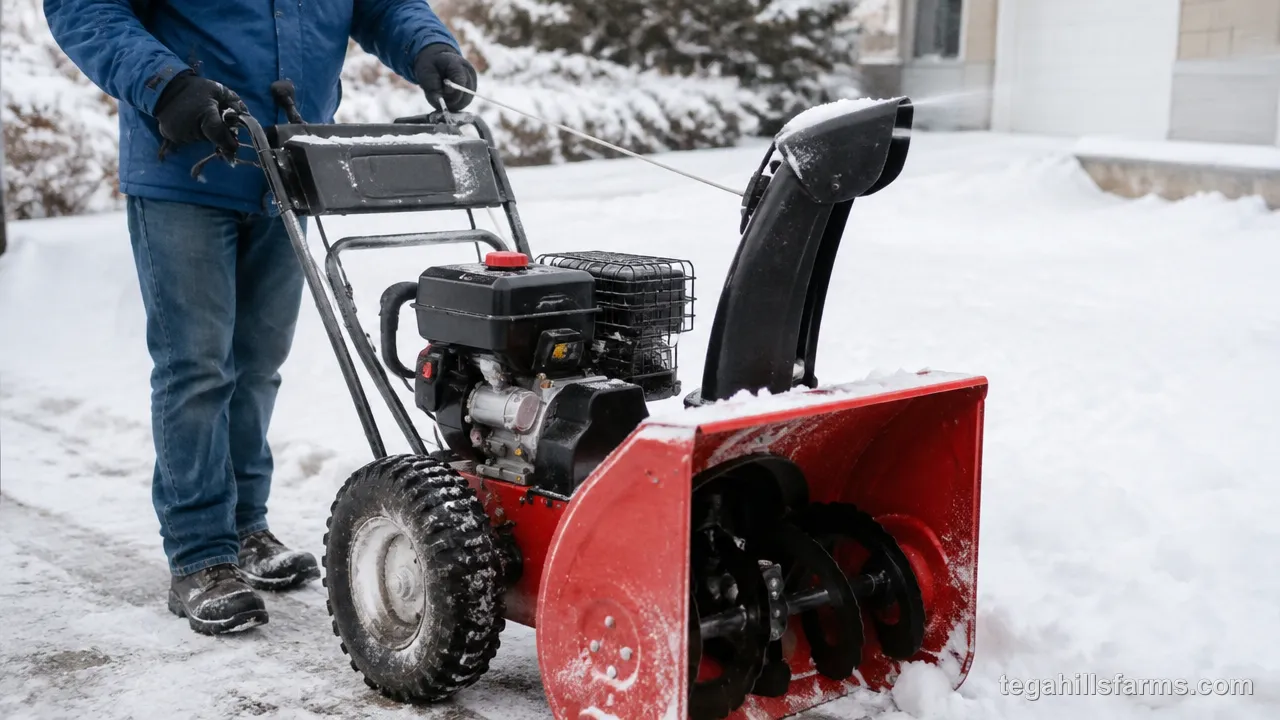
Pull the starter rope slowly and feel for firm, steady resistance once per engine cycle. Little or no resistance suggests weak compression.
A healthy engine pushes back noticeably when the piston comes up on the compression stroke, then gets easier as it passes. If the rope pulls almost freely, the cylinder may not be sealing. Possible causes include worn piston rings, a scored cylinder or a valve that isn’t closing.
For a firmer answer, remove the spark plug and thread a compression tester into the plug hole. With the throttle open, pull the rope several times and read the gauge. Compare the result to the figure in the engine maker’s service information rather than guessing at a number. A low reading, or one that changes a lot between tests, usually points to internal wear that needs professional repair.
Could a Jammed Auger or Broken Recoil Starter Be the Cause?
Yes. A rope that won’t pull at all often means a jammed auger or impeller, and a rope that pulls freely without turning the engine points to a broken recoil starter.
Ice, packed snow or a newspaper caught in the auger housing can lock the auger, and on some machines the drag carries back to the engine. With the engine off and the safety key removed, clear the housing with a clean-out tool, never your hands. A broken shear pin makes the auger stop turning while the engine runs. It doesn’t prevent starting, but it can be confused with a drive problem.
If the rope pulls out easily but the engine doesn’t turn, or the rope won’t rewind, the pawls or spring inside the recoil starter have probably failed. That assembly bolts on and can usually be replaced without touching the engine.
When Should You Take It to a Repair Shop?
Low compression, internal engine damage, a failed ignition coil, or repeated failure after fuel, plug and carburetor work usually call for a small engine repair shop.
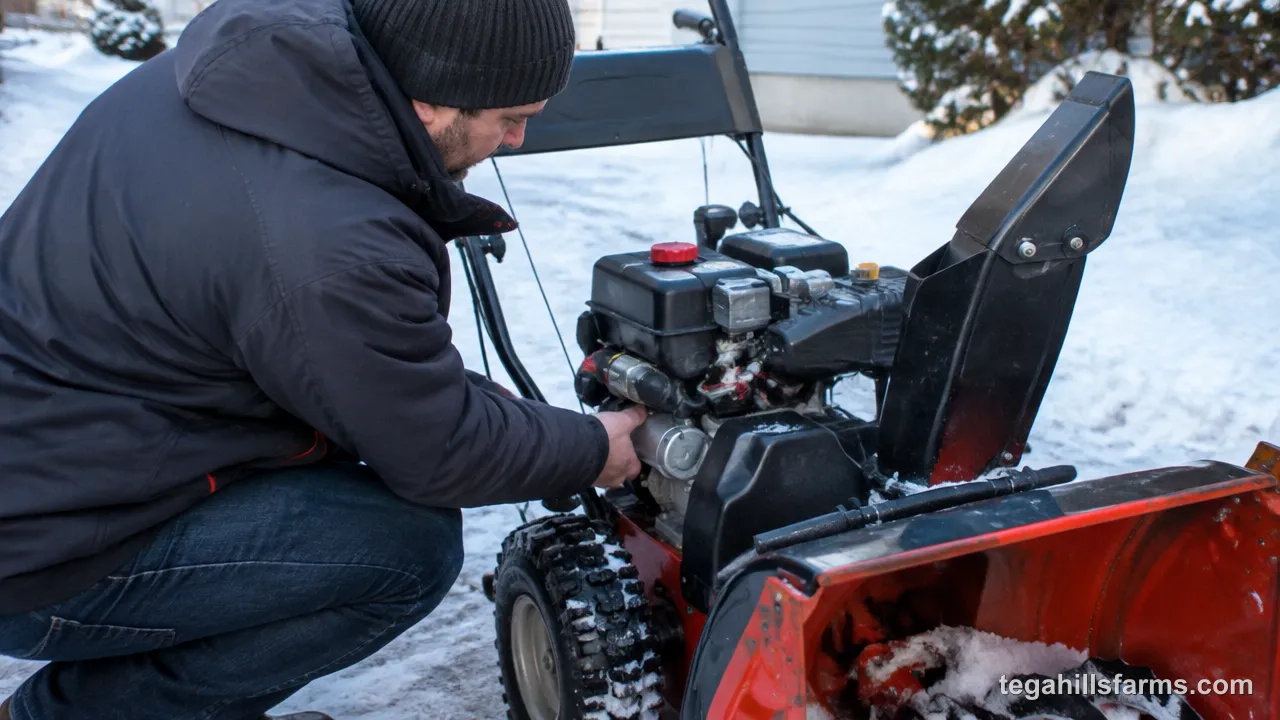
These faults need tools, parts and experience that go beyond a home fix, such as rebuilding valves, honing a cylinder or diagnosing ignition electronics. If you’ve drained and replaced the fuel, cleaned the carburetor, installed a new plug and confirmed the controls, and the engine still won’t run, more DIY work rarely pays off. A shop can test the engine and give you a clear diagnosis.
Repairing or replacing comes down to the machine’s age, its condition and the size of the repair. A solid machine with a sound engine and frame is often worth fixing, especially when the problem is a carburetor or recoil starter. An older unit needing major engine work may cost more to repair than it’s worth. Knowing how long snow blowers last helps you judge how much life is left in yours, and comparing the repair estimate with how much a snow blower costs new makes the choice clearer.
Gas left sitting in the carburetor through a warm summer evaporates slowly, and the light, burnable part of the fuel disappears first while gummy varnish coats the jet and bowl. The machine looks fine on the garage floor in July and gives no hint of the problem. Skip the spring routine, and the first heavy snowfall finds you pulling the rope on an engine that can’t draw a drop of fuel past its own carburetor.
How Do You Prep a Snow Blower in Spring So It Starts Next Winter?
A snow blower put away correctly in spring usually starts within a few pulls the next winter, while one parked with old gas in it often ends up needing the carburetor cleaned. The difference comes from a few habits at the end of the season.
Deal with the fuel first. Either run the engine until the carburetor is dry, or fill the tank with fresh gas treated with fuel stabilizer and run it a few minutes so treated fuel reaches the carburetor. Both approaches keep untreated gas from turning to varnish in the jet over summer.
Change the engine oil while the engine is warm so contaminants drain out with it, and refill with the grade the manual recommends for the coming winter. A new spark plug at the end of the season means the machine starts the next year with a clean plug.
Clean salt, slush and debris off the auger housing and chute, since salt left on metal causes corrosion over the summer. Store the machine in a dry, covered space, because moisture getting into the fuel system and controls brings back the same no-start problems.
Do Brand and Engine Type Change How You Troubleshoot?
The engine maker and engine type affect troubleshooting more than the brand name on the housing, because many snow blower brands use engines from the same few manufacturers. The fuel, spark, air and compression checks stay the same across brands. What changes is the fuel each engine needs and the exact specs, such as plug type, gap and oil grade, which come from the owner’s manual for your specific engine.
How Does a Two-Stroke Engine Change the Fuel Check?
A two-stroke engine runs on gasoline premixed with two-stroke oil, so a wrong ratio or a stale mix is the first thing to suspect when one won’t start.
A four-stroke engine keeps its oil in the crankcase, separate from the gas, and you check it on a dipstick. A two-stroke has no separate oil supply. The oil travels in the fuel and lubricates the engine as it burns. That makes the fuel mix doubly important: too little oil risks engine damage, and too much fouls the spark plug and makes the engine smoky and hard to start.
Mixed fuel also goes stale, and the oil in it can settle out over time. Drain any old mix, combine fresh gas and the correct two-stroke oil at the ratio the manual lists, and shake the can before filling. The carburetor checks are otherwise the same.
Where Do You Find the Right Specs for Craftsman, Troy-Bilt, Simplicity or Snapper Models?
The model tag on the snow blower and the separate engine label give you the numbers needed to find the correct owner’s manual and engine specs.
On Craftsman, Troy-Bilt, Simplicity and Snapper machines, the model and serial number tag is usually on the frame near the handlebars, behind the auger housing, or below the control panel. The engine carries its own label or stamped code, often near the shroud or valve cover, because the engine maker may differ from the machine’s brand.
Enter the machine’s model number on the brand’s support site to find the owner’s manual and parts diagrams. For engine-specific details, use the engine code with the engine maker’s lookup, such as Briggs & Stratton’s. The plug type, plug gap, oil grade and fuel requirements in that manual apply to your engine, and generic numbers from another model can be wrong.
Snow Blower Won’t Start: Quick Answers
How long should you wait after flooding the engine?
Wait 10 to 15 minutes so the extra fuel can evaporate from the cylinder. Then start with the choke off and skip the primer. If the engine still won’t fire, remove the spark plug, let the cylinder air out, dry or replace the plug, and try again.
Why does the machine start and then stall right away?
A quick stall usually means fuel is running out after the carburetor bowl empties. Check for a blocked gas cap vent, a kinked fuel line or a clogged filter. A choke taken off too early, a clogged air filter or a low-oil shutoff can also cause the same stall.
Is starting fluid safe for a small engine?
A short spray for diagnosis is fine when you’re outdoors and away from heat and sparks. Heavy or repeated use can cause harsh backfires and wash lubrication from the cylinder walls. If the engine needs starting fluid every time it starts, fix the fuel delivery problem.
Is old gas always the cause?
It’s the most common cause, especially after summer storage, but not the only one. A fouled plug, a closed fuel valve, a missing safety key, a flooded engine or low compression can all prevent starting. Check the fuel, then the controls and plug, before taking the carburetor apart.
When should you stop troubleshooting and call a shop?
Call a shop when compression is weak, there’s still no spark after a new plug, or the engine keeps failing after fresh fuel and a carburetor cleaning. Internal engine wear and ignition coil faults need professional tools and diagnosis.
Write Your Review
No reviews yet. Be the first to share your experience!