

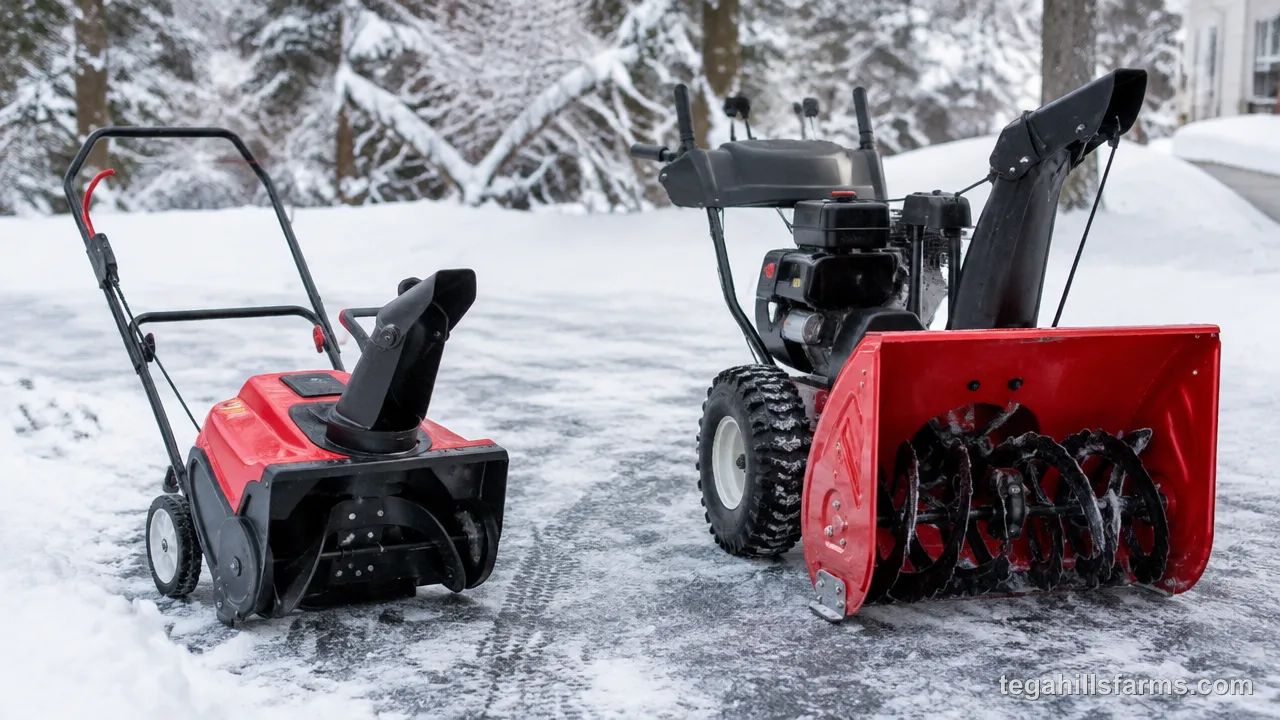
A single-stage snow blower clears snow with one auger that touches the pavement, which suits light snow on small paved driveways. A two-stage snow blower adds an impeller and rides above the surface, so it can handle deep, wet snow, long driveways and gravel.
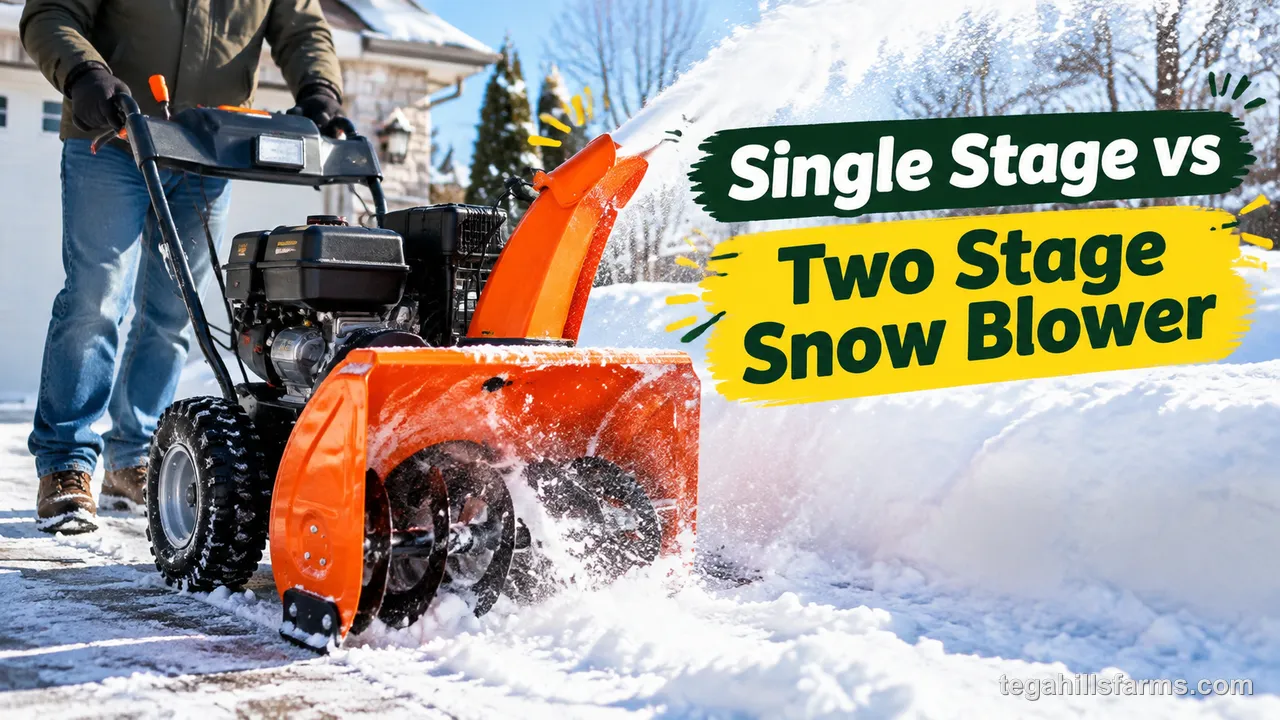
The choice depends on four things: how big your driveway is, how heavy your typical storm gets, whether the surface is paved or gravel, and how much garage space you can give a machine that sits idle eight months of the year. Stage count changes all four, because it decides how the machine picks up snow and how much it weighs.
Most buyers worry about one of two mistakes. The first is buying too little machine and then fighting the frozen ridge the plow leaves at the end of the driveway. The second is buying a heavy two-stage unit for a short, flat driveway that a lighter machine would have cleared just as well.
Plan around the worst storm in a normal winter where you live, not the average one. That is the storm that shows whether a machine fits your yard.
What Is a Single-Stage Snow Blower?
One spinning auger does all the work: its rubber-edged paddles scoop snow off the pavement and throw it out the chute in a single pass, scraping the surface as they turn.
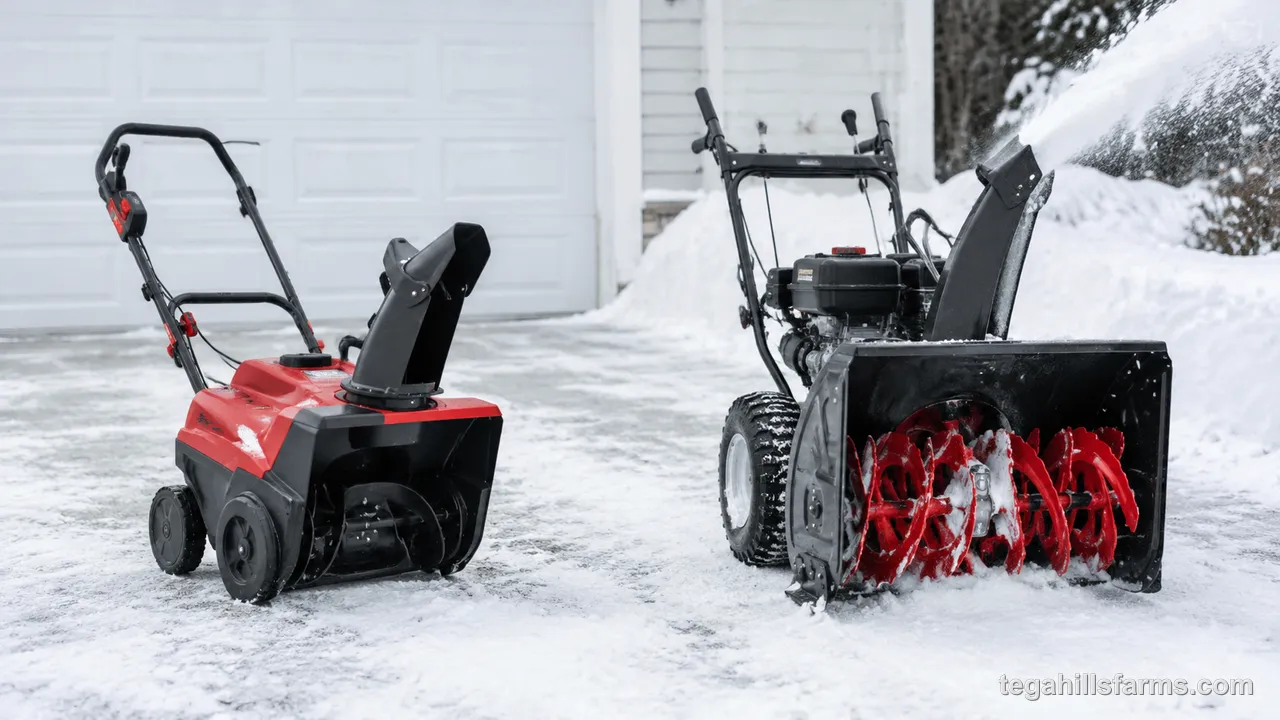
This simple design is why these machines are light, compact and cheap to maintain. Many run on battery or a power cord instead of a gas engine, so there is no oil to change and no carburetor to gum up. The same ground contact that lets the auger scrape a driveway clean also limits where the machine can safely go and how much snow it can take on. Fitting this design to your property is one part of a bigger decision, and how to choose a snow blower covers the rest of that process in more depth.
How the Auger-Only Mechanism Works
The auger is a set of curved paddles made of rubber or tough plastic, mounted on a shaft across the front of the housing. As it spins, the paddles pull snow toward the center, and the same rotation pushes that snow up through the discharge chute. There is no separate fan behind the auger, so throwing force depends entirely on auger speed. That means throw distance is shorter than on a two-stage machine, and wet snow loses momentum quickly.
Because the paddles touch the pavement, they scrape down to a nearly bare surface. They also grab the ground slightly, which pulls the machine forward and spares you some pushing. That contact wears the paddles over time, so they are a normal replacement part. Learning how to use a snow blower of this kind mostly comes down to letting that pull carry the machine forward, overlapping your passes, and not ramming it into packed piles.
Snow Types and Conditions Single-Stage Handles Best
Single-stage machines work best on fresh, light-to-moderate snow over a paved surface, cleared soon after it falls. Dry powder moves easily through the paddles and out the chute, and frequent small storms never build up past what the auger can take in.
They do well in these conditions:
- Fresh powder on asphalt or concrete driveways
- Walkways, patios and decks where a heavy machine would be awkward
- Regions with frequent light snowfalls rather than big single dumps
They struggle in these conditions:
- Heavy, wet snow, which packs into the chute and clogs it
- The compacted ridge a plow leaves at the end of the driveway
- Icy crusts that the rubber paddles can’t break
- Gravel, because the paddles pick up stones along with the snow
What Is a Two-Stage Snow Blower?
Here the work splits in two: a serrated steel auger breaks up and gathers snow, then a high-speed impeller behind it throws the snow out the chute, while the housing rides on skid shoes above the ground.
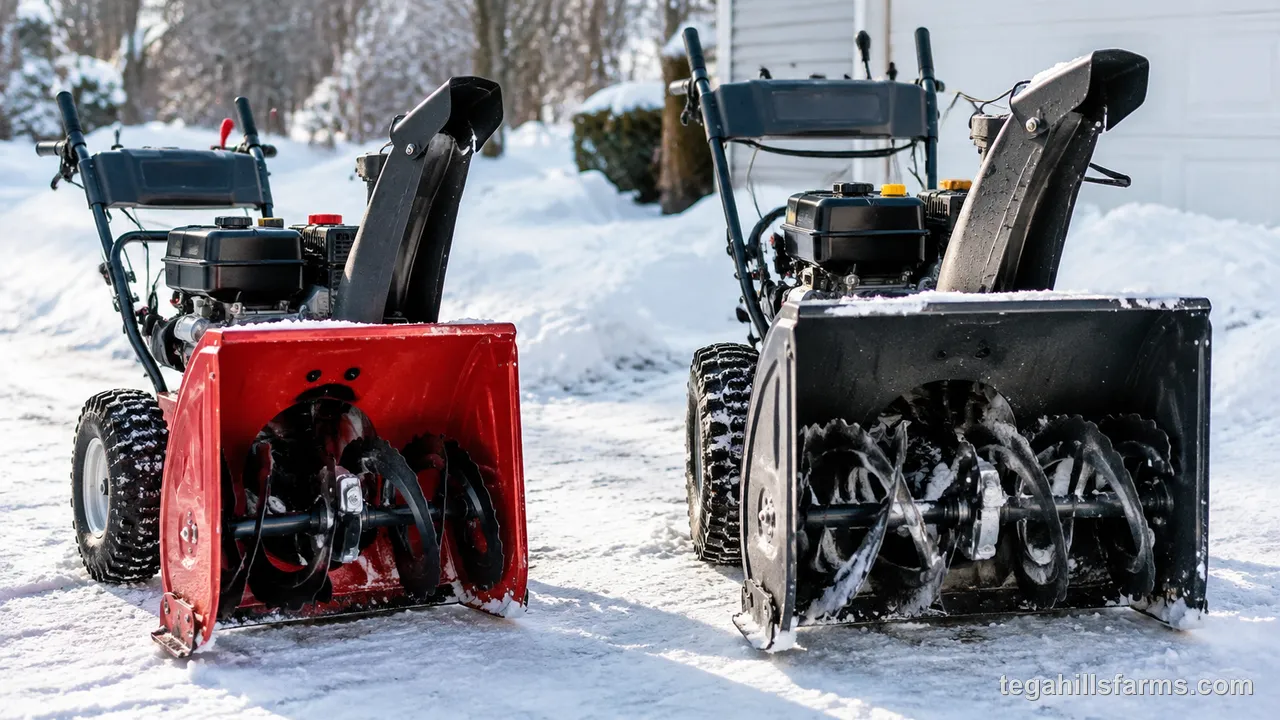
That second stage is what lets the machine take on weight and volume a single auger can’t. Because the auger only has to gather snow and the impeller does the throwing, each part can be built for its own job. The cost is size: two-stage units are heavier, almost always gas-powered or large-battery machines, and they need more storage space and more routine upkeep. Whether that trade makes sense depends on how often your storms push past light, fresh snow.
How the Auger and Impeller Work Together
The steel auger turns at a relatively slow speed and chews through snow, including packed and icy layers, feeding it toward the center of the housing. Behind it, the impeller spins much faster, catches the snow the auger delivers, and throws it up through the chute.
Because the impeller provides the throwing force, snow leaves the chute with more speed and travels farther than on a single-stage machine. That distance matters late in winter, when the banks along the driveway are tall and the snow has to clear them. The auger housing sits on adjustable skid shoes instead of dragging on the surface. That keeps the steel auger off the pavement and leaves a thin layer of snow behind, which is the trade for not scraping the surface bare.
When Two-Stage Power Makes the Difference
A two-stage machine makes the biggest difference when snow is deep, wet or packed, or when the area to clear is large.
These situations favor a two-stage design:
- Heavy, wet snow that would clog a single auger’s chute
- The plow ridge at the end of the driveway, which is often dense and partly frozen
- Deep accumulations and wind-blown drifts after a single big storm
- Long driveways, where self-propelled drive saves real effort
- Gravel driveways, since the raised housing keeps the auger off the stones
- Late-season banks high enough that snow needs a long throw to clear them
If your winters regularly include even one of these, a single-stage machine will leave you shoveling the part it can’t handle.
Key Differences: Single-Stage vs Two-Stage Snow Blowers
Two-stage machines come out ahead on heavy, deep snow, on gravel and on long driveways. Single-stage machines come out ahead on weight, storage footprint and scraping small paved areas clean.
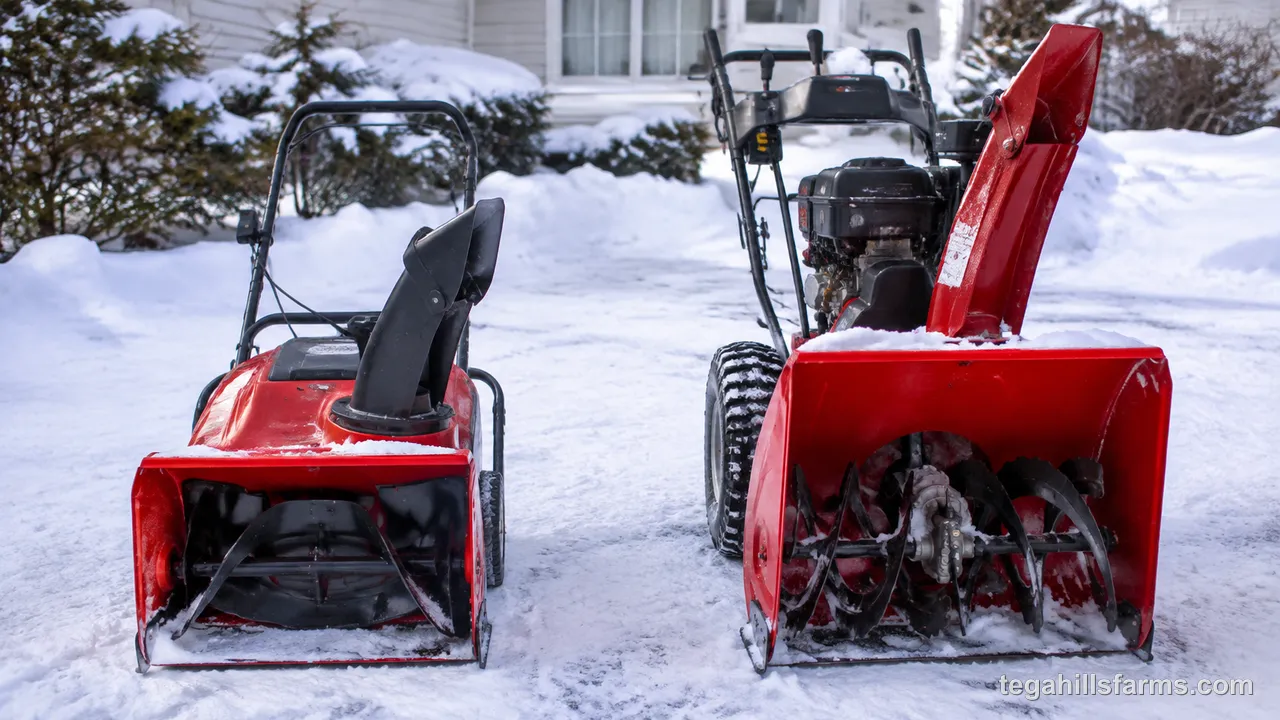
| Attribute | Single-stage | Two-stage |
|---|---|---|
| Clearing system | One auger gathers and throws | Auger gathers, impeller throws |
| Ground contact | Auger touches the surface | Housing rides on skid shoes |
| Best snow type | Light, fresh snow | Deep, wet and packed snow |
| Drive | Auger pull only | Powered wheels or tracks |
| Gravel surfaces | Not suitable | Suitable with skid shoes raised |
| Size and storage | Lighter, compact | Heavier, larger footprint |
Clearing Capacity and Snow Type Handling
A single-stage machine handles snow up to about six inches deep. A two-stage machine handles much deeper snow, because its steel auger breaks up material the impeller can then throw.
The gap widens once snow turns wet or packed. A single auger has to lift and throw in one motion, so heavy snow slows it down and backs up in the chute. A two-stage machine keeps the two jobs apart: the auger can grind through dense snow at a steady pace while the impeller keeps throwing. The plow ridge shows the difference best. Rubber paddles bounce off that packed snow, while serrated steel cuts into it.
In fresh powder, though, a single-stage machine clears a light snowfall about as well as a two-stage one, and it leaves the pavement cleaner because it scrapes the surface. Two-stage wins on capacity whenever storms regularly go beyond that depth or turn wet. Single-stage keeps up only when storms stay light and you clear them early.
Self-Propulsion and Terrain Handling
Single-stage machines have no drive wheels. The auger’s grip on the pavement gives some forward pull, but you push the rest, which is fine on a flat, short driveway and tiring on a slope. Two-stage machines have powered wheels with several forward speeds and a reverse gear, and some models use tracks for steep or slippery grades.
Weight works in both directions. A two-stage machine’s mass gives its wheels traction on inclines and keeps the auger biting into heavy snow, but it also makes the machine harder to turn in tight spots and harder to move around the garage. Features like trigger steering help with that on many larger units. A single-stage machine is light enough to lift onto a porch or turn by hand.
Two-stage wins for slopes, long runs and uneven ground. Single-stage is easier to handle on a flat, compact driveway where you can steer it yourself.
Which Snow Blower Type Do You Need?
The answer depends on driveway size, how much snow your typical storm drops, and whether the surface is paved or gravel.
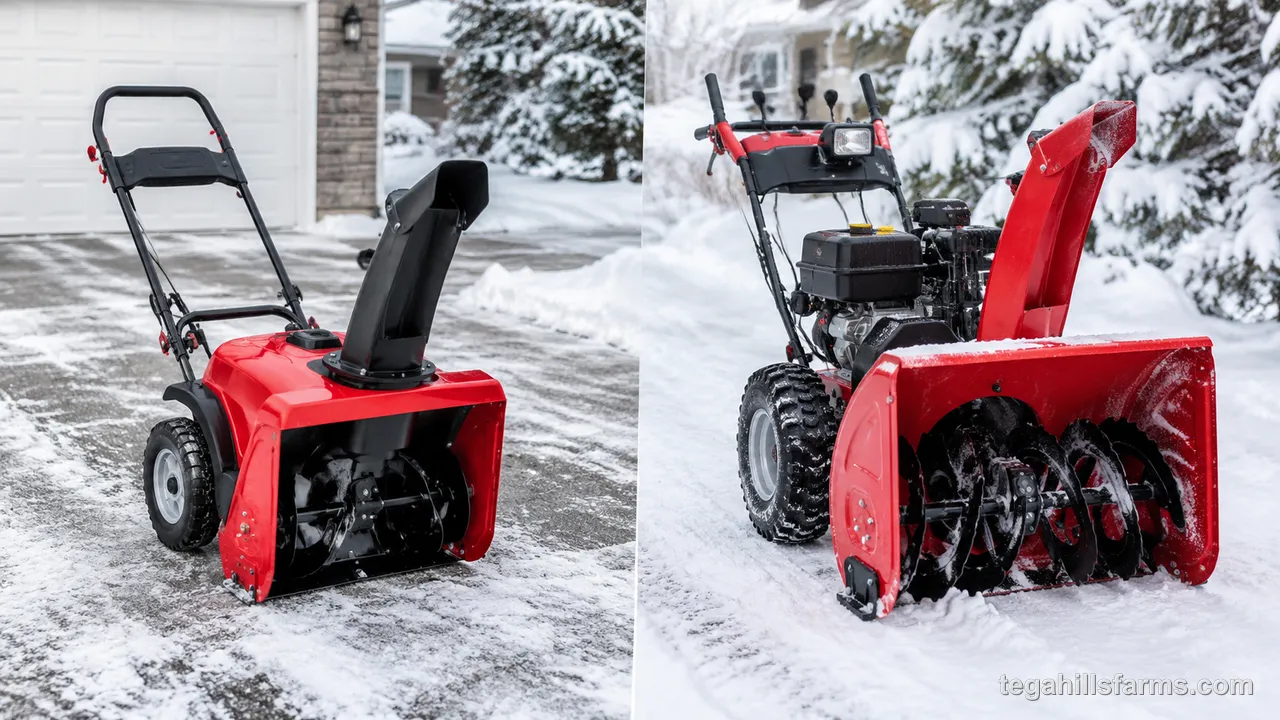
These three factors interact. A short driveway in a lake-effect snowbelt can need more machine than a long one in a region with mild winters, and gravel overrides almost everything else. A mismatch usually shows up during the first big storm, when the machine either clogs and stalls or turns out to be far more than the job needed.
Matching Snow Blower Type to Driveway Size and Snow Volume
A single-stage machine fits a small to moderate two-car-garage driveway in an area where storms stay light. That is the territory where its width, clearing capacity and ease of handling all work in your favor. Push past it in either size or snow depth, and you end up making repeated passes or shoveling the leftovers.
Two-stage machines cover much more ground. Cub Cadet rates its 2X two-stage models for driveways that hold about 8 to 15 cars and for snow around 12 inches deep, and its 2X EFI and MAX versions for up to 23 inches.
Snow volume can outweigh driveway size. A short driveway on a corner lot still collects a heavy plow ridge, and regions with wet, heavy storms load even small areas with snow a single auger struggles to throw. I’d size the machine to the worst storm a normal winter brings where you live. The average snowfall won’t strand you at the end of the driveway, but the worst storm will.
Paved vs Gravel: Why Surface Type Changes Everything
On gravel, a single-stage machine is off the table. Its auger touches the surface, so it scoops up stones along with the snow and throws them out the chute. That can chip siding, crack windows, dent cars and damage the auger itself.
A two-stage machine handles gravel because its housing rides on skid shoes. Raising the shoes lifts the auger enough to leave a thin layer of snow over the stones, and that layer keeps rocks out of the intake. Early in the season, before a frozen base forms, gravel can still get picked up, so a higher skid-shoe setting matters most in the first storms.
On paved surfaces, either design works, and the decision goes back to size and snow volume:
- Choose single-stage if your driveway is paved, compact and fairly flat, and your storms usually bring light, fresh snow.
- Choose two-stage if your driveway is gravel, long or sloped, or regularly gets heavy, wet snow and a packed plow ridge.
Features That Matter Beyond Stage Count
Clearing width, engine or battery power and comfort features such as remote chute control determine how fast and comfortably a machine clears your driveway, whichever design you pick.
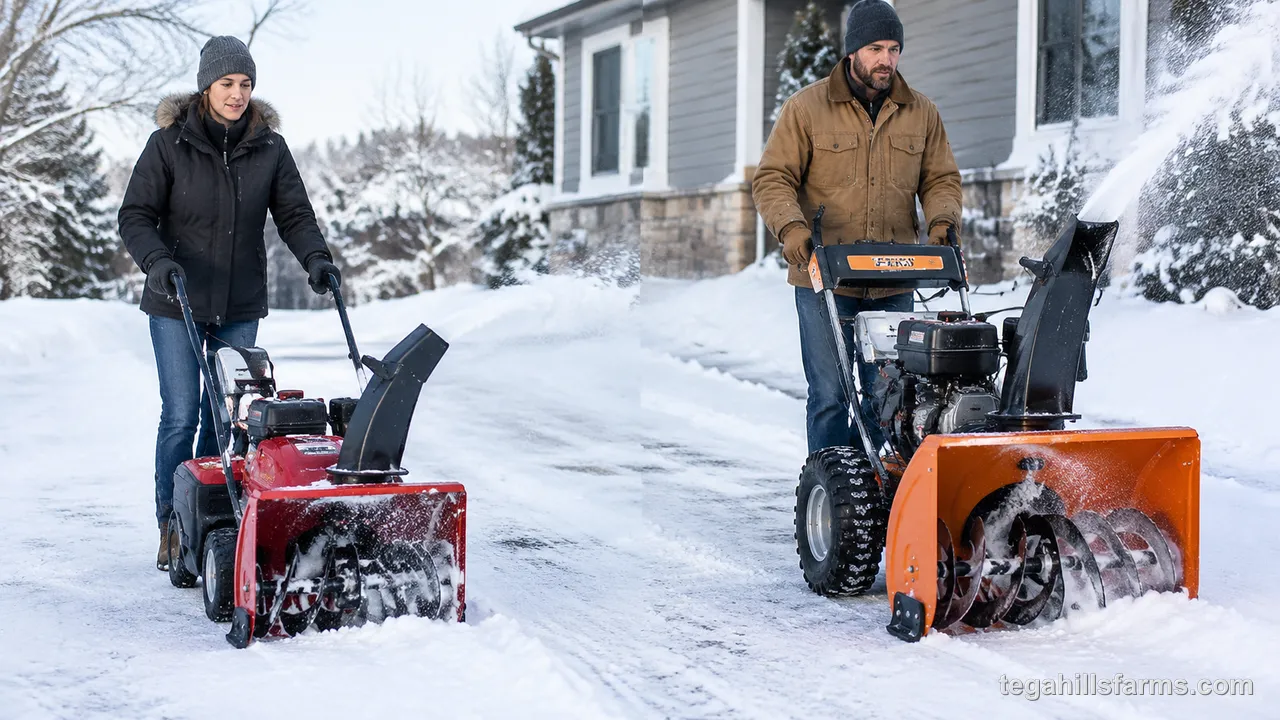
Two machines of the same stage count can feel very different in use. A narrow intake means more passes, an underpowered engine bogs down in wet snow, and a chute you have to stop and turn by hand slows down every pass along a long driveway.
Engine Power and Clearing Width Specifications
Single-stage machines typically have an 18- to 21-inch intake, while two-stage machines typically range from 24 to 32 inches. A wider intake clears a driveway in fewer passes, but it also takes in more snow per foot of travel, so the engine or motor needs enough power to keep the auger at speed in deep or wet snow. A wide housing paired with a weak engine stalls exactly when you need it.
For gas engines, look at displacement relative to clearing width rather than the number alone. For battery machines, look at the voltage and the battery platform, since sharing batteries with your other yard tools affects both cost and runtime. Power source is a separate decision from stage count, and the tradeoffs of gas vs electric snow blowers show up mostly in runtime, cold-weather starting and upkeep.
Convenience Features: Electric Chute, Heated Grips, and Beyond
Electric start and remote chute control matter most in daily use. Push-button electric start on gas models plugs into an outdoor outlet and turns over a cold engine without pulling a recoil cord. A remote chute control lets you change throw direction from the handle, so you don’t have to stop and reach forward on every pass.
Other features earn their place depending on your property:
- Heated grips keep your hands working on long driveways in deep cold.
- LED headlights help on early-morning clearing before work.
- Trigger or power steering makes a heavy two-stage machine easier to turn at the end of each pass.
- A chute-clearing tool, often stored on the housing, lets you clear clogs without putting your hands near the auger.
Gas left in a snow blower’s tank over the summer breaks down and leaves varnish in the carburetor, and that residue doesn’t announce itself until you pull the cord on the first storm morning. A machine that went into storage running fine can refuse to start in October and leave you shoveling the driveway the day you planned to use it.
What Most Snow Blower Guides Skip: Maintenance That Actually Matters
How a snow blower is stored over the off-season decides whether it runs reliably year after year, and it matters more than which stage count you bought. Both designs fail in similar ways when they’re neglected, though a two-stage gas machine has more parts that need attention.
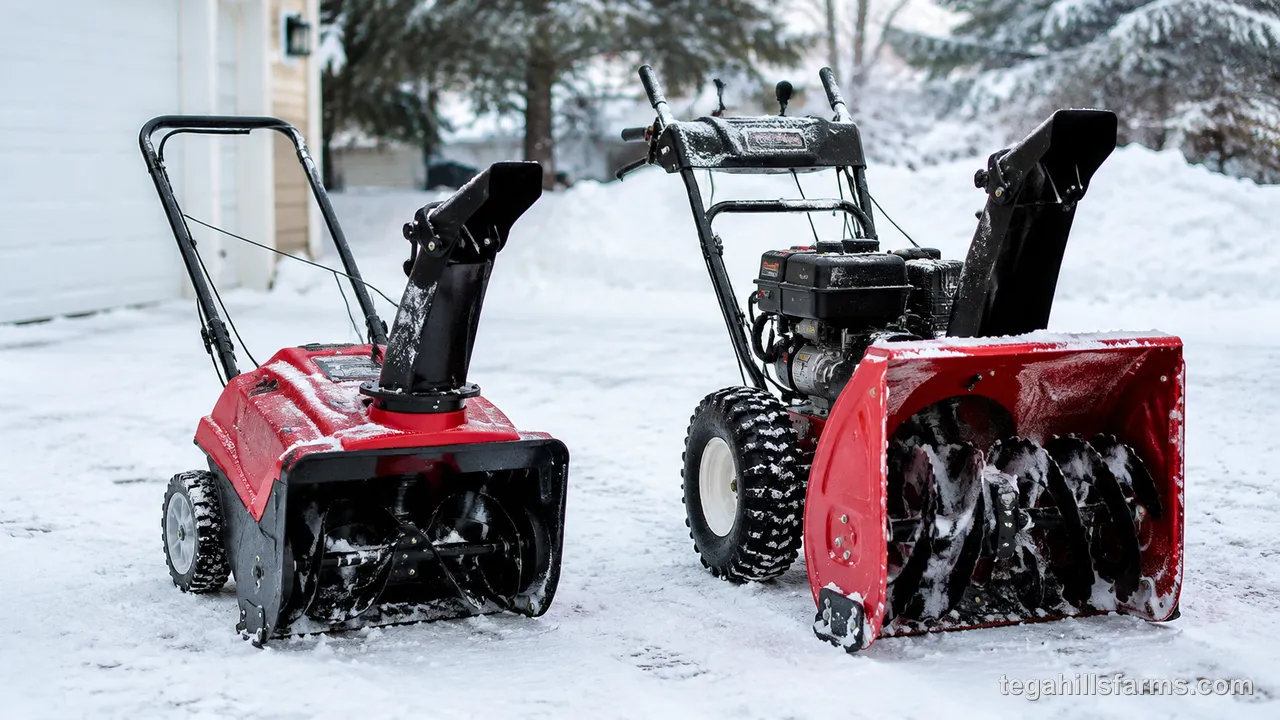
The upkeep itself is simple: deal with the fuel before storage, change the oil on gas engines, check wear parts, and keep the machine dry. Skipping these steps rarely causes trouble right away. The damage shows up months later, as a hard start or a seized part.
Storage Mistakes That Shorten Snow Blower Life
The most damaging mistake is leaving untreated gas in the tank over the summer. As fuel breaks down, it clogs the carburetor’s small passages. Add fuel stabilizer and run it through the system before storage, or run the tank dry.
Other common errors:
- Storing a battery machine’s pack in an unheated shed. Keep batteries indoors at a moderate temperature and partly charged.
- Skipping the oil change on a gas engine. Old oil left over the off-season carries contaminants that wear internal parts.
- Covering the machine while it’s still wet, which traps moisture against the auger and housing and leads to rust.
- Forgetting to check shear pins, paddles and belts before the first storm, when replacement parts are easy to get.
Realistic Lifespan: When to Repair vs Replace
How long snow blowers last depends more on storage habits and how hard the machine works than on brand or stage count. A well-kept machine that clears a modest driveway can run for many winters, while one stored with stale fuel and old oil can wear out much sooner.
Repair makes sense when the engine or motor is sound and the problem is a wear part. Paddles, shear pins, belts, spark plugs and skid shoes are inexpensive and built to be replaced. Replacement makes more sense when the auger housing is cracked or rusted through, the engine needs a major internal repair, or your needs have outgrown the machine. A single-stage unit that clogs every time the plow passes is undersized, not broken, and no repair will fix that.
Quick Fixes for Common Snow Blower Problems
When a snow blower won’t start, the cause is usually stale fuel, a choke or primer step that was skipped, or a fouled spark plug. Draining old gas, refilling with fresh fuel and replacing the plug solves most cold-start failures without a shop visit.
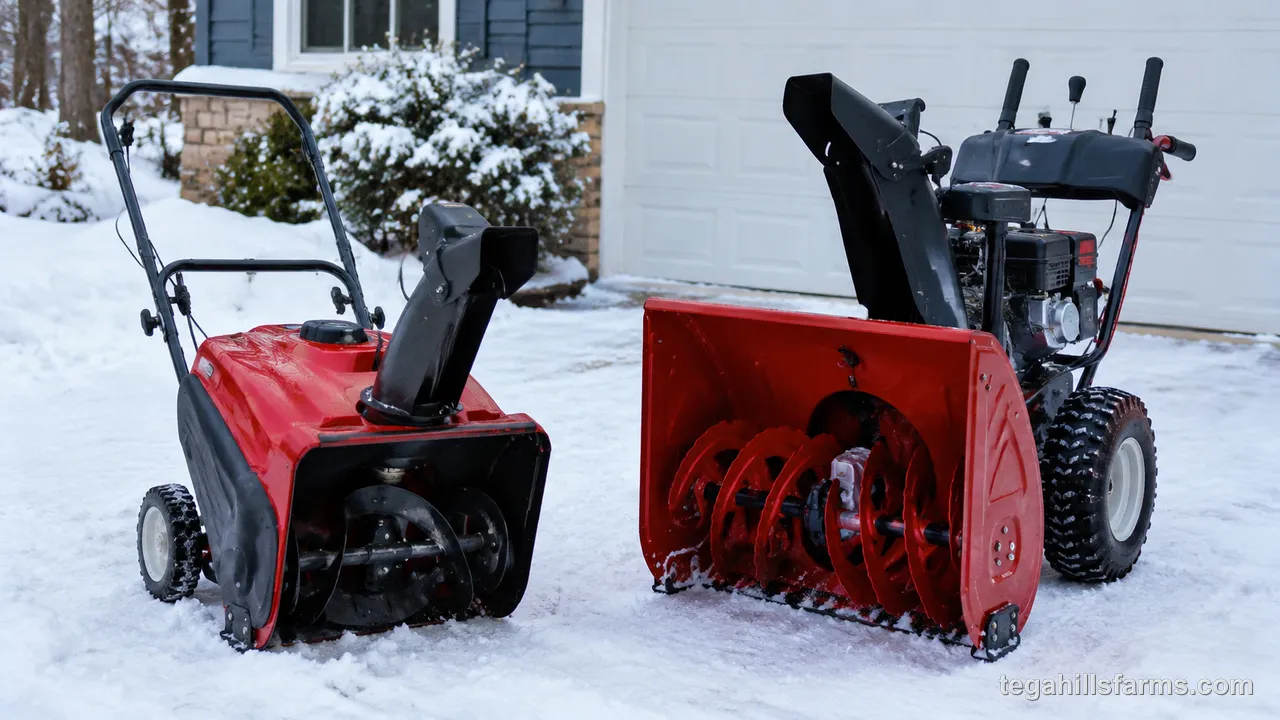
Other frequent problems have simple causes:
- If the auger stops turning on a two-stage machine while the engine runs, a shear pin has likely broken. That is a cheap part designed to fail before the gearbox does.
- If a single-stage machine leaves streaks of snow behind, the rubber paddles are probably worn and need replacing.
- If the machine loses drive or throwing power, a stretched or worn belt is a common cause.
- If the chute clogs, shut off the engine and use a clearing tool. Never reach into the chute or auger housing with your hands.
Call for service when the engine still won’t run on fresh fuel and a new plug, which usually points to a carburetor that needs cleaning or rebuilding.
How Much Should You Actually Spend?
Single-stage snow blowers typically run about $450 to $900, while two-stage models generally start around $1,000 and go up from there. Stage count is the biggest factor in how much a snow blower costs, followed by clearing width, power source and convenience features.
Value comes from matching the tier to your driveway, not from buying the most machine you can afford. A small paved driveway with light storms gets full value from a single-stage unit, and spending more mainly buys weight and storage hassle. A long, gravel or heavily plowed driveway is the opposite case: a cheaper single-stage machine there isn’t a saving, because it can’t do the job. Within a tier, spend extra first on the features that save effort on every pass, such as electric start and remote chute control, and treat extras like headlights as optional.
Write Your Review
No reviews yet. Be the first to share your experience!