

Our picks for the best two-stage snow blowers in 2026 are the EGO Power+ SNT2425 24in Two-Stage Snow Blower (Best Overall), EGO Power+ SNT2424 24in Two-Stage Snow Blower (Runner Up), EGO Power+ SNT2416 24in Two-Stage Snow Blower (Best Battery Life), EGO Power+ SNT2400 24in Snow Blower (Also Great), BILT HARD 24in 212cc 2-Stage Snow Blower (Best Budget), PowerSmart 26in 252cc Self-Propelled Blower (Best Performance), Husqvarna ST124 24in Snow Blower (Also Great), AMERISUN 212cc 26in Gas Snow Blower (Also Great) and Husqvarna ST227 27in 252cc Snow Thrower (Best for Hilly Terrain). The EGO machines run on 56V batteries, and the rest burn gas.
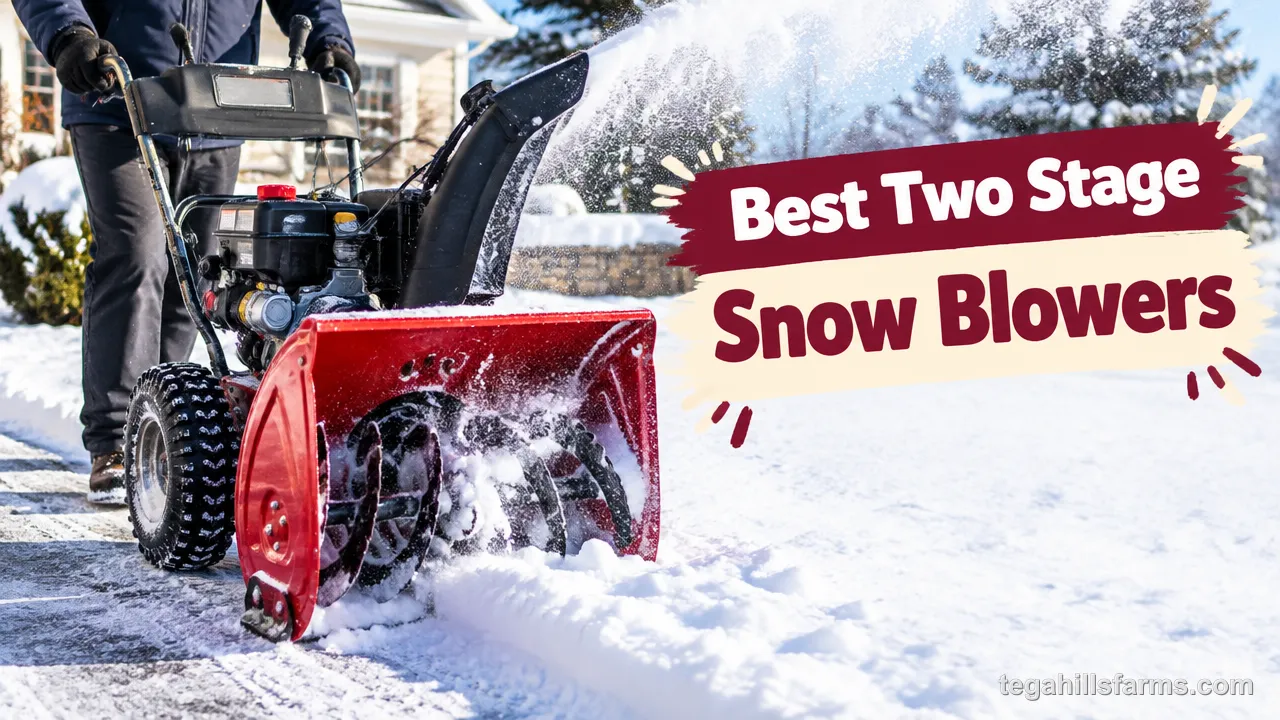
For your driveway, the differences come down to clearing width and intake height, gas versus battery power, the tire and steering setup, and the few extras that matter on a dark, cold morning.
Buy too little machine and the packed ridge the plow leaves at the street stalls it halfway through. Buy too much and you’re storing and maintaining a heavy machine sized for a driveway you don’t have.


If you already own EGO 56V ARC Lithium batteries, look at the bare-tool SNT2400 before the kits, since it runs on the packs you have.
What Makes a Two-Stage Snow Blower Different?
A slow-turning auger up front breaks snow loose and feeds it back to a high-speed impeller, which throws it out the chute. Cutting and throwing are handled by two separate parts instead of one.
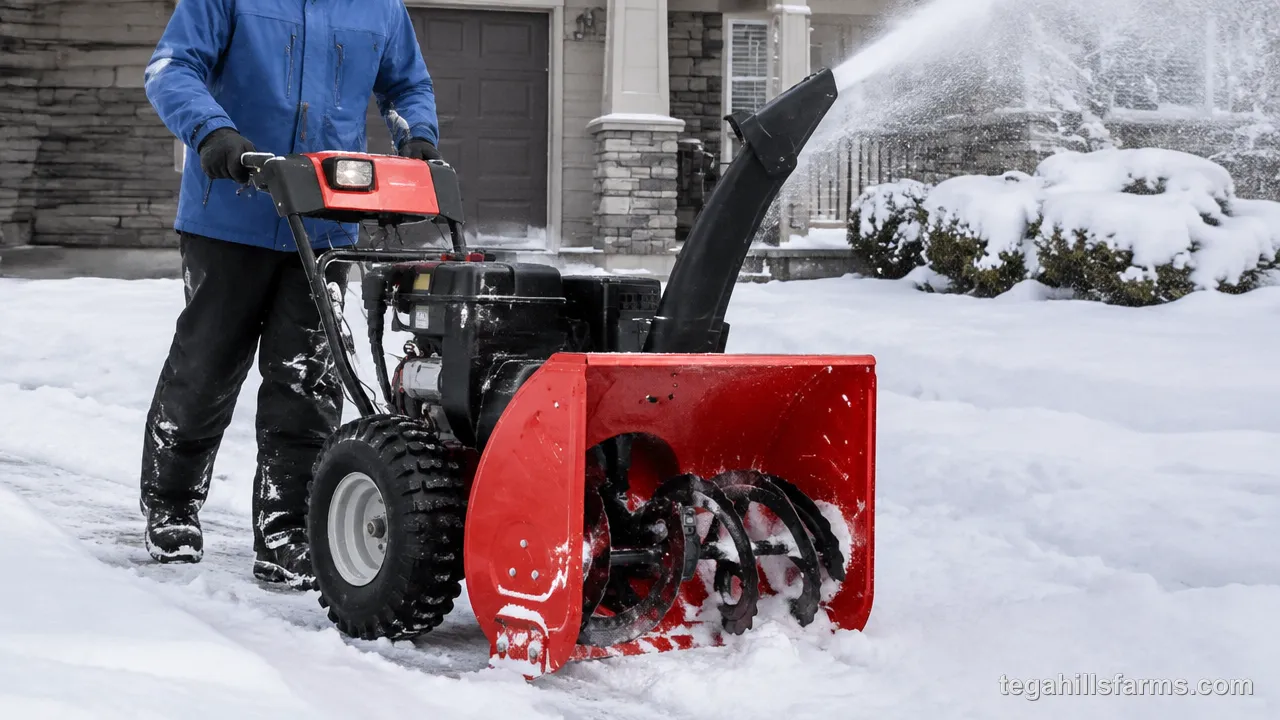
That split pays off at the end of the driveway, where the plow leaves a ridge of packed, chunky snow. A single-stage machine uses one paddle to scoop and throw at the same time, so it tends to ride up over that ridge or stall in it. A steel auger breaks the ridge into pieces small enough for the impeller to handle.
The second stage adds weight, and a machine that heavy can’t be shoved through deep snow by hand, which is why two-stage models drive their own wheels or tracks. If you’re still deciding between machine types, start with the best snow blowers before narrowing down to two-stage.
Are Two-Stage Snow Blowers Worth It?
Yes, if your driveway is long, wide or gravel and your winters bring deep or plow-packed snow. For a short paved driveway with light snowfall, the weight, upkeep and cost buy you capacity you won’t use.
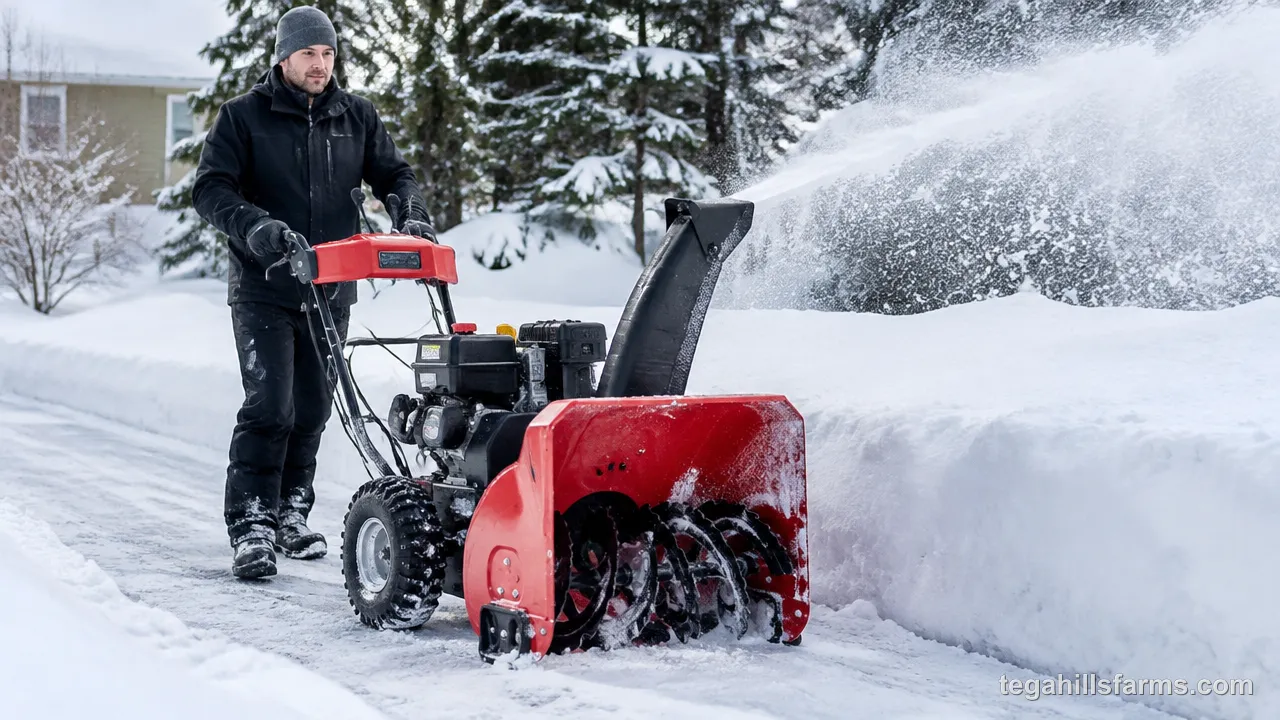
The payoff comes from the auger and the self-propelled drive working together. A wide housing that pulls itself forward clears a long or wide driveway faster, and the auger keeps chewing through deep snow and the plow ridge where a lighter machine bogs down. Gravel tips the decision too. A two-stage housing rides above the stones on adjustable skid shoes, while a single-stage paddle scrapes the surface and can pick up rock.
On a short paved driveway that rarely gets more than a light dusting, the same machine is overkill. It’s heavy to store, it brings belts to look after (plus an engine on gas models), and it can’t scrape down to the pavement the way a paddle does. For those lighter jobs, the best single stage snow blowers are lighter, simpler to own and clear closer to the surface.
What Should You Look for in a Two-Stage Snow Blower?
The right fit depends on whether a machine’s clearing width, power source and drive setup match your driveway, your storage space and how much steering effort you’re willing to put in.
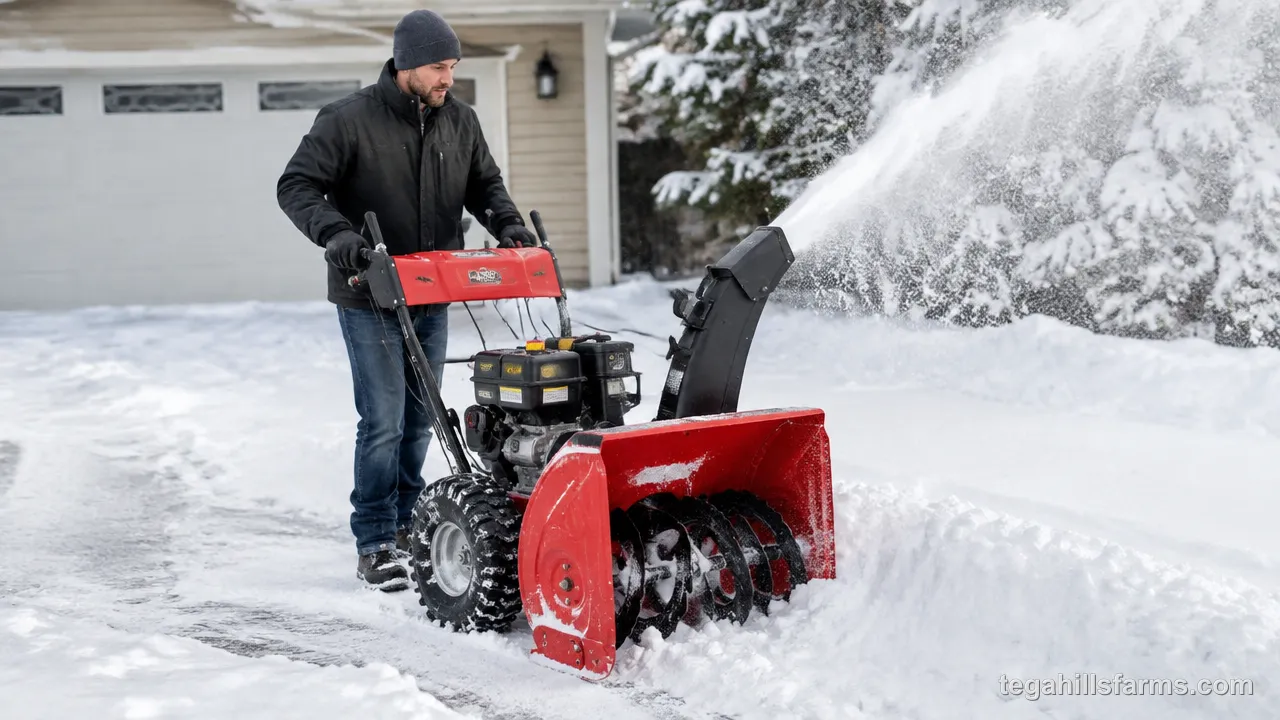
These machines are heavy, and a mismatch shows up every storm. Too narrow costs you extra passes, while too wide or too heavy fights you in every turn and crowds the garage all summer. Extras come last, once the basics fit. If you want the wider picture across all machine types, read how to choose a snow blower, which goes beyond two-stage models.
How Wide Should a Two-Stage Snow Blower Be for Your Driveway?
Clearing width sets how many passes your driveway takes. Intake height sets how deep a drift or plow ridge the machine can take in at once instead of in bites. A wider housing finishes a long or double-wide driveway in fewer trips, and a taller intake matters most where the plow packs snow at the street.
Engine displacement, listed in cc, tells you how big the engine is, and a bigger engine generally keeps the auger and impeller turning under heavy load. It doesn’t set throw distance on its own, though. The PowerSmart and the AMERISUN have engines of different sizes but the same rated throw, because the impeller and chute design matter as much as the engine behind them.
Throw distance has a practical job. By midwinter the banks beside your driveway are tall, and a short throw drops snow on the edge of the bank, where it slides back into your next pass. A longer throw also spreads snow across the yard instead of building one wall along the edge.
Width costs you in the garage and at the end of each pass. A wider machine needs more floor space all summer, takes more effort to swing around and won’t fit a narrow side walk. Size it to the driveway you actually clear, not the biggest storm you can imagine.
Gas or Battery: Which Power Source Suits a Two-Stage Machine?
Gas gives you power that holds steady under load, and you can keep running as long as there’s fuel in the can. Battery gives you quiet, fume-free clearing and push-button starts, but only a fixed amount of driveway per charge.
On the EGO machines, Peak Power combines two 56V batteries to get enough push for wet, packed snow, and the rated coverage per charge goes up with each step up in battery capacity. Once the packs run down, the job waits on the charger. A gas machine keeps going as soon as you top up the tank.
Cold starts favor battery machines and electric-start gas machines alike, because a cold engine is slow to fire on a pull cord. Gas brings oil changes, spark plugs, and fuel that has to be stabilized or drained before summer. Battery brings charging between storms and storing the packs indoors the way the manufacturer directs. Gas also brings noise and exhaust, which matters if you clear early near bedroom windows.
Sharing a battery platform saves you from buying a second set of packs, and a bare-tool machine like the SNT2400 runs on EGO 56V ARC Lithium batteries you may already own. I’d go battery for a driveway that fits inside the rated coverage, and gas for long driveways in snowy regions. The best gas snow blowers covers that side in more depth.
Wheels or Tracks: Which Drive Setup Fits Your Surface?
Tracks grip best on steep slopes, ice and unpaved ground. Pneumatic tires grip well and cushion the ride, but they need pressure checks and can go flat. Airless tires give up some of that cushion in exchange for no tire maintenance at all.
A tracked machine spreads its weight over a long footprint, which keeps it climbing on a grade. The cost is slower turning and more reliance on steering assist to pivot. Deep snow treads, or a locking differential that drives both wheels together, close much of that gap on a sloped driveway.
Skid shoes are the adjustable runners on each side of the housing. Raise them on gravel or along a lawn edge and the auger rides above the stones instead of picking them up and firing them out the chute. Lower them on pavement for a cleaner scrape.
Power steering or trigger steering releases drive to one wheel, so the machine pivots without you hauling the handles sideways, and that matters more as weight goes up. Multiple drive speeds help on a slope. A slow speed going downhill keeps the machine from running ahead of you, and a slow speed going uphill keeps the auger fed in heavy snow.
Which Extra Features Are Actually Worth Having?
Electric start and LED headlights change what you can actually do: one gets a cold engine running on a dark morning, and the other lets you clear before sunrise or after work.
Electric start comes in different forms. Some gas machines use a 120V plug-in starter, which needs an outlet and an extension cord near where you start the machine. On a battery machine, a button start comes with the design.
A remote chute joystick earns its place when you clear along a fence line or the street, where the chute direction changes every pass. Adjusting from the handle saves you stopping to reach the chute crank, and it keeps snow off the neighbor’s car.
Power steering pays off on the heaviest machines, where turning at the end of each pass takes the most effort. Heated grips are a comfort. They’re welcome on a long session in deep cold, but they don’t change how much snow you move.
The 9 Best Two-Stage Snow Blowers of 2026
The field runs from EGO’s battery machines, the EGO Power+ SNT2425 24in Two-Stage Snow Blower, EGO Power+ SNT2424 24in Two-Stage Snow Blower, EGO Power+ SNT2416 24in Two-Stage Snow Blower and EGO Power+ SNT2400 24in Snow Blower, to the gas-powered BILT HARD 24in 212cc 2-Stage Snow Blower, PowerSmart 26in 252cc Self-Propelled Blower, Husqvarna ST124 24in Snow Blower, AMERISUN 212cc 26in Gas Snow Blower and Husqvarna ST227 27in 252cc Snow Thrower. The EGOs share one housing and intake size, so battery capacity decides how much driveway each one finishes before the charger takes over. On the gas side, moving from a 212cc to a 252cc engine is what separates machines for an ordinary paved driveway from those built for heavy snow and long runs, and the ST227 adds traction gear for hills. Between them, they cover small to large driveways, sloped and gravel lots, and a budget gas option for plain paved ones.
#1 EGO Power+ SNT2425 24in Two-Stage Snow Blower — Best Overall
If the plow leaves a packed ridge at the end of a long driveway, this battery machine handles it, because its 20-inch intake height is built to power through that end-of-driveway buildup. Two 7.5Ah batteries and a dual-port charger come in the box.
Key Specs:
- Clearing width / intake height: 24 in / 20 in
- Throw distance: up to 50 ft
- Tires: 14-in airless with snow treads
- Weight: 201 lb
- Warranty: 5-year limited tool, 3-year limited battery
Detailed Review:
EGO’s Peak Power system draws on both 56V batteries at once, which is how a battery machine gets enough push for wet, packed snow. On one charge, the pair is rated to clear an 18-car driveway under 8 inches of snow. Deeper or wetter snow takes more energy per pass, so expect that coverage to shrink in a heavy storm.
The 2-in-1 remote chute joystick rotates the chute through 200° and sets the deflector from one control. Along a fence line or the street, that means you can redirect snow without stopping to reach forward. The variable-speed auger control also shortens the throw when you’re working close to the house or a parked car. Variable-speed forward and reverse let you slow down in a deep drift instead of bogging down the auger.
Airless tires take flats and pressure checks off your list, and their snow treads supply the grip. The IPX4 weather-resistance rating and integrated LED headlights suit clearing before sunrise. This is the machine I’d steer you toward if you want to give up gas entirely and still handle the plow pile at the street.
Pros:
- Two 7.5Ah batteries and a dual-port charger included.
- Remote joystick handles chute rotation and deflection together.
- Airless tires never go flat or need air.
- LED headlights help with dark morning clearing.
Cons:
- Its weight makes moving it around the garage a chore.
- Coverage per charge drops in deep, wet snow.
- Two large batteries add charging to your storm routine.
Who It’s For:
Homeowners with a long paved or plowed-in driveway who want to drop gas, oil and pull cords should look here first. It also suits anyone already invested in EGO 56V batteries. If your driveway is short and your snow is light, the weight and capacity are more than the job needs.
Editor’s Verdict:
Strong battery power, a remote chute joystick and maintenance-free tires make this a gas-free machine that still handles the plow pile at the end of a long driveway.
#2 EGO Power+ SNT2424 24in Two-Stage Snow Blower — Runner Up
For a mid-length driveway that still collects a plow ridge, this machine gives you the same 20-inch intake and remote chute joystick as the SNT2425, running on a pair of smaller 6.0Ah batteries. Both batteries and the charger come in the box.
Key Specs:
- Clearing width / intake height: 24 in / 20 in
- Throw distance: up to 50 ft
- Batteries: 2 x 56V ARC Lithium 6.0Ah, dual-port charger included
- Tires: 14-in airless with snow treads
- Weight: 198 lb
- Warranty: 5-year limited tool, 3-year limited battery
Detailed Review:
The battery pair is where this machine parts ways with the SNT2425. Its two 6.0Ah packs are rated to clear a 14-car driveway under 8 inches of snow per charge, against an 18-car rating for the 7.5Ah pair in the SNT2425. If your driveway sits well inside the smaller rating, the extra capacity of the bigger kit is capacity you’d carry around and rarely use.
Peak Power still combines both 56V batteries for wet and packed snow, and the rated throw and variable-speed auger control match the SNT2425. The 2-in-1 joystick swings the chute through 200° and sets the deflector, which saves trips to the front of the machine when you clear along a fence or the street.
Airless tires with snow treads skip the pressure checks pneumatic tires need. The IPX4-rated build and LED headlights handle wet, dark mornings. It comes in slightly lighter than the SNT2425, though not by enough to change how it turns. I’d take this one over the top pick whenever your driveway clears comfortably inside its rating.
Pros:
- Same intake, throw and chute joystick as the SNT2425.
- Two 6.0Ah batteries and a charger come included.
- Airless tires remove flat repairs and pressure checks.
- IPX4 weather-resistant build with LED headlights.
Cons:
- Smaller batteries clear less driveway per charge than the SNT2425.
- Full two-stage weight makes tight garages awkward.
Who It’s For:
If you want EGO’s battery two-stage design for a moderate-length driveway, this is the sensible fit, with the same chute joystick and airless tires as the SNT2425. Anyone clearing a very long drive through heavy storms should look at the SNT2425 or SNT2416, which carry larger battery packs.
Editor’s Verdict:
Choose it when your driveway fits its battery rating. You get the SNT2425’s intake, joystick and tires on a smaller pair of packs.
#3 EGO Power+ SNT2416 24in Two-Stage Snow Blower — Best Battery Life
Owners with a very long driveway who still want to skip gas should start here, because the two included 10.0Ah batteries are rated to clear a 24-car driveway under 8 inches of snow on one charge. Heated grips come standard.
Key Specs:
- Clearing width / intake height: 24 in / 20 in
- Throw distance: up to 50 ft
- Batteries: 2 x 56V ARC Lithium 10.0Ah, dual-port charger included
- Weight: 198 lb
- Drive: variable-speed self-propelled, trigger-controlled steering
- Chute: 2-in-1 remote adjustment lever, 200° rotation
Detailed Review:
The SNT2425 carries a 7.5Ah pair with an 18-car rating, and these 10.0Ah batteries raise the rated coverage per charge beyond that. The extra capacity lets you clear a long driveway and the street apron in one session instead of waiting on the charger partway through. The machine accepts any EGO 56V ARC Lithium battery, so packs you already own can serve as spares.
Trigger-controlled steering assists each turn at the end of a pass. That matters on a machine this heavy, because turning it by hand takes real effort. The variable-speed steel auger breaks up heavy snow and ice before the impeller sends it out the chute.
Heated handle grips keep your hands warm in the coldest conditions, and the 2-in-1 remote adjustment lever sets chute rotation and deflection without stopping. I’d count the grips as a real benefit here, because a bigger battery means longer sessions out in the cold. If you want to look past two-stage machines, compare the best battery snow blowers.
Pros:
- Larger 10.0Ah batteries cover more driveway per charge.
- Trigger steering helps turn the machine at each pass.
- Heated grips keep hands warm on long sessions.
- Accepts any EGO 56V ARC Lithium battery.
Cons:
- Bigger batteries take longer to recharge between storms.
- Heavy machine to park and store in a tight garage.
Who It’s For:
Long driveways and long, cold clearing sessions are where this machine makes sense, since the trigger steering and heated grips ease the extra time behind the handles. If you already own EGO 56V ARC Lithium batteries, they work as spares. A short driveway with light snow doesn’t need this much battery.
Editor’s Verdict:
Pick this one when range per charge matters more than anything else on a cordless machine. The heated grips and trigger steering make those long sessions easier.
#4 EGO Power+ SNT2400 24in Snow Blower — Also Great
If you already own EGO 56V ARC Lithium batteries, this bare-tool version puts them to work in a two-stage machine that weighs 150 pounds. Batteries and charger are sold separately.
Key Specs:
- Clearing width / intake height: 24 in / 20 in
- Throw distance: up to 50 ft
- Weight: 150 lb
- Batteries: sold separately; two EGO 56V ARC Lithium 7.5Ah recommended
- Start: push-button, no priming or pull cord
Detailed Review:
Next to the 201-pound SNT2425, this machine weighs noticeably less, and you’ll notice that every time you turn it at the end of a pass or roll it back into the garage. With the two recommended 7.5Ah ARC Lithium batteries, it’s rated to clear an 18-car driveway under 8 inches of snow on one charge. It accepts any EGO 56V ARC Lithium battery, so a pair you already own can do the work.
The handle-mounted control dashboard runs the variable-speed self-propel in forward and reverse. Push-button start means no priming and no pull cord on a cold morning, and four LEDs light the work area after dark.
The variable-speed steel auger breaks up heavy snow and ice, and the directional chute control sends it where you want it. The intake height matches the kitted EGOs, so choosing the bare tool costs you nothing at the plow ridge. I’d only point you here if the batteries are already on the shelf, because without them the machine can’t move at all.
Pros:
- Lighter build makes turns and parking easier than kitted EGOs.
- Push-button start with no priming or pull cord.
- Accepts any EGO 56V ARC Lithium battery.
- Four LEDs help with clearing after dark.
Cons:
- Batteries and charger are sold separately.
- Coverage per charge depends on the battery pair you install.
Who It’s For:
EGO owners who already keep ARC Lithium batteries charged are the natural buyers, especially if a lighter machine matters in a tight garage. If you’re starting with no EGO batteries, the SNT2425, which includes its pair and charger, is a simpler purchase.
Editor’s Verdict:
Buy it if the batteries are already on your shelf. Without them, the lighter frame and push-button start come with one more step before the first storm.
#5 BILT HARD 24in 212cc 2-Stage Snow Blower — Best Budget
For a plain paved or gravel driveway on a tight budget, this gas machine covers the basics with a 212cc engine, electric start and adjustable skid shoes. Its steel chute turns 180°.
Key Specs:
- Engine: 212cc 4-stroke OHV, 3600 rpm
- Clearing width: 24 in
- Throw distance: up to 40 ft
- Drive: self-propelled, 6 forward and 2 reverse speeds
- Augers: 10-in serrated steel
- Tires: 13-in pneumatic
Detailed Review:
The serrated steel augers bite into compacted snow and feed it to the impeller, which is the part of the two-stage design that matters most at the plow ridge. Push-button electric start gets the engine going in frigid temperatures, and the LED headlight helps on early mornings and late evenings.
The range of forward speeds lets you crawl through a heavy ridge and move faster through light snow, and reverse helps when you back out of a corner. Pneumatic tires grip on concrete or gravel, while the adjustable high-impact polymer skid shoes protect delicate surfaces from scratches.
Support goes through the seller on Amazon, so keep your order details handy for questions after the sale. For a plain driveway in a moderate winter, I’d call this enough machine, while the PowerSmart’s 252cc engine has more in reserve for long, deep-snow seasons. With a firm spending cap, browsing snow blowers under $500 widens the field beyond two-stage machines.
Pros:
- Push-button electric start works in frigid temperatures.
- Serrated steel augers cut through compacted snow.
- Adjustable polymer skid shoes protect delicate surfaces.
- LED headlight helps on early and late runs.
Cons:
- Pneumatic tires need pressure checks and can go flat.
- Its 212cc engine has less reserve than the PowerSmart’s 252cc.
Who It’s For:
Budget-minded homeowners with a plain driveway, paved or gravel, and winters that bring the occasional plow ridge will get what they need here. The adjustable skid shoes help on gravel. If your storms run deep and frequent, the PowerSmart’s larger engine gives you more reserve.
Editor’s Verdict:
Expect a straightforward gas two-stage with electric start, serrated steel augers and adjustable skid shoes, sized for a plain driveway and an average winter.
#6 PowerSmart 26in 252cc Self-Propelled Blower — Best Performance
Big, wet storms on a long driveway call for this one, since its 252cc engine is rated to move 2650 pounds of snow per minute through a 26-inch path. It weighs 142 pounds.
Key Specs:
- Engine: 252cc gas, 120V electric start
- Clearing width / intake height: 26 in / 20 in
- Throw distance: up to 45 ft
- Drive: wheel drive, 6 forward and 2 reverse speeds
- Tires: 13-in rubber snow tires
Detailed Review:
Compared with the BILT HARD’s 212cc engine and 24-inch path, this machine has a bigger engine and a wider path, and its rated throw is longer too. In return for more snow moved per pass, you get a bigger housing to store and swing around. It’s rated to clear up to a 16-car driveway and to handle snow from 1 to 12 inches deep.
The all-steel auger cuts through icy snow and the high-speed steel impeller throws it, so the parts that take the beating at the plow ridge are metal. The slower drive settings suit slopes and heavy snow, and reverse gets you out of tight spots.
The 120V electric start is push-button, so plan on an outlet and extension cord near where you start it. One-hand chute control turns the chute through 180°, and the adjustable steel skid shoes protect surfaces from scratches and scuffs. I’d pick this one for a long driveway that gets heavy, wet snow, as long as there’s an outlet close by.
Pros:
- 252cc engine rated at 2650 pounds per minute.
- All-steel auger and steel impeller handle icy snow.
- One-hand chute control rotates 180 degrees.
- Steel skid shoes protect surfaces from scuffs.
Cons:
- Electric start needs a 120V outlet and extension cord.
- Wider housing takes more garage space than 24-inch machines.
Who It’s For:
Homeowners facing heavy, wet storms on a long or sloped driveway get engine reserve and drive settings suited to that work. It also suits anyone who wants steel in the auger and impeller. A narrow walkway or a cramped shed is a poor match for its wider housing.
Editor’s Verdict:
This is a gas machine built around reserve power: a larger engine, steel internals and a wide path for long driveways in heavy snow.
#7 Husqvarna ST124 24in Snow Blower — Also Great
Deep drifts on a paved driveway suit this machine, because its 21-inch intake height lets more snow into the housing per pass. Its warranty runs three years bumper to bumper.
Key Specs:
- Engine: 212cc
- Clearing width / intake height: 24 in / 21 in
- Auger: ribbon type
- Tires: 13-in snow tires
- Weight: 173 lb
- Warranty: 3-year bumper-to-bumper, 5-year engine
Detailed Review:
The ribbon auger is an open spiral rather than a solid blade, and it mixes air into the snow as it feeds it. That keeps wet, heavy snow loose on its way to the impeller, and wet, heavy snow is exactly what packs at the end of the driveway after the plow passes. It makes the most difference on mornings when the snow is wet enough to stick to everything it touches.
The tall intake takes deep snow in fewer bites, and the snow tires grip for control when you turn on a slick driveway. The molded console and all-steel chute are built for durability, and steel holds up better than plastic when ice chunks hit the chute in hard cold.
The warranty covers the whole machine for one term and the engine for a longer one, which is the setup I’d want on a gas machine kept for many winters. It also weighs less than the Husqvarna ST227, which helps when you park it in a tight garage.
Pros:
- Ribbon auger mixes air into wet snow.
- Tall intake handles deep drifts.
- All-steel chute and molded console built for durability.
- Separate five-year engine warranty on top of machine coverage.
Cons:
- Gas engine brings oil, plug and fuel storage chores.
- Its weight makes tight turns take effort.
Who It’s For:
If you have a paved driveway that drifts deep, prefer gas and want long warranty terms, this is your machine. It suits owners who plan to keep one machine for many winters and want steel in the chute. If you’d rather skip oil and fuel, the EGO battery models avoid that upkeep.
Editor’s Verdict:
Count on steel in the chute and a warranty that covers the engine on its own. The ribbon auger keeps wet snow moving.
#8 AMERISUN 212cc 26in Gas Snow Blower — Also Great
A mid-size driveway that you’d like to clear in fewer passes fits this machine, because its 26-inch path covers more ground per trip than a 24-inch housing. Adjustable skid shoes suit paved and gravel surfaces.
Key Specs:
- Engine: 212cc 4-cycle OHV
- Clearing width / intake height: 26 in / 20 in
- Throw distance: up to 45 ft
- Drive: self-propelled, 6 forward and 2 reverse speeds
- Tires: 13-in snow tires
- Start: push-button electric
Detailed Review:
Its 212cc engine is rated for driveways up to 12 parking spaces, so the wide housing is there to cut passes on a mid-size driveway rather than to power through a long one. The PowerSmart shares this machine’s width, intake and rated throw but carries a larger engine and a higher driveway rating. If your driveway sits inside the smaller rating, the AMERISUN clears it in the same number of passes.
With several forward speeds, you can slow down for a heavy ridge, and reverse backs you out of a tight corner. The machine is rated for snow up to 12 inches deep, so a bigger storm calls for a slower speed or a narrower bite. Push-button electric start skips the pull cord, and the LED headlight helps on dark mornings.
Snow tires give traction on slippery surfaces, and the adjustable skid shoes work on paved and gravel driveways alike, so you can raise the housing over stone. I’d pick it for a gravel driveway of moderate length, where the skid shoes and the wide path both pay off.
Pros:
- Wide path cuts the number of passes.
- Long throw clears snow past existing banks.
- Push-button electric start skips the pull cord.
- Skid shoes adjust for paved or gravel driveways.
Cons:
- Wide housing needs more storage room than 24-inch models.
- Smaller engine than the PowerSmart for the same housing width.
Who It’s For:
If you have a mid-size driveway, paved or gravel, and want to clear it in fewer passes, this machine fits the job. Gravel owners get skid shoes that adjust to the surface. For a long driveway buried in heavy, wet snow, the PowerSmart’s larger engine is the better match.
Editor’s Verdict:
Wide, simple and easy to start, it clears a mid-size driveway in fewer passes, and its skid shoes keep the gravel in the driveway.
#9 Husqvarna ST227 27in 252cc Snow Thrower — Best for Hilly Terrain
A sloped driveway is where this machine earns its weight, because differential-locking X-trac tires with deep treads keep both wheels pulling while power steering handles the turns. An LED headlight covers dark mornings.
Key Specs:
- Engine: 252cc, 7.75 HP, electric start via power outlet
- Clearing width: 27 in
- Auger: heavy-duty ribbon type, adjustable height
- Tires: differential-locking X-trac with deep treads
- Weight: about 212 lb
- Chute: remote rotator and deflector
Detailed Review:
Locking the differential sends power to both wheels together, so the machine keeps climbing when one tire hits ice on a slope, and the deep X-trac treads give each wheel more to bite with. Power steering and trigger controls let you turn a machine this heavy without wrestling it, and the range of speeds lets you crawl down a grade.
The 252cc, 7.75-HP engine drives a heavy-duty ribbon auger that mixes air into frozen or wet snow so the impeller can churn through it. Electric start runs through a power outlet connection, so keep an outlet and an extension cord near where you start it.
The remote rotator and deflector change the chute’s direction and angle from the handle. The adjustable auger height raises the housing for extra protection over gravel or uneven ground, and the LED headlight lights a larger area than a traditional incandescent light. The 142-pound PowerSmart has the same 252cc displacement, but the ST227 is far heavier, and that weight presses the tires into the slope but makes parking more work. If your driveway runs downhill to the street, this is the gas machine I’d want.
Pros:
- Locking X-trac tires hold traction on slopes.
- Power steering eases turns on a heavy machine.
- Remote rotator and deflector adjust the chute from the handle.
- Adjustable auger height protects the housing over rough ground.
Cons:
- Heavy build makes parking and storage a chore.
- Electric start needs a power outlet nearby.
Who It’s For:
Steep or sloped driveways, especially ones that ice over, are what this machine is set up for, with the locking tires and power steering doing the hard work. Long paths on hilly lots also benefit from the remote chute controls. Flat, compact driveways don’t need this much machine or weight.
Editor’s Verdict:
On hilly ground, this is the machine to own: locking tires, power steering and a ribbon auger built for frozen, wet snow.
Which Two-Stage Snow Blower Should You Choose for Your Situation?
Pick a battery EGO if quiet starts and no fuel matter to you and your driveway fits its rated charge, a gas machine if storms run heavy and long, and the Husqvarna ST227 if your driveway runs uphill.
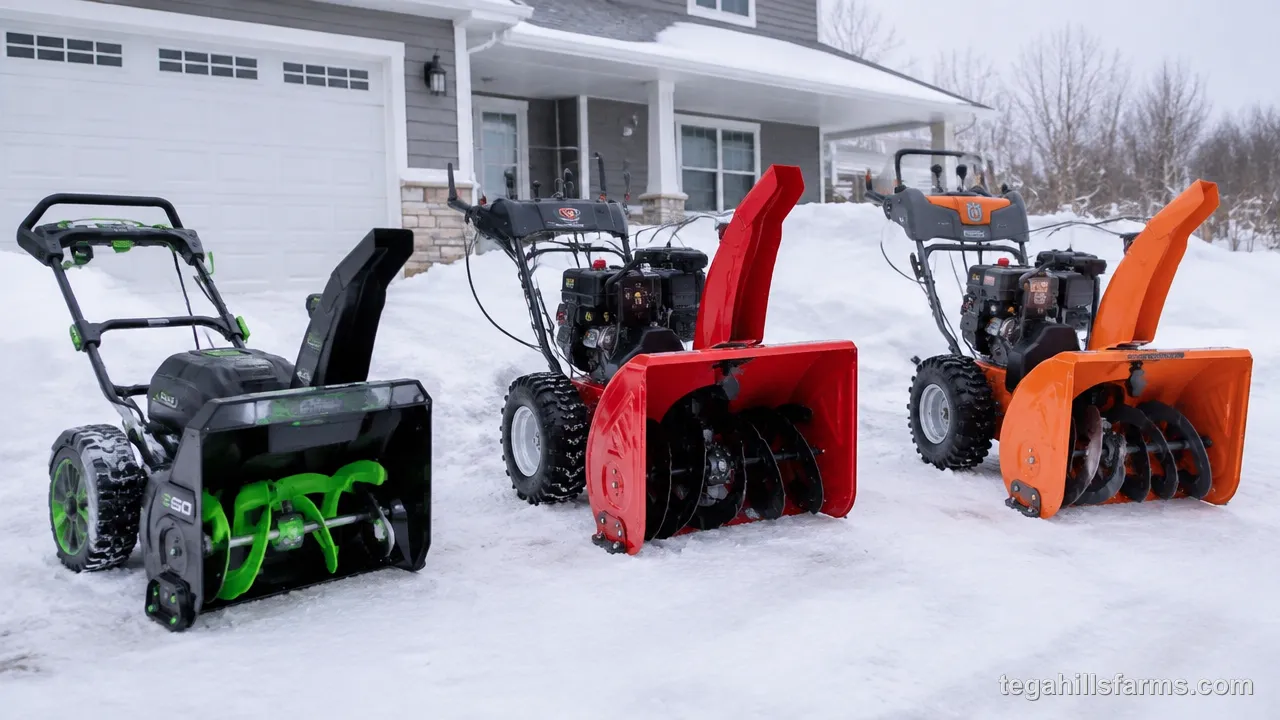
Among the EGOs, the included battery size decides the driveway. The SNT2424 suits moderate lengths, the SNT2425 suits long ones, and the SNT2416 is for when range per charge comes first. The bare SNT2400 makes sense only if the batteries are already on your shelf. On the gas side, the PowerSmart’s larger engine and steel internals suit heavy storms. The Husqvarna ST124 suits owners who want steel in the chute and a separate engine warranty, and the AMERISUN clears a mid-size driveway in wide passes. The BILT HARD fits a plain driveway in a mild winter, where its electric start and skid shoes cover what the job asks.
Gravel changes the choice because the housing has to ride above the stones, so favor a machine with adjustable skid shoes or auger height, such as the BILT HARD, PowerSmart, AMERISUN or ST227. If loose stone is your main problem, compare the best snow blowers for gravel driveways. Very heavy snow pushes the choice toward the 252cc engines in the PowerSmart and ST227, or the SNT2416 if you’d rather stay cordless. For storms that routinely bury the driveway, the best snow blowers for heavy snow widens that comparison beyond two-stage machines.
Drive belts stretch under load, shear pins snap when the auger catches something solid, and gas left in the tank goes stale over a summer in the shed. Skip the off-season work, and the first real storm finds a machine that won’t start or an auger that turns without throwing snow.
What Maintenance Does a Two-Stage Snow Blower Need?
Before the first storm, check the drive and auger belts for cracks or a glazed, shiny surface, and change the oil and spark plug on a gas engine. Keep spare shear pins on hand, set the pressure on pneumatic tires, and check the skid shoes and scraper bar for wear.
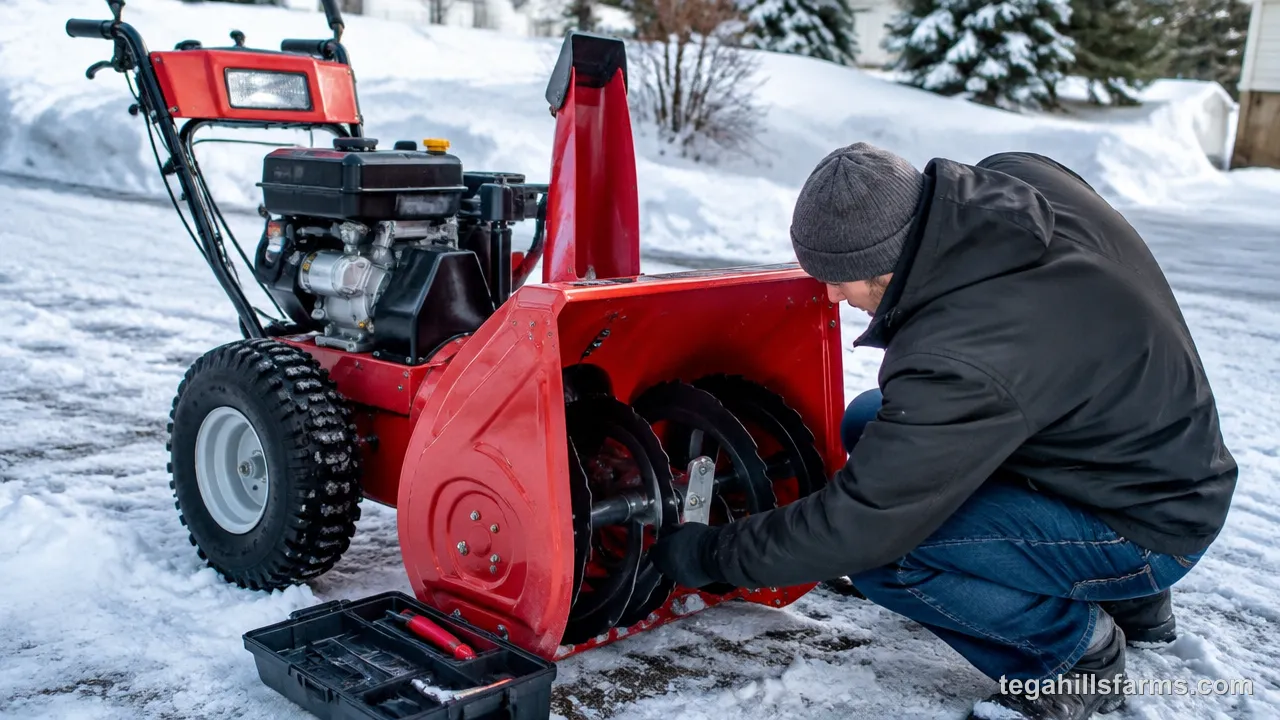
Belts carry power to the wheels and the auger, so a stretched or glazed belt slips under load and the auger slows right when it hits the plow ridge. Shear pins are made to snap when the auger meets something hard, like a frozen newspaper, which protects the gearbox. Without a spare, that one break ends the job mid-storm. The scraper bar and skid shoes wear down against pavement, so flip or replace them once they get thin.
At the end of the season, either run fuel stabilizer through a gas machine or drain the fuel completely, because fuel left over summer goes stale and gums up the carburetor. Battery packs go indoors, away from freezing temperatures, at the charge level the manufacturer recommends. A wipe-down and a light coat of oil on the auger housing keep rust off.
Skip those steps, and the first big storm finds an engine that needs its carburetor cleaned before it will run, or a slipping belt that leaves the chute dribbling snow.
How Do You Run a Two-Stage Snow Blower Without Clogging or Injury?
Slow down in heavy, wet snow and speed up in light powder. Aim the chute downwind and away from the street, windows and parked cars, and overlap each pass slightly so no ridge is left between them.
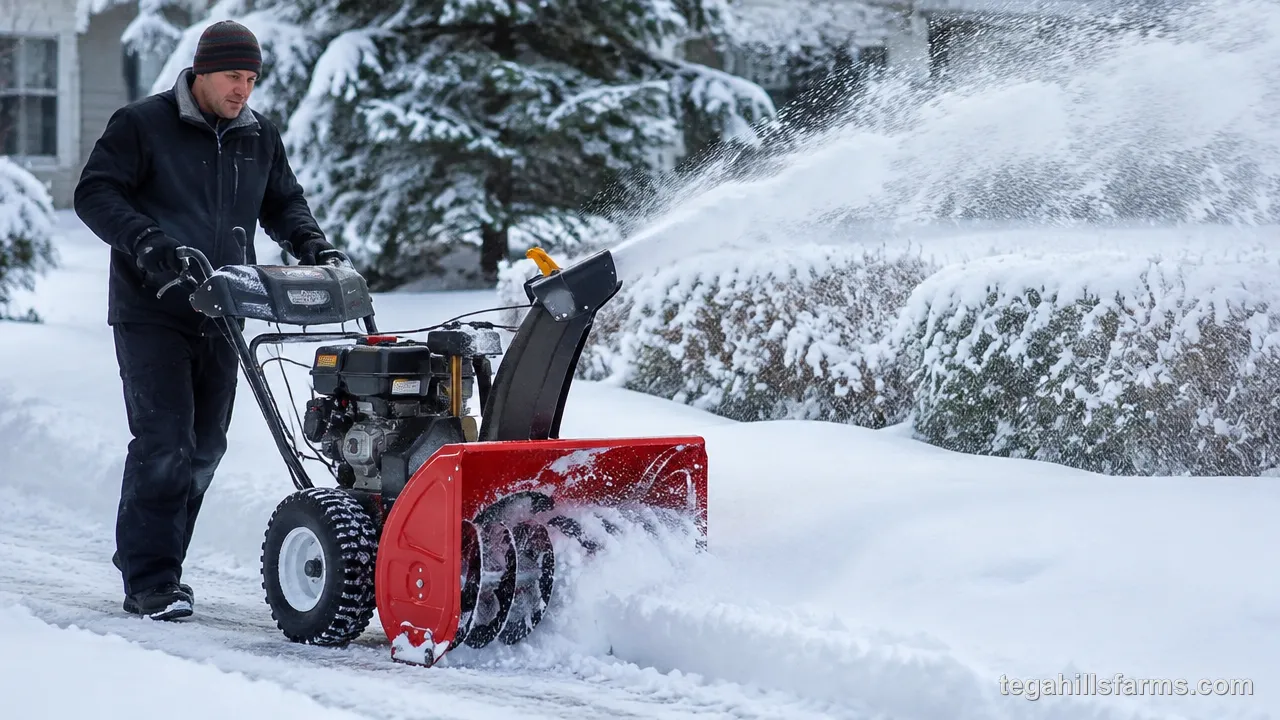
Ground speed matters because the auger and impeller can only move so much snow at once. Push too fast into wet snow and it packs into the chute instead of leaving it. Wet snow causes most clogs, and slowing the drive while keeping the engine at full throttle keeps the impeller spinning fast enough to clear it. A light coat of silicone spray inside the chute also helps wet snow slide out.
When the chute does clog, shut the machine off and use the clearing tool, never your hand, because the impeller can hold tension and turn once the clog breaks loose. Walk the driveway before the season and pick up newspapers, rocks and dog leashes, since anything the auger catches leaves the chute at speed. Keep people and pets out of the throw path. Only run a gas engine outdoors, because carbon monoxide builds up fast in a closed garage.
How Can You Tell a Reliable Two-Stage Snow Blower From One That Fails Early?
A machine built to last has steel in the auger, impeller and chute and uses belts and shear pins you can buy and swap yourself. Its warranty also spells out coverage for the engine, the machine and any battery separately.
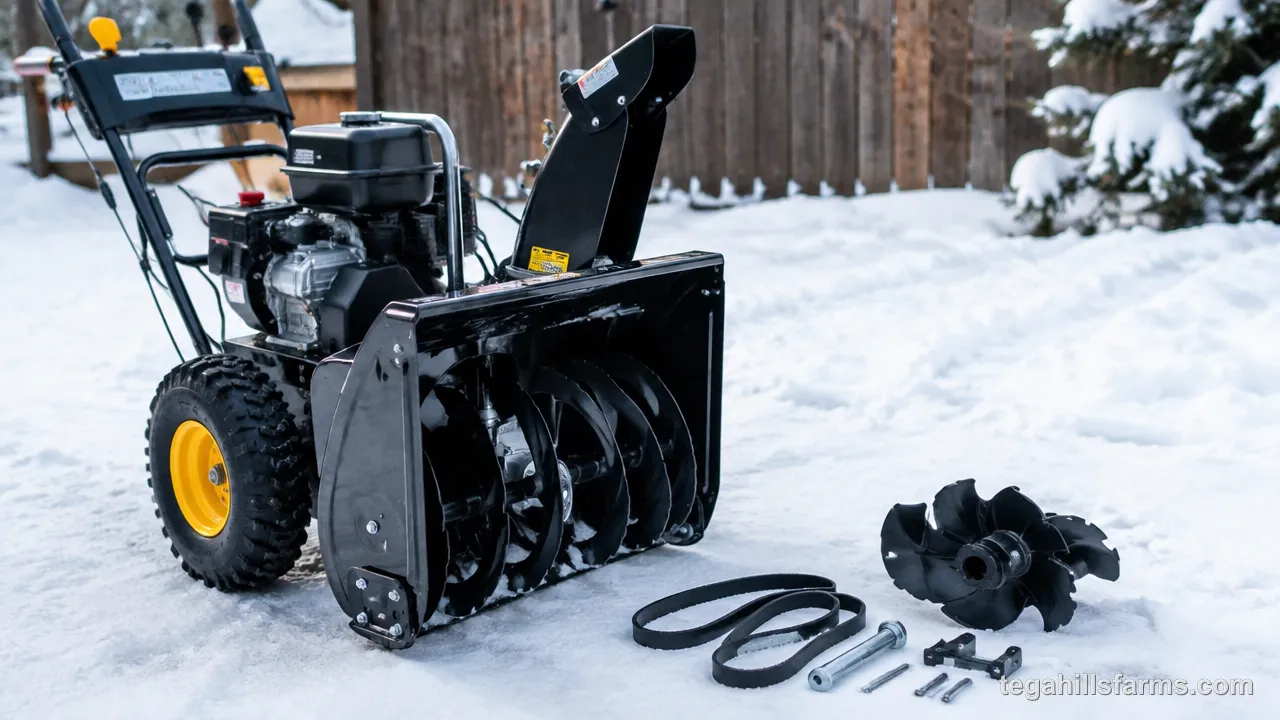
Steel matters at the impeller and chute because those parts take hits from ice chunks and gravel, and plastic in those spots can crack in deep cold. Serviceable belts and shear pins turn a breakdown into a short repair in your garage instead of a midwinter trip to a shop. Before buying, check that replacement belts, shear pins and a parts diagram are sold for that exact model. Without parts support, a machine gets hard to keep running after the first thing breaks.
How a warranty is split tells you what the maker stands behind. Husqvarna lists separate machine and engine coverage on the ST124, and EGO splits tool and battery coverage on its kitted machines, so you can see how long each major part is backed.
Very cheap machines tend to cut corners where you can’t see, with thinner housings, plastic parts and thin parts support. Judge reliability by build and support, not just the name on the housing.



Write Your Review
No reviews yet. Be the first to share your experience!