

Our picks for the best snow blowers for gravel driveways in 2026 are EGO Power+ SNT2122 21in Snow Blower (Best Overall), Westinghouse WSnow20 20in (Best Budget), WORX WG461 40V 20in Snow Blower (Best Cordless), PowerSmart 24in 212cc 2-Stage Snow Blower (Also Great), PowerSmart 26in 252cc Self-Propelled Blower (Best Performance), PowerSmart 24in 212cc Snow Blower (Best Easy-Start), Husqvarna ST124 24in Snow Blower (Best Durability), Husqvarna ST227 27in 252cc Snow Thrower (Best for Hilly Terrain), BILT HARD 24in 212cc Snow Blower (Also Great) and Honda HSS928 28in HSS928AAWD (Best Premium). Most are gas two-stage machines with an impeller behind the auger, and the cordless and corded electric models cover shorter, packed drives.
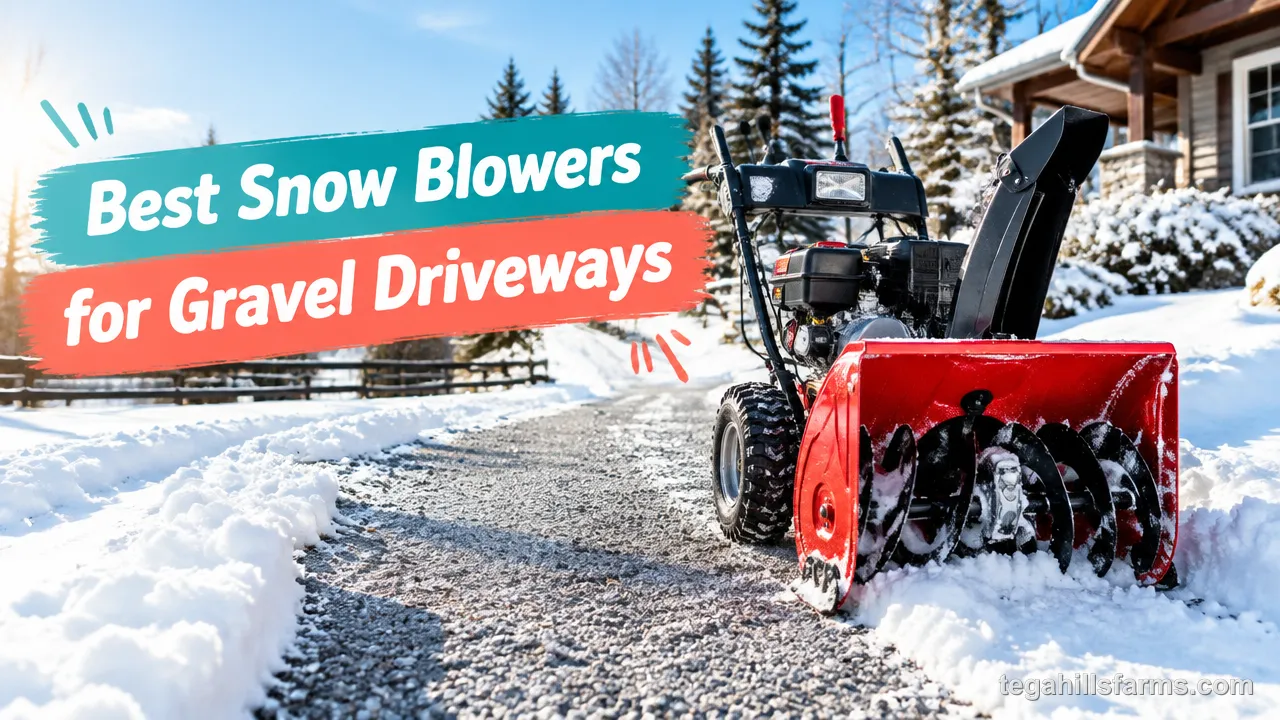
On stone, a machine works only if it can hold its housing above the surface. Adjustable skid shoes or an adjustable auger height set that gap, and an impeller does the throwing so the auger never has to dig. Beyond that, clearing width, engine size and self-propelled drive have to match the length and slope of your drive.
With gravel, the hard part isn’t clearing the snow. It’s keeping the stones where they belong. A housing set too low sends pebbles into siding, windows and parked cars, jams the auger, and scatters a little more of the drive across the lawn every winter.


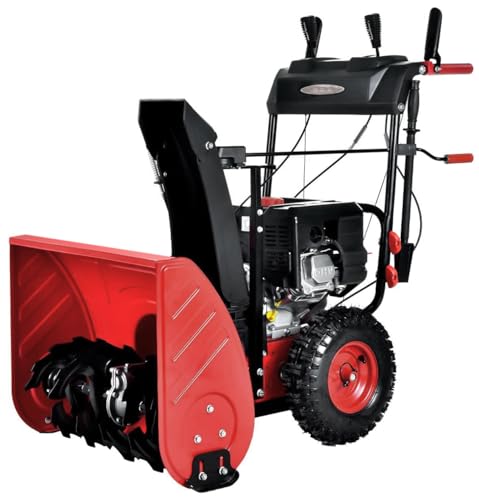


If your drive is long or climbs toward the road, start with a gas self-propelled machine. If it is short and flat and freezes hard, a cordless or corded model spares you the fuel and the weight.
Can You Use a Snow Blower on a Gravel Driveway?
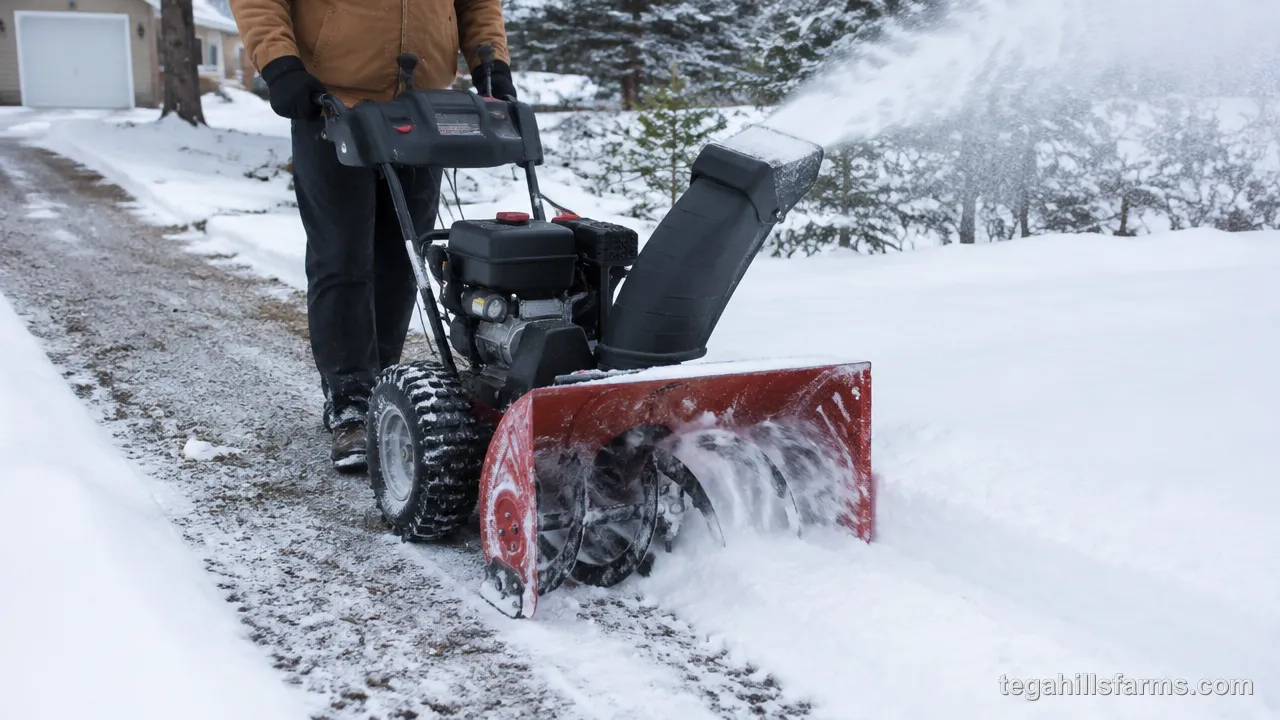
Yes, provided the machine is a two-stage design with adjustable skid shoes raised far enough that the housing rides over the stone instead of scraping it. The skid shoes set how high the bottom edge of the auger housing sits above the ground. On a two-stage machine, the auger only gathers snow from the layer left on top of the stone, and a separate impeller behind it throws that snow out the chute. That means the auger never has to touch the surface to do its job.
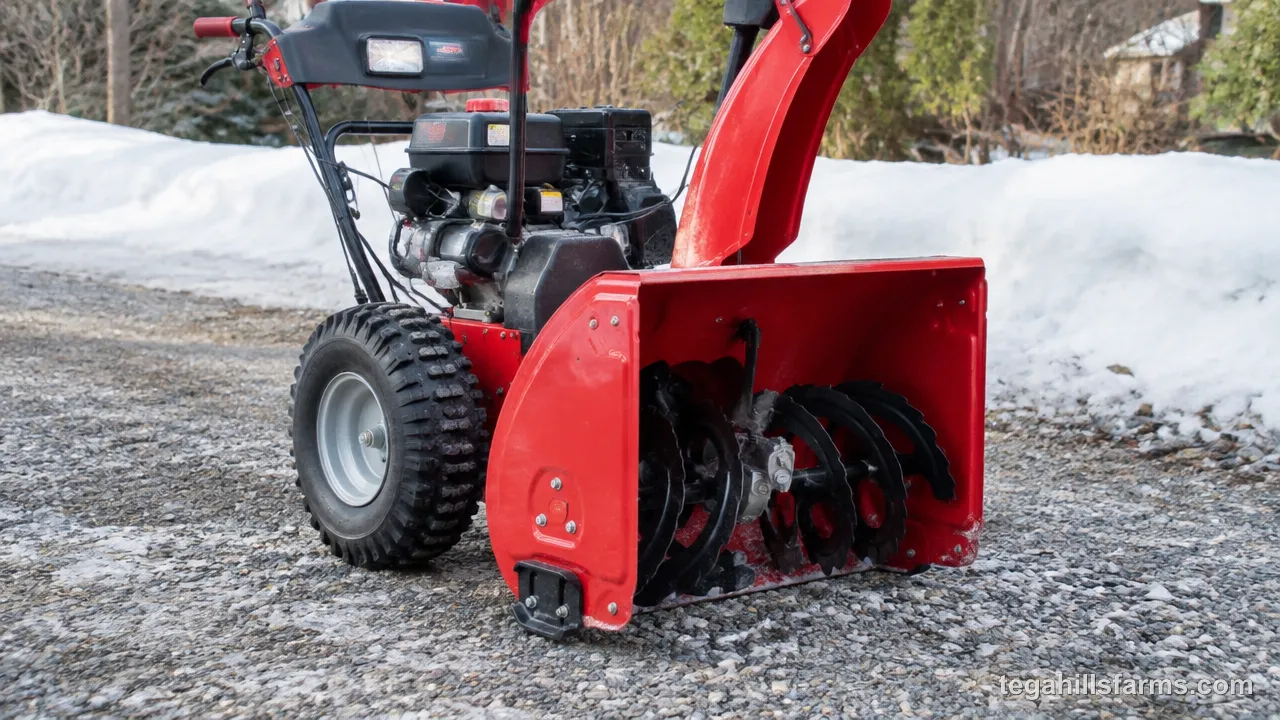
A single-stage machine works the other way. Its auger sweeps down to the surface and throws the snow in the same motion, so on loose stone it scoops up gravel and sends it out with the snow. A single-stage model with adjustable skid shoes can lift clear on a frozen, packed base, but loose stone reaches the auger again as soon as that base softens. That is why the best two stage snow blowers are the safer choice on stone, while the best single stage snow blowers belong on pavement unless the base is packed and the housing can be raised.
A wrong setup throws stones at siding and windows, jams or bends the auger, and carries gravel into the lawn. Gravel narrows the field to machines that can hold the housing above the stone, so it helps to weigh them against the full range of the best snow blowers before you commit.
The 10 Best Snow Blowers for Gravel Driveways of 2026
The machines suited to stone are EGO Power+ SNT2122 21in Snow Blower, Westinghouse WSnow20 20in, WORX WG461 40V 20in Snow Blower, PowerSmart 24in 212cc 2-Stage Snow Blower, PowerSmart 26in 252cc Self-Propelled Blower, PowerSmart 24in 212cc Snow Blower, Husqvarna ST124 24in Snow Blower, Husqvarna ST227 27in 252cc Snow Thrower, BILT HARD 24in 212cc Snow Blower and Honda HSS928 28in HSS928AAWD. Once their housing is set to ride above the stone, the gas two-stage machines with self-propelled drive have the impeller and wheel power for a long or sloped gravel run. The cordless and corded electric models give up some of that reach and power in exchange for gas-free clearing on shorter runs and lighter snow. Between them, these 10 machines cover short and long gravel drives, owners who want gas power and owners who would rather skip fuel altogether, and drives with hills or loose stone.
#1 EGO Power+ SNT2122 21in Snow Blower — Best Overall
For a gravel drive that packs down hard in winter, this cordless machine gives you gas-free clearing with adjustable skid shoes built for gravel and uneven ground. Its Peak Power system runs two batteries as one.
Key Specs:
- Power: Peak Power, two 56V ARC Lithium 4.0Ah batteries and a 320W charger included
- Clearing path: 21 in wide, 13 in high
- Auger: 6 in steel, variable speed
- Throw distance: Up to 42 ft
- Chute: 180° adjustment
- Build: IPX4 weather-resistant, LED headlights, quick-fold handle
Detailed Review:
As a single-stage machine, it depends on its adjustable skid shoes to work on stone. Raise them and the housing rides higher over the gravel, keeping the steel auger in the snow instead of the driveway. That clearance holds on a frozen, packed base, and I would wait for one before making the first pass.
Peak Power combines the output of both 56V ARC Lithium batteries, which is what lets the steel auger cut through packed snow and icy buildup. On one charge with the included pair, it clears up to a 10-car driveway under 8 inches of snow. Any EGO 56V ARC Lithium battery you already own also fits, so a spare pack can stretch a long session.
Variable auger speed and the wide chute adjustment let you place snow precisely and keep the discharge pointed away from windows and cars. The weather-resistant build and LED headlights suit mid-storm and early-morning clearing. With no fuel to stabilize and no oil to change, winter storage comes down to folding the handle and charging the batteries.
Pros:
- Adjustable skid shoes lift the housing over gravel and uneven ground.
- Peak Power combines two batteries for gas-like output.
- Variable auger speed gives finer control over snow placement.
- Quick-fold handle makes storage compact.
Cons:
- Single-stage auger can reach loose stone once the base softens.
- Clearing height is short for deep, drifted snow.
Who It’s For:
Homeowners with a packed gravel drive who are done with pull cords, fuel cans and oil changes will get real use from this machine, especially if they already run EGO 56V tools and can share batteries. It is a poor match for loose, freshly spread stone that never freezes into a firm base.
Editor’s Verdict:
Gas-free power, adjustable skid shoes and a steel auger make this a sound cordless choice for packed gravel, as long as you clear it after the base freezes.
#2 Westinghouse WSnow20 20in — Best Budget
On a short gravel path or walkway within reach of an outdoor outlet, this corded machine is an affordable way to clear snow without fuel or batteries, and its 1800W motor throws 680 pounds of snow per minute. It weighs only 29.3 pounds.
Key Specs:
- Motor: 120V, 15A, 1800W corded electric
- Clearing path: 20 in wide, 10 in deep
- Capacity: 680 lb of snow per minute
- Throw distance: Up to 25 ft
- Weight: 29.3 lb
- Chute: 180° adjustable, dual LED headlights
Detailed Review:
The rubber-tipped steel auger is made to work close to the surface. That spares decks and walkways, but on loose stone it can pick up gravel along with the snow. I would keep this machine on a drive that has frozen into a firm base and on the porches and sidewalks around it.
Each pass clears a path as wide as the housing and as deep as the intake, and the motor throws the snow up to 25 feet. That fits the light, frequent snowfalls a corded machine handles well, while anything deeper than the intake has to be cleared in layers. The 7-inch snow-grabbing wheels and soft-grip handle keep it easy to steer.
It weighs a fraction of what the PowerSmart 24in 212cc 2-Stage Snow Blower does, so you can lift it up a step or carry it across the lawn to a walkway. Your reach ends where the extension cord does, and the cord has to stay behind you and clear of the auger on every pass across the stone. Dual LED headlights light the path on dark winter mornings.
Pros:
- Light weight makes it easy to steer and carry.
- No fuel, oil or battery charging to manage.
- Adjustable chute aims snow away from the house.
- Dual LED headlights light the path in early darkness.
Cons:
- Extension cord length caps how far you can clear.
- Rubber-tipped auger works close enough to lift loose gravel.
- Shallow intake takes deep snow in layers.
Who It’s For:
If your gravel run is short, sits near an outdoor outlet and packs down firm, this is an affordable, lightweight way to clear it along with the walkways and deck. Anyone facing a long drive, loose stone or heavy storms should look at the gas models with an impeller instead.
Editor’s Verdict:
For short, firm gravel runs within cord reach, it handles light snow without fuel, oil or much weight to wrestle.
#3 WORX WG461 40V 20in Snow Blower — Best Cordless
Owners already invested in WORX PowerShare tools get a battery machine that runs on the same 20V packs, with two 6.0 Ah batteries in the box. It takes a 20-inch-wide bite per pass.
Key Specs:
- Power: 40V from two 20V 6.0 Ah PowerShare Pro batteries, charger included
- Motor: Brushless
- Clearing path: 20 in wide, 10 in deep
- Throw distance: Up to 35 ft
- Chute: 180° rotating with adjustable deflector
Detailed Review:
The two included batteries combine for 40V, and the PowerShare system lets the same packs run WORX 20V, 40V or 80V tools. If you already own WORX batteries, adding them gives you a spare set to swap in while the first pair charges. With both supplied packs, it has the runtime to clear up to a 15-car driveway in 6 inches of snow.
Each pass goes as deep as the intake, so a heavier storm means slower passes or a second run. Throwing snow up to 35 feet keeps it from piling along the strip you just cleared. The rotating chute and its adjustable deflector set both the direction and the height of the throw, and keeping that throw low and aimed away from the house is a simple guard against a stray pebble.
On gravel, this machine belongs on a frozen, packed base and lighter snowfalls, and it is worth checking how close the housing sits to the stone before the first pass. If your batteries come from another brand, the best battery snow blowers on that platform deserve a look before you buy into a new one.
Pros:
- PowerShare batteries swap with other WORX tools.
- Brushless motor runs on the included batteries and charger.
- Long throw keeps snow clear of the path you cleared.
- Adjustable deflector controls throw height and direction.
Cons:
- Long drives need spare batteries for continuous clearing.
- Intake depth limits it in heavy storms.
Who It’s For:
Households already running WORX 20V tools can share those batteries here, which makes this an easy battery addition for a packed gravel drive and the sidewalks around it. People who get deep, wet storms or have loose, unsettled stone will be better served by a gas machine with an impeller.
Editor’s Verdict:
A practical battery machine for packed gravel, especially if PowerShare packs are already on your shelf.
#4 PowerSmart 24in 212cc 2-Stage Snow Blower — Also Great
This gas two-stage machine suits a longer gravel drive where heavy, wet snow piles up, because its steel augers feed a high-speed impeller that resists clogging. Electric start replaces the pull cord.
Key Specs:
- Engine: 212cc 4-cycle OHV, electric start
- Clearing path: 24 in wide, 20 in intake height
- Capacity: 2,400 lb per minute, up to 12 in of snow
- Throw distance: Up to 45 ft
- Drive: Self-propelled, 6 forward and 2 reverse speeds
- Weight: 143 lb
Detailed Review:
The 212cc 4-cycle OHV engine moves 2,400 pounds of snow per minute through the steel augers to the high-speed impeller. That impeller keeps wet snow moving through the chute instead of letting it pack the housing. A steady throw matters on a long drive, where a clogged chute halfway down means stopping in the cold to clear it with the engine shut off.
The tall intake takes a deep storm in one sweep instead of in layers. Self-propelled drive with a wide spread of forward and reverse speeds lets you crawl over a rutted patch of stone and back out of a tight corner without hauling the machine around. The remote deflector control adjusts the throw from the handle.
At its weight, it relies on the drive wheels for turns and needs real room to park. Electric start runs from an outdoor extension cord, so a cold morning starts with a button rather than repeated pulls. Before the first gravel pass, check how the housing height is set on your unit so its bottom edge clears the stone.
Pros:
- Steel augers and impeller resist clogging in wet snow.
- Self-propelled drive has a wide spread of speeds.
- Tall intake takes deep snow in a single pass.
- Electric start skips the pull cord.
Cons:
- Heavy frame is awkward to move in tight storage.
- Electric start needs an outdoor extension cord nearby.
Who It’s For:
Gravel owners with a long drive and storms that bring heavy, wet snow will appreciate the clog-resistant impeller and having the drive wheels do the pushing. Anyone short on garage space or wanting a machine light enough to lift should look at a battery or corded option instead.
Editor’s Verdict:
Solid gas power, a tall intake and an anti-clog impeller make it a dependable gravel workhorse once the housing height is set right.
#5 PowerSmart 26in 252cc Self-Propelled Blower — Best Performance
On a long or sloped gravel drive, this machine pairs a 252cc engine with adjustable steel skid shoes that help keep the housing from scuffing the surface. It throws snow 45 feet.
Key Specs:
- Engine: 252cc gas, 120V push-button electric start
- Clearing path: 26 in wide, 20 in intake height
- Capacity: 2,650 lb per minute
- Auger and impeller: All-steel
- Drive: Self-propelled wheel drive, 6 forward and 2 reverse speeds
- Weight: 142 lb
Detailed Review:
Compared with the PowerSmart 24in 212cc 2-Stage Snow Blower, this model steps up from 212cc to 252cc and from a 24-inch to a 26-inch path. The wider path means fewer passes on a long run, and the all-steel auger cuts into icy snow while the steel impeller throws it. It is rated to clear up to a 16-car driveway.
Its adjustable steel skid shoes let you raise the housing above the stone, and they protect the surface from scratches and scuffing as the machine moves along. The wheel drive handles slopes, so the engine climbs the grade instead of you pushing it, and the machine rides on 13-inch rubber tires.
With a 26-inch housing, it needs a clear path through gates and between parked cars, plus a wide spot in the garage. The one-hand 180° chute control and push-button electric start keep the controls simple. Gas power brings fuel and oil upkeep every season, and the best gas snow blowers are the place to compare it with other engines in this class.
Pros:
- Adjustable steel skid shoes protect the driveway surface.
- Larger engine moves more snow per minute.
- Wheel drive with reverse speeds handles slopes.
- One-hand chute control simplifies aiming.
Cons:
- Wide housing needs room through gates and in storage.
- Gas engine adds fuel and oil upkeep each season.
Who It’s For:
Anyone clearing a long, sloped gravel drive after heavy storms will put the skid shoes, steel auger and wheel drive to full use. It is more machine than a short, flat run calls for, and a household with tight storage or a narrow gate may prefer a slimmer housing.
Editor’s Verdict:
Wide, powerful and fitted with steel skid shoes, this PowerSmart is built for long gravel drives with hills and heavy snow.
#6 PowerSmart 24in 212cc Snow Blower — Best Easy-Start
If cold mornings are when gas engines refuse to cooperate, this machine’s 120V push-button electric start is built to work smoothly even at -20°F. You skip the pull cord entirely.
Key Specs:
- Engine: 212cc, 120V push-button electric start
- Capacity: 2,400 lb per minute, up to 12 in of snow
- Clearing path: 24 in wide, 20 in intake height
- Throw distance: Up to 45 ft
- Drive: Self-propelled, 4 forward and 2 reverse speeds
- Weight: 146 lb
Detailed Review:
The electric starting system is rated for deep cold, which matters most in the coldest storms, when a pull-start engine with thickened oil can take repeated yanks. It also helps anyone whose shoulder or back makes a recoil cord a chore. You do need an outlet within extension-cord reach of where you start it.
Once it is running, the 212cc engine moves 2,400 pounds of snow per minute and tosses it up to 45 feet. The two-stage system is built for heavy accumulation, and the wide path keeps progress steady on a long drive.
Compared with the PowerSmart 24in 212cc 2-Stage Snow Blower, this model has 4 forward speeds instead of 6, so you get fewer steps between a slow crawl over rough stone and a quick run on the clear stretch. Its weight means the drive does the turning work in tight spots. For gravel use, set the housing height before the first storm and recheck it once the drive settles.
Pros:
- Push-button start is rated for deep-cold mornings.
- Two-stage system handles heavy accumulation.
- Long throw puts snow well clear of the drive.
- Reverse speeds help back out of tight corners.
Cons:
- Electric start depends on a nearby outlet and cord.
- Fewer forward speeds give less control over pace.
- Heavy frame takes effort to turn by hand.
Who It’s For:
People who dread pulling a recoil cord on frigid mornings, or who simply want the engine running the moment they press the button, are the natural buyers here. Those without an outdoor outlet near the garage lose the machine’s main advantage and should weigh that before buying.
Editor’s Verdict:
Reliable cold starts, a wide path and self-propelled drive suit gravel owners who want a gas machine that runs the moment they need it.
#7 Husqvarna ST124 24in Snow Blower — Best Durability
Built around a molded console and an all-steel chute, this two-stage machine suits owners who want a snow blower that holds up season after season. A 3-year bumper-to-bumper warranty backs it.
Key Specs:
- Engine: 212cc
- Clearing width: 24 in, 21 in intake height
- Auger: Ribbon auger
- Tires: 13 in snow tires
- Weight: 173 lb
- Warranty: 3 years bumper-to-bumper, 5 years on the engine
Detailed Review:
The ribbon auger mixes air into the snow as it gathers it, which loosens heavy snow so it moves through the machine without packing. The tall intake lets the housing take a full bite out of the pile the plow leaves at the end of the drive.
The molded console and all-steel chute are designed for durability, and the warranty adds 5 years of engine coverage on top of the bumper-to-bumper term. A steel chute also takes the knock of an occasional stone better than a plastic one would.
The 13-inch snow tires grip the terrain, which helps you hold a line along the soft edge of a gravel drive. At 173 pounds, it is heavier than the PowerSmart 24in 212cc 2-Stage Snow Blower at 143 pounds, which keeps it planted on a slope but makes it harder to maneuver in a tight shed. Before using it on gravel, confirm how the housing height adjusts on your unit and set it to clear the stone.
Pros:
- Ribbon auger aerates snow so it moves without packing.
- All-steel chute and molded console are built to last.
- Tall intake handles end-of-drive plow piles.
- Bumper-to-bumper warranty covers the whole machine.
Cons:
- Heavy build makes tight storage awkward.
- Weight that steadies it on slopes makes manual turns harder.
Who It’s For:
Buyers who keep a machine for many winters and value a steel chute backed by a solid warranty will feel at home with this Husqvarna on a long gravel drive. Anyone who has to wrestle a machine through a cramped shed will find the PowerSmart 24in 212cc 2-Stage Snow Blower lighter to handle.
Editor’s Verdict:
Steel where it counts and a long warranty make this a machine to keep for years, provided you have room to store its weight.
#8 Husqvarna ST227 27in 252cc Snow Thrower — Best for Hilly Terrain
A sloped gravel drive is where this machine earns its keep, because power steering and differential-locking X-trac tires give it the traction and control a climb demands. Its auger height adjusts too.
Key Specs:
- Engine: 252cc, 7.75 HP, electric start
- Clearing width: 27 in
- Auger: Heavy-duty ribbon auger
- Tires: Differential-locking X-trac with deep treads
- Steering: Power steering with trigger controls
- Weight: About 212 lb
Detailed Review:
The differential-locking X-trac tires have deep treads for traction in all snow conditions, and locking the differential drives both wheels together for grip on a grade. Power steering and the trigger controls let you turn this heavy machine at the top or bottom of a slope without wrestling it, and you choose from several speeds for the climb.
The adjustable auger height increases the distance between the auger housing and the ground, which on gravel lets you lift the housing above the stone rather than relying on the snow layer alone. The heavy-duty ribbon auger mixes air into frozen or wet snow so the impeller fan can churn through it. The 252cc, 7.75-HP engine starts with a push button once it is plugged into a power outlet.
At roughly 212 pounds, it outweighs the Husqvarna ST124 24in Snow Blower at 173 pounds. That mass helps it hold a line on a slope but makes storage and any manual repositioning harder. The remote rotator and deflector change the chute’s direction and angle from the handle, and the LED headlight lights a larger area than incandescent lights for early-morning and late-evening runs.
Pros:
- Differential-locking tires grip on sloped drives.
- Power steering makes turning a heavy machine manageable.
- Adjustable auger height lifts the housing above gravel.
- Remote rotator changes chute direction from the handle.
Cons:
- Substantial weight demands a wide, solid storage spot.
- Wide housing needs room through gates and between cars.
Who It’s For:
Homeowners whose gravel drive climbs or drops toward the road get the traction and steering this Husqvarna is built around, plus housing clearance for stone. Flat, short drives do not need this much machine, and buyers with tight storage will find the Husqvarna ST124 24in Snow Blower easier to fit.
Editor’s Verdict:
On a sloped gravel drive, its tire grip, power steering and adjustable auger height justify the extra weight.
#9 BILT HARD 24in 212cc Snow Blower — Also Great
With a 190° chute and a 40-foot throw, this gas machine suits a gravel drive hemmed in by the house, fences or parked cars, where snow has to land in one exact spot. You also get both electric and recoil starting.
Key Specs:
- Engine: 212cc gas, 120V electric or recoil start
- Clearing path: 24 in wide, 19 in intake height
- Two-stage system: Steel impeller and 4 steel blades
- Throw distance: Up to 40 ft
- Chute: 190° adjustable
- Drive: 6 forward and 2 reverse speeds
Detailed Review:
The steel impeller and steel blades break up the snow and move it through the machine, and the 212cc engine drives it across the full width of the housing. The wide-swinging chute lets you send the discharge to whichever side of the drive has room. That matters when the house sits on one side and a fence or a neighbor’s car on the other.
The throw carries snow clear of the strip you just cleared, so you are not handling it twice. With the spread of forward and reverse speeds, you can slow down over rough or rutted stone and pick up the pace on the clear sections.
The 120V electric starter and the recoil starter give you two ways to fire the engine, so a dead outlet or a missing extension cord does not end the morning. An LED headlight lights the path in low light. Before the first pass on gravel, find out how the housing height adjusts on your unit and set it to ride above the stone.
Pros:
- Electric and recoil start give a backup way to start.
- Wide-swinging chute aims snow away from tight spots.
- Steel impeller and blades handle routine residential clearing.
- Six forward and two reverse speeds match pace to conditions.
Cons:
- Gas engine brings fuel and oil upkeep.
- Recoil backup still means pulling a cord when power fails.
Who It’s For:
A gravel drive squeezed between the house, fences or a neighbor’s yard calls for precise chute control, and that is where this BILT HARD earns its place. Owners who want a backup to electric start will also like the recoil option, while anyone facing a steep climb should weigh a machine built around traction.
Editor’s Verdict:
Flexible starting and a wide-swinging chute make this BILT HARD a capable pick for cramped gravel drives.
#10 Honda HSS928 28in HSS928AAWD — Best Premium
For owners who want refined control on a big gravel drive, the hydrostatic drive lets you set ground speed without changing how fast the auger turns. A commercial-grade GX270 engine powers it.
Key Specs:
- Engine: Honda GX270 OHV, DC electric key start
- Clearing path: 28 in wide, 21.7 in clearing height
- Capacity: Up to 1,900 lb per minute
- Throw distance: Up to 52 ft
- Drive: Self-propelled hydrostatic
- Tires: 14 in pneumatic Sure-Grip
Detailed Review:
Its hydrostatic transmission lets you move a lever forward or back to set direction and speed with no shifting, and ground speed stays independent of auger rotation. On gravel, you can slow to a crawl over a soft or rutted patch while the auger and impeller keep full speed, so the chute keeps throwing instead of choking.
The commercial-grade GX270 OHV engine starts with an automotive-style DC electric key, which makes cold-weather starts easy without hunting for an outlet. It moves up to 1,900 pounds of snow per minute and throws it up to 52 feet.
The 14-inch pneumatic Sure-Grip tires use an aggressive directional tread and are tuned for maneuverability on smooth surfaces, so slow your pace where the stone turns loose. The electric 4-direction joystick moves the chute through up to 198 degrees as you walk, which keeps snow and any stray pebble pointed away from the house. It arrives ready to run with no assembly, and its 28-inch housing needs room through gates and between cars.
Pros:
- Hydrostatic drive separates ground speed from auger speed.
- Electric key start makes cold-weather starts easy.
- Joystick chute repositions on the go.
- Arrives ready to run with no assembly.
Cons:
- Wide housing needs generous gates and storage space.
- Tires favor smooth surfaces over loose stone.
Who It’s For:
Serious gravel owners with a long, wide drive and the budget for a premium machine will appreciate the hydrostatic control and joystick chute in every storm. A short, flat run or a narrow gated drive does not need this much machine, and its owner would be paying for capability that sits unused.
Editor’s Verdict:
Hydrostatic drive, key start and a joystick chute give this Honda refined control that suits large gravel drives and owners willing to invest in it.
What Should You Look for in a Snow Blower for a Gravel Driveway?
On stone, the machine has to hold its housing clear of the surface, carry enough width and power for the drive, keep traction on loose ground, and, if it runs on a battery or cord, keep pace with the snow. Pavement forgives a machine set too low because there is nothing loose to pick up. Gravel punishes the same setting with thrown stones and a damaged auger, so a machine that clears pavement well can still be the wrong choice for your drive.
What Skid Shoes and Auger Features Matter on Gravel?
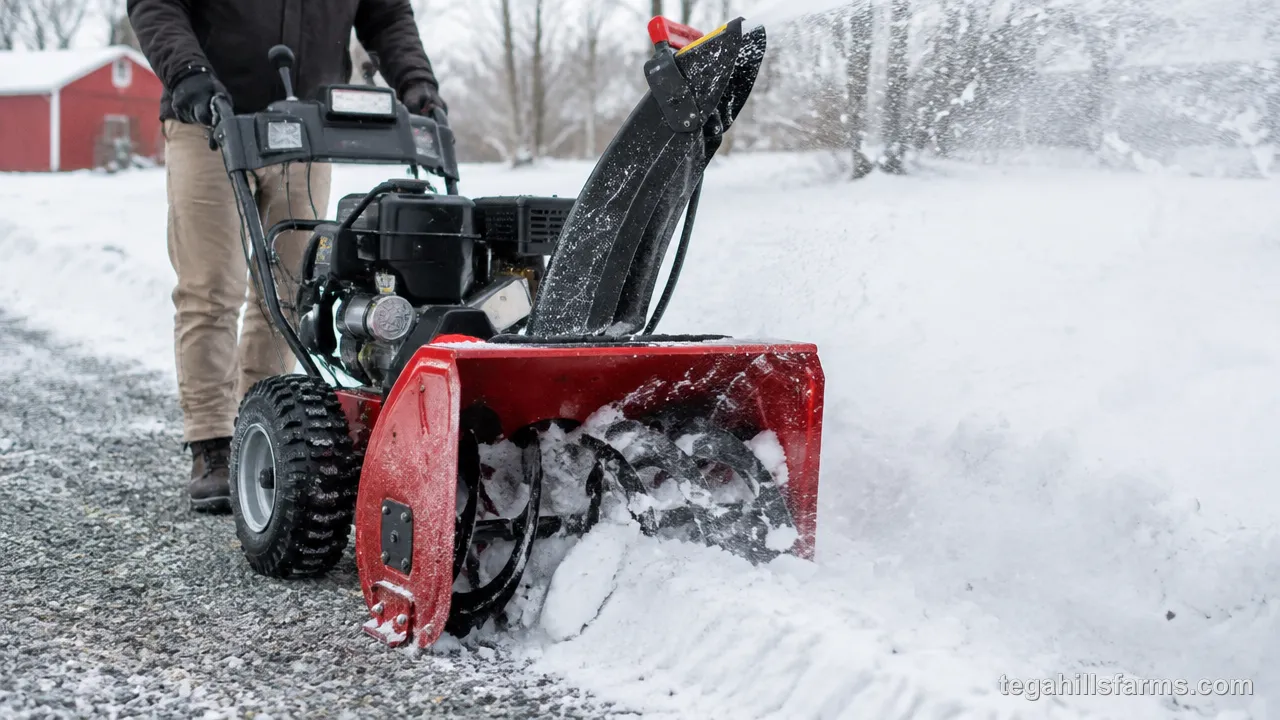
The gap between the bottom of the auger housing and the stone decides whether a machine clears snow or digs up your drive, and adjustable skid shoes set that gap. They are the runners bolted to each side of the housing. Slide them down and the housing rises, so the scraper bar rides on a layer of snow instead of skimming the gravel. With that layer in place, the auger never reaches deep enough to scoop stone and feed it to the chute.
Steel shoes wear slowly and hold their setting through a season of rough stone, but they can scratch a paved apron or a concrete pad where the drive meets the garage. Polymer shoes glide more easily and leave fewer marks on hard surfaces, though rough gravel wears them down faster, so they need checking more often.
The auger type matters too. A rubber-tipped auger is built to work close to the surface, which spares pavement but still lifts loose stone when it touches gravel. A steel auger on a two-stage machine only gathers snow and feeds it to the impeller, so it can ride above the stone without costing you throw distance.
How Do You Match Size and Power to Your Gravel Driveway?
Read the drive before you read spec sheets: its length and width, the narrowest point you have to pass, how steeply it climbs, and where the snow is allowed to land. A gate, a mailbox post or a car that stays parked along one side caps the clearing width you can actually use, and a housing wider than that gap forces you into awkward partial passes. Slope decides whether you need self-propelled drive, because pushing a heavy machine up a grade on loose stone wears you out and lets the wheels spin. Where the snow can go matters just as much. On a drive bordered by the house, a fence or a neighbor’s yard, chute rotation and throw distance count for more than raw width.
Engine displacement and clearing width set how well a machine handles heavy or wet snow. A larger engine keeps the impeller spinning at speed when wet snow loads it, and a wider path means fewer trips down a long run. A long run favors the wider housings among the best snow blowers for large driveways, and wet, packed storms favor the bigger engines found among the best snow blowers for heavy snow. A machine is oversized when its housing will not fit through your narrowest point, when it will not fit where you store it, or when the drive is cleared before a large engine has warmed up.
Should You Choose Wheels or Tracks on Loose Stone?
Deep-tread tires handle a flat or gently sloped stone drive well, and a tracked machine only earns its bulk on steep grades and on a soft, uneven base where tires spin. Tracks spread the machine’s weight over a long footprint, so they sit on top of loose stone instead of sinking, and they keep climbing on a slope where a tire would dig in. Wheels put the weight on two small contact patches, which works on packed gravel but can spin or trench on soft spots.
Beyond traction, the two differ in how they turn, store and wear:
| Factor | Wheels | Tracks |
|---|---|---|
| Grip on slopes | Good with deep tread | Stronger |
| Soft or uneven base | Can spin or dig in | Rides on top more evenly |
| Turning on level ground | Easy | Harder, needs steering assist |
| Storage and transport | Lighter, easier to move | Heavier, bulkier |
| Upkeep | Tire pressure and tread | Track tension and wear |
Tracks are worth the extra bulk when the drive is steep enough that wheels with good tread still slip. Everywhere else, wheels are the easier machine to live with.
Can Battery and Corded Snow Blowers Handle Gravel?
Yes, on a packed, frozen drive with light to moderate snow. On a long drive or in heavy, wet snow, though, battery runtime, cord reach and motor power all fall short. A battery machine’s runtime drops as snow gets deeper and wetter, so a longer drive may need a second or third battery to finish without a recharge break, and those packs need to come in from the cold between storms. A corded machine never runs out of power, but its reach ends at the length of your extension cord, and the cord has to be dragged across the stone and kept behind you on every pass.
Electric motors handle light, fresh snow well. Packed snow at the end of the drive and heavy, wet snow slow them down more than they slow a gas engine driving an impeller, which means slower passes and more of them.
The power source does not change what protects the stone. Adjustable skid shoes matter just as much on an electric machine, because the clearance they set is what keeps the auger out of the gravel. The EGO Power+ SNT2122 21in Snow Blower carries them for that reason.
How Do You Set Up and Snowblow a Gravel Driveway?
Stones stay on the drive when pre-season adjustments are made before the first storm and the first pass waits for a frozen base. The right machine, set wrong, still throws gravel. A thrown stone, a sheared pin or a bare patch of lawn in spring usually traces back to a missed adjustment or a pass made too early. Each storm after the first gets easier, because a housing at the right height over a frozen base leaves the auger nothing to pick up but snow.
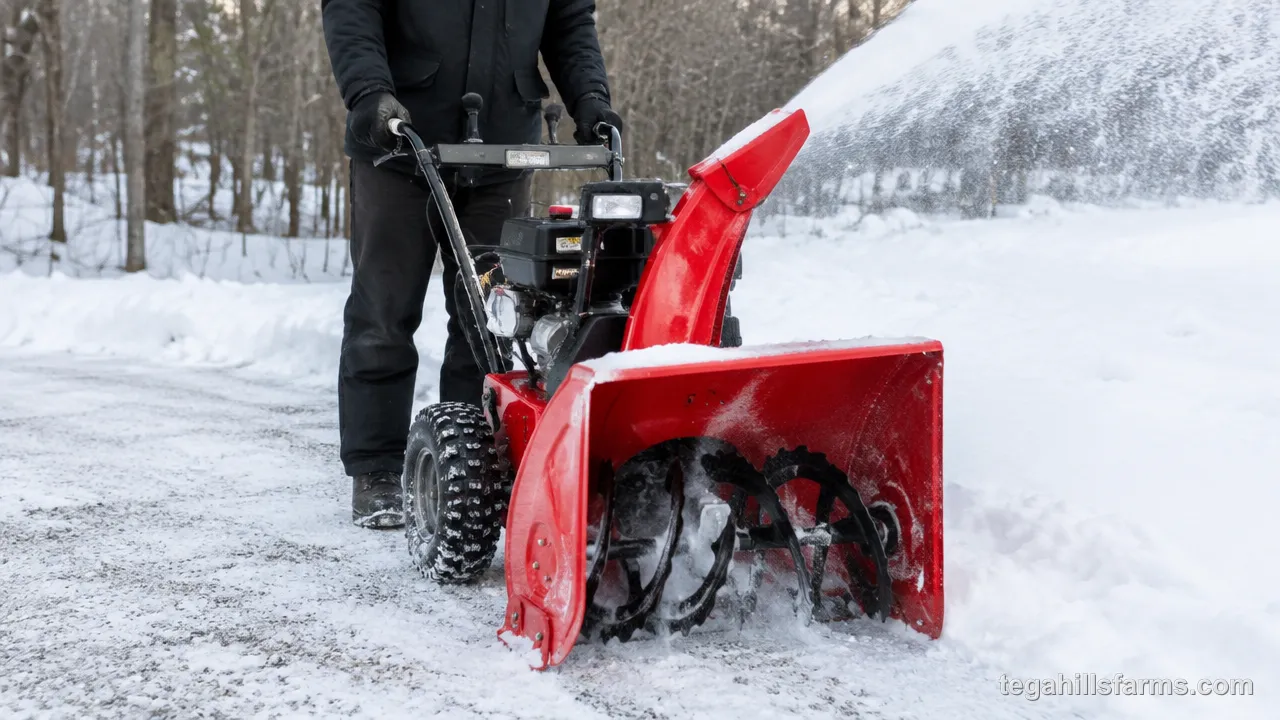
What Should You Check Before the First Storm?
Before snow is in the forecast, raise the skid shoes, inspect the shear pins, fill up with fresh fuel, look over the drive belt and work the chute through its full range, in that order. Each step heads off a specific gravel problem:
- Skid shoes: set them so the bottom of the housing sits above the stone on a flat stretch, which keeps the auger from scooping gravel on the first pass.
- Shear pins: replace any that are cracked or missing and keep spares. A stone wedged in the auger is meant to snap a pin rather than bend the auger, and a storm is the wrong time to hunt for a replacement.
- Fresh fuel: drain last season’s gas or start with new stabilized fuel, since stale fuel is a common reason a machine will not start on the first cold morning.
- Drive belt: look for cracks, glazing or fraying, because a slipping belt loses drive on loose stone and can stall the machine halfway up a slope.
- Chute: rotate it and move the deflector through its full travel, so you can aim stones away from the house the moment one comes through.
On a battery machine, a full charge on every pack takes the place of the fuel step. Check the skid shoe setting again during the season, because the shoes wear against the stone and the drive itself settles and heaves with each freeze and thaw.
How Do You Make the First Pass Without Throwing Stones?
Wait for a packed or frozen base, leave a thin layer of snow on the stone, walk at a moderate pace and keep the chute aimed away from the house, windows, cars and lawn. Loose, rutted or freeze-thaw gravel lets the skid shoes sink into the surface, which drops the housing back into the stone and cancels the clearance you set before the season. A frozen base holds the shoes at the height you set.
The thin layer of snow left behind is the buffer between the auger and the gravel. Scraping down to bare stone looks tidier, but it is how pebbles end up in the chute. A moderate pace lets the machine ride over ruts and humps instead of bouncing the housing down into them, and it gives the impeller time to clear the snow it takes in.
When the surface is still soft or the snow is deep, raise the shoes another notch and clear the top layer first, then come back for the rest once the base firms up. Driving over fresh snow before you clear it helps pack the base on a drive that will not freeze.
Which Snow Blower Should You Pick for Your Gravel Driveway?
Match the machine to the drive: long or sloped runs call for a gas self-propelled model, cold starts point to push-button electric start, and short runs in light snow are where a cordless or corded model is enough. Each driveway condition lines up with a machine type and specific models:
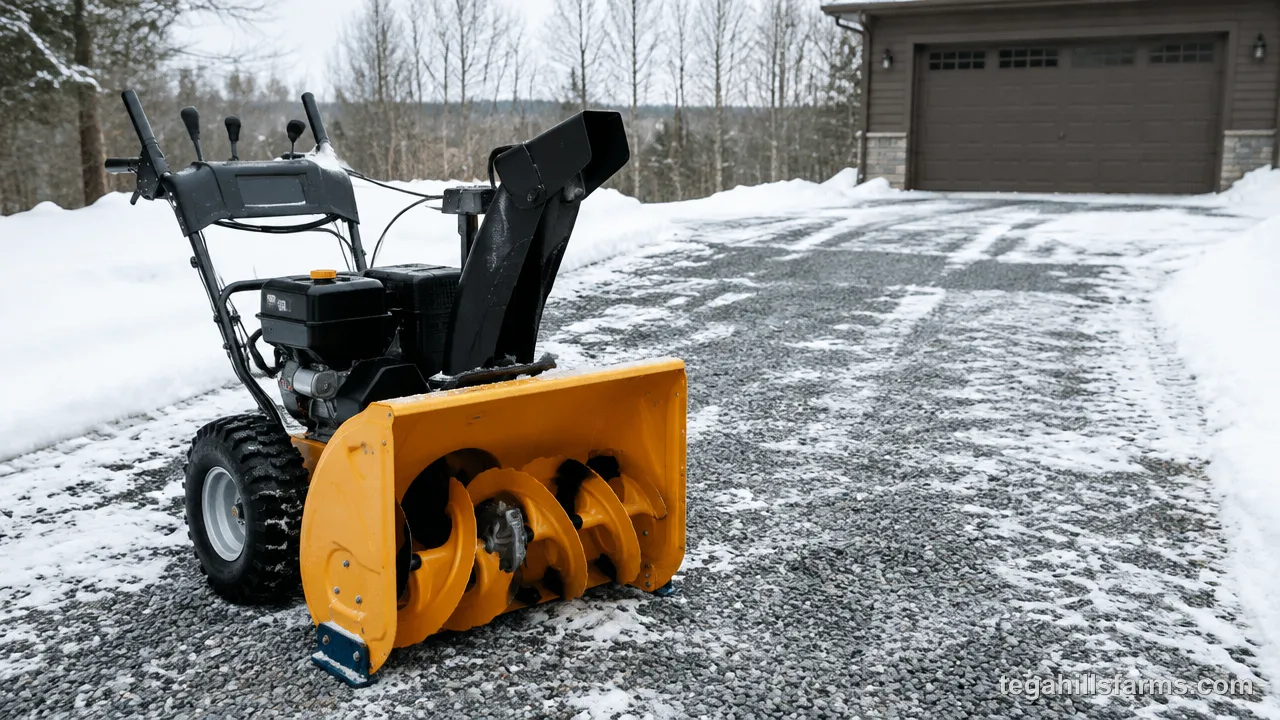
| Driveway condition | Machine type | Models |
|---|---|---|
| Long or sloped gravel | Gas, self-propelled, adjustable clearance | PowerSmart 26in 252cc Self-Propelled Blower, Husqvarna ST227 27in 252cc Snow Thrower |
| Long, flat gravel with heavy snow | Gas two-stage | PowerSmart 24in 212cc 2-Stage Snow Blower, Husqvarna ST124 24in Snow Blower, BILT HARD 24in 212cc Snow Blower |
| Cold starts matter most | Gas with push-button electric start | PowerSmart 24in 212cc Snow Blower |
| Packed gravel, gas-free clearing | Cordless electric | EGO Power+ SNT2122 21in Snow Blower, WORX WG461 40V 20in Snow Blower |
| Short runs near an outlet | Corded electric | Westinghouse WSnow20 20in |
| Premium gas machine | Gas, hydrostatic drive | Honda HSS928 28in HSS928AAWD |
For a long or sloped gravel drive, I would steer you toward the PowerSmart 26in 252cc Self-Propelled Blower, because its adjustable steel skid shoes and wheel drive deal with the stone and the grade in one machine. On a short, flat drive, the Honda HSS928 28in HSS928AAWD is overkill, and a lighter machine handles the job with less to store and maintain. If you want to avoid gas altogether, the best electric snow blowers cover the cordless and corded side in more depth, and a broader guide on how to choose a snow blower covers the features that matter beyond gravel.
A pebble leaving the chute at impeller speed hits hard enough to crack vinyl siding or chip a window, and a housing set a notch too low can send a steady stream of them toward the house. The same pass can wedge a stone in the auger, bend a flight or snap a shear pin, leaving you with a dead machine halfway down the drive in the middle of a storm.
What Happens When a Snow Blower Is Set Wrong on Gravel?
A housing set too low throws stones at siding and windows, bends the auger or snaps its shear pins, and carries gravel into the lawn every winter it runs. Each kind of damage starts the same way, with the auger reaching stone instead of snow.
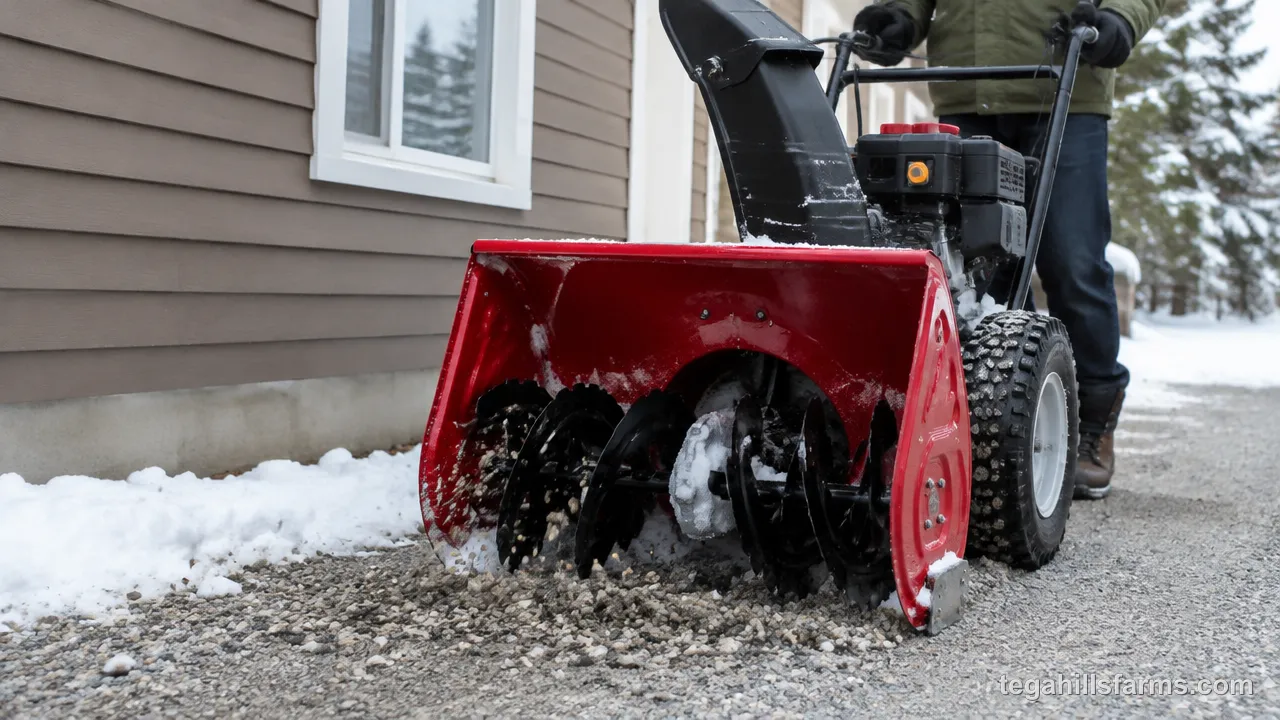
Stones that reach the impeller leave the chute at the same speed as the snow, which is fast enough to crack siding, chip glass and dent a parked car. A stone that wedges between the auger and the housing stops the auger cold. The shear pins are built to snap at that moment so the gearbox survives, but a larger rock, or a pin replaced with an ordinary bolt, can bend the auger flight instead. The gravel itself drifts away a little with each pass and lands in the lawn, where the mower finds it in spring.
A correctly set machine leaves a thin layer of snow on the stone, so a pebble that gets picked up is the exception. Set too low, the same machine feeds a steady stream of stone through the chute on every pass.
How Can You Tell When Skid Shoes Are Worn Out?
Look for uneven wear, a set height that keeps slipping and fresh scratches on the bottom of the housing. Any one of these means the shoes no longer keep the housing above the stone. Uneven wear shows up as one shoe thinner than the other or worn at an angle, which tilts the housing so one corner digs while the other floats. Shoes that no longer hold their height usually have mounting slots worn wider, which lets the shoe creep up under load. Once the housing starts biting stone, you will see bright scratches on the scraper bar and hear gravel rattling through the chute.
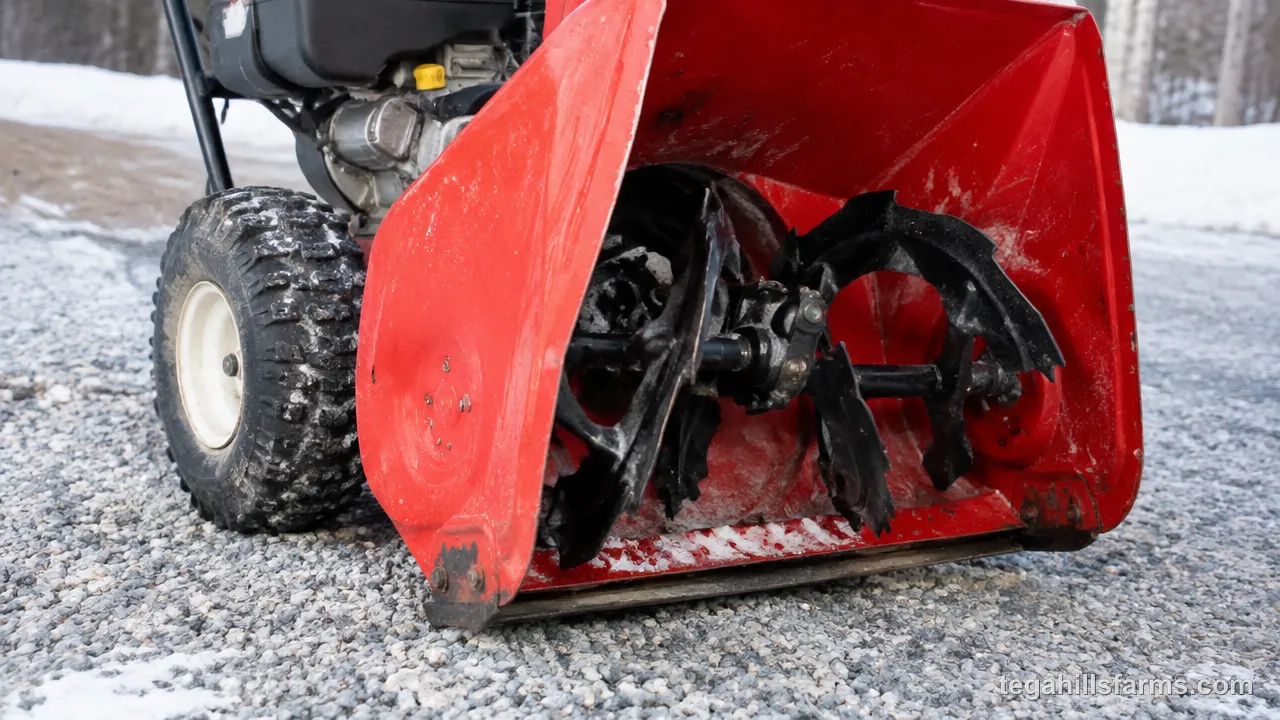
Check the clearance before the first storm, again every few storms, and any time stones come out of the chute. Adjusting only helps while a shoe still has material left. When a shoe is worn thin, worn unevenly or has worn-out slots, replace both sides together so the housing sits level again.
Is a Three-Stage Snow Blower Worth It on a Long Gravel Drive?
Only when deep drifts regularly bury a long run. On an ordinary home drive, a correctly set two-stage machine clears gravel just as well with less bulk. The third stage is an accelerator, a center auger that spins faster than the main auger, chops the snow and pushes it into the impeller, so the machine can take a wider, deeper bite and throw farther.
On a long gravel drive with heavy drifts, that faster feed keeps the impeller loaded and the pace up where a two-stage machine would have to slow down. The accelerator does nothing for the stone, though. Clearance still comes from the skid shoes, and a three-stage machine set too low throws gravel the same way.
The extra stage adds size, weight and another set of moving parts to grease and inspect, plus a larger housing to store and move around the garage. On a drive where the snow rarely outruns a two-stage machine, you would be maintaining that extra hardware every season without using it.
When Is a Snow Blower the Wrong Tool for a Gravel Driveway?
A very short run, stone too loose or deep to pack, and a base with large rock near the surface are the cases where a shovel, a walk-behind plow or back-blading does the job with less damage. On a short run, setting the skid shoes and starting an engine takes longer than the clearing itself. Loose or freshly spread stone never firms up enough to hold the shoes, so the housing sinks no matter how high you set it. Large rock close to the surface catches the housing edge and jams the auger, and you end up replacing shear pins after every storm.
A walk-behind plow pushes snow with a blade that rides on the snow layer, so it moves less stone than an auger, though it piles snow along the edges instead of throwing it clear. Back-blading means dragging a blade backward behind a tractor, ATV or truck so it floats over the gravel and smooths it rather than cutting into it. That leaves a packed layer of snow and keeps the stone in place.









Write Your Review
No reviews yet. Be the first to share your experience!