

You can install a generator transfer switch yourself if you have real experience working inside a main panel, but most homeowners are safer hiring a licensed electrician. The work sits next to live service conductors. A wiring mistake can mean shock, fire, or power fed back onto the utility line.
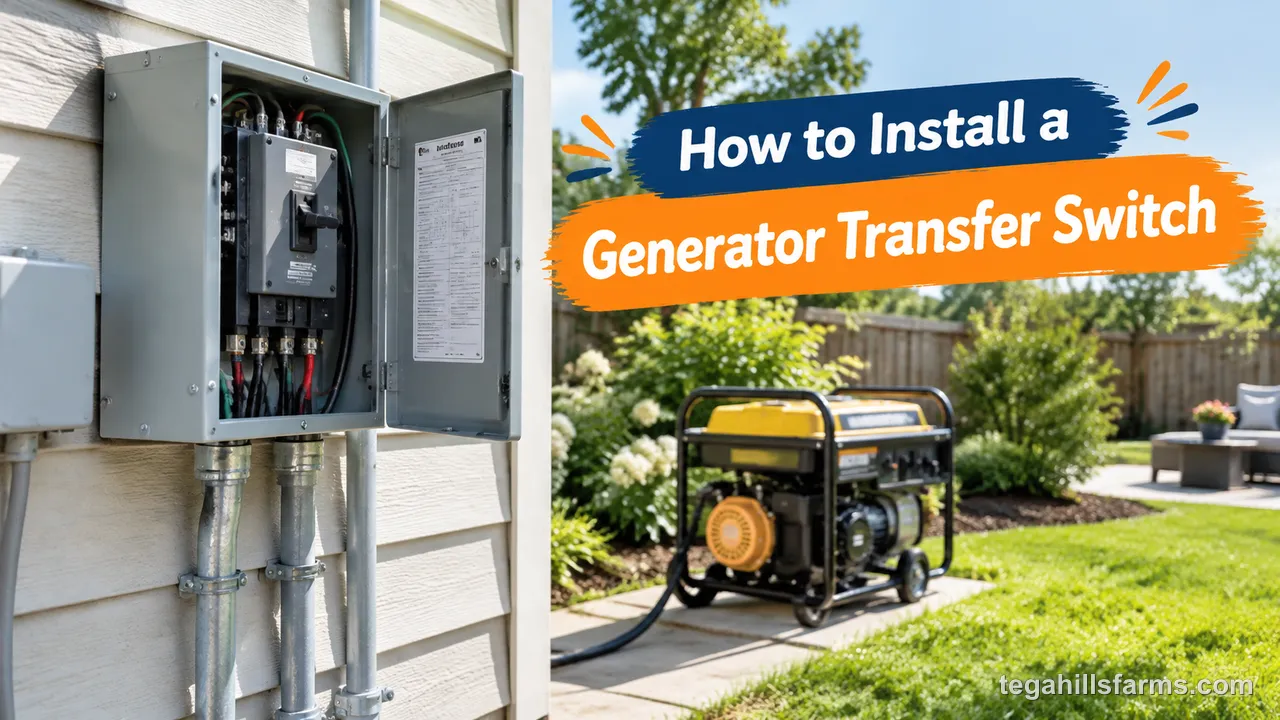
Choosing the right switch comes down to how you plan to run the generator. A manual switch suits a portable unit and a hands-on owner. An automatic switch belongs with a standby generator and nearly always with a pro. Sizing matters just as much, because the switch has to match both the generator and the circuits you want powered.
The core worry is backfeed. Improvised hookups can send generator power up the utility line and into the path of a lineworker. A proper switch makes that physically impossible.
Before you buy anything, call your local building department and ask about permits. Then open the panel door and check whether you have breaker space and a mounting spot nearby.
What Is a Generator Transfer Switch?
A generator transfer switch is a panel-mounted device that moves selected home circuits from utility power to your generator and never lets both sources connect at the same time.
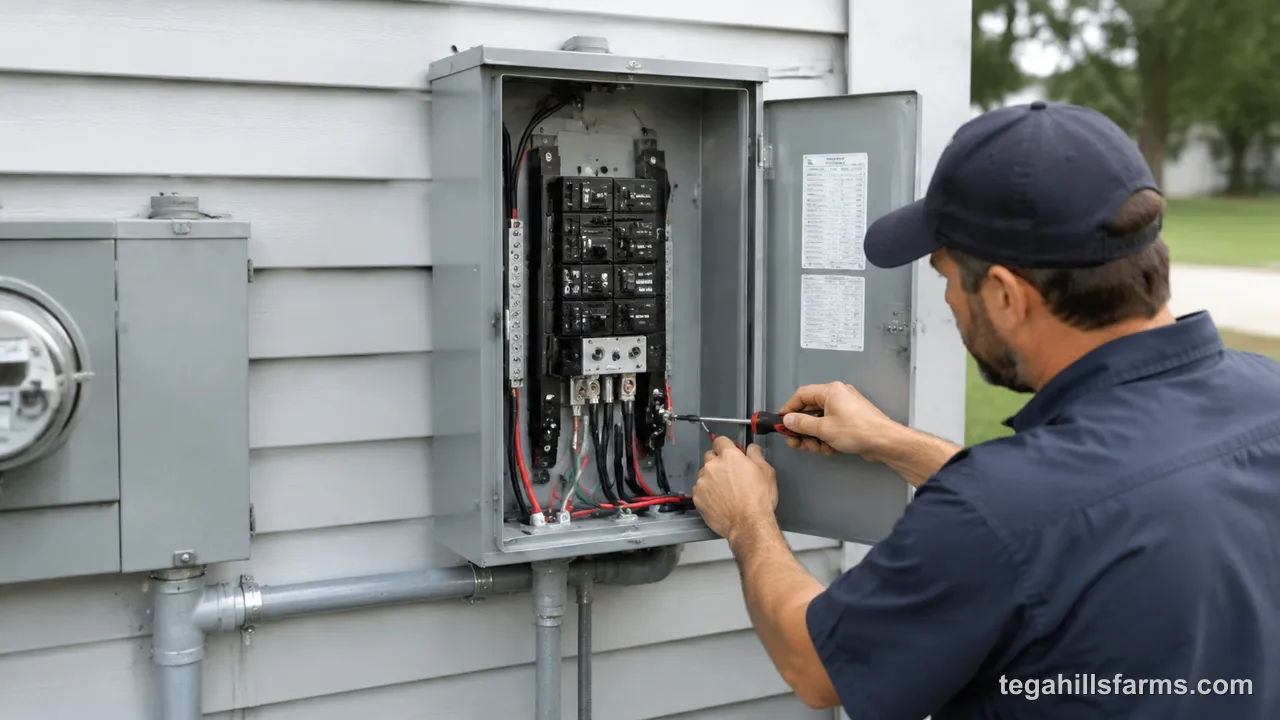
That separation is the whole point. Without it, generator power can travel backward through the service line, a problem called backfeed. It can energize wires that utility crews believe are dead, and it can damage your generator when grid power returns.
A switch also beats extension cords. Cords power individual appliances through windows and doors, and they leave your furnace, well pump, and lighting out of reach. A switch feeds hardwired circuits straight from a protected inlet, so nothing needs to cross a threshold.
If you have not picked a unit yet, read our guide on how to choose a generator first so the switch and the generator are a proper match.
Can You Install a Generator Transfer Switch Yourself, or Should You Hire a Pro?
Yes, if you have solid electrical experience, but a licensed electrician is the safer call for most homes, and permit and inspection rules decide what you may legally do either way.
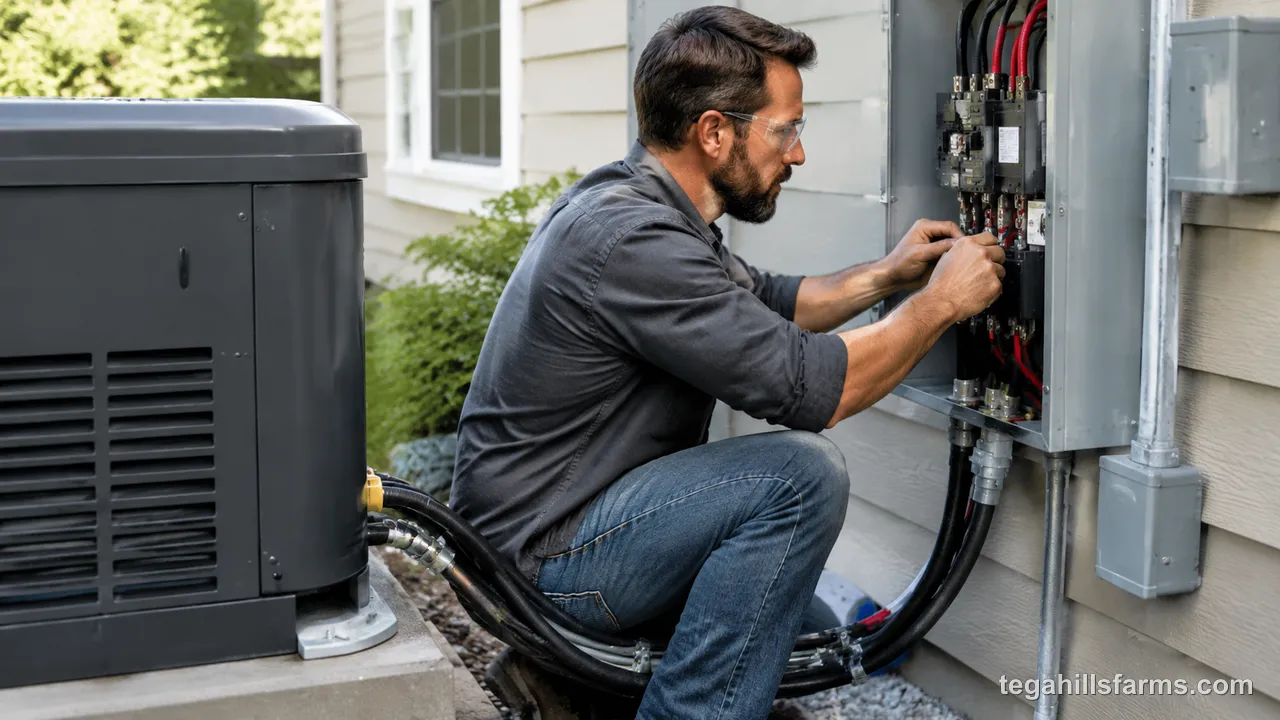
The work happens inside the main panel. Mistakes there carry real shock and fire risk, so honest self-assessment matters more than ambition. Being handy with tools is not the same as being comfortable near service conductors.
When Is DIY Installation Realistic?
DIY installation is realistic when you have prior panel experience, a simple, uncrowded panel, and local rules that allow homeowner electrical work. Meeting all three matters, and missing one is a reason to pause.
Experience means you have already added or moved breakers and understand how a panel is bussed, grounded, and bonded. You should be able to tell which wires stay live even after the main breaker is off. If that last point is news to you, stop there.
A simple panel helps a lot. Open space for new breakers, clear wire runs, and a mounting spot right beside the panel keep the job manageable. A manual switch on a portable generator is the most approachable version.
Then there is the legal side. Some jurisdictions let homeowners pull their own permit, and some require a licensed contractor for any panel work. Check first.
I would only call it a weekend project for someone who already does their own circuit work.
When Is a Licensed Electrician the Safer Call?
Hire a licensed electrician when your panel is crowded or older, when the job needs a service upgrade, or when you are installing an automatic switch tied to utility service.
The service conductors entering the panel stay energized even with the main breaker off. Brushing one with a tool can be fatal. That risk is why uneasiness around live service conductors is a good enough reason to hand the job off.
Older panels bring their own trouble. Brittle insulation, tight wire bending space, and discontinued breaker brands can turn a simple install into a repair job. A pro spots those problems before they become hazards.
Automatic switches are more involved. They connect to the utility feed and to a standby generator’s control wiring, and the work is usually permit-driven.
An electrician also knows what your inspector expects. A rejected install costs time you may not have before the next storm.
Do You Need a Permit or Inspection?
In most places, yes, a permit and inspection apply, because a transfer switch is electrical work covered by the National Electrical Code and enforced by your local building department.
Rules vary by city and county. Some areas require a permit for any switch install, and some allow homeowner work only with an inspection before the panel is closed up. Others require a licensed contractor.
Utilities and insurers care too. A compliant hookup protects line crews from backfeed, and an unpermitted panel change can complicate a homeowner’s claim after a fire.
Call the building department before you buy parts. Ask three things: whether you need a permit, whether a homeowner may pull it, and what the inspector wants to see.
Which Type of Transfer Switch Fits Your Home?
There are two main types, split by how the transfer happens: manual transfer switches, which you throw by hand, and automatic transfer switches, which switch on their own.
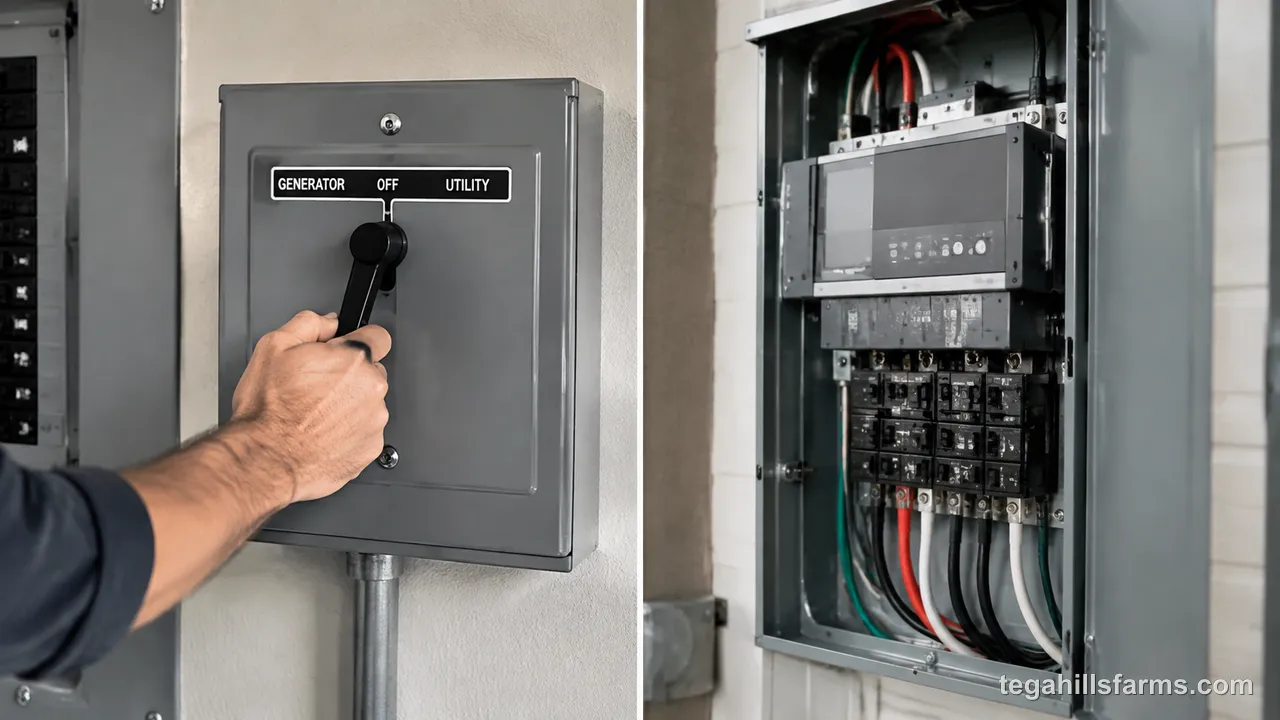
Your choice depends on your generator and on how much you want to handle during an outage. Portable generator owners usually go manual. Standby generator owners usually need automatic.
Manual Transfer Switch
A manual transfer switch is mounted beside your main panel, and you flip it by hand after starting the generator. That makes it the natural pairing for a portable unit.
During an outage, you roll the generator outside, connect it to the exterior inlet with a rated cord, start it, and move the switch from utility to generator. The selected circuits come alive. When grid power returns, you reverse the order.
This setup asks something of you. You have to be home, and you have to remember the sequence in the dark with a storm outside. Hands-on owners tend to like that control, and the simpler hardware is easier to install than an automatic unit.
It also fits a portable generator’s job. You place the unit where it is safe, run it as long as needed, and put it away afterward.
Automatic Transfer Switch
An automatic transfer switch senses a utility outage, signals the generator to start, and moves the load without you touching anything. It is designed to work with a standby generator.
When power returns, it waits for the grid to stabilize, transfers back, and shuts the generator down. That is a real benefit if you travel, have medical equipment, or run a sump pump that cannot stop.
The tradeoff is installation. These switches connect to the utility service and to generator control wiring, and they often require a permit and a pro. Mistakes are harder to spot and more dangerous.
If you want the hands-off experience, plan on hiring the work out. If you have a portable generator and are happy to run it yourself, a manual switch covers you.
Transfer Switch vs. Interlock Kit: Which Is the Better Choice?
A transfer switch wins on safety margin and convenience, an interlock kit wins on flexibility and simpler installation, and the transfer switch is the better fit for most homeowners.
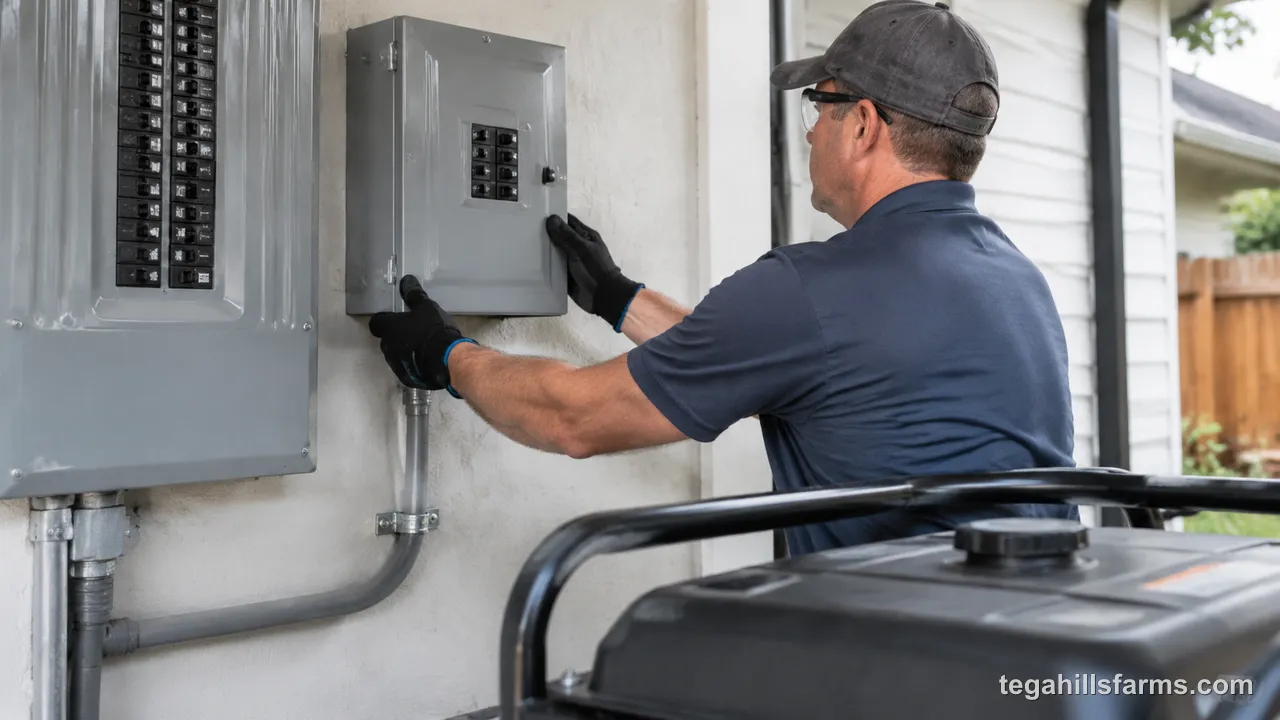
An interlock kit is a mechanical plate on your main panel that stops the main breaker and the generator breaker from being on together. It does the separation job, but it relies on you to manage the load.
Here is how the two compare on the points that matter most.
| Factor | Transfer switch | Interlock kit |
|—|—|—|
| Safety margin | Dedicated circuits make overloading harder | Depends on you shedding loads manually |
| Convenience | Chosen circuits are ready to go | You switch breakers off and on by hand |
| Circuit selection | Fixed set chosen at install | Any breaker in the panel |
| Installation complexity | More wiring, more panel work | Fewer changes, but still inside the panel |
| Code acceptance | Widely accepted | Must be the kit listed for your exact panel, and some areas restrict it |
If you want a setup that is hard to misuse, choose the transfer switch. If you are an experienced owner who wants full panel access and will manage loads carefully, an interlock can make sense, where your inspector allows it.
How Do You Size a Transfer Switch for Your Generator and Home?
A switch fits when its rating matches your generator’s output and when its circuits match your critical loads instead of everything in the house.
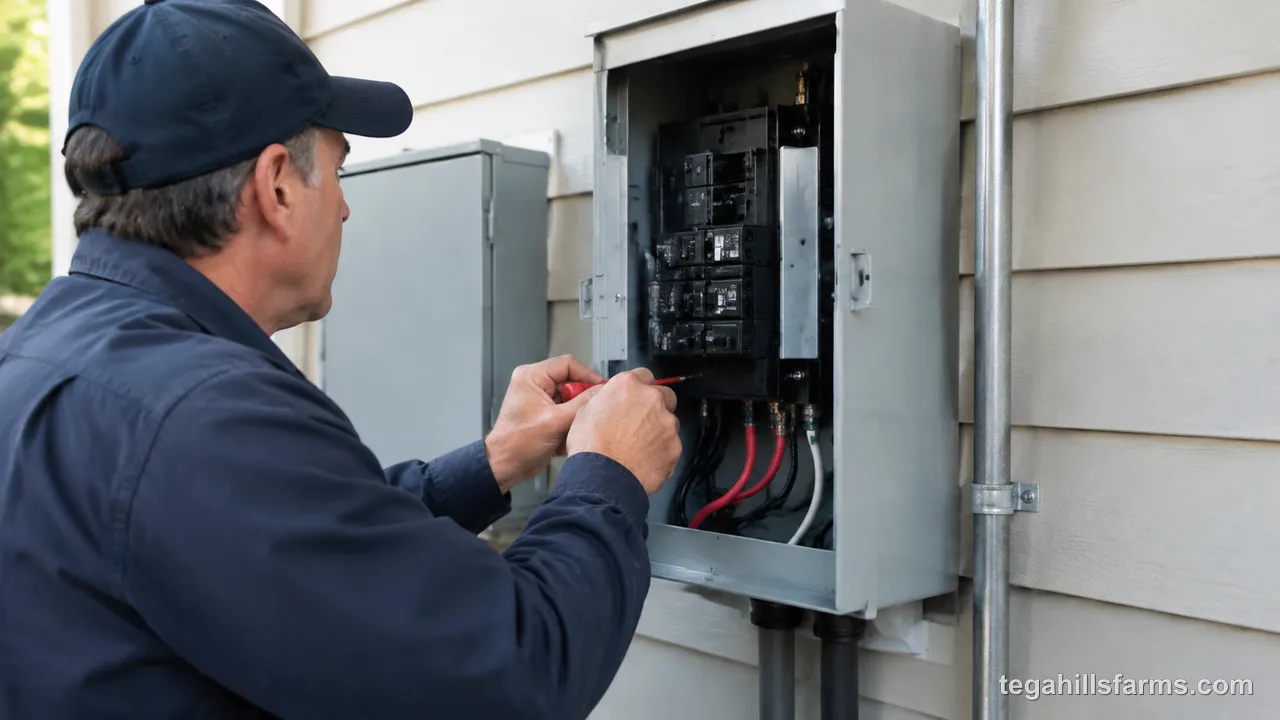
Two things set the limits: what the generator can deliver, and what you ask it to power. Pick one without the other and you end up with an overloaded generator or a switch that is far too large.
Matching the Switch to Your Generator’s Output
The switch’s amperage rating needs to sit at or above what your generator can deliver, and the generator’s wattage has to cover the circuits you connect to it.
A switch rated well below the generator’s output can overheat if the generator pushes more current than the switch was built to carry. A switch rated far above what the generator produces simply wastes space and parts.
The inlet and cord must also match the generator’s outlet. The rated cord, inlet box, and switch form one chain, and the weakest link sets the limit.
Overloading is the other half of the problem. If the circuits you chose draw more than the generator can supply, the generator trips or strains. Matching comes down to knowing your unit’s real capacity.
If you are unsure what your unit can handle, our guides on how to size a generator and how big of a generator do i need walk through the math in plain terms. Settle that before you commit to a switch.
Choosing Which Circuits to Back Up
Start with essential circuits: refrigeration, heating controls, lighting, and a well pump if you have one. Heavy loads often stay off the list.
Think about what makes an outage tolerable. Keeping food cold, keeping the furnace blower or boiler controls running, and having light in the main living spaces matter more than the dryer.
Big motors and heating elements pull a lot of power. Central air conditioning, electric ranges, and water heaters can overload a mid-size generator in seconds. Leaving them off keeps the generator steady.
Make the list on paper first. Walk the panel, label each breaker, and ask whether you could live without it for a few days. Fewer circuits make a smaller, simpler install, and they leave headroom.
What Do You Need Before You Start the Installation?
Prepare three things before opening the panel: your tools and materials, a panel and location check, and the generator inlet and power cord.
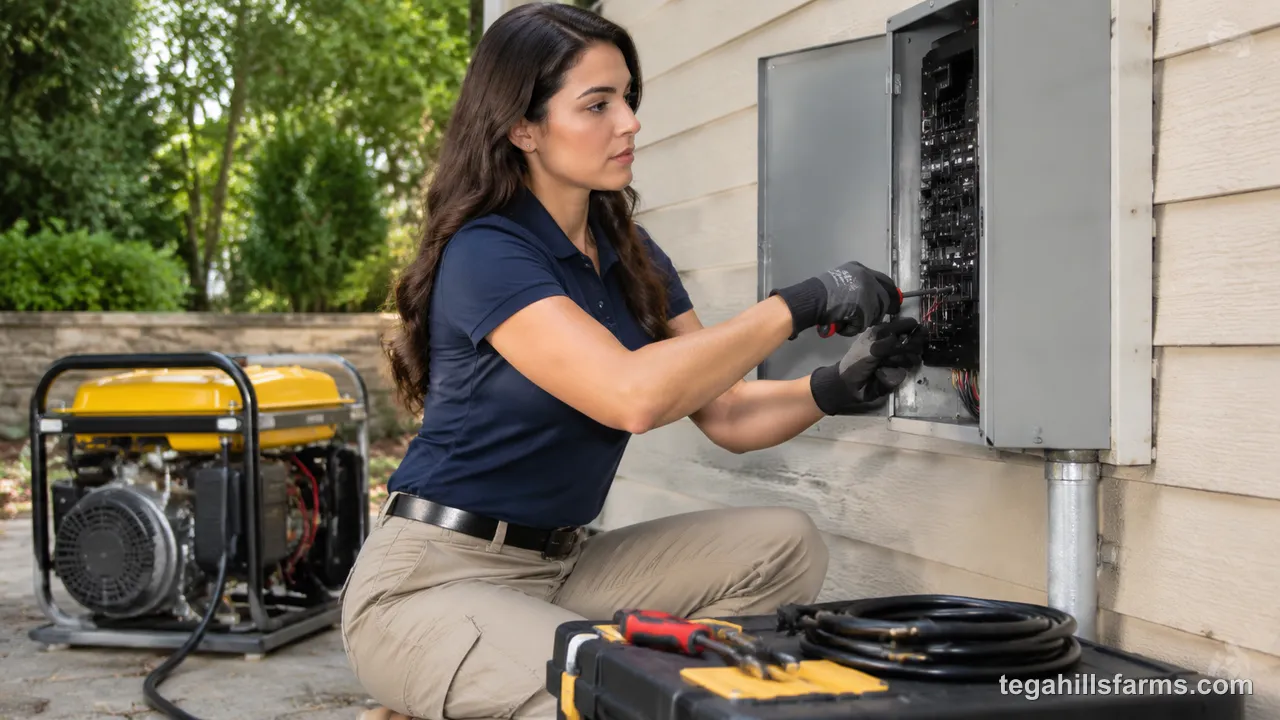
Getting these in place first keeps the panel from sitting open while you run to the store. It also exposes any dealbreaker, such as an incompatible panel, before you touch a wire.
Tools and Materials
A typical install needs insulated hand tools, a voltage tester, wire and conduit sized to the switch’s instructions, and protective gear. Each item exists for safety or code.
Insulated screwdrivers and nut drivers reduce shock risk. A reliable non-contact tester plus a multimeter confirm the panel is dead before you work. Do not rely on one tool alone.
Wire gauge and conduit should follow the switch maker’s instructions and local code. Undersized wire overheats under load, and loose conduit fails inspection.
Add safety glasses, rubber-soled boots, and insulated gloves. Panel work is no place for shorts or sparks near your face.
Collect cable connectors, labels, and mounting hardware too. Gather it all first and the panel stays closed until you are ready to work.
Panel and Location Check
Confirm that the switch is compatible with your panel brand, that you have open breaker space, and that a mounting spot exists with proper clearances.
Switches and breakers are often brand-specific. Using the wrong breaker type in a panel is a code violation and a fire risk, so verify compatibility against the panel’s label and the switch’s instructions.
Next, count open breaker slots. The switch will take over the circuits you chose, so the panel layout has to allow the move without crowding.
Finally, look at the wall. The switch needs to mount close to the panel with clear working space in front, no pipes or obstructions behind it, and room for conduit to run in. Check how the exterior inlet will route from outside to this spot.
If anything fails this check, a pro should look before you buy a switch.
Generator Inlet and Power Cord Setup
The exterior inlet box and a correctly rated generator cord replace improvised connections, and the inlet should sit where the generator can run outdoors, away from openings.
The inlet is a weatherproof receptacle mounted on the outside wall. The cord runs from the generator to the inlet, so power enters the house through a protected, purpose-built path.
That cord must match the generator’s output and the inlet’s plug type. A light-duty cord can overheat and melt under load.
Placement matters for safety beyond electricity. Generators produce carbon monoxide, so they belong outside, well clear of windows, doors, and vents. Put the inlet where a cord can reach a safe generator spot without running through an opening.
A proper inlet also removes any need for male-to-male cords or window hookups. These are the shortcuts that cause the worst accidents.
How Do You Install a Generator Transfer Switch Step by Step?
The install runs in four phases: shutting off power and preparing the panel, mounting the switch and connecting circuits, wiring the inlet and grounding, and labeling and testing.
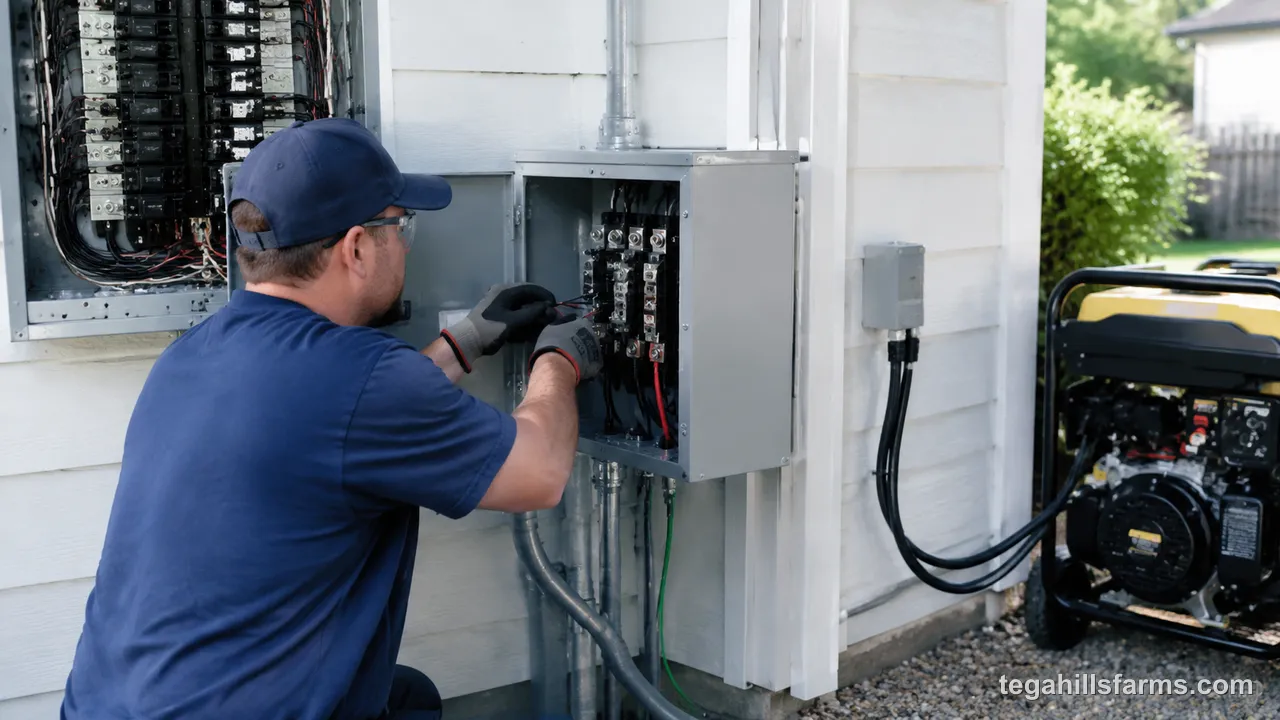
Each phase builds on the one before it. Skip ahead and you risk working on a live panel. At every stage, a licensed electrician should take over the moment you feel unsure about what you are looking at.
Shut Off Power and Prepare the Panel
Begin by turning off the main breaker and verifying with a tester that the panel is dead, then remove the panel cover, knowing that utility-side conductors may stay live.
Switch off every branch breaker first, then the main. This order reduces arcing when the main opens.
Next, test. Check each bus and wire you plan to touch with a tester, and confirm the tester works on a known live source before and after. A dark house does not prove a dead panel.
The main lugs and service conductors above the main breaker remain energized, because the main only shuts off the house side. Keep tools and hands away from them.
Take a clear photo of the panel interior before disconnecting anything. It becomes your reference if you forget which wire went where.
If you cannot confidently point to the live parts, stop and call a pro.
Mount the Switch and Connect Your Circuits
Mount the switch beside the panel, run conduit between them, and move the chosen circuits onto the switch so each can be fed from either source.
Secure the switch to the wall with proper fasteners, level and with clear working space. Then connect conduit from the panel to the switch, with the wiring path matching the maker’s diagram.
Each selected circuit is disconnected from its panel breaker and wired through the switch. When the switch is on utility, those circuits behave as before. On generator, they draw from the inlet instead.
Pay attention to wire identification and connections. Loose terminals heat up under load and are a common failure point.
Once this is done, powering your home from a generator becomes an ordinary switch flip. For a wider look at how to power house with generator setups, our related guide covers the options.
Wire the Generator Inlet and Ground the System
Run a cable from the inlet box to the switch, make secure, torqued connections, and bond and ground the system exactly as the switch maker’s instructions specify.
This is where mistakes are most dangerous. A miswired inlet can leave exposed prongs energized, or fail to carry fault current away safely.
Cable type and size should match the inlet and the switch rating. Conduit protects the run, and all entries to the inlet box need weatherproof fittings.
Grounding and neutral handling vary with the switch design and the generator. Some setups bond neutral at the panel, and others need a switched neutral. The manufacturer’s diagram governs, and improvising here is a bad idea.
Tighten every lug to the stated torque. Loose or overtightened connections both cause trouble later.
If the grounding diagram does not match what you see in your panel, hand it to an electrician.
Label, Inspect, and Confirm It Works
Label every transferred circuit, close up the panel, schedule any required inspection, and confirm a proper transfer by following the maker’s test instructions.
Clear labels help during a stressful outage. Mark the switch positions, the circuits it controls, and the steps to operate it, then post a short instruction card near the panel.
Before powering anything, double-check that covers are on and no loose wires are exposed. Then book your inspection if your area requires one. Do not energize before the inspector clears you when that is the rule.
A supervised test run follows the instructions: start the generator, move the switch, and verify each circuit powers up. Then switch back and confirm utility power returns normally.
Run this test before storm season. Finding a problem on a calm day beats finding it mid-outage.
How Do You Run Your Home on a Generator Safely After Installation?
Put the generator outdoors, away from windows, doors, and vents, start it, connect the cord, then move the switch to generator, and reverse that order when utility power returns.
Follow the same sequence every time. Start with the generator running and settled before you flip the switch, so the load lands on a steady source. When the grid returns, move the switch back to utility first, then shut the generator down.
Never leave the generator running indoors or in a garage, even with the door open. Carbon monoxide builds fast and gives little warning.
Add loads gradually once you are on generator power, starting with the most important appliances. That avoids a trip from several motors starting at once.
Our guide on how to use a generator covers the day-to-day basics, including fueling and cooldown habits. If you expect a long outage, plan around how long can a generator run on a tank so refueling is never a rush.
Many portable generators tie their neutral wire to the metal frame, and some panels already do that same job at the service. Put the two together without checking and current can find extra paths, including metal parts nobody expects to carry it. Do you know which kind of generator you own?
Does Your Transfer Switch Need a Switched Neutral?
It depends on your generator: a bonded-neutral generator generally calls for a switch that switches the neutral, while a floating-neutral generator works with one that does not, and the switch maker’s instructions have the last word.
Many portable generators bond the neutral to the frame at the factory. If your switch does not switch the neutral, that bond and the one in your main panel can end up in parallel. Fault current may then flow on the neutral and on metal parts instead of the intended path.
The results are serious. Shock hazards can appear on enclosures, and protective devices may not trip when they should.
A floating-neutral generator leaves the bond to the panel, so a non-switching switch usually works with it. Match the pairing deliberately.
To find out what your generator does, check the owner’s manual or the label near the outlets, and look for terms like bonded, floating, or neutral-ground bond. Switch manufacturers also list which generator types they support.
If the documents are unclear, or the generator has been modified, ask an electrician before wiring anything.
How Can You Tell a Safe Setup From a Risky One?
Look for two things: backfeed shortcuts, which are unsafe hookups, and service warning signs, which show a worn switch or an ailing generator.
A safe setup uses a listed switch, a purpose-built inlet, and a rated cord. A risky one improvises, or keeps running equipment that is showing wear.
Shortcuts That Cause Backfeed
The most dangerous shortcut is a male-to-male cord plugged into a wall outlet, along with unlicensed panel changes that skip proper isolation from the utility.
A male-to-male cord has live prongs on both ends. Plug it into an outlet and the house wiring, and the line beyond it, can become energized. That puts utility workers at risk, and neighbors on the same transformer too.
Skipped isolation does the same thing through the panel. Without a switch or interlock, the generator and the grid can connect to one another, and a returning utility can damage the generator or start a fire.
Even a well-meant hookup can fail without protection. A listed switch or interlock removes the choice by making a double connection physically impossible.
If you see a cord like this in a garage or basement, take it out of service. Replace it with a proper inlet and switch installed to code.
Signs Your Switch or Generator Needs Service
Stop using the setup when you notice stiff handles, burn marks, buzzing, or a generator that fails to deliver power when needed.
A handle that sticks or needs force can mean worn internal contacts. Discolored plastic, scorch marks, or a burning smell point to overheating at a connection, and that is a fire risk.
Buzzing or humming from the switch or panel suggests loose connections or failing parts. Do not wait for it to get louder. Shut it off and have an electrician look at it.
Sometimes the generator is the problem. If it starts but the lights stay dark, test the cord, the inlet, and the switch position. If it will not run at all, start with our guide on why a generator won’t start before blaming the switch.
Sort out any of these on a calm day. You do not want to learn about them in the middle of an outage.
Is Your Transfer Switch Ready for Storm Season?
Your switch is storm-ready when the exterior inlet is weather-protected, the panel is reachable in bad conditions, and you have run a pre-storm check with the generator and cord in hand.
Start outside. Inspect the inlet box cover and seals for cracks, rust, or water intrusion, since moisture at the inlet is a shock risk and can cause corrosion.
Then check access. You need a clear, dry path to the panel and the switch, with a flashlight stored nearby. Fumbling in the dark with a wet floor is how mistakes happen.
When a warning goes out, run through a quick list. Confirm the generator starts, the cord is undamaged and the right length, fuel is fresh, and the switch moves smoothly. Test one circuit under load if you can.
Our guide on generator hurricane preparation goes further on fuel storage and securing equipment ahead of a big storm. Whatever your region’s weather, finding a weak seal or a dead cord before the outage is cheaper than discovering it during one.
Generator Transfer Switch Installation FAQs
Do I need a permit for a simple transfer switch swap?
In most areas, yes. Replacing or adding a transfer switch counts as electrical work, and many cities and counties require a permit and an inspection even for a like-for-like swap. Rules vary, so call your local building department before buying parts, and ask whether a homeowner is allowed to pull the permit.
Does a transfer switch work with portable and inverter generators?
Yes, as long as the generator’s output and plug match the switch and inlet. Portable and inverter units both work, usually with a manual switch. Check whether your generator bonds its neutral, since that decides which switch type you need, and confirm the unit can carry the circuits you chose.
Does an interlock kit also need an electrician?
Often, yes. An interlock kit is installed in the main panel, so it carries the same shock risk and usually the same permit rules. It must be the kit made for your exact panel brand and model. Many homeowners hire an electrician for it, and some jurisdictions require one.
Can I add a transfer switch to an older panel?
Usually, but it depends on the panel. Older panels can have limited breaker space, worn parts, or brands that current switches do not support. An electrician can tell you whether the panel can take the switch as is, or whether a panel upgrade should come first.









Write Your Review
No reviews yet. Be the first to share your experience!