

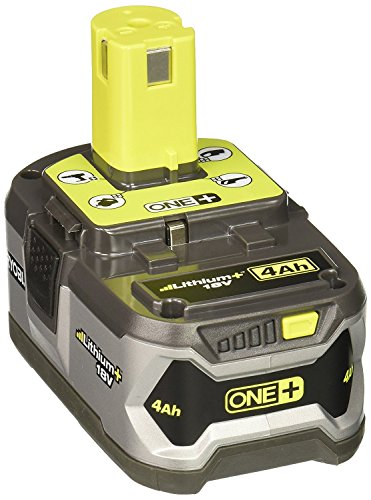
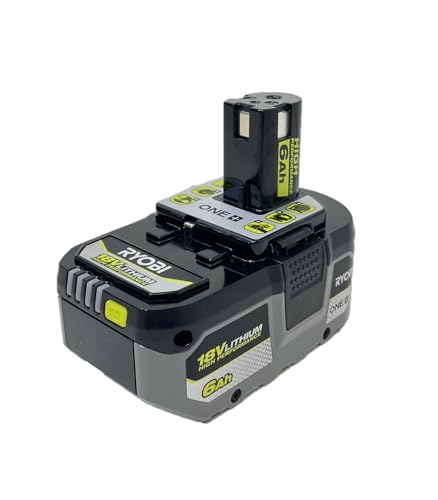
Our top picks for the best Ryobi 18V batteries in 2026 are the RYOBI ONE+ 18V 2.0Ah Battery and Charger Kit (Best Overall), RYOBI ONE+ 18V 4.0Ah Battery PBP005 (Best Durability), RYOBI ONE+ 18V 4.0Ah Battery PBP2005 2-Pack (Editor’s Choice), RYOBI ONE+ P108 4.0Ah Battery (Also Great), RYOBI ONE+ P193 6.0Ah 18V Battery (Best Large Capacity), RYOBI ONE+ P102 18V Compact Battery 2-Pack (Best Lightweight) and RYOBI ONE+ P102 18V Compact Battery (Best Budget). All of them slide onto the same ONE+ tools. What you are really choosing is how much runtime you carry and how much weight you hang off the tool.
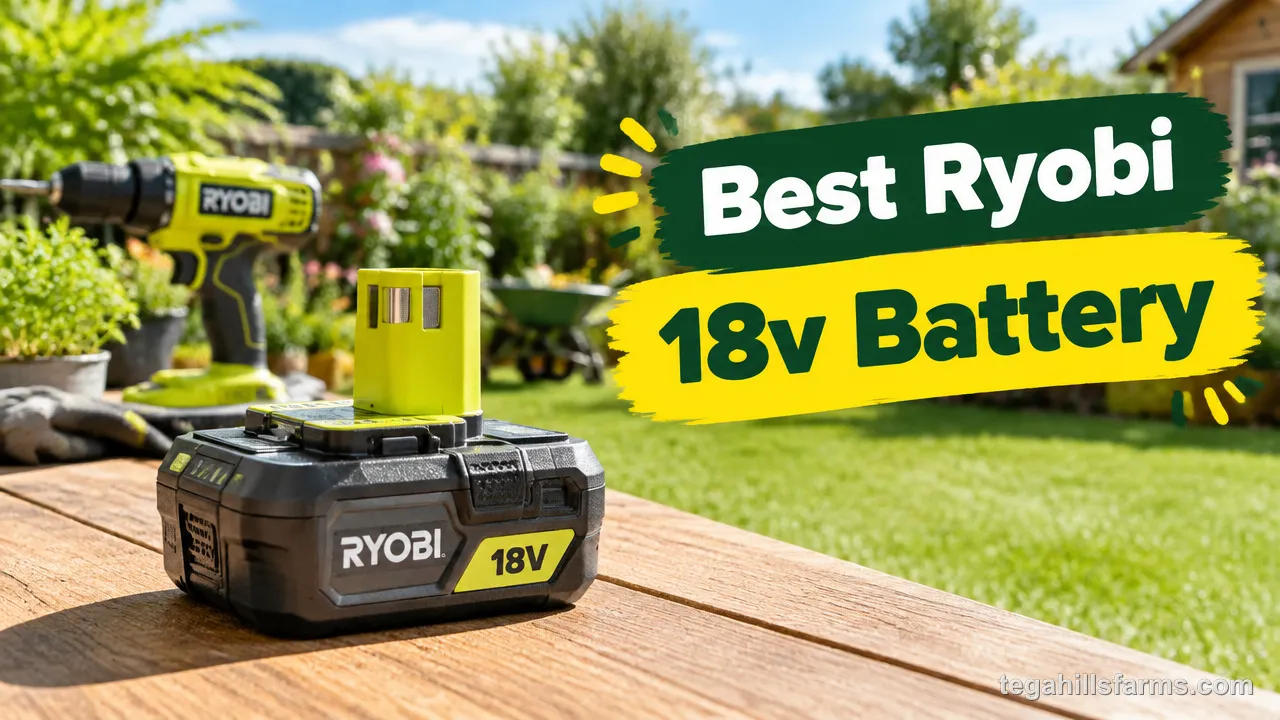
Capacity is printed on the pack in amp-hours. It sets how long a tool runs between charges and how heavy that tool feels in your hand. The battery line comes next. A standard Lithium pack runs every ONE+ tool, while an HP pack talks to Ryobi’s brushless HP tools and lets them draw more power. After that, you only need to decide whether you need a charger in the box or a second pack to swap in.
The usual mistake is buying on capacity alone. A big pack on a drill makes it nose-heavy for overhead work. A compact pack on a blower or string trimmer can die before the fence line is done, so you stop to recharge with the job still waiting.




If you don’t own a ONE+ charger yet, start with a kit that includes one. If you already have a charger and a few tools, a second pack usually does more for your workday than a bigger single pack.
What Should You Look for in a Ryobi 18V Battery?
The right pack is the one matched to the tool it runs most often, because runtime, weight and power delivery all change with that match. A pack that suits a cordless mower can make a drill tiring to hold. A pack that feels right on an impact driver can leave a blower short halfway through the leaves. If you are still deciding which cordless platform to commit to, our guide to the best outdoor power tool batteries compares the main systems side by side.
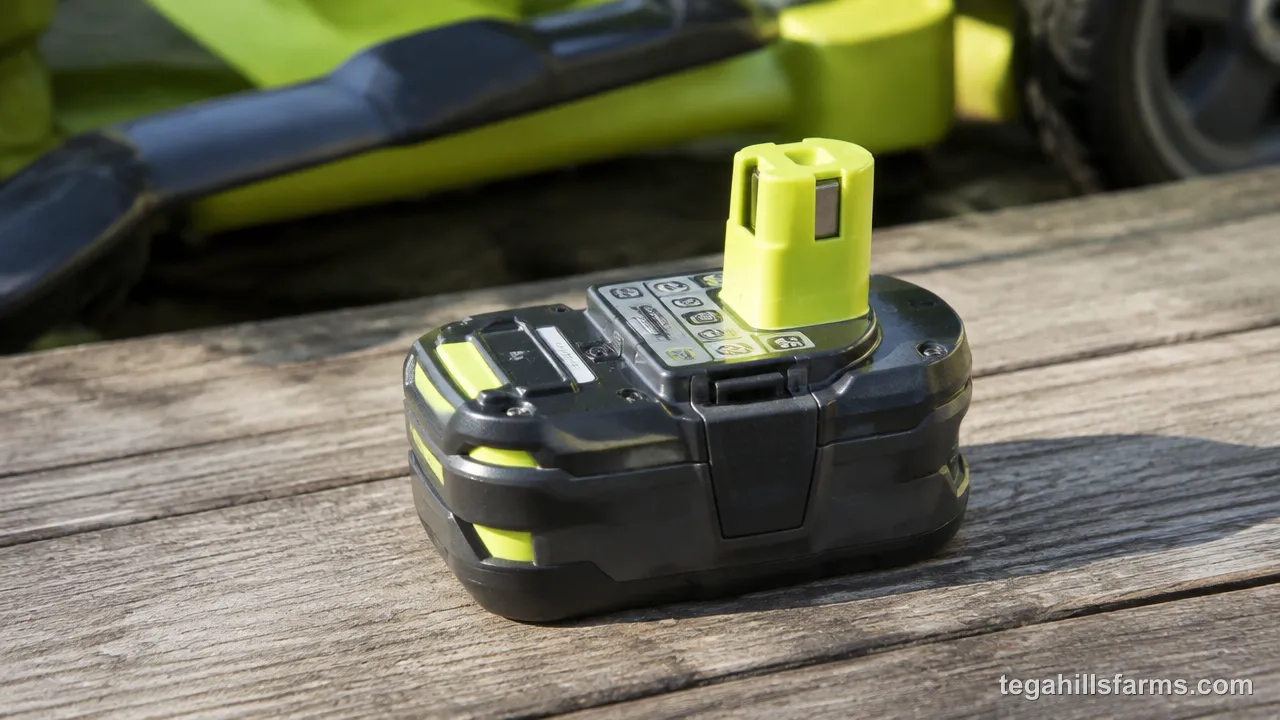
How Many Amp-Hours Do You Need for Your Tools?
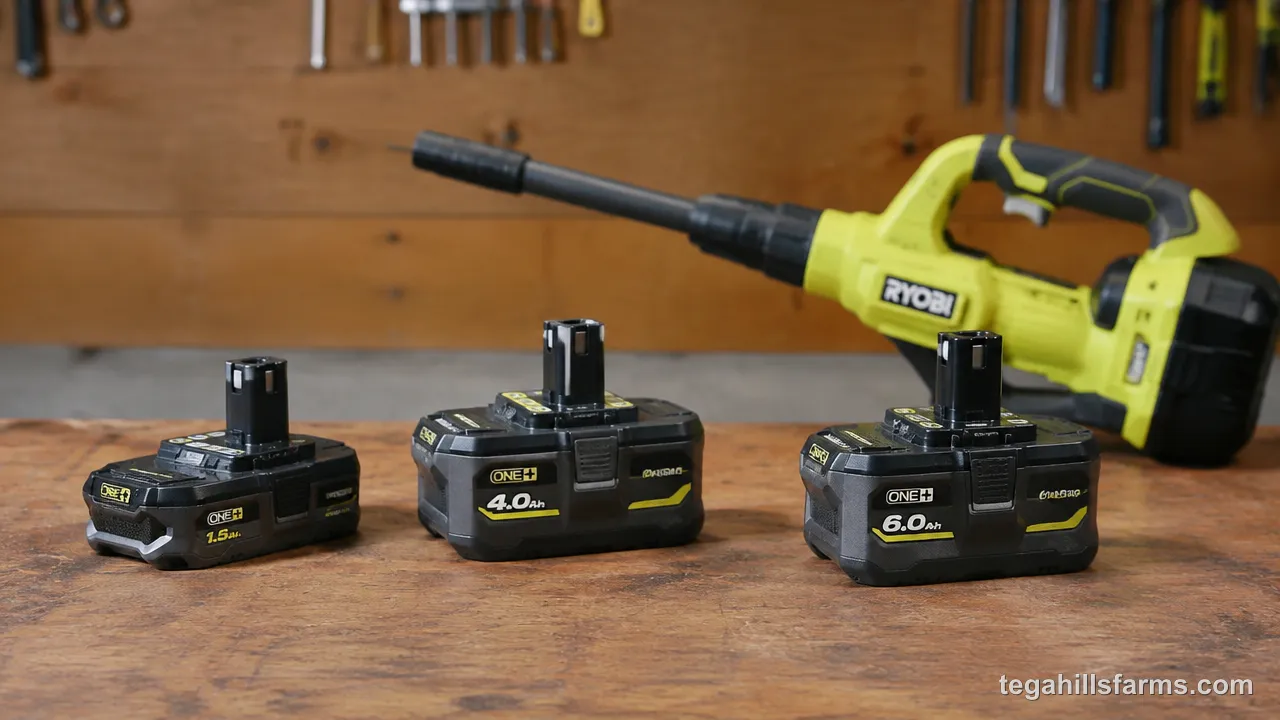
Amp-hours work like the size of a fuel tank. At the same 18V, a 4.0Ah pack stores more energy than a 2.0Ah pack, so it keeps the same tool running longer before it goes back on the charger. The right size depends on whether your tool works in short bursts or draws power nonstop:
- Compact packs (1.5Ah and 2.0Ah): drills, impact drivers, work lights and inflators. These tools run in short bursts, so a small tank rarely runs dry mid-task.
- Mid-size packs (4.0Ah): circular saws, reciprocating saws, grinders and sprayers. Saws and grinders pull hard under load. A sprayer pulls little power but runs for a long time, so the extra capacity covers the whole tank.
- Large packs (6.0Ah): blowers, string trimmers and mowers. These tools draw power continuously, and a bigger tank means fewer trips back to the charger.
Each step up in capacity adds cells, and cells add weight. On a mower deck you never notice that weight. On a drill held overhead, or a trimmer swung along a long fence line, a heavy pack pulls the tool out of balance and tires your wrist faster. Compact packs keep the tool balanced but send you back to the charger sooner. They work best when a second pack is charging while you work.
What Is the Difference Between a Ryobi High Performance Battery and a Regular Battery?
A standard ONE+ Lithium pack delivers power the same way to every tool. An HP pack adds lower-resistance cells and a communication link with Ryobi’s brushless HP tools, so those tools can pull more current under heavy load. EDGE packs sit above HP as Ryobi’s top tier, built for the brushless tools that draw the most power. Lower resistance also means less energy is lost as heat when a tool works hard, so an HP pack stays cooler and keeps its output up under a heavy cut.
The lines mix freely, but the boost only appears when both sides support it:
| Battery line | On standard ONE+ tools | On HP brushless tools |
|---|---|---|
| Standard Lithium | Normal full output | Runs, without the HP boost |
| ONE+ HP | Runs like a standard pack | Full boost through the communication link |
| EDGE | Runs like a standard pack | Built for the highest-draw HP tools |
An HP pack on a regular ONE+ tool runs like any pack of the same capacity. A standard pack on an HP brushless saw or mower still works, but the tool loses the extra power and bogs sooner in thick material. HP or EDGE is worth the higher cost when your main tools are HP brushless saws, mowers or blowers that work hard for long stretches. For drills, lights, inflators and standard trimmers, a standard pack does the job.
Will an 18V ONE+ Battery Fit Your Tools?
Yes. Ryobi has kept the same mounting rail and contacts across generations, so a current lithium pack runs ONE+ tools from the system’s early generations as well as today’s brushless models. The ONE+ system now covers more than 225 tools, from drills and saws to trimmers, mowers and lights.
There is one physical limit. A few tools hold the pack inside a closed bay or under a cover, and that housing only accepts compact packs. A 4.0Ah or 6.0Ah pack sits too tall to fit, so check the tool before you buy a large pack for it.
These packs do not work on Ryobi’s 40V or 80V tools. Those use a separate battery line with a different pack shape, so if you own those tools you need the matching 40V or 80V battery.
How Do You Tell Ryobi Battery Models Apart?
Ryobi model numbers come in two generations. Older packs carry a P-number, such as the P102 compact and the P108 4.0Ah high-capacity pack. Current packs carry a PBP-number, such as the PBP005 4.0Ah pack and the PBP007 6.0Ah HP pack. The same pack often shows up under both names: the P102 compact also sells as PBP002, and the P193 6.0Ah pack lists as PBP007.
Ryobi has also retired at least one older high-capacity model, so a listing under an old P-number can be leftover stock. Before you buy, read the amp-hour rating on the label and check whether it says HP, rather than trusting the model number alone. That check keeps you from buying a copy of a pack you already own, or a standard pack when you wanted HP.
The 7 Best Ryobi 18V Batteries of 2026
The RYOBI ONE+ 18V 2.0Ah Battery and Charger Kit, RYOBI ONE+ 18V 4.0Ah Battery PBP005, RYOBI ONE+ 18V 4.0Ah Battery PBP2005 2-Pack, RYOBI ONE+ P108 4.0Ah Battery, RYOBI ONE+ P193 6.0Ah 18V Battery, RYOBI ONE+ P102 18V Compact Battery 2-Pack and RYOBI ONE+ P102 18V Compact Battery range from a starter kit with its own charger to compact spares and a 6.0Ah HP pack. Capacity and weight pull against each other across these packs. The right pick depends on how long each job runs and how the tool needs to feel in your hand. Casual DIY users fit the kit or a compact pack. Owners of many ONE+ tools fit a rotating set. Yard workers who want fewer battery swaps fit the higher-capacity packs.
#1 RYOBI ONE+ 18V 2.0Ah Battery and Charger Kit — Best Overall
Anyone starting on ONE+ with no charger at home gets both pieces here: a 2.0Ah pack and a charger that refills it from empty in under an hour. That covers a drill or trimmer for most weekend projects.
Key Specs:
- Model: PSK005
- Capacity: 2.0Ah
- Kit contents: battery and charger
- Charge time: 0 to 100 percent in less than an hour
- Runtime: up to 1.5x more runtime
- Weight: 1.87 lb
Detailed Review:
The charger is what makes this kit usable on day one. It charges fast enough that a short break between jobs is often your only wait. Its IntelliPort feature manages each charge to save energy and protect the cells, which helps the pack keep its capacity over the years you own it.
Next to the 4.0Ah PBP005, this 2.0Ah pack holds less charge, so a blower or mower sends it back to the charger sooner. On a drill, driver or string trimmer used for short jobs, the smaller capacity rarely ends the work before the job is done.
Output stays steady in extreme weather, so a cold-morning start or a hot afternoon in the yard does not leave the tool weaker. The pack runs every tool in the ONE+ system, so it stays useful as you add a trimmer, a blower or a saw later. I’d steer a first-time ONE+ buyer here before any bare pack, because a battery with no charger to go with it does nothing.
Pros:
- Charger included, so the kit works out of the box.
- Fast charging keeps downtime between jobs short.
- IntelliPort charging protects the cells on every charge.
- Fits the full RYOBI 18V ONE+ tool lineup.
Cons:
- 2.0Ah capacity runs out sooner on blowers and mowers.
- A single pack means waiting on the charger mid-job.
Who It’s For:
New ONE+ owners with a drill, a trimmer or a few light-duty tools and no charger yet should start here, since the kit covers both. If your main tools are a blower or mower that run continuously, a higher-capacity pack will serve you better.
Editor’s Verdict:
Buy this kit if you need a charger along with your first pack. It gets you into ONE+ without carrying capacity you will not use yet.
#2 RYOBI ONE+ 18V 4.0Ah Battery PBP005 — Best Durability
Impact-resistant ABS construction makes this 4.0Ah pack a smart pick if your batteries ride loose in a truck toolbox or get knocked off a ladder. The LED fuel gauge helps too.
Key Specs:
- Model: PBP005
- Capacity: 4.0Ah
- Runtime: up to 3X more than the standard 1.5Ah battery
- Fuel gauge: high-visibility LED
- Construction: impact-resistant ABS plastic
- Weight: 1.59 lb
Detailed Review:
The impact-resistant ABS case is built to take drops and rough job-site handling. It protects the cells and contacts inside from the cracks and loose connections that retire a pack early. That matters if your batteries ride in a truck toolbox, sit on a ladder shelf or get tossed into a bucket with other tools.
Compared with the smaller packs in the ONE+ line, the 4.0Ah capacity keeps a string trimmer or circular saw running through longer jobs before a recharge. The high-visibility LED fuel gauge shows the remaining charge at a glance. You can check it before a long cut instead of finding out when the tool stops.
Power stays fade-free in extreme temperatures, so the pack holds full output on a frosty fall morning and in summer heat. It works with every ONE+ tool and charger, which makes it an easy upgrade from smaller packs you already own. I’d choose it for anyone who hauls batteries around rather than leaving them on a bench.
Pros:
- Impact-resistant ABS case handles drops and rough job sites.
- LED fuel gauge shows remaining charge at a glance.
- 4.0Ah capacity handles longer trimming and cutting jobs.
- Fade-free power holds up in extreme temperatures.
Cons:
- A single pack still pauses long jobs for recharging.
- More capacity than quick drilling and driving tasks need.
Who It’s For:
Homeowners who keep batteries in a truck toolbox, work off ladders or carry tools between job sites will get the most from the tougher case. If your tools rarely leave the workbench, the extra protection matters less than runtime or weight.
Editor’s Verdict:
Choose the PBP005 when your packs take a beating. The impact-resistant case and LED gauge make it a dependable everyday 4.0Ah battery.
#3 RYOBI ONE+ 18V 4.0Ah Battery PBP2005 2-Pack — Editor’s Choice
Two 4.0Ah packs let you keep one on the charger while the other runs, which is the setup I’d want for a full day of yard and shop work across several ONE+ tools. Downtime between jobs mostly disappears.
Key Specs:
- Model: PBP2005
- Capacity: 4.0Ah per battery
- Pack count: two batteries
- Output: consistent power with minimal fade as the battery discharges
- Compatibility: entire RYOBI ONE+ tool ecosystem
Detailed Review:
With two packs, a trimmer or blower runs on the first while the second sits on the charger, so the work keeps moving instead of stopping for a full recharge. That rotation removes most of the downtime a single battery forces on a long day of yard cleanup.
Each pack holds 4.0Ah, which is enough for saws, trimmers and blowers that draw steady power for long stretches. Output stays consistent as the packs discharge, with minimal fade. A saw cuts the last board with the same power as the first, and a blower does not weaken toward the end of the driveway.
Both packs work across the entire ONE+ tool ecosystem, so they move between your drill, trimmer and blower without any thought about which pack goes where. Rotating them also spreads the charge cycles across two batteries instead of running one down on every job, which slows how fast either pack wears. This is the setup I’d want in a garage with several ONE+ tools.
Pros:
- Two packs let one charge while the other works.
- 4.0Ah per pack covers saws, trimmers and blowers.
- Consistent output with minimal fade as the packs drain.
- Works across the whole ONE+ tool ecosystem.
Cons:
- More batteries than a light DIY user will use.
- Two packs to charge and store instead of one.
Who It’s For:
Owners who run several ONE+ tools on the same day, such as a trimmer, blower and saw for weekend yard cleanup, get the most from this set. A casual user who only reaches for a drill now and then will rarely put the second pack to work.
Editor’s Verdict:
Go with the PBP2005 if waiting on the charger is what slows your yard work down. The rotating set keeps your ONE+ tools running.
#4 RYOBI ONE+ P108 4.0Ah Battery — Also Great
If you run a circular saw, router or blower and want a single pack that lasts through the job, the P108 is an extra large battery that holds far more power than Ryobi’s smaller models. The onboard fuel gauge shows what is left before you start.
Key Specs:
- Model: P108
- Capacity: 4.0Ah
- Charge time: full charge in as little as one hour
- Fuel gauge: onboard
- Output: fade-free power for as long as the battery is charged
Detailed Review:
The P108 is built for tools that pull hard and steady, such as routers, circular saws, reciprocating saws and blowers. Its fade-free output keeps the tool at full strength for as long as the pack holds charge. A saw keeps its blade speed through the last cut instead of slowing as the battery drains.
Quick charging shortens the stop between jobs. The onboard fuel gauge lets you check what is left before starting a long rip cut or a blower run down the driveway. Knowing the charge level up front means fewer jobs abandoned halfway.
Next to the P193 6.0Ah pack, the P108 holds less charge, so on a mower or a long blower session the bigger pack goes further between charges. For saw work and shorter yard jobs, the 4.0Ah capacity covers the task. I’d point a homeowner who wants one dependable pack for a saw and blower toward this one.
Pros:
- 4.0Ah capacity suits saws, routers and blowers.
- Fade-free output keeps tools at full strength.
- Quick charging gets the pack back to work fast.
- Onboard fuel gauge shows remaining charge.
Cons:
- A single pack still stops long jobs for charging.
- More capacity than quick drilling and driving tasks need.
Who It’s For:
Weekend woodworkers and yard owners whose main tools are a circular saw, router, reciprocating saw or blower will get the most from it, since those tools pull steady power. If you mainly drive screws or run a work light, a compact pack keeps the tool easier to handle.
Editor’s Verdict:
Pick the P108 when you want one strong pack for a saw or blower. Fade-free output and the fuel gauge make it easy to trust mid-cut.
#5 RYOBI ONE+ P193 6.0Ah 18V Battery — Best Large Capacity
Yard workers who run a brushless mower, blower or string trimmer for long sessions should look at this 6.0Ah HP pack, which offers a much longer runtime than the compact P102. It cuts down on trips to the charger.
Key Specs:
- Model: P193 (PBP007)
- Capacity: 6.0Ah
- Battery line: ONE+ HP, with communication technology for brushless tools
- Cells: lower-resistance cells for maximum power delivery
- Fuel gauge: onboard
- Charger: sold separately
Detailed Review:
Paired with a Ryobi brushless HP tool, the pack’s HP communication lets the tool draw more power under load. A mower holds its speed in thick grass, and a blower keeps pushing wet leaves. Its lower-resistance cells deliver that power with less loss, which keeps output strong while the tool works hard.
Next to the 4.0Ah P108, the 6.0Ah capacity runs the same tool longer between charges. That pays off on mowers, blowers and trimmers that draw power continuously instead of in bursts. The onboard fuel gauge tells you whether there is enough left to finish the back lawn before you start it.
The pack stands up to frigid weather, so late-fall leaf cleanup and cold-morning starts do not leave the tool short of power. The charger is sold separately, so this pack makes sense if you already own a ONE+ charger. I’d put it on the mower or blower and leave smaller packs to the handheld tools.
Pros:
- Long runtime cuts trips to the charger on yard tools.
- HP communication boosts brushless tool performance.
- Lower-resistance cells deliver power with less loss.
- Stands up to frigid weather conditions.
- Onboard fuel gauge shows remaining charge.
Cons:
- Charger sold separately.
- HP boost only pays off with brushless HP tools.
- More capacity than drills and drivers need.
Who It’s For:
If your yard work leans on a brushless mower, blower or string trimmer and you already own a ONE+ charger, this is the pack to keep on your mower or blower. Light DIY users who mostly drill and drive will not use the extra runtime.
Editor’s Verdict:
Put the P193 on your brushless mower or blower. Its 6.0Ah capacity and HP link make long yard sessions practical on a single charge.
#6 RYOBI ONE+ P102 18V Compact Battery 2-Pack — Best Lightweight
At 0.77 lb, the compact P102 keeps a drill, trimmer or drain auger light enough to hold overhead or one-handed without your wrist giving out. With two packs, one can charge while you work.
Key Specs:
- Model: P102 (PBP002 2-pack)
- Pack count: two batteries
- Weight: 0.77 lb
- Runtime: up to 4x more than older NiCad models
- Output: fade-free power until the charge runs out
- Compatibility: all ONE+ compatible Ryobi tools
Detailed Review:
Ryobi’s compact line trades bulk for lighter weight than most other batteries in the system, and you notice it most on tools you hold away from your body. A string trimmer swung along a fence line or a drill held overhead stays balanced, so your forearm and shoulder tire later in the job.
Two packs give you a rotation: one runs the tool while the other charges, so short jobs rarely wait on the charger. Fade-free output holds full power until the charge runs out. A drain auger or reciprocating saw does not slow down as the pack empties.
If you still run old NiCad packs, you get a large runtime gain over those batteries along with the lower weight. The packs fit every ONE+ compatible tool, from the string trimmer to the reciprocating saw to the drain auger. I’d keep this set on the handheld tools and leave long blower runs to a higher-capacity pack.
Pros:
- Light weight keeps handheld tools balanced and easy to hold.
- Two packs let one charge while the other works.
- Fade-free output holds full strength until empty.
- Large runtime gain over older NiCad packs.
Cons:
- Compact design gives up runtime on blowers and mowers.
- Long, continuous yard jobs mean frequent pack swaps.
Who It’s For:
DIYers who drill, drive and trim in short bursts, or anyone who works overhead and one-handed, will feel the lighter build most. For long mowing or blowing sessions, a higher-capacity pack keeps you working with fewer interruptions.
Editor’s Verdict:
Keep this set on handheld tools where weight matters. The compact build and the rotation between packs make light jobs easy on the arm.
#7 RYOBI ONE+ P102 18V Compact Battery — Best Budget
A low-cost spare for light tools is exactly what the compact P102 is for, and its 45 percent lighter build keeps a drill or impact driver easy to handle in tight spots under a sink or inside a cabinet. Bulk packaging keeps it simple.
Key Specs:
- Model: P102 (PBP002)
- Weight: 1.37 lb
- Runtime: up to 20 percent more run time
- Size: compact, for use in tight areas
- Packaging: bulk packaged
- Compatibility: all RYOBI ONE+ products
Detailed Review:
The compact size lets this pack go where bigger ones get in the way: under a sink with a drill, inside a cabinet with an impact driver, or up between joists. A smaller pack keeps the tool’s base clear of walls and pipes, so you can square the bit to the work instead of angling around the battery.
Its lighter build reduces fatigue when you hold the tool at arm’s length or work overhead for a while. It works with every RYOBI ONE+ product, so the same pack can back up the drill one day and run a work light or inflator the next.
A single compact pack works better as a spare than as the main battery for yard tools, since a blower or mower drains a small pack well before the job is done. Bulk packaging keeps it a no-frills purchase. I’d add one as the second pack for a drill kit, because it costs little and keeps the drill easy to handle.
Pros:
- Low cost makes it an easy spare pack.
- Compact size fits tool work in tight areas.
- Lighter build reduces fatigue during handheld work.
- Works with all RYOBI ONE+ products.
Cons:
- Compact capacity drains quickly on blowers and mowers.
- A single pack means a charging pause on longer jobs.
Who It’s For:
Anyone with a ONE+ drill or impact driver who wants an inexpensive backup will get steady use out of it, especially for work in cramped spaces. If you need a battery to run a mower or blower, look to a higher-capacity pack instead.
Editor’s Verdict:
Add the P102 as a low-cost backup for drills and drivers. Its compact, lighter build suits cramped work.
Which Ryobi 18V Battery Should You Buy?
Match the pack to how long your tools run between breaks: compact packs for short handheld jobs, 4.0Ah packs or a set of them for mixed yard work, and the 6.0Ah HP pack for long brushless sessions.
- Light DIY user with a few tools: If you have no charger yet, the RYOBI ONE+ 18V 2.0Ah Battery and Charger Kit covers both pieces, and its smaller pack keeps a drill or trimmer easy to handle. If you already have a charger, a compact P102 makes a low-cost spare that keeps the drill light.
- Owner running many ONE+ tools around the yard: The PBP2005 2-Pack fits this best. One pack charges while the other runs the trimmer or blower, so a long cleanup day keeps moving. Spare packs matter more here than a bigger single pack.
- Heavy user who needs long runtime: The P193 6.0Ah HP pack belongs on a brushless mower, blower or trimmer, where continuous draw empties smaller packs fast and the HP link adds power under load. Keep compact packs on the handheld tools so those stay balanced.
- Owner of old early-generation packs: If you still run NiCad batteries, any lithium pack here is a real upgrade in runtime and weight. The compact P102 2-Pack replaces a pair of old packs on the same tools. The starter kit also brings a charger that works with lithium packs.
If you have not bought into ONE+ yet, compare it against DeWalt 20V batteries for shop tools and the best EGO 56V batteries for heavier yard machines before you commit. Your battery choice locks in which tools you can buy later.
Are There Any Good Aftermarket Ryobi Batteries?
Some do the job, but quality varies widely, and a bad pack can damage a tool or overheat on the charger.
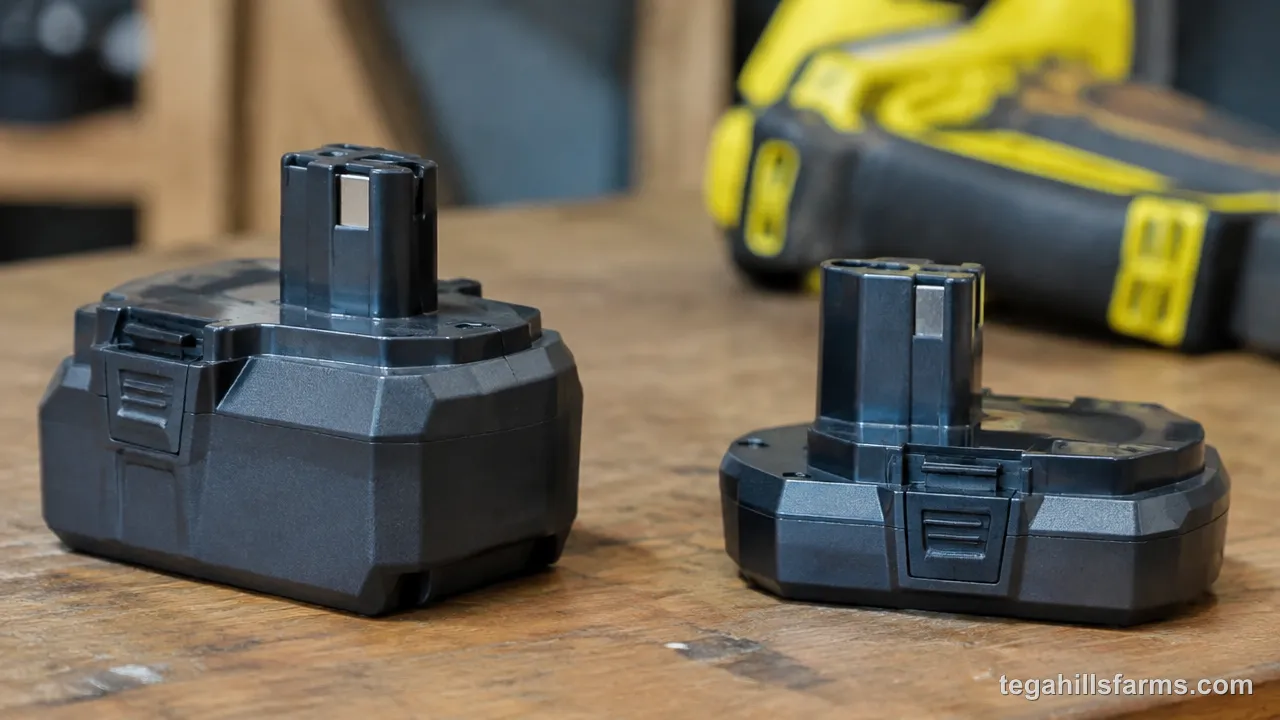
The biggest problem is inflated capacity claims. A generic pack can carry a large amp-hour label while holding fewer or weaker cells, so it runs out much sooner than the label suggests. Weak cells also lose output under load, which makes a saw or blower bog down early. Worse, some cheap packs skip proper overcurrent and overheating protection. That circuit shuts the pack off before the cells overheat in a stalled tool or a hot charger, and a pack without it can get dangerously hot. Ryobi’s tool warranty may not cover damage traced to a non-Ryobi battery, so read its terms before you put a generic pack in an expensive tool.
Before buying a generic pack, check these:
- Cell quality: the listing names the cell maker rather than calling them “premium cells.”
- Safety documentation: a recognized safety certification and a stated protection circuit for overcurrent and overheating.
- Return terms: a clear return window, so a weak pack can go back.
- Weight against the claim: more capacity takes more cells, and cells add weight. A “high-capacity” pack that weighs about the same as a compact one is overstating its rating.
- Real runtime: run it on a tool you know beside a genuine pack. If it falls well short of its claim, return it.
Every lithium pack loses a little capacity with each charge cycle, and on an older ONE+ pack the first clue is usually a trimmer that quits a stretch earlier along the fence than it used to. Left too long, a worn pack turns a short Saturday cleanup into a string of recharge breaks, with sluggish tools in between.
When Does a Ryobi 18V Battery Need Replacing?
Replace a pack when runtime drops sharply on jobs it used to finish, when the fuel gauge reads full and then dies within minutes, or when it gets hot on the charger. Swelling or a cracked case is a reason to stop using the pack right away and take it to a battery recycling drop-off, because damaged lithium cells can overheat.
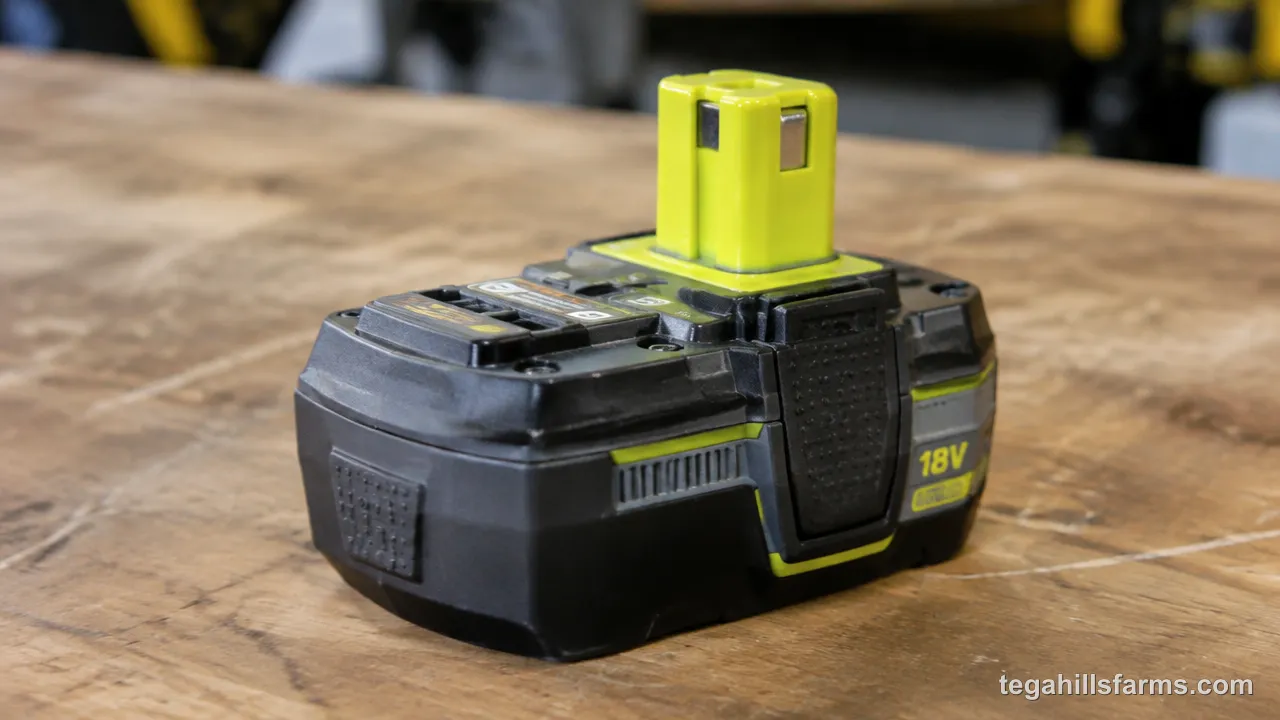
A slow loss of runtime over several seasons is normal aging. The pack still works, just for shorter stretches, and you can keep using it on light tools. A sudden drop, a gauge that jumps from full to empty, or heat during charging points to a failed cell or physical damage, and that pack is finished. If it is still under Ryobi’s warranty, file a claim before you buy a replacement.
In a set of packs bought together, one often wears faster because it gets used first or stored somewhere hotter. Run each pack on the same tool and compare. Replace the weak one and keep the healthy ones in rotation, since they still have plenty of life left.
How Should You Charge and Store a Ryobi 18V Battery?
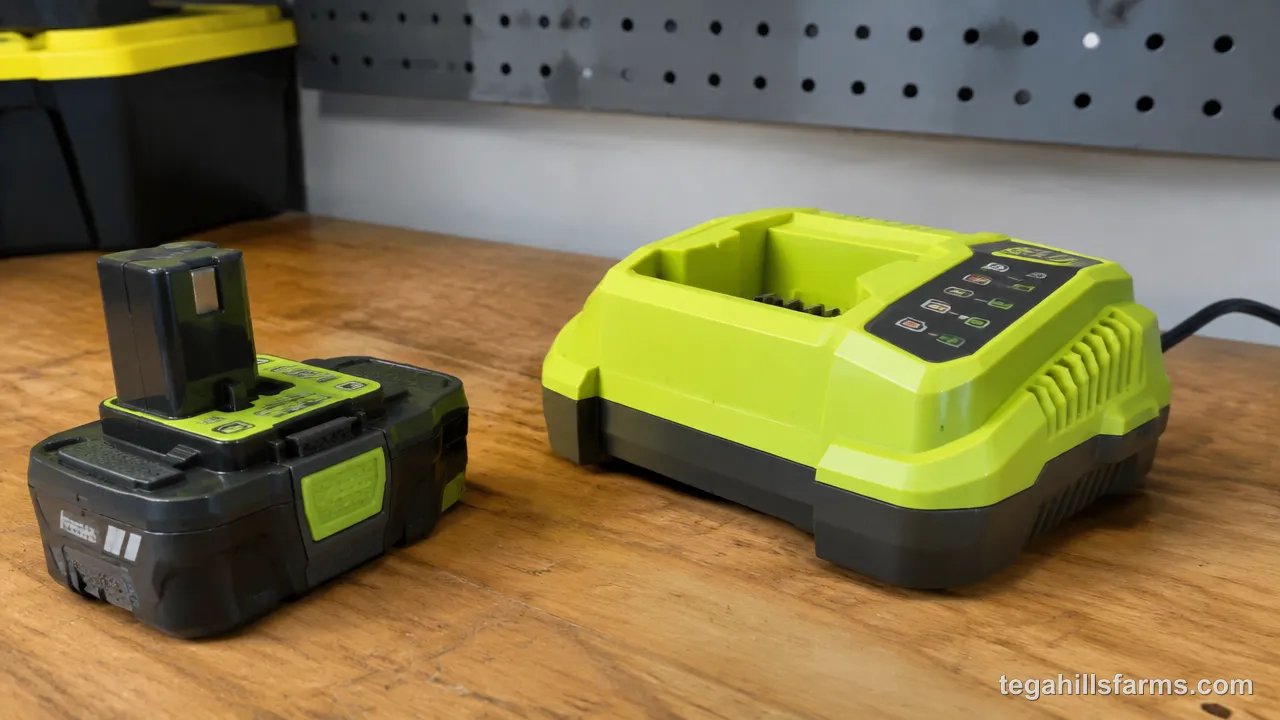
ONE+ lithium packs need a lithium-compatible ONE+ charger. Older chargers built only for NiCad packs will not charge them. If you run two packs, a faster charger matters more than a bigger pack. When one pack refills before the other runs empty, the rotation never stops and the work never waits.
Storage habits decide how much capacity a pack keeps over the years:
- Store partly charged. A pack left full ages faster. A pack left empty can drain so low over winter that it will not wake up on the charger.
- Keep it out of heat. Heat speeds up the chemical aging that shrinks capacity, so a pack left in a summer truck cab or a hot garage loses runtime faster than one kept indoors.
- Warm it before charging. Cold storage does little harm, but charging a frozen pack can damage the cells. Bring it inside and let it reach room temperature first.
- Take it off the charger. A pack left on the charger for months sits at full charge the whole time, which is the same aging problem as storing it full.
Over winter, bring your packs inside, charge them partway, and keep them on a shelf away from the furnace. They’ll be ready for the first spring mow.





Write Your Review
No reviews yet. Be the first to share your experience!