

My picks for loppers under $50 are Fiskars Bypass Loppers 28in (Best Overall), Fiskars 28in Bypass Loppers (Runner Up), TABOR TOOLS GL16A Bypass Lopper 28in (Editor’s Choice), YRTSH Compound Action Loppers (Also Great), Corona Compound Action Anvil Lopper 32in (Also Great), Garden Guru Bypass Loppers 15in (Best Budget), YRTSH Extendable Loppers 21-26in (Also Great), Ymachray Anvil Lopper 26-41in (Also Great) and HAUTMEC Anvil Loppers 27-37in (Also Great).
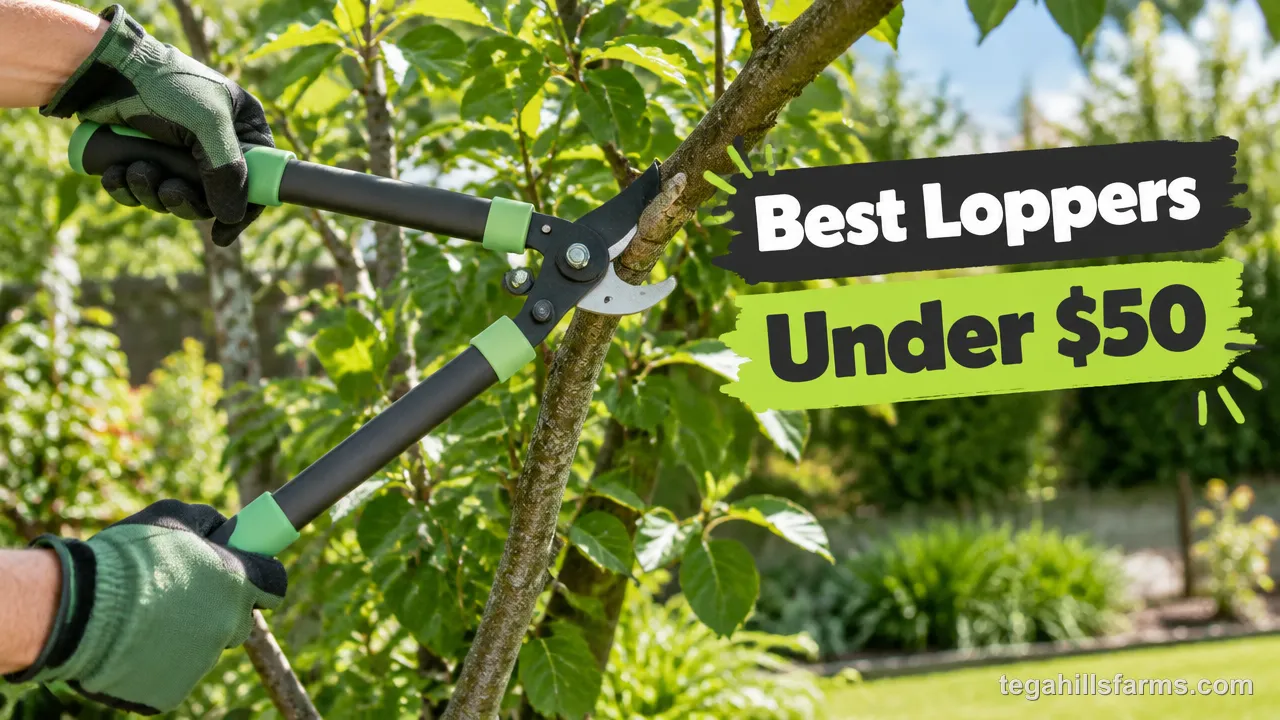
Bypass heads belong on live shrubs and young trees, and anvil heads on dead, dry limbs, so the head type should follow the wood you cut most often. Handle length is the second choice. Long or telescoping handles give you leverage and reach, while short handles keep the tool light and close to your body.
With an inexpensive lopper, the bigger risk is a tool that wears out your hands before the hedge is done, or a pivot that works loose after one season. Compound levers, shock-absorbing bumpers and soft grips take strain off your wrists and shoulders. Hardened, coated blades hold an edge and resist rust.


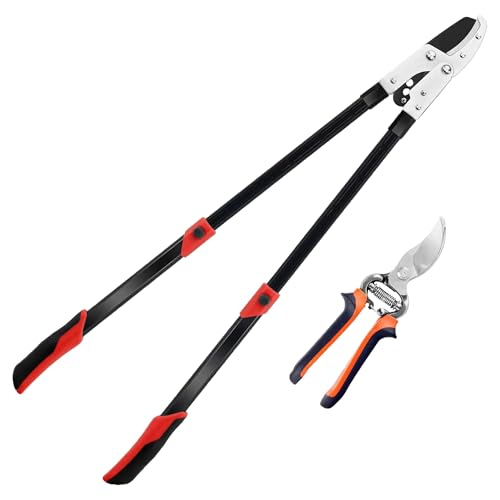


If you prune mostly living growth and clear deadwood only now and then, buy a bypass lopper first and add an anvil model later. One head can’t do both jobs well.
What Should You Look for in Loppers Under $50?
At this budget, matching the head and handles to the branches you actually cut matters more than any added feature, because each design gains in one job what it gives up in another. A lopper that fits your wood and your reach stays comfortable through a long session and keeps its edge. A mismatched one leaves torn stems, sore wrists or a bent blade before the season is out. For a wider view past this price range, our guide to the best loppers covers every kind of lopper and the work each one suits.
Which Is Better, Bypass or Anvil Loppers?
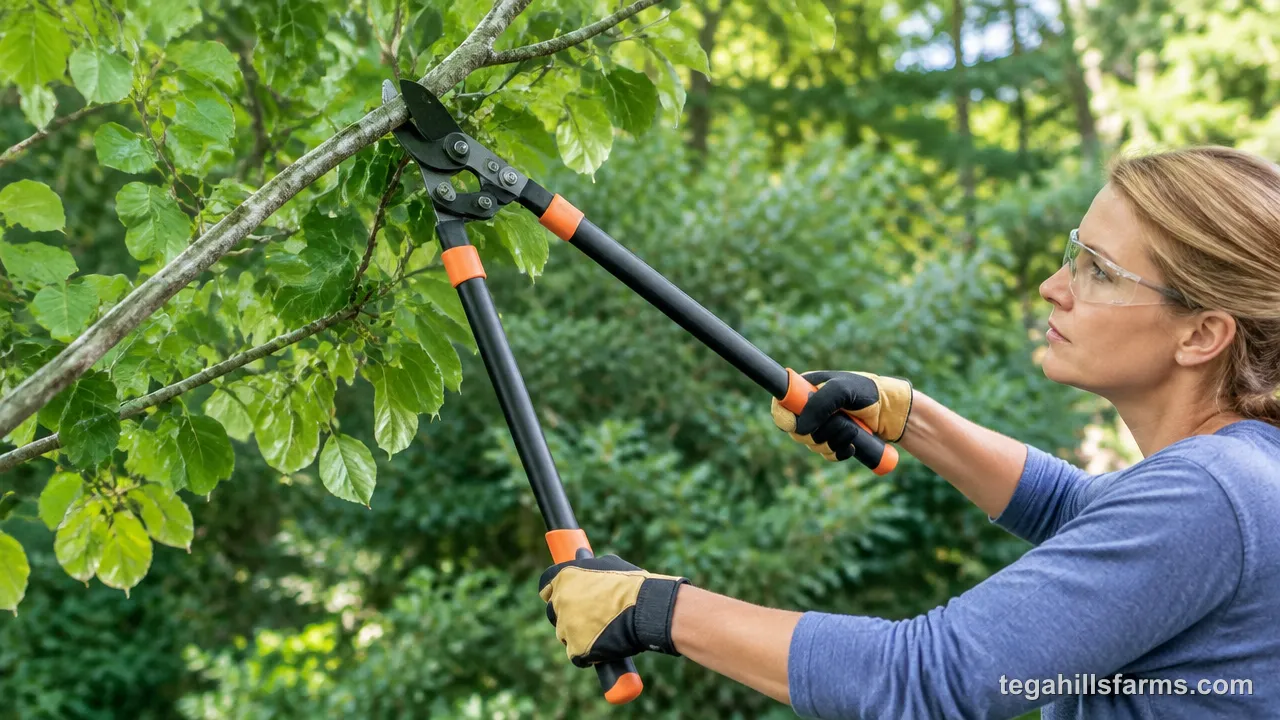
For live green wood, a bypass head is the better tool. For dry, dead wood, an anvil head does the job with less strain. The difference comes from how the blades meet. A bypass head slides a sharp upper blade past a hooked lower jaw, like scissors, so it leaves a clean cut the plant can seal over. An anvil head presses a single blade down onto a flat surface. That gives it power on brittle, hard wood, but it crushes the soft tissue of a living stem, and the bruised, ragged end invites rot and disease.
Many bypass models have rubber bumpers between the handles that absorb the jolt when the blades close, which spares your wrists and elbows. On an anvil head the blade stops against the anvil itself. If that blade is dull or out of line, it leaves a strip of uncut bark that tears instead of separating.
The table compares the two head types on the points that decide the choice.
| Criterion | Bypass head | Anvil head |
|---|---|---|
| Cutting action | Blade slides past a hooked jaw | Blade presses onto a flat anvil |
| Live green wood | Clean cut that heals well | Crushes the stem |
| Dry or dead wood | Blades can bind or twist | Strong, controlled cut |
| Shock at the end of the cut | Bumpers between the handles | Blade stops on the anvil |
Use bypass for anything still growing and anvil for wood that is already dead. If most of your cutting is on living shrubs, compare the best bypass loppers. If you spend more time clearing dead limbs, look at the best anvil loppers instead.
How Do Compound Action and Cutting Capacity Affect Real Cutting Power?
Compound action is a lever system with extra pivot points that multiplies the force from your hands. A branch that would stall a simple lopper closes with a steady squeeze. The extra linkage turns a longer handle movement into a shorter, stronger blade movement. Each cut takes less grip force, so your hands and forearms tire more slowly over an hour of pruning. That matters most on thicker branches and if your grip strength is reduced.
Cutting capacity is the thickest branch the jaws can cut cleanly in one stroke. Manufacturers rate it in different ways. The same tool also cuts fresh, moist wood more easily than dry, seasoned wood of the same diameter, so treat a rated capacity as the upper limit on green wood rather than a promise on deadwood. Forcing a cut past that point pushes the blades apart at the pivot. That opens a gap that tears every later cut and puts the strain on your wrists.
How Long Should Lopper Handles Be?
Extra reach and leverage cost you weight, control and room to swing, so the right length depends on where you prune. Compact handles keep your hands close to the cut. You can work inside a rose bush or a dense hedge without the handle ends catching on branches or the fence, and the light weight makes precise cuts easier.
Standard fixed handles sit in between. They suit general cutting at waist and chest height and give enough leverage for the branches a lopper is meant for.
Extendable, telescopic handles slide out to reach higher growth without a ladder and pull back in for closer work. The joint that makes them adjustable is also their weak point. Under a hard squeeze, a telescopic handle can flex or shift a little, so the cut feels less solid than with a one-piece handle. Longer handles also put weight farther from your body, and holding it up at arm’s length tires your shoulders and wrists faster over a long session.
9 Best Loppers Under $50 for Home Gardeners
The lineup runs from Fiskars Bypass Loppers 28in, Fiskars 28in Bypass Loppers and TABOR TOOLS GL16A Bypass Lopper 28in through YRTSH Compound Action Loppers, Corona Compound Action Anvil Lopper 32in, Garden Guru Bypass Loppers 15in and YRTSH Extendable Loppers 21-26in to Ymachray Anvil Lopper 26-41in and HAUTMEC Anvil Loppers 27-37in. Head type and handle design separate these tools far more than small spec gaps do. The bypass heads suit live shrubs and the anvil heads suit dry wood, and the extendable handles give up some rigidity for reach. Weekly yard gardeners, people with smaller or tired hands, and anyone who needs reach or a compact tool for tight beds each have a sensible fit among these loppers.
#1 Fiskars Bypass Loppers 28in — Best Overall
If most of your pruning is live shrubs and young trees, this lopper makes clean bypass cuts on branches up to 1.5 in thick and weighs 2.9 lb. Its coated steel blade keeps sliding through sappy wood.
Key Specs:
- Head type: bypass
- Length: 28 in
- Cutting capacity: 1.5 in
- Weight: 2.9 lb
- Blade: steel with low-friction coating
- Warranty: lifetime
Detailed Review:
The steel blade has a low-friction coating, and on green wood that coating is what keeps the tool pleasant to use. Sap and plant residue have less to grip, so the blade keeps gliding past the hooked jaw instead of dragging partway through a cut. The same coating adds rust resistance, which helps when the lopper goes back into the shed still damp.
At 28 in long and 2.9 lb, it gives you leverage for live limbs without feeling heavy at the end of your arms. You notice that balance over an hour of pruning, because you hold the tool up between every cut. The non-slip grip keeps your hands from creeping toward the head as they tire, so each cut stays under control.
Shock-absorbing bumpers between the handles soften the stop at the end of each cut, which spares your wrists through a long session. The steel blades are made to stay sharp through heavy use, and Fiskars backs the lopper with a lifetime warranty.
Pros:
- Low-friction coating resists gumming on sappy live branches.
- Bypass head leaves clean cuts on live wood.
- Non-slip grip keeps your hands steady as they tire.
- Shock-absorbing bumpers soften the jolt at each cut.
- Lifetime warranty backs the build.
Cons:
- Bypass head is the wrong tool for dry deadwood.
- Long handles feel cramped inside dense, low shrubs.
Who It’s For:
Gardeners who spend weekend mornings shaping live shrubs, fruit trees and overgrown perennials will find this a comfortable everyday lopper, because the coated blade stays smooth on sappy wood and the grip stays secure. If your work is mostly dead limbs and storm cleanup, an anvil head will serve you better.
Editor’s Verdict:
A well-balanced bypass lopper with a coated blade that stays clean on live wood, this is the one I would hand to anyone who prunes shrubs every week.
#2 Fiskars 28in Bypass Loppers — Runner Up
Thicker live branches are where this Power-Lever model earns its place, because its compound lever takes branches up to 1.75 in. Your hands do less of the work.
Key Specs:
- Head type: bypass
- Action: Power-Lever compound lever
- Length: 28 in
- Cutting capacity: 1.75 in
- Weight: 3.2 lb
- Model: 391381-1014
Detailed Review:
A Power-Lever compound lever sits behind the bypass head and puts more of each squeeze into the blade. A branch near the tool’s capacity closes in one controlled stroke rather than a strained, two-handed push, which makes thicker live limbs realistic for a hand tool.
Compared with the Fiskars Bypass Loppers 28in, this model takes thicker branches but weighs more. The extra weight sits at the ends of the same 28-in length, so you feel it in your shoulders when you reach up through a long session. If your branches stay thin, the lighter model is easier to carry. If you often meet thicker growth, the extra capacity is worth the weight.
The handles are rounded, with SoftGrip touchpoints where your palms press hardest, and the non-slip surface keeps your hold steady as the lever takes up the load. The steel blades have a low-friction coating that limits gumming and rust, and they are made to stay sharp through heavy use.
Pros:
- Power-Lever compound lever adds force on thicker branches.
- Takes live branches up to 1.75 in.
- SoftGrip touchpoints cushion your palms under load.
- Low-friction coating limits sap buildup and rust.
Cons:
- Weighs more than the Fiskars Bypass Loppers 28in.
- Bypass blades can bind in hard, dry deadwood.
Who It’s For:
Yards with established shrubs and fruit trees that grow thicker live limbs suit this lopper, especially if your grip tires before the job is done. If you mostly snip thin growth and want a lighter tool to carry, the Fiskars Bypass Loppers 28in will feel easier on your arms.
Editor’s Verdict:
Choose it when your live branches run thick and you want the lever to do the work. The small weight penalty buys real cutting force.
#3 TABOR TOOLS GL16A Bypass Lopper 28in — Editor’s Choice
This lopper suits gardeners who want a light, balanced bypass tool for live shrubs and hedges, with a 2.6-lb build, 22-in handles and a shock-absorbing bumper. The edge can be re-sharpened.
Key Specs:
- Head type: bypass
- Length: 28 in overall, 22-in handles
- Cutting capacity: 1.25 in
- Weight: 2.6 lb
- Blades: fully hardened carbon steel, low-friction coated
- Model: GL-16
Detailed Review:
The blades are fully hardened carbon steel with a low-friction coating, and the gliding blade can be re-sharpened. That decides how long the tool lasts. A lopper you can bring back to a keen edge keeps making clean cuts on live wood for many seasons instead of starting to tear bark.
A shock-absorbing bumper sits between the handles and stops the jolt that runs up your arms when the blades close through a branch. Over an afternoon of hedge trimming, that cushion keeps your elbows and shoulders from aching. The rubberized grips add a secure hold with no hard edges under your palms.
It is lighter than the Fiskars Bypass Loppers 28in, but that model takes thicker branches. For hedges and shrubs with modest wood, the lower weight is the better trade, and older gardeners or anyone with weaker arms will feel the difference.
A hole in the handles lets you hang the lopper on a wall hook, which keeps the blades dry and off the floor over winter. For dry and dead wood, TABOR TOOLS intends it to be paired with an anvil lopper rather than forced through brittle limbs.
Pros:
- Hardened carbon steel blade can be re-sharpened.
- Shock-absorbing bumper reduces jarring in arms and shoulders.
- Light, balanced build is easy to carry.
- Hang-up hole makes dry wall storage simple.
Cons:
- 1.25-in capacity limits it on thicker limbs.
- Dry and dead wood need a separate anvil lopper.
Who It’s For:
Older gardeners, and anyone whose shoulders ache after pruning, will appreciate how this lopper pairs light weight with a cushioned stop at each cut. It is a good match for hedges, roses and live shrubs. If you regularly cut thicker live limbs, the Fiskars 28in Bypass Loppers take thicker branches.
Editor’s Verdict:
For live-wood pruning with an edge you can keep sharpening, I’d pick this one when comfort in your arms matters as much as cutting power.
#4 YRTSH Compound Action Loppers — Also Great
With an aluminum handle that extends in six steps from 28 to 41 in, this lopper lets you cut high branches while standing on the ground. Compound action adds force at the top of that reach.
Key Specs:
- Action: compound
- Handle: aluminum, extends in 6 steps from 28 to 41 in
- Cutting capacity: 2 in
- Blade: alloy steel with Teflon and low-friction coating
- Grip: soft rubber, non-slip
Detailed Review:
The aluminum handle adjusts across six steps, so you can set it short for shrubs at chest height and extend it for limbs above your head. That range keeps you on the ground for most yard trimming, which is safer and less tiring than working from a ladder with a tool in both hands.
Compound action multiplies the force at the blade. That matters on an extendable tool, because holding the handles up at full length leaves you less strength for the squeeze. With a 2-in capacity rating, it has room for thicker growth on both green and dry branches.
The alloy steel blade has a Teflon and low-friction coating, which helps it slide through sap and resist the buildup that drags on later cuts. Soft rubber, non-slip grips keep your hands in place on the handles when they are wet or tired.
Each adjustment point in the aluminum handle adds a little give under a hard squeeze, so at full length the cut feels less solid than it would with a one-piece handle. For thick branches, I’d pull the handles in a few steps so the cut feels more solid.
Pros:
- Six-step aluminum handle extends from 28 to 41 in.
- Compound action adds force at full extension.
- Rated for branches up to 2 in.
- Coated alloy steel blade slides through sap with less drag.
- Soft rubber grips stay secure in wet hands.
Cons:
- Telescoping joints add flex under a hard squeeze.
- Holding it at full length tires your shoulders.
Who It’s For:
If your yard has fruit trees or tall shrubs that you now trim from a stepladder, this lopper lets you do the work from the ground. It also suits anyone who wants extra cutting force without a hard squeeze. For close work inside dense, low shrubs, a compact bypass lopper will feel more precise.
Editor’s Verdict:
Reach and compound force make this a practical tool for high limbs, as long as you accept a little flex at full length.
#5 Corona Compound Action Anvil Lopper 32in — Also Great
Deadwood cleanup is what this tool is for. Its anvil head works with compound leverage and 32-in handles, so dry, hard branches that would stall a simple lopper come apart in a steady, controlled cut.
Key Specs:
- Head type: anvil
- Action: compound
- Length: 32 in
- Weight: 2.7 lb
- Model: FL 3420
Detailed Review:
The anvil head is meant for dry, dead or hard branches, and the compound leverage behind it multiplies the force from your hands. Together they let you finish tough cuts with less effort than a standard lopper needs, which is exactly what deadwood cleanup asks of a tool.
The 32-in handles add reach and leverage for limbs that sit higher or deeper in a tree. At 2.7 lb, that length stays manageable. It weighs less than the HAUTMEC Anvil Loppers 27-37in, which you will notice when you hold the tool up between cuts.
Long handles also need a wider swing, so this lopper suits open ground around trees better than a crowded perennial bed. The construction is heavy-duty and built for steady work through tree trimming, shrub pruning and yard cleanup. That build matters when a cleanup day means dozens of hard cuts in a row.
On live shrubs, the anvil head crushes green stems, so I’d keep a bypass lopper for anything still growing. The two tools together cover a full season of yard work.
Pros:
- Compound leverage reduces effort on thick, tough branches.
- Anvil head gives controlled cuts in dry, dead wood.
- 32-in handles add reach and leverage.
- 2.7-lb weight stays manageable for its length.
Cons:
- Anvil head crushes live green stems.
- Long handles need room to swing in tight beds.
Who It’s For:
Homeowners facing a backlog of dead limbs, storm debris or wood that has dried on the tree will get steady use from this lopper. The long handles help on branches just out of reach. If you mostly shape living shrubs, look at a bypass model instead.
Editor’s Verdict:
Keep this anvil lopper for dry, dead wood, where compound leverage makes hard cuts manageable without wearing out your hands.
#6 Garden Guru Bypass Loppers 15in — Best Budget
Tight spots inside roses, dense shrubs and container plantings suit this compact bypass lopper, whose 15-in length keeps the cut close to your body. At 1.2 lb, it is easy on small hands.
Key Specs:
- Head type: bypass
- Length: 15 in
- Cutting capacity: 1.5 in
- Weight: 1.2 lb
- Blades: forged manganese and high-carbon steel
- Warranty: lifetime, plus 90-day satisfaction guarantee
Detailed Review:
The blades are forged from manganese and high-carbon steel, which gives them the hardness to hold an edge and the strength to resist bending in a cut. For a budget-friendly tool, that build keeps cuts smooth on live stems for more than one season.
Short handles bring your hands close to the head, so you can cut at a good angle inside a shrub without the handle ends hitting other branches. Soft, non-slip grips and the light weight make it easy to steer for long stretches, and the grips fit both small and large hands.
It has the same cutting capacity rating as the Fiskars Bypass Loppers 28in in a much shorter, lighter body. Short handles give less leverage, so your hands supply more of the force, and cuts near that rating take a firmer squeeze than they would with long handles.
A lifetime warranty and a 90-day satisfaction guarantee back the lopper. If your budget is tighter still, the best loppers under $30 are worth a look.
Pros:
- Forged manganese and high-carbon steel blades hold a sharp edge.
- Short handles cut accurately inside dense shrubs.
- 1.2-lb weight keeps hands and shoulders fresh.
- Soft non-slip grips suit small and large hands.
- Lifetime warranty backs the tool.
Cons:
- Short handles give little leverage on thicker branches.
- Limited reach for limbs above shoulder height.
Who It’s For:
Container gardeners, rose growers and anyone with smaller hands or sore wrists will find this compact lopper easy to steer. It handles close work in crowded beds well. If you mostly cut limbs overhead, a longer bypass lopper such as the Fiskars Bypass Loppers 28in gives you reach this one cannot.
Editor’s Verdict:
Light, compact and properly forged, it makes close pruning comfortable for small hands at a budget-friendly price.
#7 YRTSH Extendable Loppers 21-26in — Also Great
This extendable lopper suits gardeners who want a little extra reach without a long, heavy pole, with a handle that runs from 21 to 26 in and a 1.6-in capacity. Compound action helps on dry wood.
Key Specs:
- Action: compound
- Handle: alloy aluminum, extends from 21 to 26 in
- Cutting capacity: 1.6 in
- Weight: 2.8 lb
- Blade: steel with low-friction, non-stick coating
- Model: AB01
Detailed Review:
The steel blade has a low-friction, non-stick coating, so sap doesn’t hold it back in green wood, and compound action adds force on thick or dry branches. That combination lets one tool handle both live trimming and some deadwood, which suits a yard with a mix of shrubs and small trees.
The alloy aluminum handle extends from 21 to 26 in, which raises your reach a little without the weight and swing of a long pole. At 2.8 lb, it stays easy to hold up between cuts, even at full extension.
Compared with the YRTSH Compound Action Loppers, it gives up reach and capacity for compactness. That model extends farther and takes thicker branches, while this one stays shorter and easier to steer around shrubs. If high branches are your main job, the longer model fits better. For mixed work at chest and head height, this one is easier to manage.
The ergonomic soft rubber grip adds comfort and keeps your hands from slipping, and the adjustment joint has some give under a hard squeeze. If height is your main concern, compare the best extendable loppers before you settle on a reach range.
Pros:
- Compound action adds force on thick or dry branches.
- Non-stick coated blade resists sap buildup.
- Handle extends from 21 to 26 in.
- Soft rubber grip cushions hands through long sessions.
Cons:
- Modest extension leaves high tree limbs out of reach.
- Adjustment joint gives slightly under a hard squeeze.
Who It’s For:
For mixed yards where you trim shrubs at chest height one day and slightly higher limbs the next, this lopper covers both without much bulk. It also helps if some of your branches are dry. When your target is high in a tree, the YRTSH Compound Action Loppers extend much farther.
Editor’s Verdict:
Compact for an extendable tool, it gives modest reach and compound force in a handle that stays easy to manage.
#8 Ymachray Anvil Lopper 26-41in — Also Great
For dry, hard wood at different heights, this telescopic anvil lopper extends from 26 to 41 in and takes branches up to 2 in. Its hardened high-carbon steel blade keeps its edge through heavy use.
Key Specs:
- Head type: anvil
- Handle: telescopic, extends from 26 to 41 in
- Cutting capacity: 2 in
- Weight: 3.6 lb
- Blade: hardened high-carbon steel, low-friction non-stick coating
- Model: JR-001
Detailed Review:
The hardened high-carbon steel blade resists bending, breaking and warping, and its low-friction, non-stick coating helps it slide through dense wood instead of binding. That matters on an anvil head, because the blade has to drive all the way down to the anvil to finish a cut in dry, hard limbs.
The telescopic handle lets you clear low deadwood at the base of a shrub and then reach dead limbs overhead with the same tool. It reaches farther at full extension than the HAUTMEC Anvil Loppers 27-37in, which helps when dead limbs sit high in a tree.
At 3.6 lb, it is heavy to hold up at full length. I’d keep extended work to short sessions and pull the handle in for anything at waist height. The rubberized grips give a secure hold, which helps you control that weight.
The anvil head is a poor match for live green stems. Keep it for deadwood and use a bypass lopper on anything still growing.
Pros:
- Telescopic handle extends from 26 to 41 in.
- Rated for branches up to 2 in.
- Hardened high-carbon steel blade resists bending and warping.
- Non-stick coating keeps the blade moving in dense wood.
- Rubberized grips give a secure hold.
Cons:
- 3.6-lb weight tires your arms at full extension.
- Anvil head crushes live green stems.
Who It’s For:
When dead branches show up at every height, from the base of a hedge to limbs overhead, this lopper lets you clear them without switching tools. It suits gardeners with strong arms. If you have smaller hands or tire quickly, a lighter anvil model like the Corona Compound Action Anvil Lopper 32in is easier to carry.
Editor’s Verdict:
With its reach and hard carbon steel edge, this is a capable deadwood tool, provided you can manage its weight overhead.
#9 HAUTMEC Anvil Loppers 27-37in — Also Great
Dry, hard branches sit against a wide serrated anvil here, which holds the limb still while a compound lever system with multiple pivot points does much of the squeezing for you. The telescopic handle adds reach.
Key Specs:
- Head type: anvil, wide serrated
- Action: compound lever, multiple pivot points
- Handle: telescopic, 27 to 37 in, safety release lock button
- Cutting capacity: 2 in fresh, 1.4 in dry
- Weight: 3.4 lb
- Blade: drop-forged Cr-V steel with Teflon coating
Detailed Review:
The compound lever system uses multiple pivot points to multiply the force on the blade three times, and the wide serrated anvil holds the branch still while the blade closes. That grip on the wood matters on hard, dry limbs, because a branch that slides sideways in the jaws ends up with a crooked, partial cut.
The blade is drop-forged Cr-V steel, fully hardened and precision-ground, with a Teflon coating that resists rust and keeps friction low. It is rated for fresh branches up to 2 in but dried branches only up to 1.4 in, which shows how much harder seasoned wood is on a lopper. I’d treat the lower figure as the working limit for deadwood.
The telescopic handle runs from 27 to 37 in and locks with a safety release button, which keeps the length from shifting mid-cut. The non-slip handle reduces shock to your hands, and the aluminum oxide construction and strong bolts keep the cutting action stable.
It can cut fresh branches, but on live shrubs you want to keep healthy, a bypass head leaves a cleaner wound. Pair it with a bypass lopper for anything still green.
Pros:
- Multi-pivot compound lever reduces effort on hard wood.
- Wide serrated anvil holds branches still.
- Teflon-coated Cr-V blade resists rust.
- Lock button keeps the telescopic handle set.
Cons:
- Dry-wood capacity is lower than its fresh-wood rating.
- Anvil head leaves a crushed cut on live stems.
- Its weight tires your arms at full extension.
Who It’s For:
Gardeners who clear dry, seasoned limbs from fruit trees or old hedges will appreciate how the serrated anvil steadies each cut. The locking handle helps when you switch between low and high branches. If you mostly prune live shrubs, a bypass model will give you cleaner results.
Editor’s Verdict:
Stable, rust-resistant and strong on hard wood, this lopper makes a dependable deadwood partner for a bypass tool.
Which Loppers Should You Choose for Your Yard?
Match the head to the wood you cut most, bypass for live shrubs and anvil for dead limbs. Then match the handles to where that wood grows, from compact handles for tight beds to long or extendable ones for reach.
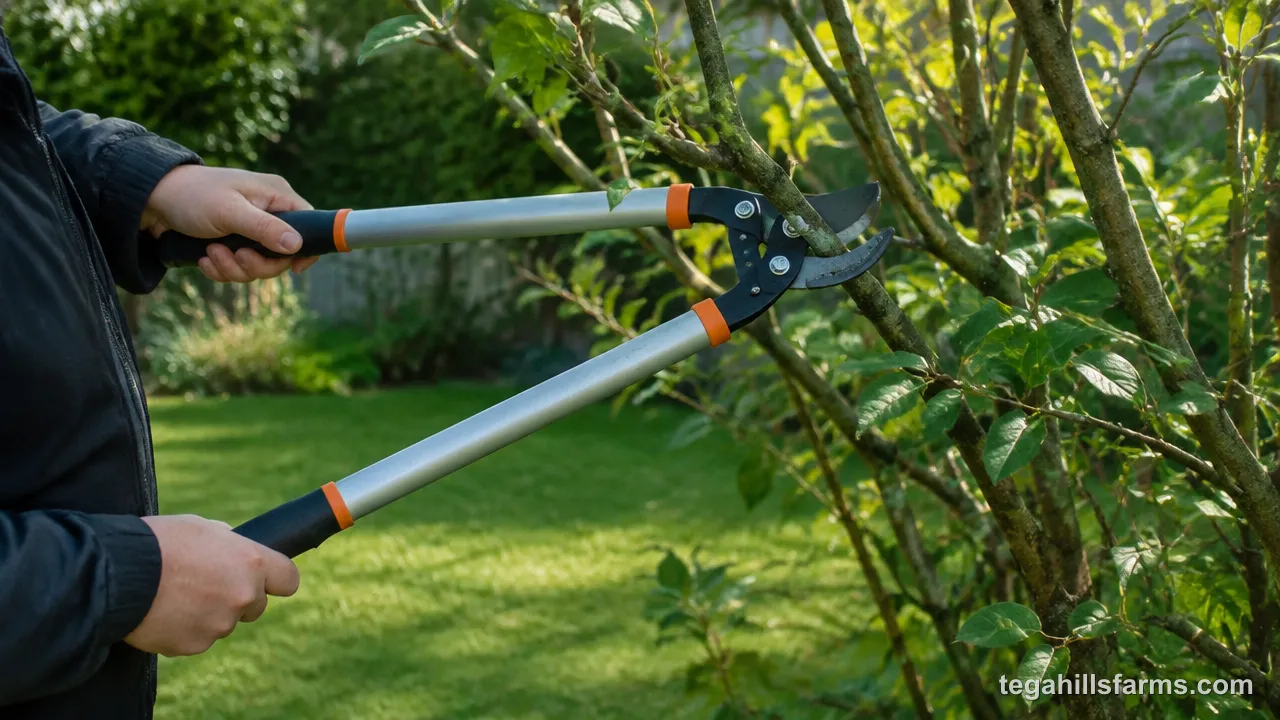
For live shrubs and young trees, the Fiskars Bypass Loppers 28in, Fiskars 28in Bypass Loppers and TABOR TOOLS GL16A Bypass Lopper 28in cover regular weekly pruning, and the Garden Guru Bypass Loppers 15in handles close work in roses, containers and crowded beds. Dead limbs and storm cleanup call for the Corona Compound Action Anvil Lopper 32in, Ymachray Anvil Lopper 26-41in or HAUTMEC Anvil Loppers 27-37in. When the problem is height, the YRTSH Compound Action Loppers and YRTSH Extendable Loppers 21-26in let you stay on the ground.
Weaker hands and long sessions call for mechanical help. A compound lever, like the ones on the Fiskars 28in Bypass Loppers and the Corona Compound Action Anvil Lopper 32in, reduces the force each squeeze needs. Ratchet-style heads go further by closing the cut in stages, so the best ratchet loppers are worth comparing if arthritis or limited grip strength holds you back.
How often you prune changes how much the details matter. If you only clear a few branches each spring, you can live with a heavier tool or a basic grip. If you prune every week, weight, grip and a re-sharpenable blade decide whether the tool still feels right after an hour. One lopper rarely covers every job, so if your yard has both living shrubs and old deadwood, plan on a bypass model and an anvil model rather than forcing one head through both. Weighing these trade-offs in order is the core of how to choose loppers.
A dead oak limb or a dry branch as thick as your wrist can stall even a compound lopper halfway through, with the jaws stuck and the blades flexing. Pushing harder at that point spreads the blades at the pivot and twists your wrists, and from then on the lopper leaves ragged, half-torn cuts on every branch.
When Should You Use a Pruning Saw Instead of Loppers?
Once the jaws won’t close unless you lean your weight into the handles, the blades visibly flex, or the wood is dense, dry and seasoned, the branch needs a saw. A saw is safer there because its teeth remove wood stroke by stroke instead of squeezing the whole branch at once.
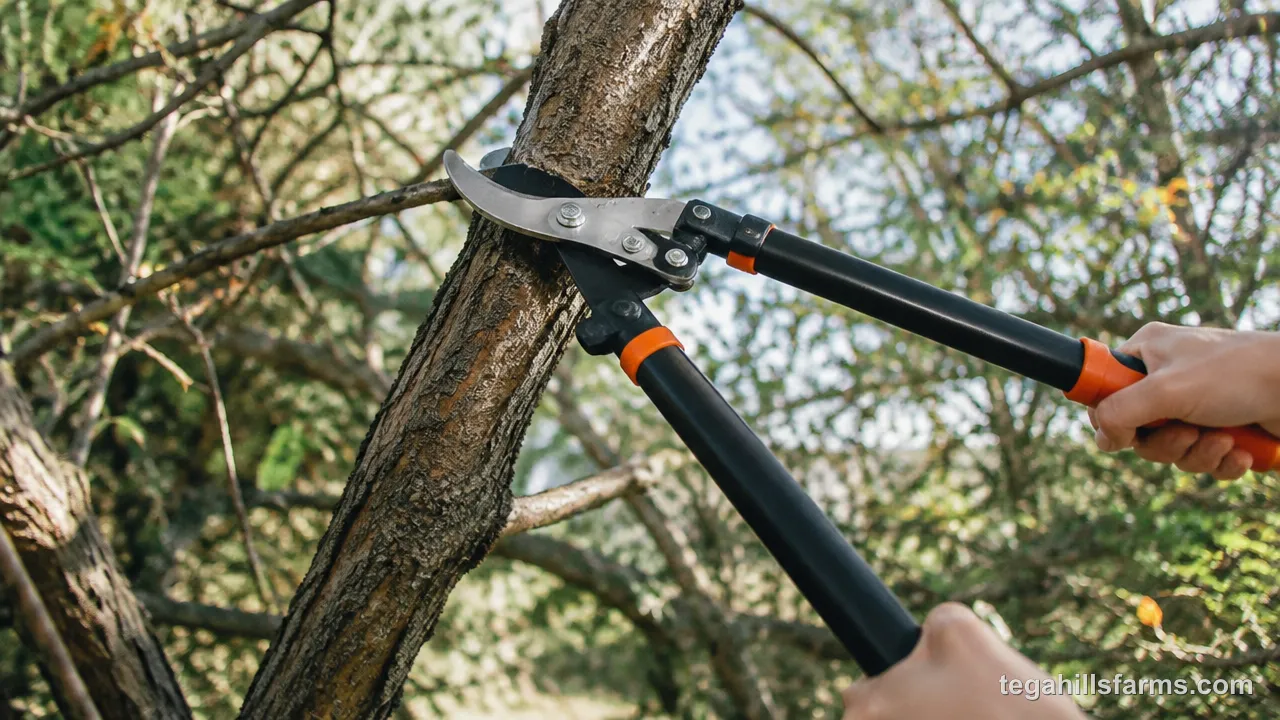
Forcing a lopper through that kind of wood pushes the two blades sideways at the pivot. Once they spread apart, they no longer meet cleanly, so every later cut tears bark instead of slicing it, and the twisting load runs straight into your wrists and forearms. A saw also leaves a flat, clean face on a thick limb, which seals better than a crushed or split end.
For branches right at the edge, where a saw feels like more tool than the job needs, a heavier lopper built for that range helps. The best loppers for thick branches have larger jaws and stronger leverage for exactly those cuts.
How Can You Tell a Budget Lopper Will Last More Than One Season?
Hardened blades that can be re-sharpened, a tight pivot bolt, a rust-resistant coating and stiff handles are the signs of a tool that will last several seasons. A blade you can sharpen keeps cutting cleanly as it wears. On some models the blade itself can be replaced, so a dull or nicked edge means a repair rather than a new purchase. The pivot bolt takes the load of every cut, so it should stay snug and ideally be adjustable with a wrench. Coatings slow rust on the blade face, and handles that don’t flex under a hard squeeze keep the blades lined up.
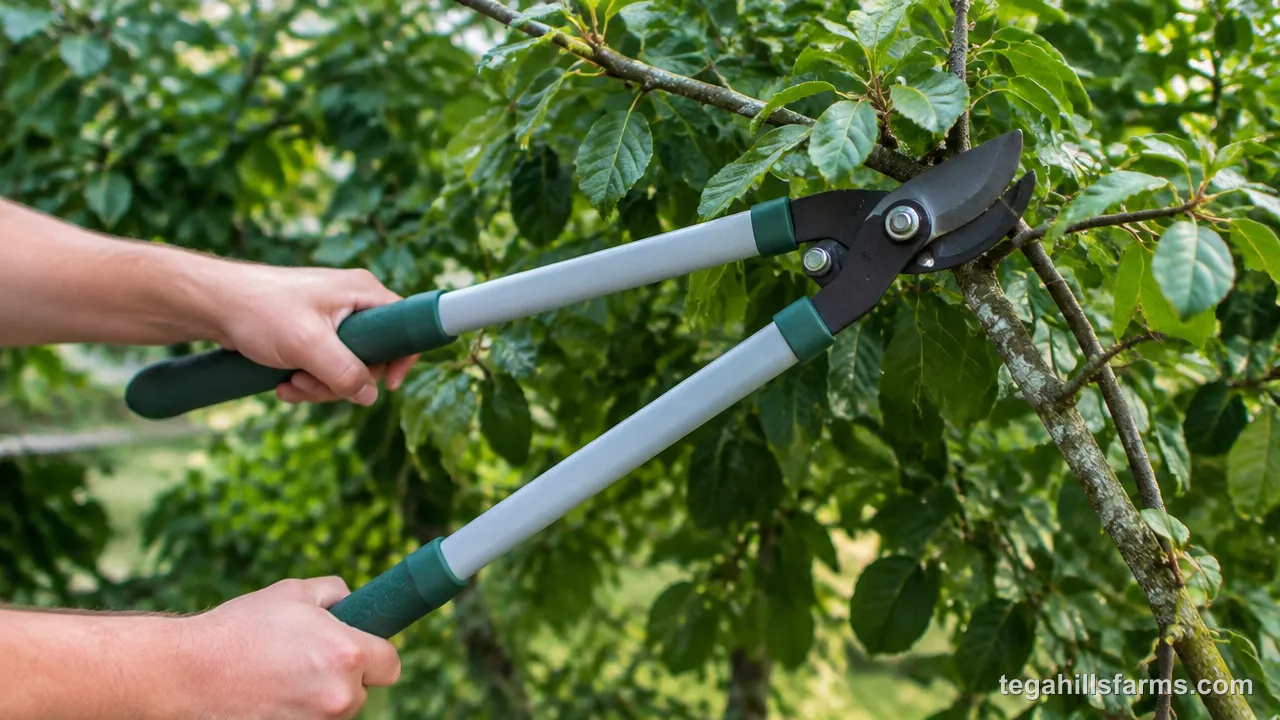
Early trouble shows up at the joint: a pivot that wobbles, a gap you can see light through when the blades close, or rust forming where the blades cross. Tightening and cleaning fix a loose pivot and surface rust. A gap that comes back after tightening usually means a bent blade, and on an inexpensive lopper, replacing the tool is often more sensible than chasing parts.
A lifetime warranty typically covers defects in materials and workmanship, such as a cracked handle or a failed pivot, but not wear from normal use. Keep the receipt and read the terms before you need them.
How Do You Care for Loppers Through the Seasons?
After each session, wipe sap and soil off the blades with a damp cloth, then dry them fully. Sap left on the steel hardens, makes the blades stick and holds moisture against the metal, which is where rust starts.
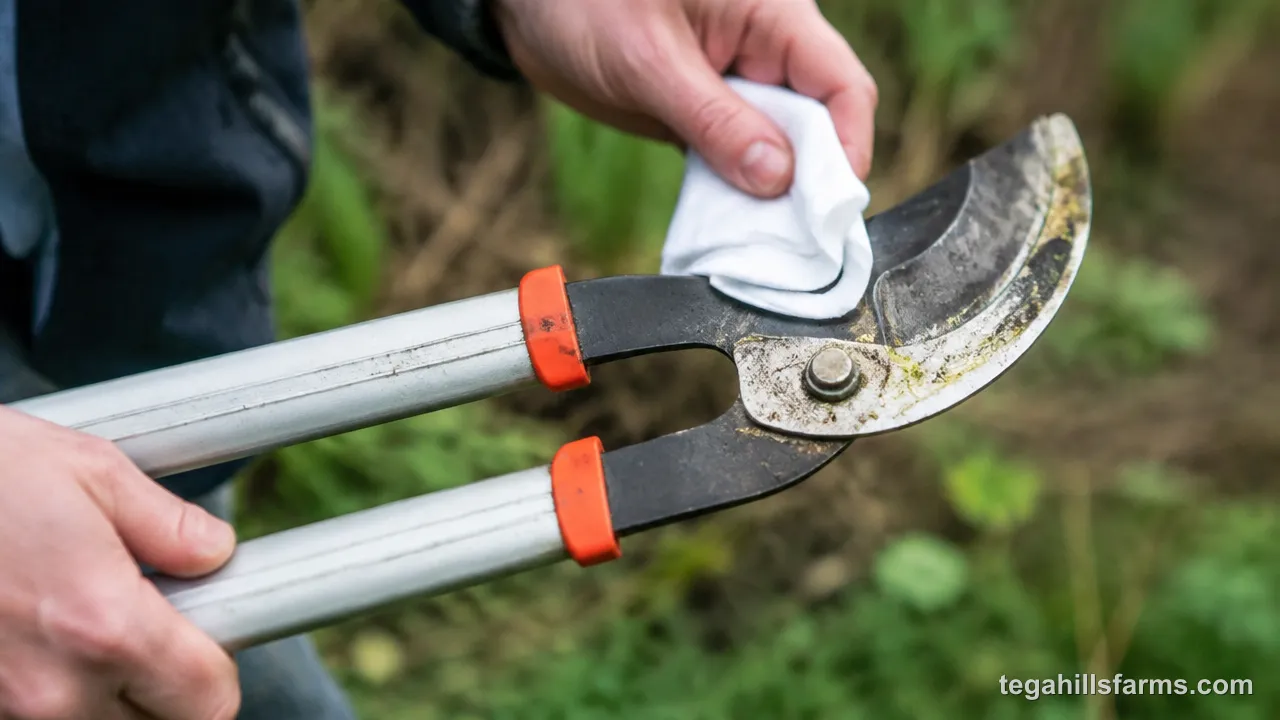
A drop of oil on the pivot keeps the joint moving freely and pushes out water, so the handles open smoothly and the blades meet on the same line every time.
Sharpen a bypass blade only on its beveled outer edge, following the existing angle with a file or whetstone, and leave the flat inner face flat so the blades still pass tightly. A sharp edge slices instead of tearing, which keeps cuts clean on the plant and spares your hands. For the file angle and strokes, follow the steps in how to sharpen loppers.
Before winter, clean, dry and oil the loppers once more, then hang them in a dry shed or garage. Left on the floor or outside, damp air and condensation rust the pivot and blade faces over the cold months, and the tool comes out stiff in spring.
Loppers Under $50 FAQ
Is Corona or Fiskars better for loppers under $50?
It depends on the wood you cut. The Fiskars Bypass Loppers 28in and Fiskars 28in Bypass Loppers are bypass tools made for clean cuts on live shrubs and trees. The Corona Compound Action Anvil Lopper 32in is an anvil tool built for dry, dead branches. If your yard has both kinds of wood, one of each covers more jobs than either alone.
Where can you buy loppers under $50?
Home improvement stores, local garden centers and online retailers such as Amazon all stock loppers in this range. Buying in person lets you hold the tool, open and close the handles, and check the weight and grip before you pay. Buying online gives you more models to compare side by side.
Write Your Review
No reviews yet. Be the first to share your experience!