

Among the best bypass loppers for 2026, my picks are Fiskars Bypass Loppers 28in (Best Overall), Fiskars PowerGear Bypass Loppers 32in (Editor’s Choice), Fiskars PowerGear2 Bypass Loppers 18in (Best Compact), Fiskars PowerGear2 Bypass Loppers 25in (Also Great), Tabor Tools GG11A Bypass Lopper 30in (Also Great), Garden Guru Bypass Loppers 15in (Best Budget), Corona Tools WL 3351 Bypass Loppers 26in (Best Precision Cutting), Corona Tools DualLINK Bypass Loppers 33in (Also Great) and Fiskars PowerGear L78 Bypass Lopper 28in (Also Great). They range from short tools that slip inside a crowded shrub to long, geared models built for limbs above your head.
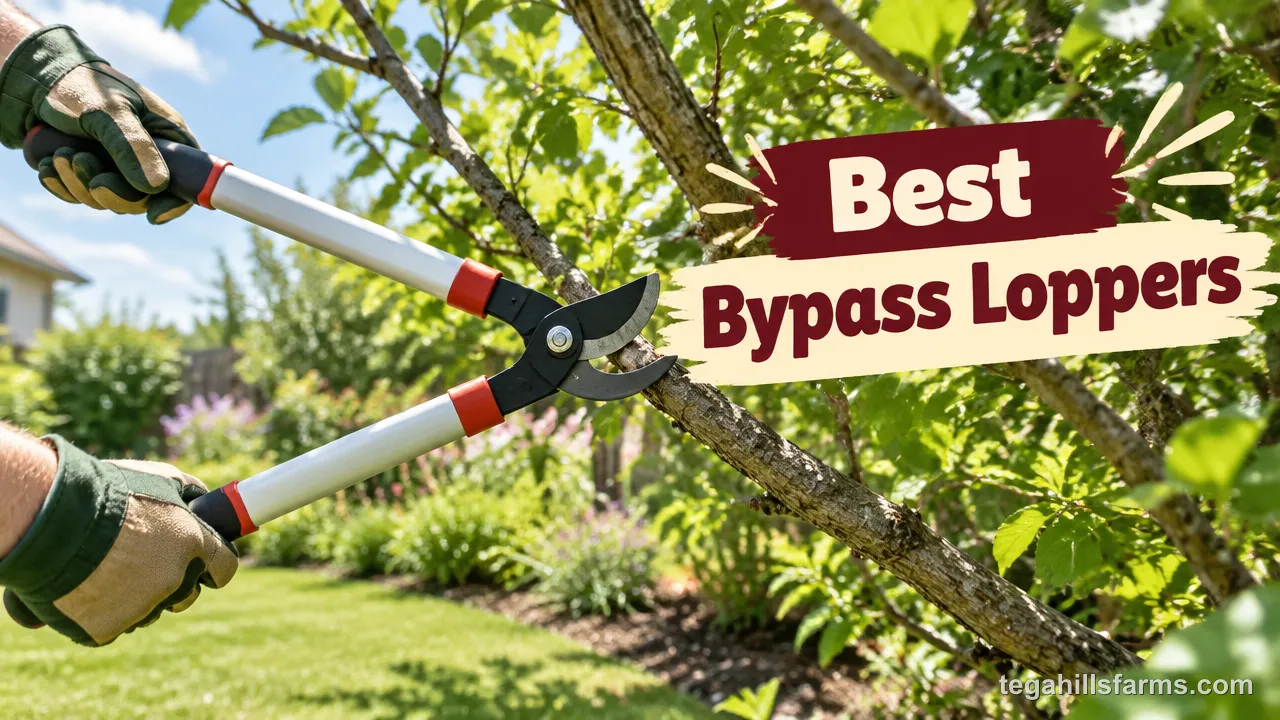
What separates them is cut capacity, handle length, the leverage mechanism between the handles and the blades, and the steel and grips that decide how each tool feels after an hour and how it ages over seasons. These choices pull against each other, so a tool that reaches high limbs rarely feels nimble inside a dense shrub.
The worry most gardeners bring to this tool is their hands. A lopper that demands a hard squeeze or jars your wrists at the end of each cut leaves you sore after an hour of pruning, and a dull or loose blade tears bark instead of slicing it. Coated blades, cushioned bumpers and softer grips address those problems directly, so they matter as much as cutting power.


Before you buy, think about how thick the living branches are that you cut most often and the height you usually work at. Those two answers narrow the field faster than any single feature, because a compact tool and a long-reach tool solve opposite problems.
Are Bypass Loppers Better Than Anvil Loppers?
Yes, for living, green branches: two curved blades that slide past each other like scissors leave a clean, flat wound that the plant seals faster than a crushed one.
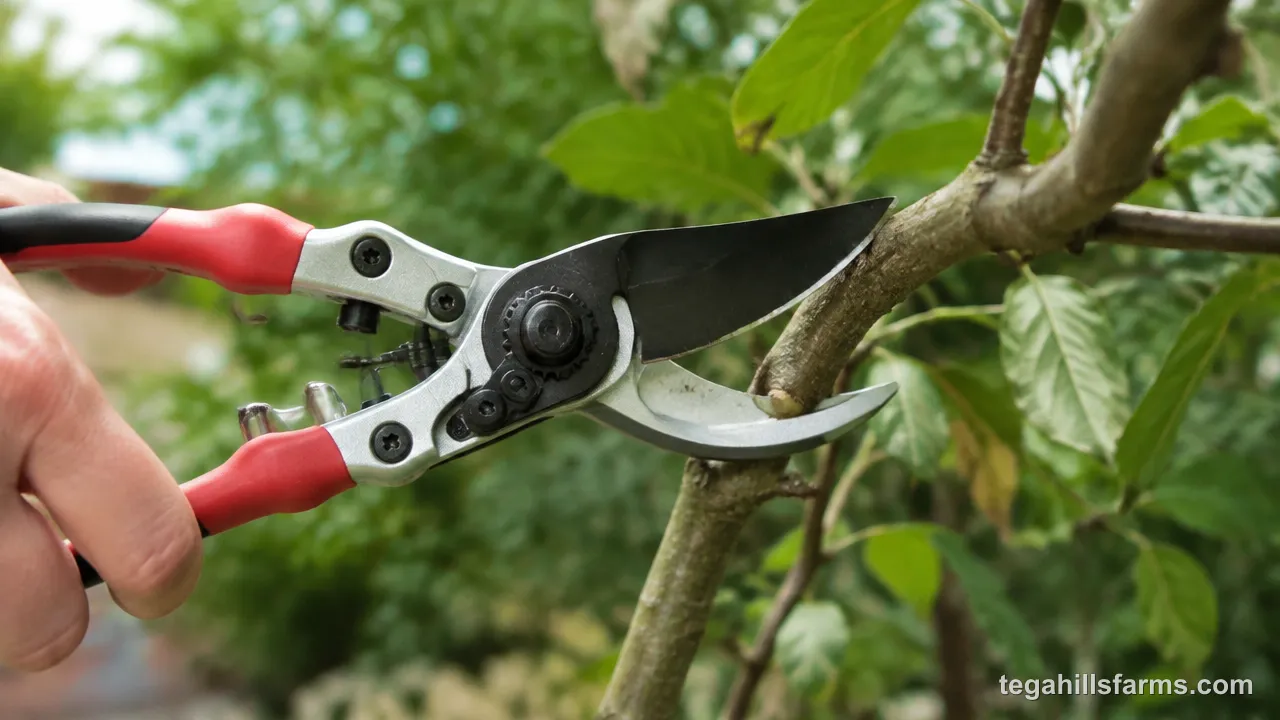
The sharpened upper blade passes close against a thicker hooked lower blade, so the stem is sheared along a single line. Because the bark and the living tissue under it are cut rather than compressed, the edges of the wound stay intact and the plant can close it over the following season. That matters most on shrubs and fruit trees you prune every year, where repeated crushed cuts invite dieback and disease.
An anvil lopper works differently: one blade presses the branch down onto a flat surface, much like a knife on a cutting board. On green wood, that pressure squashes the fibers on the anvil side before the edge gets through, which leaves a bruised stub. On dry, dead wood the same action is an advantage, since brittle wood snaps cleanly and the anvil does not bind in it. If your yard holds a lot of deadwood to clear, the best anvil loppers are the stronger fit for that job.
Bypass blades have their own limit. On dead, hard wood the blades can bind partway through, and if you twist to finish the cut, the force pushes the two blades apart and can bend them out of alignment. My recommendation is to keep a bypass lopper for live growth and switch tools once the wood is dry and brittle. To compare every lopper style side by side, browse our guide to the best loppers.
What Should You Look for in Bypass Loppers?
After an hour of work, what matters is how much of your effort reaches the blades and how well the steel and grips hold up, not the brand on the handle. Branch size, handle length and any leverage mechanism set the first part. Blade steel, coatings and handle materials set the second, and they decide whether the tool still cuts cleanly after several seasons. Most of what to look for in loppers applies across every style, but a bypass tool adds blade alignment to protect, because two blades that drift apart stop shearing and start chewing.
How Much Cut Capacity Do You Need?
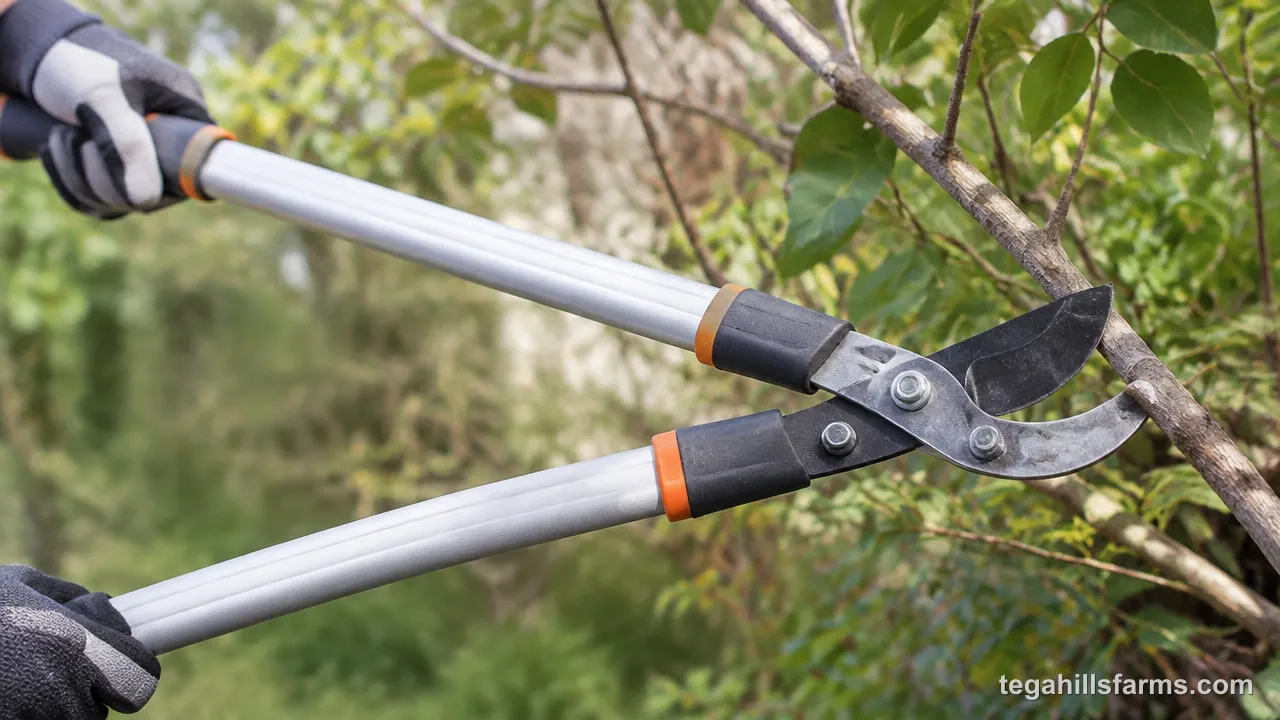
Cut capacity is the thickest living branch a lopper’s blades can sever cleanly in one squeeze, and you should treat that rating as a ceiling rather than a target. The rating assumes green wood, sharp blades and a straight cut, so real branches near the limit are harder than the number suggests.
Near the limit, the branch resists so hard that the blades start to flex sideways instead of closing. Once they spread, the edge rides over the wood instead of cutting it, so you get a ragged, torn cut and blades that may never meet tightly again. Choose a lopper whose rating sits comfortably above the branches you cut most often, so everyday cuts happen well inside its range.
At the thin end, loppers and hand pruners overlap. A pruner is quicker for small stems you can reach, while a lopper saves your wrist on the same stems when they sit deep in a shrub. That overlap is the heart of loppers versus pruners, and it means you rarely need a lopper for the thinnest growth.
How Long Should the Handles Be?
Long handles give you reach and leverage for high or deep branches, while short handles give you control in dense shrubs and close to your body. The right length is the one that matches where most of your cuts happen. Leverage grows with handle length, so a long lopper needs less squeeze on a thick branch, but you hold that extra length and weight out in front of you on every cut.
Holding a long tool at arm’s length loads your shoulders and upper back, and the far ends swing wide, which makes precise cuts inside a crowded shrub harder. A short lopper stays close to your chest, so your arms tire less and you can steer the blades between stems. In exchange, you give up force, and you cannot reach the top of a tall shrub without a ladder.
If you prune mostly foundation shrubs and perennial borders, short or mid-length handles suit you. If your work is mostly overhead limbs, longer handles earn their weight. When the height changes from job to job, the best extendable loppers let you set the length for each task.
Are Compound Action and PowerGear Mechanisms Worth It?
Yes, if you cut thick or dense growth often or have limited hand strength, because a leverage mechanism multiplies the force you apply at the handles before it reaches the blades. A plain single-pivot lopper delivers roughly the force your arms supply through the handle length. A compound linkage adds extra pivots, and a gear-and-cam system like PowerGear changes the ratio as the jaws close.
The benefit shows up in the middle of a branch, where the blade meets the most wood and a plain lopper needs its hardest squeeze. A mechanism that raises force at that point lets the cut finish in one steady motion instead of a strained push, which is easier on your hands and wrists and kinder to the blades.
Every added pivot and link is another joint that collects sap and grit and can loosen with use, so these tools need regular cleaning and a check of their bolts. The extra parts can also add weight. For light shrub trimming with thin stems, a plain lopper is simpler and does the job just as well.
What Blade and Handle Build Lasts the Longest?
Forged, hardened steel blades with a low-friction coating, on steel or fiberglass handles with cushioned grips, hold up longest and stay pleasant to use. Forging compresses the steel into a denser blade that holds an edge longer and takes resharpening well. A stamped blade is cut from sheet steel and tends to dull and flex sooner.
Carbon steel takes a keen edge and sharpens easily, but it rusts if you put it away wet. Stainless steel resists rust with less care, though it usually needs more work at the stone to bring back a fine edge. A low-friction coating helps either steel, because sap slides off instead of building a sticky layer that drags on each cut and holds moisture against the blade.
Steel handles are stiff and strong, and fiberglass saves weight without flexing much. Padded bumpers between the handles absorb the jolt when a cut snaps through, and non-slip grips keep your hands from clenching. Watch for the signs of a tool that will fail early: a pivot bolt with no way to tighten it, a thin blade that flexes when you press it sideways, and grips that spin on the handle.
The 9 Best Bypass Loppers of 2026
Fiskars Bypass Loppers 28in, Fiskars PowerGear Bypass Loppers 32in, Fiskars PowerGear2 Bypass Loppers 18in, Fiskars PowerGear2 Bypass Loppers 25in, Tabor Tools GG11A Bypass Lopper 30in, Garden Guru Bypass Loppers 15in, Corona Tools WL 3351 Bypass Loppers 26in, Corona Tools DualLINK Bypass Loppers 33in and Fiskars PowerGear L78 Bypass Lopper 28in cover live-wood pruning from tight shrub interiors to high, thick limbs. Across them, handle length, leverage mechanism and weight pull against each other. Long, geared tools reach farther and cut thicker wood but can put more load on your shoulders, while short ones stay nimble and light with less force behind the blades. That spread gives homeowners with shrubs and small trees an everyday tool. Gardeners who want something compact or budget-friendly get a short, light option, and anyone pruning thicker limbs or working overhead gets a long, leverage-driven model.
#1 Fiskars Bypass Loppers 28in — Best Overall
For everyday shrub and branch pruning, this lopper handles branches up to 1.5 inches on a steel blade that stays sharp through heavy use. Its non-slip grip keeps the tool steady.
Key Specs:
- Length: 28 in
- Cut capacity: 1.5 in
- Weight: 2.9 lb
- Blade: steel with low-friction coating
- Grip: SoftGrip non-slip handles with shock-absorbing bumpers
- Warranty: lifetime
Detailed Review:
The steel blade carries a low-friction coating, and that coating keeps the lopper pleasant to use deep into a session. Sap slides off instead of building a tacky film, so later cuts take no more effort than the first, and the coated surface holds off rust along the edge.
Its capacity suits shrub stems and the lower branches of small trees, which is the steady maintenance work of a home garden. Branches past that size force you to strain at the handles, so this is a tool for regular trimming rather than limb removal.
The SoftGrip handles are non-slip, and shock-absorbing bumpers sit between them to soften the jolt when a branch gives way. That jolt is what tires your wrists over an hour of pruning, so the bumpers earn their place. Compared with the Fiskars PowerGear Bypass Loppers 32in, this model is shorter but heavier, 2.9 lb against 2.56 lb, so you give up some lightness for a tool that is easier to steer between stems.
I recommend it as a first lopper for homeowners, because the coated blade and cushioned bumpers deal with the two problems that wear on a gardener most: gummed blades and sore wrists. The lifetime warranty adds confidence for a tool meant to last many seasons.
Pros:
- Low-friction coating keeps sap from gumming the blade.
- Shock-absorbing bumpers soften the jolt at the end of cuts.
- Non-slip SoftGrip handles stay steady through long sessions.
- Lifetime warranty backs the steel blade.
Cons:
- Cut capacity of 1.5 inches limits it on heavier limbs.
- Weighs more than the longer Fiskars PowerGear Bypass Loppers 32in.
Who It’s For:
Homeowners who keep shrubs, hedges and the lower branches of small trees in shape through the season will get a dependable all-round cutter with blades that stay clean and grips that stay comfortable. If most of your cuts are thick limbs overhead, look for longer handles and a higher cut capacity.
Editor’s Verdict:
Dependable for routine pruning, with a coated blade that stays clean and bumpers that keep your wrists comfortable through long sessions.
#2 Fiskars PowerGear Bypass Loppers 32in — Editor’s Choice
If thick branches or tired wrists slow you down, this lopper’s PowerGear mechanism multiplies your leverage so branches up to 2 inches close without a straining squeeze. The long handles reach higher limbs as well.
Key Specs:
- Length: 32 in
- Cut capacity: 2 in
- Weight: 2.56 lb
- Mechanism: PowerGear leverage system
- Blade: fully hardened bypass-style steel with low-friction coating
- Grip: rounded ergonomic handles with SoftGrip
Detailed Review:
PowerGear multiplies the leverage of the handles, so a branch near the tool’s capacity closes in one steady stroke instead of a strained push. That is how the design reduces strain on your hands, wrists and muscles, and it counts most when you have a row of thicker branches to clear.
The blade is fully hardened bypass-style steel with a low-friction coating. Hardening helps the edge stay sharp through heavy cutting, while the coating gives smoother cuts with less gumming and better rust resistance.
Despite its longer handles, it weighs less than the Fiskars Bypass Loppers 28in, 2.56 lb against 2.9 lb, and it takes thicker branches. You get more reach and more cutting power without carrying extra weight at arm’s length.
The rounded SoftGrip handles give good control in open space, but their length becomes awkward inside a crowded shrub or along a fence, where you cannot swing them fully open. If your yard leans toward heavy wood, this is the model I would put first when comparing the best loppers for thick branches.
Pros:
- PowerGear multiplies leverage for easier cuts on thick branches.
- Long handles reach higher limbs without a ladder.
- Hardened, coated blade resists sap gumming and rust.
- Weighs less than the shorter Fiskars Bypass Loppers 28in.
Cons:
- Long handles are awkward inside dense shrubs.
- Too long for close cuts near your body.
Who It’s For:
Gardeners with limited grip strength who still need to clear thick branches will feel the geared action in every cut, and the long reach suits pruning small trees. If you mostly thin compact shrubs or work beside walls and fences, a shorter tool will be easier to steer.
Editor’s Verdict:
Strong leverage, long reach and a coated blade make this a comfortable lopper for heavier pruning without extra weight in your arms.
#3 Fiskars PowerGear2 Bypass Loppers 18in — Best Compact
Crowded shrubs and tight corners suit this short lopper, because its gear-and-cam action still powers through the middle of a branch while the short handles keep the work close to your body. You keep control and cutting force together.
Key Specs:
- Length: 18 in
- Cut capacity: 1.5 in
- Weight: 2.25 lb
- Mechanism: PowerGear2 gears and cam
- Blade: fully hardened bypass-style steel with low-friction coating
- Grip: rounded ergonomic handles with SoftGrip
Detailed Review:
The PowerGear2 system uses modified gears and a cam to raise cutting force through the center of a branch, the toughest part of any cut. Short handles give little natural leverage, so the mechanism is what lets this tool finish cuts that short handles alone would struggle with.
The compact length lets you slip the head between crossing stems and cut close to a main branch without the handle ends bumping a wall or fence. That is the work of roses, foundation shrubs and dense hedges, where a long lopper cannot open fully.
Next to the Fiskars PowerGear2 Bypass Loppers 25in, which uses the same mechanism, this model weighs 2.25 lb against 2.85 lb and cuts up to 1.5 inches against 1.75. In a dense hedge that trade favors the shorter tool, and above shoulder height it favors the longer one.
The fully hardened blades carry a low-friction coating, so sap and debris slide off and the edge resists rust between sessions. The rounded SoftGrip handles fill the palm, which helps when your hands tire quickly.
Pros:
- Gear-and-cam action adds force where branches are toughest.
- Short handles steer easily between crowded stems.
- Hardened, coated blades stay sharp and resist gumming.
- Rounded SoftGrip handles stay comfortable through long trimming sessions.
Cons:
- Short reach leaves high branches out of range.
- Lower cut capacity than the Fiskars PowerGear2 Bypass Loppers 25in.
Who It’s For:
Anyone pruning roses, foundation shrubs or a crowded hedge will appreciate a tool that stays close to the body and still cuts with geared force, and gardeners with smaller hands or limited arm strength gain even more. If you need the upper branches of small trees, a longer model will serve you better.
Editor’s Verdict:
Compact enough for dense shrubs and geared enough for its rated branches, it is a lopper worth keeping within reach all season.
#4 Fiskars PowerGear2 Bypass Loppers 25in — Also Great
Mixed pruning, from shrub borders to lower tree limbs, suits this mid-length lopper, whose PowerGear2 action multiplies leverage on branches up to 1.75 inches. It balances reach with control.
Key Specs:
- Length: 25 in
- Cut capacity: 1.75 in
- Weight: 2.85 lb
- Mechanism: PowerGear2 leverage system
- Blade: fully hardened bypass-style steel with low-friction coating
- Grip: non-slip SoftGrip on rounded ergonomic handles
Detailed Review:
The 25-inch handles reach into the center of a large shrub or up to lower limbs while staying short enough to steer. That middle length also keeps the tool head from swinging wide, so the blade lands where you aim it.
PowerGear2 multiplies the leverage of those handles, so branches at the rated capacity close without a hard squeeze. The low-friction coating helps the fully hardened blades glide through stems, resist gumming from sap and debris, and hold off corrosion, which keeps the effort steady through a long afternoon.
Next to the Fiskars PowerGear2 Bypass Loppers 18in, this model adds reach and a little capacity in exchange for extra weight, 2.85 lb against 2.25 lb. Against the Fiskars PowerGear Bypass Loppers 32in, it is both shorter and heavier, so its advantage there is control in close quarters rather than reach.
The non-slip SoftGrip handles are rounded, so your hands do not have to clench to keep the tool steady. If you want one lopper to cover most jobs in a home garden, this is the length I would point you toward.
Pros:
- Mid-length handles balance reach with control.
- PowerGear2 action eases cuts through thicker stems.
- Coated blades resist sap, debris and corrosion.
- Rounded non-slip grips keep your hands relaxed.
Cons:
- Carries more weight than the compact Fiskars PowerGear2 Bypass Loppers 18in.
- Not as nimble as a short lopper in dense hedges.
Who It’s For:
If you prune a mix of shrubs and small trees and would rather own one lopper than two, this length covers most of that work comfortably. Gardeners who mainly trim compact shrubs, or who cut mostly overhead, will be better served by a shorter or a longer tool.
Editor’s Verdict:
Balanced, geared and easy to steer, this is a sensible single lopper for a yard with both shrub beds and young trees.
#5 Tabor Tools GG11A Bypass Lopper 30in — Also Great
Gardeners who want long reach with less hand effort should look at this lopper, whose compound action system multiplies the force at the blades three times. Its anti-shock rubberized grips soften each cut.
Key Specs:
- Length: 30 in
- Cut capacity: 1.75 in
- Mechanism: compound lever with multiple pivot points
- Blade: hardened carbon steel with low-friction non-stick coating
- Grip: ergonomic handles with anti-shock rubberized grips
- Blades: replaceable
Detailed Review:
The compound lever system links the handles to the blade through several pivot points, and those moving parts multiply the force you apply. A branch near the tool’s capacity closes with a steady squeeze rather than a lunge, which makes the lopper workable for older gardeners and anyone whose grip has weakened.
The blades are hardened carbon steel, which takes a keen edge and keeps it through heavy use. A low-friction non-stick coating lets the blade glide through green wood and keeps sap from sticking. Like any carbon steel, the blades need wiping and drying before storage.
At 30 inches, the handles add leverage and let you reach higher limbs. The anti-shock rubberized grips cushion your hands when a cut snaps through, and the handle shape is designed for a firm hold at full extension.
Replacement cutting blades are available, which matters on a tool with this many moving parts. When the edge wears past what sharpening can restore, you swap the blade instead of the whole lopper.
Pros:
- Compound action eases cuts on branches near full capacity.
- Hardened carbon steel blades hold a keen edge.
- Anti-shock rubberized grips cushion each cut.
- Replaceable blades extend the tool’s working life.
Cons:
- Multiple pivots need regular cleaning and bolt checks.
- Carbon steel blades rust if put away wet.
Who It’s For:
Older gardeners and anyone whose grip has weakened will appreciate how little squeeze each cut takes, even on higher limbs. It also suits people who keep tools for many years and like renewing a blade rather than replacing a lopper. If you would rather maintain fewer moving parts, a single-pivot design will suit you better.
Editor’s Verdict:
With compound leverage and replaceable blades, it stays easy to use and easy to renew across many seasons.
#6 Garden Guru Bypass Loppers 15in — Best Budget
Small jobs in tight spaces suit this short lopper, because its 15-inch handles let you trim close to your body at a comfortable, precise cutting angle. It is an affordable way to own a proper lopper.
Key Specs:
- Length: 15 in
- Cut capacity: 1.5 in
- Weight: 1.2 lb
- Blade: forged high carbon and manganese steel
- Grip: soft, non-slip handles
- Warranty: lifetime, plus a 90-day satisfaction guarantee
Detailed Review:
The blades are forged from high carbon and manganese steel for strength, and they hold a sharp edge for smooth, clean cuts on live stems. Their capacity handles the stems you meet in hard-to-reach spots, such as the back of a border or the inside of a shrub.
Short handles keep the work close to your body, where you can set the blade at a good angle and see exactly what you are cutting. The soft non-slip grips are shaped for both small and large hands, and the light build keeps blisters and hand or shoulder fatigue at bay.
It weighs 1.2 lb, against 2.25 lb for the Fiskars PowerGear2 Bypass Loppers 18in, which shares its cut capacity. The short handles also give less leverage, so branches near the rating take more of your own squeeze.
For the money, it covers a lot of light pruning, and the lifetime warranty adds reassurance on an affordable tool. If you are weighing how much loppers cost against how often you prune, it makes sense as a first lopper or as a second tool kept for close work.
Pros:
- Light build eases hand and shoulder fatigue.
- Forged high carbon steel blades make clean cuts.
- Short handles allow precise cuts close to the body.
- Lifetime warranty backs an affordable tool.
Cons:
- Short handles limit reach on taller shrubs.
- Less leverage means more squeeze on thick stems.
Who It’s For:
Budget-minded gardeners with small beds, patio shrubs or roses will get clean cuts from a tool that is easy to carry and easy to steer. It also suits anyone who tires quickly with heavier tools. If you prune trees or tall hedges, you will want longer handles.
Editor’s Verdict:
Light, sharp and affordable, it handles close-in pruning well and costs little to own.
#7 Corona Tools WL 3351 Bypass Loppers 26in — Best Precision Cutting
When a clean finish on live wood matters, as with fruit trees and ornamental shrubs, this lopper’s drop-forged Radial Arc bypass blade gives you a sharp, durable edge that you can resharpen for years. Its hook has a sap groove.
Key Specs:
- Length: 26 in
- Cut capacity: 1.5 in
- Blade: drop-forged Coronium steel alloy, Radial Arc bypass profile
- Hook: precision slant-ground with sap groove
- Blade care: resharpenable
Detailed Review:
Drop forging compacts the steel into a dense, strong blade, and that density helps the Coronium alloy edge stay sharp longer. When it does dull, the forged blade takes resharpening easily, so you restore the edge instead of replacing the tool.
The Radial Arc profile curves the bypass blade to follow the round shape of a branch, so the edge meets the wood along an arc rather than at a single point. That keeps the branch seated in the jaws as you close them, and the cut finishes straight with a flat, even face.
The hook is slant-ground with precision, which lets the blade pass tight against it and shear thin stems instead of folding them between the jaws. A sap groove in the hook channels sticky sap away from the cutting area, so the blades keep sliding freely through a long session on green wood.
Its capacity places it in everyday pruning rather than heavy limb work. I would pick it for anyone who values the finish of each cut over raw force.
Pros:
- Drop-forged blade holds an edge and resharpens easily.
- Radial Arc profile keeps branches seated for straight cuts.
- Sap groove keeps green wood from gumming the hook.
- Slant-ground hook lets thin stems shear cleanly.
Cons:
- Rated capacity keeps it to everyday branches, not heavy limbs.
- A precise edge needs regular resharpening to stay that way.
Who It’s For:
Fruit growers and anyone shaping ornamental shrubs will value a blade built for exact, clean cuts on live wood. It also fits gardeners who sharpen their own tools and want a blade that rewards that care. If you mostly clear thick limbs, you will need more capacity than this tool offers.
Editor’s Verdict:
Precise, forged and built to be resharpened, this lopper suits careful pruning where every cut shows.
#8 Corona Tools DualLINK Bypass Loppers 33in — Also Great
Heavy yard work, from large limbs to dense, woody shrubs, suits this long lopper, whose DualLINK MAXFORGED mechanism multiplies cutting force on branches up to 2 inches. It is a heavy tool.
Key Specs:
- Length: 33 in
- Cut capacity: 2 in
- Weight: 4.3 lb
- Mechanism: DualLINK MAXFORGED leverage system
- Blade: fully forged, precision-ground steel
- Grip: non-slip cushioned grips with impact-reducing bumpers
Detailed Review:
The DualLINK MAXFORGED mechanism increases leverage and multiplies the force at the blades, so thick, tough branches give way with less effort from you. The 33-inch handles add their own leverage and reach, letting you work into higher branches and the center of large shrubs.
The fully forged steel blades are precision-ground, and they stay sharp longer while resisting bending and wear. That resistance to bending matters on a tool made for heavy wood, because the blades take hard sideways stress when you cut large limbs.
At 4.3 lb, it is heavier than the Fiskars PowerGear Bypass Loppers 32in at 2.56 lb, which has a similar length and the same cut capacity. Over a long session, that difference shows in your arms and shoulders.
Non-slip cushioned grips keep your hold secure, and built-in bumpers absorb the impact when the jaws close, which reduces hand and arm fatigue. I would suggest it for gardeners who prune large limbs regularly and can manage a heavier tool.
Pros:
- DualLINK mechanism multiplies force for thick branches.
- Long handles reach higher limbs with extra leverage.
- Forged blades resist bending and stay sharp.
- Impact-reducing bumpers soften the shock of each cut.
Cons:
- Heavy weight tires arms during long sessions.
- Long handles are clumsy in tight shrub interiors.
Who It’s For:
For yards with mature shrubs and small trees that need regular limb removal, this tool brings the force and reach those jobs call for, as long as you are comfortable handling a heavier lopper. If your hands tire quickly, the Fiskars PowerGear Bypass Loppers 32in offers similar reach at a lighter weight.
Editor’s Verdict:
Built for heavy pruning, this lopper pairs forged blades with strong leverage, and its weight is the honest trade-off for that strength.
#9 Fiskars PowerGear L78 Bypass Lopper 28in — Also Great
Left-handed gardeners, and anyone who wants light handles with real cutting power, should look at this lopper, since it is designed for both right- and left-handed use and built on reinforced fiberglass handles. It is made for fresh wood.
Key Specs:
- Length: 28 in
- Cut capacity: 2 in
- Weight: 2.3 lb
- Handles: reinforced fiberglass with SoftGrip covering
- Blade: stainless steel with non-stick coating, curved lower blade
- Blade care: easy to sharpen and replace
Detailed Review:
The reinforced fiberglass handles are light and strong, so the tool stays easy to lift and swing between cuts. PowerGear action multiplies the force you apply, and the combination lets a branch near full capacity close without a straining squeeze.
The stainless steel blade carries a non-stick coating for smooth, clean cuts, and stainless steel resists the rust that follows damp mornings in the garden. The lower blade is curved to catch and hold the branch, so it does not slide out of the jaws as you close them.
Compared with the Fiskars Bypass Loppers 28in, which has the same length, this model weighs 2.3 lb against 2.9 lb and cuts branches up to 2 inches rather than 1.5. At the same reach, it carries less weight and handles thicker wood.
The blade is easy to sharpen and to replace, with a diamond file sold separately in the Fiskars maintenance kit, so a worn edge does not mean retiring the tool. That suits anyone who keeps tools for many seasons.
Pros:
- Reinforced fiberglass handles stay light and strong.
- Curved lower blade holds the branch steady during cuts.
- Coated stainless steel blade resists rust and sticking.
- Designed for both right- and left-handed users.
- Blade sharpens easily and can be replaced when worn.
Cons:
- Hook head is built for fresh wood, not dry deadwood.
- Diamond sharpening file is sold separately.
Who It’s For:
If you are left-handed or want a light tool that still cuts thicker fresh wood, this lopper fits your pruning well. It also suits gardeners who prefer renewing a blade to replacing a tool. If your work is mostly dead, dry wood, a different blade style will serve you better.
Editor’s Verdict:
Fiberglass handles, a coated stainless blade and a design that welcomes left-handed users make this a thoughtful lopper for long pruning sessions.
Which Bypass Lopper Should You Choose for Your Yard?
Match the tool to where most of your cuts happen and how much force your hands can supply: short and light for crowded shrubs, mid-length for mixed work, long and geared for high or thick limbs. Handle length and leverage set how thick a branch you can cut comfortably, while weight and grip set how long you can keep cutting before your arms and wrists tire.
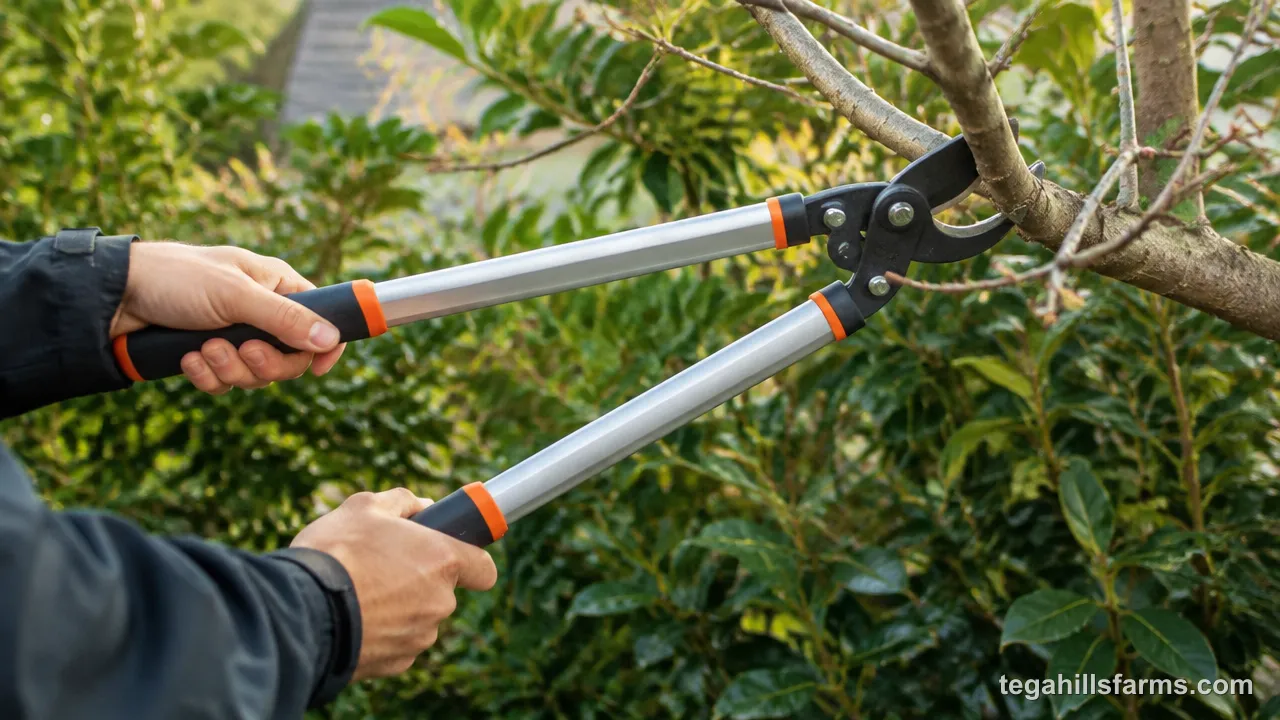
- Tight shrub work or smaller hands: the Garden Guru Bypass Loppers 15in is the lighter of the two short options, while the Fiskars PowerGear2 Bypass Loppers 18in adds gear-and-cam force for a little more weight. Neither reaches far above shoulder height, so this pairing trades reach for control.
- General yard pruning: the Fiskars Bypass Loppers 28in and the Fiskars PowerGear2 Bypass Loppers 25in balance reach and steering for shrubs and lower limbs. The Corona Tools WL 3351 Bypass Loppers 26in fits the same work when a precise finish on fruit trees and ornamentals matters more to you than extra force.
- High or thick limbs: the Fiskars PowerGear Bypass Loppers 32in, the Tabor Tools GG11A Bypass Lopper 30in and the Fiskars PowerGear L78 Bypass Lopper 28in combine leverage mechanisms with long or light handles, so thicker branches close without a hard squeeze. Inside dense growth they give up control, because long handles cannot open fully there.
- Frequent heavy use: the Corona Tools DualLINK Bypass Loppers 33in pairs forged blades with strong leverage for regular limb removal, and you carry its extra weight through every session in return.
If you prune for clients or cut every day, durability under constant use becomes the deciding factor, and the best loppers for professional crews are built around that demand.
A lopper with a sharp, well-set blade can still bind halfway through a branch if the blade sits at an angle to the wood. The instinct is to twist the handles to finish the cut, and that sideways force pries the two blades apart. Once they spread, your next cuts tear bark and leave ragged wounds that heal slowly, even on branches well within the tool’s rating.
How Do You Make a Clean Cut Without Bending the Blades?
Set the cutting blade on the trunk side of the branch, just outside the branch collar, with the hook on the part you are removing, then close the handles in one steady, straight squeeze. That placement puts the clean sheared face on the wood that stays, while any slight bruising from the hook lands on the piece that falls away. The branch collar is the slightly swollen ring where a branch joins a larger limb, and cutting just outside it leaves intact the tissue that seals the wound.
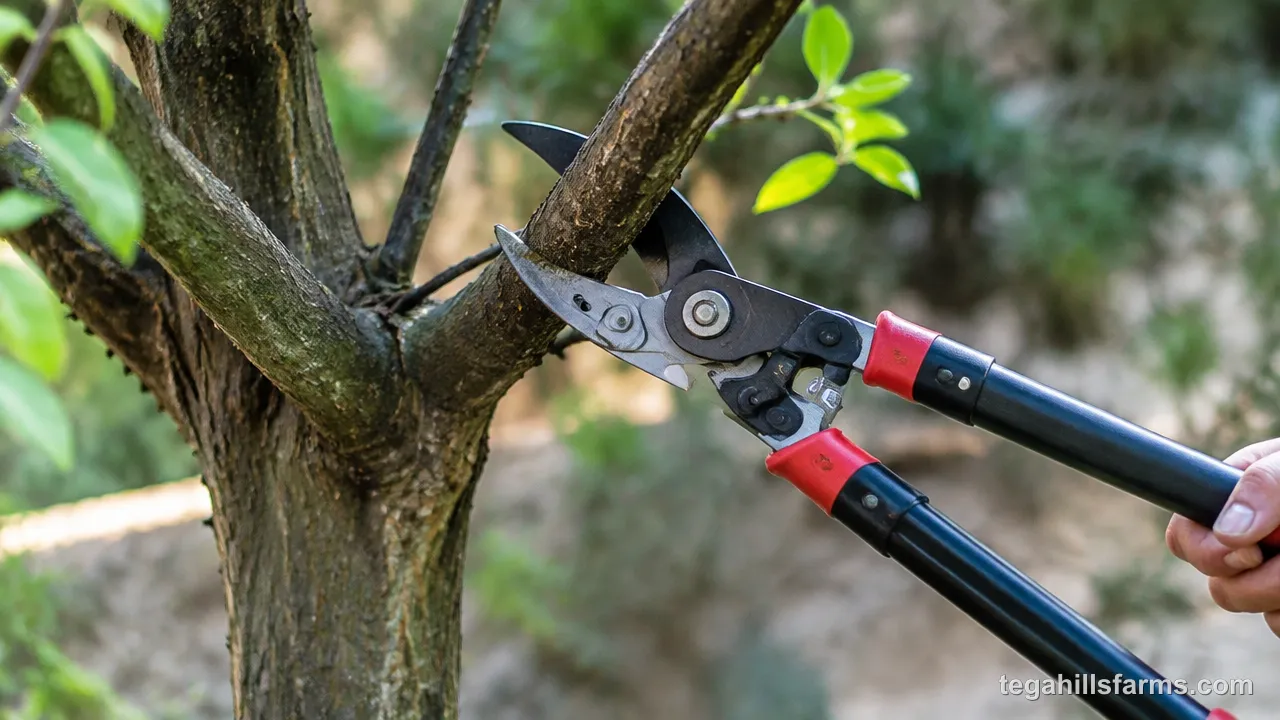
Keep the blades square to the branch and let the handles do the work. Twisting, rocking or levering against the cut pushes the blades sideways, which spreads them apart, dulls the edge and leaves a torn wound. Forcing an oversized branch does the same damage in a single cut.
Bypass blades cut green, living wood best, because moist fibers slice cleanly instead of crumbling. Soft, pliable growth suits them well, and if most of your pruning is young, sappy stems, the best loppers for softwood branches are worth a look. When the blades stop partway and will not close with a steady squeeze, open the jaws and back the tool out rather than pushing harder.
When Should You Switch From Loppers to a Pruning Saw?
Switch to a pruning saw when the jaws will not close fully around a branch, when you find yourself twisting or leaning on the handles, or when the limb is thicker than the blade opening. Each of those signs means the branch is beyond what the blades can shear in a single squeeze.
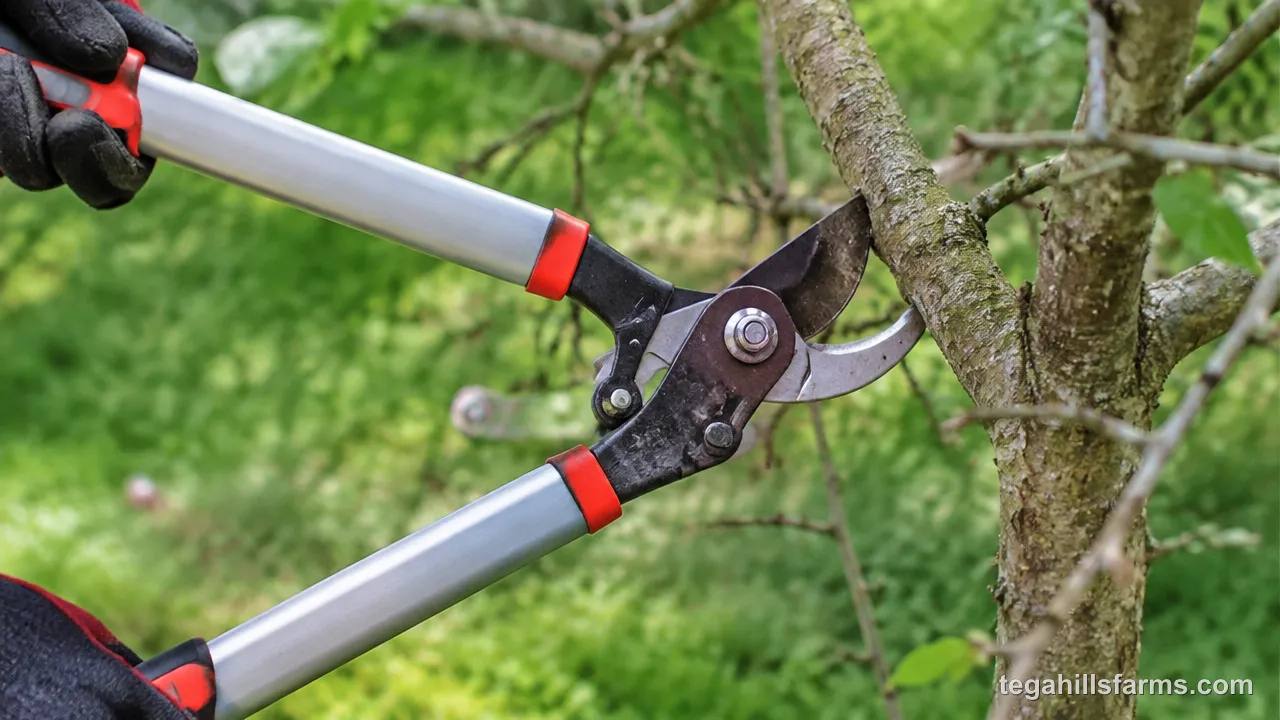
A pruning saw removes wood with its teeth rather than pinching it between two blades, so it cuts thick limbs without putting sideways force on a pivot. The cut is slower, but it stays straight and leaves a clean face the tree can seal. On a heavy limb, a saw also lets you make a shallow undercut first, so the falling weight does not strip bark down the trunk.
Forcing a lopper through the same limb risks bending the blades past the point where sharpening can fix them. It also tends to tear bark below the cut, leaving a long wound that invites decay.
How Do You Keep Bypass Loppers Sharp and Rust-Free?
Wipe sap and debris off the blades after every session, dry them, and put a light oil on the pivot; that routine stops most rust and drag before it starts. Dried sap holds moisture against the steel and builds a tacky layer that makes each cut drag, so a rag and a little soapy water or solvent at the end of the day keep the blades sliding freely.
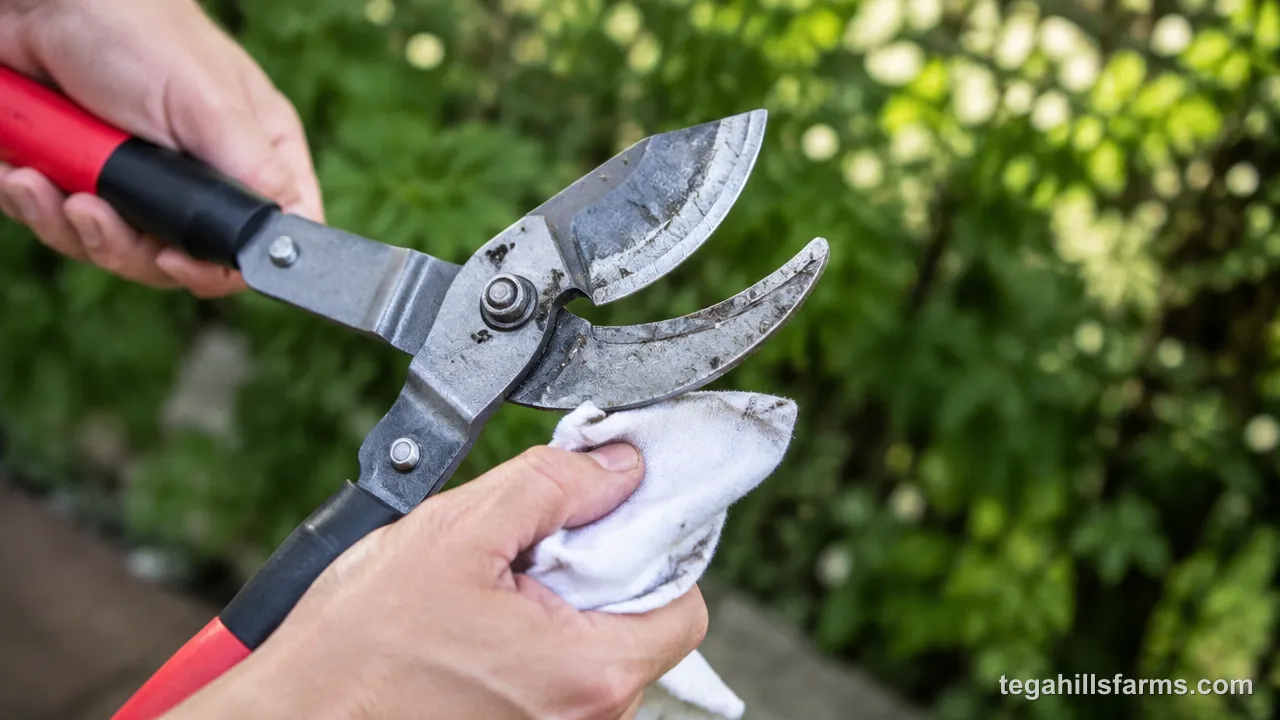
When the edge dulls, sharpen only the beveled side of the cutting blade, following its original angle with a file or stone. Leave the flat side flat apart from removing any burr, because that face has to sit flush against the hook for the blades to shear. Our walkthrough on how to sharpen loppers covers the full routine.
Check the pivot bolt now and then too. A sharp, well-set lopper closes with a smooth, even feel and the blades pass with no visible gap, while a dull or loose one needs extra squeeze, wobbles at the tip and folds thin stems instead of cutting them. Tighten the bolt until the blades meet snugly but still open easily.
Before winter, clean and dry the loppers, oil the blades and pivot, and hang them in a dry shed or garage rather than leaving them on a damp floor.
Which Loppers Are Easier on Weak or Small Hands?
A leverage mechanism, light handles and soft, rounded grips help a weak or small grip most, because together they lower both the force each cut takes and the weight you hold between cuts. Geared and compound designs multiply your squeeze at the blades. A ratchet works differently: it closes the jaws in stages, so you open and squeeze several times while the tool holds its progress between strokes.
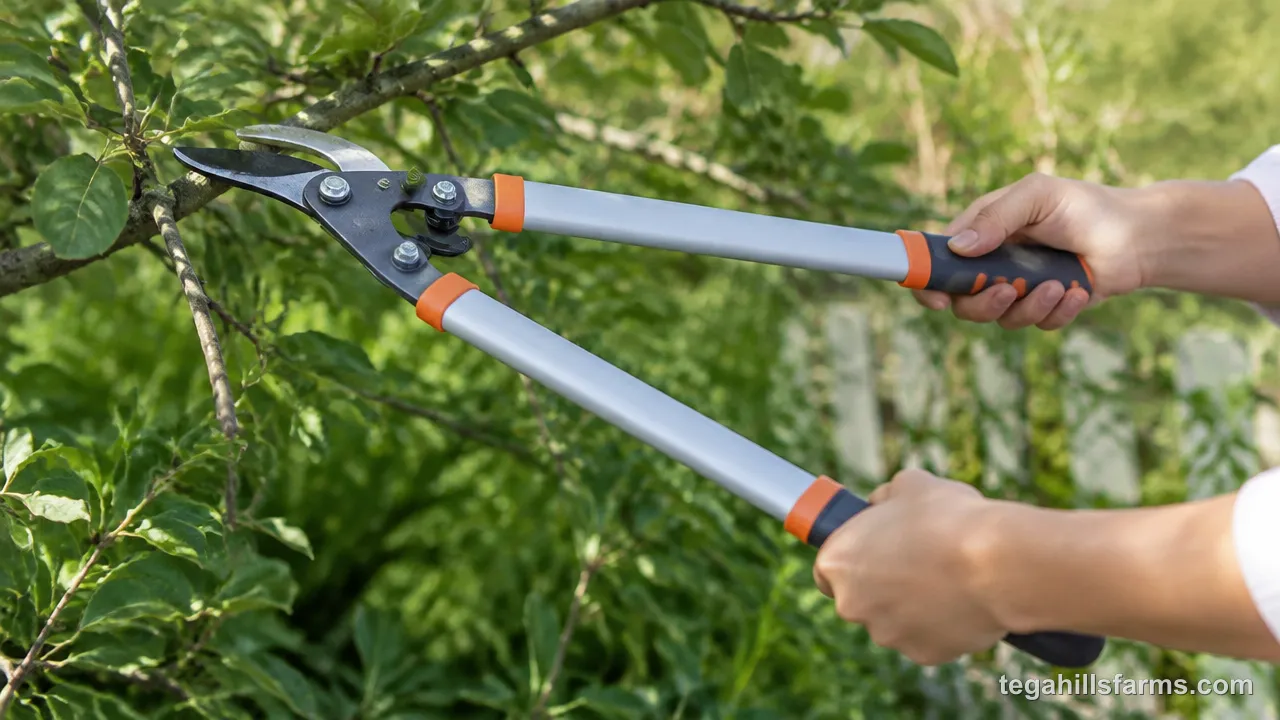
That staged action takes very little force per squeeze, which helps with joint pain, but each cut is slower. The best ratchet loppers suit gardeners who value low effort over speed. Rounded handles with a soft covering spread pressure across the palm, so your fingers do not have to clench to hold the tool steady.
A plain lopper with a quick, direct action feels fast in the hand, but it asks for a harder squeeze on every branch, and that adds up over an hour. Handle length and weight change fatigue too: long, heavy handles load the shoulders, while short, light ones keep the work close to the body. Fiberglass handles help here, and the best lightweight loppers pair low weight with enough leverage to keep each cut easy. If you are left-handed, check that the blade design works for your side, since some models are built for both hands.
Write Your Review
No reviews yet. Be the first to share your experience!