

Our top picks for the best top handle chainsaws in 2026 are the Makita XCU06Z 18V LXT 10in (Best Overall), RYOBI 40V HP Brushless RY40590 12in Chainsaw (Runner Up), Makita XCU08PT 14in (Best Premium), Makita XCU09Z 16in Top Handle Chain Saw (Also Great) and DEWALT DCCS623B 8in Pruning Chainsaw (Best Lightweight). All 5 run on battery power. They range from a compact pruning saw you can hold overhead through a long session to dual-battery Makitas that cut through limbs a small saw would bog down in.
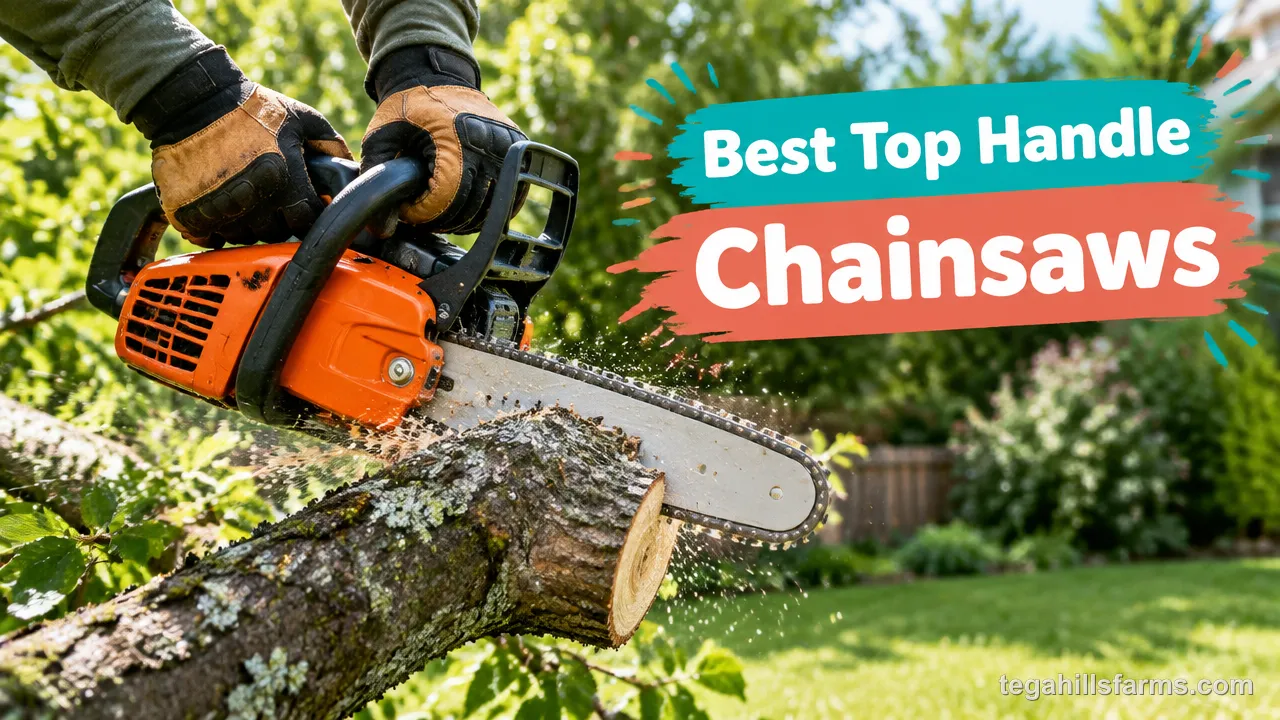
Three things decide which of these saws fits you: how bar length compares to the limbs you actually cut, how much weight you’ll be holding at shoulder height and which battery platform is already on your garage shelf. A longer bar takes thicker wood but puts more leverage on your wrist. A lighter saw keeps you cutting overhead longer but runs out of cut capacity sooner.
A top-handle saw is built to be held close and worked in tight spots, often with one hand. That compact grip gives you less leverage to fight back when the bar tip catches wood. The right saw for you is the one you can still hold firmly at the end of a long trimming job, not the one with the biggest motor.


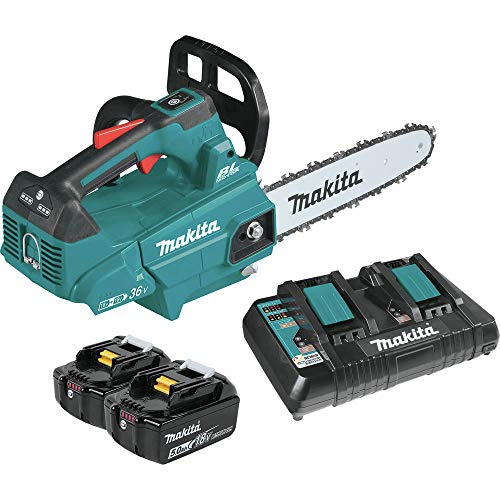


If you already own Makita 18V LXT, DEWALT 20V MAX or RYOBI 40V batteries, start with the saw that runs on them. Several of these saws ship as bare tools and need a pack from their own platform before they cut.
Are Top-Handle Chainsaws Better Than Rear-Handle Saws?
No. They win only at overhead pruning and close-in limbing, while a saw with its grip behind the motor gives more leverage and two-handed control for felling and bucking.
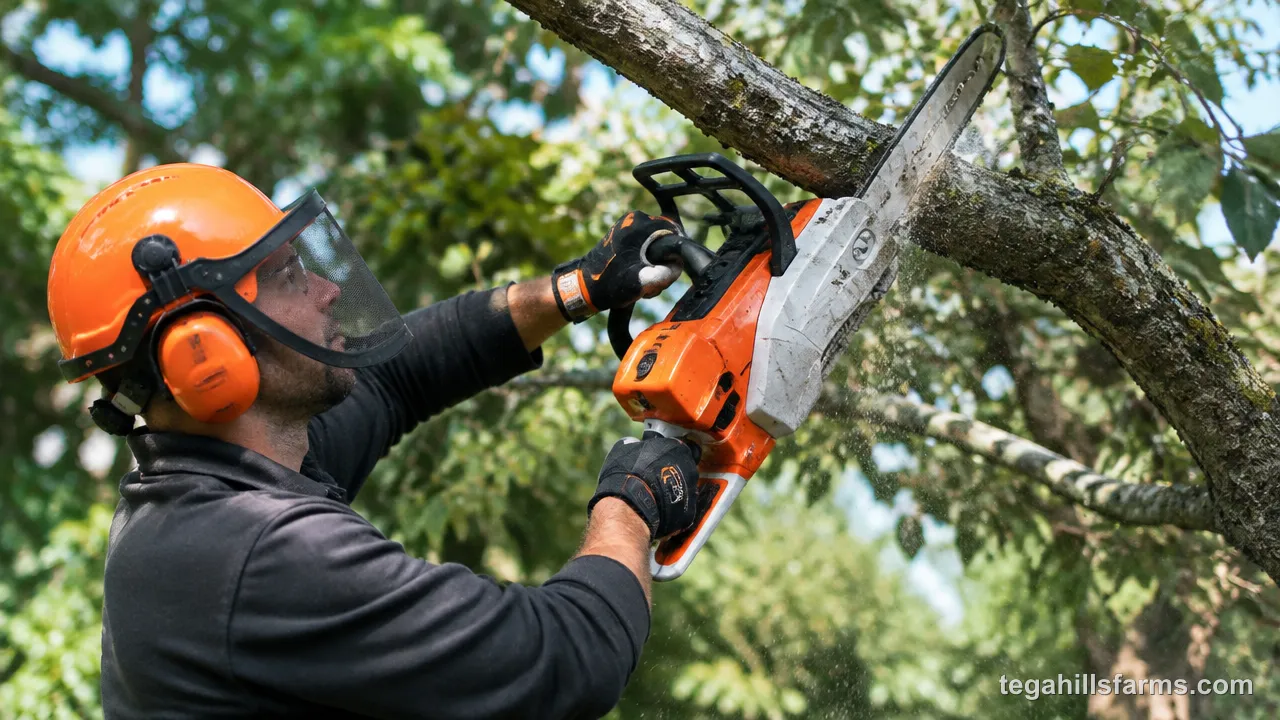
The difference comes from where your hand sits. On a top-handle saw the main grip rides on top of the body, right over the saw’s center of mass, so the saw balances in a compact position close to your chest. That lets you hold it steady while you reach between branches, stand on a ladder or work along a fence line where there’s no room to swing a longer saw.
A rear-handle saw puts the main grip behind the motor, with the front handle wrapping around the side, so your hands sit farther apart along the saw. That spacing gives you the leverage to hold the bar steady through a long cut and to resist the saw pulling forward or kicking back. On a trunk, a big storm limb or a stack of rounds, a top-handle saw gives you less of both. The shorter bars these saws carry also run out of reach.
For most homeowners, a top-handle saw makes sense as a second saw for trimming, not as the only one in the shed. If a conventional grip suits your cutting better, the best rear handle chainsaws cover the heavier work. If you want a saw for felling and bucking rather than overhead pruning, start with our guide to the best chainsaws, since a top-handle model is a specialist tool.
The 5 Best Top Handle Chainsaws of 2026
The saws worth buying for limb and pruning work are the Makita XCU06Z 18V LXT 10in, RYOBI 40V HP Brushless RY40590 12in Chainsaw, Makita XCU08PT 14in, Makita XCU09Z 16in Top Handle Chain Saw and DEWALT DCCS623B 8in Pruning Chainsaw. The DEWALT, the RYOBI and the XCU06Z are compact saws you can hold out at arm’s length through a trimming session. That suits a homeowner clearing limbs off a roofline or someone cutting from a ladder. The XCU08PT and XCU09Z run on two 18V LXT batteries and carry longer bars. They get through thicker branches but put more weight in your hand, which is a fair trade mainly if you already own Makita packs.
#1 Makita XCU06Z 18V LXT 10in — Best Overall
If you prune and limb around the house and already run Makita 18V LXT tools, this is the saw I’d steer you toward, because its captured bar nut and lateral chain tensioning make routine chain adjustments quick. It runs on a single LXT pack.
Key Specs:
- Weight: 7.22 lb
- Bar length: 10 in
- Motor: Outer Rotor BL brushless direct drive, rated equivalent to a 22cc gas saw
- Power: 18V LXT, tool only (battery not included)
- Runtime: up to 175 cuts in 2×2 cedar on an 18V LXT 5.0Ah battery
- Mode: torque boost for dense material
Detailed Review:
The direct-drive brushless motor turns the chain without a gear set in between, so less power is lost on the way to the cutters. Makita rates that output against a small gas saw, which is enough for the limbs a homeowner usually trims. The compact body keeps the saw close to your chest when you reach into a hedge or along a fence line.
Torque boost is there for seasoned hardwood or a knot that slows the chain, so you aren’t leaning on the bar to finish the cut. The runtime rating is for small cedar stock. Thicker or harder wood drains the battery faster, so a spare charged LXT pack matters if your trimming runs long.
The captured bar nut stays attached to the side cover when you loosen it, so it can’t drop into tall grass or off a ladder rung. Lateral tensioning puts the adjuster on the side of the saw, which makes snugging a new chain after its first cuts a quick job.
Next to the RYOBI RY40590, the shorter bar gives up reach on thicker limbs. In exchange, the nose stays closer to your hands inside a crowded tree.
Pros:
- Captured bar nut can’t get lost during chain changes.
- Side tensioning makes chain adjustments quick.
- Torque boost keeps the chain moving through dense branches.
- Shares batteries with other 18V LXT tools.
Cons:
- Sold tool only, so you need an LXT battery and charger.
- Short bar limits it to smaller limbs.
- Top grip gives less leverage than a rear-handle saw.
Who It’s For:
Homeowners who already run Makita 18V LXT tools get the most from this saw. It shares their batteries and handles the trimming, limbing and storm-branch cleanup that fills most weekends around a house. If your cutting involves trunks or firewood rounds, a saw with a longer bar and a rear handle suits that work better.
Editor’s Verdict:
A compact, low-fuss pruning saw that handles everyday limb work around a house on a single LXT battery.
#2 RYOBI 40V HP Brushless RY40590 12in Chainsaw — Runner Up
This RYOBI suits anyone who wants a complete setup out of the box, since the battery, charger and a heavy-duty carrying case come with it. Its side-access tensioning keeps chain adjustments simple away from the bench.
Key Specs:
- Weight: 6 lb
- Bar and cut capacity: 12 in bar, 10 in cut capacity
- Power: 40V HP brushless; 4.0Ah battery and charger included
- Oiling: adjustable automatic oiler
- Chain adjustment: side-access tensioning with on-board tool storage
Detailed Review:
The longer bar and its rated cut capacity let this saw take limbs that are a little too thick for a small pruning saw, without stepping up to a dual-battery model. It does that while staying light enough for ladder trimming.
It’s ready to run straight out of the case. If you already own RYOBI 40V tools, the included pack becomes a spare, which helps when a storm cleanup outlasts one charge.
The adjustable automatic oiler lets you raise the flow for sappy pine or hot-weather cutting and lower it for light trimming. That way the bar doesn’t run dry and doesn’t drip oil on the patio. Side-access tensioning puts the adjuster where you can reach it without turning the saw over. The on-board tool storage keeps the adjustment tool on the saw instead of in your pocket.
The heavy-duty carrying case keeps the chain covered in a truck bed or on a garage shelf. That protects both the cutters and whatever sits next to the saw.
Pros:
- Battery and charger come in the box.
- Adjustable oiler matches oil flow to the wood.
- Side-access tensioning speeds up chain adjustments.
- Carrying case protects the saw in transport.
Cons:
- Longer bar sits farther from your hands in tight branches.
- Runs only on RYOBI 40V batteries.
Who It’s For:
Anyone starting without a battery platform, or already running RYOBI 40V tools, gets a saw that’s ready to cut straight from the case. It also suits owners whose trimming runs a bit heavier than light pruning. Makita LXT households are better served by a saw that shares their packs.
Editor’s Verdict:
Pick this one when you want everything in the box and a bar that reaches a little further than a compact pruner.
#3 Makita XCU08PT 14in — Best Premium
Makita owners who cut heavier limbs get two-battery power here without buying into a new platform, so every LXT pack already in the shed stays useful. Its variable speed trigger eases delicate cuts.
Key Specs:
- Weight: 18.7 lb
- Motor: Outer Rotor BL brushless direct drive, rated equivalent to a 30cc gas saw
- Power: two 18V LXT batteries for 36V; kit with 5.0Ah batteries
- Mode: torque boost for thick or hard branches
Detailed Review:
Two LXT batteries working together give this saw a higher gas-equivalent rating than the single-battery Makita XCU06Z. That extra output is what lets the longer bar pull through thick or hard limbs without bogging. The high chain speed clears chips fast, and the variable speed trigger lets you start slowly so the chain doesn’t skate across smooth bark.
The sprocket-nose bar has a small toothed wheel in its tip that the chain rides over. That cuts friction at the nose and keeps chain speed up around the tip. Torque boost adds force for the hardest branches.
Two batteries and a longer bar put real weight in your hands, and holding this much saw above shoulder height tires your forearm quickly. It suits limbs you can reach from solid ground far better than long stretches on a ladder.
As a kit with batteries included, it’s a premium buy. The spend makes sense when thick limbs are a regular job rather than an occasional one.
Pros:
- Two-battery power handles thick and hard branches.
- Variable speed trigger gives fine control when starting cuts.
- Sprocket-nose bar keeps chain speed up at the tip.
- Kit includes batteries, so it’s ready to run.
Cons:
- Heavy to hold overhead through long trimming sessions.
- Two-battery design adds bulk to a compact saw format.
Who It’s For:
Owners with a shed full of Makita 18V LXT batteries who regularly cut thick or hardwood limbs will put this saw’s extra output to work. If you do light pruning from a ladder, it’s more saw than the job calls for, and a compact pruning saw will serve you better.
Editor’s Verdict:
Worth the premium if thick limbs are a regular chore and your batteries are already Makita.
#4 Makita XCU09Z 16in Top Handle Chain Saw — Also Great
For Makita LXT owners who already have batteries and chargers, this tool-only saw adds a longer bar to a two-battery motor, so you can reach thicker limbs without buying another kit. Mind the extra leverage on your wrist.
Key Specs:
- Weight: 11 lb
- Motor: Outer Rotor BL brushless direct drive, rated equivalent to a 30cc gas saw
- Power: two 18V LXT batteries for 36V (batteries and charger not included)
- Mode: torque boost for thick or hard branches
Detailed Review:
Next to the XCU08PT, the extra bar length lets you work through a thicker limb with a straighter cut instead of finishing from the other side. That saves time on storm branches that come down across a driveway.
On this saw, the extra length shows up as a heavier-feeling tip at arm’s length, so it rewards a two-handed grip and solid footing. That makes it better suited to limbs you can reach from the ground than to pruning inside a crown, where a shorter bar is easier to steer.
It runs on two 18V LXT batteries, and the batteries and charger are sold separately, so it’s a sensible buy only if you already own LXT packs. Those same packs move between this saw and the rest of your LXT tools.
The variable speed trigger and torque boost let you match the chain to the cut, easing in on smooth bark and then pushing through knots in hardwood. Both controls matter more with a longer bar, because a fast, uncontrolled start is harder to rein in when more chain is moving.
Pros:
- Longer bar reaches thicker limbs with less repositioning.
- Two-battery power stays on the 18V LXT platform.
- Torque boost helps through knots and hardwood.
- Variable speed trigger allows controlled cut starts.
Cons:
- Batteries and charger are sold separately.
- Longer bar feels tip-heavy when held at arm’s length.
Who It’s For:
If your trimming list includes thick limbs and you already keep several Makita 18V LXT batteries charged, this saw turns those packs into extra reach. It suits ground-level limb work more than tight pruning inside a tree crown. Without LXT batteries, you’ll find it easier to start with a saw sold with its own battery.
Editor’s Verdict:
Choose it over a compact saw when reach matters more than carried weight and your LXT batteries are already on the shelf.
#5 DEWALT DCCS623B 8in Pruning Chainsaw — Best Lightweight
Anyone trimming above shoulder height or from a ladder will feel what a light, compact saw changes, because there’s less weight pulling your arm down with every cut. The tip guard steadies upcuts.
Key Specs:
- Weight: 4.6 lb
- Bar length: 8 in
- Power: 20V MAX, bare tool (battery sold separately)
- Runtime: up to 70 cuts per charge in 4×4 pressure-treated pine with a DCB230 battery
- Motor: high-efficiency brushless
- Lubrication and guard: auto-oiling; tip guard for upcut stability
Detailed Review:
This saw is light enough to stay comfortable overhead, and the weight savings show up in the jobs a top-handle saw is bought for. Those jobs are reaching into a crowded tree, holding the saw out over a hedge and trimming from a ladder, where every bit of extra weight pulls at your shoulder. The compact body slips between branches and around fence posts where a longer bar would snag.
The tip guard covers the nose of the bar, which keeps the tip from touching wood and makes the saw steadier during upcuts on the underside of a limb.
The high-efficiency brushless motor stretches run time from each 20V MAX pack and avoids the brush wear of older motor designs. Auto-oiling keeps the chain lubricated as it runs, so your only job is keeping the reservoir filled.
The battery is sold separately, so this saw makes the most sense if you already run DEWALT 20V MAX tools. The short bar keeps it to small branches, and thicker wood calls for more bar.
Pros:
- Light weight reduces arm fatigue during overhead trimming.
- Compact body fits into tight spaces between branches.
- Tip guard adds stability on upcuts.
- Brushless motor stretches runtime per charge.
Cons:
- Small bar can’t handle thick limbs or storm debris.
- Bare tool needs a DEWALT 20V MAX battery to run.
Who It’s For:
This saw is made for pruning fruit trees, shaping overgrown shrubs and clearing small limbs from a ladder, especially if you already run DEWALT 20V MAX tools. If you want one saw for both limbs and light firewood, you’ll outgrow the short bar quickly.
Editor’s Verdict:
Light enough to hold overhead through a long trimming session, and compact enough to work between branches without snagging.
Should You Choose a Battery or Gas Top-Handle Chainsaw?
For most pruning and limbing, cordless power wins on instant starts, lower noise and no fuel to handle on a ladder, while a two-stroke engine still leads on long, continuous cuts in thick wood.
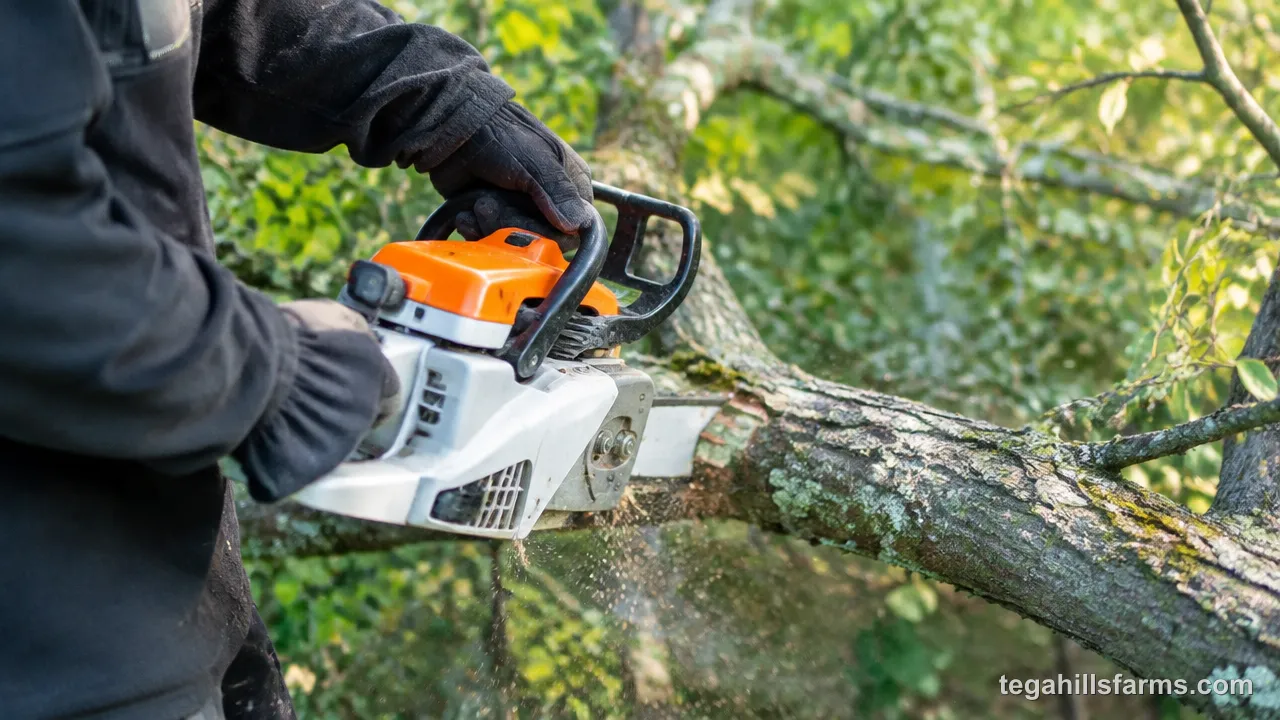
A battery saw runs the moment you squeeze the trigger and stops when you let go. There’s no pull-starting an engine while balanced on a ladder and no idling chain between cuts. It’s also much quieter at head height, which matters when you’re trimming near a neighbor’s house on a weekend morning. And there’s no exhaust blowing back in your face or gas can to carry up the rungs.
A gas saw also asks for fresh fuel mixed with two-stroke oil, a clean air filter and a spark plug that fires on the first pulls. Fuel left in the tank over winter gums up the carburetor. A battery saw needs bar oil and a sharp chain like any saw, plus batteries stored partly charged in a cool, dry spot.
Gas keeps its edge when the work is long and heavy. Refueling takes only as long as pouring from a can, and the engine holds power through cut after cut in hardwood. A battery saw stops when the pack runs down and has to wait on the charger. Brushless direct-drive motors and torque boost modes, which give the motor extra pulling force when dense wood slows the chain, have closed most of that gap for ordinary pruning.
Here is how the two power types compare on the points that change day-to-day use:
| Factor | Battery top-handle saw | Gas top-handle saw |
|---|---|---|
| Starting | Trigger pull, instant | Pull cord, choke when cold |
| Noise at head height | Quieter | Louder |
| Exhaust and fuel on a ladder | None | Exhaust fumes, fuel can to carry |
| Routine upkeep | Bar oil, chain, battery storage | Fuel mix, spark plug, air filter, bar oil, chain |
| Runtime | Limited by the pack, then a recharge wait | Refuel and keep cutting |
| Long cuts in thick wood | Drains the pack faster | Holds power longer |
The battery platform you already own tips the decision more than any single spec. A saw that shares packs with your trimmer and blower means no new charger to buy and no extra battery to store over winter. If you’re comparing cordless options across platforms, the best battery chainsaws cover the full range beyond top-handle models. If you cut for long hours in hardwood or have no way to recharge near the work, the best gas chainsaws are the better place to look.
What Should You Look for in a Top-Handle Chainsaw?
The right saw is the one that matches the limbs you cut and the position you cut them from, because this style of saw spends most of its working life at arm’s length, often above your shoulders. Get that match wrong and the saw either stalls in wood it can’t cut through or tires your arm before the job is done. Upkeep features matter more here than on a saw used from the ground, since a loose or dull chain is harder to deal with when you’re halfway up a ladder.
How Long Should the Bar Be on a Top-Handle Saw?
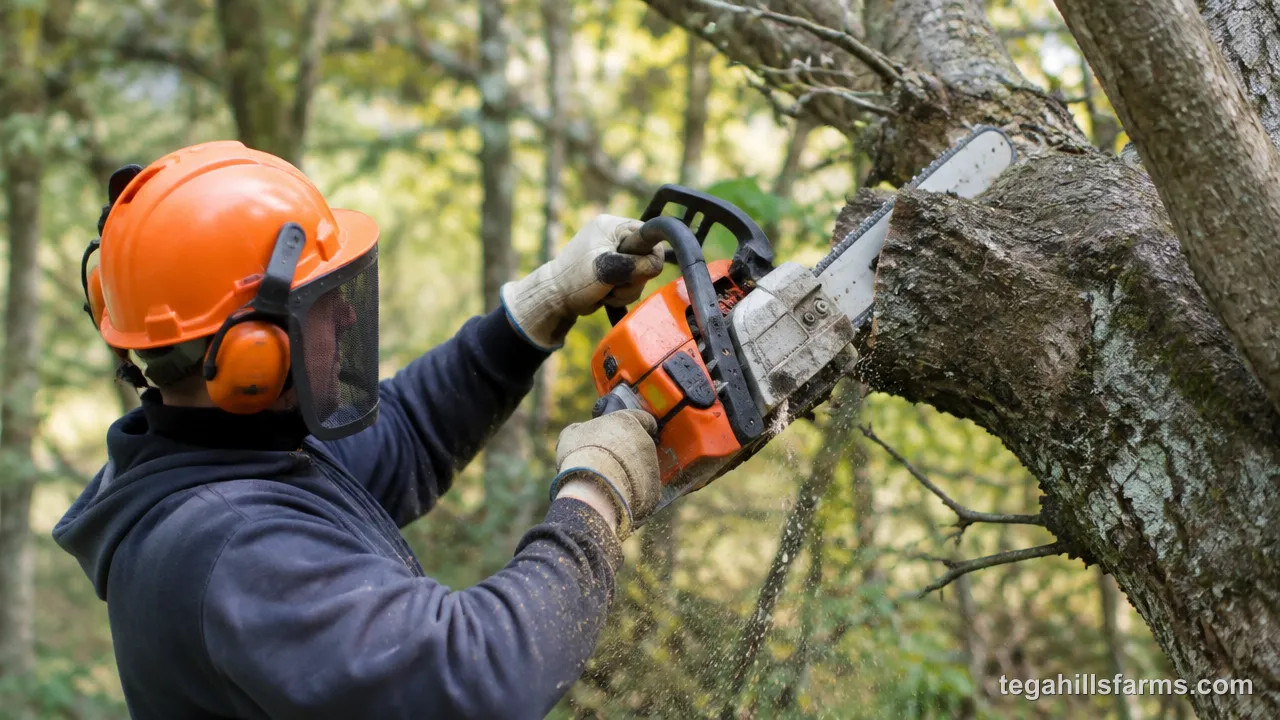
Size it to the thickest limbs you cut most often, with a little to spare, rather than to the biggest branch in the yard. The usable cut is always shorter than the listed length. Bar length sets the largest diameter you can cut in a single cut, but the nose and the section next to the body don’t do useful cutting, which is why some saws list a cut capacity below their bar length.
Length also changes control. A short bar keeps the tip close to your hands, so the saw stays easy to steer between branches and the nose is less likely to touch wood you didn’t mean to cut. A longer bar reaches through thicker limbs but moves the balance point forward. That extra length acts as a lever against your wrist when you hold the saw one-handed or at full reach.
If you replace a bar, length is only the first thing to match. The bar has to fit the saw’s mounting pattern and take the same chain pitch, gauge and drive-link count. Otherwise the chain won’t seat properly on the sprocket and in the bar groove. Check the numbers stamped near the bar’s mounting end before you shop the best chainsaw bars, and buy a matching chain at the same time.
How Much Do Weight and Balance Matter for Overhead Cutting?
Every pound you hold above shoulder height is carried by your arm and shoulder alone, with no hip or thigh to brace the saw against. A lighter saw lets you cut longer before your grip starts to loosen, and a loose grip is what lets the saw twist when the chain catches.
A top-mounted handle helps by putting your hand directly over the saw’s center of mass, so the saw hangs level instead of tipping nose-down. Where the battery sits changes that balance. Weight packed close under the handle feels lighter than the same weight spread toward the bar, and two-battery saws carry more mass in the body, which adds power but also adds load at full reach.
A heavier, dual-battery saw cuts thicker wood with less effort per cut, but you’ll need more breaks to finish the same amount of trimming. On a ladder or through a long session, carried weight should outrank power. For occasional heavy limbs cut from the ground, the extra output earns its weight.
Which Chain, Oiler and Tensioning Features Reduce Upkeep?
Matching pitch and gauge decides which replacement chains fit your saw. An automatic oiler keeps the bar from running dry mid-cut, and side-access or tool-free tensioning turns an adjustment into a quick job on the spot.
Pitch is the spacing of the chain’s links and must match the drive sprocket and bar nose. Gauge is the thickness of the drive links that ride in the bar groove. When you shop chainsaw chains, match pitch, gauge and drive-link count exactly. A chain that’s off on any one of them either won’t fit or will wobble and wear the bar.
An automatic oiler pumps bar oil onto the chain whenever it turns. Without that oil, friction heats the bar and stretches the chain, so the oiler only protects you if you top off the reservoir each time you charge or refuel.
A new chain loosens during its first cuts. Side-access or tool-free tensioning lets you take up that slack without digging out a wrench, which keeps the chain snug and less likely to jump the bar.
Which Top-Handle Chainsaw Fits Your Kind of Work?
Occasional pruning points to the Makita XCU06Z or RYOBI RY40590, constant overhead cutting to the DEWALT DCCS623B, and thicker limbs to the dual-battery Makita XCU08PT or XCU09Z.
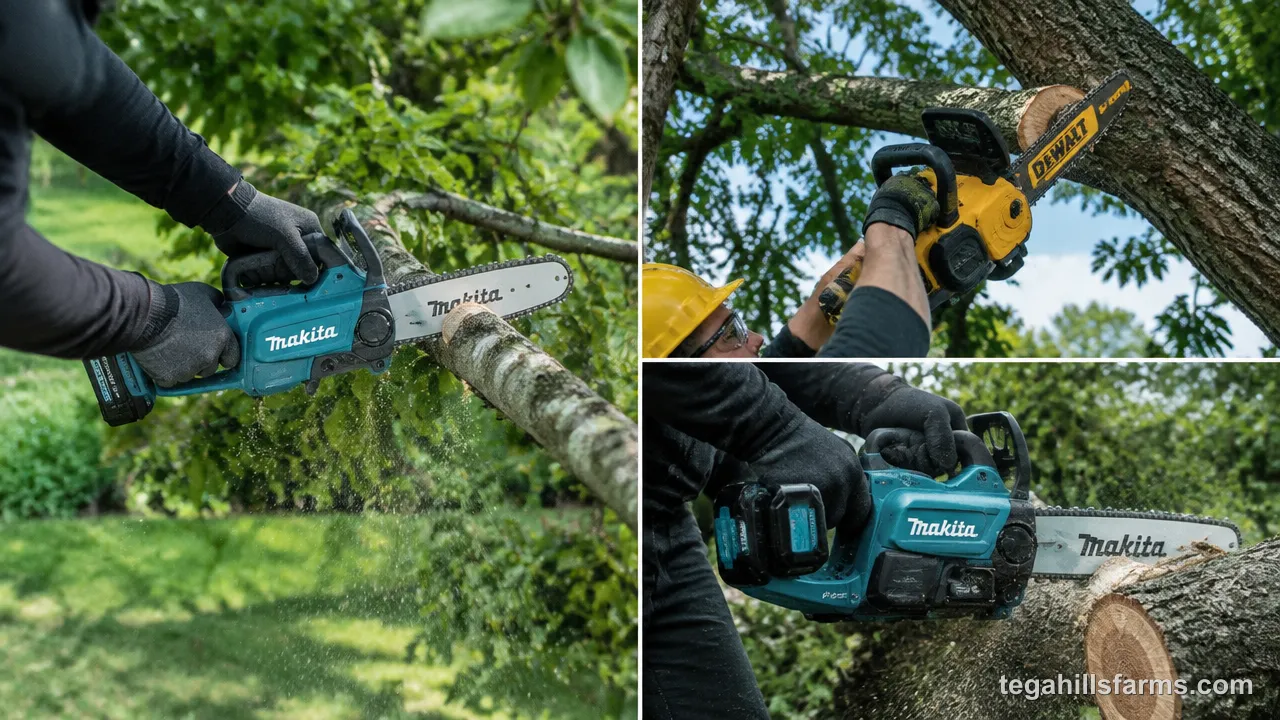
If you trim a few limbs a season and hang the saw on a wall between jobs, a compact saw that stores small is enough. The XCU06Z suits a shed already stocked with LXT packs. The RYOBI arrives with its own battery and case. Either one is ready whenever a branch comes down.
When most of your cutting happens on a ladder or among branches, carried weight decides how long you can keep going, which is why the DEWALT fits that job. If shaping shrubs and fruit trees is most of what you do, the best pruning chainsaws widen the choice beyond top-handle designs. If you climb or do tree work for a living, compare the best chainsaws for arborists.
The XCU08PT and XCU09Z take thicker limbs with more output, and you pay for it in weight at arm’s length. They make sense mainly when your batteries are already Makita.
I wouldn’t buy a top-handle saw as a first or only saw if most of your cutting happens with both feet on the ground. Storm trunks, firewood and small trees coming down are rear-handle work, and a rear-handle saw handles them with more control.
A climber trimming a crown often has one hand on the saw and the other wrapped around a branch, and that is the position these saws were designed around. The danger comes when the bar tip touches wood with only one wrist holding the saw, because the bar kicks up toward your face faster than a single grip can stop it.
Is It Safe to Use a Top-Handle Chainsaw With One Hand?
Only as a fallback. These saws are built for tight, elevated positions, but they’re safest with both hands on them whenever your footing and the limb allow it. A climber in a tree sometimes needs a free hand to hold on; a homeowner on the ground almost never does.
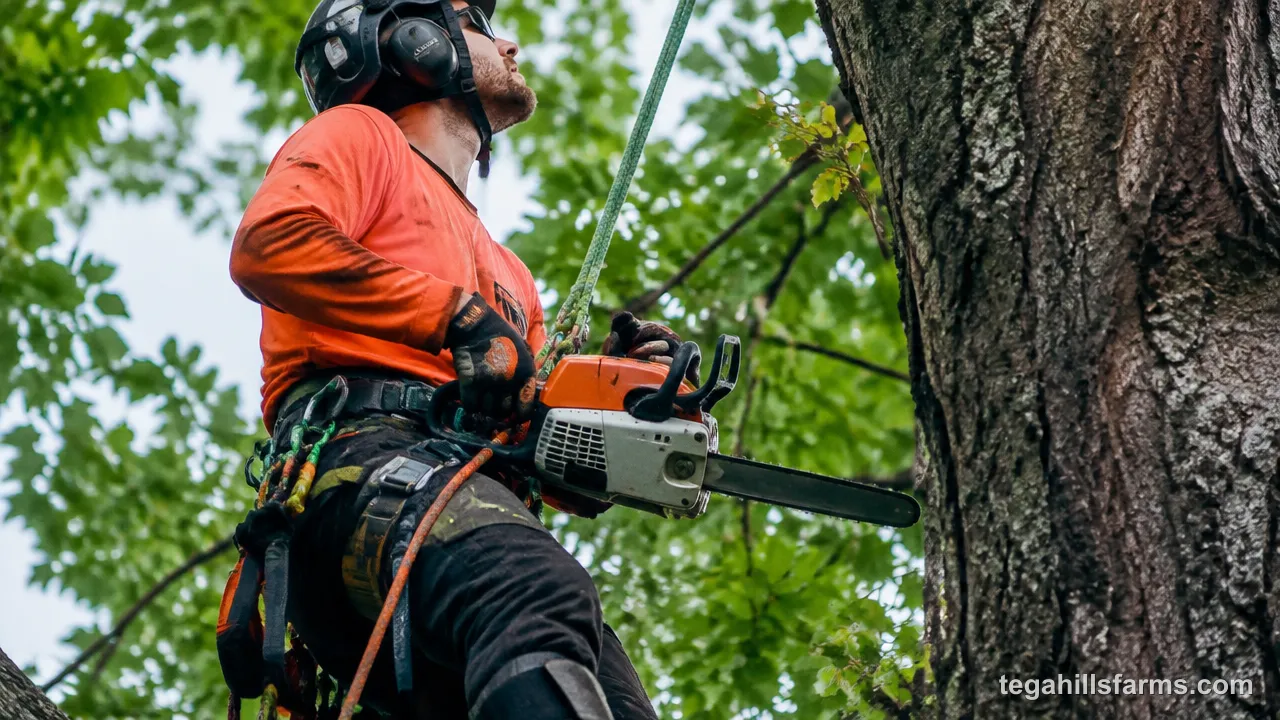
When the upper corner of the bar tip touches wood, the chain grabs and throws the bar up and back toward you. A loose one-handed grip gives the saw room to rotate before you can react, while two hands spread across the saw resist that rotation.
Before each session, check that the chain brake stops the chain. When you climb, tie the saw to your harness with a lanyard so a dropped saw never becomes a falling one. Wear a helmet with eye and face protection, hearing protection, gloves and chainsaw chaps or protective pants. The best chainsaw accessories cover that gear in one place.
The risky habits are cutting above shoulder height from the ground, reaching out from a ladder instead of moving it and starting a cut with the nose of the bar. Each one puts the tip or your balance where a kickback has the most room to hurt you.
How Can You Tell When a Battery Top-Handle Saw Needs Service or New Parts?
The first warnings show up in the cut and on the charger: sawdust instead of chips, a cut that wanders, a chain that keeps sagging, a bar that runs dry or a pack that quits early. Most of these are fixed with sharpening, adjustment or cleaning. Replacement comes in only when a part has worn past its limit.
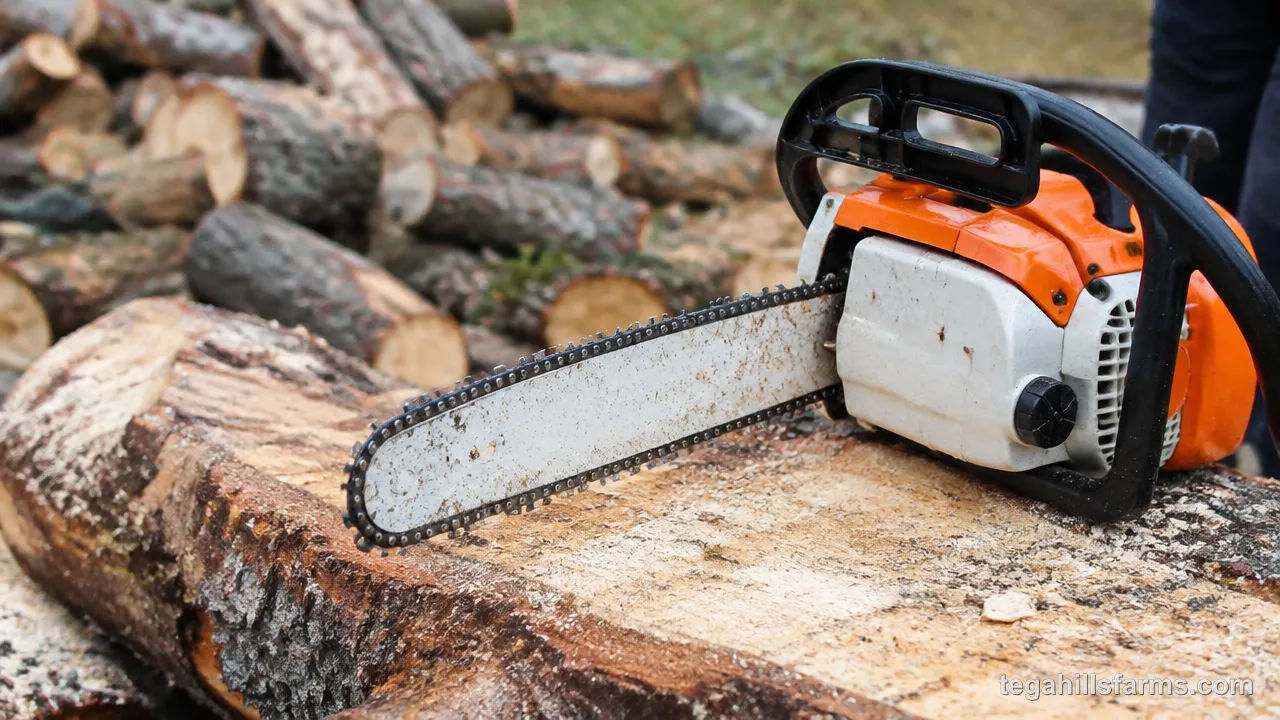
- Dust instead of chips, or a cut that drifts to one side: the cutters are dull or sharpened unevenly. Touch them up with a round file or one of the dedicated chainsaw sharpeners, keeping every cutter the same length. Replace the chain once the cutters are filed back to their wear marks or after a rock or nail damages several teeth.
- A chain that needs re-tensioning again and again: the rivets and drive links have worn and the chain has stretched. Some stretch early in a chain’s life is normal. A chain that has run out of adjustment needs replacing, and the drive sprocket should be checked for wear at the same time.
- A bar that smokes, darkens or feels dry: the oiler isn’t feeding. Check the reservoir, then clean the oil port and bar groove. If oil still doesn’t reach the chain, the oiler needs service.
- A battery that runs out sooner or comes off the saw hot: let the pack cool before charging and store it partly charged. A pack that keeps losing runtime is worn out and needs replacing, not the saw.



Write Your Review
No reviews yet. Be the first to share your experience!