

The 9 best saws for seniors of 2026 are the tietoc Mini Chainsaw 6 Inch (Best Overall), the DEWALT DCCS623B 8-Inch Pruning Chainsaw (Best for Small Spaces), the Greenworks 24V 6″ Mini Chainsaw (Best Budget), the Greenworks 40V 12in Cordless Chainsaw (Best Performance), the CRAFTSMAN V20 CMCCS620M1 12in Chainsaw (Best Battery Life), the WORX WG322 20V 10″ Cordless Chainsaw (Best Value), the BLACK+DECKER 20V MAX LCS1020 10in Chainsaw (Also Great), the WORX WG324 5″ Mini Chainsaw (Best Lightweight) and the BLACK+DECKER 40V MAX LCS1240 12″ Chainsaw (Best Premium).
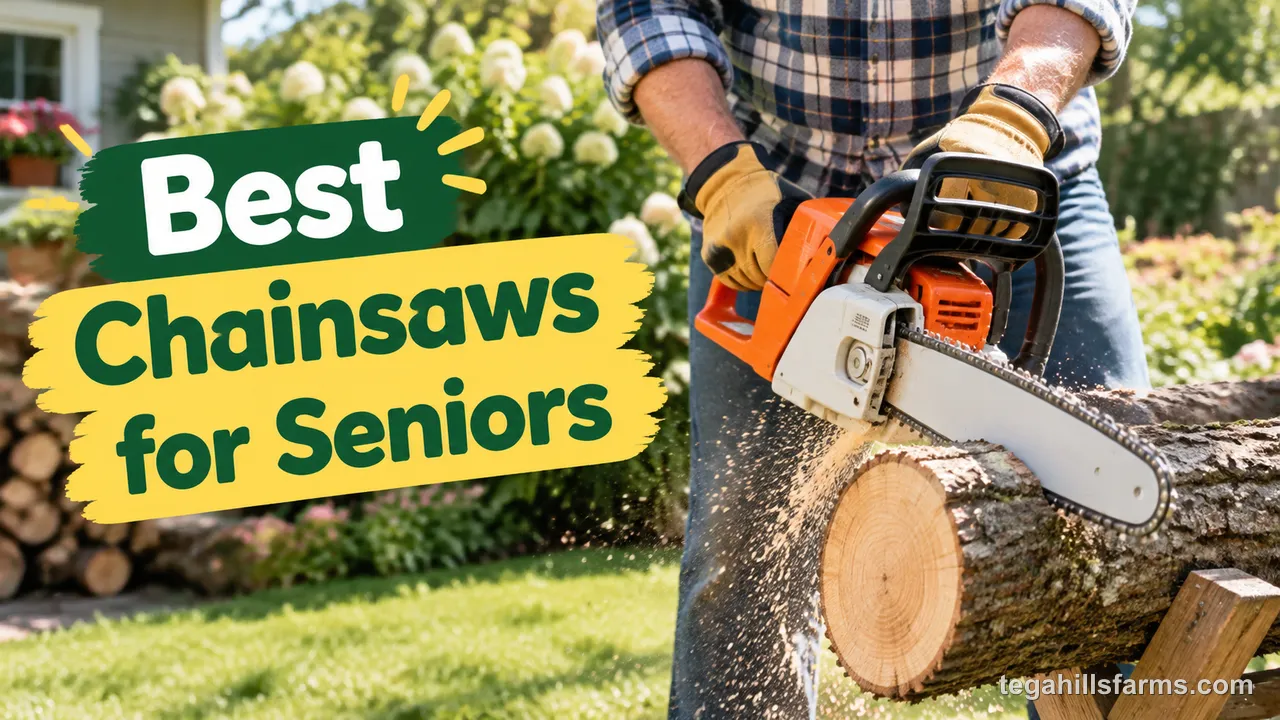
Every pick runs on a battery, so none has a pull cord or a fuel tank. What separates them is weight, bar length, safety guarding and how much battery you get. Those four factors decide how a saw feels after the first twenty minutes of work.
Most readers worry about three things: tired arms and hands, an accidental start, and a battery that runs out halfway through a limb.


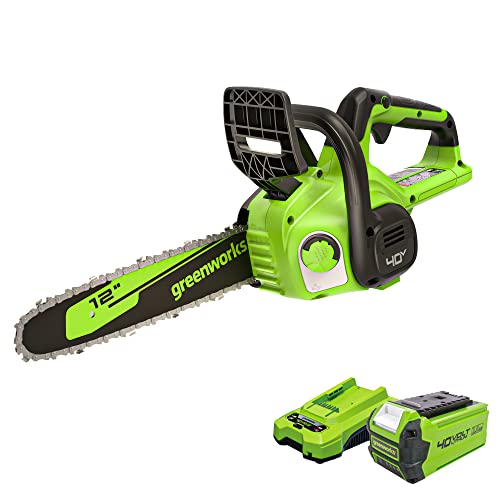
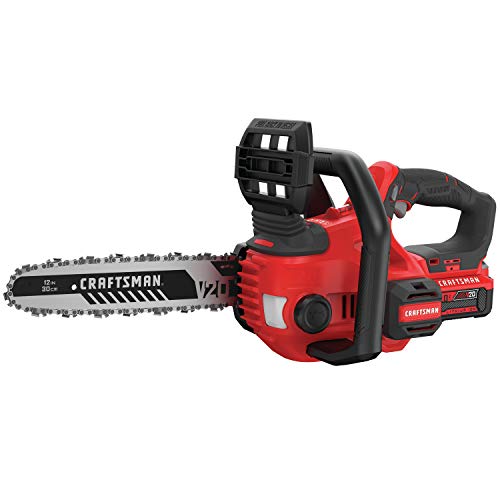
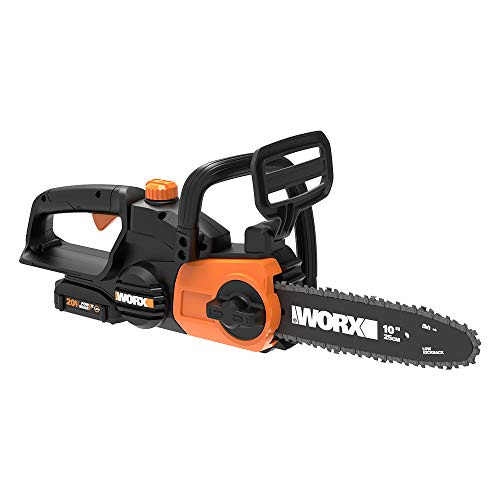


Before comparing, check what ships in the box. Some saws include a battery and charger, and at least one of these is sold as a bare tool.
What Makes a Chainsaw Senior-Friendly?
A senior-friendly chainsaw is a lightweight, battery-powered saw that starts with a button, vibrates little and cuts without taxing the arms or hands.
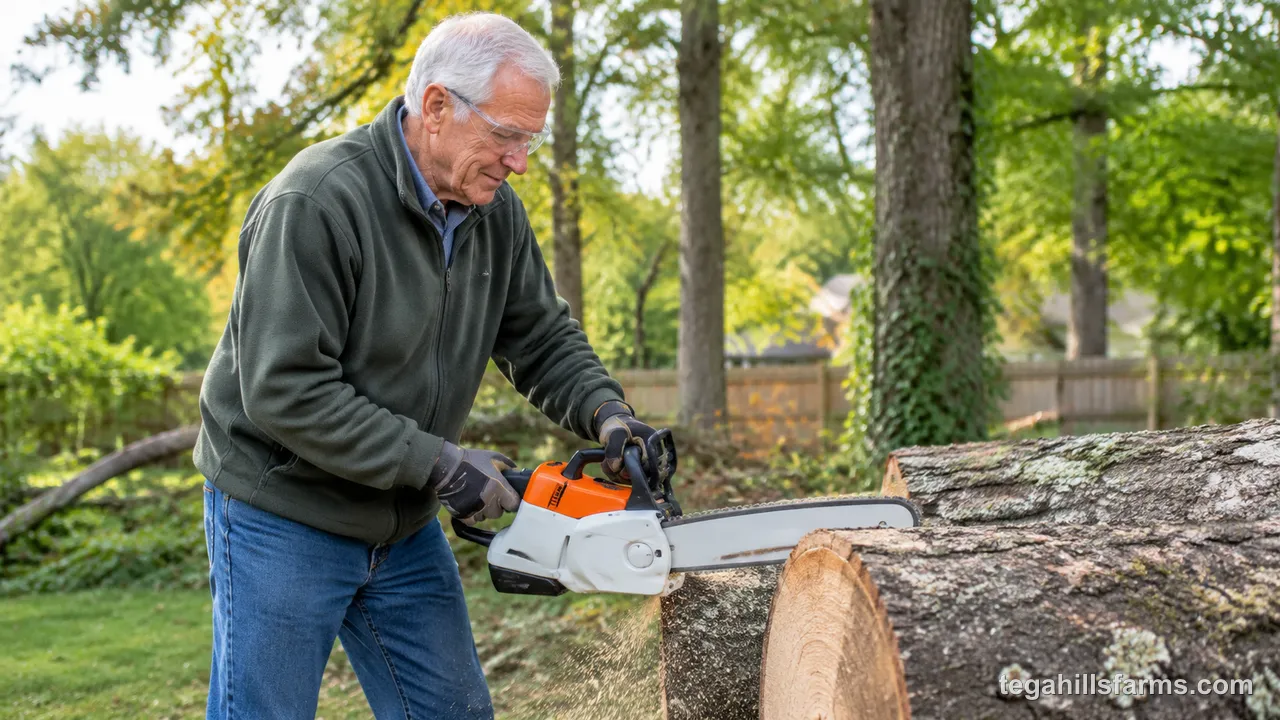
Seniors benefit from the same engineering priorities that define the best chainsaws overall: balanced power delivery, predictable handling, and components that reduce strain over the length of a job. Weight comes first, since every extra pound shows up in the shoulders during overhead pruning. Starting effort comes second, which is why the best battery chainsaws replace the pull cord with a lock-off button and trigger.
Low vibration and clear controls finish the list. A soft secondary grip, a guard around the front handle and a chain that oils itself leave fewer things to fuss with mid-cut.
The 9 Best Chainsaws for Seniors of 2026
The 9 best chainsaws for seniors of 2026 are tietoc Mini Chainsaw 6 Inch, DEWALT DCCS623B 8-Inch Pruning Chainsaw, Greenworks 24V 6″ Mini Chainsaw, Greenworks 40V 12in Cordless Chainsaw, CRAFTSMAN V20 CMCCS620M1 12in Chainsaw, WORX WG322 20V 10″ Cordless Chainsaw, BLACK+DECKER 20V MAX LCS1020 10in Chainsaw, WORX WG324 5″ Mini Chainsaw, and BLACK+DECKER 40V MAX LCS1240 12″ Chainsaw.
The real choice is between mini saws under 4 pounds for pruning and 10-pound full-size models for firewood. It comes down to whether upper-body strength or cutting capacity matters more on your property.
#1 tietoc Mini Chainsaw 6 Inch — Best Overall
Pruning shouldn’t wear out your arms. At 3.3 pounds with an 880-watt motor, this saw handles garden branches without a pull cord or fuel to deal with.
Key Specs:
- Weight: 3.3 pounds
- Motor: 880 watts
- Battery: 2000mAh, removable and rechargeable
- Lubrication: auto oiler, filled with general motor oil
- Safety: security lock plus start button pressed together
- Warranty: 365 days
Detailed Review:
Weight is the reason to look at this saw. At 3.3 pounds, it stays comfortable at shoulder height, where heavier saws start to shake. The slim body and anti-slip handle give a secure grip when your hands are tired.
Among the best mini chainsaws, an 880-watt motor and manganese steel chain are enough for garden branches and twigs. The auto oiler works by pressing, and one fill lasts a full day of trimming. Motor oil is fine in the tank.
The security lock and start button must be pressed together, so an accidental start is unlikely. Safety baffles keep wood from splashing back at you. A spare chain and a guide plate sheath come in the box.
Next to a 12-inch saw such as the Greenworks 40V, you give up bar length in exchange for a much lighter body. That is a fair deal if your work is pruning rather than bucking logs.
Pros:
- Low weight keeps overhead pruning comfortable
- Anti-slip handle on a slim body
- Auto oiler covers a full day of trimming
- Lock plus start button blocks accidental starts
- Second chain included
Cons:
- Short bar limits it to thin branches
- Lubricating oil isn’t included in the box
Who It’s For:
Gardeners with tired wrists or limited grip strength who mostly trim shrubs, twigs and small limbs will get on well with this saw. It also suits occasional camping trips. Anyone planning to cut logs for a wood stove needs a longer bar and more power.
Editor’s Verdict:
Easy on the arms and simple to run, this is a pruning saw that knows its limits.
#2 DEWALT DCCS623B 8-Inch Pruning Chainsaw — Best for Small Spaces
Tight spots between branches and fences are where this saw earns its keep. The compact body weighs 4.6 pounds, and the brushless motor is built to stretch battery life through a long pruning session.
Key Specs:
- Weight: 4.6 pounds
- Bar length: 8 inches
- Runtime: up to 70 cuts per charge on 4×4 pressure-treated pine (DCB230 battery)
- Motor: brushless
- Lubrication: auto-oiling
- Supplied as a bare tool; battery sold separately
Detailed Review:
The compact design is the point of this saw. It slips into crowded shrubs and tight corners where a full-size body can’t turn, and it is built to reduce fatigue over a long session. At 4.6 pounds, it is still manageable for overhead work.
The brushless motor is designed to maximize run time and motor life. DEWALT rates the saw at up to 70 cuts per charge on a 4×4 pressure-treated pine post with the DCB230 battery.
A tip guard adds stability during upcuts, the move that tends to make a saw jump. Auto-oiling keeps the chain lubricated, so you aren’t stopping to drip oil onto the bar.
This is a bare tool, so it makes the most sense if you already own a DEWALT 20V MAX battery. Compared with the 6-inch tietoc, the 8-inch bar gives you more cutting reach, in exchange for a little more weight in your hands.
Pros:
- Compact body reaches into tight spaces
- Brushless motor stretches battery runtime
- Tip guard steadies upcuts
- Auto-oiling keeps the chain lubricated
- Moderate weight suits overhead pruning
Cons:
- Battery is sold separately
- Heavier than compact mini saws
Who It’s For:
Homeowners working around fences, sheds and dense shrubs will appreciate the slim profile, especially if they already own 20V MAX batteries. Anyone starting from scratch will need to add a battery. Cutting thick logs calls for a larger saw.
Editor’s Verdict:
A compact pruning tool with a small footprint and long run time, provided you bring your own battery.
#3 Greenworks 24V 6″ Mini Chainsaw — Best Budget
Starting a saw should never feel like a workout. This one runs on a push-button, with no gas, pull rope or carburetor, and its 3.4-pound body, security lock and anti-slip handles suit users with limited strength.
Key Specs:
- Weight: 3.4 pounds with battery
- Bar length: 6 inches
- Battery: 24V, 2.0 Ah, charger included
- Motor: brushless
- Chain tensioning: one-click, tool-free
- Start: push-button with security lock
Detailed Review:
Weight and starting are the story here. At 3.4 pounds with the battery attached, the saw is easy to carry and hold. The push-button start leaves the pull rope, carburetor and spark plug out of the equation, so there is nothing to prime, mix or yank.
The 6-inch bar slices through logs of the same diameter. That covers pruning, campfire prep and general garden cleanup.
Chain tightening takes one click and works one-handed, which keeps maintenance quick. Safety gear is basic but sensible: a security lock prevents accidental starts, safety baffles guard against splashes and the handles are anti-slip.
The 24V battery fits a large family of Greenworks tools, a wider range than the WORX WG324’s battery platform. That helps if you already own Greenworks gear, though the short bar caps capacity at small limbs.
Pros:
- Push-button start with no pull rope
- One-click tensioning works with one hand
- Battery fits many other Greenworks tools
- Security lock blocks accidental starts
- Anti-slip handles help grip
Cons:
- Short bar limits it to small limbs
- Battery capacity is lower than the CRAFTSMAN’s pack
Who It’s For:
Shoppers who want an affordable first battery saw that is simple to start and adjust will find it a good match. Owners of other Greenworks 24V tools can share batteries. People who need to cut larger logs should look at a bigger bar.
Editor’s Verdict:
Simple to start, simple to adjust and easy to carry across a yard.
#4 Greenworks 40V 12in Cordless Chainsaw — Best Performance
A 12-inch bar on a 6-pound body is the draw here. The low-recoil chain and two-step safety start add control for storm cleanup and limbing, jobs that quickly tire an unsteady grip.
Key Specs:
- Weight: 6 pounds
- Bar length: 12 inches
- Battery: 40V, 2.0 Ah, also charges phones and tablets
- Runtime: 50 cuts per charge on 4×4 treated wood
- Chain tensioning: tool-free, automatic
Detailed Review:
The bar-to-weight ratio sets this saw apart. A 12-inch bar usually comes with a heavy body, but a wrapped grip and a 6-pound frame keep fatigue down. The BLACK+DECKER LCS1240 has the same bar length and voltage class at 10.4 pounds, so the Greenworks is the easier saw to hold up.
The chain is low-recoil, and starting needs both a lock and a trigger, which cuts the chance of an accidental start. One charge delivers 50 cuts through 4×4 treated wood, a real task rather than a lab number.
Tool-free auto-tensioning adjusts the chain quickly, and the auto-oiler extends chain life. You won’t need a wrench for routine upkeep.
The 40V battery can also charge phones and tablets, handy on a job site. It works with other Greenworks 40V tools too. The trade-off is a single 2.0 Ah pack, which suits focused jobs better than all-day cutting.
Pros:
- Twelve-inch bar handles storm cleanup limbs
- Lock-plus-trigger start prevents accidents
- Tool-free auto-tensioning skips the wrench
- Battery doubles as a phone charger
- Wrapped grip eases long sessions
Cons:
- One 2.0 Ah battery limits all-day cutting
- Heavier than mini saws for overhead pruning
Who It’s For:
Storm-season cleanup, limbing and the occasional firewood job suit people who want real cutting reach without a heavy saw. It works for owners with limited arm strength. Those who only trim thin branches would be better served by a lighter mini saw.
Editor’s Verdict:
Real cutting reach without the weight of a full-size saw.
#5 CRAFTSMAN V20 CMCCS620M1 12in Chainsaw — Best Battery Life
If battery fade ends your yard sessions early, the 4.0 Ah pack here is the fix. The 12-inch compact body also fits into tight spaces, though at 9.9 pounds it asks more of your arms than the mini saws do.
Key Specs:
- Weight: 9.9 pounds
- Bar length: 12 inches
- Battery: V20, 4.0 Ah, charger included
- Lubrication: auto oiling
- Chain tensioning: tool-free
- Warranty: 3-year limited
Detailed Review:
The 4.0 Ah battery is the headline. It is built for extended runtime, so a long afternoon of cleanup needs fewer pauses to recharge. Against the 2.0 Ah pack in the Greenworks 40V, it has double the amp-hours, though the Greenworks runs at a higher voltage, so the two aren’t a like-for-like runtime match.
A bubble level helps keep cuts square, useful when you are slicing logs on sawhorses. Auto oiling and tool-free tensioning keep maintenance minimal. Replacement parts are listed too: chain CMZCSC12 and bar CMZCSB12.
Weight is the compromise. Next to the WORX WG322, a 10-inch saw at 6.2 pounds, the CRAFTSMAN carries noticeably more heft, the price of a 12-inch bar and bigger battery.
An integrated hook lets you hang the saw on the VERSATRACK wall system, sold separately. Storing it off the floor means less bending and lifting each time you reach for it.
Pros:
- 4.0 Ah battery supports longer sessions
- Bubble level helps keep cuts square
- Auto oiling and tool-free tensioning cut upkeep
- Integrated hook fits VERSATRACK wall storage
- Replacement bar and chain parts are listed
Cons:
- Near-ten-pound body tires arms on overhead cuts
- VERSATRACK system is sold separately
Who It’s For:
Waist-level work such as cutting fallen limbs on sawhorses suits this saw, particularly for people who dislike swapping batteries. Anyone who prunes high above their head will feel the extra weight and should consider a lighter model.
Editor’s Verdict:
Run time and low upkeep come first, with a body that rewards waist-level cuts.
#6 WORX WG322 20V 10″ Cordless Chainsaw — Best Value
Mixed yard work is where this saw fits. The 6.2-pound body, 10-inch bar and automatic chain tensioning cover limbs and small logs without you stopping to adjust a thing.
Key Specs:
- Weight: 6.2 pounds
- Bar length: 10 inches
- Chain speed: 12.5 ft/s
- Battery: 20V Power Share, charger included
- Chain tensioning: automatic, tool-free
- Lubrication: automatic, with oil level indicator
Detailed Review:
At 6.2 pounds, the saw weighs about as much as a 2-liter bottle of soda. Shoppers comparing the best lightweight chainsaws will notice it sits above the mini saws in weight but well below the heavier full-size class.
The automatic, tool-free tension system keeps the chain set correctly for the job. Next to the BLACK+DECKER LCS1020, which has a tool-less tension adjustment you make yourself, the WORX handles that step on its own.
Auto lubrication smooths cuts and extends tool life, and an oil level indicator shows where you stand. Fill the tank with chain oil before the first use, and run the chain for a few seconds without cutting to spread it. Oil is sold separately.
Chain speed is 12.5 ft/s, enough for reasonably sized logs and branches. The Power Share battery is shared across more than 75 tools, which adds value if you already own WORX gear.
Pros:
- Automatic tension keeps the chain properly set
- Oil level indicator shows lubricant at a glance
- Light enough for mixed pruning and cleanup
- Battery shares across over 75 WORX tools
- Battery and charger come in the box
Cons:
- Chain oil is sold separately
- Heavier than mini pruning saws for overhead work
Who It’s For:
A yard with mixed jobs, from limb cleanup to light firewood, suits an owner who wants one saw and fewer adjustments. People already using Power Share batteries can share them. Those who only prune small branches overhead can go lighter.
Editor’s Verdict:
Hands-off tensioning and lubrication make it simple to own.
#7 BLACK+DECKER 20V MAX LCS1020 10in Chainsaw — Also Great
Built for nervous first-timers, with a front hand guard and a lock-off button. At 6.8 pounds, the 10-inch saw handles ordinary limb cleanup without the strain of a bigger machine, and its oiling system keeps the chain lubricated.
Key Specs:
- Weight: 6.8 pounds
- Bar length: 10 inches
- Battery: 20V MAX lithium
- Lubrication: oiling system for bar and chain
- Chain tensioning: tool-less
- Safety: lock-off button and front hand guard
Detailed Review:
Safety design is where this saw puts its attention. The lock-off button prevents accidental starting, and the front hand guard protects you from flying debris. Both matter if you’re returning to a chainsaw after years away.
The 20V MAX lithium battery is meant for long run-time and long life. Tool-less chain tensioning makes adjustments fast, so you won’t need a wrench in your pocket.
The 10-inch bar and chain are designed for smooth, fast cuts, enough for limbs and storm cleanup debris. An oiling system lubricates the bar and chain.
The WORX WG322 weighs 6.2 pounds and adjusts tension automatically, while this saw asks for a manual tool-free adjustment. That makes the BLACK+DECKER slightly heavier and a little more hands-on.
Pros:
- Lock-off button blocks accidental starts
- Front hand guard shields against flying debris
- Tool-less tensioning needs no wrench
- Oiling system lubricates bar and chain
Cons:
- Tension is adjusted by hand, not automatic
- Heavier than the WORX WG322
Who It’s For:
Cautious first-timers and homeowners who value physical guarding will feel at home with this saw. It also suits anyone already holding 20V MAX batteries. Those who want hands-off tensioning should look elsewhere.
Editor’s Verdict:
Protection-focused design makes it an easy saw to rely on for routine limb cleanup.
#8 WORX WG324 5″ Mini Chainsaw — Best Lightweight
Elevated pruning is easier with a saw built for one hand. At 3.9 pounds with the battery, it adds a secondary soft grip and low vibration to keep fatigue down through a charge that handles about 100 small pieces.
Key Specs:
- Weight: 3.9 pounds with battery
- Bar length: 5 inches
- Chain speed: 22 ft/s
- Runtime: up to 100 pieces of 2-inch wood per charge
- Battery: 20V Power Share 2.0 Ah, charger included
- Safety: upper chain guard, hand guard and lock-out switch
Detailed Review:
This saw is slim and light enough to operate with one hand, which makes pruning at elevated heights more comfortable. A secondary soft grip improves control and comfort when your other hand takes the weight.
The high-efficiency motor delivers 22 ft/s with minimal vibration to help prevent hand fatigue. That matters for anyone with sore joints, because vibration travels from the chain to the wrists.
Safety comes in three layers: an upper chain guard, a hand guard and a lock-out switch that prevents accidental starts. The tensioning tool is stored on the saw, so it is always within reach.
Against the DEWALT pruning saw, the WORX is lighter, while the DEWALT’s longer bar offers more reach. The battery works across a big range of Power Share tools, which suits owners who already use them.
Pros:
- Weight allows one-handed pruning
- Secondary soft grip improves control
- Upper chain guard, hand guard and lock-out switch add protection
- Low vibration limits hand fatigue
- Battery shares across many Power Share tools
Cons:
- Five-inch bar suits only small branches
- Chain tension adjustment requires the stored tensioning tool
Who It’s For:
Pruning above shoulder height, or with limited hand strength, is where this saw makes sense, especially if you want layered guarding. Owners of Power Share batteries can share them. Thick limbs and log cutting need a bigger saw.
Editor’s Verdict:
Control and low vibration, not raw capacity, are what this small saw gets right.
#9 BLACK+DECKER 40V MAX LCS1240 12″ Chainsaw — Best Premium
Seasonal users get a battery that holds its charge for up to 18 months. That, plus over 60 cuts through 4×4 pine on a single 40V MAX 2.0Ah charge, suits a household that cuts in bursts rather than weekly.
Key Specs:
- Weight: 10.4 pounds
- Bar length: 12 inches
- Battery: 40V MAX lithium ion, 2.0 Ah
- Runtime: over 60 cuts on 4×4 pine lumber on average
- Charge retention: up to 18 months
- Handle: full wrap-around, with battery charge indicator
Detailed Review:
Charge retention is the unusual feature. The battery holds a charge for up to 18 months, so a saw that sits through a quiet season is still ready. A state-of-charge indicator lets you check the battery before a job instead of finding it empty halfway through a cut.
The full wrap-around handle supports comfortable cutting in different orientations. That helps when you need to cut at an angle or reach awkwardly.
The 12-inch bar and chain are designed for smooth, fast cuts. Automatic oiling lubricates the bar and chain constantly, and tool-less tensioning keeps adjustments quick.
Weight is the trade-off. The Greenworks 40V 12in weighs 6 pounds against this saw’s 10.4, so you carry the extra heft in return for the handle design and charge retention.
Pros:
- Battery holds its charge up to 18 months
- Charge indicator shows battery level before you start
- Wrap-around handle supports varied cutting positions
- Automatic oiling keeps bar and chain lubricated
- Tool-less tensioning speeds adjustments
Cons:
- Heavy for overhead work
- Single 2.0 Ah pack limits extended cutting days
Who It’s For:
Occasional cutters whose saw sits in the garage between storms will like a battery that waits patiently. Anyone who wants to check charge level at a glance and is comfortable lifting a heavier tool fits too. Overhead pruning calls for something lighter.
Editor’s Verdict:
Built for seasonal cutting, with a battery that waits patiently between jobs.
What Should You Look for When Choosing a Chainsaw?
For seniors, choosing a chainsaw comes down to power source, weight and balance, bar length and safety features. For a wider look at how to choose a chainsaw, these four checks do most of the work.
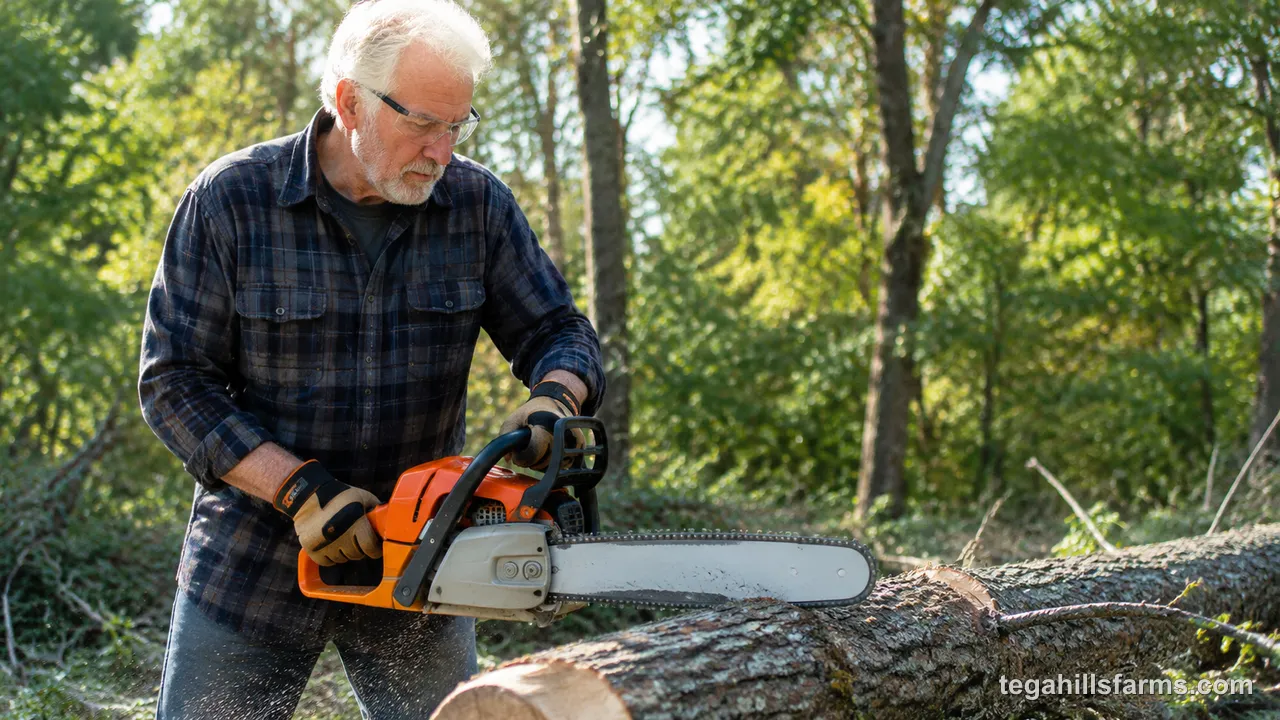
Battery, Corded, or Gas?
Battery saws win on push-button starting and zero fumes, corded saws win on unlimited runtime, and gas saws bring the most raw power with the most upkeep.
Battery models remove the pull cord, the fuel mix and the carburetor, which is where most starting trouble lives. You press, you cut. Corded electric saws never run out of charge, but the cord limits how far you can walk and can snag on brush. Gas saws need fuel mixing, pull-starting and regular tune-ups, and their noise and exhaust fumes make longer sessions tiring.
For small yards and occasional jobs, battery power is the easiest to live with.
How Much Should a Chainsaw Weigh?
Mini saws under 4 pounds suit pruning, mid-weight saws at 6 to 7 pounds handle mixed tasks, and full-size saws at 9 to 11 pounds make sense only when cutting capacity justifies the arm strain.
Weight is felt most during overhead work, when your shoulders hold the saw up for the whole cut. Balance matters as much as scale: a saw that feels front-heavy tires the wrists faster than a more even one. The best chainsaws for beginners tend to sit in the lighter classes for the same reason, since a lighter saw is easier to control.
If most of your cutting is thin limbs, stay in the lightest class. Step up only when firewood or storm debris demands it.
Which Bar Length Fits Your Yard Work?
5- to 6-inch bars suit pruning and kindling, while 10- to 12-inch bars cover general homeowner tasks, including storm cleanup and firewood up to 10 inches in diameter.
A longer bar lets you cut thicker wood, but it also adds weight at the front of the saw and more leverage against your wrists. Seniors rarely need bars longer than 12 inches. Match the bar to the thickest wood you cut regularly instead of the biggest job you can imagine.
A short bar on a light saw is safer and less tiring for trimming. A 12-inch bar earns its weight only when you cut logs or clear storm damage.
What Safety Features Reduce Risk?
Look for a lock-off button, a front hand guard, a chain brake and anti-vibration design to cut the chance of injury.
A lock-off button prevents accidental starts by requiring two actions before the chain moves. A front hand guard deflects debris and, on many saws, helps stop the chain during kickback. Check whether a chain brake is fitted, since not every compact saw has one.
Anti-vibration features, such as a soft secondary grip, reduce hand fatigue. Lower vibration lets you work longer before your grip weakens, which is when most mistakes happen.
A battery pack that sat in the garage all winter can come back with noticeably less runtime than it had last fall. Then there’s the chain that has gone dull, or the oil reservoir that ran dry halfway through a limb. Which of those can you fix at the workbench, and which ones belong at a shop?
What Maintenance Can You Handle Yourself?
Most day-to-day upkeep on a battery chainsaw is safe to do yourself, and only sharpening and deeper service need a shop.
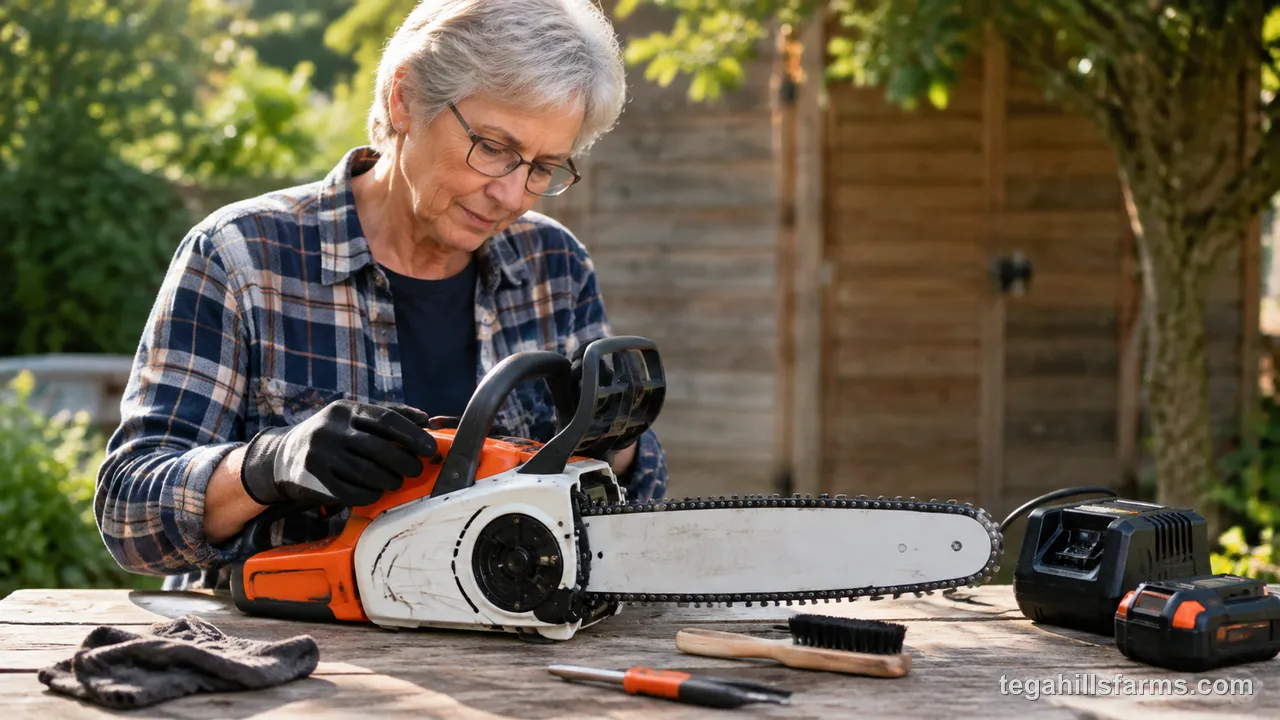
Three jobs sit comfortably within reach: filling the oil reservoir, wiping debris from the bar, and checking chain tension by hand. Remove the battery before you touch the chain. Top off the oil after each session so it never runs dry mid-cut, and clear sawdust from the bar groove to keep the oil flowing.
Tool-less tensioning makes the third job easy, since most adjustments take a quick turn of a knob or lever. Chain sharpening is different. It takes the right file and angle, and a poor job makes the saw grab. A local shop can sharpen it quickly. Take the saw in for any service that involves the motor or housing.
When Should You Replace Your Chainsaw?
Replace the saw, not just a part, when repeated failures show that the battery, drive or housing is wearing out.
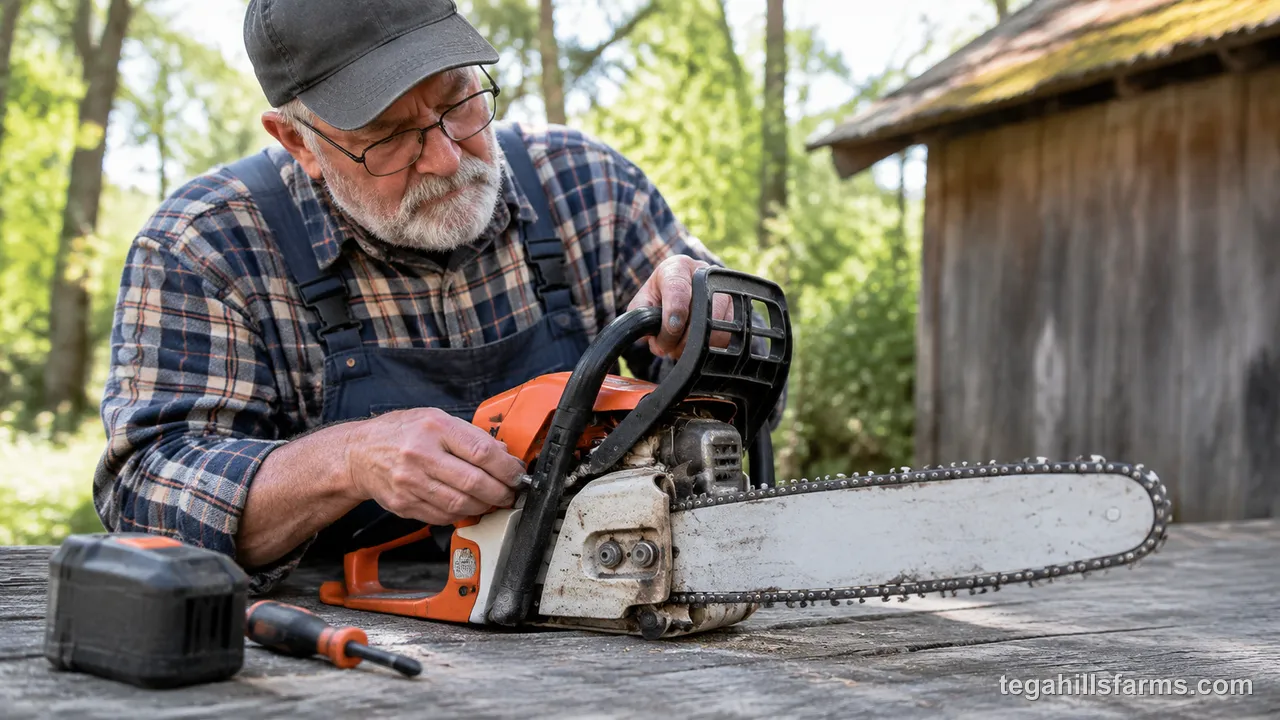
Battery cells that no longer hold a charge, often after three to five years, shorten runtime until the saw is hardly useful. A chain that dulls after a single session points to worn sprockets, which a new chain won’t fix. A motor that stalls under light load is another sign.
Oil leaks that saturate the housing mean seals have failed and the saw is losing lubrication where it counts. Any one of these can sometimes be repaired, but when two show up together, replacement usually makes more sense than repair.
Frequently Asked Questions
Can someone with arthritis use a chainsaw safely?
Often yes, with the right saw and a doctor’s approval. Choose a light battery model with a soft secondary grip, a lock-off button and low vibration, and keep sessions short. Stop when your hands start to ache, because a tired grip is the main hazard.
How can I reduce vibration fatigue?
Pick a light saw with a secondary soft grip and a low-vibration motor, keep the chain sharp, and let the saw do the cutting instead of forcing it. Take breaks before your hands go numb. A dull chain makes you push harder, which sends more vibration into your wrists.
Can a mini chainsaw cut real firewood?
Only small pieces. Mini saws handle kindling, thin limbs and short lengths of small-diameter wood, but their short bars and compact motors struggle with full-size logs. For regular firewood, step up to a 10- or 12-inch saw and accept the extra weight in return for cutting capacity.
Do pole saws eliminate ladder work?
For most high limbs, yes. A pole saw lets you cut from the ground, which removes the biggest fall risk in pruning. The best pole saws reach far enough for typical yard trees, though very tall or thick branches still call for a professional arborist.
How long does a charge last in real pruning?
Long enough for a typical yard session with small limbs, since pruning cuts are short and the battery rests between them. Runtime is rated in cuts, and thicker wood drains the pack faster. Keep a spare pack if your jobs run longer, and charge before you start.





Write Your Review
No reviews yet. Be the first to share your experience!