

Gas hedge trimmers give you the most cutting power for thick, overgrown hedges. Electric models, whether battery or corded, win on quiet running, lighter handling and low upkeep.
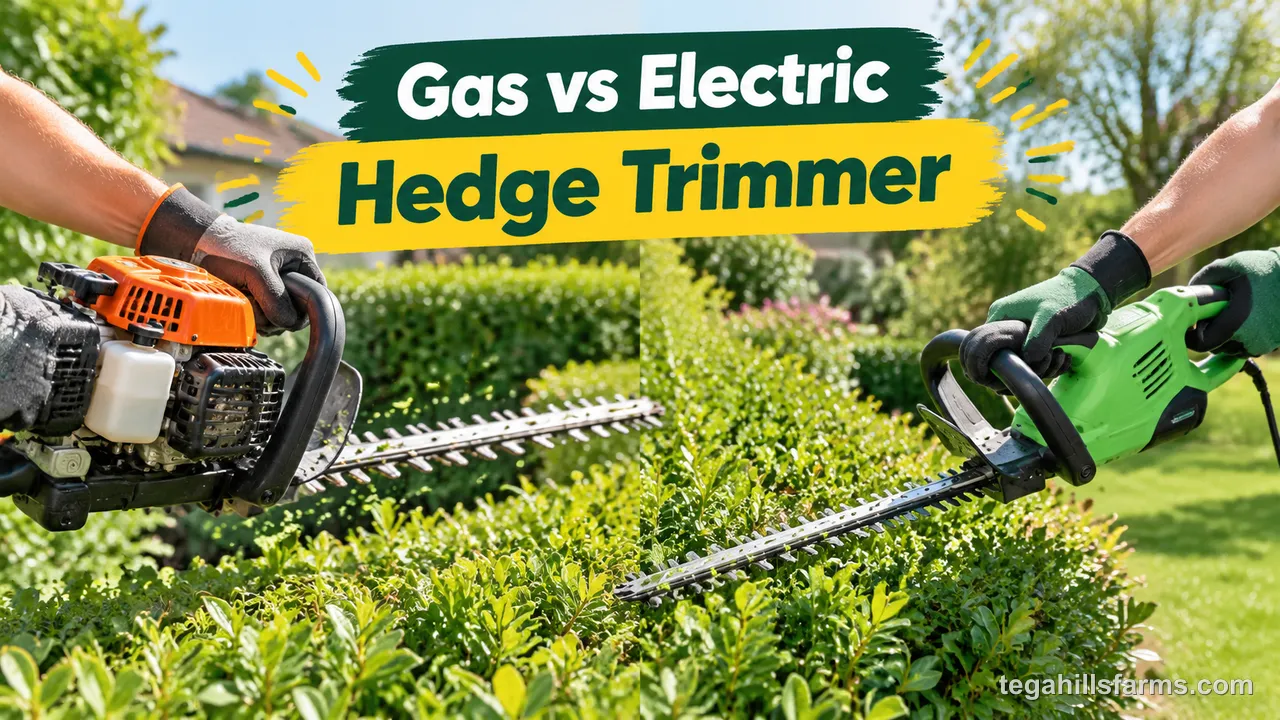
Three things separate the two: how much growth each can cut, how they feel after an hour of work, and what they ask of you between jobs. Each one points toward a different kind of yard.
The real worry is buying the wrong machine. A heavy engine on a short privet hedge wears you out, and a light battery tool can stall in woody growth.
Before you shop, walk your hedge line and note the thickest branches and the longest continuous run. Those two facts settle most of this decision.
What Separates a Gas Hedge Trimmer From an Electric One?
A gas hedge trimmer is driven by a small gasoline engine, while an electric hedge trimmer runs on either a battery or a power cord. That split gives you three machines to compare, not two.
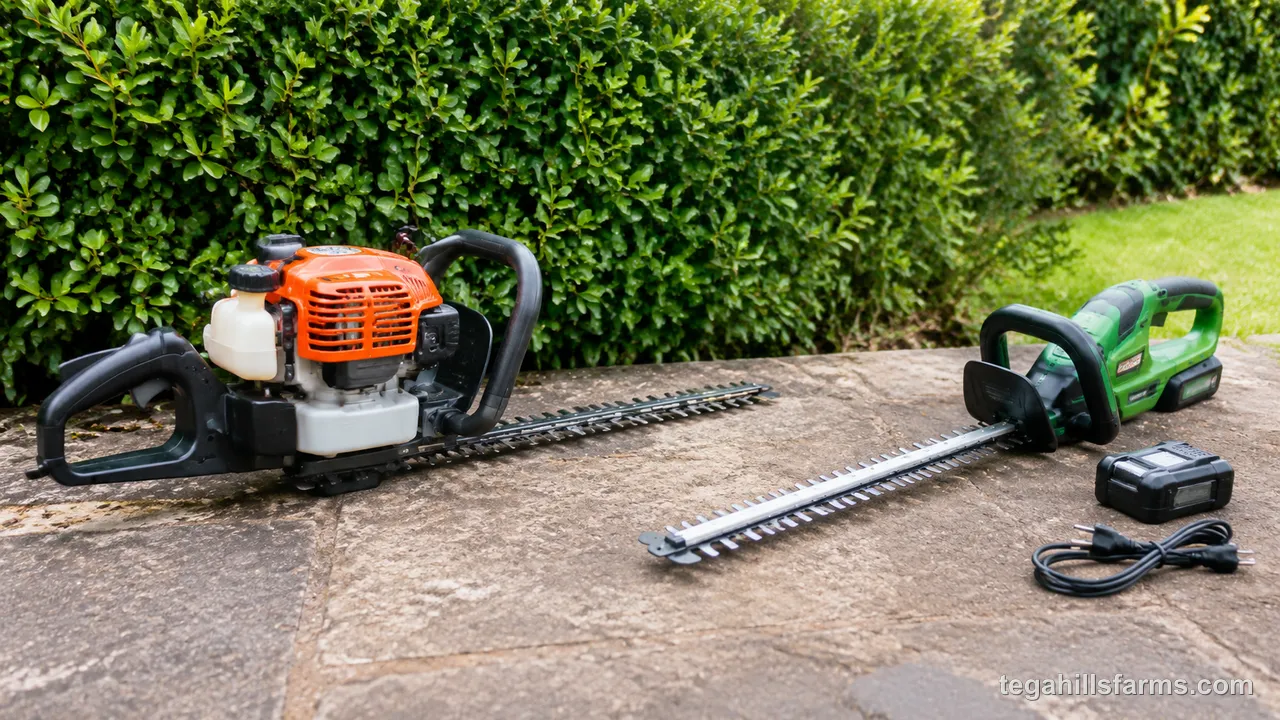
Gas models carry their own fuel and work anywhere. Battery models trade some endurance for easy starts and low noise. Corded models give steady power but keep you tied to an outlet.
Three comparison points matter most to a buyer: cutting power, noise and handling, and upkeep. Power type is only one part of the decision, so read how to choose a hedge trimmer for the rest of what matters.
Which Gives You More Cutting Power: Gas or Electric?
Gas models handle thick, overgrown growth best, battery and corded models cover routine shaping well, and voltage and amperage ratings show where the line falls. The three sections below take those in order.
How Gas Models Handle Thick, Overgrown Growth
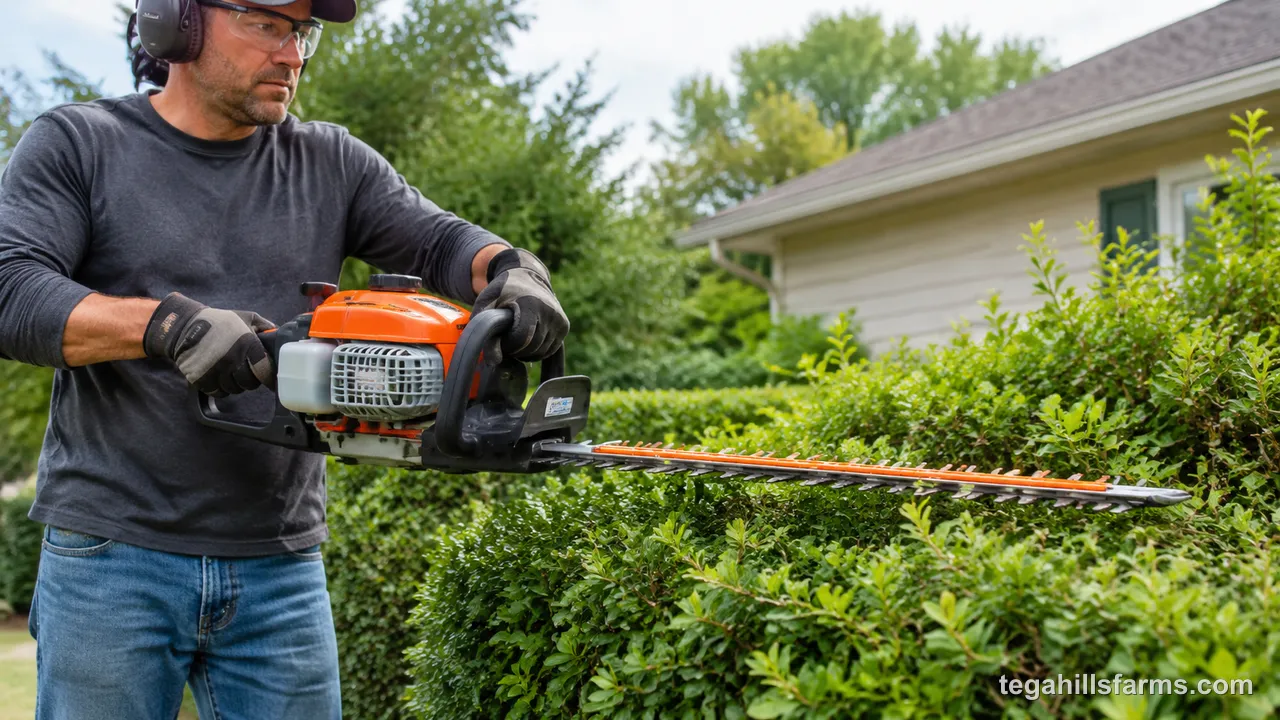
Engine-driven trimmers are the usual pick for dense, woody hedges, and working crews back that up. In a GreenPal survey, over 85% of lawn care pros preferred gas hedge trimmers.
The reason is sustained output. An engine keeps the blades moving through stems that would bog down a smaller electric motor. You can also refuel and keep cutting, with no waiting on a charge.
That said, the survey reflects a preference among people who cut hedges for a living. It is not a measured cutting test. For a homeowner with a tidy hedge, the power gap may never show up.
If your hedge has gone a season or two without a trim and the stems are thick, gas is the safer bet. Otherwise you may be paying for power you won’t use.
What Battery and Corded Models Can Realistically Cut
Battery and corded trimmers do well at routine shaping and moderate-thickness growth on typical residential hedges. They start instantly and stay consistent through a normal trimming session.
They start to struggle when branches get thick and woody. A weaker motor slows down, the blades chatter, and you end up making extra passes.
A higher-voltage battery platform narrows that gap. The ECHO DSHC-2600, for example, runs on a 56V battery rated at 5.0Ah. That puts it well above entry-level battery tools for tougher cuts.
Corded models avoid battery limits altogether. Their ceiling is the motor rating, and that is what the next section decodes.
How Much Voltage and Amperage Do You Need?
Voltage sets how hard a battery trimmer can work through branch thickness, while amperage does the same job for corded models. Higher ratings mean thicker cuts.
For thin branches up to ½ inch, look for 20 to 40 volts or 3 to 5 amps. For branches up to ¾ inch, aim for at least 40 to 80 volts or at least 4 to 7 amps. The thickest growth and professional use call for 80 volts or more than 7 amps.
Battery platforms follow a similar pattern. A 36V to 40V platform suits big jobs with more power and runtime, while 18V to 20V suits light, small tasks.
Amp-hours, like the 5.0Ah on the ECHO battery, describe capacity. More amp-hours means longer runtime at the same voltage, not more cutting force. Once you know the rating you need, what to look for in a hedge trimmer comes down to blade length, handle design and similar details.
Which Is Quieter and Easier to Handle?
Electric trimmers win on comfort, and the difference shows up in noise, weight and fumes. Each one affects how long you can work without getting tired or annoyed.
How Loud Is Each Type to Work With?
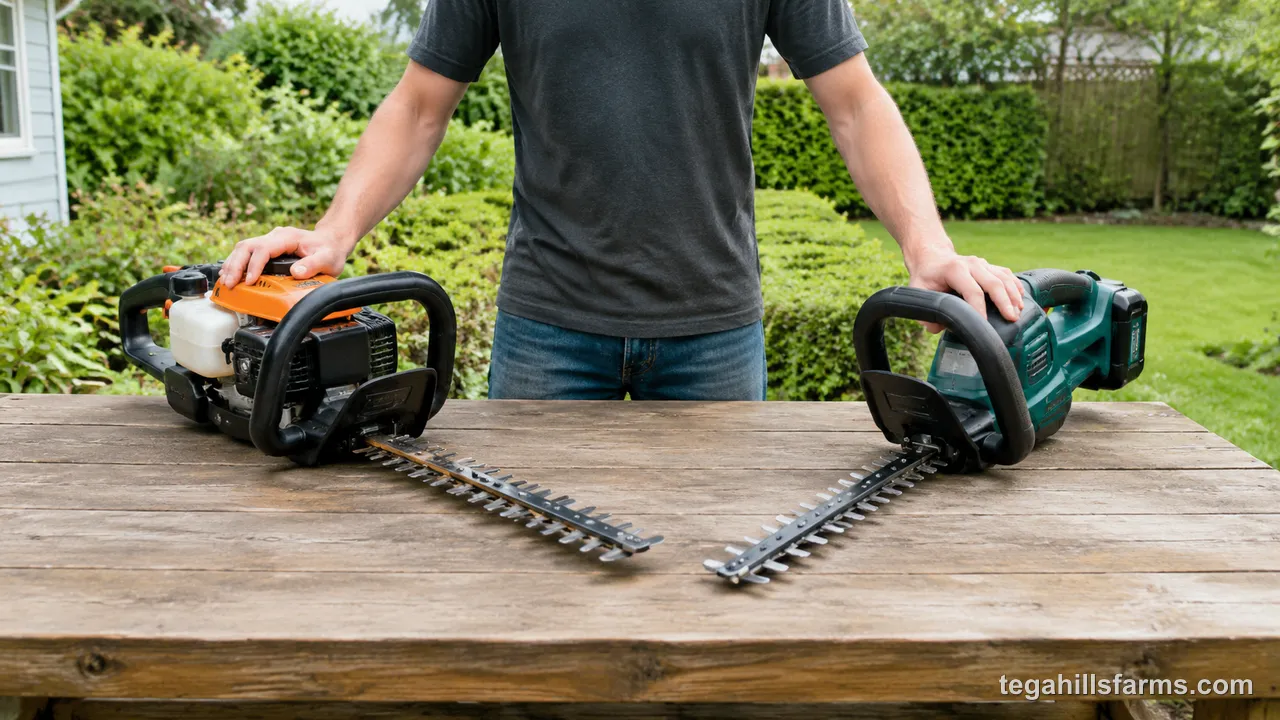
Gas models are noticeably louder, and battery models are calmer for early mornings and close neighbors. Corded models sit in the same quieter camp as battery ones.
An engine roars the whole time you hold the throttle. That wears on you during a long session, and it carries across property lines.
An electric motor hums instead. You can hold a conversation nearby, and you can trim without worrying about waking anyone.
If your hedge borders a neighbor’s bedroom window, this alone can settle the choice.
Does Weight Change How Long You Can Trim?
Electric trimmers generally feel lighter, and gas trimmers feel heavier because of the engine and fuel. That difference turns into arm fatigue on long or overhead cuts.
A heavy tool held at shoulder height tires your arms and shoulders fast. Your cuts get sloppier as you tire, and the top of the hedge is where it shows.
A lighter electric model lets you work longer before you need a break. It also makes it easier to keep the blade level.
Gas models make sense if the power matters more than the extra weight. Just plan on more breaks for tall hedges.
What About Fumes and Exhaust?
Gas trimmers produce exhaust and a fuel smell, while electric models make none at the point of use. That matters most in tight spaces or near open windows.
Trimming a hedge along a narrow side yard with a gas machine means breathing exhaust in a confined pocket. The smell also drifts toward the house if windows are open.
Electric models avoid that completely. You can work right beside a patio or a window without clearing the air afterward.
In an open yard, the fumes fade quickly and rarely bother anyone. The difference is real mostly where air doesn’t move.
How Much Upkeep Does Each Type Need?
Upkeep runs from heaviest to lightest in this order: gas, battery, corded. What each asks of you can matter more than the spec sheet.
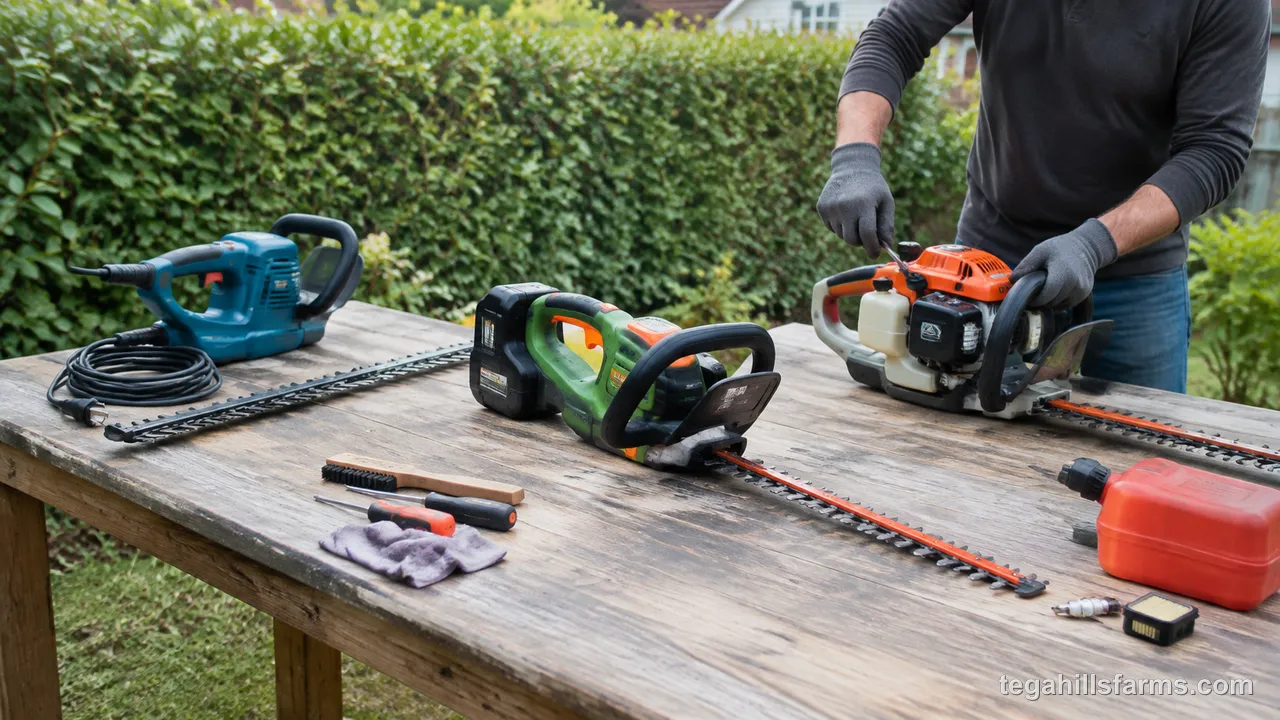
Gas: Fuel, Spark Plug and Starting Reliability
A gas hedge trimmer needs mixed fuel, a spark plug that stays in good shape, and a clean air filter. Skip those and starting gets unreliable.
Most hard-start problems trace back to stale fuel or a fouled plug. A trimmer that sat all winter on old mix is the classic case. When your hedge trimmer won’t start, those are the first things to check.
If you want a machine that starts every time, gas asks for steady habits. Fresh fuel, a seasonal plug check and a clean filter keep it dependable.
Owners who don’t mind small-engine routines handle this easily. Anyone who wants to pick up a tool and go will find it a chore.
Battery: Charging, Storage and Replacement Cells
A battery hedge trimmer needs very little routine work. The real upkeep sits in charging habits, seasonal battery storage and eventual battery replacement.
You charge it, use it and put it away. There’s no fuel to mix and no spark plug to swap.
The battery is the part that ages. Leaving a lithium battery drained or stored somewhere extreme shortens its life. Eventually the cells wear out and you will need a replacement.
That replacement cost shapes how long the tool stays useful, and the longer answer to how long do hedge trimmers last depends heavily on how you treat the battery.
Corded: What Stays Simple
Corded trimmers need the least upkeep, with no fuel and no battery to manage. A couple of small checks cover almost everything.
Look over the cord for nicks, cuts or worn spots before each use. A damaged cord is a safety problem and should be replaced, not taped.
Wipe the blades clean after trimming so sap doesn’t build up. A light coat of blade oil keeps them moving smoothly.
That is about it. For owners who value simplicity above all, corded is hard to beat.
Which Type Fits Your Yard and Workload?
Three situations decide the type: short hedges at home, long rows on big lots, and daily professional work. Each one favors a different power source.
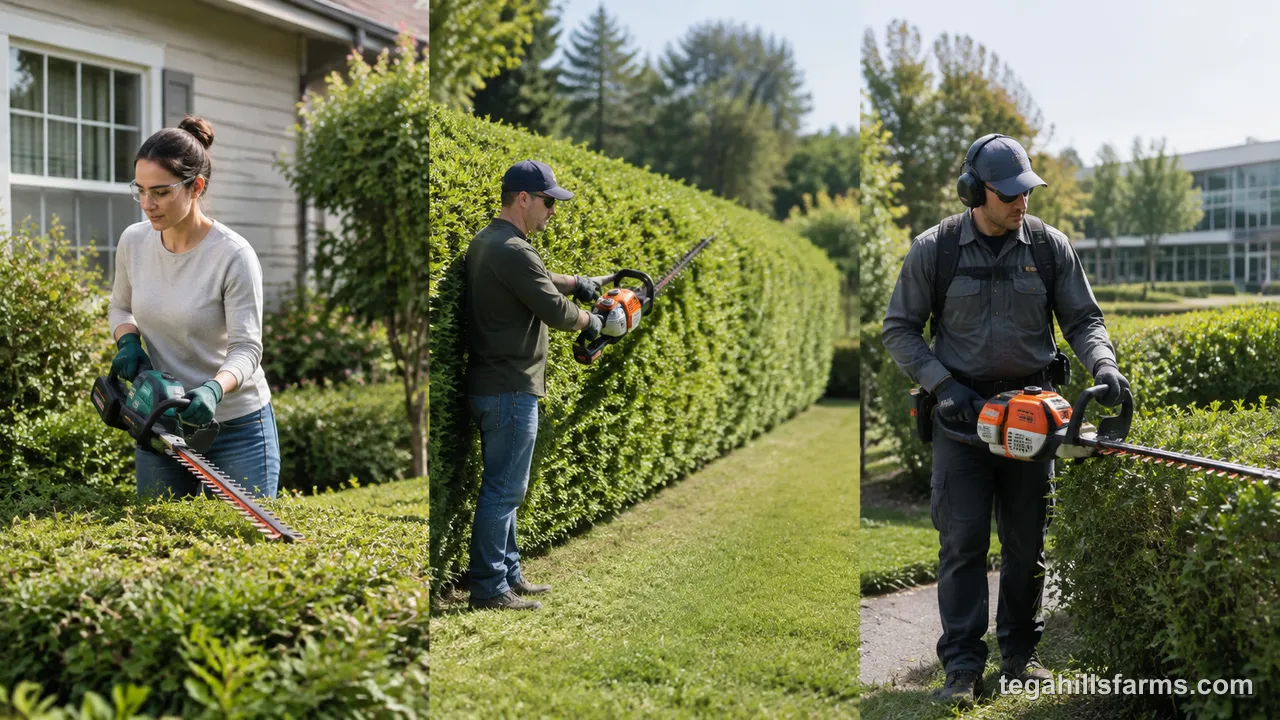
Small Suburban Hedges
Battery or corded models usually suit short hedges and occasional trims. They’re light, they start easily, and they need little storage fuss.
You don’t need to store fuel in the garage or remember a winter routine. You grab the tool, trim for a short session and put it away.
A cordless hedge trimmer gives you freedom to move around the yard. A corded one is fine if your hedges sit close to an outlet.
First-time users should learn how to use a hedge trimmer before the first cut. Good technique matters more than power on a small, tidy hedge.
Large Properties and Long Hedge Rows
Gas wins on long runs and thick growth because you can refuel and keep going. A battery or corded setup can still work with the right planning.
On a big property, run time becomes the limit. A gas tank takes a minute to top off, while a battery needs a charge.
Spare batteries solve that for battery users. Carry a second one charged and swap when the first runs down. For corded models, a long outdoor-rated extension cord extends your reach, though you have to manage the cord around the hedge.
Pick based on how much hedge you cut in one sitting, not just how big the yard looks.
Professional Landscaping Work
Most professionals reach for gas, and they value sustained power, quick refueling and durability under daily use. Over a full day of cutting, those matter more than weight or quiet.
The GreenPal survey puts battery preference among lawn care pros at less than 15%. Some crews are moving toward battery, especially for quieter residential work, but gas remains the default.
Pro-oriented lines from STIHL, Redmax, EGO and Milwaukee reflect that split between engine and battery platforms.
Crews also ask are expensive hedge trimmers worth it, and for daily use the answer often leans yes. A tool that runs every day earns back a higher build quality.
How Do Gas, Battery and Corded Models Compare at a Glance?
Gas wins on raw power and run time, battery wins on convenience, and corded wins on simple upkeep. The table puts all three side by side across the same criteria.
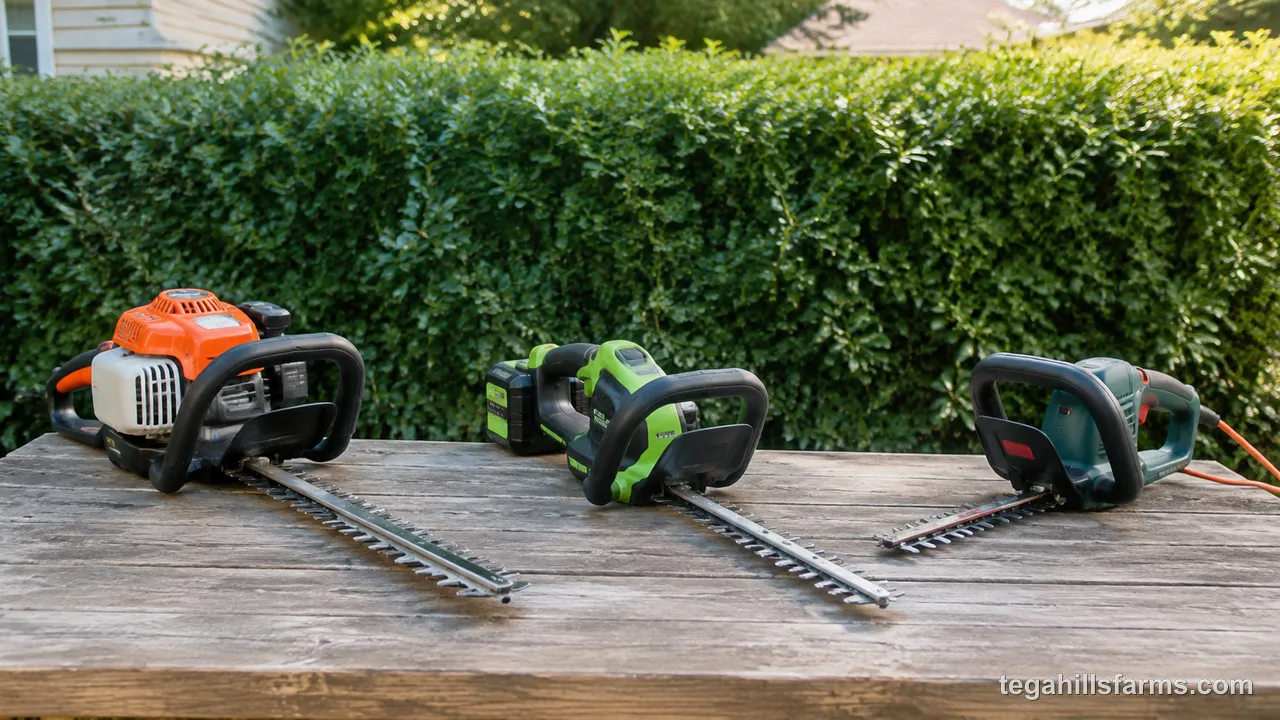
| Criteria | Gas | Battery | Corded |
|—|—|—|—|
| Cutting power | Highest, handles thick growth | Good for moderate growth, better on high-voltage platforms | Good for moderate growth, set by motor rating |
| Noise | Loudest | Quiet | Quiet |
| Weight | Heaviest | Light | Light |
| Upkeep | Fuel, plug, filter | Charging and battery care | Cord and blade checks |
| Run time | Refuel and continue | Limited by battery, extendable with spares | Unlimited near an outlet |
| Best fit | Big yards and pros | Small to medium yards | Short hedges near power |
Choose gas if you have thick, overgrown hedges or long rows. Choose battery if you want quiet, easy starts and freedom to move around a typical yard. Choose corded if your hedges sit near an outlet and you want the least upkeep.
Budget can tip a close call, and the guide on how much does a hedge trimmer cost sets realistic expectations for each type.
A hedge is often thickest and wettest right after a rainy stretch, and every leaf drips onto your hands, the housing and the cord. Wet leaves also make footing slick on a slope or a ladder. If you’re standing at a soaked hedge with an extension cord already run out, is it actually safe to start cutting?
Can You Trim Wet Bushes With an Electric Hedge Trimmer?
Corded trimmers should stay off wet bushes, and battery models are safer but still better used once the foliage dries. Waiting is the right call for both.
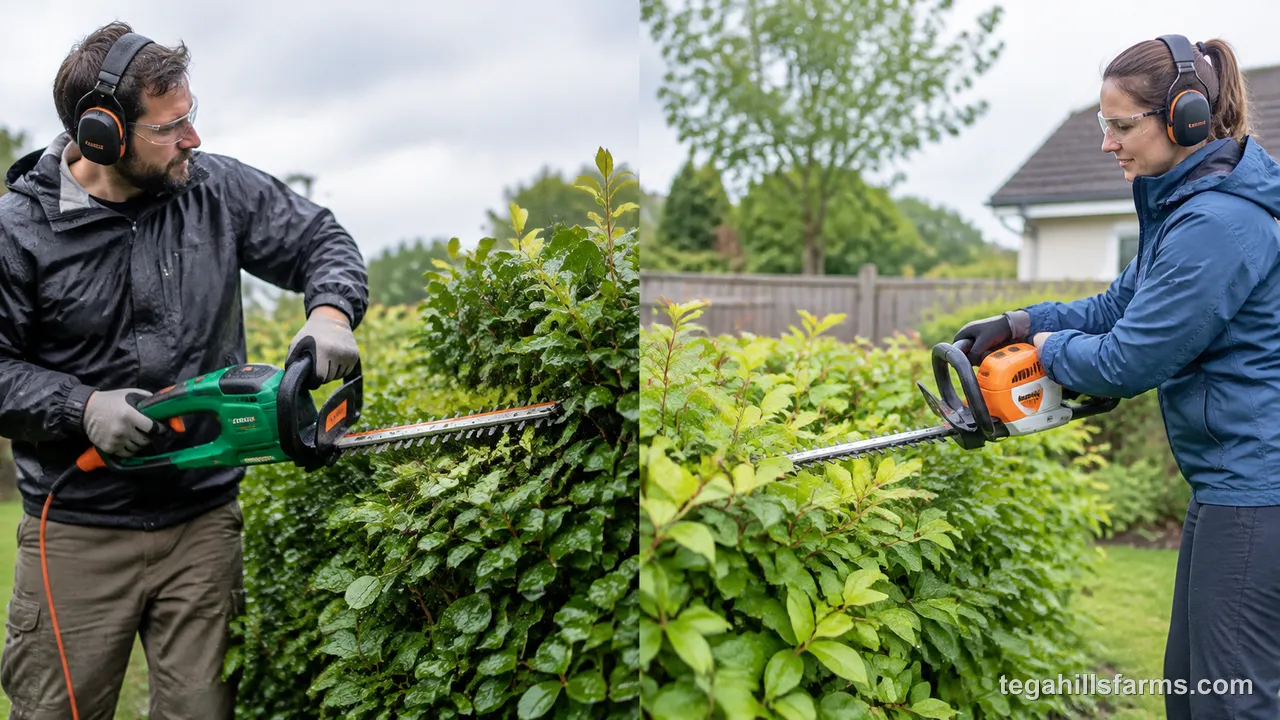
The corded risk is electric shock. Water, a live cord and a cutting blade are a bad mix, and a nicked cord in damp grass raises the danger.
Battery models carry far less shock risk because there is no mains cord. But wet foliage still makes slipping a concern, and the tool is not meant to sit in standing water.
Wet clippings also clump and stick to the blades. That slows the cut and leaves a ragged finish. Dry growth cuts cleaner and keeps the blades from gumming up.
Wait for a dry afternoon when you can. The hedge will cut better, and you’ll avoid the risks. For more habits worth building, hedge trimmer safety tips cover the basics.
Could Local Rules Affect Gas Hedge Trimmer Use?
Yes, some areas restrict gas-powered landscaping equipment or set quiet-hour rules. Checking before you buy can prevent a wasted purchase.
Restrictions vary a lot by town, county and community. Some limit the hours you can run noisy equipment, and some homeowner associations set their own rules. A few places go further and limit gas-powered tools during certain times or seasons.
Because the rules differ so much, don’t assume your area is the same as the next one over. Look up your local ordinance or ask your HOA before choosing gas.
If rules in your area limit engine tools or noise, electric becomes the practical choice. A quiet battery trimmer works within almost any quiet-hour rule. It’s a short check that can save you from returning a tool.
How Do You Mix Fuel and Store a Gas Trimmer Without Damage?
Gas trimmers stay reliable when you use fresh fuel at the manual’s ratio and prepare them for off-season storage. Get either wrong and hard starts follow.
Both points are where owners slip most often, and they matter whichever way you weigh gas storage against battery storage.
Mixing Fuel the Right Way
Follow the manufacturer’s fuel-to-oil ratio exactly, and use fresh fuel. The wrong mix or stale fuel is behind many engine problems.
Check the manual for the correct ratio and use the oil type it recommends. Don’t guess or copy a ratio from another tool, because different engines call for different mixes.
- Mix only what you’ll use in a month or so.
- Measure the fuel and oil, then shake the container to blend them.
- Label the container with the date.
Too little oil wears the engine, while too much causes smoke and fouling. Stale fuel gums up the carburetor and makes starting difficult.
Storing Gas and Battery Models Off-Season
Gas trimmers need fuel handled before winter, while battery models need the battery stored properly. Both are simple if you do them before putting the tool away.
For gas, either run the tank dry or add a fuel stabilizer to the mix, following the product’s directions. Fuel left sitting untreated is what leads to a gummed carburetor and a trimmer that won’t start in spring.
For battery models, remove the battery and store it indoors, away from freezing cold and heat. Follow the manual for the right charge level to leave it at.
Skipping either step shortens the life of the tool. Ten minutes in the fall saves you trouble when the hedge needs trimming again.
Gas vs Electric Hedge Trimmer FAQs
What is the difference between a hedge trimmer and a hedge cutter?
They’re essentially the same tool. “Hedge cutter” is just another name for a hedge trimmer, used more in some regions. Both describe a powered tool with a reciprocating blade built to shape hedges and shrubs, whether the power source is gas, battery or a cord.
Can a string trimmer do the same job as a hedge trimmer?
Not well. A string trimmer is built for grass and light weeds, not for shaping woody hedges. Its spinning line leaves ragged cuts on branches. Some brands sell attachments that add a hedge blade, but a dedicated hedge trimmer gives cleaner, safer results.
Will a battery from another tool in the same brand fit my hedge trimmer?
Often, yes. Many brands use one battery platform across their tools, so a battery from a blower or trimmer may fit. Check that the voltage matches and confirm compatibility in the manufacturer’s manual before buying a bare tool.
Can I use any extension cord with a corded hedge trimmer?
No. Use a cord rated for outdoor use and heavy enough for the tool, and check the manual for the recommended type. A cord that is too light can overheat. Keep it clear of the blades and inspect it before each use.








Write Your Review
No reviews yet. Be the first to share your experience!