How to Choose a Hedge Trimmer: Blade Length & Features Guide
Choosing a hedge trimmer comes down to four decisions: a blade length that matches your hedge size, a power source that fits your yard and runtime needs, a blade and shaft design that suits how you cut, and comfort and safety features that keep you in control for the whole job. If you get those four right, the machine fits the hedges you actually own rather than the ones pictured on the box.
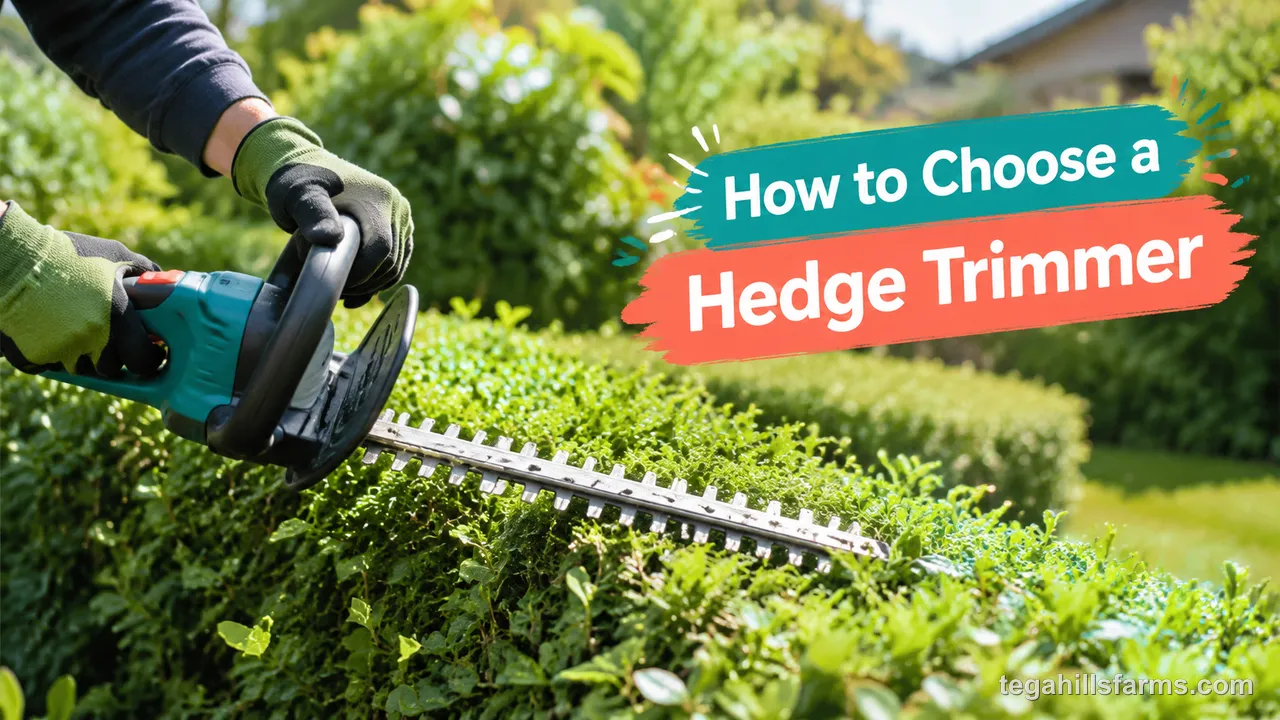
The specs that decide the choice are blade length, power type, whether the blade cuts on one side or both, total weight, and how easy the teeth are to keep clean and sharp. Each one changes how many passes you make, how far you can reach without a ladder, and how tired your arms are by the last stretch of hedge.
The common mistake is buying for power when the real limit is weight and reach. A heavy, long-bladed gas model can outcut a small battery unit on paper, but if you can’t hold it level above shoulder height, the top of the hedge comes out uneven and the job takes longer.
Before shopping, walk your property and note three things: the tallest hedge, the longest continuous run, and the distance to the nearest outdoor outlet. Those three facts rule out most of the wrong trimmers before you compare a single model.
What Blade Length Is Right for Your Hedges?
Size the blade to the hedge you trim most often: a shorter blade gives precision on small, shaped shrubs, while a longer blade covers wide, tall runs in fewer passes. Length also changes weight and balance, because every extra inch of bar sits farther from your hands and pulls harder on your wrists. The right size is the shortest blade that still reaches across your typical hedge comfortably. If you haven’t narrowed down a type yet, comparing the best hedge trimmers across sizes first makes the blade decision easier.
When Is an 18-Inch Blade the Better Choice?
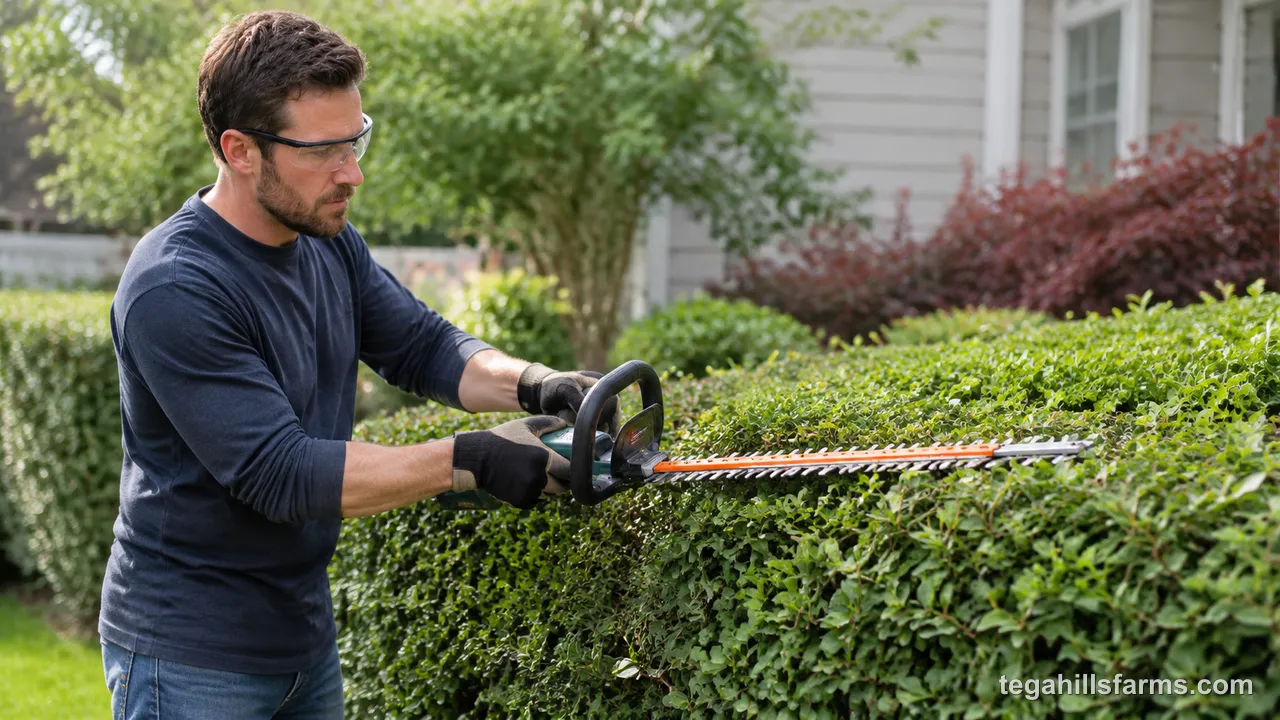
An 18-inch blade is the better pick when your hedges are small, rounded or tightly shaped, or when they sit close to walls, fences and windows where a long bar is hard to steer. The shorter bar puts less weight out in front of the handle, so you can make small corrections and follow curves without the tip drifting.
That control matters most on boxwood globes, low borders along a walkway and foundation shrubs under windows. On plants like these, one sloppy pass leaves a gouge that can take a season to fill back in.
The trade-off is coverage. A short blade needs more passes across a long or wide hedge, which turns a quick trim into a slow one and adds more overlap lines to the finished surface. If your yard is mostly compact shrubs, the best 18 inch hedge trimmers are worth comparing before you step up in size.
Why Choose a 22-Inch Blade for Most Home Yards?
A 22-inch blade suits most home yards because it covers a typical privacy hedge in a reasonable number of passes and still stays manageable enough to shape smaller shrubs on the same afternoon. It handles a mixed yard without forcing you to own two trimmers.
The extra length over a short blade lets you sweep across the top of a hedge in one stroke more often. Fewer overlapping passes keep the cut flatter and more even. Balance still sits close enough to the handle that holding the trimmer at chest height for a full row doesn’t wear down your shoulders as quickly as a longer bar would.
This size falls short on very tall or very wide growth, where you end up stretching to reach the far side and losing control at the tip. For a suburban lot with a mix of foundation plantings and one or two medium hedges, I’d start with this size.
When Do You Need a 24-Inch Blade or Longer?
A 24-inch blade or longer is the right tool when hedges are wide, tall, or run continuously along a property line, because the extra length reaches across the top and down the far face in fewer passes. On a long row, fewer passes mean less time with the trimmer raised and a straighter, more even top.
The cost is weight and leverage. The farther the tip sits from your hands, the more it pulls downward, and the harder it is to hold the blade steady for detailed shaping. On small rounded shrubs, a long bar also feels awkward, since you only use part of it and the extra length gets in the way near walls and beds.
Long blades make the most sense when a single border or screening hedge defines your yard, not scattered plantings. If that describes your property, the best 24 inch hedge trimmers are built for exactly that kind of coverage.
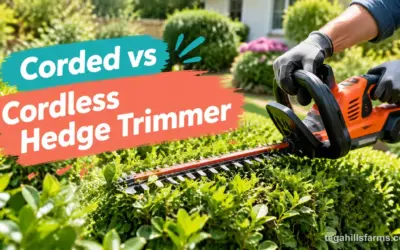
How Do You Choose Between Gas, Battery, and Corded Electric Power?
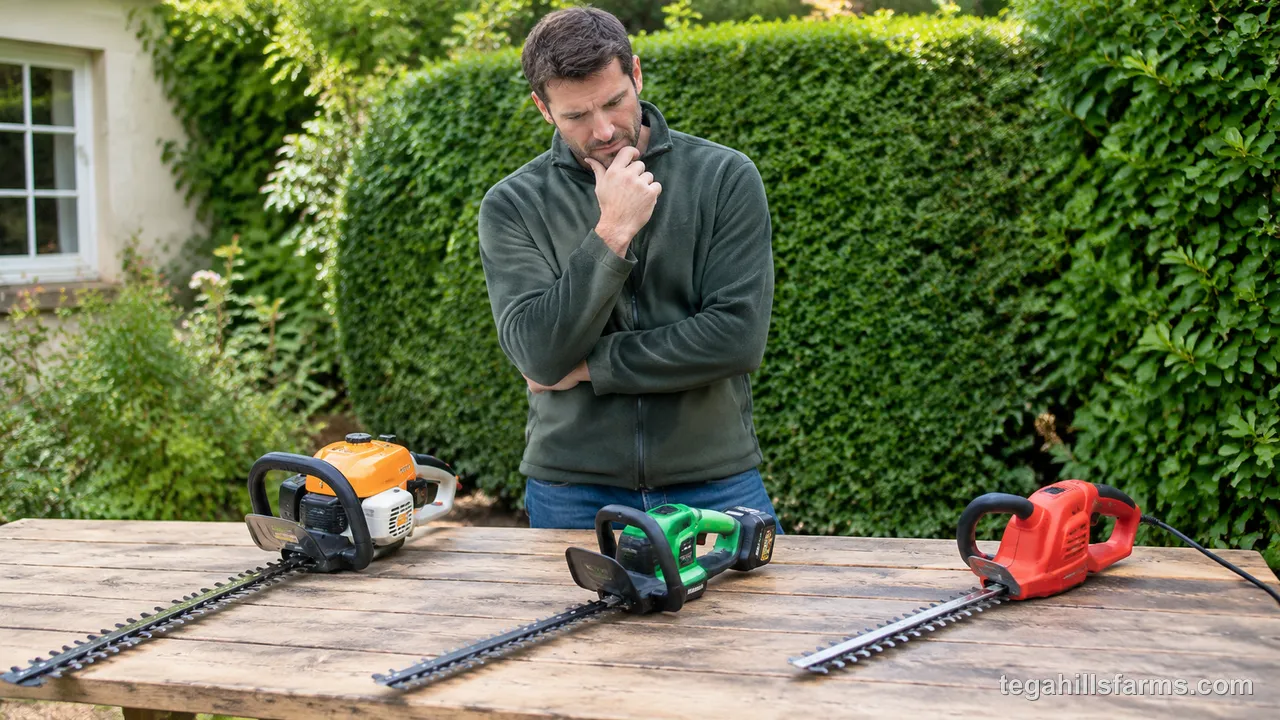
Match the power source to how much hedge you cut in one session and how far that hedge sits from an outlet, because those two factors decide whether fuel, a battery or a cord makes sense. Raw cutting power matters less than most people expect for regular maintenance trimming, since new growth is soft. It starts to matter when hedges are overgrown and woody. Noise and upkeep also differ sharply between the three types, and both affect how often you’ll actually pull the trimmer out.
Is a Gas Hedge Trimmer Worth It for Large or Thick Growth?
Gas is worth it when you have long runs of hedge or overgrown, woody growth, because an engine doesn’t fade the way a draining battery does, and refilling the tank takes a minute. A model with a 25.4 cc engine runs for as long as there’s fuel in the tank, so finishing a long property line doesn’t depend on how many charged batteries you own.
The trade-offs are noise, weight and upkeep. Most hedge trimmer engines are two-stroke, which means you mix oil into the fuel. Fuel left sitting over winter can gum up the carburetor and make spring starts difficult. Gas units also run louder, and that matters on a tight suburban street or early on a weekend morning.
If you trim acreage or reclaim neglected hedges every year, the best gas hedge trimmers still justify the extra maintenance.
When Does a Battery Hedge Trimmer Make More Sense?
A battery trimmer makes more sense when your hedges are normal home size and you value instant starts, low noise and no fuel to store. You press the trigger and it runs. That removes the pull-cord and fuel-mixing chores that keep some homeowners from trimming as often as the hedge needs.
Runtime is the main limit, and it depends on the battery’s capacity and how hard the motor works. Thick growth drains a pack faster than light maintenance cuts. The smartest buy is often a trimmer on a battery platform you already use for a string trimmer or blower, because shared packs let you swap mid-job and you avoid paying for another battery system.
Storage also matters. Lithium-ion packs hold up better when kept indoors over winter rather than in an unheated shed. For most suburban yards, the best cordless hedge trimmers cover the job without the upkeep that comes with gas.
Is a Corded Electric Hedge Trimmer Enough for a Small Yard?
A corded electric trimmer is enough when your hedges are small and sit within easy reach of an outdoor outlet. It is light and quiet, needs no fuel or charging, and never runs out of power halfway down a hedge.
The cord is the trade-off. Every pass has to account for where the cord lies, and the biggest risk is cutting through it, so keep it draped over your shoulder and trailing behind you. Use an outdoor-rated extension cord of the gauge the manufacturer specifies, and plug into a GFCI-protected outlet.
Once the hedge sits far from the house or wraps around the property, moving the cord slows you down more than swapping a battery would. For a townhouse or a small lot with foundation shrubs, those limits rarely come into play.
Which Blade and Shaft Design Fits Your Cutting Style?
The design should follow the shape of your hedges and the height you cut at, since those decide whether you sweep in both directions at chest level or work from below with extended reach. A trimmer that feels natural at waist height can be the wrong tool for a hedge you have to reach over. A design mismatch shows up as uneven tops and sore shoulders, not as weak cutting, so it’s easy to blame the wrong thing.
Should You Choose a Single-Sided or Double-Sided Blade?
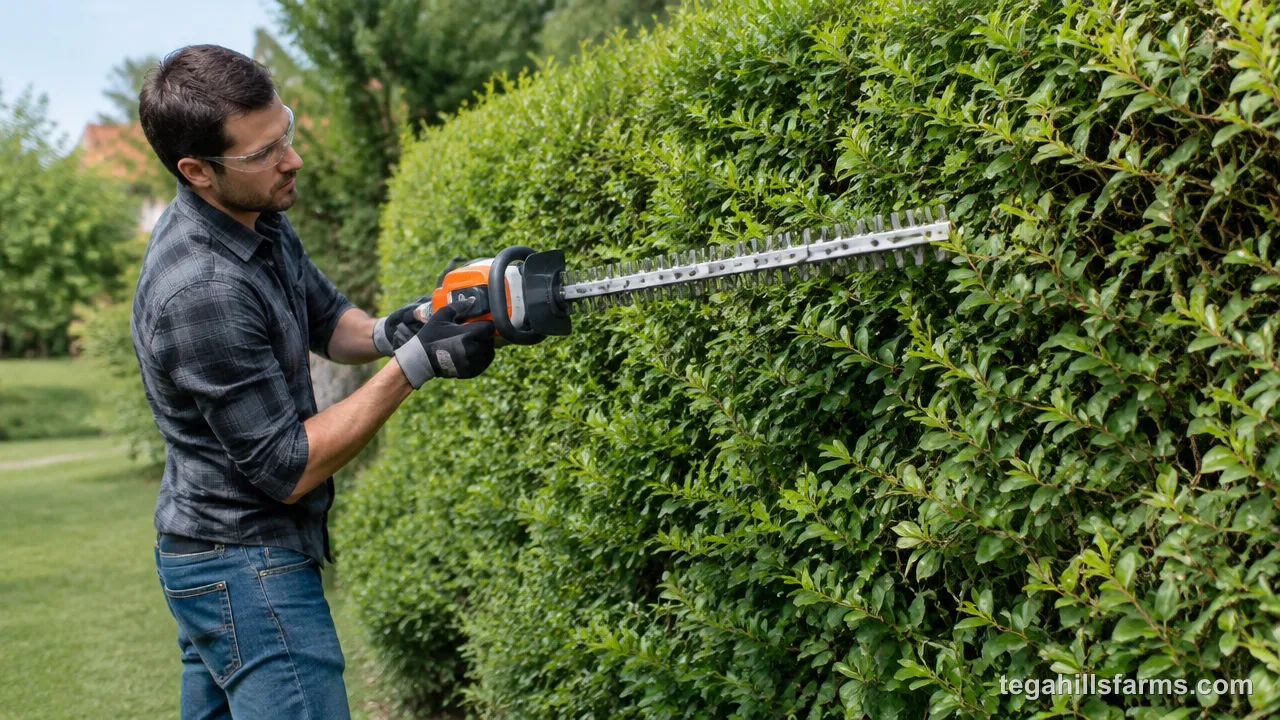
For most homeowners, a double-sided blade is the better choice. It cuts on both the forward and backward stroke, so you can sweep back and forth across a hedge face without turning the trimmer around. That cuts down wasted motion on flat tops and long sides, which is where most trimming time goes.
A single-sided blade has one cutting edge and a solid back. That makes it easier to steer along a straight line, and it keeps the dull side toward your body, which helps when you’re shaping precise formal edges or working close to a wall.
Neither blade style changes how thick a branch the trimmer can take. Cutting capacity depends on tooth spacing and motor strength. If overgrown wood is your main problem, look at the best hedge trimmers for thick branches instead of choosing on blade style alone.
Do You Need a Shafted Trimmer or an Articulating Head?
You need a shafted trimmer when the top of your hedge sits above shoulder height. The extension puts the blade where your arms can’t, and you stay on the ground. An articulating head is the add-on that matters when you want a flat, level top, because it lets you angle the blade parallel to the hedge instead of cutting at a tilt.
Reach comes with leverage. A 51-inch shaft moves the blade well away from your hands, so the head feels heavier and small wobbles grow larger at the tip. A shoulder strap or harness helps carry that load on long sessions.
On anything you can reach comfortably from the ground, a standard handheld trimmer is faster and easier to control. If a ladder is the only other way to get to your hedges, the best pole hedge trimmers are the safer route, since a running trimmer held overhead on a ladder is both unstable and tiring.
What Features Make a Hedge Trimmer Easier and Safer to Use?
The features that matter most are the ones that keep the blade steady in your hands and keep the teeth cutting cleanly, because fatigue and dull, sticky blades cause more ragged hedges than a lack of power. Blade speed and length get the most attention. Daily use is decided by how your arms feel at the end of a long row and how much effort the trimmer needs between jobs.
How Much Does Weight and Vibration Affect Your Control?
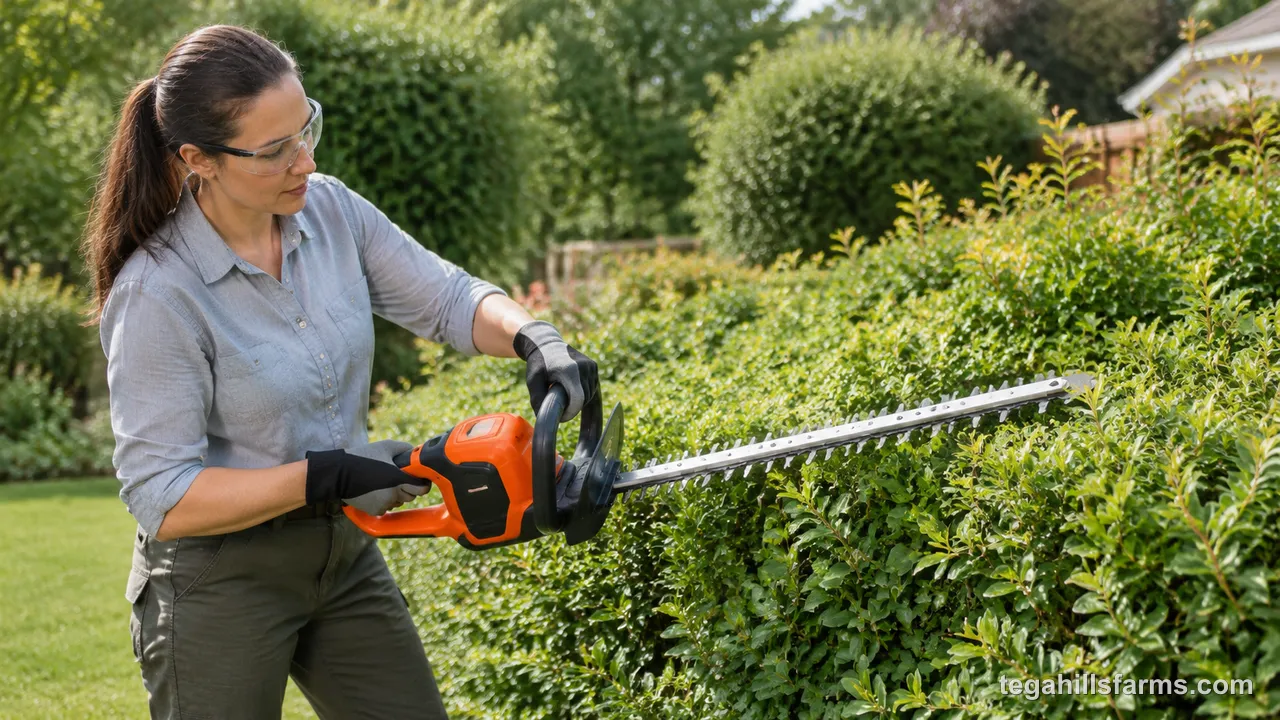
Weight and vibration affect control more than most buyers expect, because you hold a trimmer out in front of you, often at or above chest height, for the entire job. A heavy or nose-heavy machine pulls the blade down as your arms tire, and that shows up as a top that dips and rises along the row.
Balance matters as much as total weight. A trimmer with its battery or engine sitting near the rear handle feels lighter in use than a model of the same weight with more mass toward the tip.
Vibration adds a second kind of fatigue. It numbs your hands, your grip loosens, and your cuts lose precision. Gas engines vibrate more than electric motors, so anti-vibration mounts are worth having on a gas model. If you can, hold the trimmer at shoulder height in the store for a minute before you buy it.
Which Safety and Comfort Features Are Worth Paying For?
The safety features worth paying for are a two-hand switch that stops the blade when either hand lets go, a fast blade brake, a full hand guard in front of the front handle, and a tip guard that protects the end of the blade when you brush a wall or the ground.
On the comfort side, a rotating rear handle pays off most. It lets you turn the blade sideways for vertical cuts while keeping your wrist straight, which reduces strain on long side passes. A blade cover for storage and transport prevents cuts when you reach into a crowded shed.
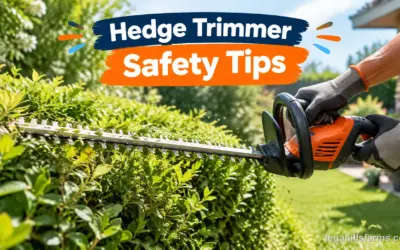
None of these features make a trimmer cut better. They lower the risk of an accident in the moments when you’re tired or off balance. Good gear still works best alongside the basic hedge trimmer safety tips: eye and hearing protection, firm footing, and keeping cords and bystanders out of the cutting path.
What Maintenance Features Keep the Blades Cutting Clean?
Clean cuts depend mostly on teeth that stay sharp and free of sap. Look for blades that are easy to reach for cleaning and lubricating, and a design that lets you sharpen or replace them without special tools.
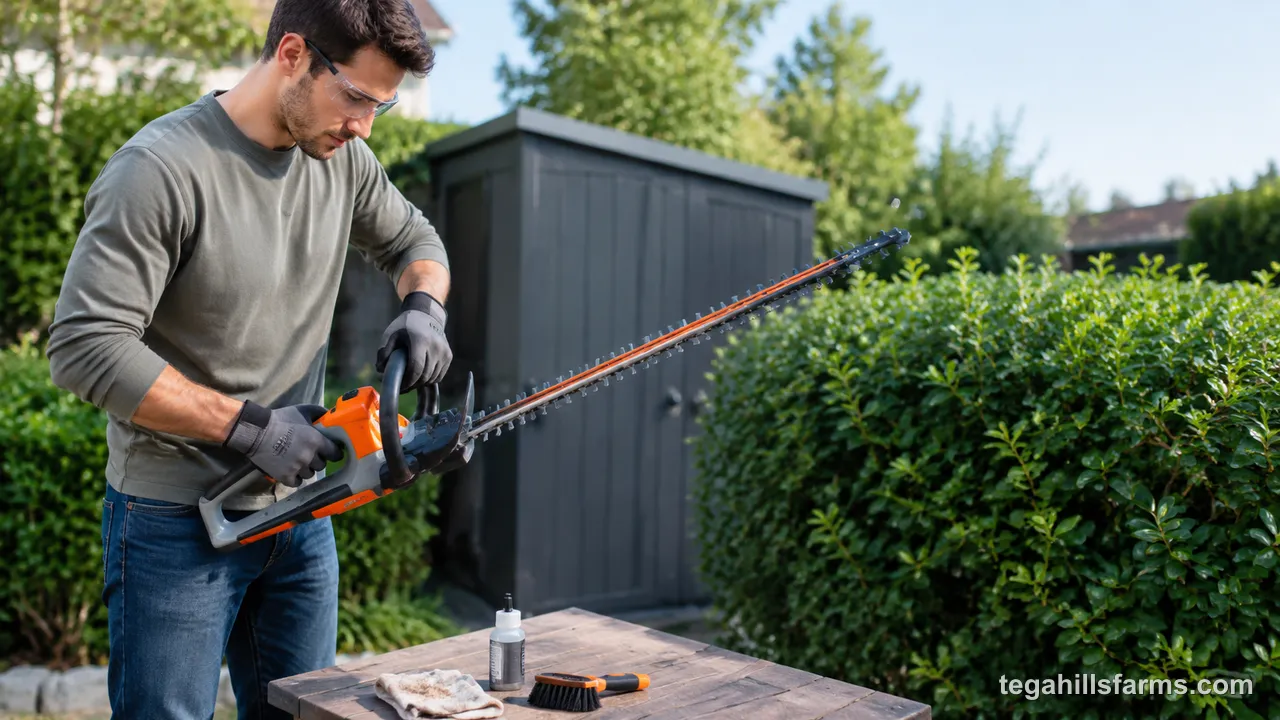
Sap and resin build up on the blades and increase friction. That slows the stroke and tears stems instead of slicing them, and torn ends turn brown and leave the hedge looking ragged. Wiping the blades and applying a lubricant spray after each session prevents most of that buildup.
Blade access is the feature that decides how often maintenance actually happens. A blade that comes off with a few screws makes sharpening with a flat file a short job rather than a project. On gas models, a tool-free air filter cover and an easy-to-reach spark plug do the same for engine upkeep.
How Do You Match a Hedge Trimmer to Your Yard and Budget?
Start from the hedges you actually own, then pick the budget tier that covers that workload, since a small lot with formal shrubs and a rural property with overgrown screening hedges call for different machines. Spending more buys runtime, durability and reach, but only up to the point where your yard can use them. Past that point, you’re paying for capacity that sits idle in the garage.
How Do Lot Size and Hedge Type Narrow Your Options?
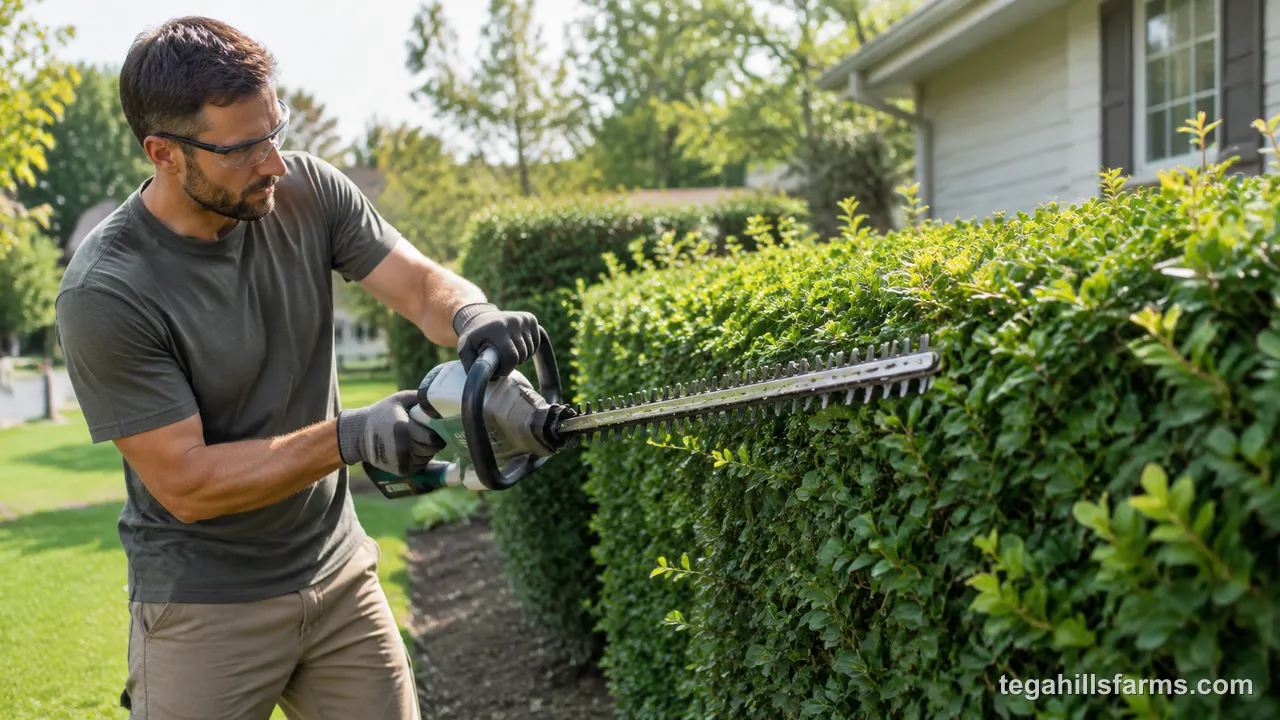
On a small suburban lot with low formal hedges, a light corded or battery trimmer with a short-to-medium blade covers everything and stores easily. A mid-size yard with a privacy hedge or two fits a battery model with a medium blade, ideally on a battery platform you already own.
Acreage changes the picture. Long property-line hedges and overgrown screening plantings reward a longer blade and either gas or a battery system with spare packs, because the job lasts longer than one charge.
Hedge type matters as much as lot size. Formal boxwood and privet need precision and a flat top, so balance and blade control come first. Informal or neglected growth needs cutting capacity and reach instead. When height is the main obstacle rather than length, the best hedge trimmers for tall hedges add the reach a standard blade can’t.
What Should You Expect to Spend by Tier?
Budget trimmers handle light, regular trimming on small hedges. Mid-range models add stronger motors, better-quality blades and more runtime. Premium models bring heavier-duty construction and the reach or engine capacity that large properties need.
The tier also shapes longevity. Budget units tend to use lighter housings and simpler blades that dull faster, so they suit owners who trim a few times a season and store the tool carefully. Mid-range models tend to strike a sensible balance between durability and weight for typical home use. Premium gas and pro-grade battery trimmers are built for frequent use, with replaceable parts that extend their service life.
Battery models add one more decision: a bare tool versus a kit with battery and charger. That choice changes the upfront spend considerably if you’re new to a platform. Kit contents, battery size and blade length explain most of the gap in how much a hedge trimmer costs at each tier.
A trimmer that cut beautifully in May can refuse to start the next spring because fuel sat in the carburetor all winter, or lose runtime because its battery spent months in a freezing garage. Storage, parts availability and blade replacement rarely show up on the box, yet they decide whether the machine is still worth using a few seasons on. Ignore them, and the trouble usually shows up on the day the hedge is most overgrown and the trimmer is the one tool you can’t do without.
Rarely Mentioned Details That Decide Long-Term Satisfaction
The details that decide long-term satisfaction are mostly about ownership, not cutting: whether replacement blades and parts are easy to buy, how the trimmer stores, and how its fuel or battery survives the off-season. A trimmer that cuts well but needs a hard-to-find blade or a carburetor cleaning every spring becomes the tool you avoid.
Parts support is the first thing to check. Brands with a dealer network or easy online parts ordering keep a trimmer running for years. A model with no replacement blade available is finished the first time its teeth hit a buried fence wire.
Storage comes next. A long trimmer needs a wall hook or hanging point, and a blade cover makes hanging it safe. Some shafted models break down into two pieces, which matters in a small garage. For gas trimmers, running the tank dry or adding fuel stabilizer before winter prevents the gummed carburetor behind most spring starting trouble. For battery trimmers, storing packs indoors at a partial charge protects their capacity.
Platform commitment is the detail buyers think about least. Once you buy into a battery system, every future tool purchase pulls toward that brand, so a platform with a wide tool lineup gives the trimmer more value over time. These habits shape how long hedge trimmers last more than the spec sheet does, because neglect wears a trimmer out faster than hard use.
Quick Answers Before You Buy
Is a longer hedge trimmer blade always better?
No. A longer blade covers wide hedges in fewer passes, but it adds weight out front and is harder to control on small or rounded shrubs. The right length is the shortest one that reaches comfortably across your typical hedge, because control usually matters more than raw coverage on home landscaping.
Can a battery hedge trimmer cut thick branches?
Many battery models handle woody growth, but cutting capacity depends on tooth spacing and motor strength, not battery power alone. Thick, overgrown stems also drain a pack faster than routine trimming. For anything beyond the trimmer’s rated capacity, switch to loppers or a pruning saw instead of forcing the blade through.
Do I need a pole hedge trimmer if I already own a ladder?
Yes, if your hedges are tall. Holding a running trimmer overhead on a ladder is unstable and tiring. A pole model keeps both feet on the ground and lets you angle the head across the top. For hedges you can reach from the ground, a standard handheld trimmer stays faster and easier to control.
How often should hedge trimmer blades be sharpened?
Sharpen when stems start tearing instead of slicing, or when the motor strains on growth it used to cut easily. How often depends on how much you trim and what the teeth hit. Cleaning off sap and lubricating the blades after each use keeps them sharp much longer between sharpenings.
What should I check first when comparing two trimmers?
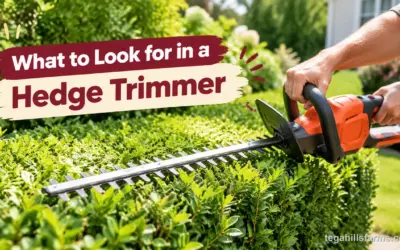
Start with weight and balance, then blade length, then the power platform. Those three decide how comfortable and productive the trimmer feels on your hedges. Once they match, the rest of what to look for in a hedge trimmer comes down to secondary features such as a rotating rear handle, a tip guard and easy blade access.