

A hedge trimmer that won’t start has lost fuel, spark, air, or power. Which one depends on whether you own a gas, corded, or cordless model. Gas units fail most often from old fuel or a fouled spark plug, corded ones from a dead outlet or damaged cord, and cordless ones from a drained or poorly seated battery.
Each type has its own quick checks. On a gas engine, the order is fuel, spark plug, stop switch, then recoil starter. On an electric model, you trace the power from the outlet or battery to the motor.
Most people worry that a silent trimmer means a dead engine and a trip to the store. That is rarely the case. The majority of no-start problems are small fixes you can do in the garage with basic hand tools.
Before you pull anything apart, confirm the stop switch is in the run position and the battery is clicked all the way in. Those two slips cause more false alarms than any failed part.
Why Won’t a Hedge Trimmer Start?
A hedge trimmer won’t start when fuel, spark, air, or power is interrupted, and the cause differs between gas, corded electric, and cordless models.
On gas models, the usual suspects are stale fuel, a fouled spark plug, a stuck stop switch, and a recoil starter that slips. Corded trimmers usually fail at the outlet, extension cord, or plug. Cordless ones fail at a drained or badly seated battery. Most of these checks take minutes.
If this turns out to be the end of your trimmer, our guide on how to choose a hedge trimmer explains which features matter most for reliable starting and everyday use.
What Safety Steps Come Before You Troubleshoot a Hedge Trimmer?
Five precautions come first: disconnect the spark plug boot on gas models, unplug corded models, remove the battery from cordless models, let the engine cool, and keep your hands clear of the blades.
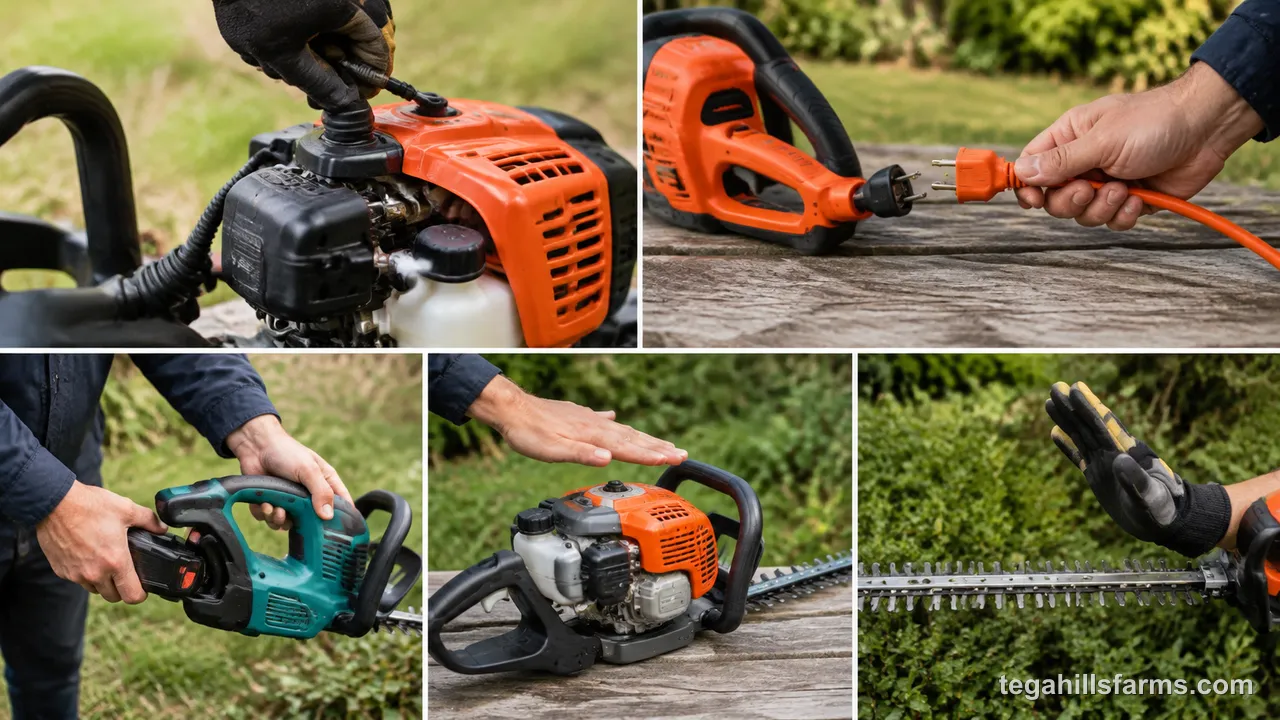
Each step blocks a specific accident:
- Spark plug boot off: pulling the cord while testing can’t fire the engine and swing the blades.
- Unplugged cord: a loose trigger can’t power the motor while you handle the housing.
- Battery removed: a bumped switch can’t start the blades.
- Cool engine: the muffler and cylinder stay hot long after shutoff and burn bare hands.
- Hands clear of blades: the blades can move with a small nudge to the trigger or a pull on the cord.
For the habits that apply during normal use too, see hedge trimmer safety tips.
Which Symptom Points to Which Cause?
A trimmer with no sign of life usually has a switch, battery, or power problem. One that pulls over but never fires usually has fuel or spark trouble. Matching the symptom first saves you from replacing parts at random.
| Symptom | Most likely cause | First check |
|---|---|---|
| No sign of life | Stop switch off, dead battery, no outlet power | Stop switch position, battery seated, another device in the outlet |
| Pulls over but never fires | Stale fuel, fouled spark plug, flooded engine | Fresh fuel, then pull and inspect the plug |
| Starts then dies | Clogged fuel or air filter, gummed carburetor, choke left on | Choke position, then both filters |
| Pull cord stiff or locked | Seized engine | Whether the engine turns at all once the spark plug is out |
| Pull cord loose, no resistance | Worn pawls or broken recoil spring | Remove the starter cover and look at the pawls |
| Electric motor silent | Safety trigger, switch contacts, worn carbon brushes | Both trigger handles engaged, then the cord or battery |
| Electric motor humming | Weak battery, worn brushes, failing motor | Swap in a known-good battery or try another outlet |
How Do You Fix a Gas Hedge Trimmer That Won’t Start?
A gas engine needs fuel, air, and spark together, so check in the order that saves the most time: fuel, spark plug, stop switch and ignition, then the recoil starter.
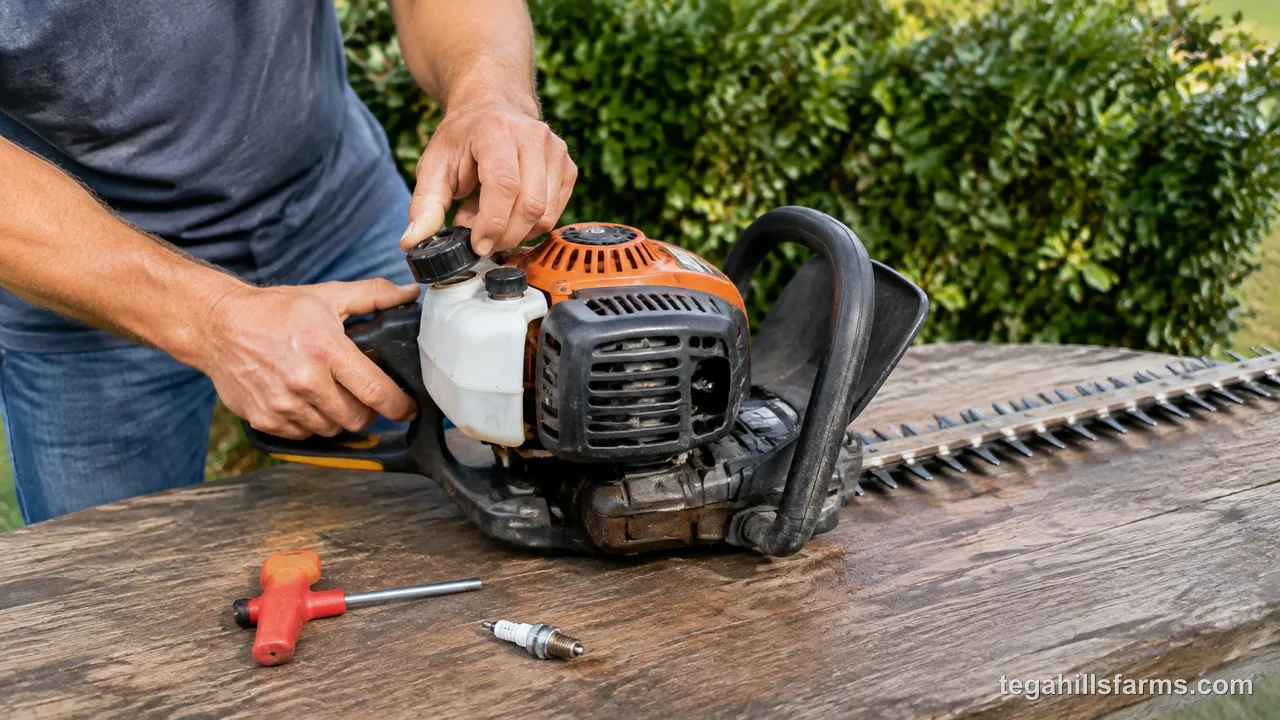
Fuel problems are the most common and the cheapest to fix, which is why they come first. The plug, switch, and starter follow in order of how easily you can rule them out.
Is Old or Wrong Fuel Stopping the Engine?
Stale fuel is the most common reason a gas hedge trimmer won’t start. Old gasoline loses its volatility and leaves varnish in the carburetor, and a wrong oil mix causes similar trouble in a two-stroke engine.
If the fuel smells sour or looks dark, drain the tank and refill with fresh mix. The correct fuel-to-oil ratio comes from the manual for your specific model, so don’t guess it. Too little oil can damage the engine, and too much fouls the plug.
Then check the rest of the fuel path:
- Primer bulb: if it stays flat or doesn’t fill, the fuel lines may be cracked or clogged.
- Fuel filter: a dark, gummy filter starves the engine.
- Air filter: a clogged one chokes the engine of air.
- Choke position: start on full choke when cold, and move it off once the engine catches. Leaving it on floods the engine.
- Gummed carburetor: if the trimmer starts and dies repeatedly even with fresh fuel, the carburetor probably needs cleaning.
With clean fuel, the starting sequence is primer bulb, choke, then pull. How to use a hedge trimmer covers the rest of the routine once it’s running.
How Do You Check and Replace a Fouled Spark Plug?
A fouled spark plug is a quick, inexpensive fix that often restores starting. Remove the plug with the correct socket and read what it shows.
A wet plug means flooding or too much oil in the mix. A black, sooty one points to a rich mixture or a dirty air filter. A cracked porcelain insulator or a burned electrode means replacement. A dry, tan plug is healthy, which shifts suspicion elsewhere.
To confirm spark safely, reattach the plug to its boot, rest the metal shell against bare metal on the engine, and pull the cord while keeping your hands away from the plug. A blue spark means the ignition is working. No spark means the plug, switch, or coil needs a look.
If the plug is only sooty, cleaning with a wire brush may be enough. Otherwise, replace it. The gap and plug type must match the manufacturer’s specification for your model, so check the manual before buying one.
Press the boot back on firmly afterward, since a loose boot gives intermittent spark.
Could the Stop Switch or Ignition Coil Be the Problem?
A stuck or misplaced stop switch can ground the ignition, which kills spark even when the fuel and plug are fine. This is the first thing to rule out when the engine shows no spark.
Confirm the switch sits fully in the run position and moves freely. Then follow its wire from the switch to the engine and look for pinched insulation, loose connectors, or corrosion. A switch that feels gritty or won’t spring back is a common culprit and usually cheap to replace.
If the plug, switch, and wiring all check out and there’s still no spark, the ignition coil may have failed. A failed coil often looks like a plug that tests fine but never fires, or a trimmer that dies when it heats up.
Replacing a switch is a manageable home repair. A coil can be a home job too if you’re comfortable setting the air gap, but many owners prefer a repair shop because a poor installation causes weak spark.
Why Does the Recoil Starter Pull Without Turning the Engine?
A recoil starter that pulls freely with no resistance means it isn’t engaging the crankshaft. The usual causes are worn pawls, a broken spring, or stripped engagement parts.
Remove the starter cover and look at the pawls and spring. These are inexpensive parts, and many owners replace them without opening the engine.
A rope that is stiff or locked points the other way. The starter may be fine, and the engine itself could be seized. If the rope won’t move at all, take the spark plug out and see whether the engine turns.
How Do You Fix an Electric or Cordless Hedge Trimmer That Won’t Start?
An electric trimmer that won’t start usually has a break in the power path on a corded model, a battery or charger fault on a cordless one, or a safety trigger or worn motor problem on either type.
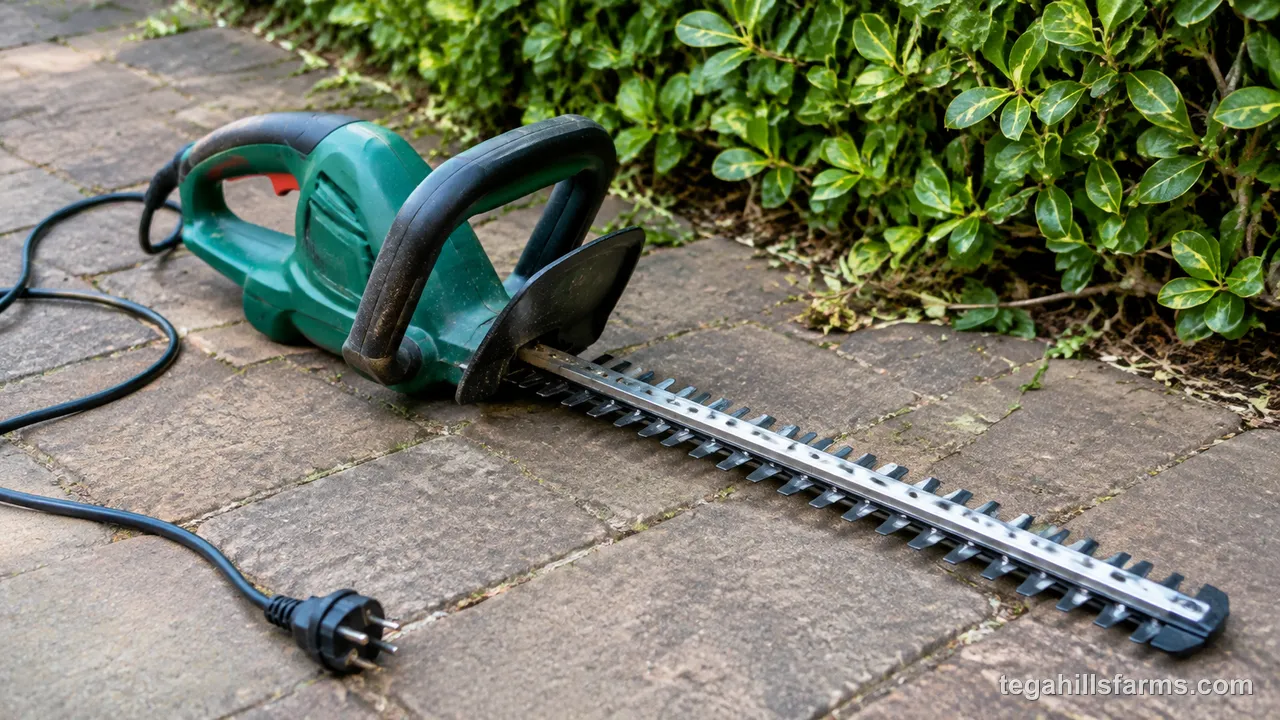
Corded and cordless units fail in different places, so the diagnosis differs. Both rely on safety switches that must be engaged correctly before the motor will run.
Is Your Corded Trimmer Getting Power?
A corded trimmer that is silent usually has no power reaching the motor. Trace the path from the outlet to the tool to find where it breaks.
Plug another device into the same outlet to confirm it’s live. Check for a tripped GFCI or breaker, especially outdoors, where moisture trips them often. Then inspect the extension cord and the trimmer’s plug for cuts, crushed sections, or bent prongs.
If the trimmer has an inline fuse, check it. Where internal wiring is visible, look for loose connections.
A multimeter helps when you want to test cord continuity or the switch. If the cord is cut or the insulation is damaged, stop using it until it’s replaced. A damaged cord near a running blade is a shock hazard.
Is the Battery or Charger Keeping a Cordless Trimmer From Starting?
On cordless models, the battery is the first suspect. A depleted or deeply discharged pack won’t power the tool, and some chargers show a fault light when a pack has been left empty too long.
Check these in turn:
- Seating: push the pack in until it clicks, because a half-seated battery gives no power.
- Contacts: clean dirty or corroded terminals and straighten any bent ones.
- Temperature: a pack that is too cold or too hot may refuse to deliver power until it returns to a normal temperature.
- Charger: a fault light means the charger has flagged the pack or the connection.
The cleanest test is to put a known-good, compatible battery on the trimmer. If it runs, the pack was the problem. If it doesn’t, the tool is at fault.
Do Safety Triggers and Motor Wear Prevent Startup?
A trimmer with good power that still won’t start often has a failed safety switch or a worn motor. The dual-handle safety trigger needs both switches to close, and worn contacts or a broken linkage keep the circuit open.
Worn carbon brushes make the tool silent or hesitant, while a burned-out motor can hum without turning. A burning smell is a sign the motor has been overheated.
Replacing brushes can be practical at home on models with accessible brush caps. A switch can also be replaced if parts are available. A burned-out motor generally means it’s time to replace the tool.
Should You Repair a Hedge Trimmer or Replace It?
Yes, repair when the cause is a simple fix such as fuel, a spark plug, or battery contacts. Replace when the problem is a seized engine, failed motor, or cracked housing, which often costs more in time and parts than the tool is worth.
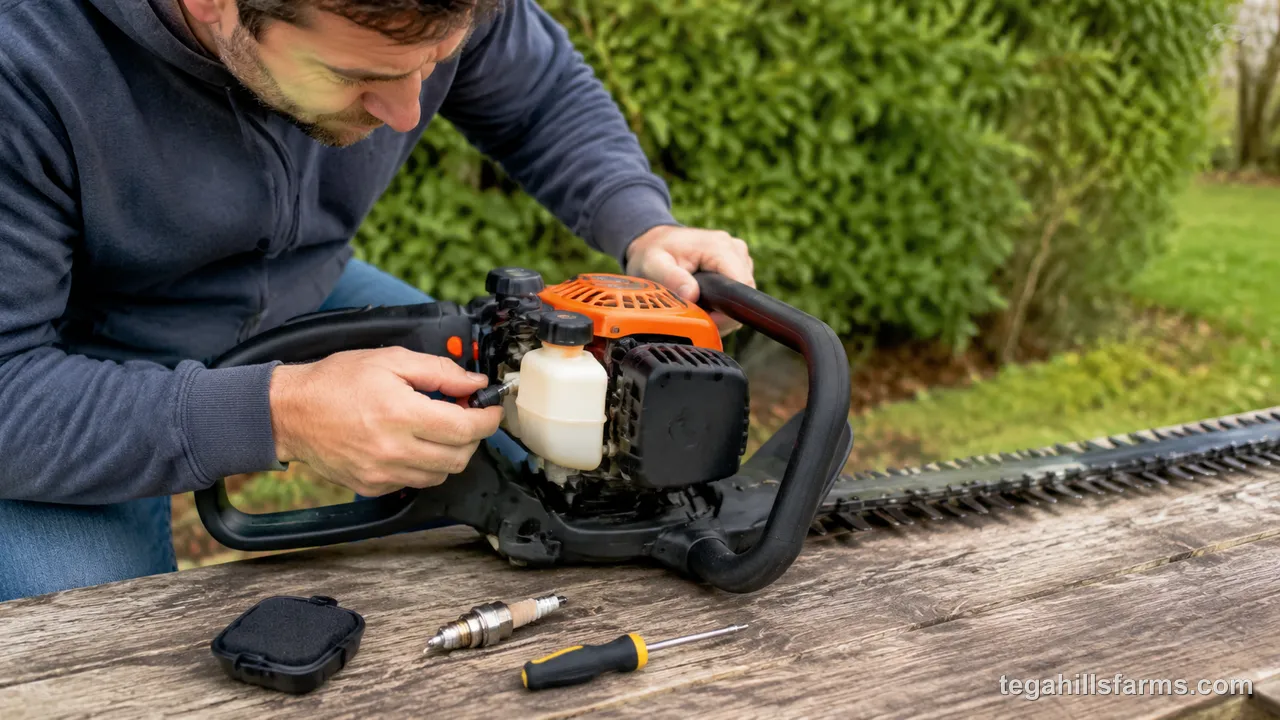
Three factors tip the decision:
- Age: an older trimmer with several worn parts is a poor bet for a repair.
- Parts availability: if the part is discontinued or hard to find, repair stalls.
- Repair effort: a job that needs disassembly or special tools often isn’t worth it.
I’d rather fix a ten-minute problem than replace a good tool, and rather replace than rebuild an engine that has already failed once. Two related questions, how long do hedge trimmers last and how much does a hedge trimmer cost, are worth a look before you decide.
A trimmer put away with fuel still in the tank doesn’t just sit there. Over a winter, the lighter parts of the gasoline evaporate and leave a gummy residue that clogs the carburetor’s small passages. By spring, the engine that ran fine in October may not start, and you’d be chasing a fault you created yourself.
How Do You Store a Hedge Trimmer So It Starts Next Season?
Proper storage means emptying the fuel or adding stabilizer, cleaning the blades and air filter, storing batteries partly charged, and keeping the trimmer in a dry place.
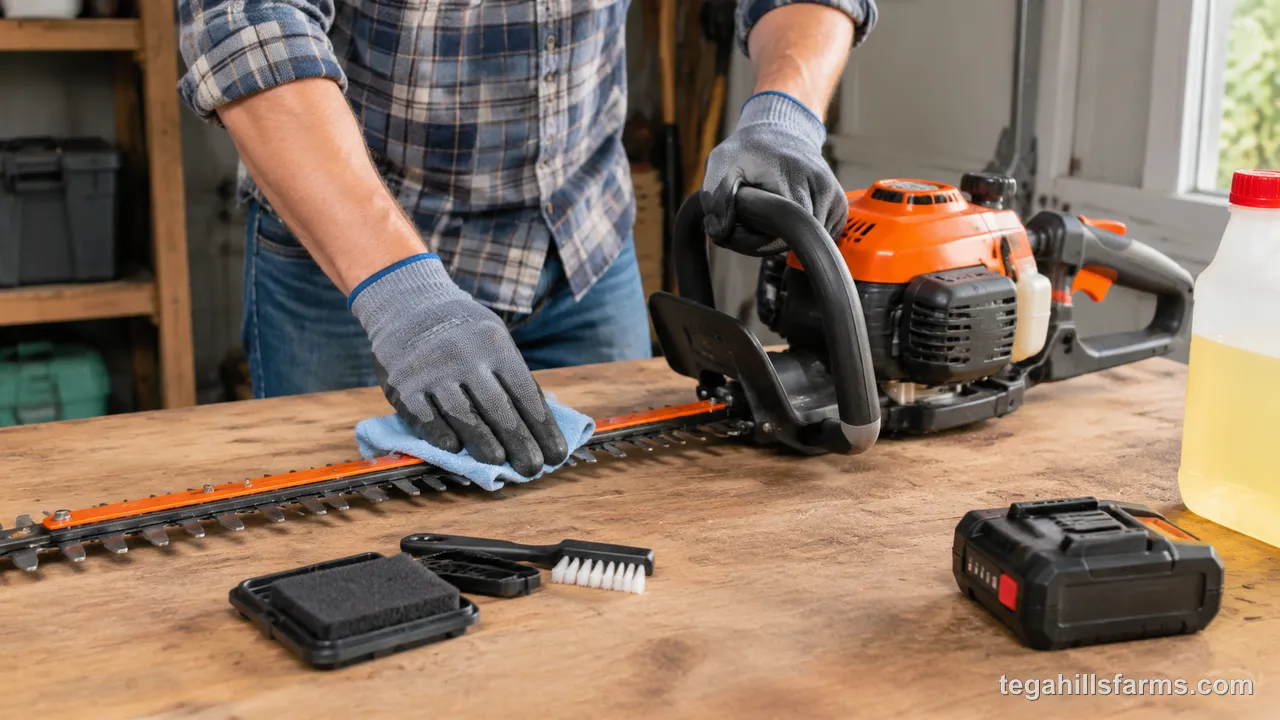
For a gas model, either run the tank dry or fill it with stabilized fuel and run the engine briefly so treated fuel reaches the carburetor. Wipe resin off the blades and oil them lightly to prevent rust. Clean the air filter so it doesn’t hold moisture and debris.
For a cordless model, take the battery off the tool. Store it at a partial charge in a cool, dry place, away from freezing temperatures and direct heat. A battery left fully drained or stored damp can fail to hold a charge.
The difference shows up in spring. A trimmer stored with old fuel typically smells sour, pulls over without firing, or starts and dies, and the carburetor needs cleaning. A properly stored one usually starts in a pull or two. A damp or drained battery may show a fault light or deliver weak power.
Can You Free a Seized Hedge Trimmer, and Should You Use WD-40?
A seized engine won’t turn at all, while a stiff starter lets the engine turn once the spark plug is out. WD-40 is a penetrating lubricant and water displacer, not a fuel or an engine oil.
To tell the difference, remove the spark plug and pull the cord. If the cord still won’t move, the engine is likely locked. If it moves freely now, the problem was compression, flooding, or the starter.
You can try to free a locked piston through the spark plug hole. Add a small amount of penetrating oil, let it soak overnight, then turn the engine gently by hand. Don’t force it. Once it moves, clear the cylinder and add a bit of two-stroke oil before reinstalling the plug.
Don’t put WD-40 in the fuel tank, since it doesn’t burn like fuel and won’t lubricate the engine as oil does. If the engine remains locked or turns with scraping and heavy resistance, the damage is likely in the piston or cylinder, and replacing the trimmer usually makes more sense than a rebuild.
What Keeps a Hedge Trimmer Starting Reliably Over the Years?
A trimmer that starts every time comes down to consistent upkeep, fresh fuel, and good build quality with available parts. Skipped upkeep is what makes the others fail early.
For gas models, check the spark plug and air filter regularly and use fresh fuel mixed to the manual’s ratio. For cordless ones, store batteries properly and choose a platform the manufacturer keeps supporting, so you can still buy batteries and chargers later.
Design matters too. Sturdy housings, easy access to the plug and filters, and readily available replacement parts make a trimmer easier to keep running. Paying more doesn’t guarantee reliability, though it can buy better build and parts support, which is covered in are expensive hedge trimmers worth it.
If a repeat failure has you shopping, pay attention to what to look for in a hedge trimmer so you don’t swap one problem for another. A replacement that fits your yard and upkeep habits will give you far fewer headaches than a bigger or fancier one.
Where Do You Find Starting Steps for Stihl, Husqvarna, Echo, and Black & Decker?
Starting design varies by brand and model, so the model number and the manufacturer’s manual or support page are the authority for plug type, gap, and fuel mix.
Find the model number on the data label, usually on the housing or near the handle. With it, you can pull the exact manual from the brand’s support site rather than rely on a generic guide.
Stihl, Husqvarna, and Echo offer both gas and battery trimmers, so confirm which type you have before looking up steps. Black & Decker’s hedge trimmers are mostly electric, corded or cordless.
Video walkthroughs from the brand or reputable repair channels help with tricky jobs like opening the recoil starter or reaching the spark plug. Use them alongside the manual, not in place of it.
Hedge Trimmer Won’t Start: Quick Answers
Why does a hedge trimmer start and then die?
The engine usually isn’t getting a steady supply of fuel or air. A clogged fuel or air filter, a gummed carburetor, or a choke left on can all cause it. Start by cleaning the air filter, switching to fresh fuel, and checking the choke position.
Why does it only run with the choke on?
Running only on choke suggests the engine is starved of fuel, typically from a partly clogged carburetor jet, a dirty fuel filter, or stale fuel. The choke enriches the mixture, which masks the shortage. Fresh fuel and a carburetor cleaning usually fix it.
Will new fuel alone fix a no-start?
Sometimes. If the old fuel was the only problem, fresh fuel in the right mix will get it running. But if varnish has already gummed the carburetor, or the plug is fouled, you’ll still need to clean or replace those parts.
What if the pull cord won’t move?
A cord that won’t move usually means the engine is seized, not that the starter is broken. Take out the spark plug and try again. If the cord still doesn’t move, the engine is probably locked and may need replacing.
When should I take it to a shop or check warranty?
Go to a shop when you’ve checked fuel, spark plug, stop switch, and starter and it still won’t run, or when the ignition coil or motor is suspected. If the trimmer is fairly new, contact the manufacturer first to see whether warranty options apply.






Write Your Review
No reviews yet. Be the first to share your experience!