

Gas string trimmers fit large properties, thick weeds and long trimming sessions. Battery string trimmers fit small to medium suburban lots, where light weight, quiet running and push-button starts matter more than raw cutting force.
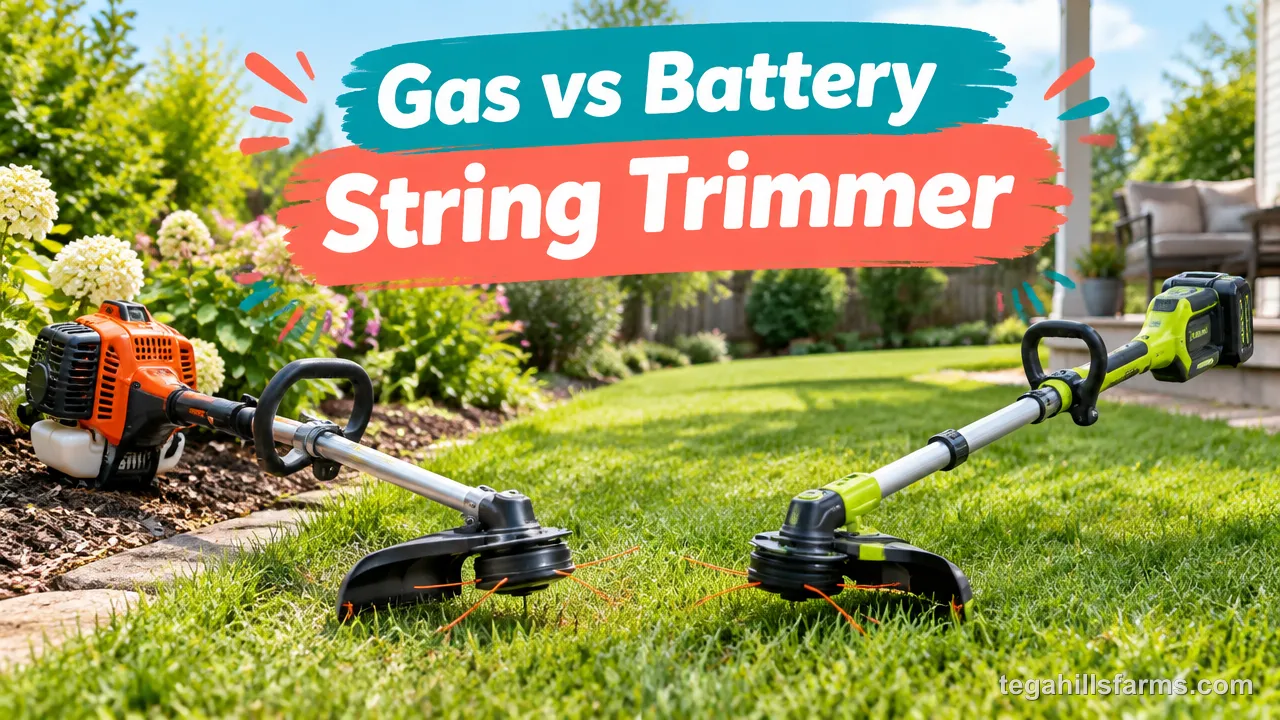
Five things decide which type is right for you: cutting power, the cost to buy and run, maintenance, noise and emissions, and the size and shape of your lot. Gas leads on torque, cutting width and runtime that lasts as long as you have fuel. Battery leads on running cost and upkeep, and it is easier to live with week to week.
Each choice comes with its own worry. If you lean battery, the concern is a cordless trimmer bogging down in overgrown corners or running out of charge halfway around the lot. If you lean gas, it’s pull cords, stale fuel and a carburetor that needs attention every spring.
Owning tools from a battery platform changes the math. A bare-tool trimmer that runs on packs you already have is the cheapest way into cordless trimming.
What Are Gas and Battery String Trimmers?
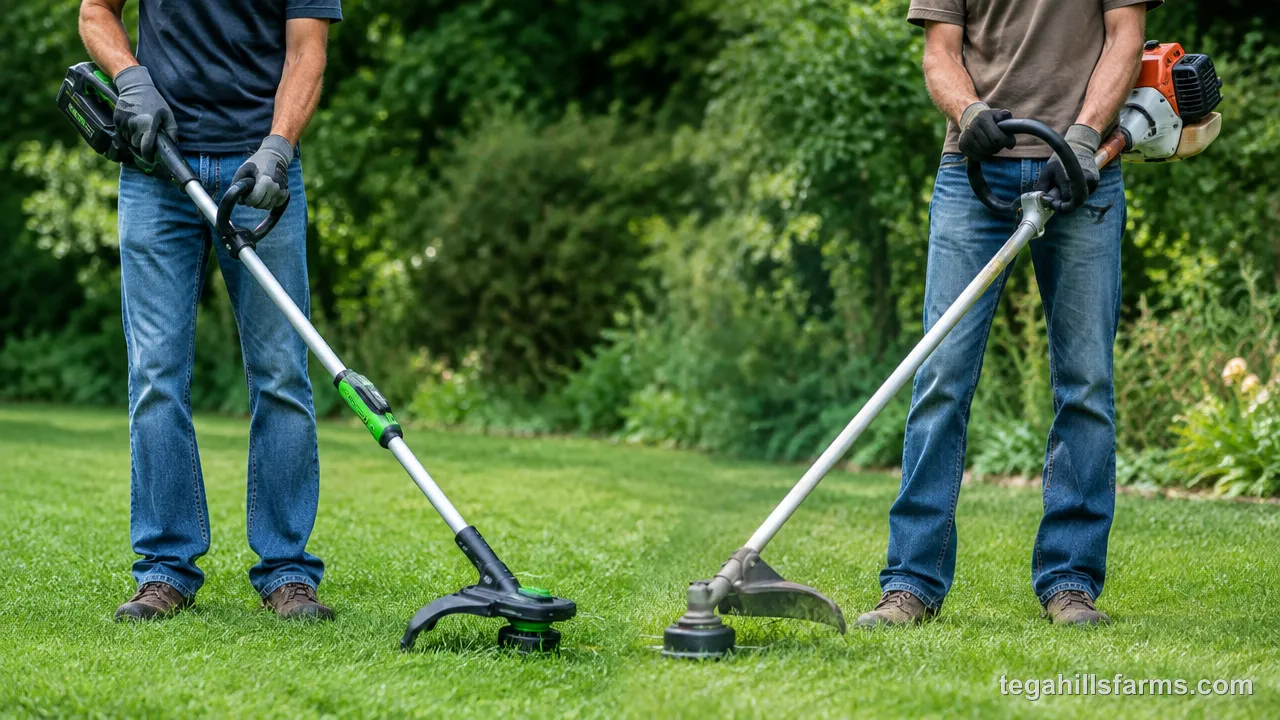
Gas models spin the line with a small two-stroke engine burning a fuel-oil mix, while cordless models drive an electric motor from a rechargeable lithium-ion pack.
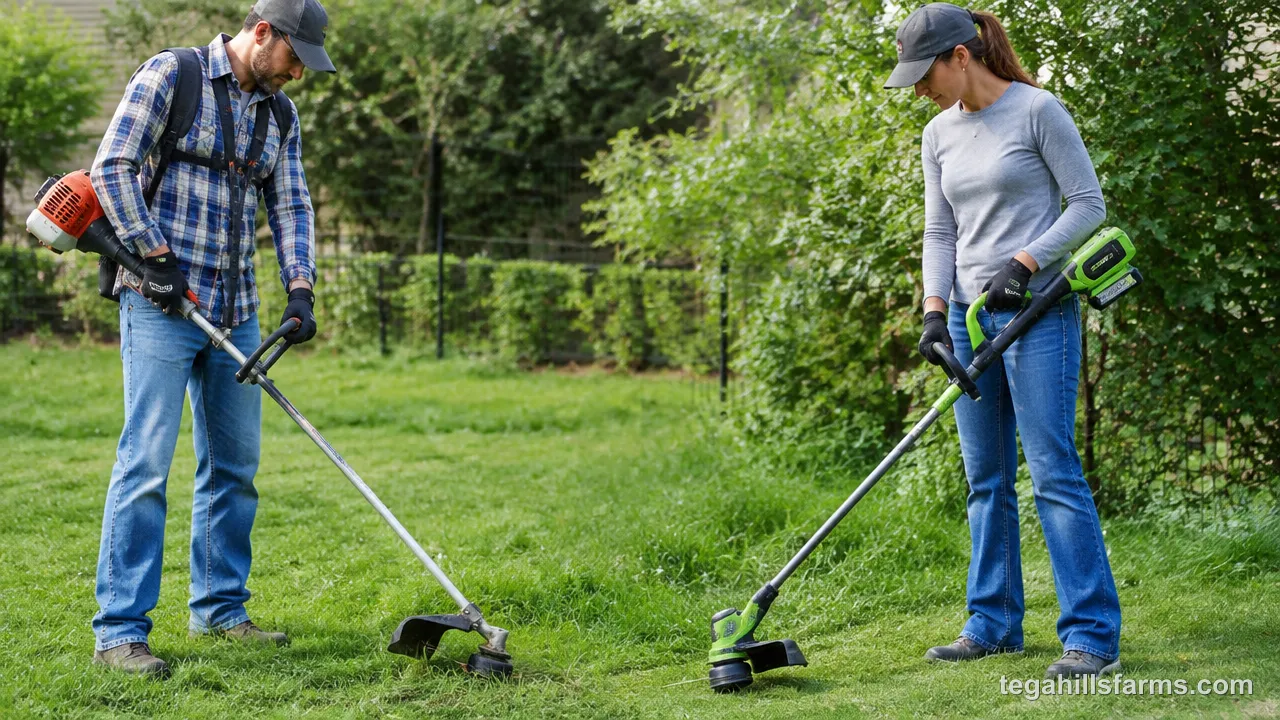
Most gas trimmers carry engines between 20cc and 40cc. A larger displacement burns more fuel per stroke, which gives the line more force against dense growth. A gas trimmer runs as long as there is fuel in the tank, and refilling takes a minute. A battery trimmer starts with a button and delivers power the moment you squeeze the trigger. Its runtime is capped by the pack’s capacity, so a longer session means a spare pack or a pause to recharge.
The power source is one decision among several. The broader question of how to choose a string trimmer for your yard starts with knowing what each type does well. The basics of how to use a string trimmer stay the same for both types, but a gas model’s extra weight and engine vibration make long sessions more tiring.
Here is how the two types line up on the factors that matter most:
| Factor | Gas | Battery |
|---|---|---|
| Power source | Small two-stroke engine | Electric motor, lithium-ion pack |
| Cutting force | Higher torque | Lower torque |
| Cutting path | Wider | Narrower |
| Weight | 10–15 lb | 5–10 lb |
| Noise | Louder | Quieter |
| Starting | Pull cord and choke | Push button |
| Running cost | Fuel and two-stroke oil | Electricity for charging |
| Upkeep | Spark plug, air filter, carburetor, fuel prep | Line, cleaning, battery storage |
| Runtime | Lasts as long as the fuel, refuels in minutes | Limited by the pack, extended with spares |
How Do Gas and Battery Trimmers Compare in Power?
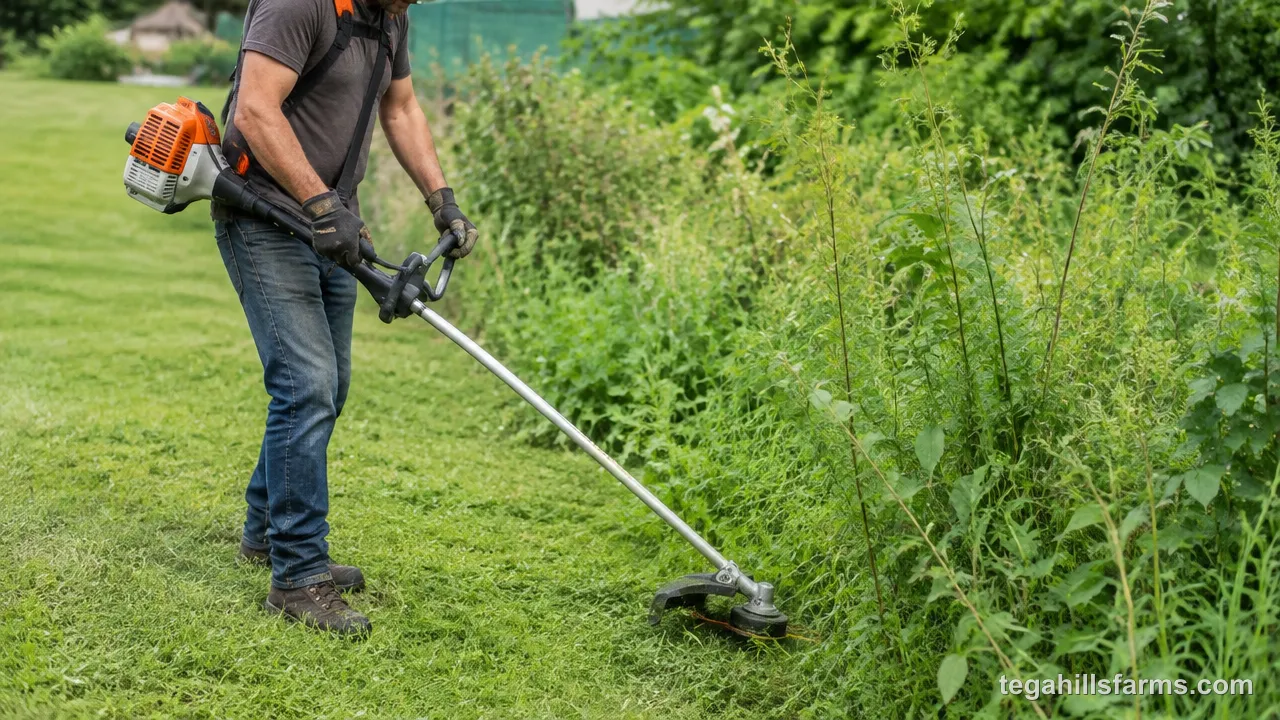
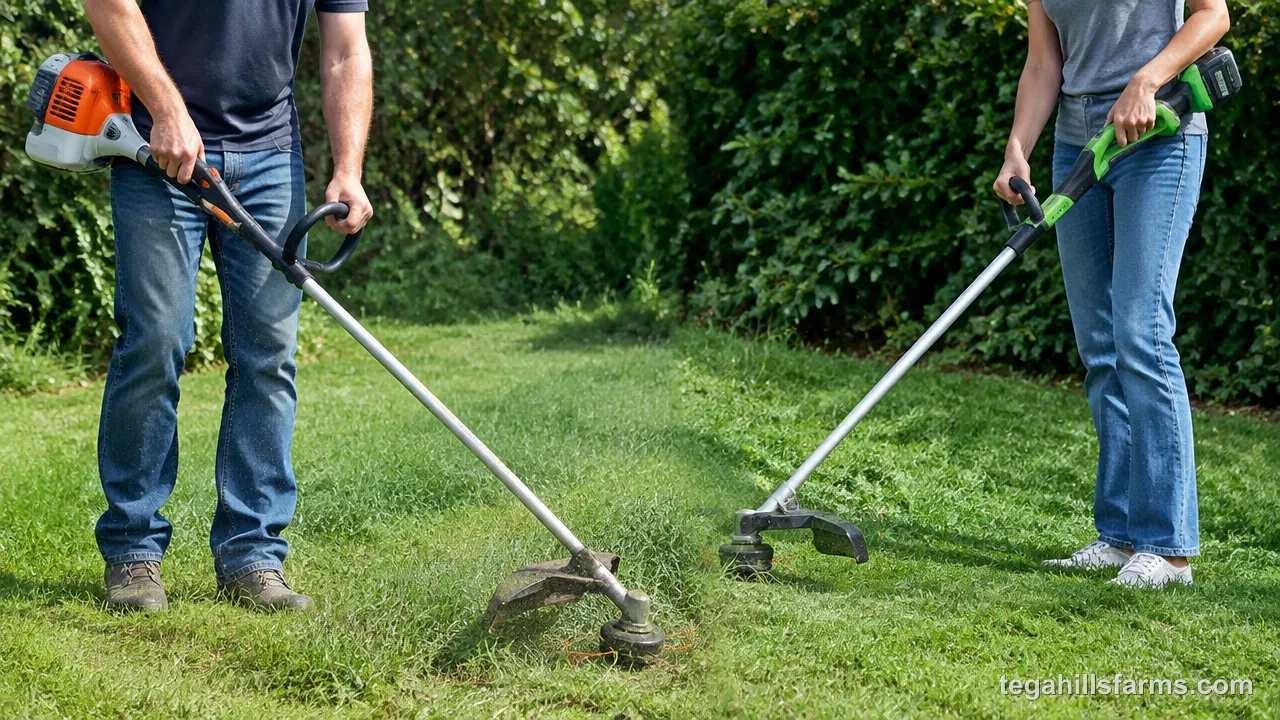
Gas trimmers deliver more torque and a wider cutting path, so they push through thick, overgrown weeds that slow a battery trimmer down. On a lawn edge you trim every week, both types cut cleanly and the gap barely shows. It shows up when the grass along a fence line has gone to seed or a ditch bank has been ignored for a month. In those conditions, the reserve of force at the cutting head decides whether you finish in one pass or three.
Torque and Cutting Speed
Gas trimmers produce about 0.74 to 1.5 lb-ft (1 to 2 Nm) of torque. Even highly advanced cordless models reach only around 0.55 lb-ft (0.75 Nm). Torque is what keeps the line spinning when it meets dense stalks. With less of it, the head slows on contact, and the line beats at weeds instead of slicing through them.
Battery trimmers make up ground on speed. Advanced cordless models spin around 7,000 RPM, which gives a clean, crisp cut in light grass along walks and beds.
Gas wins on cutting force when thick weeds or overgrown grass are your main job. For regularly maintained lawn edges, a battery trimmer’s speed is enough.
Cutting Width and Coverage
A battery trimmer cuts a path of 12 to 15 inches on average, while gas models cover 16 to 20 inches. That extra width means fewer passes along a long fence line or a pasture border, and on a big property the saved passes add up to real time. A narrower head is easier to steer around mailbox posts, tree trunks and tight flower beds.
Gas comes out ahead on large properties with long, open trimming runs. On a small lot, a battery trimmer’s narrower path costs you very little time.
What Does Each Type Cost to Buy and Run?
Battery trimmers tend to start lower on the shelf and cost almost nothing to recharge, while gas models add a recurring fuel and oil bill through the season. The upfront price and the running cost pull in different directions depending on whether you already own batteries. That makes the comparison worth working through before you look at how much a string trimmer costs at any single tier.
Initial Purchase Price
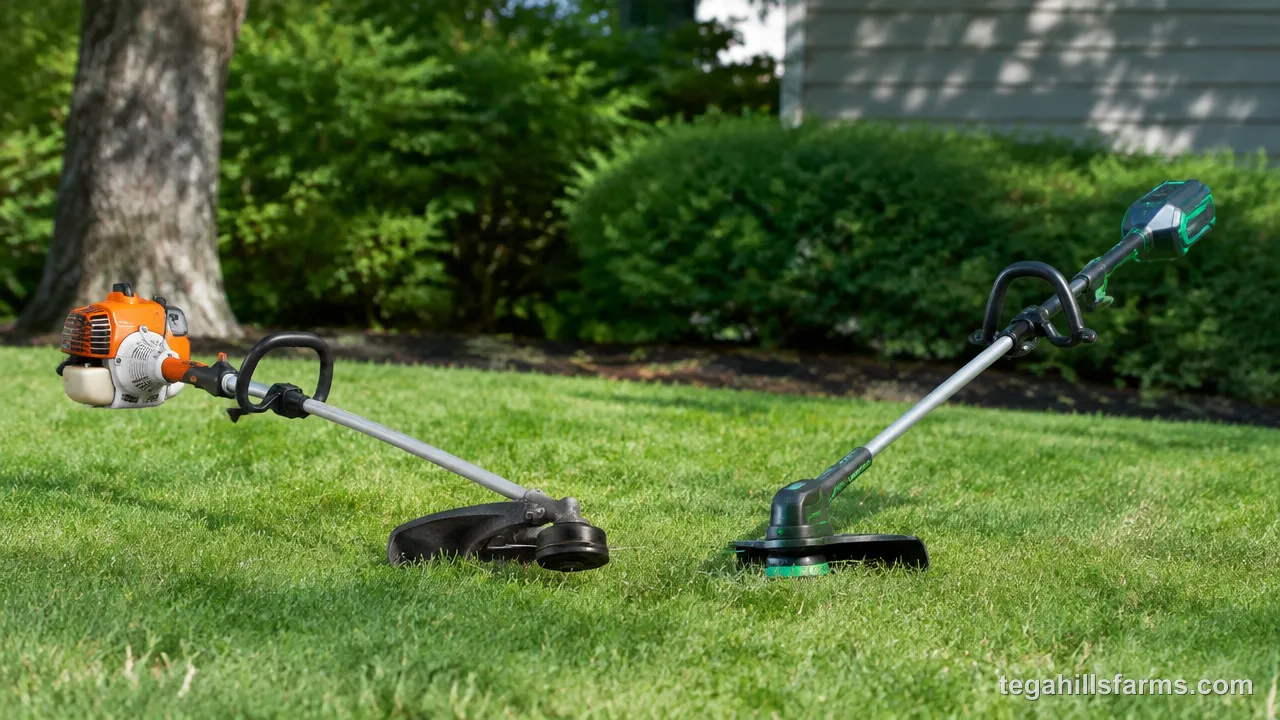
Battery trimmers typically run about $100 to $300, and battery capacity and features drive most of that spread. Gas trimmers typically run about $150 to $400, with engine size, shaft design and starting aids moving the price up.
The battery pack and charger are a large part of what you pay for a cordless kit. That’s why a bare-tool trimmer is such a good deal if you already own packs on the same platform. Buying into a platform for the first time is different: a high-capacity kit can climb into the same range as a capable gas model.
Battery wins at the entry level, especially if you already own batteries from the same platform. The gap narrows once you step up to a high-capacity battery kit.
Fuel, Oil, and Electricity Costs
A gas trimmer typically costs $10 to $20 a month in fuel and two-stroke oil, before any maintenance parts. That bill comes due every month you trim. Fuel also goes stale, so a partly used can sometimes ends up wasted.
A battery trimmer draws a small amount of household electricity per charge, a cost most owners won’t notice on their utility bill. Battery wins on running cost for anyone who trims regularly through the season.
How Much Maintenance Does Each Type Need?
Battery trimmers need far less upkeep: there is no spark plug, air filter, carburetor or fuel prep, only line, cleaning and sensible battery storage. That difference matters most for people who don’t want to do engine work. A gas trimmer that skips its routine service tends to punish its owner at the first start of spring.
Gas Engine Service Tasks
A two-stroke engine needs a short list of recurring jobs:
- Check the spark plug, and replace it when the electrode is worn or fouled.
- Clean or replace the air filter, because a clogged filter starves the engine and cuts power.
- Use fresh fuel mix, and add stabilizer to any fuel that will sit for weeks.
- Winterize by stabilizing the fuel or running the carburetor dry before storage.
If your string trimmer won’t start after winter, stale fuel gumming the carburetor is the first suspect. Gas asks for this routine every season, and that is part of what you pay for its extra power.
Battery Trimmer Maintenance
A battery trimmer has no engine to service. Upkeep comes down to replacing line, clearing grass buildup from the head and motor vents, and storing the pack properly. Checking what size of trimmer line your head accepts matters more than the power source, since the wrong diameter wears out fast or jams the spool.
The pack is the one part that needs care. Keep it out of extreme heat and cold, and don’t leave it fully drained for long.
Battery wins on upkeep for anyone who would rather trim than wrench.
Which Type Is Quieter and Cleaner?
Battery trimmers run at a lower decibel level and put out no exhaust where you work, while a gas engine’s noise and two-stroke fumes stay with you through every pass. Both differences shape when you can trim and how you feel after a long session. They matter most on small lots where neighbors are only a fence away.
Operating Noise
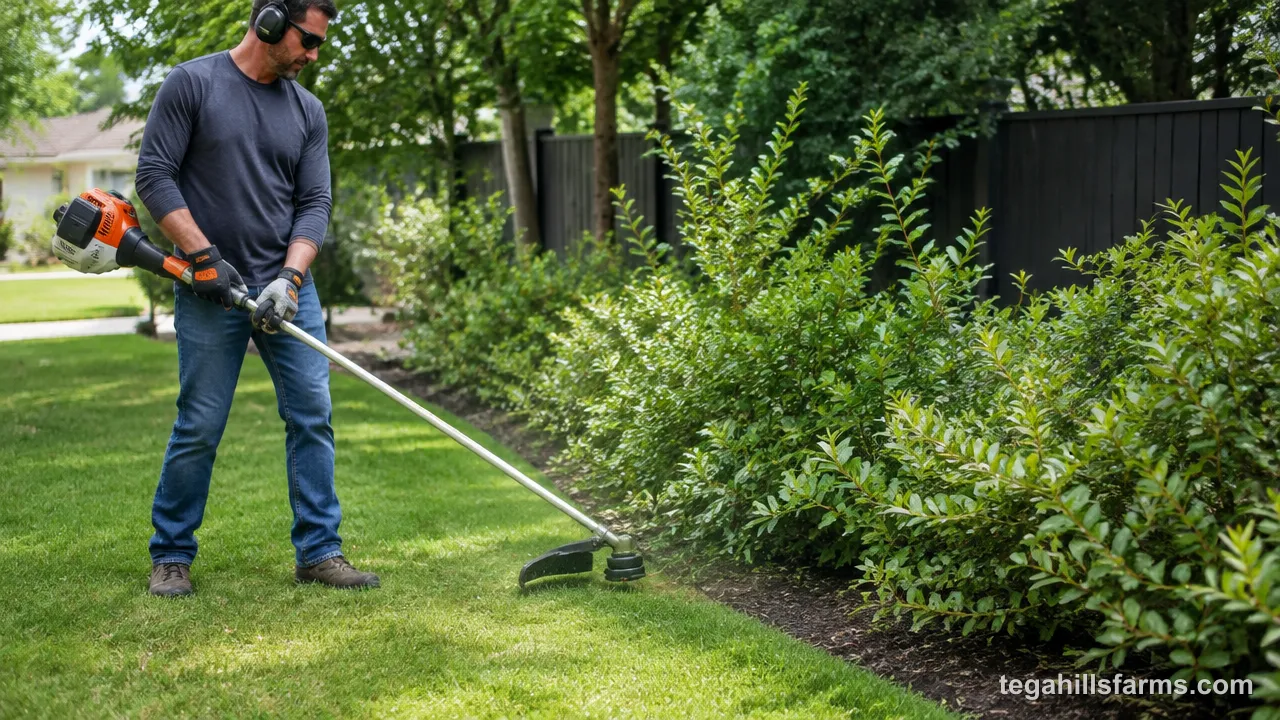
Battery trimmers typically run at 60 to 70 dB, while gas models run at 75 to 85 dB. Because the decibel scale is logarithmic, a 10 dB rise sounds roughly twice as loud. That puts a gas trimmer in a different class of annoyance for the house next door.
A battery trimmer lets you edge early on a weekday morning or after dinner without drawing complaints. With a gas trimmer, wear hearing protection for longer sessions, and check local noise rules or HOA hours before starting early.
Battery wins clearly in close-set neighborhoods.
Emissions and Air Quality
A two-stroke engine burns oil along with its fuel, and some of that mix leaves the exhaust unburned. That’s why the smell lingers on your clothes and in your lungs after an afternoon of trimming.
A battery trimmer produces no direct emissions. Its environmental cost moves to the power plant that charged the pack and to the manufacturing of the battery itself, so its overall footprint depends on your local electricity source.
Battery wins on air quality at the spot where you work.
Which Type Suits Your Yard Size and Terrain?
Battery trimmers fit small to medium suburban lots, while gas trimmers fit acreage, slopes and heavy overgrowth, where runtime and torque decide how far you get. Matching the machine to your lot comes first. Once that’s settled, what to look for in a string trimmer narrows to details like shaft style, head type and balance.
Small to Medium Suburban Lots
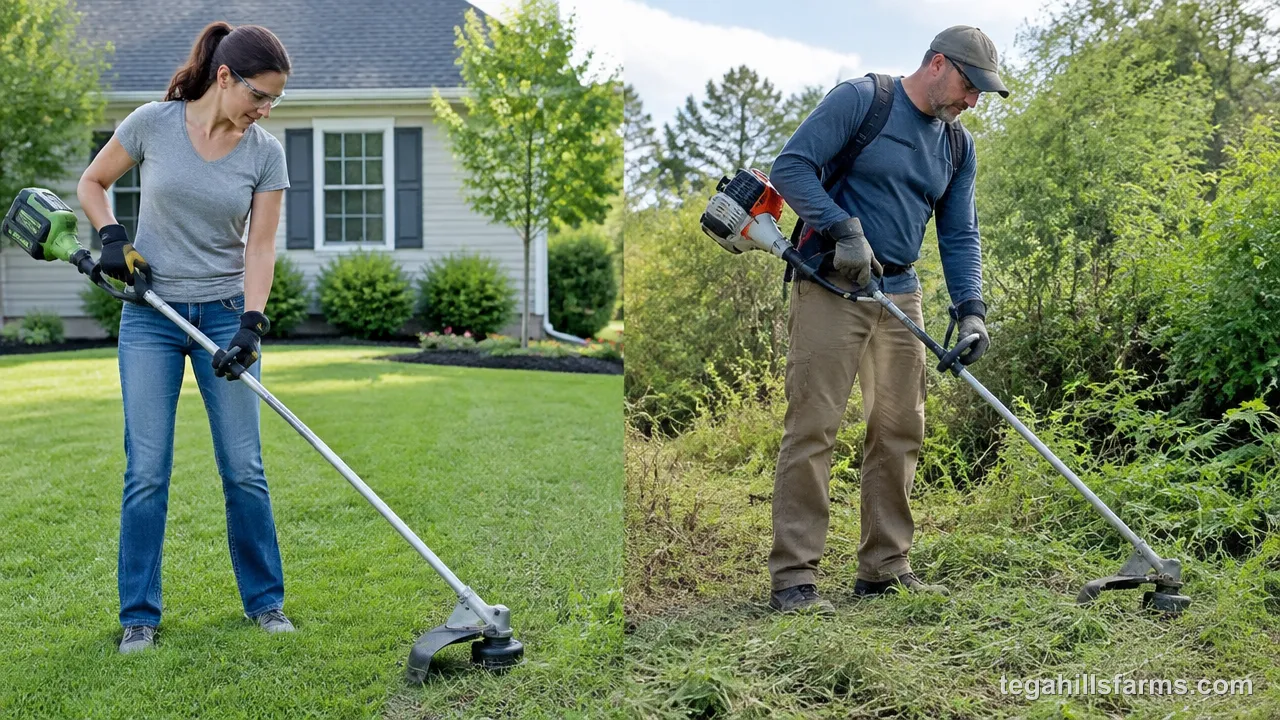
On a typical residential lot, trimming means edging the driveway and walkway, cleaning up along the fence and tidying around beds and trees. That is light, regular work, and a battery trimmer handles it on a charge or two. Its light weight makes it easy on the arms, the push-button start removes any fuss, and nothing needs mixing or draining.
For most suburban yards, I’d lean battery, because none of the gas advantages get used.
Choose battery if your lot is small to medium, you trim on a regular schedule and you value low noise and minimal upkeep.
Large Properties and Tough Terrain
On acreage, the trimming list grows to long fence lines, pond banks, ditches and field edges that may go weeks between cuts. A gas trimmer keeps working as long as you refuel, so an all-day clearing job never stops for a battery swap or a trip back to the charger. Its higher torque and wider path handle thick weeds and rough, uneven ground with fewer passes.
Once saplings and woody brush enter the picture, the real question becomes a string trimmer vs a brush cutter, since line alone struggles with stems.
Choose gas if you manage a large property, cut heavy growth or need long uninterrupted sessions.
A lithium-ion pack loses a little capacity with every charge cycle and every year it sits on the shelf, so a trimmer that finished your whole lot its first summer can stall short of the back fence a few seasons later. A replacement pack costs a sizable share of the original kit, and if the decline catches you unprepared, you end up buying one in the middle of trimming season.
How Runtime Changes Over Time
Battery trimmer runtime shrinks gradually as the cells lose capacity, while a gas trimmer keeps the same runtime per tank for its whole life, though an aging engine may start harder.
Lithium-ion capacity fades with charge cycles and calendar age. Heat speeds that up, and so does storing a pack fully charged or fully drained for long stretches. The decline is slow enough that you notice it as a pass you can no longer finish on one charge, not as a sudden failure. A new pack restores the original runtime, and the motor itself usually outlasts several batteries.
A gas engine doesn’t lose runtime the same way, because a full tank still holds the same fuel. Wear shows up instead as harder starts and some lost power as carbon builds up and internal parts wear.
Care matters more than power type in how long string trimmers last, and the battery is usually the first part to wear out on a cordless model.
Performance in Cold and Wet Conditions
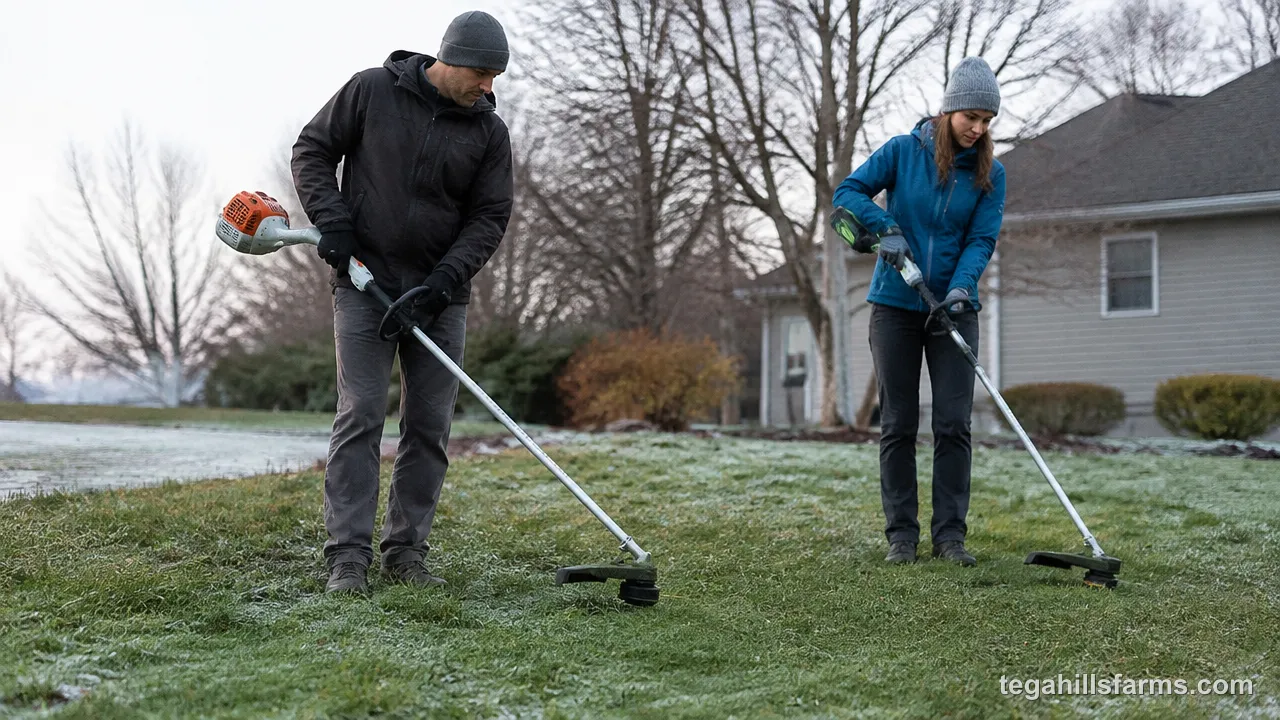
Cold weather shortens battery runtime and makes gas engines harder to start, and wet grass lowers cutting quality on both types. Gas holds its power better once it’s running in the cold. Battery avoids the starting problems that come with chilly or damp mornings.
Cold Temperature Effects
Lithium-ion chemistry slows down in the cold. Voltage sags under load and runtime drops, so a pack stored in an unheated shed delivers less than the same pack kept indoors. Charging a cold pack can also damage it. Bring batteries inside and let them reach room temperature before charging.
A gas engine struggles differently: cold fuel vaporizes poorly, so it needs the choke and a few extra pulls. Once warm, it runs at full power, which gives gas the edge for cold-weather cleanup.
Cutting Wet or Damp Grass
Wet grass bends away from the line instead of standing up to be cut, and clippings clump on the guard and around the head. Both types lose cutting efficiency. A battery motor working through heavy, wet clumps also drains its pack faster.
Moisture or a damp spark plug can make a gas trimmer stubborn on a dewy morning, while a battery trimmer starts the same way every time. Follow the manufacturer’s guidance on using a cordless trimmer in wet conditions. Battery has the edge for quick damp-morning touch-ups.
Storing Each Type and Expected Lifespan
Gas trimmers need fuel system prep before storage and can run for many seasons with regular service. Battery trimmers need a cool, dry spot with the pack partially charged, and they usually outlive their first battery. How well you store a trimmer over the off-season largely decides how many seasons it gives you.
Seasonal Storage Requirements
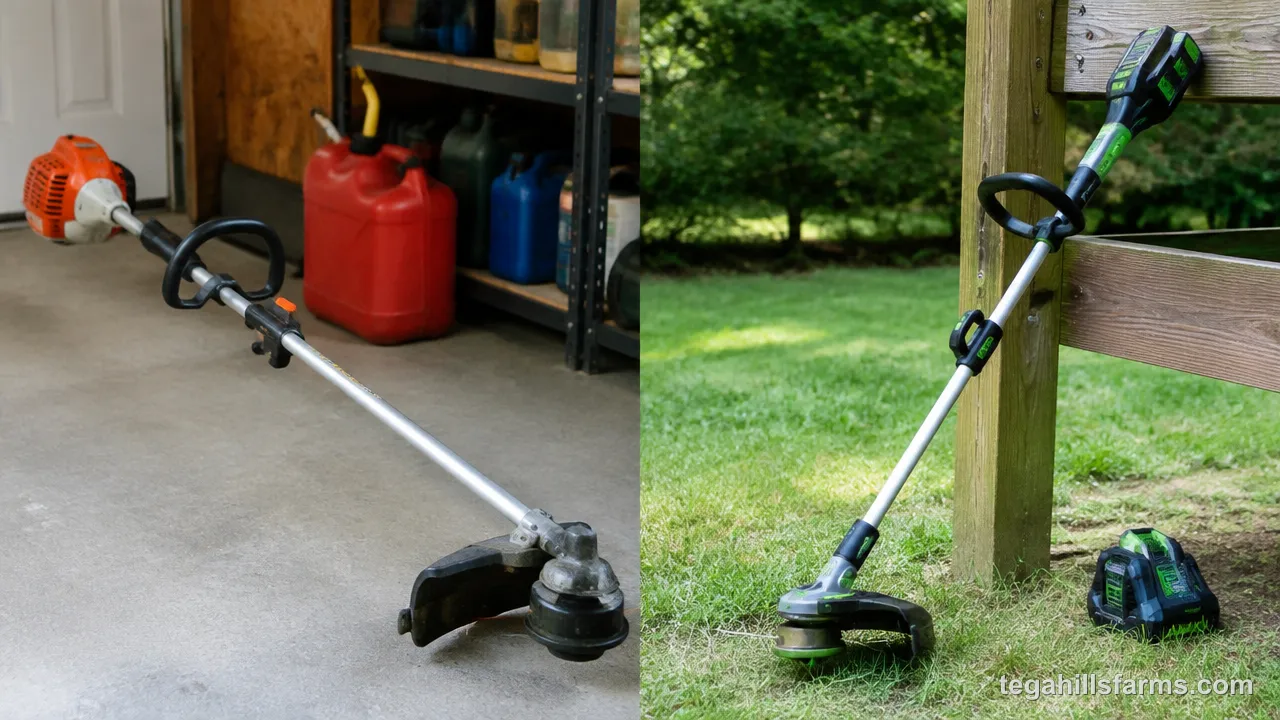
Before a gas trimmer sits for the winter, add fuel stabilizer and run the engine so treated fuel reaches the carburetor. Alternatively, drain the tank and run the engine until it stalls. Clean the air filter and store the trimmer somewhere dry.
For a battery trimmer, remove the pack and keep it indoors, away from a freezing shed or a hot attic. Store it at a partial charge, following the manufacturer’s recommended storage level, rather than full or empty. Gas needs more steps, but battery storage is less forgiving of temperature extremes.
How Long Each Type Lasts
A well-maintained gas trimmer can run for many seasons. Its wear parts, including the spark plug, air filter, fuel lines and carburetor, are inexpensive to replace, so a neglected engine is usually what ends its life.
A cordless trimmer’s motor has few wearing parts, especially in brushless designs, so the battery pack sets the pace. Expect to replace the pack at some point. Before buying, make sure the brand is likely to keep selling compatible batteries.
Common Questions About Gas vs Battery Trimmers
Is a gas trimmer worth the higher upfront cost?
It is worth it when your property is large, overgrown or sloped enough that torque, a wider cutting path and quick refueling save real time. On a typical suburban lot trimmed weekly, those advantages go unused, and the fuel, oil and engine upkeep make a battery trimmer the better value.
Does buying a battery trimmer lock me into one brand?
Yes, in practice. Batteries rarely fit across brands, and the pack is the most expensive part of a kit, so your first cordless tool tends to decide your next ones. Before buying, check whether the brand sells the other yard tools you want on the same voltage platform.
Can a battery trimmer handle thick weeds?
It handles occasional tall grass and weeds if you cut in short passes and work from the top down. Dense, woody overgrowth is different. Lower torque slows the line and drains the pack faster, and that kind of clearing is where a gas trimmer earns its extra weight.
Do gas trimmers need special fuel?
Most gas trimmers use two-stroke engines that run on gasoline mixed with two-stroke oil at the ratio listed in the manual. Four-stroke models take straight gasoline, with oil kept in a separate crankcase. Premixed, ethanol-free canned fuel stores longer and is easier on carburetors, which helps if you trim only occasionally.
When should I replace my trimmer instead of repairing it?
Replace a gas trimmer when the engine loses compression or the repair bill approaches the price of a new model. When a cordless trimmer’s runtime drops, replace the pack, not the tool. Switch platforms only if the brand stops selling compatible batteries or your workload outgrows the trimmer.

Write Your Review
No reviews yet. Be the first to share your experience!