5 Best String Trimmers in 2026: Expert Picks Compared
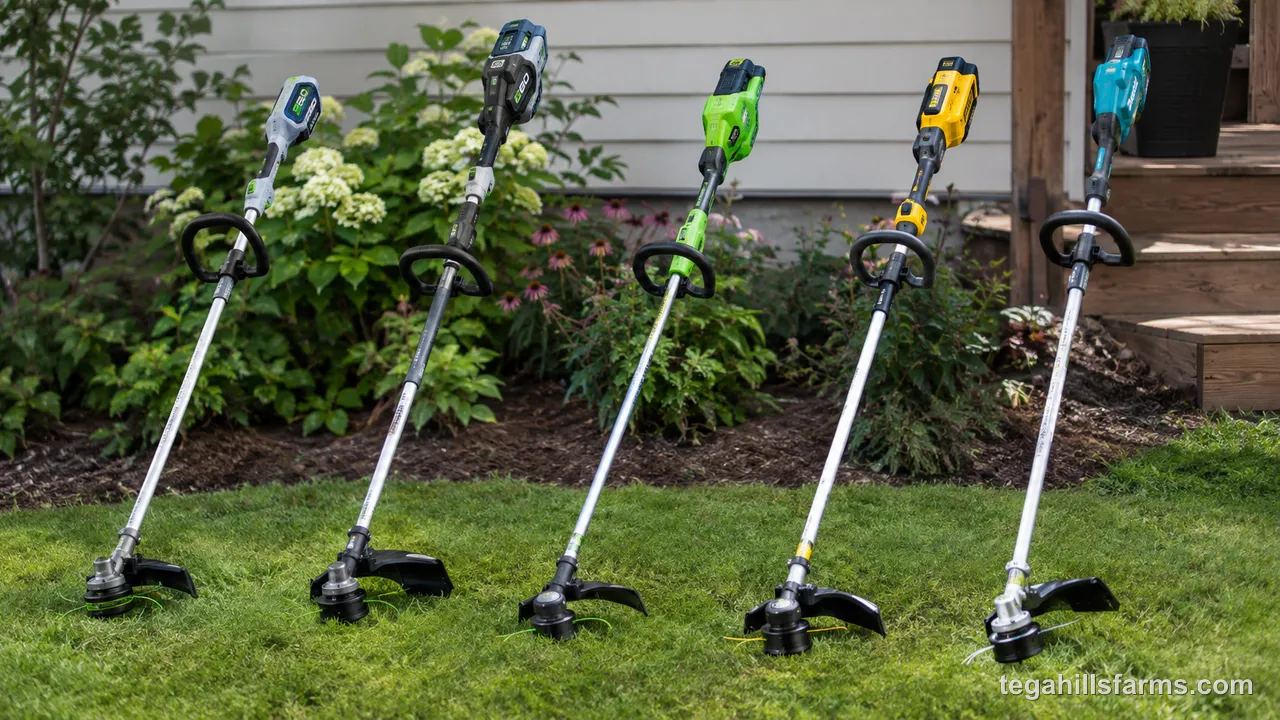
Our top picks for the best string trimmers in 2026 are the EGO Power+ ST1511T 15″ String Trimmer (Best Overall), the EGO Power+ ST1623T 16″ String Trimmer (Best Battery Life), the Greenworks 80V 16″ Cordless String Trimmer (Best Ergonomic Design), the DEWALT DCST922B 20V MAX String Trimmer (Best Budget), and the Makita XRU15PT1 LXT 36V String Trimmer (Best Premium). Every one of them runs on battery, so each starts with a trigger pull and needs no fuel or oil.
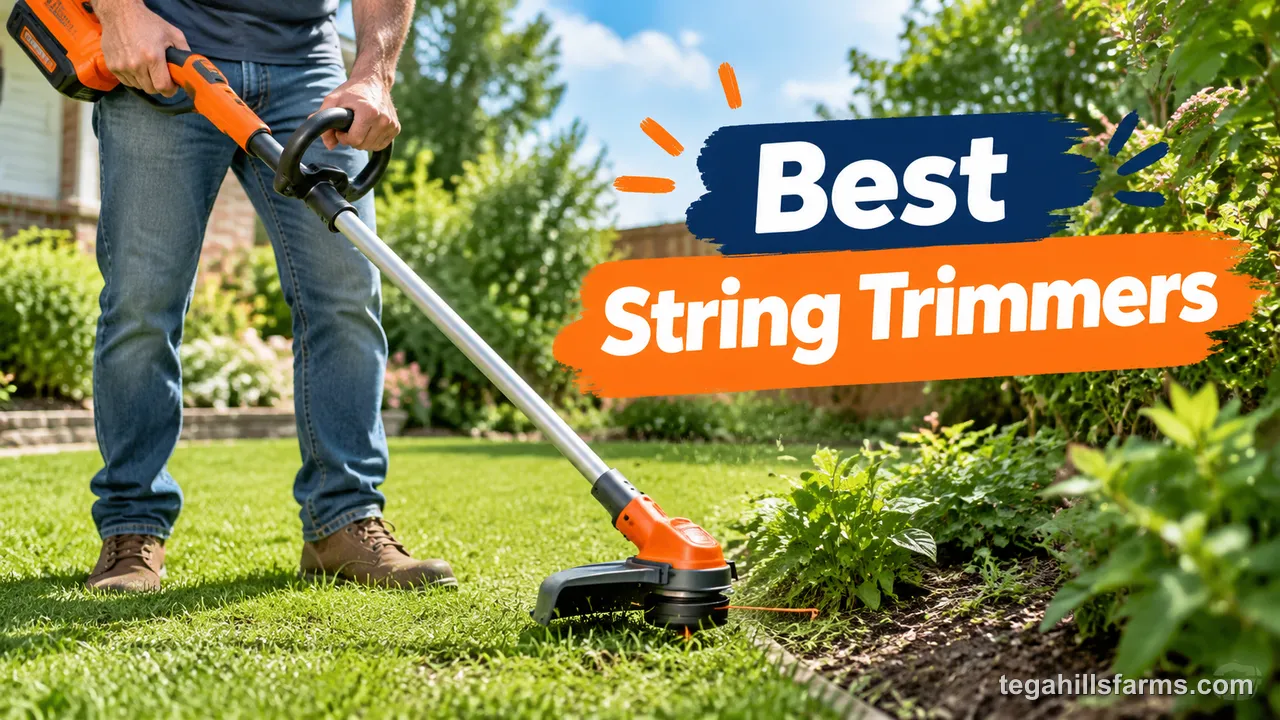
What separates them is the battery platform each one runs on, how long a charge lasts, how wide the head cuts and what line it spins, and how the trimmer balances in your hands over a full session. Those specs decide whether a trimmer clears your fence line in a steady pass or leaves you swapping batteries halfway around the yard.


The costly part is buying the wrong fit, such as a heavy, high-powered machine for a small lot or a bare tool that needs batteries you don’t own. Platform loyalty raises the stakes, since string trimmer brands build their batteries to work only within their own lineups, so the trimmer you pick often decides your next blower and mower as well.
The 5 Best String Trimmers of 2026
The best string trimmers for most yards right now are the EGO Power+ ST1511T 15″ String Trimmer (Best Overall), EGO Power+ ST1623T 16″ String Trimmer (Best Battery Life), Greenworks 80V 16″ Cordless String Trimmer (Best Ergonomic Design), DEWALT DCST922B 20V MAX String Trimmer (Best Budget) and Makita XRU15PT1 LXT 36V String Trimmer (Best Premium). The two EGO models share 56V batteries that also run the rest of EGO’s power tools, while the DEWALT and Makita make the most sense when those brands’ batteries already sit in your garage.
#1 EGO Power+ ST1511T 15″ String Trimmer — Best Overall
Most suburban homeowners who want a battery trimmer that just works should start here. Its POWERLOAD head winds fresh line at the push of a button, which turns reloading the spool from a tangled chore into a few seconds of work.
Key Specs:
- Cutting swath: 15 in
- Line: 0.095 in
- Battery: 56V ARC Lithium, 2.5Ah (included)
- Runtime: up to 45 minutes per charge
- Weight: 10.27 lb
- Warranty: 5-year tool, 3-year battery
Detailed Review:
The brushless motor gives this trimmer low vibration and the kind of reliability that matters for a tool that sits in the garage between weekly trims. Variable speed with two settings lets you run gently around flower beds to stretch the battery, then step up when grass along the fence has gotten ahead of you.
The professional-grade line resists breaking against weedy corners better than thinner line, and the swath is wide enough to clear a long border at a steady pace. Next to the Greenworks 80V, it gives up a little cutting width and the second strand of dual line, but its listed weight is far lower, which you feel on every pass along a long border.
POWERLOAD changes ownership more than any other feature: feed the line through the head, press a button, and it winds itself. The telescopic aluminum shaft adjusts to your height, so you stand upright instead of hunching over the head.
The included battery recharges in 50 minutes on the CH2100 charger, so a second session the same day is realistic. It fits every EGO power tool, and the trimmer accepts any EGO 56V ARC Lithium battery, which is why I’d treat it as the first piece of a battery yard kit rather than a one-off purchase.
Pros:
- POWERLOAD winds fresh line with one button press.
- Brushless motor keeps vibration low.
- Telescopic aluminum shaft adjusts to your height.
- Battery works across EGO’s entire power tool lineup.
Cons:
- Single included battery limits each session before recharging.
- Narrower swath than the 16-inch picks means a few more passes.
Who It’s For:
Homeowners mowing a typical suburban lot who want quiet, easy starts and a battery they can reuse across a growing EGO 56V lineup will get the most from it. Anyone clearing dense brush for hours at a stretch will want a spare battery or a tool built for heavier cutting.
Editor’s Verdict:
A well-balanced battery trimmer that handles routine edging and fence lines with little upkeep, and it anchors a 56V tool collection nicely.
#2 EGO Power+ ST1623T 16″ String Trimmer — Best Battery Life
If your trimming routine runs long, this bundle keeps you working. The larger included battery carries most of the job, and a spare pack comes with the bundle, so you can swap batteries and keep cutting instead of waiting on the charger.
Key Specs:
- Cutting swath: 16 in
- Batteries: 56V 4.0Ah plus extra 2.5Ah (BA1400T)
- Runtime: up to 60 minutes on the 4.0Ah battery
- Shaft: telescopic carbon fiber, limited lifetime warranty
- Line system: LINE IQ auto-feed with POWERLOAD winding
Detailed Review:
LINE IQ senses line wear and feeds new line automatically, holding a full cutting width without bumping the head on the ground. On long fence lines and borders, that removes the stop-and-bump routine that breaks your pace, and POWERLOAD winding reloads the spool with a button press when it runs out.
Run time is the main reason to choose this one. The 4.0Ah battery is the larger of the two packs, and the extra 2.5Ah battery gives you a swap-in spare, so one charges while the other cuts. Next to the ST1511T, which ships with a single 2.5Ah pack, this bundle gives you more batteries to keep charged in exchange for much more cutting time per session.
The telescopic carbon fiber shaft adjusts to your height and carries a limited lifetime warranty, which tells you how long EGO expects it to hold up. Both batteries also fit the rest of EGO’s 56V ARC Lithium lineup, so they keep earning their place once trimming season ends and the blower comes out.
Pros:
- Spare battery included for swap-and-go sessions.
- LINE IQ feeds line automatically, no bumping needed.
- Carbon fiber shaft carries a limited lifetime warranty.
- POWERLOAD reloads the spool with a button press.
Cons:
- Extra battery ships separately from the trimmer.
- More battery than a compact yard will use.
Who It’s For:
Owners of bigger lots, or anyone who saves all the edging for a long weekend session, get the most from a spare pack that’s ready to go. It also fits households already invested in EGO’s 56V tools. If your trimming is a quick lap around a compact yard, much of that extra capacity will sit unused.
Editor’s Verdict:
Long cleanup days are where this trimmer earns its place, with automatic line feed and a spare battery keeping the work moving.
#3 Greenworks 80V 16″ Cordless String Trimmer — Best Ergonomic Design
Thick grass and stubborn weeds call for real torque. This one pairs an 80V brushless motor with dual line, and its variable-speed trigger lets you feather power around shrubs without changing your grip.
Key Specs:
- Platform: 80V, 2.0Ah battery
- Cutting path: 16 in
- Line: 0.095 in dual line, bump feed
- Motor: brushless
- Weight: 16.61 lb
- Model: ST80L253
Detailed Review:
Dense, wet growth is where the 80V platform pays off, because the extra voltage behind a brushless motor delivers more torque and keeps the head spinning instead of bogging down. Brushless construction also runs quieter and wears less, so there are no motor brushes to service over the trimmer’s life.
Dual line puts two strands to work, so each revolution makes two cuts and overgrown edges clear in fewer passes. The bump feed head advances line when you tap it on the ground, keeping you trimming without shutting off the motor.
The comfort here comes from control rather than carrying less. An ergonomic design aimed at reducing fatigue and a variable-speed trigger let you ease off around plants, shrubs and landscape edging. Its listed weight sits well above the EGO ST1511T’s, and in exchange you get a wider path and a second strand of line.
With no gas, oil or emissions, it starts instantly and needs virtually no maintenance beyond line and battery care. Owners already on the Greenworks 80V platform can share batteries between this trimmer and their other tools.
Pros:
- 80V brushless motor pushes through thick grass and weeds.
- Dual line makes two cuts per revolution.
- Variable-speed trigger allows fine control around plants.
- No gas, oil or emissions to deal with.
Cons:
- Heavier build adds arm strain on long sessions.
- Bump feed means tapping the head to advance line.
Who It’s For:
Yards with thick grass, tough weeds and plenty of landscaping to work around call for this kind of torque and trigger control. It also makes sense if you already own Greenworks 80V tools and want to reuse batteries. Buyers who want less weight on their arms are better served by the DEWALT.
Editor’s Verdict:
Strong, controllable cutting for weedy, overgrown edges, with the heft to match its 80V muscle.
#4 DEWALT DCST922B 20V MAX String Trimmer — Best Budget
DeWalt 20V MAX owners get an affordable trimmer here. It ships as a bare tool with a brushless, variable-speed motor and a folding design, so the batteries and charger already in your garage do the work and the trimmer tucks into a smaller corner when the season ends.
Key Specs:
- Platform: 20V MAX (bare tool, battery and charger not included)
- Cutting swath: 14 in
- Motor: brushless, variable speed
- Weight: 7.32 lb
- Design: folding
- In the box: trimmer, guard, handle
Detailed Review:
Bare tool means the box holds the trimmer, guard and handle, with no battery or charger. If you already run DeWalt drills or saws on 20V MAX packs, that’s the whole appeal, because the batteries and charger you own power it from day one. I’d only call it a bargain when those batteries are already in your garage; buying them separately erases the budget advantage.
The platform gives you a choice in how the trimmer feels. FLEXVOLT batteries run 20V MAX tools longer, POWERSTACK packs lighten the load, and DeWalt’s 20V MAX system covers over 250 tools, so whichever pack you clip on keeps working across the rest of your kit.
A brushless motor with variable speed lets you slow down around beds and trees and push harder on overgrown edges. Against the EGO ST1511T and the Greenworks 80V, the narrower swath means more passes along long fence lines, but the smaller head is easier to guide in tight spots between plantings.
The folding design shortens the trimmer for storage in a crowded garage. Its listed weight sits far below the Greenworks 80V’s, though that figure covers the bare tool, so the battery you attach adds to what you carry.
Pros:
- Runs on 20V MAX batteries you may already own.
- Brushless motor with variable-speed control.
- Folding design takes less storage space.
- Light bare-tool weight is easy on the arms.
Cons:
- No battery or charger in the box.
- Narrower swath means more passes on long edges.
- Listed weight excludes the battery you attach.
Who It’s For:
If your garage already holds DeWalt 20V MAX packs and a charger, this is the low-cost way to add a trimmer to that system. It suits small to mid-size lots with routine edging. Starting from scratch with no DeWalt batteries is a different story, since you’d be buying the whole kit separately.
Editor’s Verdict:
For 20V MAX owners, this is a sensible, affordable add-on that turns batteries you already have into a capable brushless trimmer.
#5 Makita XRU15PT1 LXT 36V String Trimmer — Best Premium
This kit suits owners who want power that manages itself. Automatic Torque Drive mode shifts speed on its own as the load changes, saving battery in light grass and pushing harder when weeds thicken.
Key Specs:
- Platform: 36V (18V X2) LXT, kit includes 4 × 5.0Ah batteries
- Motor: outer rotor brushless, direct drive
- Speeds: Low 3,500 / Medium 5,300 / High 6,500 RPM
- Cutting swath: 15 in
- Line: 0.080 in twisted quiet line, bump and feed head
Detailed Review:
Makita’s outer rotor brushless motor drives the head directly, with no gearbox in between, so more of its torque reaches the line and the head holds speed when growth gets dense. That direct path also leaves fewer moving parts between motor and line to wear out.
Behind the automatic mode sit three manual settings, so you can hold low for quiet tidying near the house or lock in high for overgrown edges when you’d rather choose. Running slower in light grass is also how the automatic mode stretches each charge.
Twisted quiet line is the trade-off to understand. Its thinner gauge and twisted profile cut down on noise, which suits early mornings and close neighbors, but it gives up some bite in thick weeds compared with the heavier line on the EGO ST1511T and the Greenworks 80V. The bump and feed head advances line with a tap.
The trimmer runs on two 18V LXT batteries at once, so the kit’s batteries let you rotate pairs, with one set charging while the other cuts. Anyone already using Makita’s 18V LXT tools can share those packs across the lineup.
Pros:
- Direct-drive brushless motor delivers torque straight to the head.
- Automatic Torque Drive adjusts speed to the load.
- Three manual speeds cover quiet and heavy work.
- Twisted quiet line cuts down on noise.
- Kit batteries let you rotate pairs during long jobs.
Cons:
- Thinner line gives up bite in thick weeds.
- Needs two batteries installed to run.
Who It’s For:
Anyone who already runs Makita 18V LXT tools, or who wants a trimmer that handles its own power management, will get the most from this kit. It also fits neighborhoods where noise matters. If your edges are choked with dense, woody weeds, a trimmer spinning heavier line will cut more effectively.
Editor’s Verdict:
Smooth, self-adjusting power and quiet line make this a polished choice for owners who value refinement over raw cutting bite.
How Do Cordless, Gas and Corded String Trimmers Compare?
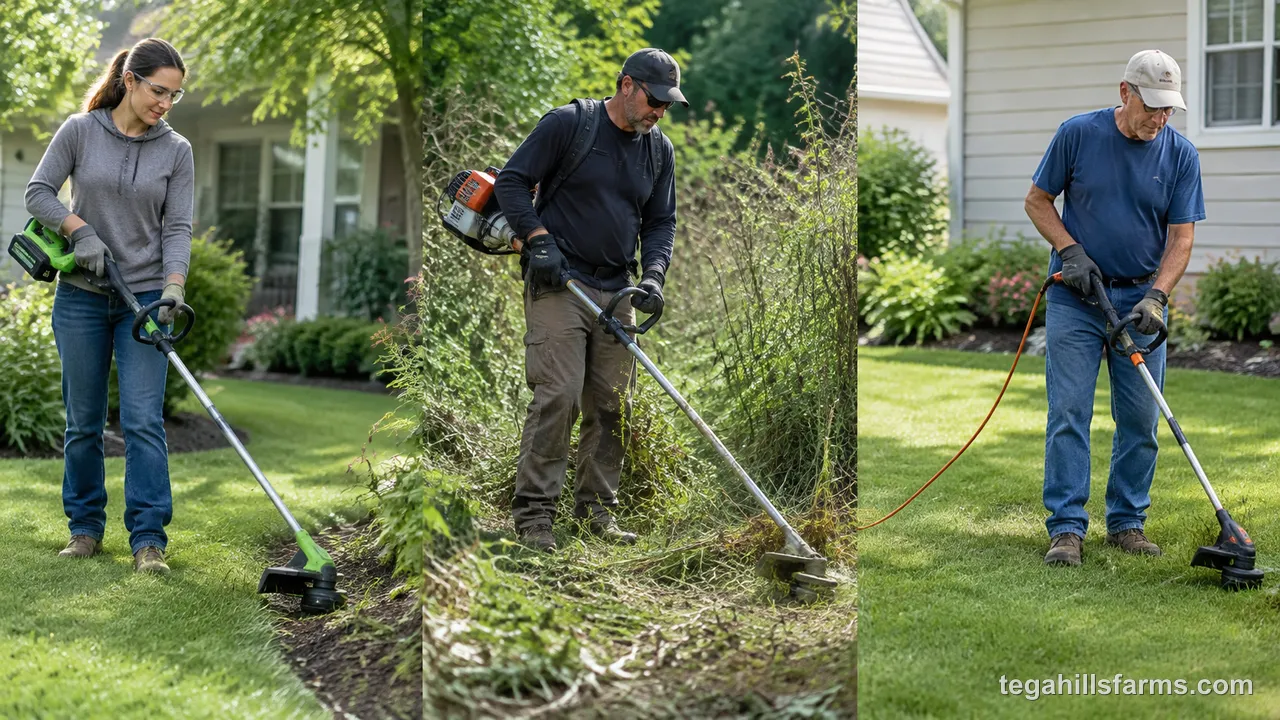
Battery power gives the easiest starts and the least upkeep, a fuel engine runs longest between stops, and a plug-in motor stays light but never leaves the reach of its cord. For most homeowners, starting reliability and maintenance decide the choice more than raw power does, which is why all 5 picks run on battery: current platforms cut thick grass well enough that fuel only pulls ahead on very long jobs.
When Does a Cordless String Trimmer Make Sense?
A cordless string trimmer makes sense for most suburban yards, because it starts with a trigger pull, needs no fuel or oil, and runs quietly enough for edging without bothering the neighbors. The trade-off is runtime: how long you can cut depends on the battery’s amp-hours and the speed you run, so a high setting on thick growth drains a pack far faster than light tidying on low.
That’s why battery size matters more than headline voltage for most owners. A smaller pack keeps the trimmer lighter and covers a routine lap of a typical lot, while a larger pack or a spare lets you finish a bigger property without a charging break. A wider range of platforms and battery sizes shows up among the best cordless string trimmers.
When Is a Gas String Trimmer Worth Considering?
A gas string trimmer still earns its place on long jobs and dense growth, such as clearing fence lines on acreage or cutting back a ditch, where stopping to swap and recharge batteries slows the work. A tank refills in moments, so the engine keeps going as long as you do.
Ownership is what you trade for that stamina. Many handheld trimmers run two-stroke engines that need oil mixed into the gas, a pull start gets harder when the engine sits, and seasonal service means checking the spark plug and air filter and draining or stabilizing fuel before winter storage. Engines are also louder and vibrate more than battery motors. When long, heavy work is your normal routine, the best gas string trimmers are where that trade makes sense.
Where Does a Corded String Trimmer Fit?
A corded string trimmer fits a small yard close to the house, where an outdoor outlet and an extension cord reach every edge. With no battery or engine on board, it stays light, starts instantly and costs very little to run.
The cord is the limit. You have to steer it around trees, beds and fences, keep it clear of the spinning line, and plug into a GFCI-protected outdoor outlet, and the cord’s reach sets how much yard you can cover. Once your edges sit far from an outlet, a battery model removes that hassle entirely.
What Should You Look for When Choosing a String Trimmer?
Battery platform, shaft style and cutting width paired with line size shape real results more than brand or headline power does. Getting those right means the trimmer fits the batteries you own, the way you stand and the growth you cut, and a full guide on how to choose a string trimmer is worth reading before you commit to a platform.
Which Battery Platform and Voltage Fit Your Setup?
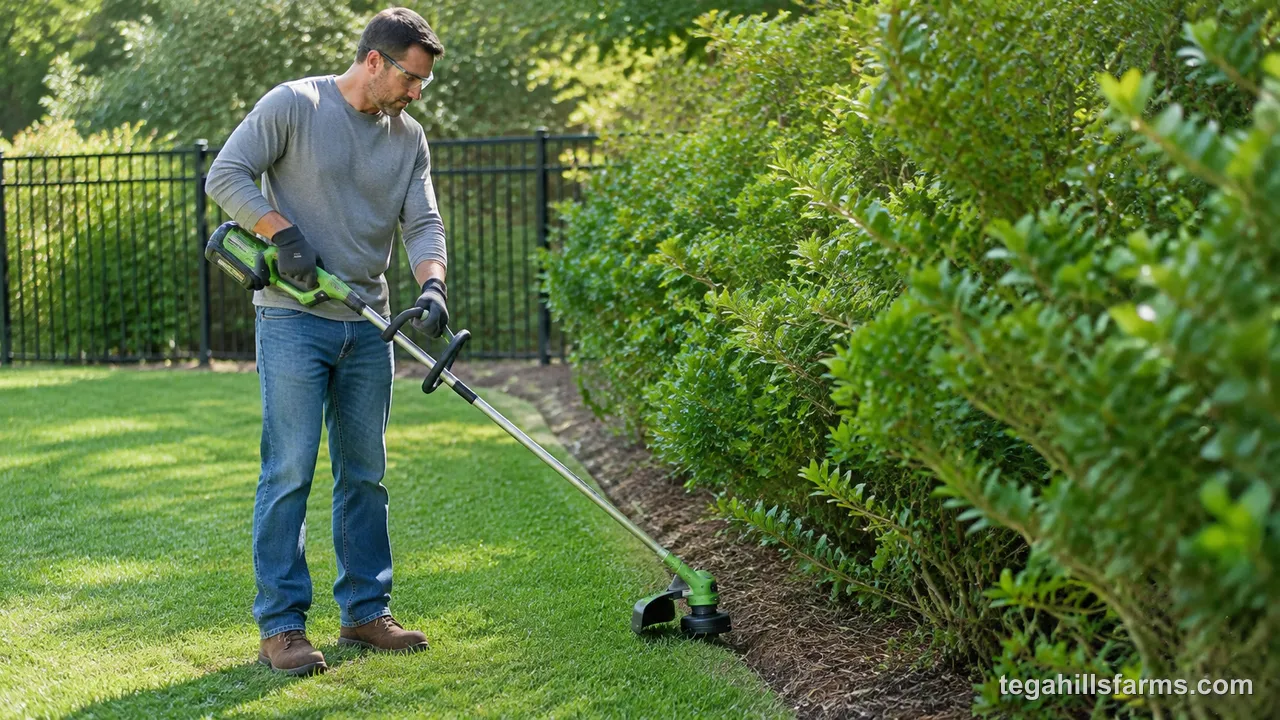
The battery platform matters more than the voltage number, because a trimmer that takes batteries you already own skips the cost of a new pack and charger and keeps one set of batteries working across your mower, blower and drill. That shared system is the real case for staying with one brand.
A higher voltage figure generally means more power available to the motor, which helps in thick grass and weeds. The picks here span DeWalt’s 20V MAX, Makita’s 36V system that runs two 18V LXT packs, EGO’s 56V ARC Lithium and Greenworks’ 80V. Higher-voltage packs tend to be bigger, and that affects balance as much as power.
Brands also rate voltage differently, with some quoting peak and others nominal figures, so comparing across brands by voltage alone can mislead. Amp-hours tell you more about how long a pack lasts, while voltage tells you how hard it can push.
Straight Shaft or Curved Shaft: Which Is Better?
A straight shaft reaches farther under shrubs, decks and fences and lets taller users stand upright, while a curved shaft is shorter, lighter and easier to steer on a small lot. Balance follows the same split: a straight shaft puts the head farther out, so it takes more arm control, but it also keeps the spinning line farther from your feet.
Curved shafts suit quick trims around a compact yard and users of average or shorter height, where reach matters less than handling. Straight shafts are also the usual base for split-shaft designs that accept edger, pruner or cultivator heads, so one power head covers several jobs. If you’re tall or trim around a lot of landscaping, a telescopic shaft like the ones on both EGO picks lets you set the length instead of hunching.
What Cutting Swath and Line Size Do You Need?
A wider swath covers ground faster, and thicker line handles tougher growth. The picks here run from 14 to 16 inches, and that spread decides how many passes a long fence line takes, while line thickness decides what the head can cut.
Line commonly comes in 0.065, 0.080 and 0.095 inch. Thin line suits routine grass and runs quieter with less strain on the motor, while thicker line resists breaking against weeds and dense stems but needs more power to spin. Dual-line heads feed two strands, so each revolution makes two cuts and clears more per pass; single-line heads are simpler and easier on the battery.
Line shape matters too, since twisted and multi-sided profiles cut more cleanly or more quietly than plain round line. Match the diameter to what your head and motor are rated for, then compare the best trimmer lines within that size.
How Much Do Weight and Balance Matter?
Weight and balance decide how your arms and back feel by the end of a session, because you hold the trimmer out in front of you for the whole job. A lighter or better-balanced machine lets you work longer before fatigue makes your cuts sloppy.
Where the battery sits changes the feel as much as total weight: a pack mounted near the rear handle counterbalances the head, while a front-heavy build tires the wrists faster. Read listed weights carefully, too. A bare-tool listing weighs the trimmer without a battery, so the real carrying weight rises once a pack is installed, and comparing it against a listing that includes the battery gives a misleading picture.
Which String Trimmer Fits Your Yard Size and Type of Work?
Routine trimming on a compact lot calls for a light, easy-handling machine, while large properties and dense growth need more runtime, a wider swath and thicker line. Matching capacity to your workload keeps you from carrying power and batteries you never use.
What Works for Small and Medium Yards?
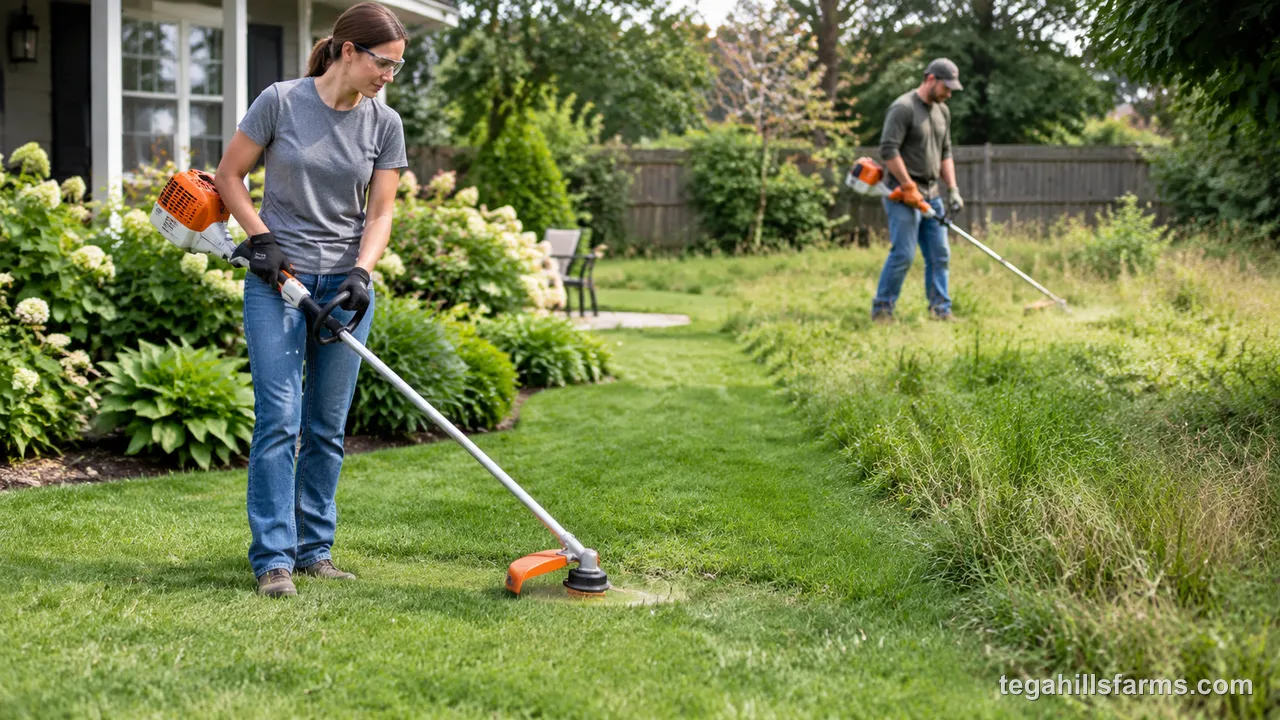
On small and medium yards, a single battery usually covers routine trimming around beds, walks and the fence line, so weight and handling matter more than maximum runtime. Extra capacity mostly adds pounds you carry for the whole job, plus a spare battery that sits on the charger unused.
A compact pack and a moderate swath make sense here, along with variable speed so you can slow down near flower beds and siding. A light trimmer also makes a weekly routine easier to keep, because short sessions happen more often when the tool isn’t a chore to lift. Those lighter, simpler setups are the focus of the best string trimmers for small yards.
What Works for Large Yards and Heavy Growth?
Large yards and heavy growth need runtime and cutting force: a spare battery or a larger pack, a wider swath, thicker or dual line, and a stronger motor on a higher-voltage platform. A spare battery lets you swap and keep going while the first one charges, so a long perimeter doesn’t stall halfway.
Higher voltage keeps the head spinning through thick, wet grass instead of bogging down, and a wider swath cuts the number of passes along long fence lines and ditches.
A string head has its limits, though. Woody brush, saplings and thick stalks shred line quickly, and a brush cutter with a metal blade handles that growth far better. If your property mixes lawn edges with overgrown corners, compare the best string trimmers for large yards alongside a blade-equipped brush cutter.
Which Trimmer Suits Which Type of Buyer?
Existing battery owners should follow their platform, long-session users need spare capacity, and buyers who put comfort first should weigh handling over raw power. The DEWALT DCST922B fits 20V MAX owners shopping on a budget, the EGO ST1623T suits long sessions with its spare battery, and the EGO ST1511T is the balanced default for a typical suburban lot. The Greenworks 80V pairs its ergonomic design with torque for weedy yards, while the Makita XRU15PT1 rewards buyers who want premium refinement. Older users who put comfort ahead of power will find handling-focused options among the best string trimmers for seniors.
A trimmer chosen on voltage or brand alone often ends up mismatched to the yard it has to cut, with a heavy high-voltage pack hauled around a small lot or a bare tool bought without a battery to run it. The money spent on runtime and power that never gets used is gone, and the machine you actually needed still isn’t in the garage.
What Mistakes Make a String Trimmer Purchase a Waste of Money?
The costliest mistake is buying capacity your yard never uses: a high-voltage platform, a twin-battery bundle or a premium kit for a lot that one small pack could finish. Each adds weight you carry every session and money tied up in batteries that sit on the charger.
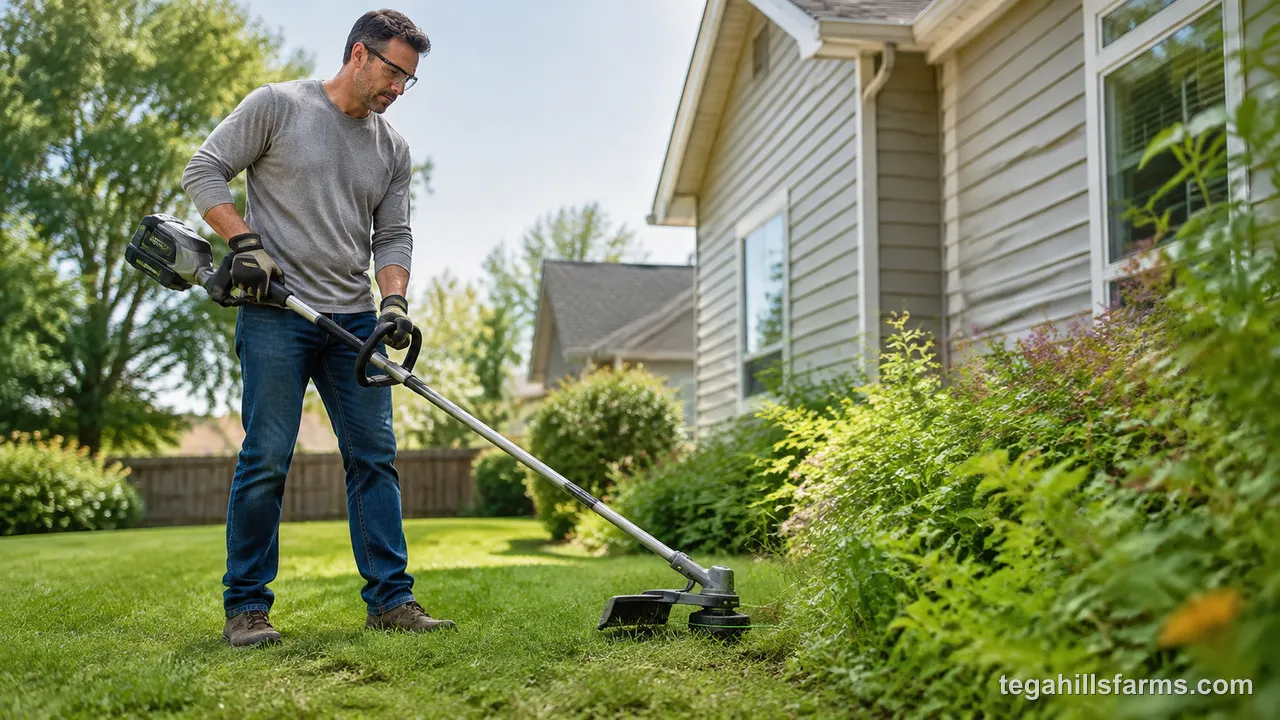
Ignoring the batteries you already own comes next. If your drill, blower or mower runs on a particular platform, a bare-tool trimmer from that brand reuses those packs, while switching brands means buying a new battery and charger on top of the tool.
Line mismatch wastes money more quietly. Line thicker than the head is designed for strains the motor and drains the battery, while line too thin for your weeds breaks constantly and burns through spools.
Budget tiers differ mainly in power, runtime and refinement rather than basic cutting ability. Entry models handle grass and light edging, while premium kits add features like automatic speed control and extra batteries. If your yard is mostly grass and light edging, the best string trimmers under $100 are worth a look, and string trimmers under $200 add more power and battery options for bigger lots.
How Do You Spot a Worn-Out String Trimmer Before It Fails?
Most trimmers wear out in their consumable parts long before the motor or shaft fails, so slow cutting, feeding trouble or shorter runs usually point to something you can replace in minutes. Catching that early keeps a healthy tool from being written off and saves you from a breakdown halfway around the yard.
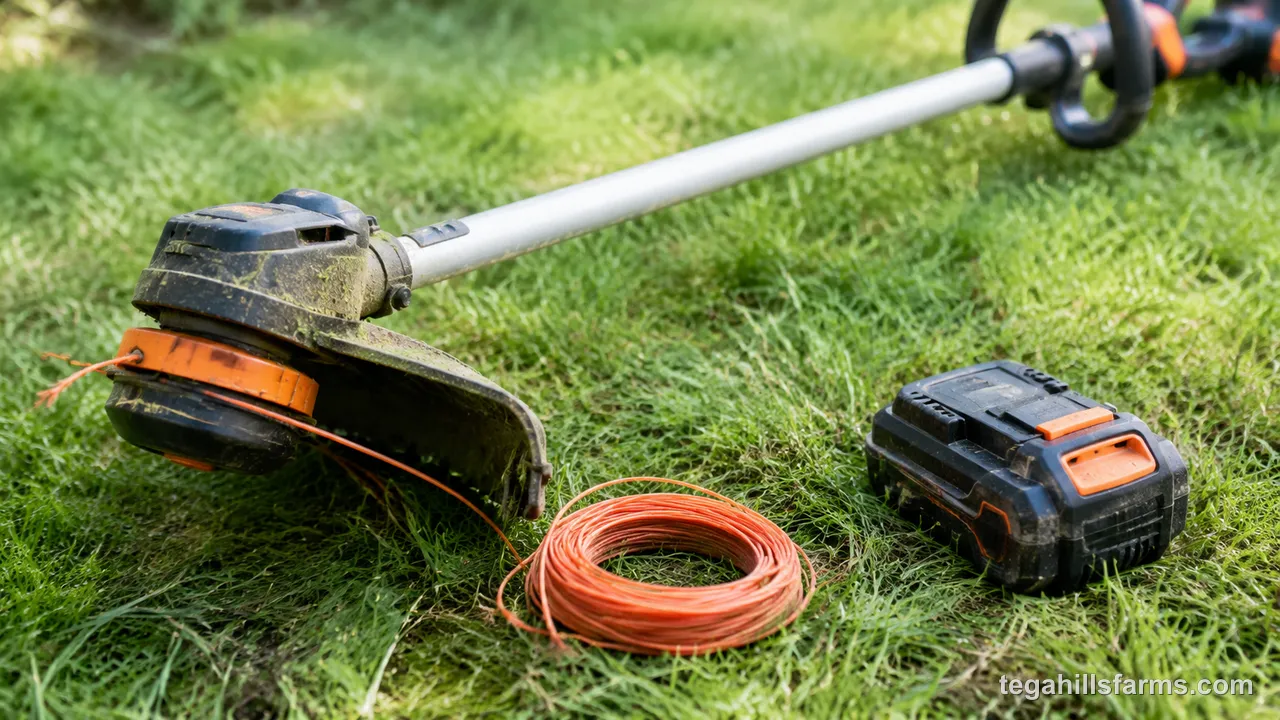
When Should You Replace Trimmer Line and Which Size Fits?
Replace trimmer line when it cuts slowly, frays into a brushy tip, snaps against light grass, or has gone brittle from sitting in a hot garage. Nylon line dries out and loses flexibility with age, so a spool that worked last summer can break constantly this season.
Size has to match the head and motor. Each trimmer is built for a specific diameter range, and going thicker jams the feed and makes the motor work harder, while going thinner on a head built for heavy line leads to constant breakage. Check the manual or the label on the head for its rated diameter. The EGO ST1511T and Greenworks 80V take heavier line than the Makita’s quieter twisted line. If your head takes the heavier size, the best .095 trimmer lines suit weeds and dense edges, while the best .080 trimmer lines fit routine grass on lighter heads.
How Can You Tell a Battery Is Losing Capacity?
A battery losing capacity shows up as shorter runs on the same yard, a charge that finishes noticeably faster than it used to, and cutting power that fades before the charge gauge looks low. Lithium-ion packs lose some capacity every year no matter how carefully you use them, so replacement is a normal part of owning a battery trimmer long term.
Storage habits slow that decline. Over the off-season, keep the pack indoors in a cool, dry spot rather than in an unheated shed or a hot garage, and store it partly charged instead of full or empty, following the manufacturer’s guidance. Let a pack cool down after heavy use before charging it. Checking the battery occasionally over winter and topping it up if it has drained keeps it from sitting fully empty.
String Trimmer FAQs
Is a battery or gas string trimmer better?
For most homeowners, battery is better: it starts with a trigger pull, runs quieter, and skips fuel mixing, pull starts and engine service. Gas still wins for long sessions on large properties and dense growth, where refueling in seconds beats waiting on a charger or carrying several spare batteries.
How often should you replace trimmer line?
Replace line whenever it runs out, breaks constantly or has turned brittle from storage. How often that happens depends on what you cut, since edging along concrete and weedy fence lines wears line far faster than trimming grass around beds. Heavier line lasts longer against tough weeds.
Should you choose a straight or curved shaft?
Choose a straight shaft if you’re tall, trim under shrubs and decks, or want attachments; it reaches farther and keeps the head away from your feet. A curved shaft is shorter and easier to steer on small lots. Straight-shaft control also helps with crisp lines along walks, which matters among the best string trimmers for edging.
Can you use one brand’s battery in another brand’s trimmer?
No, batteries are built for their own brand’s platform, so an EGO pack won’t fit a DeWalt or Makita tool. Third-party adapters exist, but they can void warranties and bypass built-in protections. Sticking with a brand whose batteries you already own saves money and keeps chargers to a minimum.
More Guides on Best String Trimmers
- Best String Trimmers With Attachments
- Best String Trimmers Under $300
- Best String Trimmers for Homeowners
- Best String Trimmers for Tall Grass
- Best Trimmer Line for Thick Weeds
- Best Lightweight String Trimmers
- Best Commercial String Trimmers
- Best String Trimmers for Women
- Best String Trimmers for Weeds
- Best Electric String Trimmers
- Best Wheeled String Trimmers
- Best Trimmer Attachment Kits
- Best Corded String Trimmers
- Best Quiet String Trimmers
- Best .065 Trimmer Lines
- Best Brush Cutters
- Best Trimmer Heads