How to Choose a String Trimmer: Gas vs Battery vs Corded Guide
The right string trimmer matches its power source to two things: how much ground you trim and the toughest growth you cut. Gas fits large properties and heavy weeds. Battery fits most suburban yards that need quiet, easy starts. Corded fits small lots close to an outdoor outlet.
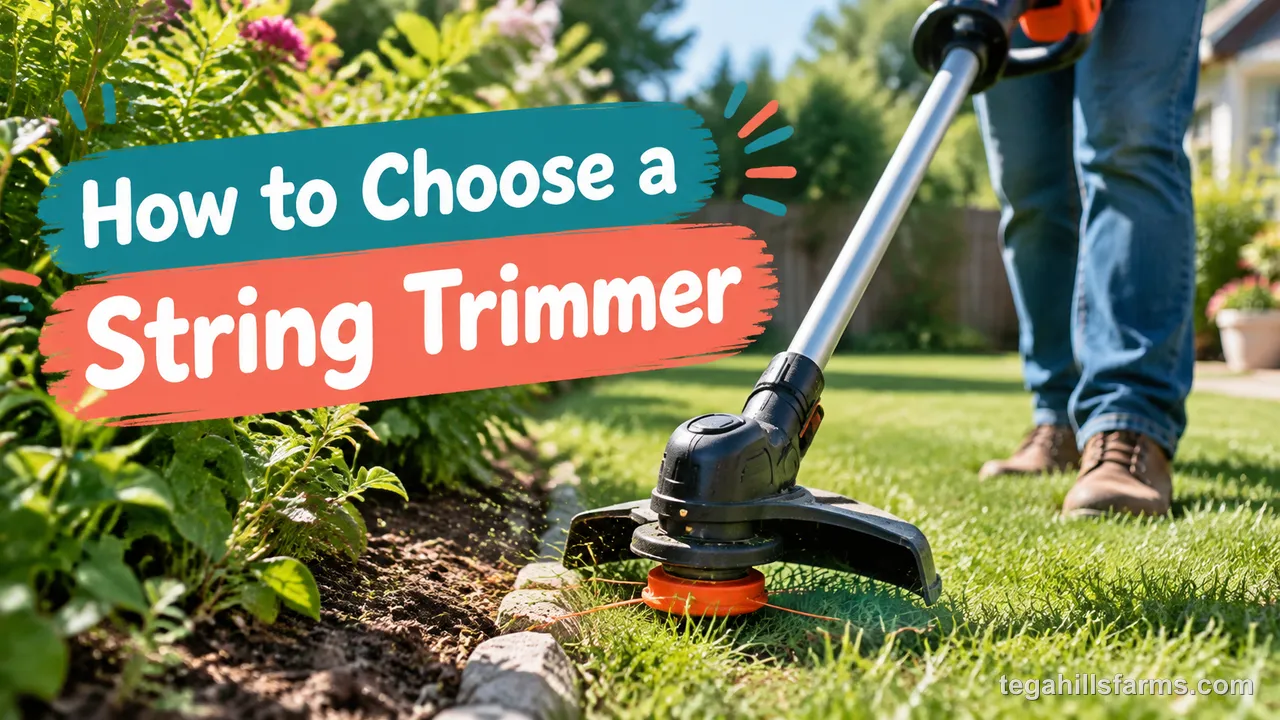
Once the power source is settled, comfort and cutting performance depend on shaft shape, overall weight and balance, cutting swath, line diameter, and whether the head accepts attachments or a metal blade. These details decide whether the machine feels controllable along a fence line or tiring after ten feet of edging.
Most buyers worry about the same things. A trimmer that won’t start in spring, a battery that dies before the last flower bed, or a tool too heavy to hold steady turns a quick chore into a frustrating one. Batteries, fuel, line, and storage also add costs after the purchase that a showroom comparison won’t show you.
Size the trimmer to the hardest job you do every week, not to the overgrown corner you clear once a year. Renting a brush cutter for a one-time cleanup costs less than carrying extra weight and power every Saturday all season.
How do you match a string trimmer to your yard size and trimming tasks?
Start with how much edging and fence line you cover and the toughest growth you cut, because those two factors set the power, runtime, and cutting system the machine needs. A tool sized only for neat lawn edges will bog down in a weedy ditch. A tool sized for brush is heavier than a small yard ever calls for, and you carry that weight on every pass.
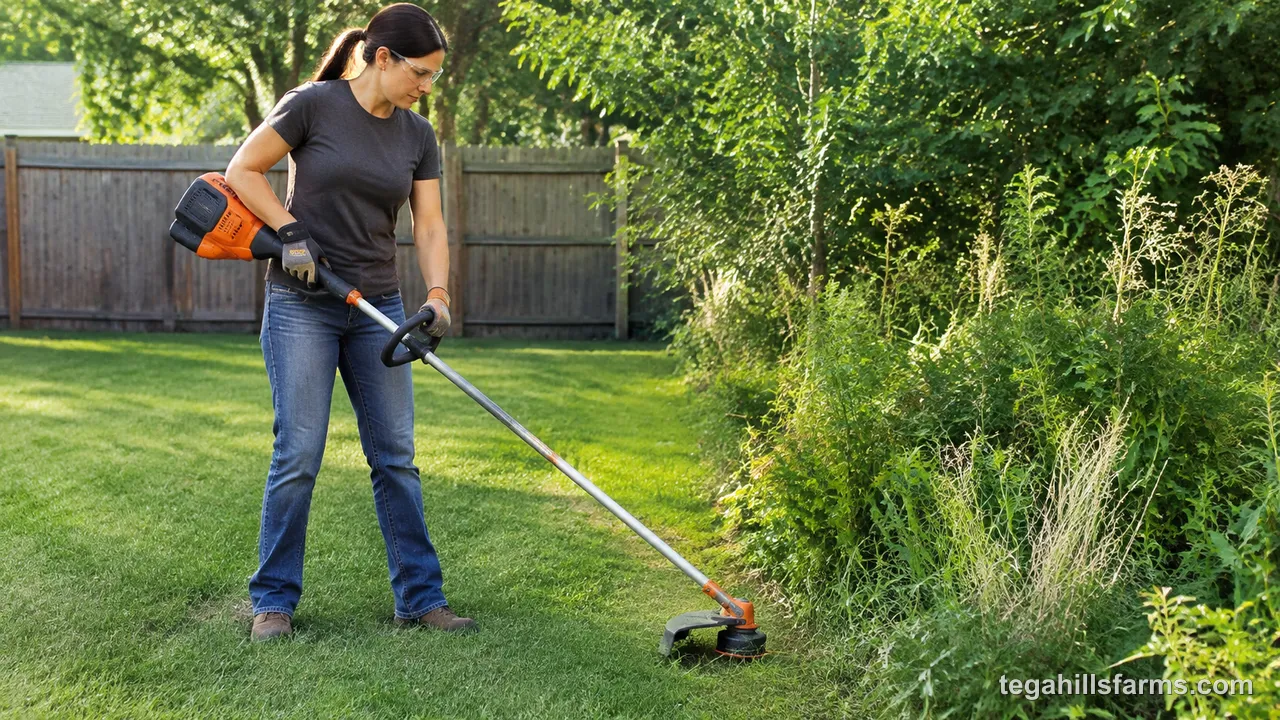
Every spec on the list of what to look for in a string trimmer, from shaft type to line size, only makes sense once those two answers are clear. To see how these yard-size factors play out in specific models, start with the best string trimmers, then narrow your search by power type.
What yard size and runtime do you really need?
On a small suburban lot with short fence lines and a few beds, one battery charge or a corded trimmer covers the whole job. Bigger properties push you toward gas or a second battery, because most battery trimmers run 20 to 40 minutes per charge.
That runtime window depends on load. Edging short grass draws little power, so the pack lasts toward the top of the range. Pushing through thick weeds makes the motor work harder and drains the battery faster. On a large lot with long fence runs, ditches, and outbuildings, a single pack can run out halfway through. Then you either wait for a recharge or buy extra packs.
Gas has no such ceiling, since refilling the tank only takes as long as pouring fuel. Owners of compact lots can skip that capacity entirely. The best string trimmers for small yards put light weight and quick starts ahead of raw runtime.
Are you trimming grass, weeds, or woody brush?
Light grass edging needs little power and thin line. Thick weeds call for more torque and heavier line. Woody brush and saplings need a brushcutter with a metal blade, because string can’t cut them.
The difference comes from how the line cuts. Nylon line works through speed and flexibility: it snaps through soft stems and bends away from hard objects. Tough weed stalks absorb more of that energy, so the motor needs enough torque to keep the head spinning under load. Otherwise the line slows down and starts tearing stems instead of slicing them.
Woody growth stops string altogether. Stems as thick as a finger deflect the line and fray it in seconds. You burn through spools while leaving ragged stubs behind. If your property includes overgrown fence rows, bramble patches, or volunteer saplings, plan for a blade-capable machine from the start rather than upgrading later.
Which power source should you choose: gas vs battery vs corded?
Gas delivers sustained power and unlimited runtime, battery wins on quiet, low-upkeep convenience, and corded is the inexpensive choice for a small lot near an outlet. The power source also determines what you sign up for after the purchase: engine maintenance and fuel storage, a battery platform you’ll keep buying into, or an extension cord you’ll drag around trees and beds.
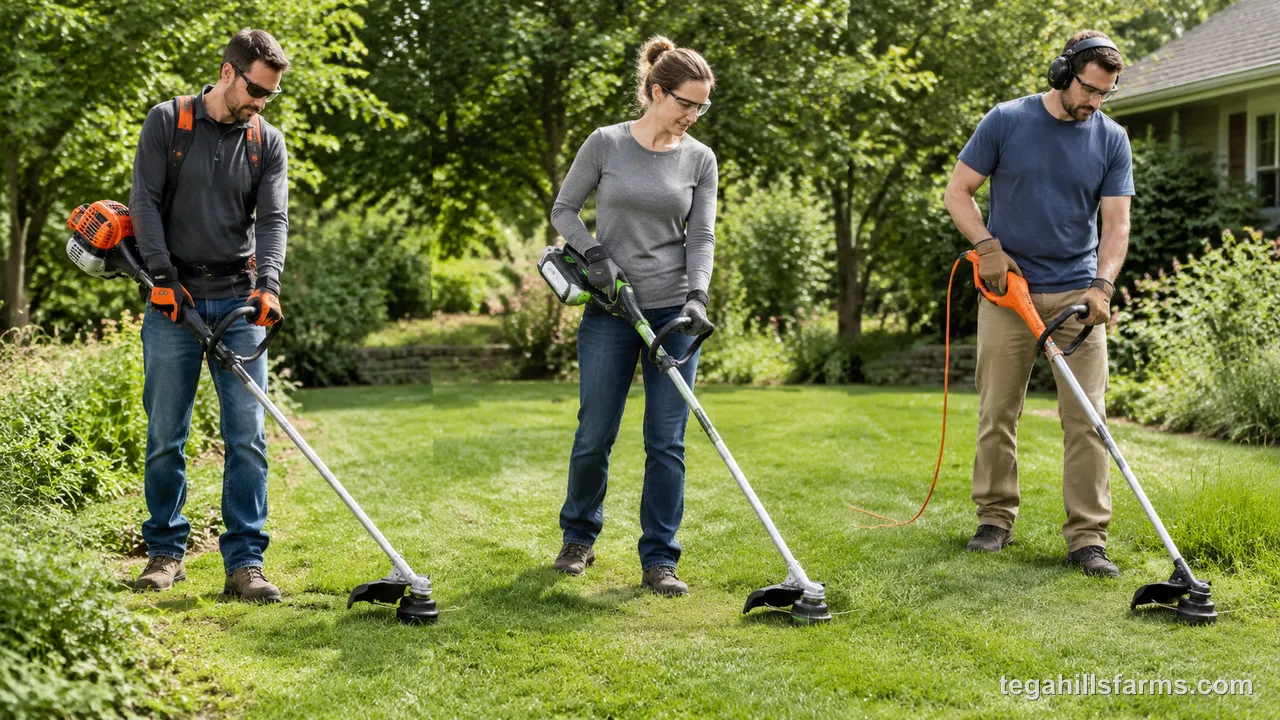
Weight and noise follow from the same choice. An engine and fuel tank add heft and vibration, while an electric motor runs quietly enough for early-morning work near neighbors. Weigh these tradeoffs against the size and toughness of your yard rather than against peak specs. A trimmer that is overbuilt for your lot costs more to own and tires you out faster.
When is a gas string trimmer the better choice?
Gas makes sense on large properties, for heavy weeds and brush, and anywhere far from an outlet, provided you accept the noise, extra weight, and engine upkeep. The engine keeps full power until the tank runs dry, so thick growth late in the session gets the same cutting speed as the first pass.
That power comes with maintenance. Most gas trimmers use two-stroke engines that burn an oil-and-fuel mix at the ratio the manufacturer specifies. Four-stroke models keep the oil separate, much like a lawn mower. Either way, fuel left sitting in the tank goes stale and gums up the carburetor, which is the usual reason a trimmer refuses to start in spring. Adding fuel stabilizer or running the tank dry before winter storage prevents most of that trouble.
Expect more vibration and noise than with electric models, so hearing protection belongs in the kit. The best gas string trimmers suit owners who already maintain a gas mower and don’t mind the routine.
When is a battery string trimmer the better choice?
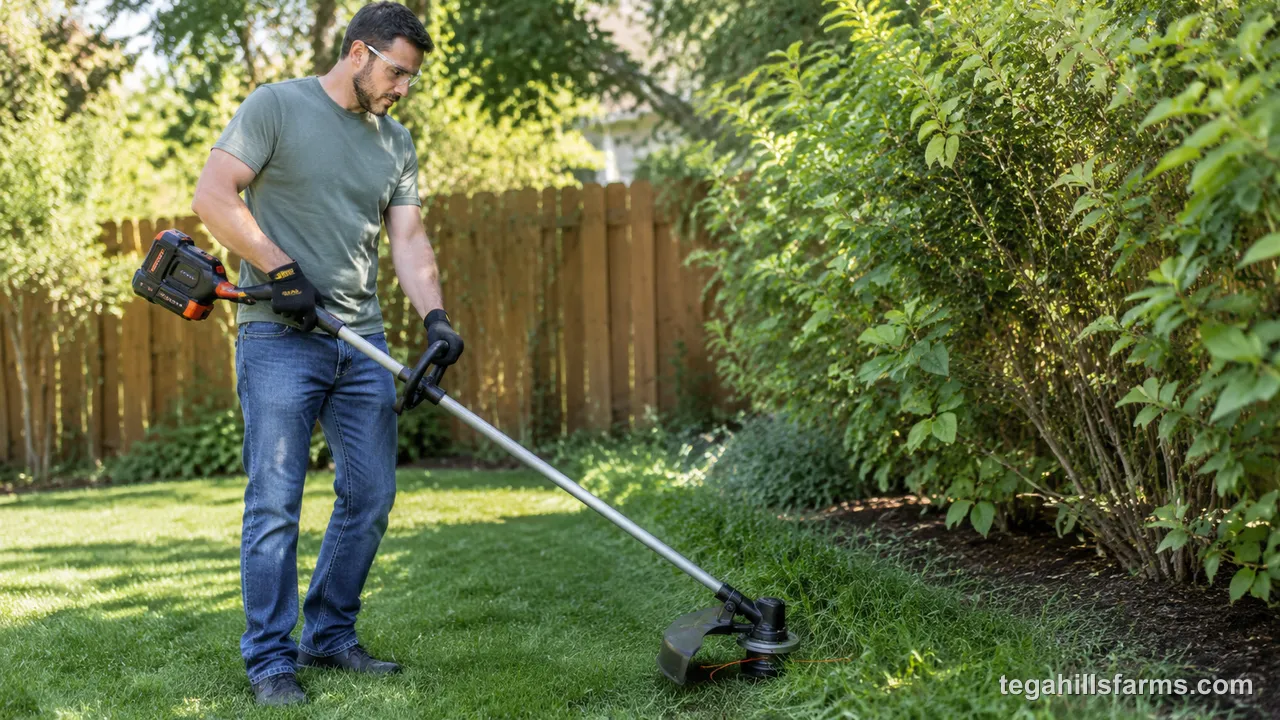
A battery trimmer fits most suburban yards. It starts with a trigger pull, runs quietly enough for early mornings, and needs almost no maintenance. The limit is runtime per charge, which matters most on large lots and in heavy weeds.
Two numbers on the battery decide how it performs. Voltage relates to cutting power, so higher-voltage platforms handle thick growth with less bogging down. Amp-hours measure capacity, so a higher amp-hour pack runs longer between charges on the same tool. Brushless motors stretch each charge further by wasting less energy as heat.
The bigger decision is the platform. If you already own a drill, blower, or mower from one brand, staying on that system means your existing packs and charger work with the trimmer. Switching brands means buying both again. I’d weigh that ecosystem ahead of small differences in cutting specs. Lithium-ion packs also lose capacity in the cold, so store them indoors over winter rather than in an unheated shed.
When does a corded electric string trimmer still make sense?
A corded trimmer suits lots of up to about a quarter-acre where every corner sits within reach of an outdoor outlet. It is light and inexpensive, and it never runs out of power mid-job.
The cord is the tradeoff. The trimmer’s own power cord is often no more than a foot long, so every job runs off an extension cord of 50 to 100 feet. That cord catches on shrubs, wraps around tree trunks, and has to be flipped over beds as you work. The motor also lacks the torque of gas for dense weeds.
Use an outdoor-rated extension cord and plug into a GFCI-protected outlet, since you are working near wet grass and the spinning line can nick the cord. For a compact yard with tidy edges, the light weight and zero fuel or battery upkeep make corded a sensible pick.
How do shaft type, weight, and handles affect comfort and control?
The trimmer that fits your height and reach and stays balanced at your hip is the one you’ll control cleanly through a full session, even when a heavier model offers more power. Poor fit shows up as a tilted cutting head, which scalps turf on one side and leaves ragged grass on the other. It also shows up as sore shoulders that cut the job short.
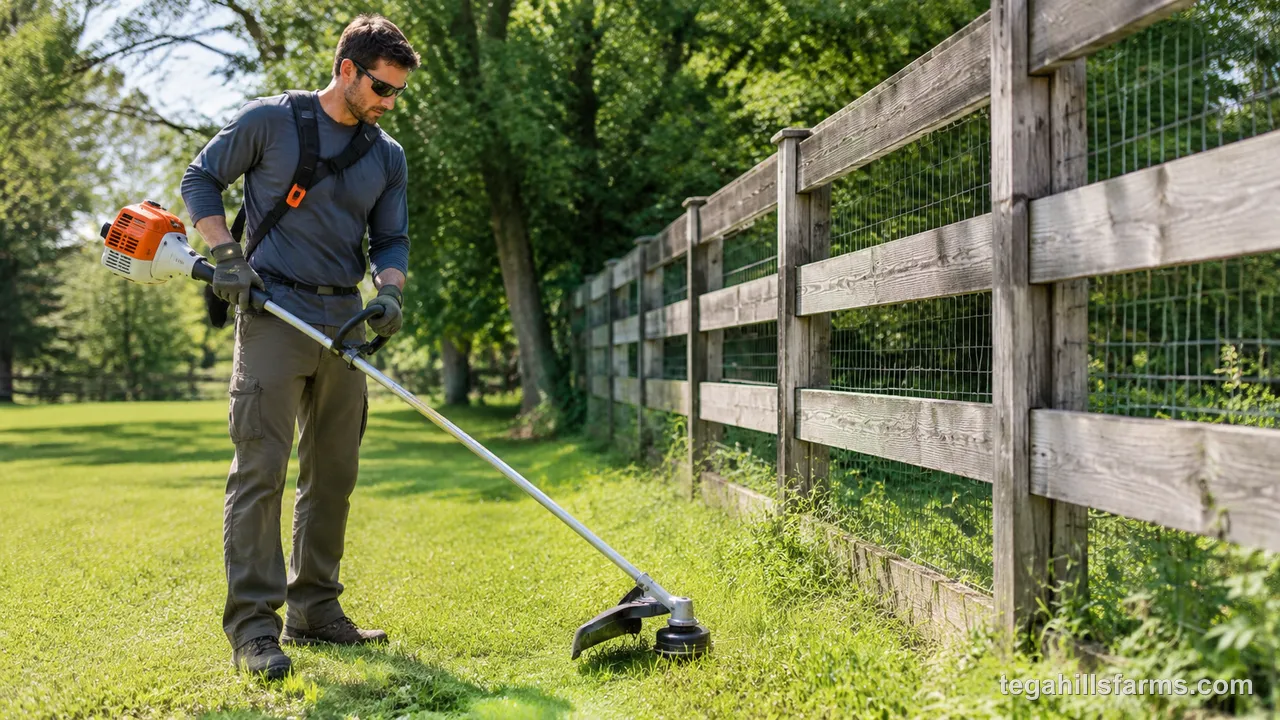
These factors matter more for older owners, beginners, and anyone trimming large properties in one go. The best lightweight string trimmers trade some cutting power for a tool you can hold level without strain.
Should you choose a straight shaft or curved shaft?
A straight shaft suits taller users and anyone who needs to reach under fences, decks, and shrubs. A curved shaft suits shorter users who want a lighter, more compact tool for open lawn edges.
The straight design puts the cutting head farther from your feet, so you can push it beneath low obstacles without bending over. Straight shafts usually use a solid driveshaft, which handles heavy work better and accepts blades and attachments. That is why most brush-capable and multi-tool models use this layout.
A curved shaft keeps the head closer to your body, which gives shorter users finer control around beds and walkways. Its flexible drive cable makes the tool lighter but less suited to heavy loads. For a petite user edging a small lawn, a curved model often handles better than a long straight shaft that tips the balance forward.
How much does weight and balance matter for longer sessions?
Weight matters more the longer you trim, and balance matters as much as the number on the scale. A trimmer that hangs level with the cutting head floating just above the ground lets your arms guide it instead of holding it up.
Where the weight sits changes how heavy the tool feels. On many battery models, the pack mounted at the rear counterweights the motor and head, so the trimmer balances near the grip. Gas models carry the engine at the back as well, but add vibration that travels into your hands over a long session.
A shoulder strap or harness moves the load from your arms to your torso, which helps seniors, beginners, and owners of large lots. Look for an assist handle you can slide along the shaft so it matches your arm length. Anti-vibration mounts on gas models reduce numbness in your hands over a long afternoon.
What cutting width and line system fit your trimming style?
A wider cutting swath clears open ground faster, while line diameter and feed type set how well the head handles weeds and how often you stop to reload. These choices also affect battery runtime, since a wide swath spun with thick line draws more power than a narrow head with thin line.
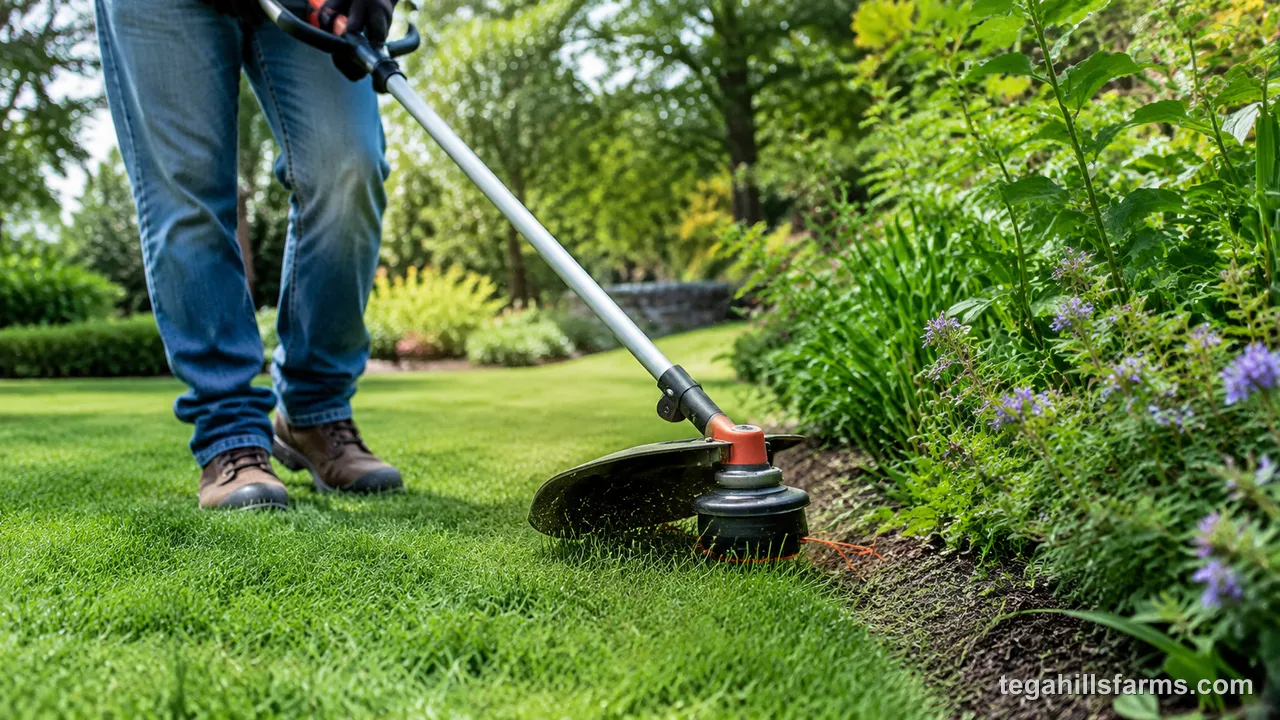
Before buying spools, check what size of trimmer line the head accepts, because forcing heavier line into a head built for light work stalls the motor and wears the spool. The right combination depends on whether you mostly clear open areas or work in tight spots around beds and hardscape.
How wide should the cutting swath be?
A swath of around 15 inches or more suits larger yards and open areas such as ditch banks, fence rows, and field edges, because each pass clears more ground. A narrower head suits small lots with beds, walkways, and tight corners, where control matters more than speed.
The tradeoff is mechanical. A longer line spinning in a wider circle cuts more grass per sweep but takes more torque to keep up to speed. On a battery trimmer, that load shortens runtime. A wide head is also harder to steer around tree trunks, garden borders, and siding without nicking bark or scuffing paint.
A narrow head draws less power and fits between closely spaced plants. If your property mixes both, a mid-size swath with an adjustable guard covers open sections without sacrificing precision near the house.
Which line diameter and feed system should you pick?
Thinner line such as .065 or .080 suits grass edging and light weeds, while .095 handles thick weeds and tough stems. Bump feed suits most homeowners because it releases line only when you ask for it.
Thicker line carries more mass, so it hits harder and wears more slowly against fences and curbs. It also needs more power to spin. Running .095 on a light-duty battery trimmer drains the pack and can bog the motor, so stay within the diameter range in the owner’s manual.
Feed systems change how you work. A bump-feed head releases more line when you tap it on the ground, which gives you direct control. Automatic feed advances line on its own, which is convenient but can waste line in light grass. Fixed-line heads use pre-cut pieces you insert by hand, which skips spool winding entirely. Twisted or multi-sided line cuts more cleanly and quietly than round line in heavy growth.
Do you need attachments or a multi-tool power head?
Most homeowners who trim lawn edges don’t, but a split-shaft power head pays off once you would otherwise buy a separate edger, pole saw, or blower. Attachments add a coupler, extra parts to store, and more weight than a dedicated trimmer carries.
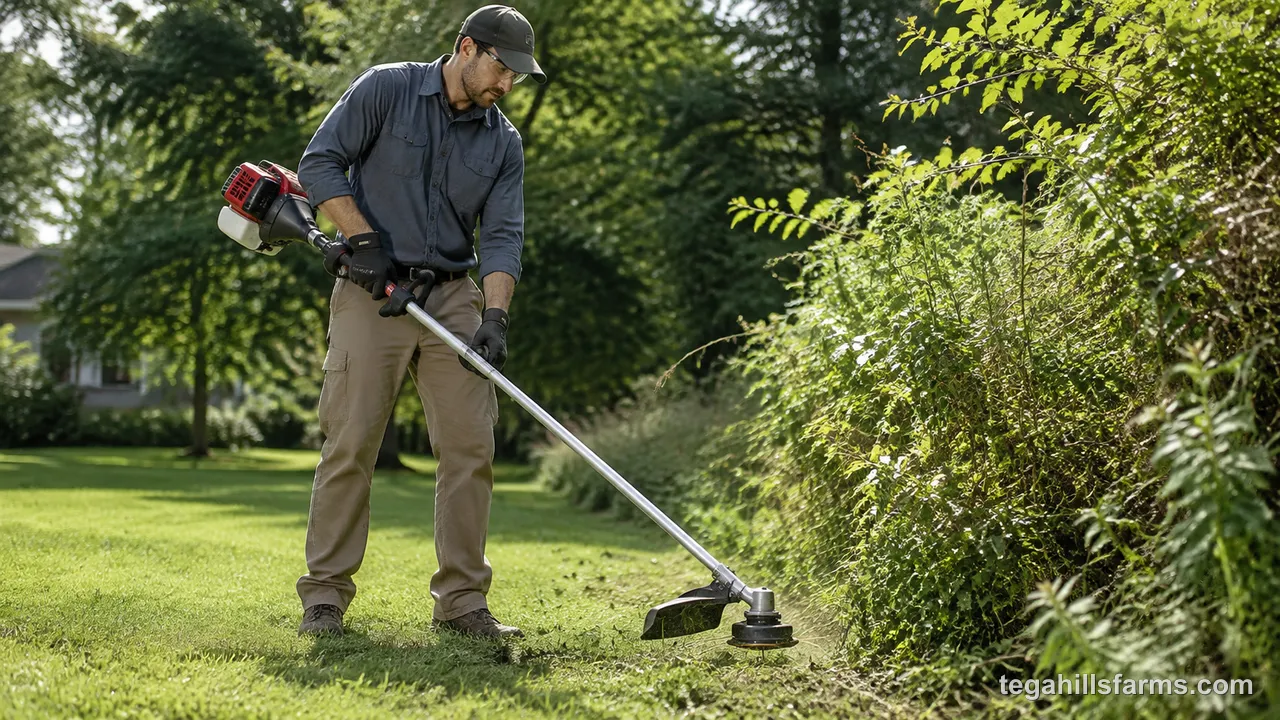
The answer depends on the rest of your property. A suburban lot with a lawn and a few beds rarely needs more than a trimmer. A property with tall hedges, overhanging limbs, or brushy fence rows can justify a system that uses one motor for several jobs. The deciding factor is whether those other tools would see regular use or sit unused on a garage hook.
Is a split-shaft multi-tool system worth it?
A split-shaft system is worth it when edging, pruning high limbs, or clearing debris are regular chores, because one engine or battery then drives several tools. If you only trim grass, the coupler adds weight and cost without a payoff.
The shaft separates at a coupler, so you can swap the trimmer head for an edger, pole saw, hedge trimmer, or cultivator. On a gas system, that means one engine to maintain instead of several. On a battery system, the same packs power every attachment.
Compatibility is the catch. Attachments generally fit only the same brand’s power heads, so the first purchase commits you to that lineup. Storage also grows with every attachment you add. The best string trimmers with attachments make sense for owners of larger properties who would otherwise fill a wall of the garage with separate tools.
When do you need a brush cutter blade instead of string?
You need a blade once woody stems, saplings, and dense brush shred string faster than it cuts. Thick bramble, small trees, and overgrown fence rows fall into that category. A blade cuts them in one sweep, while string just bounces off.
Only trimmers rated for blades can use one safely. These machines typically pair a straight solid shaft with a handlebar or loop handle, a harness, and a metal blade guard that contains debris and stops kickback. Saw blades commonly mount on a 1-inch (25.4 mm) arbor, so the blade must match your head’s mounting hardware.
Fitting a blade to a light-duty curved-shaft trimmer can break the drive cable and throw debris. If brush clearing is a regular job rather than a once-a-year cleanup, the best brush cutters give you the torque, guards, and harness support that heavy cutting requires.
A battery trimmer bought on sale often comes with a pack and charger that fit nothing else in the garage, while a gas model stored with summer fuel in its tank tends to fight every pull the following spring. Those costs never appear on the box, yet they arrive as a second charger, a carburetor cleaning, or a replacement trimmer bought seasons earlier than planned.
What hidden ownership costs and compatibility traps should you avoid?
Battery platform lock-in is the largest hidden cost. Replacement packs and chargers for one brand don’t work with another, so buying a bare trimmer from a brand you don’t already own means paying for a battery system as well as the tool. Check which platform your drill, blower, or mower uses before you buy.
Gas models generally run about $150 to $380 up front, and ownership adds fuel, two-stroke oil, fuel stabilizer, spark plugs, and air filters each season. For a full breakdown across power types, look at how much a string trimmer costs once accessories and replacement parts are included.
Corded owners pay for a quality outdoor extension cord and live with its storage. Every power type burns through line spools, and heavier line wears out faster in rough growth.
Storage habits also decide how long string trimmers last. A battery left on the charger in a freezing shed loses capacity. A gas engine stored with untreated fuel develops starting problems. A trimmer hung on a wall hook away from moisture avoids rust on the shaft and head.
How do you set up, store, and use a trimmer safely?
Wear eye protection, long pants, and closed-toe shoes every time, and add hearing protection with gas models. Spinning line throws stones, glass, and debris hard enough to injure skin or eyes. Before starting, walk the area to pick up rocks, wire, and toys. Keep children and pets well away while you work.

Leave the debris guard in place, since removing it sends clippings and stones toward your legs. Hold the head level and let the line tips do the cutting rather than burying the head in the grass.
When the line runs out, learning how to restring a weed eater saves a trip to the store. Wind the new line in the direction of the arrow on the spool so the head feeds correctly.
For storage, remove the battery and keep it indoors, out of extreme heat and freezing cold. On gas models, add stabilizer or drain the tank before winter. Hang the trimmer horizontally or with the head down so leftover fuel doesn’t seep into the air filter.