

A portable generator runs for hours on a tank, a diesel unit goes a day or two between fills, and a standby generator connected to a natural gas line can keep running as long as the gas keeps flowing. In most cases the engine isn’t the real limit. Fuel, rest breaks and oil service are.
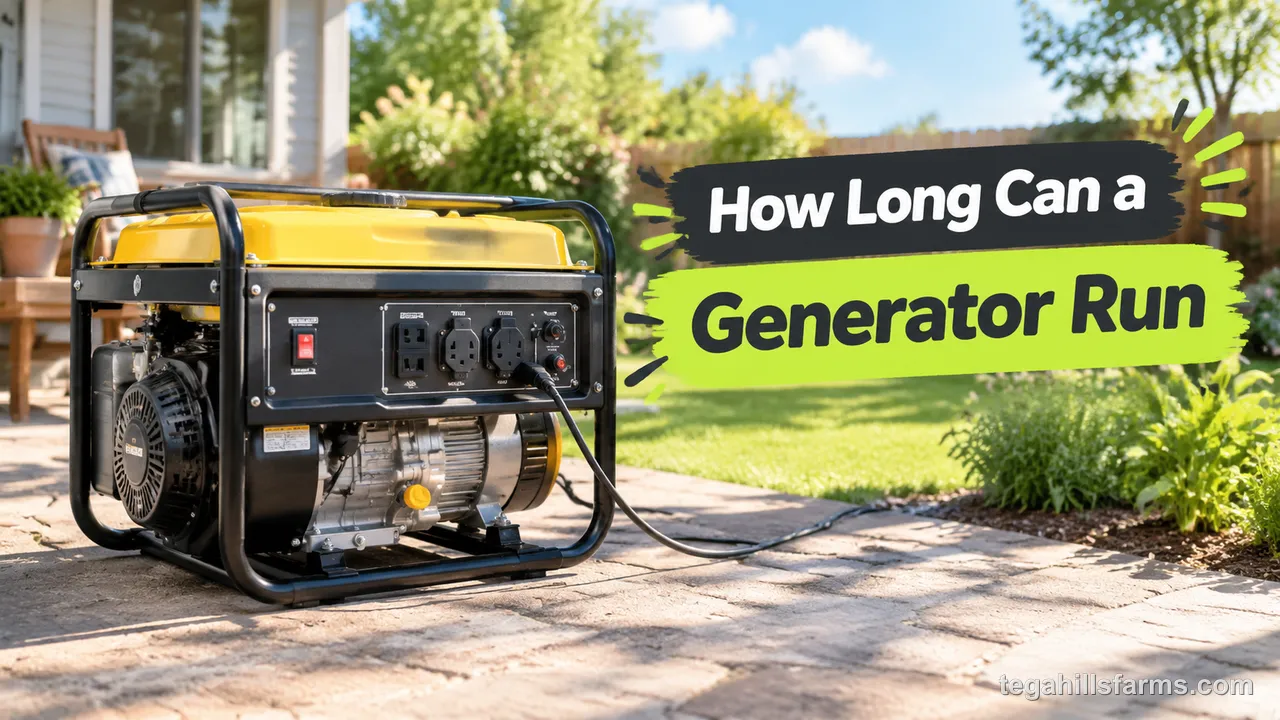
Three things you control decide how long your own unit lasts: the fuel it burns, how much of its rated output you draw, and how closely you keep up with maintenance during a long outage. Those same factors decide whether a machine fits a weekend storm or a week without power.
Going into an outage, you want to avoid two things: running dry in the middle of the night and wrecking the engine by pushing it too hard. If you know the realistic hours per fill, when to shut down for a break, and how to keep exhaust away from the house, you can plan around both.
How Long Can a Generator Run Continuously?
Runtime comes down to generator type, fuel supply and load. A portable unit counts its run in hours per tank, while a standby unit on a fixed fuel line can go for days or longer.
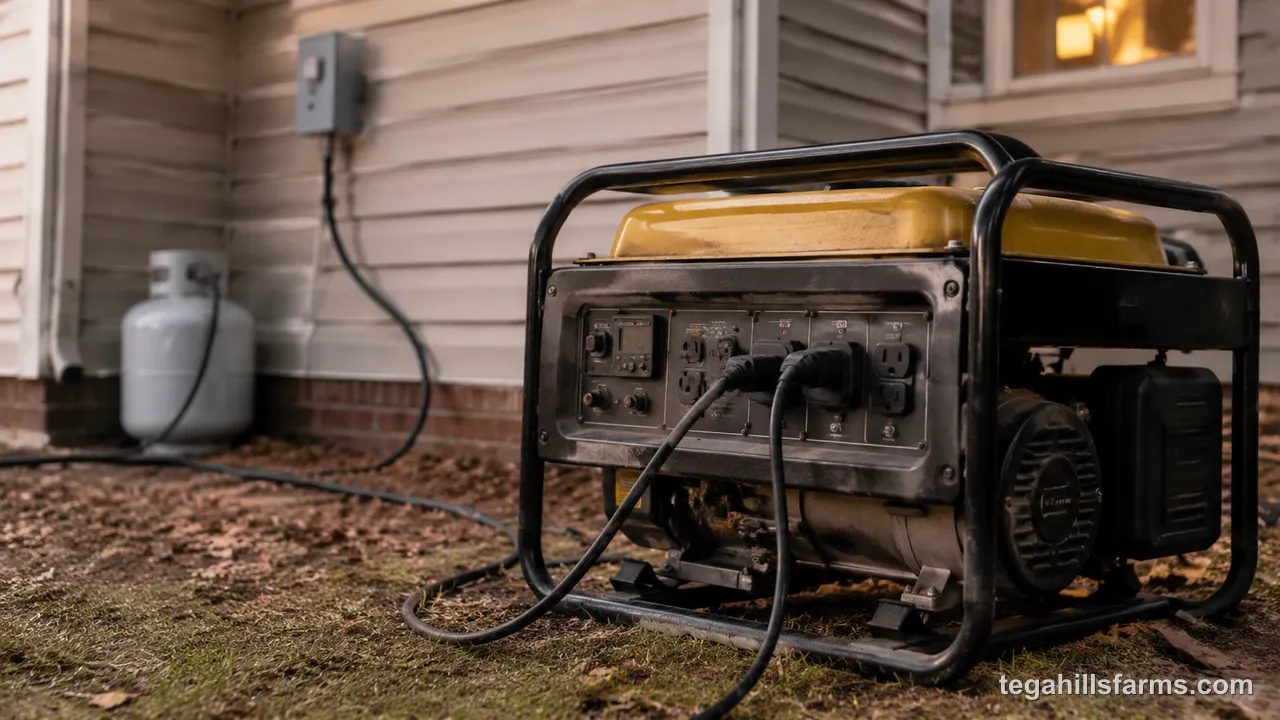
Type sets the ceiling because it determines how the engine is cooled and how fuel reaches it. A small air-cooled portable is built for shorter stretches with refueling stops. A permanently installed standby is designed to carry a house through a long outage.
Fuel supply sets the practical limit. A tank or cylinder runs out on a schedule you can predict, but a utility gas line only stops when the utility stops it.
Load decides where a given machine lands within its range, since a lightly loaded engine burns less fuel per hour than one running near its rating. For the bigger buying picture, our guide on how to choose a generator shows how runtime fits with the other things you need from a unit.
How Does Runtime Differ Between Standby and Portable Generators?
The two classes differ in fuel source and cooling design. A standby unit draws from a fixed supply and is built for extended duty. A portable unit carries its own tank and needs regular refueling and rest. Which class fits you depends on how long your outages usually last and how much of the house you need to keep running.
Standby Generators: Built for Days of Use
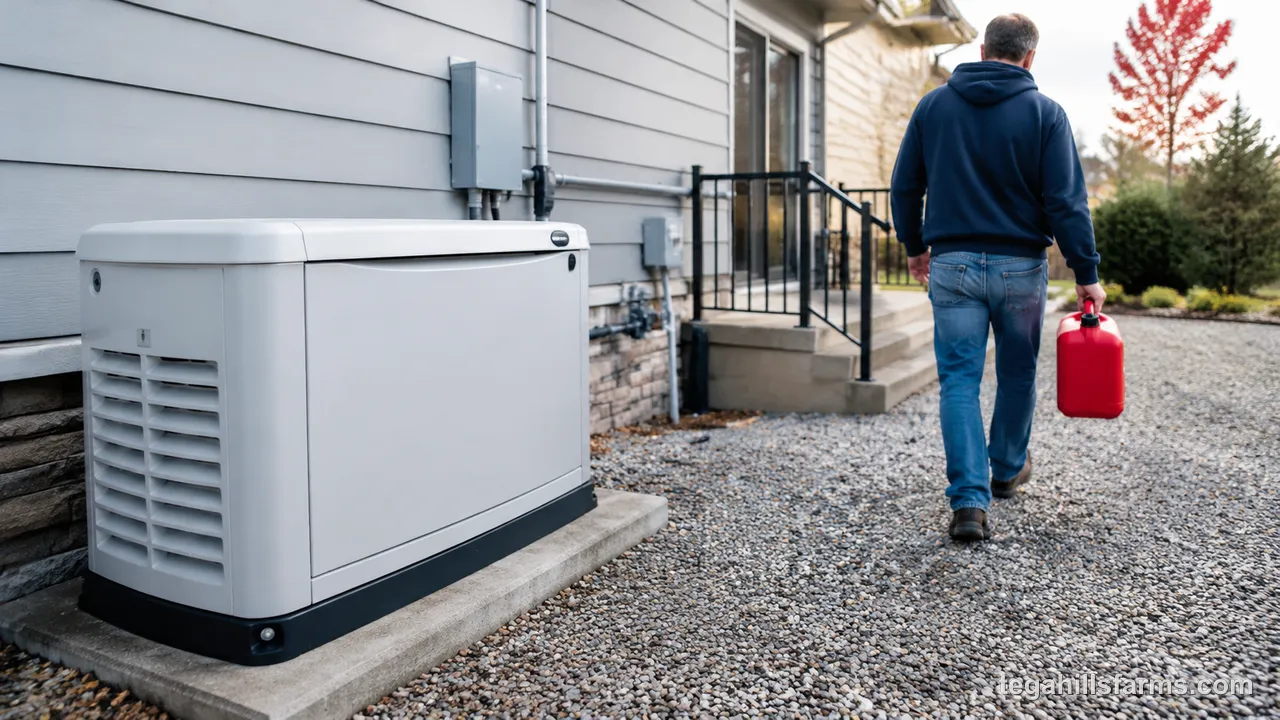
A home standby generator can typically run 50 to 200 hours without interruption, depending on the model and manufacturer. That covers most multi-day outages without anyone touching the machine, and the staying power comes from how it’s installed rather than from any single part.
Because it’s tied to a natural gas line or a large propane tank, there’s no refueling stop to plan around. Many larger standby units are liquid-cooled, which holds engine temperature steadier over long runs than the air cooling on most portables. A weatherproof enclosure keeps rain and debris off the engine. An automatic transfer switch starts the unit and moves the house onto it when grid power drops, so the run begins even if you’re away.
Output usually ranges from 7 to 22 kW or more, and the larger models can carry whole-house loads. The manufacturer’s continuous-run window still applies, though, and the unit needs scheduled stops for service.
Portable Generators: Runtime Per Tank and Per Service Interval
A full tank on a typical portable generator lasts about 8 to 12 hours before the engine needs a break. A tank that delivers around eight hours is considered fairly standard. Tank size sets the starting point, and load decides where your unit lands in that range.
Portables put out roughly 1 to 12 kW. A small unit running a refrigerator and a few lights works far below its limit and stretches each fill. A large unit carrying a well pump and a window AC empties its tank much faster. The same machine can give very different hours from one outage to the next depending on what you plug in.
Longer runs add two chores. The engine needs a cooldown pause before you refuel, because fuel spilled onto a hot engine can ignite. The oil also needs changing far sooner than it would in a car, since a small air-cooled engine runs hot and breaks oil down quickly over a multi-day run.
Inverter, Tri-Fuel and Solar Generators: What Changes?
Each of these types follows a different runtime logic from the usual tank-size-and-load math. An inverter generator speeds its engine up and down to match the load instead of holding a fixed speed. At light loads it burns noticeably less fuel per hour and stretches a tank further. Understanding how an inverter generator works explains why that advantage is largest on overnight runs powering a fridge and a few lights.
A tri-fuel unit switches between gasoline, propane and natural gas, so its runtime follows whichever fuel is connected. Output usually drops somewhat on the gaseous fuels.
A solar generator is a battery pack, not an engine. Its runtime equals stored capacity divided by the load you draw. Recharging depends on panel size and sunshine, so a string of cloudy days limits it during a long outage.
How Long Can a Generator Run on Each Fuel Type?
How the fuel reaches the engine matters as much as how it burns. A fixed gas line never needs a refill, while cans, cylinders and tanks put a hard ceiling on hours per supply. That difference decides how much fuel you have to store, how often you’re out in the weather refueling, and whether a fuel is practical for an outage that drags on for a week.
How Long Does a Gasoline Generator Run?
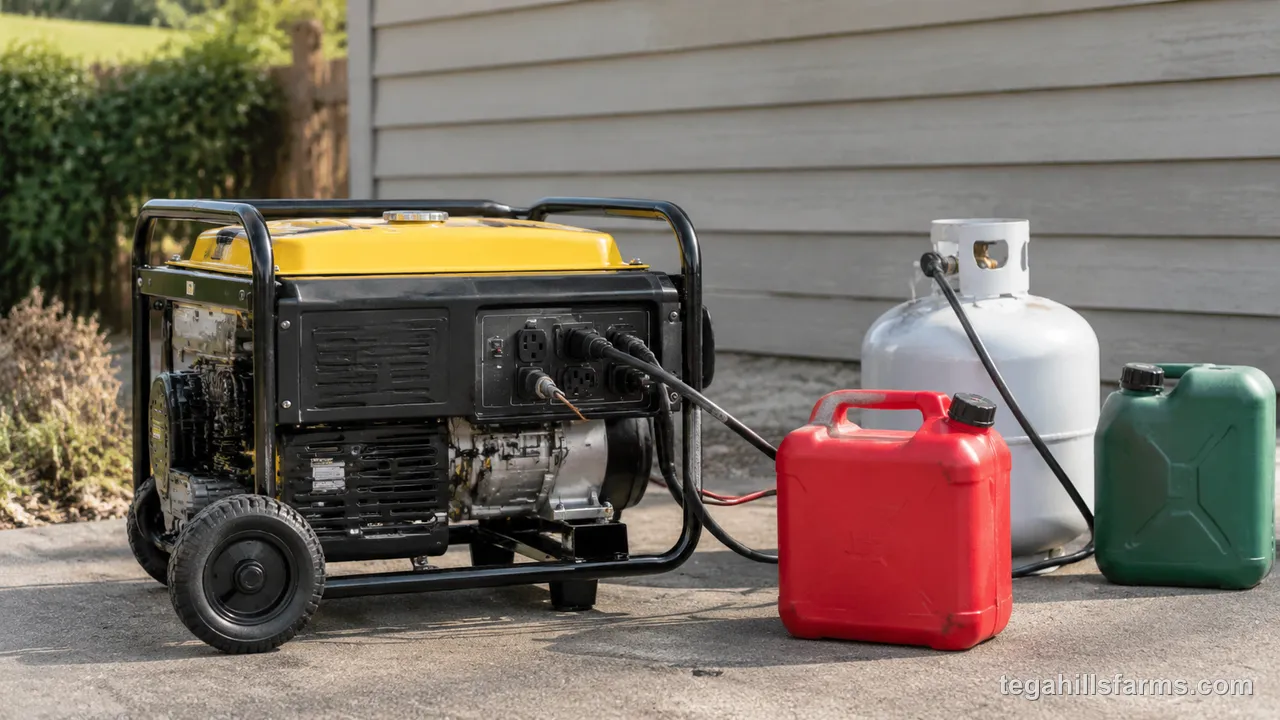
A portable gasoline generator usually runs 6 to 18 hours before it needs more fuel, with the spread coming from tank size and engine efficiency. Load moves you within that range. A unit carrying a refrigerator and lights sits near the top, while one feeding a well pump, a space heater and a microwave drains toward the bottom.
The bigger limit in a long outage is the fuel supply itself. Gasoline goes stale in storage unless it’s treated with stabilizer. Gas stations without power can’t pump. The fuel in your cans when the lights go out is often all you’ll have for the first few days. Store it in approved containers away from the house and rotate it through your mower or car so it stays fresh.
To plan how many cans to keep, it helps to know how much gas your generator will use at the loads you actually run.
How Long Does a Propane Generator Run?
A 20-pound propane cylinder, the same size used on a backyard grill, runs a typical portable generator for about 5 to 8 hours. That’s shorter than a tank of gasoline because propane carries less energy per gallon, so the engine burns more of it for the same output.
Propane makes up for that in storage. It doesn’t go stale, so cylinders stored safely outdoors are ready whenever an outage hits. Swapping a cylinder is also quicker and less messy than pouring gasoline.
For outage planning, a single grill cylinder covers an evening, not a full night and day. For a multi-day outage I’d rather keep several filled cylinders on hand, or connect the generator to a larger tank, than count on one. Cold weather slows vaporization in small cylinders, so output can sag on frigid nights.
How Long Does a Diesel Generator Run?
A diesel generator can usually run 24 to 48 hours continuously before it needs refueling, which puts it well ahead of gasoline and propane portables on a single fill. Diesel engines burn fuel more efficiently and are typically built heavier with larger tanks, so they’re designed for long, steady duty.
They also go longer between oil services than small gasoline engines, which helps during a long outage when frequent stops are a chore. Diesel stores better than gasoline too, though it still benefits from treatment and rotation.
The owner who gains the most has a rural property or farm, faces long outages, runs heavy loads like a well pump, and already keeps diesel on hand for a tractor. Diesel units are heavier-duty machines, which shows when you compare how much a generator costs by fuel type.
How Long Does a Natural Gas Generator Run?
A standby generator connected to a utility natural gas line can, in theory, run indefinitely, because fuel keeps arriving as long as the utility keeps the line pressurized. There’s no tank to empty and no refueling stop.
In practice, three limits still apply. The engine needs oil and filter service at the intervals the manufacturer sets, so even a well-fed unit has to stop for maintenance during a very long outage. The manufacturer’s continuous-run window also governs how long the unit should go between those stops. And the gas itself can be cut off. Utilities sometimes shut off supply after earthquakes, floods or line damage, which is exactly when you’d be leaning on the generator. If your area is prone to those events, a propane backup or a tri-fuel portable covers that gap.
How Does Load Affect Generator Runtime?
Higher load burns fuel faster and cuts hours per fill, while a moderate load stretches the supply and keeps engine temperatures in check. Load is the one runtime factor you can change in the middle of an outage, simply by choosing what stays plugged in and when.
What Is the 80% Rule for Generators?
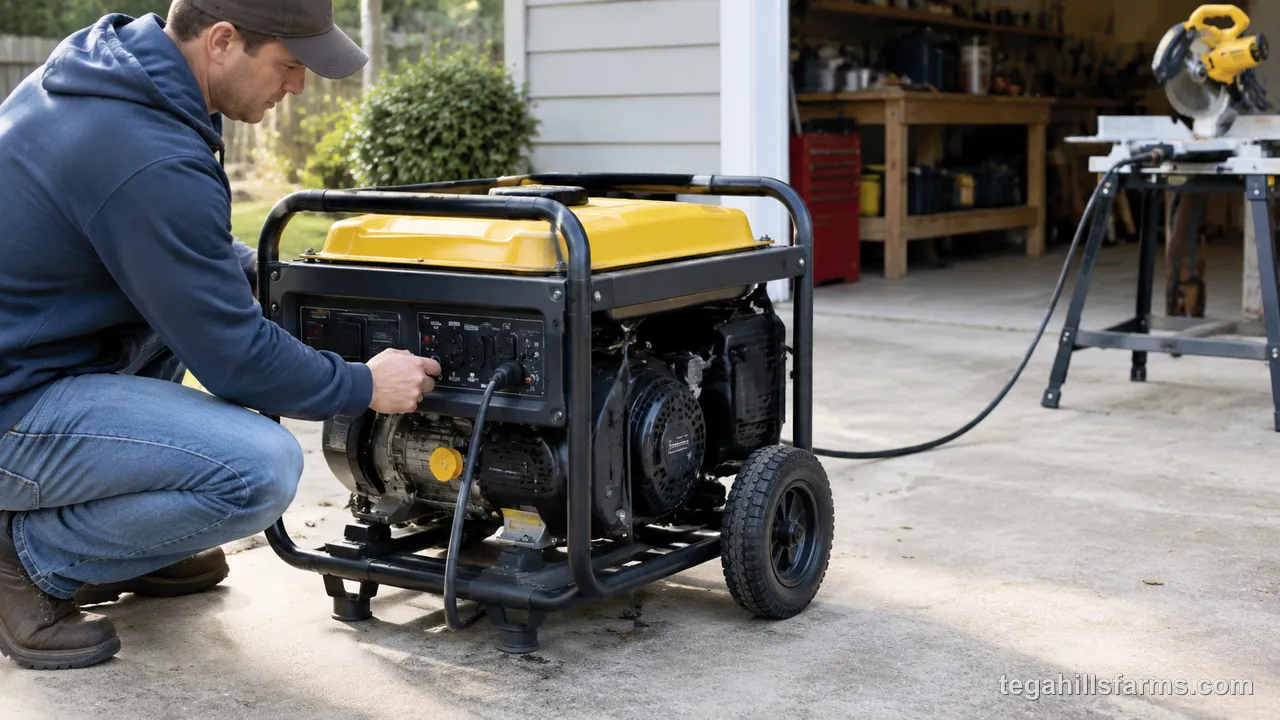
The 80% rule says you shouldn’t run a generator above 80% of its rated output for extended periods. Brief surges, like a motor starting, are fine. A sustained draw near the rating is what wears an engine down.
Near its limit, an engine runs hotter and works harder on every stroke. It’s also more likely to sag in voltage or trip its breaker when another appliance kicks on. Over a multi-day outage, that extra heat speeds up oil breakdown and wear on rings and bearings, which shortens engine life.
The 80% figure is a ceiling, not a target. For long runs, keeping the load around 50% to 75% of maximum output gives better fuel efficiency and longer operating life, and it leaves headroom for startup surges. The same rule is the starting point for how to size a generator: add up the running watts you plan to power at once, then choose a unit whose rating keeps that total inside the recommended range.
Runtime Reference by Fuel Amount and Load Level
Manufacturers usually publish runtime at a stated load. The table shows how common gasoline and propane supplies compare against that rated figure at three load levels.
| Fuel supply | Light load | Recommended working load | Near full load |
|---|---|---|---|
| Gasoline, small portable tank | Beyond the rated runtime | Close to the rated runtime | Well short; refuel sooner |
| Gasoline, large portable tank | Longest gasoline run per fill | Close to the rated runtime | Shorter, with more engine heat |
| Propane, standard grill cylinder | Covers an evening of basics | Shorter than a gasoline tank | Shortest run per fill |
| Propane, larger tank | Longest propane run | Steady multi-day supply | Drains fast; check the gauge often |
Fuel burn also scales with generator size. A larger unit uses more fuel per hour than a small one at the same share of its rating, because it’s turning a bigger engine. So the most efficient setup matches output to what you actually run. That’s the core of working out how big of a generator you need: an oversized unit loafing along wastes fuel, and an undersized one spends the outage at its limit.
Can You Run a Generator 24 Hours a Day?
Yes, on a suitable unit, as long as it has a steady fuel supply and gets rest breaks and oil service on schedule. Standby generators are built for round-the-clock duty. Portables can manage it too, but they need hands-on attention for refueling, cooldowns and oil checks. Learning how to use a generator properly before an outage means those routines are already habits when you need them.
How Often Should You Shut a Generator Down to Rest It?
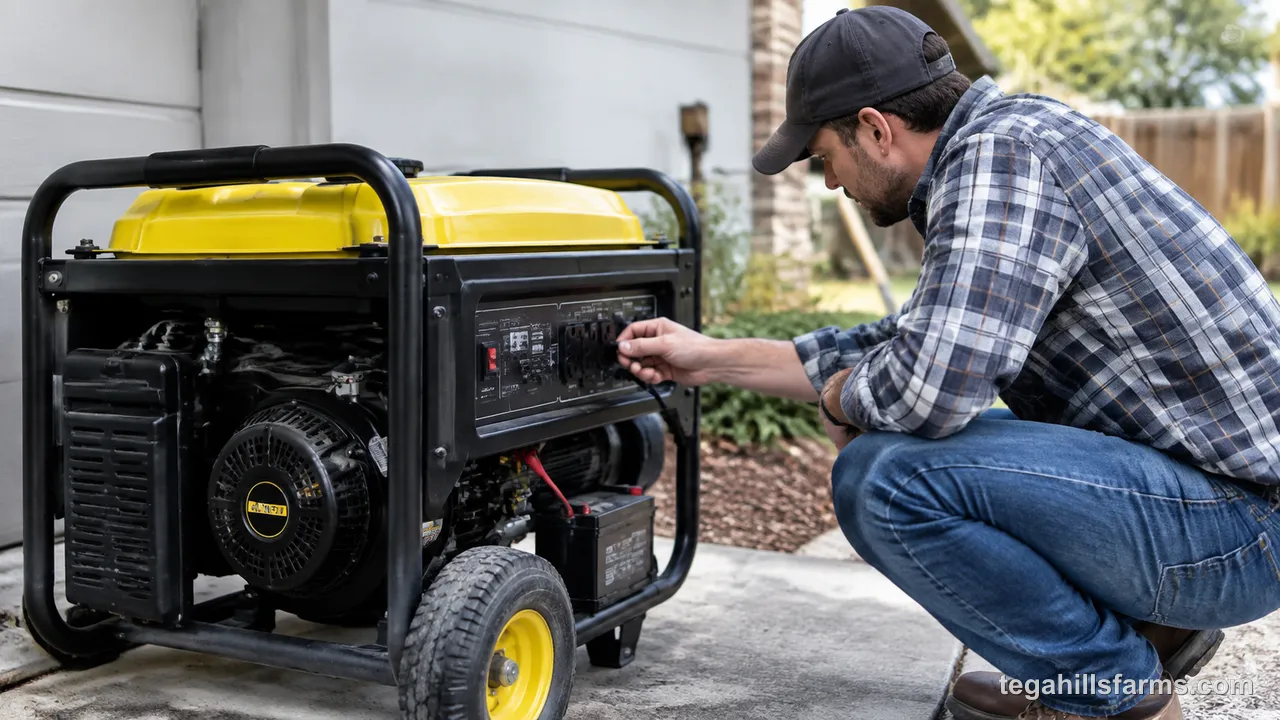
Plan a 15 to 30 minute shutdown every 24 hours so the generator can cool and you can give it a basic check.
The pause lets engine and oil temperatures drop and gives you a safe window to refuel. It’s also your chance to check the oil level, look for leaks, and clear leaves or debris from the air intakes. Small air-cooled portables benefit most because they run hotter and depend on airflow to shed heat. Liquid-cooled standby units handle heat better but still need whatever service stops their manufacturer sets. Time the break for a low-demand stretch, such as late morning when nobody’s cooking and the fridge can coast.
When Should You Change the Oil During a Long Outage?
Many portable generators call for fresh oil every 50 to 100 hours of running, so a portable carrying a house around the clock reaches that mark during a long outage, not months later. Larger industrial diesel units go 100 to 200 operating hours between oil and filter changes.
To fit a change into a multi-day run, track hours with the unit’s hour meter or a simple written log. Pair the change with a cooldown break so you’re working on a cool engine. Keep the correct oil, a funnel and a drain pan ready before the outage starts. Between changes, check the level at every refueling, because small engines burn some oil under heavy use, and top it off as needed.
How Do You Run a Generator Safely for Several Days?
Exhaust and fuel are the hazards that grow with every hour of runtime. A long run means more fumes drifting near the house and more trips to a hot engine with a gas can. Folding these habits into your generator hurricane preparation keeps them routine when a storm knocks out power for days.
Carbon Monoxide Risk and Where to Place the Generator
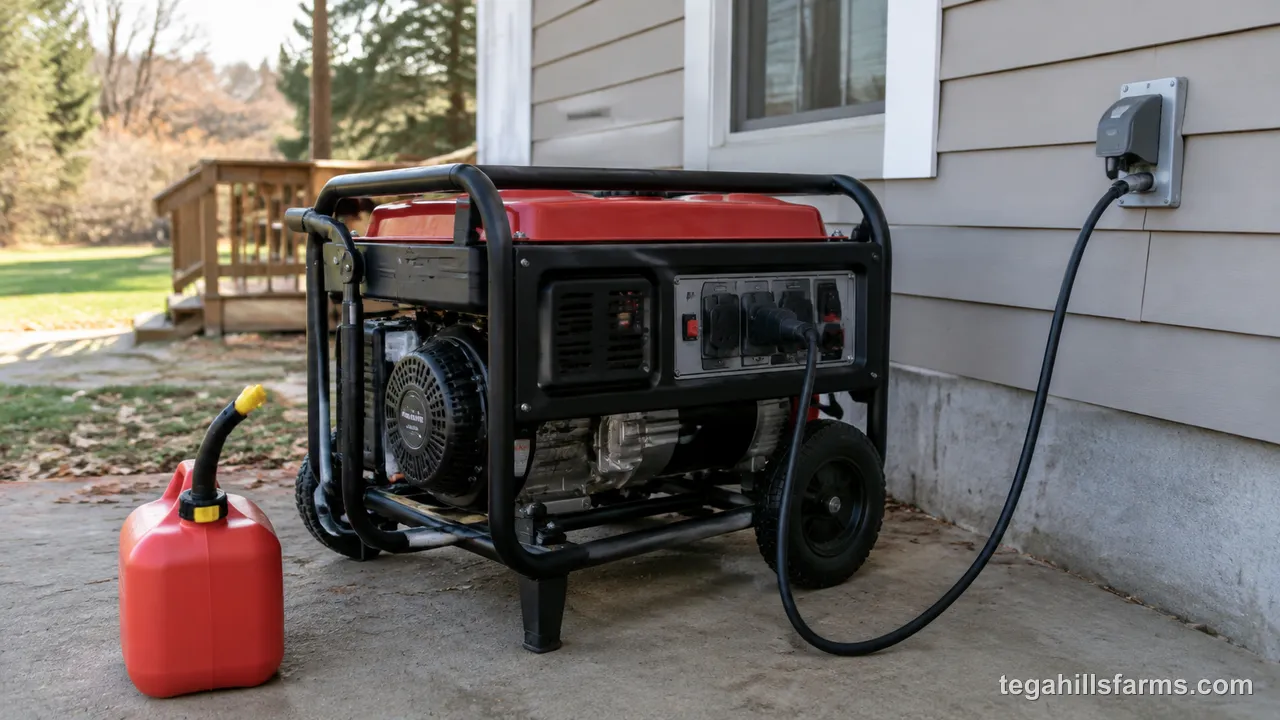
Carbon monoxide is the main danger in a long run, because the engine produces it the entire time and the gas is colorless and odorless. Place the generator outdoors at least 20 feet from doors and windows, with the exhaust pointed away from the house.
Never run it in a garage, basement, shed or enclosed porch, even with a door open, since fumes collect faster than they clear. Over several days the wind can shift and push exhaust toward a window that was fine on the first night, so recheck the setup. Install battery-powered or battery-backup CO detectors on every level of the home and outside sleeping areas, and test them before the outage. If anyone feels dizzy, headachy or nauseated, get everyone into fresh air and call 911.
Refueling and Connecting to the House
Shut the generator off and let it cool before adding fuel, because gasoline spilled on a hot muffler or engine can ignite. Use the cooldown break for refueling, pour from an approved container, wipe up spills, and store fuel away from both the generator and the house.
For household circuits, a transfer switch installed by a licensed electrician is the safe connection. It isolates your home from the utility lines. That prevents backfeed, which can energize lines that line workers believe are dead and can damage the generator when grid power returns. Plugging a generator into a wall outlet with a double-ended cord creates exactly that danger. Codes and permits vary by area, so check local requirements before settling on how to power house with generator circuits through a long outage.
A generator that ran smoothly through the first night can be burning oil, surging under load or leaving soot around the muffler by day four, because heat and carbon build up in ways a short outage never reveals. Miss those early signs, and the engine keeping your fridge and well pump going can seize partway through the outage, when repair shops are closed and replacement units are sold out.
What Happens When a Generator Runs Too Long?
Overuse shows up as hard starts, rising oil consumption, rough or surging running, darker exhaust smoke and overheating shutdowns. Any of these is a signal to stop, let the unit cool and service it. Pushing on through the signs is how a fixable problem becomes a ruined engine.
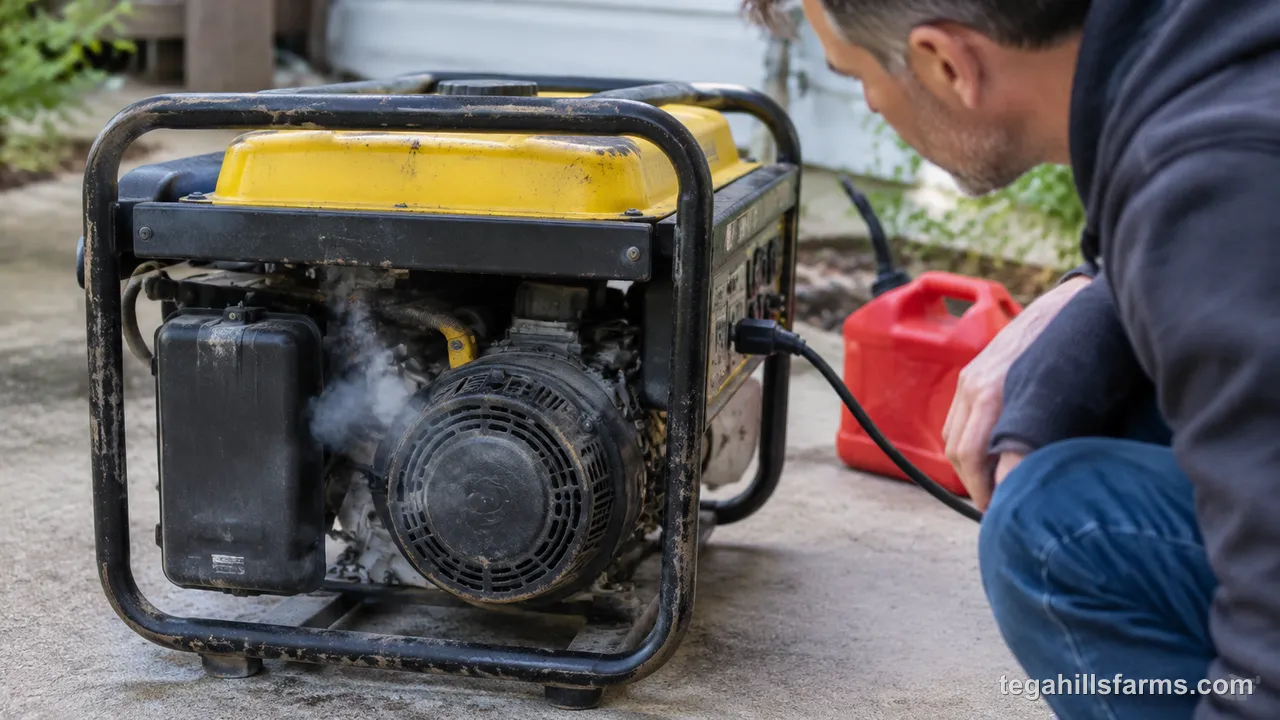
Engine life is finite. A portable generator is good for up to about 2,000 total hours, while a standby unit averages around 3,000 hours powering a mid-size home. A portable that runs nonstop through several long outages uses a real share of that budget, so tracking hours tells you when wear is due.
A well-kept unit differs from a failing one mostly in routine: oil changed on schedule, a clean air filter, fresh or stabilized fuel, and short exercise runs between outages. If a generator won’t start after a long stretch of use, the cause is often fuel, spark or a low-oil shutdown rather than a dead engine.
Why Do Run-Hour Recommendations Disagree?
The figures disagree because they describe different machines under different conditions. Which number applies depends on your unit’s duty rating, class, load and upkeep. One common guideline says not to run a generator continuously beyond 500 hours, while standby manufacturers quote shorter uninterrupted windows and portables measure runtime per tank.
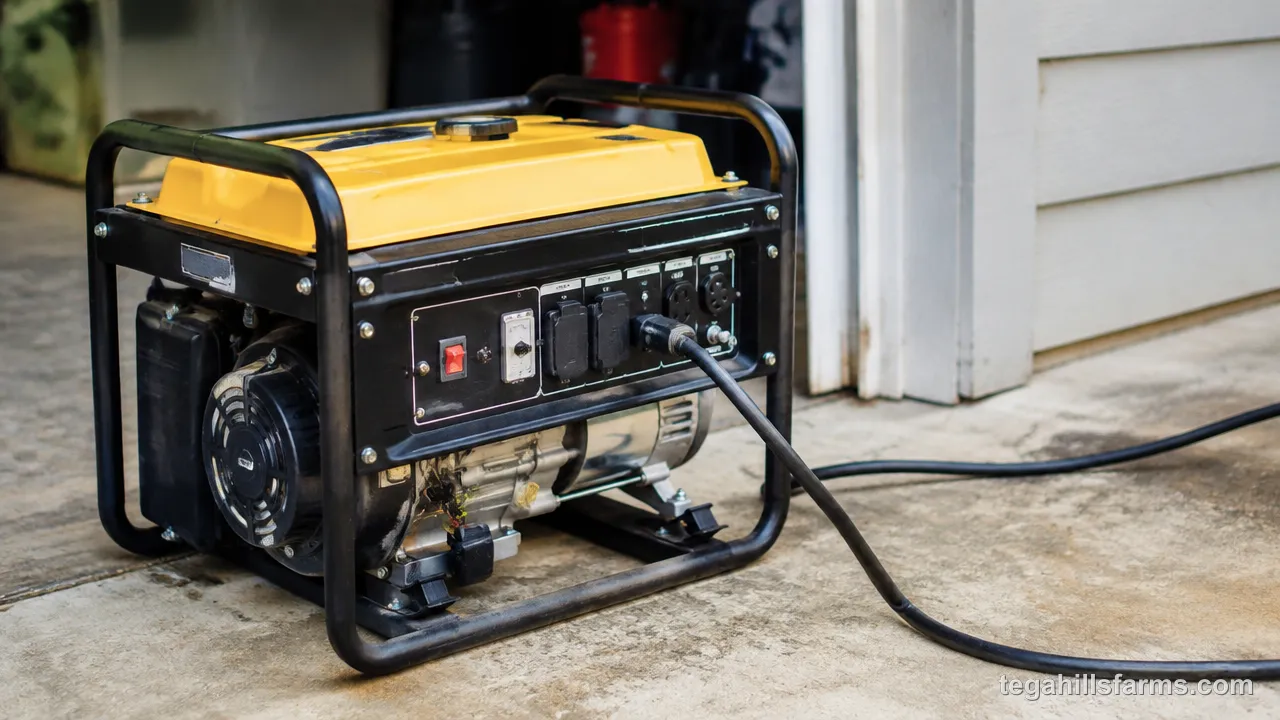
Duty rating matters most. Standby-rated units are built for emergency use, while prime- or continuous-rated industrial units are designed for long daily operation. Class adds another layer, since a liquid-cooled standby and an air-cooled portable aren’t held to the same limits. Load and maintenance shift the real number further. A unit running near its limit on overdue oil wears out well before one at moderate load with fresh oil.
The figure that applies to your machine is the one in its owner’s manual. If long outages are your main concern, duty rating belongs on your list of what to look for in a generator.
Does a Bigger Generator or Tank Always Mean Longer Runtime?
No. A bigger tank lengthens runtime only when the generator is matched to its load, and an oversized generator running a small load wastes fuel. An engine burns a baseline amount just to keep turning, so a big unit powering a fridge and lights uses more fuel per hour than a smaller unit doing the same job.
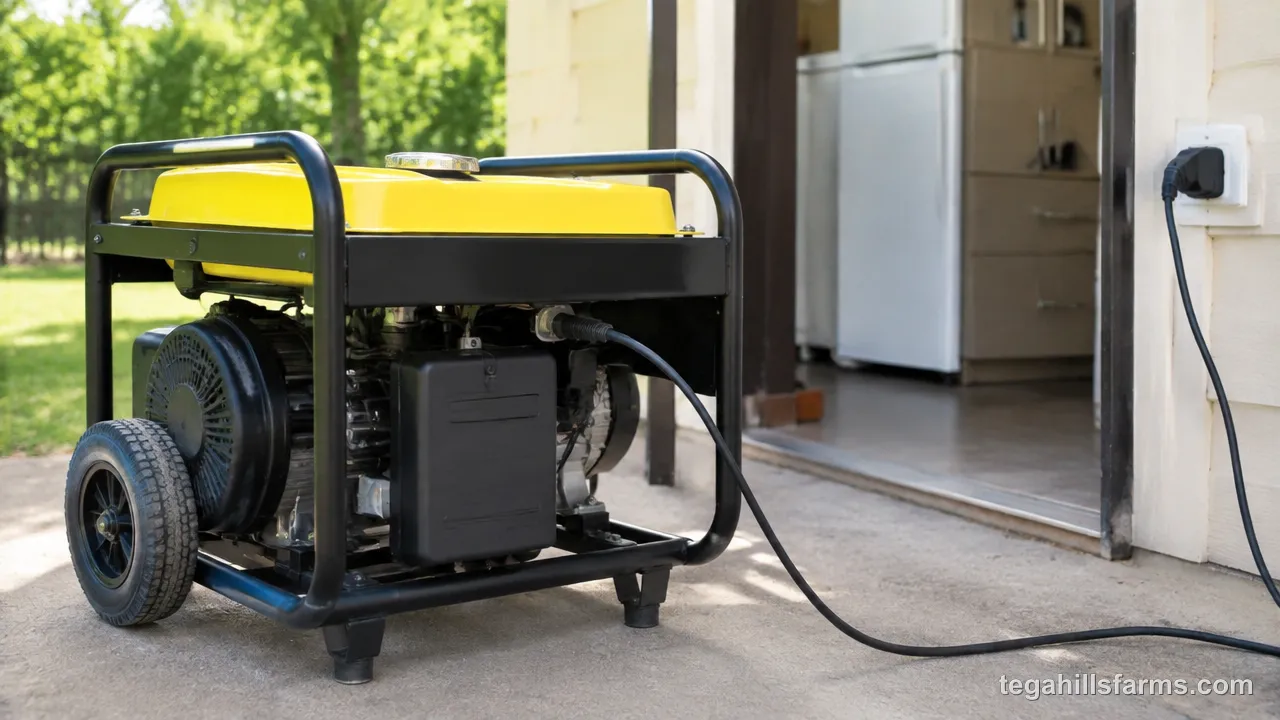
Light loading also hurts the engine. Diesel units are especially prone to wet stacking, where unburned fuel and carbon collect in the exhaust because the engine never fully warms up. Gasoline engines can build carbon the same way.
Extra capacity pays off when your load is genuinely large or swings widely, and a bigger tank on a correctly sized unit cuts refueling trips. Another option is two smaller compatible units connected in parallel. They share the load, each runs in its efficient range, and you can shut one down to rest or service while the other keeps the essentials on.
Generator Runtime FAQs
Can you run a generator in the rain?
Only with protection. Water reaching the outlets or control panel creates a shock hazard, so use a generator tent or canopy made for the purpose that keeps the unit dry and leaves plenty of airflow. Never move it into a garage or a closed porch to escape the rain, because exhaust buildup is the bigger danger. Handle plugs with dry hands.
Is it safe to run a generator overnight?
Yes, as long as it sits outdoors at a safe distance from the house and working CO detectors cover every sleeping area. Fill the tank and let the engine cool before bed so you don’t have to refuel in the dark. Plug in only what you need overnight, which lowers the load and stretches the fuel.
What does automatic low-oil shutoff do?
A low-oil sensor shuts the engine off when oil drops below a safe level, which protects it from running dry and seizing. It’s a safeguard, not a maintenance plan. If your generator stops mid-run and won’t restart, check the oil first. Keep changing it on schedule rather than counting on the sensor to warn you.
Are solar generators better than fuel generators for long outages?
For small loads, solar generators are quieter, produce no exhaust and can run indoors. Their runtime, though, depends on battery capacity, and recharging depends on sunshine. In a multi-day outage with cloudy weather or heavy loads like a well pump or central air, a fuel generator keeps going as long as you can feed it. You can cover both needs by using a solar unit for overnight basics and a fuel generator for daytime heavy loads.
Write Your Review
No reviews yet. Be the first to share your experience!