How to Choose Garden Tools: Materials and Fit Guide
The right garden tool matches three things at once: the job and soil in your yard, the size and strength of your hands, and a build that survives years of mud, sap and weather. A tool that gets all three right still feels steady after an hour of work. One that misses any of them blisters palms, bends at the socket or starts rusting before fall.
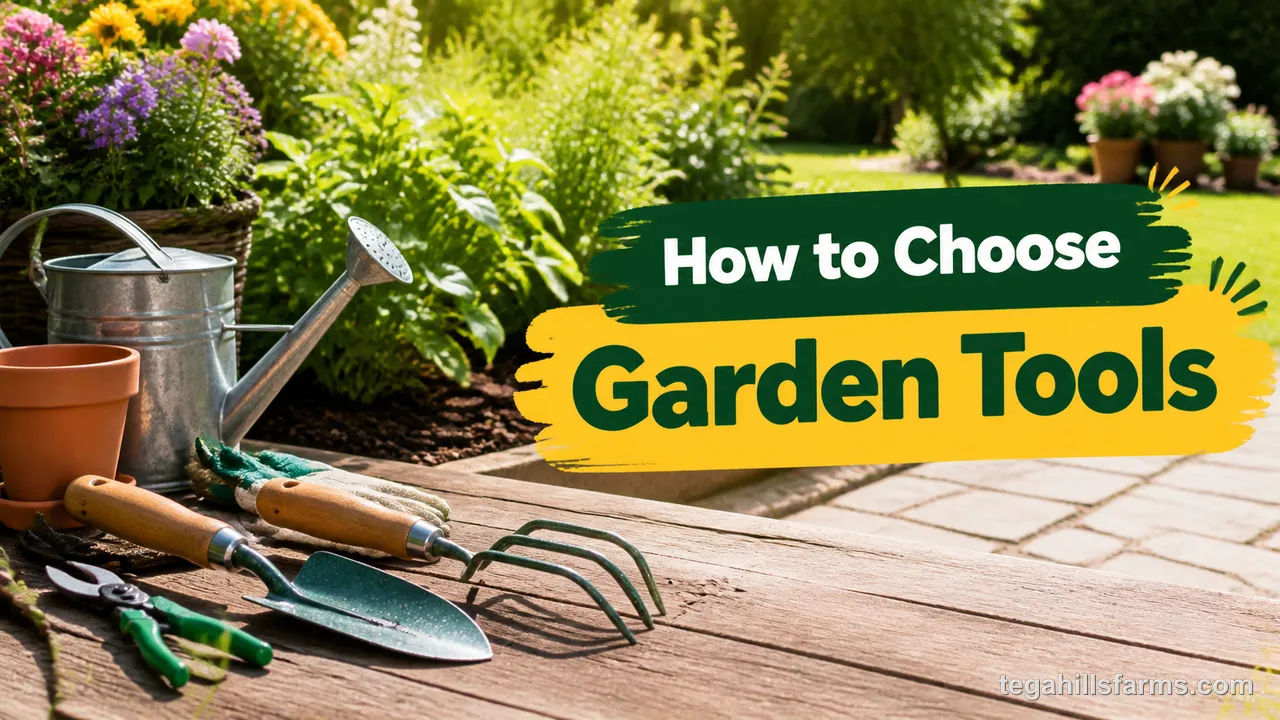
Five factors separate a keeper from a regret: blade steel, handle material, fit to your body, construction at the joints, and how the price tier lines up with how often you’ll use the tool. Each one changes how the tool feels in your hands and how many seasons it lasts.
The real risk is paying for a tool that looks solid on the rack and fails in real soil. A shovel blade folds against a root, pruner springs go slack, or a wooden handle splits after a winter outdoors. Those failures trace back to specific materials and joints you can check before you buy, not to bad luck.
What makes a garden tool the right choice for your yard?
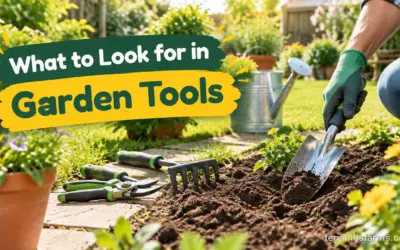
A good pick does the job your plants and soil demand, suits your hand size and strength, and is built to outlast the season; miss one, and even an expensive tool ends up in the back of the shed. The order matters here: deciding what work a tool must do comes before comparing steels or brands, because the best-built spade is still the wrong buy for a patio full of containers. Once you’re standing in the aisle weighing two similar models, a fuller checklist of what to look for in garden tools helps settle the details. For top-rated picks in each tool type, our roundup of the best garden hand tools pairs every category with specific models.
Which tools belong in a starter kit versus a full collection?
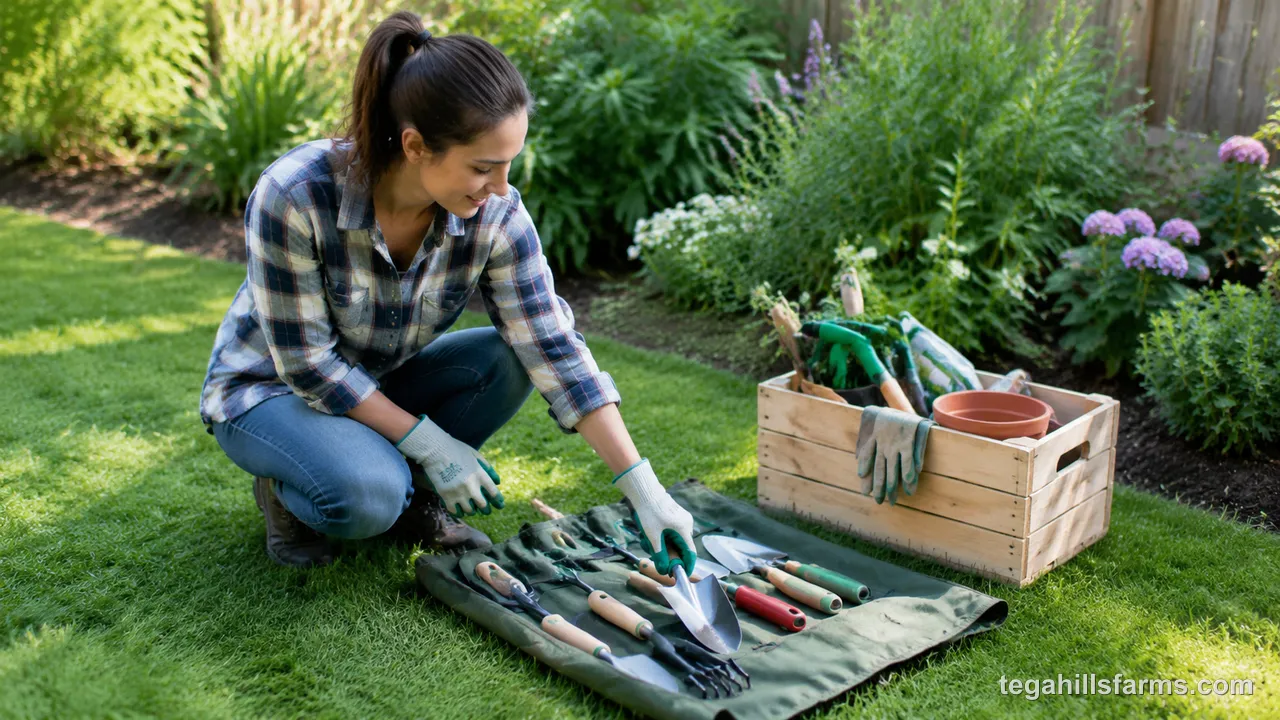
A starter kit covers the jobs that come up every week. That means bypass pruners, a hand trowel, a digging tool (a spade or round-point shovel), a leaf or bow rake, a hand weeder, gloves, and a garden hose with a spray nozzle, or a watering can holding at least 2 gallons if you mostly water containers. With those, you can plant, dig, deadhead, clear beds and water without improvising.
A full collection adds tools for jobs a starter kit handles poorly. Loppers take over when branches outgrow pruners. A digging fork loosens compacted soil without slicing through roots. A hoe clears long rows faster than a hand weeder, and a pruning saw handles limbs too thick for any lopper. Buy these when the task actually shows up in your yard, because a tool bought “just in case” rarely gets the cleaning and oiling that keep it working.
How do garden size, soil, and growing style shape your choice?
Small beds and containers call for short, light hand tools you can use while kneeling or sitting. A larger lot with lawn and borders rewards long handles and wider heads, which cover ground in fewer strokes and keep you standing upright.
Size also decides your hose. A ½-inch garden hose averages about 9 gallons per minute, a 5/8-inch hose about 15, and a ¾-inch hose up to 25. The wider diameters make sense for long runs to distant beds, where a thin hose leaves you standing and waiting.
Soil sets how much strength the steel needs. Dense clay punishes thin blades, while loose, sandy soil lets lighter tools do the work with less effort from you.
Growing style shifts where you spend. Raised beds keep you close to the soil, so a trowel and a short weeder do most of the work. Shrub borders push spending toward cutting tools, and in-ground vegetable rows make a hoe worth owning.
How do blade and handle materials affect durability, weight, and feel?
Materials set how long an edge lasts, how quickly rust starts, and how much shock reaches your wrists, none of which you can judge from how a tool looks on the rack. The materials that cut and dig best usually ask for the most upkeep, while the low-maintenance options often give up some sharpness or add weight. Which side of that trade-off suits you depends on how often you garden and where your tools spend the winter.
Should you choose forged high-carbon, stainless, or stamped steel?
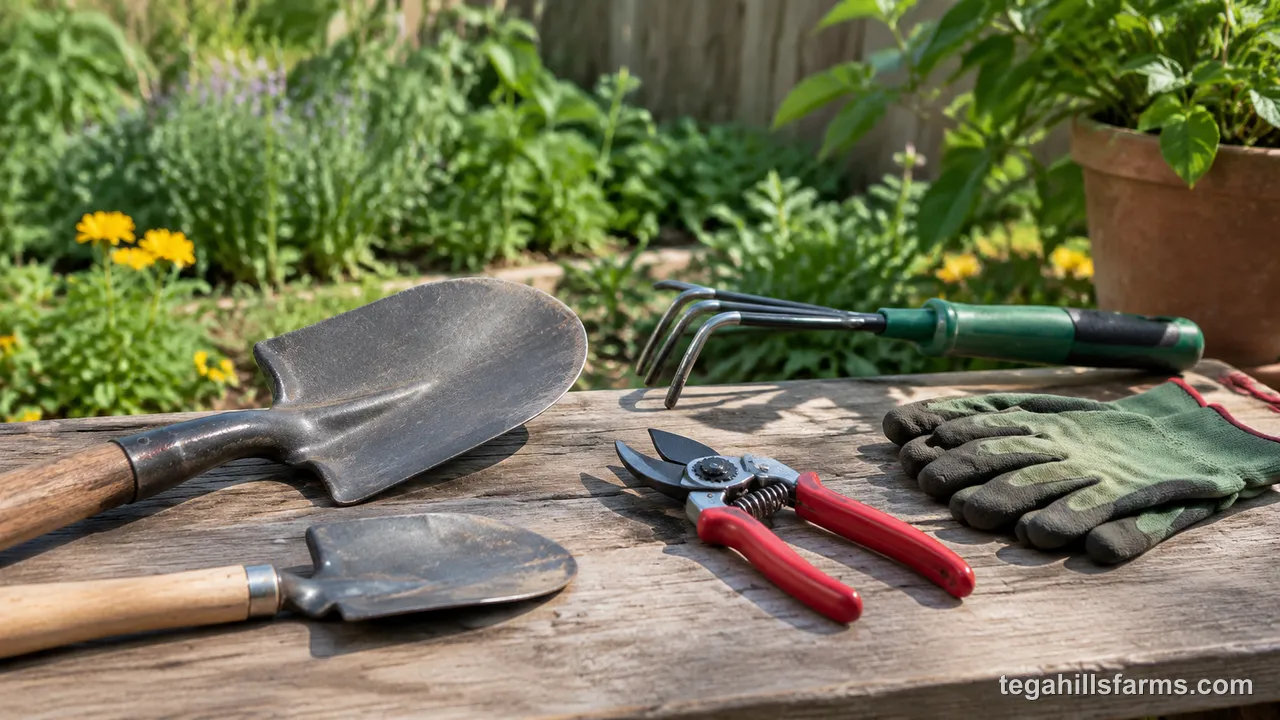
Forged high-carbon steel is the strongest choice for digging and cutting tools you use hard. Stainless steel suits gardeners who want rust resistance with little upkeep, and stamped steel belongs only on light-duty tools.
Forging shapes a heated steel bar under pressure, so the metal can be thicker where stress concentrates, such as the socket of a spade or the neck of a trowel. High-carbon steel takes a keen edge and sharpens quickly with a file, but it rusts if you put it away wet. Stainless steel contains chromium that resists corrosion, which makes it forgiving in damp soil and humid sheds, though many stainless blades lose their edge sooner and take longer to resharpen.
Stamped steel is cut from flat sheet and pressed into shape, so it comes out thinner and can bend when you pry against a root or rock. Head construction is also the first thing to check when comparing the best garden shovels, since the head absorbs every pry. I’d only accept stamped steel on a tool whose job never involves leverage, like a hand cultivator for loosening potting mix.
Which handle material fits your strength and storage conditions?
Fiberglass is the safest all-round handle if your tools live in a damp shed or garage. Wood, usually ash or hickory, absorbs shock well when you can keep it dry, and aluminum suits anyone who needs the lightest possible tool.
Wood flexes slightly and absorbs the jolt of hitting a root, which spares your wrists. Left outdoors, though, it swells, cracks and eventually rots. Fiberglass doesn’t rot or swell, weighs less than solid wood, and stays strong in wet weather. Long sun exposure can roughen its surface until loose fibers prick your palms, so indoor storage or a coat of paint helps.
Aluminum is light but carries cold and vibration straight to your hands, and it can dent. Solid steel handles almost never break, yet they are the heaviest option and pass every impact into your wrists.
If your grip strength is limited, the weight saved by fiberglass or aluminum matters more than the extra cushioning of wood, because a lighter tool lets you work longer before your forearms tire.
Bypass vs anvil: which cutting mechanism suits live stems?
Bypass pruners suit live stems because their two curved blades slide past each other like scissors, leaving a clean cut that seals over quickly. Anvil pruners press a straight blade onto a flat plate, which crushes green tissue but works well on dead, dry wood.
A crushed stem leaves torn bark and bruised tissue at the cut, which heals slowly and gives disease an easier way in. That makes bypass the default for roses, shrubs and perennials. The anvil design focuses force on a single edge, so it takes less hand strength to get through brittle deadwood, which helps when clearing old canes.
If you only own one pair, make it bypass. Looking at the best pruning shears side by side shows how much blade curve and spring tension vary even within that one type.
How do you match tool fit to your body and grip strength?
Start with your height, your hand size and how long you usually work, because those set the handle length, grip diameter and tool weight that keep your back straight and your wrists neutral. A tool that fits feels almost unremarkable in use, while one that doesn’t shows up as a sore lower back, numb fingers or a grip you keep adjusting. Fit matters even more than material when hand strength is limited, since the same tool can feel easy for one person and exhausting for another.
What handle length and weight feel right after an hour of work?
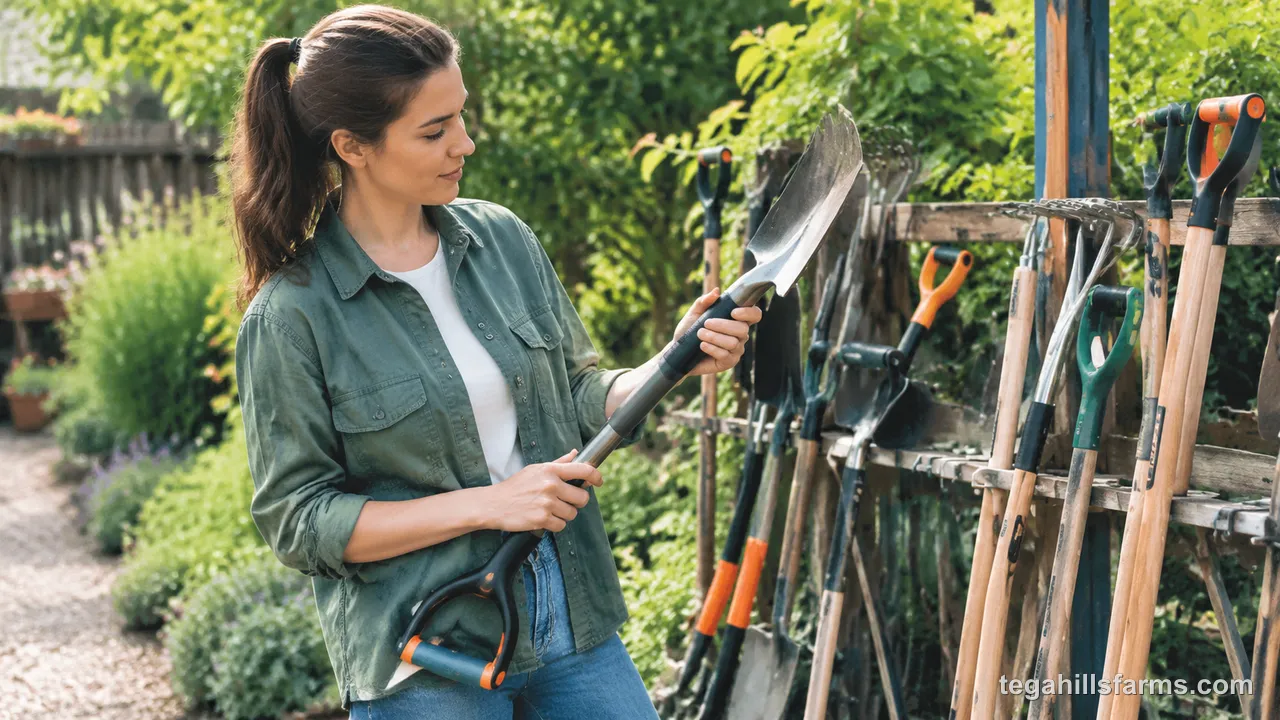
The right length lets you work with a straight back and slightly bent elbows. The right weight is the heaviest tool you can lift or swing repeatedly without your forearms burning, not the heaviest one you can manage once in the store.
Long handles add leverage and keep you upright, which matters most for digging and raking. Loppers show the range clearly: handles run from 16 to 36 inches. Longer pairs multiply cutting force and reach higher branches, but they also add weight you hold at arm’s length. Short loppers suit dense shrubs and smaller frames, and long ones earn their weight on thick limbs. Handle length is the quickest way to narrow down the best loppers for your shrubs.
For weight, a heavier head does more of the work in hard soil. On repetitive jobs like edging or weeding, a lighter tool lets you keep going longer. In the store, hold the tool in working position with your arms extended; any strain you feel there multiplies over an hour in the garden.
How does grip size, shape, and cushioning affect hand fatigue?
A grip that’s too thick or too thin makes your hand squeeze harder than the task requires, and that extra squeezing tires fingers and strains wrists more than the cutting itself. Your fingers should wrap comfortably around the handle, and the tool’s angle should keep your wrist straight rather than bent.
Pruners show this most clearly. Many come in small-hand versions with a narrower opening, and rotating lower handles roll with your fingers to spread effort across the hand. Ratchet pruners cut in stages over several squeezes, trading speed for much less force per squeeze.
Cushioned grips in soft rubber or foam dampen vibration and spread pressure. Thick foam can make a narrow handle too fat for small hands, though, and it can tear over time. Left-handed gardeners should look for mirror-image pruners, since a right-handed bypass pruner puts the blade on the wrong side of the cut. For stiff or painful joints, our garden tools for arthritis guide covers grip aids, handle extensions and tools designed for limited strength.
How does fit change for trowels, rakes, and weeders?
For a trowel, the handle should sit in line with the blade so your push comes from the forearm rather than a bent wrist. For a rake, head width and handle length matter most, and for a weeder, the deciding factor is whether you work kneeling or standing.
A narrower trowel blade cuts through tight or rocky beds with less force than a wide scoop. Adjustable rakes change head width from 8 to 23 inches, so one tool can slip between perennials at the narrow setting and sweep open lawn at the wide one.
Weeders split by posture. Short hand weeders give precision when you’re kneeling at bed height. Stand-up weeders with long shafts and foot levers pull taproots without bending, which spares your knees and lower back.
Which tools should you prioritize for your soil and tasks?
One digging tool suited to the ground you work and one cutting or weeding tool for your most frequent chore come first; the rest can wait until a specific job demands it. Matching tool to task saves more effort than buying a better version of the wrong tool. A top-quality shovel still struggles to slice sod, and the sharpest pruners stall on a branch meant for loppers.
What works best for digging in clay, rocky, or sandy soil?
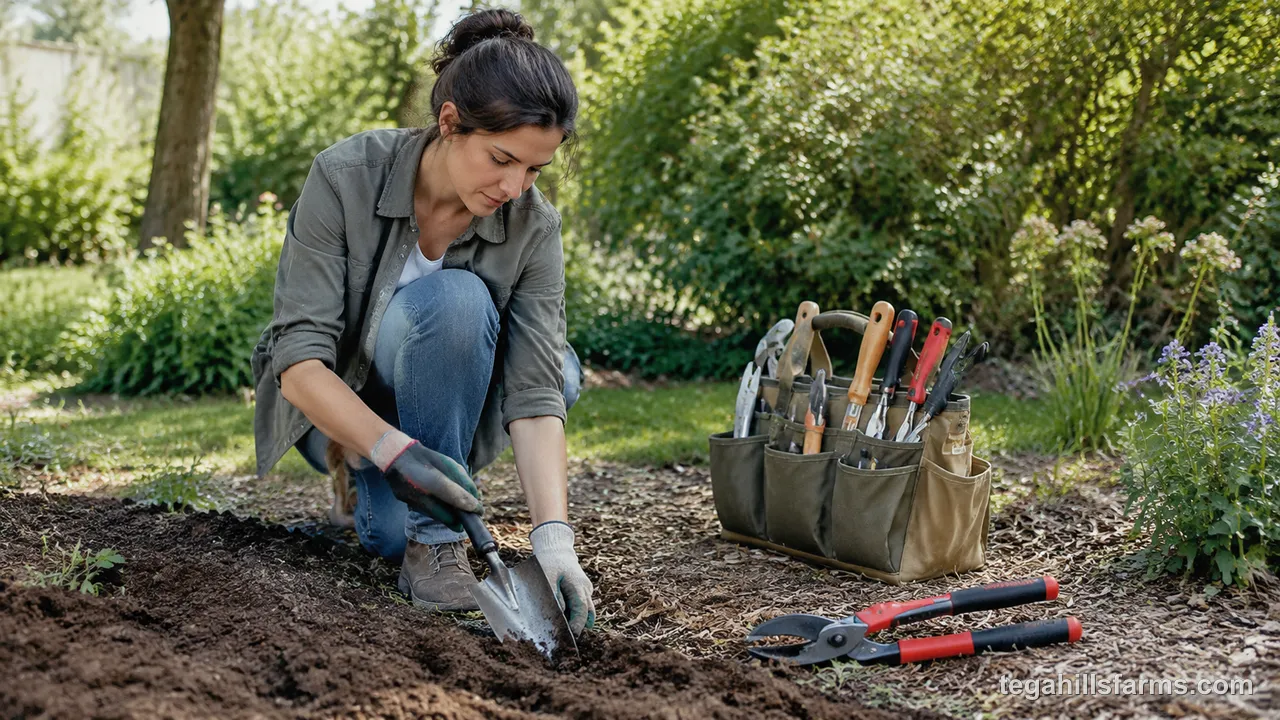
Clay calls for a spade with a flat, sharp blade plus a digging fork. Rocky ground favors a pointed round-point shovel and a narrow trowel, and sandy soil suits a wide shovel that scoops loose material efficiently.
Shovels are curved for scooping and moving soil, while spades are flatter for cutting and edging. A spade’s square edge slices into dense clay, and a forged blade with a foot tread lets you put body weight behind it without the steel flexing. A digging fork breaks up compacted clay without lifting heavy, sticky slabs, which spares your back.
In rocky soil, a pointed blade finds gaps between stones where a flat edge would stop dead, and a narrow trowel works around rocks in planting holes. Sandy soil offers little resistance, so a lighter shovel with a wider scoop moves more per lift without tiring your arms.
When do you need pruners, loppers, hoes, or weeders?
Pruners handle deadheading and stems up to about pencil thickness. Loppers take branches up to an inch or more in diameter, hoes clear weeds across open beds and rows, and weeders pull individual weeds with deep roots.
Beyond what loppers can cut, a pruning saw gives a cleaner result than forcing the jaws. Hoes earn their place when weeds come up in numbers: a stirrup or scuffle hoe slices just under the surface on both push and pull strokes, while a draw hoe chops and moves soil for hilling. Comparing the best garden hoes by blade style shows which motion suits your beds.
Weeders matter for dandelions, dock and other taproot weeds, which resprout when the root snaps. A forked tip levers the whole root out, and the best manual weeders add a fulcrum or foot plate for extra leverage.
How can you spot durable construction and repairability before you buy?
Solid forged joints, a handle secured by a full socket or strap, and replaceable wear parts are all visible in the store and predict longevity better than brand name or price. Tools rarely wear out evenly; they fail at one weak point, usually where the head meets the handle or where a spring or pivot takes repeated load. Knowing where to look turns a quick inspection into years of extra use.
What construction details signal a tool that lasts more than one season?
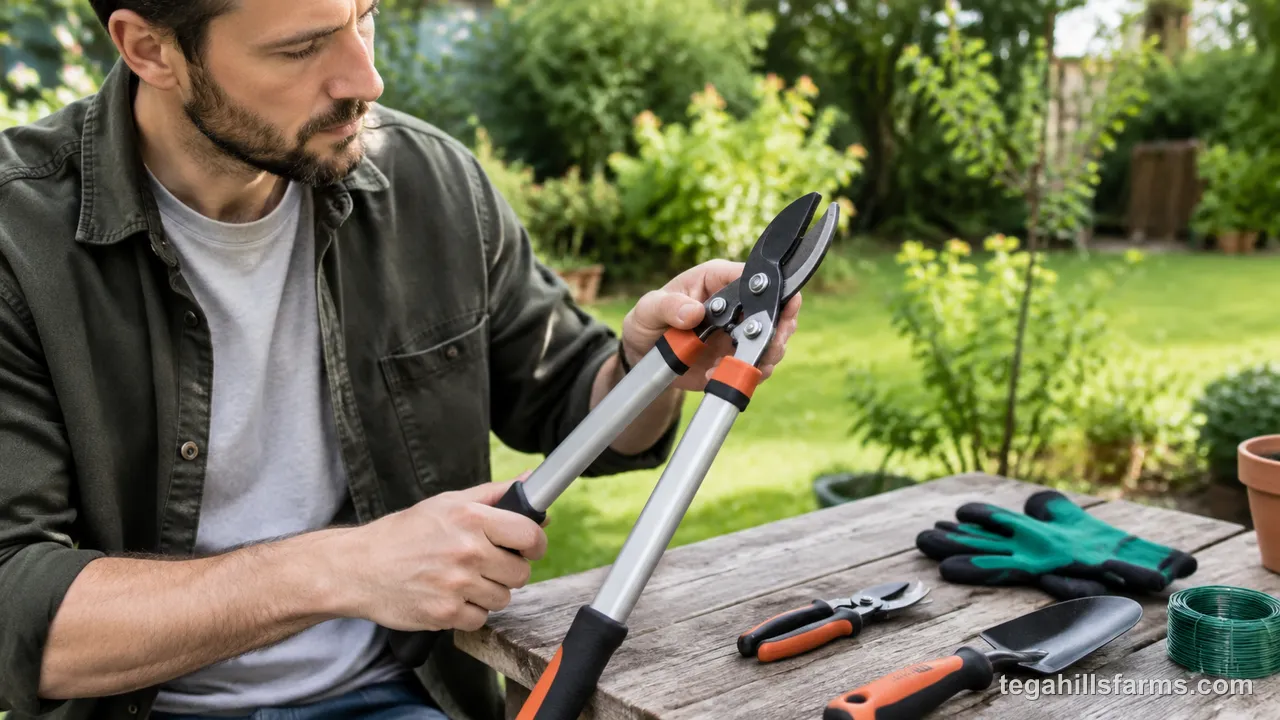
Look for a head forged in one piece, a socket or strap that fully secures the handle, and fasteners you can tighten, because those are the points where cheap tools fail first.
On spades and shovels, a solid-socket design wraps forged steel all the way around the handle end. A solid-strap design runs steel straps up the handle and rivets them through it. Both resist the prying that snaps tools at the neck. An open-back socket, folded from sheet steel with a seam along the back, collects soil and moisture and bends under load. A rolled or added foot tread on the blade’s top edge spreads pressure from your boot and stiffens the blade.
On pruners and loppers, a bolt-and-nut pivot can be retightened as the blades loosen, while a riveted pivot cannot. Check welds for even beads with no gaps, and test every handle joint for wobble, since any looseness in the store only grows in the garden.
Can you repair it? Check replaceable parts and warranty support
A repairable tool outlasts one you have to replace, so check whether the maker sells replacement blades, springs, handles and pivot hardware before you buy. Higher-end pruners are often designed so each part can be swapped, turning a chipped blade into a quick fix instead of a new purchase.
Handles count too. A solid-socket spade can take a new wooden or fiberglass handle when the old one cracks, while a head molded onto its handle is finished once either part breaks.
Warranty terms vary widely between brands. Read what is actually covered, whether manufacturing defects only or wear and breakage too, and whether you need to register the tool or keep a receipt. A long warranty means little if the company doesn’t stock the parts to honor it.
How do you balance budget, cost tiers, and long-term value?
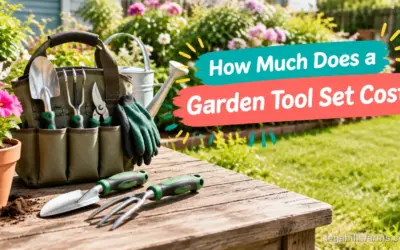
Spend the most on tools you use every week and tools that take leverage or hold an edge, and save on occasional tools, because frequent use exposes a weak tool’s flaws fastest. A budget tool that breaks in its second season costs more than a sturdier one bought once, while an expensive tool used twice a year never pays back the difference. Comparing how much a garden tool set costs against single tools makes this trade-off concrete, since prices in both climb with forged steel and replaceable parts.
When should you buy budget, mid-range, or premium?
Buy budget tools for jobs you do a few times a year, mid-range for tools you use most weekends, and premium for the tools you reach for every time you step into the garden.
Budget tools typically use stamped steel and simple handles, which is fine for a bulb planter or a hand rake that never takes heavy load. Mid-range tools often bring forged heads and better grips, a good match for spades, trowels and rakes in regular use. Premium earns its price when it adds replaceable parts and steel that holds an edge. That’s why I’d put premium money into pruners before anything else: they get used most often and dull fastest.
Is a tool set or individual picks better value for you?
A set offers better value for a new homeowner starting from nothing, while individual picks win once you know which tasks fill your weekends. Sets bundle matching basics, often with a tote, at a lower cost per piece. They also tend to include tools you’ll rarely use, and the pieces are frequently lighter-duty than standalone versions.
Individual picks let you match each tool to your hands and soil, which matters most for pruners and digging tools. A practical middle path is a small set for trowels and hand forks, with pruners and a spade bought separately. Judging the best garden tool sets by the steel and handle quality of each piece shows which bundles hold up to that standard.
Carbon steel left caked with damp soil in a closed shed can show surface rust within days, and pruner blades gummed with sap start tearing stems instead of slicing them. Wooden handles leaning against a cold concrete floor wick up moisture all winter. Skip the upkeep, and by spring a forged spade and quality pruners will dig, cut and feel like the cheap tools you meant to avoid.
How to make chosen tools last: care, sharpening, and storage
Three habits keep tools working for years: clean and dry them after each use, keep cutting edges sharp, and store them off the ground in a dry place over winter.
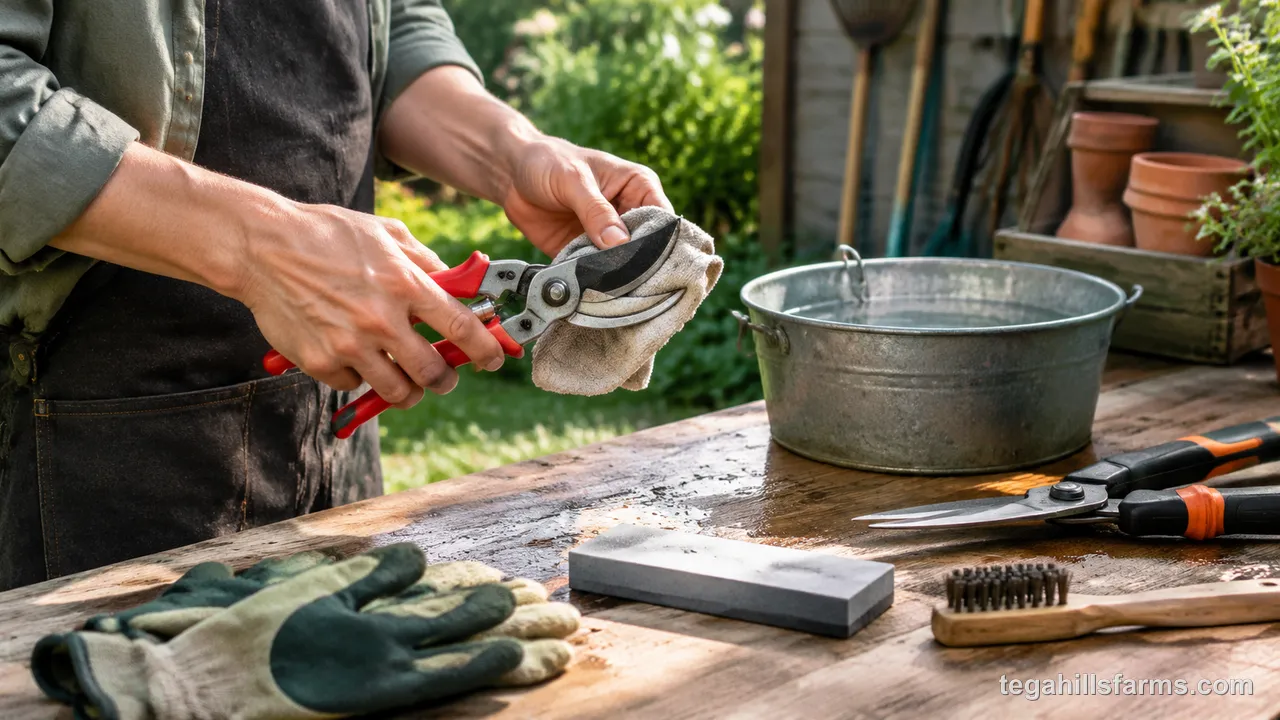
Knock soil off with a stiff brush, rinse, and dry the steel before putting it away. On carbon steel, a light wipe of oil afterward stops rust before it starts. Sap on pruner and lopper blades builds a sticky film that drags on every cut, so wipe it off with rubbing alcohol, which also helps keep plant disease from spreading between shrubs.
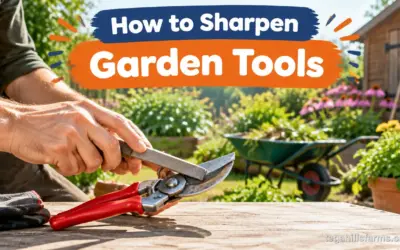
Sharpening matters as much as cleaning, because a dull edge makes you squeeze or push harder on every stroke. A mill file restores a spade or hoe edge in a few passes, and a diamond file or whetstone keeps a bypass pruner keen. Learning how to sharpen garden tools at the original bevel angle keeps the edge from rounding over.
Wooden handles need light sanding where they roughen and a coat of boiled linseed oil once they look dry and gray, which keeps them from cracking. Before winter in colder USDA Hardiness Zones, drain garden hoses completely so trapped water can’t freeze and split them, then coil them on a hanger instead of folding them. Hang tools on a wall rack, or keep hand tools in a bucket of sand mixed with a little oil, which scrubs and coats the blades each time you push them in. Check the pivot nut on pruners and loppers each spring, and tighten it slightly if the blades have started to wobble.
Quick answers: choosing and living with garden tools
Should you buy garden tools online without holding them first?
You can, as long as you check overall length, weight and grip size or hand-size rating before ordering. Compare those specs with a tool you already own and like, since that gives your hands a known reference. Buy from sellers with easy returns, and test the grip and weight indoors as soon as the tool arrives.
Are wooden handles more sustainable than fiberglass?
Wood is renewable and biodegradable, and a solid-socket tool can take a new wooden handle when the old one breaks, which keeps the steel head in service. Fiberglass lasts longer outdoors but is hard to recycle. Whatever the material, a tool you maintain and repair beats one you replace every few seasons.
Do gardening gloves affect which tool size fits?
Yes. Thick leather or insulated gloves add bulk, so a grip that feels right bare-handed can feel too fat with gloves on, and a snug pruner opening may pinch. Try tools while wearing the gloves you actually garden in, especially pruners and trowels, where grip precision decides how much effort each cut or scoop takes.
How do you know when a tool is worth repairing rather than replacing?
Repair it when the head is sound and only a wear part has failed: a dull or nicked blade, a weak spring, a loose pivot, or a cracked handle on a socketed tool. Replace it when the steel itself is bent, cracked at the neck or pitted deeply by rust, because those failures come back quickly after any fix.