
7 Best Garden Hoes: Top Picks Reviewed for 2026
Our top picks for the best garden hoes in 2026 are the Prohoe Rogue Hoe 7 Inch (Best Overall), Prohoe Fire Trail Hoe 6 Inch (Best Precision Cutting), CKLT 2-in-1 Garden Hoe & Weed Puller 61in (Best for Limited Hand Strength), Corona Clipper GT 3244 Extended Reach Hoe (Best All-Season Tool), Fiskars Ergo Long-Handle Aluminum Hoe 60″ (Best Lightweight), Fiskars Xact Dutch Hoe 4.9in (Best Ergonomic Design), and Edward Tools Hoe and Cultivator Hand Tiller (Best Hand Tiller).
Three things separate a hoe you keep reaching for from one that ends up behind the shed: the steel in its blade, the shape of its head, and the length and material of its handle. Those details decide whether the tool slices weeds cleanly, survives rocky ground and lets you work without hunching over.
The real risk is pain and wasted effort. A dull or flexing blade skates over weeds, a loose head wastes the force of every stroke, and a poorly matched handle leaves your wrists and lower back aching after a morning in the beds.




If one hoe has to do it all, start with the hardest ground in your yard. Sod and roots point to a disc-blade head. Established beds and a tired back point to a light, long-handled slicer.
What Are the Main Types of Garden Hoes?
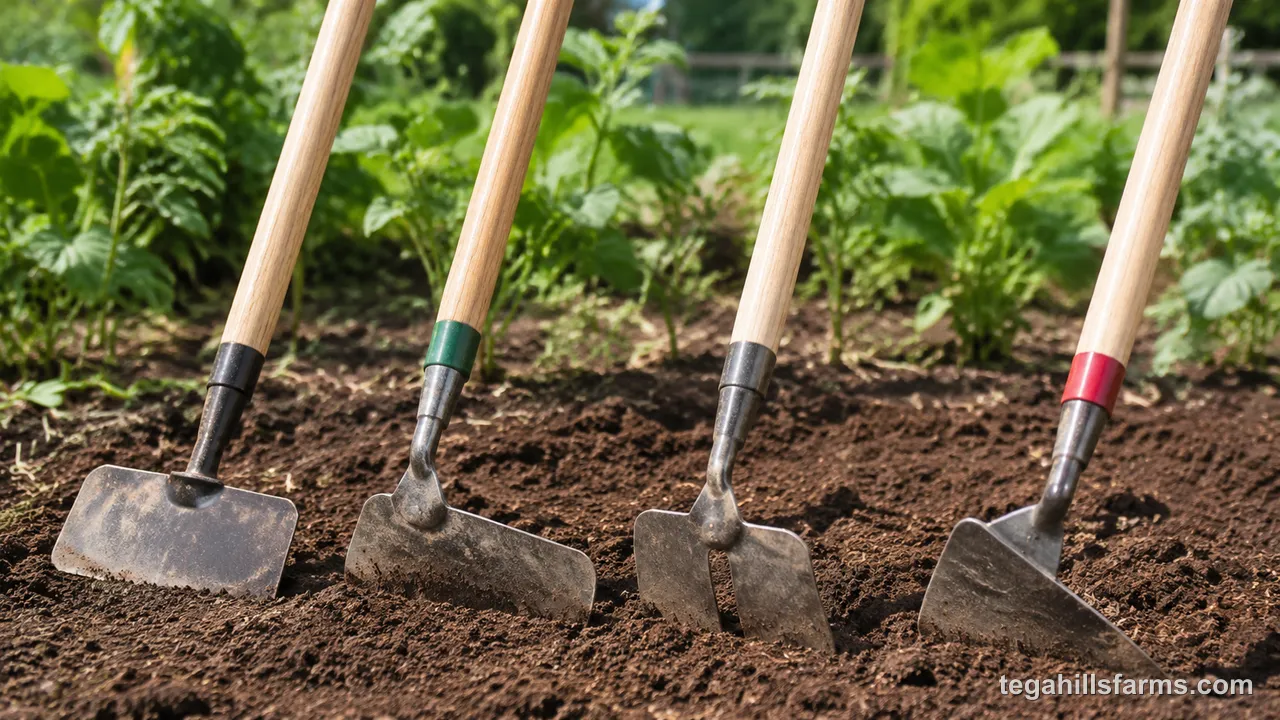
Most hoes fall into four working families: slicing hoes that cut weeds just below the surface, chopping hoes that break and move heavy soil, row hoes for long beds, and short-handled hand hoes for tight spots.
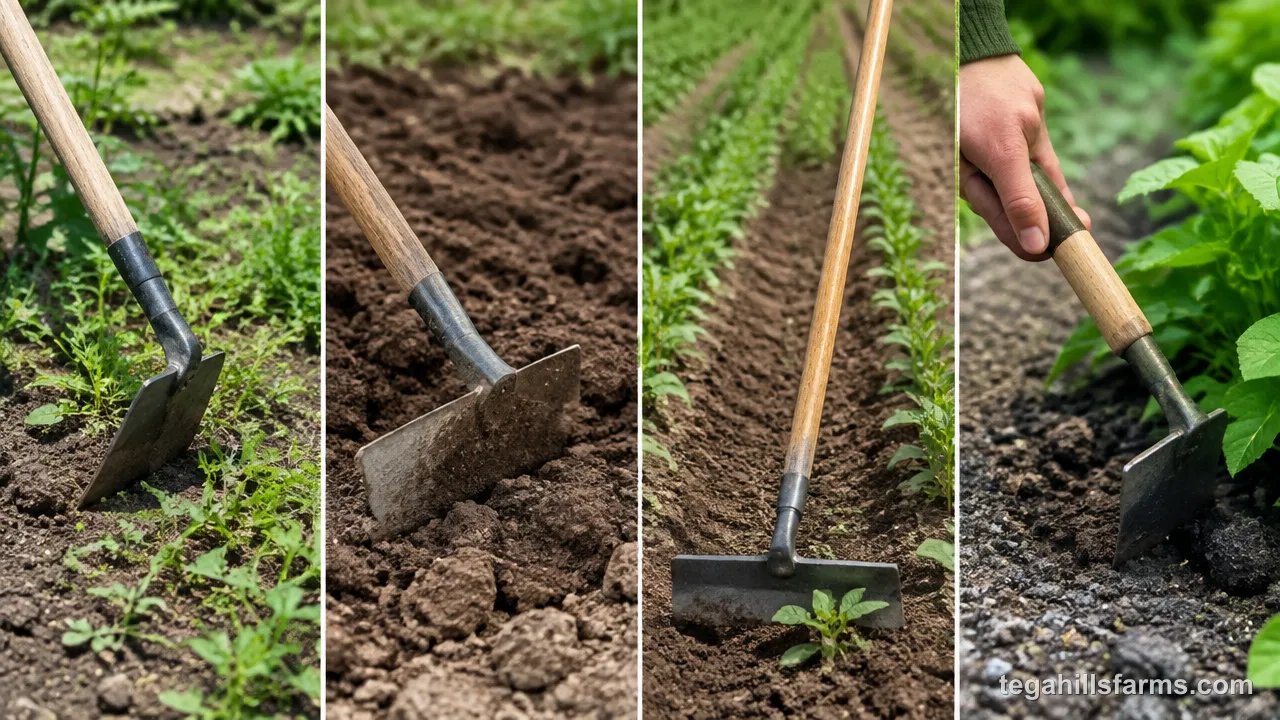
Dutch, stirrup and scuffle hoes make up the slicing group. You push a Dutch hoe’s flat blade through the topsoil, and a stirrup hoe’s hinged loop cuts on both the push and the pull, so the best garden hoes for weeding usually come from this family. Draw and grub hoes do the chopping. You swing the blade down and pull it toward you, and the heavier grub hoe breaks sod and cuts roots.
A wheel hoe runs a blade along rows on a wheel. The narrow colinear hoe slices between closely planted crops with a light stroke while you stand upright. Hand hoes apply the same ideas on a short handle for containers and raised beds.
A hoe does its best work next to a few other well-chosen tools, and our roundup of the best garden hand tools shows what else earns a place in the shed.
7 Best Garden Hoes of 2026
Our top picks for the best garden hoes in 2026 are the Prohoe Rogue Hoe 7 Inch, Prohoe Fire Trail Hoe 6 Inch, CKLT 2-in-1 Garden Hoe & Weed Puller 61in, Corona Clipper GT 3244 Extended Reach Hoe, Fiskars Ergo Long-Handle Aluminum Hoe 60″, Fiskars Xact Dutch Hoe 4.9in and Edward Tools Hoe and Cultivator Hand Tiller. The choice comes down to two styles. Heavy-duty disc-blade hoes break ground and clear brush, and lighter long-handled hoes skim weeds with less strain on your back and hands. If you’re clearing sod and rough ground, the Prohoe heads fit the job. Older gardeners, raised-bed growers and anyone keeping flower beds tidy will get more from the adjustable, aluminum and short-handled options.
#1 Prohoe Rogue Hoe 7 Inch — Best Overall
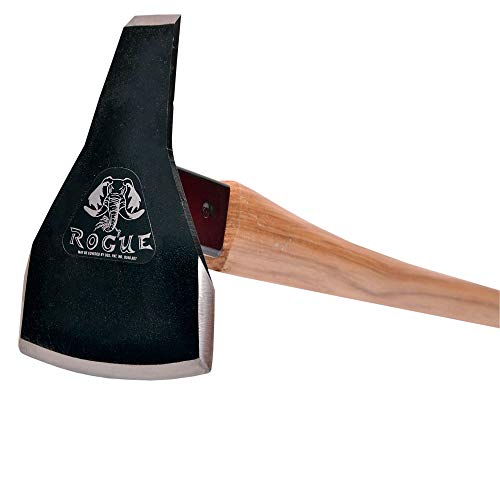
Rough ground is where this hoe earns its keep. Its 7-inch edge is cut from a recycled agricultural disc blade and welded to the socket, so it breaks sod, cultivates and clears woody growth without the head working loose.
Key Specs:
- Model: 70F60
- Blade: 7 in wide along the cutting edge x 6.5 in
- Material: recycled agricultural disc blade steel
- Construction: socket and blade welded together
- Clearing capacity: waste trees up to 1 in diameter
Detailed Review:
Agricultural disc blades are made to slice field soil for years, and the Rogue Hoe reuses that steel for its cutting edge. The head is designed to stay sharp under heavy use. That matters because a sharp edge bites into sod and roots instead of bouncing off them.
Prohoe welds the socket and blade together. Bolted and riveted heads tend to work loose after a season of hard chopping, and a wobbling head wastes the force of every swing. A welded joint has no fasteners to back out, so the energy goes into the ground.
The wide edge makes this hoe the right tool for rough jobs. It breaks up sod, cultivates beds for planting and cuts through saplings and woody growth along fences, so one tool handles work that would otherwise take a hoe and a grub axe. Each stroke also clears a broad strip, which speeds up cutting a new bed into lawn.
The same width has a cost. In a mature perennial border or a tight vegetable row, the head is hard to steer between stems. I’d point anyone reclaiming a neglected yard toward this hoe first, and keep a narrower tool for the planted beds that follow.
Pros:
- Disc-blade steel holds a sharp edge through hard use.
- Welded socket keeps the head from loosening.
- Wide edge breaks sod and cultivates with one tool.
- Clears small woody growth along fence lines.
Cons:
- Wide head is awkward between closely spaced plants.
- Chopping design is overkill for light surface weeding.
Who It’s For:
Homeowners reclaiming an overgrown corner, cutting new beds into lawn or keeping a fence line free of brush will get the most from this hoe. If you only skim weeds between flowers, its wide, aggressive head is more tool than you need.
Editor’s Verdict:
Buy it for ground that fights back. The welded disc-blade head handles sod-busting and brush clearing in one tool.
#2 Prohoe Fire Trail Hoe 6 Inch — Best Precision Cutting
For weeding tight rows, this head is shaped to slip between plants. All three sides of its 6.5-inch tempered steel blade are precision sharpened, so you can cut, dig and scrape around stems without switching tools.
Key Specs:
- Model: 60A
- Blade: 6.5 in wide, tempered steel, sharpened on all three sides
- Handle: 40 in curved hickory
- Weight: 4.8 lb
- Material source: recycled agricultural disc blades
Detailed Review:
The Fire Trail’s head has three sharpened sides, and that shape makes it a close-quarters tool. The point slips into gaps between plants and the side edges slice weeds as you push or pull. The broad edge opens planting holes or breaks new ground, so you can weed, dig, rake rocks and move soil around plants with one tool.
The curved hickory handle lets you reach under shrubs and into the back of a bed without much stretching. Hickory also absorbs the jolt when the blade strikes a buried stone. The head and handle are well balanced, so strokes stay controlled.
This hoe has real heft. That helps the tempered steel sink into hard soil, but it tires your wrists over a long weeding session. Short, deliberate strokes work better than fast skimming.
Both this hoe and the Prohoe Rogue Hoe 7 Inch use recycled agricultural disc steel, but they suit different jobs. The Fire Trail’s narrower head and three cutting sides fit between established plants. The Rogue’s wider edge is built for sod and saplings, so choosing the Fire Trail gives up clearing speed in exchange for precision.
Pros:
- Three sharpened sides cut, dig and scrape.
- Pointed shape fits between established plants.
- Curved hickory handle reaches under shrubs easily.
- Balanced head keeps strokes controlled and accurate.
Cons:
- Hefty build tires wrists during long weeding sessions.
- Wooden handle needs occasional oiling to prevent cracking.
Who It’s For:
If your vegetable rows and perennial beds are planted close together, this tool weeds, plants and moves soil around stems without trampling anything. The three-edged head rewards careful, deliberate work. If your grip is weak, its heft can feel tiring over a long session.
Editor’s Verdict:
Choose it when precision matters more than reach. The three-edged head handles close weeding and planting work with steady control.
#3 CKLT 2-in-1 Garden Hoe & Weed Puller 61in — Best for Limited Hand Strength
Weeding without bending is the point here. A 4-section locking handle extends up to 61 inches, and the rake teeth grab weeds by the roots, so you guide the tool instead of wrestling it.
Key Specs:
- Model: 60inBCC
- Head: 3.75 in rake plus a trapezoid hoe
- Head material: tempered spring steel with a sand texture finish
- Handle: 4-section locking, adjustable up to 61 in
- Hardware: 304 stainless steel bolts and nuts
Detailed Review:
CKLT puts a sharp trapezoid hoe and a small rake on one head. The hoe side loosens compacted soil and slices through roots. The rake’s teeth hook stubborn weeds and dandelions and pull them out roots and all, which cuts down on regrowth. Because the teeth do the gripping, your hands guide the tool instead of squeezing it.
The locking handle matters most on this tool. Fully extended, it lets you weed standing upright, which takes strain off your lower back and knees. Shortened, the same head reaches into raised beds, flower pots and tight gaps between plants. For gardeners with sore hands, I’d rank this adjustability above every other feature, because you fit the tool to the bed instead of bending to suit the tool.
Both heads are tempered spring steel, which flexes under heavy levering and springs back instead of bending or snapping. The sand texture finish improves grip and resists corrosion, and the 304 stainless steel bolts and nuts keep the head joint tight and resist rust outdoors.
A sectioned handle has joints, and a loose one shifts the blade angle mid-stroke. Check each lock before you start, especially after the tool has been collapsed for storage.
Pros:
- Standing use spares your knees and lower back.
- Rake teeth pull weeds out roots and all.
- Handle shortens for raised beds and flower pots.
- Stainless hardware resists rust at the head joint.
Cons:
- Small head covers less ground per stroke.
- Sectioned handle has joints to check and relock.
Who It’s For:
Seniors, gardeners with back trouble and anyone whose hands tire quickly can weed standing up with this tool. It also suits people who tend raised beds, containers and a gravel driveway with one tool. For breaking new ground through sod, you need a dedicated chopping hoe.
Editor’s Verdict:
Pick it if bending is the hardest part of weeding for you. The adjustable handle and root-grabbing teeth let you do the work standing up.
#4 Corona Clipper GT 3244 Extended Reach Hoe — Best All-Season Tool
Spring bed prep, summer weeding and compost work at the end of the season can all be done with this tool, because a sharp hoe blade and cultivator tines share one head. The extended handle keeps you upright.
Key Specs:
- Model: GT 3244
- Head: hoe blade plus cultivator tines
- Construction: steel components
- Handle: extended reach with a non-slip grip
- Dimensions: 40.16 x 9.65 x 5.51 in
Detailed Review:
Corona built this tool around a two-sided head, with a sharp hoe blade on one side and cultivator tines on the other. The blade slices weeds and cuts roots. Flip the handle and the tines loosen soil, aerate beds and mix in compost. Together they cover most of a bed’s yearly cycle: breaking crusted soil before planting, weeding through summer and working in compost at the end of the season.
The steel components are built for rocky or compacted dirt, which is where lighter heads tend to bend. This matters most in spring, when beds have settled hard over winter and take real force to open up.
The extended handle lets you work standing, which reduces bending and back strain along long beds and vegetable patches. The non-slip grip holds securely even in damp gloves, so you can control the blade angle without clenching.
A two-sided head needs some care. On the backswing the unused side faces your plants, so shorter strokes in crowded beds keep you from nicking stems.
Pros:
- Hoe blade and tines cover weeding and soil prep.
- Steel construction handles rocky, compacted dirt.
- Extended handle keeps you working upright.
- Non-slip grip stays secure through long sessions.
Cons:
- Two-sided head needs short strokes in crowded beds.
- Flipping between blade and tines breaks your weeding rhythm.
Who It’s For:
Vegetable gardeners and flower bed keepers who work their beds from spring planting through fall cleanup will use this tool all year. It suits anyone who wants to slice weeds and loosen soil without carrying two tools. If your main chore is clearing rough brush, a dedicated chopping hoe fits better.
Editor’s Verdict:
Keep it within reach all year. One head handles weeding, loosening soil and mixing compost, and the steel build stands up to compacted beds.
#5 Fiskars Ergo Long-Handle Aluminum Hoe 60″ — Best Lightweight
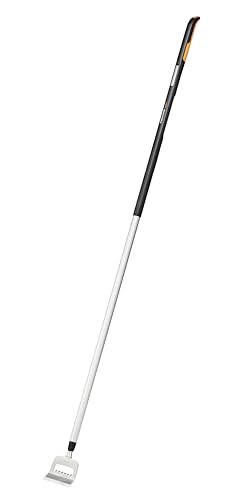
Weeding with this hoe means less weight to move on every stroke. The aluminum shaft keeps the tool light, and the sharp, hardened steel blade still cuts shallow-rooted weeds out of tough soil and breaks up thick clods.
Key Specs:
- Model: 336500-1002
- Length: 60 in
- Blade: sharp, hardened steel
- Shaft: aluminum, teardrop-shaped, with a mid grip
Detailed Review:
Fiskars pairs a sharp, hardened steel blade with an aluminum shaft, and the shaft is what makes this hoe good for frequent weeding. Aluminum is strong without much mass, so the tool moves easily through repeated push-and-pull strokes and your shoulders and forearms tire more slowly. The blade still has enough edge to cut shallow-rooted weeds out of tough soil and break up thick dirt clods.
The teardrop-shaped shaft fits the natural curve of a closed hand, so it doesn’t roll in your grip. You squeeze less to hold the blade angle, which helps hands with limited strength or stiff joints. The mid grip gives you a second hand position for guiding the blade around plants.
The long handle cuts down on the kneeling, bending and stooping that leave you sore after time in the beds. I tend to suggest a light shaft like this to gardeners who weed little and often, because short, regular sessions call for a tool that’s easy to pick up.
The light weight has a downside. With little heft behind the blade, this hoe skims rather than chops, so deep taproots and sod need a different tool.
Pros:
- Aluminum shaft keeps the hoe light to swing.
- Teardrop shaft resists twisting in your hand.
- Mid grip adds a second control point.
- Hardened steel blade breaks up thick clods.
Cons:
- Light build lacks the momentum to chop sod.
- Suited to shallow-rooted weeds, not deep taproots.
Who It’s For:
Older gardeners and anyone who weeds a little every few days will find this hoe easy to keep moving. The mid grip and shaped shaft help hands that tire or ache. If you’re breaking new ground or chopping through roots, a heavier chopping hoe suits the job better.
Editor’s Verdict:
Reach for it on routine weeding days. The light aluminum shaft and shaped grip make repetitive strokes easier on your hands and shoulders.
#6 Fiskars Xact Dutch Hoe 4.9in — Best Ergonomic Design
Hands that change position often will appreciate this Dutch hoe’s Softgrip handle, which stays comfortable whether you stand tall in open ground or slide your grip down near plants. At 28 oz, it is easy to push for a long session.
Key Specs:
- Model: 1027041
- Blade width: 4.9 in (125 mm)
- Length: 67 in
- Weight: 28 oz (800 g)
- Materials: stainless steel knives, hardened aluminum shaft, plastic
- Extras: back teeth and a hanging loop
Detailed Review:
The Xact is a push-pull Dutch hoe. Its sharp stainless steel knives slice weeds just below the surface and loosen the top layer of soil, and the back teeth help drag cut weeds clear on the return stroke. The same edge draws straight seed rows and scrapes moss off tiles and paving stones.
Fiskars uses hardened aluminum with a shaped profile to reduce weight without losing power. The Softgrip handle works in several positions, so you can stand tall in open ground and slide your hands down when working close to plants. A hanging loop at the end lets you store it off a damp floor.
Compared with the Fiskars Ergo Long-Handle Aluminum Hoe 60″, the Xact is longer at 67 inches, and it cuts with stainless steel knives where the Ergo uses a hardened steel blade. The extra length helps taller gardeners and reaching across wide beds, and stainless steel holds up to wet work like scraping moss. The longer shaft is harder to steer in cramped beds, though.
Unlike a heavier chopping hoe, it won’t break sod or hard clods. It is made for keeping ahead of small weeds, not for clearing neglected ground.
Pros:
- Push-pull blade slices weeds just below the surface.
- Back teeth help drag cut weeds clear.
- Stainless knives handle wet moss scraping on pavers.
- Hanging loop keeps the blade off damp floors.
Cons:
- Slicing blade isn’t made to chop through sod.
- Long shaft feels unwieldy in small, crowded beds.
Who It’s For:
Gardeners who keep up with weeds every week, sow vegetables in rows or want clean patio joints will use this tool often. Taller gardeners will appreciate the extra reach. If you work in cramped containers or balcony pots, it will feel too long.
Editor’s Verdict:
Count on it for weekly upkeep. The stainless push-pull blade, back teeth and Softgrip handle make light weeding and cleaning pavers easy.
#7 Edward Tools Hoe and Cultivator Hand Tiller — Best Hand Tiller
This one is for kneeling work. Its carbon steel head loosens soil, weeds and digs, and the ergonomic rubber grip over a solid oak handle stays comfortable when you work close to your plants.
Key Specs:
- Weight: 0.85 lb
- Head and blade: carbon steel
- Handle: solid oak with an ergonomic rubber grip
- Use: hoe and cultivator for flower and vegetable gardens
Detailed Review:
Edward Tools gives this hand tiller a carbon steel blade and head built for heavy-duty use. The hoe side chops weeds and digs, and the cultivator side loosens soil, so one tool covers routine work in flower and vegetable beds. Carbon steel resists bending when you pry at roots, but you need to wipe it dry after each use to keep rust away.
The handle is solid oak for strength, covered with an ergonomic rubber grip. Oak stays stiff when you lever against compacted soil. The rubber cushions your palm and holds securely in damp gloves.
Working this close to the ground gives you more control than a long hoe. You can loosen soil between bulbs, weed around seedlings and work along the edge of a bed without disturbing nearby plants. In a mixed border, that precision saves the perennials a long blade might clip.
At 0.85 lb it is lighter than the Fiskars Xact Dutch Hoe, but you give up that tool’s standing reach and work on your knees instead. If your knees or back object to time on the ground, a standing hoe is the better fit.
Pros:
- Carbon steel head stands up to heavy digging.
- Rubber grip holds securely in damp gloves.
- Light enough for long sessions on your knees.
- Hoe and cultivator in one compact tool.
Cons:
- Short reach means kneeling or crouching for every task.
- Carbon steel rusts if stored wet.
Who It’s For:
Flower bed and vegetable gardeners who like working at plant level, weeding around seedlings and loosening soil between bulbs, will find this tool precise and easy to handle. It also suits raised beds you can reach from a seat. If you have knee or back trouble, a long-handled hoe will serve you better.
Editor’s Verdict:
Treat it as your close-work tool. The carbon steel head and rubber-grip oak handle make careful weeding and loosening around plants quick and controlled.
What Should You Look for in a Garden Hoe?
Two fits decide the choice: how the blade meets your weeds and how the handle meets your body, because a mismatch on either side turns a quick pass through the beds into sore wrists and a stiff back. A tool that glides through loose loam can skate over clay, and a handle that suits a tall gardener can leave a shorter one hunched over.
How Do Blade Shape and Steel Type Change Performance?
Blade shape decides the stroke, and the steel decides how long the edge lasts. Flat slicing edges on Dutch and stirrup hoes travel sideways just under the surface and cut weeds without turning the soil. Angled chopping heads on draw and grub hoes strike down to break clods and roots. Tined cultivators don’t cut at all; they rake through soil to loosen it and mix in compost.
Carbon steel takes the keenest edge and is the easiest to resharpen with a file. It also rusts quickly if put away wet, so it needs wiping and a film of oil after use. Stainless steel resists moisture and suits damp jobs, though its edge is usually softer and needs touching up more often. Tempered spring steel flexes under heavy levering and returns to shape, which helps a thinner head survive rocky ground without bending. To see how these steels compare in real tools, look at the best garden hoes with steel blades.
How Long Should the Handle Be, and What Should It Be Made Of?
A handle that reaches about to your chin lets you stand upright and keeps the work in your arms and shoulders instead of your lower back. Short hand hoes are only comfortable when you kneel or sit beside a raised bed. More length adds reach but also leverage, so a heavy head on a long shaft feels heavier in your wrists with every stroke.
Wood such as hickory or ash absorbs the jolt when the blade hits a stone and feels warm in the hand, but it needs occasional oiling to keep from drying and cracking. Fiberglass won’t rot in the rain, though it is usually heavier and can splinter if gouged. Aluminum is the lightest of the three, which makes it easiest on hands that tire quickly. A shaped or padded grip matters as much as the material, because it reduces how hard you have to squeeze to hold the blade angle.
Which Hoe Style Fits Your Soil and Weeds?
Loose, well-amended soil and shallow annual weeds call for a slicing hoe. Compacted ground and deep roots call for a chopping blade or tines. In soft beds a Dutch or stirrup hoe glides just under the surface and slices through seedlings with little effort, which is why the best garden hoes for soft soil tend to be light slicing designs.
Clay and trampled ground stop a thin blade, so a grub hoe or cultivator tines need to break the crust first. Deep-rooted perennials like dandelion and dock regrow from any root left behind, so they need a chopping blade or a hand weeder that lifts the root out. Open vegetable rows suit long slicing strokes. Crowded perennial beds need a narrow or pointed head that fits between stems without damaging them.
Which Garden Hoe Suits Your Garden and Your Body?
Long, light or adjustable handles help older gardeners and sore backs, shaped and cushioned grips help weak hands, and short hand hoes fit containers and raised beds you can reach while seated.
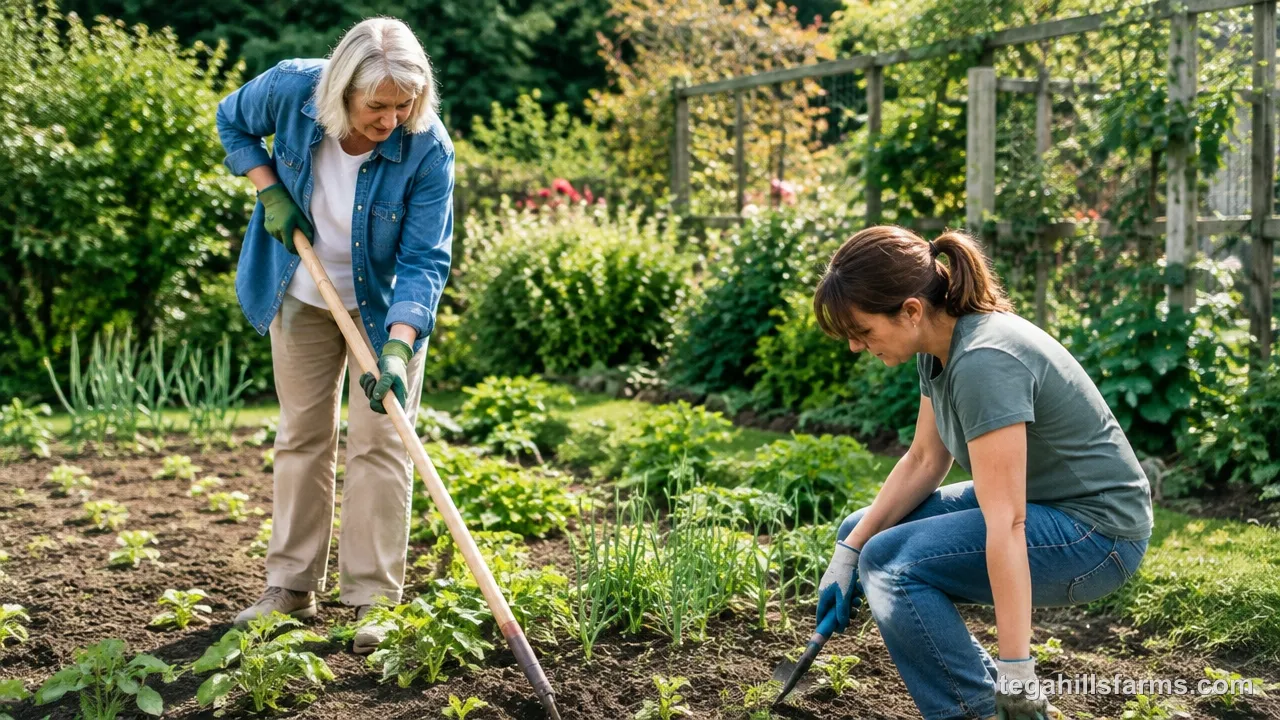
With a bad back, the priority is standing upright, so an aluminum shaft or a handle that extends to your height helps more than any blade feature. Limited grip strength calls for a teardrop or soft-grip shaft and a head that does the work for you, such as rake teeth that hook weeds out. Left-handed gardeners rarely need a special hoe, because most long-handled heads are symmetrical. Just check that an angled or one-sided edge isn’t sharpened for a right-handed stroke.
Raised-bed growers do well with a collapsible handle or a hand tiller. If you garden on a small patio, a short tool that hangs on a hook saves space. Large vegetable plots call for a long slicing hoe plus one heavy-duty head for breaking new rows. The same idea of fitting the tool to your body applies to everything else you dig, cut and rake with, and our guide on how to choose garden tools covers it.
A dull hoe edge stops slicing and starts skipping across the soil, so each stroke takes more force from your wrist and shoulder than it should. Bare carbon steel left in a damp shed can pit with rust over one winter, and by spring you’ll be filing through rust before the blade will cut at all.
How Do You Sharpen and Store a Garden Hoe?
All it takes is a flat mill file and a few minutes. Scrub off the soil, file the beveled side along its existing angle until the edge is bright, wipe away the burr on the flat side, then oil the steel and hang it somewhere dry.
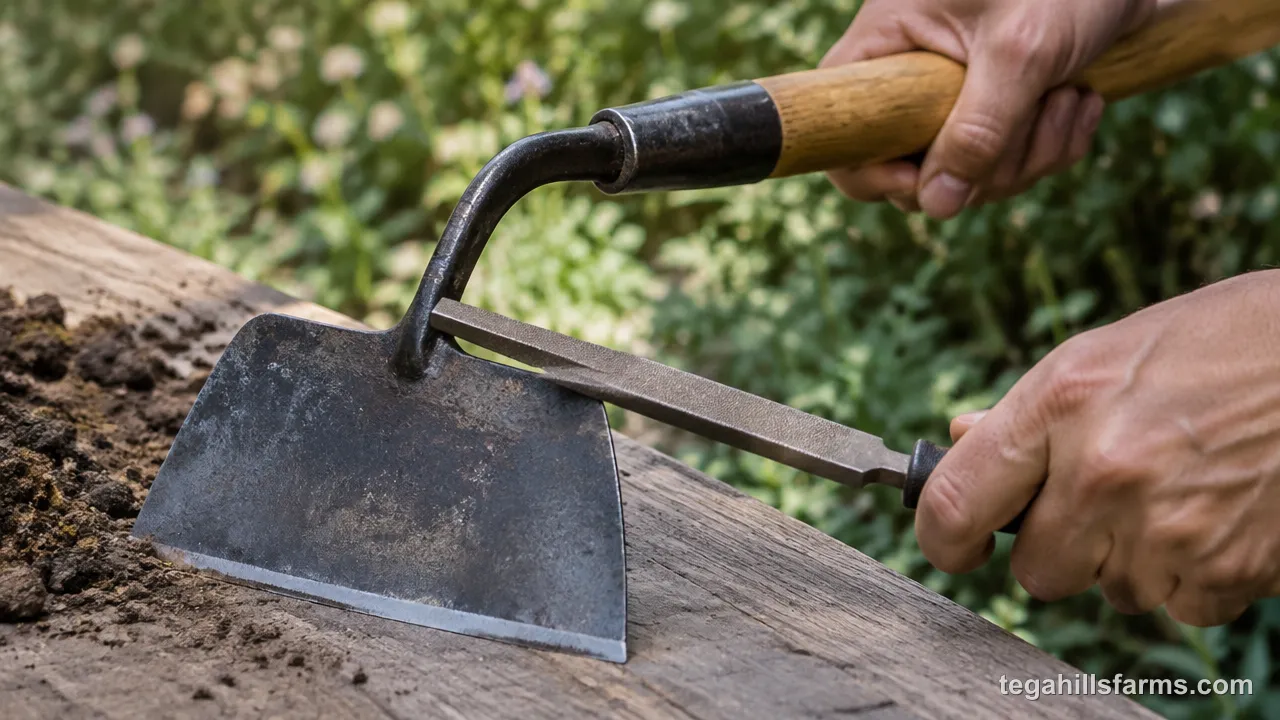
Push the file in one direction only, from the body of the blade out toward the edge, and follow the original bevel rather than creating a new angle. Most draw and grub hoes are beveled on one face, while Dutch and stirrup hoes may have an edge on both sides, so match how the blade was ground. A few light strokes whenever the blade starts skating over weeds will keep it cutting.
Carbon steel needs a thin coat of light oil before storage, because bare carbon steel rusts in a damp shed. Stainless blades only need cleaning and drying. Wooden handles benefit from a rub of boiled linseed oil before winter. Hang your tools off the floor, since concrete wicks moisture up into steel and wood.
How Can You Tell a Durable Hoe From One That Wears Out Early?
Look for a head welded or forged solidly to its socket, a blade thick enough not to flex when you pry against roots, and a handle that sits tight with no gaps or cracks. A hoe that wears out early usually has a thin stamped blade, a tang simply pushed into the handle, or a head that wobbles from the first day.
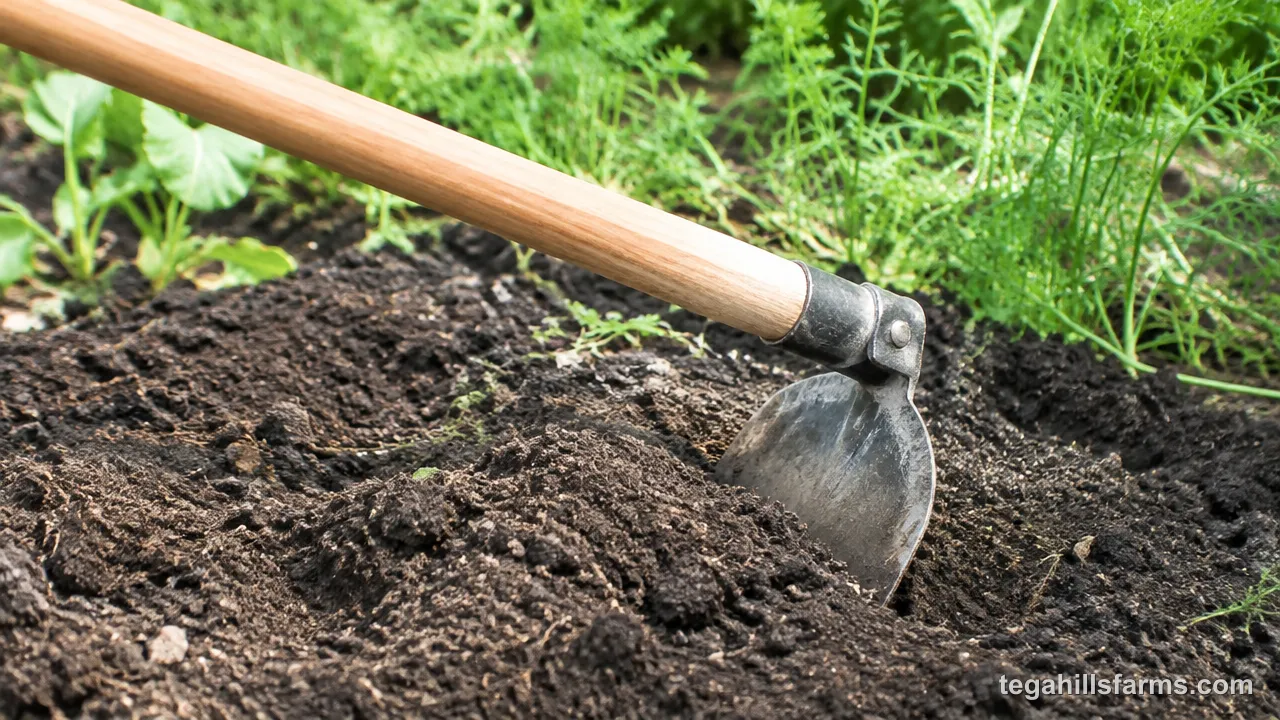
In the store, grip the head and twist it against the handle. Any movement now will become a loose head by midseason, because every chop works the joint further apart. Press the blade edge against a hard surface and watch for flex, since thin steel bends the first time it meets a buried rock. On wooden handles, look for grain that runs straight along the shaft, because grain that runs off at an angle is where cracks start.
Replace the hoe rather than repair it when the blade has worn narrow from years of filing, cracks at the neck, or is too pitted to hold an edge. If you’d rather swap out a worn edge than retire the whole tool, the best garden hoes with replaceable blades let you keep a good handle in service.
Is a Weeding Hoe Worth It Compared With Pulling Weeds by Hand?
Yes, for beds full of small, shallow-rooted annual weeds, because one slicing pass clears a strip that would take far longer to pull by hand. Hand weeding is better when weeds have deep taproots, when plants are packed too tightly for a blade, or when seedlings are so small that a stray stroke would cut them too.
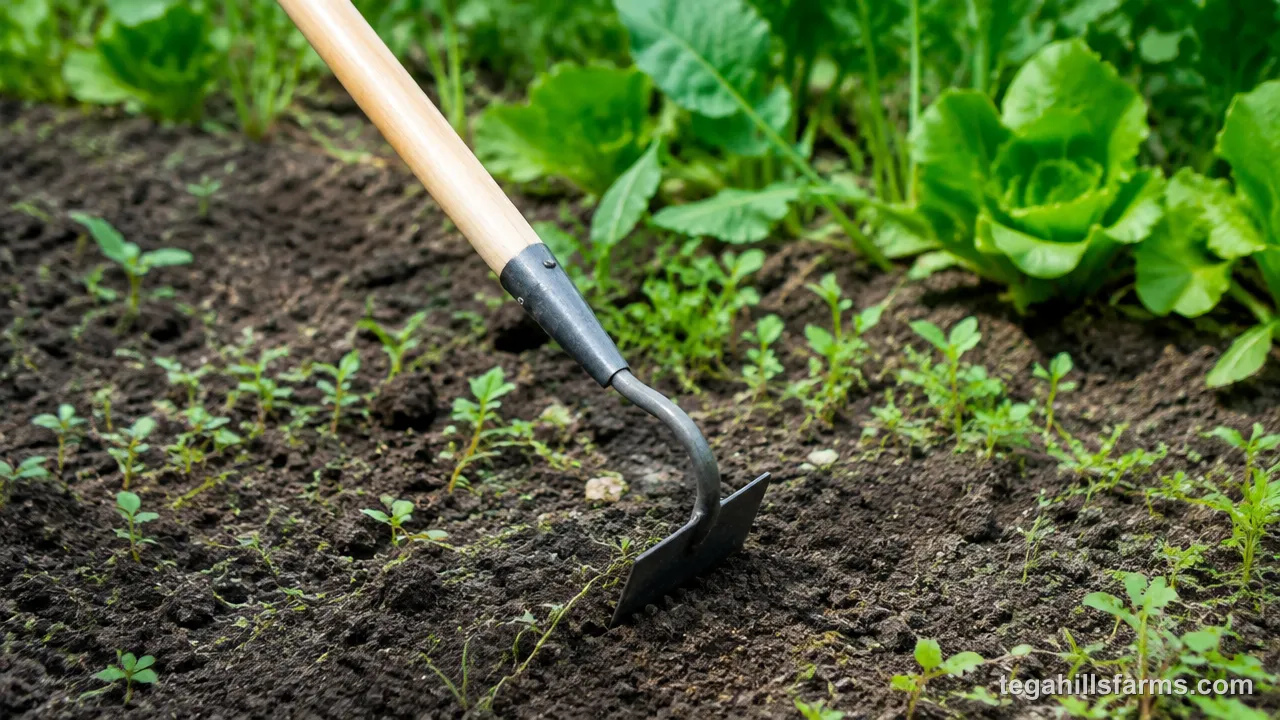
A hoe only cuts the top off a dandelion or dock, and the root left behind sends up new growth, so those weeds need to come out whole. Crowded perennial borders and herb pots also leave no room to swing safely.
Most gardens need both. Run a hoe through open beds about once a week to stop seedlings from establishing, and use a hand tool for the taprooted stragglers. For that second job, the best manual weeders lever deep roots out with much less wrist strain than pulling with bare hands.
What Else Do Gardeners Ask About Garden Hoes?
How is a Dutch hoe different from a standard hoe?
A Dutch hoe has a flat blade set nearly in line with the handle, so you push it just under the surface to slice weeds while standing upright. A standard draw hoe has its blade at a sharp angle. You swing it down and pull it toward you, which suits chopping clods and moving soil.
Should you hoe when the soil is wet?
Hoe on a dry, sunny day if you can. Weeds cut in dry soil wilt and die on the surface, while weeds cut in wet soil can reroot where they fall. Wet soil also sticks to the blade and compacts under your feet, which makes the next round of weeding harder.
Do left-handed gardeners need a special hoe?
Usually not. Dutch, stirrup and draw hoes have symmetrical heads that cut the same way in either hand. The exception is a hand tool or hoe with an angled, one-sided edge. For those, choose a design sharpened on both sides so your natural stroke cuts cleanly instead of tearing.
How often should a garden hoe be sharpened?
Sharpen it whenever the edge stops cutting cleanly. In a busy growing season that can mean a quick touch-up every few sessions, and less often in spring and fall. Give the blade a thorough filing before winter storage so it is ready to cut on the first warm day.
More Guides on Best Garden Hoes
- Best Garden Hoes Under $100
- Best Garden Hoes Under $30
- Best Garden Hoes Under $50