
11 Best Manual Weeders: Top Picks Ranked for 2026
Our top picks for the best manual weeders in 2026 are Fiskars Ergo Garden Hand Weeder (Best Overall), Grampa’s Weeder Original Stand Up Weeder (Best Durability), SIXCAR Portable Weed Remover (Best Rust-Resistant), Fiskars Deluxe Stand-Up Weed Puller (Best Ergonomic Design), Walensee Stand Up Weed Puller 3-Claw (Best Lightweight), MASAKIYO Weeding Sickle Full Size (Best Precision Cutting), BARAYSTUS Crack Weeder (Best for Small Spaces), Tegarbed Stand Up Weed Puller 39″ (Best Easy Assembly), Fiskars Stand-Up Weed Puller 39″ (Best for Heavy Soil), Edward Tools Leverage Weeding Tool (Best Organic Option), and HAUSPROFI Stand Up Weed Puller (Best Premium).
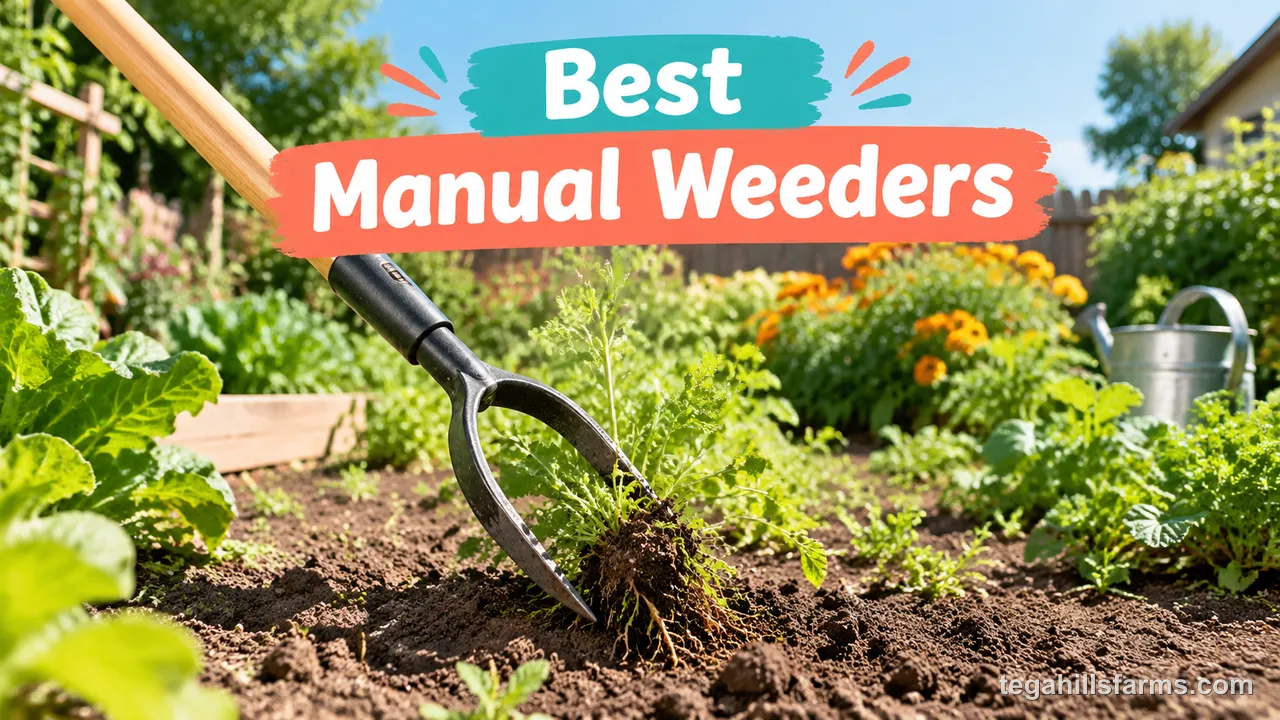
Choosing between them depends on how the head meets your soil, how far the handle keeps you from the ground, and whether the metal tolerates wet dirt or needs drying and oiling after every session. Hand strength, wrist comfort and storage space narrow the choice from there.
Regrowth is the real worry. A dandelion or thistle snapped off at the crown sends up new leaves from the root left behind, so a weeder only earns its place if it lifts the taproot whole, and that depends on soil moisture as much as on the tool.


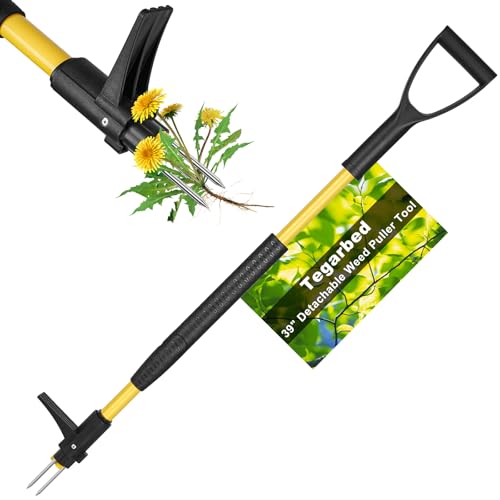

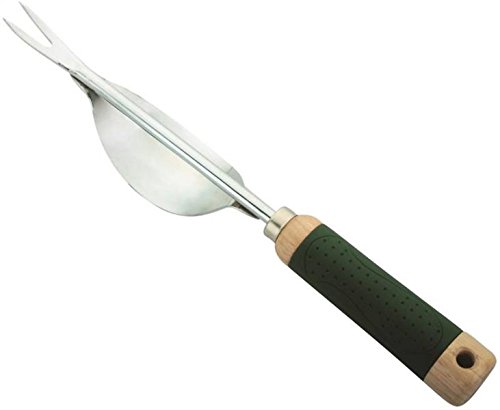

If your knees or wrists already complain after a short session in the beds, settle the handle question before anything else and let the head shape follow. A comfortable grip you keep using pulls more weeds than a sharper head you avoid.
What Is a Manual Weeder and How Does It Work?
A manual weeder is a hand-powered tool that lifts weeds out with their roots, using a narrow tip, blade or set of claws to loosen soil around the root and lever the plant free instead of cutting or spraying it.
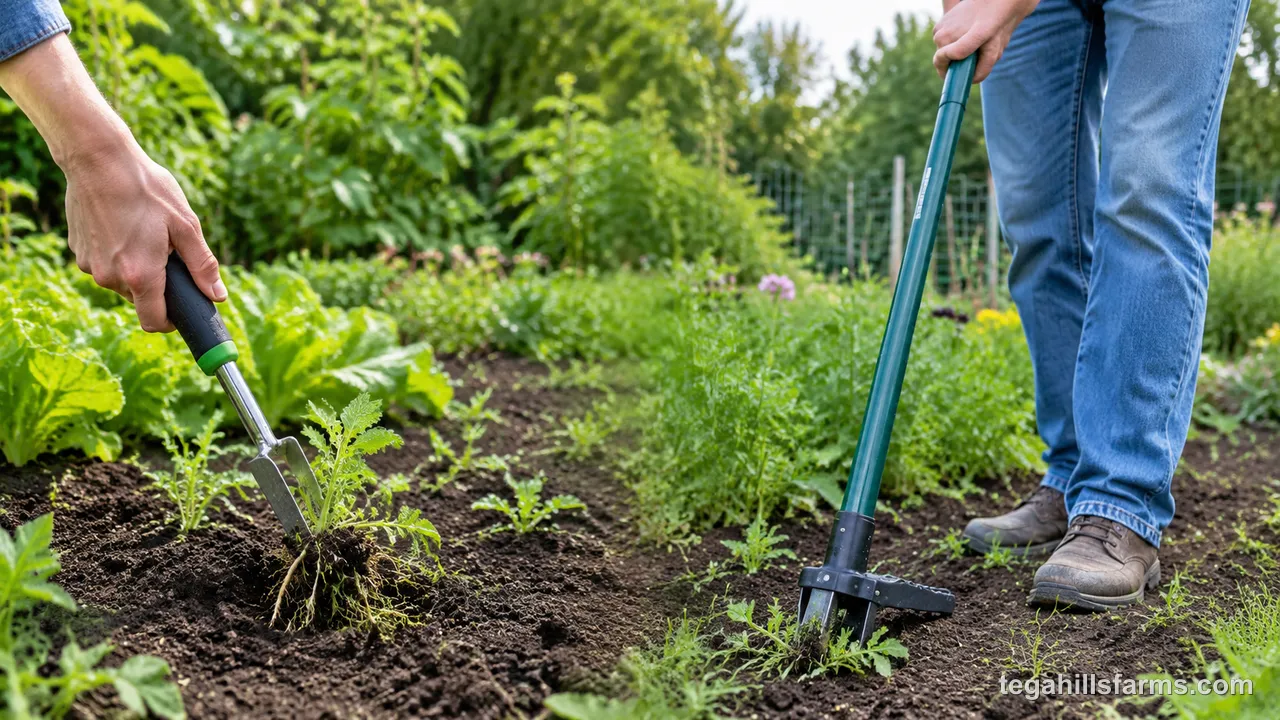
The tools come in two families. Short hand weeders work at ground level: you kneel or sit, slide the tip beside the root and rock the handle, which gives fine control inside planted beds. Long-handled stand-up pullers put claws at the end of a shaft you hold upright; you press the claws into the soil, often with a foot pedal, tilt the shaft and pull the plant out without bending.
Gardeners choose them over sprays because pulling takes out the whole root and leaves no residue where children, pets or vegetables share the ground. The cost is your own effort, which is why grip and posture matter as much as the head. If you are building out a full toolkit, our guide to the best garden hand tools shows where a weeder fits next to trowels, hoes and pruners.
What Should You Look for in a Manual Weeder?
A weeder earns its keep only when it fits the ground you actually have and the way your body moves, because a tool that fights either one ends up hanging in the shed while weeds go to seed. Most disappointment with weeders comes from a mismatch rather than a defect, so matching these factors before buying matters more than brand or appearance.
Which Head Design Works in Your Soil?
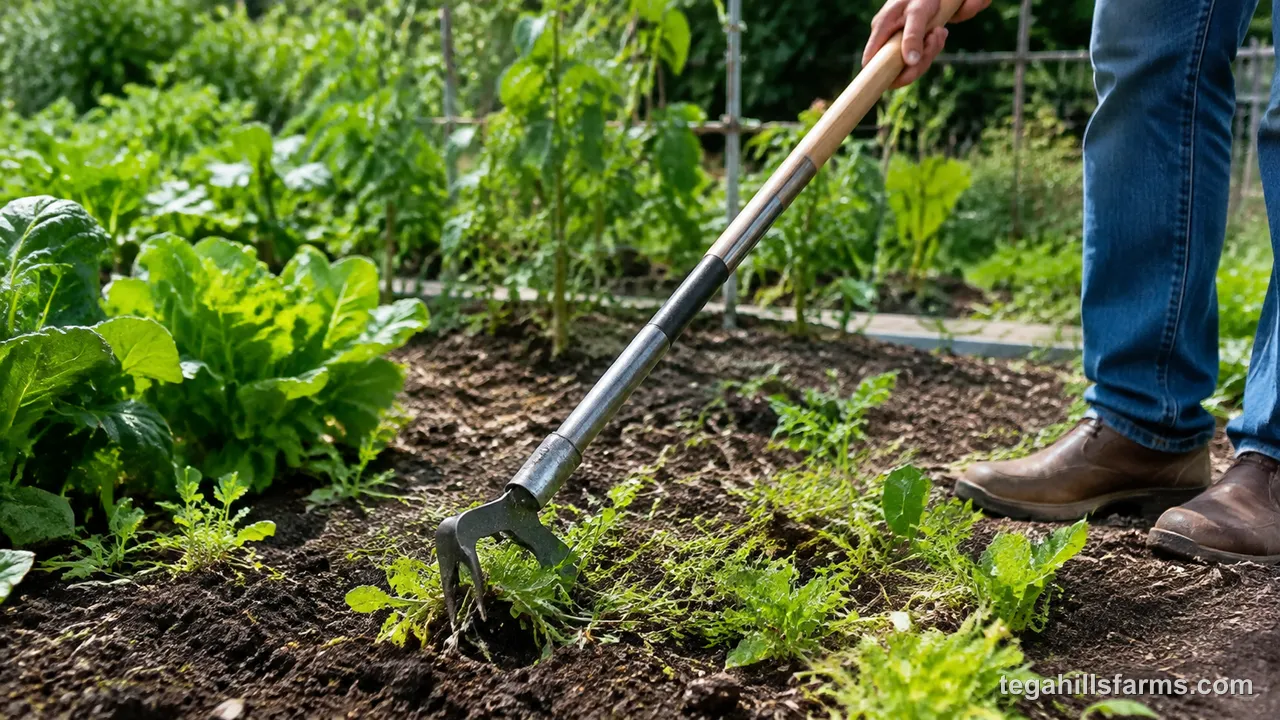
Moist, loose soil lets almost any head work, while clay and compacted ground favor narrow blades and lever designs that concentrate force on a small point. Claw-style heads, found on most stand-up pullers, close around the crown as you push them in, so they need soil soft enough for the tines to sink full depth; in dry clay they skid on the surface or grab only leaves.
Forked tips and deep V noses slide down beside a taproot and pry against the surrounding soil, which suits lawns and beds where you target one weed at a time. L-shaped blades scrape and hook along cracks and shallow ground rather than lifting deep roots. Curved lever bases rest on the turf and turn a small push on the handle into a strong upward lift.
Watering the evening before, or weeding after rain, softens every soil type and changes results more than any head shape. If your yard stays hard for most of the season, the best manual weeders for hard soil lean toward narrow, pointed heads that open the ground before they grip.
How Much Does Handle Length Matter for Your Back and Wrists?
Long standing handles spare your back and knees, while short handles give your hand more precision at the cost of kneeling or bending. With a stand-up puller you stay upright and let your legs and body weight drive the claws, which is why this design suits older gardeners and anyone who can’t get down to the ground and back up comfortably. The trade-off is aim: a long shaft makes it harder to place claws between close plants.
Short handles put your wrist right at the work. A straight handle forces the wrist to bend as you pry, and over a long session that angle is what tires the forearm; an angled head or offset grip keeps the wrist closer to neutral. Grip size matters too, since a thicker, cushioned handle spreads pressure for hands with limited strength.
If bending is the main problem, start with the best long handle weeders, and pick a model whose grip reaches roughly waist height when the claws touch the ground.
Which Materials Hold Up Best Season After Season?
Stainless steel is the low-maintenance choice because it resists rust in damp soil, while high carbon steel holds a sharper edge but rusts if you put it away wet. Cast aluminum heads don’t rust and stay light, though a thin aluminum tip can flex under hard prying in stony ground. Coated carbon steel sits between the two: the coating keeps moisture off until it scratches through, and bare spots then need the same care as uncoated carbon.
Whatever the metal, rinse off soil, dry the head and store it under cover. Carbon blades also benefit from a light wipe of oil. Clay left on a head holds moisture against the metal and starts the pitting that weakens a tip over several seasons.
The 11 Best Manual Weeders of 2026
Our 11 picks are Fiskars Ergo Garden Hand Weeder, Grampa’s Weeder Original Stand Up Weeder, SIXCAR Portable Weed Remover, Fiskars Deluxe Stand-Up Weed Puller, Walensee Stand Up Weed Puller 3-Claw, MASAKIYO Weeding Sickle Full Size, BARAYSTUS Crack Weeder, Tegarbed Stand Up Weed Puller 39″, Fiskars Stand-Up Weed Puller 39″, Edward Tools Leverage Weeding Tool and HAUSPROFI Stand Up Weed Puller. The split that matters most runs between stand-up pullers, which save your back but want moist ground, and the hand weeders and sickle, which reach between crowded plants, with a long-handled crack weeder covering pavement joints where claws can’t fit.
#1 Fiskars Ergo Garden Hand Weeder — Best Overall
Everyday bed and border weeding is where this hand tool earns its keep. Its angled cast-aluminum head adds leverage for prying dandelion and thistle roots out of tougher soil, while the SoftGrip handle reduces the strain that builds up over a long session.
Key Specs:
- Head: angled cast aluminum, rust-resistant
- Handle: ergonomic SoftGrip
- Weight: 0.42 lb (6.7 oz)
- Storage: hang hole
- Warranty: full lifetime
- Model: 384200-1001
Detailed Review:
The angled head is why this weeder works harder than its size suggests. Because the head sits at an angle to the handle, pushing down on the grip pivots the tip against the soil, so you lift a root with leverage instead of yanking with your forearm. That difference shows most in firmer ground, where a straight tool bends your wrist before the root gives.
Aluminum doesn’t rust, which removes the usual reason hand weeders get thrown out after a few seasons. The head also stays sharp through heavy use, so a rinse and a towel are all the care it needs. The light build lets you hold it in one hand while the other steadies the plant, and the hang hole keeps it on a pegboard instead of in a damp bucket.
The SoftGrip handle spreads pressure across the palm, a real help for hands that tire quickly. When you weigh the best manual weeders for dandelions, look for exactly this pairing of an angled head and a cushioned grip. I’d still keep a long-handled puller for open lawn work, since this tool means kneeling for every weed.
Pros:
- Angled head adds leverage for prying out taproots.
- Cast-aluminum head resists rust in damp soil.
- SoftGrip handle eases hand fatigue on long sessions.
- Hang hole keeps storage dry and tidy.
- Full lifetime warranty covers the tool.
Cons:
- Short handle means kneeling or bending for every weed.
- Small head covers big lawns slowly.
Who It’s For:
Gardeners who tend flower beds, herb gardens and borders a little at a time will get the most from it, especially those whose hands tire on thin, hard handles. Anyone who can’t kneel comfortably should look at a long-handled puller instead.
Editor’s Verdict:
This light, rust-resistant hand weeder lets its angled head do the prying, which makes weekly bed maintenance noticeably easier on the wrist.
#2 Grampa’s Weeder Original Stand Up Weeder — Best Durability
If kneeling is off the table, this classic claw weeder lets you clear dandelions and crabgrass standing up. Its long bamboo handle and 4-claw steel head follow a design that has pulled weeds since 1913, and it performs best in soil softened by rain or watering.
Key Specs:
- Handle: 45 in bamboo
- Head: 4-claw steel
- Weight: 2.3 lb
- Best soil: softer ground, especially after watering or rain
- Model: CW-01
Detailed Review:
The pattern has been in use for over a century, and its appeal is how little can go wrong. Four steel claws sit at the end of a long bamboo handle: you set them over a weed, push them into the soil, and lean the handle back to lever the root out without bending or kneeling.
The build is plain steel and bamboo from a family-owned company in the Pacific Northwest, and a rinse plus dry storage keeps it working for many seasons. Next to the Walensee Stand Up Weed Puller 3-Claw, it is noticeably heavier. That weight helps the claws settle into soft ground but asks more of your arms when you carry it across a big lawn.
Soil moisture decides how well it works. After a good watering or rainfall, the claws sink in and grab dandelions, crabgrass and taproots cleanly, while hard clay or rocky ground resists them. If you are comparing the best stand up weeders, check handle length first, because it sets how upright you can stay while you work.
Pros:
- Long bamboo handle keeps you upright while weeding.
- Four steel claws grip crabgrass and taproots.
- Plain steel-and-bamboo build has few parts to wear.
- Removes weeds without chemicals near pets and children.
Cons:
- Struggles on hard clay and rocky ground.
- Extra weight tires arms when carried across the yard.
Who It’s For:
Homeowners with soft, regularly watered lawns who want to stand while they weed will appreciate it, as will anyone who prefers a simple, time-tested build over extra parts. Gardeners working dry clay or stony beds will find it frustrating.
Editor’s Verdict:
Grampa’s sticks with a design that has outlasted more than a century of gardening trends, and in soft, damp soil its claws pull roots cleanly with no bending.
#3 SIXCAR Portable Weed Remover — Best Rust-Resistant
Tight spots call for a compact tool. Its four-tooth head of anti-rust steel and rubber handle let you pry thistles, dandelions and chickweed from between plants and paver gaps without the head corroding after damp sessions.
Key Specs:
- Length: 13.3 in
- Head: four-tooth, anti-rust steel with stainless polished finish
- Handle: rubber
- Build: high impact resistance and tensile strength, resists deforming
- Uses: weeding, digging, gap cleaning
Detailed Review:
Rust resistance is the core strength here. The four teeth are made of hardened anti-rust steel with a stainless polished finish, so they tolerate damp soil and wet storage, and their tensile strength keeps them from bending when you lever against a stubborn root.
The short length places your hand close to the work for precise moves between seedlings, yet keeps your knuckles off the soil. Four teeth spread prying force across a wider bite, which helps with crabgrass and shallow-rooted chickweed. The same head digs, scrapes and clears debris from gaps between pavers.
The edges arrive sharp, so wear gloves to prevent scratches. The rubber handle keeps a secure hold when your hands are damp or muddy. A quick rinse and a dry spot on the shelf are all the upkeep the steel needs.
Pros:
- Anti-rust steel holds up to wet soil.
- Four teeth bite into crabgrass and chickweed.
- Compact length suits gaps and tight beds.
- Rubber handle grips well with damp hands.
Cons:
- Sharp edges require gloves to avoid scratches.
- Short reach means kneeling for every weed.
Who It’s For:
For patio gardeners and vegetable growers who weed up close and want a tool that won’t rust in a damp shed, this is a practical pick. People who need to stay standing should choose a long-handled puller.
Editor’s Verdict:
Compact, sharp and made from rust-resistant steel, it handles close-range weeding and gap cleaning with little upkeep beyond a rinse.
#4 Fiskars Deluxe Stand-Up Weed Puller — Best Ergonomic Design
Wrist pain changes what a weeder needs to do. This stand-up puller pairs an offset handle that reduces wrist strain with four serrated stainless-steel claws and an easy-eject action, so you clear dandelions and thistles without kneeling or touching a root.
Key Specs:
- Handle: 39 in, offset ergonomic grip
- Claws: 4 serrated stainless steel
- Weight: 2.5 lb
- Features: foot pedal, easy-eject, viewing window
- Warranty: lifetime
- Model: 1074437
Detailed Review:
The offset handle is what sets this puller apart in daily use. Because the grip sits off the line of the shaft, your wrists stay closer to neutral as you tilt the tool back, which matters when you pull many dandelions in one session. The integrated viewing window shows the weed through the head, so you center the claws on the crown instead of guessing.
The foot pedal lets body weight drive the serrated claws through tough soil, and they grab both the crown and the root for permanent removal. The easy-eject action then releases the weed into a bucket without your hands touching it. Next to the Fiskars Stand-Up Weed Puller 39″, it’s the lighter of the two, a small difference you notice after a long session.
It performs best in soft to moderately firm, moist ground. For compacted or clay-heavy soil, lightly water the area beforehand so the claws penetrate cleanly and lift the full root. The steel blades stay sharp through heavy use, and a lifetime warranty backs the tool.
Pros:
- Offset handle keeps wrists in a more neutral position.
- Viewing window helps center claws on each weed.
- Easy-eject action releases weeds hands-free.
- Serrated stainless claws grip roots firmly.
- Lifetime warranty backs the tool.
Cons:
- Hard, dry soil needs watering before use.
- Stand-up design makes tight bed work awkward.
Who It’s For:
Anyone with sore wrists, stiff knees or a bad back who weeds a lawn regularly will feel the difference the offset handle makes. If your weeds grow mostly between tightly packed perennials, a short hand tool gives better aim.
Editor’s Verdict:
Fiskars put real thought into the wrist and eye side of weeding here, and in moist ground this puller removes dandelions with very little strain.
#5 Walensee Stand Up Weed Puller 3-Claw — Best Lightweight
Gardeners who tire quickly will appreciate how little this puller asks of their arms. A foot pedal pushes three 2.75-inch steel claws into moist ground, so body weight does the work and you stay upright from the first weed to the last.
Key Specs:
- Handle: 39 in
- Claws: three, pointed, stainless high-strength steel
- Weight: 1 lb
- Pedal: foot pedal for ground penetration
- Model: WT-001G
Detailed Review:
Low weight is the reason to choose this puller. With any stand-up tool you lift the whole thing after each weed, and a lighter shaft means less shoulder and forearm work across a session, which matters for older gardeners and anyone with limited strength.
The foot pedal lets you press the pointed claws into the ground, and they reach deep enough to grab the root of crabgrass, thistle, plantain, clover or burdock. Push the tines in around the weed, tilt the shaft to one side, pull the plant, and release it.
Against the Fiskars Deluxe Stand-Up Weed Puller, the trade is straightforward. This tool weighs far less, but it has three claws to that model’s four, giving fewer points of grip on each crown. The stainless high-strength steel holds up to wet ground without rusting.
Moist soil is a must before you start. Gravelly ground is off-limits, since stones keep the tines from closing cleanly around the root.
Pros:
- Light build eases lifting between weeds.
- Foot pedal lets body weight drive the claws.
- Stainless high-strength steel resists rust.
- Pointed claws handle crabgrass, clover and thistle.
Cons:
- Fewer claws grip less of each crown.
- Gravelly soil is off-limits for this tool.
Who It’s For:
Older gardeners and anyone with limited arm strength who still wants to weed standing up will find this easy to manage. People facing dry ground need to water first, and a gravel-heavy yard calls for a different tool.
Editor’s Verdict:
Light enough to carry around the whole yard without strain, this puller turns moist-ground weeding into a standing job that won’t wear you out.
#6 MASAKIYO Weeding Sickle Full Size — Best Precision Cutting
Weeding right up against seedlings needs a blade, not a claw. This Japanese high carbon steel sickle is handmade one at a time, and its very sharp edge slices weeds at the soil line with the kind of control a pulling tool can’t give in a crowded row.
Key Specs:
- Blade: high carbon steel
- Edge: very sharp, holds its edge longer
- Weight: 0.37 lb (5.9 oz)
- Size: full size
- Origin: handmade in Japan by a gardening tool maker
Detailed Review:
High carbon steel takes a fine edge, and that edge is the whole point of this tool. The blade draws through weed stems with little force, so you can work along a row of lettuce or around perennials and stop exactly where you mean to. Each one is made by hand by a Japanese manufacturer that specializes in gardening tools.
It weighs very little, which keeps wrist effort low and lets you work by feel. A sickle cuts rather than pulls, so it suits annual weeds and young growth; deep taproots such as dandelion regrow from the root unless you follow up with a pulling tool.
Carbon steel asks for care in return. Wipe off soil after each use, dry the blade fully and give it a thin coat of oil before storage, or rust spots will dull the edge. Because the edge lasts, sharpening is occasional, and a few passes with a stone keep it slicing cleanly.
I see it as a companion to a claw puller rather than a replacement, since the two handle different weeds.
Pros:
- Very sharp carbon edge slices weeds with fine control.
- Featherlight build keeps wrist effort low.
- Edge stays sharp longer between sharpenings.
- Handmade in Japan by a gardening tool maker.
Cons:
- Carbon steel rusts unless dried and oiled.
- Cutting action leaves taproots behind to regrow.
- Sharp blade needs careful handling and storage.
Who It’s For:
Vegetable growers and flower-bed gardeners who weed close to young plants and enjoy keeping a blade sharp will get the most precise work from it. Lawn owners fighting dandelions should pick a pulling tool instead, since cutting leaves the taproot behind.
Editor’s Verdict:
Keep it dry and oiled, and this sickle cuts weeds exactly where you aim, even right beside a seedling.
#7 BARAYSTUS Crack Weeder — Best for Small Spaces
Weeds rooted in sidewalk cracks and paver joints are this tool’s target. Its sharp L-shaped blades of coated high carbon steel push, pull and dig into narrow gaps from a long stainless steel handle, so you clear moss and small taproot weeds without kneeling on concrete.
Key Specs:
- Blade: L-shaped, high carbon steel with anti-rust coating
- Handle: 55 in stainless steel
- Weight: 1.6 lb
- Crack range: 0.1 in (2.5 mm) wide or more, under 2 in (5 cm) deep
- Model: JDUS1169
Detailed Review:
The L-shaped blade works from several angles. Push it along a joint to slice, pull it back to hook roots, or angle it down to dig; the multiple sharp edges tear through moss and the packed soil that collects between pavers, where a claw head can’t fit.
The long handle is the comfort feature. Standing upright while you drag the blade along a driveway joint spares your knees from concrete, and the ergonomic shape gives enough control for delicate edging work.
Crack size is the limit to keep in mind. Joints within its working range clean out well, but extremely narrow or deep cracks need a more specialized tool. High carbon steel resists wear and deforming, and the anti-rust coating keeps the blade from pitting while letting soil wipe off easily.
Pros:
- L-shaped blade works pushing, pulling and digging.
- Long handle keeps you off hard pavement.
- Anti-rust coating protects the carbon steel blade.
- Clears moss as well as small taproot weeds.
Cons:
- Very narrow or deep cracks need a different tool.
- Built for joints, not open lawn or bed weeding.
Who It’s For:
Homeowners with paver patios, brick walkways or a cracked driveway who are tired of kneeling to pick weeds from the joints will get the most from it. It is less useful in open beds, where a claw puller or hand weeder lifts roots more cleanly.
Editor’s Verdict:
For paver joints and sidewalk seams, this crack weeder turns a kneeling chore into a standing one, provided the gaps fall within its working range.
#8 Tegarbed Stand Up Weed Puller 39″ — Best Easy Assembly
Setup takes almost no effort. Its 3-part detachable design goes together quickly for weeding and comes apart for compact storage, while three sharp 65Mn steel claws twist to loosen dandelion and thistle roots before you pull.
Key Specs:
- Handle: 39 in, textured D-handle
- Claws: three 65Mn steel
- Shaft: high-strength steel with reinforced pedal and joints
- Construction: 3-part detachable
- Model: HKTY-YMQ-002
Detailed Review:
The detachable build solves a common stand-up puller problem: a long, awkward tool with nowhere to live. Breaking it into three parts lets it ride in a car trunk to a community plot or fit in a narrow shed, and reassembly is quick.
Joints are where a sectional tool usually flexes, so the reinforcement matters. The high-strength steel shaft and reinforced pedal and joint areas resist bending under foot pressure, and the textured D-handle stays put in gloved or damp hands.
The three 65Mn steel claws grip deep-rooted weeds, and twisting the tool a full 360° loosens the root before you pull. Damp or freshly watered soil is where it works smoothly; dry, compacted or rocky ground makes penetration hard work. Rinse the claws after each session to extend the tool’s life.
Pros:
- Three-part design assembles quickly and stores compactly.
- Reinforced pedal and joints resist bending.
- Textured D-handle gives a slip-resistant grip.
- 360° twist loosens deep roots before pulling.
Cons:
- Dry, compacted or rocky soil resists the claws.
- Joints add parts to check and clean.
Who It’s For:
Renters, townhouse gardeners and anyone short on shed space will like a puller that breaks down for storage. If your soil stays dry and hard most of the year, plan on watering before each session or choose a tool suited to firmer ground.
Editor’s Verdict:
Easy to put together and easy to tuck away, this puller still feels solid underfoot in damp soil thanks to its reinforced joints.
#9 Fiskars Stand-Up Weed Puller 39″ — Best for Heavy Soil
Heavier ground needs force at the claws, and this puller delivers it through a foot pedal that helps the head penetrate tough soil. Serrated stainless-steel claws then grip the root for removal.
Key Specs:
- Handle: 39 in long steel handle, offset grip
- Claws: serrated stainless steel
- Weight: 2.8 lb
- Features: foot pedal, easy-eject, viewing window
- Warranty: lifetime
- Model: 78806935C
Detailed Review:
The foot pedal is what makes this model useful in firmer ground. You put your weight on the pedal rather than on your arms, so the claws push past a crusted surface that a hand push alone would skate across. The long steel handle adds stiffness to that push.
Moisture still decides results. In clay-heavy or compacted yards, watering ahead of time lets the claws reach full depth and close around the root, because dry heavy soil stops any claw puller short. Once the claws are in, a tilt of the handle levers the weed out, and the easy-eject action drops it without hand contact.
The offset handle reduces wrist strain during the tilting motion, which helps when a stubborn root needs a second lever. The viewing window lets you line up the claws on the crown before you step down. Stainless-steel blades stay sharp through heavy use, and a lifetime warranty backs the tool.
Pros:
- Foot pedal pushes claws into firmer ground.
- Long steel handle stays stiff under pressure.
- Stainless claws stay sharp and resist rust.
- Easy-eject releases weeds without touching them.
- Lifetime warranty covers the tool.
Cons:
- Its weight adds up when moving between weeds.
- Dry clay still needs watering before use.
Who It’s For:
Lawns with clay or packed soil and plenty of dandelions are where this puller earns its place, especially for gardeners willing to water ahead of time. If carrying a heavier tool around the yard would wear you down, a lighter stand-up model will suit you better.
Editor’s Verdict:
With a pedal that brings your body weight to bear and stainless claws that stay sharp, this puller gives firmer lawns the push they need once the soil is watered.
#10 Edward Tools Leverage Weeding Tool — Best Organic Option
Lawn owners who want dandelions gone without weed killer should start here. A curved metal base rests on the grass as a pivot, and the deep V nose follows the taproot down so the whole root comes out with it.
Key Specs:
- Nose: deep V, stainless rust-proof steel
- Base: curved metal leverage base
- Handle: solid wood with extra-large cushioned grip
- Weight: 0.55 lb (8.8 oz)
- Warranty: lifetime
Detailed Review:
The leverage base changes how a hand weeder feels. Instead of prying against your wrist, you rest the curved metal base on the turf and push the handle down, so the base acts as a fulcrum and the nose rises with the root attached. Bigger, harder-to-pull weeds come out with far less grip strength.
Depth is the other half. The V nose is longer than the short tips common on hand weeders, so it reaches the lower part of a dandelion taproot instead of snapping it midway, which is the usual cause of regrowth.
Stainless rust-proof steel means the nose can stay damp after lawn work without pitting, and the extra-large cushioned grip on the solid wood handle spreads pressure for hands that tire. Wipe the wood dry and store it indoors so the handle stays sound. A lifetime warranty backs it.
Because it pulls instead of poisons, this tool fits organic lawn care where children and pets play. It still means kneeling, so it suits spot work more than clearing a weed-choked yard.
Pros:
- Curved base turns pushing into lifting leverage.
- Deep V nose reaches lower down the taproot.
- Stainless steel resists rust after damp work.
- Extra-large cushioned grip reduces hand fatigue.
- Lifetime warranty backs the tool.
Cons:
- Short handle means kneeling on the lawn.
- Wood handle needs drying to stay sound.
Who It’s For:
If your lawn is organic, or you simply don’t want herbicide where kids and dogs play, this tool covers dandelion control by hand. Gardeners who need to stay upright should pair it with, or swap it for, a stand-up puller.
Editor’s Verdict:
Lever action plus a deep V nose makes chemical-free dandelion removal a realistic weekend habit rather than a losing fight.
#11 HAUSPROFI Stand Up Weed Puller — Best Premium
Households where tall and short gardeners share one tool get the most from this puller. Its adjustable handle offers two lengths, four stainless steel claws pull deep roots, and an automatic rebound mechanism ejects each weed with a light push on the handle sleeve.
Key Specs:
- Handle: adjustable, 36 in or 46 in
- Claws: four heavy-duty stainless steel
- Ejection: automatic rebound with quick-release sleeve
- Accessory: 13 gal (50 L) garden waste bag
- Model: XB0001C
Detailed Review:
Adjustability is the feature that matters most. Setting the handle to the length that matches your height keeps your back straight instead of hunched, and two people of very different heights can share one tool without either one stooping.
The automatic rebound mechanism keeps the work moving. A light push on the handle sleeve ejects the weed and soil, and the head springs back ready for the next plant, so you can clear a patch in one continuous pass. The four heavy-duty stainless claws use lever action to penetrate firm soil and lift deep roots with little physical effort.
The bundled bag collects pulled weeds and leaves, and the claws double as a transplanting tool for seedlings. Assembly takes some attention, and installation videos plus an English manual cover setup.
This is a premium-priced puller, and the extra money buys adjustability, automatic ejection and the bag rather than a different pulling principle. For a gardener who weeds often, those conveniences add up over a season.
Pros:
- Adjustable handle fits gardeners of different heights.
- Automatic rebound ejects weeds with a light push.
- Four stainless claws grip deep roots.
- Bundled collection bag speeds cleanup.
- Claws also work for transplanting seedlings.
Cons:
- More moving parts mean more to assemble.
- Premium price buys extra features, not a different pulling method.
Who It’s For:
Couples or families sharing yard work, and tall gardeners who find standard pullers too short, will appreciate the adjustable shaft and the bag. Buyers who just want a simple claw puller for occasional weeding won’t need all of its extras.
Editor’s Verdict:
Adjustable, self-ejecting and bundled with a collection bag, this puller turns a long weeding session into steady, upright work for nearly anyone in the household.
Stand-Up Weeder or Hand Weeder: Which Is Better?
Neither family wins outright: the choice turns on whether your body or your planting layout sets the limit, since stand-up pullers protect knees and back while hand weeders protect neighboring plants. Many gardeners end up owning one of each, so the real question is which tool covers the place where most of your weeds grow.
When Does a Stand-Up Weeder Make Sense?
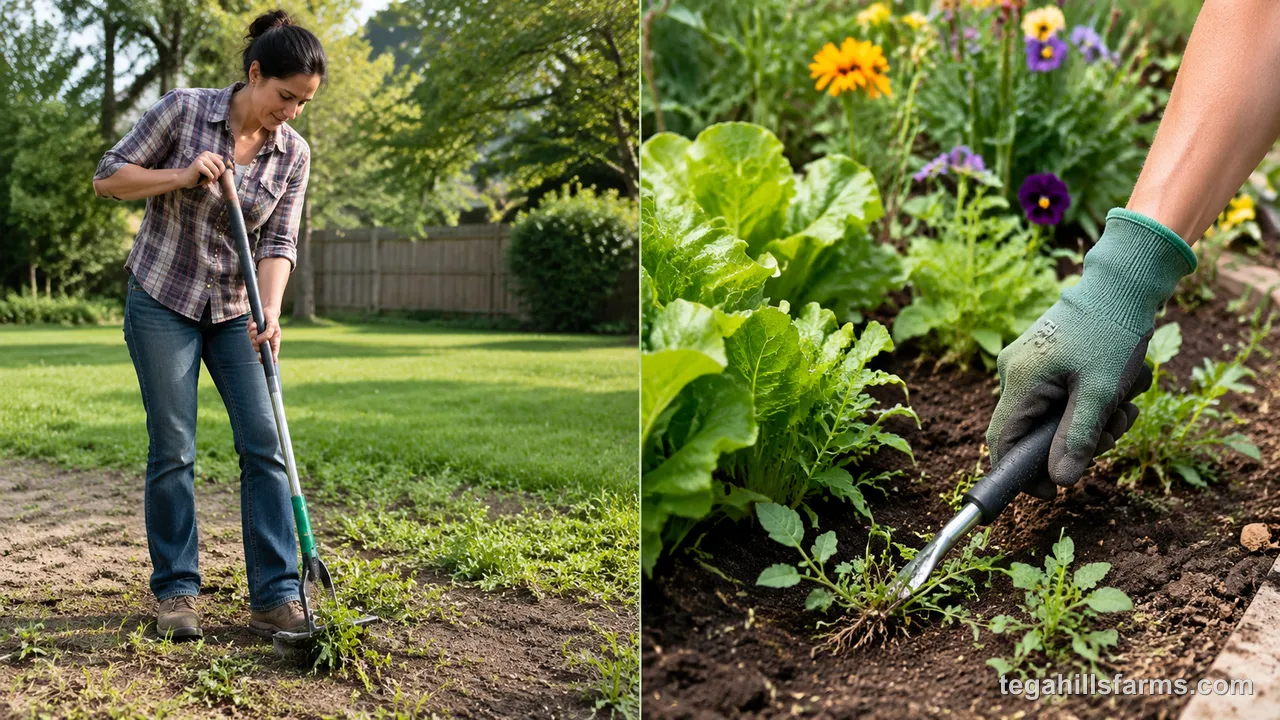
A stand-up weeder makes sense on open lawns and in large areas of softened ground, where the job is pulling many scattered dandelions, plantain or thistles and the biggest cost is bending down for each one. Standing lets your legs and body weight drive the claws, so older gardeners and anyone with back or knee trouble can weed longer before fatigue sets in. Ejecting each weed into a bucket also keeps your hands clean.
The limits show up in tight spaces and hard ground. Claws need room to close around a crown, so crowded perennial beds and vegetable rows risk lifting a neighbor’s roots along with the weed. Rocky, gravelly or dry clay soil stops the tines short, and a long shaft is awkward to store in a small shed unless it breaks down into sections.
When Is a Hand Weeder the Smarter Choice?
A hand weeder is the smarter choice when weeds sit among plants you want to keep. Working close to the soil lets you place a narrow tip beside one taproot without disturbing the seedling next to it, which a claw head can’t match in a crowded bed. Short tools also suit quick jobs, such as a few weeds along a border on your way past, and they store in a drawer or bucket.
The cost lands on knees and wrists. Every weed means kneeling, squatting or bending, and repeated prying with a bent wrist tires the forearm, so a cushioned grip or angled head makes a real difference over a long session. A kneeling pad takes pressure off the knees, and the best short handle weeders keep the wrist straighter by building leverage into the head rather than relying on your grip.
Which Manual Weeder Fits Your Weeds and Soil?
Weed type and the surface it grows from decide the right tool more than any single feature, because a head that excels in turf can be clumsy between vegetables or useless in a concrete seam. Match the situation first, then narrow the choice by comfort and storage.
Lawns and Deep-Rooted Dandelions
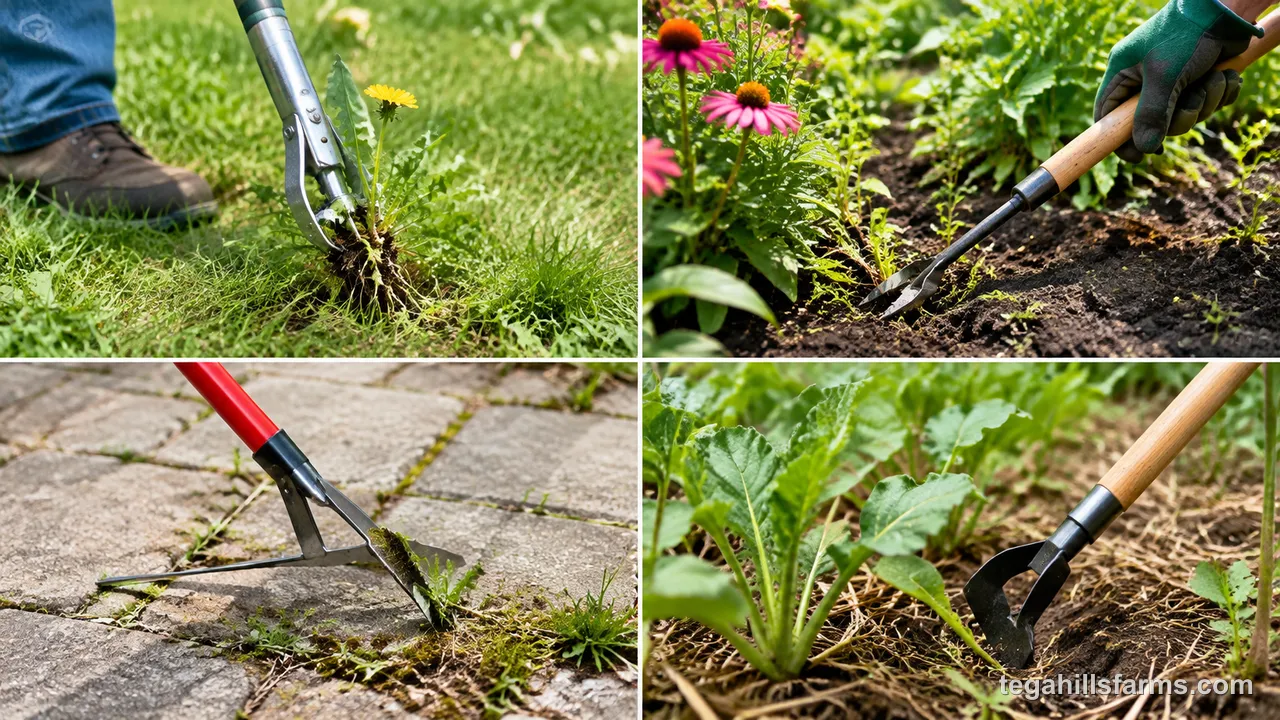
For dandelions and other taproot weeds in turf, pick a tool that combines leverage with a deep tip, then weed when the soil is moist. A taproot holds firmly along its length; if the tool grips only the crown, the root snaps and the stub left behind regrows.
The Edward Tools Leverage Weeding Tool uses its curved base as a fulcrum and its deep V nose to reach lower on the root, while the Fiskars Ergo Garden Hand Weeder gets its leverage from the angled head. For standing work, the Fiskars Stand-Up Weed Puller 39″ and the Fiskars Deluxe Stand-Up Weed Puller close their claws around the crown and lift it with help from the foot pedal. Moist soil lets any of these slide down the full root rather than tearing it.
Vegetable Patches and Flower Beds
Crowded vegetable rows and flower beds call for tools that remove one weed at a time without heaving up the soil around nearby roots. The MASAKIYO Weeding Sickle Full Size slices young weeds at the soil line, which works between lettuce or carrots where pulling would loosen neighboring seedlings. The SIXCAR Portable Weed Remover and the Fiskars Ergo Garden Hand Weeder pry out individual taproots with short, controlled motions.
Weed early, while weeds are small and their roots haven’t tangled with crop roots, and hold the stem of the plant you’re keeping steady as you lever beside it. Claw pullers belong on the paths between beds rather than inside them. If the vegetable patch is your main battleground, the best manual weeders for vegetable gardens narrow the field further.
Patios, Driveways and Paving Gaps
Crack weeders with narrow L-shaped blades are the right tool for paving joints, because they slice and hook along the seam where claws and forked tips can’t enter. The BARAYSTUS Crack Weeder adds a long handle, so you scrape moss and small taproot weeds out of driveway and sidewalk gaps while standing.
Crack width and depth set the limits. The blade cleans joints within its working range well, but hairline seams are too tight for it to enter, and deep voids hide roots below its reach. For those spots, a compact hand tool such as the SIXCAR Portable Weed Remover can pick out what the long blade misses.
Small Gardens and Budget-Minded Buyers
A small yard rarely justifies a feature-heavy stand-up puller, because one compact hand tool covers most weeding in a few beds and containers. Simple hand weeders without pedals, springs or bags also tend to sit at the affordable end of the category, and they store in a kitchen drawer or a tote.
The Fiskars Ergo Garden Hand Weeder handles beds and borders, the Edward Tools Leverage Weeding Tool covers a small lawn, and the SIXCAR Portable Weed Remover reaches into gaps. Spend on comfort before extras: a cushioned grip you use every week does more than a collection bag you rarely need.
How Do You Use a Manual Weeder to Remove the Whole Root?
Whole-root removal comes from moist soil, a steep entry beside the root, and a slow lift, because a fast yank snaps the taproot and leaves the part that regrows. The right tool makes those steps easier, and our guide on how to choose garden tools covers how grip, weight and handle length fit your body.
How to Use a Hand Weeder
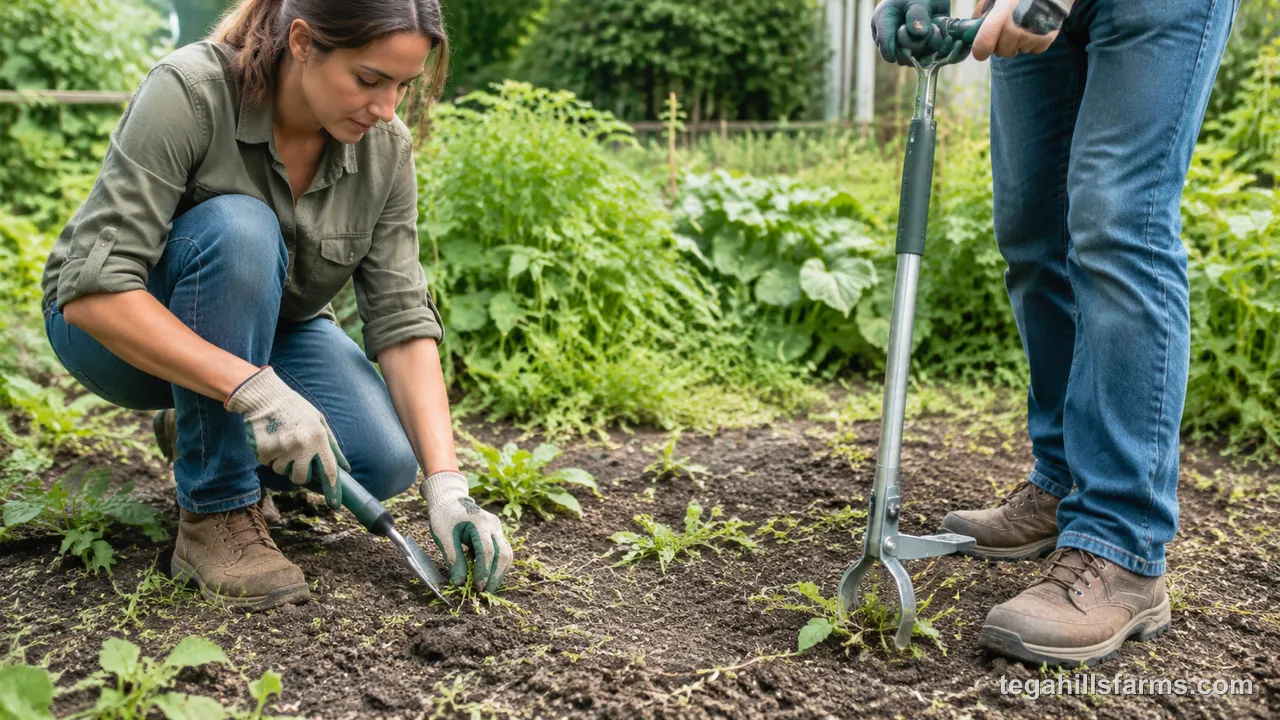
Water the bed or wait for rain, then push the tip straight down beside the taproot rather than at the crown, angled so it slides under the root. Rock the handle back gently so the tip pries against the soil and loosens the root along its length. Lift slowly while holding the leaves with your free hand; if you feel resistance, push the tip deeper and pry again instead of tugging.
Keep your wrist as straight as the tool allows. Gripping near the end of the handle and using a tool with an angled head moves effort from the wrist to the forearm and shoulder, which delays fatigue. Kneeling on a pad or sitting on a low stool keeps your back from rounding over the work.
How to Use a Stand-Up Weed Puller
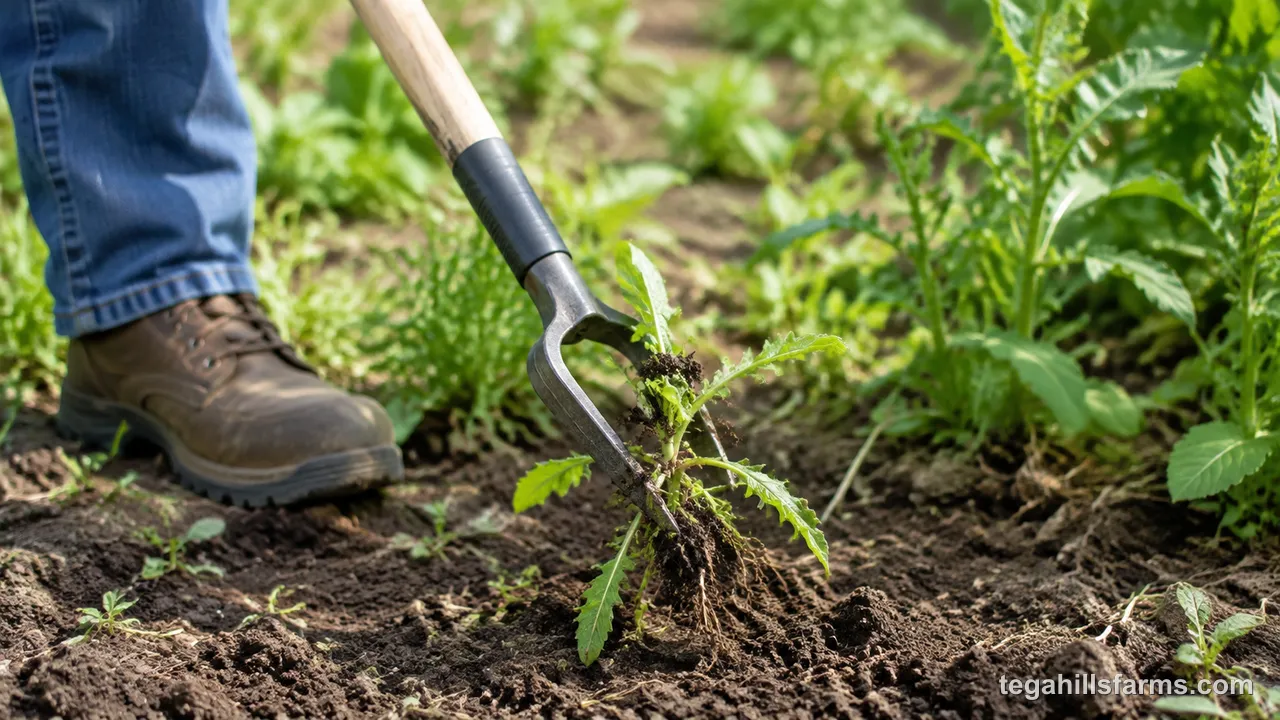
Center the claws over the crown of the weed, then step on the foot pedal, or press down firmly on the handle if your model has no pedal, so the claws drive into the soil around the root. Tilt the handle back toward you, which closes the claws and levers the plant up with its root. Carry it to a bucket or bag and use the ejector to release the weed.
Soil that is damp but not muddy gives the cleanest results. Dry ground stops the claws short, and soggy soil lets the root slip out of their grip. If the claws can’t reach depth, water the area and come back once it has soaked in.
A weeder head with rust pits and a slightly splayed claw still looks usable, yet it grips less of the root each time and starts snapping taproots rather than lifting them. Those broken roots send up fresh leaves soon after, and the extra weeding gets blamed on the soil when the fault sits in a tired tool that may only need an hour of care.
How Can You Tell a Worn-Out Weeder From One That Just Needs Care?
A weeder that only needs care shows surface rust, dull edges or caked soil; one that needs replacing has a cracked head, claws that won’t hold their shape, or a handle that wobbles under load. Surface rust scrubs off with a wire brush or steel wool, and a dull blade or V nose comes back with a few passes of a file or sharpening stone. After cleaning, dry the head fully and wipe on a thin coat of oil, especially on carbon steel.
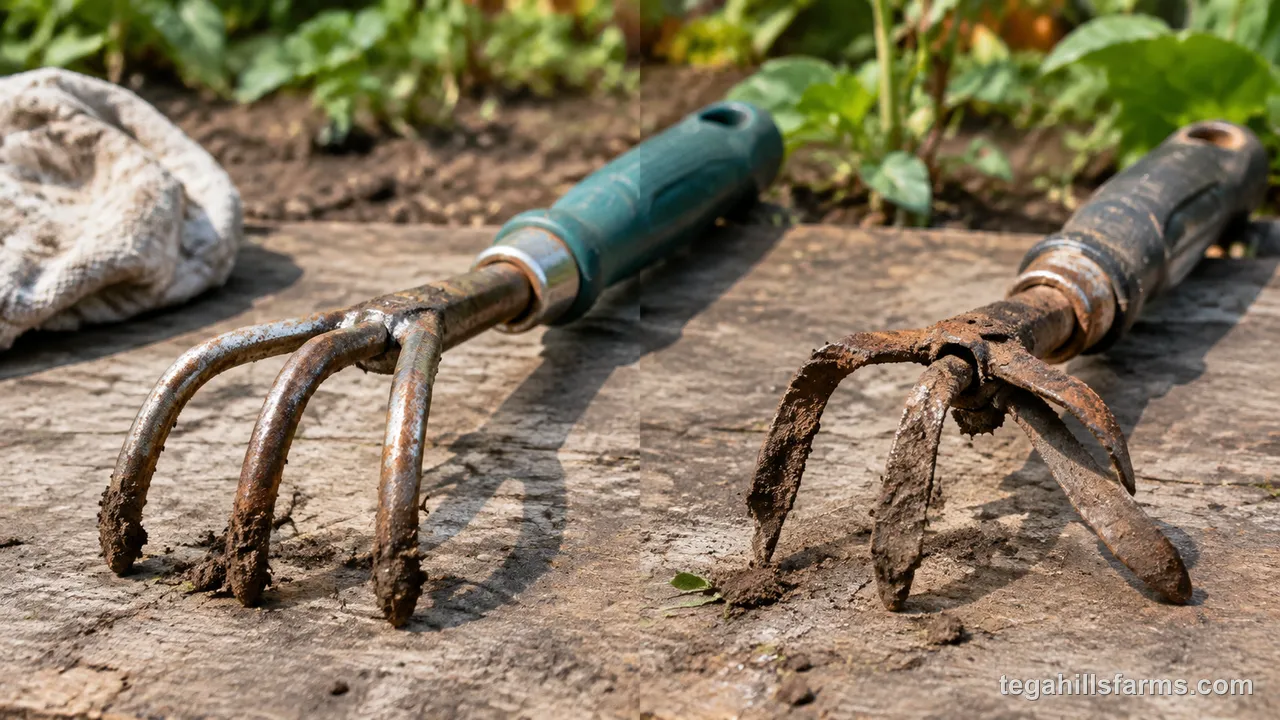
Bent claws are the judgment call. A slight bend can often be eased back with pliers, but a claw that keeps bending again, or metal with deep pitting near a joint, has lost strength and may snap during a hard pull. Wood handles split along the grain, rubber grips that have cracked, and pedals that flex all transfer force poorly and put more strain on your hands, so replacement makes more sense than repair. Storing tools dry and under cover over winter slows all of this wear.
Are Hoes, Hori Hori Knives or Flame Weeders Better Alternatives?
Pulling tools remain the best fit for scattered weeds with deep roots, but large beds of seedling weeds, gravel paths and long fence lines are often cleared faster by cutting or heat. Each alternative trades root removal for speed or reach.
Hoes and Hori Hori Knives
Hoes and hori hori knives cut or dig weeds rather than pulling them, which makes them faster across open ground and less precise around individual roots. A stirrup hoe slices back and forth just below the surface, severing young annual weeds across a whole bed while you stand. It does little against perennial taproots, which regrow from the root left behind. Draw and scuffle hoes work the same way at different angles, and the best garden hoes suit vegetable gardens with long, straight rows.
A hori hori is a Japanese digging knife with a concave blade and one serrated edge. It digs out a taproot, divides perennials, cuts twine and plants bulbs, so it covers mixed tasks for gardeners who want one tool in the bucket. The trade-off is effort, since digging each weed takes longer than a single lever pull.
Flame and Electric Weeders
Flame weeders use a propane torch to heat weed leaves until the cells rupture, and electric weeders do the same with a heated element, so neither removes anything from the ground. Heat kills small annual weeds on gravel, patios and driveways with little bending, but deep-rooted perennials such as dandelions often regrow from the surviving root, so repeat passes become part of the routine.
Safety is the other difference. An open flame near dry mulch, leaves or wooden fences can start a fire, and burn restrictions vary by area, so check local rules before buying one. Electric models depend on a cord or charged battery. Many home gardeners still prefer pulling because it takes out the whole root, works anywhere and needs no fuel. If gravel paths are your main problem, the best flame weeders are worth a look.
Manual Weeder FAQs
Is weeding easier after rain?
Yes. Moist soil lets tips and claws slide down beside the root and loosens its hold, so taproots come out whole instead of snapping. Wait until the surface has drained rather than weeding in mud, which smears clay and lets roots slip out of claws. Watering a dry bed the evening before works almost as well.
How do I stop weeds regrowing from broken roots?
Remove as much root as possible on the first pull by entering deep beside it and lifting slowly. If a dandelion snaps, dig out the remaining piece or pull the new leaves as soon as they appear, since repeated removal starves the root. A layer of mulch afterward keeps new seedlings from sprouting in the bare spot.
Do manual weeders work on gravel?
Most claw pullers don’t, because stones block the tines and can bend them. On gravel paths, a narrow hand tool or crack weeder handles scattered weeds, while a hoe or flame weeder clears larger patches faster. Raking the gravel back over the cleared area afterward hides the small gaps where new seeds would otherwise settle.
How should I store weeders over winter?
Clean off all soil, let the tool dry completely, and wipe the metal with a light coat of oil to block rust. Sand rough spots on wood handles and rub in linseed oil to keep the wood from drying out. Store everything indoors, hanging if possible, so blades don’t rest on damp concrete in a cold garage or shed.
Can a stand-up weeder damage my lawn?
It leaves a small plug-shaped hole where the root came out, and grass fills it in during the active growing season. Pressing the soil back down with your foot speeds recovery. Scattering a little grass seed into larger holes keeps new weeds from claiming the bare spot before the lawn closes over it.
More Guides on Best Manual Weeders
- Best Manual Weeders Under $20
- Best Manual Weeders Under $30
- Best Manual Weeders Under $50
- Best Manual Weeders for Soft Soil