

For most homeowners who trim limbs, clean up after storms and cut some firewood, a battery chainsaw is the better buy. A gas chainsaw earns its place when you cut thick wood for hours at a stretch, far from any outlet or charger.
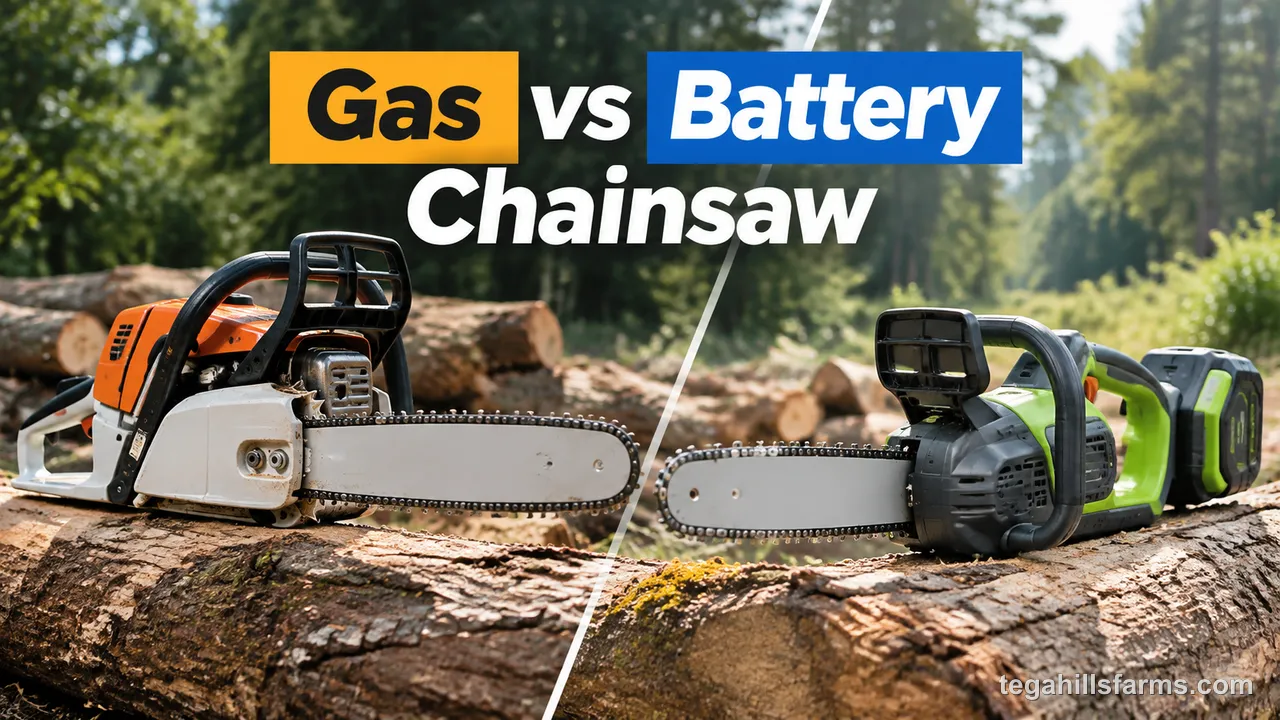
Six things decide how a saw behaves in your yard: cutting power in thick or hard wood, how long it runs before you stop to refuel or recharge, weight and balance in your hands, noise and exhaust, the upkeep you take on, and whether it starts when you need it.
The real risk is ending up with a saw that doesn’t match your work. A battery saw can run out of charge halfway through a downed oak. A gas saw can sit unused in the garage because fueling and starting it feels like too much effort for one hanging limb.
If you already own batteries for a mower, trimmer or blower, check which saws run on that platform before anything else. That can change both the cost and the convenience before cutting power even comes up.
Gas vs Battery Chainsaw: Which One Should You Buy?
Battery power fits most homeowners who prune and clean up a few times a season, while gas power fits long, heavy cutting sessions far from an outlet.
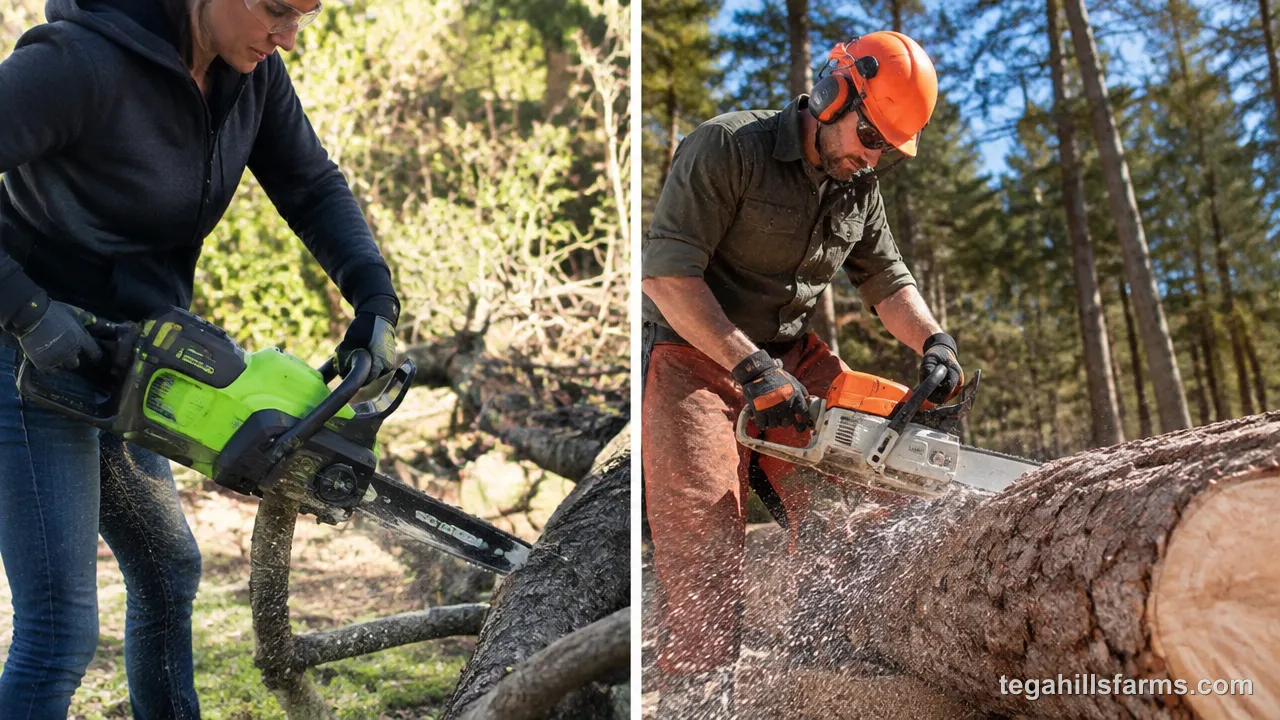
The split comes from how each saw gets its energy. A battery saw starts with a trigger, needs no fuel mixing and runs quietly. That suits short jobs scattered across the year. A gas saw carries its energy in a tank you can refill in the field, and its engine keeps pulling through big, dense wood. That matters when you’re clearing a fallen tree or bucking a winter’s worth of rounds in one day.
Both power sources compare as follows on the criteria that most affect which saw works better in a typical yard.
| Criterion | Gas | Battery |
|---|---|---|
| Cutting power | Holds torque through thick, hard or wet wood and long cuts | Handles limbs, small trunks and firewood rounds; slows down sooner in big hardwood |
| Runtime and refueling | Runs as long as you have mixed fuel; refills on the spot | Limited by the pack; recharging means downtime unless you carry spares |
| Weight and handling | Comparable weight, with more engine vibration | Pack adds weight, often matching gas; smoother running |
| Noise and fumes | Loud, with two-stroke exhaust | Much quieter, no exhaust |
| Maintenance | Fuel mix, spark plug, air filter and carburetor care, plus chain and bar | Battery care, plus chain and bar |
| Starting reliability | Pull start; can balk after storage or in cold weather | Trigger start with a safety lockout |
None of these criteria applies the same way to every yard. A few big trees on a wooded lot push the answer toward gas, while a suburban lot with ornamental trees and occasional storm limbs points to battery. If you are still deciding on size, bar length and features beyond the power source, our guide on how to choose a chainsaw covers the full picture.
Which Cuts Better: Gas or Battery Chainsaws?
A two-stroke engine holds torque through thick, hard or wet wood and long continuous cuts, while a battery motor handles limbs, small trunks and firewood rounds cleanly but bogs down sooner in big, dense logs.
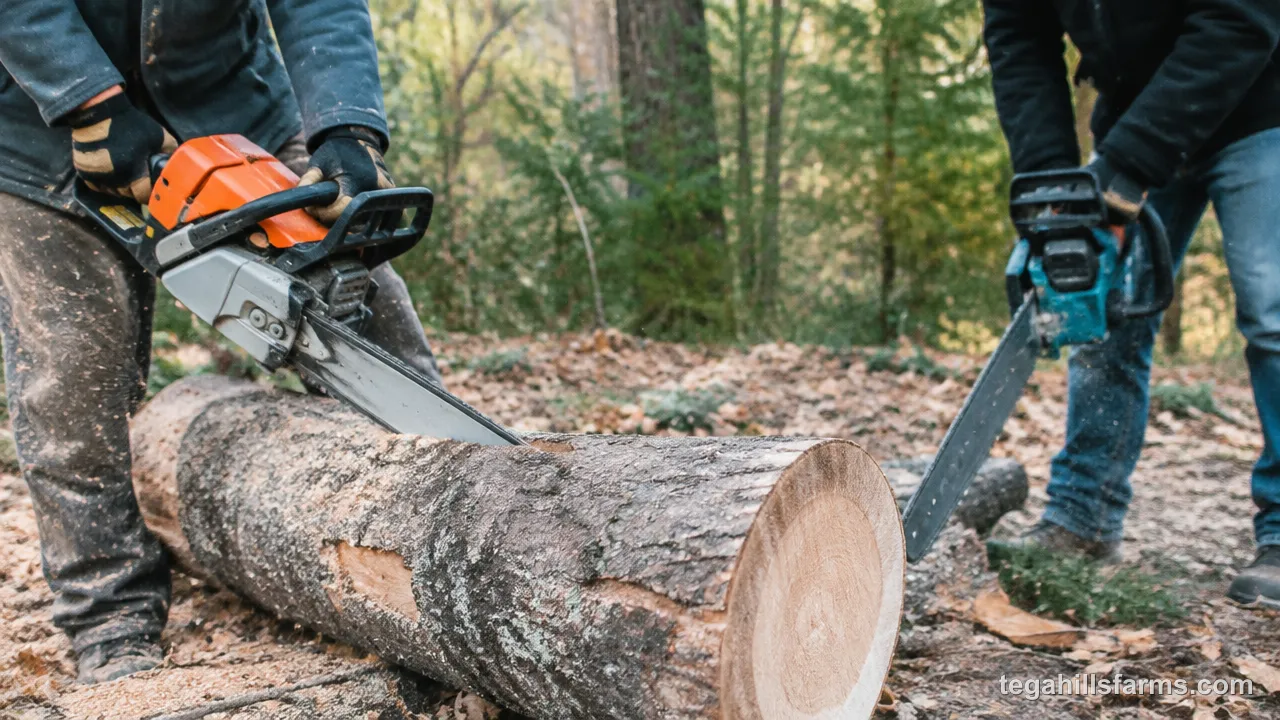
The difference comes from where the power originates. A gas engine runs at high rpm, and its rotating mass carries the chain through resistance, so a deep cut in seasoned oak or a waterlogged log slows it only a little. A battery motor draws from the pack, and under heavy, sustained load the pack’s output becomes the limit. That’s why a battery saw feels fine on a limb and starts to labor on a trunk wider than its bar. Brushless motors and higher-capacity packs have narrowed that gap, which puts most homeowner-size wood well within a good battery saw’s reach.
STIHL builds both types in the same class: the MS 211 C-BE on gas and the MSA 220 C-B on battery. A same-brand pair like this keeps the comparison focused on power source instead of differences in chain or build quality.
Power source isn’t the only factor. Bar length sets the largest log you can cut in one pass. A dull chain makes either saw struggle and throw dust instead of chips. On the battery side, the voltage platform affects how much the motor can deliver.
Felling is where torque matters most, and it is also where technique counts. Before dropping anything bigger than a sapling, learn how to cut down a tree with a chainsaw, because the notch and hinge decide where the tree lands.
Gas wins on cutting power whenever you’re felling or bucking large hardwood or making long continuous cuts. For limbs, small trees and firewood, a capable battery saw cuts well enough that power stops being the deciding factor.
How Do Runtime, Refueling and Starting Compare?
Gas keeps cutting as long as you have mixed fuel and refills in the field, while a battery saw stops when the pack drains, so spare batteries decide whether it can handle all-day cutting.
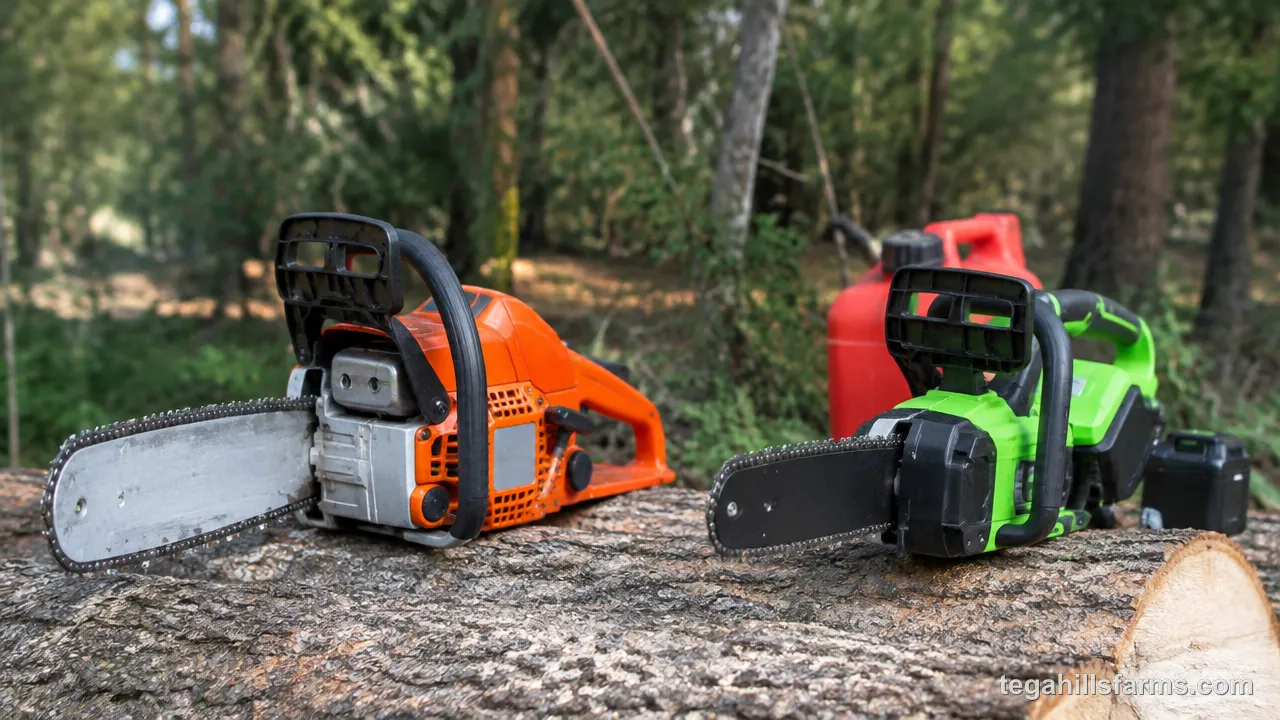
Fueling a gas saw takes some care. It burns gasoline mixed with two-stroke oil at the ratio printed in the manual, or premixed canned fuel. A wrong mix or old gas can damage the engine. Starting means setting the choke, priming and pulling the cord, sometimes several times when the engine is cold. When a chainsaw won’t start, the cause usually traces back to stale fuel, a flooded engine or a fouled spark plug, and that is the most common frustration gas owners run into.
A battery saw removes all of those steps: slide in the pack, release the safety lockout and squeeze the trigger. The tradeoff is runtime. For a few limbs after a windstorm, the pack lasts longer than the job. For a full day of bucking a downed tree, one pack runs out well before the work does, and recharging means waiting unless you have spares ready.
This is where a shared platform helps. If your mower, trimmer and blower already run on something like a Ryobi 40 Volt battery unit, those packs can rotate into the saw. A second battery stops being an extra purchase and becomes something you already own.
Battery suits short, scattered jobs where starting without fuss matters more than endurance. Gas suits long cutting days, especially when the work is far from a charger.
Which Is Lighter, Quieter and Easier to Handle?
Weight comes out close to even, but battery saws come out ahead on vibration, noise and exhaust, which makes them easier to use for overhead and prolonged cuts.
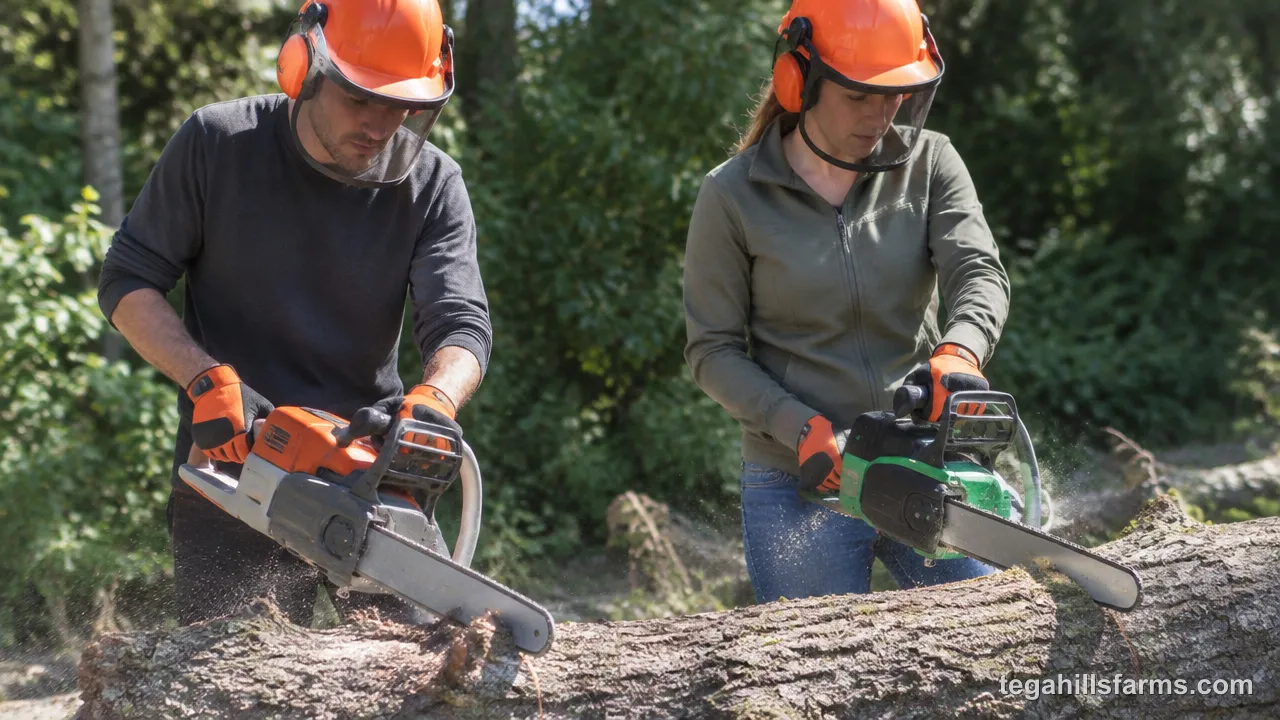
Many buyers expect a battery saw to be lighter because it has no engine, but the pack is dense. In STIHL’s lineup, the gas MS 211 C-BE weighs 10 pounds, and the battery MSA 220 C-B weighs 11.2 pounds with its battery installed. You won’t notice that difference on a quick cut at waist height. You will notice it holding the saw at shoulder level to trim limbs, or after an hour of bucking.
Vibration affects comfort more than weight does. A gas engine sends a steady buzz through the handles that tires your hands and forearms over a long session. A battery motor runs smoothly, so the same hour of work feels less tiring. Noise and exhaust follow the same pattern. Gas is loud enough to bother neighbors on a quiet weekend morning and leaves exhaust around you. A battery saw is much quieter and produces no fumes, which matters on a tight suburban lot or near a patio. It is still loud enough at the chain that hearing protection makes sense.
Neither power source reduces kickback risk at the bar tip. The protective gear and habits in our chainsaw safety tips apply to both types.
Battery is easier on most homeowners for typical yard jobs, because lower vibration, quiet operation and no fumes matter more over an afternoon than a small difference in weight.
How Much Maintenance and Upkeep Does Each Type Need?
Battery saws need far less upkeep because there’s no engine to service, while gas saws add fuel, spark plug, air filter and carburetor care on top of the chain work both types share.
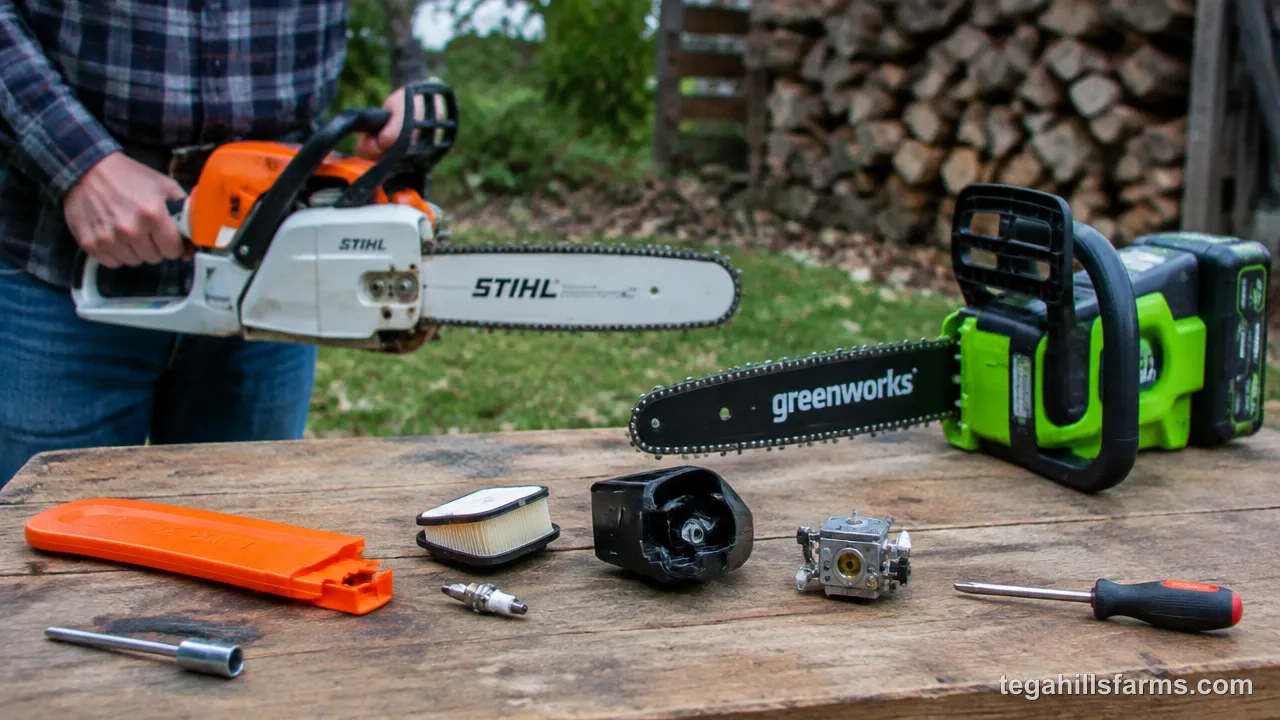
A gas saw’s maintenance centers on its fuel system. Ethanol-blended gas goes stale in the tank and leaves varnish that clogs the small passages in the carburetor. That’s why a saw that ran fine last fall can refuse to idle this spring. The air filter fills with fine sawdust and starves the engine of air. The spark plug fouls over time. Before the off-season, you either drain the tank or treat the fuel with stabilizer. None of this is difficult, but you have to keep up with it.
A battery saw has very few wear parts beyond the chain, bar and sprocket. Battery care is the main job: keep packs out of heat, don’t leave them fully drained for long, and charge them on the supplied charger.
Both types share the chain work. Sharpening affects cutting speed and safety on either saw, and learning how to sharpen a chainsaw saves trips to the shop. Both also need chainsaw bar oil in the reservoir every time you cut. Running the bar dry wears it and stretches the chain quickly.
What wears out over the years differs by type. On gas, the engine and fuel system age. On battery, each pack slowly loses capacity with use. How long chainsaws last depends more on that care than on which power source you choose.
Battery is the lower-maintenance choice for homeowners who use a saw a few times a year. Gas makes sense if you’re comfortable doing routine engine upkeep yourself.
Which Costs More to Buy and Run: Gas or Battery?
Battery saws usually cost more upfront once you include the battery and charger, while gas saws cost more to run through fuel, two-stroke oil and engine parts.
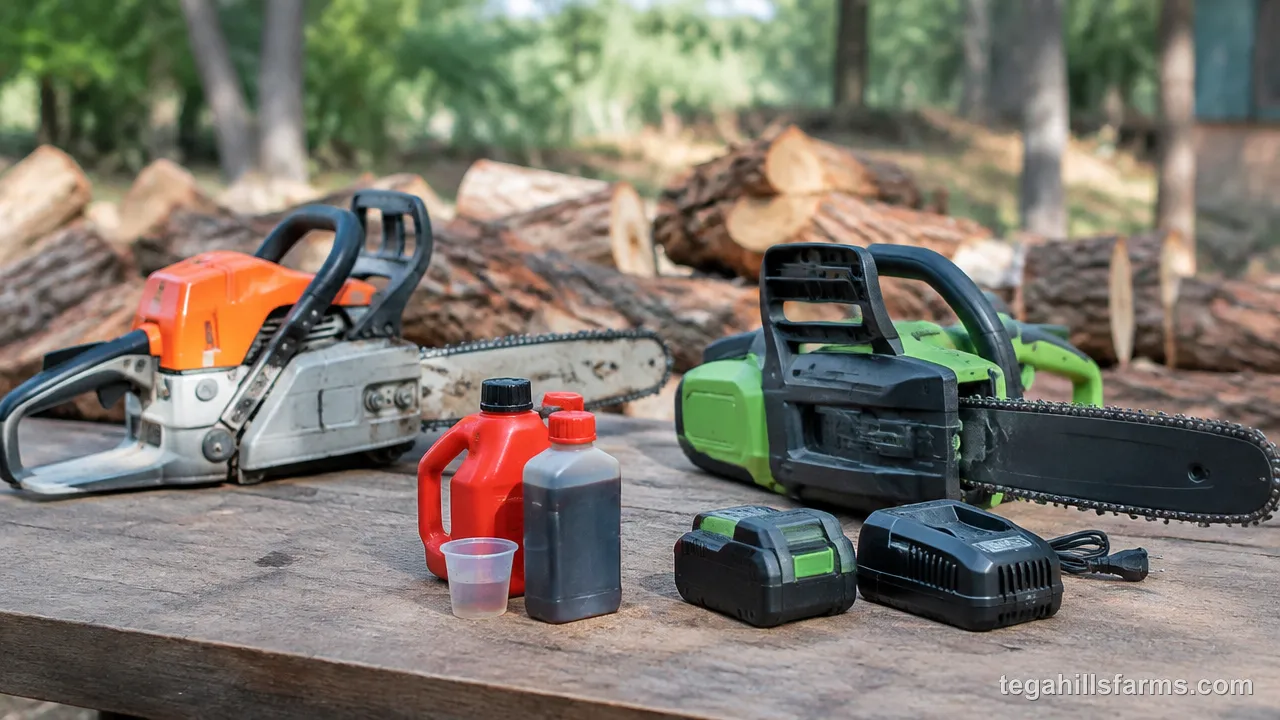
The upfront difference depends on what you already own. A battery saw sold with a pack and charger includes both in the price. If you already have a compatible platform, you can often buy the bare tool and skip most of that cost. Adding a second pack for longer jobs increases the battery-side cost quickly.
A gas saw’s costs come later, in smaller amounts. You buy gasoline and two-stroke oil or premixed fuel, replace spark plugs and air filters, and sometimes pay for a carburetor cleaning when stale fuel gums it up. Fuel you have to throw out after it sits too long adds to that. A battery saw’s long-term cost is mostly one eventual replacement pack, along with the chain, bar and bar oil both types use.
For typical price ranges by saw type and size, see how much a chainsaw costs.
Battery is cheaper if you already own a compatible battery platform or cut only occasionally. Gas is cheaper for frequent heavy cutting, where enough battery packs to keep up would cost more than the fuel.
Should You Choose Gas or Battery for Your Yard?
Your heaviest regular job and how far you cut from a charger decide it, so match the saw to the wood you cut most often rather than the biggest tree you might face someday.
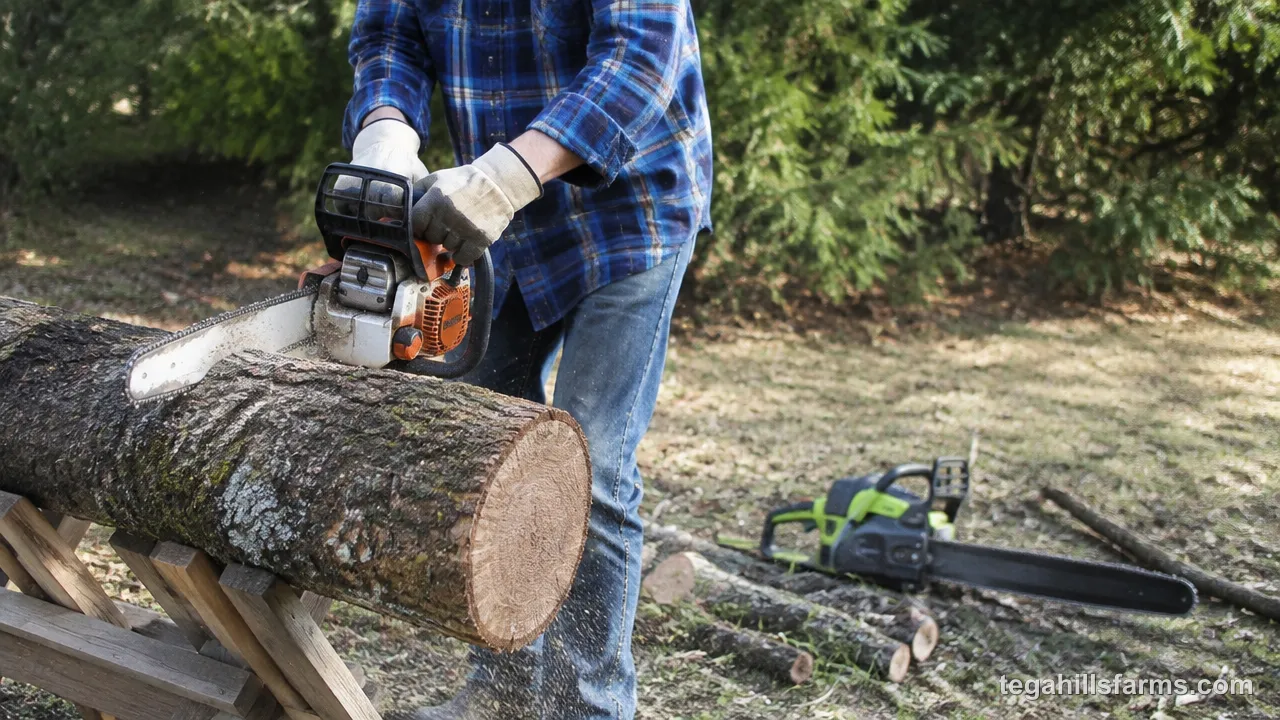
Choose gas if:
- You fell or buck large trees, especially hardwood like oak, maple or hickory.
- You clear storm damage where whole trees come down, not just limbs.
- You cut at the back of acreage or in a woodlot, far from power.
- Your sessions run for hours, such as putting up a season’s firewood.
Choose battery if:
- Your work is mostly pruning, storm limbs and occasional firewood rounds.
- You want a saw that starts on the first squeeze after months in the garage.
- You cut near neighbors, a patio or a house where noise and fumes matter.
- You’d rather sharpen a chain than service an engine.
- You already own a compatible battery platform from other yard tools.
I’d steer most suburban homeowners to battery, because their typical jobs fall well within its range, and the easy starting means the saw gets used instead of avoided. Owning both is also a reasonable answer, and many tree-care crews work that way: a gas saw for felling and big bucking, and a battery saw for climbing, pruning and quick cleanup.
Once you’ve chosen the power source, features like bar length, chain brake, tool-free chain tensioning and balance are what to look for in a chainsaw of either type.
A lithium-ion pack left in an unheated shed through winter delivers noticeably less power on the first cold cleanup day, and a gas saw put away with fuel in the tank can come out in spring with a gummed carburetor. Both problems come from how the saw was stored during its idle months, and either one leaves you with a tool that won’t work on the day a storm drops limbs across the driveway.
How Do Cold Weather and Off-Season Storage Affect Each Type?
Cold reduces a battery’s output and makes a gas engine harder to start, while poor off-season storage harms each type differently: stale fuel clogs a gas saw’s carburetor, and a battery left drained or in freezing conditions loses capacity.
Lithium-ion packs deliver less power when they’re cold, so a battery saw feels weaker and runs shorter on a freezing morning. Keeping packs indoors and charging them at room temperature before use solves most of that. A cold gas engine needs the full choke routine and more pulls.
For storage, drain a gas saw’s tank or run it with stabilized fuel before it sits for months. Store battery packs partly charged, indoors, and away from both heat and freezing temperatures. Our guide on how to store a chainsaw covers both routines step by step.
The warning signs are easy to recognize. A gas saw that surges, won’t idle or smells of varnish has old fuel in its system. A pack that runs out much sooner than it used to, or won’t take a full charge, was likely stored too cold, too hot or fully drained.
Gas vs Battery Chainsaw FAQ
Can a battery chainsaw replace a gas one for a homeowner?
For most homeowners, yes. Pruning, storm limbs and firewood rounds are well within a capable battery saw’s range, and it starts more easily and needs less upkeep. The exceptions are felling large hardwood and long cutting days far from power, where a gas saw still does the job better.
Do battery chainsaws cut hardwood?
Yes, battery saws cut hardwood limbs, small trunks and firewood rounds without trouble. They slow down sooner than gas in big, dense logs and long continuous cuts, because the pack limits sustained output. A sharp chain and a higher-voltage platform help much more than pushing harder on the saw.
Can I use one battery across my other yard tools?
Yes, if the saw belongs to the same brand and voltage platform as your mower, trimmer or blower. Sharing packs lets you buy the saw as a bare tool and rotate batteries between tools. Batteries generally don’t work across brands, so check compatibility before buying.
Is gas still better for professional work?
For heavy production work like felling large trees and bucking all day, gas remains the standard because it refuels in the field and holds torque under long loads. Many crews also carry a battery saw for pruning, climbing and quick cleanup, so professional work often uses both types.
Are battery chainsaws safer for beginners?
Battery saws are easier for beginners because there’s no pull cord to wrestle with, and the motor stops when you release the trigger. Kickback risk at the bar tip stays the same, though. Beginners still need a chain brake, eye and hearing protection, gloves and chainsaw chaps on every cut.

Write Your Review
No reviews yet. Be the first to share your experience!