

A string trimmer spins flexible nylon line to cut grass and soft weeds along edges, fences and beds. A brush cutter drives a steel blade through thick brush, woody stems and young saplings. The trimmer keeps a maintained lawn looking finished, and the brush cutter reclaims ground that has been left to grow.
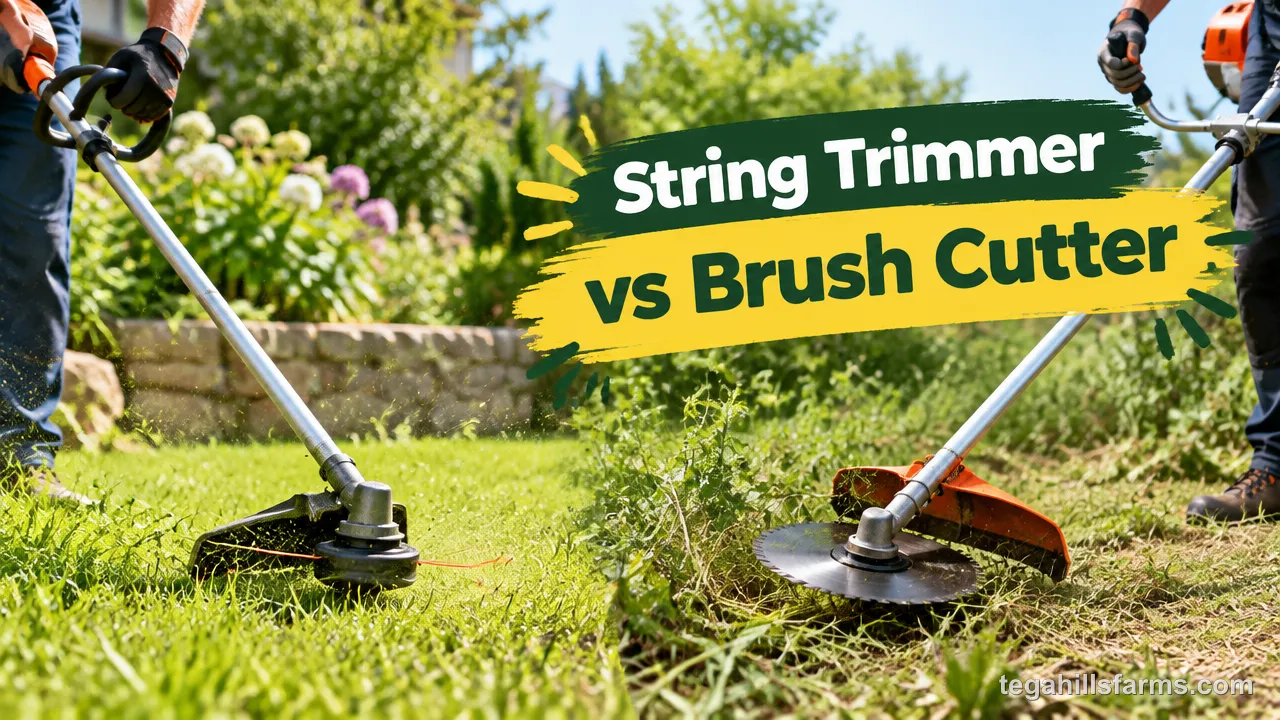
Five things separate the two tools: the cutting element, how thick a stem each can handle, the power source behind it, how much weight you carry while working, and the upkeep you take on once the season starts. Each of these shows up in the yard as speed, effort and how cleanly the tool cuts.
The real risk is buying the wrong one. A trimmer pushed into woody growth chews through line and stalls without finishing the job. A brush cutter bought for weekly edging means hauling a heavy, harnessed machine around flower beds for work a lighter tool handles better.
If your property has both a mowed lawn and an overgrown back corner, look at the shaft and gearbox before you buy. Some straight-shaft trimmers accept blades and some don’t, and that detail decides whether one machine can cover both jobs.
What Are String Trimmers and Brush Cutters?
A string trimmer cuts with replaceable nylon line, while a brush cutter cuts with a steel blade or carbide-tipped disc built for dense, woody growth.
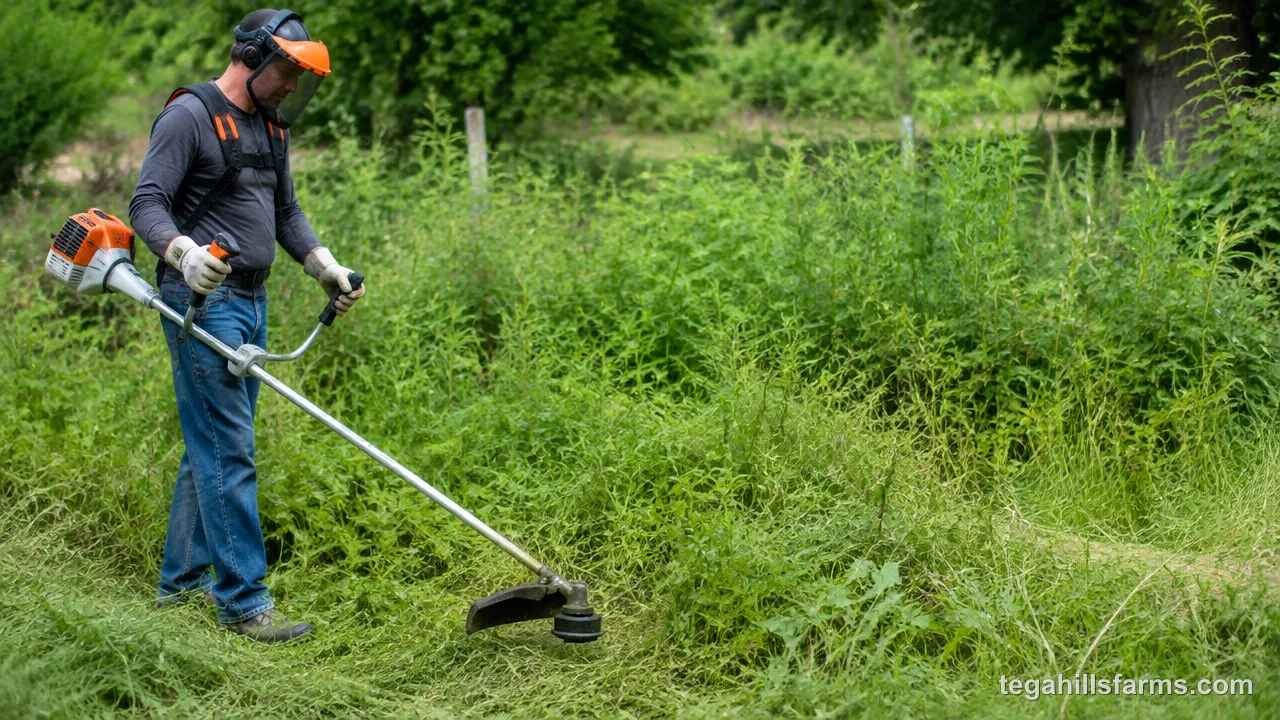
That difference in the cutting element drives everything else. Nylon line flexes and wears down when it hits something hard, so a trimmer can work close to fence posts, trees and edging without much damage to either. A metal blade stays rigid and holds an edge, so it slices stems that would shred line in seconds. The power source tends to follow the workload. Lighter string trimmers usually run on batteries or a cord, and brush cutters built for heavy work usually run on gas.
The two tools compare as follows on the points that matter most when you choose:
| Criterion | String Trimmer | Brush Cutter |
|---|---|---|
| Cutting element | Nylon line | Steel blade or carbide-tipped disc |
| Typical material | Grass, soft weeds | Thick brush, woody stems, saplings |
| Common power source | Battery or corded | Gas |
| Weight and handling | Lighter, easy to steer | Heavier, usually needs a harness |
| Routine upkeep | Line replacement | Blade sharpening |
Once you understand what each tool does, knowing how to choose a string trimmer that matches your yard and the work you do will narrow the field faster.
What Can Each Tool Cut?
Stem thickness and woodiness decide it: nylon line handles grass and soft weeds, while a steel blade handles woody stems and saplings up to the tool’s safe limit. This matters because the wrong match makes the work slow and rough. Line wears away against hard stalks long before it cuts them, and a blade on plain turf is more machine than the job needs. Look at the toughest growth on your property and size the tool to that.
String Trimmer Capacity
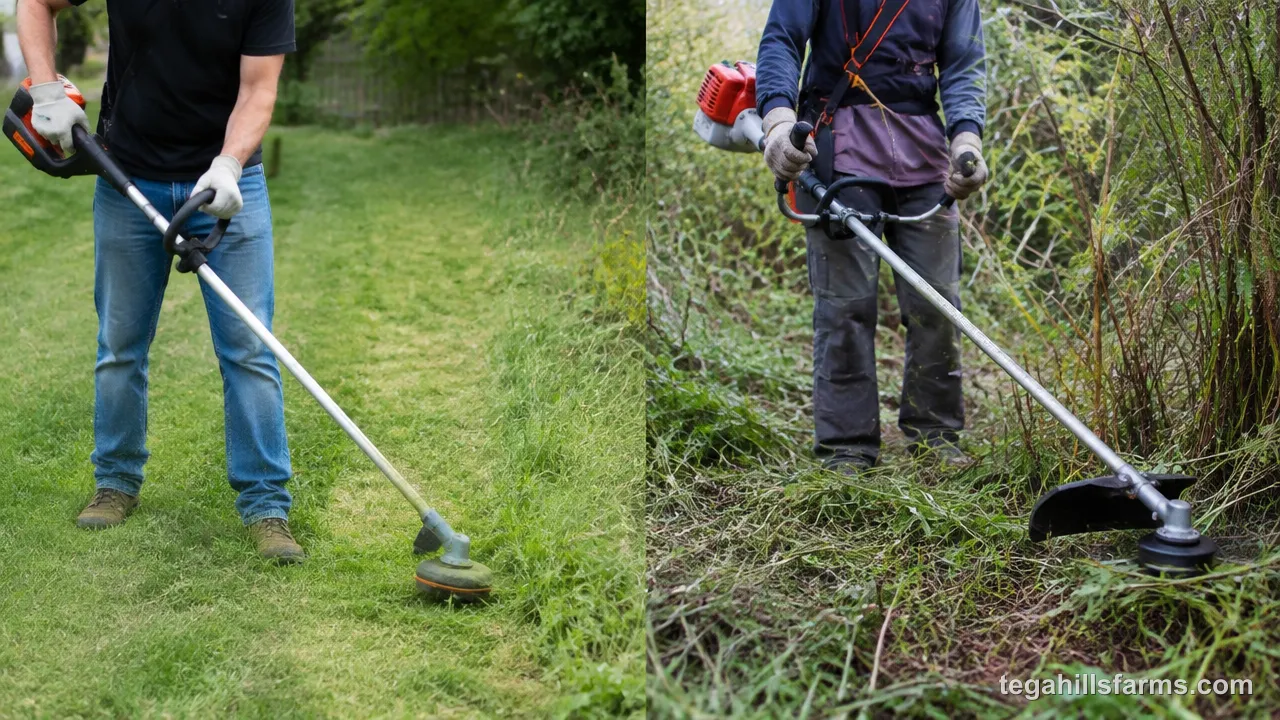
A string trimmer handles grass, soft weeds and green, tender stalks, the kind of growth you can bend with your hand. The spinning line doesn’t slice like a blade. It whips and tears through soft tissue, which leaves a clean finish on turf and on weeds around beds and walkways.
The limit arrives when stems turn woody. Hard stalks bruise the line instead of breaking under it, so the tip frays, snaps off, or wraps around the base of the plant. You end up feeding out line over and over while the stem still stands. When growth feels stiff and fibrous instead of green, nylon line has reached the end of what it does well.
Brush Cutter Capacity
A brush cutter takes on what line can’t: thick brush, cane, tough weeds with woody stems, and young saplings. The blade decides how far it can go. A brush knife such as the STIHL Brush Knife, or a comparable blade from another maker, cuts woody stems one inch or smaller in diameter. A shredder blade like Husqvarna’s mulches stems and branches up to about 0.8 in (2 cm), breaking coarse growth into mulch instead of leaving long cut stalks to rake.
There is a hard ceiling. Neither a trimmer nor a brush cutter should cut anything bigger than a sapling, roughly four to six inches across, because the risk of the tool kicking back climbs sharply past that point. Larger trunks call for a chainsaw. Within that range, the brush cutter wins once stems turn woody, while the string trimmer stays the better choice for soft growth near fences and trees.
How Do the Cutting Tools Differ?
The difference is flex versus rigidity: nylon line gives way on impact and wears down, while a metal blade holds its shape and keeps cutting through dense material. That matters because each one fails differently. Line runs out and needs replacing, and a blade goes dull and needs sharpening, so the cutting tool you pick also sets the routine you’ll keep. On the trimmer side, line diameter shapes performance too, and checking what size of trimmer line your head accepts tells you how well it will handle tougher weeds.
Nylon Line on String Trimmers
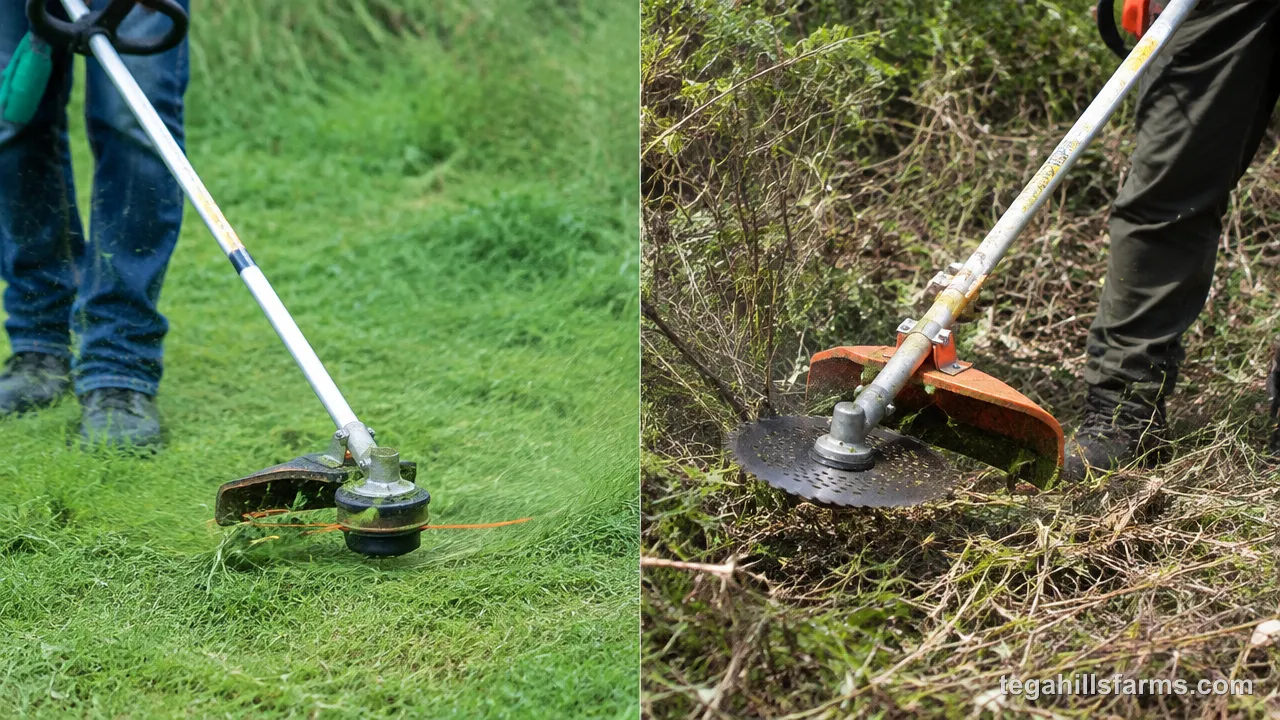
Nylon line sits on a spool inside the trimmer head and feeds out as the tip wears away. Most heads release fresh line with a bump against the ground or an automatic feed, so you rarely stop mid-job. When the spool runs empty, reloading is the main chore. EGO’s Powerload heads wind new line on automatically within 10 seconds, and on most other heads, learning how to restring a weed eater is part of owning one.
The line’s flexibility is its strength around a yard. It breaks instead of gouging when it hits a fence post or a brick edge, which makes it forgiving along hardscape and around tree trunks. Thicker line lasts longer against tough weeds, but the head has to be rated for it.
Metal Blades on Brush Cutters
Brush cutters take several blade types, and each one suits different growth. A three-sided steel blade is the standard choice for brush and young trees. Multi-tooth grass blades handle tall grass and thick weeds that would wear nylon line down fast. Saw blades, with teeth like a circular saw, cut through sapling trunks within the tool’s safe limit.
A rigid blade cuts dense material because it doesn’t deflect. All the engine’s force goes into the stem instead of into bending line. Blade fit matters before you buy: a saw blade with a 1-inch (25.4 mm) arbor on a trimmer with a 20 mm drive shaft needs a 20-to-25.4 mm adapter ring to mount correctly. On dense, woody material the metal blade wins outright, while nylon line remains the better choice near hard surfaces where a blade would chip or bounce.
Which Tool Delivers More Power?
Brush cutters deliver more cutting force, because most run on gas engines built for sustained heavy loads, while string trimmers commonly use battery or corded motors sized for lighter work.
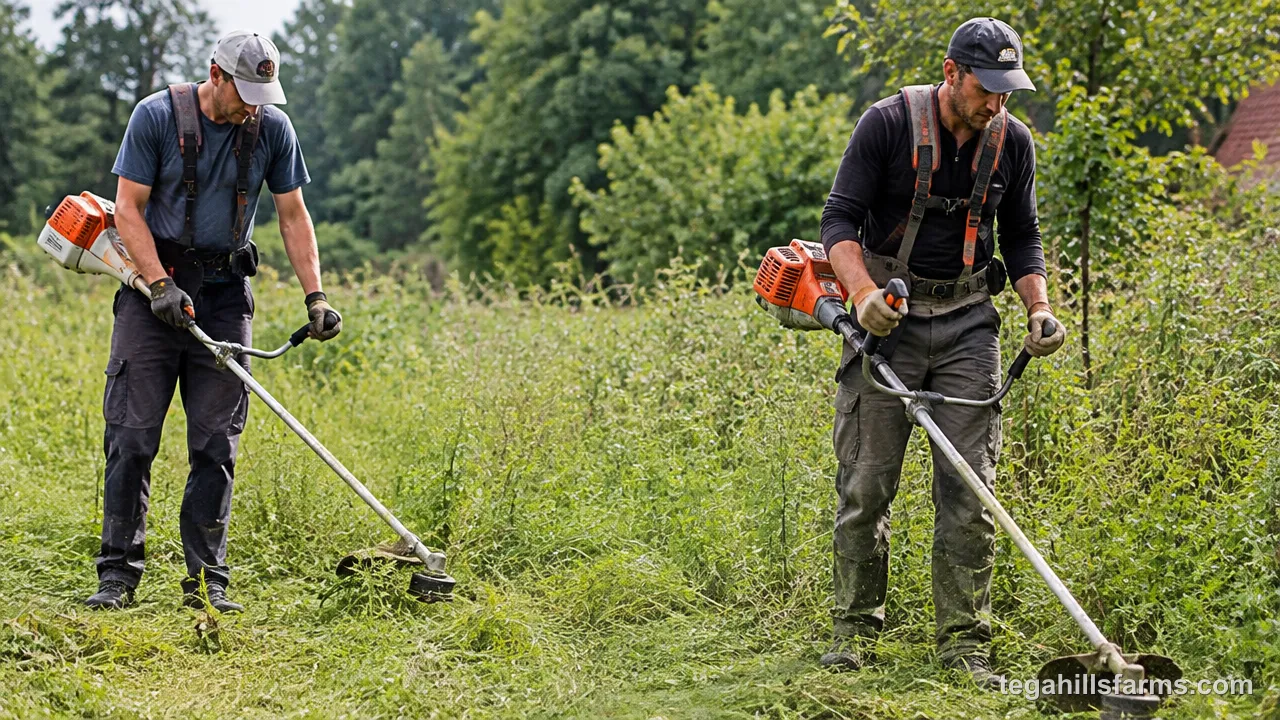
Torque is what keeps a blade spinning at speed when it bites into a thick stem. A string trimmer’s motor only has to keep light line moving through soft grass, so it can be smaller and still cut cleanly. A brush cutter’s engine has to drive a heavy blade into woody stems without bogging down, which is why gas has been the default for heavy clearing. If you’re weighing gas vs battery string trimmers for routine trimming, the tradeoff is mostly runtime, noise and upkeep, not raw power.
Battery brush cutters exist, but blade work drains a pack faster. With EGO’s 7.5Ah battery, the strongest in its homeowner lineup, a line trimmer runs up to 160 minutes, while a brush cutter runs up to 65 minutes. A commercial backpack battery extends brush cutter runtime to as much as 420 minutes. For dense growth, the brush cutter wins on power, while the string trimmer gets far more work out of each charge on routine trimming.
How Do Weight and Handling Compare?
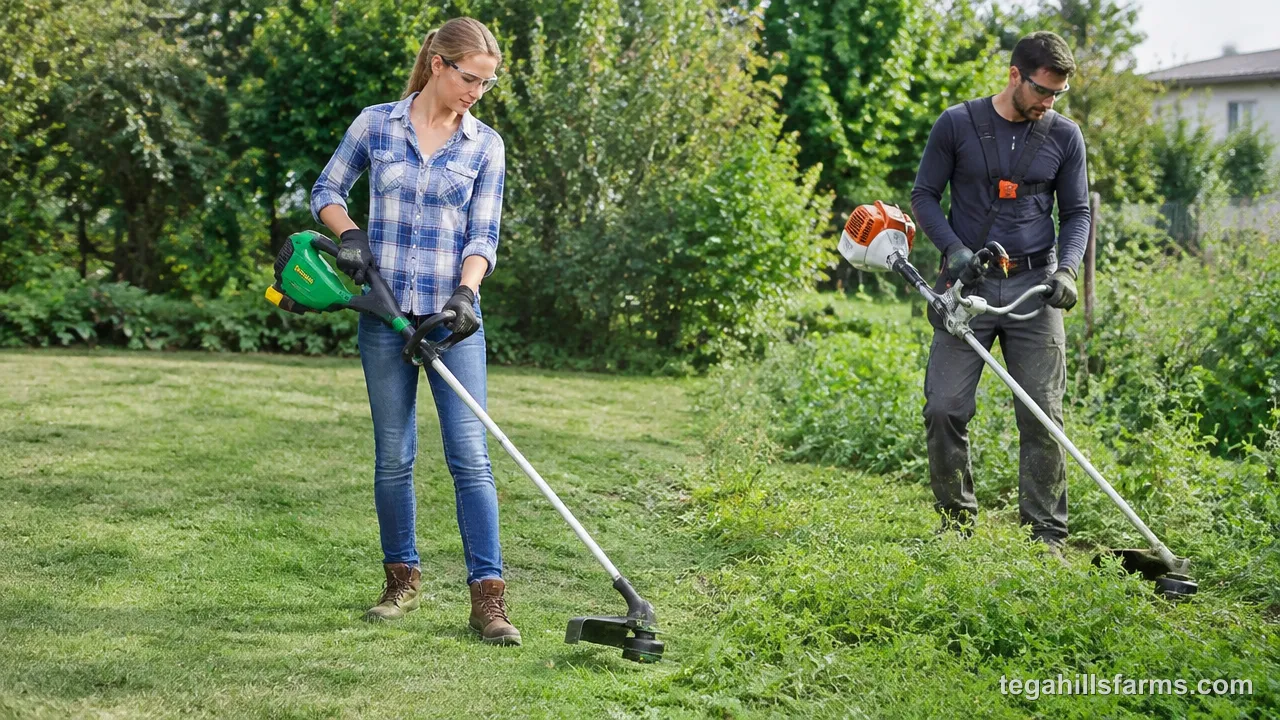
A string trimmer is lighter and easier to steer, while a brush cutter’s extra weight usually calls for a shoulder harness to carry it through longer sessions. Handling decides how long you can work before your arms and back give out, and how precisely you can place the cut. Good technique helps with both tools, and knowing how to use a string trimmer well, from shaft angle to swing direction, carries over to brush cutters too.
String Trimmer Weight and Control
A string trimmer’s lighter build makes it quick to point and reposition. You can tilt the head to edge along a sidewalk, swing it around the base of a mailbox, and slip it between shrubs without fighting the tool’s mass. Your leading hand steers while the other supports the shaft, and light models are easy to guide in tight spaces.
That control is what edging and detail work need. A cleaner edge along a driveway or flower bed comes from being able to hold the head steady at the right angle, and a lighter tool keeps your arms from tiring before the job is done. Battery models add to the advantage because there’s no engine weight at the back end.
Brush Cutter Weight and Harness
A brush cutter carries more weight because it needs a stronger engine, a sturdier shaft and a gearbox that can take blade loads. Holding all of that with your arms alone wears you out quickly, so most brush cutters come with a shoulder harness that shifts the load onto your shoulders and hips.
The harness also sets the balance point, letting the blade float just above the ground while you sweep it side to side with the handlebars. That setup keeps fatigue manageable through a long clearing job, but it slows quick changes in direction and makes close work around beds awkward. The string trimmer wins on maneuverability, while the brush cutter’s harness makes it the better tool for long sessions on rough ground.
What Is Each Tool Best For?
A string trimmer suits routine lawn finishing like edging, fence lines and tight corners, while a brush cutter suits clearing overgrown ground, heavy brush and young saplings. Matching the tool to your most frequent task matters more than matching it to the rare tough job, because you’ll carry it every week for one and only occasionally for the other.
Best Tasks for a String Trimmer
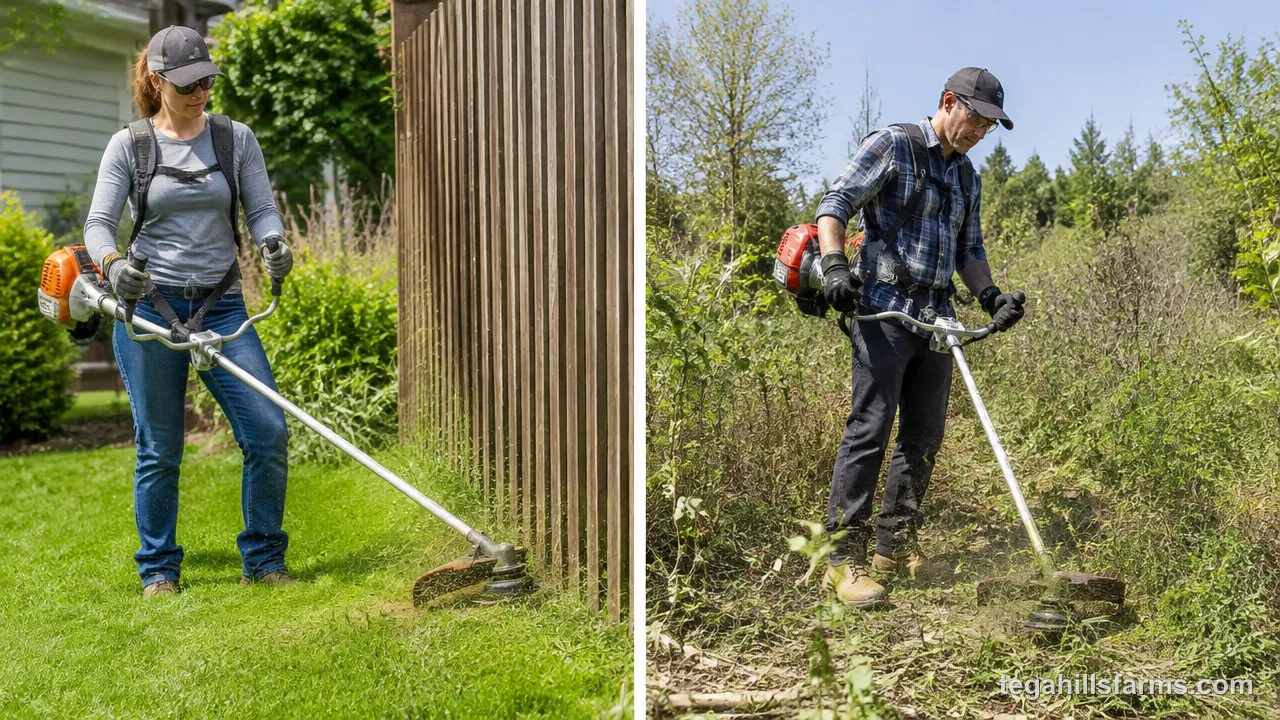
A string trimmer earns its place on yards that get mowed regularly. It handles the finishing touches a mower can’t reach: edging along sidewalks and driveways, trimming grass along fence lines, and cutting around trees, mailboxes, posts and landscape beds. It also gets into hard-to-reach areas such as tight corners, the strip behind a shed, and slopes too steep to mow safely.
These jobs share soft material and lots of obstacles, which is where flexible line and a light tool both pay off. Choose a string trimmer if your lawn is maintained on a regular schedule and your trimming is mostly grass and soft weeds around edges and hard surfaces.
Best Tasks for a Brush Cutter
A brush cutter is built for ground that has gotten ahead of you. It clears overgrown fields, cuts back heavy brush along property lines, takes down thickets of cane and woody weeds, and removes young saplings before they become trees. Neglected lots, ditch banks and pasture edges are typical brush cutter jobs.
These tasks involve stems that would stall or shred nylon line, plus long stretches of work where a harness makes the weight manageable. Choose a brush cutter if you’re reclaiming overgrown land or regularly cutting woody growth that a string trimmer can’t get through.
How Do Prices Compare?
Brush cutters generally cost more than string trimmers, because they need stronger engines or motors, reinforced shafts and gearboxes, and extras like harnesses and blades.
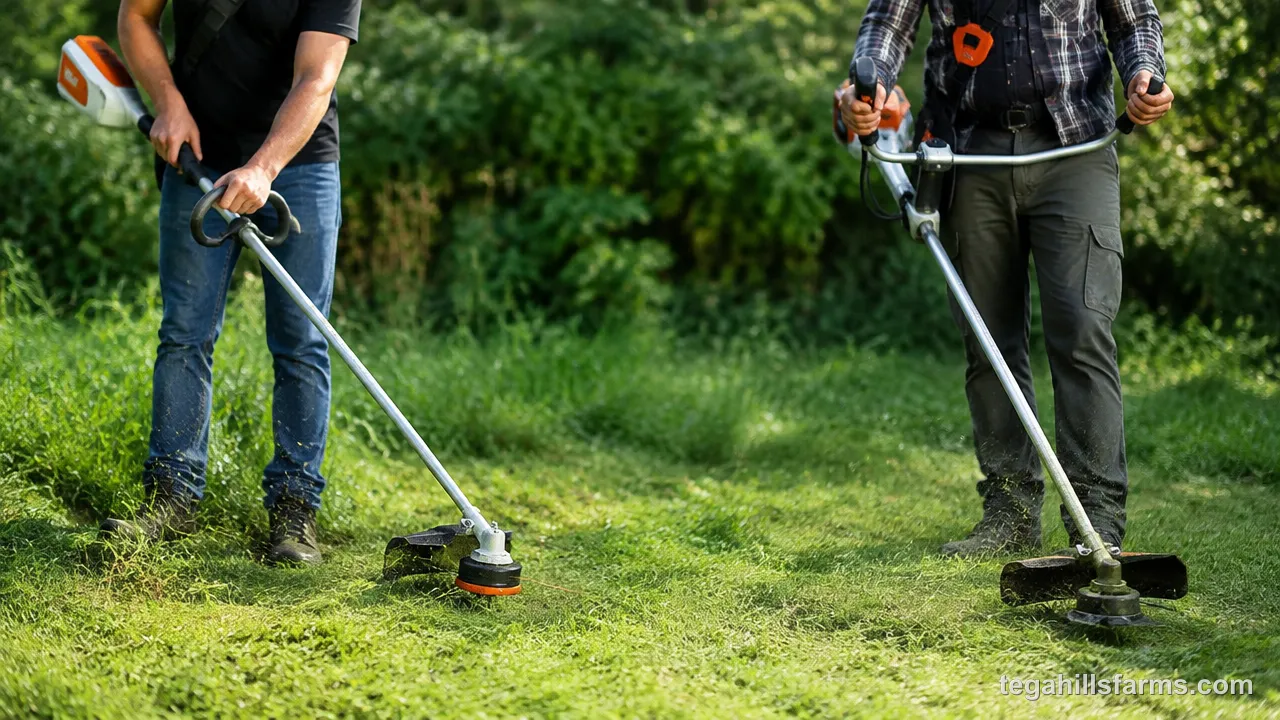
Several factors push prices up within each category. Power source is one: gas engines, high-voltage battery motors and corded models sit at different points, and battery tools sold bare cost less up front than kits that include a battery and charger. Build quality is another, since straight steel shafts, metal gearboxes and commercial-grade engines last longer under heavy use. Attachment-capable systems add cost but can replace several separate tools. The specifics of how much a string trimmer costs depend mostly on power source and battery platform. On affordability, the string trimmer wins, while a brush cutter is worth the extra spend only when you have woody growth to clear.
A brush cutter blade that has gone dull starts tearing stems instead of slicing them, and the engine strains harder on every pass across thick growth. Left that way, a dull or nicked blade binds in a stem it can’t cut cleanly and throws the machine back toward you.
How Do Maintenance and Storage Requirements Differ?
String trimmers need less routine care than brush cutters. Trimmer upkeep mostly means replacing line, clearing grass from around the head, and keeping the air vents or air filter clean. A brush cutter adds blade work on top of that: sharpening the edges, checking for cracks or missing teeth, and replacing a blade that’s bent or badly worn. Many brush cutter gearboxes also need periodic grease, since the blade puts heavy loads on them.
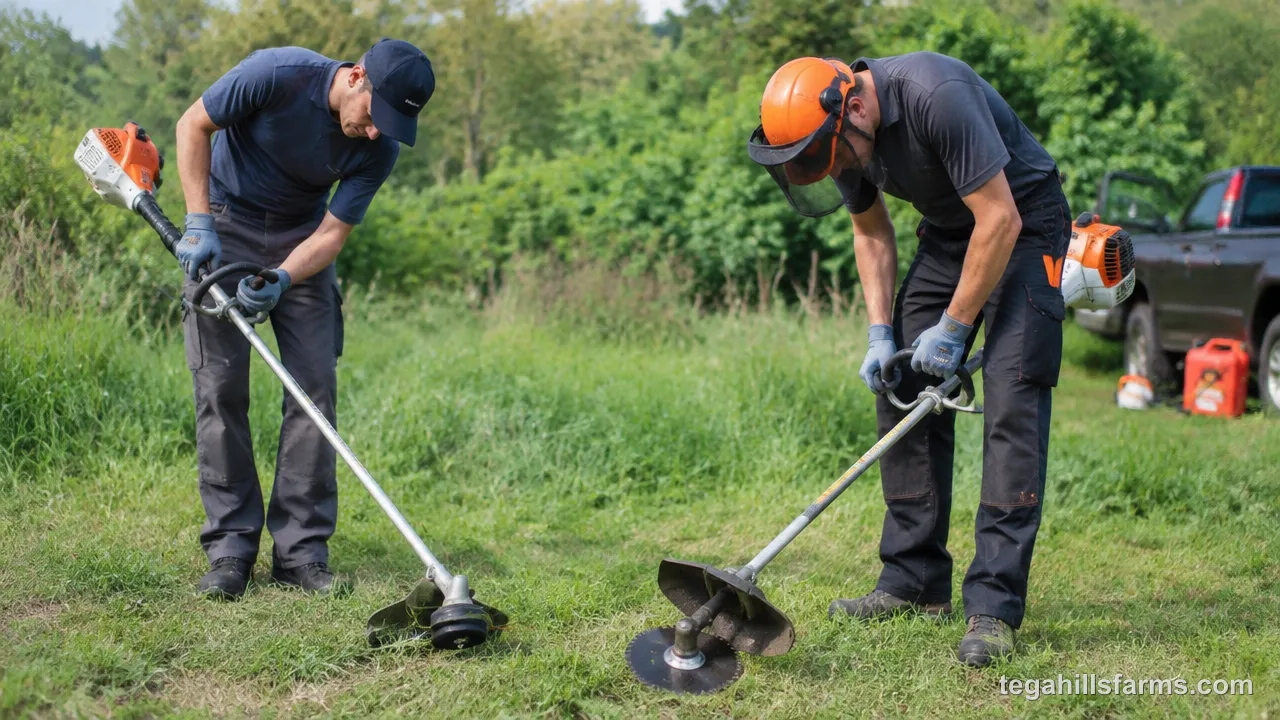
Gas models on both sides add engine care: a clean air filter, a healthy spark plug and fresh fuel. Between seasons, either add fuel stabilizer or run the tank dry so old gas doesn’t gum up the carburetor over the winter. Battery tools need less, but store the packs indoors away from freezing temperatures and follow the manufacturer’s guidance on charge level for storage. Take the blade off a brush cutter or cover it before hanging the tool, which protects both the edge and anyone reaching past it in the garage.
What Are the Safety Differences?
A brush cutter carries more injury risk because a rigid steel blade can kick back, while a string trimmer’s main hazard is debris thrown by the line. Both tools fling stones, sticks and grass clippings at speed, so eye protection, long pants and closed-toe boots are a baseline for either one. Gas models of both types are loud enough to call for hearing protection.

Kickback, sometimes called blade thrust, is the brush cutter’s added danger. When the spinning blade meets a solid object or a stem too thick to cut on the wrong part of its edge, it can shove the machine sideways or back toward the operator. Keeping the harness adjusted, cutting with the correct side of the blade and staying within the tool’s stem limit all reduce that risk. A face shield, sturdy gloves and leg protection such as chaps make sense for brush cutter work. Keep bystanders and pets well clear of both tools, following the distance in your owner’s manual.
What Problems Come Up With Each Tool?
String trimmers most often fail at the line feed, while brush cutters run into blade binding. A jammed feed usually means line wound loosely on the spool, line too thick for the head, or line that heated up and fused to itself during heavy use. Rewinding the spool neatly and using the size the head is rated for clears most jams.
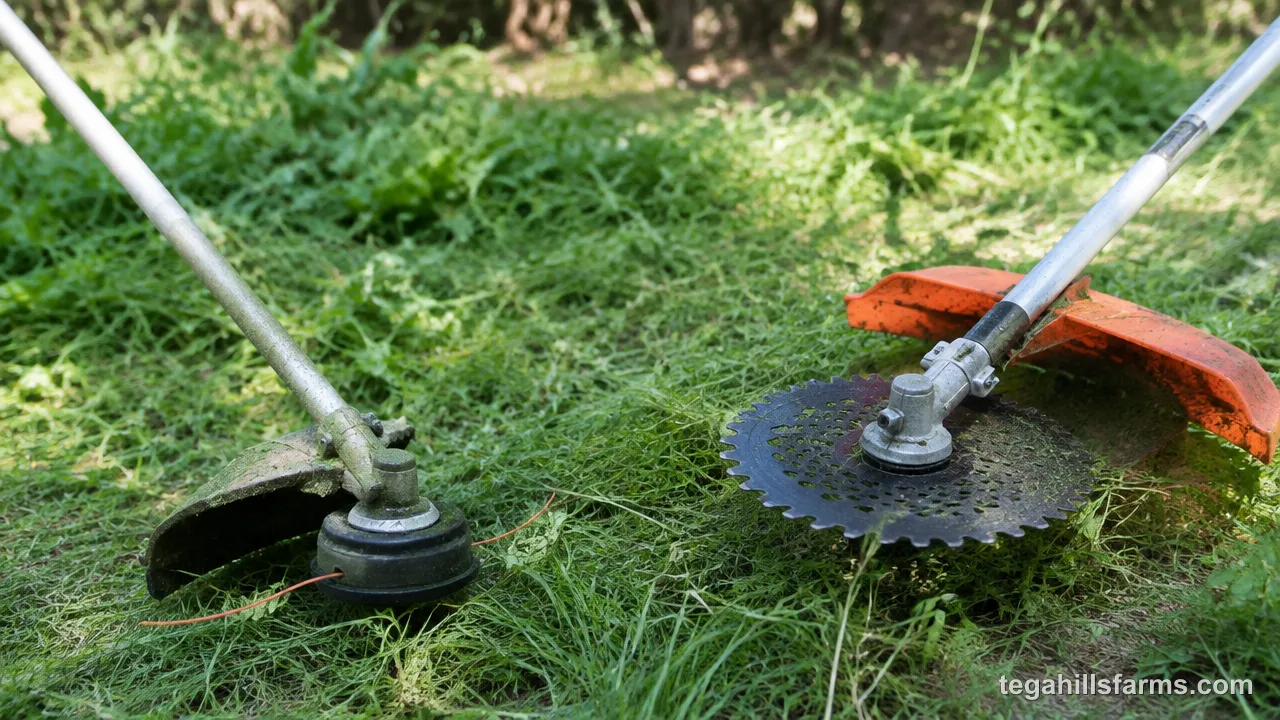
Blade binding happens when the blade gets pinched in a stem or slows because the edge is dull. Shutting the tool off before freeing the blade, then sharpening or replacing it, solves most cases. Gearbox noise or heat points to missing grease.
Starting problems hit gas models of both kinds the same way. Stale fuel, a varnished carburetor, a fouled spark plug or a clogged air filter cause most no-start situations, and working through those in order is the usual fix when a string trimmer won’t start.
Common Questions About String Trimmers and Brush Cutters
Can I put a brush cutter blade on my string trimmer?
Only if the manufacturer approves blades for that model. Straight-shaft trimmers with a gearbox designed for blade loads sometimes accept them, while curved-shaft trimmers generally don’t. Check that the blade’s arbor matches the drive shaft or that the right adapter ring is available, and never mount a blade on a head built only for line.
Which tool runs longer on a battery?
A battery string trimmer runs considerably longer on the same pack than a battery brush cutter. Spinning light nylon line through soft grass draws much less power than driving a steel blade into woody stems. For long clearing sessions with a battery brush cutter, a spare pack or a backpack battery makes a real difference.
Is a brush cutter louder than a string trimmer?
Gas brush cutters are usually the louder of the two, since their bigger engines work harder under blade loads. Battery trimmers are the quietest option and suit neighborhoods with close neighbors or early-morning work. With any gas model, wear hearing protection, because the noise level stays high for the whole session.
Is a brush cutter harder to learn than a string trimmer?
Yes, a brush cutter takes more practice. You need to adjust the harness so the blade floats at the right height, learn which part of the blade to cut with, and stay alert to kickback. A string trimmer is easier to pick up, though edging cleanly with it still takes some practice.
Which tool lasts longer?
Lifespan depends more on maintenance and workload than on tool type. A brush cutter run hard on dull blades wears out quickly, while a well-kept trimmer can serve for years. Questions about how long string trimmers last usually come back to fuel care, clean filters, battery storage and not pushing the tool past its rated work.

Write Your Review
No reviews yet. Be the first to share your experience!