

The right string trimmer comes down to six things. You want a power source sized to your lot, a trimmer line matched to your grass, a head that feeds line the way you like to work, a shaft that fits your height, a cutting width that suits your edges and obstacles, and a weight you can carry for the whole job.
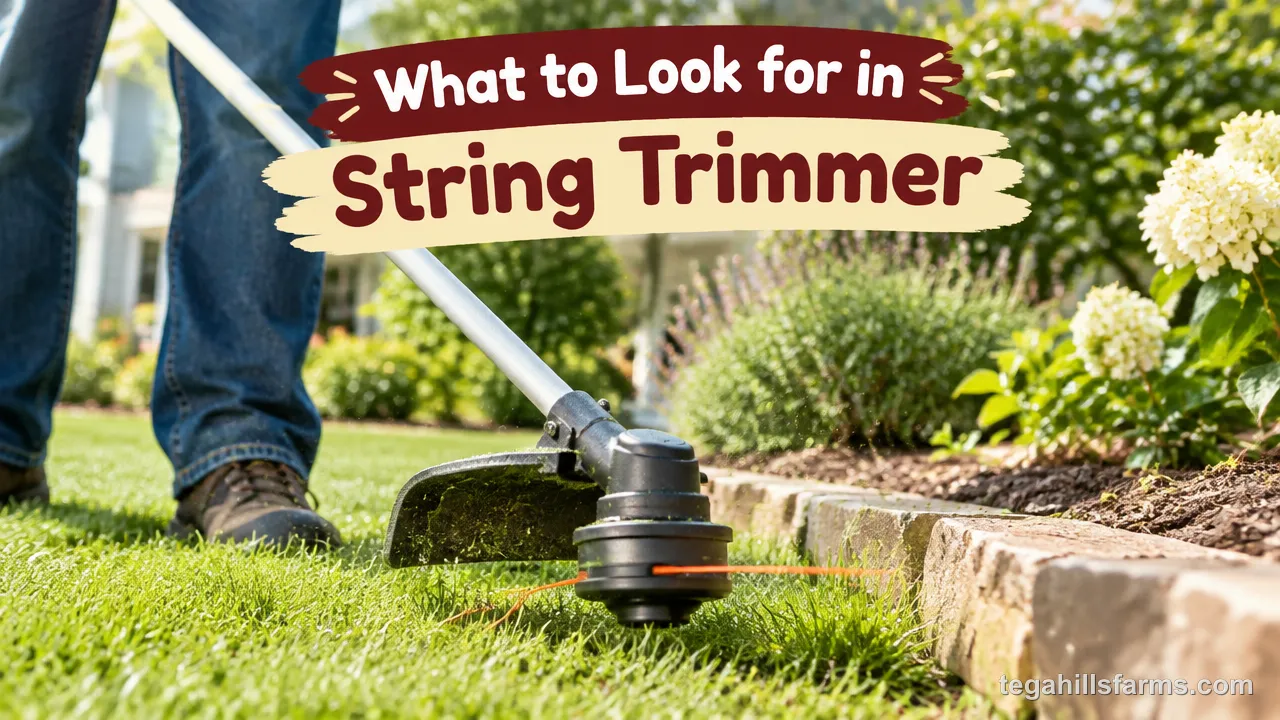
Power source shapes most of the other choices. Battery models handle typical suburban lots quietly. Gas covers big acreage and rough edges. Corded models only make sense when an outlet is close to every edge you trim.
Voltage, engine type and line diameter mean little until you connect them to your yard. A trimmer with more power than your lot needs adds weight and upkeep for no gain. One with too little stalls in thick weeds and burns through line.
What Power Source Should You Choose?
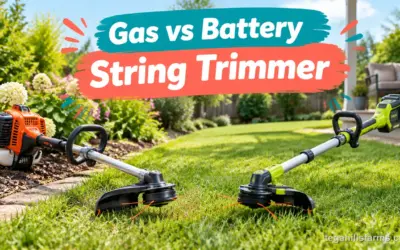
Yard size and runtime per session decide between gas, battery and corded models, since each one trades weight, upkeep and reach differently. Power source is the first call when you work out how to choose a string trimmer, because it sets runtime, weight and maintenance before any other feature comes into play. If you are still weighing a gas vs a battery string trimmer, the deciding factor is whether your trimming outlasts a battery charge.
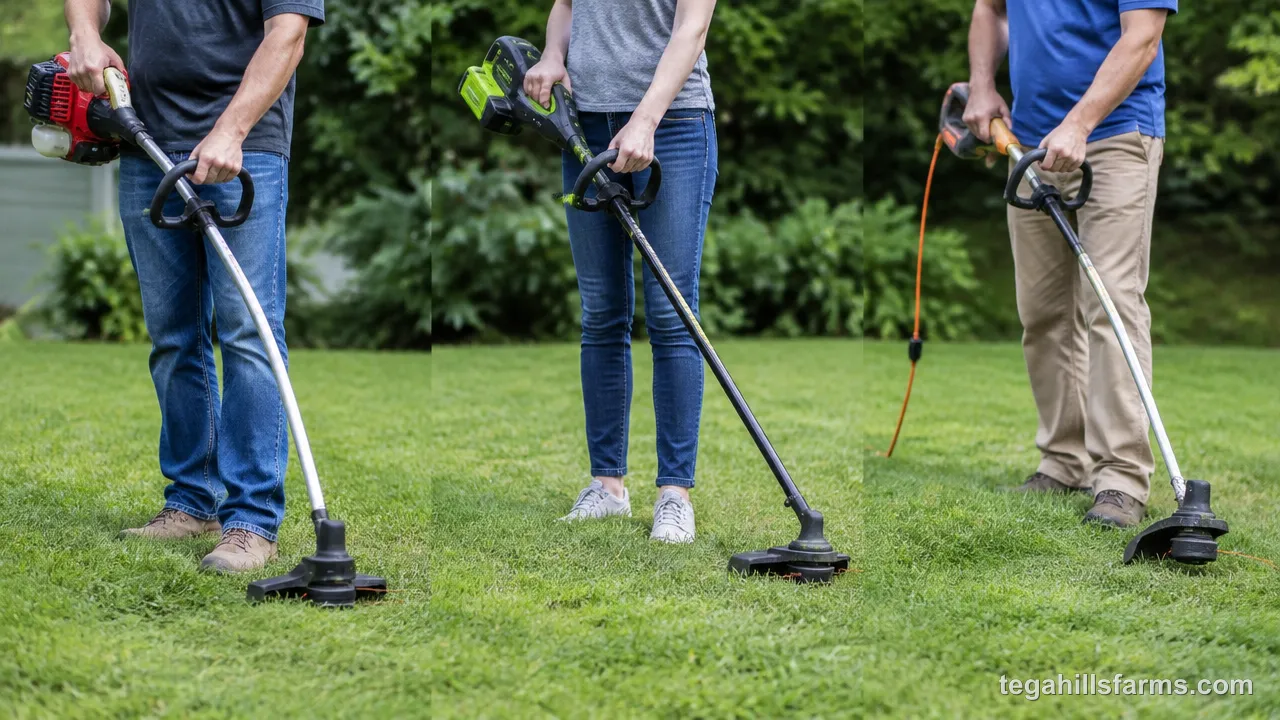
Gas-Powered Trimmers
Gas pays off on property over an acre. On long fence lines, ditch banks and overgrown field edges, a battery would run down before the job is done. A gas trimmer keeps going as long as there is fuel in the tank, and refueling takes a minute rather than a recharge.
Engine type changes the upkeep. A 2-cycle engine burns a fuel mix of gasoline and two-stroke oil, so every can you fill has to be mixed at the ratio the manufacturer specifies. A 4-cycle engine runs on straight gasoline and keeps its oil in a separate crankcase. That ends the mixing, but it adds periodic oil changes and usually a heavier powerhead. Either engine also brings spark plugs, air filters and carburetor care, which battery models skip.
Battery-Powered Trimmers
For lawns up to about half an acre, a 40V battery is the practical starting point for effective trimming. Lower-voltage models are better kept for light touch-ups around a patio or walkway.
Voltage sets cutting force, and amp-hours set runtime. Two packs with the same voltage cut with similar force, but the one with more amp-hours keeps the line spinning longer between charges. A bigger yard therefore calls for a higher amp-hour pack or a spare battery on the charger.
The battery platform matters too. If you already own a drill, blower or mower from one brand, staying on that system lets you share packs and skip a second charger. Battery trimmers start with a trigger pull, run quieter than gas and need no fuel or carburetor care.
Corded Electric Trimmers
A corded trimmer fits a small yard where every edge is within reach of an outdoor outlet. It never runs out of charge and needs no fuel. It is usually the lightest of the three types, which keeps short edging jobs easy.
The cord is the limit. You drag an outdoor-rated extension cord behind you, keep it away from the spinning line, and plug into a GFCI-protected outlet. Trees, flower beds and fences turn every pass into cord management. Once your trimming wraps around the house or runs out to a back fence, a battery model removes that hassle.
How Do You Pick the Right Trimmer Line?
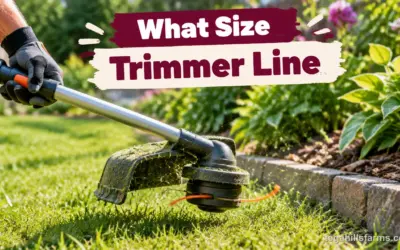
Match diameter and shape to your grass density and to your trimmer’s power, because string the motor can’t spin at full speed cuts worse than a thinner one would. Start by checking what size of trimmer line your head accepts. The manual or spool label lists a diameter range, and line outside that range jams the head or overloads the motor.
Line Thickness
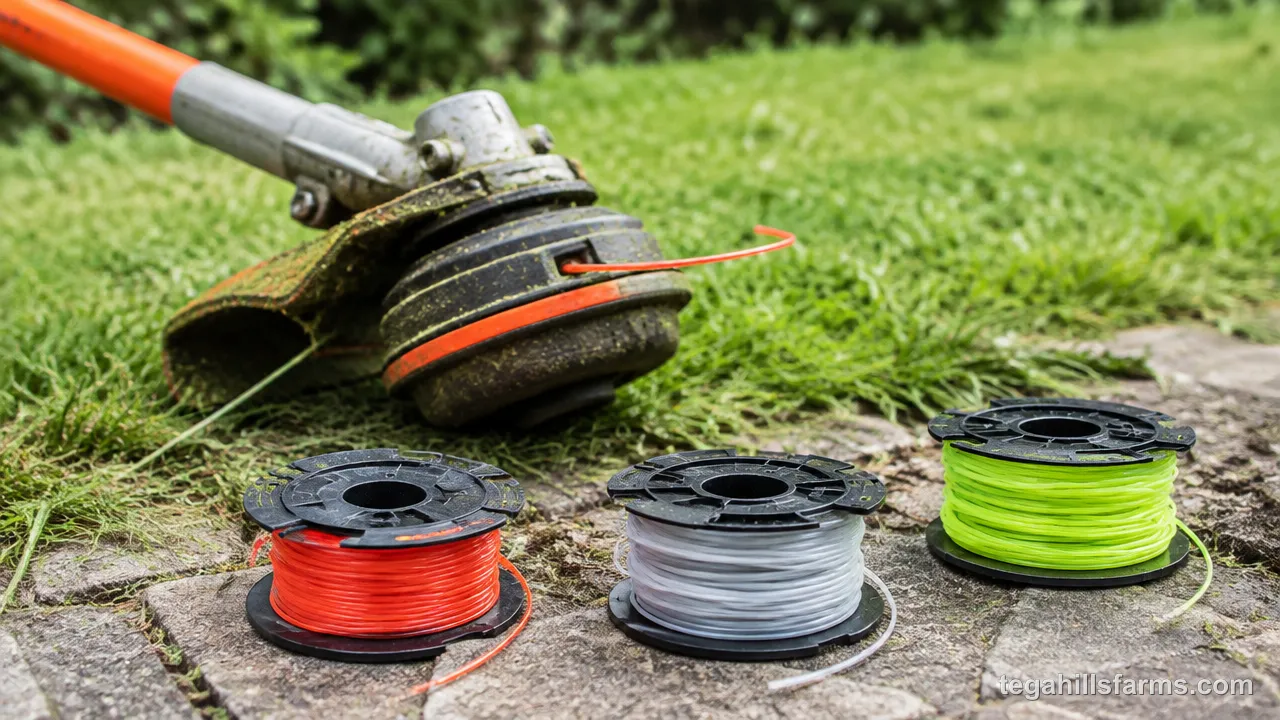
Thin .060 inch line suits fine grass on small lawns and the lighter trimmers built to spin it. The .080 inch size works as an all-around line for typical suburban turf with the occasional weed. Heavier .095 inch and .105 inch lines hold up against thick weeds, tall grass and tough stems along fences. The extra mass carries more momentum through the cut and resists snapping.
Heavier line does demand more from the engine or motor. A light-duty trimmer spinning .105 inch line slows down and leaves ragged ends. If woody growth is the real job, the difference between string trimmers vs brush cutters matters more than line size, because saplings and thick brush call for a blade.
Line Shape
Round line is the default. It is durable, inexpensive and wears evenly, which makes it the right choice for routine edging and grass.
Shaped lines add cutting edges. Twisted line spins with less drag and cuts cleaner than round line of the same diameter. Serrated line has saw-like teeth that tear through dense weeds and tough stems. Those teeth wear down faster against pavement and fence posts.
Branded specialty lines such as Stihl X-Line, ECHO Black Diamond, Husqvarna Titanium Blend and Shakespeare Ugly Twist are worth trying when round line keeps breaking in heavy growth. On a well-kept lawn, the extra cost rarely shows in the cut.
Which Trimmer Head Type Works Best?
Bump-feed designs give you the most control and the fewest parts. Auto-feed and speed-feed designs cut the time you spend advancing or reloading line. The head also decides how often you need to know how to restring a weed eater, because every spool runs empty eventually and some reload far faster than others.
Bump-Feed Heads
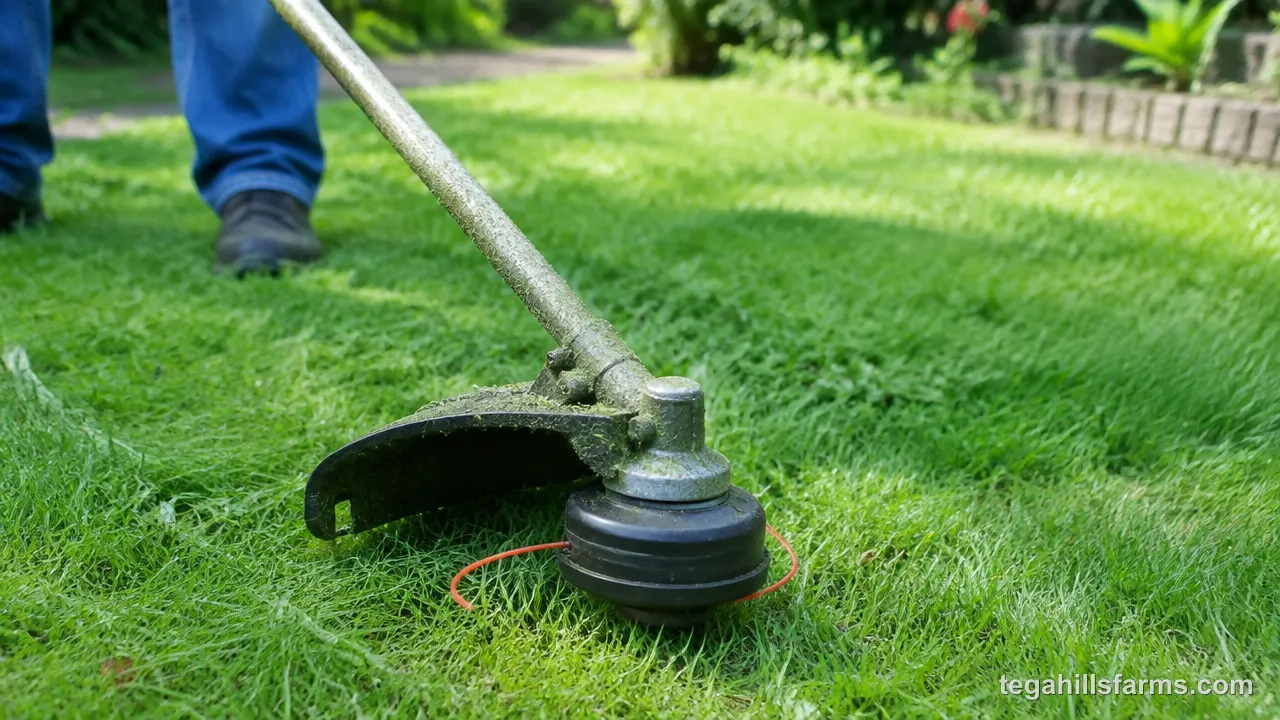
A bump-feed head releases more line when you tap it on the ground while it spins, so you decide exactly when the line gets longer. That control helps on rough ground and along fences, where line wears unevenly and you only want to advance it as needed. The simple spool-and-spring design also leaves fewer parts to fail.
Bump-feed has drawbacks on hard surfaces and in tall grass. Bumping on concrete wears down the bump knob. Bumping too often feeds out extra line that the cutoff blade on the guard trims off as waste. After reloading, leave 4 to 6 inches of line hanging out of the head so it starts cutting at the proper length.
Auto-Feed and Speed-Feed Heads
An auto-feed head advances line on its own as the line wears, so you never stop to bump. That suits owners who want to pull the trigger and keep walking. The cost is complexity. The mechanism can over-feed and waste line, or jam when line is wound loosely, and fixing it means opening the head.
A speed-feed head solves a different problem. You don’t take the spool apart to rewind it. Instead, you thread line straight through the head and turn a knob to wind it in, which turns a fiddly reload into a quick stop. Most speed-feed heads still advance line by bumping, so you keep manual control. For a yard with lots of fence line that eats string, I’d put a quick-load spool ahead of automatic feed.
Does Shaft Style Matter?
A straight design reaches farther under shrubs and suits taller users, while a curved one is shorter and easier to steer close to the ground. A straight shaft puts the head farther from your body, so you can get under decks, low branches and hedges without bending. It also lets taller users trim standing upright instead of hunching, which saves their back on longer jobs. Straight shafts drive the head through a solid shaft and gearbox, which holds up well under heavy line and dense growth.
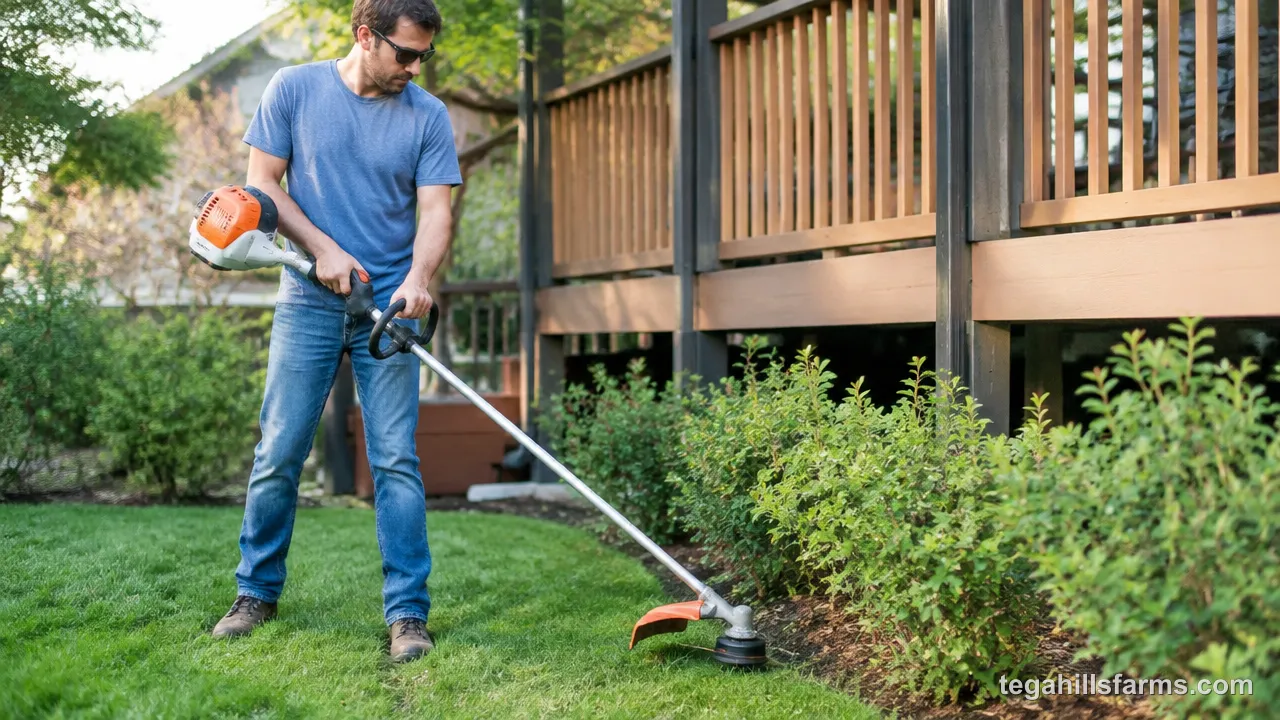
A curved shaft is shorter overall and uses a flexible cable. That keeps the weight closer to you and makes it easy to control around flower beds and along walkways, which suits shorter users and smaller yards. The curve makes it harder to reach deep under obstacles, and the cable drive is less suited to constant heavy cutting. Straight shafts also make it easier to rotate the head into an edging position.
What Cutting Width Do You Need?
The swath, meaning the circle the spinning line covers, sets how much grass you clear per pass. A wider swath speeds up open runs, while a narrower swath steers more easily through tight spaces. Width options vary widely by model. One 4-stroke gas straight-shaft trimmer cuts a 17-3/4 inch path built for long, open fence lines. The Senix X5 Cordless 58V offers two settings: an 11-inch width for tight areas and longer run time, and a 13-inch width to clear larger areas faster.
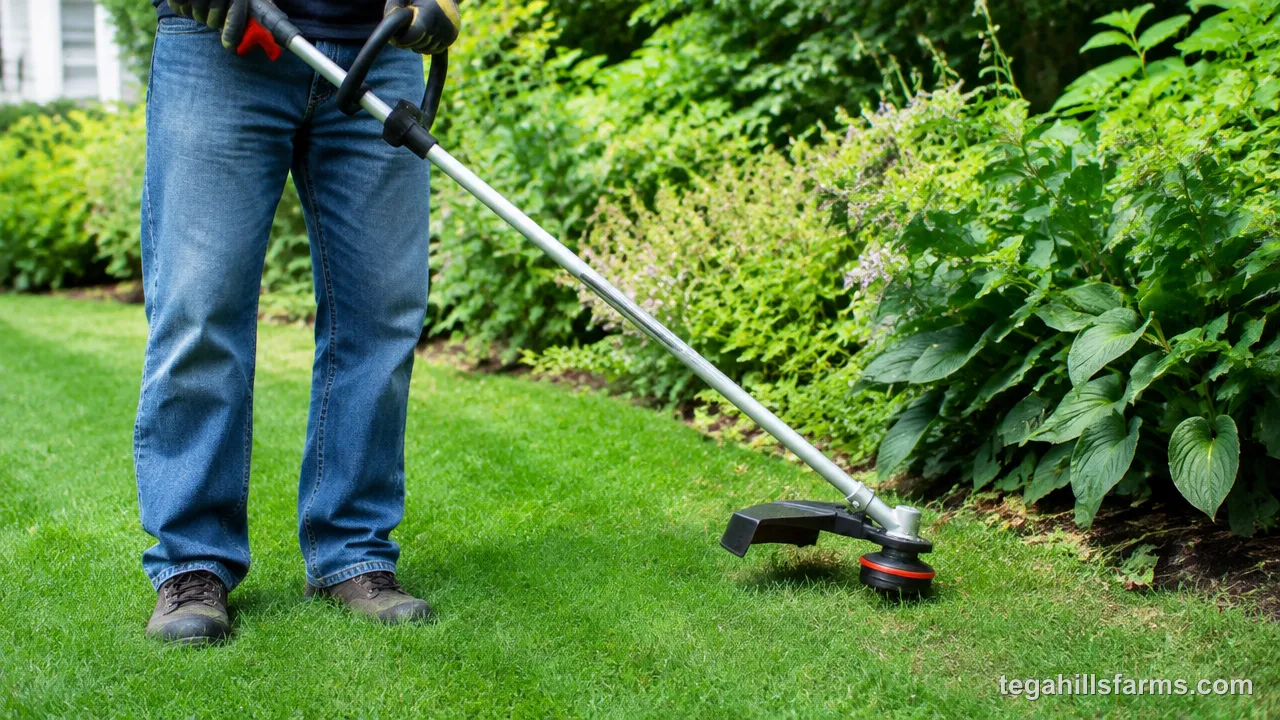
That Senix example shows the trade-off. A wider swath spins more line, so the motor works harder and a battery drains sooner. Wide swaths are also harder to place precisely around mailbox posts, trees and landscaped beds. Yards with open edges favor width, while yards with lots of obstacles favor a narrower cut.
How Important Is Weight and Balance?
Where the mass sits matters as much as the total on the scale. A trimmer that hangs head-down makes your arms hold it up, and that strain turns into fatigue over a long job. On battery models, the pack usually sits at the rear and counterweights the cutting head. That lets the head float at trimming height with little effort. On gas models, the engine sits at the top of the shaft, so balance depends on where the handles are placed.
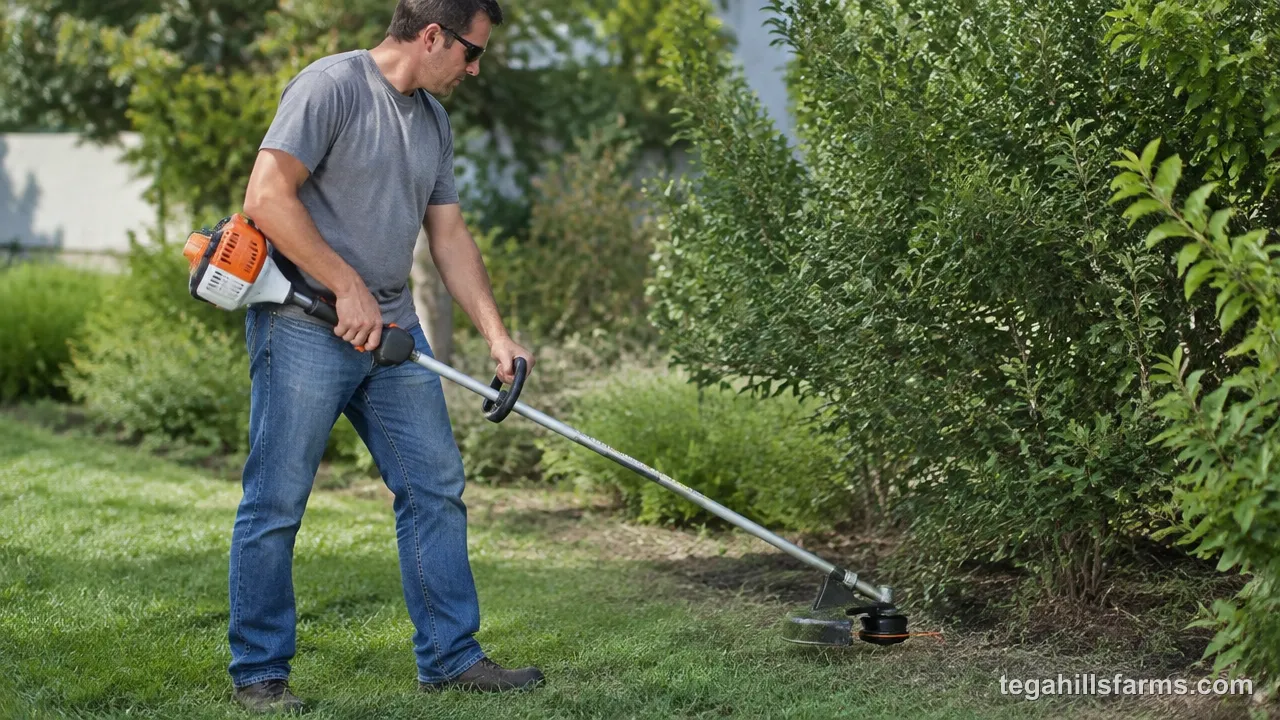
An adjustable auxiliary handle lets you set your grip so the head rests level without you lifting it. On larger properties, harness compatibility moves the load from your arms to your shoulders. A shoulder strap makes an hour of fence-line work far more manageable. If you can, hold the trimmer in trimming position before you buy it.
The first part to fail on a trimmer is rarely the motor: gas models tend to give out at the carburetor and fuel lines, and cordless models at the battery pack. If you buy without knowing those weak points, a trimmer that runs well for a few seasons can end up needing a part that costs a large share of a new machine.
How Long Should a String Trimmer Last?
Lifespan depends mostly on power source and care. A well-kept gas engine can run for many seasons, while a battery trimmer’s motor usually outlasts its first pack. On gas models, the carburetor is the common early failure. Ethanol-blended fuel left sitting in the system leaves varnish that clogs small passages, and fuel lines and primer bulbs harden and crack with age.
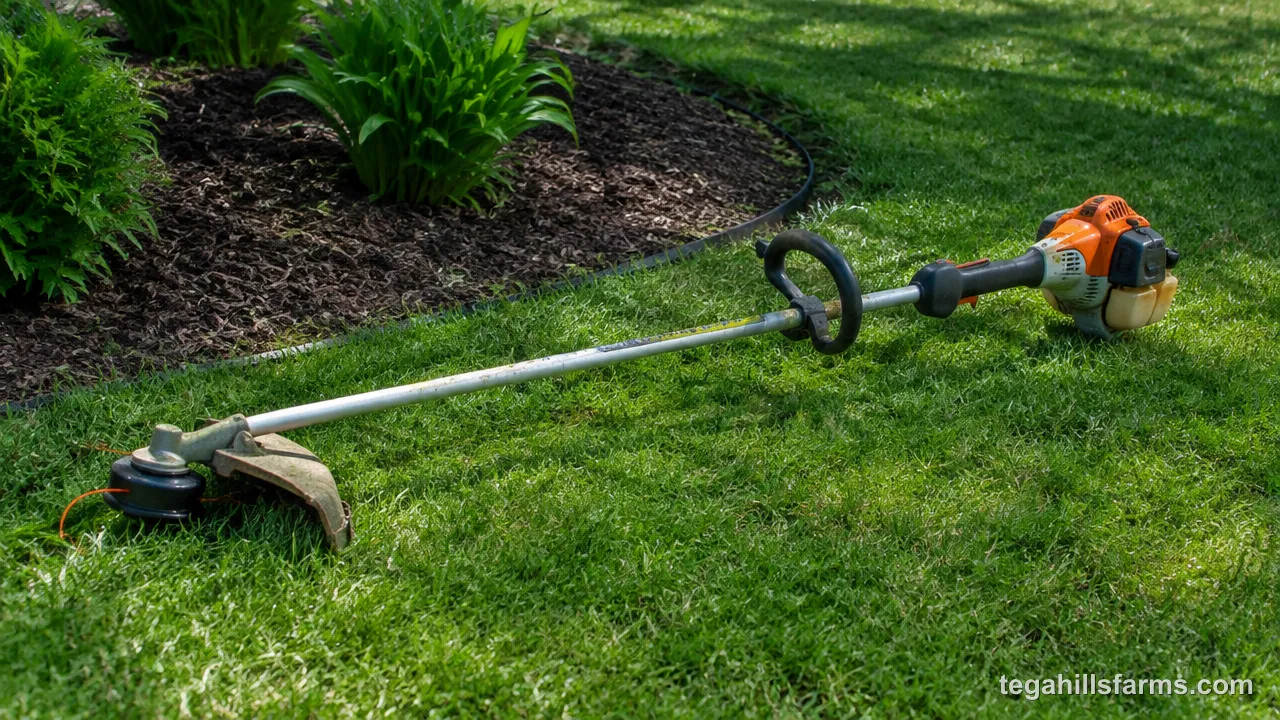
Battery trimmers, especially brushless ones, have few wearing parts in the motor. The weak link is the lithium-ion pack, which loses capacity with every charge cycle and with exposure to heat. Corded trimmers have the fewest parts of all, so their cord and switch usually wear out first.
Because no single number of years applies across models, how long string trimmers last comes down to whether you can replace the parts that wear. A carburetor kit, or a spare battery on your platform, keeps an otherwise healthy trimmer working.
What Causes a String Trimmer Not to Start?
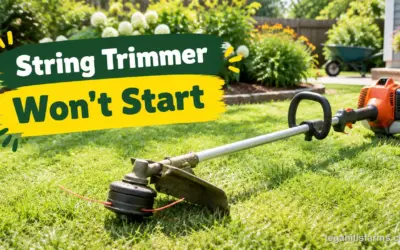
Stale fuel is the usual cause on gas models, and a depleted or cold battery is the usual cause on cordless ones. On a gas trimmer, start with fresh fuel mixed at the correct ratio. Then check the choke position, the spark plug for fouling, and the fuel lines for cracks. If the engine still won’t fire, old fuel has often gummed up the carburetor, and it needs cleaning or a rebuild kit. Ignition system faults are less common.
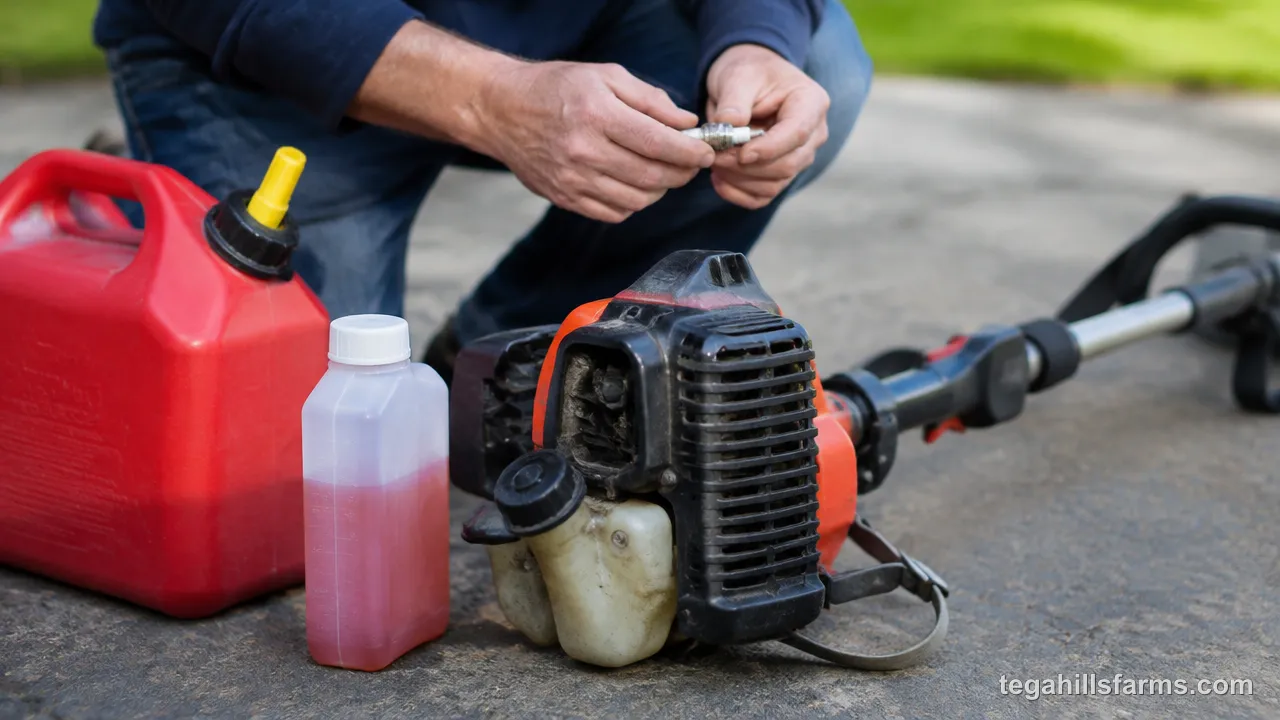
On a battery trimmer, confirm the pack is charged and fully seated. A pack that is too cold or too hot may refuse to power the motor until it returns to room temperature. Also check that the safety lockout is released before you squeeze the trigger. When a string trimmer won’t start after those checks, the problem has moved into parts that need closer diagnosis.
How Should You Store a String Trimmer Between Seasons?
For a gas trimmer, either add fuel stabilizer and run it through the engine, or drain the tank and run the engine until it stops so the carburetor sits dry over winter. For a cordless model, store the battery indoors, partly charged, away from a freezing garage or a hot attic.
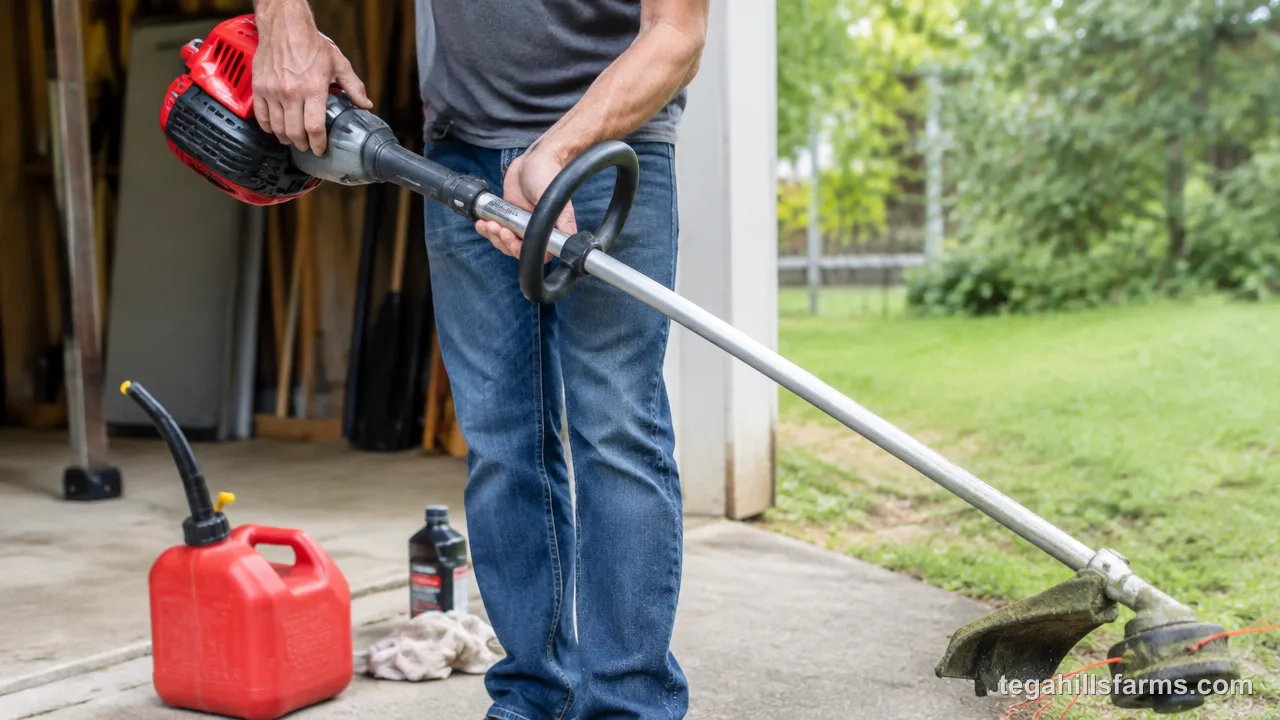
Fuel is the main threat to gas engines in storage. Ethanol blends absorb moisture and break down, leaving varnish in carburetor jets that causes hard starts next spring. Clean grass from the head and guard, and check the air filter before you put the trimmer away.
Lithium-ion packs degrade faster when stored fully charged, fully drained, or at temperature extremes. Follow the storage charge level in your manual and keep the pack somewhere dry. Hang the trimmer so the shaft isn’t bearing weight or getting bumped.
Are You Holding the Trimmer Correctly?
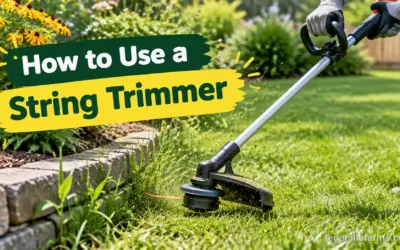
Hold the head close to level, tilted slightly so only the tip of the line meets the grass. Scalping happens when the head angles too far down and the line digs into soil, leaving bare patches along edges. Cutting with the tip also reduces line wear, because the rest of the line isn’t slapping against the ground, fences or concrete.
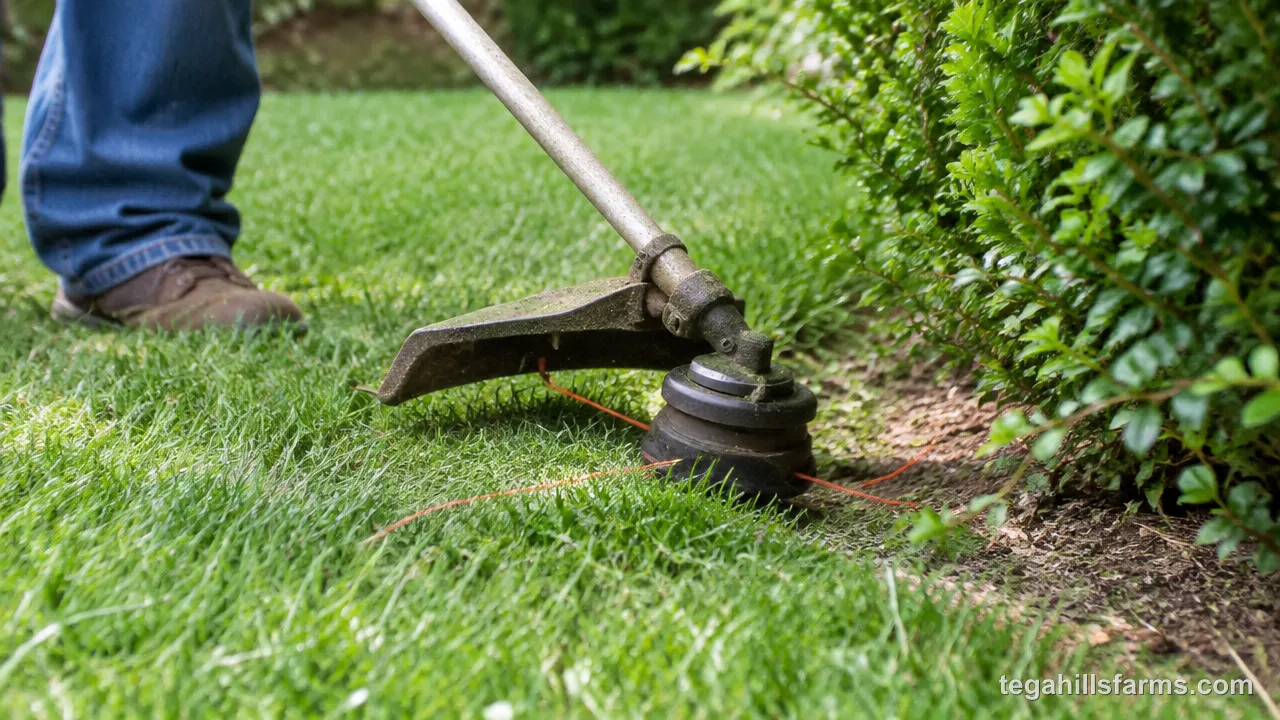
Sweep the head side to side at a steady pace and let the line speed do the cutting rather than pushing into the grass. Work in a direction that throws clippings away from sidewalks and flower beds. Adjust the handle so you can stand upright with both hands on the trimmer. Edging, cutting tall grass and working around trees each need a slight change in grip and angle, which is where learning how to use a string trimmer step by step pays off.

Write Your Review
No reviews yet. Be the first to share your experience!