

A gas string trimmer that refuses to start almost always comes down to one of eight causes: stale fuel, a varnished carburetor, a fouled spark plug, a clogged air filter, a blocked fuel filter, a broken recoil starter, a flooded engine, or a plugged spark arrestor screen. Each one cuts off something the engine needs to fire: fuel, spark, air, or the ability to spin the crankshaft.
The order you check them in matters as much as the list itself. Fuel and filters cost little and take minutes to check. A carburetor teardown takes an afternoon. Working from the simplest fix toward the most involved keeps you from rebuilding parts that were never the problem.
The real worry for most owners is spending money on the wrong repair. A new carburetor won’t help a trimmer whose spark plug is soaked in oil, and a new plug won’t help an engine starving for gasoline. The symptoms each cause produces are different enough that you can usually narrow it down before buying a single part.
Before you pull the cord again, smell the exhaust port and look at the fuel in the tank. A strong raw-gas smell points toward flooding. Cloudy or dark fuel points toward a stale tank.
Why Won’t My String Trimmer Start After Sitting: Bad or Old Fuel
Gasoline that sits more than 30 days without a stabilizer loses the volatile compounds that let it ignite. Ethanol-blended gasoline also absorbs moisture from the air, which settles out as a water layer the engine can’t burn.
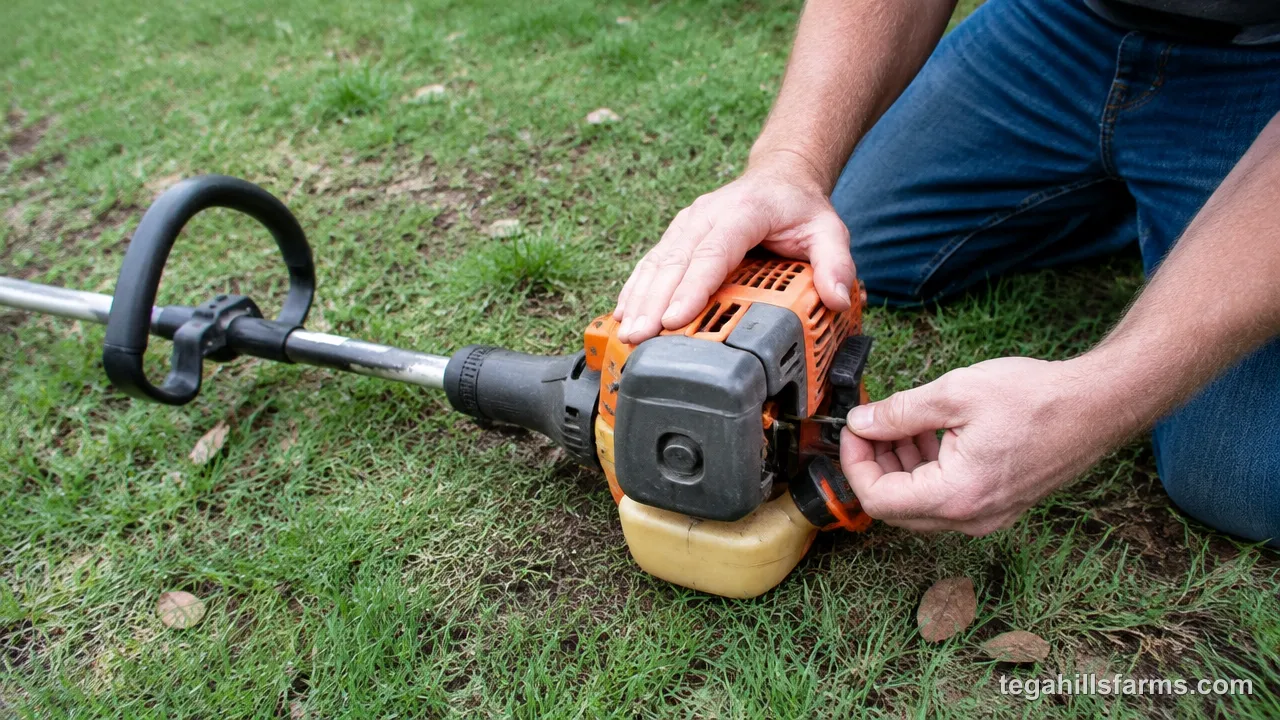
As the lighter compounds evaporate, the remaining fuel thickens into a gummy residue that coats the fuel line and carburetor. Two-stroke trimmers have a second problem: the oil in the mix can separate when the can sits, so the engine gets an uneven blend. Mix fresh gasoline with two-stroke oil at 50:1 unless your model says otherwise, because too much oil fouls the plug and too little scores the cylinder.
The fix is simple. Drain the tank completely, refill with freshly mixed fuel, and add fuel stabilizer to any can that will sit longer than a few weeks. Fuel problems hit every gas trimmer, and knowing how to choose a string trimmer in the first place helps you pick a power source that matches how much fuel upkeep you’re willing to take on.
What Causes a String Trimmer Not to Start: Dirty or Clogged Carburetor
Varnish left behind by evaporated gasoline narrows the fuel jets and internal passages until too little gasoline reaches the cylinder to fire.
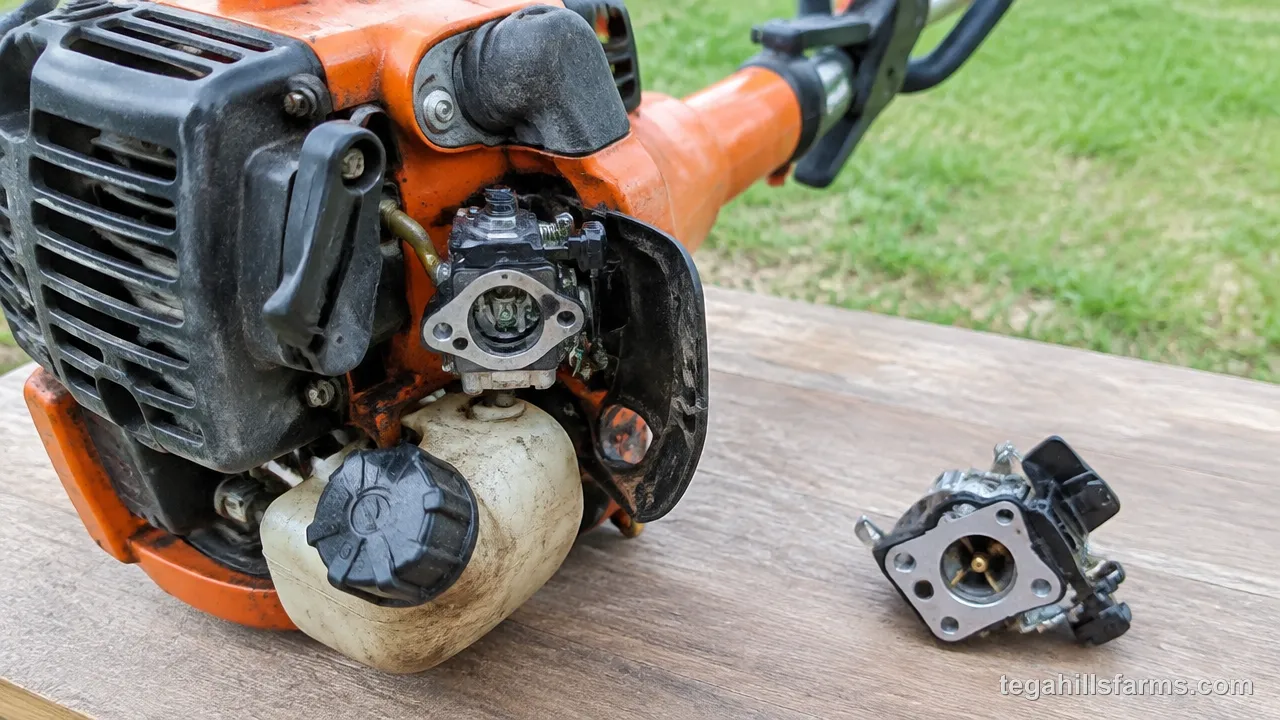
The symptoms tell you how far that buildup has gone, and the extent of the damage decides whether a can of cleaner fixes it or the whole unit needs replacing. This matters because the carburetor is the most time-consuming part to service on a trimmer. Keeping it clean is also one of the biggest factors in how long string trimmers last, since a gummed carburetor is a common reason owners give up on an otherwise sound engine.
Signs Your Carburetor Is the Problem
The carburetor is the likely culprit when the engine has fresh fuel and a good spark but still won’t run on its own. The most telling sign is a trimmer that fires with the choke on, then sputters and dies as soon as you open the choke. The engine is getting just enough fuel to light, but not enough to keep running.
Other signs include surging at idle, bogging when you squeeze the throttle, and a primer bulb that won’t fill with fuel or fills but changes nothing.
Rule out the other systems first. A spark tester confirms ignition. Firm resistance on the pull cord shows the engine still has compression. Once both check out and the fuel is fresh, the problem almost always sits in the carburetor’s jets or diaphragm.
How to Clean a Trimmer Carburetor
Cleaning takes basic hand tools, a can of carburetor cleaner spray, and a rebuild kit with new gaskets and a diaphragm. Take photos at each step, because the linkage and gasket order are easy to forget.
- Remove the air filter cover and filter, then disconnect the throttle cable and both fuel lines.
- Unbolt the carburetor and note which way each gasket faces.
- Remove the diaphragm cover, diaphragm, and needle valve assembly.
- Spray carburetor cleaner through the main jet, the idle jet, and every passage you can reach. Keep spraying until the cleaner flows out freely from the other end.
- Don’t push wire through the jets. It can enlarge the openings and throw off the fuel mixture.
- Install the new diaphragm and gaskets from the kit, since old gaskets often harden and leak air.
- Reassemble, reconnect the lines, and prime until fuel fills the bulb.
When to Replace Instead of Clean
Replace the carburetor when the body itself is damaged. A cracked housing, stripped mounting threads, or a warped gasket surface will leak air no matter how clean the passages are. Replace it too if the trimmer still won’t run after a full cleaning and a rebuild kit, because varnish sometimes hardens in passages that spray can’t reach.
You can buy either an OEM or an aftermarket carburetor. An OEM carburetor matches your engine exactly and arrives tuned for it. Aftermarket units cost less, but fit and factory adjustment vary, so some need tuning before the engine idles smoothly.
Why Does My String Trimmer Not Start: Fouled or Failed Spark Plug
Carbon or oil deposits on the electrode, or an electrode gap worn too wide, keep the ignition voltage from jumping across to light the fuel.
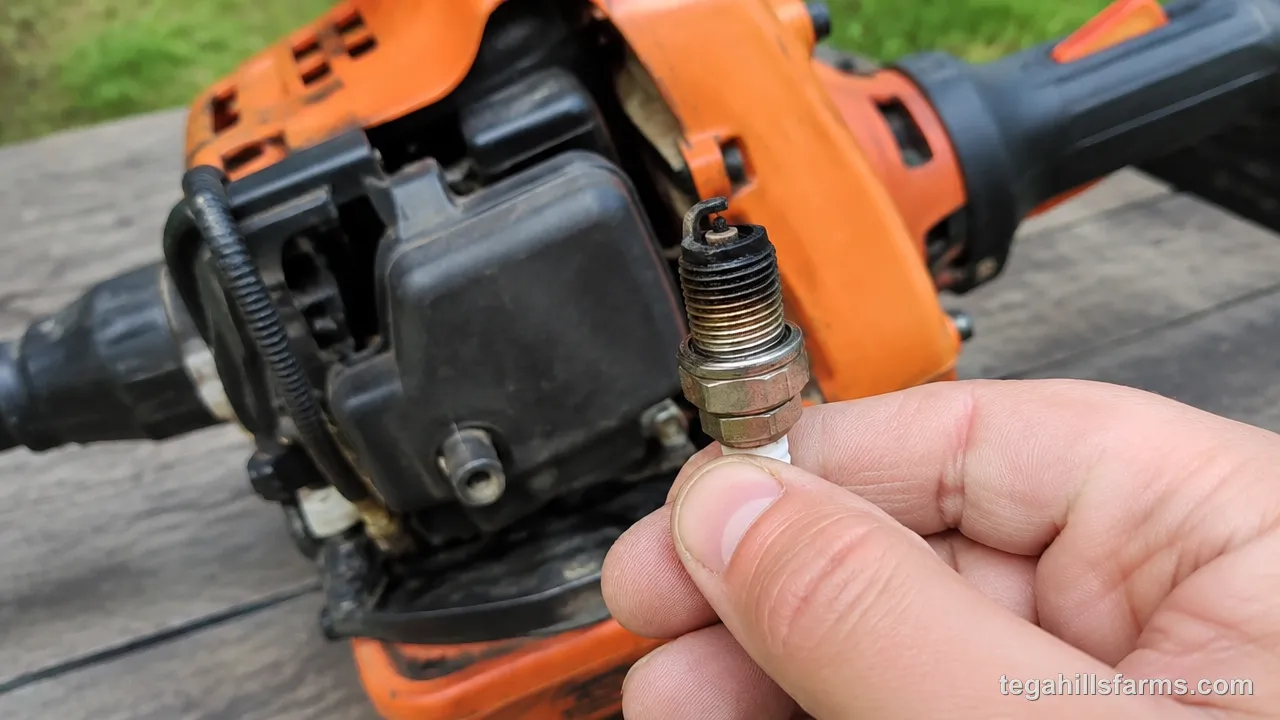
The plug is the cheapest part in the ignition system, so it’s worth confirming its condition before you suspect the ignition coil. What the plug looks like when it comes out also tells you a lot about how the engine has been running.
How to Check if Your Spark Plug Is Bad
Pull the boot straight off the plug, remove the plug with a spark plug socket, and look at the electrode. A healthy plug has a light tan or gray tip.
- Dry black soot means carbon fouling, usually from a rich mixture or a dirty air filter.
- Wet, oily black deposits mean too much oil in the fuel mix.
- A plug wet with raw gasoline means the engine is flooded.
Check the electrode gap with a gap gauge against the figure in your manual.
To test for spark, clip a spark tester between the boot and the plug, then pull the cord. A bright flash in the tester window means the ignition works. No flash with a new plug in place points to the ignition coil or a loose boot connection rather than the plug itself.
Replacing the Spark Plug
Buy the plug your manual specifies. Most trimmer manuals list a Champion or NGK part number, and parts counters can cross-reference between the two. Check the gap with a gap tool before installing, even on a new plug. Bend the side electrode gently if the gap needs adjusting, because forcing it can crack the porcelain.
Thread the plug in by hand first. Trimmer cylinder heads are aluminum, and a cross-threaded plug can strip the threads in seconds. Skip anti-seize compound unless your manual calls for it, since most plugs come with plated threads and the extra lubricant makes overtightening easier. Tighten to the torque spec in the manual, then push the boot on until it seats firmly over the terminal. A boot that sits loose can let the spark arc somewhere other than the electrode.
Why Is My String Trimmer Hard to Start: Clogged Air Filter
A dirt-packed foam or paper element cuts the engine’s oxygen supply, so the air-fuel mixture runs too rich to ignite easily. The problem gets worse when the choke closes and restricts airflow even further.
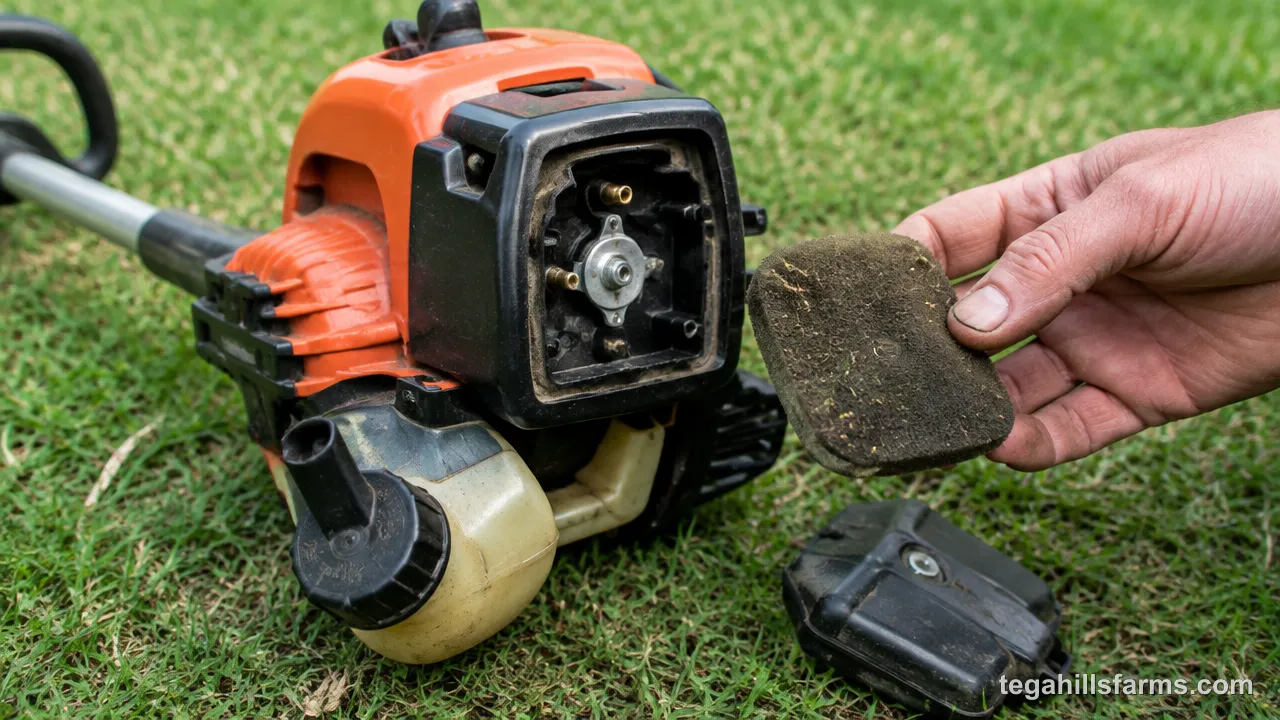
Trimmers pull in dust and grass clippings all season, and the filter sits right in that path. Foam filters can be washed in warm soapy water or filter cleaning solvent, dried completely, and lightly oiled if your manual calls for it. Paper and felt filters can be tapped clean once or twice, but replace them once dirt has worked into the fibers. Never run the engine without a filter, because grit drawn into the cylinder wears the piston and rings quickly.
What Would Cause a String Trimmer Not to Start: Clogged Fuel Filter
The weighted pickup at the end of the line inside the tank traps sediment, and once it’s packed, the carburetor can’t draw enough gasoline to start the engine.
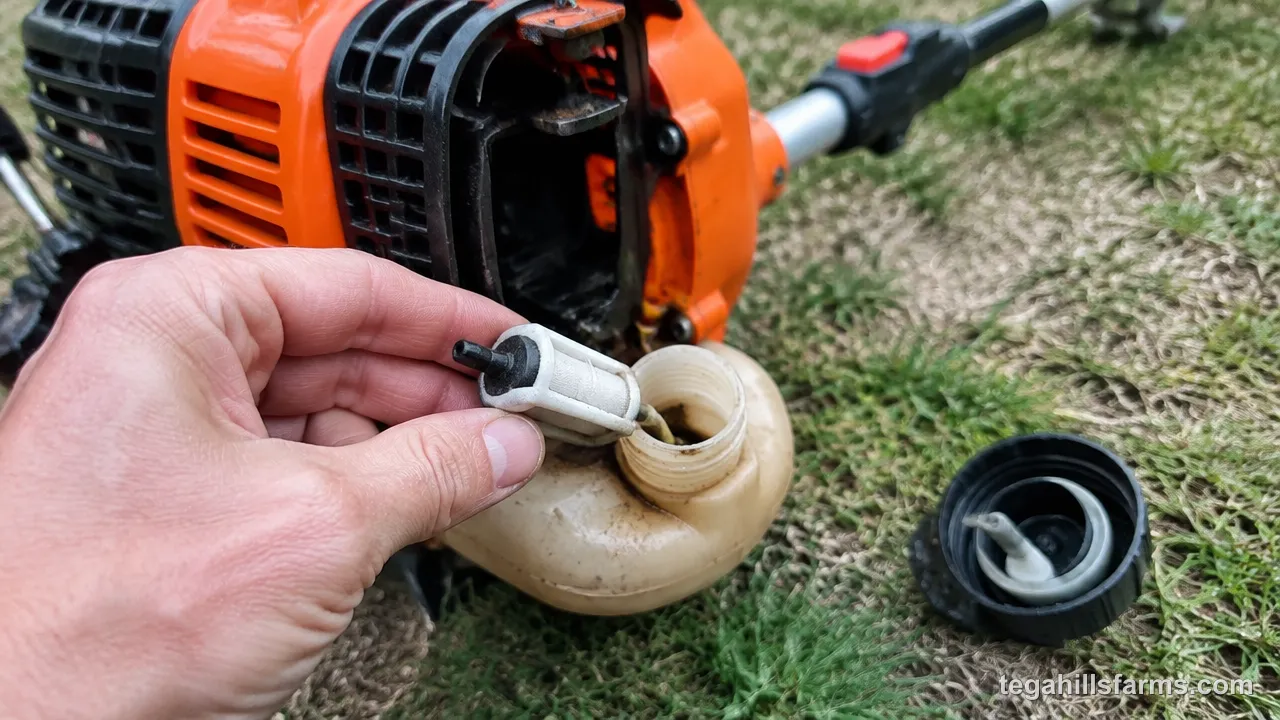
Fish the filter out of the tank with a bent wire hook and check it for discoloration or debris. A clogged filter shows up as a trimmer that starts, then dies under throttle as fuel flow falls behind demand. Replace the filter at the start of each season, and check the fuel line for cracks at the same time, since a split line draws air instead of fuel. Some models also use an inline fuel filter that needs the same check.
Why Won’t My String Trimmer Pull Start: Faulty Recoil Starter
The pull cord turns the engine over through spring-loaded pawls that grip the flywheel. A broken recoil spring, a frayed rope, or a seized pawl means the crankshaft never spins fast enough to fire.
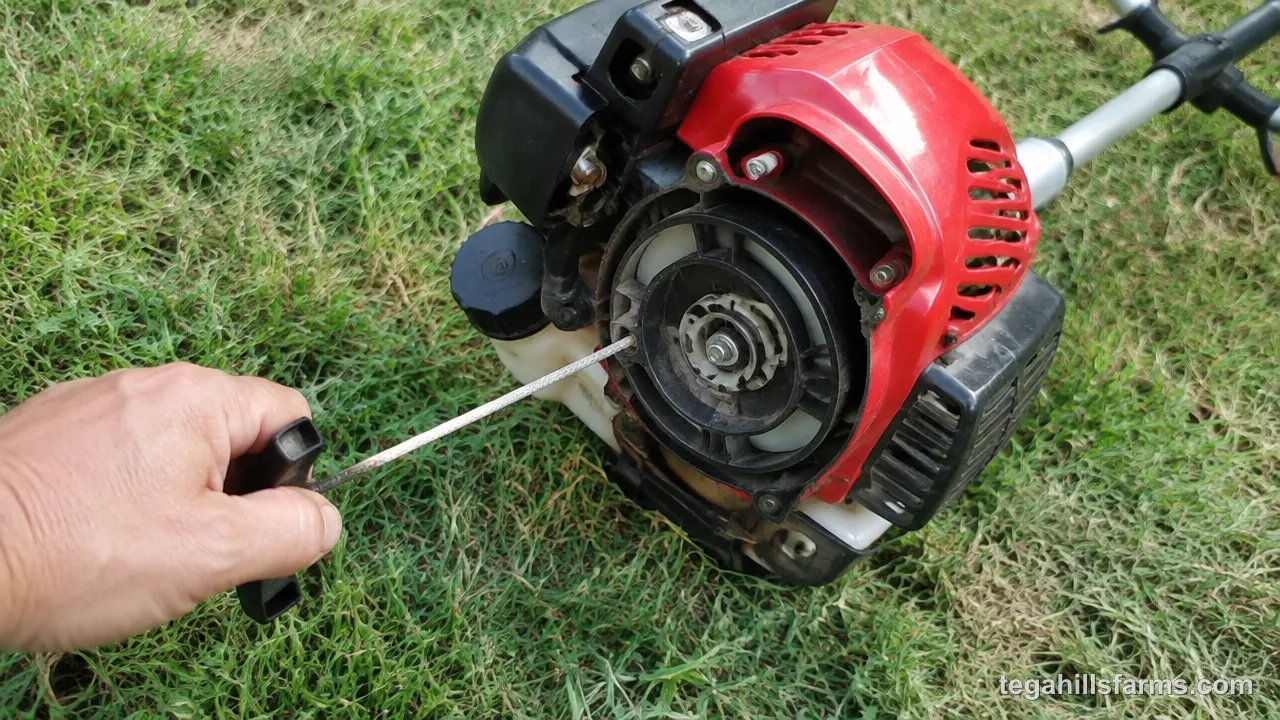
A recoil problem is mechanical, so no amount of fuel or ignition work will fix it. Recognizing the symptoms saves you from tearing into a carburetor that’s fine. Pulling the cord at a sharp angle or letting it snap back wears the rope and pawls fastest, so the pull technique you learn with how to use a string trimmer also protects the starter.
Signs of Recoil Starter Failure
The rope itself usually shows the problem. If the cord pulls out with almost no resistance, the pawls aren’t catching the flywheel, so the engine never turns. If the rope pulls out but hangs slack instead of winding back in, the recoil spring has broken or come unhooked.
Grinding or clicking during the pull points to worn pawls or a damaged pulley. A rope that won’t pull at all is different: either the pulley has seized, or the engine itself has locked. To tell which, remove the starter housing and turn the flywheel by hand. If the flywheel spins freely, the fault is in the starter assembly.
Repairing or Replacing the Recoil Assembly
A frayed or broken rope is the easiest repair. Remove the starter housing screws, then release the spring tension slowly by letting the pulley unwind under control. Pull the old rope, thread new rope of the same thickness through the pulley and housing, and tie the knot the way the original was tied. Wind the pulley a few turns against the spring to pre-tension it, then feed the rope through the handle.
A broken recoil spring is a different job. The spring is coiled under tension and can uncoil violently when loosened, which makes rewinding a loose spring difficult and risky. For a broken spring or damaged pulley, I’d replace the complete starter assembly. It bolts on as one unit and arrives with the spring already tensioned.
Why Won’t My Gas String Trimmer Start: Flooded Engine
Too much raw gasoline in the combustion chamber soaks the spark plug and crowds out air, so the spark has nothing it can ignite.
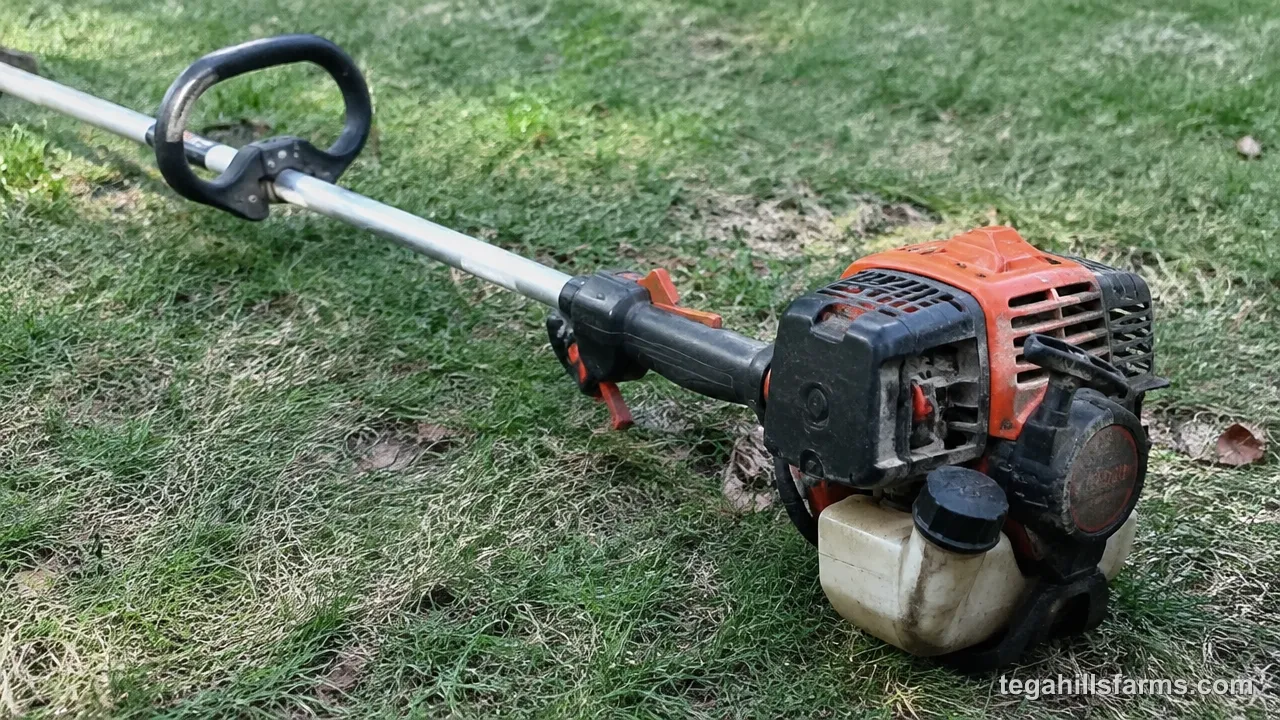
Flooding is usually the easiest no-start to diagnose. You’ll notice a strong smell of raw fuel and a plug that comes out wet. It’s also one of the quickest to fix, because most cases come from the starting routine rather than a broken part.
What Causes Engine Flooding
Over-priming is the most common cause. A cold start needs only 3–5 presses of the primer bulb, until you see fuel in the line. Every press beyond that pushes extra gasoline toward the cylinder.
Leaving the choke closed after the engine first pops causes the same problem. Each additional pull on full choke draws in more fuel with almost no air, so repeated attempts make the flooding worse.
When the operator does everything right and the engine still floods, look at the carburetor. A stuck inlet needle, sometimes called the float needle, lets fuel keep flowing into the engine even when it shouldn’t. Storing the trimmer on its side can also let fuel run into the cylinder.
How to Clear a Flooded String Trimmer
Move the choke to OPEN, hold the throttle wide open, and pull the cord 5–8 times. Don’t press the primer bulb. The open throttle and choke let air sweep the excess fuel out of the cylinder. Many engines fire partway through those pulls.
If it still won’t catch, remove the spark plug and dry it. With the plug out, pull the cord a few times to blow raw fuel out of the cylinder. Point the plug hole away from you while you do this, then reinstall the plug.
If the plug comes out dripping, wait about 15–20 minutes so the remaining fuel can evaporate. Then try again with the choke open and no priming.
Why Won’t My Weed Eater Start: Blocked Spark Arrestor
A fine mesh screen inside the muffler catches hot carbon particles. Once carbon buildup closes that mesh, exhaust gases can’t leave the cylinder, and fresh mixture can’t get in.
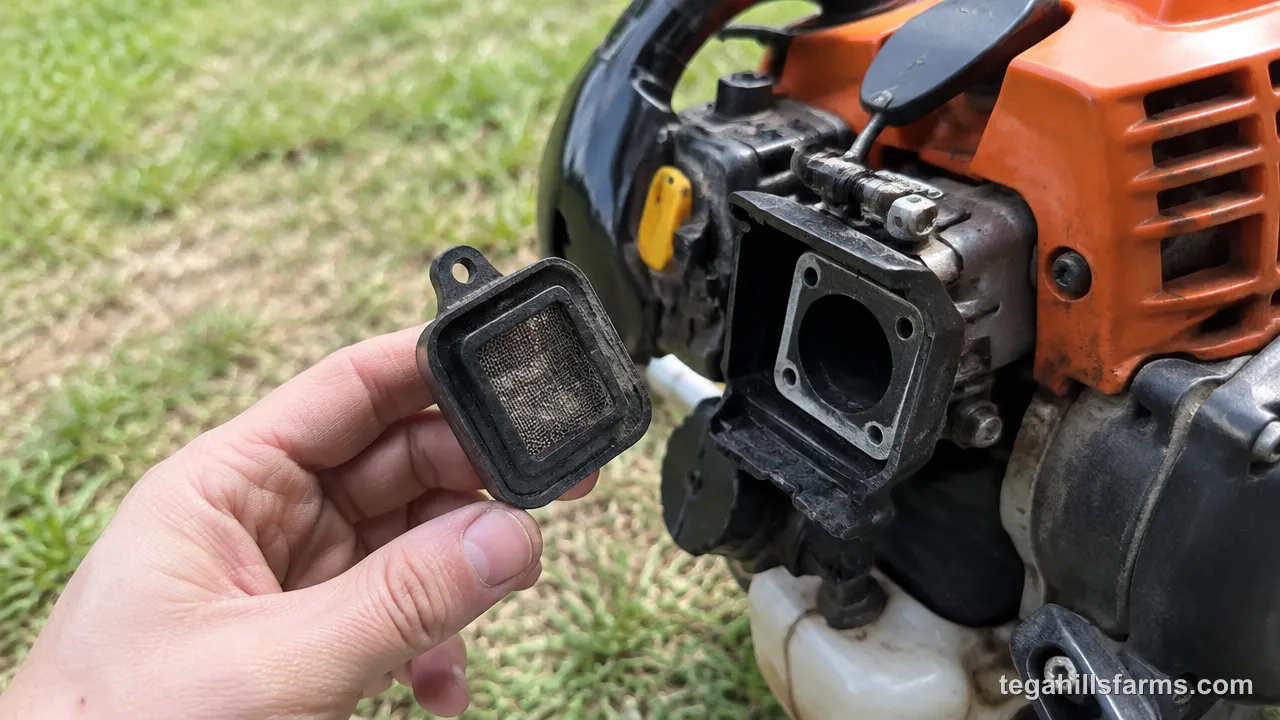
Buildup comes fastest on engines that run rich or burn too much oil in the mix. To clean it, remove the muffler cover, pull out the screen, and scrub it with a wire brush until you can see light through the mesh. Replace the screen if the mesh is torn or burned through. Check the exhaust port behind it for carbon at the same time. Don’t run the trimmer without the screen, because it keeps sparks out of dry grass. Many areas also require a working spark arrestor, so check local rules.
Gasoline left in the tank over winter turns to varnish in the carburetor’s smallest passages long before spring arrives. A trimmer stored that way shows it in the first warm week, with a cord that fires nothing and a carburetor that has to come apart before any grass gets cut.
Preventive Maintenance to Avoid Starting Problems
Most no-start problems can be prevented with a schedule built around three things: fresh fuel, clean filters, and a healthy spark plug. Each step fits a natural point in the season, so it doesn’t add much work.
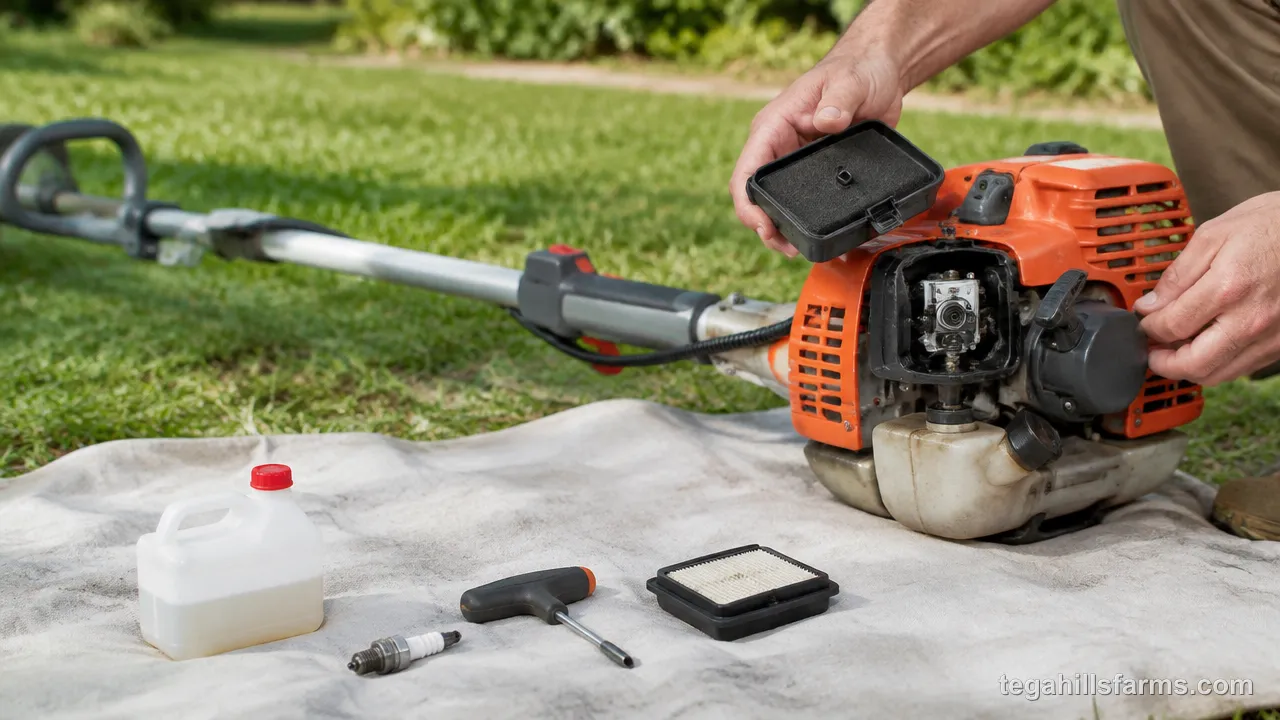
- Every fill-up: Mix fresh gasoline at the correct ratio, and add fuel stabilizer to any can that won’t be used within a few weeks.
- Every few uses: Tap out or wash the air filter, especially after cutting in dry, dusty conditions.
- Pre-season check: Install a new spark plug and fuel filter. Inspect the fuel line for cracks and the starter rope for fraying.
- Mid-season: Clean the spark arrestor screen if the engine starts losing power under load.
- Off-season storage: Either run the tank dry so no fuel sits in the carburetor, or fill it with stabilized fuel and run the engine long enough to draw that fuel through the system.
If this upkeep sounds like more than you want to keep up with, it is the main practical difference between gas vs battery string trimmers. Battery models skip every fuel and ignition item on this list.
Quick Diagnostic Checklist by Symptom
What the cord and engine do when you pull usually points to one system, and you can tell before taking anything apart. Match your symptom to the list and start with the cause listed first.
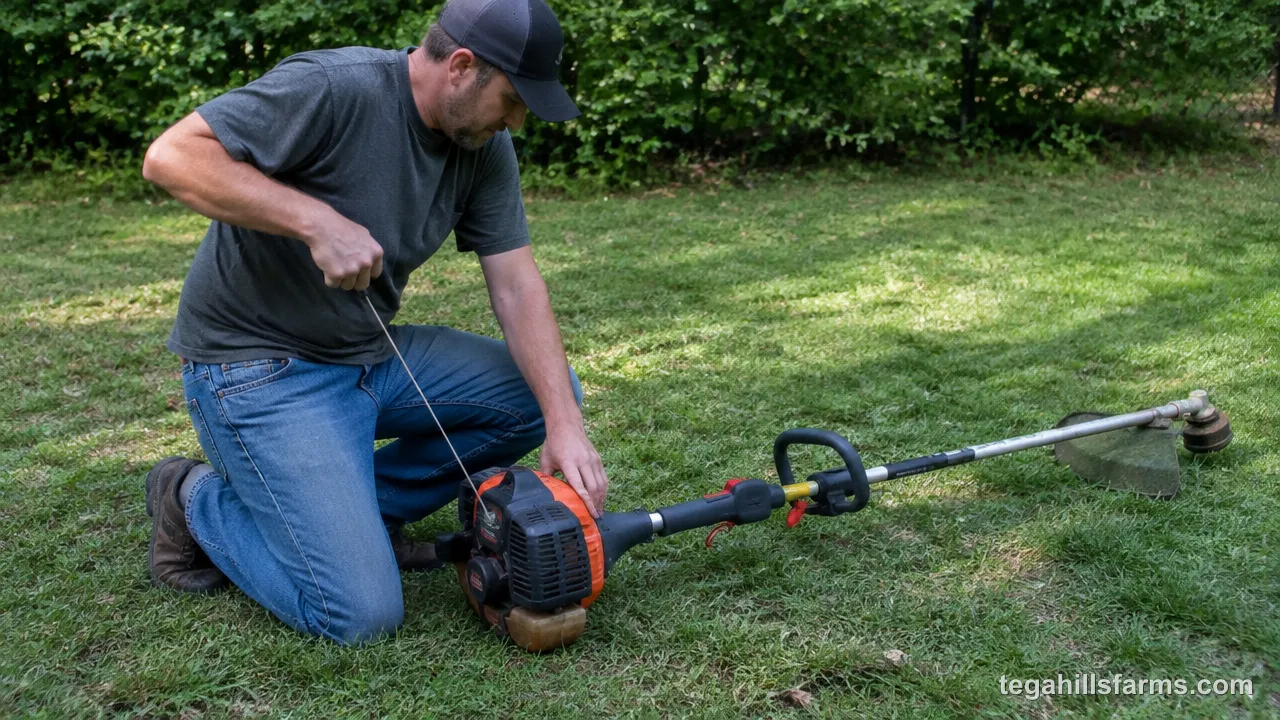
- Cord pulls with no resistance or won’t retract: recoil starter pawls or recoil spring.
- Cord won’t pull at all: seized starter pulley, or a locked engine if the flywheel won’t turn by hand.
- Engine cranks but never pops: run a spark test first. No spark means a bad plug or ignition coil. A good spark means fuel isn’t reaching the cylinder.
- Strong raw-fuel smell and a wet plug: flooded engine.
- Starts on choke, then dies when the choke opens: clogged carburetor jets.
- Starts, then dies under throttle: clogged fuel filter or stale fuel.
- Rough idle or bogging: dirty air filter or a carburetor that needs cleaning.
- Loses power as it warms up: blocked spark arrestor screen.
When Does Repairing a String Trimmer Make Sense?
Repairing makes sense whenever the fault is fuel, a filter, the spark plug, or the starter rope. These parts are inexpensive, and an owner with basic tools can replace them in under an hour. A carburetor rebuild kit falls in the same category on most trimmers.
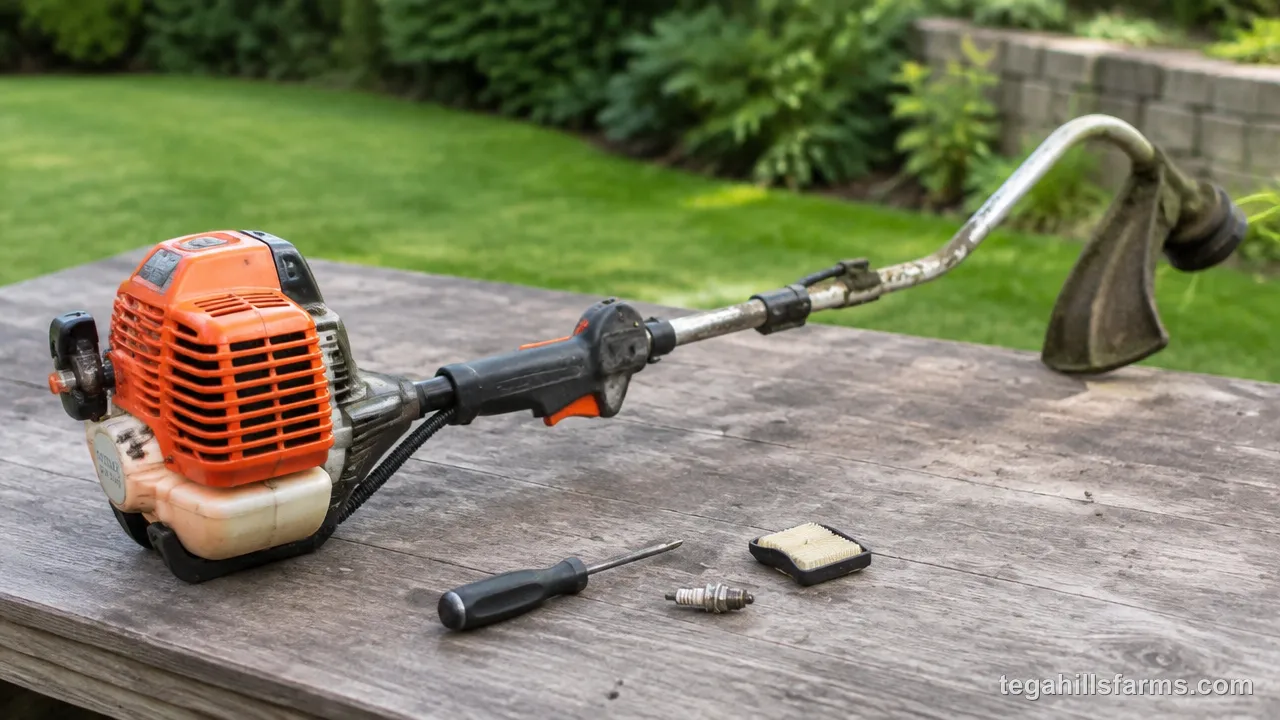
The math changes when the engine itself is worn. Weak compression, a scored cylinder, or a carburetor replacement on an older budget trimmer can bring the repair close to the price of a new unit. A newer model may also bring features worth having, such as easier starting systems or a quick-load head.
Before you decide, compare the quoted repair against how much a string trimmer costs in the same class. Then weigh how many seasons the old machine realistically has left. Shop labor often costs more than the parts, so a repair you can do yourself is worth doing far more often than one you’d pay a shop for.


Write Your Review
No reviews yet. Be the first to share your experience!