

Using a string trimmer comes down to five habits: wear eye and ear protection, hold the trimmer head level just above the grass, cut with a steady side-to-side sweep, turn the head vertical to edge along pavement, and feed fresh line before it wears too short to cut.
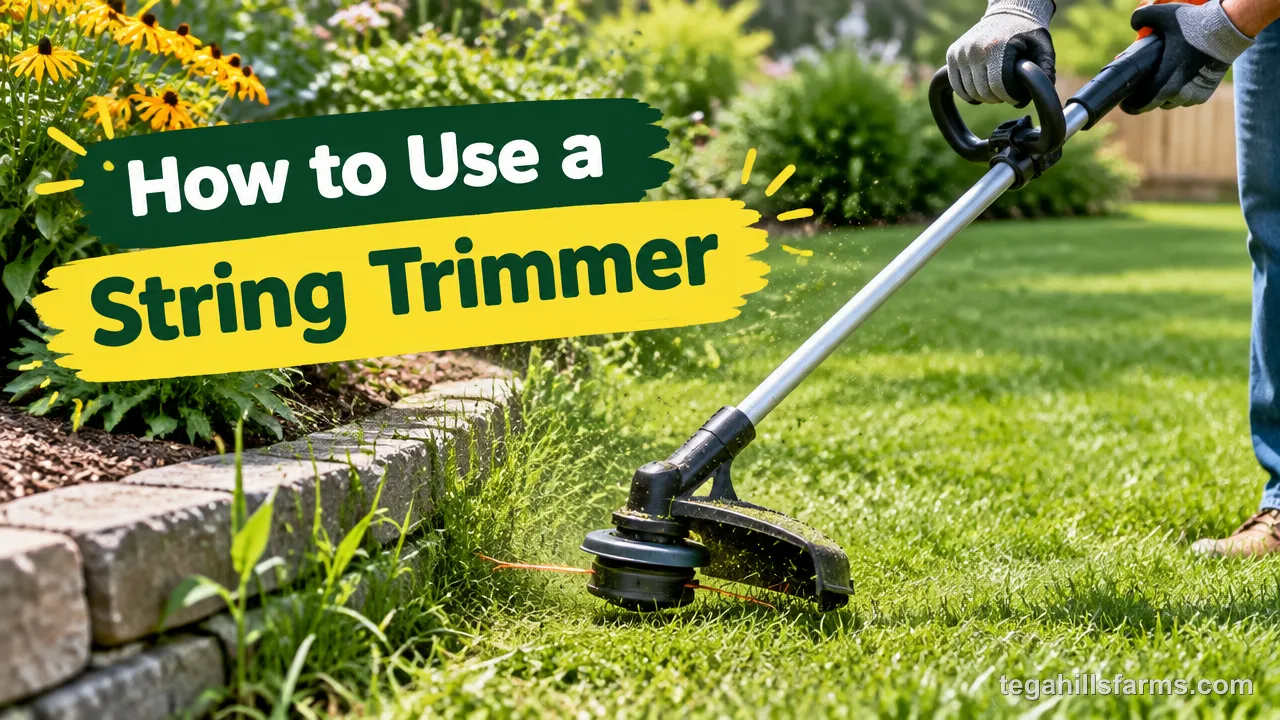
The technique shifts with what you’re cutting. Lawn grass along a fence needs a light touch and a level head. Thick weeds in a back corner need a heavier line and a slower, top-down approach. Your power source also changes how you work: a corded model limits your reach, and a battery model limits your time.
Most first-time problems come from a few predictable places. A head held too low scalps the lawn, line forced into dense growth snaps or stalls the motor, and stones thrown by the spinning line can crack a window or hit your shins. Each of these has a simple fix once you know what causes it.
Trim before you mow when you can. The mower deck picks up the clippings the trimmer throws onto the lawn, so one mowing pass cleans up after both jobs.
What Is a String Trimmer and When Should You Use One?
A string trimmer is a handheld tool that spins flexible nylon trimmer line at high speed to cut grass and weeds where a mower deck can’t reach, such as fence lines, tree trunks and bed borders.
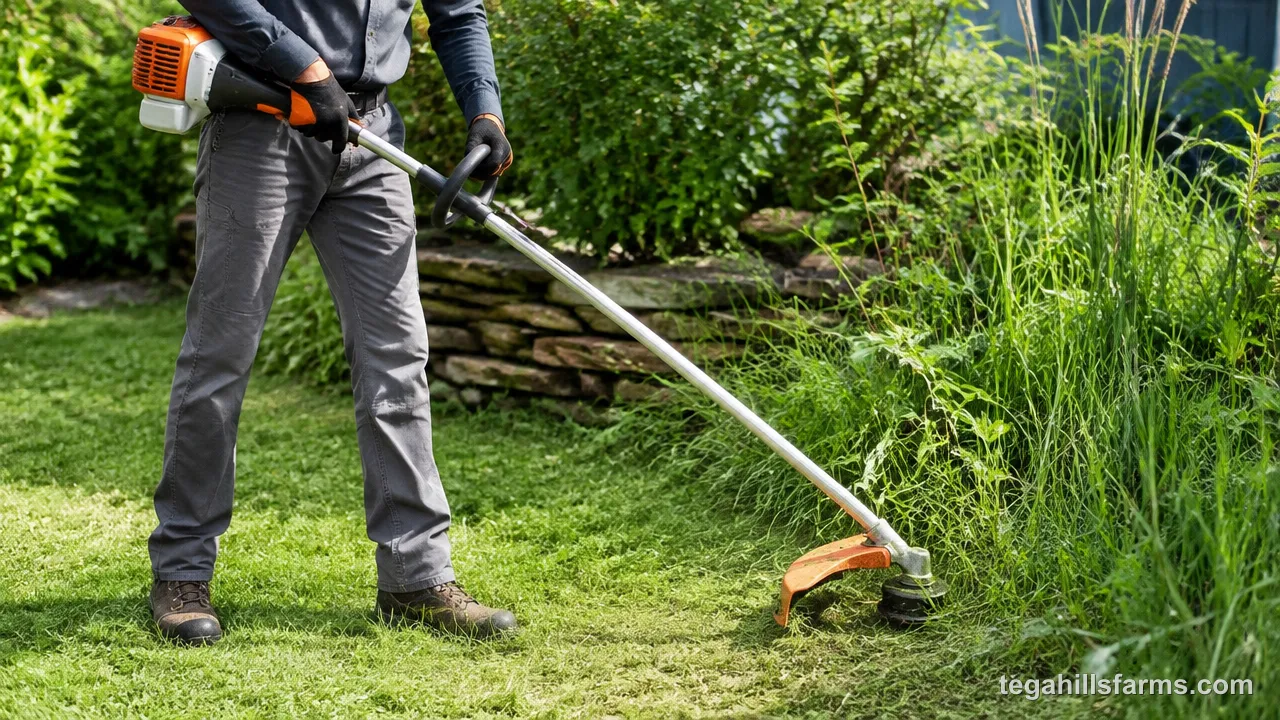
Many people call it a weed eater or a weed wacker. The line flexes when it hits a hard surface instead of chipping like a metal blade, which is why you can work close to posts, rocks and the house foundation. The same flexibility sets its limit: the line cuts green, soft growth well but struggles with woody stems.
Reach for a trimmer after the mower has done the open lawn. It handles the strips along walls, the grass around mailboxes and trees, ditch banks, and the edges of patios. A dedicated edger cuts a deeper, sharper trench along concrete with a steel blade. For most homeowners, though, a trimmer turned on its side edges well enough that a second tool isn’t worth the storage space.
Once you know where a trimmer fits into your routine, the next step is learning how to choose a string trimmer that suits your yard size and the density of the growth you cut.
What Safety Gear and Preparation Do You Need?
Put on safety glasses, long pants, closed-toe shoes and ear protection, then clear the work area of rocks, toys and loose debris before you start the motor.
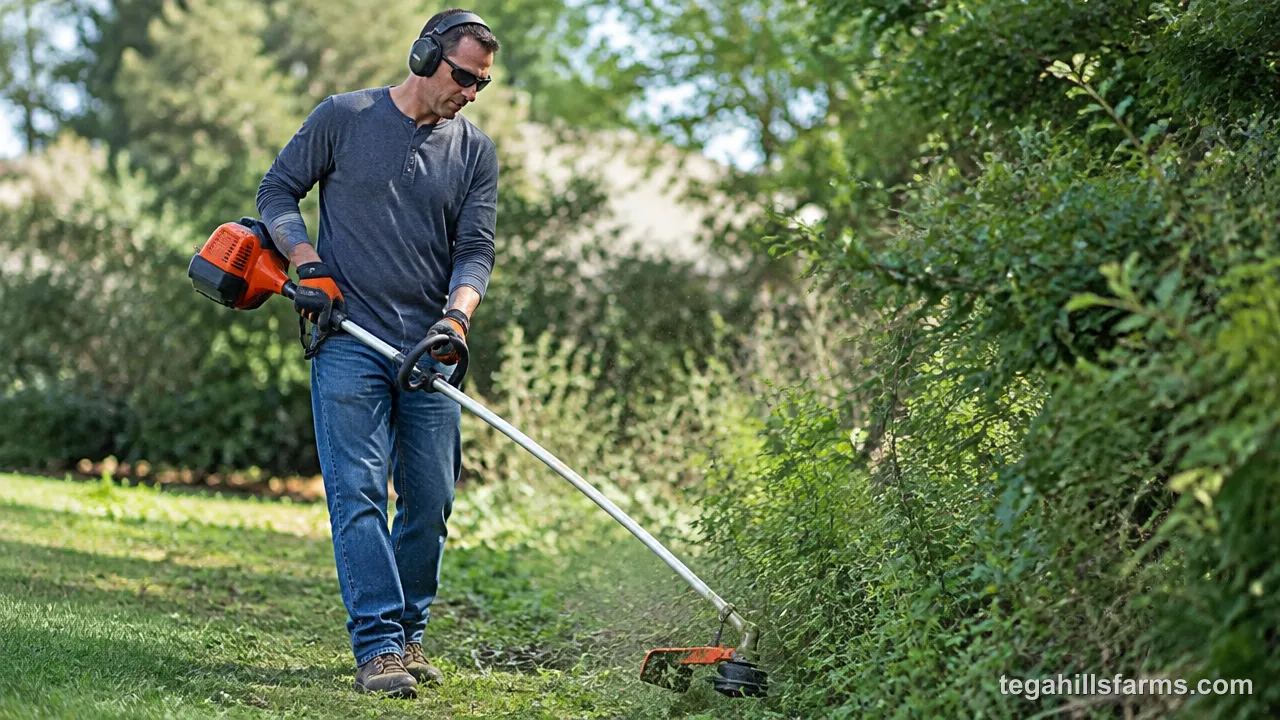
Eye protection matters most. The line flings pebbles, wood chips and clippings at face height, and regular eyeglasses leave the sides of your eyes open. Long pants and sturdy closed-toe shoes protect your shins and feet, which sit closest to the trimmer head. Ear protection is essential with gas models, and still a good idea with battery and corded trimmers on longer jobs, because the whine of the line adds up over time.
Walk the area first and pick up stones, dog toys, wire and sticks. The spinning line turns anything loose into a projectile. Check that the trimmer head is secure and that enough line extends from it. Charge the battery or fill the tank with fresh fuel, and keep children and pets well away while you work.
How Do You Trim Grass and Weeds With a String Trimmer?
Clean trimming depends on controlling the trimmer head’s height and angle, because the line cuts whatever it touches: grass, tree bark, vinyl siding or bare soil.
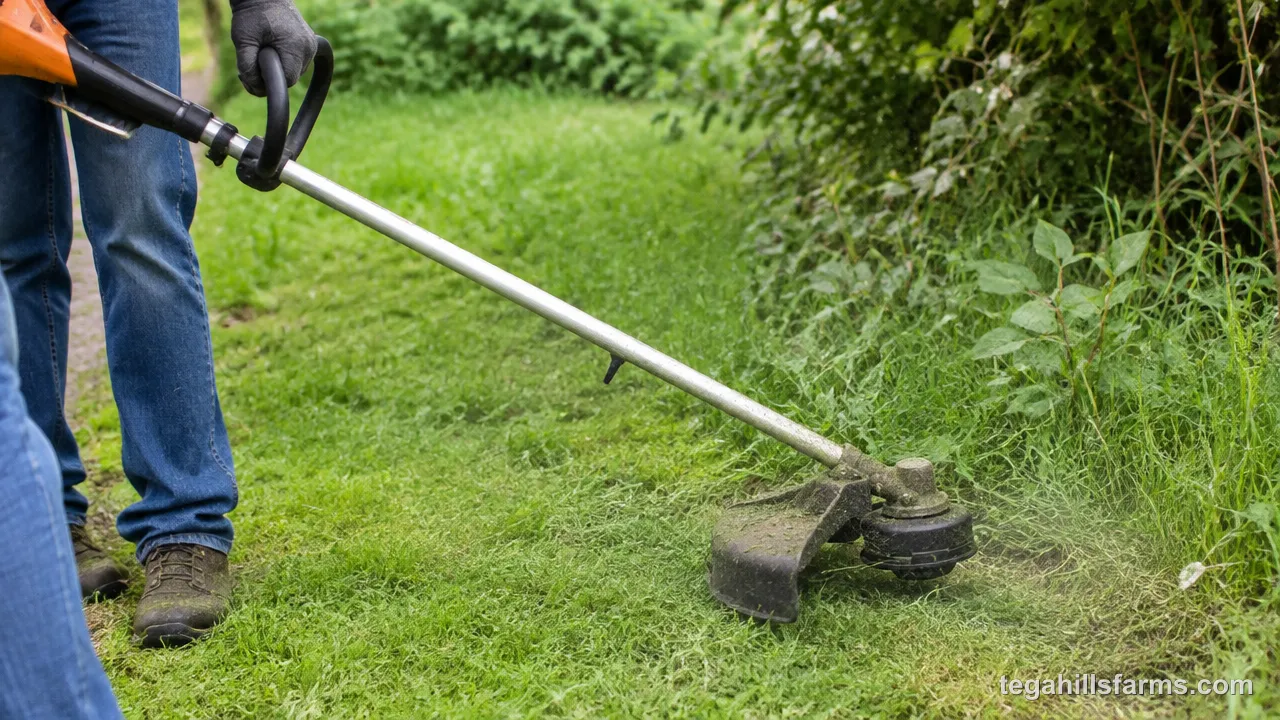
That makes your grip and your movement the whole job. The same trimmer can leave a neat strip along a fence that blends into the mowed lawn, or a bald, uneven band that takes weeks to grow back. Control also protects the tool. A head that bounces off brick, a foundation or a chain-link fence chews through line fast and can crack the plastic housing, so a steady stance and an even pace pay off in less time spent reloading line.
Hold the Trimmer at the Right Angle
Hold the rear handle with your dominant hand on the trigger and your other hand on the front assist handle. Keep the shaft angled so the trimmer head runs nearly level with the ground, at the height your mower leaves the grass.
Adjust the assist handle until you can stand upright with your arms relaxed. A hunched stance tires your back and makes the head dip without you noticing. Keep enough ground clearance that the line never touches soil during normal trimming.
Near obstacles, let only the tips of the line reach the fence post or wall. Pushing the head itself against a hard surface wears the line down quickly and scuffs both the trimmer and whatever it hits.
Use a Sweeping Motion to Cut Evenly
Move the trimmer head in a smooth side-to-side arc in front of you, overlapping each pass slightly so no uncut strips remain. Walk forward slowly and let the line do the work instead of pushing the head into the grass.
Cut with the outer tips of the line. The tips travel fastest because they sit farthest from the center of the head, so they slice grass cleanly. Burying the whole cutting width in grass slows the line speed and tears the blades instead of cutting them.
Check which way your trimmer head spins. Cut on the side of the arc that throws clippings away from you and away from beds or driveways you want to keep clean. For tall grass, take it down in layers from the top rather than cutting at the base in one pass.
How Do You Edge a Lawn With a String Trimmer?
A clean edge depends on keeping the line vertical at a 90-degree angle to the pavement and holding that angle along the full length of the border.
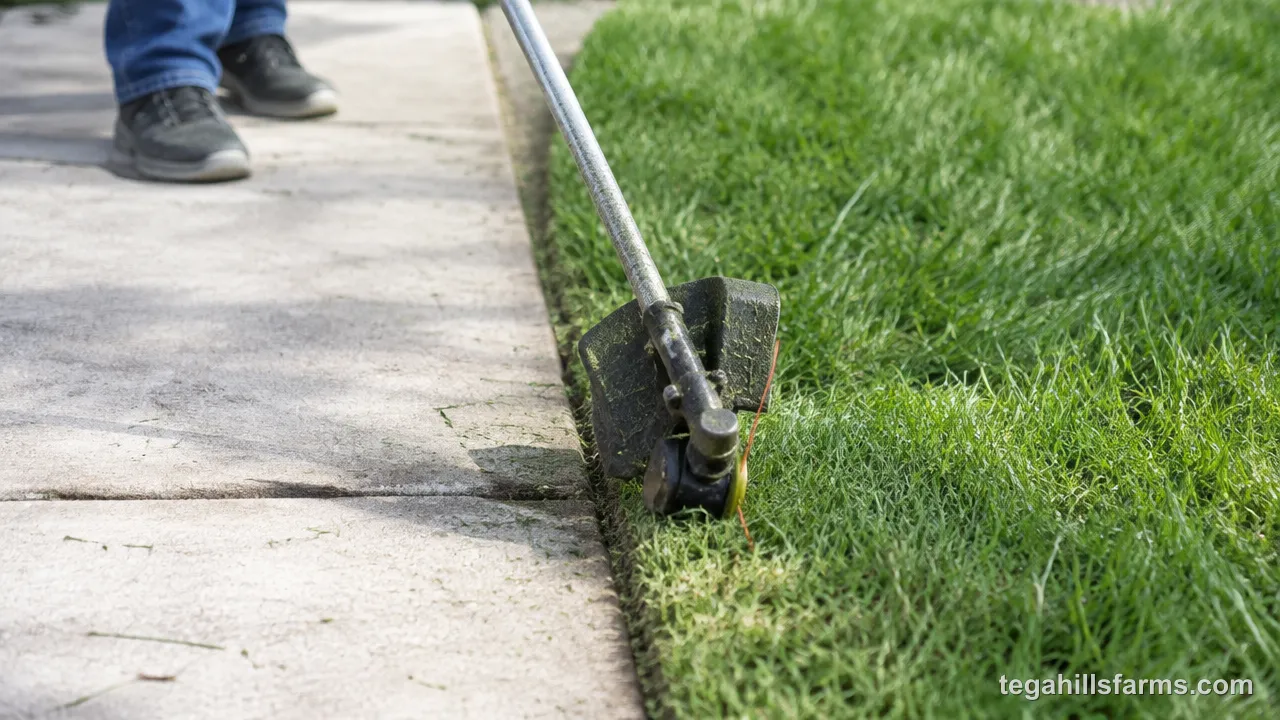
Any tilt shows up as a slanted, ragged edge where grass creeps back over the concrete within weeks. A crisp vertical cut along sidewalks and driveways is what makes a freshly mowed yard look finished, and once the first edge is set, keeping it sharp takes only a quick pass every few mowings. The switch from trimming to edging changes how you hold the tool, where debris flies and how fast you walk.
Rotate the Trimmer Head to a Vertical Position
Turn the trimmer so the head stands on its edge and the line spins vertically, cutting at a 90-degree angle to the ground instead of parallel to it. Some trimmers have a rotating shaft or head made for this; with others, you simply roll the whole tool in your hands.
Position the line directly over the seam where the grass edge meets the pavement. Keep the guard between you and the line.
Watch where the line throws debris before you start. Edging pulls up sand and small stones from the pavement, so set your stance so that material flies toward the lawn, away from your legs and away from parked cars and windows.
Walk Steadily Along the Edge
Walk at a slow, even pace and keep the line touching the grass edge at the same depth the whole way. Stopping and starting leaves gouges, and rushing makes the line drift into the lawn.
Use the hard edge of the sidewalk or driveway as your guide. If your trimmer has a wheel guard, let the wheel ride on the pavement to hold the line at a fixed depth. Let the line skim the seam rather than dig into it; digging throws soil and wears line without improving the edge.
Mulch bed borders are harder because there is no hard surface to follow. Slow down there, keep your eyes a step ahead of the head, and expect the line to throw some mulch onto the lawn.
How Do You Load and Feed Trimmer Line?
Trimmer line wears down as it cuts, and how you replace it depends on the feed system built into the trimmer head: bump-feed, auto-feed, or a fixed-line head you reload by hand.
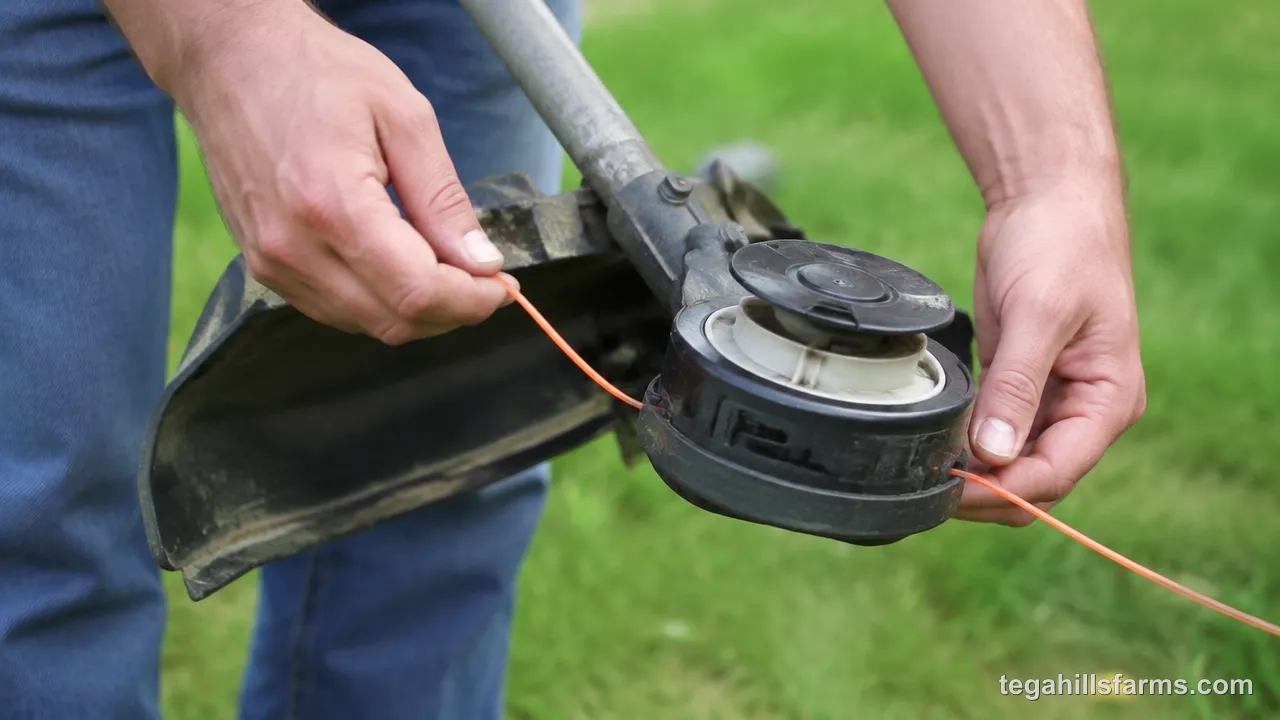
Keeping line at full length matters because short line cuts a narrower path and makes the motor work harder for a worse result. Feeding line during the job and reloading an empty spool are separate tasks. Reloading means winding fresh line tightly and evenly onto the spool in the direction of the arrow molded into it, and the full process of how to restring a weed eater covers the threading steps for common head designs.
Bump-Feed: Tap the Head on the Ground
With the motor running at full speed, tap the bump knob on the bottom of the trimmer head lightly against the ground. A spring mechanism briefly releases the spool, the spinning head pulls out more line, and a small blade on the guard trims it to length.
Tap on grass or soft soil rather than concrete, which wears the knob. Tap once, check the line length, and tap again only if needed, since extra taps just feed line straight into the cutoff blade.
If no line comes out, stop the motor before touching the head. Line that has worn too short or melted against itself on the spool won’t feed until you pull it free by hand.
Auto-Feed and EASYFEED: Line Advances Automatically
Auto-feed systems release more line without any tapping. BLACK+DECKER’s EASYFEED is a familiar example: the head detects when the line has worn short and lets out more on its own while you keep trimming.
The difference from bump-feed is mostly about attention. You never break your rhythm to tap the ground, and the line stays at a steady length, which helps beginners keep an even cut.
The tradeoff is that you notice less about how much line remains. Check the spool before each job so it doesn’t run empty halfway along a fence. Use the line diameter the manufacturer specifies, because auto-feed heads rely on the line winding and releasing smoothly.
What Mistakes Should Beginners Avoid?
Most beginner damage comes from holding the trimmer head too close to the soil or forcing the line into growth it can’t cut, and both hurt the lawn and the tool.
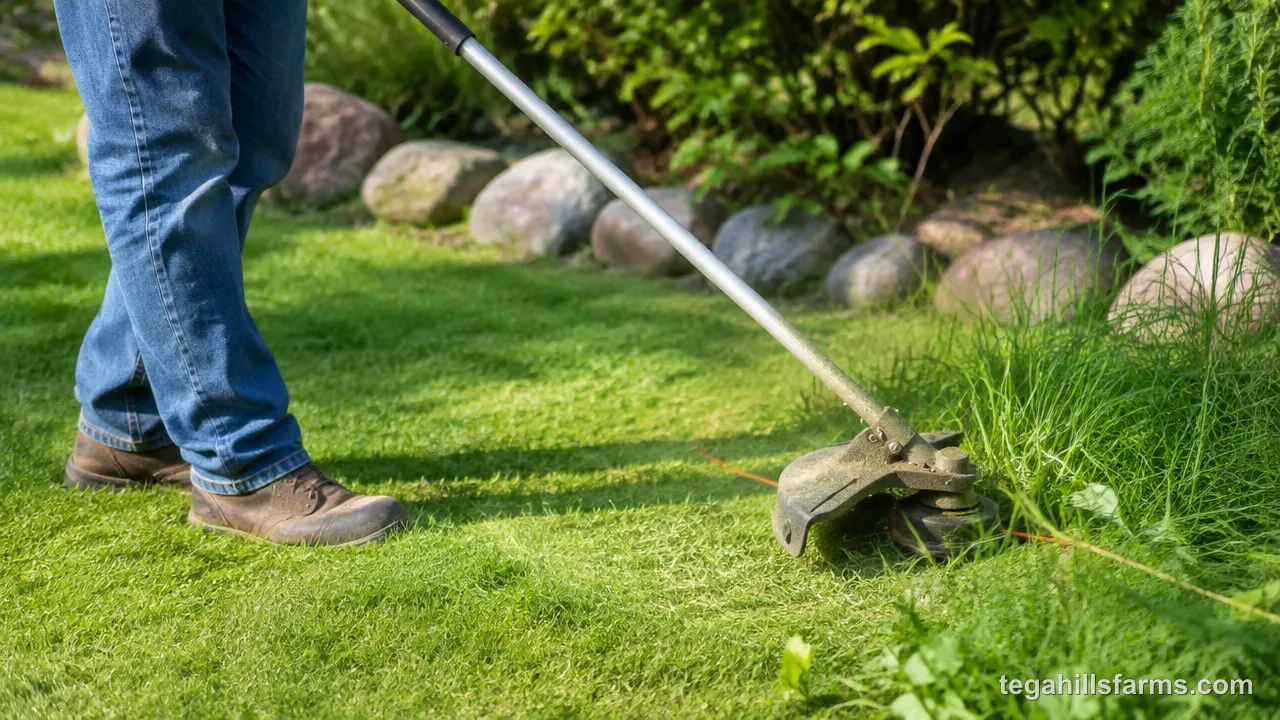
Smaller habits add to the wear. Running a gas trimmer at excessive throttle the whole time, letting the head bang against fences, and ignoring a motor that runs hot all shorten the trimmer’s working life. Neglect also catches up at the start of the next season, when a gummed-up carburetor is often the reason a string trimmer won’t start. The two errors that cause the most visible problems each come down to how you hold and move the tool.
Cutting Too Low and Scalping the Lawn
Scalping happens when the line cuts below the grass crown, the growing point at the base of each plant. Once the crown is gone, the leaf blades have nothing to regrow from, and bare soil shows through.
Those spots turn into brown patches that recover slowly, and exposed soil gives weed seeds an easy place to sprout. Scalping is most common on bumpy ground, where the head dips into low spots as you sweep.
Keep the head level at about the same height your mower leaves the grass, and lift slightly over humps and ridges. Tilt the head only at hard edges, where you actually want the line to cut lower.
Forcing the Trimmer Through Thick Growth
Pushing the trimmer head into dense weeds wraps stems around the head, slows the line, and makes the motor bog down. A gas engine can stall, and a battery trimmer may shut off under the load. Meanwhile the line wears fast and snaps against tough stalks.
The better approach is to cut tall, thick weeds from the top down in several shallow passes, letting the line return to full speed between them. A thicker line also handles tougher stems with less breakage.
When the stems turn woody, weighing a string trimmer vs a brush cutter makes sense, because nylon line isn’t built for brush and saplings.
A thin line that slices a suburban lawn cleanly can snap over and over against thick-stemmed weeds along a back fence, while a heavy line in a small trimmer slows the head enough to tear grass instead of cutting it. Running the wrong line for what grows in your yard turns a single afternoon of trimming into repeated stops to feed and rethread line.
Which Line Thickness Works for Different Vegetation?
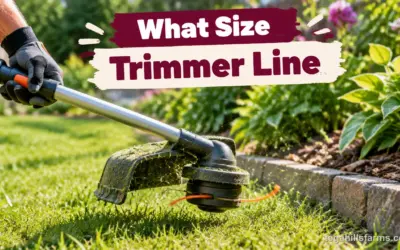
Thinner line, around .065 inch, works best on regular lawn grass and lighter trimmers, while thicker line, around .080 inch, lasts longer and handles dense weeds. Most homeowner trimmers use line in that range.
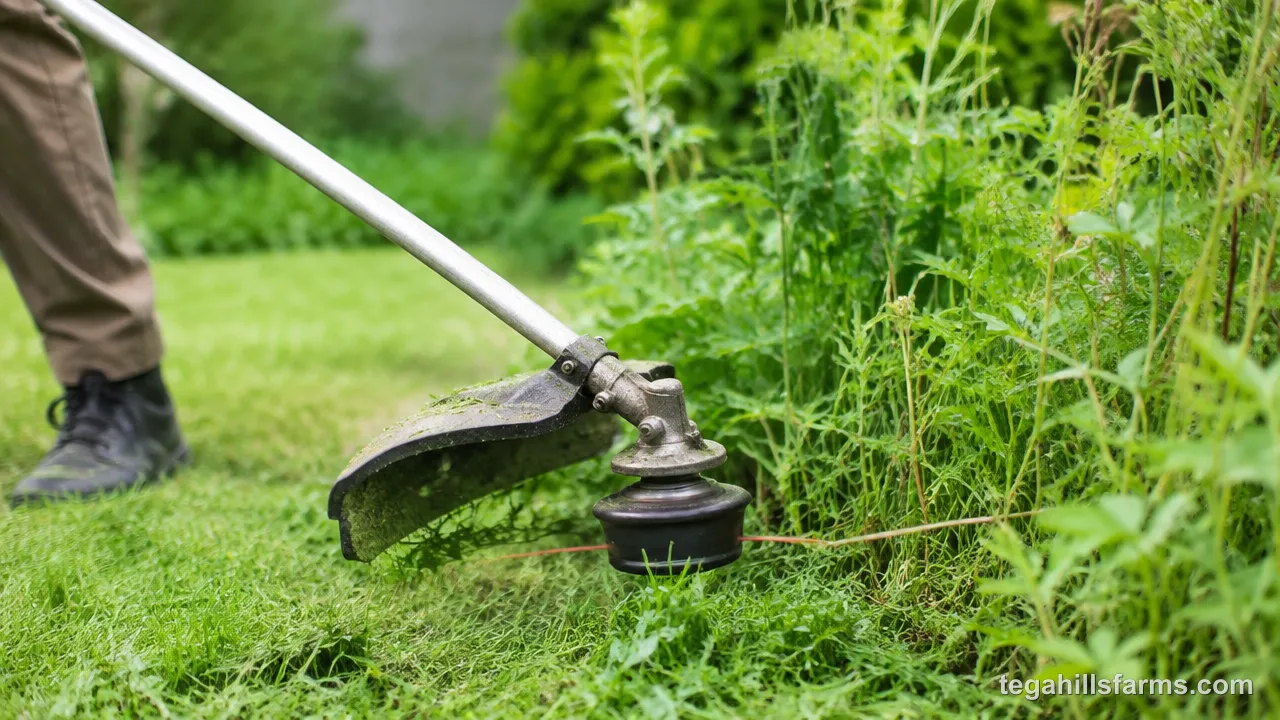
Thin line wins on clean cuts and light load. It spins up quickly, slices soft grass neatly, and puts less strain on smaller battery and corded motors, which helps runtime.
Thick line wins on durability. It resists breaking against tough stalks, fence wire and rough ground, so you stop less often to feed more. The cost is extra load on the motor, so a light trimmer may lose speed with it.
Switch to a thicker line when you find yourself feeding line every few minutes in weedy areas. Stay within what the head allows; your trimmer’s manual lists what size of trimmer line it accepts, and line that’s too thick can jam the spool or overload the motor.
Should You Use a Corded or Cordless Trimmer?
A corded trimmer suits small yards near an outdoor outlet, while a cordless trimmer suits larger lots and yards with many obstacles to work around.
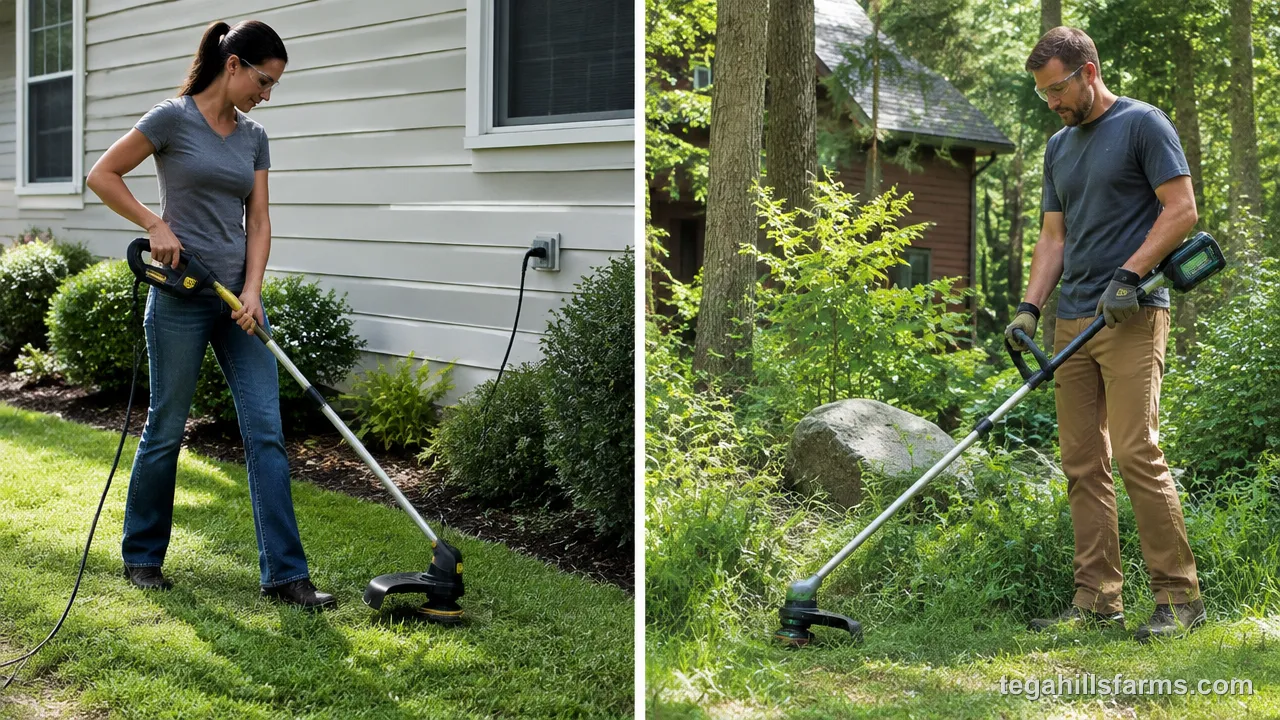
Corded models give you steady power with no runtime limit and tend to be light, because there is no battery to carry. The drawback is the extension cord: it limits how far you can reach, it snags on shrubs and corners, and you have to keep it clear of the spinning line. Plug into a GFCI outlet and use a cord rated for outdoor use.
Cordless models let you move freely across the whole yard. Runtime depends on the battery, so a larger yard may call for a spare. If you already own tools on the same battery platform, sharing batteries makes cordless the easier pick. On bigger properties gas often enters the picture too, and gas vs battery string trimmers is its own tradeoff in power, noise and upkeep.
How Should You Store and Maintain Your Trimmer?
Clean the trimmer after every use, store it dry and level, and prepare the battery or fuel system before the off-season.
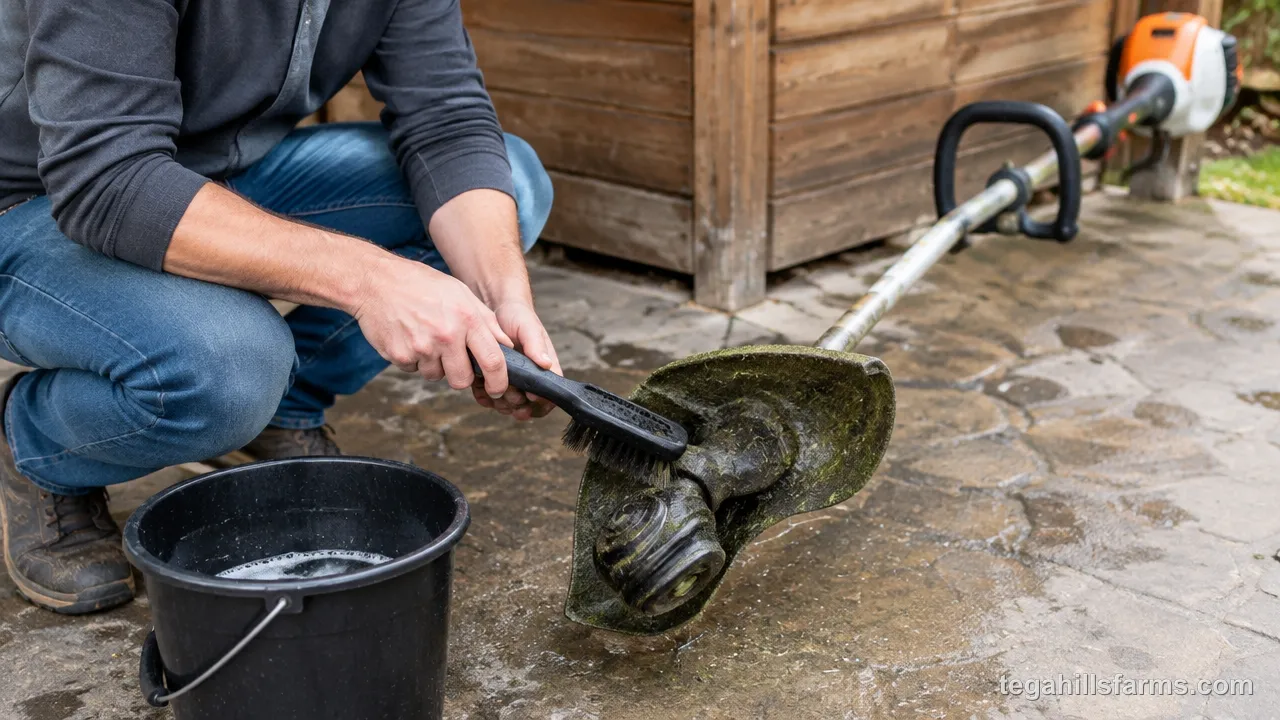
After each job, shut off the motor or remove the battery, then brush grass and debris off the trimmer head, guard and motor housing. Keep the ventilation slots clear, because packed clippings trap heat and make the motor run hot.
Store batteries indoors at moderate temperatures rather than in a freezing or sweltering garage, and follow the manufacturer’s guidance on charge level for long storage. For gas trimmers, add fuel stabilizer before the last run of the season or drain the tank as the manual directs, since stale fuel is a frequent cause of hard starting in spring.
Hang the trimmer by the shaft or lay it flat in a dry spot so the shaft doesn’t bend and fuel doesn’t leak. These habits weigh heavily on how long string trimmers last.
Frequently Asked Questions
How loud is a string trimmer?
Gas string trimmers are the loudest type, which is why ear protection is standard with them. Battery and corded models run noticeably quieter, but the high-pitched sound of the spinning line still wears on your hearing during long sessions. Many towns also limit when you can run yard equipment, so check local noise rules.
How do you use a string trimmer on a slope?
Work across the face of the slope with both feet planted and your weight balanced, rather than reaching up or down. Avoid trimming wet grass on a hill, since footing gets slippery fast. On heavier trimmers, a shoulder strap or harness takes weight off your arms and helps you keep the head level.
How often should you replace trimmer line?
There is no fixed interval; it depends on how long you trim and what you cut. Feed more line whenever the cut slows or the line no longer reaches the guard’s cutoff blade. Reload the spool once it runs empty, and replace old line that has turned stiff or brittle in storage.
How long can you run a string trimmer at one time?
A battery trimmer runs until the battery is depleted, and a gas trimmer runs until the tank is empty. If the motor housing feels very hot, stop and let it cool. Short breaks also help your hands and arms, because the vibration from a running trimmer adds up over a long job.
Does trimmer line go bad?
Nylon trimmer line can dry out and turn brittle when it sits in a hot garage or in direct sun for a long time. Brittle line snaps much more often during use. Store spare line in a sealed bag in a cool, shaded spot, and replace any that cracks when you bend it.

Write Your Review
No reviews yet. Be the first to share your experience!