

For most home gardens, a raised garden bed works best at 3 to 4 feet wide and 6 to 8 feet long, with at least 10 inches of soil depth for roots. That covers lettuce, herbs, carrots and most other common vegetables. You can go narrower, shorter or deeper when your space, crops or body call for it.
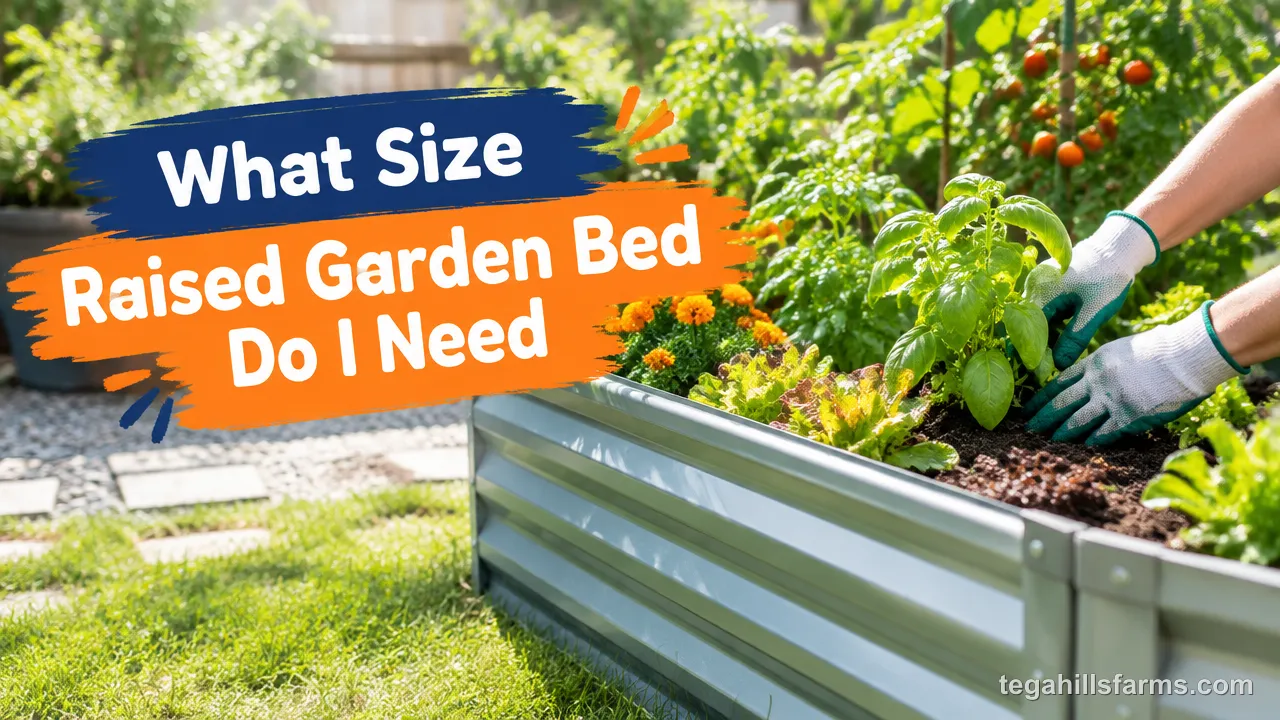
Each dimension has its own job. Width controls whether you can reach the middle of the bed. Height controls how much room roots get and how far you bend to tend them. Length mostly follows the shape of your yard, patio or side strip.
Sizing mistakes are hard to fix later. A bed that’s too wide gets stepped on, and stepping packs down the soil. A bed that’s too shallow for your crops limits their roots. A bed that’s bigger than you need costs more to fill.
Before you settle on numbers, find a spot that gets at least 6 hours of direct sun a day. Then measure what fits there. A well-sized bed in a shady corner will still grow weak, leggy plants.
What Is the Best Width for a Raised Garden Bed?
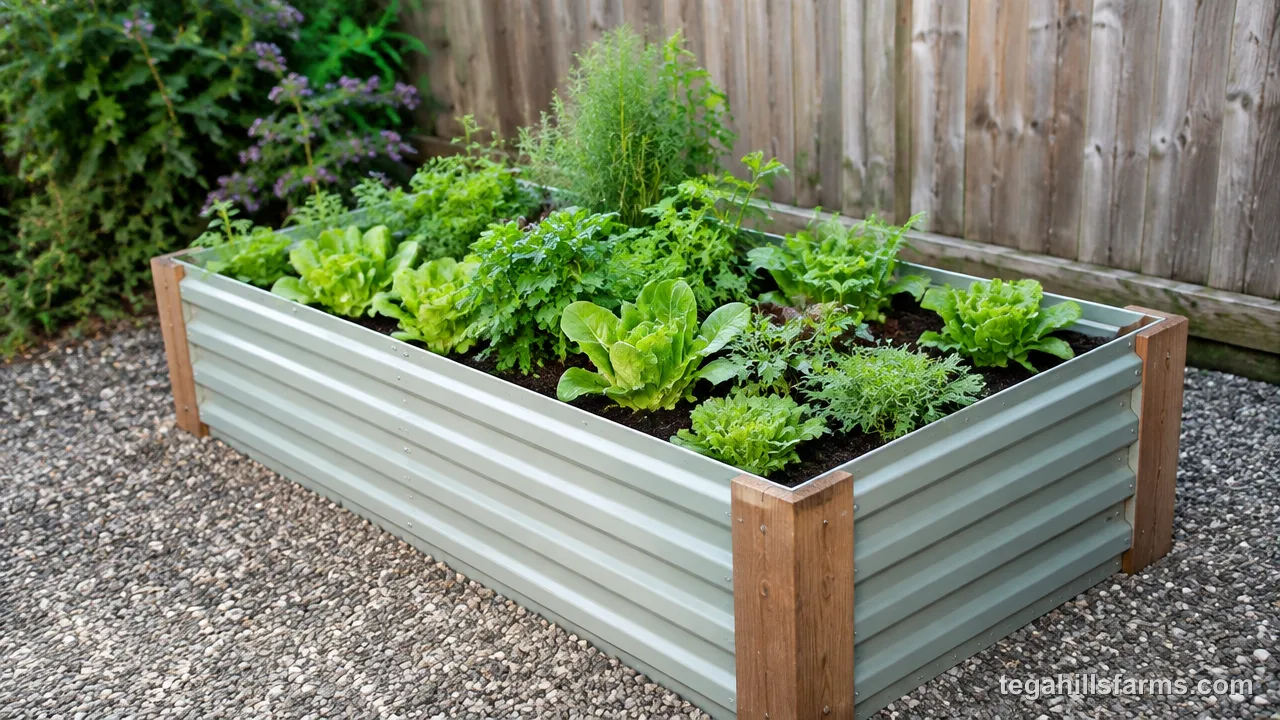
2 to 4 feet wide suits most raised beds, because in that range you can reach the center from the path without stepping onto the soil. Width is one of the first decisions to settle when you work out how to choose a raised garden bed, because it decides whether you can reach the center without stepping on the soil. The deciding factor is how many sides of the bed you can walk up to. A bed you can circle can be wider than one pushed against a fence. Getting this right protects the soil structure that roots depend on, and it saves your back from awkward stretches every time you weed or harvest.
Why 4 Feet Works for Most Gardeners
A bed about 4 feet wide lets you reach its middle from either side, but only when you can get to the bed from all four sides. Each arm only has to cover half the width, so you can plant, weed and pick without leaning hard or putting a knee down in the bed.
That matters because stepping on the growing area compacts the soil. A footprint crushes the air pockets that carry water and oxygen down to the roots. The packed soil drains slowly and makes roots push harder to spread.
Beyond 4.5 to 5 feet, the plants in the center are usually too hard to reach. At that point gardeners end up stepping in, and the compaction the bed was built to avoid comes back.
When to Use a 3-Foot Width
A bed against a fence, wall or house only opens from one side. For that layout, 2 to 2.5 feet keeps the back row within a single comfortable reach. A wider bed puts the back plants out of reach, and those are the ones that get missed at harvest.
A 3-foot width sits at the narrow end of the home-garden range. It works for beds you can reach from both sides when space is tight, such as along a patio edge or down a skinny side yard. It also suits gardeners with shorter arms.
For very narrow strips, don’t go below about 18 inches wide. Under that, there isn’t enough soil across the bed to hold moisture or fit more than one row of plants.
How Tall Should a Raised Garden Bed Be?
Most vegetables grow well in a bed about a foot tall, while deep-rooted crops and gardeners who want to stop bending need a taller bed. Height does two jobs at once: it sets the root room your crops get and how far you stoop to reach them. Root depth is the bigger half of that decision. The details of how deep a raised garden bed should be come down to what you grow and what sits under the bed. Open ground lets roots grow down into native soil, while concrete or gravel caps them at the bed’s floor. Comfort is the other half. The right height for your body decides whether tending the bed feels like a chore or a pleasant ten minutes after work.
12-Inch Beds for Most Vegetables
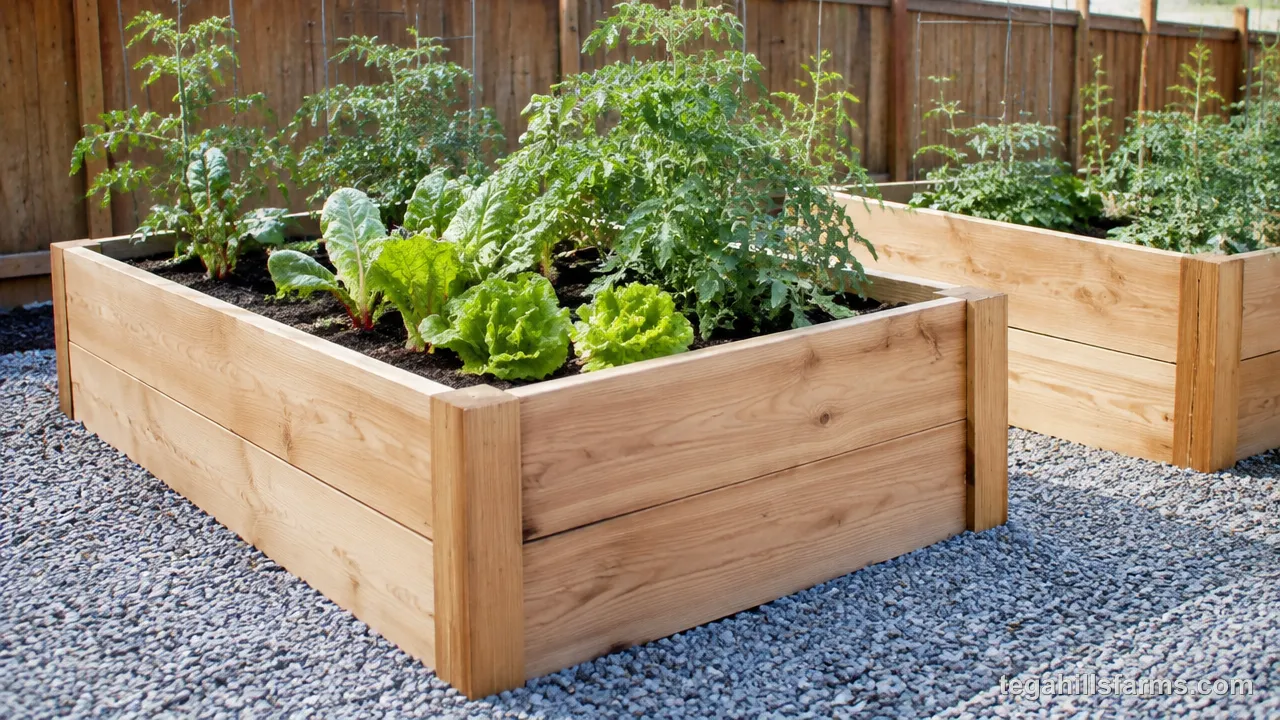
A bed around a foot tall holds the soil depth most vegetable roots need. Most crops do their feeding in the top 6 to 12 inches of soil. Built over open ground, a foot-tall bed also lets longer roots keep going down into the earth below.
The most popular height is 11 inches, which is two stacked 2×6 boards. That’s why so many kits and DIY plans land near a foot.
Lettuce, herbs and most leafy crops fill this height easily, and many fruiting crops manage it when they can root into the ground underneath. A shorter bed also takes less soil to fill, and soil is often the largest cost of a new bed. Beds can go as low as 6 inches, but that only suits the shallowest crops.
Deeper Beds for Root Crops and Accessibility
Go taller when your soil, your crops or your back call for it. Beds of 18 inches or more drain better than lower ones. That makes the extra height useful over heavy clay, which holds water and can need more depth above it. A bed on concrete or gravel has no ground soil for roots to reach, so plan for 24 inches or taller there.
Root crops gain from that loose depth too. Carrots manage in a foot of good soil, but parsnips grow longer, and both form straighter roots when they never hit a compacted layer.
Comfort is the other reason to build up. A 2-foot (24-inch) bed brings the soil close enough to work from a stool or while standing slightly bent. I’d lean toward that height for anyone who finds kneeling hard or gets back pain after a long session of weeding.
What Length Should You Choose?
Length is the most flexible dimension: 6 to 12 feet covers what most gardeners build, and it should follow your available space and how far the side boards can span without bracing. Length doesn’t change how far you reach, so it rarely affects how the plants grow. What it does affect is how far you walk to get around the bed, how the bed fits your site, and whether the long walls hold their shape once they’re full of wet soil. Those two practical limits, space and structure, settle the number for most gardens.
Length Depends on Your Available Space
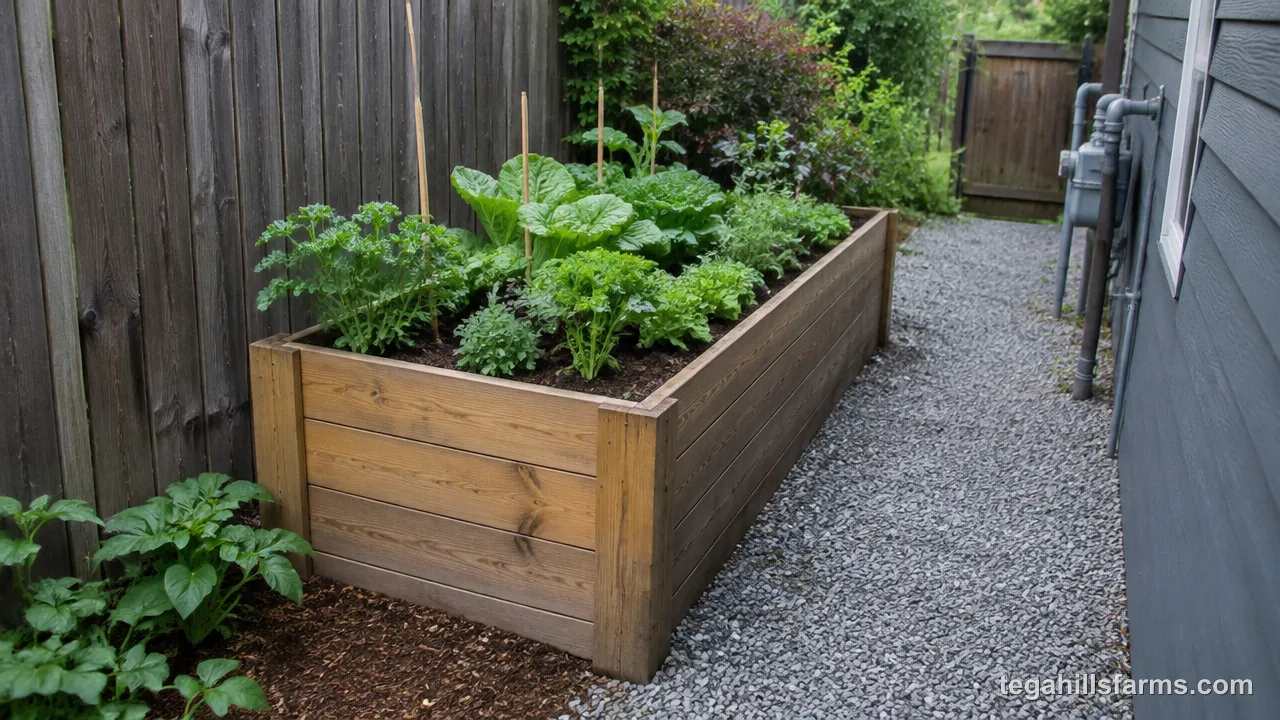
Measure the footprint you can spare and let length fill it, leaving room to walk around the bed. A bed’s productivity comes from its square footage. Two short beds grow as much as one long bed of the same total area.
Shorter beds suit patios, balconies and small yards, where a long frame would block a doorway or a path. The shorter end of the common range is an easy place to start. You can always add a second bed later.
Very long beds have a hidden cost. Walking all the way around a long bed to reach the far side gets tedious, and that’s when people start stepping across the soil instead. Leave clear paths at both ends so you can get around the bed easily.
Why 8 Feet Is a Common Standard
A 4-by-8-foot bed is the classic optimum footprint, and lumber explains why. Boards are commonly sold in 8-foot lengths. One board makes a full long side, and a second board cut in half makes both short ends, so nothing gets wasted.
Cedar and redwood are popular for these frames because they resist rot outdoors without chemical treatment. That matters when you grow food in the bed.
The limit on length is bowing. A full bed of damp soil pushes outward on the long walls, and the middle of a long board flexes first. Longer spans need a cross brace or a stake at the midpoint. Planning that support before you cut is part of learning how to build raised garden beds that stay square for years.
What Size Works for Different Crops?
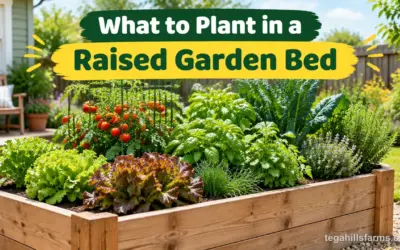
Crop roots set the depth: leafy greens, radishes and herbs fit a shallow bed, while tomatoes, squash and corn need a deeper one. Width and length depend more on how many plants you want, since most need at least 6 to 12 inches of space around each plant. Working out what to plant in a raised garden bed before you build saves you from finishing a frame that’s a few inches short of what your favorite crop wants. If you grow a mix, size the bed for the deepest-rooted crop on your list. Shallow crops will grow happily in extra depth, but deep crops struggle in a shallow bed.
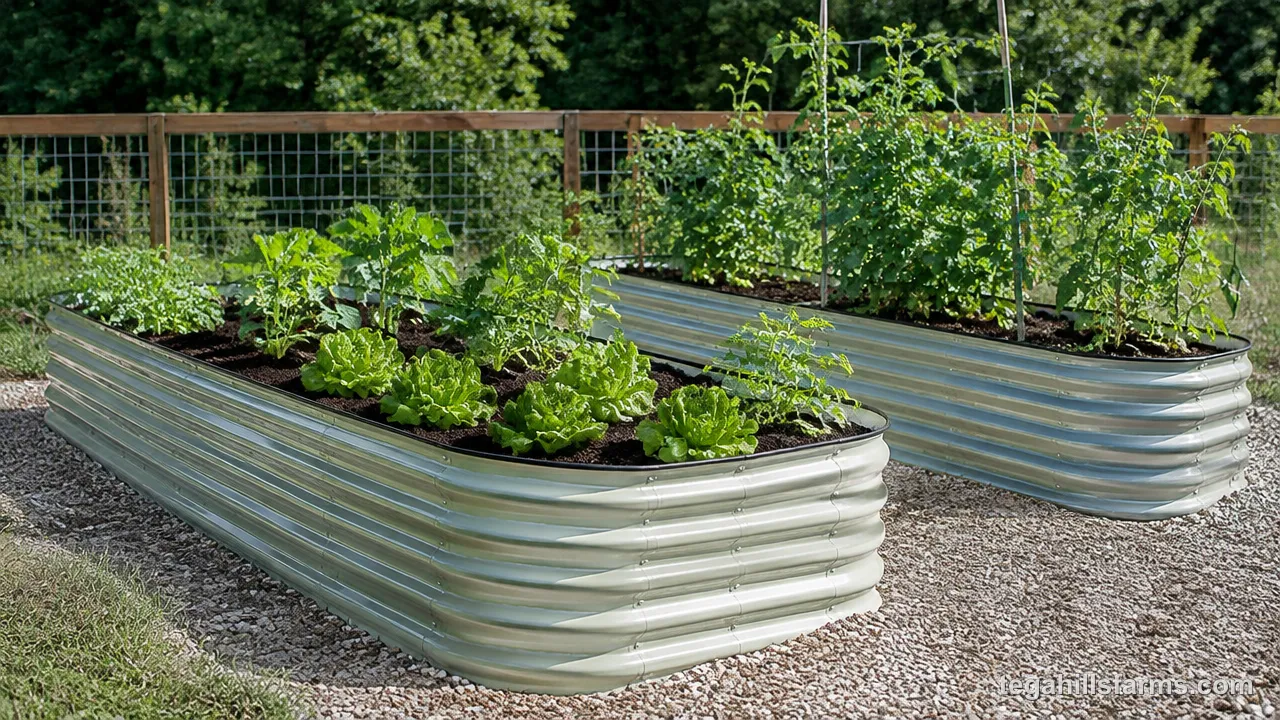
Beds for Shallow-Rooted Crops
Lettuce, radishes and herbs grow well in beds just 6 to 11 inches deep. Spinach, basil and cilantro fall in the same group. Their roots stay near the surface, so more depth adds soil cost without adding harvest.
These crops reward width more than height. Greens are often sown in dense rows or blocks and harvested over and over, so a bed you can reach across easily matters more than one you can dig deep into.
A shallow salad bed also dries out faster in summer heat, because there’s less soil to hold moisture. Mulching the surface and watering a little more often keep greens from bolting when the soil swings between wet and dry.
Beds for Deep-Rooted Crops
Tomatoes, peppers and cucumbers do best in beds 16 to 22 inches deep, which covers most vegetable gardens. Corn, winter squash and asparagus want 24 inches or more, and some vegetables need at least that much soil to reach full size.
Extra depth pays off in steadier moisture. Deep soil holds water longer and stays cooler around the roots in summer, which means fewer split tomatoes and less stress between waterings. Asparagus is a perennial that stays in place for years, so building deep from the start spares you from rebuilding later.
Potatoes also gain from a deeper bed, because you hill soil up around the stems as they grow. A tall frame gives that soil somewhere to go instead of spilling into the path.
How Do Accessibility Needs Change Bed Size?
Compared with a standard bed, an accessible bed is taller, narrower, or both, sized to the gardener’s reach rather than to the crop. A standard bed assumes someone who can kneel, bend and walk all the way around it. Change any one of those, and the right size changes with it. A seated gardener reaches from one side at a fixed height. A child reaches a shorter distance and needs to see into the bed. In both cases, measuring the actual gardener’s comfortable reach beats any standard dimension, because a bed that fits its user gets tended every day.
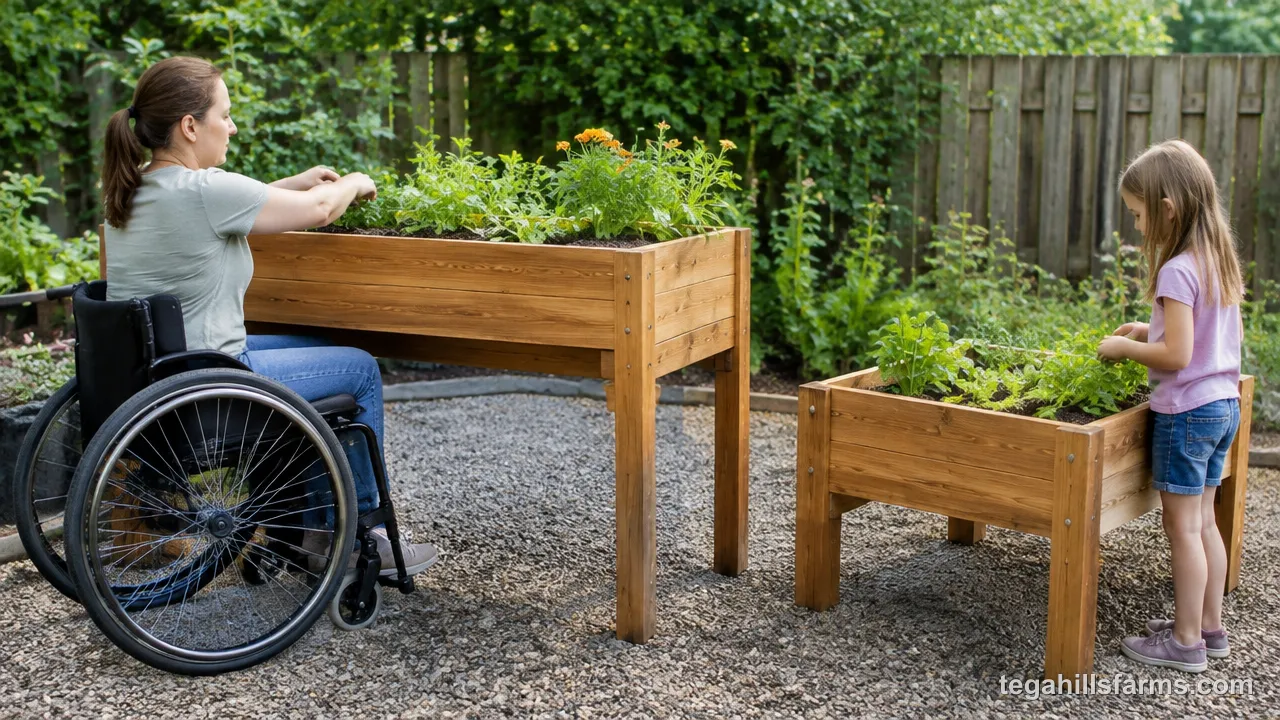
Beds for Wheelchair Users
A wheelchair user needs either a taller bed they can pull up beside, or a tabletop bed with open space underneath for their knees. A bed around 24 inches tall brings the soil within easy reach of the side of the chair. A tabletop bed on legs lets the chair roll underneath, so the gardener can face the bed straight on.
Width matters more here than for a standing gardener, since all the reach comes from one side. Build within the single-side width, and check it against the gardener’s own seated reach before you cut any boards.
Tabletop beds are usually shallow, which makes them a good fit for greens, herbs and strawberries rather than deep-rooted crops.
Beds for Children
A low, narrow bed lets children reach every plant and see what’s growing. A bed near the 6-inch minimum height suits small kids. A 2-foot width, at the narrow end of the usual range, keeps the middle within reach of short arms.
Fit matters because frustration ends a child’s interest fast. If they can’t reach the far side, they step in, crush seedlings and lose track of what they planted.
Fill a kids’ bed with quick, shallow crops like radishes and lettuce. Those show results within weeks and don’t need the depth of a full vegetable bed. As children grow, the bed can be raised with another layer of boards.
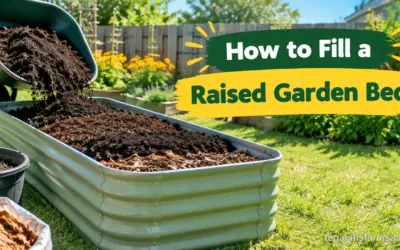
Soil goes in by the cubic foot, and a bed that looks modest on the lawn swallows far more mix than its footprint suggests. If you guess, you find out on planting day, with half the bed filled and seedlings wilting in their trays while you drive back to the garden center.
How Much Soil Do You Need?
To find the soil volume in cubic feet, multiply the bed’s length by its width by its depth, with all three measured in feet. Convert the depth first: 12 inches is one foot, so divide the depth in inches by 12. Bagged soil is labeled in cubic feet, so divide your total by the bag size to get the number of bags.
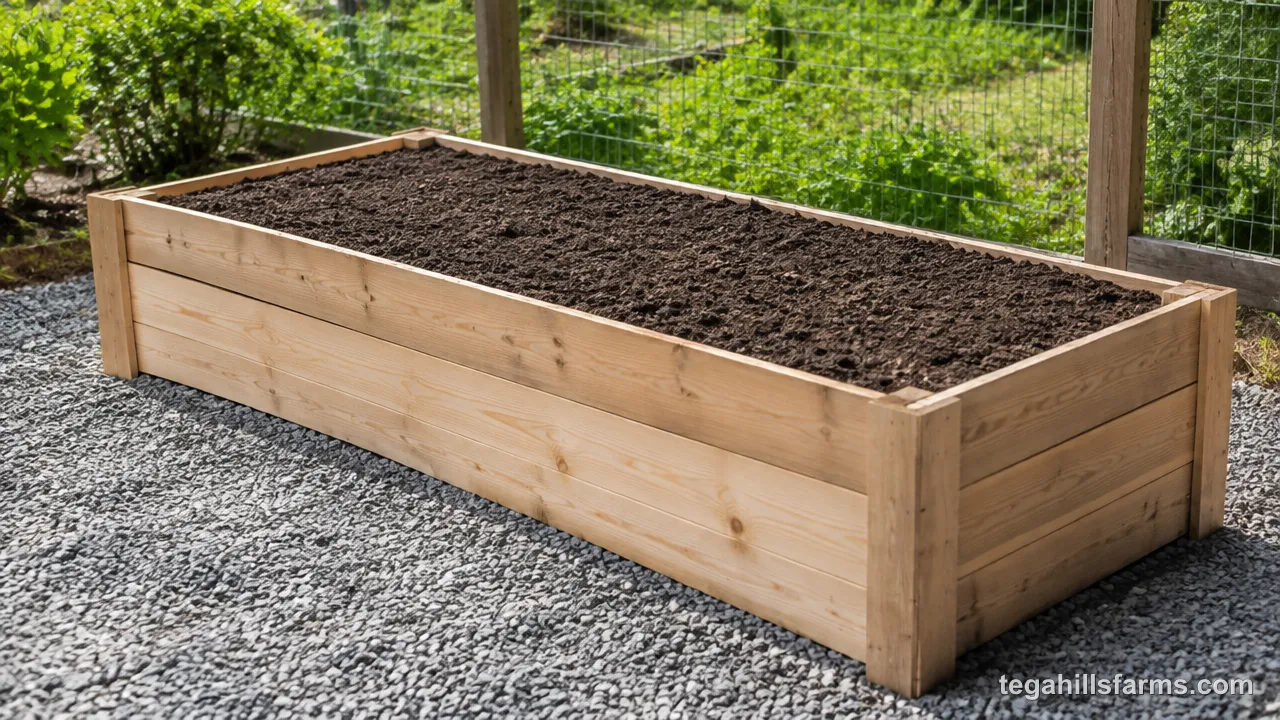
That total also tells you how to buy. Under 27 cubic feet, which is one cubic yard, bags usually make more sense than a bulk delivery. Above that, a truckload is easier to handle than a stack of bags.
Plan for a little extra. New soil settles after the first few waterings and leaves the bed lower than you filled it. For deep beds, a layer of coarse organic material in the bottom cuts the volume of mix you buy. That approach is part of how to fill a raised garden bed without overspending.
What About Multiple Beds and Pathways?
Make paths between beds wide enough for whatever you’ll move through them: a wheelbarrow, a garden cart, a wheelchair, or simply you kneeling down. Measure your wheelbarrow at its widest point and add room for your hands. A path you can’t roll a full load down means carrying compost by the bucket.
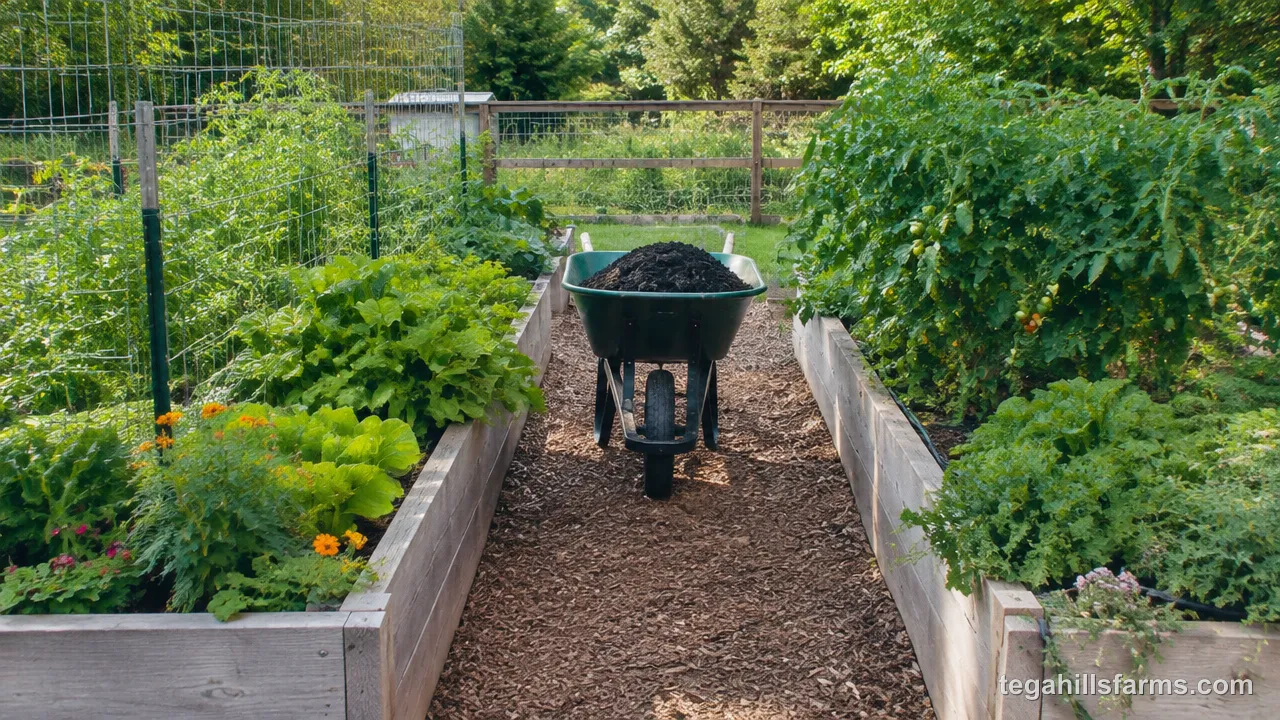
Tight paths look efficient on paper, but they cause problems in practice. Sprawling squash and tomato branches spill over the edges, and the walkway disappears by midsummer. Leave more room beside beds of sprawling crops and less beside tidy beds of greens.
Lay out beds so the tallest crops don’t shade the shorter ones through the afternoon. Mulching or graveling the paths keeps mud off your boots and keeps grass from creeping into the bed walls.
What Sizing Mistakes Should You Avoid?
The most common mistake is building too wide. You end up stepping in to reach the center, which compacts the soil, and weeds in the unreachable middle go to seed before you notice them. A reachable width is the first step in how to stop weeds in raised garden beds.
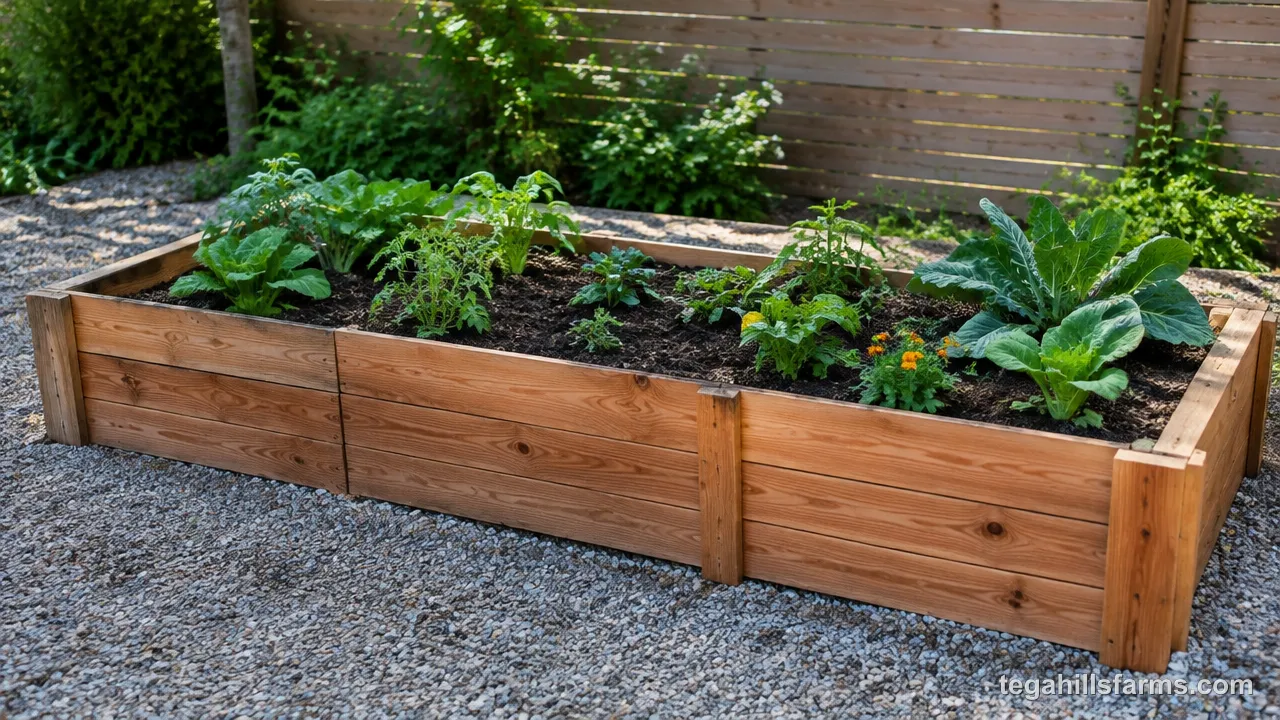
Building too shallow over hard ground is the next problem. Roots hit a dense floor, water pools above it, and plants stay stunted all season.
Long beds without a midpoint brace bow outward once the soil is wet. Fixing that later means unloading the soil and rebuilding the frame.
A bed that’s too low for your body leads to back strain. Over time, a sore back turns into skipped weeding and late harvests.
Reachable, comfortable beds also make it easier to check leaves and stems every day. That daily look is the backbone of raised garden bed pest control, since problems caught early stay small.


Write Your Review
No reviews yet. Be the first to share your experience!