

The 6 best chainsaws for large properties of 2026 are the EGO Power+ CS2005 20 in (Best Overall), the Husqvarna 460 Rancher 24 Inch (Best Easy-Start), the NEO-TEC NS872 72cc 28″ Chainsaw (Best Performance), the Baococo 62cc 20 Inch Chainsaw (Best All-Season Tool), the Husqvarna 555 (Best Premium), and the Husqvarna 450 Rancher 20″ Chainsaw (Best Ergonomic Design). These machines deliver the power, bar length, and durability needed to handle tree felling, storm cleanup, and firewood processing across multiple acres without the limitations of suburban homeowner models.
Choosing the right chainsaw for large property work comes down to bar length, engine displacement, and sustained cutting capacity. A 20-inch bar handles most mature trees in a single pass, while 24 to 28-inch bars reach the larger diameter hardwoods common on rural land. Engine size matters because property work often involves dense wood and repetitive cuts that stress smaller engines.
Most large properties demand either gas chainsaws with 50cc-plus engines or battery models with runtime and power output equivalent to mid-range gas saws. Gas models refuel in seconds and run as long as you have fuel on hand. Battery chainsaws eliminate mixing, exhaust, and pull-start effort, but runtime depends on amp-hour capacity and how hard you push the saw.


A chainsaw that cuts through 100 trees in a weekend needs better vibration control, easier starting, and more robust construction than a saw used twice a year. The difference shows up in anti-vibration systems, magnesium crankcases, and automatic chain oiling that keeps the bar lubricated through extended sessions.
What Makes a Chainsaw Suitable for Large Properties?
A chainsaw built for large properties combines bar length between 18 and 28 inches, engine displacement above 50cc, and construction that withstands sustained heavy use. Property owners who need sustained cutting power will find the right balance of bar length, engine output, and durability among the best chainsaws designed for heavy workloads. These machines handle tree felling, firewood processing, and land clearing that smaller homeowner saws cannot sustain. Bar length determines the maximum tree diameter you can cut in a single pass, while engine size dictates how much torque the saw maintains when the chain bites into hardwood under load. Large properties accumulate storm debris, overgrown fence lines, and mature trees that require the cutting capacity of professional-grade or farm-and-ranch models.
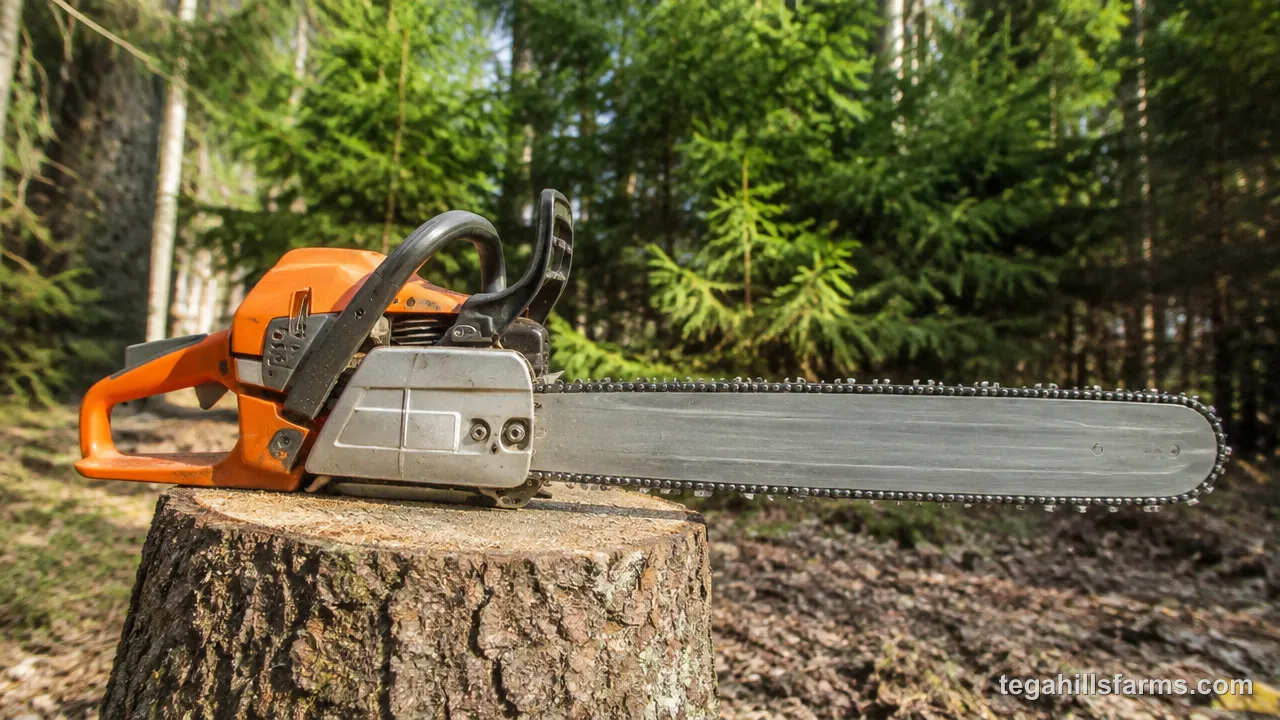
The 6 Best Chainsaws for Large Properties of 2026
The 6 best chainsaws for large properties of 2026 are the EGO Power+ CS2005 20 in, the Husqvarna 460 Rancher 24 Inch, the NEO-TEC NS872 72cc 28″ Chainsaw, the Baococo 62cc 20 Inch Chainsaw, the Husqvarna 555, and the Husqvarna 450 Rancher 20″ Chainsaw. Gas models offer instant refueling and unlimited runtime for all-day cutting. Battery power eliminates fuel mixing and exhaust while delivering comparable cutting speed. The 20-inch bar covers most property work, but larger diameter trees and heavy timber demand the reach of a 24 to 28-inch bar.
#1 EGO Power+ CS2005 20 in — Best Overall
The EGO Power+ CS2005 delivers gas-level cutting speed without fuel mixing or exhaust, powered by a brushless motor equivalent to a 55cc gas engine. The included 6.0Ah battery is rated for up to 135 cuts on a 6×6, enough for a full day of property work if you have a spare battery charged.
Key Specs:
- Power: 55cc gas equivalent brushless motor, chain speed up to 25 m/s
- Bar length: 20 inches (3/8-inch pitch, 0.050-inch gauge, 69 drive links, full chisel tooth chain)
- Battery: 56V 6.0Ah ARC Lithium, compatible with all EGO 56V batteries
- Features: digital display with speed select modes, battery charge status, safety brake indicator; LED work light; IPX4 weather resistance
- Weight: 30 pounds (with battery)
Detailed Review:
The 20-inch bar and full chisel chain handle large branches, stumps, and mature trees in a single pass. Chain speed reaches 25 m/s, matching the cutting performance of mid-range gas chainsaws without the weight and maintenance of a combustion engine. The brushless motor delivers consistent power output through the entire battery charge rather than tapering off as voltage drops.
Battery capacity determines how much cutting you complete before swapping packs. The included 6.0Ah battery provides up to 135 cuts on a 6×6, and larger EGO batteries extend runtime proportionally. Compatibility across the entire EGO 56V platform means owners who already use EGO yard tools can share batteries between the chainsaw, string trimmer, and blower.
The digital display shows battery charge status, selected speed mode, and safety brake status in real time. Speed select modes let you dial back power for lighter pruning work or push full output for felling and bucking. The LED work light illuminates the cut line when storm cleanup runs past dusk or when working in shaded areas under dense canopy. IPX4 weather resistance means the saw continues running through light rain without shutting down.
The 30-pound weight includes the battery, heavier than most gas chainsaws in this power class. That weight settles toward the rear of the saw where the battery mounts, shifting the balance point compared to gas models.
Pros:
- 55cc-equivalent motor delivers gas-level cutting speed without emissions
- Up to 135 cuts per charge with the included 6.0Ah battery
- Digital display tracks battery status and speed settings
- LED work light extends cutting into low-light conditions
- Compatible with all EGO 56V batteries for shared platform use
Cons:
- 30-pound weight exceeds most gas chainsaws in this power range
- Runtime limited by battery capacity versus instant gas refueling
- Rear-mounted battery shifts balance point compared to gas models
Who It’s For:
Property owners who want gas-level cutting power without fuel mixing, exhaust, or pull-start effort. The EGO 56V battery platform suits those who already own EGO outdoor tools and can share batteries across the lineup. The bar covers most property work, from storm cleanup to firewood processing. Those cutting all day in remote areas without access to charging may prefer gas for its instant refueling.
Editor’s Verdict:
The CS2005 matches gas performance with battery convenience, ideal for property owners who value quick starts and zero emissions.
#2 Husqvarna 460 Rancher 24 Inch — Best Easy-Start
Husqvarna’s Smart Start system reduces the effort needed to pull-start the 460 Rancher, a welcome feature when you restart the saw dozens of times during a work session. The 60.3cc X-TORQUE engine delivers 3.6 horsepower, and the 24-inch bar reaches larger diameter trees than 20-inch models.
Key Specs:
- Engine: 60.3cc, 3.6 HP, 2-cycle X-TORQ
- Bar length: 24 inches (recommended range: 13 to 24 inches)
- Starting system: Smart Start with combined choke/stop control
- Features: inertia-activated chain brake, centrifugal air injection, automatic adjustable oil pump, LowVib anti-vibration, 7-degree offset front handle
- Weight: 13.2 pounds
Detailed Review:
Smart Start reduces the resistance of the starter rope compared to conventional pull-start systems, making cold starts less physically demanding. The combined choke/stop control integrates the choke lever and ignition switch into a single control, reducing the steps needed to start the engine and lowering the chance of flooding. These features matter most during property work where the saw is stopped and restarted repeatedly through the day.
The 60.3cc X-TORQUE engine maintains chain speed when cutting through hardwood and dense material. X-TORQUE technology improves combustion efficiency, which translates to better fuel economy and lower emissions compared to older two-cycle designs. The automatic adjustable oil pump meters bar and chain lubrication based on engine speed, delivering more oil during heavy cutting and conserving it during idle.
Air Injection uses centrifugal force to expel larger sawdust and debris particles before they reach the air filter. Cleaner intake air extends the interval between filter cleanings and reduces engine wear over the saw’s lifespan. The 7-degree offset front handle improves ergonomics when making angled cuts, and LowVib dampening reduces vibration transmitted to the operator’s hands during extended sessions.
The 24-inch bar adds reach compared to shorter models, allowing single-pass cuts through larger diameter trees. That extra length increases weight and tip inertia, which requires more control during limbing and pruning.
Pros:
- Smart Start cuts pull-start effort compared to conventional systems
- 60.3cc X-TORQUE engine delivers strong torque for hardwood cutting
- 24-inch bar handles larger diameter trees in a single pass
- Air Injection keeps the air filter cleaner between services
- LowVib technology reduces hand fatigue during long sessions
Cons:
- 24-inch bar increases weight and tip control effort
- Two-cycle engine requires fuel mixing and regular maintenance
- Combined choke/stop control takes practice to master
Who It’s For:
Property owners who cut mature hardwoods and larger diameter trees that exceed the capacity of shorter bars. Smart Start suits those who prefer gas power but want easier starting after repeated stops. The engine handles sustained cutting through dense wood without bogging down. Those working with smaller trees and lighter material may find the bar longer than necessary.
Editor’s Verdict:
The 460 Rancher combines easy starting with the reach and power needed for mature trees and heavy timber work.
#3 NEO-TEC NS872 72cc 28″ Chainsaw — Best Performance
The NS872 is powered by a 72cc two-cycle engine that produces 3.0 kW (4.9 HP) for demanding professional cutting work. The 28-inch bar reaches trees and logs that smaller saws cannot handle in a single pass, and the magnesium alloy body dissipates heat during extended heavy-duty use.
Key Specs:
- Engine: 72cc, 3.0 kW (4.9 HP), 2-cycle air-cooled with advanced cooling system
- Bar length: 28 inches (3/8-inch pitch, .063-inch gauge, 92 drive links); compatible with 24-inch bars
- Construction: magnesium alloy body with enhanced heat dissipation
- Features: smart start system, LowVib damping system, inertia-activated chain brake, extended grip, HLHIC carburetor, premium spark plug
- Cutting capacity: up to 18% greater than comparable models
Detailed Review:
The 72cc engine produces more raw power than the other chainsaws reviewed here, translating to faster chain speed and sustained torque when cutting dense hardwood or large-diameter logs. The advanced cooling system maintains stable engine temperature during continuous operation, which matters when felling multiple trees in succession or bucking large timber into firewood rounds. The saw’s power-to-weight ratio delivers up to 18 percent greater cutting capacity than comparable displacement models, according to the manufacturer.
The 28-inch bar handles large trees and logs in a single pass. That reach is necessary for mature oaks, large storm-damaged trees, and logging work where smaller bars require time-consuming double cuts from opposite sides. The power head also accepts 24-inch bars, giving owners the option to run a shorter, lighter bar for pruning and limbing work.
The magnesium alloy body reduces weight compared to steel construction while improving heat dissipation. Better heat transfer extends engine life by keeping internal temperatures within design limits during sustained high-output cutting. The extended grip improves balance and control when maneuvering the longer bar, and the LowVib damping system reduces vibration transmitted to the handles during operation.
The HLHIC carburetor and premium spark plug improve cold-start reliability across a range of temperatures. The smart start system reduces pull-start resistance, though the effort remains higher than smaller displacement engines due to the increased compression ratio. The inertia-activated chain brake halts chain rotation immediately if kickback occurs.
This chainsaw is not CARB certified and cannot be sold or shipped to California addresses.
Pros:
- 72cc engine delivers professional-grade power output
- 28-inch bar cuts large trees single-pass
- Magnesium alloy body enhances durability and heat dissipation
- LowVib damping reduces operator fatigue during extended use
- Compatible with 24-inch bars for lighter work
Cons:
- Higher displacement increases fuel consumption and operating cost
- 28-inch bar adds weight and requires more control effort
- Not CARB certified; cannot be sold in California
Who It’s For:
Property owners who regularly fell large mature trees, process heavy timber, or handle storm cleanup involving substantial hardwoods. The engine and bar suit those whose cutting demands exceed the capacity of smaller displacement saws with shorter bars. Land clearing and logging work benefit from the extra power and reach. Those working primarily with smaller trees and routine maintenance will find the NS872 more saw than necessary.
Editor’s Verdict:
The NS872 is built for property owners who need maximum cutting capacity and sustained performance.
#4 Baococo 62cc 20 Inch Chainsaw — Best All-Season Tool
The Baococo 62cc incorporates a winterized carburetor with pre-heating that maintains performance across temperature extremes, from summer heat to below-freezing winter conditions. The forged magnesium crankcase adds durability under continuous heavy use, and tool-free chain tensioning simplifies field adjustments.
Key Specs:
- Engine: 62cc, 2-cycle, EPA Phase III and CARB compliant
- Bar length: 20 inches
- Construction: forged magnesium crankcase
- Features: winterized carburetor with pre-heating, tool-free chain tensioning, 3D anti-kickback chain brake system
- Weight: 16.64 pounds
Detailed Review:
The winterized carburetor with pre-heating prevents fuel delivery issues that commonly affect chainsaws in cold weather. Pre-heating keeps the fuel mixture atomized and flowing smoothly when ambient temperatures drop below freezing, eliminating the hard starting and rough running that plague standard carburetors in winter. This feature matters for property owners in northern climates where cutting seasons extend from spring storm cleanup through winter firewood processing.
The forged magnesium crankcase delivers better durability than cast aluminum crankcases common on consumer-grade saws. Forging compresses the metal grain structure, increasing resistance to cracking and fatigue under the repetitive stress of sustained cutting. The crankcase houses the engine’s rotating assembly, and failure here typically means replacing the entire saw rather than repairing it.
Tool-free chain tensioning uses a knob or lever mechanism that adjusts chain tension without requiring a scrench or combination wrench. This speeds up field adjustments when the chain loosens during use, which happens more frequently with new chains or during extended cutting sessions. The 3D anti-kickback chain brake system halts chain rotation when kickback triggers the inertia mechanism, reducing the risk of bar contact during sudden upward movement.
The 62cc displacement provides enough torque for property work without the weight and fuel consumption of larger engines. The 20-inch bar handles most mature trees and firewood cutting, though it lacks the reach of longer bars for very large diameter timber.
EPA Phase III and CARB compliance means the engine meets current emissions standards across all 50 states, including California’s stricter requirements. Compliant engines typically consume fuel more efficiently and produce lower exhaust emissions than older two-cycle designs.
Pros:
- Winterized carburetor with pre-heating maintains cold-weather performance
- Forged magnesium crankcase increases durability under heavy use
- Tool-free chain tensioning speeds field adjustments
- EPA Phase III and CARB compliant across all states
- 62cc displacement balances power and weight for property work
Cons:
- 20-inch bar limits single-pass capacity on very large trees
- 16.64-pound weight exceeds lighter models with smaller displacement
- Forged construction increases upfront cost versus cast crankcases
Who It’s For:
Property owners in climates with cold winters who need reliable starting and smooth running across temperature extremes. The winterized carburetor suits those cutting firewood year-round rather than storing the saw during cold months. The forged magnesium crankcase benefits those who run the saw hard and often, prioritizing long-term durability over initial cost. Those working exclusively in mild climates may not need the cold-weather features.
Editor’s Verdict:
The Baococo 62cc handles temperature swings and sustained use, ideal for property owners who cut through all four seasons.
#5 Husqvarna 555 — Best Premium
The Husqvarna 555 combines a 59.8cc X-Torq engine with a magnesium crankcase, three-piece crankshaft, and AutoTune carburetor for professional-grade durability and performance. Smart Start reduces pull-start effort, and the side-mounted tensioning system simplifies chain adjustments.
Key Specs:
- Engine: 59.8cc, 4.16 HP, X-Torq with excellent cooling capacity
- Construction: magnesium crankcase, three-piece crankshaft
- Bar length: 24 inches (recommended range: 18 to 24 inches)
- Features: AutoTune carburetor, Smart Start, inertia-activated chain brake, Husqvarna X-Cut chain, side-mounted tensioning system
- Weight: 13 pounds
Detailed Review:
The AutoTune carburetor continuously monitors engine performance and adjusts the fuel-air mixture in real time to maintain optimal combustion. This eliminates the need for manual carburetor adjustments as elevation, temperature, and fuel quality change, keeping the engine running at peak efficiency across different conditions. AutoTune compensates for carburetor drift as the saw ages, maintaining consistent power output over the machine’s lifespan.
The magnesium crankcase reduces weight while increasing strength compared to aluminum or plastic crankcases found on homeowner models. Magnesium dissipates heat more effectively, helping the engine maintain safe operating temperatures during extended cutting sessions. The three-piece crankshaft uses separate components for the crank webs and crankpin, a construction method typically reserved for professional saws where durability under continuous heavy use matters more than manufacturing cost.
The 59.8cc X-Torq engine produces 4.16 horsepower with improved cooling capacity that extends engine life. X-Torq technology reduces fuel consumption and exhaust emissions compared to older two-cycle designs while maintaining the torque needed to power a 24-inch bar through hardwood. The excellent cooling capacity allows the saw to run harder and longer without overheating, which matters when felling multiple trees or processing large volumes of firewood.
Smart Start reduces pull-start resistance, making cold starts easier after the saw has cooled between cutting sessions. The side-mounted tensioning system positions the adjustment screw on the clutch cover where it is easier to access than tensioners located near the bar nose. Husqvarna’s X-Cut chain improves cutting efficiency and edge retention compared to standard chains.
The 555 ships with a 24-inch bar and accepts bars from 18 to 24 inches, giving owners flexibility to match bar length to the work at hand. Shorter bars reduce weight and improve maneuverability for limbing and pruning, while the full 24-inch length handles larger diameter felling and bucking.
Pros:
- AutoTune carburetor maintains optimal performance across conditions
- Magnesium crankcase and three-piece crankshaft maximize durability
- 59.8cc X-Torq engine delivers strong power with excellent cooling
- Smart Start cuts pull-start effort significantly
- Side-mounted tensioning simplifies chain adjustments
Cons:
- Premium construction increases cost over farm-and-ranch models
- 13-pound weight matches lighter saws despite professional build
- AutoTune complexity may increase repair costs if carburetor fails
Who It’s For:
Property owners who prioritize durability and consistent performance under continuous heavy use. AutoTune suits those who cut across a range of elevations or temperature conditions without wanting to manually tune the carburetor. The magnesium crankcase and three-piece crankshaft justify the premium price for those who run the saw hard and expect it to last through years of demanding work. Those with lighter cutting needs and tighter budgets may find farm-and-ranch models sufficient.
Editor’s Verdict:
The 555 represents the premium tier, combining professional-grade construction with automatic tuning for those who demand maximum durability.
#6 Husqvarna 450 Rancher 20″ Chainsaw — Best Ergonomic Design
The Husqvarna 450 Rancher emphasizes operator comfort through LowVib technology, an asymmetrical handle with soft inlay, and an ergonomic trigger. The 50.2cc X-Torq engine balances power and weight for extended cutting sessions with reduced fatigue.
Key Specs:
- Engine: 50.2cc, 3.2 HP, 2-cycle X-Torq (up to 60% lower emissions, up to 20% better fuel efficiency)
- Bar length: 20 inches (recommended range: 13 to 20 inches)
- Features: LowVib technology, asymmetrical handle with soft inlay, ergonomic trigger, Smart Start, inertia-activated chain brake, Air Injection centrifugal cleaning, automatic oiler
- Weight: 14 pounds
Detailed Review:
LowVib technology uses dampening elements positioned between the engine and the handles to isolate vibration before it reaches the operator’s hands. Reduced vibration lowers hand fatigue and numbness during multi-hour cutting sessions, making the saw easier to control through repetitive cuts. The asymmetrical handle positions the grip at an angle that improves comfort when making angled cuts, and the soft inlay cushions the palm during extended use. The ergonomic trigger curves to match finger position, reducing the grip force needed to maintain throttle.
The 50.2cc X-Torq engine produces 3.2 horsepower, enough to drive a 20-inch bar through most property work without the weight and fuel consumption of larger displacement engines. X-Torq technology reduces exhaust emissions by up to 60 percent and improves fuel efficiency by up to 20 percent compared to conventional two-cycle engines. Better fuel economy extends runtime per tank, reducing the frequency of refueling stops during all-day cutting.
Smart Start reduces pull-start resistance, making cold starts easier after the saw has cooled between uses. Air Injection uses centrifugal force to expel sawdust and debris before it reaches the air filter, extending filter life and maintaining consistent engine airflow. The automatic oiler meters bar and chain lubrication based on engine speed, delivering more oil during cutting and conserving it during idle. The inertia-activated chain brake halts chain rotation immediately if kickback occurs.
The 20-inch bar handles most mature trees and firewood cutting in a single pass, though it lacks the reach of longer bars for very large diameter timber. The saw accepts bars from 13 to 20 inches, allowing owners to run a shorter, lighter bar for pruning and limbing work.
The 14-pound weight sits in the middle range for 50cc chainsaws, light enough for extended sessions but heavy enough to maintain stability during cutting. The weight distribution and LowVib dampening combine to reduce the physical effort needed to control the saw through repetitive cuts.
Pros:
- LowVib technology significantly reduces hand fatigue
- Asymmetrical handle with soft inlay improves comfort
- 50.2cc X-Torq engine balances power and fuel efficiency
- Smart Start eases cold-start effort
- Air Injection keeps air filter cleaner longer
Cons:
- 50.2cc displacement provides less torque than larger displacement engines
- 20-inch bar limits reach on very large diameter trees
- Ergonomic features increase cost over basic models
Who It’s For:
Property owners who prioritize comfort during extended cutting sessions and want to reduce hand fatigue and vibration exposure. The LowVib system and ergonomic handle suit those cutting multiple cords of firewood or spending full days on tree work. The engine handles most property maintenance without the weight and operating cost of larger displacement saws. Those who regularly work with very large trees may need the extra power and bar length of higher displacement models.
Editor’s Verdict:
The 450 Rancher reduces operator fatigue through superior ergonomics, suited for property owners who cut often and long.
What Should You Consider When Choosing a Chainsaw for Large Property Work?
Choosing a chainsaw for large property work comes down to bar length, power source, and engine displacement. Bar length determines the maximum tree diameter you can cut in a single pass. Power source affects runtime, refueling speed, and maintenance requirements. Engine size dictates how much torque the saw maintains when cutting dense wood under load. Understanding how to choose a chainsaw based on these factors helps property owners match the machine to their acreage and cutting volume.
Bar Length and Cutting Capacity
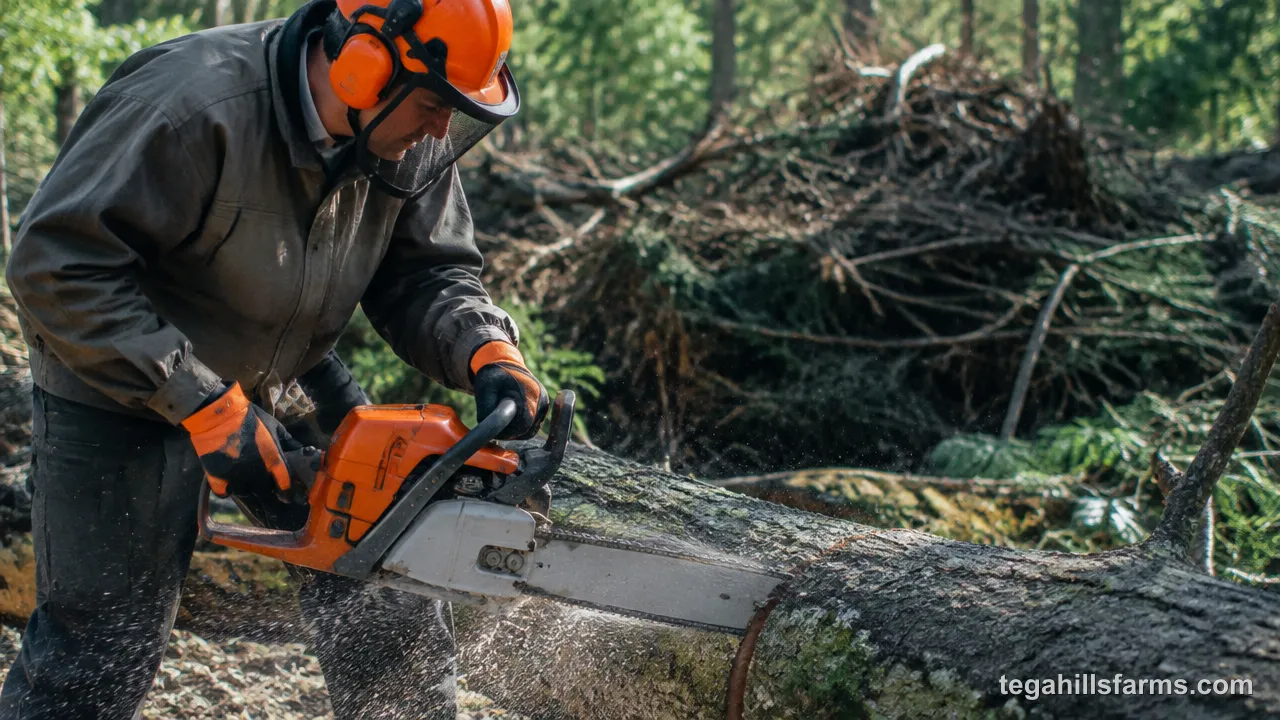
Bar length determines the maximum tree diameter a chainsaw can cut in a single pass. An 18-inch bar cuts through trees up to 36 inches in diameter, a 20-inch bar handles up to 40 inches, a 24-inch bar reaches 48 inches, and a 28-inch bar covers trees up to 56 inches. Large properties with mature hardwoods and substantial timber typically require bars in the 20 to 28-inch range, while properties with younger growth and routine maintenance work can manage with 18 to 20-inch bars.
Cutting trees larger than the bar length requires making cuts from opposite sides of the trunk, doubling the time and effort per tree. Property owners who regularly fell oaks, maples, and other mature hardwoods save time with bars long enough to complete each cut in a single pass. Longer bars add weight and increase tip inertia, making the saw harder to control during limbing and pruning work. Most property owners find 20-inch bars versatile enough to handle the majority of cutting tasks, with 24 to 28-inch bars reserved for those who frequently work with very large diameter timber.
Bar length also affects chip clearance and cutting speed. Longer bars move more sawdust per revolution, which can reduce cutting efficiency if the chain dulls or the saw lacks sufficient power. Matching bar length to engine displacement ensures the motor maintains chain speed through the entire cut rather than bogging down as the bar buries into the wood.
Power Source: Gas vs Battery for Large Properties
Gas chainsaws refuel in seconds and run as long as fuel is available, making them the standard choice for all-day cutting and remote property work. A typical two-cycle gas engine in the 50 to 70cc range runs for extended periods per tank depending on load, and refilling takes less than a minute. Gas models deliver consistent power output through the entire tank, and fuel is easy to transport in approved containers. The trade-offs include fuel mixing, pull-start effort, exhaust emissions, and regular maintenance like spark plug replacement and carburetor adjustment.
Battery chainsaws eliminate fuel mixing and exhaust while delivering power output comparable to 50 to 60cc gas engines in the best models. The EGO Power+ CS2005 reviewed here provides cutting performance equivalent to a 55cc gas chainsaw, and runtime extends to 135 cuts on a 6×6 with the included 6.0Ah battery. Battery saws start instantly with the trigger, require less maintenance, and run quieter than gas models. The primary limitation is runtime: once the battery depletes, cutting stops until a spare battery is swapped in or the depleted pack is recharged. Recharging takes from under an hour to several hours depending on charger speed and battery capacity. For insights into the latest battery technology and runtime expectations, see best battery chainsaws.
Property owners with access to power outlets and spare batteries can match gas runtime by keeping multiple batteries in rotation. Those cutting in remote areas far from charging infrastructure or those who need truly unlimited runtime still favor gas. Cutting volume matters: occasional storm cleanup and firewood cutting fit well within battery capacity, while land clearing and logging work that consume multiple tanks of gas per day strain battery-based workflows.
Engine Size and Performance Output
Engine displacement measured in cubic centimeters determines how much torque a chainsaw delivers and how well it maintains chain speed under load. Chainsaws for large properties typically use engines from 50cc to 70cc and above, with higher displacement producing more power but also increasing weight, fuel consumption, and cost. A 50cc engine handles routine property work like pruning, limbing, and cutting firewood from smaller trees. A 60cc engine provides the sustained torque needed for felling mature hardwoods and processing large-diameter logs. A 70cc-plus engine powers through the heaviest timber and maintains cutting speed during continuous high-output work.
Engine size affects how the saw responds when the chain bites into dense wood. Smaller engines slow down or stall when overloaded, forcing the operator to reduce cutting pressure and extend the time needed per cut. Larger engines maintain chain speed and cutting efficiency even when buried full-bar into hardwood, reducing cutting time and operator fatigue. The trade-off is weight: a 70cc engine adds several pounds compared to a 50cc engine, and the extra weight becomes noticeable during extended sessions.
Torque at low RPM matters more than peak horsepower for property work. X-Torq and similar technologies maximize torque across the RPM range, allowing the engine to maintain cutting power even when the chain slows under load. Property owners who regularly cut hardwoods like oak, hickory, and ash benefit from engines above 60cc, while those working primarily with softwoods and smaller diameter trees find 50 to 60cc sufficient. Matching engine size to typical cutting conditions ensures the saw delivers adequate power without carrying unnecessary weight and burning extra fuel.
Which Features Matter Most for Extended Cutting Sessions?
Extended cutting sessions demand anti-vibration systems, adequate fuel or battery capacity, and reliable starting systems. Property work often involves hours of repetitive cutting where operator fatigue accumulates and convenience features save time. Weight and vibration control reduce hand fatigue and maintain cutting accuracy. Fuel and battery capacity determine how long you can work before stopping to refuel or recharge. Starting systems affect how much physical effort each cold start requires after the saw cools between cuts.
Weight and Vibration Control
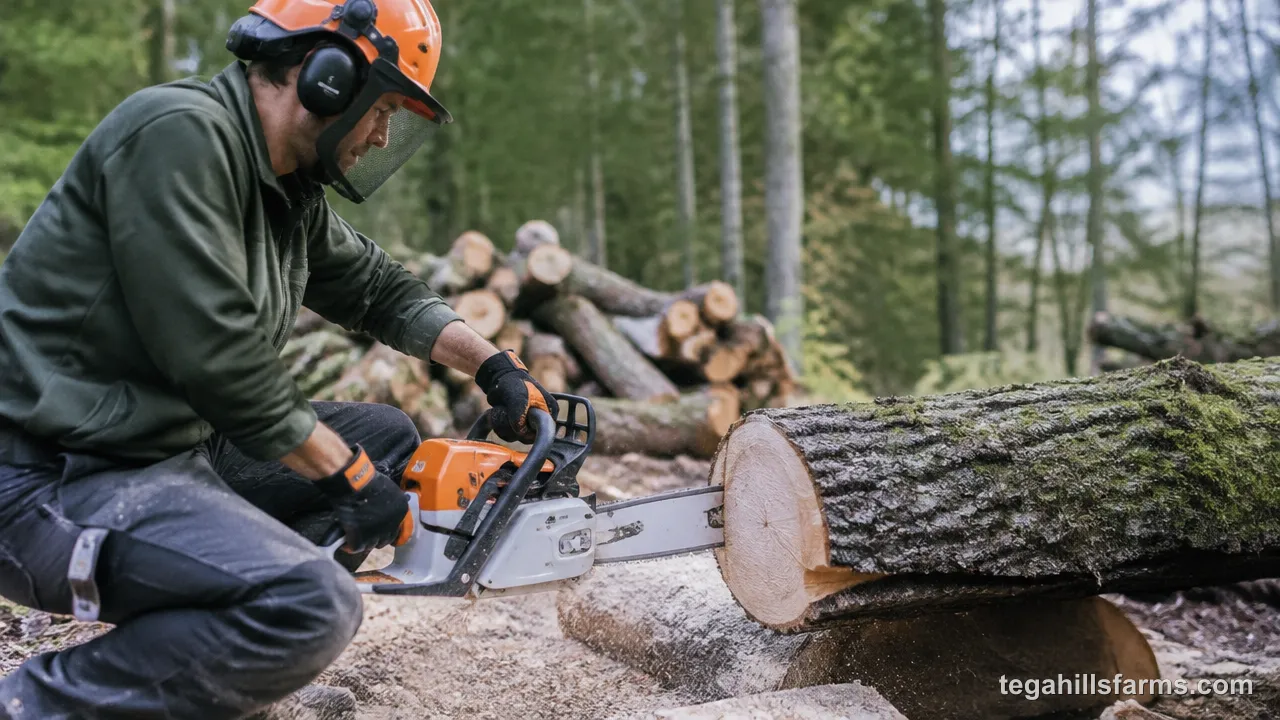
Anti-vibration systems use rubber or spring dampening elements positioned between the engine and handles to isolate vibration before it reaches the operator’s hands. Prolonged exposure to chainsaw vibration causes hand fatigue, numbness, and reduced grip strength that accumulates over multi-hour work sessions. LowVib technology and similar systems reduce the vibration amplitude transmitted through the handles, allowing property owners to maintain control and cutting accuracy through extended use without the hand fatigue common to older chainsaws lacking vibration dampening.
Chainsaw weight affects both fatigue and maneuverability. Lighter saws reduce the effort needed to position and control the bar during limbing and pruning, but they offer less mass to stabilize the cut when buried full-bar into large timber. Heavier saws provide better stability during felling and bucking but increase arm fatigue during overhead work and extended sessions. Most property owners find chainsaws in the 13 to 16-pound range strike the best balance, though battery-powered models with rear-mounted packs can reach 30 pounds and shift the weight distribution toward the rear of the saw.
Balanced weight distribution matters as much as total weight. Saws with the bulk of the weight centered between the handles feel lighter and easier to control than saws with weight concentrated toward the front or rear. Gas chainsaws typically balance weight forward due to the engine and bar placement, while battery models shift weight rearward where the battery mounts. Professional-grade chainsaws use magnesium crankcases and other lightweight materials to reduce weight without sacrificing durability, a feature that justifies the premium price for property owners who run the saw hard and often.
Fuel and Battery Capacity for All-Day Work
Fuel tank capacity on gas chainsaws typically ranges from 0.4 to 0.7 liters, providing extended runtime per tank depending on engine displacement and cutting load. Larger tanks extend the interval between refueling stops, which matters during all-day cutting sessions where frequent stops interrupt workflow. Fuel consumption scales with engine size and cutting intensity: a 50cc engine running intermittently through light pruning work burns less fuel per hour than a 70cc engine buried full-throttle into hardwood bucking. Property owners working close to a fuel supply refuel as needed, while those cutting in remote areas carry extra fuel in approved containers to avoid running dry mid-session.
Battery capacity measured in amp-hours determines how many cuts or minutes of runtime a battery-powered chainsaw delivers per charge. The EGO Power+ CS2005 with a 6.0Ah battery is rated for up to 135 cuts on a 6×6, providing substantial continuous cutting time depending on load. Larger batteries extend runtime proportionally: a 10Ah battery delivers roughly 225 cuts under the same conditions. Battery chainsaws lose power gradually as voltage drops rather than maintaining full output until the tank runs dry, so cutting speed slows slightly as the battery depletes.
Property owners who need all-day runtime from battery chainsaws keep multiple batteries charged and rotate them as each depletes. Fast chargers reduce downtime by recharging depleted packs quickly, allowing continuous work if spare batteries are available. Those cutting in remote areas without access to power outlets find gas more practical due to its instant refueling and unlimited runtime as long as fuel is on hand. Matching fuel or battery capacity to typical cutting sessions ensures you complete the work without interruptions.
Starting Systems and Ease of Use
Smart Start and similar systems reduce the physical effort needed to pull-start a gas chainsaw by lowering the compression resistance during the starting stroke. Conventional pull-start systems require forceful, rapid pulls to spin the engine fast enough to ignite, which becomes tiring when restarting the saw dozens of times during a work session. Smart Start reduces pull resistance by roughly 40 percent, allowing easier cold starts after the engine cools between cuts. This feature matters most for property owners who stop and restart the saw frequently rather than running it continuously through extended cutting.
Primer bulbs and choke controls affect starting reliability and the number of pulls needed to fire the engine. A primer bulb pumps fuel into the carburetor before starting, reducing the cranking time required to draw fuel from the tank. Combined choke and stop controls integrate the choke lever and ignition switch into a single mechanism, simplifying the starting procedure and reducing the chance of flooding the engine by leaving the choke engaged too long. These features become more valuable during cold-weather starting when fuel vaporization is poor and engines are harder to fire.
Tool-free chain tensioning eliminates the need for a scrench or combination wrench to adjust chain tension during use. Chains loosen as they heat up during cutting and stretch over time, requiring periodic tensioning to maintain proper fit on the bar. Tool-free systems use a knob or lever accessible from the side of the saw, allowing adjustments without stopping to dig tools out of a pocket or toolbox. This saves time and encourages proper chain maintenance, since adjustments take seconds rather than minutes.
Heavy property cutting wears chains faster than weekend yard work. A sharp chain cuts clean and fast. A dull chain forces you to push harder, heats the bar, and loads the engine. Most property owners sharpen every two to three tanks of gas or after a full day of cutting, but hitting dirt or embedded metal dulls a chain instantly.
What Maintenance Do Large-Property Chainsaws Require?
Large-property chainsaws need chain sharpening after every two to three tanks of fuel or one full battery cycle, air filter cleaning every five hours of use, and bar flipping regularly to even wear. Chain sharpening frequency depends on cutting conditions: clean wood allows longer intervals, while cutting near the ground or through dirty wood dulls the chain faster. A sharp chain cuts with minimal downward pressure and produces long wood chips rather than fine sawdust. Dull chains require excessive force, overheat the bar, and bog down the engine.
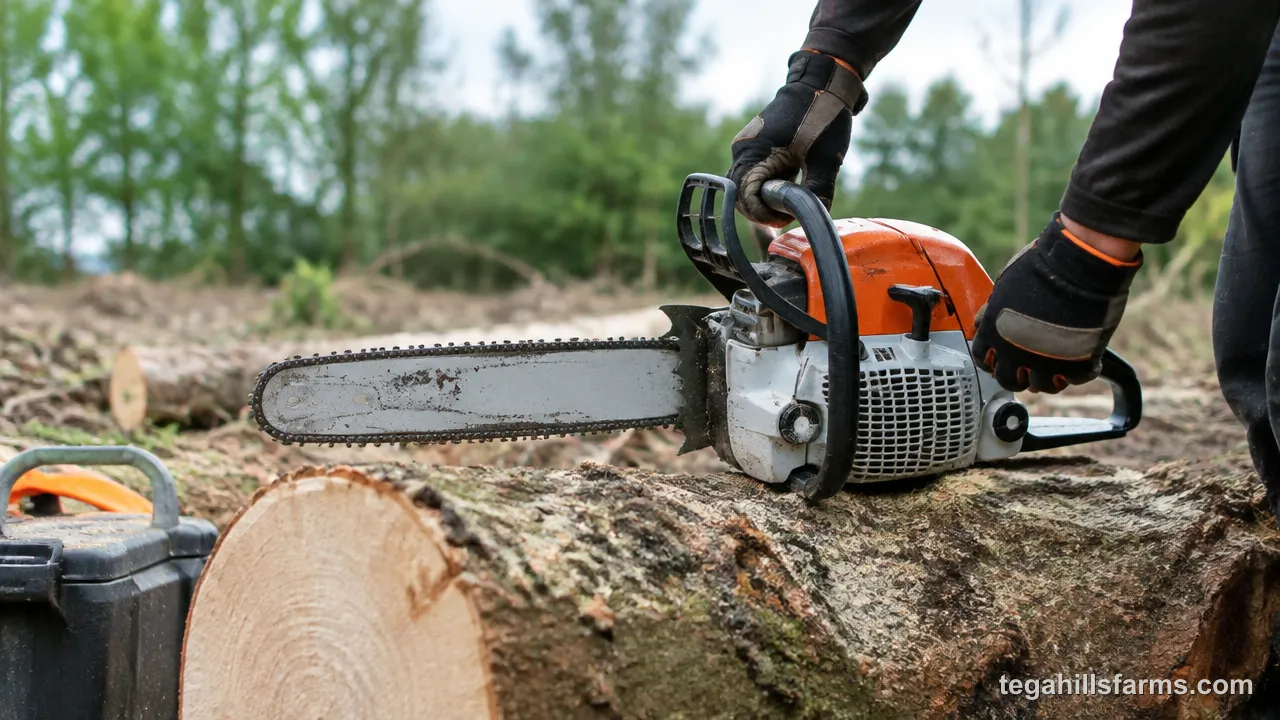
Air filters trap sawdust and debris before it reaches the carburetor, and clogged filters reduce airflow and engine power. Clean or replace the air filter every five hours of cutting or more often when working in dusty conditions. Most chainsaws use foam or pleated paper filters that clean with compressed air or mild soap and water. Air Injection and similar systems pre-clean intake air using centrifugal force, extending filter life by removing larger particles before they reach the filter element.
Bar maintenance includes flipping the bar at regular intervals to distribute wear evenly between the top and bottom rails, cleaning out packed sawdust from the bar groove, and filing down burrs that form along the rail edges. Bar rails wear as the chain slides across them, and running the same orientation continuously wears one side faster than the other. Flipping the bar at regular intervals doubles bar life. The bar groove accumulates compacted sawdust and oil residue that restricts chain movement and increases friction. Scraping the groove clean with a flat tool restores proper clearance.
Regular spark plug replacement maintains reliable starting and optimal combustion. Spark plugs foul over time as carbon deposits accumulate on the electrode, weakening the spark and making the engine harder to start. Check the plug periodically and replace it when the electrode shows heavy deposits or erosion. Carburetor adjustment compensates for changes in fuel quality, elevation, and temperature, though chainsaws with AutoTune eliminate manual adjustment by monitoring and correcting the fuel-air mixture automatically.
Oil system maintenance includes checking bar oil level before each use, cleaning the oil delivery holes on the bar, and flushing the oil tank annually to remove debris. Proper bar lubrication reduces friction and heat, extending chain and bar life. Check that oil flows to the bar by holding the saw over clean cardboard and running the chain at full throttle for a few seconds—you should see an oil stripe appear. If oil flow is weak or absent, clean the delivery holes or inspect the oil pump for damage.
Common Questions About Chainsaws for Large Properties
What size chainsaw do I need for a 10-acre property?
A 20-inch bar with a 50 to 60cc engine covers most 10-acre property work, including mature tree felling, storm cleanup, and firewood processing. Properties with very large hardwoods may benefit from a 24-inch bar and 60cc-plus engine for single-pass cuts on larger diameter trunks.
How long does a battery chainsaw last on a single charge?
Runtime varies by battery capacity and cutting load. The EGO Power+ CS2005 with a 6.0Ah battery delivers up to 135 cuts on a 6×6, providing substantial continuous cutting time. Larger batteries extend runtime proportionally, and keeping spare batteries charged allows all-day work with quick swaps.
Are gas chainsaws more powerful than battery models?
Gas chainsaws in the 50 to 70cc range generally deliver more sustained power and unlimited runtime as long as fuel is available. High-end battery chainsaws like the EGO CS2005 match the cutting speed of 55cc gas engines but are limited by battery capacity rather than tank size.
How often should I sharpen the chain on a chainsaw used for property work?
Sharpen the chain every two to three tanks of gas or one full battery cycle, or sooner if the chain produces fine sawdust instead of long wood chips. Cutting near the ground or through dirty wood dulls the chain faster and may require sharpening after every tank.
What is the difference between farm-and-ranch chainsaws and professional models?
Professional models use magnesium crankcases, three-piece crankshafts, and advanced features like AutoTune for maximum durability under continuous heavy use. Farm-and-ranch models balance adequate durability with lower cost, suitable for regular property work without the premium build of professional saws.
Can a 20-inch bar handle all large property work?
A 20-inch bar covers most property work, including trees up to 40 inches in diameter. Properties with many larger hardwoods benefit from a 24 to 28-inch bar for single-pass cutting, while those with smaller trees and routine maintenance find a 20-inch bar sufficient.



Write Your Review
No reviews yet. Be the first to share your experience!